rights

NSA employee sues Trump administration over order on transgender rights and two ‘immutable’ genders

A transgender employee of the National Security Agency is suing the Trump administration and seeking to block enforcement of a presidential executive order and other policies the employee says violate federal civil rights law.

Sarah O’Neill, an NSA data scientist who is transgender, is challenging President Trump’s Inauguration Day executive order that required the federal government, in all operations and printed materials, to recognize only two “immutable” sexes: male and female.

According to the lawsuit filed Monday in a U.S. District Court in Maryland, Trump’s order “declares that it is the policy of the United States government to deny Ms. O’Neill’s very existence.”

The White House did not immediately respond to a request for comment.

The order, which reflected Trump’s 2024 campaign rhetoric, spurred policies that O’Neill is challenging, as well.

Since Trump’s initial executive action, O’Neill asserts the NSA has canceled its policy recognizing her transgender identity and “right to a workplace free of unlawful harassment,” while “prohibiting her from identifying her pronouns as female in written communications” and “barring her from using the women’s restroom at work.”

O’Neill contends those policies and the orders behind them create a hostile work environment and violate Section VII of the Civil Rights Act. The U.S. Supreme Court ruled in 2020 that Section VII’s prohibition on discrimination based on sex applied to gender identity.

“We agree that homosexuality and transgender status are distinct concepts from sex,” the court’s majority opinion stated. “But, as we’ve seen, discrimination based on homosexuality or transgender status necessarily entails discrimination based on sex; the first cannot happen without the second.”

O’Neill’s lawsuit argued, “The Executive Order rejects the existence of gender identity altogether, let alone the possibility that someone’s gender identity can differ from their sex, which it characterizes as ‘gender ideology.’ ”

In addition to restoring her workplace rights and protections, O’Neill is seeking financial damages.

Trump’s order was among a flurry of executive actions he took hours after taking office. He has continued using executive action aggressively in his second presidency, prompting many legal challenges that are still working their way through the federal judiciary.

Barrow writes for the Associated Press.

Source link

Rights groups condemn new record number of executions in 2025

Caroline HawleyDiplomatic correspondent

ESOHR Issam al-ShazlyESOHR

Egyptian fisherman Issam al-Shazly was executed on Tuesday after being convicted of drug-related charges

Saudi Arabia has surpassed its record for the number of executions carried out annually for a second year in a row.

At least 347 people have now been put to death this year, up from a total of 345 in 2024, according to the UK-based campaign group Reprieve, which tracks executions in Saudi Arabia and has clients on death row.

It said this was the “bloodiest year of executions in the kingdom since monitoring began”.

The latest prisoners to be executed were two Pakistani nationals convicted of drug-related offences.

Others put death this year include a journalist and two young men who were children at the time of their alleged protest-related crimes. Five were women.

But, according to Reprieve, most – around two thirds – were convicted of non-lethal drug-related offences, which the UN says is “incompatible with international norms and standards”.

More than half of them were foreign nationals who appear to have been put to death as part of a “war on drugs” in the kingdom.

The Saudi authorities have not responded to the BBC’s request for comment on the rise in executions.

“Saudi Arabia is operating with complete impunity now,” said Jeed Basyouni, Reprieve’s head of death penalty for the Middle East and North Africa. “It’s almost making a mockery of the human rights system.”

She described torture and forced confessions as “endemic” within the Saudi criminal justice system.

Ms Basyouni called it a “brutal and arbitrary crackdown” in which innocent people and those on the margins of society have been caught up.

Tuesday saw the execution of a young Egyptian fisherman, Issam al-Shazly, who was arrested in 2021 in Saudi territorial waters and said he had been coerced into smuggling drugs.

Reprieve says that 96 of the executions were solely linked to hashish.

“It almost seems that it doesn’t matter to them who they execute, as long as they send a message to society that there’s a zero-tolerance policy on whatever issue they’re talking about – whether it’s protests, freedom of expression, or drugs,” said Ms Basyouni.

There has been a surge of drug-related executions since the Saudi authorities ended an unofficial moratorium in late 2022 – a step described as “deeply regrettable” by the UN human rights office.

Speaking anonymously to the BBC, relatives of men on death row on drugs charges have spoken of the “terror” they’re now living in.

One told the BBC: “The only time of the week that I sleep is on Friday and Saturday because there are no executions on those days.”

Cellmates witness people they have shared prison life with for years being dragged kicking and screaming to their death, according to Reprieve.

Reuters Crown Prince Mohammed bin Salman of Saudi Arabia attends the US-Saudi Investment Forum in Washington DC, (19 November 2025)Reuters

Prince Mohammed bin Salman has loosened social restrictions while simultaneously silencing criticism

The de facto ruler of Saudi Arabia, Mohammed bin Salman – who became crown prince in 2017 – has changed the country profoundly over the past few years, loosening social restrictions while simultaneously silencing criticism.

In a bid to diversify its economy away from oil, he has opened Saudi Arabia up to the outside world, taken the religious police off the streets, and allowed women to drive.

But the kingdom’s human rights record remains “abysmal”, according to the US-based campaign group Human Rights Watch, with the high level of executions a major concern. In recent years, only China and Iran have put more people to death, according to human rights activists.

“There’s been no cost for Mohammed bin Salman and his authorities for going ahead with these executions,” said Joey Shea, who researches Saudi Arabia for Human Rights Watch. “The entertainment events, the sporting events, all of it is continuing to happen with no repercussions, really.”

According to Reprieve, the families of those executed are usually not informed in advance, or given the body, or informed where they have been buried.

The Saudi authorities do not reveal the method of execution, although it is believed to be either beheading or firing squad.

In a statement sent to the BBC, the UN’s special rapporteur on extrajudicial, summary or arbitrary executions, Dr Morris Tidball-Binz, called for an immediate moratorium on executions in Saudi Arabia with a view to abolition, as well as “full compliance with international safeguards (including effective legal assistance and consular access for foreign nationals), prompt notification of families, the return of remains without delay and the publication of comprehensive execution data to enable independent scrutiny”.

Amnesty International Abdullah al-Derazi (L) and Jalal al-Labbad (R)Amnesty International

Abdullah al-Derazi and Jalal al-Labbad were executed in October and August respectively after being convicted of crimes they allegedly committed as minors

Among the Saudi nationals executed this year were Abdullah al-Derazi and Jalal al-Labbad, who were both minors at the time of their arrest.

They had protested against the government’s treatment of the Shia Muslim minority in 2011 and 2012, and participated in the funerals of people killed by security forces. They were convicted of terrorism-related charges and sentenced to death after what Amnesty International said were grossly unfair trials that relied on torture-tainted “confessions”. UN human rights experts had called for their release.

The UN also condemned the execution in June of the journalist, Turki al-Jasser, who had been arrested in 2018 and sentenced to death on charges of terrorism and high treason based on writings he was accused of authoring.

“Capital punishment against journalists is a chilling attack on freedom of expression and press freedom,” said Unesco’s Director-General, Audrey Azoulay.

Reporters Without Borders said he was the first journalist to be executed in Saudi Arabia since Mohammed bin Salman came to power, although another journalist, Jamal Khashoggi, was murdered by Saudi agents at the Saudi consulate in Istanbul in 2018.

Human Rights Watch Turki al-JasserHuman Rights Watch

Journalist Turki al-Jasser was executed in June after seven years in detention

Last December, UN experts wrote to the Saudi authorities to express concern over a group of 32 Egyptians and one Jordanian national who had been sentenced to death on drugs charges, and their “alleged absence of legal representation”. Since then, most of the group have been executed.

A relative of one man put to death earlier this year said that he had told her that people were being “taken like goats” to be killed.

The BBC has approached the Saudi authorities for a response to the allegations but has not received one.

But in a letter dated January 2025 – in reply to concerns raised by UN special rapporteurs – they said that Saudi Arabia “protects and upholds” human rights and that its laws “prohibit and punish torture”.

“The death penalty is imposed only for the most serious crimes and in extremely limited circumstances,” the letter stated. “It is not handed down or carried out until judicial proceedings in courts of all levels have been completed.”

Source link

Sixty years ago, the world tried to stop racial discrimination and failed | Human Rights

The way the story is often told is that Western countries gifted human rights to the world and are the sole guardians of it. It may come as a surprise for some, then, that the international legal framework for prohibiting racial discrimination largely owes its existence to the efforts of states from the Global South.

In 1963, in the midst of the decolonisation wave, a group of nine newly independent African states presented a resolution to the United Nations General Assembly (UNGA) calling for the drafting of an international treaty on the elimination of racial discrimination. As the representative from Senegal observed: “Racial discrimination was still the rule in African colonial territories and in South Africa, and was not unknown in other parts of the world … The time had come to bring all States into that struggle.”

The groundbreaking International Convention on the Elimination of All Forms of Racial Discrimination (ICERD) was unanimously adopted by the UNGA two years later. The convention rejected any doctrine of superiority based on racial differentiation as “scientifically false, morally condemnable and socially unjust”.

Today, as we mark 60 years since its adoption, millions of people around the world continue to face racial discrimination – whether in policing, migration policies or exploitative labour conditions.

In Brazil, Amnesty International documented how a deadly police operation in Rio de Janeiro’s favelas this October resulted in the massacre by security forces of more than 100 people, most of them Afro-Brazilians and living in poverty.

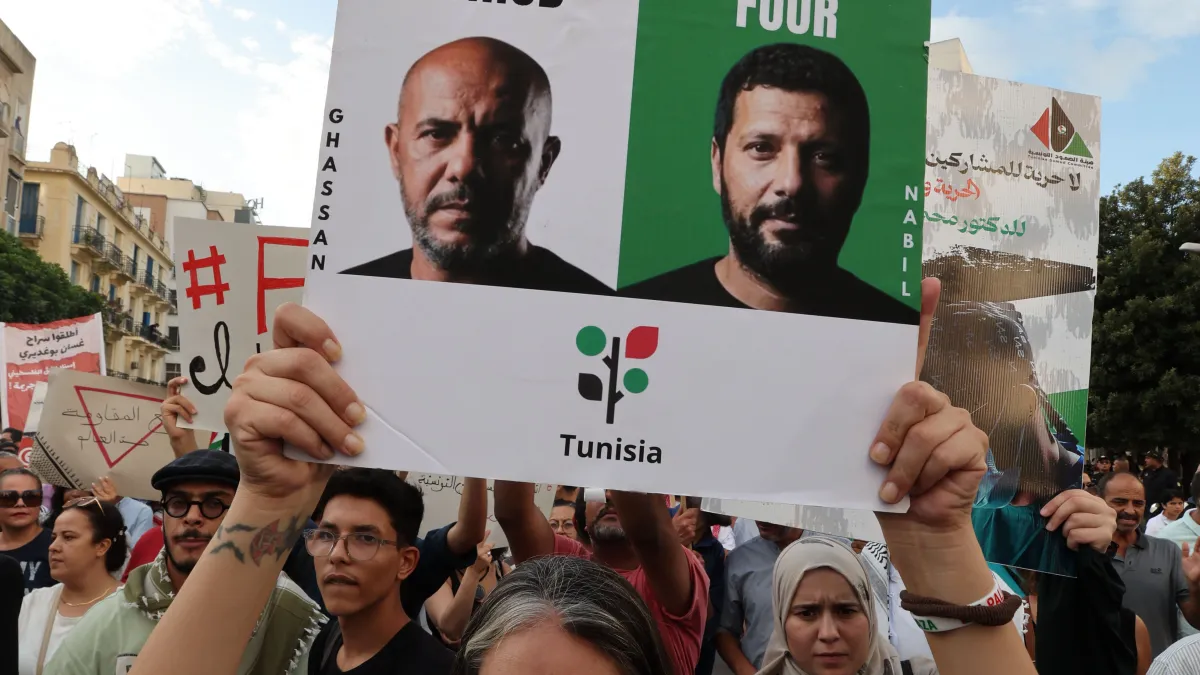
In Tunisia, we have seen how authorities have for the past three years used migration policies to carry out racially targeted arrests and detentions and mass expulsions of Black refugees and asylum seekers.

Meanwhile, in Saudi Arabia, Kenyan female domestic workers face racism and exploitation from their employers, enduring gruelling and abusive working conditions.

In the United States, diversity, equity and inclusion (DEI) initiatives aimed at tackling systemic racism have been eliminated across federal agencies. Raids by Immigration and Customs Enforcement (ICE) targeting migrants and refugees are a horrifying feature of President Donald Trump’s mass deportation and detention agenda, rooted in white supremacist narratives.

Migrants held in detention centres have been subjected to torture and a pattern of deliberate neglect designed to dehumanise and punish.

Elsewhere, Amnesty International has documented how new digital technologies are automating and entrenching racism, while social media offers inadequately moderated forums for racist and xenophobic content. For example, our investigation into the United Kingdom’s Southport racist riots found that X’s design and policy choices created fertile ground for the inflammatory, racist narratives that resulted in the violent targeting of Muslims and migrants.

Even human rights defenders from the Global South face racial discrimination when they have to apply for visas to Global North countries in order to attend meetings where key decisions are made on human rights.

All these instances of systemic racism have their roots in the legacies of European colonial domination and the racist ideologies on which they were built. This era, which spanned nearly four centuries and extended across six continents, saw atrocities that had historical consequences – from the erasure of Indigenous populations to the transatlantic slave trade.

The revival of anti-right movements globally has led to a resurgence of racist and xenophobic rhetoric, a scapegoating of migrants and refugees, and a retrenchment in anti-discrimination measures and protections.

At the same time, Western states have been all too willing to dismantle international law and institutions to legitimise Israel’s genocide against Palestinians in Gaza and shield Israeli authorities from justice and accountability.

Just as the creation of the ICERD was driven by African states 60 years ago, Global South countries continue to be at the forefront of the fight against racial oppression, injustice and inequality. South Africa notably brought the case against Israel at the International Court of Justice and cofounded The Hague Group – a coalition of eight Global South states organising to hold Israel accountable for genocide.

On the reparations front, it is Caribbean and African states, alongside Indigenous peoples, Africans and people of African descent, that are leading the pursuit of justice. The Caribbean Community (CARICOM) has been intensifying pressure on European governments to reckon with their colonial past, including during a recent visit to the United Kingdom by the CARICOM Reparations Commission.

As the African Union announced 2026-36 the Decade of Reparations last month, African leaders gathered in Algiers for the International Conference on the Crimes of Colonialism, at which they consolidated demands for the codification of colonialism as a crime under international law.

But this is not enough. States still need to confront racism as a structural and systemic issue, and stop pretending slavery and colonialism are a thing of the past with no impact on our present.

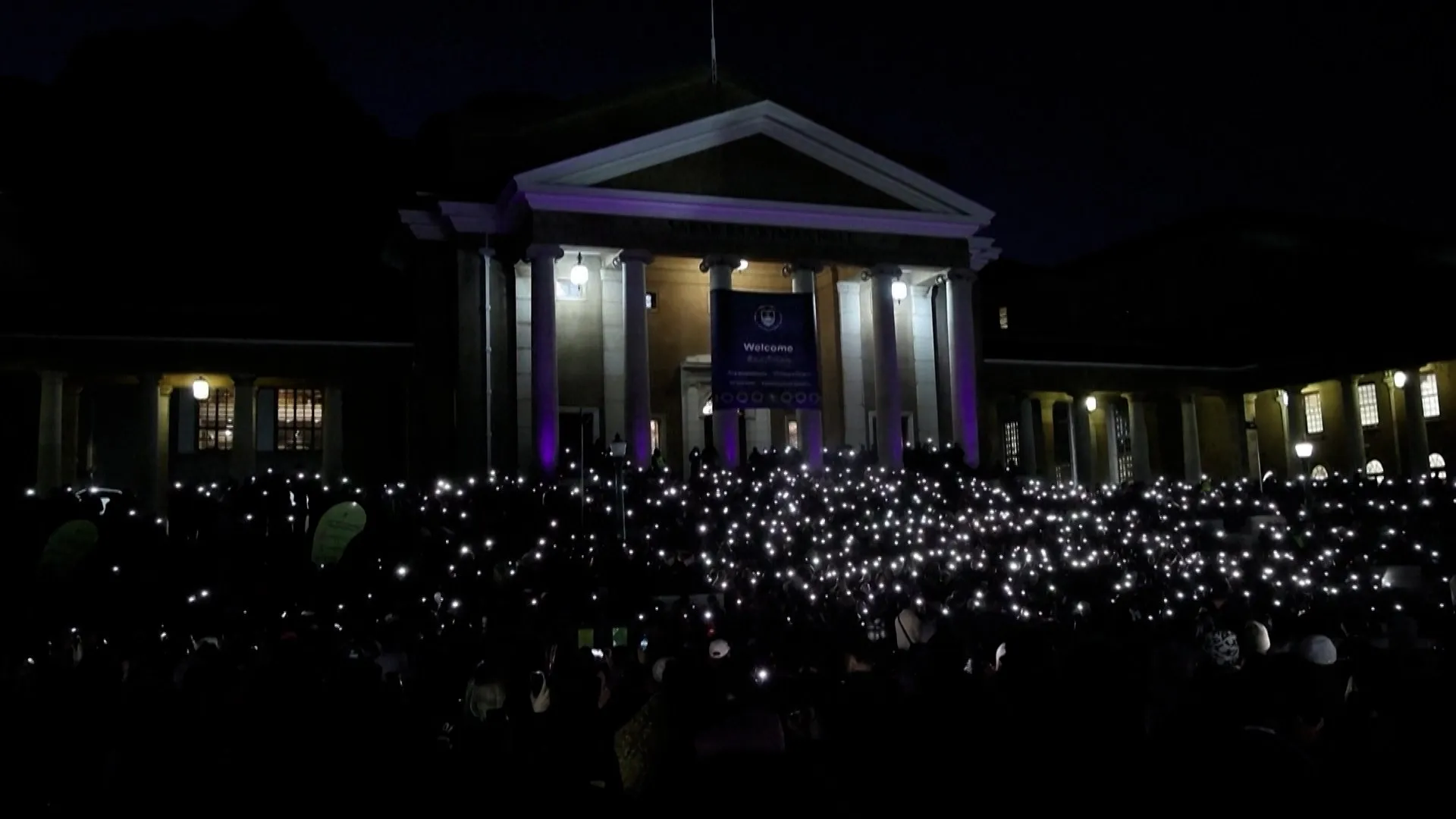
Across the world, people are resisting. In Brazil, last month, hundreds of thousands of Afro-Brazilian women led the March of Black Women for Reparations and Wellbeing against racist and gendered historic violence. In the US, people fought back against the wave of federal immigration raids this year, with thousands taking to the streets in Los Angeles to protest and residents of Chicago mobilising to protect migrant communities and businesses against ICE raids.

Governments need to listen to their people and fulfil their obligations under ICERD and national law to protect the marginalised and oppressed against discrimination.

The views expressed in this article are the authors’ own and do not necessarily reflect Al Jazeera’s editorial stance.

Source link

The Me Too movement in the age of Trump and Epstein | Women’s Rights

Tarana Burke tells Marc Lamont Hill on Epstein, Trump and how widespread sexual violence is in the United States.

In 2017, a reckoning over sexual violence called “#MeToo” swept the globe. Eight years later, has the movement done enough for survivors? And what will it take for some of the world’s most powerful men accused of sexual misconduct to face consequences?

This week on UpFront Marc Lamont Hill speaks to founder of the Me Too movement, Tarana Burke.

The Department of Justice has released files related to the late convicted sex offender and financier Jeffrey Epstein after mounting pressure led President Donald Trump to sign the Epstein Files Transparency Act last month. Trump, who himself has been accused dozens of times of sexual assault and misconduct, has already appeared in photos, emails and other documents in connection with Epstein, causing a rift in his base. Other business elites, academics, politicians and world leaders have also been named in connection to Epstein. While some have faced minor consequences, only Ghislaine Maxwell has been criminally convicted as part of Epstein’s sex trafficking of minors. Will newly released documents lead to new convictions and genuine accountability for survivors?

Source link

Imani Barbarin on disability rights, COVID and the war on Gaza | News

Why the TikTok star and disability advocate wants the world to rethink what it means to be disabled.

Why does the public understanding of disability lag so far behind reality? TikTok influencer and disability activist Imani Barbarin lays this out for her audiences on social media, where she has amassed nearly a million followers across platforms. In this episode, Barbarin shares her perspectives on disability at the intersection of issues, including COVID and the genocidal war on Gaza.

Source link

Palestinian infant freezes to death in Gaza as Israel keeps blocking aid | Child Rights News

Winter cold ‘becomes lethal’ as Israel restricts entry of tents, blankets and other shelter supplies to ravaged enclave.

A Palestinian infant has frozen to death in the Gaza Strip, local authorities say, as Israel continues to restrict the entry of shelter supplies and other humanitarian aid to the enclave despite the harsh winter conditions there.

The Palestinian Ministry of Health in Gaza said on Tuesday that the two-week-old baby, Mohammed Khalil Abu al-Khair, died a day earlier after seeking treatment for severe hypothermia, brought on by the extreme cold gripping Gaza.

Recommended Stories

list of 3 itemsend of list

Reporting from Gaza City, Al Jazeera’s Tareq Abu Azzoum noted that the child’s death comes as basic protections in Gaza have been “systematically dismantled” due to Israel’s genocidal war against Palestinians in the territory.

“Families are living in tents on wet ground without heating, electricity or sufficient clothing,” Abu Azzoum said. “When food, fuel, shelter and aid are banned, cold absolutely becomes lethal.”

Israel’s two-year war has decimated more than 80 percent of the structures across Gaza, forcing hundreds of thousands of families to take refuge in flimsy tents or overcrowded makeshift shelters.

A huge storm that recently hit the Strip killed at least 11 people as torrential rains and fierce winds flooded tents and caused damaged buildings to collapse.

“We try to dry the children’s clothes over the fire,” Umm Mohammed Assaliya, a displaced Palestinian mother, told Al Jazeera from Gaza City.

“There are no spare clothes for them. I am exhausted. The tent we were given cannot withstand winter conditions. We need blankets,” she said.

Humanitarian groups have urged Israel to allow unimpeded deliveries of aid to Gaza.

But the United Nations agency for Palestinian refugees, UNRWA, which the UN says is best suited to distribute supplies in the territory, says the Israeli government has blocked it from bringing aid directly into Gaza.

“People have reportedly died due to the collapse of damaged buildings where families were sheltering. Children have reportedly died from exposure to the cold,” UNRWA said in a social media post on Tuesday.

“This must stop. Aid must be allowed in at scale, now.”

Hamas slams Israeli ceasefire violations

Meanwhile, Hamas has condemned Israel for its repeated violations of a ceasefire deal that came into effect in October.

At least 393 Palestinians have been killed and 1,074 others wounded in Israeli attacks on Gaza since the first full day of the ceasefire on October 11, according to the latest figures from the enclave’s Health Ministry.

The Israeli military also killed a senior Hamas leader, Raed Saad, in a targeted attack on a vehicle in western Gaza City on Saturday, further straining the tenuous truce.

On Tuesday, Hamas leader Ghazi Hamad accused Israel of “manipulating” the text of the US-brokered agreement.

“We want to make it absolutely clear: the ceasefire agreement is straightforward, detailed, and unambiguous. However, it’s evident that the Israeli occupation has distorted the text, manipulating and violating every single article,” Hamad said.

“Since day one, Hamas has fully abided by the agreement and honoured its commitments. In contrast, Israel has deliberately committed several systematic and preplanned breaches.”

Source link

Afghan’s Olympic hope for Taliban dialogue to prompt women’s rights U-turn | Olympics News

Afghanistan’s International Olympic Committee member Samira Asghari says the Taliban authorities must face the stark truth that if they are ever to be accepted internationally, they must respect the rights of women to education and sport.

Asghari, who at 31 is living in exile for the second time, does, however, favour engaging with Afghanistan’s rulers.

Recommended Stories

list of 4 itemsend of list

The Taliban government have banned girls from schools beyond the age of 12, and barred women from most jobs and public services – and from playing sport.

Asghari, who in 2018 became Afghanistan’s first ever IOC member, accepts her “situation is quite challenging” and beating the drum for Afghan women’s sport “does require certain precautions”.

Nevertheless, the former international basketball player, like many top Afghan women athletes, is undeterred in speaking out about the treatment of women under the Taliban authorities.

“The reality is that when you take a public stand for women’s rights you do become a target, but I believe strongly in communication and engagement,” she said in an email interview with the AFP news agency.

“As long as the Taliban remain the reality on the ground in Afghanistan, we cannot afford to waste time doing nothing.

“In my role, I have tried to help smooth the discussions between the IOC and those currently in control, focusing on the sport rights of women and girls and particularly primary school girls who are still inside Afghanistan.”

Asghari, one of four children born to a retired professional makeup artist mother and a father who was a manager in the Afghan Olympic national committee, says the “conversations are not always easy”.

“They are not about legitimising any government,” she said.

“But they are very important for creating tangible opportunities for future generations of young boys and girls in Afghanistan.”

‘I hope FIFA can align with IOC talks with the Taliban’

With Afghan sportswomen spread around the globe, putting together teams is complex.

However, a women’s football team, Afghan Women United, made up of players based in Europe and Australia, recently competed in FIFA Unites: Women’s Series 2025 in Morocco.

“This support for athletes outside Afghanistan is just the first step, and I hope FIFA can align with the IOC’s ongoing talks with the Taliban,” she said.

Asghari, who had been involved in the “project” for more than a year, hopes the message gets through to Afghanistan’s rulers.

“The Taliban were given the country and now they’re trying to maintain power while ignoring fundamental human rights, particularly for women,” she said.

“It’s very difficult for them to continue ruling Afghanistan this way in the long term, and the Taliban need to understand that their international acceptance is directly linked to respecting human rights, including the rights of women to education and sport.”

Asghari, who attended the recent Islamic Solidarity Games in Riyadh, where Afghan women and men competed, said she hoped for “small openings” in the Taliban’s stance.

“I also believe that if we can find small openings — like developing sport in primary schools where girls are still allowed to attend up to sixth grade — we should take them,” she said.

“This isn’t about accepting the Taliban’s restrictions, it’s about not abandoning the girls and women of Afghanistan.

“We have to work with reality, while continuing to push for fundamental change.”

Asghari says even achieving small breakthroughs like that could prevent the long-term harm women suffered during the Taliban’s first spell in power, from 1996 to 2001.

She said she had seen the impact on her return from her first period of exile, in Iran.

“What concerns me deeply is that we’re creating another lost generation,” she said.

“I remember when I was in sixth grade aged 12, and there was a 20-year-old woman sitting next to me in the same class because she couldn’t go to school during the previous Taliban era.

“I didn’t know how to communicate with her and it was difficult for both of us, but especially for her because she had lost so many years.

“I cannot accept seeing this happen again. That’s why even small opportunities matter so much.”

Asghari retains hope despite the bleak outlook and believes in “continued engagement and dialogue” with the Taliban.

“The future of Afghanistan is this young generation. We need to give them every opportunity we can, no matter how small, and never, ever give up on them.”

Source link

Your refund rights if you face Christmas travel chaos as UK strikes loom

The festive season is one of the busiest times for travel, and it’s handy to know your rights when it comes to getting a refund and compensation for any delays or cancellations you may encounter

The Christmas period is famously one of the most chaotic times for travel, with thousands of Brits hopping on planes or trains to reunite with family and friends, whether that’s within the UK or abroad. With travel disruption already anticipated in the run-up to Christmas, it’s essential to understand your entitlements regarding refunds and compensation should you face any delays or cancellations.

Multiple strikes have already been confirmed, threatening to cause significant disruption to holiday travel. Approximately 200 check-in and baggage handling workers employed by easyJet at London Luton Airport are set to strike during the final two weekends of December amid an ongoing pay row.

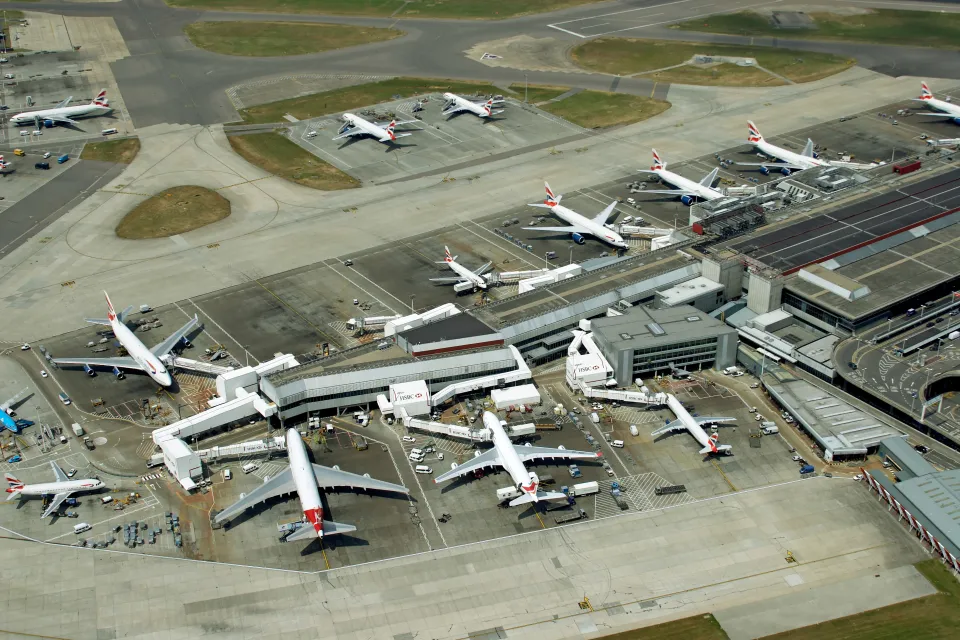
Meanwhile, Heathrow Airport is bracing itself to handle seven million passengers across its four terminals throughout the festive period. It has also emerged that Friday, 20 December, and Sunday, 28 December, are set to be the busiest days for UK airports.

Furthermore, National Rail has confirmed there will be “planned essential engineering works and upgrades taking place as Network Rail works to improve the railway” over the festive period. There may also be reduced services, with some train operators making alterations to their schedules.

So if you’re journeying during the hectic festive season and encounter delays or cancellations, here’s your complete guide to refunds and compensation entitlements.

Flight refunds

If your flight gets cancelled while you’re travelling to or from the UK, you’re legally entitled to either a refund or an alternative flight to your destination, according to MoneySavingExpert. However, there are a few key points that passengers should be aware of:

  • The airline is responsible, even if your booking was made through an online travel agency
  • If you booked a package holiday, the responsibility lies with the tour operator
  • You’re entitled to an alternative flight at the earliest opportunity, and it doesn’t need to be with the same airline
  • You can request a different flight, but don’t go ahead and book one yourself

Moreover, if your flight is significantly delayed, which could range from two to four hours, Citizens Advice states that the airline must provide you with:

  • Food and drink
  • Access to phone calls and emails
  • Accommodation if you’re delayed overnight – along with transport between the airport and hotel

For more details, you can visit the Citizens’ Advice website. It’s also advisable to check directly with your airline to see if you qualify for a refund.

Flight compensation

When it comes to flight compensation for delays or cancellations on journeys to or from the UK, the rules can vary. It’s crucial to remember that even if an airline offers a credit note in lieu of a refund, you’re entirely within your rights to demand a cash reimbursement, potentially of up to £520.

As outlined by MoneySavingExpert, under the UK/EU flight delay compensation scheme, certain flights qualify for compensation at a fixed rate. For your flight to be eligible, it must satisfy the following conditions:

  • Your flight arrived more than three hours late at its destination
  • The flight was scheduled in the past six years
  • The delay was the airline’s fault

You may also be eligible for compensation if you were unable to board your flight due to overbooking.

MoneySavingExpert highlights that compensation under EU/UK regulations concerns the “inconvenience of a delay”, rather than reimbursement of the ticket cost. The amount you could claim depends on how long your delay lasted and the distance of your journey.

Furthermore, what matters is your arrival time, not your departure time. Travellers become eligible for compensation when their flight lands more than three hours after the scheduled arrival time.

To determine if you qualify for compensation, you should check directly with your airline.

Rail refunds

National Rail states that if your train experiences delays or cancellations and you choose not to travel, you can secure a refund for your unused ticket without facing any fees from the original seller. If you purchased your ticket from a railway company, their contact information can be found on National Rail’s Find a Train Company page.

Furthermore, it’s worth noting that tickets purchased from self-service machines at stations often include instructions on how to request a refund.

Train compensation

Regarding compensation for rail journeys, National Rail confirms that passengers who arrive late at their destination due to cancelled or delayed services may be eligible to claim money back directly from the train operator.

National Rail states that eligibility depends on several factors:

  • Train company you travelled with – different companies have different guidelines, but they all offer compensation
  • Type of train ticket – compensation is calculated differently depending on the ticket purchased
  • Length of the delay – each train company has its own “compensation threshold”

The most effective way to establish whether you qualify for train travel compensation is to check directly with the operator you booked through. Claims can usually be submitted online, and sometimes via post, or even through designated staff at stations.

For further details, you can visit the National Rail website.

Source link