Retreats

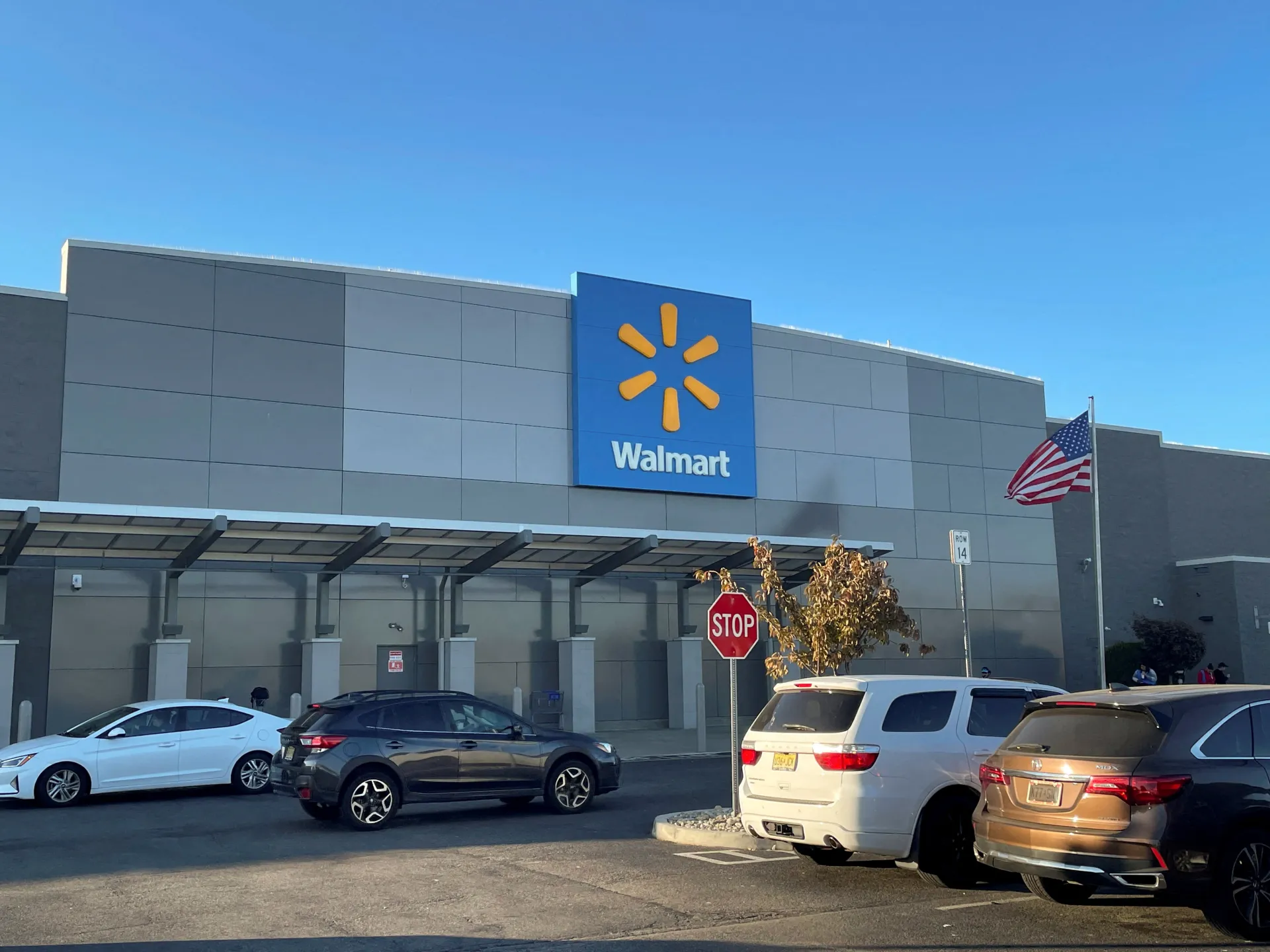
Walmart sees sales drop as US consumer spending retreats | Retail News

Walmart sales are slumping as US consumer spending pulls back, with the economic impact of tariffs and the United States’ tensions with Iran weighing on consumers, the big-box retailer’s most recent earnings report shows.

US same-store sales rose 2.6 percent in the second quarter, according to the company’s earnings released on Thursday, falling short of the 3.8 percent forecast by analysts at LSEG. That marked the slowest quarterly increase in six years.

Recommended Stories

list of 4 itemsend of list

The Bentonville, Arkansas-based retailer said heightened petrol prices are to blame for the slowdown in spending.

“When fuel prices increase and get above $4, perhaps there’s a psychological impact to that … consumers are making trade-offs,” CFO John David Rainey said on a call with analysts on Thursday.

Prices are continuing to jump. The average price for a gallon (3.78 litres) of petrol rose to $4.10 on Thursday, up from $4.07 a week ago, according to the American Automobile Association, which tracks daily petrol prices. By comparison, the average price was $2.98 when the US and Israel first struck Iran.

The big-box retailer also said it expected $2bn in incremental fuel-related costs above its original guidance.

Sales dropped in Walmart’s US pharmacy business and also dipped elsewhere. Overall, quarterly revenue rose 3.4 percent, the slowest pace since the first quarter of fiscal 2023.

Consumers are spending more in the checkout line — 1.1 percent higher than the previous quarter — but it is still well below the 3.1 percent jump this time last year.

That comes as consumer inflation ticked up last month by 0.1 percent from the month prior and 3.4 percent from this time last year, according to the US Labor Department’s Bureau of Labor Statistics (BLS).

The price of fresh fruit jumped 2.2 percent from a month ago, butter by 0.8 percent, and fresh fish by 1 percent, according to the BLS report.

This as overall retail sales dipped in July, dropping 0.6 percent, marking the biggest decrease since May 2025, according to the US Commerce Department data released last week.

Walmart also announced price cuts on Wednesday on 11,000 items, to be fuelled in part by the $2.9bn in tariff refunds it has received – a one-time boon – and a strategy also being deployed by rivals including Target.

Walmart said, however, that price changes took effect in July, so the effects might be more apparent in the company’s next earnings report.

“You don’t necessarily expect to have that offsetting benefit to the lower prices in the immediate period,” Rainey said.

However, fewer consumers are venturing into brick-and-mortar stores, with foot traffic increasing by 1.5 percent for the quarter, a drop from 3 percent in the previous quarter. However, Walmart’s e-commerce sales are on the upswing, with sales jumping 24 percent in the US.

As a result, Walmart upgraded its forecast for net sales growth, from 3.5–4.5 percent to 4–5 percent.

But that is limited because in-store sales are still the company’s premier offering.

“The bread and butter of the company is still in-store and in-person shopping,” Melius Research analyst Jacob Aiken-Phillips told the Reuters News Agency.

Mixed big-box earnings

Other big-box retailers also reported earnings in the last couple of days, with a pullback in consumer spending being an undertone. TJX, the parent company of TJ Maxx and Marshalls, reported sales growth of 1 percent for the quarter, a slowdown from 6 percent the quarter before.

“Our fear is that it relates to lower ticket [less purchases per shopping trip] given wider signs of consumer weakness and price increases over the last year-and-a-half,” William Blair analyst Dylan Carden told Reuters.

That comes alongside earnings from Target, one of Walmart’s closest competitors. On Wednesday, the Minneapolis, Minnesota-based big-box retailer reported net sales jumping 5.3 percent for the quarter compared to this time last year, at $26.5bn.

That was driven by a 3.6 percent rise in in-store traffic. The company has also cut prices over the last year on more than 10,000 items and received a $1bn tariff refund.

On Wall Street, Walmart is taking a hit on the heels of its earnings report, with shares down by 9.6 percent since the market opened. Other big-box retailers are lower, but not showing nearly as stark a drop. TJX stock was down 1.7 percent, and Target was down by 0.1 percent.

Source link

As China Retreats, Gulf Capital Targets Africa’s Infrastructure

Investors step in to close Africa’s critical $80B infrastructure financing gap.

Gulf investors are rapidly reshaping Africa’s investment landscape, committing billions of dollars to ports, transport corridors, logistics, renewable energy, and critical minerals as governments across the continent seek new sources of long-term development finance.

The shift gathered momentum in June, when sovereign wealth funds (SWFs), commercial banks, development finance institutions, institutional investors, and corporate issuers launched the Africa–Middle East Corridor. Debuted during the Global Banking & Markets Middle East 2026 conference in Dubai, the initiative aims to mobilize capital for infrastructure, deepen Africa’s debt capital markets, and expand cross-border investment between the Gulf and Africa.

The launch comes at a critical moment for the continent. According to the African Development Bank (AfDB), Africa requires approximately $170 billion annually to finance infrastructure, yet current investment totals only $80 billion to $90 billion, leaving an annual financing gap approaching $80 billion.

The Gulf is positioning itself to help close the deficit.

Investors from Gulf Cooperation Council (GCC) countries announced 73 foreign direct investment (FDI) projects worth more than $53 billion across Africa in 2023, reflecting a decisive shift toward fewer but significantly larger investments concentrated in renewable energy, logistics, critical minerals, transport and digital infrastructure.

China Cuts Back

The changing investment landscape also reflects a broader shift in global capital flows.

For nearly two decades, Chinese policy banks financed much of Africa’s modern infrastructure expansion, underwriting railways, highways, ports, airports and power projects across the continent. Yet, according to the Boston University Global Development Policy Center, Chinese policy bank lending fell from a peak of $28.8 billion in 2016 to $2.1 billion in 2024. Annual lending regularly exceeded $10 billion between 2012 and 2018, but Beijing has increasingly pivoted from sovereign-backed megaprojects to smaller, commercially driven investments.

That retreat has created space for Gulf SWFs, export credit agencies, and commercial banks to expand their presence across Africa.

The United Arab Emirates has emerged as Africa’s fourth-largest foreign investor. Between 2019 and 2023, Emirati investments exceeded $110 billion, including an estimated $70 billion directed at renewable energy.

Several flagship transactions illustrate the scale of that commitment. ADQ’s $35 billion Ras El-Hekma development in Egypt ranks among the largest FDI deals ever concluded on the continent. DP World now operates six African ports and logistics facilities, while Abu Dhabi Ports has secured concessions in Egypt, Angola, and the Republic of Congo, strengthening Gulf influence over strategic maritime trade routes linking Africa with Europe, Asia, and the Middle East.

Renewable energy has become a major pillar of Gulf investment in Africa.

Masdar, Abu Dhabi’s state-owned renewable energy company, has committed $10 billion to develop 10 gigawatts (GW) of renewable energy capacity across sub-Saharan Africa by 2030. Infinity Power, a joint venture between Masdar and Egypt’s Infinity, is now Africa’s largest pure-play renewable energy company, operating 1.3GW of generation capacity in Egypt, South Africa, and Senegal, with a further 16GW under development. Saudi Arabia’s ACWA Power, one of the Middle East’s largest private power developers, continues to expand its renewable energy portfolio in Morocco, Egypt, and South Africa, while Gulf investors are increasingly financing green hydrogen, battery storage, and electricity transmission projects across the continent.

Gulf Capital Steps In

Commercial banks, too, are increasing their African presence.

In March, First Abu Dhabi Bank announced plans to establish its first representative office in Lagos, making Nigeria its West African hub. The lender has already participated in financing the $1.13 billion Lagos – Calabar Coastal Highway, signaling growing Gulf interest in African project finance and structured lending.

“Gulf capital is increasingly vital to Africa because of a strategic alignment of economic needs,” says Phumlani Majozi, senior economist and executive director at the African Markets Institute. “As traditional Western and Chinese funding slows, African countries require enormous investment for infrastructure, energy, and digital transformation, while Gulf states are actively diversifying beyond hydrocarbons. The relationship is evolving from aid-based engagement into long-term commercial integration.”

The trend represents a structural shift rather than a temporary investment cycle, Majozi says, driven by long-term economic diversification strategies such as Saudi Vision 2030 and the UAE’s ambition to become a global investment and logistics hub.

Private-sector advisers see the relationship as rooted in geography and commercial history.

“The Middle East is Africa’s closest neighbor. Trade between the two regions stretches back thousands of years,” said Jacqueléne Coetzer, founder and CEO of Jacqueléne Global Consulting. “Africa and the Gulf do not need to discover entirely new markets; they need to rediscover one another.”

Gulf investors are targeting critical minerals in the Democratic Republic of Congo and Zambia, agriculture in Ethiopia, renewable energy in Kenya and South Africa, logistics in Egypt and Nigeria, and financial services through Mauritius, Coetzer says.

Africa’s bargaining position is also strengthening.

The African Continental Free Trade Area (AfCFTA) is creating a $3.4 trillion integrated market spanning 54 economies. The continent controls roughly 30% of the world’s critical minerals, including copper, cobalt, lithium, and manganese — resources central to the global energy transition.

Individual countries are strengthening their ties across the regions as well. Kenya’s Comprehensive Economic Partnership Agreement (CEPA) with the UAE, signed in January 2025, was the first such agreement between the UAE and a mainland African country. The accord improves business access to both countries’ markets by expanding investment protection and providing a framework for deeper cooperation in trade, logistics, financial services and digital commerce.

“Africa’s leverage has never been stronger,” Majozi argues. “The continent possesses roughly 30% of the world’s critical minerals, the world’s youngest workforce and the AfCFTA’s $3.4 trillion integrated market. The challenge is converting that structural advantage into negotiating power.”

If the Africa–Middle East Corridor succeeds in converting investment commitments into bankable projects, it could become one of the principal channels through which Gulf capital finances Africa’s next generation of infrastructure, industrialization, and capital-market development.

Charles Wachira is a contributing writer based in Kenya.

Source link