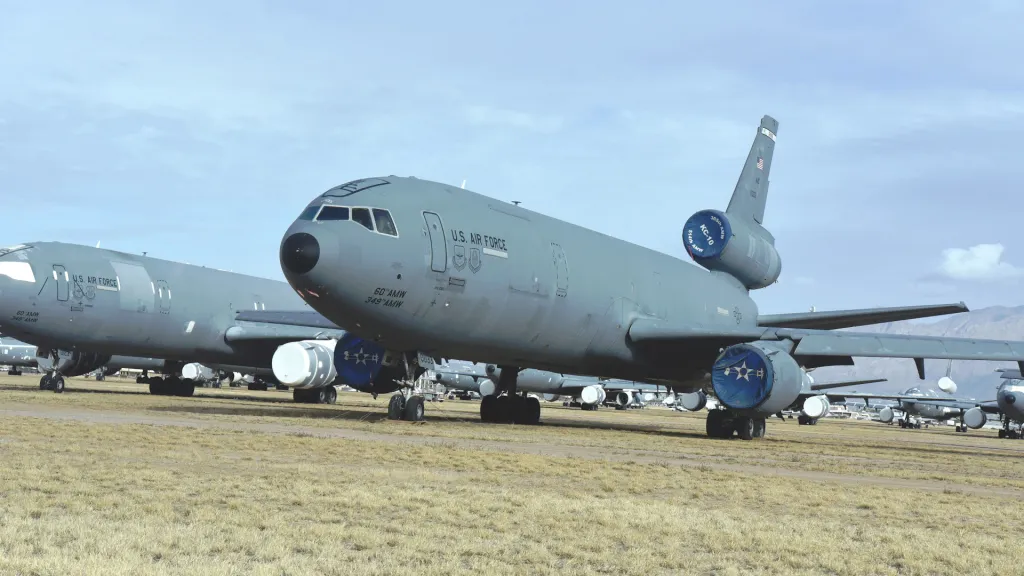
Retired

Retired Venezuelan Telecom Workers Demonstrate Nationwide to Demand Bonus Restoration

Retirees have protested outside CANTV headquarters throughout the country. (Ronaldo Díaz)

Caracas, June 23, 2026 (venezuelanalysis.com) – Thousands of retired workers from Venezuelan state telecommunications company CANTV have staged protests in recent days to demand the restoration of a monthly “income complement” payment.

On Thursday, CANTV suspended the US $200 monthly payment with no prior notice. The measure prompted emergency rallies outside the firm’s headquarters in Caracas, Barquisimeto, Valencia, and several other Venezuelan cities on Friday.

Active workers received the bonus as scheduled, though many joined the protests in solidarity.

The cutback reportedly affected around 10,000 retirees for whom the bonus represents over 70 percent of their monthly income. Many told reporters that the unjustified cutback placed an immediate strain on day-to-day survival, especially for those suffering from chronic illnesses.

The swift grassroots response prompted the company to backtrack and pay the retired workers $150 over the weekend. The CANTV retired workers’ plight also drew support from the World Federation of Trade Unions.

“The company thought that we would be the weakest link in their bid to cut costs at the workforce’s expense,” retiree Arturo Morgado told Venezuelanalysis. “But the protests all over the country told a different story.”

Monday saw around 300 workers demonstrate again outside CANTV headquarters in Caracas. A commission from FETRAJUTEL, a trade union representing the firm’s retired workforce, met with the CANTV board but received no commitment that the remaining $50 will also be paid. 

The announcement led protesters to temporarily block Libertador Avenue in central Caracas, vowing to maintain the pressure until the full bonus is restored.

“We are going to continue fighting, for the entire bonus and for other rights established in our collective bargaining agreement, including financial support for medical expenses and incomes that cover the cost-of-living,” Morgado added. “The company put these commitments in writing in a meeting with unions in late 2023.”

The former CANTV technician highlighted the “moral strength and honesty” of the retired workforce and warned that the present bonus-over-wage government policies leave workers vulnerable to discretionary cuts. Morgado’s social security pension is worth 570 bolívars per month, less than $1 at the present exchange rate.

With the Venezuelan economy heavily sanctioned by the US, the Nicolás Maduro government increasingly turned to non-wage bonuses while letting the minimum wage continuously devalue. Trade unions have criticized the policy for cheapening labor costs for employers and contravening the existing labor law.

Since taking over in January, after the US kidnapping of Maduro, Acting President Delcy Rodríguez has maintained the policy. On May 1, she increased the minimum monthly income for public sector workers to the official bolívar-equivalent of $240 a month, while pensioners received $70. Public sector retirees are entitled to $170 monthly, but in certain cases, like CANTV, they have secured improvements in direct negotiations with the company.

The labor dispute comes amid a controversial effort by the Rodríguez administration to “reengineer and restructure” the Venezuelan state, including public companies such as CANTV. The state telecoms provider was privatized in 1991 under the terms of IMF-imposed structural adjustment and partially acquired by a consortium headed by GTE, today Verizon. CANTV was re-nationalized by the Hugo Chávez government in 2007 and is currently under the purview of the Ministry of Science and Technology.

Education Minister Héctor Rodríguez, tasked by Miraflores with leading the state reform commission, recently sought to allay fears of massive public sector layoffs. He instead  suggested that workers might be “strategically relocated and retrained” in order to improve the public sector efficiency.

The acting administration has likewise launched a process to determine the “strategic” value of state-owned assets. A commission, featuring government officials and private sector representatives, will recommend whether the state should retain ownership of firms, land estates, and other assets or open them for privatization.

Financial advisory group Orinoco Research identified CANTV as a prime candidate for privatization, while libertarian think tank CEDICE Libertad called the prior sale of the telecom company a “model to replicate.” The 1991 privatization was followed by a process of asset stripping that dismantled the firm’s regionally advanced technical base and institutionalized outsourcing and arbitrary firings.

Edited by Lucas Koerner in Caracas.

Source link

Air Force One plane retired from fleet as Saudi gift plane joins

June 19 (UPI) — A Boeing 747-200 made its last flight as Air Force One after it brought President Donald Trump home from Europe this week.

“Well done, good and faithful servant,” White House Communications Director Steven Cheung posted Thursday on X. “The Last Ride.”

White House Deputy Chief of Staff Dan Scavino also posted a tribute with a video on X.

“I have been fortunate to fly around the world on this iconic plane for 5½ years – of the 35 years it has been serving the U.S. Presidents…THANK YOU… .”

There are two 747-200s working as Air Force One, designated VC-25A by the Air Force. The two have tail numbers 28000 and 29000. The latter is retiring.

The plane has been in operation since 1990, with President George H.W. Bush as its first presidential passenger.

“The VC-25B Bridge aircraft will soon join the active executive airlift fleet alongside the VC-25A and C-32,” an Air Force spokesperson said.

Three 747-800s are being prepared to step in, including the luxury jet donated by the Qatari government. Officials have said it should be ready for use this summer and that the Air Force had finished its modifications and testing of the craft.

Gen. Dale White, the Department of Defense’s direct reporting portfolio manager for critical major weapons systems, said in a May statement that the Qatari plane will “relieve pressure on the aging VC-25A fleet.”

“Ultimately, the Bridge aircraft fulfills a critical short-term requirement, guaranteeing the Air Force continues to execute its no-fail mission for the commander in chief while laying a rock-solid foundation for the future,” the release said.

The new planes will have Trump’s preferred color scheme of red, white, gold and dark blue. He proposed the change while in office for his first term, but President Joe Biden reversed the plan back to the traditional colors. When Trump was re-elected, the new color scheme was once again adopted.

President Donald Trump presents a Medal of Honor to Tom Ripley on behalf of his father, John W. Ripley, during a Medal of Honor award ceremony in the East Room of the White House on Thursday. Photo by Aaron Schwartz/UPI | License Photo

Source link

No, A VC-25A Air Force One Jet Isn’t Being Retired Just Yet

The U.S. Air Force has confirmed to TWZ that both of its existing VC-25A Air Force One jets will continue to serve in the immediate future. Several White House officials had suggested that the career of one of the jets had effectively come to an end in social media posts overnight, which are now going viral. There are growing signs that President Donald Trump’s next trip on an Air Force One jet will be aboard the so-called VC-25B “Bridge” aircraft converted from an ex-Qatari VVIP Boeing 747-8i, not a VC-25A.

“The VC-25B Bridge aircraft will soon join the active executive airlift fleet alongside the VC-25A and C-32,” an Air Force spokesperson told TWZ this morning, but did not offer a firm timeline. When asked if this also meant that both of the VC-25As would remain in the service’s active executive airlift fleet, the same spokesperson said “yes.”

A stock picture of a VC-25A Air Force One aircraft. USAF

TWZ had reached out after seeing the aforementioned social media posts regarding the VC-25A that took President Donald Trump and others to and from the annual G7 summit in France this week. That particular aircraft has the Air Force serial number 92-9000 and is also often referred to simply by the tail number 29000. Several outlets had subsequently reported that one or both VC-25As were being removed from service.

“‘Well done, good and faithful servant.’ The Last Ride,” Steven Cheung, Assistant to the President & White House Director of Communications, wrote in a post on his official account on X, which also included a picture of 92-9000.

“I have been fortunate to fly around the world on this iconic plane for 5 1/2 years — of the 35 years it has been serving U.S. Presidents… THANK YOU… AIR FORCE ONE 2900,” White House Deputy Chief of Staff Dan Scavino also wrote in a post on X that included a video of the aircraft.

The Air Force’s clarification to TWZ today is in line with a story from NBC News just last week. “Once the Qatari plane, which the Air Force refers to as VC-25B Bridge, enters the rotation this summer, the VC-25As will continue to serve in the executive fleet and could still be used by the president as Air Force One,” that outlet reported, citing an unnamed U.S. official.

The VC-25B Bridge “program epitomizes what is possible when clear accountability is placed on one individual, and the entire enterprise of stakeholders aligns behind a single mission outcome … deliver a bridge capability as soon as possible to relieve pressure on the aging VC-25A fleet,” Air Force Gen. Dale White, Direct Reporting Portfolio Manager for Critical Major Weapon Systems, had also said in a statement accompanying a press release last month.

The VC-25B Bridge aircraft seen still painted overall white circa May 1, 2026. Courtesy photo via the USAF

The Air Force is also in the process of acquiring two fully-equipped VC-25Bs from Boeing, and currently expects to take delivery of the first one in mid-2028. The service also said that “on-going [VC-25A] modifications are to extend the service life until the VC-25B aircraft are fielded” in its proposed budget for the 2027 Fiscal Year, which was rolled out earlier this year.

When the Bridge aircraft enters service, it could well become President Trump’s preferred Air Force One option. Since his first term, he has been very eager to accelerate delivery of a new Air Force One jet. The VC-25B program has been mired in delays and cost growth for years. Under the current schedule, the Air Force is set to get the first of those aircraft just months before Trump leaves office again.

Under the original Air Force One replacement plan, the VC-25As would have been retired already. These jets, as well as four E-4B Nightwatch ‘doomsday plane’ flying command posts that remain in Air Force service today, are based on the 747-200. This is a model that first entered production in the 1970s, and they are becoming very difficult and expensive to operate and sustain. 200-series 747s in any configuration have all but evaporated from service worldwide, creating additional supply chain hurdles. Boeing shuttered the 747 line entirely back in 2023.

Another stock picture of VC-25A tail number 29000 taken back in 2013. USAF

As Gen. White said in his statement in May, the Bridge aircraft will help ease the strain on the VC-25As until the fully-equipped replacement VC-25Bs arrive. At the same time, serious questions remain about the Bridge aircraft’s ability to truly support the full spectrum of Air Force One missions, as TWZ has highlighted repeatedly in the past. Operational security concerns about using a former foreign-operated VVIP jet for this mission have also been raised, though U.S officials have downplayed any such risks.

The VC-25As notably have shielding against electromagnetic pulses (EMP) and other features that harden them to be able to operate even in the midst of a nuclear exchange. The Air Force One mission also requires alternate options to be available at all times. Both VC-25As often accompany the president on international trips, with the second acting as one of the backup options.

The arrival of the Bridge aircraft could still allow the Air Force to move at least one VC-25A into more of a reserve status, at least when it comes to taskings for lower-risk trips. The full replacement plan might eventually reach a point where the Air Force could deem it possible to cannibalize 29000 for much-needed spare parts. At the same time, if the Air Force were to be left with just one truly full-spectrum Air Force One aircraft, this would only magnify the aforementioned controversy and concerns surrounding the ex-Qatari jet.

The Air Force did also confirm last year that it was buying two additional 747-8is from German flag carrier Lufthansa to support the Air Force One fleet. The service has now taken delivery of at least the first one of these aircraft, which is being used as a trainer for aircrew and maintainers on the ground. The other will be a source of spare parts.

Regardless, the Bridge aircraft is getting close now to formally entering service, and its public debut could come within a matter of weeks. An Air Force spokesperson had already confirmed to TWZ last week that the jet had received its new livery – as seen in the picture below – and was undergoing “final modifications” ahead of its formal entry into service.

Travis Ghormley

The new paint scheme has itself been a controversial aspect of future Air Force One plans for years now. During his first term, President Trump announced that the future VC-25Bs would wear a new red, white, and blue scheme rather than the iconic paint job that currently adorns the VC-25As, which dates back to the Kennedy administration. President Joe Biden subsequently reversed that decision, but Trump reinstated his original plan after taking office again last year. U.S. Air Force C-32s, as well as new executive jets serving the U.S. Coast Guard and the Department of Homeland Security, have also emerged in the past year with their own versions of this livery.

A rendering of a future VC-25B wearing the same scheme as the current VC-25As. USAF

The Bridge aircraft’s current location is unclear. Last week, still unconfirmed reports emerged that the jet had flown discreetly from Texas, where it had received initial modifications and the new livery, to Andrews Air Force Base just outside Washington, D.C. Andrews is where the VC-25As, as well as various other Air Force executive aircraft, are based.

When the Bridge aircraft will make its first official appearance remains to be seen. In its report last week, NBC News said that Trump could use the jet for a planned trip to Mount Rushmore in South Dakota on July 3, citing an unnamed White House official and another source familiar with the deliberations. Reuters also reported in May that the ex-Qatari 747 might make its debut during a July 4 flyover.

TWZ has reached out to the White House for more information.

Another picture of the VC-25B Bridge aircraft from earlier this year. Courtesy Photo via USAF

It should be noted here that the evolving Air Force One plans also reflect a larger revamping of executive aircraft fleets across the U.S. military and other ends of the federal government under the current administration.

The VC-25B Bridge’s official entry in service does now looks to be increasingly imminent, but the Air Force’s VC-25As are also set to keep flying, at least for the time being.

Contact the author: joe@twz.com

Joseph is TWZ’s Deputy Editor, helping to oversee the site’s highly experienced and dedicated team, while also writing informative and impactful defense and national security content. He lives right in the thick of it in the Washington, D.C. area.


Howard is a Senior Staff Writer for TWZ. He writes frequently about conflict, focusing heavily on the Middle East and Ukraine, and interviews with military and intelligence officials and industry leaders from around the globe. He lives near Tampa, Florida, home of U.S. Central Command, U.S. Special Operations Command.


Source link