L.A. County restraining order system to undergo sweeping reforms
The Los Angeles County Board of Supervisors unanimously approved a motion Tuesday aimed at improving the county’s restraining order system in order to better support and protect victims of domestic violence and stalking.
The measure, which was co-authored by Supervisors Lindsey Horvath and Hilda Solis, also begins the process of officially making gender-based violence and intimate partner violence a “Board-directed priority” and calls on county agencies to identify millions of dollars of funding to help bolster the efforts.
The motion cited an investigation published by The Times in September that examined L.A. County’s restraining order system and the ways it often fails to support people who seek protection through the courts.
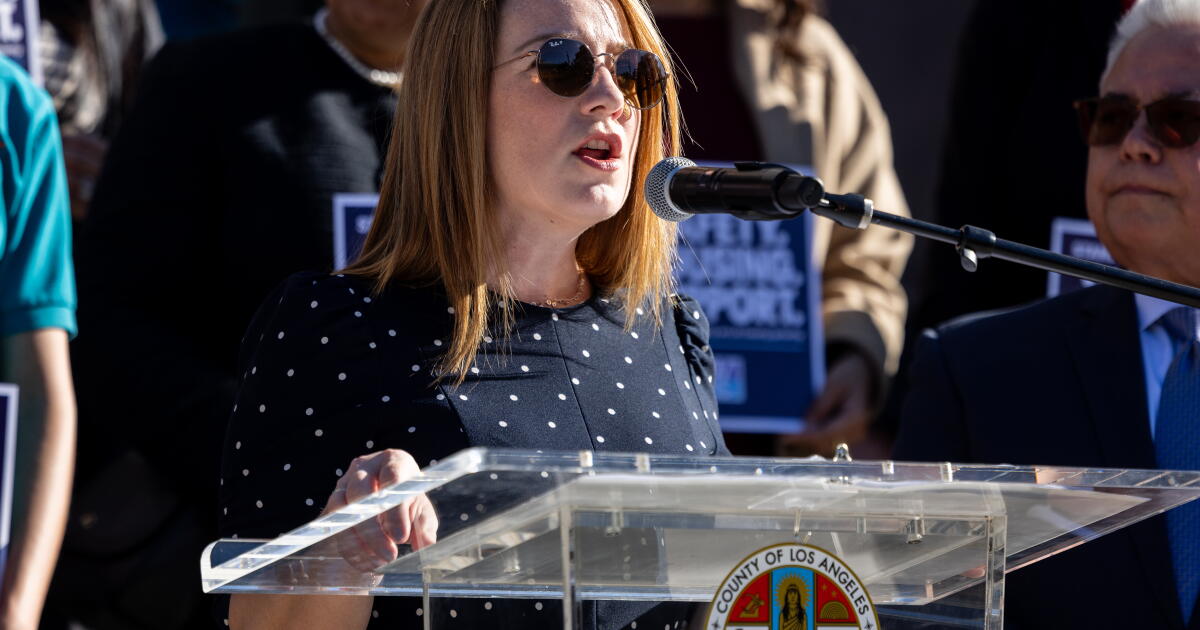
“These are signs that systems aren’t doing enough to help people,” Horvath said Tuesday. “A survivor should never have to fight the system while fighting to survive.”
The motion calls on the county’s chief executive officer to identify millions of dollars in new funding for self-help legal centers, courthouse domestic violence clinics, and the launch of a hotline to help connect the public with services.
The motion also calls on the county’s chief executive, the Los Angeles County Sheriff’s Department, and other agencies to assess their current efforts, plans for improvement and opportunities for additional funding and present their findings to the board.
Sheriff Robert Luna told The Times in an interview last month that he thinks his department is “going to be able to figure out” how to improve how it handles serving restraining orders and responds to reported violations. The Times reported in September that in 2025, sheriff’s deputies failed to locate targets of restraining orders 49% of the time.
“This motion,” Luna said, “is causing my entire staff and different parts of the department to really look in the mirror and say, ‘What are we doing, and what could we do to improve?’”
Supervisor Janice Hahn said she supported the motion because it’s critical that “survivors are able to get the help they need without hitting any additional barriers.” Like Horvath and Solis, Hahn thanked The Times during the meeting for exposing problems with the restraining order system and for compiling and publishing data that quantified the difficulties people face when trying to obtain protection from abusers and stalkers.
The September investigation found that only 21% of restraining orders requested in L.A. County are granted. The Times also found that in 2025, the county’s courts dismissed 57% of the nearly 15,000 petitions for domestic violence restraining orders they received, nearly double the 29% statewide dismissal rate in the same types of cases.
The Times reported that at least 63 homicides in L.A. County in 2024 and 2025 involved a woman with a former partner or close relative who was arrested or charged in connection with their killing. At least 10 of the slain women had filed for restraining orders.
The reporting highlighted the experiences of Nora Villanueva Campanor, who was killed by her estranged husband in Lancaster in 2024 after she struggled for months to get L.A. County Sheriff’s deputies, prosecutors and other stakeholders to take her fears seriously.
Her sister, Jazmin Villanueva, addressed the board on Tuesday to advocate on behalf of the motion, which she said will address issues with the county’s system — implementing changes that could have benefited Nora and potentially helped keep her alive.
“We need funding for navigators inside the courts to help victims directly with paperwork and the process,” she said. “I have young daughters and I don’t want them standing here 30 years from now asking for the same changes. This needs to change now.”
The motion directs county officials to develop a plan for peer navigators to support domestic violence victims and recommend ways to help them navigate restraining order service and court delays. It also calls for an assessment of the resources needed to provide emergency housing to all people fleeing gender-based violence who seek it.
An earlier version of the motion came before the board on Oct. 6. Since then, the Board of Supervisors collected input about how to improve the measure.
One key change since October was the addition of language directing county officials to recommend ways “to better support survivors seeking civil protection restraining orders due to physical or attempted violence, stalking, a credible fear of violence, or a pattern of behavior that seriously alarms, annoys, or harasses and causes substantial emotional distress,” broadening the scope beyond cases of domestic violence and stalking.
A key goal of the motion and the board’s efforts is to “acknowledge where failures exist and where we need to do better,” Horvath said Tuesday.
“Often we are asking our survivors to go to multiple different places to get the resources and support they should get through one unified response … Public safety means more than responding after violence occurs.”