This winter thousands of holidaymakers will be packing their thermals and heading for the ski slopes. We’d love to hear about your favourite smaller ski resort, one which has managed to hang on to its local character and charm, whether it’s in the Alps, the Pyrenees, Scandinavia or eastern Europe.
The best tip of the week, chosen by Tom Hall of Lonely Planetwins a £200 voucher to stay at a Coolstays property – the company has more than 3,000 worldwide. The best tips will appear in the Guardian Travel section and website.
Keep your tip to about 100 words
If you have a relevant photo, do send it in – but it’s your words we will be judgingfor the competition.
We’re sorry, but for legal reasons you must be a UK resident to enter this competition.
The competition closes on Monday 12 October at 10am BST
Your responses, which can be anonymous, are secure as the form is encrypted and only the Guardian has access to your contributions. We will only use the data you provide us for the purpose of the feature and we will delete any personal data when we no longer require it for this purpose. For alternative ways to get in touch securely please see our tips guide.
If you’re having trouble using the form click here. Read terms of service here and privacy policy here.
While many may flock to the huge French resorts of Val D’isere or Chamonix, for a more intimate romantic ski getaway one hidden Austrian getaway scoops the title
09:00, 02 Oct 2026Updated 09:28, 02 Oct 2026
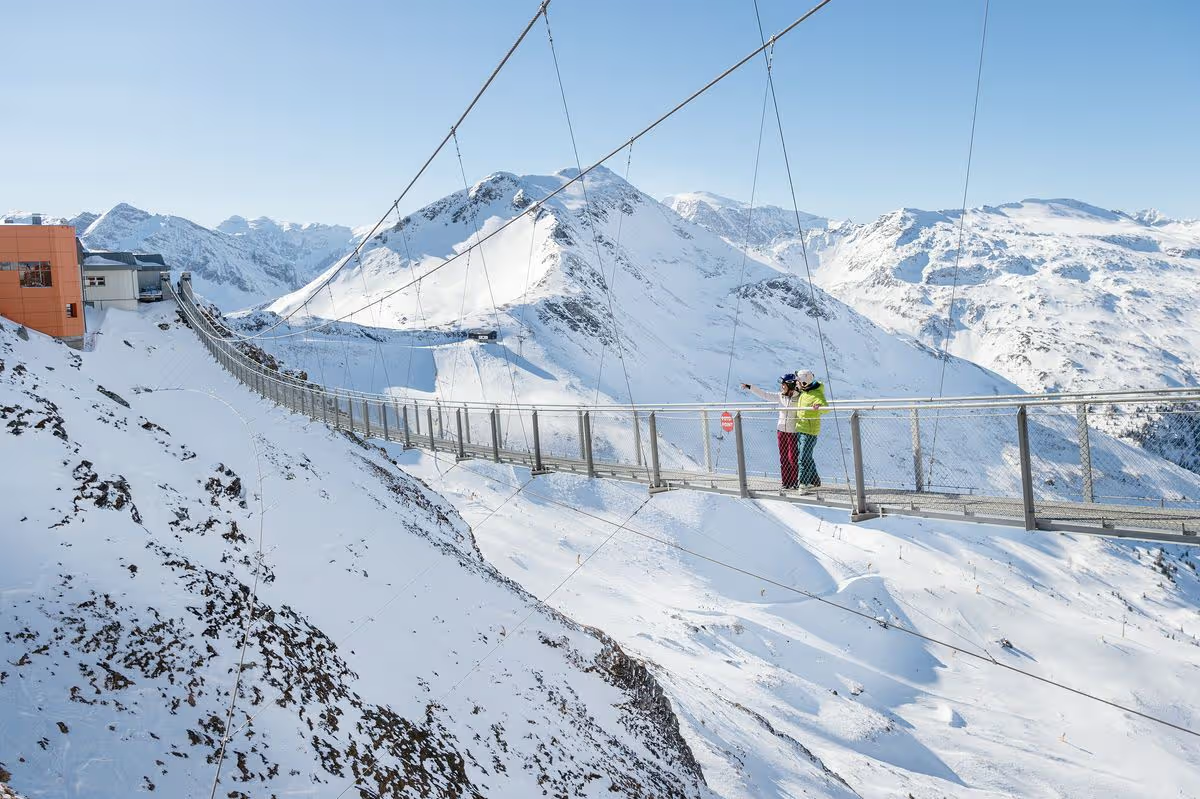
Is Austria’s Gastein valley one of Europe’s most romantic winter getaways(Image: Atelier Wolkersdorfer)
There are ski resorts built for thrill seekers, and there are ski resorts built for those searching for glamour. Then there is the Gastein Valley in Austria, a place that seems designed for something else entirely – romance.
Hidden deep within the Alps in the province of SalzburgerLand, the valley’s twin spa towns of Bad Gastein and Bad Hofgastein combine sweeping mountain scenery, healing thermal waters and classic wooden ski huts that ooze quintessential Austrian charm.
While German may not be known as a romantic language, the Austrian alpine culture all but makes up for it with its cosy wooden lodges with roaring fires, extremely good local wines (I promise it’s not just Riesling), and let’s not forget about the fondue. Something I indulged in for the first time on a recent trip, surrounded by a roaring fire in said cosy lodge, at Bellevue Alm Gastein. Washed down with a good quantity of schnapps, of course.
Do you have a travel story to share? Email webtravel@reachplc.com
With plenty of lodges to curl up in, it’s clear why the region has quietly gained a reputation as one of the Alps’ most romantic winter destinations. The resort of Bad Gastein itself is unusual. Rather than spreading gently across a valley floor like most Alpine resorts, it clings dramatically to the side of a steep gorge.
After a walk around the town during golden hours on a brisk February evening, looking at the mountain views and the marvels of architecture that surrounded me, it hit me – I’m in a Wes Anderson film. The streets were lined with grand pastel coloured hotels perched perilously onto the mountainside, just like in one of my personal favorite films, The Grand Budapest Hotel. I walked through the flakes, feeling as though I had just stumbled onto a film set with Ralph Fiennes and Bill Murray.
But this wasn’t just a figment of my imagination. The cult-classic director is said to have traveled to Bad Gastein, seeking alpine inspiration for the Oscar-nominated hit. Clearly, he found it. It is especially easy to spot when looking up at the façade of the Grand Hotel de l’Europe. The hotel looks out over a cliff, a gentle waterfall crashing below, with all but a bright pink 19th-century funicular distinguishing it from the film itself.
As I continued my wander, the noise of the waterfall offered its own theatrical backing track – and one that becomes even more magical in winter, when mist from the waterfall freezes into crystals and snow dusts the pastel-coloured buildings. This is a magic that has been enchanting people for centuries, with the town having inspired many Romantic composers.
Franz Schubert and Johann Strauss found musical inspiration from the valley, while it is said Mozart himself was born in Bad Gastein before his pregnant parents moved to the nearby city of Salzburg.
Today, that historic grandeur remains, giving the resort a slightly surreal atmosphere that feels part Hollywood and the perfect place for a day together on the slopes.
EUROPE is home to a theme park you might not have heard of, but was named one of the best in the world – and it’s about to get some huge upgrades.
Futuroscope in France is often overlooked by its busier neighbour Disneyland Paris.
Futurscope is one of Europe’s top rated theme parksCredit: AlamyA huge new 240-room hotel based on science fiction is the biggest of the new plansCredit: Not known, clear with picture desk
Yet earlier this year, it was named one of Europe’s best theme parks by Blooloop and was even dubbed the equivalent to Universal Studios in Europe”.
Celebrating its 40th birthday next year – it opened in 1987 – it has since announced huge new multi-million plans.
Sign up for the Travel newsletter
Thank you!
Called Vision 2025, the €304million (£260million) masterplan has already included the Aquascope waterpark, three rides and and two themed hotels.
One of the biggest upcoming investments will be a fourth hotel at the park, with a sciencefictiontheme throughout.
The four-star hotel is currently under construction, with 240 rooms randing from premium to suites.
A 400-seat restaurant, an 120-seat bar and a huge spa area are all part of the plans too.
Guests will be able to access the park directly via a pedestrian bridge when it opens.
An official opening date and prices are yet to be confirmed.
The hotel is set to open next year although room prices are yet to be announcedCredit: FuturoscopeA new light parade show will launch this winterCredit: FuturoscopeUntil then, the park has 40 rides and attractions to explore including the indoor waterpark AquascopeCredit: Futuroscope
Olivier Héral, Creative Director, said it will be a “spectacular and immersive hotel, designed as a world unto itself, where architecture, scenography and services tell a true story”.
Also new next year will be ATHOS, a new IMAX film at the park’s Kinemax.
The new Dance with the Robots attraction will see 10 robots dancing to music, while others include the illusion show Imagine, Live Show.
But there are also some exciting new additions to the park this year too.
From December 5, the new Magical Nights parade will launch with five floats and 23 artists.
In the mean time, there is still loads of things to do with 40 rides and attractions.
This includes the Aquascope indoor waterpark, which have eight slides and a lazy river with four themed universes – and even an “aquatic cinema”.
One visitor previously said: “Aquascope is a kind of aquatic nightclub crossed with aJames Cameronfilm.“
“Looking back at fiscal 2026, while it was an exceptionally challenging weather year, it also demonstrated the resilience of our business model” (CEO & Executive Chairman Robert Katz) and “our advanced commitment strategy and resource efficiency transformation
Seeking Alpha’s Disclaimer:This article was automatically generated by an AI tool based on content available on the Seeking Alpha website, and has not been curated or reviewed by humans. Due to inherent limitations in using AI-based tools, the accuracy, completeness, or timeliness of such articles cannot be guaranteed. This article is intended for informational purposes only. Seeking Alpha does not take account of your objectives or your financial situation and does not offer any personalized investment advice. Seeking Alpha is not a licensed securities dealer, broker or US investment adviser or investment bank.
WITH ancient ruins like the Acropolis and the Temple of Zeus, Athens has long been considered one of the oldest cities in the world – but it’s about to get much more modern.
A new billion-pound seafront regeneration project with a towering skyscraper and luxury shopping has resulted in the city being dubbed the ‘new Dubai‘.
The Ellinikon project which includes the building of a 650 foot tower is underwayCredit: theellinikon.comThe regeneration is taking place on the Athens RivieraCredit: theellinikon.com
A regeneration project called The Ellinikon an estimated €8billion (£6billion) is set to completely transform the area to become its first ‘smart city’.
Sign up for the Travel newsletter
Thank you!
At its core is an enormous skyscraper called Riviera Tower – once transformed it will be the tallest building in Greece at over 650 feet high.
Inside will be around 170 luxury apartments including penthouses and each one will have panoramic views over the coastline.
The Ellinikon will also have new additions including ‘Little Athens’, a new neighbourhood right next to the beach with apartments as well as small shops and cafés.
The Riviera Galleria will be a new complex for luxury shopping with 80 new shops covering 10,000 square metres.
At the galleria will also be upscale restaurants, artisan ice-cream parlours, beauty salons and organic markets.
The upscale and luxury aspect mirrors what visitors expect when heading to the seafront neighbourhoods of Dubai.
The ancient city of Athens is considered one of the oldest in the worldCredit: Alamy
In order to entice expats into Greece, the country is also offering tax breaks – much like Dubai which is a playground for the wealthy.
Since its debt crisis in around 2009, Greece has made a ‘remarkable economic recovery’, according to the IMF.
Part of this is thanks to tax breaks aimed at families, young workers and expats.
Under new rules this year, investment professionals who relocate to Greece can pay five per cent on “carried interest” – this is a fraction of the rate in the UK.
The project is being built on the site of the former Ellinikon International AirportCredit: Not known, clear with picture deskThere will be new luxury apartments, shopping gallerias and spasCredit: theellinikon.com
Talking to The Times, Henley & Partners, which organises residence and citizenship planning for the rich says interest in moving to Greece has surged.
It’s now the second-most popular destination after St Kitts & Nevis for relocation.
Mario Rafael, a managing director at the firm. said: “Greece is increasingly competing for the attention of the same internationally mobile families considering places such as Milan and Dubai.”
If it does turn into a Dubai-alternative, for Brits it’ll be much easier to get to as the flight is around four hours less.
While it might not be the winter hotspot like the city in the UAE, Athens still has scorching summers too.
I RAISE my fork to my mouth and lock eyes with Stevie. My heart stops. He’s 6ft, super-muscly and has a cracking set of teeth.
He spends the next hour watching me eat by candlelight, and he’s there again at breakfast the next morning.
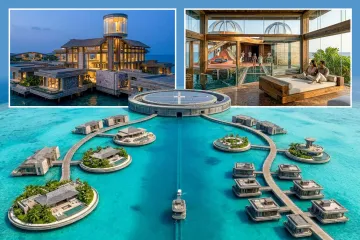
The Maldives is widely known as the world’s most romantic honeymoon hotspotCredit: SuppliedUnderwater restaurants allow visitors to enjoy the diverse ocean life without getting their feet wetCredit: Supplied
But far from being my husband or an admirer, Stevie is a blacktip reef shark simply enjoying his natural habitat at Oblu Xperience Ailafushi — a four-star resort on a tropical island in Male Atoll of the Maldives.
The country is known as the world’s most romantic honeymoon hotspot, but I was there to check out its wilder side,
Sign up for the Travel newsletter
Thank you!
Of course, this included dining at Only Blu, the largest underwater restaurant in Asia.
Sitting 22ft below sea level, it’s a way to enjoy the diverse ocean life, without getting your feet (or hair) wet.
It’s not included in Ailafushi’s all-inclusive “Fushi” plan, but it’s well worth splashing out on (prices start from £95 per person).
I was just inches away from blue powder surgeonfish, humbug damselfish and dozens of parrotfish as I tucked into my decadent five-course meal — though I did feel slightly guilty as I stuffed forkfuls of the “reef catch of the day” into my mouth. I hoped I wasn’t eating any of their brothers or sisters!
As several sharks swam by, including the one I nicknamed Stevie, “oohs” and “aahs” spread like a Mexican wave.
This kind of restaurant could be gimmicky. But the food — which included pistachio scallops, tuna poke bowls and decadent chocolate desserts — was genuinely delicious.
There were so many fish displaying vivid colours, it was like being inside a Windows screensaverCredit: SuppliedMy over-water villa was stunning — exactly what you picture when you think of a Maldivian suiteCredit: Supplied
Just a 20-minute complimentary speedboat ride from Male airport, Ailafushi is a more affordable choice than many Maldives resorts, with all-inclusive packages starting at £160 per person per night.
But for the comparatively bargain price (most four-star resorts average at £300), you don’t miss out on the luxury.
My over-water villa was stunning — exactly what you picture when you think of a Maldivian suite, with an outdoor shower, private sundeck and stairs that drop you straight into the pale blue Indian Ocean.
Each night, I drifted off to the soothing sound of the waves beneath my floorboards. And every morning, I threw off my pyjamas and jumped directly into them.
It was the same at Ailafushi’s more upmarket five-star sister hotel, Oblu Select at Sangeli, where there’s even a window in the floor for 24-hour ocean life viewing.
But if the idea of sleeping and showering above sharks and stingrays gives you the creeps, both resorts offer beach houses and family suites far enough from the shore to put your mind at ease.
You should get out on the water, though, if your fears allow. Especially as guests can pick up a snorkel and fins to use for free throughout their stay.
I’ve never seen such amazing sea life, with reef sharks, unicorn fish, eagle rays and turtles just feet away.
The tropical resorts have their own spas for guests to feel even more relaxed – including free treatmentsCredit: GettyGuests can book local island excursions, fishing trips and moonlight cruisesCredit: Getty
Like many reefs around the world, the coral is sadly bleached. But there were so many fish displaying vivid colours, it was like being inside a Windows screensaver.
If you’d rather stay above the waves, though, there’s still plenty to see and do on dry land and boat.
Guests can book local island excursions, fishing trips and moonlight cruises.
My favourite was the sunset dolphin cruise. They might be wild animals, but they certainly put on a show, leaping in the air and gliding along the side of the boat.
At one stage, there were so many gasps and pointed fingers, it felt like I was watching a fireworks display. Guests also have access to free pedalos, kayaks and stand-up paddle boards.
And both resorts also have their own spas, ELE|NA Ayur — perfect for while your partner, kids or hungover pals are napping.
At Sangeli, where guests get a free 45-minute treatment for every four nights they stay, a stress-buster massage melted away the tension I built up during the 14-hour journey to get there from London Heathrow via Dubai.
Equally dreamy was the full-body Balinese treatment at Ailafushi, where prices start at $50.
Ailafushi is a more affordable choice than many Maldives resorts, with all-inclusive packages starting at £160 per person per nightCredit: SuppliedAlice tried out a sunset line-fishing trip and reeled in a giant remoraCredit: Supplied
Life is equally indulgent at the more peaceful Sangeli.
Alongside couples’ massages and intimate dinners, there’s a phenomenal free kids’ club with puppet making, cupcake decorating, palm leaf crafts and scavenger hunts.
There’s also a slide that plops you directly into the sea — fun for all ages. I howled with laughter as I sped round the tight bends before crashing into the gentle waves at the bottom.
If you’re feeling energetic — or simply want to work up an appetite for your next meal at one of each resort’s four restaurants — try the over-water gym with one of the best views in the world.
You could also attempt a sunrise yoga class, if you haven’t had too many of the hotel’s unlimited cocktails the night before.
By this point, you’ve probably seen plenty of fish from your villa, perhaps snorkelled with several and spotted them during a boat trip. So why not try catching a couple on a sunset line-fishing trip?
Whether you’re a seasoned fisherman or, like me, have never picked up a rod in your life, it’s the perfect way to spend an early evening.
And you might surprise yourself. I went in thinking I’d have no luck at all, but ten minutes before our time was up, I felt a hard tug on my line and eventually reeled in a giant remora.
I squealed with delight (and perhaps a little fear) as it flapped about in front of my face. But I quickly threw him back into the shimmering water.
Despite being a Muslim country where alcohol is all but banned, booze is freely available at all tourist resorts.
They also take international holidays incredibly seriously.
I’m told Christmas is an extravagant affair with Santa Claus arriving on a flyboard or parasail before descending to the beach with gifts.
I was there for Halloween and they did not hold back — think eyeball cupcakes, a terrifying haunted house, and dark red cocktails served in blood bags.
Four waiters dressed as zombies even carried a “body” in a coffin through the restaurant at dinner.
Yes, it costs more to get there (return flights start at £785 with Emirates) than Ibiza and your hotel will be a little more expensive, but you’ll barely spend a thing once your feet hit the white sands. And truly, it’s worth it.
Forget the White Isle — make the Maldives your next trip.
GO:
GETTING/STAYING THERE: A seven-night all-inclusive getaway to OBLU Xperience Ailafushi is from £1,831pp based on two sharing an Ocean View Room and including flights from Gatwick on November 11. See destination2.co.uk.
A seven-night stay at OBLU Select Sangeli in a Beach Villa is from £2,915pp including flights from Gatwick on November 18. See kenwoodtravel.co.uk.
EUROCAMP has hundreds of resorts across Europe – but there is one that has been backed by mums as being the best.
Found in Holland, Duinrell has a lot to shout about including a theme park as well as a huge indoor and outdoor waterpark.
Eurocamp Duinrell in the Netherlands has a huge theme park that’s free for guestsCredit: EurocampIt also has an indoor and outdoor waterparkCredit: Eurocamp
With all this, it’s no surprise that it’s one of the top-rated Eurocamp resorts for families – and it was voted as such on Mumsnet.
Its main draw is the enormous theme park which is completely free for guests with over 40 rides and attractions.
Sign up for the Travel newsletter
Thank you!
It has high thrill rollercoasters like The Falcon which is 72 feet tall with vertical drops, loop the loops and a top speed of 43mph.
There are other more family-friendly rides like log flumes, bumper cars, slides and climbing towers.
Something else that makes it so popular is the enormous waterpark which has a total of 21 waterslides and huge swimming pools which are both indoor and outdoors.
The complex has a lazy river, a wave pool and an outdoor Tiki pool with tipping buckets and fountains which is open in the summer months.
Inside is where families will find the Playa waterpark which is especially designed for little kids up to 12 years old, with four waterslides for children.
Guests will need to pre-book time slots and pay up to €15 (£12.88) per person for the waterparks.
Activities don’t stop there either, as families can spend hours in its arcade which has over 80 games.
There’s mini golf, air hockey, classic arcade games, including eight immersive racing simulators.
The outdoor pools and slides are open during the summer monthsCredit: Eurocamp
In the comments, one previous visitor wrote: “We love Duinrell…I would do at least a week as loads to do.”
Another added: “This is an absolutely brilliant place!! Everything about it is spot on! Between the accommodation and the theme park, it’s all fantastic.”
A third said the waterpark was the “best we’ve been to!”
The park has eating options too from a creperie to an Italian restaurant and at the bars there’s entertainment like discos, karaoke and talent shows.
As for a place to stay the Eurocamp has a selection of ultimate holiday homes which can sleep up to eight across three bedrooms.
They have fully kitted out kitchens with open living areas and spacious bedrooms.
All of its attractions mean Duinrell has been declared the best for familiesCredit: EurocampYou can stay in Duinrell Eurocamp from £23.70pppnCredit: Unknown
When the sun shines there’s an outdoor decking and a barbecue too.
For eight people to stay in an Ultimate 3-bedroom cabin next May for seven-night works out to £1,327.48 or £23.70pppn.
The Eurocamp is just outside The Hague, meaning that luckily for Brits it’s very easy to get to as it sits in between Amsterdam and Rotterdam.
Flights to Rotterdam can be as quick as 50-minutes and heading to Amsterdam can take just one hour.
The cities can also be reached by the Eurostar in three hours and 15 minutes.
For more Eurocamp resorts, here are 10 with pools, waterparks and beaches.
A solitary man believes he’s been wronged by a vast, overarching system. Feeling helpless to take it on directly, he picks up a gun and violently confronts the most powerful person he can think of who embodies his grievance.
It is a chilling dynamic that keeps repeating itself in American culture, and one at the heart of “American Hostage,” a dramatic miniseries making its debut Sunday on MGM+.
The eight-episode series re-creates the true story of Tony Kiritsis, an Indianapolis man who, in 1977, kidnapped Richard O. Hall, a mortgage broker whose family Kiritsis blamed for his own financial hardships.
The standoff lasted 63 hours, during which Kiritsis kept a shotgun attached by wire to Hall’s neck, and it became a national media spectacle. Throughout the crisis, Kiritsis made live calls to Fred Heckman, a local AM radio news broadcaster, pleading to listeners for the justice he believed he was due.
A half-century after this incident, not even the creators and stars of “American Hostage” can say for certain why we find stories like this so compelling — or why they keep happening in real life.
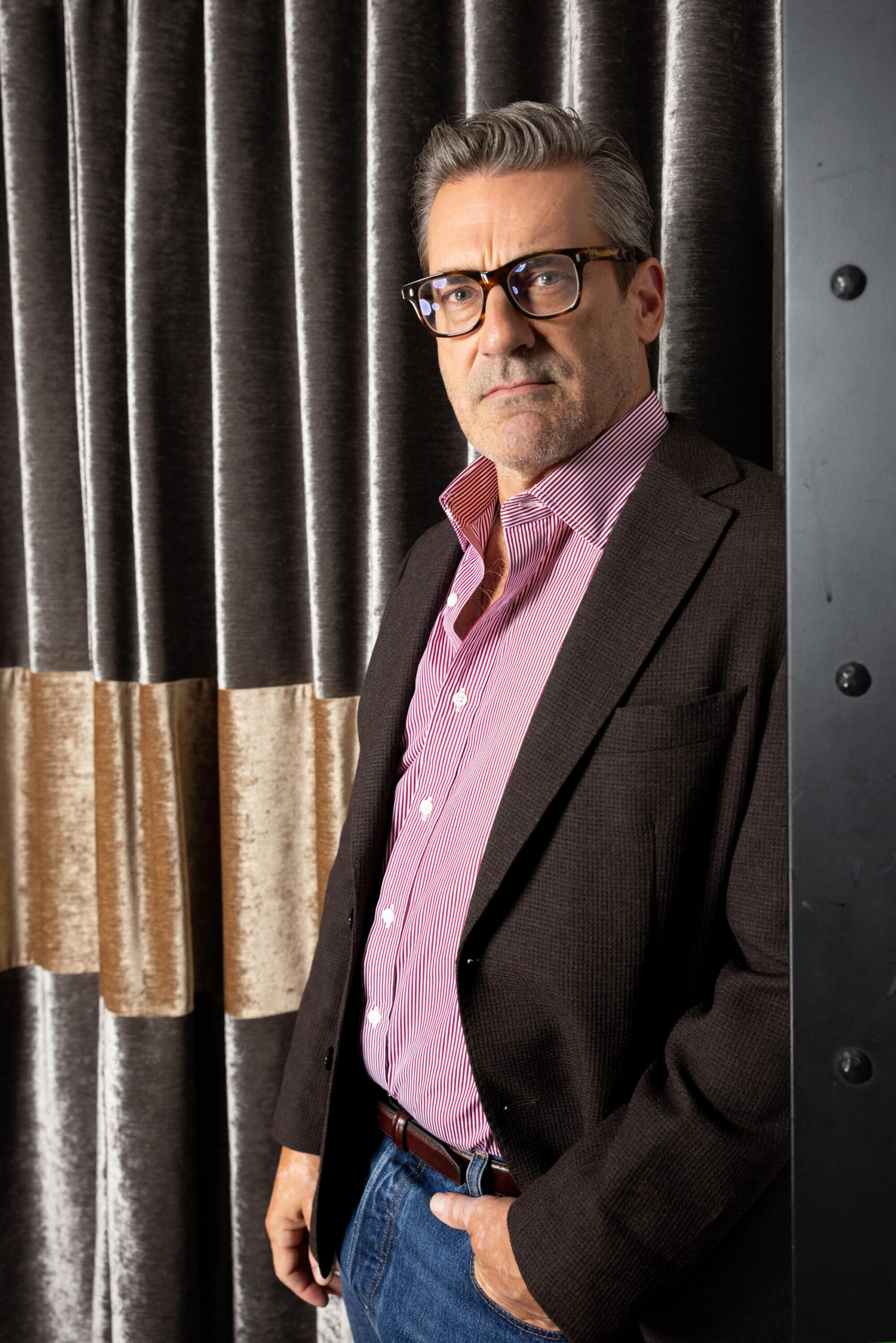
“We haven’t quite figured this situation out,” said Jon Hamm, who plays Heckman in “American Hostage” and is one of its executive producers.
Jon Hamm plays Fred Heckman, a radio news broadcaster, in “American Hostage” and is an executive producer.
(Jason Armond/Los Angeles Times)
The “Mad Men” star — no stranger to period pieces — said that beneath its retro production values and wide lapels, “American Hostage” is fundamentally about how people who feel voiceless in our society fight to be heard, even if the means is violence.
“There’s a lot that really resonates in the current media landscape and culture 50 years down the road, that people can still really connect with,” Hamm said.
Hamm and his colleagues hardly need to argue that point when the nation has been fixated on the case of Luigi Mangione, who in August pleaded guilty to federal charges in the December 2024 killing of Brian Thompson, the chief executive of UnitedHealthcare.
Though work on “American Hostage” had begun before Mangione’s crimes and the show was not inspired or motivated by them, series co-creator Shawn Ryan said that audiences have a boundless fascination with these types of stories — with or without any counterparts in current events.
“Dramatically, it’s always very interesting to see somebody do the wrong thing for the right reason,” Ryan said.
The TV series originated with a 2022 scripted podcast, produced by Criminal Content and also called “American Hostage,” on which Hamm also played the role of Heckman. It told of how Kiritsis, an Army veteran, enacted the kidnapping on his belief that the Hall family had swindled him on his mortgage — a loan for land where he had hoped to build a shopping center.
While Kiritsis sought to use Hall’s life as a bargaining chip for prosecutorial immunity, he also portrayed himself as an underdog taking on powerful financial interests. On the other end, Heckman wrestled with the moral predicament of giving airtime to a potential murderer while hoping to keep Hall alive. (Hall survived the ordeal and Kiritsis, acquitted of his crimes by reason of insanity, was later institutionalized.)
In the spring of 2022, Hamm approached Ryan, the creator of TV thrillers like “The Shield” and “The Night Agent,” with the idea of adapting the “American Hostage” podcast into a miniseries.
Ryan created the TV adaptation with Eileen Myers, a collaborator of his on shows like “Last Resort” and “Mad Dogs.” They both saw in the source material a story that was a combination of classic 1970s films like “Network” and “Dog Day Afternoon.”
(In a parallel development, Kiritsis’ story was also adapted into the Gus Van Sant film “Dead Man’s Wire,” which was a box-office disappointment earlier this year.)
Ryan and Myers said they were fascinated with how the American news media covered the kidnapping in instantaneous fashion and in an era long before the internet. In the 1970s, Ryan said, “There were fewer journalists and they were better and more trusted, and if Walter Cronkite said something, you believed it.”
Shawn Ryan, Jon Hamm and Eileen Myers executive produce the TV adaptation of “American Hostage.” Hamm approached Ryan, who brought in Myers to co-create and co-showrun the series.
(Jason Armond / Los Angeles Times)
The question that journalists like Heckman were confronted with, Myers said, was, “Do you allow a man who’s got a shotgun to somebody’s head dictate the terms of whether you’re going to put them on the air or not?”
Hamm, who has played alluring if ultimately disreputable characters on “Mad Men” and now Apple TV’s “Your Friends & Neighbors,” said he appreciated that “American Hostage” gave him a character who an audience can feel good about rooting for.
“I thought, I’m 55 years old,” Hamm said. “I was close to Fred’s age when this all went down. It was fun to play somebody morally conflicted that is actually on the good side.”
With some hesitation, Hamm pointed to the career trajectory of Bryan Cranston, who followed his celebrated heel turn on “Breaking Bad” with projects like “All the Way,” the play and TV film about President Lyndon B. Johnson.
“I don’t want to draw a comparison that’s stretching the bounds of reality,” Hamm said, “but Bryan went from Walter White to LBJ. You go, ‘All right — he’s still morally conflicted, but at least he’s on the right side of things.’”
“American Hostage” also benefited from the casting of Giovanni Ribisi (“Saving Private Ryan,” “Avatar,” “Sneaky Pete”), who brings a blend of volatility and humanity to the role of Tony Kiritsis.
Hamm recalled how Ribisi was in the midst of shooting another project — the upcoming Prime Video miniseries “The Greatest,” about Muhammad Ali — when he agreed to do a reading for “American Hostage” over Zoom.
“He brings value to every project he does, and he’s picky, as he should be,” Hamm said. “He’s a phenomenal DP — he might just go be a camera person or something if he wants to do it. So we were lucky to get him.”
Giovanni Ribisi plays Tony Kiritsis, the man who kidnapped Richard O. Hall. “So we were lucky to get him,” Hamm said.
(Steven Ackerman / MGM+/Sony Pictures Television)
There are of course unavoidable parallels between the stories of Kiritsis and Mangione, including the fact that both men were celebrated as folk heroes by some people who identified with their broader resentments.
But Hamm drew a crucial distinction between the two cases: Mangione “killed a guy,” he said. “He shot a man in cold blood. Like, I don’t care how good your point is. That’s not how we do it.”
Going back to the Boston Tea Party, Hamm said, every era of American history has had its dissidents who feel “wronged and done over by a system that is stacked against you” and are willing to take aggressive actions against it.
Hamm said that feeling persists and thrives today. “I think this is a big part of the rise of Trumpism,” he said. “I think this is a big part of the rise of the MAGA mentality, of ‘I have been done wrong and no one is hearing my complaints.’”
When those feelings go unaddressed for long enough, Hamm said, people will come to accept a certain amount of lawlessness from the figures they feel can solve their problems.
“We have a guy in the Oval Office right now who thinks that the laws don’t apply to him and a Supreme Court that said, ‘Yeah, they don’t — you can do whatever you want,’” he said.
For supporters of President Trump, Hamm said, “I think it’s fun for them to be able to flout the law and say, ‘Who cares?’ and all the things that they’re currently saying, but it’s not the principles that we were founded on.”
Hamm and Ryan make no secret of the fact that they’d like to keep “American Hostage” going as an anthology series and explore more of what Hamm called “these watershed moments of American life, to see how they rippled and how we got here from there.”
One could certainly imagine other events that would fit the show’s interest in real-life hostage crises that became media spectacles — the 1974 abduction of Patty Hearst; the 1963 kidnapping of Frank Sinatra Jr. — though Hamm kept any specific plans for the series close to the vest.
Perhaps the upper limits they face are the hours in a day to make and to broadcast the show.
“We’re living in great times right now for television,” Hamm said. “There’s so many opportunities to tell stories. Almost too many.”
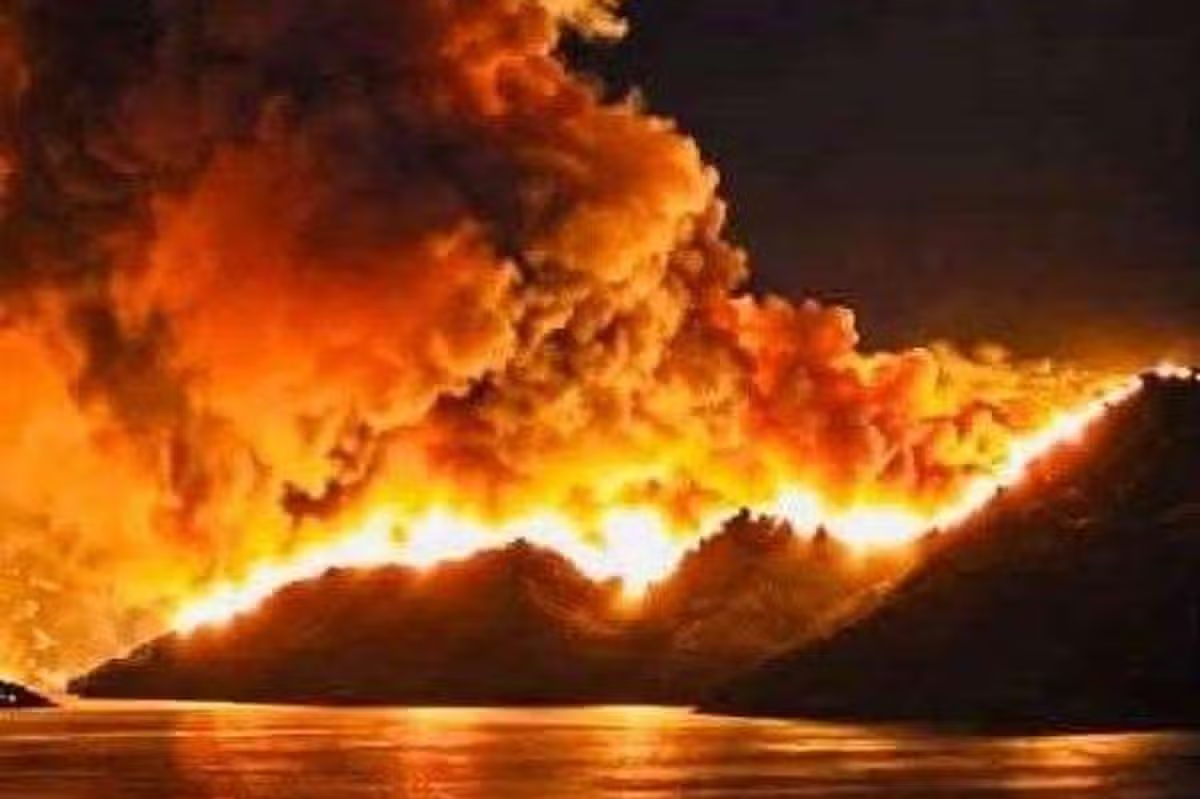
A couple have described their terrifying escape after a wildfire surrounded their holiday resort, forcing hundreds of guests to flee towards the sea. Stephen and Anna Saunders had been staying at the Gava Waterman resort on Brač in Croatia for a week-long holiday.
Guests at the all-inclusive four-star waterfront hotel were initially reassured there was “nothing to worry about” despite ash falling from the sky and a huge orange glow visible over the hills. The couple, from Rainham, Kent, had arrived on the island last Monday and were aware there had been wildfires in the area for several days.
Stephen said a guide warned them on Friday that lightning strikes had caused the blaze. Despite the fires being close by, he said guests were repeatedly told the situation was under control. But on Saturday evening, September 12, the pair went out to dinner with friends and said they could see an “orange glow” in the sky.
“There was ash falling into our drinks,” Anna said. Just after 9.30pm, the power went out at the hotel. Shortly afterwards, Stephen says ash was “visibly falling from the sky”. At that point, the couple returned to their room and decided to pack a small bag “just in case”. Within minutes, a friend told them that trees were on fire right next to the hotel.
Anna said: “The embers were blowing across. I quickly changed my shoes and we went down by the sea, but there were no lights, and no one from the hotel was present. The fire was just shooting across, and it just came down so quickly, so we thought the best thing to do was get in the water.”
The 52-year-old said hundreds of people eventually gathered on wooden platforms and in the sea as smoke and flames surrounded the bay. “Everyone was absolutely terrified”, she added. “There were hundreds and hundreds of people all on these platforms or in the sea. We were basically trapped.”
Stephen said the only staff members he saw were entertainment and restaurant workers. He says there was no emergency lighting, no clear evacuation route, and reception was empty. A spokesperson for Waterman Hotels and Resorts denied that guests “were abandoned by the resort team”.
Stephen said he had to rescue an elderly couple who became stuck in automatic glass doors. “There were families, elderly people and disabled guests trying to get down a steep, dark resort towards a rocky beach while the fire closed in behind us,” he added.
“Within minutes, the trees around the beach were burning. The flames were above us. It was getting really hot and burning embers were raining down from the sky. At this point, people were jumping into the sea and trying to get away from the smoke.”
Firefighters eventually arrived and helped to organise a sea evacuation, and local boat owners came to help rescue those trapped. Stephen said around 50 boats came to help and praised the firefighters and local people who came to their aid.
The 57-year-old electrician said: “If it weren’t for them, I don’t know what would have happened.” The couple, who booked the holiday through TUI, were moved to accommodation in Split in the early hours of Sunday morning – on Anna’s birthday.
They returned home on Monday evening, but Anna said the experience has had a lasting impact. She explained: “We’re not sleeping properly. You just close your eyes, and you’re going through it all the time.”
Stephen said their luggage is expected to be recovered, although other guests lost their possessions. He is planning to lodge a formal complaint to the hotel along with other people impacted last week.
A spokesperson for Waterman Hotels and Resorts said it recognises how “frightening and traumatic” the ordeal was for guests and does “not seek to diminish or challenge anyone’s individual experience” of the evacuation. They explained that the resort’s layout, the loss of electricity, heavy smoke and poor visibility, and the speed at which the fire advanced meant guests experienced different circumstances and had access to different information at different times.
“We would, however, like to correct one important claim that has appeared in some accounts: our guests were not abandoned by the resort team,” they said. They said staff at the resort, which also hosts easyJet and Jet2 trips, initially acted on “the official information and instructions provided by the authorities and emergency services coordinating the response to the wildfire”, and the resort had been instructed not to evacuate guests.
They added: “Conditions then changed with extraordinary speed. An extreme change in wind drove the fire towards the resort, power was lost, and heavy smoke severely reduced visibility.
“When our team on the ground saw that the situation had changed dramatically and that the fire presented an immediate danger to the resort, our reception manager made the decision to activate the alarm and begin the evacuation. Our employees then assisted guests throughout the evacuation.
“The final group of our employees involved left on the last boat used in the evacuation, after establishing that the guests had gone. Other employees travelled during the fire to assist guests and colleagues at the resort.”
Courage and extraordinary efforts
The spokesperson said reception, kitchen, technical and other resort staff stepped forward to help. They added that the company has received many messages from guests thanking them for their assistance, but accepts that “this does not mean that every guest had the same experience”.
“With more than 360 guests spread across a large resort, no electricity, heavy smoke, extremely poor visibility and a fire advancing at exceptional speed, it was extraordinarily difficult for information and assistance to reach everyone simultaneously,” they explained.
“We understand that some guests therefore felt they did not have the information or guidance they needed at critical moments. We take those experiences seriously.
“However, just as we would never question the fear or distress experienced by any of our guests, we believe it is important that the actions of the many employees who remained and helped others in extremely dangerous circumstances are also accurately represented.”
The team is currently working through inquiries from guests regarding luggage, documentation and other belongings. The spokesperson described the situation as an “extraordinary emergency”, with conditions changing “minute from minute”.
They said: “The courage and extraordinary efforts of the firefighters and emergency services, the solidarity of local people who came by boat and helped evacuate guests, and the commitment of our own employees are not things we believe should be called into question.
Deeply traumatic
“They are a source of profound gratitude and pride, and they are a major reason why far more serious and tragic consequences were avoided.
“We will examine our own actions with the same seriousness. We will conduct a detailed review of the events of that night, including our procedures and communications, and identify any lessons that need to be learned.
“Saturday night was deeply traumatic for our guests, our employees and the local community. Alongside that trauma, however, we will remember the extraordinary courage, solidarity and willingness of people to help one another in exceptionally dangerous circumstances.”
A TUI UK spokesperson said: “We know this will have been a frightening and distressing experience for those affected by the wildfire on the island of Brac. The safety of our customers is our highest priority, and our local teams have been supporting those impacted and working closely with the hotel and local authorities.
“We would like to thank the emergency services for their response to this rapidly developing situation.”
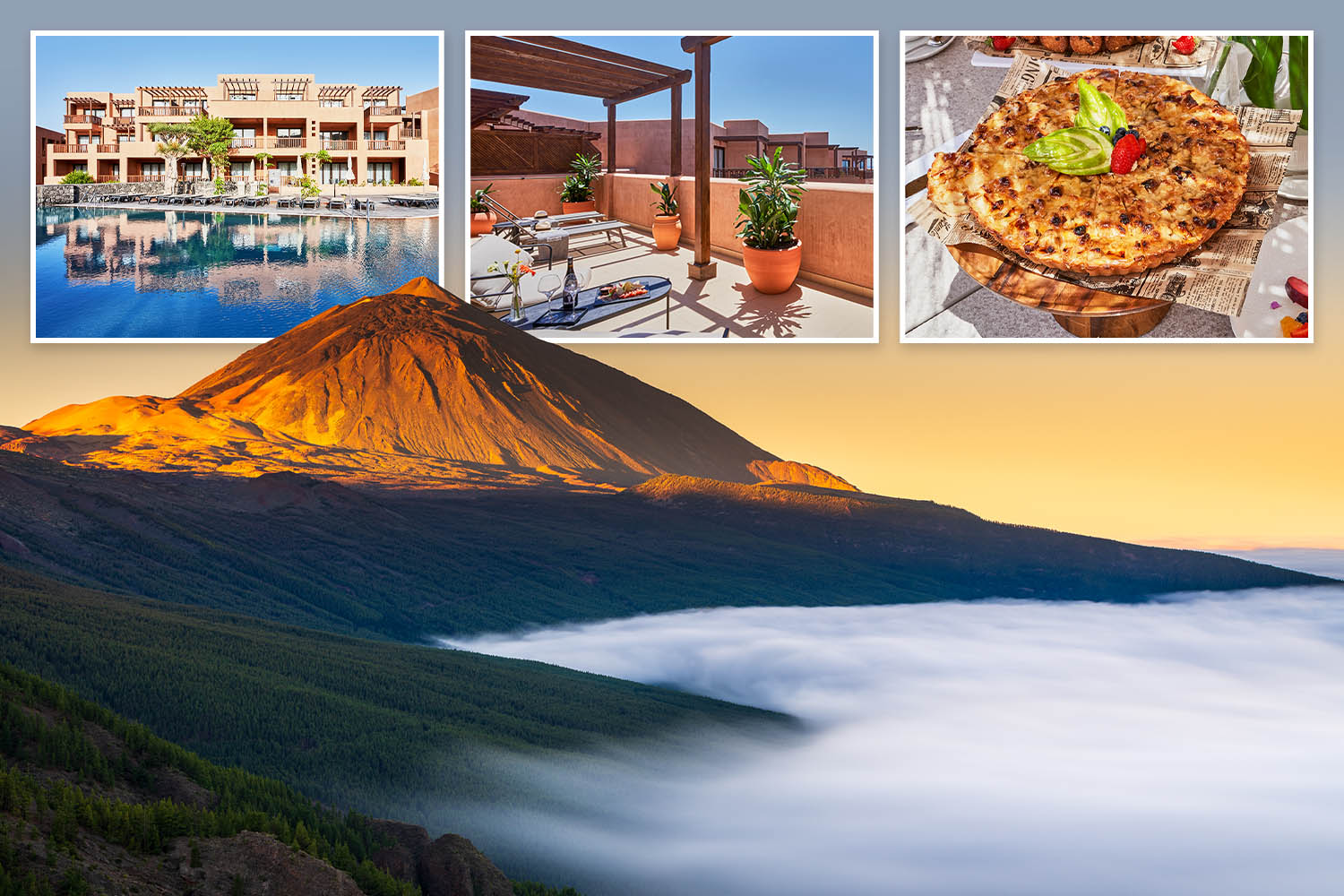
I NEVER ever thought I’d be into geology – but after a week on a nature reserve in Tenerife, I’m officially an earth geek.
Admittedly, the ice-cold margaritas served inside the tranquil oasis of Barcelo Tenerife oiled my educational rediscovery of the island’s natural wonders, but now I am well and truly hooked.
Mount Teide volcano erupted millions of years agoCredit: GettyKick back and relax on the hotel terraceCredit: Manolo Yllera
My last memory of visiting Tenerife, the largest of the Canary Islands, was marred by an over-excited, elderly sailor who threatened to throw my beloved teddy bear into the path of an approaching pod of pilot whales when I was only eight years old.
But after touching down 31 years later, I rediscovered my love for it.
Sign up for the Travel newsletter
Thank you!
The Barcelo Tenerife, my home for the trip, is set within 124 acres of almost untouched land in the San Blas Environmental Reserve — and it fully takes advantage of its rural surroundings.
It’s not just the decor that sets the tone for rustic Tenerife — guests at the resort can book a guided tour through the reserve that will showcase the best of Tenerife’s wild scenery.
During my two-hour or so trek through the fascinating landscapes, I touched stone formed by molten lava as well as compressed volcanic ash, a type of rock that created the foundations of the island after the (still active) Mount Teide volcano erupted millions of years ago.
It was one of the best experiences I’ve had — and reminded me that this gorgeous island offers so much more than just sun-drenched beaches and cocktails by the pool.
Make sure to try and catch a look at Teide on your flight in — the mountain top peeps out above the clouds.
While it is still active, the last eruption happened in 1909 and there’s nothing to suggest it’s going to happen again in the next 100 years or so, so visitors need not panic.
The Sun’s Ellie crosses a lake on a pulley boatCredit: UnknownEnjoy some paddle board fun in the hotel pool
When it comes to history, the mighty volcano isn’t all the island has to boast about, though.
Travellers visiting the San Blas Environmental Reserve can observe the archaeological remains of the Guanches, an indigenous community who first inhabited the islands.
Fans of The Lord Of The Rings will also recognise many of the rocky pastures as sets from the show.
It’s well worth exploring this striking landscape — if you can tear yourself away from the seven luxurious swimming pools at the hotel.
The Barcelo Tenerife manages to exude luxury without stomping on thousands of years of history — as the incredible scenery has been incorporated into the hotel’s earthy design.
The beauty of the land is seen in every inch of the hotel, from the terracotta plant pots on the terraces to its clay-coloured buildings.
Barcelo Tenerife also prides itself on its eco-friendly ethos, with sustainability built in, not tacked on — and walking through the building, you feel immersed in the natural environment.
Along with solar powerenergy, the hotel relies on energy-efficient lighting and ethical food supplies.
Enjoy a break at the blissful Barcelo Tenerife hotelCredit: M CollectiveIt’s foodie heaven at Barcelo TenerifeCredit: Manolo Yllera
And with a 500,000-square-metre nature reserve on your doorstep, you could walk a different route every day and still feel like you have explored more of Tenerife than anyone else.
The food options include an impressive and tasty buffet for breakfast, while fine-dining restaurant La Dolce Vita Trattoria brings a taste of Italy while using superb Spanish produce.
Creamy burrata served with locally-reared beef carpaccio was a highlight, as was a tasting menu inside the Arrozante Restaurant — where I had a truly wonderful paella.
The hotel is a five-star — and worth it — but if you fancy spending a little more, upgrading to the Royal Level is worth saving your cash for.
A private pool and access to a premium bar and restaurant give you a chance to live the high life without breaking the bank too much (from just £160 per night).
Rooms have a slightly more elevated feel to them, too, with chic, sandy-toned furnishings inspired by the nature reserve and fabulous views of the ocean.
But the hotel is so well proportioned and the nature reserve so vast, I don’t think you could ever feel cramped, even during the high season.
Now is the best time to visit, too, with the weather in the UK finally taking a rather more drizzly turn, announcing the official arrival of autumn.
San Blas Environmental ReserveCredit: Alamy
GO: TENERIFE
GETTING THERE: Ryanair flies from London Southend to Tenerife from £50 return. See ryanair.com.
STAYING THERE: Rooms at the Barcelo Tenerife hotel cost from £139 per night based on two people sharing on a B&B basis.
Royal Level rooms at the Barcelo Tenerife are from £160 per night based on two people sharing and including breakfast. See barcelo.com.
In Tenerife, by contrast, temperatures tend to stay balmy throughout this time of year — with highs of 26C in October perfect for both sunbathing and exploring the island — and even into winter.
My helpful hotel guide informed me that Tenerife has only had five days of rain in the last four years, so the sunshine is pretty much guaranteed.
It’s a go-to destination for winter sun and I, for one, am sold.
See you again in November, Tenerife — and this time, I’ll be bringing along my walking boots.