reshapes

Zimbabwe’s diaspora reshapes real estate and farming investment trends | Features

Harare, Zimbabwe – Zimbabwe’s real estate and farming sectors are seeing a surge in diaspora-driven investment, with two young content creators quietly emerging as unexpected influencers shaping the trend.

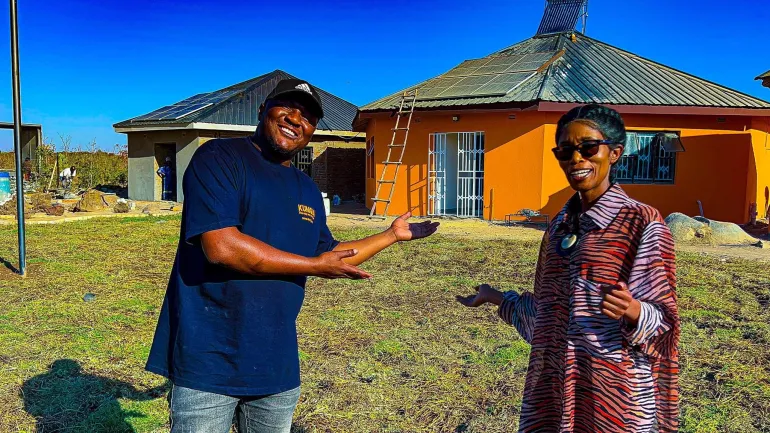
Kundai Chitima, 31, and Kelvin Birioti, 20, each running their own social media channel, have built followings that seem to influence a growing number of Zimbabweans abroad considering return or investment.

On YouTube and Instagram, they share short videos and posts highlighting opportunities in Zimbabwe. Their popular content ranges from property tours and agricultural tips to market trend analysis.

For some in the diaspora, decisions about returning or investing increasingly appear to be shaped less by official narratives and more by social media content offering on-the-ground perspectives of life in Zimbabwe.

One of those influenced is Catherine Mutisi, who spent 17 years living in the United Kingdom working as an accountant. During that time, she had already begun investing in Zimbabwe, building two houses, buying a small plot and starting a business.

She said her thinking shifted after coming across Birioti’s content during construction.

“Gradually, my mind and plans shifted from just visiting Zimbabwe towards wanting to permanently relocate,” she said.

Mutisi said earlier narratives about Zimbabwe had made her cautious, but online content presented a different perspective.

“Previously, I was just building my houses for my family to get some money. But after watching the videos, my eyes opened,” she told Al Jazeera.

Her experience is not isolated. Both Chitima and Birioti say they hear similar accounts from the Zimbabwean diaspora reassessing their long-term plans.

UK-based Zimbabwean Nyashadzashe Nguwo, an Africa market entry and global expansion adviser, said many people like Mutisi are relocating to Zimbabwe due to what he described as a combination of emotional and lifestyle-driven factors.

“There’s a strong desire among many in the diaspora to reconnect with their roots and contribute meaningfully to national development. For some, the lower cost of living and the opportunity to build something impactful at home outweigh concerns about economic instability,” Nguwo told Al Jazeera.

Two influencers

After growing up in Chinhoyi, a town in northern Zimbabwe about 120km (75 miles) northwest of the capital, Harare, Birioti sought a new start and enrolled at Zimbabwe Ezekiel Guti University (ZEGU) in Bindura. He dropped out, however, due to financial challenges and decided to move to Harare.

There, he met Chitima and began learning content creation. From the outset, he said he avoided entertainment-style content, instead focusing on what he saw as an information gap.

“I saw a gap: the diaspora community was being scammed.”

He built his platform about real estate, rural development and farming projects, often working with diaspora Zimbabweans who granted access to their properties for documentation.

Kundai Chitima worked as a teacher in South Africa before returning to Zimbabwe in 2015 [Al Jazeera]

On the other hand, Chitima worked as a teacher in South Africa before returning to Zimbabwe in 2015.

He said workplace inequality influenced his choice: “We were earning lower than my South African colleagues. I thought of my dignity and made a decision to return home.”

Chitima returned to Zimbabwe with limited resources and a pregnant wife, entering a very different economic environment from the one he had left.

Before his time in South Africa, he had worked as a civil servant. After returning, he gradually moved into content creation, beginning in 2015 and later training younger creators who went on to build large audiences.

Today, he reflects on his platform as both educational and protective for diaspora audiences.

“I receive calls from people crying … they have been scammed.”

He says his content aims to replace uncertainty with grounded information about the realities and opportunities in Zimbabwe.

Economic pressure and unemployment

While no official figures are publicly available on the exact number of Zimbabweans leaving the country or their reasons for doing so, reports from the International Organization for Migration and independent migration studies indicate consistent migration.

The Zimbabwe National Statistics Agency (Zimstat) reported a 21.8 percent unemployment rate in the third quarter of 2024, based on strict International Labour Organization definitions.

Between 76 percent and 80 percent of workers are in the informal sector, relying on subsistence or unregulated employment. Youth unemployment is particularly acute: a 2025 World Bank report estimates it at 76.8 percent.

For many young people, stable employment is increasingly difficult to secure.

Susan Sibanda, 26, describes moving between short-term and informal work.

“I have been switching from one casual job to the next,” Sibanda said.

Her experience reflects a wider labour market where formal employment continues to shrink. In recent years, several big retailers, including Choppies, Truworths, OK Zimbabwe, and N Richards, have downsized or closed operations.

Emigration pressures remain strong

Against that backdrop, migration still features heavily in the decisions of young Zimbabweans.

Sibanda said she now considers that “leaving Zimbabwe is in my best interest”.

Economist Tashinga Kajiva said the story of emigration from Zimbabwe has largely remained high, driven by a combination of push and pull factors that encourage people to seek what they see as greener pastures.

“Zimbabwe’s economy is marked by complex and, some would say, difficult dynamics. For ordinary citizens, disposable income remains low while the cost of living continues to rise. The marginal propensity to save among working-class citizens is also low, as many are living hand to mouth,” he told Al Jazeera.

Zimbabwe’s diaspora is concentrated in South Africa, the United Kingdom, Australia, Canada, New Zealand and the United States, according to government figures.

Keeping ties alive from abroad

The economic link between Zimbabwe and its diaspora remains strong.

According to real estate agents, diaspora buyers now account for a significant share

They state that up to 50 percent of high-end residential properties sold were purchased by Zimbabweans living abroad in recent years. In some regions, land prices have risen by 20–30 percent year-on-year, a surge partly attributed to diaspora buyers.

Diaspora investment is also noticeable in agriculture. Reports from the Zimbabwe Farmers Union indicate that about 10-15 percent of new farm leases over the past two to three years involve diaspora investors, with activity concentrated in Mashonaland Central and Matabeleland regions.

Remittances reached $1.7bn in 2023 and continue to rise. In 2025, Zimbabweans abroad sent $2.45bn home, with the UK and South Africa the largest sources, according to government data. A significant portion of these funds is reportedly invested in real estate, agriculture, and small businesses.

This reflects both practical necessity and emotional attachment to home, as well as a preference for investing in familiar environments, according to economists.

Still, return seems to generate mixed reactions.

Some diaspora Zimbabweans appear cautious, citing political developments and recent protests abroad over governance concerns.

For them, financial ties to Zimbabwe are still strong, but physical return remains uncertain.

With social media reshaping perceptions of life in Zimbabwe, many in the diaspora remain caught between investment opportunities and the country’s economic realities.

As content creators like Chitima and Birioti reshape how some see opportunity in Zimbabwe, domestic economic pressures appear to be pushing others away, leaving the country’s relationship with its diaspora open-ended and still evolving.

“For many Zimbabweans living abroad, investing back home is not just about profit – it’s about staying connected to their roots and shaping the future of their communities,” said Chitima.
Source link

Tennessee redistricting plan splits Memphis neighbors, reshapes midterms

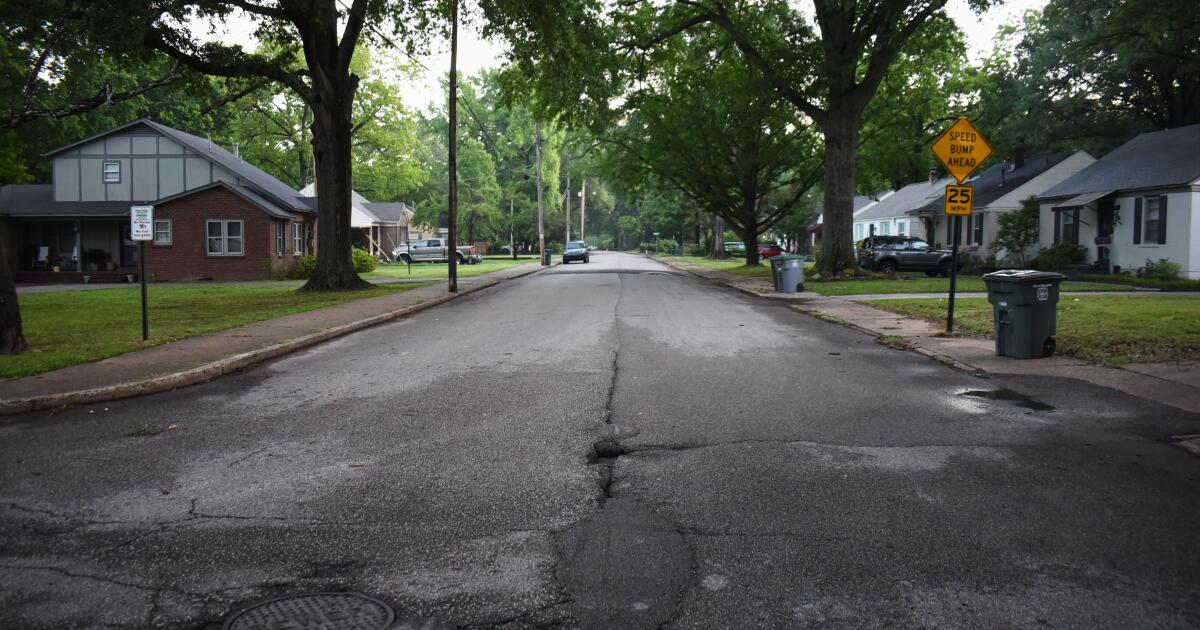
For 21 years, Steve Fowler and Sam Wilson have performed together in a band on Memphis’ renowned Beale Street. And for the last decade, the men have been neighbors on a quiet, leafy avenue.

But as of Thursday, they will no longer cast the same ballot despite living across the street from each other.

That’s because Tennessee’s Republican-controlled Legislature redrew the congressional district of Memphis, which has long enjoyed its own Democratic-leaning U.S. House seat. Now, the city is split into three Republican-leaning districts, its majority-Black population sliced up and bound to mostly white, rural and conservative communities along lines that branch away from Fowler and Wilson’s East Memphis neighborhood.

A line runs down the middle of the street, placing Fowler in the 8th Congressional District, which runs hundreds of miles to central Tennessee across a dozen counties. Wilson is zoned for the 9th District, which extends across most of the state’s southern border before curving up to encompass the largely white and affluent Nashville suburbs.

“I think it’s horrible,” said Fowler, who is white. “This isn’t just going to be bad for Black folks in Memphis, but poor whites in these new districts also aren’t going to get services. How are any of these congressmen going to serve all these different counties?”

A national competition

The redraw was sparked by a ruling from the conservative majority of the U.S. Supreme Court that may be a death knell for congressional representation of majority-Black Southern communities such as Memphis.

For 60 years, a provision of the landmark Voting Rights Act required mapmakers to prove they were not discriminating against racial minorities in how they drew districts, often leading to political boundaries that allowed some minority communities to vote for their preferred representative rather than having their vote diluted by white majorities surrounding them.

The rule had the greatest effect in Southern states, where neighboring Black and white communities remain highly polarized in partisan politics.

On April 29, the justices severely weakened that requirement, ruling that the way courts had handled it improperly injected racial matters into redistricting in violation of the Constitution. Republicans across the South immediately leaped at the chance to redraw their maps before the November elections to eliminate as many Democratic-held, majority-minority congressional seats as possible.

Tennessee’s Legislature was the first in a GOP-controlled state to finalize a new map. But it is one of several Southern states — Alabama, Florida, Louisiana, Mississippi and South Carolina among them — engaged in a broader partisan redistricting competition sweeping the country.

Republicans have long complained that the Voting Rights Act prevented them from doing to Democratic, majority-Black districts what Democrats in states they control do to conservative-leaning, white and rural areas — scatter their voters for partisan gain.

That is what Tennessee Republicans did in their initial congressional map in 2021 to the state’s other large reservoir of Democrats in Nashville, where they did not have to step gingerly because that city is majority white.

“Tennessee is a conservative state and our congressional delegation should reflect that,” said Republican state Sen. John Stevens, who shepherded the bill for a new map that made all nine congressional districts solidly Republican.

The nationwide gerrymandering wars began after President Trump pressured Texas to redraw its map to favor Republicans. Some Democratic states, including California, countered by redrawing their congressional maps for partisan advantage. With the U.S. Supreme Court ruling reining in the Voting Rights Act and the Virginia Supreme Court’s decision to toss out voter-approved maps that favored Democrats in that state, the GOP has gained the upper hand.

A ‘central place’ in pursuit of racial justice

Wilson, the Memphis musician who is Black, was less distraught by the carving up of his neighborhood for partisan purposes. He saw the move as just another trial facing the city after a surge of federal agents sent by Trump to combat crime and amid narratives about Memphis’ safety from neighboring suburbs and Republican state lawmakers.

“It’s a hustling community. We’re going to make ends meet for our families,” Wilson said. “The legacy of Memphis is music and our civil rights history,” he said, adding the two were intertwined. “Hard times mean you’re going to try and find your gift. That’s what we do here; music in Memphis is a way of life.”

The Memphis district predates the Voting Rights Act. For at least a century, well before Congress acted to protect minority voting rights, Tennessee has believed it made sense for its metropolis on the Mississippi River to have its own U.S. House district. But since that law was passed in 1965, anyone who tried to split up the district for partisan gain could be sued and have the maps thrown out. Now, legal experts say that is not much of a risk.

Nonetheless, Democrats and civil rights groups are suing to block the map. The symbolism is especially sharp as the city is home to the National Civil Rights Museum, built around the motel where the Rev. Martin Luther King Jr. was assassinated in 1968. When the Legislature passed the new maps, Democrats and protesters shouted, “Hands off Memphis!” and waved signs accusing Republicans of bringing back Jim Crow.

“Memphis is not just any city; it holds a central place in the national story of our quest for racial justice in this country and how, over time, we have increasingly achieved civil, voting, and economic rights for all Americans,” said Eric Holder, a former U.S. attorney general who chairs the National Democratic Redistricting Committee. “Black citizens protested, marched and died there for the right to vote.”

A city-state divide

Memphis has faced dual stories in recent years. Billions of dollars in private investment and federal dollars have flooded into the area in recent years, but many local businesses still express concerns about a lagging regional economy.

Residents who spoke with the Associated Press expressed concerns about safety and public services but bristled at stereotypes about rampant crime. The twin stories are often on display in the river city, where pothole-filled streets run from empty storefronts to ornate mansion-filled neighborhoods and leafy college campuses only blocks away.

The city has long had a contentious relationship with the rest of the state, which voted for Trump in 2024 by a roughly 2-1 margin.

The conservative Legislature in Nashville has clashed repeatedly with Memphis and accused its leaders of broad mismanagement. Legislators passed a law blocking many police overhaul efforts in Memphis that were put in place after the death of Tyre Nichols, an unarmed Black man, at the hands of city police officers in 2023. It passed another measure seizing control of Memphis’ airport board and those of other cities across the state, and gave the state attorney general, also a Republican, the power to remove Memphis’ elected district attorney.

“The state Legislature is trying to take it over,” said U.S. Rep. Steve Cohen, the white Democrat who still represents the city in Congress until the new lines kick in after the midterms. “And that’s absurd. It was all partially because it’s a majority Black city.”

Lack of representation seen

Thomas Goodman, a politics and law professor at Rhodes College in Memphis, says the new congressional districts may lead to greater friction over who receives attention — and funding — from lawmakers. Memphis residents will soon share districts with Republican towns with starkly different economies, geographies and demographics. Whoever holds those congressional seats will have an incentive to pay attention to those voters and not to Memphis’ population.

“It would not only deprive Black Tennesseans of proper representation,” Goodman said. “These changes also break up the city of Memphis as an entity into multiple districts, thereby removing a dedicated agent in government who knows the people, who understands their concerns and can speak for them and deliver on behalf of their interests and desires.”

Chris Wiley’s house sits in what was, before last week, a quiet street in Midtown Memphis dotted with duplexes, tidy lawns and sports fields. Now his neighborhood will be carved apart at the intersection of three congressional districts. That is not surprising, he said, because “Tennessee is all about the dollar” rather than residents.

“Memphis is majority Black, so if you mess with that, what’s the point of even voting in Tennessee?” said Wiley, a 29-year-old sports stadium worker who is Black. “Whatever the congressional numbers, whatever that is, we don’t count on the scale as high, anyway.”

Brown writes for the Associated Press. AP writer Nicholas Riccardi in Denver and videojournalist Sophie Bates contributed to this report.

Source link