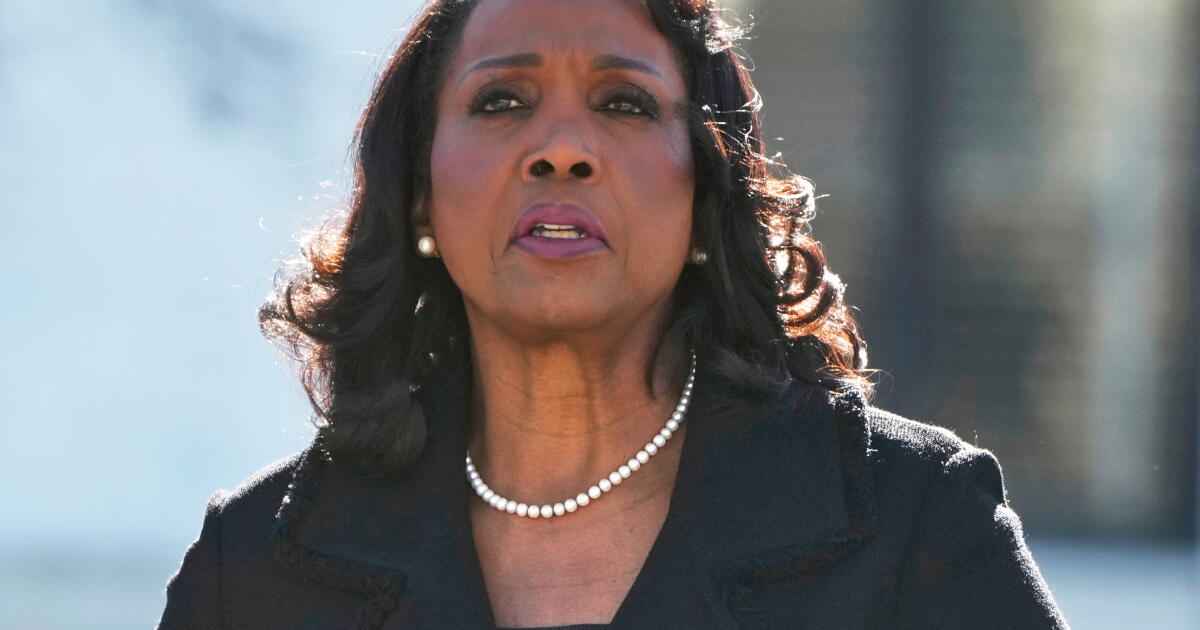
WASHINGTON — President Trump opened another chapter in his effort to fire Federal Reserve Governor Lisa Cook Friday by establishing a “committee of inquiry” to investigate allegations that she made false statements in mortgage applications.
The inquiry will include a hearing at the White House Nov. 5, Trump said in a written memo, that Cook “shall” attend to answer questions from the committee. The hearing wouldn’t be public but a transcript would be published, the memo said.
Trump’s extraordinary demand that Cook testify before the committee will likely renew concerns about threats to the Federal Reserve’s independence as the president demands the central bank cut its key interest rate. Just last month, the Fed raised its key rate instead, led by Chairman Kevin Warsh, whom Trump appointed earlier this year.
“As President, it is my job to ensure the laws are faithfully executed, including by firing subordinates who cannot be trusted to tell the truth and follow the law,” Trump wrote in the memorandum.
Trump and some of his economic advisers have blamed the Fed’s broader rate-setting committee, which includes 12 voting members and 19 officials in total, for the rate hike. Cook is one of the 12 participants on the committee that votes on interest-rate decisions. The vote to lift rates Sept. 16 was unanimous.
The move follows a Supreme Court ruling in June that Cook could keep her job after Trump sought to fire her last year. That ruling included a footnote that said nothing prevented Trump from “trying again” as long as she was given proper notice and an opportunity to respond to the charges.
Cook has denied any wrongdoing and has not been charged with a crime.
Asian equity markets traded mostly lower on Wednesday, diverging from overnight gains on Wall Street where a pause in bond yield increases provided relief to technology valuations.
US stock futures were little changed, with Dow down 0.10%, S&P 500 up 0.05%, and
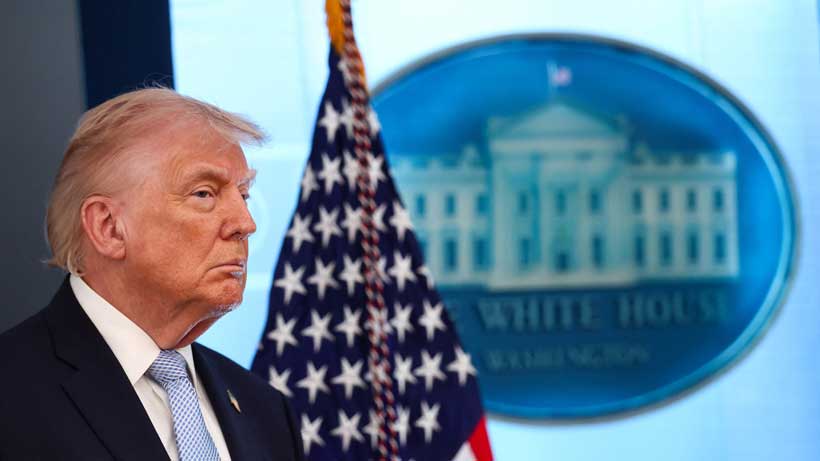
US President Donald Trump says Europe agreed to release a ‘massive amount’ of diesel from emergency stockpiles as the US seeks to lower fuel prices. The proposed release could involve roughly 100 million barrels amid the US war on Iran and elevated fuel costs.
Donald Trump has said he may ask European countries to release some of their diesel reserves as he considers banning US exports of the fuel.
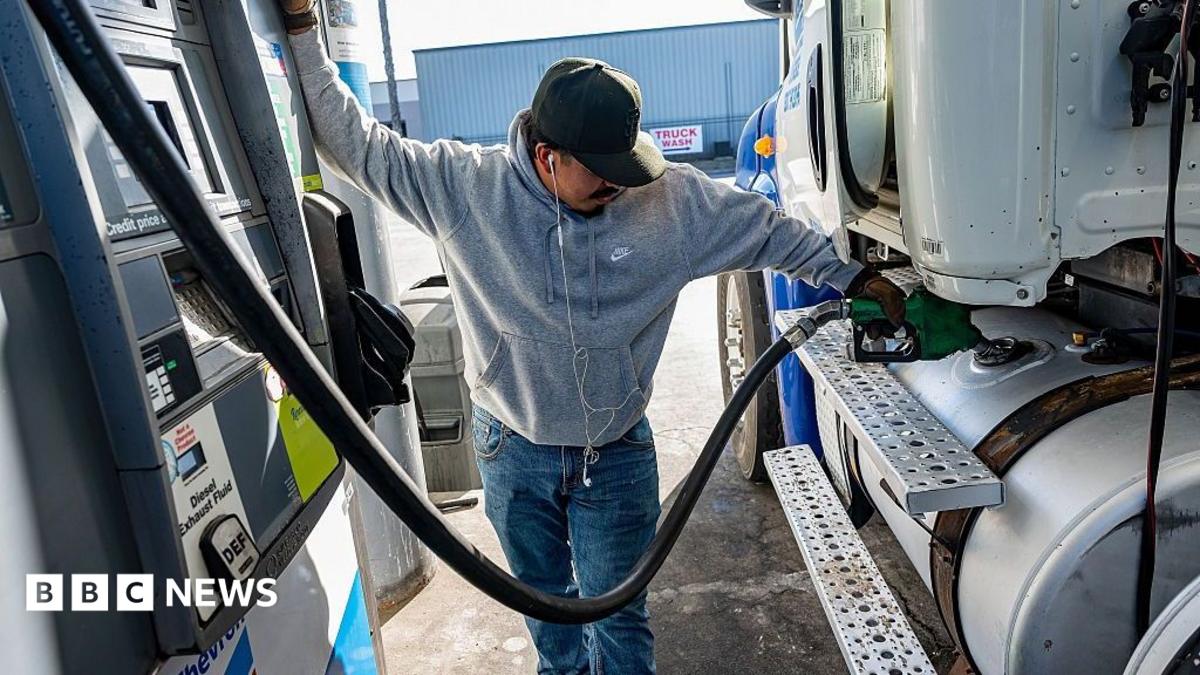
The US President’s comment comes after Treasury Secretary Scott Bessent urged Europe to get ready to release diesel supplies immediately, arguing that US farmers, truckers, and businesses “should not be left carrying the burden” as prices soar.
The US has threatened to restrict diesel exports after the war in Iran caused sharp price rises for US voters ahead of the midterm elections in November.
On Thursday, the UK held talks with European partners about the potential release of diesel reserves in response to any ban.
Banning exports would flood the US market with diesel, and could bring prices down significantly for American drivers.
But experts warn such a ban would put further pressure on diesel prices in other countries, unless they can access further supplies.
The US is a vital supplier of diesel to the world, exporting between 1.2 and 1.5 million barrels per day.
Over half of the UK’s diesel is imported, with 31% of the imports coming from the US.
On Thursday, Trump was asked whether he would call on European countries to release some of their own diesel reserves.
“We may do that. They have some diesel,” he said.
An earlier post from Bessent on social media said European countries should “make additional supplies immediately available”.
The president is set to travel across the US campaigning for Republicans in the coming weeks in hopes of keeping control of the House and Senate in the November’s elections.
Diesel prices in the UK hit record highs this week and are hovering just under 200p per litre, according to motoring organisation the RAC.
UK Energy Minister Martin McCluskey was on a call with European counterparts on Thursday to discuss the potential ban.
A source familiar with the discussions told the BBC it was prudent to prepare a co-ordinated response with other countries, including those across EU, but added that there were still European reserves left from a coordinated release of strategic fuel stocks earlier in the year.
“We have a diverse and resilient supply. We continue to engage with our international partners and the UK fuel industry,” a government spokesperson said.
The government has stressed that there is no cause for concern about potential diesel shortages, though prices are expected to rise further.
The Trump administration has warned France and Germany to release emergency diesel reserves to help lower global fuel prices or risk facing a potential US ban on diesel exports, according to people familiar with the discussions.
The warning represents a sharp escalation in Washington’s pressure on European allies as President Donald Trump looks for ways to increase fuel supplies and bring down prices ahead of the November midterm elections.
US officials have become increasingly frustrated with France and Germany, which Washington believes have not fully acted on earlier commitments to release emergency oil and petroleum reserves as global fuel markets face mounting disruptions.
“It is in Europe’s best interest to work with the United States as we pursue multiple pathways to boost the supply of refined products and lower costs for consumers,” a US official told Reuters.
Stay ahead of the geopolitical week.
MD Briefing delivers expert analysis across five global fronts — the Indo-Pacific, energy, geoeconomics, European security, and the Middle East — every Monday morning. Free.
A second source familiar with the discussions said the United States had asked the European Union to release 120 million barrels of diesel over the next six months.
The demand highlights the growing importance of Europe’s fuel reserves at a time when disruptions to major energy-producing regions are tightening global supplies.
Washington Raises Pressure on Europe
The US administration’s warning comes as Trump considers restricting US diesel exports as part of a broader effort to increase domestic supplies and reduce fuel prices for American consumers.
The approach creates a difficult balance for Washington. Limiting exports could increase the amount of diesel available inside the United States, potentially putting downward pressure on domestic prices. But it could simultaneously reduce supplies available to international markets, particularly Europe, which has become increasingly dependent on imported refined fuels.
US Energy Secretary Chris Wright said on Wednesday that the administration expected European countries to announce additional diesel supplies soon.
“We’ve lost some diesel exports from the Middle East, although we’re restoring those, and we’ve lost diesel exports from China,” Wright told reporters.
The disruptions have exposed the vulnerability of global refined fuel markets to geopolitical conflicts and changes in trade flows.
Germany’s economy ministry did not immediately respond to a request for comment, while France’s energy ministry declined to comment.
The White House’s pressure also appears to have become a broader diplomatic issue among Western allies.
An official at the French presidency said Trump and French President Emmanuel Macron did not discuss the issue when they met on the sidelines of the UN General Assembly in New York last week.
Macron, however, plans to convene a video conference of G7 leaders to address rising fuel prices and the availability of refined petroleum products.
The discussions are expected to include coordination over the release of emergency reserves in cooperation with the International Energy Agency.
Why Europe Matters to the Fuel Market
Europe’s position in the global fuel market has changed substantially since Russia’s invasion of Ukraine.
European countries previously relied heavily on Russian crude oil and refined petroleum products. The subsequent sanctions and restrictions on Russian energy imports forced European governments and companies to find alternative suppliers.
The result has been greater dependence on imports from countries including the United States and suppliers in the Middle East and Asia.
That dependence has become more significant as the conflict involving the United States, Israel and Iran has disrupted energy flows from the Middle East.
The loss or reduction of refined fuel exports from major suppliers can quickly affect diesel markets because refining capacity cannot always be shifted between regions immediately.
Diesel is particularly important because it powers much of Europe’s commercial transport, heavy industry, agriculture and logistics sectors. Sustained shortages can therefore affect the broader economy rather than simply increasing prices at fuel stations.
The US Faces Its Own Fuel Dilemma
For Trump, the issue also has a strong domestic political dimension.
Fuel prices are highly visible to American consumers, making gasoline and diesel costs politically sensitive ahead of the November midterm elections.
The administration is therefore examining multiple ways to increase available supplies and reduce costs.
But a potential US diesel export ban could have consequences beyond America’s borders.
The United States has become an important supplier of refined petroleum products to international markets. Restricting those exports could tighten supplies elsewhere, potentially pushing international prices higher even if American prices fall.
That creates a difficult policy tradeoff for Washington.
The administration wants to protect US consumers from high fuel costs while maintaining sufficient supply in global markets. European governments, meanwhile, face pressure to use their own emergency reserves even as they seek to maintain energy security following the loss of Russian supplies.
Europe Seeks a Coordinated Response
France appears to be pursuing a broader G7 response rather than treating the issue as a bilateral dispute with Washington.
Macron’s planned meeting would allow the world’s major industrial economies to discuss the availability of refined products and potentially coordinate emergency stock releases through the International Energy Agency.
Such coordination could help prevent individual countries from taking measures that unintentionally worsen shortages elsewhere.
But disagreements over how much fuel should be released, when reserves should be used and who should bear the cost could complicate the process.
Emergency reserves are designed primarily to protect countries against severe supply disruptions. Releasing large quantities can provide temporary relief, but it also reduces the buffer available if another disruption occurs.
That makes Europe’s response particularly consequential at a time when energy markets remain exposed to geopolitical shocks.
A New Test for Transatlantic Energy Relations
The dispute illustrates how the global energy system has become increasingly intertwined with broader geopolitical and trade relationships.
Europe needs reliable fuel supplies after cutting its dependence on Russian energy, while the United States is attempting to use its position as a major energy producer and exporter to address domestic price pressures.
Trump’s warning to France and Germany adds another layer to that relationship by linking European reserve policy to continued access to US diesel exports.
Whether Europe ultimately releases the amount of diesel Washington has requested will depend on national assessments of market conditions, domestic energy security and the risks of further supply disruptions.
For now, the dispute signals that the energy consequences of conflicts in the Middle East are reaching far beyond the region itself.
As the United States and its European allies try to contain fuel prices, they face a common problem but increasingly different pressures over how the burden of stabilising global energy markets should be shared.