South Korea is in discussions with the IEA over the agency’s proposal to release strategic oil reserves, Seoul officials said Wednesday. This photo, taken Mar. 10, shows a gas station in Seoul. Photo by Yonhap
The South Korean government is “closely involved” in discussions with the International Energy Agency (IEA) over the agency’s reported proposal to release strategic oil reserves to help stabilize soaring oil prices, Seoul officials said Wednesday.
Officials at the Ministry of Trade, Industry and Resources confirmed Seoul’s participation in the reported IEA discussions to Yonhap News Agency, following media reports saying that the IEA has proposed the largest-ever release of oil reserves to its 32 member countries, including South Korea.
According to the report by the Wall Street Journal, IEA members are expected to soon decide on the proposal in an extraordinary meeting.
“South Korea is closely involved in discussions over a coordinated release of strategic oil reserves by the IEA,” a ministry official said.
The country currently holds around 1.9 billion barrels of oil reserves, which is enough to last more than 200 days.
“We have yet to decide how much oil will be released from our reserves with the IEA’s decision,” a ministry official said.
The Seoul government has released its strategic oil reserves on five occasions since 1990, all through international coordination.
The occasions included the 1991 Gulf War, the 2011 Libya crisis and the outbreak of the Russia-Ukraine War in 2022.
Copyright (c) Yonhap News Agency prohibits its content from being redistributed or reprinted without consent, and forbids the content from being learned and used by artificial intelligence systems.
The movie is called “Heel” and its frenetic opening — a flash-cut glimpse of young, handsome, swaggeringly cruel Tommy (Anson Boon) in drug-fueled party mode — seems enough to explain the title. The next time we see him, though, he’s neck-shackled in the basement of a remote English estate. What follows in Polish filmmaker Jan Komasa’s blackly comic, unnerving thriller is clearly meant to evoke “Heel’s” more obedience-minded reading.
And who would be harshing this hooligan’s buzz with a case of reform-minded abduction? An eerily isolated, rules-driven nuclear family: mild-mannered, soft-spoken Chris (Stephen Graham), haunted Catherine (Andrea Riseborough) and polite son Jonathan (Kit Rakusen). They all may as well have sprung from the combined neo-gothic conjurings of Edward Gorey and Harold Pinter. Under Komasa’s direction, the mix of fractured fable and terroristic morality play in Bartek Bartosik’s screenplay is absurd but potent, giving “Heel” enough psychologically twisted juju to nearly always feel like more than the sum of its parts.
Our first glimpse of Tommy chained up, pleading to be let go, is through the eyes of a young Macedonian refugee, Katrina (Monika Frajczyk), being given a tour of the large countryside manor where she’s just been hired by Chris for twice-a-week housework. Katrina, like us, is rightly horrified but she’s in her own bind: undocumented, saved by Chris from the streets, with her signature on a confidentiality agreement and a deportation threat hanging over her. She’s hardly in a position to do much more than accept what’s going on as a grimmer version of her own dead-end predicament.
And yet what’s readily apparent is that this weird, fragile, insular family is genuinely keen on folding Tommy into their lives. They’re also convinced of their unorthodox methods, which hinge on reinforcement and reward. Tommy seems receptive, too, with each invitation to participate in his abductors’ togetherness (meals, movie nights, a picnic). This is when “Heel” is at its most alluringly queasy, a dark commentary on all families as institutions inherently built on confinement and emotional blackmail. (It’s no coincidence one of the movie’s executive producers is Jerzy Skolimowski, who made his own pointed kidnapping allegory with “Moonlighting.”)
Everyone’s broken, so the collective strength of the cast in keeping us on our toes about where this is all headed is a huge plus. The wiry Boon doles out his brash character’s reserves of vulnerability to stunning effect — Tommy is a difficult part and Boon knows how to make it revealing and suspenseful. Graham’s tweaked, sensitive patriarch is tantalizingly far from the heartbreaking dad of “Adolescence” and the gloriously oddball Riseborough makes the most of her faint-voiced mom’s severity. Frajczyk and Rakusen are also pitch-perfect.
Last year Komasa had another family-centered thriller with “Anniversary,” a movie about politics corrupting a happy home. But we know that equation already. “Heel” is Tolstoy’s happy-family maxim cooked in a mad scientist’s lab. While it sometimes shows its seams as an idea movie, its elegant disturbia has a boldness, recalling that great mind-game ’60s era that gave us “TheServant,” “The Collector,” and the early psychological freak-outs of Komasa’s countryman, Roman Polanski.
This year marks the 75th anniversary of the Peak District national park – the first designated national park in the UK. That number has grown to 15 across the UK, alongside more than 200 national nature reserves, which are designed to protect specific landscapes and habitats. Whether it’s boating through the Norfolk Broads national park, birdwatching on Lindisfarne national nature reserve, or camping in the Cairngorms, we’d love to hear about your favourite things to do and places to visit in our national parks and reserves.
The best tip of the week, chosen by Tom Hall of Lonely Planetwins a £200 voucher to stay at a Coolstays property – the company has more than 3,000 worldwide. The best tips will appear in the Guardian Travel section and website.
Keep your tip to about 100 words
If you have a relevant photo, do send it in – but it’s your words we will be judgingfor the competition.
We’re sorry, but for legal reasons you must be a UK resident to enter this competition.
The competition closes on Monday 9 March at 10am GMT
Your responses, which can be anonymous, are secure as the form is encrypted and only the Guardian has access to your contributions. We will only use the data you provide us for the purpose of the feature and we will delete any personal data when we no longer require it for this purpose. For alternative ways to get in touch securely please see our tips guide.
If you’re having trouble using the form click here. Read terms of service here and privacy policy here.
Weekly insights and analysis on the latest developments in military technology, strategy, and foreign policy.
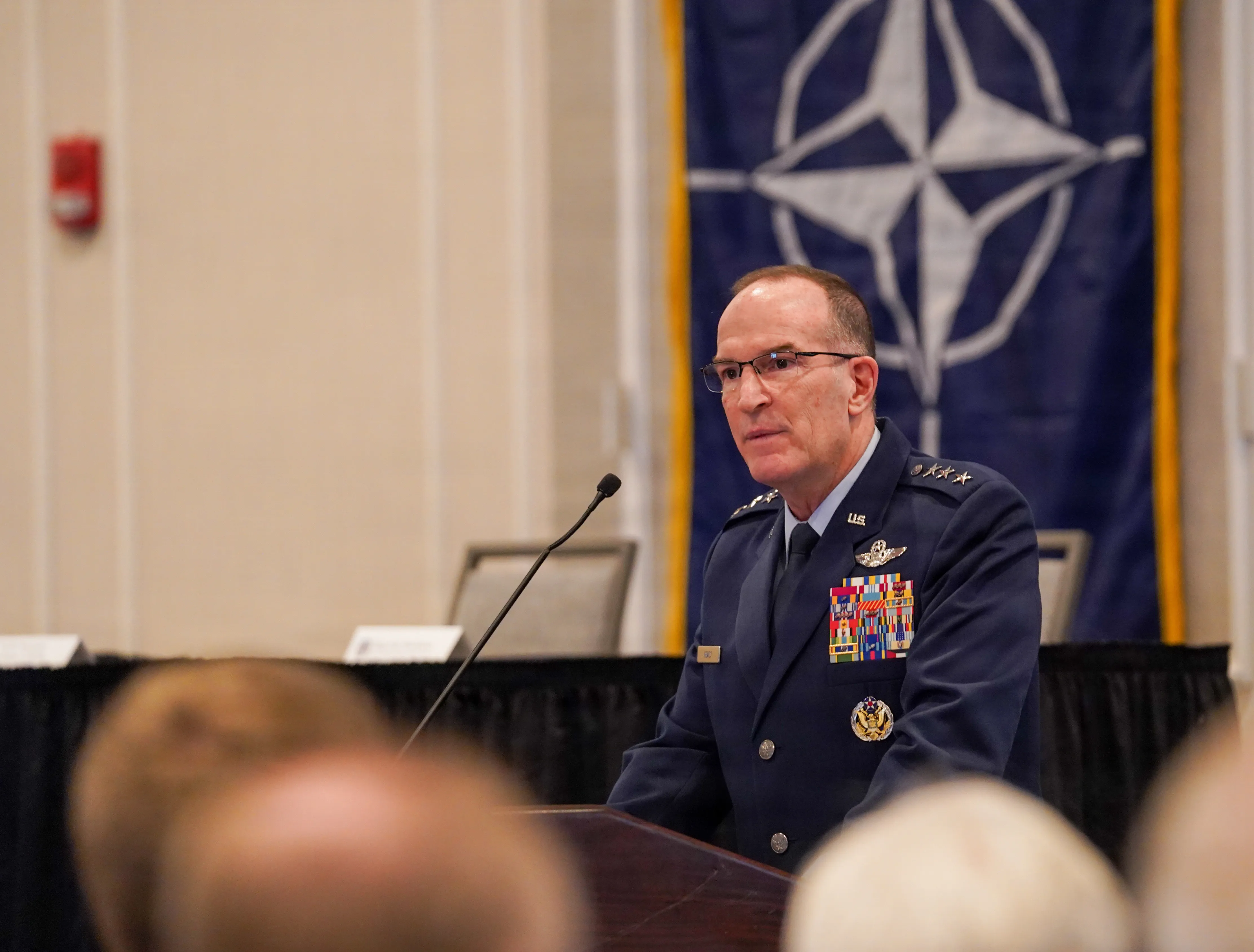
The commander of Air Force Reserve Command (AFRC) has said that he would like to field F-15E Strike Eagle and F-15EX Eagle II combat aircraft to help the command meet its commitment to supporting the overall Air Force mission. AFRC commander Lt. Gen. John P. Healy was speaking at the Air & Space Forces Association’s annual Warfare Symposium, where TWZ is in attendance.
Headquartered at Robins Air Force Base, Georgia, the AFRC is responsible for three numbered air forces, 34 flying wings, 10 flying groups, a space wing, a cyber wing, and an intelligence, surveillance, and reconnaissance wing. It also has other subordinate units that help to accomplish its total-force missions.
Lt. Gen. John P. Healy, Chief of Air Force Reserve, speaking at the NATO Interallied Confederation of Reserve Officers (CIOR) Winter Meeting in Norfolk, Virginia, on January 28, 2026. U.S. Army Maj. Tara-Lee Gardner
Healy was addressing how AFRC is grappling with how best to contribute to the Air Force’s 10-year fighter jet plan, which calls for purchasing more F-15EXs, F-35s, and F-47s, as it aims to have nearly 1,400 combat-coded tactical aircraft in service by 2030. The commander noted that the plan is not only “pretty ambitious” but also that, while it has been submitted to Congress, it is still very much a work in progress.
Nevertheless, Healy said that, whatever happens, the Air Force’s future fighter plans will rely heavily on the AFRC. At the same time, this organization is facing upcoming combat aircraft retirements, including the A-10 attack jet, which the Air Force wants to withdraw entirely.
U.S. Air Force Capts. Andrew Glowa, lead, and William Piepenbring, both with the 74th Fighter Squadron out of Moody Air Force Base, Georgia, fly two A-10Cs over the skies of southern Georgia, August 18, 2014. U.S. Air Force photo by Staff Sgt. Jamal D. Sutter/Released Tech. Sgt. Jamal Sutter
“As the commander of Air Force Reserve Command, I am keenly aware that some of my units are scheduled to divest without any plan of recapitalization,” Healy said. “Some could say I am loud and annoying when it comes to how we can ensure that we can maintain this fighting force,” he added, noting that in certain AFRC units, 100 percent of the airmen are combat veterans, and that he wants to ensure “that talent, that experience, doesn’t walk out the door during a normal, planned divestment.”
Healy is hopeful that the historic practice of aircraft divestment without recapitalization, something he said has existed over the last 14 years, is now on the way out.
“I think we’re finally at a point where we’re putting a stop to that,” Healy said. “We’re looking at maintaining our classic associations where we have them and recapping as the active duty can. For the remaining fighter units that we have that are divesting or scheduled for divestment, our full expectation is that we’re going to recap those with new weapons systems.”
There’s no doubt that many of the AFRC’s planned divestments are badly needed, with upward of 80 percent of the command’s fleet now being considered “legacy.” Healy continued: “You know, it’s code for old. Some of these airplanes need to be divested, but we also need to ensure that we are proportionately, concurrently fielded with new equipment.”
That’s where the F-15E and F-15EX could come into play.
“For every one of these A-10 units that are going away, I’m looking at if there’s a means by which we can get an F-15 unit behind it, whether it’s a Strike Eagle or an EX.”
A U.S. Air Force F-15E Strike Eagle assigned to the 336th Expeditionary Fighter Squadron parks on the runway before a flight at Kadena Air Base, Japan, May 13, 2025. U.S. Air Force photo by Senior Airman Luis E. Rios Calderon Senior Airman Luis E. Rios Calderon
Meanwhile, Healy said he’s also “pressing hard” to ensure that ARFC units divesting from the F-16 will be backfilled with F-35 stealth jets.
“We’ve got that combat capability,” Healy added. “We’ve got that combat experience. We need to leverage that.”
The AFRC boss also made the financial case for continuing to re-equip his command’s squadrons with new (or, failing that, newer) equipment.
According to the Air Force’s own factsheet, the AFRC provides around 14 percent of the total force within the service, while consuming only around four percent of the total manpower budget.
“My job is to constantly remind the programmers and remind the chief and the secretary of the value proposition, the advantage of the Reserve, because at the end of the day, we’re providing a little bit more money that we can reinvest into other things as well.”
Healy said that, when it comes to operating the F-16, an AFRC squadron does that “$12 million cheaper than the active duty can.”
A crew chief assigned to the 482d Maintenance Squadron marshals out a 67th Fighter Squadron F-16 at Homestead Air Reserve Base, Florida, April 4, 2025. U.S. Air Force photo by Master Sgt. Lionel Castellano Master Sgt. Lionel Castellano
The savings on F-15 units would be even more compelling, Healy argued, with an AFRC Strike Eagle squadron working out as $28 million cheaper than the active-duty equivalent, or $24 million in the case of the F-15EX.
There remains a question, however, around just how feasible it might be for the ARFC to get the F-15E or F-15EX. For all their undoubted capabilities, these types are both in short supply and high demand.
Originally, the Air Force had a minimum number of 144 F-15EX aircraft to replace the F-15C/D force. Some of the Eagle units have switched to other platforms since then, but units that fly A-10s, F-16s, and even F-15Es could end up getting F-15EX if the service chooses to go such a route. It seems quite possible that further growth of the program could occur, and that would seem to be a prerequisite if the ARFC is to get the Eagle II as well.
A formation of four U.S. Air Force F-15EX jets, assigned to Eglin Air Force Base, Florida, fly over the Gulf of America, November 21, 2025. U.S. Air Force photo by Staff Sgt. Blake Wiles Staff Sgt. Blake Wiles
When it comes to the F-15E, the Air Force inventory numbers 218 aircraft, of which 119 are powered by the older F100-PW-220 turbofan engines that produce some 23,500 pounds of thrust each. The other 99 have the F100-PW-229s, each of which is rated at 29,000 pounds of thrust.
The Air Force previously aspired to retire the Dash-220-powered jets by the end of Fiscal Year 2028.
The possibility of transferring F-15Es from active-duty units to Air National Guard (or AFRC) units is something that TWZ has discussed in depth in this previous feature.
As far as the AFRC is concerned, the best chance of getting its hands on F-15Es will almost certainly be provided by the return stateside of the two squadrons of Dash-229-powered Strike Eagles currently at RAF Lakenheath in England. These are due to be replaced by F-35s in the future. For the time being, they are the only permanently forward-deployed F-15Es, which remain the service’s first choice for a wide variety of critical missions around the globe.
A U.S. Air Force F-15E from the 48th Fighter Wing, RAF Lakenheath, approaches a KC-135 Stratotanker from the 100th Air Refueling Wing during exercise Ocean Sky, over the Atlantic Ocean, October 15, 2025. U.S. Air Force photo by Airman 1st Class Chloe Masey Airman 1st Class Chloe Masey
Another option, and one we have explored in the past, would be to pass on the Dash-220-powered jets to the AFRC, and it is somewhat surprising the Air Force hasn’t floated this idea before when it has sought to offload the older, less-powerful Strike Eagles.
Asked by TWZ about the likelihood of F-15Es making their way to his command, the AFRC commander responded: “I am optimistic that we’ve at least got people listening to the value that we provide, the combat capability we provide, the experience that we provide. We’ve proven it over and over again. We’re efficient, we’re experienced, we’re 100 percent accessible as a reserve force, and we’re lethal in all these mission sets. I think our message is sounding in a positive way with senior leadership within the Air Force. I’m not going to cash the check yet, but I’m optimistic about our future in terms of recapitalizing some of our units.”
Many of the savings that the AFRC makes are a result of the efficiencies that are baked into its ‘business’ practices. Of the 67,000 airmen that make up the command, 14,000 are full-timers.
“Those full-timers are the ones that keep the lights on day-to-day,” Healy continued. Our business model is such that a typical unit will have 25 percent full-timers, and they run that unit for 28 days of the month. It’s only that one weekend a month that we’re at 100 percent — full strength. So those cost savings, right there, are what allow us to realize benefits. It adds up when we start putting it into big numbers like that.”
Whether examples of the F-15E Strike Eagle or F-15EX Eagle II end up on Air Force Reserve Command ramps remains to be seen, but in Lt. Gen. John P. Healy, that component has a strong advocate for making that happen.
This walk near Bridlington boasts a stunning 3km woodland trail leading to a secluded pebble beach with towering white cliffs, creating a tranquil bay perfect for peaceful coastal walks
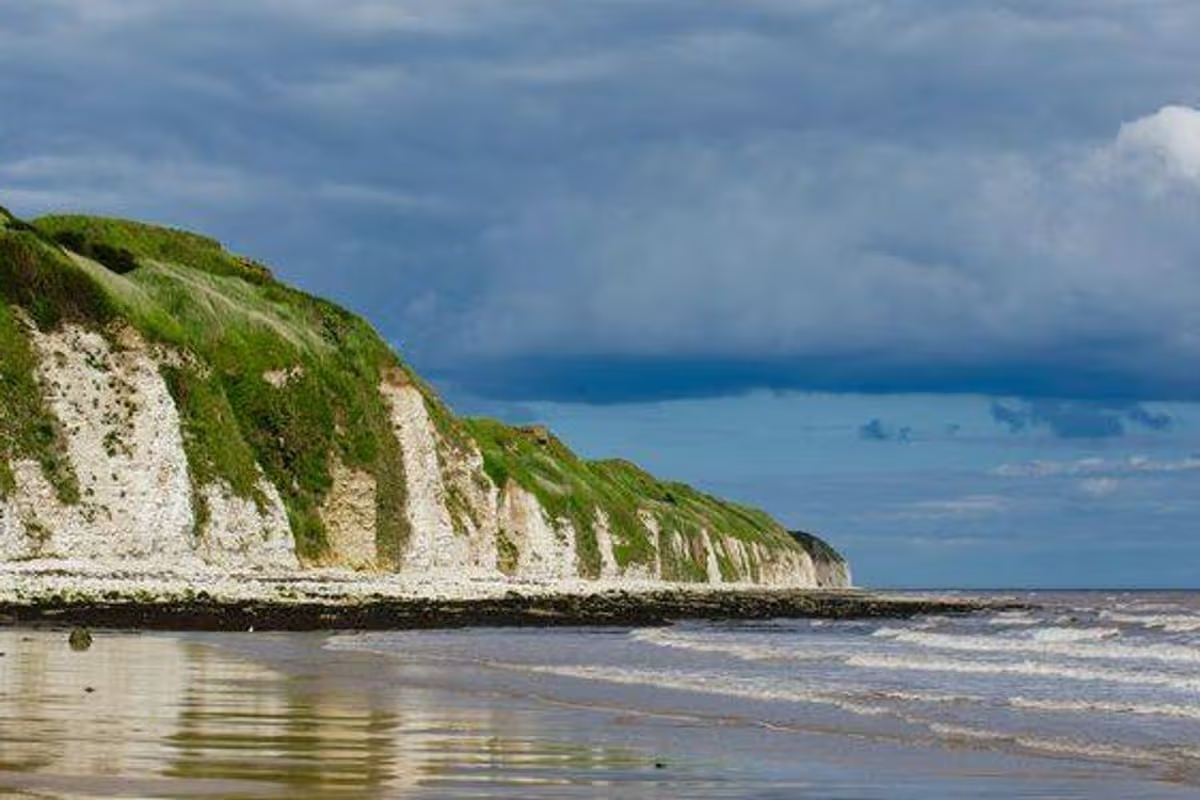
It’s so secluded there’s often ‘not another person in sight’(Image: Thomas Tolkein/Flickr)
Stretching across 184 acres, this woodland trail guides you to a stunning beach whilst offering abundant wildlife sightings throughout your journey.
Danes Dyke nature reserve in Bridlington boasts the Headland’s most extensive woodland area, with a pathway leading directly to the coastline.
This distinctive sea and cliff habitat has earned protection as a Site of Special Scientific Interest, whilst the woodland itself gained official Nature Reserve designation in 2002.
Nature Reserve Walk
Visitors can start by using the spacious Pay and Display car park, which accommodates up to 80 vehicles. Located off Flamborough Road in Bridlington, simply follow the brown tourist signs pointing towards Danes Dyke.
Keen ramblers often favour the 3km circular route starting from the car park, though numerous alternative paths and distances are available to suit your preferences.
Save on the best holiday cottages in Yorkshire
This article contains affiliate links, we will receive a commission on any sales we generate from it. Learn more
Famous for its dramatic landscapes, historic cities, hearty food, and rich cultural heritage Yorkshire is just waiting to be explored. Sykes Cottages has a large number of properties to choose from with prices from £31 per night.
After meandering through approximately 1km of woodland, you’ll emerge at the beach, where sweeping vistas of the bay unfold before you.
One visitor shared on TripAdvisor: “You must visit Danes Dyke if you are visiting the area. Even the drive to it is eerie but magical, and the huge dyke itself is spectacular and steeped in history.”
They added: “You can just imagine how the Vikings tried to etch out the area to make it a land of their own. The beach is great too.”
Nestled within the woodland reserve lies a remarkable prehistoric earthwork, comprising a substantial bank and ditch that cuts through the landscape.
While unconfirmed, it’s thought to date back to the Iron Age, serving as a defensive structure that severed the Flamborough Headland.
Beach
Yet the true highlight of this excursion is undoubtedly the final stop, Danes Dyke Beach. The sand is reached via a tarmacked path that’s rather steep and has suffered damage from water and debris, requiring extra care when navigating.
The undisputed showstopper here is the towering white cliffs that dominate the predominantly shingle beach. They enclose the shoreline, confining it to its own sheltered bay, which explains its popularity amongst adventurers seeking solitude and peace.
Its secluded bay is reminiscent of the type of area once used for smuggling contraband, ferried in by vessels from the ocean. The surrounding Flamborough Head area does indeed boast a smuggling heritage, with its famous ‘smuggler’s caves’ situated at neighbouring Thornwick Bay.
One rambler said: “The day that my wife and I visited Danes Dyke, there was not another person in sight, just the two of us, with the waves crashing in and the sea salt from the spray in the air – pure magic.”
Another commented: “Lovely clean beach with a picturesque cliff line and white pebbles. A short walk from the car park. Great place for the dog to run. Hardly anyone about.”
Place to rest
The closest village to Danes Dyke is picturesque Sewerby, which boasts several traditional and welcoming pubs. Following a peaceful and leisurely stroll, you can tuck into hearty pub fare or pause for refreshments at The Ship Inn or The Old Forge, or even treat yourself to highly-rated fish and chips from Blu Savannah along the seafront.
The Ship Inn features a spacious beer garden perfect for summer months, which stretches towards the cliff edges. It’s built quite a name for itself with its range of cask ales and is renowned locally for staging various live music performances and beer festivals, making it an ideal spot to visit following a weekend ramble.
Ensure our latest headlines always appear at the top of your Google Search by making us a Preferred Source. Click here to activate or add us as your Preferred Source in your Google search settings.
Feb. 18 (UPI) — White House economic adviser Kevin Hassett on Wednesday said that employees at the New York Federal Reserve should face punishment for publishing “the worst paper I’ve ever seen in the history of the Federal Reserve System.
The research published Feb. 12 concluded that most of President Donald Trump‘s tariffs are being paid by U.S. businesses and consumers. The authors said 90% of the costs are being passed on, though it acknowledged that the effect had dropped slightly as the year went on.
In an appearance on CNBC’s Squawk Box, Hassett, the director of the National Economic Council, called it an “embarrassment” and said of the four authors, “the people associated with this paper should presumably be disciplined.”
He argued that tariffs are responsible for a higher standard of living.
“Prices have gone down. Inflation is down over time,” Hassett said. “Import prices dropped a lot in the first half of the year and then leveled off, and [inflation-adjusted] wages were up $1,400 on average last year, which means that consumers were made better off by the tariffs. And consumers couldn’t have been made better off by the tariffs if this New York Fed analysis was correct.”
Harvard Business School, Yale’s Budget Lab, the Kiel Institute for the World Economy and the Congressional Budget Office have published similar findings, Politico reported.
“Our results imply that U.S. import prices for goods subject to the average tariff increased by 11% … more than those for goods not subject to tariffs,” the paper, written by Mary Amiti, Chris Flanagan, Sebastian Heise and David E. Weinstein, said. “U.S. firms and consumers continue to bear the bulk of the economic burden of the high tariffs imposed in 2025.”
Hassett was on Trump’s short list for Fed chair, but Kevin Warsh was chosen.