reminder

The Dodgers need Mookie to be Mookie

Program a reminder into his phone. Tie a string around his finger. Chant his name like a mantra: Moo-kie! Moo-kie! Moo-kie!

Whatever it takes to jog Mookie Betts’ memory, to remind him he’s Mookie freakin’ Betts.

Because this Dodgers’ three-peat campaign won’t succeed without his contributions at the plate.

The Dodgers lose the plot without the swagger they’re used to from the four-time champion in their midst.

They need Betts to be that right-handed hitter who will keep opposing pitchers honest in a lineup of lefty stars. To help them compensate without Will Smith’s dependable bat and without being able to depend on $240-million-man Kyle Tucker in games at home.

They need Betts to keep feeding his “hope meter.”

“I’m always trying to remind him who he is,” Dodgers manager Dave Roberts said Wednesday before the Dodgers began a four-game series with the Milwaukee Brewers. “The guy standing 60 feet, 6 inches from him understands the baseball card, knows who’s in the box. And it’s important that [Betts] can’t forget that, regardless of what the scoreboard might say.”

That scoreboard has really not been helping.

All it’s been doing is serving an oppressive, jumbo-sized reminder every time Betts goes to bat of how un-Mookie-Betts-like he’s been for much of this season. Going into Saturday’s game against the Milwaukee Brewers, he has career lows in batting average (.239), on-base percentage (.295) and on-base-plus-slugging percentage (.709).

Unless, of course, this is Betts, now at 33, in his — unlucky? — 13th major league season and seventh as a Dodger? Father Time is inevitable.

But let’s remind ourselves: It’s better to be lucky than good, and that Betts has been unlucky, which is bad.

There was the oblique strain in early April that sidelined him for more than a month. Misfortune that brought back bad memories of last season’s mystery illness that caused Betts to lose nearly 20 pounds.

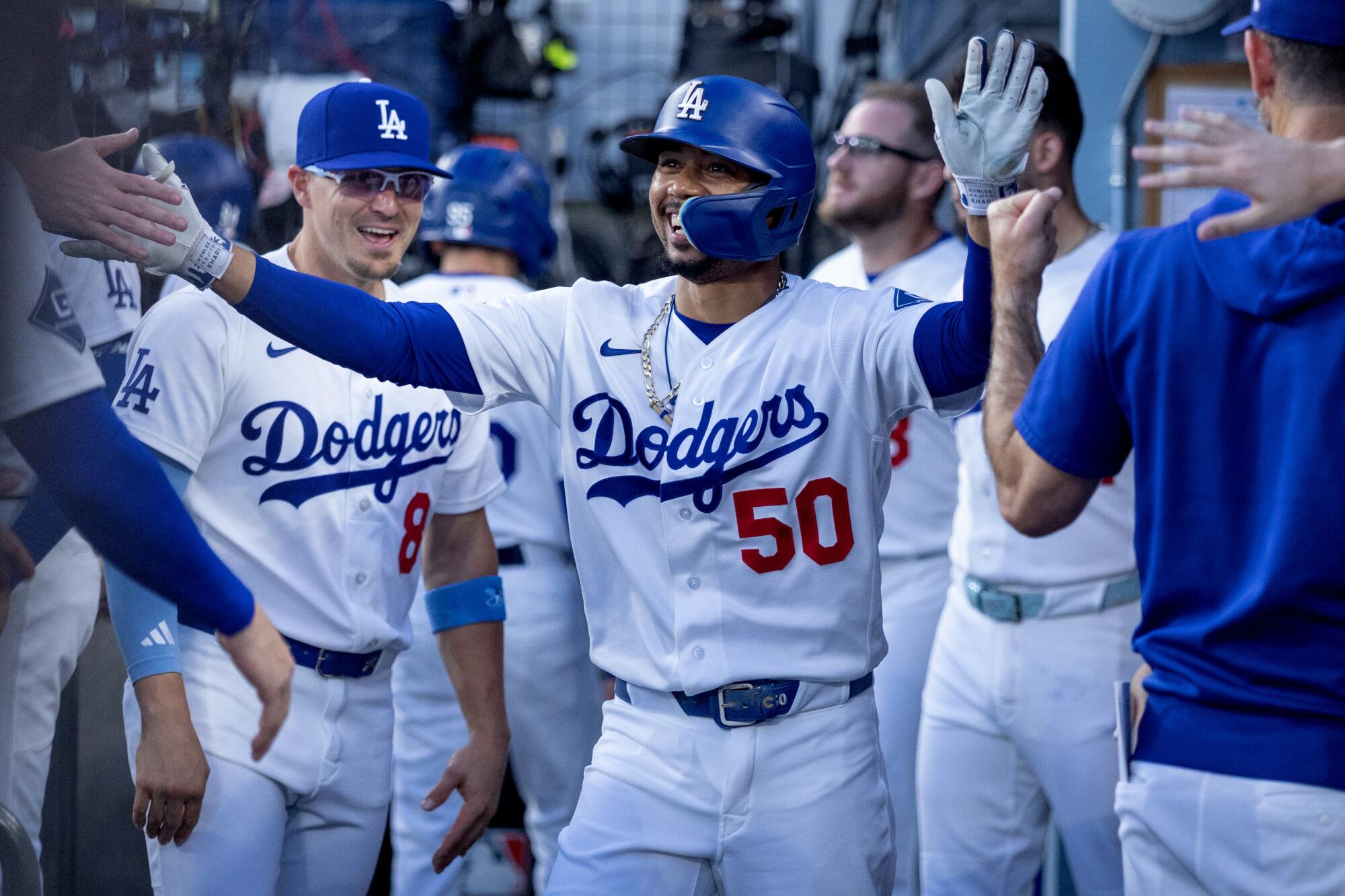
Dodgers shortstop Mookie Betts (center) celebrates with teammates after hitting a home run against the Royals on Wednesday.

Dodgers shortstop Mookie Betts (50) celebrates with teammates after hitting a home run against the Royals on Wednesday.

(Eric Thayer / Los Angeles Times)

And there’s the data since his return this season, Baseball Savant’s evidence of Betts’ bad rolls: His .278 expected batting average — the Statcast metric measuring the likelihood that a batted ball will become a hit — is .039 points higher than his actual batting average. That’s the third-largest discrepancy in the big leagues.

Also, Betts’ HardHit% this season — measuring the rate of hard-hit balls — of 38.8%, nearly a 3% increase from last season. His exit velocity (90.5 mph) is a mile and a half more than last season.

The game honors you, and the game tests you.

Early this month, a dejected Betts had as tough a time explaining to reporters why, despite hitting the ball hard and stacking disciplined at-bats, he’d had little to show for it. He hit only .205 in July, with a slugging percentage of .313.

“I’m gonna have to help the team at some point,” Betts said on Aug. 4. “It’s really hard, I’ve just never done this so I don’t really know how to get through it. Everyday I show up and try to restore that hope meter.

“But this is very hard.”

Dodgers shortstop Mookie Betts throws the ball across the infield to first base for an out against the Royals on Wednesday.

Dodgers shortstop Mookie Betts throws the ball to first base for an out against the Royals on Wednesday.

(Ronaldo Bolanos / Los Angeles Times)

That’s why Roberts has stayed on him, he said, reminding him who he is. And who Betts is, of course, is a former MVP and eight-time All-Star, a seven-time Silver Slugger and former batting champion. He’s a scratch-level bowler who made a virtually unprecedented shift from right field to shortstop in Year 11. There’s not a lot Betts hasn’t been able to do.

We got a glimpse of that guy in this recent nine-game stretch, when Betts hit .387 (12 for 31) with a .645 slugging percentage.

“For me,” Roberts said, “it’s just kind of how he’s carrying himself, really. … He’s always been good with not swinging at balls, swinging at strikes. So those components have been consistent. But, yeah, for me, it’s just I like the swagger, the demeanor.”

More like Mookie.

“He’s crucial,” Roberts said. “He’s got the experience, the talent, and he’s an emotional guy. I say that in the sense that when he’s going well, guys feed off that energy. And, when he’s not, you’re sort of trying to find it in him and get it in him.

“So when he’s going well like he has been this past series, guys feel good about it. So, it’s important … that he’s kind of found something to kind of hang his hat on.”

Put a sticky note in Betts’ locker. Better yet, stick his baseball card in there. Because the guy in the box should understand who the guy in the box is — regardless of what the scoreboard might say.

Source link

UK airport reminder for passengers travelling with common bathroom item

Passengers carrying the item in their hand luggage need to be aware of restrictions

Passengers flying from a busy UK airport are being reminded to pack their bags carefully. While most flyers know there are rules around carrying liquid items in hand luggage, there’s sometimes confusion over which beauty items and toiletries count as liquids.

Heathrow Airport has a reminder for passengers online. The airport has answered various security and baggage FAQs for customers on its website. Explaining the restrictions, the airline told its customers: “Liquids, aerosols and gels can now be packed in your cabin bag and are permitted in containers up to two litres. These do not need to be removed from your cabin baggage.”

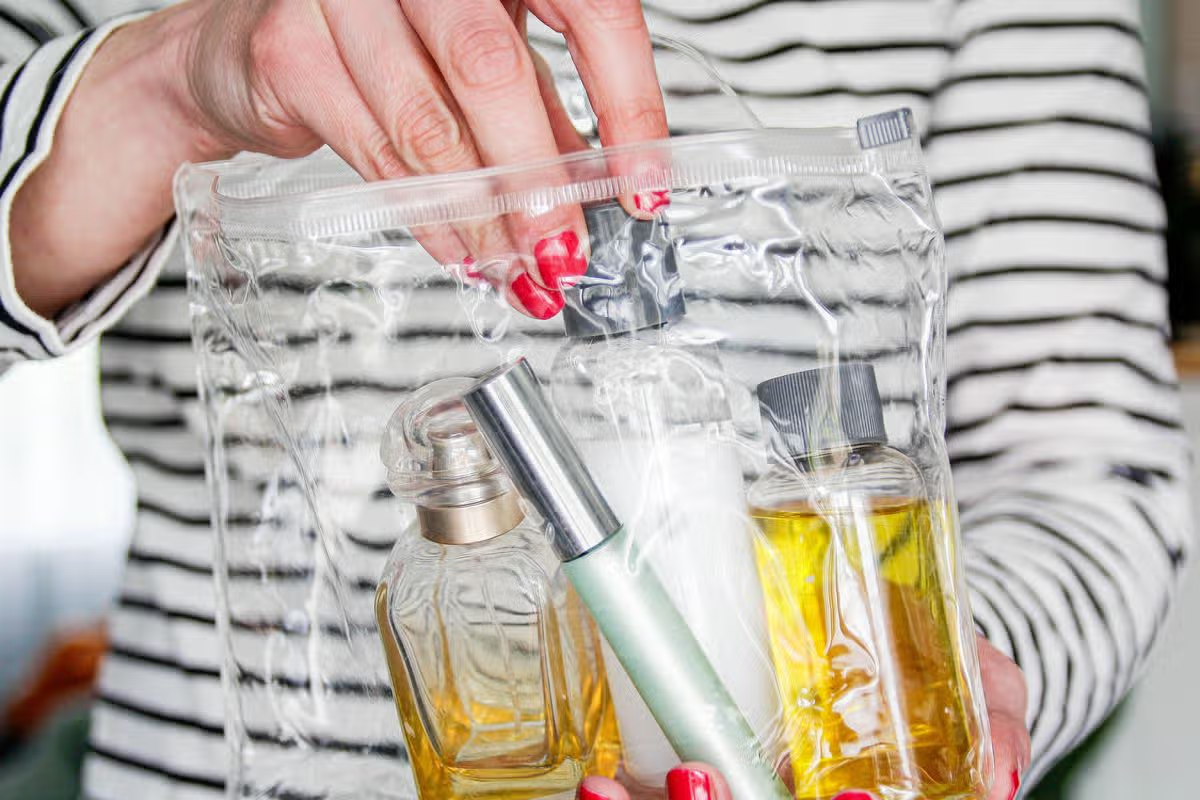
As Heathrow Airport points out, common shower items such as shaving foam and gels count as liquids. Other items commonly packed in toiletry bags, including toothpaste, roll-on deodorant, and creams, are also classed as liquids, according to the advice.

The airport explained: “We often get asked about hair gels, creams and even yoghurt”. Here is a quick checklist of what is considered a liquid and what is not:

Not considered a liquid:

  • Solid lipstick
  • Stick deodorant

All these items are considered liquids:

  • Drinks, soup and yoghurt
  • Pastes and puréed food
  • Formula milk (special rules apply for breast milk)
  • Shaving foam
  • Toothpaste
  • Roll-on deodorant
  • Atomisers, sprays
  • Creams
  • Gels

In the FAQs, the airport added: “Duty free liquids, aerosols and gels purchased after security can be carried as hand baggage. However, these must be sealed at the time of purchase with the receipt inside a security tamper-evident bag.”

More advice is available on Gov.uk. The advice says liquids include: “All drinks, including water. Liquid or semi-liquid foods, for example soup, jam, honey and syrups. Cosmetics and toiletries, including creams, lotions, oils, perfumes, mascara and lip gloss.

“Sprays, including shaving foam, hairspray and spray deodorants. Pastes, including toothpaste. Gels, including hair and shower gel. Contact lens solution. Any other solutions and items of similar consistency.”

However, passengers can carry refillable drink containers if they are empty. These can then be refilled in the departure lounge after security, and most airports have water fountains. For example, Heathrow Airport says there are over 100 water fountains across its four terminals.

Passengers carrying liquids are advised to check travel advice with the airports they are travelling through before departure. This should include the airport they are flying from, any other airports they plan to travel through, and the airport they are flying home to.

Source link

Wildfires ‘stark reminder’ of extreme climate challenge – William

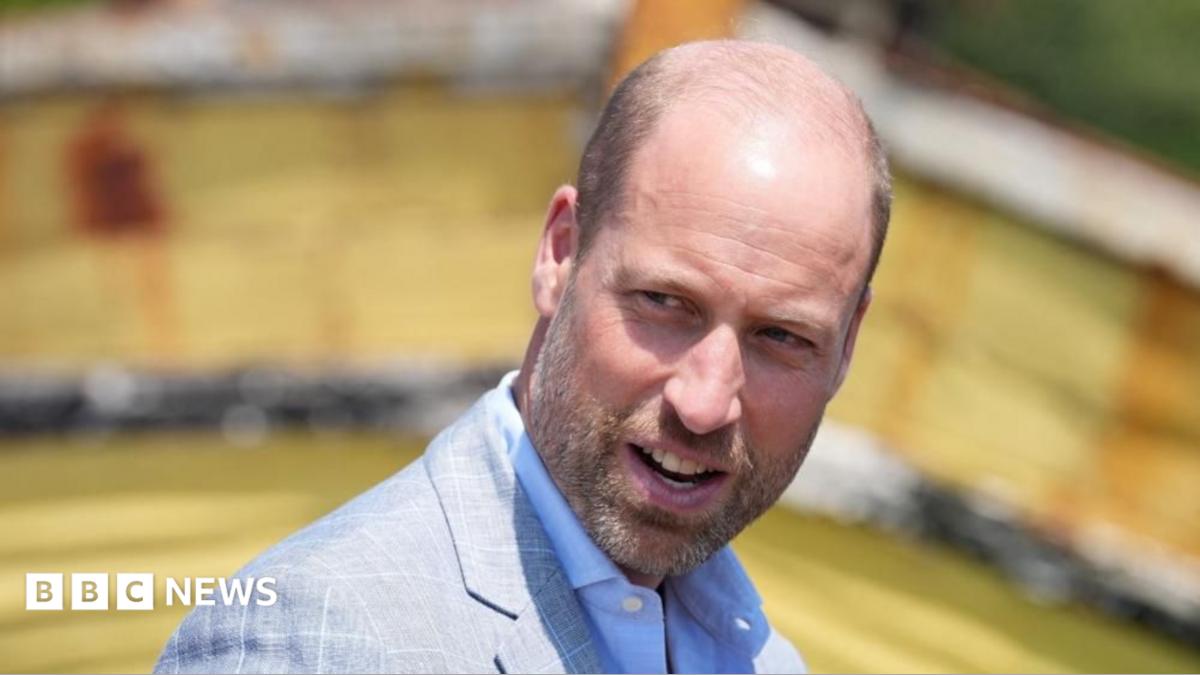
Wildfires in the UK and Europe are a “stark reminder of the challenges posed by an increasingly extreme climate”, the Prince of Wales has said.

More than 300,000 people have so far been evacuated from parts of France and Spain as wildfires continue to rage on the continent, with another intense heatwave on the way.

In Scotland a major incident was declared at the weekend as a result of a major wildfire in the Cairngorms, while a number of smaller fires have burned elsewhere in the UK.

Prince William wrote in a post on X: “Our thoughts are with everyone affected by the devastating wildfires across France, Spain and the UK.”

“We are deeply grateful to the firefighters, emergency services and volunteers working tirelessly in extraordinarily difficult conditions.

“These events are a stark reminder of the challenges posed by an increasingly extreme climate and the importance of protecting both people and nature.”

Climate change is driving up temperatures around the world – but particularly in Europe. It is the fastest warming continent, heating up twice as fast as the global average, according to the Copernicus climate service.

This is causing increased summer heatwaves, greater pressure on Europe’s water supply, and more intense wildfires.

Wildfires are currently tearing through France and Spain.

France has seen its worst fires in two decades, while officials in the Spanish capital Madrid say they are the worst the region has ever experienced.

In the UK, an assessment by the Met Office showed that fires could be exceptionally severe by Wednesday if they were to start in parts of London, the south east or the east of England as a result of hot, dry conditions.

London Fire Brigade said it dealt with more than 1,300 incidents over the weekend – including grass fires, property fires and rescuing a person from the Thames.

It has urged people to avoid disposable barbecues, dispose of smoking materials and put litter in the bin or take it home to avoid starting wildfires.

Temperatures are expected to rise again later this week, with a fourth heatwave of the year looming for some areas. Amber heat health alerts have been issued for much of eastern England.

According to provisional Met Office data, the month of July has been 3C above average across the UK, which could see it end up as one of the hottest Julys on record.

Source link

Official ‘three-week’ UK passport rule reminder for Brits heading abroad this summer

His Majesty’s Passport Office issued an update

Millions of Brits planning a summer break are being told to observe a vital passport “3-week rule” following a new alert from His Majesty’s Passport Office.

The government body says that holidaymakers should allow a minimum of three weeks for their passport application to be handled and has cautioned that certain cases may take longer if further checks are needed. The reminder arrives as families gear up to travel abroad during the busy holiday period, when demand for passport renewals typically surges.

In a message to travellers, His Majesty’s Passport Office said: “Sun, sea & stress-free travel. Apply early – UK passports usually arrive within 3 weeks (longer if checks needed).”

Official guidance confirms that standard passport applications lodged in the UK are normally processed within three weeks from when the Passport Office receives the necessary documents. Nevertheless, officials emphasise that not every application can be completed within that window.

Government guidance states: “You’ll usually get your passport within 3 weeks. It may take longer than 3 weeks if we need more information, or we need to interview you. We’ll tell you this within 3 weeks.”

The Passport Office is also cautioning Brits against booking holidays before their new passport has been delivered. Its guidance states: “Do not book travel until you have a valid passport – your new passport will not have the same number as your old one.”

The guidance is especially important for travellers whose passport is set to run out before a planned journey.

Following Britain’s exit from the European Union, numerous European countries now insist that British passports must have been issued in the last 10 years and retain at least three months’ validity on the date of leaving the nation you’re visiting.

Travel industry specialists regularly caution that holidaymakers risk being refused boarding if their passport fails to satisfy their destination’s entry criteria.

Britons requiring a passport with greater urgency might be eligible to utilise the Passport Office’s premium services, such as the Online Premium and One Week Fast Track alternatives, though these come at a higher cost than the conventional application route.

Passport applications can be lodged online or via a paper form obtainable from Post Office branches, although paper submissions incur an extra charge.

Those who have already submitted their application can monitor its progress using the Government’s online passport tracking service.

Content cannot be displayed without consent

Passport processing times.

The standard UK passport application service generally takes up to three weeks for completion. For individuals needing a passport more swiftly, the One Week Fast Track service aims to deliver a passport within seven days.

Travellers who need a passport straight away can opt for the Online Premium service, which provides a same-day appointment and passport collection. The Passport Office confirms that processing times only commence once all required documents have been received, which means any hold-ups in providing paperwork can prolong the total time needed to obtain a new passport. Further information is available here.

Source link