region

Wildfires bear down on homes in Canada’s Okanagan region | Environment

NewsFeed

A fast-moving wildfire in Canada’s British Columbia province has forced thousands of people from their homes. Canadian officials say more than 20,000 residents have been evacuated from the towns of Summerland and Peachland in the Okanagan region.

Source link

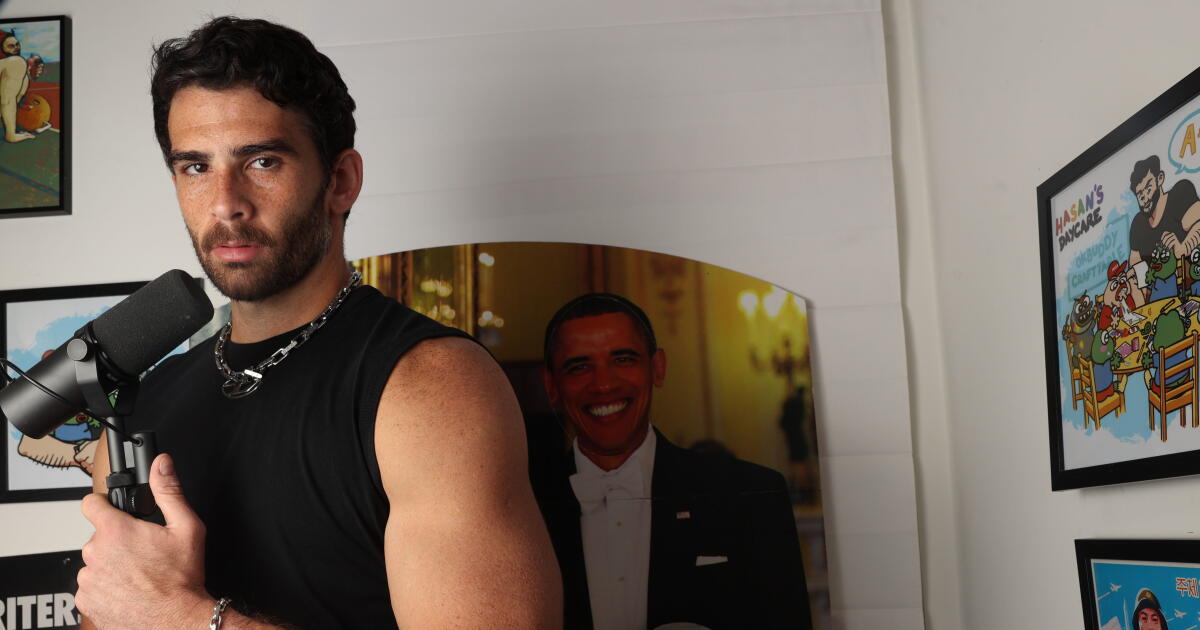
Pratt spent big on luxury hotels and security, campaign reports show

During the Los Angeles mayoral primary, Spencer Pratt put out a video saying he was living in a trailer on the burned-out lot where his Pacific Palisades home once stood — a claim that was soon debunked by TMZ, which reported that he was actually staying at the Hotel Bel-Air.

While Pratt’s mayoral bid has come to a close, his campaign’s final spending on luxury hotels — including the Hotel Bel-Air — is now coming to light.

Pratt spent just under $71,000 on hotels for himself, his campaign staff and his fundraising operation, mostly at the Hotel Bel-Air and the Four Seasons Hotel in New York, according to recently released campaign finance filings in the mayoral race.

The former reality TV star has a history of lavish spending on hotels, according to his memoir, “The Guy You Loved to Hate,” where he recounts staying at the Four Seasons in Costa Rica for a month in 2010. He said the hotel stay was “bleeding him dry.”

The tens of thousands of dollars Pratt’s campaign spent on hotels represent just a fraction of the more than $3 million Pratt’s campaign spent overall, including hundreds of thousands to campaign strategy firms and more than $200,000 to the company Black Llama Inc. for billboards. Pratt had AI-designed billboards placed across the city.

Pratt also spent more than $180,000 on private security firm Delta Special Operations Corp., almost entirely in the final month before the June 3 primary.

Delta Special Operations charges $650 per day to provide a single security officer in Los Angeles, but also offers a higher level of “executive protection.” Pratt has said he faced threats during his candidacy.

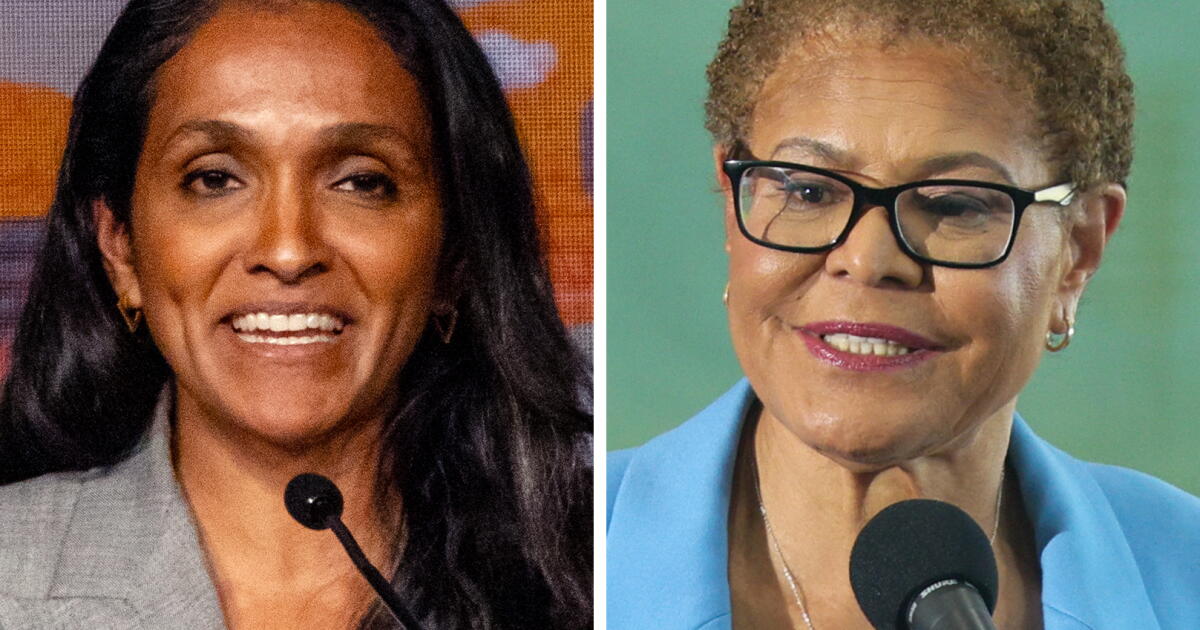
Pratt placed third in the primary, behind Councilmember Nithya Raman and L.A. Mayor Karen Bass, who will square off in the Nov. 3 general election. Raman’s campaign reported spending about $1,000 on security, while Bass has security provided by the city.

Building out her support

Raman secured what could be one of her most significant endorsements of the entire election cycle this week, pulling in the support of the Western States Regional Council of Carpenters.

The endorsement from the carpenters union marks a sharp turn for the labor group, which backed Bass in 2022. The union committed more than $2 million to independent expenditure groups supporting Bass’ candidacy in 2022, paying for television ads that ran in advance of the general election.

During the primary, Raman and independent group supporting her focused on ads on social media and streaming platforms, which are cheaper than traditional television ads.

“We will be matching the same energy and we’ll have same type of commitment as when we endorsed Bass. We don’t plan on holding back,” said Pete Rodriguez, the second general vice president of the international union.

Rodriguez said the union would spend significantly to support Raman, though he did not give a figure.

Bass has dominated labor endorsements throughout the campaign. She has secured more than two dozen endorsements from influential labor unions including the Police Protective League, which represents rank and file police officers in the LAPD, and SEIU 721, which represents public sector workers at the airport and in street services, among other departments. She also has the backing of the powerful Los Angeles Federation of Labor, a coalition of unions (Bass calls its leader, Yvonne Wheeler, “The Beyoncé of Labor”).

“Workers are overwhelmingly behind Karen Bass … because she delivers real results,” said the mayor’s campaign spokesperson, Alex Stack. “Results like building more affordable housing immediately to drive down rents, mortgages, and the cost of housing.”

Rodriguez said one major issue that caused the carpenters union to break with Bass was the mayor’s failure to include higher labor standards in the codified version of Executive Directive 1, which fast-tracked some affordable housing applications.

That law was passed by the council and Raman voted in favor of the law that codified the mayor’s directive.

Raman told The Times in a statement that she stood by her vote, but that she appreciated the union’s ability to work with legislators to enact legislation that “combines density with higher labor standards.”

You’re reading the L.A. on the Record newsletter

Sign up to make sense of the often unexplained world of L.A. politics.

The DSA endorsement …

Raman could get another key and much-discussed endorsement later this month.

The Los Angeles chapter of the Democratic Socialists of America is once again considering endorsing her for mayor. The endorsement would bring doorknockers for Raman and could bring more national attention to the race.

An internal petition shared with The Times is circulating in the group and needs just 50 signatures by Aug. 8 in order for the consideration of Raman to go to a vote. Raman would then need 60% of the vote at an Aug. 22 chapter meeting in order to win the endorsement.

“Nithya Raman is running an insurgent left-wing campaign for the mayor’s office against Karen Bass and L.A.’s unpopular status quo Democratic establishment,” the petition reads. “Will an insurgent Left seize control of our city government to build a Los Angeles for its working class? Or will the establishment fend off this insurgency and deepen its power?”

After jumping into the race on the last possible day in February, Raman was not endorsed by the left-wing organization in the primary. The group instead “recommended” her — a status that means the DSA wouldn’t actively campaign on her behalf but urged voters to cast their ballots for Raman.

Raman was endorsed by the group in both her council campaigns, but her late entry came after DSA had made its endorsements.

The group considered reopening its endorsement process for either Raman or Rae Huang — who like Raman is a member of the DSA — but ultimately decided to focus on other down ballot races in the primary.

DSA-LA declined to say whether the petition had gained the requisite number of signatures for a vote.

State of play

— LINEAGE LEGISLATION: Los Angeles city and county officials unveiled a slate of measures aimed at speeding recovery, increasing corporate accountability and expanding financial assistance for residents and businesses affected by the June fire at the Lineage cold food storage facility.

— PRICED OUT: Councilmember Curren Price’s motion to get his perjury and embezzlement case dropped was denied Friday by a Los Angeles Superior Court judge. Price’s lawyers maintain that he did not knowingly vote on city contracts for real estate developers that contracted with his wife. The judge argued there was “ample evidence, albeit circumstantial, that this was a scheme and not just happenstance.” The outgoing council member’s next court date is set for October.

— E-BIKES UNDER FIRE: The council’s Rules Committee passed a motion Tuesday that asks the city’s Department of Transportation to come up with ways to regulate e-bikes, including who can ride them and how. The measure next goes to the ways to regulate e-bikesPublic Safety Committee, then the full City Council.

— A NEW ERA: For the first time since 1963, Council District 9 in South Los Angeles will soon have a non-Black representative in the City Council. Estuardo Mazariegos and Jose Ugarte, who are facing each other in the Nov. 3 election to represent parts of downtown and South Los Angeles, are both immigrants from Latin America who arrived undocumented as children.

— OFF THE RAILS: Homelessness on Metro’s rail and bus system has dropped by 57% since 2024, the agency said this week.

— A ROSE AND A THORN: The Rose Bowl Aquatics Center will close April 1, and not be returned to its regular users until the fall of 2028, after the conclusion of the Olympic Games. The announcement came after The Times reported on the impending shutdown.

QUICK HITS

  • Where is Inside Safe? The mayor’s signature program went to the intersection of Alameda Street and E. 223rd Street in City Councilmember Tim McOsker’s district where it brought 22 people indoors.
  • On the docket next week: The City Council will vote on whether to execute the Enhanced City Resources Master Agreement for the 2028 Olympic and Paralympic Games.

Stay in touch

That’s it for this week! Send your questions, comments and gossip to LAontheRecord@latimes.com. Did a friend forward you this email? Sign up here to get it in your inbox every Saturday morning.

Source link

Mexico deploys troops to secure avocado region after US halts imports | Drugs News

NewsFeed

Mexico deployed more than 1,500 troops to its main avocado-producing state after the US suspended export inspections over security concerns. The halt has frozen shipments to Mexico’s biggest market, threatening thousands of jobs and a multibillion-dollar industry.

Source link

Three L.A. city candidates pull way ahead of their rivals in fundraising. But it’s still early.

Good morning, and welcome to L.A. on the Record — our City Hall newsletter. It’s David Zahniser, with an assist from Gavin J. Quinton, giving you the latest on city and county government.

Deputy Atty. Gen. Marissa Roy did big numbers in the June 2 primary election, coming in first place in the race for city attorney and knocking City Atty. Hydee Feldstein Soto out of the running entirely.

Roy secured 43% of the vote in round one. Now that she’s in a head-to-head contest against Deputy Dist. Atty. John McKinney, she’s well ahead in fundraising as well.

Campaign spending reports for the Nov. 3 runoff, filed over the last few days, show that Roy’s campaign collected nearly $74,000 during the fundraising period that ended June 30. By comparison, McKinney collected just $3,000, according to his own contribution report.

“I plan to be a City Attorney for the people, and I’m proud to have a campaign supported by the people. If your campaign isn’t, then I think it’s fair to ask who it is for,” Roy said in a statement.

You’re reading the L.A. on the Record newsletter

Sign up to make sense of the often unexplained world of L.A. politics.

The race is one of three downballot contests where the candidate who came in first on June 2 is also well ahead in the scramble for campaign contributions. Things were similarly lopsided in council races in South L.A. and the San Fernando Valley.

McKinney, who received nearly 29% of the vote in the primary, said his campaign will have plenty of resources to “educate voters that Marissa Roy is a bad fit for Los Angeles.”

“The recent financial disclosure reflects just one week of activity,” he said in a statement. “Since the June 30th [fundraising] deadline, we’ve raised more than $65,000 from more than 80 individual donors and have nearly 15 fundraising events scheduled.”

Several of the donors who gave to Roy occupy the left end of the political spectrum, such as Loraine Lundquist, who ran for City Council twice in the San Fernando Valley, losing both times to Councilmember John Lee. Roy also picked up a donation from airport commissioner Victor Narro, project director for the UCLA Labor Center.

Roy received $1,800 from attorney Carol Sobel, who has sued the city many times on behalf of various clients over policing and its treatment of the homeless population. Another $1,800 came from Genie Harrison, who is representing former fire chief Kristin Crowley in her lawsuit over her ouster.

McKinney, who works for Dist. Atty. Nathan Hochman, is likely to have his own big-money support in the coming weeks. During the primary, an array of well-financed allies, including Airbnb, spent a combined $3.2 million on efforts to elect him.

In South L.A., Ugarte ramps up his fundraising

The fundraising was also lopsided in the race to replace City Councilmember Curren Price, a veteran lawmaker who is stepping down after 13 years in a district stretching from the Convention Center south to 95th Street.

Former Price aide Jose Ugarte collected about $35,000 for the runoff, much of it from other city workers, particularly council aides, records show.

Community organizer Estuardo Mazariegos took in about $5,400, pulling in donations from the progressive L.A. Forward Action Fund and from Lundquist, the former council candidate.

A number of elected officials have lined up behind Ugarte, who garnered 39% of the vote in the primary. He received $1,000 apiece from State Assemblymembers Mark Gonzalez (D-Los Angeles), Mike Fong (D-Alhambra) and José Luis Solache (D-Lynwood), according to his filing. Ugarte also received $1,000 each from former Councilmember David Ryu and from the Hollywood Chamber of Commerce.

Records show that Ugarte received $1,000 from the Los Angeles Police Protective League, the union that represents rank-and-file police officers, but then returned the contribution. Ugarte does not accept donations from the police union, his campaign strategist said.

“I support Mayor Bass’s efforts to increase staffing, strengthen community policing, and improve transparency and accountability. I also want to see more officers on foot patrols and bike patrols in our neighborhoods,” Ugarte said in a statement. “Returning this contribution does not change or influence my views on these priorities.”

In the Valley, Gaspar pulls in a big haul

In the race to replace Councilmember Bob Blumenfield in the west San Fernando Valley, businessman Tim Gaspar is proving to be a fundraising powerhouse.

Gaspar reported more than $180,000 in donations to his runoff campaign through June 30, compared with about $31,000 for Barri Worth Girvan, an aide to County Supervisor Lindsey Horvath, according to her filing.

“After finishing with the most votes in the primary, our campaign is grateful for the outpouring of support from business owners, neighbors, and friends across the West Valley,” Gaspar said in a statement.

Gaspar received 46% of the vote in the primary, compared with more than 42% for Worth Girvan.

In an interview, Worth Girvan said she’s not troubled by the fundraising gap. During the primary, backers of Gaspar spent about $1.4 million on independent expenditures supporting his election bid.

“We still came within 4 percentage points,” she said. “To me, it’s always been about the voters, so that’s what I’m focused on.”

Worth Girvan picked up donations from longtime Democrats, including Gonzlaez, the state Assembly member, former state Assembly Speaker Anthony Rendon and Ryu, the former City Council member. She told The Times her fundraising picked up significantly after the June 30 fundraising deadline, bringing her total haul to more than $100,000.

Gaspar picked up donations from several public safety unions, including $1,000 from the Police Protective League and $500 from a political action committee set up by the city’s port police. He received $1,000 from real estate developer Rick Caruso, who ran unsuccessfully for mayor in 2022.

State of play

— WINDS OF CHANGE: For the first time since 1963, L.A.’s 9th Council District will not have a Black representative. The race to represent that South L.A. district features two Latino candidates who immigrated to the U.S. as children, both of them undocumented at the time. Ugarte, the former council aide, was born in Oaxaca and is Mazateco, an Indigenous group native to the Mexican state. Mazariegos, a community organizer, was born in Guatemala.

— DISAPPEARING ACT: Records dealing with the activities of the Los Angeles Police Department — emails, text messages, audio recordings — have vanished from a city website devoted to the release of public information. Although the removal of such records does not violate any laws, “it’s certainly not a best practice,” one expert said.

— PERMIT PROBLEMS: A representative of Lineage, whose massive cold storage facility burned down in Boyle Heights two months ago, filed a permit this week to rebuild the company’s 491,000-square-foot warehouse to its original pre-fire condition. Bass called the filing a “slap in the face” to families in Boyle Heights and ordered her department heads to put the application on hold until the site receives extensive study.

— SCHOOLS AND SAFETY: Meanwhile, with less than two weeks left before the start of school, families in Boyle Heights and East L.A. are worried about health and safety at eight campuses located within a mile of the Lineage site, which has been beset with the stench of rotting food, rats and swarms of flies.

— ZOO COUP: Feldstein Soto may have lost her bid for a second term, but she did rack up a key court victory in the city’s battle over money for the Los Angeles Zoo. The city has been trying to claw back about $50 million raised for the facility by the Greater Los Angeles Zoo Assn., the nonprofit that helped run it until recently. GLAZA filed for Chapter 11 bankruptcy protection in June, citing “incessant litigation” from the city. This week, at the city’s request, a judge dismissed the bankruptcy filing.

— TAKING IT TO THE STREETS: L.A. is on track to repeal a city law prohibiting kids from playing baseball, basketball, soccer or other ball games out in the street. The law was passed in 1936 out of a fear that children would be struck by cars. Councilmember Bob Blumenfield says it’s time the ordinance was erased from the books.

— FIXING THEIR MISTAKE: L.A. County’s Board of Supervisors voted Tuesday to send voters a charter amendment that would reverse the repeal of Measure J, which was approved six years ago and sets aside money for alternatives to incarceration. Measure J, through a series of errors, was supplanted in 2024 by Measure G, which will increase the number of supervisors. The new measure would restore Measure J to the county charter.

— SPEAKING OF ERRORS: Last week, we mentioned a proposal to reduce the number of required council meetings from three per week down to one, saying that the idea failed to make the ballot. That was wrong! The measure will in fact go before voters in the Nov. 3 election as part of Charter Amendment EE.

QUICK HITS

  • Where is Inside Safe? The mayor’s signature program to bring homeless people indoors went to Skid Row, bringing 23 people inside, according to the mayor’s team. The area is represented by Councilmember Ysabel Jurado.
  • On the docket next week: After a month off, the City Council resumes its business on Tuesday.

Stay in touch

That’s it for this week! Send your questions, comments and gossip to LAontheRecord@latimes.com. Did a friend forward you this email? Sign up here to get it in your inbox every Saturday morning.

Source link

Gironde wildfires flare up as French region braces for new 40C heatwave

On Tuesday morning the Gironde prefect ordered a new evacuation of all camping sites near the coast at Lacanau, while those in the nearby town were allowed to stay put but told to prepare for sudden evacuation.

About 4,000 tourists told to leave the area are in addition to the 220,000 people evacuated around France in recent days.

An estimated 240 homes and houses have been destroyed, officials have said.

By midday on Tuesday firefighters were already intervening in various parts of the region to tackle fires that were picking up again.

A 23-year-old man who was arrested on suspicion of starting a fire in the Var region. is now facing 15 years’ imprisonment. Interior Minister Laurent Nuñez said that 184 people had been arrested since 6 July in connection with the fires.

Peggy Plouhinec, the general director of Château Picque Caillou – one of the few wine estates on the west side of Bordeaux – told the BBC that her business chose to close at the weekend because of the smoke, but that the situation had improved since then and that a bout of rain on Sunday night had helped.

While her vineyards were not at risk, she said tourists had “deserted” the region.

“The hospitality sector will be impacted this summer, that’s for sure,” she added. “What is happening is unprecedented. We’re lucky that we haven’t been too affected yet, but the business will still suffer from the lower numbers of tourists.”

“But many people have lost their homes or their businesses, not to mention the firefighters who have been hard at work for weeks now and who must be exhausted.”

One resident of Cap Ferret, which was evacuated late last week, told French media that his main concern now was for the peninsula he lived in, rather than the big city city inland.

“Everyone talks about saving Bordeaux, but in Bordeaux there’s nothing but concrete. Have you ever seen concrete burn?”

“Here, there are only trees… and when you see all that has burned, it’s a catastrophe.”

Additional reporting by Xavier Pallas

Source link

I visited the English region made famous by Wuthering Heights with old-fashioned villages and celeb-visited hotels

DUST down your red frock for the Most Wuthering Heights Day Ever annual celebrations today.

The global flashmob sees Kate Bush fans recreate the video from the 1978 hit, in which the scarlet-clad singer pranced across idyllic countryside.

Fiona Whitty at Holdsworth House Hotel Credit: Supplied
The global flashmob sees Kate Bush fans recreate the video from the 1978 hit, in which the scarlet-clad singer pranced across idyllic countryside Credit: Alamy

The biggest celebrations include one in Haworth, West Yorks, close to the historic Bronte parsonage at Penistone Hill, and at the Harbour Arm promenade in Folkestone.

Kate wrote her song, aged 18, after watching a TV adaptation of the Emily Bronte novel – and earlier this year, Wuthering Heights’ latest movie incarnation saw Margot Robbie and Jacob Elordi cast as sweethearts Cathy and Heathcliff.

Yorkshire’s breathtaking moors were stars, too, and on my visit I found them to be every bit as barren and mysterious as in the film – undulating fells, carpets of heather and bubbling streams as far as the eye could see.

With only the odd pheasant for company, I’d rarely been anywhere so remote.

HOLI-PAY

Will I get a refund if my Spain or France holiday is cancelled due to wildfires?


OO ARR!

The massive new pirate-themed waterpark open in Spain & you can stay for £34 each

Despite the changeable weather – one minute I’d be battered by gusts that pierced like kitchen knives, the next smothered in mist then bathed in sunshine – I instantly fell head over heels in love with the moors.

Emily Bronte and her sisters Charlotte and Anne grew to adore these wilds, right on their doorstep.

I hiked to ruined farmstead called Top Withens, said to have inspired Wuthering Heights the fictional home of Cathy.

A further trek then took me to the Bronte Waterfall, Bronte Bridge, and Bronte Chair rock (in the shape of a seat), which were all places close to the sisters’ hearts.

Back in Haworth, the limestone cottages and cobbled main street lined with gift shops, cafes and pubs had an old-fashioned charm.

At the sisters’ old home, now the Bronte Parsonage Museum, I saw the simple wooden table where they used to write.

My base was the splendid Holdsworth House Hotel on the edge of Halifax.

Wuthering Heights’ latest movie incarnation saw Margot Robbie and Jacob Elordi cast as sweethearts Cathy and Heathcliff Credit: Alamy
Margot and Jacob in a scene from the flick Credit: AP

Now Grade II-listed, it oozed character, with oak beams and roaring fires.

Reminders of its historic stature abounded, from a stone Cross of Malta – an emblem of ancient religious military order The Knights Hospitaller – to cupboards once used for 18th-century wigs.

Scenes from TV dramas Happy Valley and Last Tango In Halifax were filmed here, while Jacob Elordi, Margot Robbie, Ewan McGregor and James Norton have all stayed.

When I visited, turtle and duckling were no longer on the menu. Instead, I could tuck into steak tartare, venison sausages and Cheddar and leek-filled pasta in a sweetcorn chowder.

And the hotel’s newly opened spa was the perfect place to relax, with fabulous treatments on offer.

I ended my adventure – It full of nostalgia, just like the best Bronte novels – with a dreamy steam-train ride on the Keighley and Worth Valley Railway.

GO: HAWORTH

STAYING THERE: Double rooms at Holdsworth House Hotel from £157 a night, B&B.

Save 10per cent using the code WHSUN10 at holdsworthhouse.co.uk/sun before August 7 for stays from September to January 30, 2027.

Source link

The completely unofficial L.A. City Council power rankings

Good morning, and welcome to L.A. on the Record — our City Hall newsletter. It’s Noah Goldberg giving you the latest on city and county government.

There’s no exact way to measure the effectiveness of Los Angeles City Council members.

But we analyzed three basic elements — meeting attendance, committee assignments and amount of legislation drafted — to give readers a sense of what their local electeds are up to.

Meeting attendance

As part of charter reform efforts, the City Council considered reducing the number of council meetings from three per week to just one.

The proposal failed earlier this month after receiving stiff pushback from at least one councilmember, Monica Rodriguez.

“Meeting less for a city of 4 million people I think sends the wrong message. Particularly when you have the best-paid council in the country,” said Rodriguez in an interview on Fox 11 earlier this year (each councilmember makes an annual salary of more than $244,000). “This idea that we would be meeting less I believe runs contrary to what the public is demanding form their council.”

Yet Rodriguez isn’t a stickler for showing up to meetings herself, ranking near the bottom of her colleagues for attendance. Since the start of 2025, Rodriguez has attended about 86% of meetings, missing 25 out of 177 meetings, according to a Times analysis.

Gabriel Avalos, a spokesperson for Rodriguez, implied that other work-related matters kept her from the meetings.

“There’s no distinction for absences related to city business, but she certainly wasn’t absent due to dishes and laundry,” Avalos said.

Only two other councilmembers missed more meetings than Rodriguez — mayoral candidate Nithya Raman, who missed 30 meetings, and Curren Price, who missed 34 while dealing with illnesses.

On the other end of the spectrum, Council President Marqueece Harris-Dawson, who runs the meetings, missed the fewest — just four of the 177 meetings from January 2025 until this month.

Eunisses Hernandez and Ysabel Jurado each attended 169 meetings, or about 96%.

Stella Stahl, a spokesperson for Raman, said that most of the councilmember’s absences were due to her position as the city’s representative on the South Coast Air Quality Management District.

The remaining absences, Stahl said in a statement, “were tied to a small number of previously scheduled conferences and speaking engagements relevant to her committee work and district priorities, along with occasional sick days and travel for a funeral.”

You’re reading the L.A. on the Record newsletter

Sign up to make sense of the often unexplained world of L.A. politics.

Committee assignments

Council members are appointed to committees by the council president. They can sit on additional committees if the president lets them.

These small groups of council members are responsible for reviewing the first drafts of legislation. Committee chairs have the power to move legislation forward — or stall it — by either putting it on the agenda, or not.

The busiest councilmembers are Hugo Soto-Martínez and Adrin Nazarian, who each sit on nine committees, including some temporary “ad-hoc” ones. Councilmember Tim McOsker follows with seven committee assignments.

But the number of committee assignments isn’t necessarily the clearest indication of power. Katy Yaroslavsky serves on only five committees, but she chairs the Budget and Finance Committee, which edits and approves the mayor’s proposed budget before sending it to the full council for one of its most important annual votes.

At the bottom of the list is Price again, who sits on four committees, including as chair of the Committee on Economic Development.

Legislation

Another easy marker is the amount of legislation a council member authors.

At each meeting, dozens of pieces of legislation go before the council — some high-profile, others just to keep the lights on at City Hall (literally).

Rodriguez, despite her relatively low attendance, was at the top of the legislative list over the last year and a half, drafting 199 motions.

A good chunk were motions on whether to support or oppose bills at the state and federal level. Rodriguez also had the most ceremonial street namings of any council member, with 13.

Rodriguez pointed to more significant legislation, like an ordinance banning city workers from taking on additional gigs for Immigration and Customs Enforcement, as her proudest achievements.

After Rodriguez, McOsker was the second-most prolific author, with 178 pieces of legislation, followed by Traci Park with 163.

At the bottom were Price with 84 and Harris-Dawson with 90.

State of play

— HOMELESSNESS RISING: Homelessness, including those living in shelters and other temporary facilities, went up by 3.4% across the city compared with 2025. Unsheltered homelessness — those living outdoors or in their vehicles — was up 7.9% after two consecutive years of decreases, dealing a fresh blow to Mayor Karen Bass as she runs for reelection.

— DISAPPEARING ACT: Bass’ press relations office communicates through WhatsApp messages that auto-delete every 24 hours, potentially shielding the messages from public records requests, according to three sources familiar with the office.

— PLAY BALL: In 1936, Los Angeles made it a misdemeanor to play baseball, basketball, soccer or any other ball game on a street or sidewalk. Nearly a century later, when kids spend half as much time outside as their parents did, City Councilmember Bob Blumenfield wants to cut the obscure law from the books.

— THE ICE EFFECT: A new study from the UCLA Latino Policy & Politics Institute found that businesses within half a mile of nine ICE enforcement sites had 46,000 fewer customer visits and an estimated $3.16 million in accumulated revenue losses during the two weeks after enforcement activity.

— NEW HONCHO: Los Angeles schools Supt. Andrés E. Chait made a calm official entry into his new job Tuesday, emphasizing rising test scores and “a sense of belonging” that binds school communities.

QUICK HITS

  • Where is Inside Safe? The mayor’s signature program was at San Pedro Street Elementary School in Ysabel Jurado’s district, bringing 34 people indoors.
  • On the docket next week: The Los Angeles City Council remains on recess next week.

Stay in touch

That’s it for this week! Send your questions, comments and gossip to LAontheRecord@latimes.com. Did a friend forward you this email? Sign up here to get it in your inbox every Saturday morning.




Source link

France wildfires force mass evacuations from southwestern Gironde region

A road in Lege-Cap-Ferret in southwestern France is engulfed by an inferno late Thursday as a huge wildfire threatens the Cap Feret Peninsula, prompting authorities to evacuate tens of thousands of residents and holidaymakers. Photo by Damien Rembert/Gironde Department Fire and Rescue Service/EPA

July 24 (UPI) — Authorities in France’s southwestern Gironde region ordered tens of thousands of people to evacuate from the popular Cap Ferret peninsula vacation spot Friday in the face of an “XXL” wildfire threatening to cut off the promontory. As many as 2,000 escaped by boat.

French Interior Minister Laurent Nunez said 40,000 residents and tourists had been evacuated or were currently being moved from the cape, which is bordered by the Atlantic Ocean to the west and the Arcachon Bay to the east.

The fire has burned through at least 25,000 hectares after breaking out Wednesday in Saumos, a small town about 25 miles away to the northeast.

Authorities began evacuating of the town of Ares, south of Lege-Cap-Ferret on the Bay of Arcachon side of the peninsula after the fire picked up pace and intensity overnight, said fire and rescue chief Marc Vermeulen.

A local council member said 2,000 people had already made the 7.5-mile boat crossing to Arcachon on the southern side of the bay.

More than 800 firefighters from across France were battling the flames in an operation run out of a command center set up in a stadium in Le Porge, six miles northeast of Lege-Cap-Ferret.

Gironda Prefect Sophie Brocas said 53 homes and a campsite had been razed but that firefighters had managed to save 2,000 houses.

More than 23,000 people were also evacuated from homes, campsites, a nursing home and a summer camp due to another wildfire around Biscarrosse, about 15 miles south of Arcachon in the Landes department.

Landes prefect Gilles Clavreul said the fire was being fueled by a combination of winds of more than 30 mph and searing temperatures in the high 30s degrees Celsius.

Calling the situation very serious, President Emmanuel Macron said France had requested the European Union’s civil protection mechanism be activated, which would allow the deployment of firefighting aircraft from other members of the bloc.

“We will soon be able to count on reinforcements from two Croatian Canadair aircraft, two Portuguese Air Tractor planes, as well as two heavy Black Hawk helicopters from the Czech Republic and Slovakia,” he wrote in a post on X late Thursday night.

In Spain, authorities declared a national emergency Friday as they continued to battle three major wildfires west of Madrid in the areas of Villa del Prado and San Martín de Valdeiglesias, as well as Burgohondo in Avila province

Prime Minister Pedro Sanchez said Friday that many communities across Spain and beyond were being impacted by fires “ravaging thousands of hectares.”

“The government has deployed all available resources to halt the terrible fires that are currently affecting numerous areas: Avila, Leon, Toledo, Madrid, and other parts of Spain. We are living through a dramatic situation, not only in various Spanish provinces but also in regions of neighboring countries. Forest fires are ravaging thousands of hectares and affecting numerous communities,” he wrote on X.

“The government will stand by your side during the emergency and in the recovery,” added Sanchez.

Astronaut Buzz Aldrin walks on the surface of the Moon during the Apollo 11 mission on July 20, 1969. Photo by NASA/UPI | License Photo

Source link

Standoff with Iran prompts a nuclear deal with Saudi Arabia

The Trump administration has agreed to work with Saudi Arabia to develop a civilian nuclear program, a watershed moment following a years-long effort to curb the proliferation of nuclear technology in the Middle East.

The announcement comes as President Trump has vowed to continue executing a war against Iran over its own nuclear ambitions. On Wednesday, the president warned he would target a bridge or power plant for every commercial vessel Iran fires upon in the Strait of Hormuz, after earlier this week threatening to strike a new facility Tehran is reportedly building to conceal its continued nuclear work.

The Saudi deal stoked surprise and immediate concern across Washington, where lawmakers are expected to have a vote on the matter, as well as in Israel, itself a nuclear power that has long feared an atomic arms race could grip the region.

A Saudi nuclear program has long been tied to the standoff over Iran’s nuclear work, which successive U.S. administrations have said extends beyond civilian purposes. After Iran struck a nuclear deal with world powers in 2015, Saudi Arabia vowed to match whatever nuclear capabilities Tehran was allowed to keep.

In the decade since, U.S. officials had tried to keep Saudi Arabia from developing its own program, fearing it would fuel nuclear competition across the Middle East. But it became a consistent and central point of negotiation between the two allies.

Both the Trump and Biden administrations ultimately offered to support a limited, monitored program as part of a broader deal to normalize relations between Saudi Arabia and Israel, hoping that a diplomatic breakthrough would mitigate the risks of an arms race.

But the agreement secured this week left skeptics in Washington and the region unclear what the United States had secured in return.

The deal comes after Trump told reporters this week that the goal of resuming war with Iran was to prevent them from ever obtaining nuclear weapons, a challenge that has vexed the international community since the outset of the century.

U.S. presidents have long sought to prevent Middle Eastern countries from acquiring technologies that could be used to build weapons of mass destruction. The 2003 invasion of Iraq over false claims about Saddam Hussein’s weapons programs prompted Libya’s Muammar Qaddafi to abandon his nuclear work. Over the next two decades, the United States and Israel also targeted Syria’s nuclear and chemical weapons programs under Bashar al-Assad.

But Iran’s slow march to nuclear weapons capability, enriching uranium near to weapons-grade with no clear civilian or scientific ends, has prompted other countries in the region to question whether they, too, might need similar capabilities to counterbalance a historic foe. Israel, which views the Islamic Republic and its nuclear program as existential threats, is widely believed to possess its own nuclear weapons.

Hours after the nuclear deal was reported by the Wall Street Journal, the White House was silent on the details and Trump administration officials were left scrambling when asked by lawmakers and reporters for answers.

While traveling in Manila, Secretary of State Marco Rubio told reporters he was aware of the news reports, but deferred to the White House to provide more public information.

When pressed about the risks of such a deal, Rubio said he would not “opine directly on the agreement,” but said the United States “is not going to reach any agreement with any country in the world that leads to the risk of proliferation.”

The White House confirmed the deal Wednesday afternoon.

Back in Washington, U.S. Ambassador to the United Nations Mike Waltz told members of the House Foreign Affairs Committee that he has not yet seen the agreement with Saudi Arabia.

The deal, which would last 30 years and involve American firms developing the program, is expected to be submitted for review to Congress. Lawmakers will consider the deal as they grow increasingly uneasy about the Trump administration’s handling of an expanding Iran war, which Trump and Israel launched, arguing for the need to wipe out Tehran’s capabilities to build nuclear weapons.

As the war enters its fifth month, Trump has continued to defend the military efforts and has dismissed the idea that war is unpopular among Americans as they feel the economic effects.

“Americans aren’t against the war,” Trump told reporters on Wednesday. “Americans don’t want high gasoline prices but they’re not against the war.”

Trump’s remarks were made as he traveled to Dover Air Force Base in Delaware to attend a dignified transfer of U.S. service members killed in the war. Asked what he would say to the families who lost their loved ones, Trump said he’d tell them they’re loved.

“All I’m going to say is, we love you. We love your child, and that’s what they are to them. They’re their children. There’s no games, no nothing,” Trump said. “That’s their child, and all you can do is throw out your heart.”

Earlier in the day, Trump said the United States will destroy a bridge or power plant in Iran each time it shoots at a ship in the Strait of Hormuz, a crucial waterway for the global energy supply.

Trump’s threat to target bridges and power plants would mark yet another escalation that could affect civilians in the region.

Hasan Ghashghavi, a member of the Iranian Parliament’s National Security and Foreign Policy Committee, denied Trump’s claim on Tuesday that Iran was requesting negotiations, saying in a statement on X that it was “in no way consistent with the facts.”

“It seems that Trump, in order to extricate himself from the quagmire he’s trapped in, should seek better paths,” he wrote. “Repetitive lies no longer even bring about short-term market relief.”

Times staff writer Nabih Bulos in Beirut contributed to this report.

Source link

Huge new aquapark that’s the ‘biggest in the region’ to open in the UK this summer

A BRAND new aquapark that is the “biggest in the region” is set to open this summer.

Featuring slides, climbing walls and an obstacle course, the inflatable waterpark is expected to attract thousands of visitors.

An inflatable water park on a lake with slides and climbing structures.
The park opens on August 3 and promises a full-day of water-based fun Credit: MEN Media
Inflatable water park on a lake with two boats docked in the foreground.
The North West Aqua Park is set against the stunning backdrop of Lower Rivington Reservoir in Lancashire Credit: MEN Media

Located at Anderton Centre near Bolton and Chorley, the brand new North West Aqua Park will be open to the public from August 3.

It is set against the stunning backdrop of Lower Rivington Reservoir, a mid-19th century lake in Lancashire.

The inflatable park promises a day out full of water-based fun, including slides, balance beams, climbing walls and splash zones.

Aimed at visitors aged six and over, the water attraction will have a full-time, fully qualified lifeguard team on site. 

FLOAT UP

UK lake with bright blue waters and aqua park that ‘feels more like the Med’


SWIM UP

Seaside aqua park reveals plans for new plunge pool & saunas with stays from £5

Visitors are able to pre-book online now, and the park expects demand to be high throughout the summer.

Tickets for a one-hour session cost £20.

Jason Pendlebury, chief executive of the Anderton Centre, said: “We are incredibly excited to open the North West Aqua Park and welcome our first visitors on August 3.

“This has been a project that has involved a huge amount of planning, partnership working and commitment from many people, and we’re immensely proud to see it become a reality.

“We believe the Aqua Park will become one of the North West’s premier outdoor attractions, bringing new visitors to the area while encouraging people of all ages to get active, enjoy the outdoors and create lasting memories with family and friends.

“We can’t wait to welcome everyone to experience it for themselves.”

Source link

One lobbying firm’s many roles around the Boyle Heights fire

Good morning, and welcome to L.A. on the Record — our City Hall newsletter. It’s Noah Goldberg, with an assist from Connor Sheets, giving you the latest on city and county government.

As Los Angeles city officials deal with the fallout from last month’s Lineage warehouse fire, one powerful lobbying firm has been at the center of the efforts.

M Strategic Communications took on Lineage as a client two days after the fire ignited at the company’s cold storage facility in Boyle Heights, spewing toxic smoke for miles. A putrid odor from 85 million pounds of rotting food remains a concern.

The company said in a filing to the city’s Ethics Commission that it would be lobbying the mayor and other city officials and would also handle “crisis communications and work related to impact of facility fire.”

Shortly after the fire started, Lineage CEO Greg Lehmkuhl got on the phone with Mayor Karen Bass, and the mayor suggested that Lineage give money to the nonprofit California Community Foundation to disburse to local organizations, according to Jeff Rivera, the company’s chief operating officer.

California Community Foundation has also hired M Strategic Communications to lobby the mayor and other city officials related to reforms to the city’s mansion tax.

After Bass’ suggestion, M Strategic Communications put its two clients, Lineage and CCF, in touch. By that point, according to M Strategic, CCF had already created a fund to help with the emergency.

The lobbying firm also has close ties to Bass. One of its two principals is Shannon Murphy, who was a deputy chief of staff to Bass when Bass was speaker of the State Assembly more than a decade ago. Murphy remains a close confidant of Bass, according to a source with knowledge of the mayor’s office.

M Strategic Communications subcontracted some of the work in its June 19 contract with Lineage to Yusef Robb, who was an unpaid advisor and spokesperson to the mayor until early June.

Robb initially continued to serve as an unpaid, unofficial advisor to the mayor, though no longer as a spokesperson. After The Times and other outlets reported on his work for Lineage last Saturday, Robb said he would no longer serve as an unpaid advisor.

CCF has been paying out the $2 million in funds to more than 20 groups to provide relief to Boyle Heights residents.

During a raucous town hall in Boyle Heights last week, where residents booed the officials who spoke, Bass noted that Airbnb was providing short-term rental assistance for people who live close to the fire.

As it turns out, Airbnb is also a client of M Strategic Communications, which was brought on to help legalize vacation home rentals in the city.

Airbnb has provided more than 1,000 nights of free housing to local residents since the fire, the company said.

“We are grateful that so many of those we work with step up when Los Angeles is in need,” said Chris Modrzejewski, a principal at M Strategic Communications.

Whither auditors?

L.A. City Controller Kenneth Mejia investigates inefficiencies, fraud and other issues in the city’s more than 40 departments, whose budgets add up to more than $46 billion per year.

He employs eight auditors and five fraud, waste and abuse investigators, which he says is far from enough. He has requested more staff, to no avail.

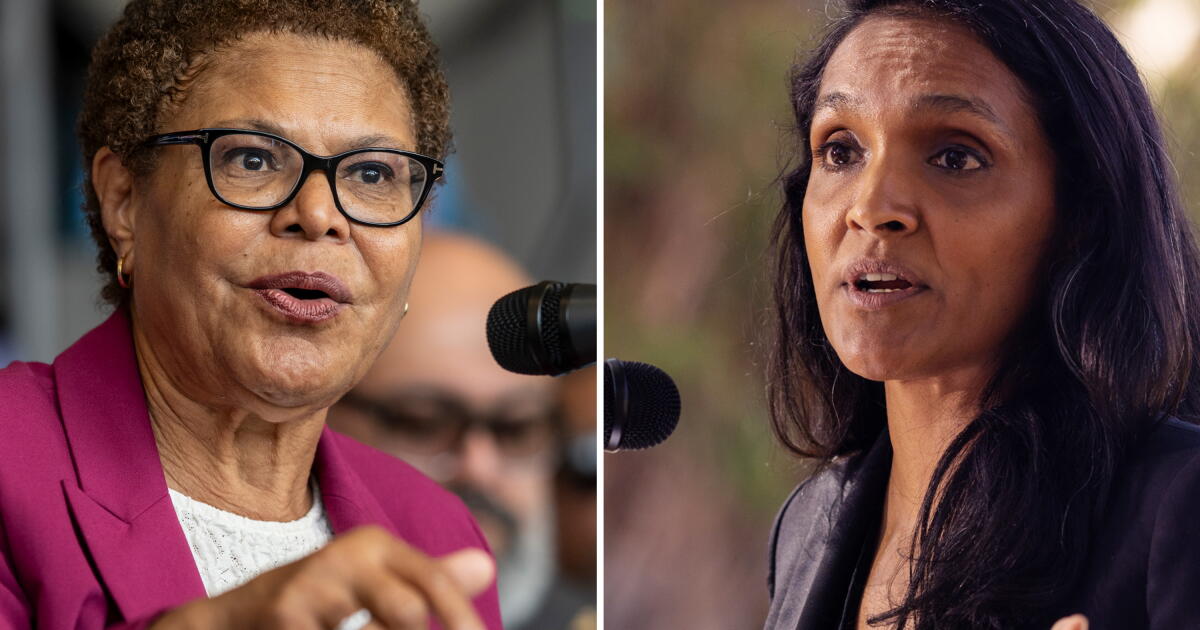
On Thursday, Mejia endorsed Councilmember Nithya Raman for mayor, arguing that she would better fund his department and would be more open and transparent with information than Bass’ office has been.

“Nithya believes in the power of transparency and accountability as a tool,” Mejia said during a press conference with Raman.

Raman did not provide specific numbers on how many people she would hire for Mejia’s team.

“I’ve committed to ensuring that we’re fully funding that fraud, waste and audit team,” she said. “The other piece is not standing in the way, but actually opening the door when the controller asks for information about various programs and departments.”

Bass did not immediately respond to a request for comment.

You’re reading the L.A. on the Record newsletter

Sign up to make sense of the often unexplained world of L.A. politics.

Fire funds

Local leaders aren’t happy that Congress still hasn’t appropriated supplemental funding to assist with recovery from the Palisades and Eaton fires.

The catastrophic fires were extinguished more than a year-and-a-half ago, but federal lawmakers have yet to fund a combined request for $15.7 billion from the L.A. city and county governments.

That’s different from what happened after past disasters, such as Hurricane Katrina and Superstorm Sandy, when Congress appropriated large portions of the amounts that were requested.

The federal money would go toward projects like restoring and rebuilding infrastructure, parks, schools and senior centers, as well as housing and residential support.

The delays have slowed the recovery process and hamstrung reconstruction efforts, according to Bass and L.A. County Supervisor Kathryn Barger.

This week, the pair sent joint letters to congressional leaders and members of the county’s congressional delegation, calling on them to fund the requests.

They also lamented the fact that the Trump administration’s recent $87.6 supplemental funding request did not detail support for fire victims.

Bass and Barger called on Congress to appropriate supplemental funds “to cover the infrastructure and rebuilding needs associated with the Eaton and Palisades fires.”

State of play

— ROBB JOBS: While serving as a top informal advisor to Bass, Yusef Robb was also working as a crisis communications consultant for Lineage, the company whose cold storage warehouse in Boyle Heights erupted in flames last month. Robb stepped down as an advisor to the mayor following The Times and other outlets’ reporting.

— FREE AND FOR SALE: Robb worked for the mayor as an unpaid spokesperson and advisor for months earlier this year, at the same time that he had a $587,500 contract with Los Angeles World Airports.

— ANOTHER ONE GONE: A top spokesperson for Los Angeles Mayor Karen Bass departed Monday after a brief tenure, joining a growing list of communications aides who have left over the last nine months. Kolby Lee, who started as Bass’ director of communications in February, said he was resigning to spend time with family and loved ones.

— AIRING GRIEVANCES: The contractor for Los Angeles International Airport’s long-awaited automatic people mover train filed a lawsuit against the city, amid ongoing disputes over project delays.

— PROJECT NIXED: The state has rescinded a $73.4-million grant for a new mental health and drug treatment facility in San Pedro, putting the future of the controversial project in jeopardy. Neighbors had picketed outside the property at 2100 S. Western Ave. and packed a town hall in April to oppose the project, with some expressing fears about drug users coming to the area.

—TO FLOCK OR NOT TO FLOCK: Less than a week after the Los Angeles Police Department halted its relationship with Flock Safety over concerns about how the company shares data from automated license plate readers, police officials said they are working out a new agreement — this time with more protections.

— HEAT WAVE: The Bass administration has appointed a new chief heat officer. Daniela Simunovic took on the role on May 31 after the administration discreetly fired Marta Segura, the first person to hold the position. Simunovic served as Bass’ senior director of climate and sustainability for three years.

QUICK HITS

  • Where is Inside Safe? This week, the mayor’s signature homelessness program went to Chatsworth in City Councilmember John Lee‘s district, bringing 22 people inside.
  • On the docket next week: The L.A. City Council remains on recess next week.

Stay in touch

That’s it for this week! Send your questions, comments and gossip to LAontheRecord@latimes.com. Did a friend forward you this email? Sign up here to get it in your inbox every Saturday morning.
Source link

Group that helped run the L.A. Zoo for more than 50 years is now bankrupt

The L.A. Zoo’s elephants are now in Tulsa, and the zoo’s longtime nonprofit partner is now in bankruptcy court.

The litany of woes at the L.A. Zoo grew longer last month as the city’s nonprofit partner, the Greater Los Angeles Zoological Association, filed for Chapter 11 bankruptcy, citing “incessant litigation” from the city of Los Angeles as the cause.

The city sued GLAZA — its partner for more than half a century — in 2024 over a $50 million endowment that each side argued was theirs to steward.

The city won a preliminary injunction in Los Angeles Superior Court that barred GLAZA from keeping the money when its contract with the zoo ended last year. Following the split and lawsuit, GLAZA dwindled in size from 42 full-time employees to just four part-time employees.

Now GLAZA says it owes its creditors, including more than $300,000 that it needs to pay a law firm that has represented the nonprofit in its legal battle with the city.

“The City has designated an army of eight attorneys to overwhelm GLAZA with endless discovery, depositions, and court filings all to run up GLAZA’s legal fees,” the nonprofit said in a statement shared with The Times. “As a result, GLAZA has been left with no options other than to seek protection from the bankruptcy court to ensure the survival of GLAZA and the protection of its donors.”

Following its separation from the city, GLAZA executives hope the nonprofit can work in the animal conservation efforts in Southern California.

On July 1, the City Council approved $250,000 in outside lawyers related to the bankruptcy case.

The zoo is facing headwinds as membership has declined precipitously and facilities have deteriorated, according to an Los Angeles County civil grand jury report.

The city attorney’s office didn’t respond to a request for comment on GLAZA’s bankruptcy.

Pratt’s new frontier

Former mayoral candidate Spencer Pratt was far from Los Angeles as he took a meeting with President Trump in Washington, D.C., a few days ago.

Pratt, who came up short of the Nov. 2 runoff by a few percentage points, met with the president in the Oval Office, posting a photo of the rendezvous to social media Tuesday.

“I will never stop fighting for my community,” he wrote.

Pratt paired the visit with an announcement of a new media endeavor he plans to launch called “WAR.” He said the foundation will fight against political corruption, advocate for transparency in government and “restore common sense.”

The website for the foundation doesn’t have additional details, just a link to contribute and a link to a website selling Pratt merch.

The White House didn’t respond to a request for comment.

Pratt also posted a 9-minute video Wednesday calling out California’s election system, claiming that the results of the June 2 primary were skewed by fraud.

Representatives for Pratt’s campaign didn’t respond to a request for comment.

Phoning it in

After the flag salute and brief comments, L.A. City Council meetings kick off with a public comment period, during which crusading citizens often let loose on city officials as the council members quietly listen, leave the room or chat among themselves.

It’s not always L.A.’s finest hour, as certain commenters often resort to slurs and ad hominem attacks about the council members’ race, ethnicity and even physical appearance.

On July 1, public comment expanded as new state law, SB 707, went into effect, requiring the council to take telephonic public comment.

The council also had to verbally state the amendments they make to motions due to the new law, Council President Marqueece Harris-Dawson noted. Historically, the council has affixed amendments to a bulletin board in council chambers.

After frequent speaker Armando Herman used the N-word at the July 1 meeting, Harris-Dawson noted that the state legislature had done nothing about offensive comments at public meetings.

“Our friends in the state legislature made the decision to require us to have telephonic public comment. They did nothing, zero, about what we just heard. Since they want to intervene in our meetings, I’d call on them to do something about what they just heard,” he said.

The council did ban commenters from using the N-word and C-word last year. Speakers who use those words receive a warning and are booted from the meeting if they do it again.

Harris-Dawson said the new state law was “problematic” and noted another issue.

“We can’t verify if calls are bots or foreign agents, which poses a security risk,” he said in a statement to The Times.

You’re reading the L.A. on the Record newsletter

Sign up to make sense of the often unexplained world of L.A. politics.

State of play

— BOYLE-ING OVER: Mayor Karen Bass, Councilmember Ysabel Jurado and County Supervisor Hilda Solis were roundly booed and heckled by Boyle Heights residents during a town hall Thursday about the Boyle Heights fire. The three officials struggled to speak over the irate audience.

— SOLAR FLARE: Before the Boyle Heights warehouse fire, Lineage representatives lobbied City Hall over the rooftop solar array. The company says it was seeking a safer alternative to rapid shutdown devices.

— FISCAL EDUCATION: The Los Angeles Unified School District is facing “severe” indications it could be insolvent as soon as next year and has 45 days to fix its budget or risk an outside takeover. The Los Angeles County Office of Education has projected a $231 million cash shortfall by 2027.

— HIT THE STREETS: The LAPD is considering shutting down its police academy for part of 2028 to allow hundreds of officers to hit the streets for the Olympics, according to department sources. The move could lead to a drop in police hiring.

— LEGEND GONE: Billy G. Mills, one of the first Black men elected to L.A.’s City Council, died June 27. Mills was a civil rights leader before being elected to the legislative body in 1963, the same year Tom Bradley was elected to be a council member.

— IT TAKES A VILLAGE: Billionaire developer Rick Caruso’s Palisades Village will reopen in August after more than $100 million in renovations following the January 2025 wildfire.

— EVICTION BENEDICTION: Thousands of formerly homeless people whose housing subsidies will expire in December are no longer at risk of eviction, local housing officials announced Thursday. An infusion of new funds approved by Congress this year and a waiver of eligibility procedures have staved off a potential crisis that would have left 4,200 back on the street.

QUICK HITS

  • Where is Inside Safe? The mayor’s signature program had no operations this week.
  • On the docket next week: The City Council remains on recess until Aug. 4.

Stay in touch

That’s it for this week! Send your questions, comments and gossip to LAontheRecord@latimes.com. Did a friend forward you this email? Sign up here to get it in your inbox every Saturday morning.

Source link

The best beaches in EVERY UK region revealed

THERE’S nothing quite like a day at the seaside – and just in time for the school summer holidays the best beaches across the UK have been named.

The UK’s 50 best beaches by The Times for 2026 have been revealed, including lesser known spots and family favourites – here’s the lowdown of the best spots in each region.

Summerleaze Beach in Bude is not only the best beach in the southwest but also overall Credit: Facebook
Collage of travel items including a plane, sunscreen, passport, suitcase, and plane tickets, advertising The Sun's travel Instagram account.

Summerleaze Beach, Cornwall

Not only did Summerleaze Beach in Bude, Cornwall win for the South West region but it was also named the best beach overall.

The Blue Flag-awarded beach is a popular spot for surfing but is also home to lots of facilities that make for a great family day out.

There’s the Bude Sea Pool for example, which is an outdoor swimming pool and you can also head to the harbour with boats bobbing up and down on the water.

Direct from the beach you can also rent kayaks and stand up paddleboards.

Read more on travel inspo

GO ON

All the little-known websites for cheap or FREE tickets to gigs, theatre & festivals


CHEAP BREAKS

UK’s best 100 cheap stays – our pick of the top hotels, holiday parks and pubs

Shanklin, Isle of Wight

Shanklin Beach on the Isle of Wight is in an old fishing village Credit: Getty

Shanklin Beach on the Isle of Wight won the title for the south.

Just an hour on the ferry from Southampton, the beach is in an old fishing village and still has the charm, with striped deckchairs sitting on the sand.

The golden sand beach stretches for over a mile and is loved by families for its calm waters.

Surrounding the beach are also a number of sandstone cliffs and you can also head along the Esplanade, where you will find ice cream parlours, cosy cafes and gift shops.

In addition to the deckchairs available for hire, you can have a go at paddleboarding and kayaking as well.

Cromer, Norfolk

Cromer on the Norfolk Coast is the best beach in the east of England Credit: Alamy

Cromer in Norfolk won the title for the east of England.

The white sand beach is backed by cliffs dotted with Victorian buildings and is a great spot for a beach day or even having a surfing session.

Make sure to head to one of the nearby cafes too to have a taste of local, fresh seafood.

Along the beach you will also find Cromer Pier which is over a century old and is Grade II listed.

The pier will soon undergo a £2.4million revamp too, which could include refurbishing the theatre.

Travel Reporter Jenna Stevens, who has visited the town said: “Cromer mixes old-school seaside town tradition with trendy places to eat and shop, meaning this is a staycation spot that will please the whole family.”

“Perched at the end of the pier is the Pavilion Theatre, which puts on shows from Beatles tribute acts to Mamma Mia-themed parties.

“Plus it’s well worth a visit to catch the Cromer Pier Show with dazzling guests with high-production singing, dancing and comedy.

“And in the lanes behind the seafront, Cromer has recently seen a wave of new vintage shops, cool cafes and quirky art galleries arrive.

“Pop into Grey Seal Coffee for a smooth flat white in a beachy, boho setting, or have a nosey in Cromer Artspace to admire local artists’ landscapes.”

Low Newton-by-the-Sea, Northumberland

Low Newton-by-the-Sea was then named the best beach spot in the north of England and is owned by the National Trust Credit: Alamy

In the north of England, Low Newton-by-the-Sea won.

Low Newton-by-the-Sea is a small fishing village that is almost entirely owned by the National Trust and is home to quaint cottages as well as its curving beach.

The beach is a popular spot for walks and investigating rock pools.

Though, it is also a great place for windsurfing if you are feeling a little more adventurous.

And don’t forget to check out the ruins of Dunstanburgh Castle, which sit at the end of the beach.

When exploring the ruins, you’ll see amazing panoramic views of the coast as well.

Horgabost, Outer Hebrides

Horgabost Beach won in Scotland and you can even camp directly above the sand Credit: Getty

The winner in Scotland is Horgabost Beach, which stretches for two miles across Losgaintir Bay.

And if you want to enjoy the beach for longer, you can stay at Horgabost Campsite which is at the far end of the beach, sitting right above the beach.

The beach itself also boasts fine white sand, making it the perfect spot for a walk.

One recent visitor said: “Horgabost Beach is a serene slice of paradise on the Isle of Harris.

“The beach is just a short walk from the nearby campsite, making it super easy to reach.

“Once you arrive, you’re greeted by soft sands, clear waters, and a peaceful atmosphere that’s perfect for unwinding.

“Whether you’re strolling along the shore or just soaking in the views, it’s a beautiful spot that feels wonderfully remote yet welcoming.”

Others have described it as looking like the Maldives, thanks to the white sand.

Tyrella, Co Down

In Northern Ireland, Tyrella Beach was named the best Credit: Getty

When it comes to Northern Ireland, Tyrella Beach in Co Down won.

The beach is a dune conservation area, meaning its natural beauty remains largely untouched.

Stretching more than a mile long, the Blue Flag spot has clean waters as well as a flat beach ideal for picnics.

You can stay nearby as well, with a number of B&Bs and caravans looking straight onto the beach.

One recent visitor said: “One of the best beaches in the country.

“And there are nice walks through the dunes.

“The sea is great especially if it’s a bit windy. Then you get big waves coming in… great for jumping or diving through.”

Broad Haven South Beach, Pembrokeshire

Then for Wales, Broad Haven South Beach near Bosherston came out on top Credit: Getty

And finally in Wales, Broad Haven South was named the best beach.

At the beach you can expect clear water as well as rock pools full of sea life ideal for little ones to explore.

On most sunny days you’ll also see an ice cream van parked at the top of the cliff.

The low tide also makes it the ideal spot for little ones who like to paddle in the water.

At the western end of the beach you’ll also be able to discover caves and even an ‘island’.

One recent visitor said: “Lovely beach, National Trust car park costs £4 for three hours or £8 for all day and for National Trust members, it is free.

Nice flat beach with rocks at either end.”

Full list of the UK’s best 50 beaches

HERE’S the full list of the UK’s best beaches, according to The Times:

  • Summerleaze Beach, Bude, Cornwall
  • Vugga, Cornwall
  • Holywell, Cornwall
  • Porthmeor, St Ives, Cornwall
  • Sennen, Cornwall
  • Appletree Bay, Tresco, Isles of Scilly
  • Great Bay, St Martin’s, Isles of Scilly
  • Sedgewell Cove, Devon
  • Rickham Sands, Devon
  • Hive Beach, Dorset
  • Knoll Beach, Dorset
  • Broad Haven South, Pembrokeshire
  • Newborough Beach, Anglesey
  • Traeth Porthor, Gwynedd
  • Llangrannog Beach, Ceredigion
  • Mwnt, Ceredigion
  • Abereiddy, Pembrokeshire
  • Marloes Sands, Pembrokeshire
  • Three Cliffs Bay, Swansea
  • Horgabost, Isle of Harris, Outer Hebrides
  • Gullane Bents, East Lothian
  • Castle Sands, Fife
  • St Cyrus, Aberdeenshire
  • Findhorn, Moray
  • Balnakeil, Highland
  • Kearvaig, Highland
  • Clachan Sands, Outer Hebrides
  • Low Newton-by-the-Sea, Northumberland
  • Boggle Hole, North Yorkshire
  • Whitby Sands, North Yorkshire
  • Marske Sands, North Yorkshire
  • Tynemouth Longsands, Tyne and Wear
  • Roker, Tyne and Wear
  • Seahouses North, Northumberland
  • Cromer, Norfolk
  • Dunwich, Suffolk
  • Great Yarmouth, Norfolk
  • Horsey Gap, Norfolk
  • Wells-next-the-Sea, Norfolk
  • Brancaster, Norfolk
  • Shanklin, Isle of Wight
  • Compton Bay, Isle of Wight
  • Cuckmere Haven, East Sussex
  • Dungeness, Kent
  • Botany Bay, Kent
  • Tyrella, County Down
  • Cranfield Beach, County Down
  • Whitepark Bay, County Antrim
  • Benone, County Derry
  • Anderby Creek, Lincolnshire


Source link

Are three City Council meetings a week too much? L.A. voters will decide

Good morning, and welcome to L.A. on the Record — our City Hall newsletter. It’s Noah Goldberg, David Zahniser and Melissa Gomez, giving you the latest on city and county government.

Los Angeles voters won’t get a chance to increase the size of the City Council. They won’t take up a plan to give noncitizens the right to vote, either.

These and other proposed ballot measures got put on the back burner, delayed for a future year as the council scrambled to finish its work before its summer break.

One proposal did survive the sometimes blunt vetting process: decreasing the number of council meetings.

On Tuesday, council members sent voters a measure for the Nov. 3 ballot that would only require a single council meeting per week. The City Charter currently mandates a minimum of three.

Councilmember Tim McOsker was among those pushing for the change, saying it will make the council more efficient and effective.

“It will also allow council members to take care of more business in their districts,” said McOsker, who represents neighborhoods stretching from Watts to the Port of Los Angeles.

The council, which voted 12-0 to place the measure on the ballot, has been thinking about cutting back on the number of meetings for a few years.

In 2024, McOsker and Councilmember Katy Yaroslavsky tried to place a measure before voters that would have made the same change. But other council members were not prepared to put it on the ballot.

Yaroslavsky said at the time that much of the city’s public comment period was occupied by “15 people screaming racist, misogynistic, antisemitic epithets.”

Any change to the City Charter would not preclude the council from scheduling additional special meetings.

The proposal drew sharp criticism from Rob Quan, an organizer with Unrig LA, who spent much of the past year tracking the effort to rewrite the charter. He fears that a reduction in meetings will also lead to a decrease in opportunities for Angelenos to address their council representatives.

One of the reasons council members, who each make $244,727 a year, don’t get as much business done is that they frequently use their Friday meetings for ceremonial activities — honoring civic leaders, community groups, youth sports teams, Dodgers superstar Shohei Ohtani and beloved bands from the 80s.

“Do we really need that? Not necessarily,” Quan said.

Quan said the proposal to cut the number of meetings received zero vetting from the council. The 13-member Charter Reform Commission, which spent nearly a year examining various changes to city government, took up the idea and rejected it.

If voters approve the change, council meetings could end up resembling those of the Los Angeles County Board of Supervisors, which meets most Tuesdays at 9:30 a.m. The supervisors frequently don’t finish their business until well after 5 p.m.

Former prosecutor will stay away from Lee case

We told you last week that Councilmember John Lee is suing the city Ethics Commission over a $138,000 fine he received for allegedly violating city gift laws — a case that stems largely from a notorious 2017 trip to Las Vegas. The council responded to that lawsuit by voting to retain the law firm Hecker Fink to defend the Ethics Commission, at a cost of $120,000.

As it turns out, at least one Hecker Fink lawyer knows plenty about that Vegas trip.

Mack Jenkins, who heads the firm’s L.A. office, was one of the federal prosecutors who brought the criminal case against Lee’s onetime boss, Councilmember Mitchell Englander, in 2020. That case stems from the duo’s trip to Sin City in 2017.

Federal prosecutors said Englander and Lee, listed in court filings as Staffer B, were plied with fancy meals, expensive alcohol and other freebies by people seeking to do business with the city. Englander went a step further, walking into a casino bathroom and picking up $10,000 cash in an envelope from a Los Angeles-area businessman. He later pleaded guilty to providing false information to investigators.

The city’s lawyers say they cannot represent the Ethics Commission because Lee is one of their clients. But does Jenkins’ history with the case create any type of conflict for Hecker Fink?

Nancy Jackson, a spokesperson for the Ethics Commission, says no. In an email, she said Jenkins will be walled off from Hecker Fink’s work on the matter.

“That former prosecutor is recused from the case and will have no involvement in the case,” she said.

What went wrong with the lighting assessment?

Property owners resoundingly rejected a recent request to pay more to fund streetlight repairs. One of the reasons might have been the wording on their ballot.

The city mailed letters asking if they would like to increase the yearly assessment, using language that didn’t offer a lot of explanation.

In the section where property owners had the option to vote yes, the ballot read: “Yes I am in favor of the proposed maximum assessment for Fiscal Year 2026/2017 and the proposed annual cost of living increases as described in the attached notice beginning Fiscal Year 2026/2027.”

Councilmember Eunisses Hernandez, who chairs the council’s Public Works Committee, said the phrasing could have been a lot more persuasive — and better explained the need for additional money.

“Some of the language that was put out was not written in a way for us to be clear about what we were doing, and instead used language that really turned people off,” she said.

The assessment, which has not changed since 1996, currently generates about $45 million a year. For the average single-family home, the current payment is $58 annually.

The increase would have brought the average annual bill to $117, generating an additional $80 million a year as the city faces a backlog of broken streetlights due to stagnant funding and a rise in vandalism and theft.

After the vote failed to pass, the council approved a motion directing city staff to identify $6.6 million for the Bureau of Street Lighting. Without that money, the city will face “an immediate threat to public safety and our infrastructure at large,” the motion said.

“There will be a 15% cut in field workforces by the end of July 2026, making the timeline for streetlight repair to reach 2 years when the City had previously been able to do this work within 7 days,” said the motion authored by Hernandez and Yaroslavsky.

Hernandez voiced frustration over the defeat of the assessment. She took aim at Proposition 218, the state law that restricts how local governments can raise money, saying it disenfranchises renters who have to “live with the conditions that property owners choose for them.”

She added that the ballot measure’s wording, which she said was crafted by the City Attorney’s Office, failed to capture the reason for the increase.

“People really think that the main reason our lights are out is copper wire theft,” she said. “But the fact is that over 60% of our street lights are out because of lack of maintenance, because we just do not have the money to do that work.”

Hernandez said that next time, she would push for more community engagement so voters understand why the increased funding is needed. She also raised the possibility of reforming Proposition 218.

“No matter what, I’m going to get these streetlights on, and if that’s figuring different things out until we can get a significant effort to do another assessment, then we will do that,” she said.

You’re reading the L.A. on the Record newsletter

Sign up to make sense of the often unexplained world of L.A. politics.

State of play

— COLD FEET: The L.A. City Council decided against putting two major measures on the Nov. 3 ballot. One measure would have provided a pathway for noncitizens to vote in local elections, while the other would have given the council more authority over the LAPD.

— COSTLY COLLISION: The city of Los Angeles will pay $20 million to settle a lawsuit brought on behalf of a teen who lost his leg in a 2023 hit-and-run in Boyle Heights. The lawsuit blamed the city for an intersection lacking signage, lighting and other traffic controls.

— LAHSuit: The Los Angeles Homeless Services Authority, also known as LAHSA, sued the Trump administration Monday to stop it from suspending the agency from receiving hundreds of millions of dollars in funding. LAHSA argued that the decision would put thousands of people at risk of losing their government funded housing.

— FORWARDING ADDRESS: The only post office in Skid Row abruptly closed in January due to repeated break-ins and damage to employee property, according to the U.S. Postal Service. The closure has frustrated residents and business owners.

— BUILDING BLITZ: Senate Bill 79, the historic housing bill, took effect across the state on Wednesday. The law could bring townhomes, row houses and other developments to 57 neighborhoods across the city.

— AIRBORNE TOXIC EVENT: A preliminary analysis showed that the recent inferno at a Boyle Heights warehouse contaminated the air with high levels of smoke and soot, rivaling the pollution that filled the region during the 2025 wildfires.

— MORE MEGA PROJECTS: Two large scale developments grabbed the attention of downtown Los Angeles this week. One, approved by the council, is slated to add 1,500 residences to Skid Row. The second, proposed this week, would transform the World Trade Center building into a 512-unit affordable housing complex.

QUICK HITS

  • Where is Inside Safe? The mayor’s signature program to combat homelesssness went to the area near Olympic Boulevard and Menlo Avenue in Pico Union on Friday in Hernandez’s district, bringing 24 people indoors.
  • On the docket next week: The City Council will be on summer recess until Aug. 4.

Stay in touch

That’s it for this week! Send your questions, comments and gossip to LAontheRecord@latimes.com. Did a friend forward you this email? Sign up here to get it in your inbox every Saturday morning.
Source link

As an L.A. councilmember fights his ethics fine, the city gets hit with new legal bills

Good morning, and welcome to L.A. on the Record — our City Hall newsletter. It’s Noah Goldberg and David Zahniser, with an assist from Melissa Gomez and Connor Sheets, giving you the latest on city and county government.

The city of Los Angeles will shell out $120,000 for outside lawyers to fight a lawsuit filed by a councilmember challenging an ethics fine.

On Wednesday, the City Council voted unanimously to hire the law firm Hecker Fink LLP to represent the city’s Ethics Commission as it defends its decision to fine Councilmember John Lee $138,000 for allegedly violating city gift laws during a notorious 2017 trip to Las Vegas. Lee recused himself from the vote.

The city attorney’s office has said it can’t represent the Ethics Commission in Lee’s lawsuit because of a conflict of interest.

Lee was chief of staff to then-Councilmember Mitchell Englander when the two were plied with meals and alcohol, as well as hotel stays and gambling chips, by people seeking business with the city.

Lee, who represents the northwest San Fernando Valley, has claimed that he made a good faith effort to pay his own way. At a nearly $2,500 dinner that included Kobe beef, Maine lobster, Peking duck and sea bass, the only thing he ate was a spoonful of bird’s nest soup, he said at a hearing in his ethics case.

In 2020, Englander pleaded guilty to a single count of providing false information to the FBI and was sentenced to 14 months in prison. Three years later, he agreed to pay $79,830 to settle an Ethics Commission case focused on his own gift law violations.

The commission levied the fine against Lee in December, finding that he committed two counts of violating the city’s law against accepting gifts above a certain value, three counts of violating a law requiring that such gifts be disclosed to the public and five counts of misusing his city position.

You’re reading the L.A. on the Record newsletter

Sign up to make sense of the often unexplained world of L.A. politics.

David Tristan, the Ethics Commission’s executive director, had asked the council to provide at least $120,000 to defend against Lee’s lawsuit.

Lee declined to comment on the vote. In his lawsuit, he claimed that the statute of limitations had expired on the matters that were investigated by the Ethics Commission. He also accused the commission of overvaluing the share of gifts he partook in.

Lee is seeking to get the fine overturned.

More churn in the Karen Bass campaign

Turns out the shakeup in Mayor Karen Bass’ campaign did not end with the departure of Douglas Herman, her top strategist.

Herman told The Times on Wednesday that he stepped down due to “strategic differences” over the Nov. 3 runoff campaign against City Councilmember Nithya Raman. Bass’ team said on the same day that they had replaced him with Julie Chávez Rodriguez, who was campaign manager for the Joe Biden and Kamala Harris presidential campaigns in 2024.

A day later, political consultant Larry Grisolano confirmed that he too is no longer with the Bass reelection effort. His company, Thematic Campaigns, had been providing media and digital strategy.

On Friday, Berkeley-based research consultant Mike Rice told The Times that his firm, VR Research, had also left the Bass campaign, effective Wednesday. He declined to comment further.

Bass campaign spokesperson Alex Stack declined to discuss the departures. Asked if the campaign is in disarray, he said no, adding that Chávez Rodriguez’s hiring “is a really big get for us.”

“We’re getting a lot of positive feedback,” Stack said.

Still waiting on eviction defense contracts

In March, it appeared that a battle between City Atty. Hydee Feldstein Soto and the nonprofit running L.A.’s eviction defense program was over.

At the time, Feldstein Soto said she had concerns over awarding funds to the Legal Aid Foundation of Los Angeles, which has sued the city successfully over homelessness issues on multiple occasions. Feldstein Soto argued that contracts should not be awarded without rigorous reports and invoice review from Legal Aid and other nonprofits.

The City Council awarded the contracts anyway, funding the initial portion of a three-year, $177-million deal for Legal Aid and three other nonprofits to provide eviction defense, short-term rental assistance, tenant outreach and more as part of the city’s Stay Housed L.A. program.

But months later, Feldstein Soto’s office still hasn’t executed the contracts, frustrating tenants rights advocates and the nonprofits, which are struggling to pay their staff without the funds from the city.

“We’ve been really in a state of purgatory for over a year,” said Mike Dennis, senior director of housing justice at the Liberty Hill Foundation, which does tenant outreach as part of the city’s program.

Dennis said the failure to execute the contracts has created planning and operational uncertainty for the community-based organizations that Liberty Hill works with. Soon, some of them may face serious issues.

“We’re quickly approaching a point where the organizations are not going to keep being able to pay staff and absorb those costs,” he said. “The longer this goes on, the more likely we are to see contractions in the work.”

Earlier this month, Councilmember Ysabel Jurado put forward a motion asking the city attorney to explain why the contracts have not been executed. Jurado said the delay has left $17 million in funds unused.

“At the same time, the selected contractors struggle to maintain staffing without this funding, placing services for those at risk of homelessness in jeopardy,” she wrote in the June 2 motion.

Feldstein Soto argued in a June 15 response that Legal Aid has failed to agree to the “accountability and reporting requirements” needed to execute the contracts. She said those requirements were designed to make sure that taxpayer funds are spent properly.

“This office will continue to work with proposed contractors until the concerns are sufficiently addressed,” she said in a statement.

State of play

— UNHAPPY MEMORIES: Bass was out of town when the Boyle Heights warehouse fire erupted, which is giving voters a fresh reminder of her absence at the start of the Palisades fire. The situation could have an impact on her reelection campaign against Raman.

— HEADING TO THE BALLOT: A half-cent sales tax hike that would generate $345 million annually for the Los Angeles Fire Department will go before voters in the Nov. 3 election. The measure has been spearheaded by the city’s firefighter union, which gathered the signatures to qualify it for the ballot.

— D.A. DENIED: A judge has rejected Dist. Atty. Nathan Hochman’s request to freeze payments in the $4-billion sex abuse settlement approved by the Los Angeles County Board of Supervisors. The ruling boots Hochman from his brief stint in a civil courtroom as he moves forward with his criminal investigation into lawyers, recruiters and medical practitioners who may have submitted fraudulent claims.

— SOCIALIST SURGE: L.A.’s democratic socialists are looking to expand their power at City Hall yet again, setting their sights on the races for mayor and city attorney. Raman and city attorney hopeful Marissa Roy, both members of the L.A. chapter of the Democratic Socialists of America, are heading into the runoff after strong showings in the June 2 primary. (DSA-LA endorsed Roy but not Raman in the primary.)

— A BLOWOUT ELECTION: Property owners across the city voted overwhelmingly against increasing the assessment they pay to maintain streetlights. City leaders had hoped to use the funds — an additional $80 million a year — to speed up repairs and upgrade the city’s 225,000 streetlights.

CLEARING THE LAND: Overgrown lots razed by the Eaton and Palisades fires pose an increasing wildfire threat to surrounding properties. The county Board of Supervisors recently passed a motion calling on county departments to develop a plan to clear vegetation in Altadena and Sunset Mesa.

QUICK HITS

  • Where is Inside Safe? The mayor’s signature program to combat homelessness went to the area around the Wiltern Theatre in Koreatown this week. The area is represented by Councilmember Heather Hutt.
  • On the docket next week: On Tuesday, the council takes up a package of ballot measures that would rewrite the City Charter. The changes cover topics such as voting rights for noncitizens, expanded park funding and City Council oversight of policies at the Los Angeles Police Department.

Stay in touch

That’s it for this week! Send your questions, comments and gossip to LAontheRecord@latimes.com. Did a friend forward you this email? Sign up here to get it in your inbox every Saturday morning.

Source link

Utah warns southwest region residents of ‘rapid fire spread’

A wildfire that started in Beaver, Utah, has prompted the National Weather Service to issue warnings about its potential spread. Photo by Google Maps

June 26 (UPI) — The National Weather Service on Friday evening issued its first Dangerous Situation Red Flag Warning in the history of Salt Lake City, Utah, based on concerns about rapid growth of wildfires in the state.

NWS issued warnings for an area in southwest Utah that it considers to be in significant danger based on ongoing wildfires and weather conditions, the agency said in a series of posts on X.

NWS has predicted low humidity levels — less than 10% — and wind gusts of at least 50 miles per hour, which could help to grow the Cottonwood Fire, which has already burned nearly 72,000 acres, KSL-TV reported.

The fire started Monday near Beaver, Utah, before spreading to cover more than 70,000 acres as gusty winds and dry conditions helped the flames to spread, NBC News reported.

“This is the first formal PDS Red Flag Warning we’ve issued since it was formalized by NWS,” the agency said in a post on X.

“This is the first time we’ve reached the Weather Risk Outlook level of ‘Extreme,'” NWS said of the language it has not used in a notification since 2021. “In short, this combinaton of high winds, low humidity, very dry fuels and a large fire is a rare and dangerous situation!”

Utah this year experienced its lowest-ever snowpack and a heatwave that started in March prompted Utah Gov. Spencer Cox to sign an executive order limiting fireworks celebrations throughout the state through July 5.

Utah meteorologist Jason Stroud told The Washington Post that the warning, which has been in place for the last few days, that the danger from fires in the area could be devastating and potentially life-threatening.

“This shows that the combination of weather effects that are coming in the next 48 hours are extremely concerning,” Stroud said, reiterating that the fact that Salt Lake City’s NWS office has never issued the type of warning that is currently in effect.

Source link

Rubio hails U.S.-gulf Arab unity despite that region’s persistent concerns about Iran agreement

U.S. Secretary of State Marco Rubio said Thursday that relations between the United States and its gulf Arab partners are rock solid, despite fears by some of them that they might be left out of discussions aimed at ending the war with Iran.

Rubio used a three-day, three-nation trip to the United Arab Emirates, Kuwait and Bahrain this week to try to convince all the members of the Gulf Cooperation Council that the Trump administration does indeed have their backs in negotiations to end the war President Trump and Israel launched on Feb. 28.

That conflict sharply curtailed the region’s oil exports and saw several gulf countries take direct retaliatory Iranian missile and drone hits.

“They’ve shared with us some very concrete concerns, ideas,” Rubio said in Bahrain, the last stop on the trip. “And when I say concern, the biggest concern is that they really just want to be informed every step along the way as we enter these negotiations at both the technical and political levels.

“We want them to be involved and we want the views of all these countries to be reflected,” he said. “We don’t want to and will not be making any decisions or commitments that in any way undermines the prosperity, stability or security of our gulf partners.”

Although the U.S. and the gulf council members — Bahrain, Kuwait, Oman, Qatar, Saudi Arabia and the United Arab Emirates — eventually released a joint statement after the meeting that extolled areas of agreement about the end goals of the Iran deal, there were small signs of potential discontent.

The joint statement said the two sides “stressed the need to maintain momentum and unity as negotiations proceed toward a more permanent end to hostilities and the shared objective of preventing Iran from ever developing or otherwise acquiring a nuclear weapon.”

They also expressed opposition to any attempt by Iran to impose tolls or fees, or assert control over the Strait of Hormuz. They welcomed an Omani initiative to create a safe lane to evacuate stranded sailors from the waterway and stressed that any economic benefit Iran might realize “is conditional and reversible, contingent on Iran’s compliance” with the temporary agreement and a final deal.

The joint statement painted a rosy picture, yet the council secretary, Gen. Jasem Mohamed Albudaiwi, suggested in a statement that doubts remain.

He said it was emphasized during the meeting that any future understandings or arrangements must incorporate the requirements of the gulf council countries to safeguard their interests and ensure “their security and stability.” His statement, released by the group, hinted that the gulf council members felt snubbed in the earlier talks.

“Such arrangements must be based on the principles of international law, respect for state sovereignty, good neighborliness, and non-interference in internal affairs, thereby contributing to the consolidation of regional security and stability,” he said.

Before Rubio spoke to the group, the meeting host, Bahraini Foreign Minister Abdullatif bin Rashid Al Zayani, said that although the memorandum of understanding is welcome, many questions remain outstanding.

“While this progress is encouraging, it is critically important that Iran fully adheres to its obligations,” including under the memorandum, he said.

He said that means preventing Iran from getting a nuclear weapon, preserving freedom of navigation, ending all missile and drone attacks, halting support for proxy groups and abandoning attempts to interfere with Iran’s neighbors.

Lee writes for the Associated Press.

Source link

Strong back-to-back earthquakes hit Venezuela capital region

Back-to-back major earthquakes of magnitudes 7.2 and 7.5 rocked Venezuela on Wednesday evening. The quakes are likely to cause widespread damage and mass casualties, the U.S. Geological Survey said. Image courtesy of UPI

June 24 (UPI) — Two major earthquakes — magnitudes 7.2 and 7.5 — hit near the Venezuela capital of Caracas on Wednesday evening, collapsing buildings and bringing people flooding into the streets.

The first quake hit at 6:04 p.m. local time, BBC News reported, with the second less than a minute later. June 24 is a holiday in Venezuela, and more people than usual were at home instead of on an evening commute.

The earthquakes’ center was about 17 miles northwest of Montalbán, home to some of the country’s largest refineries, CNN said.

The U.S. Geological Survey has reported that high casualties and widespread damage are likely, saying that there is a 44% chance that fatalities will exceed 10,000 and a 30% chance that they will exceed 100,000. The USGS said aftershocks may still occur.

Venezuela’s interior minister has asked people to leave their homes, citing damaged buildings and concerns about gas leaks. Companies cut gas lines to some areas as a precaution, Minister Diosdado Cabello said, BBC News reported.

The Ministry of Communication and Information in Venezuela said security forces have been deployed around the country because of the risk of building collapses.

Source link

Why parts of Latin America loves MAGA

Colombian presidential candidate Abelardo de la Espriella has vowed to crush criminal groups and slash government programs. He promises to bomb “narco-terrorist” camps and build sprawling mega prisons if he wins Sunday’s runoff election.

De la Espriella’s views have earned him the vociferous backing of President Trump, who has broken with White House tradition by publicly seeking to tip the scales in foreign elections — particularly in Latin America.

After Trump gave his “complete and total endorsement” to De la Espriella, whom he referred to by his nickname, “El Tigre,” the candidate posted an AI-generated image of a bald eagle and a tiger, with American and Colombian flags waving side by side.

“You have paved the way for the people to defeat the entrenched powers that have long held sway,” he wrote to Trump. “In Colombia, we have now begun to follow the same path.”

De la Espriella, a political newcomer who built his campaign around gym workout videos and vows to “disembowel” the left, is part of a new wave of far-right, MAGA-aligned politicians in Latin America openly borrowing from Trump’s playbook, presenting themselves as outsiders who will trim the government, curtail immigration and militarize law enforcement.

In a region that remains plagued by high crime and inequality after a decades-long period of leftist domination known as the “Pink Tide,” the playbook appears working.

More Latin Americans now identify with the right than at any time over the last two decades, according to polling firm Latinobarómetro. A series of conservatives have won presidential elections in recent years, giving Trump a slate of willing partners as he seeks to expand U.S. power in the region, combat drug cartels and counter growing Chinese influence.

President Trump meets with El Salvador's president, Nayib Bukele, in the Oval Office of the White House on April 14, 2025.

President Trump meets with El Salvador’s president, Nayib Bukele, in the Oval Office of the White House on April 14, 2025.

(Brendan Smialowski / AFP via Getty Images)

Among Trump’s many allies are Argentina’s Javier Milei, a libertarian firebrand whose dramatic cuts to state services were a blueprint for Elon Musk’s so-called Department of Government Efficiency, known as DOGE; and El Salvador’s Nayib Bukele, a mano dura autocrat who housed U.S. deportees in his notorious prisons to assist Trump’s immigration crackdown.

Ecuador’s Daniel Noboa has welcomed U.S. Special Forces, who are attacking drug traffickers in his country, and Chile’s José Antonio Kast has pledged a border wall along his country’s frontier with Peru and Bolivia in his quest to “make Chile great again.”

Trump might soon gain another ideological bedfellow in Peru with the election of Keiko Fujimori, the daughter of late autocrat Alberto Fujimori. With ballots still being counted, Fujimori was on track for a narrow victory

In a sea of nations led by conservatives, the left now retains power in just three key countries: Mexico, Colombia and Brazil.

It faces serious challenges in two of them.

Ahead of October’s presidential election in Brazil, incumbent Luiz Inácio Lula da Silva, a leftist stalwart and one of the last vestiges of the Pink Tide, has been polling even with Flávio Bolsonaro, the son of former President Jair Bolsonaro, a Trump ally convicted of convening a Jan. 6-style insurrection.

President Trump and Brazil President Jair Bolsonaro in 2020.

Brazil’s President Jair Bolsonaro, right, with President Trump during a dinner at Trump’s Mar-a-Lago estate in Palm Beach, Fla., on March 7, 2020.

(Alan Santos / Associated Press)

And then there’s Colombia, where De la Espriella, a criminal defense attorney, surged ahead in the first round of voting and this weekend faces off against Sen. Iván Cepeda, an ally of leftist President Gustavo Petro.

Petro drew Trump’s ire by denouncing the U.S. military campaign to oust leftist President Nicolás Maduro of Venezuela and a spate of lethal U.S. attacks on alleged drug boats.

Petro slammed Trump’s endorsement of De la Espriella, calling on Colombians to “vote freely and not allow ourselves to become either slaves or anyone’s colony.”

Mexican President Claudia Sheinbaum also accused Trump of electoral interference after the U.S. announced drug trafficking charges against several members of her ruling Morena party and The Times revealed that two more sitting governors are under investigation.

“Is it truly a legitimate interest to combat organized crime?” Sheinbaum asked of the U.S. investigations. “Or are we perhaps witnessing how sectors of the American far right … intend to influence the 2027 election in our country?”

President Trump and Argentine President Javier Milei in 2024.

President Trump meets with Argentine President Javier Milei during the United Nations General Assembly on Sept. 23, 2025, in New York.

(Evan Vucci / Associated Press)

The White House has declined to comment on Sheinbaum’s criticism. But Trump earlier this month warned Mexico that his administration is “focused on coming in by land” to deter drug trafficking.

“President Trump has been clear that Mexico must do more to combat the drug cartels running rampant in their country,” a White House official told The Times when asked whether Trump is planning a military operation there.

Trump, who publicly backed Kast and President Nasry Asfura of Honduras, as well as Milei’s political party ahead of Argentina’s midterm elections last fall, has openly mused that he should charge money for endorsement of leaders in foreign countries.

Guillaume Long, who served as foreign minister in Ecuador under leftist President Rafael Correa and who is now a fellow at the Center for Economic and Policy Research, criticized Trump’s “unprecedented, unabashed interventionism in Latin American politics.”

“There are a number of taboos that have been broken,” he said.

Long added that Latin America is mirroring the United States in its political divisions. “I think we’re likely to see in the coming decades a very polarized politics,” he said. “And that doesn’t bode very well for political stability.”

Much of Trump’s activity in the region, including the deposing of Maduro, has been presented as part of a war on drug cartels, which the White House has formally declared terrorist organizations. Long described that rationale as a “pretext” for expanding U.S. political and economic influence in the region.

Nicolas Maduro and his wife, Cilia Flores.

Nicolás Maduro and his wife, Cilia Flores, are escorted by federal agents as they make their way to an armored car for a trip to a federal courthouse in Manhattan on Jan. 5.

(XNY/Star Max/GC Images)

He said he believed that focus on cartels had pushed some Latin American politicians to the right “because they think being security hawks will make them popular with the Trump administration.”

But James Bosworth, the founder of Hxagon, a company that provides political risk analysis in Latin America, said many leaders in the region have come to tough-on-crime policies on their own.

“I think that some of the hemisphere is willing to play along with it because the hemisphere has issues, including security issues, where the U.S. can be of assistance,” Bosworth said. “Many Latin Americans do want a greater military focus, so there’s certain alignment that’s occurred.”

Conversely, Mexican journalist Alex González Ormerod said he believes Trump has been influenced by Latin American leaders, including Bukele, who suspended civil liberties and began locking up alleged gang members en masse in 2021.

“I think there’s a lot of cross-pollination going on,” he said, crediting groups like the Conservative Political Action Conference, a gathering of right-wing activists and elected officials that has hosted events in Brazil and Argentina.

Many analysts cautioned that Latin America operates on a pendulum, swinging every few years between right and left.

“There’s a lot of evidence that voters are just unhappy and voting for the opposition, and then losing patience very quickly with whoever is in office,” said Benjamin Gedan, director of the Latin America Program at the Stimson Center.

Voters dissatisfied with the status quo so often vote out incumbents there is a phrase for it: voto castigo, or “the punishment vote.”

Ceballos reported from Washington and Linthicum from Mexico City.

Source link

How the plan to expand the L.A. City Council got shelved once again

Good morning, and welcome to L.A. on the Record — our City Hall newsletter. It’s David Zahniser, with an assist from Noah Goldberg and Melissa Gomez, giving you the latest on city and county government.

It’s long been the Holy Grail for the reform crowd that tracks L.A. city government: expanding the size of the City Council.

The idea of giving L.A. more council members was endorsed by the city’s redistricting commission in 2021. Two years later, the concept was debated at length by a council committee focused on reform. After that panel failed to reach a decision, the idea was assigned to the city’s Charter Reform Commission, which endorsed the change, saying the council should have 25 members, up from 15.

Yet even after that five-year journey, the council voted Wednesday to push a proposed ballot measure on that topic off to the future, sending the idea to a new reform committee for more deliberations.

So what happened this time around?

You’re reading the L.A. on the Record newsletter

Sign up to make sense of the often unexplained world of L.A. politics.

For one thing, the 13-member citizens commission that recommended the idea didn’t offer a lot of specifics on how the change would work.

The commission recommended 10 additional council members, a move that would cause each district to shed more than 100,000 residents, leaving each member with about 159,000 constituents.

But it never explained whether that decrease should be accompanied by a similar reduction in a council member’s salary, now nearly $245,000 a year.

“That’s one of the reasons why [council expansion] is slated for further study,” Councilmember Bob Blumenfield said in an interview. “While the commission might have had a nice discussion and a negotiation among themselves, what we need to have in front of us to vote responsibly is context and information.”

A councilmember’s pay could be a major sticking point for voters during a campaign over council expansion — especially if an opposition campaign arose to defeat it.

Blumenfield said the commission failed to vet other issues, including the number of council aides needed for each district if a district is smaller.

Councilmember Tim McOsker expressed a similar view.

“I think there were gaps in what the commission proposed — substantive gaps,” he said.

Backers of council expansion have argued that an increase in the number of districts would make the council more responsive and more diverse. Opponents said bigger does not necessarily mean better representation.

Raymond Meza, who chaired the Charter Reform Commission, acknowledged that pay, staffing and the cost of each council office didn’t come up during his panel’s deliberations. Those questions should have fallen to the council, which reviews and approves the city budget each year, he said.

“They would need to figure this out through the budget process, like they figure out most other things in the city,” he said.

Meza said he believes that, in the end, council members didn’t want to dilute their own power. Former City Councilmember Mike Bonin offered a similar take, saying elected officials generally don’t want to risk changing the system that got them into office.

“They are in power because of the way the system is structured,” said Bonin, who now runs the Pat Brown Institute for Public Affairs at Cal State LA.

Before sidelining the expansion proposal, Council President Marqueece Harris-Dawson said a larger council would shift the balance of power at City Hall, giving the mayor greater authority and the council less of it.

In the end, none of these delays may end up mattering. No one at City Hall expected council expansion to happen until 2032 anyway, since the change would require a new round of redistricting — the process of drawing new boundaries for each council district. Redistricting won’t happen until after the release of results from the 2030 U.S. Census.

In other words, there’s still time for voters to act.

What happened to the City Hall misconduct measure?

Here’s another proposal that got shunted to the sidelines during the council’s eight-hour marathon meeting: what to do about city elected officials who are charged with serious crimes.

Charter reform was, in part, a reaction to a string of corruption scandals. Among them: three sitting council members who were charged with felonies between 2020 and 2023.

In each case, council members had to decide whether to use their power, spelled out in the City Charter, to suspend colleagues accused of wrongdoing — stripping away their duties until their criminal cases were resolved.

The council moved swiftly to suspend then-Councilmember Jose Huizar in 2020, taking action the day he was arrested, before he even pleaded “not guilty” to racketeering and other charges. The council suspended then-Councilmember Mark Ridley-Thomas in 2021 after a lengthy floor debate, with some saying he was being denied his due process rights. (Ridley-Thomas, who was found guilty of seven felonies, is fighting his conviction.)

A few years later, the council decided not to suspend Councilmember Curren Price, allowing him to step off of his council committees but preserving his other council duties as he contests charges of embezzlement, perjury and conflict-of-interest violations.

Although the case is still ongoing, Price is back on various city committees.

Each of those cases put the council in a bind. Voting in favor of suspension can mean depriving a council member’s constituents of representation. It also runs counter to the idea that a colleague is innocent until proven guilty.

Voting against suspension has its own set of dangers, such as undermining trust in city government. It could also allow an elected official accused of wrongdoing to continue taking part in decisions about contracts, real estate development and other matters where the potential for corruption exists.

Under the current system, a council member can be suspended with just eight votes. Harris-Dawson, who supported the suspension of Huizar but opposed it for Ridley-Thomas, said early on that he wanted the Charter Reform Commission to look at the process for disciplining elected officials accused of wrongdoing.

The Charter Reform Commission offered its answer two months ago, recommending that the council retain the power to suspend, but only with a three-fourths vote — 12 out of 15. That safeguard was meant to guard against potential abuses of power, said Meza, the former commission chair.

The council declined to put that idea on the ballot, saying it needs more study.

Asked about that decision, Harris-Dawson said he has long had serious problems with the idea that “one set of elected officials could suspend another set of elected officials.” He suggested that a third party in another branch of government — not the council — determine whether a member merits suspension.

Under that arrangement, the council could initiate the process but leave it to a judge or other party to make the final call, he said.

“I personally think that we have checks and balances in government that should be respected,” Harris-Dawson said.

A last-minute union threat

One ballot proposal that did survive this week’s gauntlet of votes was a plan to increase, not decrease, the council’s power. That proposal, backed by Councilmember Hugo SotoMartínez, would give the council the authority to set policy at the Los Angeles Police Department.

But even that proposal may be in danger, thanks to a dispute that has erupted between the city’s labor negotiators and the Los Angeles Police Protective League, the union representing rank-and-file officers.

Union leadership said this week that the league was not formally asked by management to meet and confer over various charter proposals dealing with the LAPD, including the one focused on policy. That step is legally required before such measures can be sent to voters, the union said.

City Administrative Officer Matt Szabo, the city’s chief labor negotiator, told council members on Monday that his office sent three emails to various employee units asking if they wanted to confer over the charter changes. He said his office received no response from the police union.

A day later, after learning of Szabo’s remarks, the league fired back.

In a letter to council members, the union said it only received emails about charter reform that had nothing to do with policing. Those emails did not constitute a formal invitation to meet and confer about potential changes at the LAPD, the union said.

The city “did not follow the law and did not formally contact us,” union President Ricky Mendoza said in a statement.

The council voted to draft the change in LAPD policy making, pending a confidential report from the city attorney on whether the city first has to bargain with the police union. Council members cast that vote even after the union demanded that they suspend any further consideration of the proposal for the Nov. 3 ballot.

If the city attorney concludes that the LAPD ballot proposal does not require further talks, the Police Protective League will file a lawsuit to protect its members’ legal rights, union officials said.

On Wednesday, Szabo said the proposal to give the council power over LAPD policy decisions doesn’t require collective bargaining.

The proposal to give council say over policy at the LAPD wasn’t the only one focused on that department. Another measure discussed by the council would have given the police chief power to terminate alleged problem officers.

The council sent it to a committee for more study. The union said that proposal also would have required a meet and confer process.

State of play

— CITY CHARTER GRAB BAG: As noted earlier, the council voted to draft an assortment of charter amendments for the Nov. 3 ballot, including one to allow the council to give noncitizen residents the right to vote in local elections. The council also ordered up a measure doubling the amount of money allocated for the Department of Recreation and Parks, discarding an alternative plan that would have increased it by 50%. Other measures would switch the city to a two-year budget process and require a five-year plan for maintaining and upgrading city infrastructure.

— KNOWING ME, KNOWING ULA: Looking to boost apartment construction, the council backed a surprise plan to rewrite Measure ULA, the tax on high-end property sales passed by voters in 2022 and sometimes called the mansion tax. The council voted 9-5 to instruct the city’s lawyers to draft a measure exempting apartment buildings sold within 10 years of construction from having to pay the tax. Another vote will be needed to get it on the ballot.

— ZOO STORY: Membership at the Los Angeles Zoo has fallen by 23% over the past year, dropping from 36,914 in April 2025 to 28,440 in February, according to a report issued by the Los Angeles County civil grand jury. That report urged the city to create a new public-private partnership to run the facility, saying such a move will be critical for the zoo’s long-term survival.

— SHERIFF SUBPOENAS: L.A. County’s Civilian Oversight Commission is suing the Sheriff’s Department, asking a judge to order the release of records on three use-of-force incidents involving its deputies. The commission issued three subpoenas to the agency in February 2025, but according to the suit, the department has declined to fully comply.

— UNION DUES AND DON’TS: A former high-level officer with L.A.’s firefighter union has been accused of stealing more than $82,000 from a charity for injured firefighters to pay for his online gambling, his mortgage and other personal expenses. Adam Walker, former secretary of United Firefighters of Los Angeles City Local 112, was charged with one count each of grand theft and forgery, prosecutors announced Wednesday.

— DOG DISASTER: The Los Angeles Police Department is facing a public outcry after its officers shot and killed the dog of a woman celebrating the New York Knicks’ NBA championship in Canoga Park. Video on social media showed the dog’s owner sobbing and hugging her dog, who was wearing a Knicks T-shirt, as several LAPD officers stood nearby.

— BASS WEIGHS IN: The Canoga Park incident prompted Mayor Karen Bass to issue a statement promising a thorough and transparent investigation into the death of Jameson, the dog killed by the LAPD. “Every life lost to violence is a tragedy, and we know that the devastating loss of Jameson will be felt by his family forever,” she said. “I have spoken directly to the Chief to ensure a full investigation and accountability for any wrongdoing.”

— OFFICE FIRE: A fire broke out at a building in Pacific Palisades where former mayoral candidate Spencer Pratt maintained an office for his crystals company. Pratt, whose home burned in the 2025 Palisades fire, called the latest blaze “very suspicious.” The fire department said it’s investigating.

QUICK HITS

  • Where is Inside Safe? The mayor’s signature program to address homelessness went to a stretch of Silver Lake Boulevard that passes under the 101 Freeway. That area is represented by Soto-Martínez.
  • On the docket next week: The council meets Wednesday to take up the massive 4th & Central project, which calls for offices, retail space and nearly 1,600 units of housing on a 7.6-acre site in downtown.

Stay in touch

That’s it for this week! Send your questions, comments and gossip to LAontheRecord@latimes.com. Did a friend forward you this email? Sign up here to get it in your inbox every Saturday morning.
Source link

Who loved Bass, Raman and Pratt the most? A district-by-district breakdown

Good morning, and welcome to L.A. on the Record — our City Hall newsletter. It’s David Zahniser and Noah Goldberg, giving you the latest on city and county government.

Los Angeles voters have finally gotten some closure on the outstanding contests in the June 2 primary election, with City Councilmember Nithya Raman qualifying for the runoff against Mayor Karen Bass, and Measure ER, the countywide sales tax hike, prevailing after a week of ballot counting.

With nearly all the votes counted, Angelenos are now getting a more granular understanding of the strongholds built up by each of the top three mayoral candidates.

Districts that went big for Bass, Raman and Pratt

Early on in the vote-counting process, it looked like Raman might not win her Hollywood Hills-based district, which stretches from Silver Lake to Reseda. In the end, she pulled out a first-place finish, securing nearly 34% of the vote compared to Bass’ 31%, according to Paul Mitchell, vice president of the voter data firm Political Data Inc, who aggregated county precinct data into council districts. Spencer Pratt, the former reality TV personality, trailed at 27%.

Still, Raman’s strongest support came from three districts on the eastern end of the city.

Mitchell’s analysis showed Raman with 45% of the vote in Council District 13, which includes all or parts of Echo Park, Hollywood and Atwater Village. She got nearly 40% in Council District 1, which takes in parts of Highland Park, Mt. Washington and Angeleno Heights. And she scored nearly 38% of the vote in Council District 14, which includes downtown, Boyle Heights and El Sereno.

Those districts are represented by Hugo SotoMartínez, Eunisses Hernandez and Ysabel Jurado, respectively — all members of Democratic Socialists of America, who all endorsed Bass instead of Raman, a DSA member herself. Raman placed first in all three.

Bass found her greatest strength in the three districts that cover South L.A., coming in first in all three. Her best performance was in District 8, represented by Council President Marqueece Harris-Dawson, where she led with nearly 62% of the vote.

You’re reading the L.A. on the Record newsletter

Sign up to make sense of the often unexplained world of L.A. politics.

The mayor received 45% of the vote in Council District 10, which stretches from Koreatown to the Crenshaw Corridor, and 42% in Council District 9, which stretches from the southern edge of downtown south to 95th Street.

Pratt performed the strongest in the west San Fernando Valley. He was the top vote-getter in District 12, which is represented by Councilmember John Lee and includes Chatsworth, Granada Hills and Porter Ranch. In that district, he received 39% of the vote, Mitchell’s assessment showed.

Pratt got nearly 37% of the vote in District 3, which is represented by Councilmember Bob Blumenfield and includes Woodland Hills, Warner Center and Canoga Park.

Pratt also led the pack in the 5th District, which takes up much of the Westside and is represented by Councilmember Katy Yaroslavsky. He had 30.7% of the vote, compared to Raman’s 30.6%, according to Mitchell’s analysis.

Nithya Raman attacks the L.A. ‘political machine’

It was one of tougher attacks of the mayoral primary: Raman accused Bass of engaging in “pay to play” — making decisions that benefited certain interest groups, who then spent big on her reeelection.

At her first post-election press conference Wednesday, Raman revisited that line of attack, criticizing Bass over her push to upgrade the city’s Convention Center. That $2.6 billion project was approved in the middle of the city’s financial crisis, when the council was contemplating major job cuts, Raman said.

“Downtown business groups then spent over a million dollars supporting her in her reelection. Meanwhile, the city went back to voters asking them to pay more to fix their streetlights. That is the political machine at work,” she said.

Pay to play was a potent issue in the 2005 election, when Mayor James Hahn was defeated by Councilmember Antonio Villaraigosa. At the time, federal agencies had opened corruption investigations into decisions at the city’s harbor and airports, as well as the Department of Water and Power. That year, the phrase “pay to play” was synonymous with criminal wrongdoing.

In a video acknowledging his primary defeat, Pratt said he got into the mayor’s race to “expose this corrupt machine.”

Raman stopped short of such a framing.

“It’s not corruption,” Raman told reporters at Vista Hermosa Park. “But it is evidence that the system, and how it works, particularly the influence of money in politics, has led to some very broken priorities here in the city.”

Last year, policy analysts warned the Convention Center project would be a financial drag from the moment it opens, consuming more than $100 million per year throughout the 2030s. Business groups and labor organizations pushed back, saying the project would help revitalize downtown while creating much needed construction jobs.

The Central City Assn., a downtown-based business group that supported the Convention Center upgrade, spent about $1.6 million on efforts to reelect Bass.

“Nithya Raman doesn’t think we need more jobs or visitors to our hotels and restaurants that produce the tax revenues downtown generates for the entire city, so it’s hard to support her,” said Central City Assn. President and Chief Executive Officer Nella McOsker in a statement.

Bass spokesperson Alex Stack also pushed back on Raman’s criticism, saying the mayor has been with “every group and industry to deliver results for Angelenos.”

“Nithya Raman can’t get anything done and then attacks the same groups she sought to endorse her campaign,” he said.

Pratt trailed Trump among L.A. voters

As a mayoral candidate, Pratt was dogged by questions about whether he was MAGA — shorthand for the movement that first powered President Trump into office in 2016. The Republican had received fulsome praise from Trump-aligned figures, including podcast host Joe Rogan and Greg Gutfield of Fox News.

Pratt downplayed his GOP ties. Still, there’s one area where he definitely had some similarity with Trump: His performance with L.A. voters.

Trump and Pratt both picked up roughly one out of every four votes in L.A. during their respective campaigns.

Pratt, former star of MTV’s “The Hills,” had 25.5% of the vote in L.A., according to results posted Friday. In November 2024, Trump did a little better, receiving 26.5%, county election results show.

Trump had 369,319 votes in L.A. two years ago, compared to 976,781 for then-Vice President Kamala Harris. By Friday, Pratt had 217,638 votes, compared to 247,242 for Raman and 292,115 for Bass.

It might not be fair to compare Pratt and Trump, given that there were key differences between the elections. Pratt was competing in a primary campaign, while Trump was in a general election. The candidate pool was different as well.

Trump was running in a six-way contest where Harris was his main rival. Pratt, on the other hand, was in a race featuring 13 other candidates.

Although two-thirds of those candidates were complete unknowns, four of Pratt’s rivals ran serious campaigns, amassing endorsements and spending significant amounts of money.

State of play

— TRUMP VS. LAHSA: The Trump Administration moved Thursday to block the embattled Los Angeles Homeless Services Authority from receiving federal funds, saying the agency was badly managed and engaged in fraud. Elected officials across the city denounced the move, while nonprofit groups also voiced alarm. “This is intended to create chaos,” said Jerry Jones, the head of the Greater LA Coalition on Homelessness, which represents groups that serve the region’s unhoused.

— PAYOUT PROBE: Dist. Atty. Nathan Hochman said Wednesday that he believes four out of every five claims in the largest sex abuse settlement in U.S. history — one that resulted in a $4 billion payout by Los Angeles County— may be fake. Hochman has asked a judge to pause the sex abuse payments while he continues his criminal investigation into the plaintiffs, lawyers and therapists involved in filing the claims.

— GET READY TO RUMBLE: The showdown between Bass and Raman is going to get ugly, political experts said this week, in part because they agree on a number of big-picture political issues. Both will need to court at least some of the disaffected voters who picked Pratt in the primary.

— A SCATHING SENDOFF: As we mentioned higher up, Pratt released a video Friday that was both an acknowledgment of his primary election defeat and a vitriolic screed against Bass and Raman, his former rivals. Pratt called them “morons,” “commie animals” and “corrupt communists,” and made clear he intends to ramp up his attacks in the coming months. “I don’t have campaign laws hamstringing me now. It’s war,” he said.

— WOOING LATINOS: Bass carried far more Latino-majority neighborhoods than her rivals in last week’s primary, a Times analysis found. She carried 35 Latino-majority neighborhoods, including Boyle Heights, Pacoima and Historic South-Central. That was a 46% increase from 2022, when she won 24 Latino-majority neighborhoods in her primary against Rick Caruso and Kevin de León, the analysis found.

— EKING OUT A WIN: The countywide sales tax hike known as Measure ER prevailed this week, with late-arriving ballots pushing the number of ‘yes’ votes just above 50%. “It’s a lifesaver to carry us through the storm we’re all in,” said County Supervisor Holly Mitchell, who led the push among her colleagues to get the measure on the ballot.

— AN EXPENSIVE FEE-FA: Bass was set to attend the U.S. opening game of the World Cup Friday at SoFi Stadium in Inglewood after being invited by FIFA, her office said. Still, Bass wasn’t exempt from the high ticket prices she criticized earlier this year. She paid $2,735 out of pocket for her ticket, a spokesperson said. On a related note, the mayor announced more than 100 “Kick it in the Park” events where Angelenos can watch World Cup games for free.

— MORE OF THE SAME: In a break with recent history, every council member who ran for reelection this year won their race. “People see what we’re doing, and they want us to keep fighting for them,” said Councilmember Tim McOsker, who won nearly three out of every four votes in his San Pedro-to-Watts district.

QUICK HITS

  • Where is Inside Safe? The mayor’s signature program to address homelessness went to the area around 54th Street and Western Avenue, in the South L.A. district represented by Harris-Dawson.
  • On the docket next week: The City Council meets Wednesday to take up a sprawling package of charter reform proposals, including a move to ranked-choice voting and a larger number of council members. Will the council send those ideas to voters or punt them for another two years? Stay tuned!

Stay in touch

That’s it for this week! Send your questions, comments and gossip to LAontheRecord@latimes.com. Did a friend forward you this email? Sign up here to get it in your inbox every Saturday morning.

Source link

Proud Boy booted from Spencer Pratt election night party

Proud boy expelled from Pratt’s party

Spencer Pratt’s election night party at Don Antonio’s Mexican restaurant in West Los Angeles included a few uninvited guests, and it wasn’t just members of the news media.

As Pratt spoke to reporters relegated to the sidewalk, a Virginia man convicted of joining in the Jan. 6, 2021 assault on the U.S. Capitol hovered behind him, trying to horn his way into the candidate’s frame as Pratt spoke to the news cameras.

A member of Pratt’s security team grabbed the man, Jon Mellis, by the shoulders, dragged him past the TV cameras and pushed him down onto the pavement of Pico Boulevard as cars whizzed by.

Mellis — a member of the far-right Proud Boys who was pardoned by President Trump along with the other Jan. 6 rioters — wasn’t thrilled. He attempted to interrupt multiple news broadcasts to air his grievances.

“They can’t assault me like that,” Mellis said.

“They hate MAGA,” someone else in his group chimed in.

Earlier Tuesday evening, Mellis had happily mugged for one news camera after another, expressing his fealty for Pratt.

Mellis described himself as “ultra-MAGA” to The Times and, pre-shove, said he didn’t mind that Pratt was distancing himself from the MAGA movement as he campaigns for votes in the Democratic stronghold of Los Angeles.

Recent polling showed most Democrats were less likely to vote for Pratt when perceiving the candidate as tied to MAGA and Trump. Given that, it’s hardly surprising that Pratt’s security team gave Mellis and his friends the bum’s rush.

“Those guys are paid ops,” a member of Pratt’s campaign wrote on X. “They crash every single event.”

Airbnb’s election night sweep

It was a good election night for short-term rental giant Airbnb, which infused numerous city races with cash and didn’t take a single loss.

The company teamed up with the Central City Assn., a group representing downtown Los Angeles businesses, to fund ads in support of Karen Bass, city attorney candidate John McKinney and five City Council candidates.

The business group said its PAC, which received funding from Airbnb and the Los Angeles Police Protective League, spent nearly $5 million during the primary election cycle, up from $1 million during the 2024 primary and general elections.

“We have been intentional about supporting candidates and causes focused on building more housing; investing in public safety, transportation, and infrastructure; and supporting the diverse businesses that provide jobs and put paychecks in Angelenos’ pockets,” said Nella McOsker, president of the Central City Assn.

“The results speak for themselves,” said Justin Wesson, Airbnb senior manager of public policy in California. “Airbnb has arrived in L.A. politics — not as a guest, but as a permanent resident.”

In council, CCA and Airbnb supported Traci Park, who declared victory and had a big lead over her opponent; Jose Ugarte, who will probably advance to a November runoff; and Timothy Gaspar, who was leading in his primary as well, though votes are still being tallied and it wasn’t clear if he would make the majority threshold needed for an outright victory. CCA also supported Monica Rodriguez, who ran unopposed and Tim McOsker (Nella McOsker’s father), who coasted to a big lead in the primary.

Betting on whims and vibes

This is Los Angeles’ first mayoral election in the age of prediction markets, and two giants of the field, Kalshi and Polymarket, have been actively promoting betting on who will be the next mayor — and even sub-bets within the election, such as which candidate will come in second place in the primary or which two candidates will advance to the runoff.

On election night, as Spencer Pratt led Nithya Raman for second place by about 9 percentage points, both Kalshi and Polymarket had Pratt favored to move on to the runoff.

But overnight, the market shifted, with a Bass versus Raman runoff now considered more likely by bettors, probably due to a widely held belief that the remaining votes to be counted will lean more Democratic as the county tallies late-arriving vote-by-mail ballots.

Although Kalshi promotes its markets as the “odds” that a certain candidate will win, experts warn it merely represents the beliefs of bettors, who are not always the best-informed.

“This is people’s whims and vibes. You might have better luck in Vegas; at least when you bet in Vegas there’s math involved,” said Democratic consultant Mike Trujillo.

A spokesperson for Kalshi said “sharp traders on Kalshi are experts at pricing likelihoods in real time.”

Eric Zitzewitz, a professor of economics and expert on prediction markets at Dartmouth College, said that sites such as Kalshi and Polymarket are pretty accurate, and that smart money usually corrects the market.

“Historically that movement in Pratt’s price would reflect a movement in his odds,” Zitzewitz said.

As of Friday, Polymarket had a Bass-Raman runoff at 80%, and a Bass-Pratt runoff around 22%. Kalshi gave Bass and Raman a 78% chance of advancing and Bass and Pratt 22%.

Pratt currently leads Raman, but Los Angeles County is still tallying ballots and Raman has gained some ground following initial results Tuesday.

You’re reading the L.A. on the Record newsletter

Sign up to make sense of the often unexplained world of L.A. politics.

State of play

— BASS VERSUS?: Mayor Bass will advance to a runoff against either Pratt or Raman after a bruising primary campaign during which the incumbent was attacked from the left and the right.

— COALITION KAREN: A broad coalition of supporters assembled by the mayor helped her secure a spot in the Nov. 3 runoff. On her side was organized labor, including the powerful police officers’ union; business leaders, working closely with Airbnb; the Los Angeles County Democratic Party, including key elected officials; and immigrant rights groups that applauded Bass for her condemnation of federal ICE raids.

— COMEBACK COUNCILMEMBER?: Raman is still running behind Pratt, but experts say the remaining ballots to be counted should favor Democrats. “Don’t count [Councilmember] Nithya Raman out yet,” said Zev Yaroslavsky, director of the Los Angeles Initiative at UCLA Luskin.

— INCUMBENTS IN CONTROL: The mood was celebratory in Los Angeles City Council chambers Wednesday, as incumbents up for reelection held wide leads over their challengers as vote counting from Tuesday’s primary continued.

— FELDSTEIN SOTO OUT, MEJIA IN: Los Angeles City Atty. Hydee Feldstein Soto all but conceded that her reelection bid had failed Wednesday morning, as she lagged far behind her two well-funded challengers based on early returns. Her incumbent colleague, City Controller Kenneth Mejia, appeared to be faring better in his bid to stay in office, holding a double-digit lead over finance executive Zach Sokoloff.

QUICK HITS

  • Where is Inside Safe? The mayor’s signature program moved 20 people inside from Skid Row in Council District 14.
  • On the docket next week: Proposals from the Charter Reform Commission are still being reviewed by the Rules, Elections, and Intergovernmental Relations Committee, with the next meeting scheduled for June 12.

Stay in touch

That’s it for this week! Send your questions, comments and gossip to LAontheRecord@latimes.com. Did a friend forward you this email? Sign up here to get it in your inbox every Saturday morning.

Source link