Trump rebuffs oversight with claims his critics are ‘corrupt.’ Experts say it’s a tactic
Facing fresh oversight and investigations from congressional Democrats come January, President Trump and his supporters have increasingly turned to a tactic experts say they recognize from authoritarian regimes the world over.
Without evidence or any clear legal reasoning, they’ve accused their political opponents of being criminal or “corrupt.”
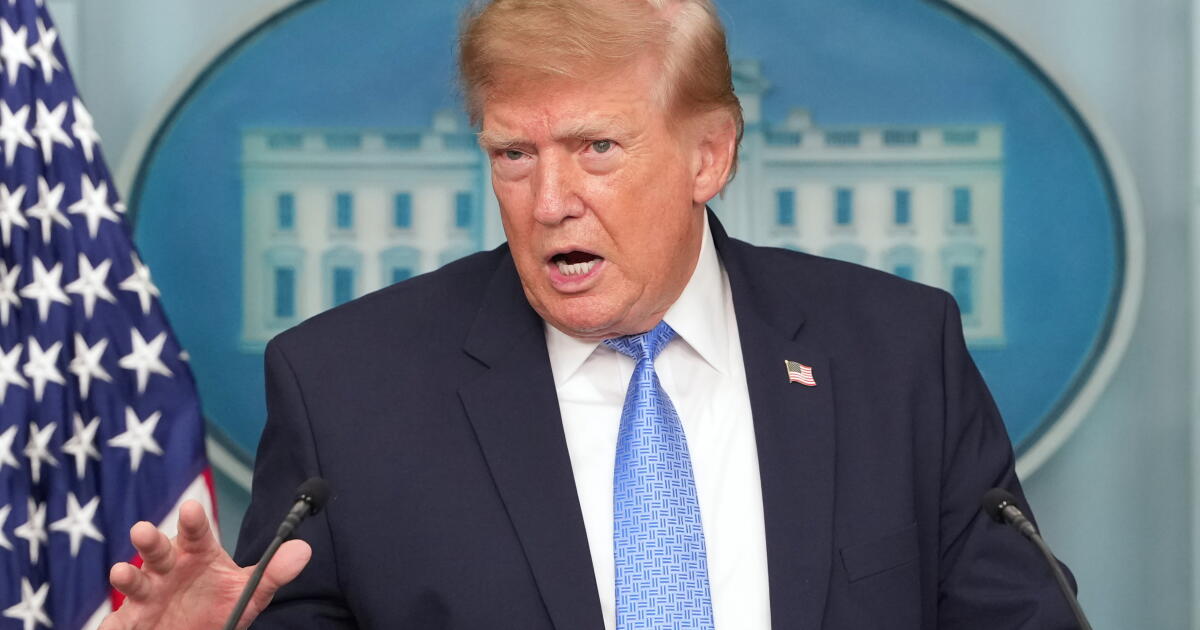
Trump has alleged in a series of recent social media posts that the Democratic Party is led by “one of the most Corrupt and anti-American groups of political leaders and hacks in the history of our Country, and even the World,” and that there is “Massive Corruption and Crime taking place in Democrat run Cities and States.”
He said Democrats cheated to win the midterms and are now “illegally threatening Republicans with knowingly false accusations and charges.” He also renewed his previous calls for the prosecution of six Democratic lawmakers who advised U.S. military personnel not to follow illegal orders — calling them the “Seditious Six” — and wrote, “THE DEMOCRATS ARE CORRUPT AND EVIL, and I am the exact opposite.”
Trump’s posts followed White House Counsel Will Scharf warning Democratic lawmakers — including Rep. Robert Garcia (D-Long Beach), the likely next chair of the House Oversight and Government Reform Committee — that they could face criminal prosecution if they launch the kind of sweeping investigations into Trump and his family that they’ve promised.
They also followed recent Justice Department warnings to state and local elections officials across California that they could face criminal prosecution for not setting aside ballots from individuals the administration alleges are noncitizens, and criminal subpoenas demanding some of those same officials appear before a federal grand jury to discuss their handling of the ballot demands.
Experts said Trump’s latest flurry of accusations and threats is clearly a reaction to his current political situation — after a monumental reckoning from voters concerned with corruption and ahead of his first real investigative oversight from an adversarial Congress in years. It is a moment of unique vulnerability, they said — the sort that causes strongmen to cast aspersions on opponents and rivals.
Barbara Geddes, a political science professor emeritus at UCLA who has studied dictators for 25 years, said Trump’s message is a familiar one. “Accusations of corruption are extremely common and they’re used all over the world by dictators” and “people who are sliding into dictatorship.”
Geddes said the tactic isn’t new for Trump but may be “ramping up” because “the Democrats, pretty successfully, have used the corruption charge against Trump.”
Kim Lane Scheppele, a Princeton University professor who studies the rise and fall of democracies and has lived in Russia and Hungary, said Trump hasn’t gone the route of Russian President Vladimir Putin, who has given up any real pretense of democratic rule, but has clearly taken inspiration from recently ousted Hungarian Prime Minister Viktor Orban.
Subject to the laws of the European Union, of which Hungary is a member, Orban pretended to work within democratic channels while co-opting his country’s legal system to punish enemies and reward allies.
Scheppele said “weaponizing criminal justice is exactly how” would-be autocrats seize power in struggling democracies, often by accusing their opponents of doing “what they’re doing themselves” — hence the “old expression, ‘Every accusation is an admission.’”
Lauren Bis, a White House spokesperson, called comparisons of Trump’s actions to those of dictators “insanity” — citing the fact that the nation “just had an election” and saying such “far-left smears about President Trump have no basis in reality.”
Other administration officials have defended — and echoed — the president’s attacks on Democrats as a defense of the American public. Upon his recent promotion to White House chief of staff, Stephen Miller credited Trump with having “single-handedly saved America from those who would destroy it.”
Dueling allegations
Trump and other administration officials have accused a slew of political opponents of corruption and criminality — from elected Democrats to liberal state attorneys general, federal judges, Federal Reserve officials, former military officers, law enforcement leaders, medical doctors, journalists and late-night comedians.
In some instances, the allegations have relied on decades-old paperwork errors that experts suggest aren’t even crimes, as in the case of Trump accusing Sen. Adam Schiff (D-Calif.) of mortgage fraud for allegedly listing two homes as his primary residence. They have also gone back decades to probe immigration paperwork filed by the father of Rep. Ilhan Omar (D-Minn.), whose home was recently raided by federal authorities.
Trump, a convicted felon, has suggested that late-night host Seth Meyers mocking him on air was “PROBABLY ILLEGAL.” Defense Secretary Pete Hegseth has claimed that unfavorable reporting on U.S. military operations by American journalists is “treason.” The U.S. Justice Department has issued criminal subpoenas to providers of gender-affirming care, demanding patient records and threatening clinicians. Trump has accused judges of being “corrupt” just for ruling against him.
Claims that have reached the courts, including those against New York Atty. Gen. Letitia James and former FBI Director James Comey, have been rejected, though most of the accusations haven’t made it that far — with federal prosecutors unable to make a case despite Trump pressuring them to do so.
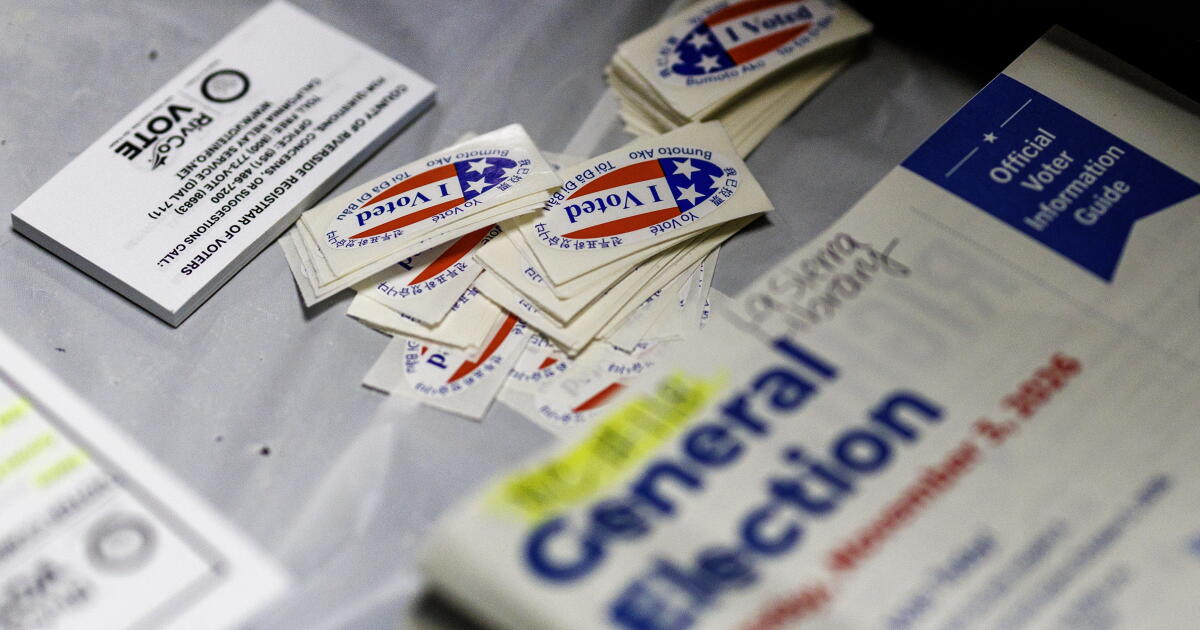
Trump’s latest wave of allegations follows a midterm election in which voters overwhelmingly voted against his party, with many identifying government corruption as a primary factor. An Associated Press poll just before the election found more than half of voters said government corruption was a “crucial” consideration in their congressional vote.
It also comes amid mounting allegations from Democrats that Trump and his family have been wildly corrupt during his current term.
In addition to probing the Trump administration’s handling of the Jeffrey Epstein files, U.S. Immigration and Customs Enforcement operations and corporate corruption, Garcia has said his committee intends to investigate “the Trump Crime Family” — including the $2-billion fortune Trump amassed last year, the “insane amount of stock trading” he has done while in office, a $2-billion investment in Trump son-in-law Jared Kushner’s private equity firm from the Saudi sovereign wealth fund, and a Russian oligarch’s paying for Donald Trump Jr.’s island wedding celebration.
Sen. Richard Blumenthal (D-Conn.), who is expected to become the chairman of the Homeland Security Committee’s permanent subcommittee on investigations, has promised probes of Trump’s real estate projects and his cryptocurrency deals with special envoy Steve Witkoff. Sen. Ron Wyden (D-Ore.), who is expected to become Senate Finance Committee chairman, has said he intends to investigate pharmaceutical companies that have profited from their ties to the administration.
Schiff said the Trump administration “has weaponized the federal government to intimidate or seek retribution against congressional leaders, states, the media, and organizations for standing up to his grave abuses of power — using tactics of an authoritarian leader,” but Democrats won’t be intimidated.
“Doing oversight is part of the job we were given by the Constitution and the American people, and we will do it,” he said.
Trump and his family members have denied wrongdoing. Justice Department officials have promised to defend the president and those around him, and reportedly told prosecutors nationwide to adopt a war footing for more legal battles ahead.
A tactic of the right and left
Daniel Treisman, a political science professor at UCLA and co-author of “Spin Dictators: The Changing Face of Tyranny in the 21st Century,” said that “attacking corruption is a favorite trope of populists in both authoritarian and democratic systems” — with left-wing authoritarians tying capitalism to corruption and right-wing authoritarians tying socialism to it.
In China, President Xi Jinping “has operated a rolling anti-corruption purge to weed out any potential challengers” within the Chinese Communist Party and “keep subordinates nervous,” he said, while in Venezuela, the late Hugo Chavez campaigned against “los corruptos.”
“What’s particularly brazen about how Trump plays the corruption card is that he does it from the summit of power at a time when his family and friends are earning billions of dollars from government-adjacent business,” Treisman said. “There’s an element of preemption — if you accuse them of corruption first, then their accusations will seem less credible.”
California Atty. Gen. Rob Bonta said the Trump administration is “using their abuse of the law as both sword and shield,” to go after opponents but also to claim they and other federal officials are immune from the law or any consequences from it.
He said that it “is what you’d expect from a would-be dictator, monarch, tyrant who just wants to have his way, exercise his authority, hurt his enemies, and advance his own power” — but that courts have resisted and Trump will ultimately lose.
Geddes said Trump has long met claims he is corrupt by pointing the finger at others in Washington. “If you can’t really defend yourself against something, the next best thing is to persuade voters that they’re all corrupt. There’s no difference.”
In countries where corruption is indeed endemic, leaders such as Xi have used such claims to wipe out opposition within their own governments, Geddes said. “The big difference in the U.S. is that the people who have been accused of corruption [by Trump] are almost universally not corrupt, and Trump kind of uses the word ‘corruption’ just to mean anybody he doesn’t like.”
Where evidence of real corruption is “mounting day by day” is in the case against Trump, Geddes said, which is part of why voters abandoned his party in the midterms.
Scheppele said when people chafing under autocratic rule “see how many other people agree with them” — including after big election wins for opposition parties — they “become less afraid to stand up and say what they think,” which leaders like Trump understand.
Trump’s “increased bullying” of late, she said, is a transparent effort to re-instill that fear and “reassert that he’s actually in charge.”