Phillip and Rochelle ended up on a blazing argument during the latest episode of Big Brother but fans of the ITV2 reality show are convinced they know the real reason behind their row
Rochelle and Phillip come to blows in the Big Brother house(Image: ITV)
Another argument has blown up inside the Big Brother house between an unlikely duo.
The House of Power kicked off during Sunday’s (October 11) episode and it didn’t take long before a row broke out between Phillip and Rochelle.
During a conversation with house guest Gemma Collins, Phillip and Rochelle opened up about Twinks moving into the house as one of the new arrivals alongside Catrin.
Phillip explained: “I said her [Twinks] ‘you’ve come into our house, our house’. I said ‘don’t you f****** forget it’. However, Rochelle disagreed saying: “You didn’t f****** say it like that’.”
A furious Phillip hit back, saying : “Don’t call me a liar” before adding “You’ve got too much to f***ing say for yourself, you f****** nosey t*** and you can f*** off away from me”. However, Rochelle insisted: “I haven’t called you a liar.”
The row didn’t last long and they quickly made up much to the amusement of their fellow housemates but some fans have been left wondering if Phillip is “turning on” Rochelle because he heard the crowd chanting “Get Rochelle out” during Friday’s (October 9) live eviction which saw Pauline forced to the leave the house.
Taking to X, formerly known as Twitter, one fan penned: “Phillip turning on Rochelle after he heard the get Rochelle out chants. More faces than a town clock that one.” Another added: “I think Phillip heard the ‘get Rochelle’ out chants.”
A third person said: Phillip heard the crowd saying ‘get Rochelle out’ now he thinks if I turn on her people will love me, well no.” A fourth agreed: “Philip heard the ‘get Rochelle chants’ and is now turning on her.”
However, some fans are convinced Phillip will go on and win the entire series, with one viewer writing on social media: “Honestly Phillip for the win” and someone else posting: “Love Phillip he owns it, says how it is, he’s funny and he cheers the housemates up as well. Phillip to win for me.”
The argument between the friends comes just days Rochelle said her and Phillip were “the Beckhams” because they were “better together” in reference to celebrity couple David and Victoria Beckham.
Elsewhere in the episode, Big Brother shared the House of Power rules explaining: “Housemates, as you know, this week is all about the power. Soon, the house will be split into two teams. In your teams, you’ll take on a series of tasks. At stake – power in the house. “
Celebrity house guest Gemma then had pick two team captains, she chose Sam and Rob, and they then had to decide who they wanted on their teams in preparation for the head-to-head battles that lie ahead.
The winning team gets power of the house until the next game and are the only ones allowed to use the kettle, toaster, air fryer, hot tub and hair appliances.
The losing team must do all the cleaning, are only allowed two minutes in the shower each and aren’t allowed to sit on the sofa.
Big Brother airs Sunday to Thursday on ITV2 and ITVX at 9pm
Summer mornings in the Hill Tracts region of Bangladesh are a respite from the dissonance of honking cars and construction of the capital city of Dhaka. It was a welcome change to hear chickens and the sound of … wait, was that Julie Andrews’ voice echoing over the hills?
I was visiting my home country when I heard a group of schoolchildren playing ektaras, a traditional string instrument, and singing the “Do-Re-Mi” song for their morning assembly.
I used my phone to show them a picture of Andrews. “Do you know her?” They immediately leaped in excitement. They didn’t know the composer Richard Rodgers or lyricist Oscar Hammerstein II. But they knew Andrews — even though 60 years have passed since “The Sound of Music” and these children live in a remote Bangladeshi village. The recognition is evidence of something extraordinary.
Andrews is turning 91 on Thursday, and there are calls online to bubble wrap her, just in case. She is indeed a global treasure, and she has been earning plaudits and admirers for eight decades.
Andrews trained in the Italian bel canto tradition and from a young age sang challenging coloratura arias with precision, clarity and range. The bright, happy tone, perhaps a subconscious decision rather than anatomical alone, provided her respite from the doodlebug bombs that fell during her childhood in England in World War II. British critics had dubbed her as the “youngest prima donna,” a title usually reserved for opera greats, and it wasn’t undeserved. At just 12, she routinely floated high Fs above the treble staff during live performances.
Yet before opera could claim her, Broadway stepped in. From “The Boy Friend” to “My Fair Lady” and then “Camelot,” she won the hearts of theater goers and creators alike. Lyricist Alan Lerner described her as “an amazingly quick study in music … who meets any challenge with an unabated eyelid that makes you wonder how Britain ever lost the empire.”
Her voice then was so precise that the late maestro André Previn, who led the London Symphony Orchestra, proclaimed: “No one’s diction in any field of singing can come close. … You understand every syllable from the second balcony — I don’t understand how you do that.”
It’s inaccurate to romanticize her legacy in 2026 as simply nostalgic. That would overlook the depth and progressive nature of her characters. She was essentially the first female superhero on the big screen, as Mary Poppins — who could fly and create alternate realities with the snap of her heels, but whose more stunning superpower at the height of the Cold War was to charmingly portray capitalism as dangerous.
In “Victor/Victoria,” she navigated a gender-bending performance that challenged societal norms, playing a woman who impersonates a man impersonating a woman when it was taboo to speak about any layer of that. Her most overlooked and perhaps her best dramatic role was in “Duet for One,” a 1986 film about a musician who suffers from multiple sclerosis. Tragically this became a moment of life imitating art, foreshadowing her own destiny to lose her instrument after throat surgery in 1997.
Rather than retreat, Andrews adjusted and leaned into voice acting with characters like the dominant Queen Lillian in “Shrek” films, Gru’s hilariously villainous mother in “Despicable Me” and the mysterious Lady Whistledown in “Bridgerton,” for which she won an Emmy, twice.
In real life, the flying super governess fought to adopt two babies from Vietnam just after the fall of Saigon, helping to raise awareness of the need for adoptive parents. She then co-founded the Operation USA disaster relief charity and opened the Japanese wing for the United Nations Development Fund for Women.
Whether it was to support UNICEF after the devastating Bhola cyclone hit present-day Bangladesh in 1970 or jetting to Jordan and Senegal to support women’s and children’s activities, she was a quiet champion for the underserved. In her most famous role, in “The Sound of Music,” she was a savior for children being displaced by war.
Andrews is mostly out of the public eye, but her singing is eternal and accessible. YouTube is home to a trove of Andrews performances, including “This Is My Beloved” from “Kismet,” full-voiced “When You Wish Upon a Star,” from pianissimos to fortes, high B-flats and all — her classical skill shines through. These recordings remind us that beyond just the formulaic legato phrasing that singers from the Italian tradition follow, and the clear resonance, her work it set a gold standard for musical storytelling that few have surpassed since.
Julie Andrews is no longer trilling on the Alps, nor is she reprising her role as queen of Genovia in a “Princess Diaries” film, but her voice, and what it represented for more than 80 years, endures. It lives on not just in films and recordings but also ringing in the minds of children and adults alike, from her hometown of Walton-on-Thames to the Hill Tracts of Bangladesh. In an age of doom scrolling (and alarmingly low singing standards), her vast career offers a rare resonance and a continuing masterclass.
Shams-il Arefin Islam, a Yale-Berkeley College associate fellow who works on climate mitigation and adaptation, is a classically trained tenor.
According to documents obtained by The Times via the California Public Records Act, Inglewood High School confirmed to the Southern Section that its football coach, Mil’Von James, played three ineligible players during a game in Austin, Texas, last month.
The reason, according to the letter sent to the Southern Section office, was, “The coach stated that he was not aware CIF eligibility rules applied to a game in Texas.”
That raises the question how many more times Inglewood has used ineligible players for out-of-state football games under James, the head coach since 2019. Last season on Sept. 25, 2025, the team played in Midland, Texas, three days before sit-out transfer players became eligible. Inglewood won 43-42. One of the players on the team who had not been cleared to play was Masyn Harvey, a quarterback transfer and holder on PATs.
Harvey, now playing for a prep school team, declined to return a request for comment if he had played.
If Harvey did play, Inglewood should have forfeited its win last season to Midland. Because Inglewood lost to Westlake of Austin on Aug. 28, a forfeit was moot for this season. Inglewood informed the Southern Section that it imposed a two-game suspension as punishment to James, who returned to coach last week in a win over Downey. The school said it would extend the sit-out period by another week to those players who participated while not cleared.
As for corrective action, the school stated, “Going forward, all ineligible players, across all sports, will be in street clothes on the sideline and must check in with the game administrator prior to the start of each game. We will send all coaches, across all sports, a weekly email listing ineligible players and the reasons for their ineligibility.
“At the start of each season, we will re-train all coaches on eligibility criteria and the clearance process and require them to sign an acknowledgment confirming they understand.”
James has a history of using ineligible players. He was dismissed at Hawkins High in 2016. The Los Angeles Unified School District did not share why James was fired, calling it a confidential personnel matter. LAUSD dismissed James soon after the discovery of ineligible players, resulting in Hawkins forfeiting all of its games to finish 0-13. Since then, the City Section established a rule that teams must exchange rosters before games to verify that players are eligible.
The Southern Section declined comment, but according to a letter response from an assistant commissioner, “Based on your self-report, preventative measures and the corrective actions taken, we will consider this matter closed.”
WHEN Joey Essex was pictured getting close with newly single Love Island star Priya Jaswal earlier this month, many hoped it was the start of the latest reality TV romance.
But The Sun can reveal that despite their late-night flirtation things have not been heating up between the Towie icon and the Surrey-born beauty for one very surprising reason.
Joey Essex has dated a string of beauties, including Grace Jackson, pictured, but his latest romance has cooled for a very surprising reasonCredit: RexThings were heating up between Joey Essex and newly single Love islander Priya as they chatted all night at the National Television Awards earlier this month
Even though Joey has acquired something of a lothario reputation – dating a bevvy of beauties including Jesy Potts and Sam Faiers, since rising to fame on the ITV reality show in 2011 – he’s got his eyes on a very different sort of prize, I’m told.
A source tells me: “Priya and Joey spent the evening laughing and joking away so many assumed it could turn into something more serious.
“But Joey is taking a break from women and sex at the moment. In fact, he’s taken a vow of chastity.
“He’s got this big boxing match next month and he’s taking it very seriously.
“He is determined to win and has been sweating it out in the gym and is going to give it everything he has got.
“So Joey is on a strict sex ban until after the fight.”
The 36-year-old TV star is scheduled for a Misfits Boxing match on October 10 against comedian Dapper Laughs – real name Daniel O’Reilly – at the Copper Box Arena, London.
Misfits was launched in 2022 by YouTube star KSI and his manager Mams Taylor as the home for celebrity-style crossover bouts.
Priya was in the latest season of Love IslandCredit: Shutterstock EditorialPriya arrives at the NTAsCredit: Ian West/PA Wire
The effectiveness of sex bans before big sporting bouts is contested, but it is thought that Muhammad Ali abstained for six weeks prior to matches, as he believed avoiding sex preserved testosterone, focus and leg strength.
Joey is not the only modern day boxer to take a pre-match vow of chastity.
Tyson Fury has also switched to no-sex preparations, instead of his previous method of masturbating furiously before matches.
In 2022, ahead of his fight against Derek Chisora, Fury told Barstool Sports: “You know how I used to masturbate seven times per day to give me power?
Joey dated Jessy Potts after they got together in Love IslandCredit: WireImage
“This time I’m celibate. I’m celibate for seven weeks until the fight. It’s a new method, I’m trying something out.
“I’m going in there with a loaded gun, someone’s getting in severe trouble.
“I’m gonna be testosteroned out of my head completely. Seven weeks’ worth.”
Joey’s stringent new regime will be a bitter blow for gorgeous Priya, 25, who is newly single after splitting from Love Island villa beau Aidan Murphy hours before the NTAs.
Joey and Priya were inseparable at the after party at London’s O2 arena, looking cosy as they chatted for hours and then left the bash together.
They then carried on partying at the after-after party in the Skybar at the nearby Intercontinental Hotel.
A source said at the time: “Joey and Priya really hit it off and got close. We’ll have to see what happens.
“Obviously Priya is very fresh to showbiz and just out of her connection with Aidan so we’ll see.”
However, according to sources, the pair swapped numbers and exchanged messages since their fun night out together.
It is not the first time that Joey has been linked to a Love Island beauty.
The London-born star even did his own stint in the villa in 2024, entering on the evening of Day 1 as the first “bombshell” of the series. Essex was the first celebrity to appear on the revived version of the show.
Joey was linked to model Grace Jackson, with whom he reportedly enjoyed a whirlwind romance for around six weeks in early 2024 after meeting in Dubai.
However, their relationship ended abruptly, leaving Grace feeling “hurt and confused” by Joey’s decision to break up.
The situation took an unexpected turn when Grace entered the Love Island villa on June 13, 2024, much to Joey’s shock.
It certainly called fireworks and became the drama of the season.
He was initially coupled up with Samantha Kenny, but later swayed toward bombshell Grace, leading to explosive arguments and mixed signals.
Joey then later turned his attention to another bombshell, Jessy Potts. This transition caused massive fallout with Grace, resulting in explosive arguments that dominated the screen time.
Joey Essex has thrown himself back into the gym to work on his well-honed bodyCredit: InstagramLast year Joey Essex fought Joao Barbosa at the AO Arena n ManchesterCredit: Getty
But it was not meant to be. Joey Essex and Jessy Potts confirmed their split on September 18, 2024.
The break up came just seven weeks after they left the Love Island villa together.
Despite their initial connection, both Joey and Jessy cited their busy schedules as a significant factor contributing to their breakup.
Jessy said that they “tried to make it work”, but the demands of their post-villa lives made it challenging to maintain their relationship.
More recently Joey confirmed on The Sun’s Showbiz Fix that he is a single man, and if his boxing career continues to thrive, it might just stay that way.
Lockheed Martin and the U.S. Air Force are once again discussing new-build F-16s. The development comes as the service grapples with a fighter fleet that is simultaneously aging, shrinking, ballooning in sustainment cost and being called upon to do more. This also comes at a time when the Air Force is now investing heavily in the F-15EX, another fourth-generation type it hadn’t bought for many years after committing to an all stealth future fighter fleet in the 2000s.
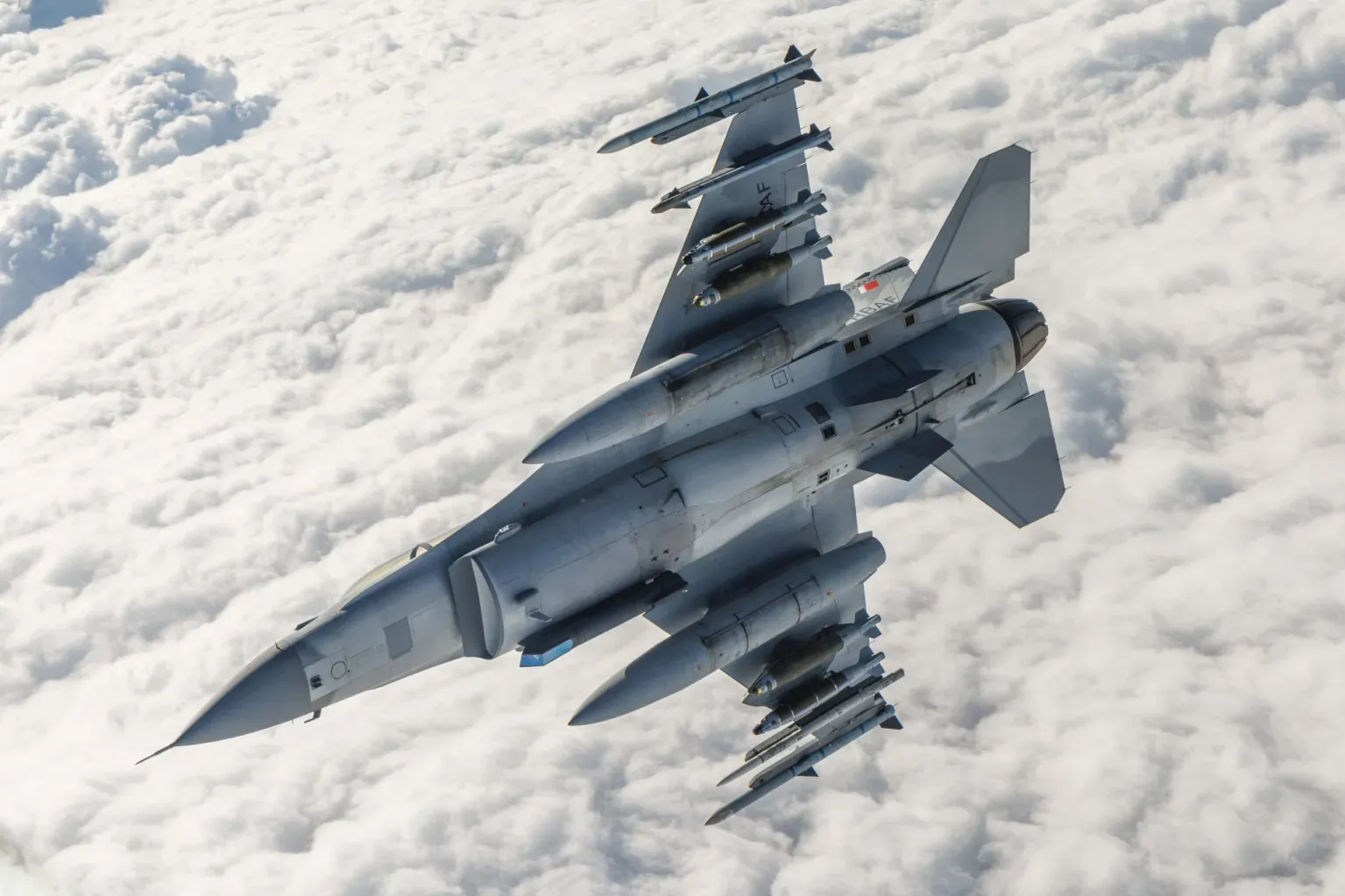
According to Aviation Week, the company has proposed an aircraft called the F-16G, an enhanced derivative of the F-16 Block 70. The proposed configuration reportedly incorporates conformal fuel tanks, 600-gallon wing tanks, an infrared search-and-track (IRST) system, a Sniper targeting pod, and a drag chute. All of these features have appeared on previous F-16s in one form or another. Lockheed is positioning the new version as a potential replacement for USAF F-16 units whose existing aircraft are approaching the end of their useful lives.
A Bahraini Block 70 F-16D flown by members of the 416th Flight Test Squadron pulls away after receiving fuel from a KC-135 tanker with a crew from the 370th Flight Test Squadron during asortie out of Edwards Air Force Base in California on March 7, 2024. U.S. Air Force
The Air Force, for its part, says that it has not yet settled on either the requirements or the options for addressing the problem. As it stands, the service has not committed to buying any new F-16s. The proposal is nevertheless notable because it follows an earlier round of discussions in which the Air Force was already examining whether a new-build F-16 could help address the growing fighter gap.
In December 2025, Inside Defensereported that the Air Force had reached out to Lockheed Martin about pricing for Block 70 F-16s — the current export standard. The conversations were described as exploratory, with no firm procurement plan, but the reporting established that the idea had moved beyond a purely theoretical discussion. One congressional aide told the publication that officials were looking at ways to “plug their holes” as part of their future force-structure planning.
A new Viper variant based on the Block 70 would be cheaper than replacing an aging F-16 with an F-35, while allowing the Air Force to retain much of the infrastructure, training, and experience associated with the existing aircraft. This is a major advantage as the F-35’s unique infrastructure and support requirements are a costly addition to the aircraft’s base price tag. An even bigger factor is unrelated to acquisition and bed-down costs: a Block 70 is far cheaper to sustain and operate over its service life than an F-35, a difference that compounds significantly across a fleet.
A line-up of F-16s assigned to the 149th Fighter Wing, a unit of the Texas Air National Guard. Air National Guard photo by Airman 1st Class Jonathan Rasco Airman 1st Class Jonathan Rasco
The idea of a new Viper buy had already reached the highest levels of Air Force leadership several months earlier.
In May 2025, Sen. Tom Cotton asked then-Air Force Chief of Staff Gen. David Allvin about the possibility of buying a U.S.-configured “Block 80” F-16 if Congress provided additional funding. Allvin did not endorse the proposal, but he did not dismiss it either, saying he needed to examine the time required to adapt the Block 70 design, where a U.S. aircraft could fit into Lockheed Martin’s production line, and what the industrial base could support. He also noted that the existing Block 70/72 line was already heavily occupied by foreign military sales.
At the same hearing, Allvin acknowledged the broader force-structure logic, saying the Air Force needed both the high-end capabilities required for an Indo-Pacific fight and other fighters that “may not need to be as sophisticated as our fifth-generation, sixth-generation.” He also emphasized that the first increment of Collaborative Combat Aircraft (CCA) was intended to augment rather than replace crewed fighters like the F-16.
General Atomics’ YFQ-42 for the first increment of the Air Force’s Collaborative Combat Aircraft program, which has now received the official nickname Vengeance. General Atomics
Taken together, the developments show that the concept has remained alive through the Air Force’s evolving force-structure debate.
The Numbers Game
At first glance, the idea of buying new F-16s for the Air Force in the late 2020s might seem puzzling. The F-16 entered U.S. service in the 1970s, and the Air Force stopped buying new examples for itself more than 20 years ago. The established plan has been to replace the legacy F-16 fleet with the F-35A. For a long time, the service’s stated ambition was ultimately an all-stealth tactical fighter force — but that vision has already largely melted away as budget, operational and industrial-capacity realities have set in.
Today, the fighter fleet is still far older on average than it needs to be and legacy fourth generation types, minus a handful of new F-15EXs, are now well over 20-years old at the youngest. The oldest of these aircraft are increasingly challenging and costly to support. Meanwhile, the F-35 has had its fair share of successes and challenges, but replacing all of the USAF’s oldest fighters with JSFs in a timely and efficient manner, and operating those aircraft over future decades, looks increasingly problematic. The F-47 is also on the horizon, but that aircraft fits a different capability set more aligned with the F-22 than the F-16 and will come at a much higher cost than any fighter currently being procured.
Above all else, the problem is that the Air Force’s fighter challenge is one of numbers.
The service’s 2025 long-term fighter force-structure assessment concluded that it needed 1,558 combat-coded manned fighters by 2035 to reach what it considers a low-risk operational posture. The Air Force had only 1,098 fighters in its inventory as of May 2026, below the statutory minimum of 1,145.
An MQ-28 Ghost Bat and a U.S. Air Force F-15EX participate in Valiant Shield 2026 over the Philippine Sea, June 27, 2026. U.S. Air Force photo by Tech Sgt. Thomas Barley Tech. Sgt. Thomas Barley
For the Air Force, the question has not simply been whether the F-16 remains militarily useful, but also whether the aircraft provides a possible answer to a capacity shortfall, while also dealing with delays in F-35 deliveries, and the retirement of the A-10, blowing another hole in the inventory. Meanwhile, some older F-16s that had been expected to leave the fleet are instead receiving upgrades, including a new radar and electronic warfare suite, to keep them flying longer.
A U.S. Air Force airman works to install a new active electronically scanned array (AESA) radar system onto a 480th Fighter Squadron F-16C at Spangdahlem Air Base, Germany, May 23, 2022. U.S. Air Force photo by Tech. Sgt. Maeson L. Elleman 2nd Lt. Maeson Elleman
That creates a difficult transition period. The Air Force wants to retire aging fighters, but it also needs to keep enough aircraft available while their replacements arrive. The F-16 keeps reappearing because it offers a way of addressing at least part of that problem with a very well known commodity and without requiring every legacy fighter to be replaced by an F-35 or F-15EX.
The Production Line Matters
There is another reason the F-16 procurement idea refuses to disappear: Lockheed Martin already has an F-16 production line operating in the United States.
The Greenville, South Carolina, facility was established to produce Block 70/72 aircraft for foreign customers and is now the world’s only F-16 production facility. The Air Force helped establish the line as part of its broader effort to sustain the F-16 industrial base through foreign military sales. The line moved there after the massive Lockheed Martin plant at Fort Worth, Texas — where the F-16 had been built for decades — transitioned fully over to F-35 production.
So, buying new F-16s would not require reviving a dormant production line or spinning up an entirely new aircraft program. The basic manufacturing infrastructure already exists, and the additional work required for a U.S.-specific aircraft may end up being minimal — potentially amounting to little more than taking an existing Block 70 and tweaking it, rather than a large-scale new engineering, testing, and weapons-integration effort.
A two-seat F-16D Block 70 on the production line in Greenville. Lockheed Martin
The Air Force has been aware of that possibility for years. In 2021, then-Air Force Assistant Secretary for Acquisition Will Roper argued that the service should consider the new F-16 production line as part of its capacity solution. Roper specifically pointed to the upgraded capabilities available from the South Carolina production line.
However, Greenville is not an empty production line waiting for a U.S. customer. Lockheed Martin’s F-16 facility already has a substantial Block 70/72 backlog for foreign operators, with the company reporting more than 100 aircraft in the queue and continued potential for additional international orders. It’s also unclear how much the facility could realistically be expanded, since it was designed around a relatively more modest foreign military sales production volume rather than the kind of surge a large U.S. order could require. Still, the USAF could step in and buy up open slots, which would also ensure the line stays open for the foreseeable future, which has major strategic and industrial protection benefits.
That brings us back to Gen. Allvin’s question in May 2025 about where a U.S. aircraft could fit on the production line. Even if the Air Force decided to buy the jets, it would have to compete for production capacity with an established international order book while developing whatever U.S.-specific configuration, testing, and integration work it requires.
This Is Not Your Dad’s F-16
The proposed F-16G is also significant because it is not simply another upgraded F-16C/D like the USAF already has.
Lockheed’s proposed configuration reportedly would add conformal fuel tanks and 600-gallon wing tanks, along with an IRST, and the latest Sniper targeting pod, as well as a drag chute. All of these systems are already fielded and available today rather than requiring new development.
Those additions point toward an aircraft intended to provide even more basing flexibility, range, persistence, weapons and sensing capability than the current F-16, which had already grown into a medium-weight fighter years ago. That is relevant to how such an aircraft might actually fit into the future Air Force.
A U.S. Air Force avionics specialist prepares to install a Sniper Advanced Targeting Pod onto an F-16. U.S. Air National Guard photo by Airman 1st Class Sarah Stalder Lundgren Staff Sgt. Sarah Stalder Lundgren
A contemporary F-16 is already a very different proposition from the aircraft that entered U.S. service decades ago. Modern AESA radars, electronic warfare systems, digital architecture, datalinks, advanced cockpit interfaces and weapons have substantially expanded its capabilities. The proposed F-16G would push that evolution further, but, like the F-15EX, it would still occupy a different part of the spectrum from the F-35 and whatever eventually emerges from the F-47 program.
That distinction could be useful in a larger force. An F-35 provides capabilities, particularly its combination of stealth and advanced sensor fusion, that an F-16 can never reproduce. But the Air Force does not conduct every mission in the most heavily defended portion of an adversary’s airspace. Homeland defense, training, defensive counter-air, a range of strike missions, and operations in permissive or partially contested environments don’t necessarily require the same characteristics as a penetration mission against an integrated air defense network. In a major conflict, no fighter will fight alone, either. Far from it. Operation Midnight Hammer, the B-2 strikes against Iran’s nuclear program, provides a salient example here, with F-16s flying deep into the country along with F-22s and F-35s, to clear the way for the B-2 strike force. By now, the Air Force is well-versed in leveraging the total-force fourth-and-fifth-generation mix, and it has discovered that they complement each other in unique ways that can be an advantage, not just compensation for lack of capability.
As far as the drag chute, that is a highly relevant addition to the USAF’s F-16 capability set. The chute would allow for the F-16 to better execute Agile Combat Employment (ACE), which includes operating from austere airfields within the enemy’s weapons engagement zone. The F-16 can get off the runway pretty quick, but landing is a different story. The chute can help greatly in this regard.
A U.S. Air Force C-5M Super Galaxy aircraft assigned to the 9th Airlift Squadron, Dover Air Force Base, left, sits beside an R-11 fuel truck and an F-16C Fighting Falcon aircraft assigned to the 122nd Fighter Wing on the flight line at the 122nd Fighter Wing, Fort Wayne, Indiana, July 24, 2025. The C-5 participated in an agile combat employment exercise that included wet wing defueling to the fuel truck which then provided fuel to the F-16. (U.S. Air National Guard photo by Tech. Sgt. David Sherman) Tech. Sgt. David Sherman
There is no question that an F-16 is not a replacement for an F-35. But it could help the Air Force better allocate its limited inventory of increasingly expensive fifth-generation and future sixth-generation aircraft while also maintaining a much larger overall fighter fleet.
CCA Changes the Calculus for Fourth-Gen Jets
One factor that is easy to overlook is Collaborative Combat Aircraft. CCAs are not just a complement to fifth- and sixth-generation fighters, they can also breathe new relevance into fourth-generation types like the F-16. Pairing stealthy, and even optionally expendable CCAs with a fighter like the F-16G could substantially boost its survivability and lethality by pushing sensing, shooting, and some of the risk forward onto uncrewed platforms, extending the F-16’s combat relevance even into higher-end scenarios where it would otherwise be at a disadvantage. In that sense, CCA may end up being arguably as relevant to fourth-generation aircraft as it is to fifth-generation ones.
In other words, CCAs are a positive factor in the F-16G’s business case.
A U.S. Air Force YFQ-44A Fury aircraft, assigned to the Collaborative Combat Aircraft Experimental Operation Unit, takes off for a mission flight during an Agile Combat Employment exercise at Creech Air Force Base, Nevada, July 21, 2026. The flight was part of a broader ACE exercise designed to test the resilience, adaptability, and combat effectiveness of the semi-autonomous fleet. (U.S. Air Force photo by Staff Sgt. Kristal Munguia) Staff Sgt. Kristal Munguia
While the F-22 and F-35 are slated to get CCAs first, the F-16G can be built ready to interoperate with them, which could be a massive force multiplier to what would be the most affordable crewed tactical asset in the inventory. CCAs can eventually be used to also help augment F-16Gs operating in a homeland defense mission and other more mundane roles as well.
The Guard Argument
New Block 70s could make particular sense for the Air National Guard.
The Guard continues to operate F-16s in large numbers, meaning that its personnel, facilities, simulators, and maintenance infrastructure are already built around the aircraft. A new-build F-16 could therefore replace an aging F-16 without requiring the same organizational transition associated with converting a unit to an entirely different fighter, and especially a highly complex fifth-generation type with all its unique support requirements.
That has financial implications beyond the aircraft itself. Replacing an existing F-16 squadron with Block 70s would reduce construction costs and training requirements because much of the existing infrastructure and expertise could be retained.
From left, two U.S. Air Force F-16Cs assigned to the 177th Fighter Wing, New Jersey Air National Guard, and two F-35As assigned to the 158th Fighter Wing, Vermont Air National Guard, follow a KC-135 Stratotanker off the coast of Atlantic City, New Jersey. U.S. Air National Guard courtesy photo by Tech. Sgt. James Norman Andrew J. Moseley
The Air Force would still have to pay for the aircraft and sustainment, but it would not be starting from scratch in terms of operating infrastructure, while the modernized fourth-generation capabilities of an F-16G would still mark a step forward for the Guard over its older F-16s.
It’s worth noting there has also been discussion of replacing more aging F-16s with additional F-15EXs instead. That path, however, is more expensive on both the acquisition and operating-cost side, and it would still require units to convert to a different airframe rather than simply recapitalizing in place.
Viper Refreshed
A new F-16 offers a fresh and highly mature airframe — one with a full service-life ahead of it, on the order of 12,000 flight hours without the need for structural upgrades — double that of the original F-16. This is compared to existing F-16s in the inventory with the decades of wear and fatigue already accumulated on them, with structural upgrades keeping them in the air. That difference in remaining structural life is arguably the single biggest advantage a new-build aircraft has compared with extending an existing one.
U.S. Air Force aircraft armament systems specialists assigned to the Ohio National Guard’s 180th Fighter Wing load 20mm ammunition into an F-16’s M61A1 Vulcan cannon. U.S. Air National Guard photo by Master Sgt. Kregg York Master Sgt. Kregg York
Dumping more money into existing F-16s is becoming questionable. Service life extensions and technical upgrades can only go so far and supporting these jets is becoming harder as parts dry up and suppliers who made them are long gone. A new airframe would give the Guard many decades of highly efficient service and the piece of mind for future force planning that goes with it.
Also, just like F-15EX, the development of the Block 70 F-16 has already been paid for largely by foreign customers over many years. It is as off-the-shelf of a solution as it gets and that is a very attractive proposition to an air arm trying to balance its books.
Above all, F-16 sustainment and operating costs run far below the F-35’s — a gap that already holds true even with older F-16s, and one that would widen further with new-build jets.
The Argument Against Simply Buying More F-35s
One seemingly obvious alternative would be to accelerate F-35A procurement. But the F-35 is not simply another fighter that can be substituted one-for-one whenever an F-16 reaches the end of its service life. That would also be difficult to do in practice. F-35A production is effectively capped and there are dense order books, and the well-documented troubles with the Block 4 upgrade are a huge factor pushing the Air Force to look at alternatives like the F-16G in the first place.
The Air Force’s current force-structure plans call for significantly more fighters overall, while the service is simultaneously pursuing F-35As, F-15EXs, and the F-47.
A U.S. Air Force F-15EX Eagle II. U.S. Air Force U.S. Air Force photo by Tech Sgt. Jacob Stephens
Among the reasons why a modernized F-16 might be considered alongside those programs are concerns not only about the cost of those aircraft, but also about the timing of F-35 deliveries, something that has been disrupted by well-publicized problems with Joint Strike Fighter upgrades. At the same time, keeping older F-16s active through upgrades is an increasingly unattractive way of managing the shortfall.
The issue is therefore less about choosing the F-16 instead of the F-35 than about deciding whether the Air Force should use both aircraft for different portions of the force structure.
The service is already doing something along these lines with the F-15EX. It has accepted that a modernized fourth-generation aircraft can have a role alongside the F-35 and the F-22, rather than requiring every new fighter to be stealthy.
A new F-16 would extend that logic to a lower-cost segment of the fleet, potentially allowing the Air Force to use F-35s where their particular capabilities are most valuable while maintaining additional capacity with a less expensive aircraft.
What Could Happen Next?
Even if Air Force leaders conclude that the F-16G makes operational sense, Congress would still have to decide whether it is worth funding.
The December 2025 reporting identified the central problem: lawmakers would want the service to demonstrate that buying new aircraft is preferable to continuing to upgrade the F-16s it already owns. They would also have to weigh the proposal against the F-35 and CCA programs.
If an existing F-16 can be kept operational with a relatively inexpensive upgrade, a new aircraft has to justify its acquisition cost and the additional long-term sustainment burden. But if maintaining an increasingly old F-16 fleet doesn’t save large sums of money over the long haul, the new Block 70 variant begins to look more compelling.
A U.S. Air Force F-16 takes off at a base in the U.S. Central Command area of responsibility on August 10, 2026. U.S. Air Force photo by Staff Sgt. Justin W. Moore Senior Airman Justin Moore
There remains a substantial gap between Lockheed Martin pitching the F-16G and the Air Force actually buying it. The service told TWZ that it is “in the initial phases of analyzing options for the next Future Years Defense Program.” The Air Force spokesperson added: “At this stage, we have neither defined the precise mission requirements nor the spectrum of options that could fill it.”
That is consistent with the status described by Inside Defense nine months earlier. At the time, the Air Force had no plans to procure Block 70s, and the discussions with Lockheed were described as exploratory. Even if senior officials ultimately favored the aircraft, Inside Defense reported that the program could not appear in the Future Years Defense Program until at least fiscal 2028 because the FY2027 budget process was already too far along.
The F-16G therefore remains a proposal rather than a program. But the persistence of the idea is itself significant. It should be noted that the F-15EX buy emerged out of very similar machinations, with the benefits proving to be undeniable.
The new proposal would let some Guard and Reserve units swap their F-16s for vastly improved F-16s — the same logic that drove the F-15EX buy — while also keeping the Greenville line hot, which is a significant benefit in its own right. And it accomplishes both in the most efficient way possible: not just in acquisition cost, but in sustainment cost, which is really the more problematic burden of the two. In the end, this points to another glaring reality check for the all-stealth-force concept, a vision the Air Force has effectively already abandoned.
The Air Force has spent years describing the F-35 as the replacement for its F-16 fleet, yet it now has to contend with aging F-16s, delayed or constrained fighter production, a larger stated requirement for total fighter capacity, and the lengthy transition toward the F-47 and uncrewed combat aircraft. In that environment, a new-build F-16 provides an option that sits between extending legacy aircraft and buying the most sophisticated — and expensive — fighters available.
Regardless, there are so many priorities facing the force right now, buying new F-16s will be a challenge at every turn, but that doesn’t mean it won’t become too compelling of a proposition to accept. Still, many will argue that every dollar should be invested in higher-end fighter and uncrewed platforms that are more survivable against America’s primary pacing threat, China. That country is rapidly evolving its own air arm with stealth fighters and advanced uncrewed aircraft. Stepping back to the F-16 while facing down such a threat can appear to be counterproductive when taken at face value. At the same time, the F-16 is already slated to stay in the inventory by the hundreds for decades to come, which does take some of the bite out of that argument.
In the end, it is remarkable that the F-16 was supposed to have left the U.S. fighter equation years ago. Instead, every time the Air Force looks closely at the gap between the fighter force it has and the force it says it needs, the aircraft somehow finds a way back into the conversation.
In a matter of days, Ed Sheeran has gone from the most agreeable, defiantly middle-of-the-road singer-songwriter on the pop charts to music’s newest villain. The Times’ August Brown and Mikael Wood gathered to break down what happened — and to figure out what it all means.
August Brown: To recap, Sheeran dropped his tour opener, the rapper Macklemore, after the MC described Israel’s actions in Gaza as a genocide and said “Free Palestine” onstage this month at two New Jersey dates of Sheeran’s ongoing stadium tour. Macklemore, in a statement, cited his long friendship with Sheeran while criticizing the singer for allegedly acquiescing to a demand from Robert Kraft, the owner of the NFL’s New England Patriots, that the rapper not be allowed to perform at the Patriots’ Gillette Stadium outside Boston due to his comments.
Kraft, a Trump-supporting billionaire with his own colorful history, released a statement about the tour, saying he was “ensuring that events held at our venue do not provide a platform for hate speech.”
But Sheeran, who performed at Kraft’s wedding in 2022, arguably made things much worse with his own comments on the decision to drop Macklemore from the tour, which ranged from shifting accountability (“Macklemore coming off tour was the promoter’s decision, it was not mine”) to promising that he held compassionate beliefs on this volatile issue but wouldn’t articulate them publicly (“I am not complicit. I have my personal views on this devastating conflict. Just because I choose not to speak publicly, it doesn’t mean I don’t have them, and it doesn’t mean I don’t care.”)
This prompted Sheeran’s remaining openers — including the musician and producer Finneas, the Danish rock combo Lukas Graham and singer-songwriter Aaron Rowe — to drop off the tour, each giving their plainspoken support for both Macklemore’s advocacy and the Palestinian people as their reasons for leaving. The traditional Irish group Beoga, which backs Sheeran for a portion of his nightly show, also quit the tour, saying it was responding to “the silencing of Macklemore by Zionist lobbies.”
It’s too soon to know how this will affect a CVS-core pop star like Sheeran, but it’s clear that for the first time in his career, he’s chosen the path of maximum conflict and controversy for little gain. What do you think he should he have done instead?
Macklemore
(Morgan Hancock / Getty Images)
Mikael Wood: Not let Macklemore be booted from his tour?
Look, I understand Sheeran’s position here: that he views himself as an artist whose audience comes to his show precisely because they’d like to avoid the messy realities of the world for two or three hours. We can choose a different day to discuss how tenable (or not) that position is here in the era of a reality-TV president who long ago blurred the line between politics and entertainment.
But setting aside one’s views on Israel and Palestine, it’s impossible for me to see how Sheeran ever thought his actions would be seen as anything other than allowing a fellow artist to be silenced — a clear loser in the eyes of both the left and the right.
It would be one thing if Macklemore’s comments in New Jersey truly resembled the hate speech that Kraft accused him of dispensing. (Many online have posted images of a costume the rapper wore onstage in 2014 that resembled an ugly Jewish caricature; Macklemore apologized at the time, saying he understood the criticism.)
And of course I get that the very idea of hate speech is slippery — one reason, perhaps, that the folks at AT&T Stadium near Dallas (where Sheeran is scheduled to perform next month) appear to have no problem hosting a concert in November by Ye, who not so long ago released a song called, uh, “Heil Hitler.”
But given how measured Macklemore’s comments were, Sheeran’s decision to go along with the demands for his removal feels less like a fulfillment of his desire to create a conflict-free zone and more like a capitulation to a rich and powerful friend.
August, what do you make of the various statements from the musicians who’ve opted to leave the tour in the wake of all this?
August Brown: The other openers had the most to lose here by bowing out of a huge tour. Yet they took unambiguous stances in favor of Macklemore’s Palestinian advocacy. (On Wednesday, the rapper said on Instagram that he planned to donate “the entire $1 million of my net earnings” from Sheeran’s tour to six organizations “working directly to support the Palestinian people.” He also invited Kraft to match his donation.)
“Artists must not be silenced when they speak up for the oppressed,” Finneas wrote. “I stand with Palestine and its people.”
Lukas Graham went even harder: “We should be able to speak about war, about civilians being killed, about children who deserve to grow up,” the group wrote. “Money doesn’t give you the right to own the conversation.”
Sheeran could have done what many fans regard as the right thing: Defy Kraft’s demands, cancel the Gillette Stadium dates with Macklemore and reroute the tour to somewhere that would support an opening act’s fairly anodyne support of a popular human rights cause. Sheeran is extremely wealthy, and he’d have been on the right side of history, if for no other reason than to say that billionaires shouldn’t have a veto over an artist’s human rights advocacy onstage.
I’m sympathetic to the idea that crews’ livelihoods and fans’ investment in the shows are meaningful things to toss out. But an artist as big as Sheeran can make up the difference. Even a hypothetical statement like “I stand for Macklemore’s freedom of speech and the rights of the Palestinian people. My team’s livelihoods depends on the shows happening, so I will play the Gillette dates as planned,” with a promise for a donation or a benefit show with Macklemore down the line — even that would have smoothed this over.
But his actions here — deflecting accountability, being vague yet defensive about his own politics — and his history with Kraft suggest his sympathies might not lie with the causes his opening acts stand for.
It’s interesting that Beoga and Aaron Rowe, both Irish acts, acknowledged their own country’s history of colonial occupation as reason to stand up for Palestinians (and free speech around it). “Ed has been a friend to me and has changed my life, I could never thank him enough for this,” Rowe wrote in his statement. “But as Irish people we know all too well about genocide, forced famine, and violent occupation.”
Even Lukas Graham cited the band’s roots in Christiania, a Danish enclave with a history as an anarchist commune, as an example they’re following by bailing on this tour. Sheeran likes to say that, through his father, he is culturally Irish though he was born and raised in England. In a country that rallied for Kneecap, the Irish rap group and advocates for Palestinians, his reputation is likely taking a real hit. Whether that extends to his ultra-mainstream U.S. fan base remains to be seen.
Not every artist is obliged to comment on contentious issues — though the success of Olivia Rodrigo’s Daisy Chain Fields festival, which raised money for an array of abortion-rights advocacy groups, showed that A-listers can speak out when they want to. But whatever he actually believes, Sheeran’s long-cultivated neutrality is in tatters. Taking a stand would have been the path of least resistance. Instead, he committed the most basic onstage error: a failure to read the room.
ONCE dubbed “the most boring man in football” Michael Owen’s choice to sign up for a fly-on-the-wall Amazon documentary about his family was unexpected to say the least.
The former England striker turned pundit, 46, allowed cameras to follow him, his wife Louise and their children Gemma, James, Emily and Jessica as they balance family life with running a horse racing business in Cheshire.
Michael Owen’s decision to star in a fly-on-the-wall documentary came as a shockCredit: Prime VideoMeet The Owens follows Michael, wife Louise and their four children (pictured above)Credit: Instagram @themichaelowen
And it was a distinctly left-field move from Michael, who – unlike celebrity documentary subjects David Beckham, Wayne Rooney and the larger-than-life Tyson Fury – has largely stayed out of the spotlight.
He is seen joking in six part series Meet The Owens that he is now best known as a “boring p***k” or “Gemma Owen’s dad” after she appeared in Love Island, raising questions about why he would agree to film the at-home-with style show.
And we can reveal that the ex-footballer – often referred to as ‘the most boring man in football’ – signed up for his TV payday after ploughing £13 million into his racing business pushed him to his financial limit.
While he may have other streams of income, accounts for Michael’s company Owen Promotions show it holds just £7,219 in cash and owes £2.3m to creditors.
Owen signed up for the show after putting £13 million into his horse racing businessCredit: GettyThe ex-footballer (pictured with David Beckham) has stayed out of the spotlight since leaving the sportCredit: AFP – Getty
It also has three outstanding loans, two of which were taken out in March 2022 and February 2024 with Leeds-based MR Denton Properties.
A further loan was taken out in February 2024 with Andrew Black, who co-founded Betfair.
Two other loans with Grosvenor Funding, which claims to offer “fast and flexible” bridging loans were paid off in 2023.
And all five loans were secured using parts of the Owens home estate – a 42-acre estate he bought in 2001 for £4million.
Despite spending millions on Manor House Stables, Owen says the business still needs investorsCredit: Manor House StablesSources say the business has had a big impact on the footballer turned pundit’s financesCredit: Getty
Speaking in Meet the Owens, which is now number 3 on the Amazon Prime UK chart, Michael revealed he has had to put “£12 or £13 million” into Manor House Stables to build it to its current level.
But he admits the business – which makes cash by persuading investors to back the horses they buy at auction – still desperately needs investors.
And he describes their current status as: “Premier League. Brighton, but not seventh, but kind of bottom half.”
Footage from the first episode shows the racing enthusiast giving pal Jamie Carragher a tour of the impressive grounds and stables, showing off a horse owned by Sir Alex Ferguson and another he owns along with Paul Scholes, Steve McManaman and Owen Hargreaves.
Drone shots show the impressive site from the air, while graphics also flash up on screen showing how the structure works – a handy guide for any would-be investors.
One source told us: “Michael is passionate about Manor House and racing, and he has done an incredible job on Manor House.
“The problem is that it is a big money pit and you can pour millions into it without any guarantee of winning horses.
“He loves it, and would never walk away, but it would be naive to say it hasn’t had a massive impact on his finances.
Owen (pictured with wife Louise) is the sole shareholder of Manor House Stables LLPCredit: GettySources say Owen is hoping the show will help Manor House Stables attract more investorsCredit: Prime Video
“And the pressure is never ending because as a business, you have to buy horses each year – for £90,000 or more – and try to find investors for them.
“Then the million-dollar question is whether or not those horses win, as the stables need winners to succeed.
“But the reality is that you only win a very small percentage of the races in which you have horses.”
Michael is now the sole shareholder for Manor House Stables LLP, which owns the stables, after director and co-owner Andrew Black resigned in March 2022 after six years.
Accounts show the company has healthy assets of approximately £13.6million.
Yet the source said the business still has a way to go before it becomes a money-spinner, rather than a money pit.
They added: “The Amazon payday has come at a good time for Michael, but he is also hoping the airtime for Manor House will attract more investors.
“The more money that comes in, the better the horses and the more winners we will see here.
“That will help the business move higher up the rankings among the top British stables.
“Michael loves racing and he is driven by passion for the sport, but he is also very competitive and wants to win.”
Previously, a source told us: “Michael is extremely determined to succeed in racing. He has poured millions of his own money into Manor House, and he will not stop until he’s at the very top.
“Signing up to broadcast this to the world was a huge risk for him, and he’s desperate for it to work.
“Michael is keen to show off how much Manor House is a reputable and successful stable, and he hopes putting the business on screen ends up being a help rather than a hindrance.”