Weekly insights and analysis on the latest developments in military technology, strategy, and foreign policy.
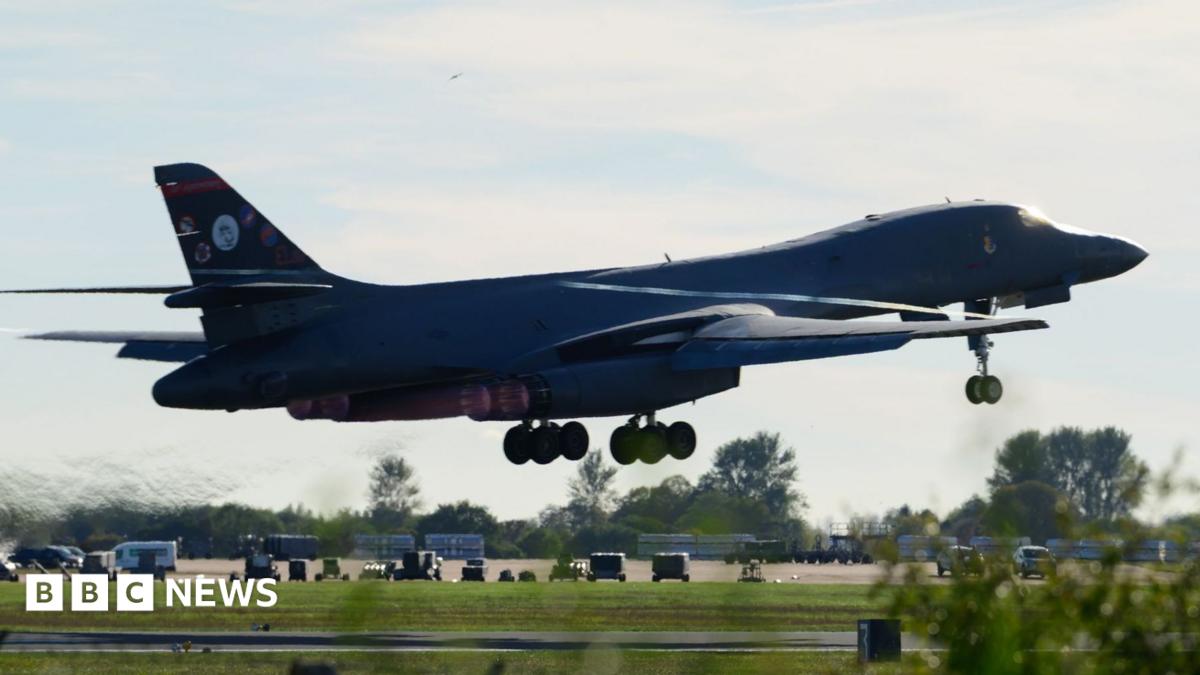
Iran on Thursday threatened RAF Fairford in the U.K. after claims emerged that U.S. Air Force B-1B Lancer bombers launched from there attacked the Islamic Republic on Tuesday. RAF Fairford is a major hub for U.S. military aircraft, with strategic assets, like the B-1s, being forward deployed to the base and tactical and other assets often using it as a pit stop during flights ‘across the pond.’ As an example, Iran’s threat came hours after two EA-37B Compass Call electronic warfare jets arrived at the base from the United States.
“The American aggressor army, which used to launch cruise missiles from its vessels in the Indian Ocean in its aggression after the official resumption of the war, with the end of the missile reserves of the aforementioned vessels, yesterday switched to using B1 planes flying from Fairford Air Base, England,” the Islamic Revolutionary Guard Corps (IRGC)-connected Tasnim news outlet claimed on Telegram. “As the officials of the Ministry of Foreign Affairs also stated, any base that is used to invade Iran’s territory is our legitimate goal.”
🔹Iran’s IRGC adds that the US enemy has turned to using B1 bombers flying from the Fairford airbase in Britain, warning the United Kingdom that as officials of Iran’s Foreign Ministry have also stated, any base used to aggress against Iranian territory is a legitimate target.
Asked about the threats, British officials told us that the country is prepared to defend itself.
“Our Armed Forces are ready to keep the United Kingdom safe from any kind of attacks, whether it’s on our soil or from abroad,” a government official told TWZ. “The UK stands ready 24/7 to defend itself. This includes through operating a layered approach to air and missile defense, provided by Royal Navy, British Army and Royal Air Force assets equipped with a range of advanced capabilities, working closely with our NATO allies.”
“In the Defense Investment Plan we have made air and missile defense a priority after years of underfunding, dedicating £790 million to enhance protection of the UK homeland and overseas bases from air, drone and missile threats,” the official added. “That is complemented by more than £2 billion of funding to deliver further air defense and counter-drone capabilities, and to upgrade and sustain our Typhoon fleet.”
Iranian officials did not specify how they would strike RAF Fairford, and it is unclear how they could. In March, Iran reportedly fired two missiles at Diego Garcia, a joint U.S.-U.K. base on an island in the Indian Ocean. That’s about 2,400 miles away, or about the same distance as Fairford is from Iran. However, one missile was reportedly shot down by a U.S. warship while the other failed in flight. Given that, whether Iran could actually launch a successful attack on Fairford using those weapons is questionable at the least. Far more likely, if Iran would actually even try anything at all, would be a near-field attack like Operation Spider Web launched by Ukraine in June 2025 against Russian bombers using short-range drones hidden in trucks near airfields. One-way attack drones launched from vessels at sea is another very real attack vector Iran has trained for and equipped itself to execute, a threat you can read all about here.
You can see video of one of those strikes below.
The threats came after Axios reported that B-1B bombers from the base took part in Tuesday’s strikes on Iran. TWZ cannot independently confirm that and CENTCOM declined comment. However, open-source trackers made that claim early Wednesday morning before the Axios story was published.
Overnight, B-1B “Lancer” bombers flying from RAF Fairford (EGVA) conducted strikes in Iran as the US ramps up operations again. Although 2 bombers launched, it appears it was pre-planned that only 1 of them would… pic.twitter.com/Q7Ic3Ahqk3
“U.S. Air Forces in Europe operating locations, including the 501st Combat Support Wing at RAF Fairford, routinely host transient U.S. military aircraft in accordance with access, basing, and overflight agreements with Allies and partners,” an Air Force spokesperson told us in response to our questions about the Compass Calls.
The EC-37s landed shortly after 7 a.m. British Summer Time (BST), or about 2 a.m. EDT, according to local aviation photographer Matt Belcher, who was kind enough to share photos he took of the aircraft.
The Compass Calls are heavily modified Gulfstream G550 business jets. They leverage the Conformal Airborne Early Warning (CAEW) configuration developed first for the Israel Defense Forces, which has large ‘cheek’ fairings on either side of the fuselage, among other distinctive features.
The Air Force is planning to procure 10 of these jets to replace the aging and decreasing fleet of turboprop EC-130H Compass Call planes, of which only four remain. The 43rd Electronic Combat Squadron flew the first training sortie for the EA-37B on May 2, 2025, and one made the type’s maiden voyage to Europe in January.
A U.S. Air Force EA-37B Compass Call aircraft assigned to the 55th Electronic Combat Group at Davis-Monthan Air Force Base, Arizona, is parked at Ramstein Air Base, Germany, as part of its first stop in the European theater for a scheduled road show, Jan. 26, 2026. (U.S. Air Force photo by Senior Airman Edgar Grimaldo) Senior Airman Edgar Grimaldo
Many of the EA-37B’s mission systems are directly ported over from the EC-130H, which is why the two very different aircraft share the same nickname. Both aircraft are designed to provide critical stand-off jamming support, including against enemy radars and communications systems. They also have a secondary intelligence, surveillance, and reconnaissance (ISR) function given their ability to spot, track, and geolocate various types of emitters.
An EC-130H Compass Call assigned to Davis-Monthan Air Force Base, Arizona, takes off for a Weapons School Integration mission at Nellis Air Force Base, Nevada, May 29, 2024. (U.S. Air Force photo by Senior Airman Jose Miguel T. Tamondong) Staff Sgt. Jose Miguel Tamondong
The EA-37B also offers new capabilities that go beyond what is found on the EC-130H. The Air Force has said in the past that the aircraft’s designation reflects its ability to not only attack, but also destroy certain targets, as you can read more about here.
The Compass Calls had previously been deployed to RAF Mildenhall in the early days of Operation Epic Fury. On April 1, CENTCOM announced for the first time that they had been used in combat as part of Epic Fury. The possibility that they are returning to the region, or adding additional electronic warfare capabilities to the total force deployed there, can be considered a potential indicator of what’s to come. These are often the last assets we see move into place ahead of major combat operations.
All this comes as the U.S. is building up forces amid increasing intensity of attacks on and by Iran and President Trump’s statement to Axios today that “I am considering a massive attack. Bigger than ever before. I am close to making a decision. We are all set for it.”
“I am considering a massive attack. Bigger than ever before. I am close to making a decision. We are all set for it”, Trump told me https://t.co/AZnZNyEPrP
Last week, we reported that at least 12 F-16 Fighting Falcons were deployed to Muwaffaq Salti Air Base in Jordan from Spangdahlem Air Base in Germany. Other aircraft have rotated into the CENTCOM area of operations as well.
Going for GOLD: 4 flts of 3x “SP” F-16CJ (TABOR11,21,31,41) are inbound to Muwaffaq Salti AB, Jordan (OJMS) from Spangdahlem AB, Germany (ETAD). 4x KC-135R/T “GOLD” team tankers are up to support the movement.
In addition, “special-operations forces have deployed to the region from their U.S. bases,” The Wall Street Journal reported, citing flight-tracking data and U.S. officials. “Squadrons of jet fighters have been staged across the Middle East, and bomber aircraft at bases in the U.S. and U.K. are on high alert to ramp up operations, according to one of the officials.”
Beyond aircraft, “more than 150 medics have arrived at the Landstuhl Regional Medical Center in Germany in recent days,” the Journal added. The hospital is the primary location for treating troops injured in combat in the Middle East.
The U.S. has been surging forces toward the Middle East, giving Trump options to expand the Iran war
Among the things moving/on alert: -fighter squadrons -special operations forces -medics -long-range bombers https://t.co/peSx70S85v w/ @laraseligman
Other assets have been rotated out, like the B-52 Stratofortress bombers that departed from Fairford earlier this month. The U.S. also returnedF-22 Raptors that were flying out of Ovda Air Base in Israel back to the United States. Other aircraft, such as A-10s and F-15Es, have also returned home from or have been replaced in the CENTCOM region. So clearly there is a lot of shifting of aviation assets taking place even amid current operations.
While adding new forces to Europe and the Middle East does not necessarily mean that Trump will dramatically escalate the conflict, it gives him options to do so. In addition, the public nature of some of these movements also has a messaging effect, letting Tehran and the Houthis know that Trump is ordering more assets to the region.
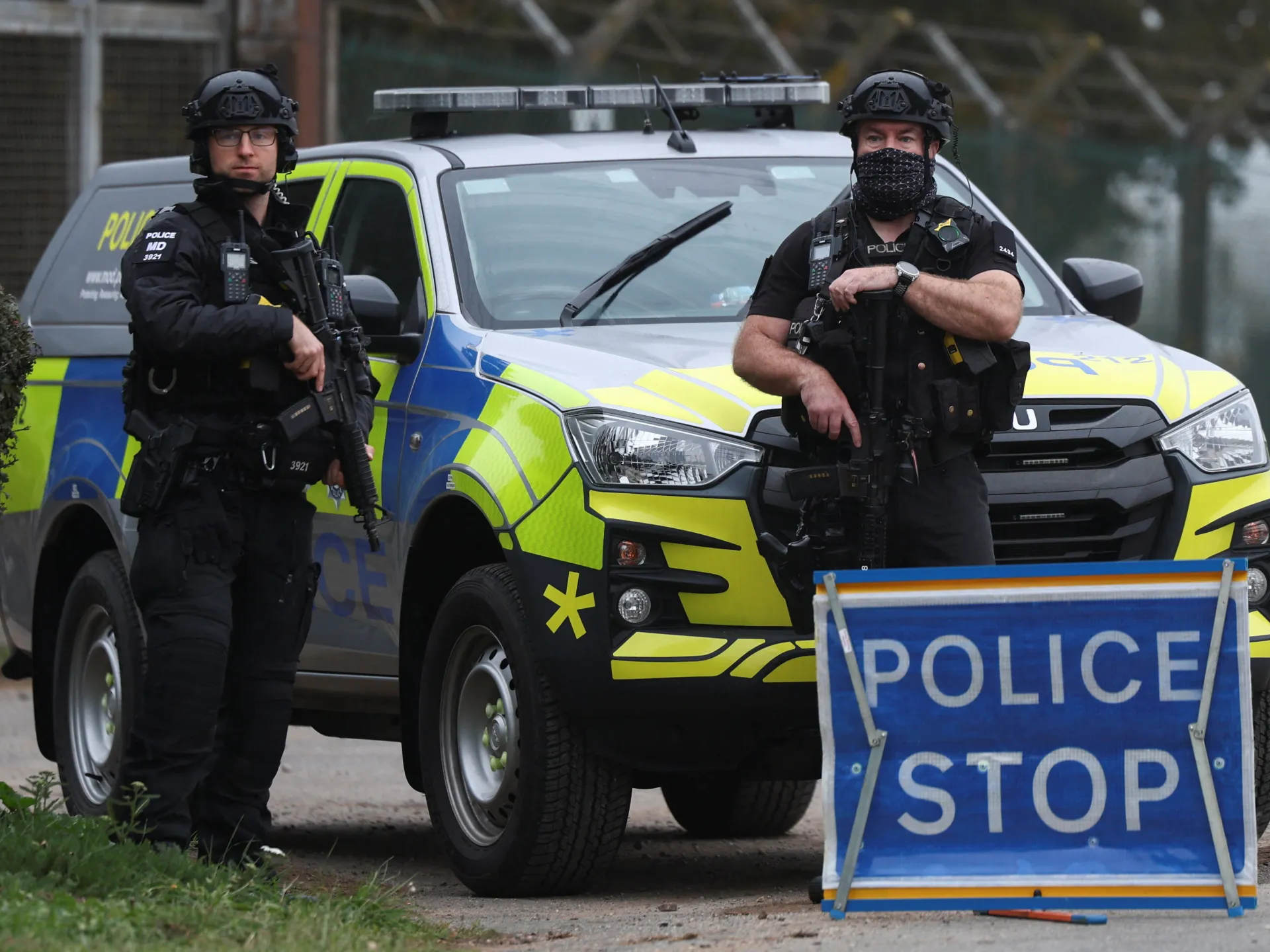
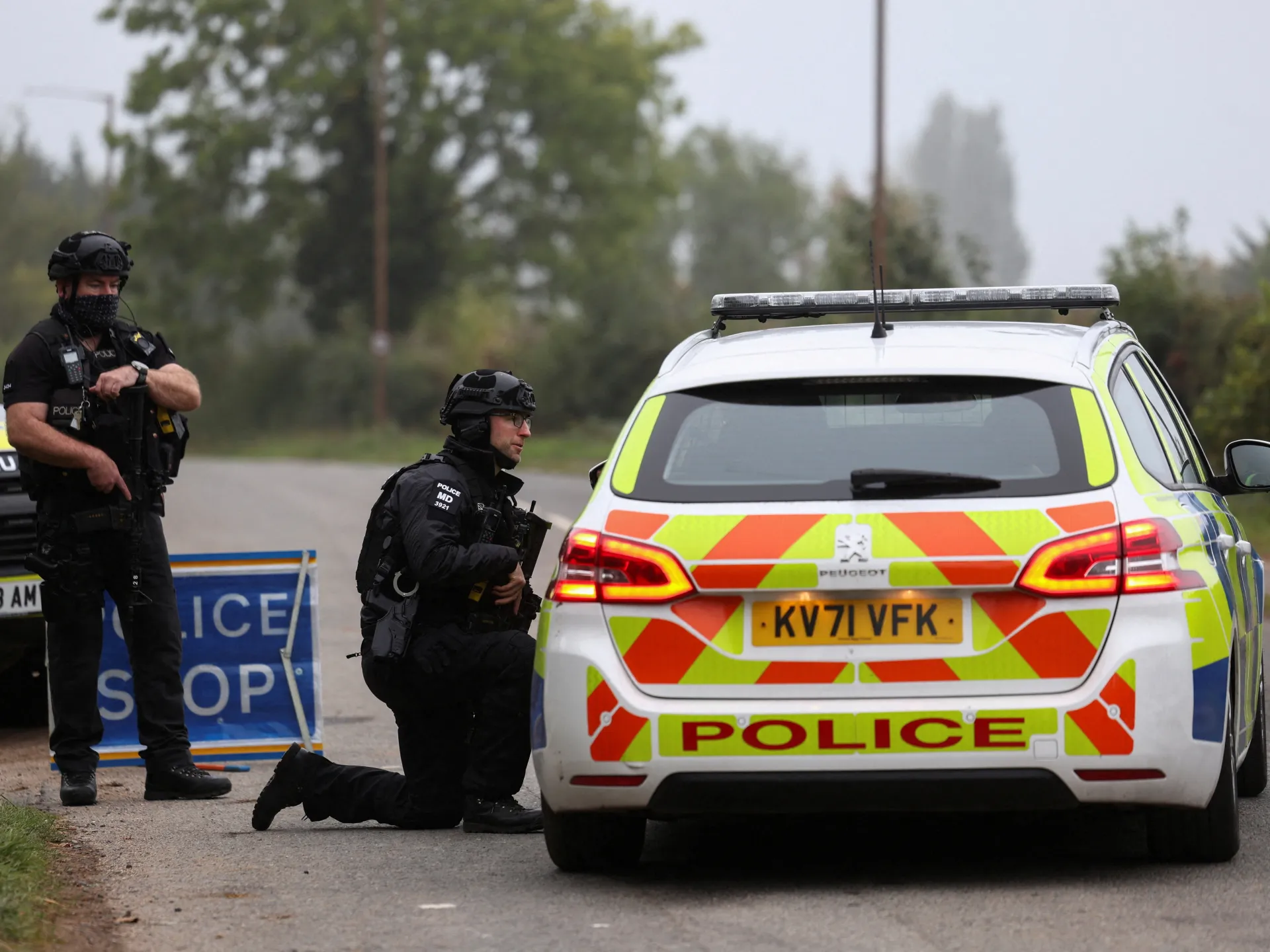
Regardless, the direct threat against RAF Fairford, no matter how nebulous, is new and will certainly be taken seriously by security officials at the installations and others in region.
Weekly insights and analysis on the latest developments in military technology, strategy, and foreign policy.
The United Kingdom’s surprising decision to buy a dozen conventional takeoff and landing (CTOL) F-35A fighters has taken another turn. According to a U.K. Royal Air Force official, “We did not buy those aircraft for their dual [nuclear] capability, we bought them for our conversion unit. At the same time, we stated we would get back into the [nuclear] role supporting NATO. The two are separate functions.”
The official, Air Vice-Marshal Jim Beck, the Royal Air Force’s Director Capability and Programs, was speaking today at the Global Air & Space Chiefs’ Conference in London. Their words were reported by Gareth Jennings, aviation desk editor at Janes.
Clarifying the thought process and priorities behind the UK’s F-35A procurement, RAF official at @airpowerassn Global Air & Space Chief’s Conference 2026 notes, “We did not buy those [12 F-35A] aircraft for their dual [nuclear] capability, we bought them for our conversion unit.… pic.twitter.com/OimVbUDyID
As you can read about here, the United Kingdom announced in June last year that it would buy 12 F-35As alongside the short takeoff and vertical landing (STOVL) F-35B models it already uses.
At that point, the U.K. Ministry of Defense specifically highlighted the F-35A’s ability to join the NATO nuclear mission, which would see the jets armed with U.S.-owned B61-12 nuclear gravity bombs. The F-35B, with its smaller weapons bays, is not able to carry these weapons.
B61-12 test drop by an F-35A
“The U.K. will purchase 12 new F-35A fighter jets and join NATO’s dual-capable aircraft nuclear mission in a major boost for national security,” the U.K. Ministry of Defense announced. The ministry described this as the “biggest strengthening of the U.K.’s nuclear posture in a generation, complementing the U.K.’s existing sea-borne deterrent.”
Earlier in June 2025, the Strategic Defense Review, published by the U.K. Ministry of Defense, had suggested that the future Lightning Force could comprise a mix of F-35As and F-35Bs.
At the same time, however, the Royal Air Force had noted that the F-35As would be assigned to a training unit and would primarily be used in that role.
As the F-35A is cheaper to operate, it is considered a better option to use for training sorties, including keeping pilots current on the F-35B. The ministry said buying the 12 jets will bring a savings of 25 percent per aircraft over the F-35B.
“Day-to-day, the F-35As will be used in a training role on 207 Squadron, the Operational Conversion Unit (OCU),” the Royal Air Force said. “As the F-35A carries more fuel than the F-35B variant, it can stay airborne for longer, extending the available training time in each sortie for student pilots. As F-35As also require fewer maintenance hours, there will be increased aircraft availability on the OCU. These factors combined will improve pilot training and reduce the amount of time for pilots to reach the frontline squadrons.”
RAF F-35Bs of No. 207 Squadron depart RAF Marham in February 2026 to transit to RAF Akrotiri. Crown Copyright
The tradeoff is that the F-35A can’t be used to train for STOVL missions, but this part of the F-35B profile can be trained in the simulator, while an F-35A training unit frees up more F-35Bs to deploy aboard the two Queen Elizabeth class aircraft carriers.
A U.S. Marine Corps F-35B onboard HMS Prince of Wales. Crown Copyright
Now, the words of the Royal Air Force official today cast doubt on whether the F-35As will actually take on the nuclear strike role, something that was specifically highlighted in the U.K. Defense Investment Plan published last month.
As well as today’s underscoring of the priority of the training mission, it should be noted that the new F-35As will be based at RAF Marham, in eastern England, and it’s unclear whether the airfield retains the underground weapons vaults for nuclear bombs. Some reports suggest the vaults that existed there in the Cold War have been dismantled or even filled in completely. In the past, we speculated that the jets might have to make use of nearby RAF Lakenheath, where there is evidence that the United States has brought nuclear bombs back to the United Kingdom, for its own use.
U.S. Air Force F-35As at RAF Marham as they practise dispersing to other U.K. locations at short notice and continuing to operate without their usual ground support. Crown Copyright
At the same time, as we have explained in the past, while the nuclear-sharing program provides access to U.S.-owned weapons, it still requires the United States and NATO to approve their use.
U.K.-operated nuclear-capable F-35As would not offer the same sovereign capability as the Royal Navy’s ballistic missile submarines, around which the British nuclear deterrent is based.
Then there is the issue of how much training, and other resources, would have to be assigned to the nuclear mission to ensure that it could actually be executed. Certainly, this would be nothing like the Cold War era, when a handful of jets stood fully armed, round the clock, on each assigned RAF base, with their crews waiting for the alert to sound.
Royal Air Force ground crew guard a Jaguar strike aircraft at RAF Brüggen, West Germany, in 1977. Photo by Evening Standard/Getty Images
The reality would likely involve the unit switching to focusing on the nuclear mission in times of crisis. This raises a question about how long this would take, and to what degree it would provide a real deterrent, bearing in mind the need to spin it up to be combat-ready.
These are all questions we have asked before in relation to the U.K. F-35A’s proposed nuclear role.
Now, the Royal Air Force itself is dialing back expectations in this regard.
Ultimately, the best chance of the Royal Air Force having a meaningful dual-role nuclear mission would be to buy more F-35As. As it stands, the 12 F-35As are part of the core buy, not additional to it.
The U.K. Ministry of Defense has long said that it still expects to procure 138 F-35s over the lifetime of the program. So far, 48 F-35Bs have been delivered, and the government is committed to buying 15 more F-35Bs and the 12 F-35As for delivery by 2033.
An F-35B taking off from the flight deck of HMS Prince of Wales during air policing in the vicinity of Iceland. Crown Copyright
The F-35A argument would become much more compelling, and more cost-effective, if it were to be bought in larger numbers.
The F-35A is more capable in general, with superior range and payload, and it can maneuver at 9G, while the F-35B is cleared for 7.5G.
One unresolved issue as far as the British are concerned is the F-35A’s refueling receptacle, which is incompatible with their fleet of Voyager tankers. Modifications could provide the British F-35A with a probe, but would likely only make sense on the back of a bigger buy.
Concept artwork of Tempest combat jets flying over the United Kingdom. BAE Systems
In the meantime, the British are struggling to find money for more basic elements of the F-35B, which still critically lacks a standoff strike capability. A report late last year found that a history of “cost-cutting” throughout the U.K. F-35 program “has caused significant problems in its use,” which have affected the jet’s “capability, availability to fly, and value for money.”
The U.K. Ministry of Defense also needs to spend more than $83 billion over the next four years to fund its nuclear-powered submarine programs, which include a true sovereign nuclear capability of the kind that the F-35A is unable to provide.
The photographs, from aviation photographer Andrew McKelvey, show the KC-135 heavily speckled with shrapnel damage to the tail, its vertical stabilizer as well as its flaps. It is also missing its refueling boom entirely.
Shrapnel damage patches appear on the KC-135’s tail, flaps, spoilers and vertical stabilizer. (Andrew McKelvey) Shrapnel damage repairs can be seen on the jet’s vertical stabilizer. (Andrew McKelvey)
It is unclear where this jet was struck. There were five tankers reportedly damaged in the Iranian long-range strike on Prince Sultan Air Base (PSAB) in Saudi Arabia on March 14. However, data from FlightRadar24 shows that the jet was taking off and arriving at Ben Gurion International Airport in Tel Aviv Israel on the day before and after the attack on PSAB. In addition, that data shows it was still flying missions after that incident, which seems highly unlikely. The KC-135 could have been hit somewhere else or the data is wrong. We just don’t know at the moment.
“It’s still here and parked on the visitors ramps on the north side of the base,” McKelvey told us Monday morning EDT.
This jet, tail number 63-8028, belongs to the Alaska Air National Guard’s 168th Wing. It arrived at Mildenhall from Ben Gurion on Saturday, according to data from FlightRadar24.
As we have reported in the past, dozens of U.S. Air Force refueling aircraft now deployed to Ben Gurion Airport are expected to stay in Israel at least until the end of this year, Israel’s N12 News reported on X.
“The presence of the aircraft—not the U.S. military—is causing significant operational difficulties at Ben Gurion Airport, as they are parked almost everywhere possible at the port,” the outlet added.
בישראל התקבלו מסרים מהאמריקנים שלפיהם עשרות מטוסי התדלוק המוצבים בנמל התעופה בן גוריון צפויים להישאר בארץ לפחות עד סוף השנה האזרחית. נוכחות המטוסים שלא הצבא האמריקני מעוררת קשיים משמעותיים בתפעולו של נתב”ג, שכן הם חונים כמעט בכל מקום אפשרי בנמל@Dean_Fisher_
As noted earlier, this is at least the second KC-135 that has visited Mildenhall sporting shrapnel damage and temporary repairs. Last month, McKelvey shared images with us of a KC-135 from the Ohio Air National Guard’s (OANG) 121st Air Refueling Wing covered from nose to tail with these repairs. However, additional ones could have transited to Mildenhall or other installations in Europe before flying to Tinker Air Force Base in Oklahoma for far more comprehensive repair work. Tinker is home to the Oklahoma City Air Logistics Complex, which performs programmed depot maintenance and modifications on KC-46, KC-135, B-1B, B-52, E-3 and Navy E-6 aircraft.
As we explained in our story about the OANG jet: “While all tankers are precious assets, at least to a degree, due to the high demand on the fleet and its cumulative age, in this case there may be at least one positive side effect from the damage. Executing a battle damage repair plan in the field to get a KC-135 back in the air is a good real-life exercise, one that could prove vital if a future conflict in the Pacific were to erupt. Lessons will certainly be learned on many levels from Operation Epic Fury. And some of these lessons came the hard way even though they really shouldn’t have.”
Aviation photographer Andrew McKelvey
The pock-marked tankers are among more than 40 aircraft damaged or destroyed during Epic Fury. In addition to those hit by shrapnel, two tankers were involved in a mid-air collision in March over Iraq that killed all six crew members aboard one of the jets.
About two weeks after that incident, a KC-135 was pulled from the Boneyard at Davis-Monthan Air Force Base in Arizona and sent to Tinker.
“At the request of the KC- 135 System Program Office, the 309th Aerospace Maintenance and Regeneration Group regenerated KC-135R, tail number 58-011, to support operational requirements,” an Air Force spokesperson told us last month. “The aircraft departed on April 2, 2026, enroute to the Oklahoma Air Logistics Complex at Tinker AFB, Oklahoma City, Oklahoma.”
The Air Force declined to specify what those operational requirements were.
However, these aircraft losses are just part of the damage from Iranian missile and drone attacks.
“Iranian airstrikes have damaged or destroyed at least 228 structures or pieces of equipment at U.S. military sites across the Middle East since the war began, hitting hangars, barracks, fuel depots, aircraft and key radar, communications and air defense equipment,” TheWashington Post reported earlier this month. “The amount of destruction is far larger than what has been publicly acknowledged by the U.S. government or previously reported.”
We have reached out to the wing and U.S. Air Forces Central (AFCENT) for more information about the damaged tankers and will update this story with any pertinent details provided.
Inside, you will find a double bed, bunk beds, and a kitchen equipped with a microwave, toaster, kettle and fridge
14:07, 10 May 2026Updated 14:08, 10 May 2026
James Whitehead, ops manager at North Yorkshire Water Park, where two Sea King helicopters have been converted into AirBnB holiday lets(Image: SWNS)
Two retired RAF helicopters have been transformed into stunning glamping pods – and they are already fully booked. The yellow Sea King aircrafts have found their forever homes being stationed at North Yorkshire Water Park, at Wykeham Lakes, near Scarborough., after long careers saving lives across the UK.
They now add to a believed four other Sea Kings which have been transformed into liveable accommodation in Britain. Their specialist interiors have been ripped out and replaced with a double bed, bunk beds, and a kitchen, equipped with a microwave, toaster, kettle and fridge.
Some parts of the cockpit – including the controls and switches – are still intact, but stunning images show how it has been reworked into a dining area.
Its sliding door acts as the main access point and when opened leads onto a gravel landing pad, with a picnic bench. The water park says the helicopters offer a “unique and “memorable” stay which were designed for couples, families to enjoy.
The helicopters were originally built for the RAF for Search and Rescue, according to North Yorkshire Water Park.
Both the ZE369 and XZ589 offered decades of service at the forefront of life-saving missions across the UK, carrying out daring rescues in all weather conditions.
The pods were available to be booked from Friday, May 1 – the first four weeks are fully booked, according to Airbnb. Prices start at £130 a night.
James Whitehead, operations manager at North Yorkshire Water Park: “We are incredibly excited to welcome the new Sea King helicopter glamping pods to our stay on-site offering.
“Both helicopters have an extraordinary history, having spent decades carrying out life-saving search and rescue missions across the UK.
“It was important to us that the original character and charm is preserved as much as possible while making them a cosy place to relax after a day of fun.”
North Yorkshire Water Park is one of the UK’s largest spanning a huge 250 acres. The outdoor adventure destination features massive inflatable aqua parks, lakes for kayaking, paddleboarding, and open-water swimming.