Salvadorans anxiously await news on whether TPS protections will end
Thousands of longtime immigrants from El Salvador and their loved ones are anxiously awaiting word from the Trump administration about whether they will face the possibility of deportation if their temporary legal protections expire as scheduled Wednesday.
The Department of Homeland Security has not yet announced whether it will end or extend Temporary Protected Status for some 170,000 Salvadorans, including 36,000 in California. But federal officials have targeted for arrest other immigrant groups whose TPS expired.
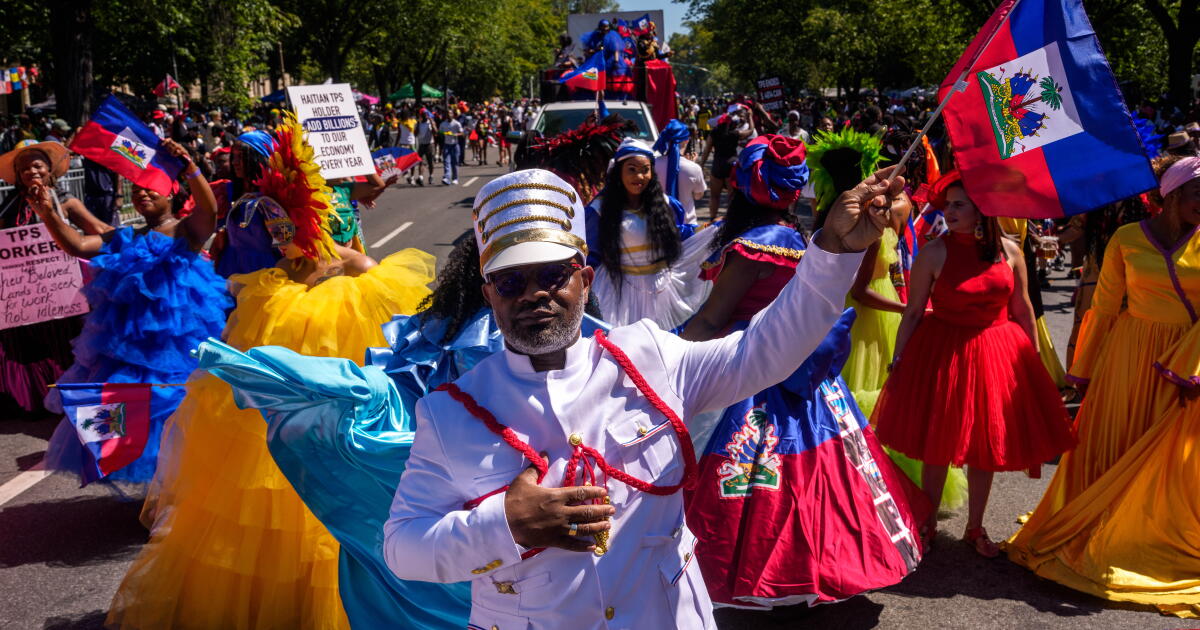
Since their status ended in July, many Haitians have been outfitted with ankle monitors and some have already been sent back to the politically unstable country plagued by gang violence.
As federal officials have whittled down the countries that still qualify for Temporary Protected Status, Salvadorans make up the largest population of remaining beneficiaries.
Just over 100,000 people from Sudan, Ukraine and Lebanon still have TPS protections until later this year, the vast majority of them Ukrainians.
Under TPS, recipients are able to obtain permits allowing them to work legally in the country. More than 150,000 U.S. citizen children nationwide have Salvadoran parents with TPS.
Asked by The Times on Tuesday about the administration’s plans regarding TPS for Salvadorans, border advisor Tom Homan said he does not know and that the decision is up to Homeland Security Secretary Markwayne Mullin.
Later Tuesday, Homeland Security released a statement that left the long-term outlook for Salvadorans with TPS uncertain: “An announcement on El Salvador’s TPS will be made at the appropriate time. Until such announcement is made, Salvadoran individuals present in the U.S. under TPS retain protection.”
Homan, for his part, noted that El Salvador is a “much safer country” now, perhaps suggesting the conditions that prompted people to leave El Salvador had improved.
Addressing the administration’s handling of TPS in general, he said, “I’m glad they’re finally sticking to what the statute says — temporary means temporary.”
The looming deadline set off a wave of alarm among communities in Los Angeles and beyond.
Lorena Zepeda of Los Angeles spent most of Friday with tears in her eyes as she waited for news about the fate of the program that has spared her, for nearly half her lifetime, from being deported back to El Salvador.
“Even though my work permit has been temporary, my life here is not temporary,” said Zepeda, 57. “From the second I stepped foot in the U.S., I have lived. And, I want to continue to live here. I’ve set down my roots here.”
California has the highest concentration of Salvadoran TPS holders in the nation, with smaller concentrations in Texas, Maryland and New York, according to the immigrant advocacy organization FWD.us. Most work in construction, groundskeeping and in transportation, the organization said, and they pay an estimated $1.5 billion in combined taxes.
About 1.3 million people from 17 countries were enrolled in the program when President Trump returned to office last year. The Supreme Court ruled in June that Trump can, without judicial review, end temporary legal protections for hundreds of thousands of immigrants from Haiti and Syria, a decision that also cleared the way for further TPS terminations.
The administration has now ended TPS for more than 1 million immigrants from 13 countries.
Some terminations were announced at or after the expiration date. For instance, the administration announced the terminations for Nicaragua and Honduras three days after they were set to expire on July 8, 2025, but provided a 60-day extension.
A termination for citizens of El Salvador in particular stands to upend the lives of people with deep roots in the U.S. because they have had TPS for 25 years — the longest of any country. Trump administration officials and other conservatives have argued that the program has gone far beyond its original intent as a temporary means of reprieve.
Originally established in 1990 under the George H.W. Bush administration, TPS has been used in the years since under Democratic and Republican administrations alike. Congress authorized the emergency relief for immigrants whose countries had been racked by armed conflict or natural disasters and who could not safely return home.
Trump tried to terminate TPS for Salvadorans during his first term, but an appeal kept the protections in place until President Biden took office and reversed the decision. Biden then substantially expanded the number of immigrants who qualified for protections under the program.
For Zepeda, who came to the U.S. in the early 1990s, saving TPS has been a years-long pursuit.
Zepeda works as a community coordinator for the Los Angeles-based Central American Resource Center, or CARECEN, the largest Central American organization in the country that provides low-cost immigration legal services and policy advocacy. She has gone to Sacramento and Washington to persuade lawmakers to keep the program alive.
She began receiving calls Tuesday morning from frantic TPS holders asking whether they should still attend medical appointments or how they will pay their rent without work permits. Aging Salvadorans fear losing their retirement benefits, she said.
“We’ve marched. We’ve led hunger strikes. We’ve done it all…No matter what happens, the fight does not end,” Zepeda said. “We will continue pushing to find legal stability in this country.”
Castillo reported from Washington and Luna from Los Angeles. Staff writer Ana Ceballos contributed to this report.