prisons

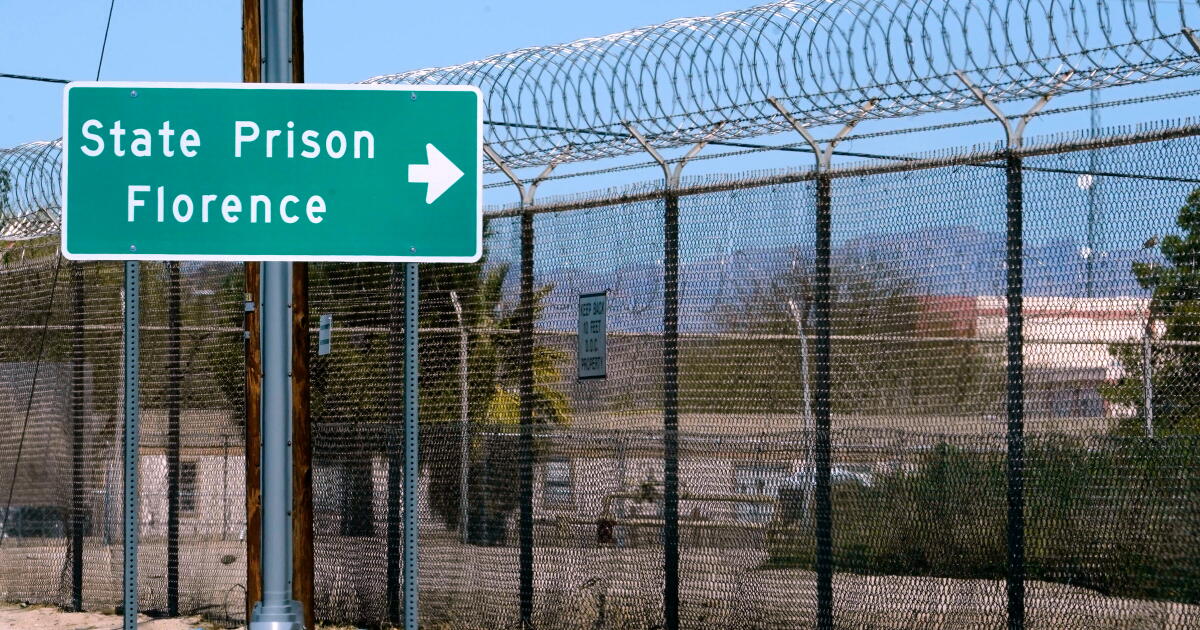
Venezuelan Attorney General to Investigate Unreported Death in State Custody

Attorney General Devoe vowed to clarify the death of Victor Quero. (Archive)

Caracas, May 11, 2026 (venezuelanalysis.com) – Venezuelan Attorney General Larry Devoe has opened an investigation into the death of Victor Hugo Quero Navas in state custody in July 2025.

“The investigation aims to clarify the facts in a timely and impartial fashion,” Devoe’s statement, published on Thursday, read. “There will be a prompt exhumation of [Quero’s] body in accordance with Venezuela’s penal code.”

Quero’s case drew headlines in recent days following reports that a request for amnesty under the Amnesty Law approved in February was denied, only for Venezuelan authorities to reveal that he had passed away months earlier.

On May 6, attorney Moisés Gutiérrez from the Human Rights and Democracy Coalition NGO informed that the Second Control Court in Caracas had denied amnesty for Quero due to the charges against him, which reportedly included terrorism, criminal association, and conspiring with foreign agencies, falling outside the scope of the Amnesty Law.

Gutiérrez argued that Quero, a 51-year-old Caracas businessman and retailer, was in a situation of “enforced disappearance,” having had no contact with relatives or a lawyer of his choice since being arrested in early January 2025.

On May 4, Public Ombudswoman Eglée Lobato met Quero’s mother, Carmen Teresa Navas, and vowed to “activate institutional mechanisms” to provide information on her son’s judicial case.

However, last Thursday, Venezuela’s Prison Ministry issued a statement disclosing that Quero had died on July 24, 2025, due to an “acute respiratory failure” following a “pulmonary thromboembolism.” Authorities added that he had been detained in the Rodeo I prison in the outskirts of Caracas since January 3, 2025 and was admitted to a hospital with “gastrointestinal bleeding” ten days before his death.

The Prison Ministry reported that Quero was buried on July 30, 2025, and that he had provided no next-of-kin information nor had any visits from relatives. Nevertheless, his mother made multiple documented visits to Rodeo I, only to receive no information on her son’s whereabouts.

The 82-year-old Navas was taken to Quero’s grave on Thursday and demanded a DNA test to confirm her son’s identity. She lamented having spent more than a year visiting the prison and judicial institutions without any answers. There was likewise no public information on any hearings in Quero’s case.

During an October visit to the Ombudsman’s office, Navas was informed of the charges against Quero and that he remained in Rodeo I, despite the fact that he had reportedly died three months earlier.

Following the latest revelations, multiple NGOs have accused Venezuelan judicial institutions of recurring human rights and due process violations. The Justicia, Encuentro y Perdón organization called for an “independent and exhaustive investigation” under the Minnesota Protocol on the Investigation of Potentially Unlawful Death.

Lavoe and Lobato took office in April following a parliamentary selection process. Their respective predecessors, Tarek William Saab and Alfredo Ruiz, have yet to comment on Quero’s case. 

Venezuelan Acting President Delcy Rodríguez did not address the case explicitly but vowed to take action against “deviations in the justice system.”

“The deviations in the penal justice system exist,” she said during a televised event on Saturday. “I have information and call for action against judges who charge fees to grant amnesty. This must stop.”

Venezuela’s February Amnesty Law grants a blanket amnesty for crimes committed in contexts of political violence since 1999. The law excludes serious human rights violations, crimes against humanity, and war crimes.

According to Venezuelan officials, more than 9,000 people have benefited from amnesty in recent months. A majority of them were not imprisoned but were still facing trial or parole-type measures.

In April, Rodríguez created a commission on penal justice reform, headed by Devoe, referring to “evils that persist” in the judicial apparatus and calling for a “truly humane justice system.” Interior Minister Diosdado Cabello, also a member of the commission, said authorities were investigating issues of prison overcrowding and systematic trial delays.

Rodríguez had served as vice president since 2018, while Cabello took over as interior minister in August 2024. In 2021, Cabello headed a parliamentary commission tasked with undertaking a “judicial revolution.” However, complaints of prison overcrowding and poor conditions, as well as due process violations, continued.

Edited by Lucas Koerner in Caracas.

Source link

Richard Madeley enters world’s most notorious prisons for chilling documentary

Good Morning Britain star Richard Madeley is to head inside one of the world’s most controversial prison’s for an eye-opening Channel 5 documentary

Richard Madeley is switching the comfort of the Good Morning Britain sofa for the grey walls of prison for a new documentary. The presenter will also head over to Channel 5 for the documentary as he takes on a huge new project.

The feature-length documentary titled Richard Madeley On Murder Row has been commissioned and is set to air later this year. The programme will offer up a rare peek inside one of the world’s most controversial prisons.

The 69-year-old star will head to Centro de Confinamiento del Terrorismo (CECOT). The vast maximum security prison has become the cornerstone of El Salvador President Nayib Bukele’s war on gangs.

READ MORE: Savannah Guthrie abruptly quits Today mid-show amid search for missing mum NancyREAD MORE: Bonnie Tyler rushed to hospital for emergency surgery

Richard will be given access to the full site. It’s said the rare offer “took months to negotiate”, with the presenter also taking in how life really is inside the detention centre.

The GMB presenter will speak to inmates at the facility as they live under the strict regime. And he will also chat with guards who set the harsh rules to try to keep the felons under control.

Away from the institute, Richard will visit the tough urban areas that surround it and are home o a number of violent gangs. He will find out exactly what the effects of the CECOT being on their doorstep has had.

Speaking of the opportunity, Richard said: “‘I was genuinely thrilled to be asked to front this film for 5. It’s not every day you’re given the chance to step inside a place as extraordinary and talked about as CECOT.”

He went on: “What struck me straight away was the sheer scale of it, and the stories behind it. In meeting the people who run the prison and those living inside it, what unfolds is a fascinating and often surprising look at justice, security, and the human realities behind the headlines. It’s been a remarkable experience.”

Guy Davies, Consultant Editor for Commissioning 5, said: “This access to CECOT was a tantalising prospect. Richard is, at heart, a first-class popular journalist and we were thrilled to get the chance for him to serve some time there. I think viewers will be very surprised by the results.”

And Andy Dunn, Senior Executive Producer, ITN Productions, added: “Gaining access to CECOT, the most secretive and notorious prison in the world, took months of negotiation. It was really important for Richard to experience the extreme conditions there first hand, and he takes us on a compelling and unique journey as he considers the effectiveness and ethics of such a harsh regime.”

Last year, it was revealed Donald Trump had sent 250 gang members to what has been labelled the “world’s worst prison”. The maximum security mega-prison in Tecoluca, El Salvador has seen hundreds of immigrants being sent from the US by the Trump administration.

Tens of thousands of prisoners have been locked up on bare metal bunks in the prison. They often don’t have a mattress and conditions have been described as inhumane. Cells have two toilets and a basin which are open with no privacy while there are no windows and they are watched by guards from holes in the mesh ceiling.

The conditions are unlike anything seen in the UK system as the inmates take their cramped space on the metal bunks.

Like this story? For more of the latest showbiz news and gossip, follow Mirror Celebs on TikTok , Snapchat , Instagram , Twitter , Facebook , YouTube and Threads .


Source link

Sickening reality of party town Magaluf from gang rape to ‘manosphere’ terror

For years, Magaluf has been a go-to party resort for Brits seeking fun in the sun. But a darker side to the tourist spot has emerged, with reports of spiked drinks, sexual assaults, and rape

With the promise of sun, sand, booze, and parties, Magaluf is a major party resort – but beneath it hides a dark underbelly. Popular amongst a younger demographic, it’s been seen to epitomise a typical ‘lads holiday’ or girls’ trip abroad, with tens of thousands of British 18 to 30-year-olds flocking there each summer.

Dubbed ‘Shagaluf’, alcohol-sodden tourists descend on the ‘strip’ in their droves, lured through the promise of cheap accommodation, cheap booze, and no-strings sex. However, it hides a seedier scene where vulnerable young girls are being exploited – duped into drinking too much and pressured into sex acts.

In 2014, viral mobile phone footage showed a British 18-year-old giving oral sex to 24 men on a Carnage Magaluf pub crawl, egged on by a DJ who called her a ‘slag’. The ‘prize’ was a free drink. In the horrifying video obtained by our newspaper, the vile music host is seen shouting: “This is Carnage and this is what we do” as a no-holds-barred sex act takes place in the middle of a bar. When the girl appears to stop, the DJ – who has a Geordie accent – bellows: “You little sl*g, stop f****** about. This is Carnage and this is what we do. We need to see someone get b*nged here don’t we? Who wants to see someone get sh**ged?”

And this week, eight men were jailed after a British teenager was filmed being gang-raped at a hotel in Magaluf. The accused, seven French nationals and one man from Sweden, subjected the 18-year-old to a sickening attack in at the BH Mallorca Resort on August 14, 2023.

The men agreed to plead guilty in exchange for reduced sentences. The five rapists accepted jail terms of nine to 11 years for sexual assault, with three receiving higher prison sentences because they repeated their crimes. The three men who didn’t take part in the sex attack but filmed it were handed prison sentences of two years and three months.

Reports at the time said three of the suspects had met the girl hours earlier while partying in Magaluf. After sexually attacking her, one went out into the hotel corridor to encourage strangers returning from their own night out to have ‘free sex’ with her.

“There, the accused men, during approximately half an hour, aware of the semi-conscious state the young woman was in and at one point seeing she had fallen in a state of unconsciousness, and taking advantage of the closed room she had been taken into, stripped her naked leaving her with only her bra on,” a 14-page indictment laying out the public prosecution case read.

“They then carried out different sexual acts on her, acting by common consent and without her consent.” The indictment further detailed how the woman had been raped, spat on, and “hit and smacked”.

“The accused men, each one with a mobile phone, throughout the actions previously described, recorded several videos focusing on the young woman’s private parts in which they appeared forcing her to to carry out sexual acts,” it added. One of the suspects was accused of filming 14 videos lasting 170 seconds, and another of filming five videos lasting 142 seconds.

Sadly, it’s not an unusual story. The dark underbelly of Magaluf was explored in the 2024 Channel 4 documentary Magaluf Undercover: Predators and Parties. It followed journalists Ellie Flynn and Emily Birtley as they went undercover for three nights, posing as drunk or vulnerable tourists to expose the predatory behaviour on the strip, in clubs, and on the beach.

In one instance, footage saw Ellie pretend to be drunk and slump on a sun lounger before being approached by two men. One asks: “Are you good? Do you want to talk for a little bit?” When she replies, “I’m good”, he continues to bombard her, saying: “You are my last chance, do you want to kiss a little bit?”

Ellie tells him “No”, and secret cameras, hidden around the lounger, show the man walking away. But instead of leaving, he goes to recruit another man. “She’s completely wasted,” he tells him in Spanish, before calling out “Let’s go for it.” A third man then moves in beside Ellie on the sun lounger saying: “If you want, I can keep you company.”

Reflecting on the encounter, Ellie said: “The arrival of the third male ­startled and genuinely scared me. I had seen the first two together, but the sudden appearance of another – and having no idea at the time if they were together – was enough for me to signal security to get me out.

“I leave the beach upset and frightened, feeling like I’ve experienced an orchestrated attempt to target drunk women alone on a night out in Magaluf. Shockingly, this was not an ­isolated incident, but a pattern that emerged across my three nights in the resort town.”

Another young woman, meanwhile, said she ended up alone on the beach after her drink was spiked. “I just started to feel worse and worse. I could barely speak, I could barely walk,” she said.

We spoke to Ellie about the latest arrest of the eight men – and the dangers that women can face abroad. She told the Mirror: “It’s just so horrifying, isn’t it? I guess first impressions are just, I’m so, so sorry for that girl, what she’s been through.

“I think having been on these holidays when I was younger myself – I went to Magaluf when I was younger – and similar places, I think I really understand some of the problematic culture there.

“I think that these holidays, unfortunately, can create a breeding ground for this kind of behaviour, because you have young people who are particularly vulnerable, perhaps away from home for the first time, with their friends, trying to have a good time, drinking, trying to party.

“And unfortunately, there are predatory people there who are looking to take advantage of those vulnerabilities. I think what’s so shocking about this case [is that] it’s not even the first or the only one of these kind of horrific group rapes. It says so much, I think, about this toxic culture that eight people got involved with that.”

Dr Charlotte Proudman, a barrister and academic who specialises in women’s rights, echoes these concerns, and believes the problem has been fuelled by the so-called ‘manosphere’ – an online space that often champions masculinity to the extreme. The online space includes content creators with huge followings, such as HS Tikky Tokky, who promote the ideals of masculinity – and even misogyny – via YouTube videos and podcasts.

“What we are seeing in places like Magaluf is the collision of toxic online misogyny with a holiday culture of excess, where alcohol, group dynamics and anonymity embolden some men to act with shocking entitlement towards women’s bodies,” she tells The Mirror.

“The influence of the ‘manosphere’ has normalised the dehumanisation of women and the idea that sexual aggression is a form of male bonding or status,” Dr Proudman explains. “The fact that some perpetrators even film these attacks is profoundly disturbing; it shows that for some men, sexual violence is not only committed but performed for an audience for entertainment.

“This is not about lowered inhibitions on holiday, it is about a culture that still allows misogyny and sexual violence to be trivialised, excused and, in some cases, celebrated.”

Indeed, an independent survey undertaken as part of the documentary exposed disturbing levels of predatory behaviour and sexual abuse – primarily toward women – on party holidays. The survey, which asked over 500 men and women aged 18 to 35 about their experience on party holidays, revealed:

  • Almost of quarter of those surveyed said they’d experienced sexual assault with almost 1 in 10 women reporting experience of a sex act – including rape – without consent
  • Nearly 35 percent of women reported unwanted sexual touching whilst on a party holiday
  • 1 in 5 of the men surveyed admitting to touching a stranger in an intimate area without their consent
  • More than 30 percent of the men surveyed admitted they had kissed someone without their consent during a night out on holiday
  • Nearly a quarter of men believed that someone dancing or standing alone indicated they were looking for a sexual partner
  • 33 percent of the women reported they had been followed whilst on holiday
  • Nearly 40 percent of women surveyed felt that they had been taken advantage of whilst being alone on a party holiday
  • More than 1 in 4 of the men believed that someone chatting to them on a night out meant that person wanted to be sexually intimate with them

In an effort to take control back on the streets of Magaluf, the government passed a new law in January 2020 to target “tourism of excesses and for the improvement of quality in tourist zones”.

At the time of the approval of the decree, Balearic tourism minister Iago Negueruela stated that it represented “one more commitment to a sustainable tourism of quality” and that it was part of “the fight against anti-social behaviour caused by excessive consumption of alcohol”.

Key rules include a six-drink limit per day for all-inclusive guests, a ban on shop alcohol sales between 9:30 PM and 8 AM, and prohibitions on pub crawls. There are also fines for being topless and naked in public, and the police presence has increased.

Ellie added that “it’s really hard to imagine and it’s horrifying” that one of the men went into the corridor and offered ‘free sex’ with the teenager, saying: “It’s almost difficult to um comprehend that anybody would respond to that in any way other than calling the police.

“I think it’s really symptomatic of how dangerous these holidays or these kind of environments can be, not just for women but you know mostly for young women.

“What I find the most shocking about it is the fact that they were, it’s such a bleak fact that this group of men who did not know each other, thought that this was something they would get involved in and I think that it shows how pervasive this kind of this culture of abuse of women is because you know in that environment people were willing to get involved in the most horrific crime.

“There’s something about these holidays, I think, where hedonism and abuse, the lines become so blurred and I think that people kind of go in with these attitudes of wanting to have sex, wanting to meet people, and unfortunately what we see in a society where, like, women are systematically abused and often used for kind of male gratification is this blurring of lines between sort of hedonism and trying to have fun and then really really serious abuse.”

When making her own documentary and surveying holidaymakers, Ellie noted, “a huge percentage of the men that we surveyed thought that someone standing near you was an indication that they might be interested in sex”. She added, “it was so shocking and I think there is this assumption that if you are on these holidays, if you’re out with your friends having a good time, having a drink that somehow that that makes you you know constantly available for sex – you know even if you’re unconscious”. Een if someone is “showing no signs at all that is what you want, there are people out there who will take advantage of the fact that you that you were just there”.

She added, That was what really shocked me about the documentary,” pointing out that some people responded to the documentary in bizarre ways, “there were people who were replying to me on Instagram who were like, ‘Well you know, why would you go somewhere like Magaluf if you weren’t prepared to experience something like that?’ And I think it shows that we have such a long way to go in terms of actually stopping Violence against women and girls.”

Discussing the algorithmic silos that see totally different conversations about gender, sexual violence, and abuse taking place at once, Ellie said: “We’ve never seen a further divide between young men and young women and their views and their experiences.

“And there was a period in time where I think it felt like things were moving in the right direction. You know, we were taking women seriously, and we were listening to their stories and we were, saying all the right things to try and combat violence against women and girls and stop this kind of insidious abuse, but you know at the same time you have the rise of, you know, certain influencers and the manosphere and this kind of narrative that young boys are isolated and don’t know how to treat girls and are scared of kind of making any approaches, and and we have these kind of two conversations happening simultaneously and taking people down in completely different directions and I think that is where things are now particularly concerning.”

She added that “on one side you have young men,” hearing one message and “almost being justified in some cases in the abuse of women and in this mistreatment of women and in degrading women, because there are people, there are high profile figures, who have made them feel like it’s okay to do that.”

Ellie continued, “It’s clear that we need to be having conversations that include both sides of this argument. She adds, “I have two sons and I don’t want them to grow up feeling like they are inherently bad because they are male, that’s not true, and I think that somewhere along the way that’s a narrative that some young boys have learned to believe, and so things have gone wrong in a sense that things have gone that way, but also ignoring the very real epidemic of violence against women and girls and highlighting those issues isn’t the answer. We should be able to do both at the same time.”

Source link