Pressure

Children’s Hospital Los Angeles halts transgender care

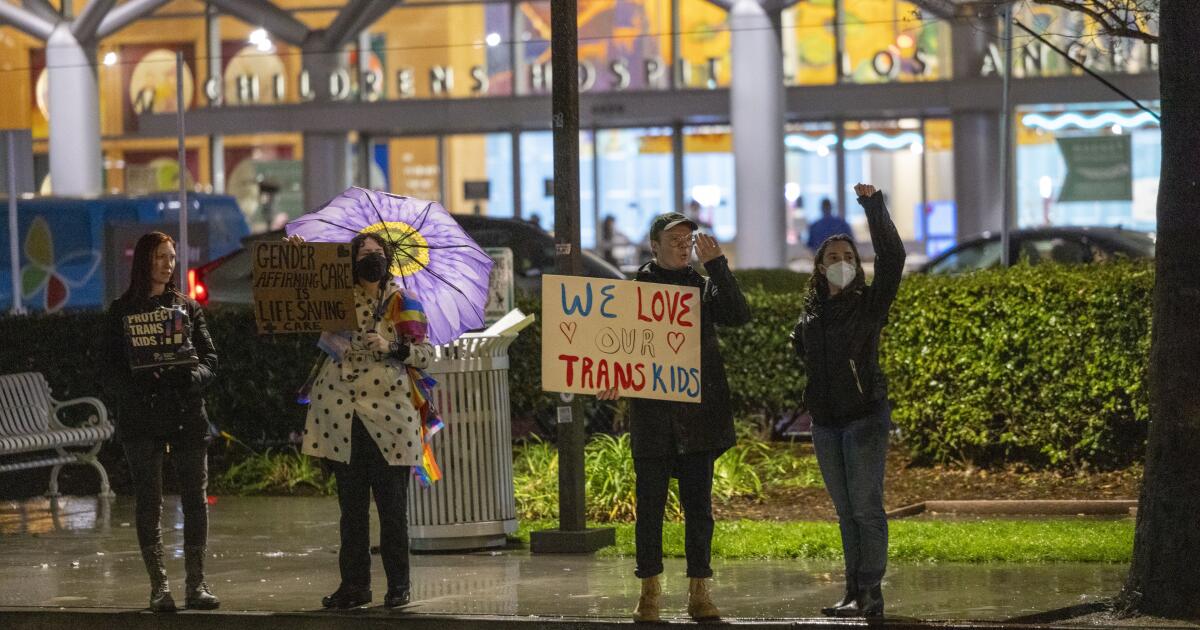
Under mounting pressure from the Trump administration, Children’s Hospital Los Angeles will shutter its longstanding healthcare program for trans children and young adults this summer, according to emails reviewed by The Times.

The Center for Transyouth Health and Development began telling its nearly 3,000 patient families of the closure on Thursday, saying there was “no viable alternative” that would allow the safety-net hospital to continue specialized care.

“There is no doubt that this is a painful and significant change to our organization and a challenge to CHLA’s mission, vision, and values,” hospital executives wrote to staff in a Thursday morning email.

The email said the decision to close the center on July 22 “follows a lengthy and thorough assessment of the increasingly severe impacts of federal administrative actions and proposed policies” that have emerged since the hospital briefly paused the initiation of care for some patients this winter.

The note sent shock waves through the tight-knit patient community, members of which had recently breathed a sigh of relief after CHLA reversed its brief ban on some care for new patients in February.

“We’re just disappointed and scared and enraged” said Maxine, the mother of a current patient, who declined to give her last name for fear of attacks on her son. “The challenge is how we break news to this kid who has had such a positive experience with everybody at Children’s.”

In the email, executives said that continuing to operate the center would jeopardize the hospital’s ability to care for “hundreds of thousands” of other children, noting that federal agencies including the Department of Justice, Health and Human Services, and the Centers for Medicare and Medicaid Services had warned of dire consequences for doctors and hospitals providing care opposed by the administration — including threat of prosecutions for doctors.

“These threats are no longer theoretical,” the note said. “Taken together, the Attorney General memo, HHS review, and the recent solicitation of tips from the FBI to report hospitals and providers of GAC strongly signal this Administration’s intent to take swift and decisive action, both criminal and civil, against any entity it views as being in violation of the executive order.”

The hospital’s Transyouth center is among the oldest and largest programs in the country, and among the only facilities that provides puberty blockers, hormones and surgical procedures for trans youth on public insurance.

But the hospital is also significantly more reliant on public funding than any other pediatric medical center in California — a situation that leaves it particularly exposed to the Trump administration. Roughly 40% of pediatric beds in Los Angeles are at Children’s.

“CHLA has a responsibility to navigate this complex and uncertain regulatory environment in a way that allows us to remain open as much as possible for as many as possible,” executives wrote. “In the end, this painful and difficult decision was driven by the need to safeguard CHLA’s ability to operate amid significant external pressures beyond our control.”

Protests erupted in February after the hospital briefly paused hormone therapy for some patients under 19, in response to President Trump’s executive order.

That move was reversed a few weeks later, amid pressure from patient families, LGBTQ+ civil rights groups and the state Department of Justice.

“Let me be clear: California law has not changed, and hospitals and clinics have a legal obligation to provide equal access to healthcare services,” Atty. Gen. Rob Bonta wrote on Feb. 5, days into the pause.

The California Justice Department did not immediately respond to requests for comment.

Thursday’s internal email from Children’s leadership notes the pressure from the federal government has risen at the same time that support from the state has ebbed.

“Over the past several months, California’s deepening budget crisis, President Trump’s executive orders, proposed federal legislation and rulemaking, and growing economic uncertainty have made the situation even more dire,” the email said.

Activists say the closure sets a dangerous precedent.

“CHLA needs to be a leader in this and stand up to the Trump administration, because other hospitals are taking note of what they’re doing,” said Maebe Pudlow, a trans nonbinary activist and Silverlake Neighborhood Council member who helped lead the protests when care was paused this winter.

“It feels very conveniently timed when everybody’s focus is on ICE raids happening in Los Angeles,” the activist went on. “I think it’s despicable.”

Maxine, the mom, was more measured.

“We’re slowly going underground, underground, underground,” the mother said. “You put one thing in place, and then you have to prepare for when that gets taken away. We’re just trying to stay a couple of steps ahead, sticking together with other parents, knowing who our allies are.”

Source link

Pattern of defiance: Israel expands settlements in face of Western pressure | Israel-Palestine conflict News

Israel’s international allies are growing louder in their condemnation of its war on Gaza and its continued construction of illegal settlements in the occupied West Bank.

United Nations experts, human rights groups and legal scholars have all previously told Al Jazeera that Israel is carrying out a genocide in Gaza and committing abuses that may amount to war crimes and crimes against humanity in the West Bank.

And yet less than two weeks after receiving a stern warning from its Western allies, Israel approved 22 illegal settlements in the West Bank, amounting to what has been described as the largest land grab since Israeli and Palestinian leaders inked the Oslo Peace Accords in 1993.

“Israel is all about showing [the world] who calls the shots. They are saying … you can condemn us all you want, but in the end, you will bow down to us and not the other way around,” said Diana Buttu, a legal scholar and political analyst focused on Israel and Palestine.

The Oslo Accords were ostensibly aimed at creating a Palestinian state, including the Gaza Strip and the West Bank, with occupied East Jerusalem as its capital.

However, in practice, Israel has continued to expand illegal settlements and render the two-state solution impossible, analysts told Al Jazeera.

Troubling pattern

Israel has often announced the building of new illegal settlements in response to signals of support for Palestinian statehood from the UN or its allies.

In 2012, Israel went so far as to approve 3,000 new settler homes in the occupied West Bank after the Palestinian Authority (PA) – the entity created out of the Oslo Accords to govern swaths of the West Bank – was granted non-member observer status in the UN General Assembly.

Last year, Israel’s far-right Finance Minister, Bezalel Smotrich, warned that a new illegal settlement would be built for every country that recognises a Palestinian state.

The announcement came after Spain, Norway, and Ireland took the symbolic step in May 2024.

“I certainly think there is a pattern where Israel responds to pressure regarding its occupation – or anything else – by announcing settler expansion,” said Omar Rahman, an expert focused on Israel and Palestine for the Middle East Council for Global Affairs.

“We see that pattern repeated over and over again,” he told Al Jazeera.

As global pressure mounts against Israel’s war on Gaza, Israel has continued to test the patience of its allies.

On May 21, Israeli troops fired warning shots at a group of European, Asian and Arab diplomats who were on an official mission to assess the humanitarian crisis in Jenin refugee camp, which has been subjected to a months-long attack and siege by the Israeli army since the start of the year.

“I don’t know where the red line is. It is clear that there is no red line,” said Buttu.

Justifying inaction

After Zionist militias ethnically cleansed some 750,000 Palestinians to make way for the state of Israel in 1948 – an event referred to as the “Nakba” or catastrophe – Israel has increasingly annexed and occupied the little that remains of Palestinian land.

Annexation of the occupied West Bank has accelerated in recent years thanks to far-right settlers who occupy positions in the Israeli government, said Khaled Elgindy, a visiting scholar at Georgetown University’s Center for Contemporary Arab Studies.

He believes Israel was always planning to approve the 22 illegal settlements irrespective of the joint statement issued by France, the UK and Canada, as it fit in with the state’s ultimate goal of expanding Jewish settlement of the occupied West Bank.

“Nobody can really think that if those countries didn’t issue an announcement that [further] annexation wasn’t going to happen. Of course, it was going to happen,” he told Al Jazeera.

Rahman, from the Middle East Council, believes Israel’s tactic of announcing pre-planned settlement expansion in the face of Western pressure simply aims to dissuade its allies from taking concrete action.

He suspects Canada, the UK and France will likely not slap on targeted sanctions against Israeli officials, as they have threatened to do, instead using the argument that any moves against Israel will lead to a backlash against Palestinians.

“[Canada, UK and France] may say they are acting for the preservation of the two-state solution by not doing anything to save the two-state solution,” Rahman told Al Jazeera.

Analysts believe that sanctions on Israel would be the only way to rescue the two-state solution and end Israel’s war on Gaza, but accept that comprehensive sanctions against the Israeli state would still be unlikely at this stage.

Instead, Western countries like Canada, France and the UK may target sanctions at the far-right ministers most associated with pro-settler policies, Smotrich and National Security Minister Itamar Ben-Gvir.

“These men … are trying to jam in everything they can do now because they know there is no guarantee they will maintain their positions of power indefinitely,” Elgindy told Al Jazeera.

Buttu fears that European countries will merely resort to more symbolic measures such as “recognising Palestine”, which will have little impact on the ground.

“By the time everyone gets around to recognising Palestine, there won’t be any land [for Palestinians] left,” she told Al Jazeera.

Source link

Aldi’s sell-out pressure washer that’s £58 cheaper than Karcher one is back this week

ALDI is bringing back its sell-out pressure washer just in time to blast your garden into shape this summer.

The special buys bargain is a whopping £58 cheaper than a similar Karcher model.

Small Pressure Washer

2

Aldi has brought back its Small Pressure Washer
Karcher K2 Power Control Home 110bar Electric Pressure Washer:</p>
<p>https://www.idealo.co.uk/compare/201095741/karcher-k-2-power-control.html

2

It retails for £58 less than a Karcher pressure washer

The bargain FERREX Small Pressure Washer lands in stores this Thursday, June 5, as part of the supermarket’s latest Specialbuy drop and it’s only £49.99.

It previously hit shelves in April and flew out fast, with shoppers rushing to get their hands on one.

Now it’s back by popular demand, and it’s expected to sell out all over again.

Packing a punch with a 1,400W motor and 110 bar max pressure, it’s perfect for washing away moss, grime and stubborn dirt from patios, driveways and garden furniture.

The compact gadget comes with a three-metre hose, spray gun, cleaning lance and extension, and it’s got a quick-connect system to easily swap attachments on the go.

Weighing just 5kg, it’s light enough to carry around the garden and small enough to tuck away neatly after use thanks to its integrated hose and cable holder.

It’s a budget-friendly alternative to big brands — the Karcher K2 Power Control Home pressure washer, which also offers 110 bar pressure, costs £108 at Screwfix right now.

That makes Aldi’s version a massive £58 cheaper.

Aldi’s Specialbuys are known for delivering big-name features at bargain prices, from kitchen gadgets to garden must-haves but stock is always limited, and when it’s gone, it’s gone.

You can call your nearest store ahead of making a trip and check they’ve got the pressure washer in stock.

Aldi’s Affordable Garden Gadgets: Potting Bench & More!

To stay ahead of the game, shoppers can also sign up to Aldi’s email alerts to get the inside scoop on upcoming deals.

And don’t forget it always pays to shop around.

Sites like Trolley.co.uk and PriceSpy let you compare prices across thousands of products and track price history, so you can be sure you’re getting the best bang for your buck.

Garden makeover

Aldi isn’t the only retailer offering great garden deals this summer.

In fact, a Home Bargains buy is said to add a touch of glamour to your garden.

The retailer is also selling a budget buy guaranteed to brighten up your space.

You can also add a stylish touch to your privacy fence with a B&M buy.

Or you can pick up another summer flower favourite from B&Q right now.

Shoppers can also nab a £9.99 novelty decor buy that adds character to flowerbeds.

£7 gardening gadget is also available from Home Bargains and is guaranteed to transform your lawn.

And Lidl customers can add a “whimsical” touch to their flowerbeds for just £3.

Or a £2 B&M buy transforms your patio into an “ambient” paradise this summer.

Its always worth comparing prices across different stores to make sure you’re bagging the best deals.

How to save money when shopping at Aldi

Unlike other major grocers, Aldi does not have a rewards or point card system but that does not mean you cannot save on your shop.

Every week the store releases a list of special buys, which are unique bargain products you find online at Aldi and in store.

The store releases a fresh range of deals every Thursday and Sunday, so be sure to check regularly to see what’s new.

Meanwhile, the store also regularly sells fruit and vegetables at highly discounted prices, as part of its ‘super six’ deal.

It also does weekly saving offers on typically pricey items such as meat and fish.

Plus, it’s worth keeping an eye out for products with red stickers on them.

These are added to items that have been reduced due to them being close to their best before date or slightly damaged.

The best time to get these reduced products is towards the end of the day, when you can get discounts worth up to 75%.

How to bag a bargain

SUN Savers Editor Lana Clements explains how to find a cut-price item and bag a bargain…

Sign up to loyalty schemes of the brands that you regularly shop with.

Big names regularly offer discounts or special lower prices for members, among other perks.

Sales are when you can pick up a real steal.

Retailers usually have periodic promotions that tie into payday at the end of the month or Bank Holiday weekends, so keep a lookout and shop when these deals are on.

Sign up to mailing lists and you’ll also be first to know of special offers. It can be worth following retailers on social media too.

When buying online, always do a search for money off codes or vouchers that you can use vouchercodes.co.uk and myvouchercodes.co.uk are just two sites that round up promotions by retailer.

Scanner apps are useful to have on your phone. Trolley.co.uk app has a scanner that you can use to compare prices on branded items when out shopping.

Bargain hunters can also use B&M’s scanner in the app to find discounts in-store before staff have marked them out.

And always check if you can get cashback before paying which in effect means you’ll get some of your money back or a discount on the item.

Source link

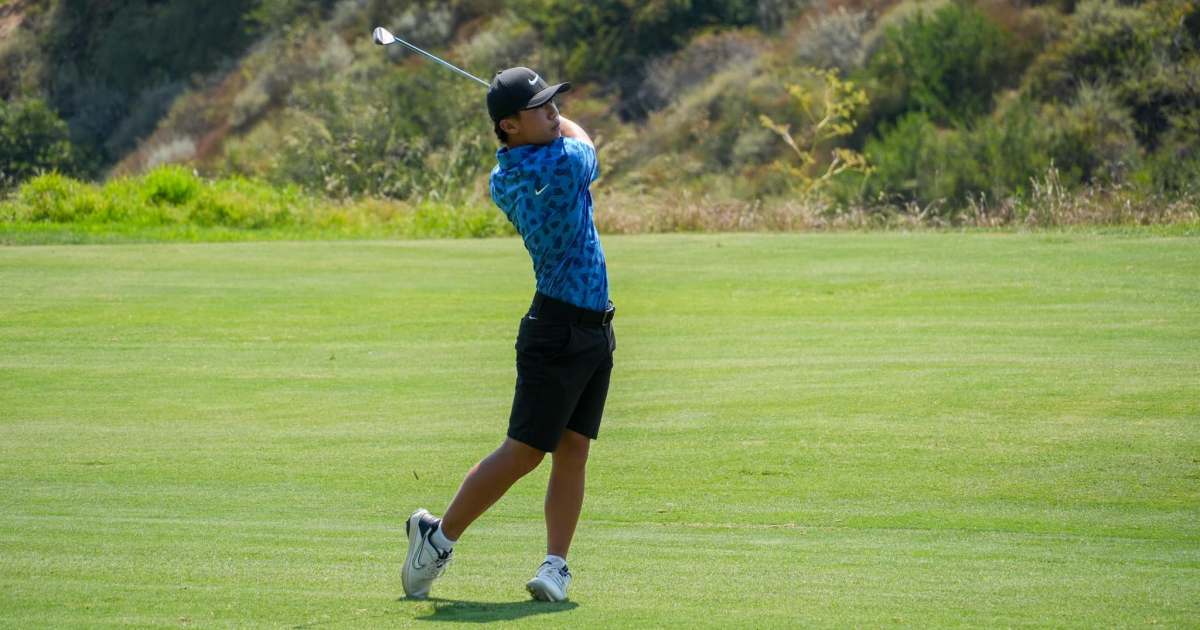
Prep talk: Freshman golfer Jaden Soong of St. Francis loves pressure

Jaden Soong, a freshman golfer at St. Francis High, thrives under pressure.

“I will say I like pressure,” he said.

Twice in the last two weeks, he has won playoffs to keep his season going. But the story of his first playoff win is comedy at its best.

He had left the Temecula Creek Golf Club at the Southern Section individual championships after concluding he had failed to qualify for the SCGA regionals and stopped at Jack in the Box to get food for the ride home. Then he got a phone call from a friend: “Hey dude, we’re in a playoff.”

He was 17 minutes away from the course and needed to be back in 10 minutes. “We hauled it,” he said.

Thankfully, there were no police with radar guns in the vicinity as he was driven back to the course.

The playoff had already started when he arrived. Players were in the fairway. He had no time to change into his golf shoes, so he played in his Nike Air Force shoes. He got a par on the first hole, then a birdie to win the playoff and advance. Last weekend, he won another playoff to reach the state championships on Tuesday at Poppy Hills in Pebble Beach.

The 14-year-old is ready for anything.

This is a daily look at the positive happenings in high school sports. To submit any news, please email [email protected].

Source link

Why is Israel now facing pressure from some of its Western allies? | Israel-Palestine conflict

Spain hosts key European and Arab nations to pressure Israel to halt Gaza assault.

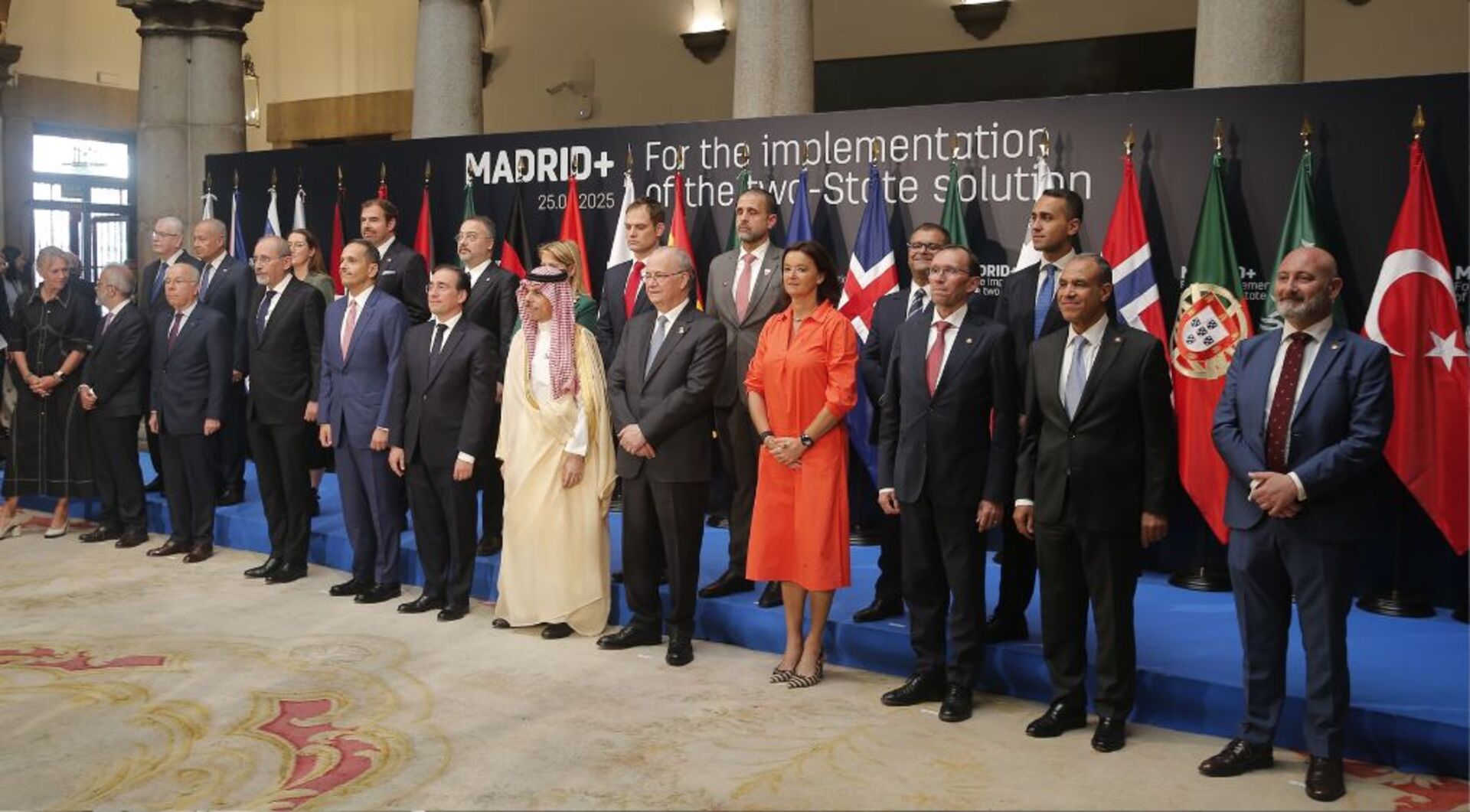
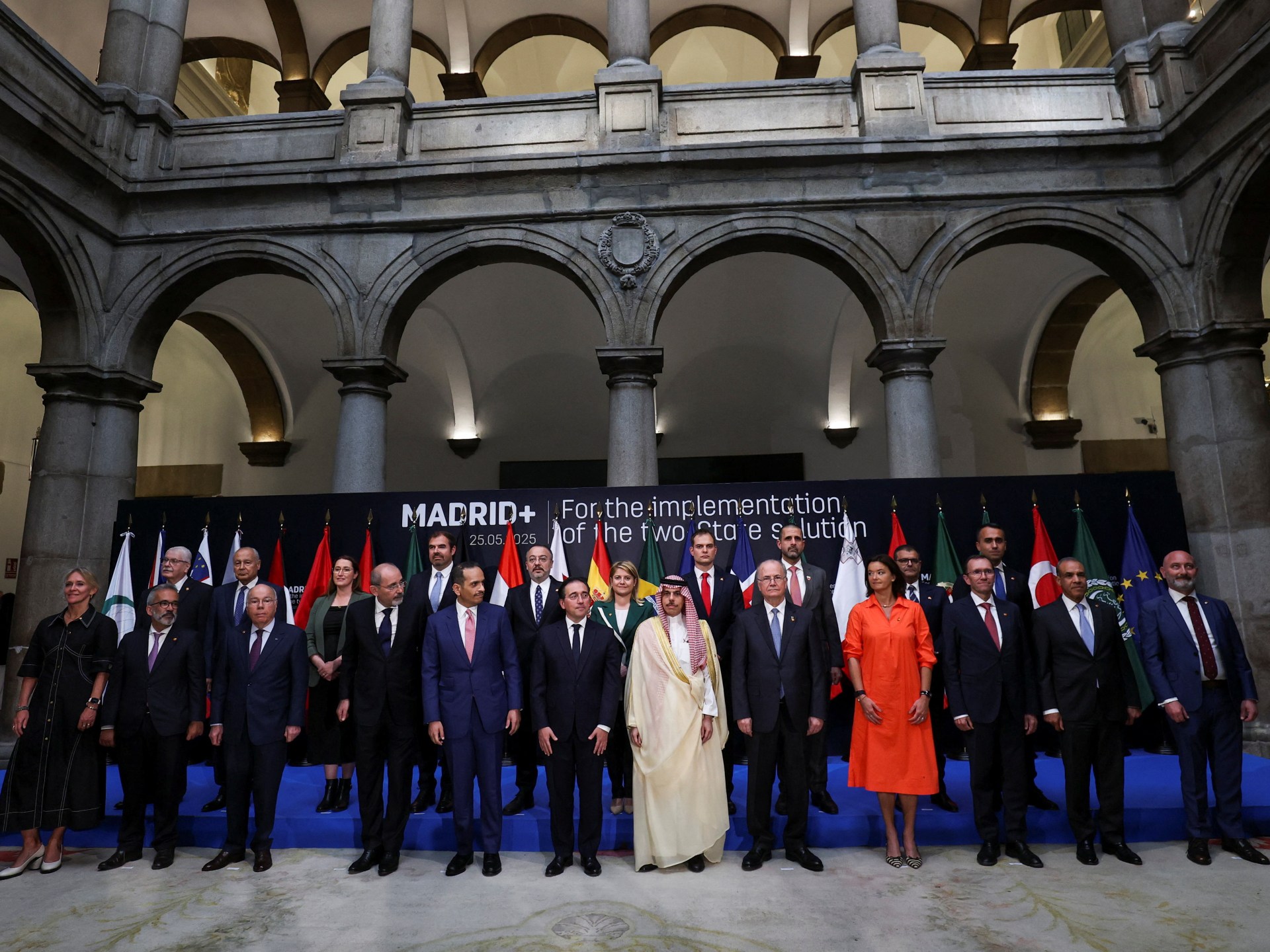
The Madrid Group has convened in Spain’s capital for a fifth time, in a meeting attended by major European and Arab nations.

Pressure on Israel this year has been ramped up, with Spain calling for an arms embargo on Israel and the imposition of sanctions on individuals who obstruct a two-state solution to resolve the Palestinian-Israeli conflict.

The United Kingdom has paused trade talks and sanctioned a number of Israeli settlers in the occupied West Bank. Canada and France have also threatened punitive measures.

And the European Union – Israel’s biggest trade partner – is reviewing its landmark Association Agreement covering trade and political dialogue.

But after 20 months of Israel’s destruction of Gaza, why is this happening now?

And without changes on the ground for Palestinians, are these actions anything more than diplomatically symbolic?

Presenter: Tom McRae

Guests:

Lynn Boylan – Member of European Parliament, and chair of the delegation of relations with Palestine

Mouin Rabbani – Non-resident fellow at the Center for Conflict and Humanitarian Studies

Saul Takahashi – Former deputy head of the Office of the United Nations High Commissioner for Human Rights in occupied Palestine

Source link

Spain hosts European, Arab nations to pressure Israel to halt Gaza assault | Israel-Palestine conflict News

The international community should look to impose sanctions on Israel to stop its war in Gaza, Spain’s foreign minister has said, ahead of a Madrid meeting of European and Arab nations, urging a halt to Israel’s punishing offensive in which Palestinian deaths and the spread of starvation are increasing each day.

The high-level talks on Sunday are the fifth official meeting of what is known as “The Madrid Group”.

Countries in the European Union that Israel had long counted on as close allies have been adding their voices to growing global pressure after it expanded military operations in the besieged and bombarded Gaza Strip.

A nearly three-month aid blockade has worsened shortages of food, water, fuel and medicine in the Palestinian enclave, which has been devastated and ravaged due to Israel’s relentless war that followed the Hamas-led October 7 attack in 2023.

Barely any aid has crossed into Gaza since Israeli Prime Minister Benjamin Netanyahu said a week ago that Israel would allow limited aid in to assuage concerns from allies.

The United Nations has said the amount of aid allowed in so far is a “drop in the ocean”, while some aid groups have described Netanyahu’s announcement as a  “smokescreen”.

Aid organisations say the trickle of supplies Israel that allowed to enter in recent days falls far short of needs, which is between 500-600 trucks a day. Israel has allowed some 100 trucks carrying aid into Gaza since Wednesday, officials say.


Madrid, Spain is hosting 20 countries as well as international organisations on Sunday with the aim of “stopping this war, which no longer has any goal”, Spanish Foreign Minister Jose Manuel Albares said.

“In this terrible moment, in this humanitarian catastrophe in Gaza, we aim to … stop this war … [and to] break the blockade of humanitarian assistance that must go in unimpeded,” Albares told Al Jazeera ahead of the meeting.

‘We must consider sanctions’

The Madrid meeting will serve as preparation for a high-level UN conference on the two-state solution, which France and Saudi Arabia will host in New York on June 17.

“We want to create momentum” ahead of the UN conference, Albares said, so that “everyone” can recognise Palestine as an independent state.

“That conference in New York must be a big moment to push towards recognition of the state of Palestine,” he added.

A previous such gathering in Madrid last year brought together countries including Egypt, Jordan, Qatar, Saudi Arabia and Turkiye as well as European nations such as Norway and the Republic of Ireland that have recognised a Palestinian state.

Sunday’s meeting, which also includes representatives from the Arab League and the Organisation of Islamic Cooperation, will promote a two-state solution to the Israeli-Palestinian conflict.

After the EU decided this week to review its cooperation deal with Israel, Albares said, “We must consider sanctions, we must do everything, consider everything to stop this war.”

Germany’s Deputy Foreign Minister Florian Hahn on Sunday also warned about the impact of Gaza’s deteriorating, “unbearable” humanitarian crisis, calling for an immediate ceasefire and diplomatic solution.

Hahn stressed that ending the war in Gaza and creating a path for diplomatic efforts toward a political solution is currently one of German foreign policy’s main priorities.

Al Jazeera’s Hashem Ahelbarra, reporting from Madrid, said Sunday’s meeting is going to be “crucial”.

Members are going to be “seeking the potential of further political talks that could be conducive to the Israelis coming along with the Palestinians, discussing the need to end the war and achieve a Palestinian state”, Ahelbarra said.

Israel’s deadly assault has killed almost 54,000 people, according to Gaza’s Health Ministry, mostly women and children.

Source link

Oil under pressure as OPEC+ weighs further output hike ahead of US-Iran talks

By Tina Teng

Published on
23/05/2025 – 8:14 GMT+2

ADVERTISEMENT

Crude oil prices fell for a third consecutive trading day on Thursday ahead of the US-Iran nuclear talks. Traders are growing concerned about the possible return of oil supply from Iran, which holds around one-third of the world’s oil reserves.

Adding to the pressure, a Bloomberg report stated that the Organisation of the Petroleum Exporting Countries and its allies (OPEC+) is considering a third consecutive production hike in July, compounding fears of an oversupplied market.

Oil prices continued to decline during Friday’s Asian session. As of 4:40 am CEST, Brent futures were down 0.59% to $64.06 per barrel, while West Texas Intermediate (WTI) futures fell 0.6% to $60.83 per barrel—both touching their lowest levels in over a week.

Potential oversupply overshadows geopolitical tensions

Crude prices have experienced notable volatility in recent weeks as market participants weigh rising geopolitical tensions against mounting supply from major oil-producing nations. Broader macroeconomic factors—such as easing US-China trade tensions and renewed selling in US Treasuries—have also been influencing oil market movements.

Earlier in the week, prices briefly spiked following a CNN report that Israel was preparing to launch strikes against Iran’s nuclear facilities, citing intelligence from US sources. However, the rally proved short-lived, with analysts suggesting the warning may have been a strategic move by the US to exert pressure on Iran ahead of the nuclear negotiations.

The geopolitical boost was quickly overshadowed on Wednesday by data showing a surge in US crude inventories. According to the Energy Information Administration (EIA), US oil stockpiles rose to 443.2 million barrels in the week ending 16 May—the highest level since July 2024. The report also indicated that net US crude imports had increased for a third consecutive week, while domestic demand remained weaker than expected.

OPEC+ may accelerate production hike

News about OPEC+’s potential acceleration in production hike sent the oil price down further on Thursday. The oil production cartel is reportedly considering hiking crude output by 411,000 barrels per day (bpd) in July. The decision is yet to be finalised on 1 June when the group holds the next meeting.

The group, which accounts for around 40% of global oil supply, has jointly reduced production by approximately 2.2 million bpd in 2023. The quicker-than-expected phased rollback began with a 135,000 bpd increase in April, tripling to 411,000 bpd in May and June. The acceleration is seen as a punitive measure against members which failed to comply with agreed production quotas, with Kazakhstan and Iraq identified as recent overproducers.

Crude prices have consistently fallen following OPEC+ announcements of larger-than-expected production increases in both April and May. However, the potential July decision may already be priced in by markets—unless the group surprises traders with an even more aggressive supply boost.

Demand outlook remains weak

The demand outlook remains fragile amid ongoing concerns over slowing global growth, particularly driven by the US tariffs. Crude prices had previously dropped to a four-year low on 9 April and again on 5 May. The oil market rebounded following the US and China’s trade talks earlier this month, when the world’s two largest economies reached an agreement to pause high tariffs on each other for 90 days.

While near-term pressure remains supply-driven, there is cautious optimism that a sustained recovery in market sentiment, driven by further progress in US tariff negotiations, could support a rebound in oil demand.

“While the immediate pressure comes from the supply side, I believe that in the longer term, further progress on US tariff negotiations with key partners could revive demand and offer more meaningful support for oil,” Dilin Wu, a research strategist at Pepperstone Australia, said.

Source link

Is European pressure on Israel likely to make a difference? | European Union News

The UK pauses trade talks as the EU threatens to review ties with Israel.

Israel is facing condemnation from some of its strongest allies over its increasing aggression in Gaza.

The UK is cancelling new trade talks and the EU is reviewing old agreements, while both are imposing sanctions on Israeli settlers in the occupied West Bank.

The two powers say they cannot stand by while Israel expands military operations, increases air strikes and starves Palestinians in Gaza with its total blockade.

But critics are asking why they did not step in before.

Will the new measures be imposed?

And most importantly: Will any of this change the reality on the ground for the Palestinians?

Presenter:

Folly Bah Thibault

Guests:

James Moran – Former EU ambassador to Egypt and Jordan

Yossi Mekelberg – Senior consulting fellow at Chatham House

Zaid Belbagi – Managing partner of Hardcastle Advisory and political commentator

Source link

EU and UK pile pressure on Russia with parallel sanctions | Russia-Ukraine war News

Brussels and London acting ‘in concert’ after Trump failed to secure ceasefire promise from Putin.

The European Union and the United Kingdom have announced coordinated packages of sanctions against Russia in a bid to ramp up pressure on President Vladimir Putin to end the war against Ukraine, as diplomatic momentum to reach a ceasefire accelerates.

The packages, which were unveiled Tuesday, will see both the EU and the UK taking aim at Russia’s so-called shadow fleet of oil tankers that illicitly transport oil to circumvent Western restrictions, with Brussels targeting 189 ships.

The UK’s wide-ranging package will also target the supply chains of Russian weapons systems, including Iskander missiles, Kremlin-funded information operations, and financial institutions that help Russia evade sanctions.

European Commission President Ursula von der Leyen said an 18th package of sanctions was already being prepared by the EU, to follow the newly adopted 17th, with further meaningful measures.

“It’s time to intensify the pressure on Russia to bring about the ceasefire,” she posted on X, after a phone call with Ukrainian President Volodymyr Zelenskyy.

Reporting from London, Al Jazeera’s Jonah Hull noted that the EU and UK were “acting in concert”, simultaneously releasing the new sanctions after sealing a new defence and security pact during reset talks in London the previous day.

Responding to the sanctions, Russian Foreign Ministry spokesperson Maria Zakharova said on Tuesday that Russia would never bow to ultimatums from anyone, adding that it was clear Europe wanted to re-arm Ukraine to continue the war.

The coordinated action came a day after United States President Donald Trump failed to secure a promise for a ceasefire in Ukraine from Putin in the pair’s highly anticipated phone call on Monday – without any corresponding steps from Washington, despite intense lobbying from European leaders and Zelenskyy.

‘Buying time’

Eager to set the terms, Putin said after the call that Moscow was ready to work with Ukraine on a memorandum about a future peace accord, saying that discussions on the memorandum would include the principles of a settlement and the timing and definitions of a possible ceasefire.

The Kremlin’s Zakharova told reporters “the ball is in Kyiv’s court,” adding that she hoped Ukraine would take a constructive position on the proposed memorandum for the sake of its own “self-preservation”.

Zelenskyy said on Telegram on Tuesday that it was “obvious that Russia is trying to buy time to continue the war and occupation”.

“We are working with partners to put pressure on the Russians to behave differently,” he added, in an apparent reference to further international sanctions on Russia.

After announcing their measures, Brussels and London both suggested that more sanctions could follow, and France’s Foreign Minister Jean-Noel Barrot called for further action to “push Vladimir Putin to put an end to his imperialist fantasy”.

Germany’s Defence Minister Boris Pistorius said: “Putin is clearly playing for time; unfortunately we have to say Putin is not really interested in peace.”


Source link

‘Fight back’: Pedro Pascal urges Cannes to resist US political pressure | Donald Trump News

Actory calls on filmmakers to ‘keep telling the stories, keep expressing yourself and keep fighting to be who you are’.

Chilean-American actor Pedro Pascal has called on members of the film industry to “fight back” and keep expressing themselves amid what he appeared to describe as a political climate of fear in the United States.

“F*** the people that try to make you scared. And fight back. This is the perfect way to do so in telling stories. Don’t let them win,” said 50-year-old Pascal, who was at the Cannes film festival for the premiere of “Eddington”.

“Fear is the way that they win, for one. And so keep telling the stories and keep expressing yourself and keep fighting to be who you are,” he said.

“Eddington” stars Pascal as a small-town mayor campaigning against a down-on-his-luck sheriff played by Joaquin Phoenix in a New Mexico town where tensions are simmering over COVID-19 mask policies and the Black Lives Matter protests.

Pascal, known for his role in dystopian video-game adaptation “The Last of Us”, added that it was “far too intimidating” for him to address a question about US President Donald Trump’s immigration policy.

“It’s very scary for an actor participating in a movie to sort of speak to issues like this,” he said.

“I’m an immigrant. My parents are refugees from Chile. We fled a dictatorship, and I was privileged enough to grow up in the US after asylum in Denmark … I stand by those protections,” the 50-year-old told a news conference in Cannes.

Trump has launched a crackdown on irregular immigration and has also detained and moved to deport a number of legal permanent US residents, his policies triggering a rash of lawsuits and protests.

Trump has made himself one of the main talking points in Cannes this week after announcing on May 5 that he wanted 100 percent tariffs on movies “produced in foreign lands“.

Acting legend Robert de Niro, who accepted a Cannes lifetime achievement award on Tuesday, also urged an audience of A-list directors and actors to resist “America’s philistine president”.

Source link