president

Venezuelan Gov’t Resumes IMF, World Bank Ties, Appoints New Central Bank President

Former Venezuelan President Hugo Chávez denounced the IMF and the World Bank as “weapons of US imperialism.” (AFP)

Caracas, April 17, 2026 (venezuelanalysis.com) – Venezuela has reestablished ties with the International Monetary Fund (IMF) after a seven-year hiatus.

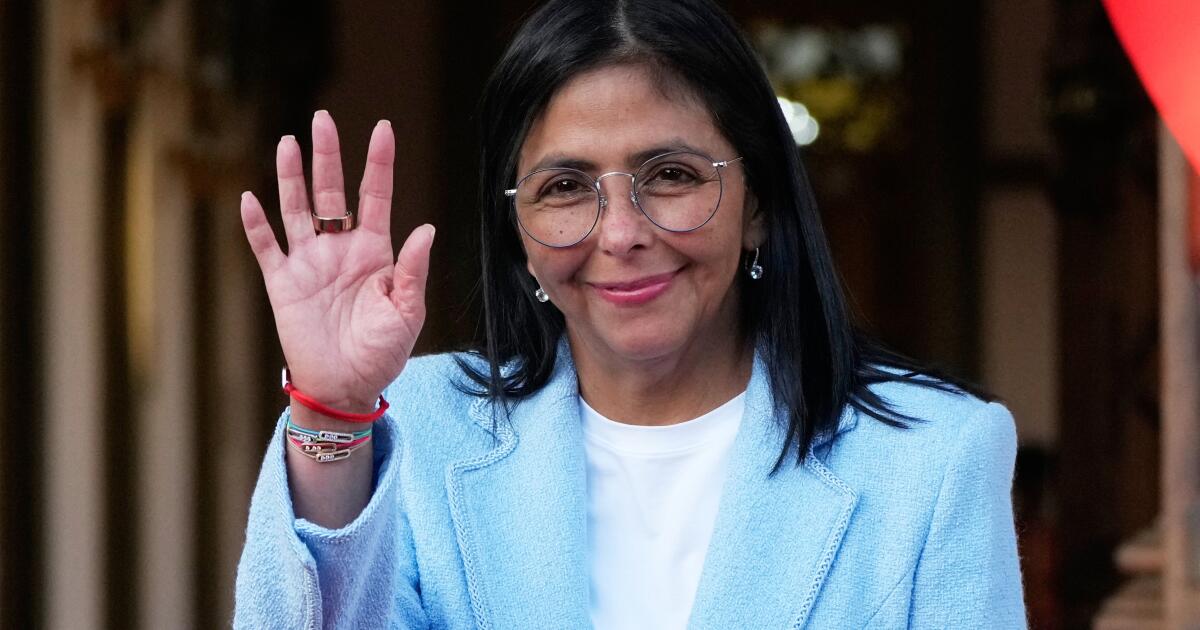
Acting President Delcy Rodríguez confirmed the news on Thursday night, calling it a “great achievement of Venezuelan diplomacy” and a “very important step” for the Venezuelan economy.

“This is the result of months-long negotiations that the Venezuelan far-right unsuccessfully tried to sabotage,” she stated in a televised broadcast. “Good has triumphed.”

The IMF announced the “resumption of dealings” with Venezuela in a statement on Thursday, stating that the decision was “guided by the views of IMF members representing a majority of the total voting power.”

Managing Director Kristalina Georgieva stated earlier this week that the IMF had been approached by Venezuelan authorities at a technical level and that the Caribbean nation “desperately needs help.”

The World Bank likewise issued a statement disclosing the resumption of dealings with the acting Rodríguez government. Venezuela’s last loan with the institution concluded in 2005.

Venezuela had its relationship with the IMF suspended in 2019 after the first Trump administration and allies recognized the self-proclaimed “interim government” led by Juan Guaidó as the Caribbean nation’s legitimate authority.

In March, the White House recognized Rodríguez as Venezuela’s “sole leader” and later withdrew sanctions against her, while US officials spoke of efforts to reincorporate Caracas into the IMF fold.

Though relations were officially frozen in 2019, Venezuela had sought to distance itself from the Washington-based institution more than a decade prior. In 2007, former President Hugo Chávez formally withdrew Venezuela from the IMF and the World Bank, calling them “weapons of US imperialism.”

Chávez repeatedly denounced the US-controlled multilateral institutions’ role in promoting debt and underdevelopment in Global South countries and pushed for the creation of lending institutions as part of Latin American integration efforts. Under Chávez’s predecessors, Venezuela implemented draconian IMF-conditioned structural adjustment policies that saw over half of Venezuelans living in poverty by 1998.

Last year, President Nicolás Maduro stated that Venezuela had “broken the shackles” of the World Bank and the IMF and was instead building its own “self-sustainable model and relations with a new world.”

Venezuela’s priority will be accessing US $5.1 billion in Special Drawing Rights (SDR) that it is entitled to as an IMF member. In 2021, the lending institution issued $650 billion amid the Covid-19 pandemic as an effort to help countries boost reserves and address fiscal needs. 

However, Venezuela was blocked from accessing the funds as the IMF refused to rule on the country’s legitimate authorities.

Caracas’ reengagement with the IMF and the World Bank also comes amid growing speculation about the fate of Venezuela’s sizable foreign debt. The Caribbean nation owes as much as $170 billion from a combination of defaulted bonds, unpaid loans, and international arbitration awards that have accrued interest for years as US sanctions battered Venezuela’s economy and cut it off from credit markets.  

Venezuelan bonds have been rallying in recent weeks following Washington’s rapprochement with Caracas as creditors bet on a debt restructuring deal that can bring significant windfalls.

Since the January 3 US military strikes and kidnapping of President Nicolás Maduro, the Rodríguez administration has fast-tracked a number of pro-business reforms, including in the hydrocarbons and mining sectors. Upon enacting the Mining Law on Thursday, the acting president thanked Trump, Rubio, and other administration officials for their “good disposition” in establishing “cooperation.”

Rodríguez recently announced further plans to overhaul the South American country’s labor, pension, and tax legislation, while also identifying state assets that are “not strategic.” The Cisneros Group, one of Venezuela’s largest business conglomerates, recently announced the raising of funds ahead of expectations of a “wave of privatizations.”

Since January, the Trump administration has imposed control over Venezuelan oil revenues, mandating that royalties, taxes, and dividends be deposited in US Treasury accounts. In a congressional hearing on Thursday, Assistant State Secretary Michael Kozak stated that “around $3 billion” have moved through the dedicated accounts. 

He did not specify what portion of the revenues has been returned to Caracas, only that the funds had been used to pay public sector incomes and import oil industry inputs, while blocking any transactions with China, Cuba, and Iran.

Earlier this week, the Treasury’s Office of Foreign Assets Control (OFAC) issued new restricted licenses allowing transactions with the Venezuelan Central Bank and public banks that are expected to facilitate the partial return of seized Venezuelan export revenues.

On Thursday, Venezuelan authorities additionally announced a change in the Central Bank leadership, with Luis Pérez replacing Laura Guerra as president of the institution. Guerra had been appointed to the post in April 2025 by Maduro.

Pérez is an economist who had served on the BCV board of directors since 2018. In his social media profile, he describes himself as a cryptocurrency enthusiast.

Edited by Lucas Koerner in Fusagasugá, Colombia.


Source link

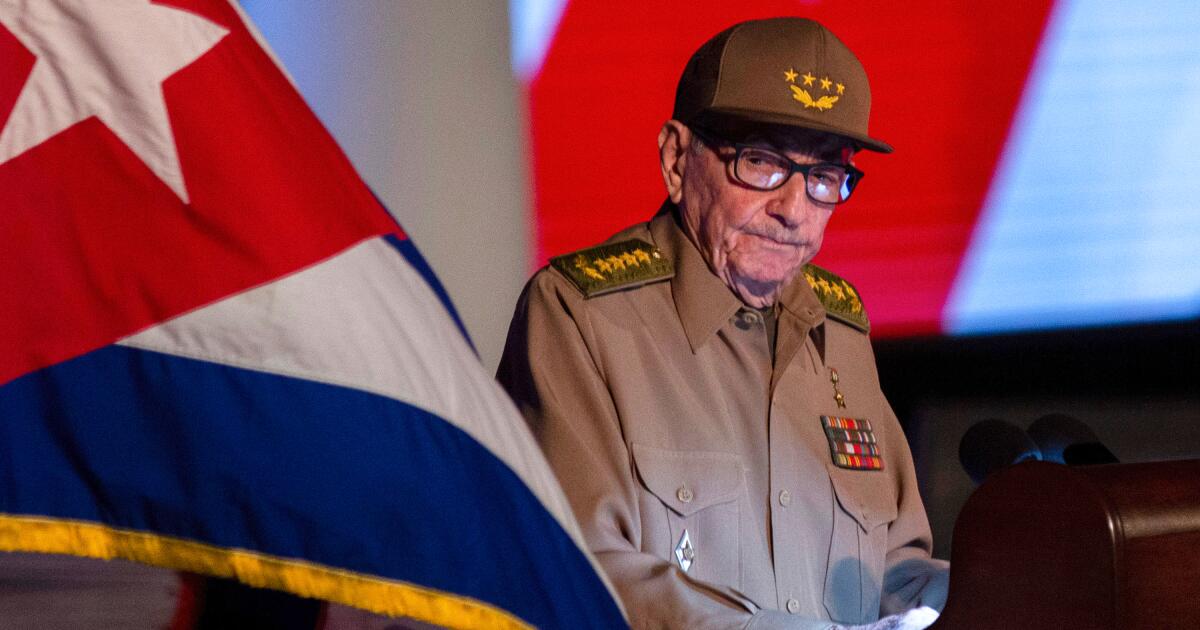
Cuban president defiant amid US pressure and energy blockade threats | Conflict News

Miguel Diaz-Canel marks anniversary of socialist revolutionary declaration under threat of US attacks.

Cuban President Miguel Diaz-Canel has said that his country does not seek conflict with the United States but is prepared to fight if necessary, as Cuba marks the anniversary of its socialist revolutionary character amid the threat of US attacks.

Diaz-Canel struck a defiant tone on Thursday in remarks before a crowd marking the 65th anniversary of Fidel Castro’s declaration of the socialist nature of the Cuban Revolution and the failed invasion at the Bay of Pigs by forces aligned with the US the day after.

Recommended Stories

list of 3 itemsend of list

“The moment is extremely challenging and calls upon us once again, as on April 16, 1961, to be ready to confront serious threats, including military aggression,” Diaz-Canel said. “We do not want it, but it is our duty to prepare to avoid it and, if it becomes inevitable, to defeat it.”

President Donald Trump has threatened that the US could overthrow the Cuban government, a longtime source of ire for Washington, and has ratcheted up energy restrictions meant to squeeze the island’s economy.

“We may stop by Cuba after we finish with this,” Trump said earlier this week, stating that his attention could turn to Cuba after the end of the US-Israel war on Iran.

A US energy blockade and an end to oil shipments from Venezuela after the US abducted former Venezuelan President Nicolas Maduro in January have caused deteriorating conditions on the island. Fuel shortages and energy blackouts have roiled the island for weeks, heaping strain on workers and businesses.

Even before those increased restrictions, Cuba’s economy had suffered from decades of economic embargo from the US, along with economic mismanagement and political repression that prompted many Cubans to leave the country.

A vote at the United Nations in 2025 demanding an end to the US embargo passed with 165 votes in favour and seven against, including the US, Israel, Argentina, and Hungary. The resolution has been passed annually for more than 30 years.

“Cuba is not a failed state. Cuba is a besieged state,” Diaz-Canel said on Thursday. “Cuba is a state facing multidimensional aggression: economic warfare, an intensified blockade and an energy blockade.”

Source link

Column: Pay attention to the deficit, even if Trump won’t

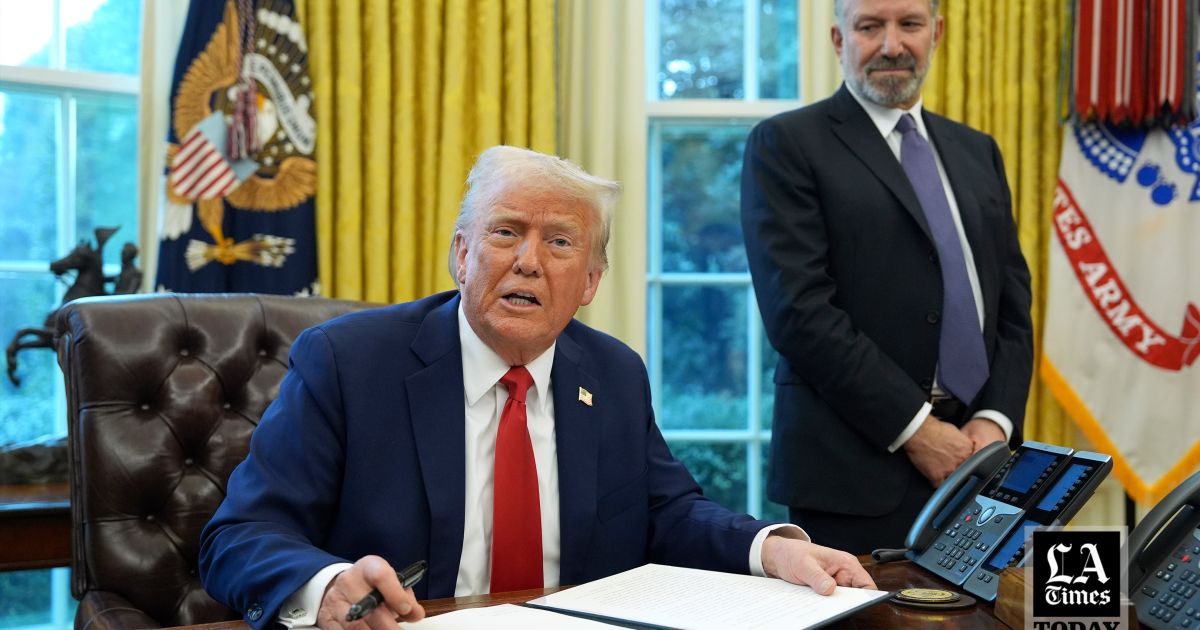
Americans could be forgiven if they’re unaware that President Trump recently performed one of his most essential tasks and sent his annual budget request to Congress, though months late and stunningly incomplete.

After all, so much else has been dominating the news lately: the Mideast war that Trump promised not to start. Price rises he’d vowed to end. His repeated insults of Pope Leo XIV. His portraying himself as Jesus Christ, then lying about having done so. An incompetent attorney general to fire. And the president’s actual priorities — plans for a $400-million White House ballroom and a massive “Triumphal Arch” nearby!

It’s a lot.

Once again, as in Trump’s first term, the public and press are inattentive to the nation’s fiscal health relative to past years. But that reflects the president’s own disengagement with reconciling spending and revenue — this from a president many Americans voted for based on his purported prowess as a businessman. For decades back to Ronald Reagan’s time, so-called deficit wars in Washington were a big story. Now, even Republicans in Congress complain of Trump’s absence from the fiscal fray as they struggle to belatedly finish this year’s budget work that was due last fall, and to end a weeks-old partial government shutdown, before turning to the budget for the fiscal year starting Oct. 1.

Yet it’s worth paying attention to U.S. budgets even if Trump won’t, for the sake of our children and grandchildren who’ll inherit the bills. In one document, a federal budget reflects the nation’s priorities. And these days, in the perennial guns-versus-butter debate, Trump has made his feelings all too plain.

“We’re fighting wars,” he told a group at the White House on April Fools’ Day. “We can’t take care of day care … Medicaid, Medicare, all these individual things.”

Forget that Trump swore to end wars. Or that last year, long before he went to war against Iran, he cut $1 trillion over 10 years from Medicaid and other healthcare programs in his misnamed “One Big Beautiful Bill.”

Yes, budgets can be boring, especially to a president with a famously short attention span. Trump and many of us Americans are distracted constantly by all the shiny objects he throws at the national consciousness by his words, acts and social media postings at all hours.

Yet the budgetary trend is clear to anyone bothering to look: As president, Trump is once again exacerbating the nation’s unsustainable course of piling up debt. According to the nonpartisan Congressional Budget Office, among other credible sources, debt is now approaching the highest level in U.S. history, which was reached during World War II. It already surpasses the size of the entire economy and threatens higher borrowing costs and reduced investments.

For all the achievements Trump likes to claim — ending eight wars in a year! — here’s one that’s real: He is on a path to break his own record for the most debt in a single presidential term, $8.4 trillion in Trump 1.0, which was nearly double the increase under President Biden.

Need further proof of Trump’s brazen mendacity? Of course you don’t, but here it is: In the face of the well-documented budget record, Trump declared both this year and last year to a joint session of Congress, on national television, that he would balance the federal budget —“overnight,” he said in February.

The inequitable tax cuts and big spending increases for the military and immigration crackdowns that Trump and the Republican-controlled Congress enacted last year are significantly greater than in his first term, and are driving up the debt despite Republicans’ deep healthcare cuts. Just months after Trump took office, the ratings firm Moody’s downgraded the nation’s sterling credit rating for the first time in more than a century.

And now, in his new budget request, Trump seeks to inflate military spending from under $1 trillion when he regained office to $1.5 trillion, for the biggest year-to-year increase in military budgets since World War II.

This fiscal irresponsibility is happening at the worst possible time. For the last quarter of the 20th century, presidents and Congresses of both parties annually debated how to reduce deficits and several times reached consequential multi-year deals, culminating during the second Clinton term in four straight years of surpluses. (Those surpluses ended — wait for it — with Republicans’ tax cuts and war spending during the George W. Bush administration.)

Politicians back then were moved not just by the deficits of their time — deficits that, as a share of the economy, were less than half what they are now. They also were responding to experts’ warnings of a demographic tsunami by the 2020s: With the aging of the huge baby-boomer population, spending for Social Security, Medicare and Medicaid would greatly increase even as the workforce whose payroll taxes support those programs shrank. Today the number of people 65 or older is almost three times what it was 50 years ago, and rising.

This reckoning is upon us, though you wouldn’t know it as Trump keeps calling for cutting revenue and spending more for lawless wars, immigration raids and monuments to himself. Barring bipartisan action, in 2033 Social Security’s retirement fund and Medicare’s hospital fund will no longer be able to cover beneficiaries’ full claims, according to their trustees’ annual report, necessitating reduced benefits or shifts of money from other worthy programs.

Trump did put Vice President JD Vance in charge of a “war on fraud.” But that holds about as much promise as Elon Musk’s fiscal fiasco — remember DOGE? — that cost money instead of cutting $2 trillion as promised.

Like other problems, Trump likely will leave the fiscal follies to his successor, who, should he or she win two terms, would preside as Social Security and Medicare become insolvent. I’ve yet to hear any of the early 2028 presidential aspirants — or Trump — address or be asked about that.

Let the debate, belatedly, begin.

Bluesky: @jackiecalmes
Threads: @jkcalmes
X: @jackiekcalmes

Source link

Trump’s ‘Praise be to Allah’ posts? They’re just plain weird

Praise be to Allah.

For the second time in two weeks, President Trump used that phrase in a post about the Israel-U.S. war against Iran.

Crowing about the alleged destruction of Iran’s planes, ships and bases in a Truth Social post Saturday, he emphasized his greatest victory in the monthlong campaign: “Most importantly, their longtime ‘Leaders’ are no longer with us, praise be to Allah!”

Making sense of anything Trump says in the heat of posting is a fool’s errand, but it’s also entirely necessary. Sane wash his words we must, because no matter how unhinged or infantile, the world’s safety, fortunes and future are inextricably tied to America’s next move, and therefore to his next move.

So what is Trump trying to communicate, or provoke, by using the Arabic word for God, as Muslims do? Let’s translate.

The first and most likely explanation: “Praise be to Allah” was meant to disparage his adversaries in the Islamic Republic of Iran. They are Muslim, they refer to God as “Allah,” therefore, he will turn their phrasing against them. Word bombs to accompany the deadly ones falling in Iran and Lebanon.

All leaders deploy tough talk in times of war, but Trump’s posts read more like the feverish ramblings of mad Col. Kurtz (Marlon Brando) in “Apocalypse Now” — “You’re an errand boy sent by grocery clerks to collect a bill” — than Winston Churchill’s galvanizing call to arms against the Nazis, “We shall fight on the beaches…”

Unlike the fictional Kurtz or the real Churchill, Trump has no military experience. He avoided the Vietnam War draft with four student deferments and one medical deferment for bone spurs. An area where he is experienced? Baiting foes. Antagonizing enemies, genuine or imagined, is a Trump specialty, be it from the Oval Office, on the campaign trail, or in the before times, as a reality TV personality.

Painting Muslims as the Other is nothing new for Trump, (unless they come bearing luxury airliners as gifts — then they’re friends). The same goes for others in his party. Since the U.S. and Israel attacked Iran on Feb. 28, Rep. Andy Ogles (R-Tenn.) posted that Muslims don’t belong in American society. Rep. Randy Fine (R-Fla.) wrote, “We need more Islamophobia, not less. Fear of Islam is rational.” And Sen. Tommy Tuberville (R-Ala.) reposted an image of the Twin Towers burning side by side with an image of New York City Mayor Zohran Mamdani, with his own caption: “The enemy is inside the gates.”

The president’s first usage of “Praise be to Allah” as a middle finger to Iran landed on a Christian holy day, Easter Sunday. He posted a demand that Iran open the Strait of Hormuz: “Open the F— Strait, you crazy b—, or you’ll be living in Hell – JUST WATCH! Praise be to Allah.” Hardly messaging that brings to mind Easter egg hunts on the White House lawn.

If the idea was to humiliate Iran into submission, it’s not working. Iran doesn’t appear to be backing down, even after Trump’s week-ago threat that a “whole civilization will die tonight” if it failed to meet his deadline to reopen the strait. The critical global shipping route is still closed. Trump didn’t appear all that interested in the art of the deal, either, even as Vice President JD Vance tried and failed to negotiate with Iranian leaders in Pakistan on Saturday. The president told reporters that he didn’t “care” what happens with Iran negotiations because “regardless what happens, we win.” He also said, “Whether we make a deal or not makes no difference to me.” He was seen later in Miami at an Ultimate Fighting Championship cage match with Secretary of State Marco Rubio.

Making the Allah references all the stranger were Trump’s other religious-themed posts this past weekend. One was a lengthy screed against Pope Leo XIV, whom Trump described as too liberal and “weak on crime.” It’s worth noting that more than half of American Catholics voted for Trump in the last election, and that his vice president is Catholic, as is the secretary of State and the first lady.

The other was a stand-alone, AI-generated image of himself as a Christ-like figure. It showed the 79-year-old clad in a white robe and papal-red cape, a divine light emanating from the palm of one hand while the other hand was placed on an ailing man. The post was deleted Monday morning after a sizable backlash.

“I did post it, and I thought it was me as a doctor, and had to do with Red Cross, as a Red Cross worker there, which we support,” Trump said, responding to a reporter Monday during a presser at the White House as DoorDash delivered an order from McDonald’s to promote the president’s “no tax on tips” policy.

There was no mention of Allah during that particular event.

Alhamdulillah.

Source link

In 1960, fears over papal sway. In 2026, a president attacks a pope

It was hard to miss President Trump’s very public spat with Pope Leo XIV this week.

The split was the first time in modern memory that an American president has so openly badmouthed a sitting pontiff, or, for that matter, distributed an image depicting himself as Jesus Christ. Critics cried “blasphemy!” even as supporters continued to stand behind the man whose presidency, some argue, was God sent.

Students of American history will recall an earlier incident that pitted papal and presidential authority against each other. The concern: that a president would align himself too closely to the church, or even take orders from the pope.

That anxiety seeped into the 1960 presidential campaign of John F. Kennedy, whose eventual victory would make him the first Catholic president.

Back then, Kennedy was constantly fending off accusations from Protestant ecclesiastic types who were wary that his nomination meant the pontiff, John XXIII, was already packing his bags for a move into the White House.

A black-and-white photo of a man in dark suit and tie seated next to a man in ornate religious vestments and a white skullcap

President John F. Kennedy meets with Pope Paul VI at the Vatican in July 1963, one month after Paul succeeded John XXIII as pontiff.

(Bettmann Archive / Getty Images)

The issue was so pronounced that 150 clergymen and laypeople formed Citizens for Religious Freedom, which in a pamphlet warned, “It is inconceivable to us that a Roman Catholic President would not be under extreme pressure by the hierarchy of his church to accede to its policies and demands.”

One particularly loud voice among the ministers was the Rev. Norman Vincent Peale, a popular and influential pastor and author. Peale was especially disturbed by Kennedy’s prospects.

“Our American culture is at stake,” he said at a meeting of the ministers. “I don’t say it won’t survive, but it won’t be what it was.”

The group asked Kennedy to “drop by Houston” to make clear his views on faith and government. He agreed, making a televised speech at the Rice Hotel, where he famously spelled out his firm opinions on the separation of church and state.

“I am not the Catholic candidate for president,” Kennedy told the group. “I am the Democratic Party’s nominee for president who happens to be Catholic.”

Time magazine reflected on the address some years later, concluding that the speech had gone so well for Kennedy “that many felt the dramatic moment was an important part of his victory.”

Since then, modern presidents have occasionally found themselves at odds with the Vatican. Typically Republican presidents would hear from the pope about foreign wars, while Democratic presidents were derided over abortion policies.

But such disagreements tended to be handled with the decorous language of diplomacy.

A man in a dark suit presents a medal on a ribbon to a man in white skullcap and religious robes, seated in an armchair

President George W. Bush presents Pope John Paul II with the Presidential Medal of Freedom in Rome on June 4 , 2004. The pope reminded Bush of the Vatican’s opposition to the war in Iraq. Bush praised him as a “devoted servant of God.”

(Eric Vandeville/Gamma-Rapho via Getty Images)

Then came Trump, who is now being accused of openly mocking the Catholic faith and the 1st Amendment. He called Leo weak on crime and foreign policy, among other things. A self-described nondenominational Christian who says his favorite book is the Bible, Trump’s hasn’t shied from bashing the pontiff, nor has he hesitated to blur the line separating church and state.

Where Kennedy argued for an absolute separation, Trump has advanced a model of religious resurgence, promising “pews will be fuller, younger and more faithful than they have been in years.” Through initiatives including the “America Prays” program launched last year, the White House has sought to bring “bring back God” by inviting millions of Americans to prayer sessions. The webpage for the program focuses features only Christian Scripture.

“From the earliest days of the republic, faith in God has been the ultimate source of the nation’s strength,” Trump said at a National Prayer Breakfast in February.

A man in a dark suit, hands clasped on a desk, is surrounded by other people standing near windows with gold curtains

President Trump, then-Vice President Mike Pence and faith leaders say a prayer during the signing of a proclamation in the Oval Office on Sept. 1, 2017. .

(Alex Wong / Getty Images)

In the United States, the Catholic Church historically has “loved the 1st Amendment” and its guarantee of religious liberty and, as a result, largely kept some distance from government, according to Tom Reese, a Jesuit priest and religious commentator. After its failures attempting to influence monarchs and politicians in Europe, the Catholic Church “didn’t want the government interfering with them and knew that it wasn’t their right to interfere with the government,” Reese said.

Kennedy loved the 1st Amendment too. He put it above his own religious beliefs, and said as much on his way to the White House.

“I would not look with favor upon a president working to subvert the 1st Amendment’s guarantees of religious liberty,” he said. “Nor would our system of checks and balances permit him to do so.”

A man with glasses, in red vestments, holds out his hands in prayer in a room with ornate blue and yellow mosaic walls

Pope Leo XIV meets with members of the community in Algiers at the Basilica of Our Lady of Africa on April 13, 2026.

(Vatican Pool via Getty Images)

Source link