presidency

Infantino’s FIFA presidency in peril after World Cup sell-off blunder

Heading into the final weekend of this summer’s World Cup, The Guardian reported that support for FIFA president Gianni Infantino had climbed to record levels. More than 200 of FIFA’s 211 member associations formally endorsed Infantino’s bid for a fourth term as head of world soccer’s governing body, the paper reported, making next March’s vote more of a coronation than an election.

Two weeks later, that support disappeared. Not only is Infantino’s reelection campaign in tatters, but there’s a chance he won’t survive until the spring, with British Prime Minister Andy Burnham and Javier Tebas, president of Spain’s soccer association, calling for his resignation and close confidants such as Carlos Cordeiro, the former president of U.S. Soccer, and Kevin Lamour, FIFA’s chief operating officer, publicly breaking with their boss.

At the center of that reversal was a closely guarded scheme to raise $4.2 billion by selling a 20% stake in the World Cup to private investors, who would be given influence in planning and executing future events, including broadcasting and commercial deals tied to the tournament.

In short, Infantino was planning, in secret, to sell shares in the World Cup. And once details began leaking in the media, he was forced Friday to scrap the whole thing, an embarrassing retreat that has left him vulnerable just two weeks after he had seemingly reached the heights of his third term as FIFA president.

Infantino’s idea, called the FIFA Forward Enterprise, was intended to turn the World Cup, FIFA’s milk cow, into a golden calf. But to do so, he needed the approval of at least 106 of FIFA’s 211 member countries, so he promised countries that backed him that they would receive $20 million each by mid-September. Those who declined would get just a fraction of that.

Infantino was certain the piles of cash would buy the acquiescence — or at least the silence — of enough members for the plan to go through. Instead, the bribe blew up in his face and FIFA issued a statement late Friday, under Infantino’s name, that basically said “never mind.”

“Having listened carefully to all the views, it has become clear that the project has created divisions of a nature that, regardless of the level of support, are no longer in the interest of the objective set out in the first place,” the statement read.

The question now becomes whether Infantino’s presidency will proceed.

He wouldn’t be the first FIFA president to be grievously wounded by unbridled ambition, but the speed and depth of his fall is staggering. The 2026 World Cup was, by nearly every measure, wildly successful. The largest and most complex sporting event in history the tournament, hosted by the U.S., Mexico and Canada, exceeded expectations, drawing more than 6.8 million live fans and a global TV audience of more than six billion. The four-year World Cup cycle brought FIFA revenues of about $15 billion, making it the first sporting event in history to earn more than $10 billion.

Infantino has never been shy about pushing boundaries despite heading a Swiss-based organization that, its wealth notwithstanding, is officially a nonprofit. Nor was this the first time he tried to bring private equity into the World Cup: In 2018, two years into his first term as FIFA president, he considered a plan to raise $25 billion to fund tournaments, only to cave in the face of massive opposition.

He didn’t give up the idea of squeezing more money out of the World Cup, though.

This summer, he introduced three-minute hydration breaks in the middle of each half — ostentatiously a nod to the heat and humidity, but in reality a ruse that allowed broadcasters to generate millions in additional revenue through TV commercials. FIFA also staged a halftime show for the first time ever during the final, sold VIP tickets priced at more than $1 million each and introduced dynamic pricing for the tournament’s 104 games, driving prices for some seats to four times what fans paid four years ago in Qatar.

That pushed the tournament beyond the reach of many of the sport’s most loyal supporters — and soccer, more than any other sport, belongs to the fans. It’s why teams are called clubs and fans are called supporters.

The World Cup, then, wasn’t Infantino’s to sell. So the pushback to his latest idea was immediate and unsparing.

“Football does not belong to investors,” Burnham said in an Instagram post. “Once you have sold a piece, you have sold out. Football belongs to the fans. It always has, and it always will.”

What really angered stakeholders, however, was Infantino’s brazen move to develop the FFE in secret, only to have its details leak out.

Bernd Neuendorf, president of the German soccer association and a member of the FIFA Council, the group’s most influential body, said he first learned of the FFE by reading about it.

“I was very surprised, and also annoyed, that we had to find out about something like this from the press,” he told a German news outlet last week.

Another self-inflicted wound was Infantino’s decision to launch the project with Thrive Eternal, a venture capital firm founded by Joshua Kushner, the 41-year-old brother of Jared Kushner, President Trump’s son-in-law and a kind of all-purpose White House advisor and negotiator. Thrive Eternal focuses on long-term investments in scarce cultural institutions that technology cannot replace, but it has little relevant experience in managing something as large and complicated as a World Cup.

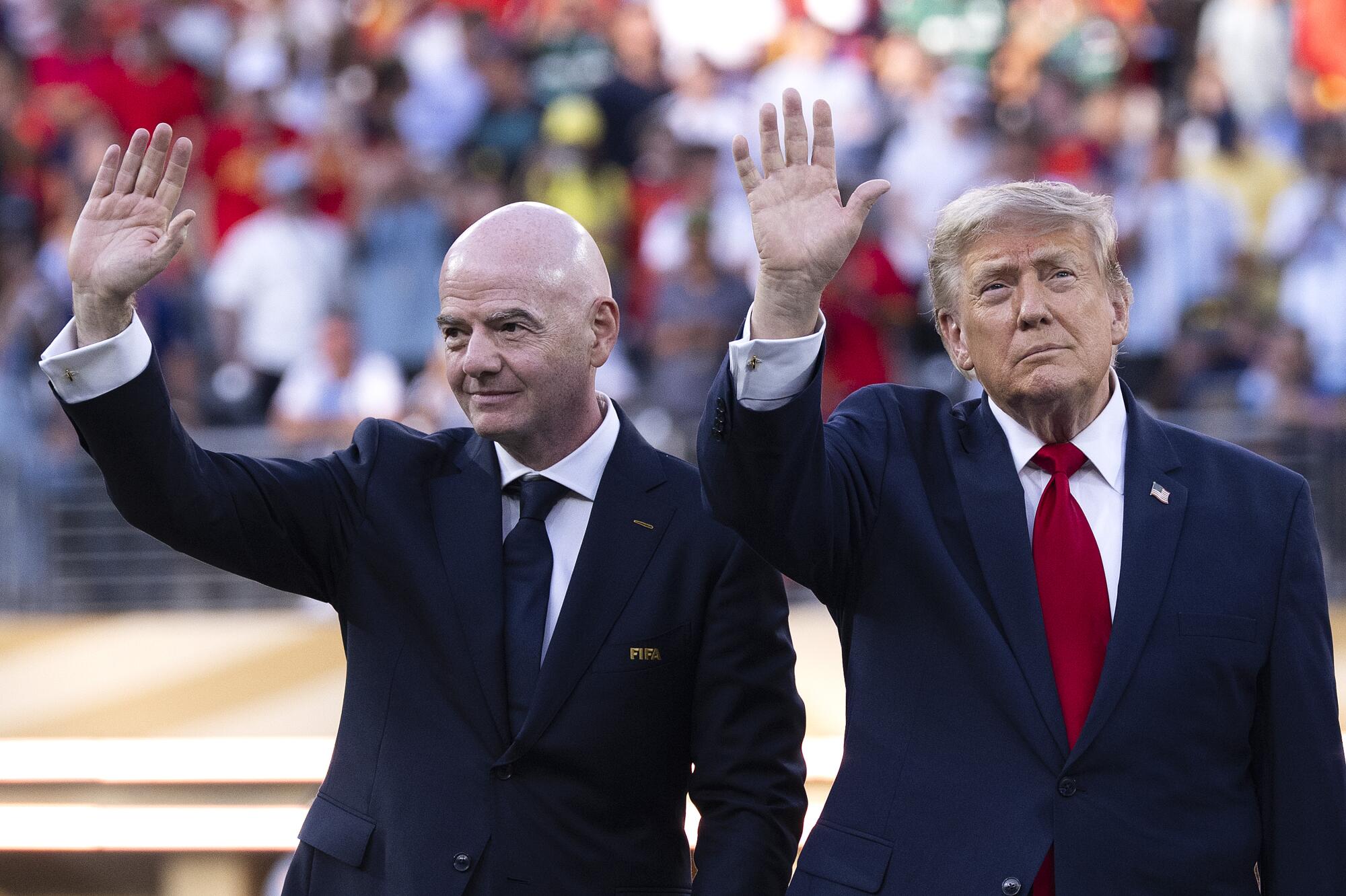
FIFA president Gianni Infantino, left, and President Trump wave during an award ceremony.

FIFA president Gianni Infantino, left, and President Trump wave during an award ceremony following Spain’s win over Argentina in the World Cup final July 19.

(David Ramos / Getty Images)

Moreover, the partnership would draw Infantino further into the orbit of Trump, whom the FIFA president has openly courted for years. Infantino, who has been a frequent visitor to the Oval Office and Trump’s Mar-a-Lago estate in Florida, attended the president’s inauguration and accompanied him on visits around the world.

Trump’s relationship to Infantino was questioned when Infantino presented him with the first FIFA Peace Prize last December, then became even more controversial when Trump phoned Infantino three times to lobby to have the red-card suspension of U.S. forward Folarin Balogun overturned ahead of a World Cup elimination game last month.

FIFA eventually cleared Balogun to play, marking just the second time in tournament history a red card ban has been lifted. For some, Infantino’s decision to partner with someone close to Trump on his latest venture was a bridge too far.

“It’s a really bad look for Infantino given the concerns about political interference that were already there after Balogun,” said Steven A. Bank, a professor of business law at UCLA who has written and lectured extensively on the economics of soccer. “Especially with the fund led by Jared Kushner’s brother.”

Once details of Infantino’s secret plan began to leak, UEFA, the confederation that governs European soccer, held an emergency meeting during which all 55 members — including Spain, the reigning men’s and women’s World Cup champion — voted to boycott all FIFA competitions.

“Some things are simply too important to sell. The FIFA World Cup belongs to football. It always will,” UEFA, the largest and most powerful of FIFA’s six continental confederations, said in a statement.

CONCACAF, which oversees soccer in North America, Central America and the Caribbean, said its 41 countries also rejected the plan, an opinion the U.S. Soccer Federation backed in a sparse post on X.

“U.S. Soccer stands with CONCACAF and its members,” it wrote.

The Asian Football Confederation joined in, saying in a statement its 47 members stand “in solidarity with UEFA and CONCACAF in expressing serious concerns over FIFA’s proposal to introduce private investment into FIFA’s flagship competitions.”

When it became obvious Infantino would not get the votes he needed to go forward, he pulled the plug on his plan. But it may not have been so much that the idea was bad as it was the execution.

Soccer is awash with private investors. The biggest clubs are owned by billionaires or sovereign wealth funds and many leagues — including Spain’s La Liga, which Tebas oversees — have sold commercial stakes to private equity firms in much the same way FIFA proposed.

Alan Rothenberg, a former U.S. Soccer president and the driving force behind the 1994 men’s World Cup and 1999 women’s World Cup, among the most successful tournaments in history, said the idea of selling a private equity stake in the World Cup isn’t a bad idea. But the way Infantino tried to implement his plan led it to failure.

“What is proposed is not that revolutionary,” Rothenberg said. “There have been private equity investors in MLS, in one of the subsidiaries of the NFL, in F1.

“But I think the combination of everything has doomed it. It does raise the possibility that Infantino, he’s finally become Icarus and gotten too close to the sun. It actually may doom him politically.”

Others including Cordeiro, a former vice chairman at Goldman Sachs, questioned the need to bring in outside investors.

“FIFA already has access to extraordinary financial resources. The organization sits on billions of dollars in reserves and no debt,” Cordeiro pointed out in his resignation letter. “If member associations believe additional investment is needed to develop the game, FIFA already has the financial capacity to provide that support from its existing resources.”

Infantino has flaunted consensus before without significant consequence, cozying up to autocrats while overseeing the 2018 World Cup in Vladimir Putin’s Russia and the 2022 tournament in Qatar before being accused of awarding the 2034 tournament to Saudi Arabia in a rigged vote.

This time, however, the stakeholders within FIFA were pushed too far by Infantino’s penchant for wielding unilateral power, so they pushed back and the president blinked. Hours before he backed down, an ally of Infantino’s told the Financial Times that he would not bend, seeing the standoff as “a fight to the death.”

Infantino’s presidency might not be dead, but it is surely in critical condition.
Source link

Marine Le Pen to run for French Presidency despite criminal conviction | Government

NewsFeed

Marine Le Pen, the far-right French politician, announced Tuesday she is running for president next year after an appeals court shortened her election ban. Le Pen was convicted of embezzlement and ordered to wear a tracking bracelet and banned from running for office for five years.

Source link

America split from monarchy 250 years ago. Trump’s presidency is testing how far it’s come

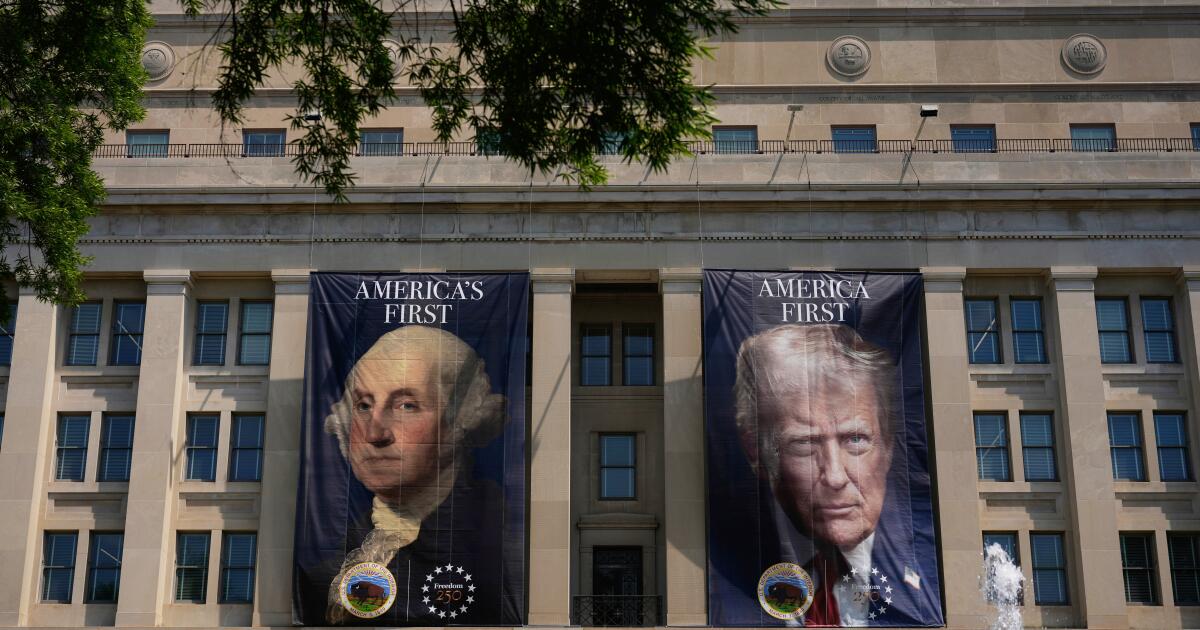
The 250th anniversary of America’s liberation from a king kicked off with a campaign-style rally on the National Mall by President Trump, whose face already stares down from banners fluttering from federal buildings across the nation’s capital.

The images illustrate how the president has dominated daily life since returning to power, evoking more the style of a monarch than the leader of the world’s oldest democracy. But more than anything, it is how he has wielded that power that has led to comparisons of an imperial reign.

Since returning to office in January 2025, Trump has nominated one of his personal lawyers to serve as attorney general, ordered the Department of Justice to pursue his political enemies, deployed the U.S. Marines to the nation’s second largest city and leveraged the presidency to enrich himself and his family.

He has demanded that comedians who mock him be fired, has slapped his name on the Kennedy Center, has pushed to seize control of elections, has filed lawsuits against news organizations whose coverage he disliked and has sued his own government seeking $10 billion in taxpayer money.

Trump also is the only convicted felon to hold the presidency, and a separate felony indictment over his attempts to keep himself in power after losing the 2020 election was dismissed only after he was reelected four years later despite those facts.

With the 250th anniversary of the nation’s founding approaching, Trump’s own celebrations have overshadowed the bipartisan, congressionally authorized commission that was supposed to coordinate events commemorating the moment. He plans to return to the National Mall on July Fourth for what he calls a “Trump rally.”

The president’s actions have led to comparisons with King George III, the British monarch whose rule inspired the American Revolution. It is a parallel Trump rejects.

“I’m not a king,” he told CBS’ “60 Minutes” earlier this year. “If I was a king, I wouldn’t be dealing with you.”

A different view of the presidency

There is a long American political traditional of opponents reviling presidents as kings. But Julian Zelizer, a Princeton University historian, said the label fits differently on Trump.

“It’s more about how he imagines who is he and what the presidency is,” Zelizer said. “We’re celebrating founding principles, and that was a driving issue — fears of how a centralized power can be corrupted. And here we are again.”

When King Charles III visited Trump this year, the official White House X account posted an image of the two men with the caption “Two Kings.” At the start of his second term, Trump declared he had ended a New York City transportation program and posted: “LONG LIVE THE KING.” The posts also seemed to indicate a willingness to leverage the label and the reaction it provokes in his critics.

The main resistance movement in Trump’s second term has adopted the slogan “No Kings.” Ezra Levin of the group Indivisible said activists were thinking ahead to 2026 and the America 250 celebration when they chose the label.

“It looks like the same kind of tyranny we were rebelling against 250 years ago, the type of domination of Americans by a secret police force that’s murdering people in the streets like in Minneapolis this year and in Boston in 1770,” Levin said, referring to demonstrations against the administration’s immigration crackdown that led to the fatal shootings of two protesters this year by federal officers.

When asked for comment, the White House referred to Trump’s statements about his use of executive power. The president has weighed in multiple times defending his maximalist approach.

During his first term, he referred to Article II of the Constitution when he told participants in a youth summit, “I have the right to do whatever I want as president,” while declaring that it “gives me all of these rights at a level nobody has ever seen before.” He told the New York Times in an interview this year that the only check on his global power was “my own morality. My own mind. It’s the only thing that can stop me.”

Yet he also has said that portrayals of his approach as authoritarian were wrong: “I’m not a dictator,” he told reporters last year. In response to a question about whether he was concentrating power in the presidency, Trump told Time in an interview last year, “I don’t think so. I think I’m using it properly, and I’m also using it as per my election.”

Supreme Court has sided with him

With a deferential, Republican-controlled Congress, courts have become the last check on Trump. The president has harshly criticized judges who have ruled against him, and his administration has sometimes defied their orders.

Yet his quest to expand presidential power has been aided by the conservative majority — including three of his appointees — on the U.S. Supreme Court, which has sided with Trump numerous times after lower court rulings hampered him.

In the middle of his 2024 campaign, the high court ruled that presidents have broad immunity from prosecution. The decision derailed multiple investigations stemming from Trump’s first term, including the one focused on his attempts to overturn his loss to Joe Biden in the 2020 election.

Trump has argued the courts cannot constrain the president on key issues, including his claims that he has the ability to fire members of independent agencies. The most notorious example was in 2024, when a judge asked during the immunity case whether a president could be prosecuted for ordering the assassination of a political rival. Trump’s lawyer, D. John Sauer, answered with a “qualified yes.”

Sauer is now solicitor general, the administration official who oversees arguments before the high court. He has continued to insist that courts cannot review presidential acts.

“Once the president has made a determination … at that point, there’s no work for the reviewing court to do,” Sauer said during Supreme Court arguments in a case over whether Trump could fire Lisa Cook, a Federal Reserve governor.

But the Supreme Court has allowed Cook to remain on the board while it considers the case. The majority also slapped down his global tariffs, finding that only Congress had the authority to impose them.

Such rulings demonstrate that presidential power does have its limits, according to John Yoo, a conservative law professor at UC Berkeley who served in the George W. Bush administration.

“The presidency today, even when colored by President Trump’s worst excesses, is not a monarchy,” he said.

Direct financial enrichment

Trump was the richest man to ever become president. During his first term, he was criticized for owning properties where foreign dignitaries and others hoping to curry his favor spent lavishly. The conflicts of interest have escalated in his second term.

Trump launched cryptocurrencies before and after returning to office. By conservative estimates, one has pulled in $320 million this year alone, while another sold $550 million worth of tokens. A third received a $2-billion investment from a foreign wealth fund.

Trump took a new step earlier this year, filing a private $10-billion lawsuit against the IRS for the leak of his tax returns during his first term. His Department of Justice directed the IRS to settle the litigation to create a $1.776-billion fund to pay damages to people who claimed the federal government unfairly prosecuted them.

The administration pulled back the settlement amid an outcry from congressional Democrats and some Republicans. But Todd Blanche, a former personal lawyer for Trump who is now acting attorney general, said at least one provision remains — a ban on the IRS auditing Trump.

Zelizer said Trump’s financial entanglements might be the most monarchical part of his administration.

“We have not seen a person who has a business operation of this scale and scope benefiting directly from the decisions he makes,” Zelizer said.

Targeting political rivals

The Justice Department’s role in the IRS lawsuit is one example of how Trump has decreed that executive branch employees should act as agents of his will.

In breaching what is supposed to be a firewall between the White House and Justice Department, Trump has demanded that federal prosecutors target his foes. In one social media post last year, he called out by name Pam Bondi, who was attorney general at the time, in pushing her to prosecute several of his political opponents: “JUSTICE MUST BE SERVED, NOW!!!” Trump wrote.

Indictments followed shortly after, including against former FBI Director James B. Comey and New York Atty. Gen. Letitia James. The charges against both eventually were dismissed, but the department under Blanche filed new charges against Comey.

The pursuit is not limited to Trump enemies of the past.

For his 80th birthday this month, the president hosted a fight held by UFC — a company he invested in — on the White House lawn. The event was broadcast on a network owned by the son of one of the president’s major donors. The spectacle drew a rebuke from California Gov. Gavin Newsom, a persistent critic and potential 2028 Democratic presidential contender.

“The White House was built to serve the American people. Tonight it was used to promote a company the President owns stock in, sell subscriptions, promote corporate sponsors, push Trump crypto, and enrich the President and his family,” Newsom wrote on X. “The founders warned us about kings enriching themselves from public office.”

Days later, Newsom disclosed that Trump’s Department of Justice was investigating him and his wife.

Riccardi writes for the Associated Press. AP writers Lindsay Whitehurst and Fatima Hussein contributed to this report.

Source link

Nixon Clinched Spot on GOP Ticket in ‘Checkers’ Speech 40 Years Ago : Vice presidency: The candidate’s woes on campaign funding brought on a tearful TV address and a place in history for a cocker spaniel.

As Bill Clinton struggles with his draft history and President Bush his tax promises, they might look back wistfully at something that happened 40 years ago last week. Richard M. Nixon, in much worse trouble, talked his way out with a single TV appearance that became famous as the “Checkers” speech.

On Sept. 23, 1952, the newly minted vice presidential candidate of the Republican Party faced allegations that threatened to force him off the ballot and end his political career–the disclosure of an $18,000 fund set up for him by rich businessmen.

Nixon, a first-term senator from California, dealt with the crisis dramatically, gambling everything that the public could be won over to his side with a mixture of pathos and candor in a single speech.

He denied any impropriety in using the private fund. But that part is hardly remembered.

“One other thing I probably should tell you, because if I don’t, they will probably be saying this about me, too,” Nixon told a television audience of 60 million. “We did get something, a gift, after the nomination.”

He explained it was a black-and-white cocker spaniel that 6-year-old Tricia Nixon had named Checkers. “I just want to say this, right now,” said Nixon, in a fight to stay on the ticket with Dwight D. Eisenhower, “regardless of what they say about it, we are going to keep it.”

The “Checkers” speech also included Nixon’s famous reference to wife Pat’s “Republican cloth coat” to point out that she didn’t wear mink. He ended it with a defiant vow not to quit. He urged listeners to tell the Republican National Committee “whether you think I should stay on or whether I should get off.”

The outpouring of sympathetic support cemented his spot on the ticket.

The fund had been set up by Dana Smith, a Los Angeles lawyer who had been finance chairman for Nixon’s successful 1950 race for the Senate. Smith intended it to pay for Nixon’s political travel, printing and mailing of speeches and clerical help, which would not be reimbursed by the Senate.

Once the existence of “the millionaire’s club” exploded in headlines, it ballooned and overshadowed everything else in the 1952 campaign. Eisenhower’s advisers urged the general to dump Nixon and find himself a new running mate.

Nixon got scant comfort from Eisenhower, who told him: “I have come to the conclusion that you are the one who has to decide what to do,” Nixon recalled, in his book “Six Crises.” “I think you ought to go on a nationwide television program and tell them everything there is to tell, everything you can remember since the day you entered public life. Tell them about any money you have received.”

To others, Eisenhower insisted that Nixon prove himself “clean as a hound’s tooth.”

The GOP and the Senatorial Congressional Campaign Committee pledged the $75,000 to buy a half-hour in prime time for Nixon’s speech, which was broadcast from the 750-seat El Capitan Theater in Los Angeles–the same hall where the “Colgate Comedy Hour” and “This Is Your Life” originated.

An hour before he left for the theater, came a call from Thomas E. Dewey, a two-time losing candidate for president and then a member of Eisenhower’s inner circle. He insisted that Nixon end his broadcast with his resignation–and even resignation from the Senate.

“If they want to find out they’d better listen to the broadcast,” Nixon shouted at Dewey. “and tell them I know something about politics too.”

Nixon went on the air in the empty theater. “Not one cent of the $18,000 or any other money of that type ever went to my personal use,” he said. “Every penny of it was used to pay for political expenses that I did not think should be charged to the taxpayers of the United States.”

He listed his assets and his debts, in detail, then said of his wife, “Pat doesn’t have a mink coat. But she does have a respectable cloth coat. And I always tell her that she’d look good in anything.”

The next day, Nixon flew to Wheeling, W.Va., to meet with Eisenhower. Just as he was about to leave the plane, Eisenhower came up the steps.

“You didn’t have to come down here to meet me,” said Nixon.

“You’re my boy,” said the general. And Nixon wept.

Source link

Who is Khalilur Rahman, Bangladesh FM who beat Cyprus to UNGA presidency? | Antonio Guterres News

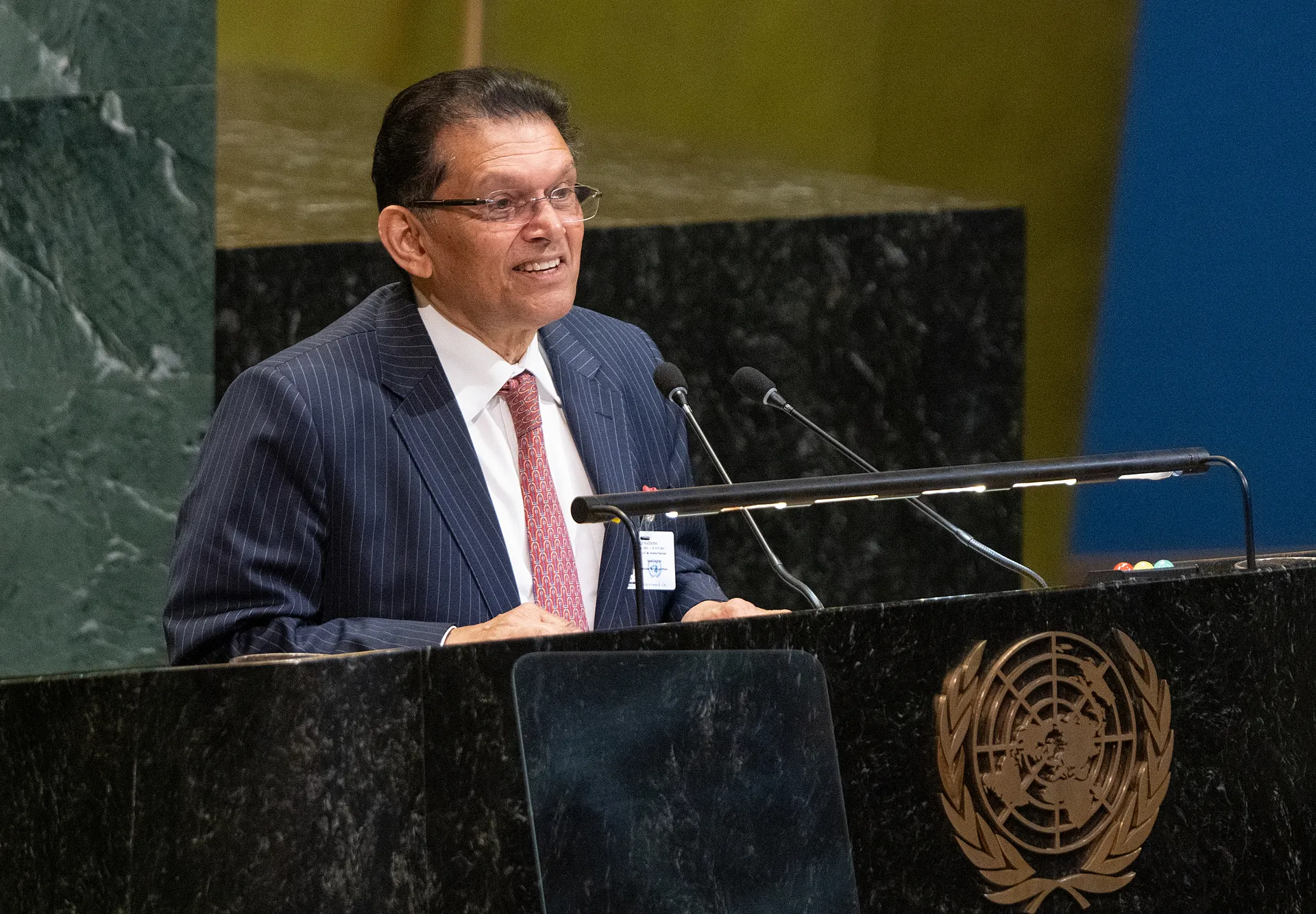
Bangladeshi Foreign Minister Khalilur Rahman has been elected as the 81st president of the 193-member United Nations General Assembly (UNGA). He will assume office when the UNGA session opens in September.

Rahman, who earlier held several portfolios at the UN, won the presidency after defeating Cyprus’s Ambassador Andreas Kakouris in a closely contested vote, taking the helm of the world’s most representative diplomatic body during a time of global geopolitical turmoil.

Recommended Stories

list of 4 itemsend of list

Who is Khalilur Rahman?

A career diplomat, Rahman joined Bangladesh’s foreign service in 1979. He also held senior UN positions in New York and Geneva, including as the spokesperson for the Least Developed Countries (LDCs) and as special adviser to the UN Conference on Trade and Development (UNCTAD).

Between 1986 and 1991, he served as the first secretary at the Permanent Mission of Bangladesh to the UN.

Rahman became foreign minister in February, when the Bangladesh Nationalist Party (BNP) won the country’s first election since a student-led uprising ousted Prime Minister Sheikh Hasina in 2024.

He previously served as national security adviser and the high representative on the Rohingya issue in the interim government led by Nobel laureate Muhammad Yunus.

Rahman’s presidency will coincide with one of the most consequential processes on the UN calendar – the selection of Secretary-General Antonio Guterres’s successor – as his term expires at the end of this year.

“The UN will commence its ninth decade at a time when trust in our organisation is being tested on multiple fronts,” he told diplomats assembled at the UNGA as he accepted the new role. “Taken together, these challenges tend to undermine the public trust and confidence in the ability of our organisation to deliver its promises.”

Guterres congratulated Rahman, saying, “Your remarkable political and diplomatic experience are a guarantee of success not only to the General Assembly but to the United Nations as a whole.”

How is the UNGA president selected?

While the presidency of the UNGA is largely ceremonial, it is also prestigious. It is the UN organ where countries large and small can speak, and it is the scene of the world’s largest annual diplomatic gathering.

The UNGA president is normally chosen by acclamation, meaning member states agree on a candidate by broad consensus. If no consensus can be reached, a secret ballot is held; in that rare case, the candidate who wins a simple majority of votes becomes president.

Before this year, the last contested UNGA presidential election was in 2016, when Fijian diplomat Peter Thomson won the presidency of the 71st session in a secret ballot, defeating Cyprus’s candidate by four votes. In 2012, Serbia’s Vuk Jeremic narrowly beat Lithuania’s candidate in another secret ballot. In 1991, Saudi Arabia’s candidate, Samir Shihabi, won the presidency in a contested vote against candidates from Yemen and Papua New Guinea.

In the secret ballot, Rahman secured 99 votes, eight more than his competitor Kakouris. A total of 190 ballots were cast, with no invalid votes or abstentions.

The presidency rotates among the UN’s five regional groups, and the 81st session falls to the Asia Pacific group. Rahman will serve a one-year term starting on September 8, the UN said.

Outgoing UNGA President Annalena Baerbock, Germany’s foreign minister, highlighted how trust towards multilateralism is under growing strain.

The UN is facing “not only headwinds, but immense pressure”, with consensus increasingly difficult to achieve and defence of the UN Charter becoming “a daily necessity”.

“The role of the president of the General Assembly is no longer simply procedural,” she said.

The US administration under President Donald Trump has tried to undermine the UN system, resorting to unilateral actions to tackle complex global geopolitical issues. Washington has withdrawn from several UN organisations, such as the World Health Organization and the Human Rights Council, and cut funding to the global body.

The US president has called the UN a “talking shop”, questioning its purpose during his speech at the annual UNGA meeting last September. “The UN has such tremendous potential … but it’s not even coming close to living up to that potential,” he said.

What is the UNGA?

The General Assembly is the UN’s most representative body, bringing together all 193 member states, each with one vote. Its annual gathering in September in New York is the only UN forum where world leaders from all countries can speak.

The UNGA controls the UN budget, adopts treaties, addresses global issues from poverty to corruption and passes numerous resolutions that, while not legally binding, almost always reflect global opinion.

The UNGA also makes key decisions for the UN, including appointing the secretary-general on the recommendation of the UN Security Council (UNSC) and electing the nonpermanent members of the council.

The coming UNGA session will open on September 8.

On Wednesday, the UNGA elected Austria, Kyrgyzstan, Portugal, Trinidad and Tobago and Zimbabwe to the 15-member UNSC for two-year terms starting on January 1, 2027.

Germany, which had lobbied hard for a seat, failed to win the UNSC seat in a major setback for Chancellor Friedrich Merz.

The council is the only UN body that can make legally binding decisions, such as imposing sanctions and authorising the use of force. It has five permanent veto-wielding members: China, France, Russia, the United Kingdom, and the United States.

Source link

Powell Won’t Run in 1996; He Cites Lack of ‘a Calling’ : Presidency: General tells of worries about privacy and lack of passion for political wars. He says for first time he’s a Republican and rejects accepting No. 2 spot on the ticket.

Retired Gen. Colin L. Powell, citing concerns about his privacy and a lack of passion for political combat, on Wednesday proclaimed that he would not run for President in 1996.

For the first time, Powell declared that he was a Republican. And he seemed clearly to leave open the possibility of seeking political office in the future. But he categorically ruled out accepting the vice presidential nomination next year.

In a dramatic afternoon press conference in suburban Washington, Powell, 58, said that entering the political arena “requires a calling that I do not yet hear. And for me to pretend otherwise would not be honest to myself, it would not be honest to the American people.”

“And therefore I cannot go forward,” he said. “I will not be a candidate for President or for any other elective office in 1996.”

Powell’s wife, Alma, stood at his side as he ended months of suspense about his political intentions and disappointed millions of potential supporters. His adult children, Michael, Linda and Annemarie, looked on in the packed hotel ballroom where Powell delivered his fateful verdict.

“I have spent long hours talking with my wife and children, the most important people in my life, about the impact an entry into political life would have on us,” Powell said. “It would require sacrifices and changes in our lives that would be difficult for us to make at this time.”

With the September publication of his best-selling memoirs, “My American Journey,” Powell had become a four-star American icon, the repository of the hopes of millions who dreamed that he could bind up the nation’s racial and political wounds.

But in the end, that task proved too great even for the charismatic general, who braved unfriendly fire in Vietnam and survived the ordeals of bureaucratic combat in four presidential administrations.

Powell said Wednesday he hoped he could help restore civility to American political dialogue and a “sense of shame in our society.” He also said he hoped to bring blacks back into the party by broadening the GOP’s appeal and humanizing its attempts to reform social welfare programs.

“While we’re sending out block grants, while we’re dismantling programs that have not completely satisfied everything we hoped of them, we have to concern ourselves about those who may be cut loose, and we have to be prepared to help them,” Powell said. Over the past months, “I didn’t sense there was enough consideration of that.”

“I will continue to speak out forcefully in the future on the issues of the day, as I have been doing in recent weeks,” Powell said. “I believe I can help the party of Lincoln move once again close to the spirit of Lincoln.”

But–for now–he said he would do so from outside the realm of electoral politics.

Powell largely came to his decision over the weekend and formalized it in a meeting Monday night with two of his closest friends, former Pentagon official Richard L. Armitage and former White House Chief of Staff Kenneth M. Duberstein. With a third aide, retired Col. Bill Smullen, joining in by phone, the three men sat in Powell’s formal office on the ground floor of his McLean, Va., mansion, a room dominated by his Medal of Freedom and three framed photographs of the presidents he has served–Ronald Reagan, George Bush and Bill Clinton.

Alma Powell joined the group about halfway through the 2 1/2-hour meeting, Armitage said in an interview Wednesday.

“By then, the decision was primarily made,” Armitage said. “Over these past weeks, he was up and down, he agonized. He’d go out and meet with crowds and they’d fire him up. Then he’d get back home and wonder, ‘Do I have the necessary fire in the stomach to be worthy of support of these people?’ And he found he did not,” Armitage said.

As it became clear that Powell would not run, the meeting moved quickly to a discussion of the logistics of the announcement. The four discussed various drafts of a statement, then decided that Powell should speak solely in his own words. On Wednesday afternoon, he did just that, speaking largely without reference to the note cards he had carried with him.

He had looked “deep into my own soul” before deciding not to run, Powell said, and had found that he could not summon up the “commitment and passion” he felt every day in his 35 years as a soldier.

Powell also pointedly refused to endorse any of the Republican candidates, or even the party’s eventual nominee. He answered a curt “yes” to the question of whether there were candidates in the current crop of GOP hopefuls who were unacceptable to him.

A close friend said later that Powell was referring specifically to Patrick J. Buchanan, who has harshly criticized Powell’s stands on social issues.

Powell’s decision reopens a presidential contest that had been largely frozen for the last two months as he flirted with running.

Within an hour of Powell’s announcement, House Speaker Newt Gingrich (R-Ga.) said that the former general’s withdrawal made it more likely that he would enter the race. Gingrich said he would think about it over the next several weeks and make a decision after the current federal budget deliberations are finished but before the Dec. 15 deadline for entering New Hampshire’s primary.

Powell’s withdrawal was particularly welcome news at the White House and at the headquarters of GOP presidential front-runner Sen. Bob Dole. In a statement, Dole praised Powell’s “outstanding character and leadership” and expressed pleasure that he had joined the Republican Party.

At the White House, aides showed unusual discipline in not admitting that they felt a huge sense of relief at not having to face Clinton’s worst nightmare–a black, centrist, Republican military hero–in the general election next year.

“Everyone wants some hook to say there was a sigh of relief at the White House–but you’ll have to do it on your own,” said White House Press Secretary Mike McCurry.

He added that Clinton “understands the decision to run for President of the United States is one of the most difficult decisions any human can make. He respects the general and respects the general’s right to make that decision.”

Powell met with the press for 40 minutes at the Ramada Plaza hotel in Alexandria, Va., a few miles down the George Washington Parkway from the Pentagon, where Powell made history by becoming the first African American and youngest chairman of the Joint Chiefs of Staff.

His appearance was marked by the good humor, military carriage and unshakable poise he displayed in private meetings with presidents, kings and prime ministers and in public briefings on the American military operations he directed.

He expressed gratitude to the thousands of citizens who urged him to run. “It says more about America than it says about me. In one generation, we have moved from denying a black man service at a lunch counter to elevating one to the highest military office in the nation and to being a serious contender for the presidency,” he said.

Powell drew laughs when asked whether his wife shared his enthusiasm for the Republican Party. “Next!” he boomed. He also fended off a question about whether he had been bothered by published reports that his wife was under treatment for depression.

“It is not a family secret,” he said. “It is very easily controlled with proper medication, just as my blood pressure is sometimes under control with proper medication.”

For her part, Alma Powell made clear her concerns about her husband’s safety should he become a candidate. She and the general denied that fears of assassination were a factor in his decision not to run, but the final call was not made until Monday night, the day slain Israeli Prime Minister Yitzhak Rabin was buried in Jerusalem.

Had he been elected, Powell said, his priorities in office would have been: “Show leadership. Be a conciliator. Move the government forward toward less government. . . . Try to inspire people. And try to restore a sense of family, restore a sense of shame in our society, help bring more civility into our society.”

Powell said he regretted the disappointment he caused those who enthusiastically promoted his candidacy.

“I am deeply, deeply appreciative of that support, I’m deeply appreciative of the time and talent and energy you put into it. I’m sorry I disappointed you, but I hope you will see that in the next phase of my life I will continue to serve the country in a way that will justify the kind of inspiration and enthusiasm and support you sent my way this time around,” Powell said, addressing the several dozen supporters who attended the press conference and millions more watching on television.

He said he understood the “down and dirty” of American politics and said they were a proper test of a potential leader. He said he was not afraid of that “test of fire,” but that he was not yet ready to face it.

Among those watching on television were about half a dozen disheartened volunteers at the draft-Powell headquarters in the Crenshaw district in Los Angeles. The group, which had just opened the office last week, vowed to launch an effort to change Powell’s mind. Through letters, phone calls and other means, they hope to persuade the retired general “to report for duty as a candidate for the presidency,” said Powell backer Ron Weekly.

Times staff writers Sam Fulwood III in Washington and Erin Texeira in Los Angeles contributed to this story.

* LOCAL REACTION: General’s Orange County kin pleased with his decision. A17

Source link