Employers are bracing for what could be the highest rise in health insurance premiums in 16 years in 2027, driving up the average cost of family coverage in California to more than $30,000 — the price of a new compact car.
Health insurance companies expect the cost of medical services and prescription drugs to soar by 9% in 2027, according to a new survey by PwC, the highest rise the researchers have found since 2011. Insurers use those expected medical costs to calculate the price of premiums in the coming year. Many employers require workers to pay part of that cost.
Experts say the escalating costs of employers’ premiums are reducing workers’ wages and take-home pay, while raising the prices of goods and services in California and across the country.
“It’s going to erode the standard of living for lots of California families,” said Glenn Melnick, a USC professor of healthcare finance.
Melnick said when employers are forced to spend more on health insurance, there is less money available for wages. The skyrocketing premiums, he said, are like a hidden pay cut for working families.
The higher cost also has small-business owners wondering whether they can continue paying for their workers’ health insurance.
Co-owner Camden Avery makes a sale at the Booksmith in San Francisco.
(Josh Edelson / For The Times)
This year, premiums for staff at the Booksmith, an independent bookstore on Haight Street in San Francisco, leaped by 17%, said Christin Evans, the store’s owner. Next year could bring even more pain. The monthly premium for four employees is $3,250.
To try to cope, Evans said, she has reduced staff hours by closing the store earlier.
“We have to absorb it,” she said. “We’re not paying the wages we want to pay or delivering the customer service we’d like to deliver.”
Seventeen million Californians receive health benefits from an employer. Those premiums have been rising faster in California than the national average.
Between 2022 and 2025, the average family premium for employers in the state rose by 24% to $28,397, according to a survey by KFF and the California Healthcare Foundation. That was nearly double the 12.2% increase in consumer prices during those years.
Hospital, pharmaceutical and other medical costs escalated even faster after 2025.
PwC’s annual survey of insurers last year found an expected rise of 8.5% in 2026, which its researchers later revised to 9%.
A key driver of the rising medical costs, according to experts, is prices charged by hospitals. In recent years, some health systems, including UCLA and Cedars-Sinai, have grown larger by buying nearby hospitals and expanding their clinics, becoming more dominant in the community and reducing competition.
Melnick said the expansion of some health systems into giant organizations means that they can “tell insurance companies what the price will be.”
A Cedars-Sinai spokesperson pointed to a 2022 paper that found that for-profit health system prices had escalated faster than those at nonprofit systems like Cedars. The paper was partly funded by Cedars.
“Cedars-Sinai Health System’s growth in recent years has expanded access to the highest levels of patient care and medical innovation across the Los Angeles region,” the spokesperson said.
UCLA did not respond to requests for comment.
Another factor is the rising cost of prescription drugs. Spending on cancer drugs, the most costly category, reached $143 billion in 2025, an annual increase of 12%, the PwC survey found.
The nation’s spending on obesity medicines, including GLP-1 drugs such as Ozempic and Wegovy, soared by 81% last year, PwC said. A 30-day supply of the drugs lists for more than $1,000.
The obesity drug manufacturers say the medicines can reduce medical expenses by preventing other costly conditions such as diabetes and heart disease, but data don’t yet show such reductions, PwC said.
Researchers at the California Healthcare Foundation say a large part of the problem is that hospital operating costs, prescription drug prices and doctor fees have been allowed to grow unchecked for decades.
The foundation estimated in a report last year that 25 cents of every dollar spent in California — more than $73 billion each year — does nothing to help patients. Instead it goes to excessive profits for providers, administrative red tape and other waste, the foundation found.
California employer premiums are expected to rise next year for another reason: Gov. Gavin Newsom and lawmakers agreed in June to raise taxes on the private plans to help pay for the cost of Medi-Cal, which covers the medical costs for the poor, and to help balance the state budget.
The California Assn. of Health Plans said insurers will add the tax to next year’s premiums. The trade group estimates the higher tax will cost each insured person $100 next year or $400 for a family of four.
The higher tax must still be approved by the Trump administration. Republicans in the state Assembly wrote a letter to the administration this month, asking officials to deny the request.
Researchers also expect a jump in premiums for families without employer insurance who purchase policies on state marketplaces such as Covered California. Some of those families faced double-digit increases this year because of rising medical costs and the end of enhanced federal subsidies that Congress had approved as a temporary measure during the pandemic. Almost 400,000 Californians dropped their Obamacare plans this year as prices soared.
To deal with the higher premiums, some employers are changing the design of their health plans to shift more of the cost to workers by raising deductibles and co-pays.
Those higher out-of-pocket costs are just the beginning of the fallout. Twenty-two percent of chief financial officers surveyed by Mercer in February said the high price of health benefits had forced them to stop hiring or led to layoffs. Thirty-six percent of those executives said the rising premium costs have harmed workers’ wages and raises.
Candice Elliott, a human resources consultant in Santa Cruz, said smaller businesses such as restaurants struggle to find ways to cover the higher costs.
Many restaurants, Elliott said, already have a slim margin between their revenues and expenses. When premiums rise, she said, some restaurants have added a fee to the customer bill to help cover workers’ health costs. Others have hiked menu prices.
“That impacts affordability for the consumer,” Elliott said. “It makes inflation greater.”
Some small businesses have moved from so-called silver plans to the lower-priced bronze plans, she said, which cover less of the employee’s monthly premium. “It’s effectively a decrease in pay for the employee,” she said.
Others are hiring employees overseas, Elliott said. “You can pay someone in the global south half of what you pay an American and still afford them a good standard of living and benefits that are unaffordable in the U.S.,” she said.
Melnick, the USC professor, said many workers don’t realize how much they are losing as their employers’ premiums rise. He tells people to look at their W-2 tax form from last year, where employers are required to report the cost of the employee’s premium in box 12, under “Code DD.”
He said USC’s premium for his family of four is $45,000.
“The base is so high that even a small increase has a big impact,” he said. The continuing annual increases, he said, are “bad news for everybody.”
Delta Air Lines Inc. Chief Executive Ed Bastian said travelers care more about their seat than extras like lounge access or limousine shuttles often thrown into costly tickets, as he defended a stripped-down premium product that has irked some customers.
“Consumers want different value decisions to take,” Bastian said in a Bloomberg Television interview on Monday. “If you can give people the opportunity to sit in first class, they may not want different elements and they may not need to go in the lounge.”
Delta is bringing the basic-economy playbook to Delta First, Delta Premium Select and Delta One, offering passengers the same onboard seats, meals and service at a lower price in exchange for fewer benefits. Depending on the product, restrictions can include reduced mileage earnings, lower checked-bag allowances, fees for changes or cancellations and limits on lounge access and advance seat selection.
“What consumers care more about than anything is the seat,” Bastian said. “All the other things are nice, but it’s the seat and the comfort of the seat that’s most important.”
Bastian’s comments contrast Delta’s recent investments in its ground amenities. The airline has spent years opening and expanding swanky Sky Clubs and Delta One lounges, which remain in such high demand that crowding and lines have prompted tighter access rules.
Delta last month opened the first phase of a second Delta One Lounge at Los Angeles International Airport, a 4,000-square-foot space with table-service dining, showers and a premium bar. By 2028, Delta plans to operate four lounges at LAX spanning 60,000 square feet and seating more than 1,000 guests, part of a global network that now includes five Delta One Lounges and more than 50 Sky Clubs.
“One of the things we’re disappointed about is the continued segmentation of the fare structure,” Jefferies analyst Sheila Kahyaoglu said in an interview with Bloomberg Television, referring to how Delta has refined its premium offering into different, sometimes hard-to-follow groups. “You could accidentally get locked out of a lounge if you don’t pick that main business fare.”
Delta last week reported second-quarter earnings that beat Wall Street expectations despite recording the highest quarterly fuel expense in its history. The airline earned an adjusted $1.56 a share, topping analysts’ estimate of $1.51, while revenue rose 14% from a year earlier and capacity increased just 1%. Delta also reaffirmed its full-year profit guidance.
Bastian said strong demand for premium, corporate and international travel helped offset the surge in fuel prices caused by fighting in the Middle East. Although fuel costs eased as the war in Iran appeared to be winding down, renewed US military strikes have raised the risk of another escalation and kept energy markets volatile.
The CEO reiterated that Delta would continue pricing tickets to recover those higher costs and did not expect airfares to decline. The new basic premium fares give the airline another way to appeal to price-conscious travelers without broadly discounting its most valuable seats.
The strategy also allows Delta to widen the pool of passengers who can afford premium cabins while still charging more to corporate travelers and frequent fliers who value flexibility, loyalty benefits and lounge access. It reflects how airlines are increasingly selling each component of the travel experience separately.
But it risks alienating premium and loyalty travelers by introducing complexity or making it seem harder to get the same level of access.
“Delta’s change to its premium-seating offerings suggests competition is weighing on pricing at the front of the cabin, a negative for earnings,” Bloomberg Intelligence analyst George Ferguson said.
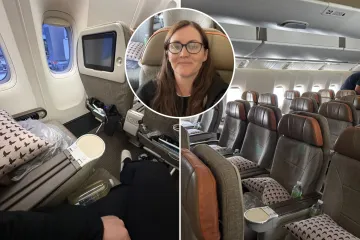
This isn’t the first time that Turkish Airlines has offered premium-style seats onboard.
It used to offer Comfort Class on some of its routes on Boeing 777 aircraft – but these were withdrawn in 2013.
On the subject, Murat Şeker added that the previous offerings were “not the right time” or “the right configuration”.
Currently, Turkish Airlines has economy seats which have adjustable headrests and arms as well as entertainment screens and USB ports in the seats.
The other are in business class which have lie-flat seats with a massage feature, a cocktail table, touchscreen media screens and adjustable head rests.
Previously, the airline had Comfort Class but discontinued these in 2013Credit: Flickr/Luke Lai
This isn’t the first time either, in fact that award marked the tenth win in a row for the airline.
At the same awards, it scooped up eight accolades in total and placed sixth in the rankings for ‘World’s Best Airline’.
Turkish Airlines also won the ‘Best Economy Class in Europe‘, ‘Best Economy Class Onboard Catering in Europe’, ‘Best Business Class Onboard Catering’.
It also was awarded the ‘Best Business Class in Europe’, ‘Best Business Class in Southern Europe’, ‘Best Business Class Onboard Catering in Europe’, and ‘Best Airline in Southern Europe.’
Turkish Airlines also offers cheap flights from the UK to destinations like Istanbul, Antalya, and other Turkish cities, as well as other destinations like New York, Sharm El Sheikh, and Cape Town.
HAVING racked up nearly 60 countries in just a couple of decades, it’s fair to say I’ve been on a LOT of flights.
But at the same time, I’ve been cursed with the double whammy of being unable to sleep on public transport, and old knee injuries that swell up on planes. Not ideal for a Travel Editor.
Sign up for the Travel newsletter
Thank you!
I fly every month and there is a great economy seat more people need to know about
So when it comes to choosing a seat on a plane, I think I’ve got it down to a fine art.
But my favourite seat is the one behind the bulkhead row on either the left or the right side of the plane.
Some of the bulkhead rows only have two seats on either side of the centre, due to the layout of the aircraft door.
This seat feels like a bulkhead but has no one walking in front of you
That means the seat behind these by the window has a crazy amount of legroom, but is more tucked away than the bulkhead.
Bulkhead seats, while often the best for legroom in economy, also come with the downside of lots of passenger traffic of people using the toilet or stretching their legs.
But this tucked away seat is a gem when it comes to economy.
In fact, I think it can be even better than premium economy, especially when you factor in the price.
Unlike other rows, seats 68A and 68K are tucked away but with legroom
I paid around £65 to pick this seat, whereas Premium Economy seats can be hundreds of pounds more expensive.
Not only that, but a lot of Premium Economy seats have built in arm rests you can’t lift.
If I lucked out with no one next to me on this seat, I could even lift the arm rests and have a double set to myself.
As a non-sleeper, I managed to get about five hours on and off of sleep, something unheard of for me normally on planes.
Not all planes will have this seat, so if it doesn’t I still recommend paying for the bulkhead seat if they are still available.
WHEN it comes to flying to the States, a major airline has unveiled a huge new revamp of their planes – and it’s making it much comfier to fly long-haul.
Having flown to and from America several times over the past five years to visit family, I quickly found a love for United Airlines‘.
Sign up for the Travel newsletter
Thank you!
United Airlines has launched a new cabin on its 787-9 Dreamliner aircraft between London Heathrow and San Francisco, AmericaCredit: Cyann FieldingThe new spacious Premium Plus seats feel more like business classCredit: Cyann Fielding
Follow The Sun’s award-winning travel team on Instagram and Tiktok for top holiday tips and inspiration @thesuntravel.
The airline recently announced they were launching a brand new ‘Elevated’ cabin on their 787-9 Dreamliner between San Francisco and London Heathrow, upgrading every single class from economy to business.
This includes the rollout of the first ever new business class United Polaris Studio suites, which have more spacious seats, larger screens and Bluetooth connectivity.
I, however, was trying out United’s new Premium Plus Economy seat which they say has “elements normally reserved for business class customers” – a welcome sight when leaving gloomy London.
Each seat comes with a pillow, blanket and amenity kitCredit: Cyann FieldingEach seat has a 40.6cm screen with Bluetooth connectivityCredit: Cyann Fielding
There’s a total of 35 United Premium Plus seats arranged in a 2-3-2 configuration in the new cabin design, each with privacy dividers and a built-in reading light – both firsts for United Premium Plus seats.
And in all honesty, the seats felt closer to business class than economy and even better than some business class seats I’ve experienced on other airlines.
I opted for the very first row with enough room that when stretching out my legs straight, they still didn’t hit the wall in front of me.
Plonking myself down in my aisle seat – which actually felt more like an armchair – I was immediately impressed by how comfortable it was.
And then when it came to checking out the generous 40.6cm 4K OLED screen, I was excited to snuggle down and watch one of the latest film releases.
Pressing play on Wuthering Heights, I connected my Airpods to the Bluetooth to listen in to the film and placed my phone on the quartzite cocktail table between my seat and the next seat to connect it to the wireless charging.
In the amenity kit, you’ll will find skincare products, an eyemask and socksCredit: Cyann FieldingThe seats even have a bottle holderCredit: Cyann Fielding
As for the amenities, a small ‘United 100’ pouch to celebrate the airline’s centenary was on my seat featuring branded socks, an eye mask and some Vitamin C Perricone MD products.
Also on my seat was a Saks Fifth Avenue pillow and blanket, which added to my cinema experience when Wuthering Heights started to play.
When it comes to space, passengers get 96.5cm pitch and 50.8cm width, and then 15cm of recline – which while not much felt spacious enough and with the new privacy screen acting as a good headrest, I was more than comfortable.
Power outlets and bottle holders are located between the seats for added convenience too.
Located on one armrest is also a remote for the TV and a small cubbyhole where you’ll find your overhead earphones.
Of course, you can now also get Starlink Wi-Fi on United flights – even if it is just for messaging – which I have to admit was super speedy.
The seats also have wireless chargingCredit: Cyann Fielding
Another thing I love about United is that you are always fed well,
My first meal consisted of an artichoke salad and bread for starter, with roast chicken for my main and chocolate truffles for dessert.
Mid-flight, I then enjoyed a chicken burrito and before landing, tucked into another salad and a paneer curry.
In between these courses, the cabin crew were great at always ensuring I had enough water or a drink of my choosing – whether that be alcoholic or non-alcoholic.
You will also get fed well with two meals and plenty of snacksCredit: Cyann FieldingElsewhere in the cabin, Polaris and economy seats have been upgraded tooCredit: Cyann Fielding
United aims to have at least 30 planes with the new Elevated interior flying by the end of 2027.
So if you’re trying to decide which airline to go with on your next trip to the US? I’d recommend United – if you want a business class experience on a premium economy budget.
What about United’s business class?
United Polaris Studio suites (the business class plus) includes lie flat seats, with a total area around 25 per cent bigger than the average Polaris seat.
Each of the eight studios feature a 68.6cm screen – which is the largest among US airlines – accompanied by noise-cancelling Meridian headphones.
They even have privacy doors, an extra ottoman seat, exclusive entree options, caviar and huge amenity kits.
The standard United Polaris seats (standard business class) have also been upgraded.
These seats also lie flat and passengers can choose to either face the window or centre of the plane, with these seats in particular having the ability to remove the wall between if you are travelling with someone.
Screens in United Polaris measure 48.3cm, and there is also a Snack Bar passengers can help themselves to.
Earnings Call Insights: Live Nation Entertainment (LYV) Q1 2026
Management View
Michael Rapino said demand and cancellations were tracking normally, stating, “We always have a few cancellations” and “We tend to have 1% to 2% cancellation rate historically” (President, CEO & Director Michael Rapino).
Seeking Alpha’s Disclaimer:This article was automatically generated by an AI tool based on content available on the Seeking Alpha website, and has not been curated or reviewed by humans. Due to inherent limitations in using AI-based tools, the accuracy, completeness, or timeliness of such articles cannot be guaranteed. This article is intended for informational purposes only. Seeking Alpha does not take account of your objectives or your financial situation and does not offer any personalized investment advice. Seeking Alpha is not a licensed securities dealer, broker or US investment adviser or investment bank.