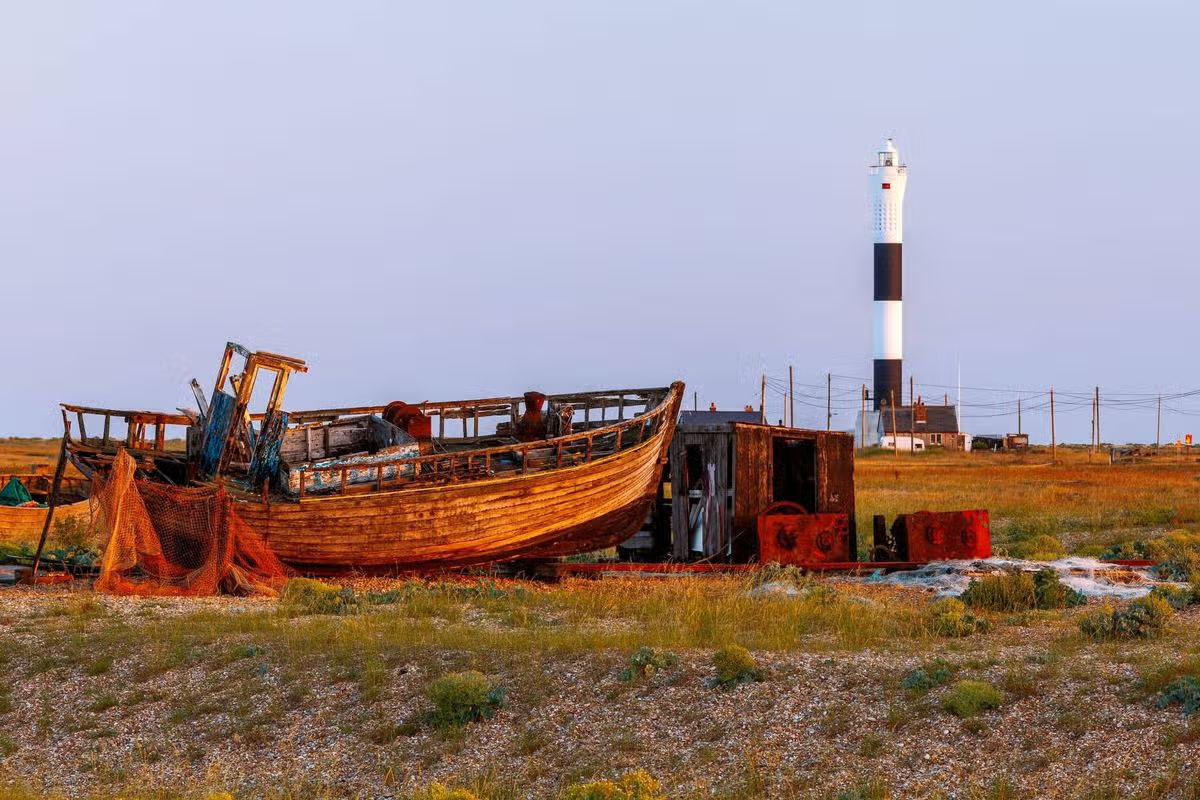
postapocalyptic

UK’s only desert looks ‘post-apocalyptic’ with abandoned power station and huts

This is the UK’s only desert – and it looks like a dystopian filmset

When picturing a desert landscape, the UK is unlikely to be the first place that springs to mind. Yet, while we may not have our own Sahara, Britain does technically lay claim to a desert of its own.

Nestled along the Kent coastline is Dungeness, the UK’s only desert and a truly one-of-a-kind holiday destination. This stark, barren landscape boasts a decommissioned power station, deserted huts and fishing boats, vast gravel pits, and an aged lighthouse.

Don’t be fooled by its appearance, though — this is also a nature reserve that has grown into a much-loved hotspot for birdwatchers and horticulturalists alike.

Dungeness is home to a remarkable 600 species of plants — a third of every plant species found across the UK. On top of that, rare insects and spiders can also be spotted amongst its sands.

These extraordinary plant and animal species have earned it the status of a Special Protection Area (SPA) and a Special Area of Conservation (SAC).

It is also an RSPB reserve, drawing birdwatchers in droves, particularly during the spring and autumn months when migratory birds pass through.

And it’s not solely the plants and wildlife that make this corner of England so extraordinary, as Explore Kent notes: “The appeal of Dungeness lies just as much in its human history as its natural riches, however.

“On the beach you’ll find remnants of bygone fishing methods, military installations dating from WWII and the Napoleonic wars, sound mirrors and radio research stations – all dotted incongruously about the landscape as a result of the fact that the shingle beach continues to expand as the tides deposit ever more material in its shores.”

In addition to this heritage, visitors can also explore the historic Dungeness Lighthouse.

First constructed in 1615, the original lighthouse on the location was reportedly engulfed by shingle, prompting the building of a replacement in 1901.

Rising to 43 metres in height, it boasts a distinctive black-and-white striped appearance that renders it a popular choice amongst photographers in the region. While public access is not typically allowed, guided visits are sometimes offered.

A further distinctive feature of Dungeness is the pair of nuclear power stations. Dungeness A initially opened in 1965, though it has now been decommissioned, while Dungeness B hasn’t generated electricity for the National Grid since 2018, and is presently undergoing defuelling.

Source link

Tiny UK tidal island with historic castle and thousands of seals that was used to film a post-apocalyptic horror movie

OFF the coast of Northumberland is a remote, tidal island that you’ll have to time right to visit – as it is cut off from the mainland twice a day.

Called Lindisfarne, or by its other name, Holy Island, it might be familiar to fans of horror movies.

The tidal island of Lindisfarne is cut off from the mainland twice a day Credit: Getty
The island was used a backdrop for the movie 28 Years Later Credit: Shutterstock Editorial

Follow The Sun’s award-winning travel team on Instagram and Tiktok for top holiday tips and inspiration @thesuntravel.

The island off the coast of Northumberland was used to film post-apocalyptic film, 28 Years Later, which came out just last year.

The 2025 movie was about a group of survivors of the rage virus living on a small island starring actors like Jodie Comer, Aaron Taylor-Johnson and Ralph Fiennes.

Filming spots included the tidal causeway and Lindisfarne Castle which attracts thousands of visitors every year.

FALL FOR IT

Why Sun readers love Wales – their favourite waterfalls & TV-famous castles


SHORE THING

‘It’s the best beach in England’ – Sun readers’ favourite Sussex seasides

The National Trust took over the property in 1944 and it has been open to the public ever since.

Inside the castle, visitors can explore the different rooms, including a dining room, a kitchen, and bedrooms, as well as the upper battery, which has panoramic sea views.

The island has been the backdrop for ITV’s Vera too Credit: Alamy

In addition to exploring the interior of the castle, there are plenty of other things to see.

Entry to the castle is £14.30 for adults and £7.20 for children (between 5-17).

The island is also referred to as Holy Island, and it got its nickname after becoming the centre of Anglo-Saxon Christianity in the 7th century.

It was home to saints and it’s considered a very religious place.

But for those who want to move away from its history, there’s plenty to do on the island, like visit its coffee roastery, Pilgrims Coffee.

The business first set up in a yurt, but now even has a cosy cafe on the island too serving up caffeine hits and homemade cakes.

St Aidan’s Winery is where locals can try locally made Lindisfarne Mead Credit: Alamy

The family that runs Pilgrims Coffee moved from the mainland to Holy Island in 2022.

Another spot to visit is St Aidan’s Winery, where Lindisfarne Mead is made, and visitors to the island can pop in for tastings and browse the shop that sells its wine and beer.

The island has around 160 permanent residents, but it does have places for visitors to stay from hotels to holiday lets.

One of the top spots on Tripadvisor for Holy Island is Belvue Guesthouse which sleeps two guests.

Just over 150 people live on the island but there are some B&Bs and hotels for visitors Credit: Alamy

One guest on Tripadvisor wrote: “We had such a lovely stay in Belvue, I think it was one of the best guesthouses we have ever been to!”

There are also cosy B&Bs as well as rooms in the local Ship Inn Pub.

The pub dates back to the 18th century with a dedicated dining room and a beer garden to the back.

It has also made an appearance on TV and was featured as the fictional ‘Seahorse Pub’ in ITV’s Vera.

Access to the island is via the causeway which cuts off twice a day Credit: Alamy

Visitors can walk the historic Pilgrim’s Way or visit the Gertrude Jekyll Garden.

For seal spotting, head to the harbour or the sand flats around Lindisfarne National Nature Reserve where there are thousands of grey seals especially between February and October.

To get to Lindisfarne, you have to cross the causeway from the mainland which is only accessible at low tide from the town of Beal.

While the tides can be predicted, holidaymakers will need to check the crossings on the day on the Northumberland County Council website.


Source link