possible love

Toronto goes its own daredevil way with indies and local pride

Greetings from the Great White North, where the Toronto International Film Festival rolls to the end of its first weekend.

As packed as our viewing schedules have been, Amy Nicholson notices something lacking at this year’s festival: big Hollywood. In her first critical dispatch, she sees no “Frankenstein” or “Wake Up Dead Man” in the lineup.

Toronto has even resorted to rebooking the under-the-radar smash “Obsession,” the little movie that grew from a 2025 midnight TIFF launch into a global phenomenon.

Director Curry Barker and star Inde Navarrette delighted festgoers who lined up around the block to watch a special conversation.

There’s still plenty of time left. Amy is finding indies to like. Some of her early recommendations are here.

Our portrait studio is heating up

A woman in a dark dress poses for the camera.

Cynthia Erivo of the film “Prima Facie,” photographed in the Los Angeles Times Studio at RBC House during the 2026 Toronto International Film Festival.

(Jason Armond / Los Angeles Times)

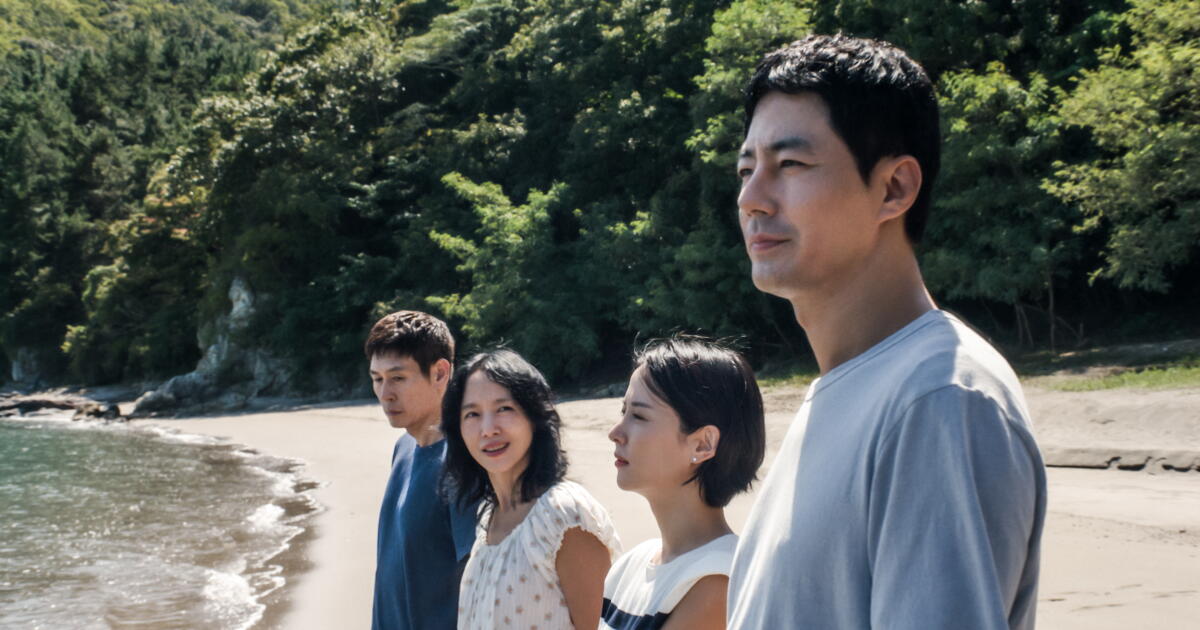
Cynthia Erivo stunned us in our studio space, looking fierce in a dark ensemble and scary nails. We also saw the likes of the luminous Laura Linney and the dapper Korean cast of “Possible Love.” Click through for more celebrity photos and daily surprises.

And do we have video interviews? Do we.

Sarah Paulson, Naomi Watts, and director Cody Fern discuss their new film, “Closing Night.” Chase Infiniti of “One Battle After Another,” Jason Isaacs and more talk “The Julia Set.”

And only minutes after they won the grand jury prize at Venice, we were speaking to the cast of “Possible Love.”

What are we watching tonight?

‘Club Kid’

A man dances at the center of a debauched dance party.

Jordan Firstman, center, in the movie “Club Kid.”

(A24)

It takes thermonuclear moxie to write, direct and star in your debut feature — and cast yourself as the cad. No wonder Jordan Firstman‘s uproarious dramedy “Club Kid” blew away expectations at Cannes and has landed in Toronto ready to shake up awards season.

Firstman plays Peter, an aging New York City party promoter whose scene-y shindigs and subsequent hangovers are starting to feel old.

Enter Arlo (a self-possessed Reggie Absolom) the 9-year-old kid he never knew he had and never fathomed he would have, given that women aren’t his thing (except for that one drug-fueled night with a British girl he barely remembers).

You may think you know where the story is headed and you aren’t entirely wrong, but the route there is a riot. — Amy Nicholson

‘Alpha Gang’

Aliens dressed as 1950 bikers assemble.

A scene from the movie “Alpha Gang.”

(TIFF)

The latest from filmmaking siblings Nathan and David Zellner rolls into Toronto after having just had its world premiere at Telluride.

Their oddball sensibilities and elastic imagination means that you never quite know what to expect from one of their films and this is no exception: a wholly unpredictable story of an alien invasion told from the aliens’ point-of-view that is inscrutably absurd and touched by a startling romantic fatalism.

Two alien cadres, having assumed the looks of 1950s biker gang members, bicker and fight with one another even as they largely overlook their common enemy, the humans.

The cast is likewise a preposterous mash-up of performers you would not wholly expect to see together, including Cate Blanchett, Kelvin Harrison Jr, Léa Seydoux, Riley Keough, Chris Pine, Dave Bautista and others, making the film’s very existence seem like something dropped from outer space. — Mark Olsen

‘The Spiral’

A family and their dog pose for a photo in front of their mansion.

A scene from the movie “The Spiral.”

(TIFF)

Italian horror is my happy place and this is where I’ll be tonight at midnight, sopping up what many early viewers have already described as stylish and vicious.

Director Paolo Strippoli’s domestic drama got sharp reviews out of Venice; it sounds like a cross between a Bava film and “Parasite.” I’ll investigate. — Joshua Rothkopf

Source link

‘Possible Love’ on Netflix: Meet stars of South Korea’s Oscar hopeful

“My actual personality is not very friendly, I’m afraid,” claims Korean actor Jeon Do-yeon. “Myself and actor Sul Kyung-gu, we can be a little bit brusque. We don’t really have the talent to make the set fun.”

As she says it, though, Jeon and co-star Cho Yeo-jeong are laughing — making the assertion rather harder to believe when it arrives in English from Korean via an interpreter. Throughout our conversation, in fact, the pair chuckles, nods along to each other’s answers, interjects sounds of assent. Enough for me to understand that their chemistry comes naturally, whatever Jeon’s protestations.

“In the film I play a character that chases [Jeon’s character] and it really suited me, almost to the point where I didn’t really need to try and act this role,” as Cho puts it. “I was almost like a sunflower, constantly facing and chasing actor Jeon.”

The actors needed every ounce of the sublime chemistry they forged to portray the magnetic but fatally flawed relationship at the heart of auteur Lee Chang-dong’s first film in eight years, “Possible Love,” which premiered Sunday at the Venice Film Festival. South Korea’s international feature submission for the 2027 Oscars, the Netflix film sees Ye-ji (Cho), a documentarian married to a wealthy businessman (Zo In-sung), cozy up to Mi-ok (Jeon), whose husband (Sul) has been seriously injured in a brutal crackdown on striking factory workers, in order to secure an interview with him — only for divisions of class and professional ambition to expose the fault lines in their relationship, and in turn their marriages.

“It seems like they want to be friends with each other, but then there seems to be a line that just cannot be crossed between them,” says Lee, also through an interpreter, of the actors’ accomplished double act, referring to a scene in which Ye-ji bristles at Mi-ok’s suggestion that her high-end clothes are out of place interviewing unemployed laborers. “[Jeon and Cho] knew of that and they went into shooting that scene knowing that it was quite challenging to express. There were, of course, some things that were up to the camera in bringing that about, but I think that was a scene where the two were able to express just how nuanced and quite strange the relationship can be.”

The film itself is just as slippery and multi-layered, down to Lee’s heady admixture of documentary and dramatic aesthetics. Inspired by real-life labor conflict in South Korea, “Possible Love” uses Ye-ji’s nonfiction study of laid-off workers as a window into the lives of ordinary people swept up in large-scale social change, against the backdrop of which the two women’s competing priorities are thrown into stark relief. Can a filmmaker who totes a $4,000 Lora Piana backpack, however well-intentioned, truly understand the plight of the working class? Is a subject eager to publicize a political struggle prepared for the risk that her personal privacy will be invaded in the process?

To choreograph the film within the film — so compelling that I almost missed seeing its conclusion when “Possible Love” shifts the focus to interpersonal fireworks in the third hour — Lee cast a real-life documentary director and cinematographer as Ye-ji’s crew, lending what Cho calls their “natural energy” to the movements of the camera. Cho herself prepared by consulting the late master of the form, Frederick Wiseman, who was unabashed about the tension between documentary filmaking’s often radical politics and the privilege required to turn it into a profession.

“[Wiseman] was posed the question by some students studying film and documentary: ‘How can I pursue this work in reality?’” she recalls. “And he replied with the immortal words, ‘Marry a rich man.’ And you know, I was preparing for the role of Ye-ji, so it was such an apt response for her situation.”

Jeon, left, and Cho in "Possible Love."

Jeon, left, and Cho in “Possible Love.”

(Joo Jae-bum/Netflix)

The potential for conflict bursts into the open at a seaside home that has been in Ye-ji’s husband’s family for years, where the group has decamped for a supposedly restorative holiday. Reminded of the setting by the location of our conversation — a set of green-curtained, pink-carpeted suites at the Hotel Excelsior, overlooking the northern shores of the Adriatic — I ask the actors what’s going through their characters’ minds when Mi-ok and Ye-ji’s promising connection ultimately severs.

Mi-ok “doesn’t really want to reveal to anyone else what’s going on in the family … She only wants to show the good side that they are trying to live their best life and trying to improve and move forward with hopefulness,” Jeon says, citing an early scene in which Mi-ok asks the crew not to film her son’s awkward taekwondo at a school field day. When the camera’s prying eye becomes more intrusive, though, she “feels a great sense of betrayal, that her family is being used and exploited.”

For Cho, who says Ye-ji is “constantly balancing the ethical dilemma” between documenting the truth and treating her subjects with care, the break was always inevitable, and no amount of Ye-ji’s remorse or guilt can repair the damage.

Against this microcosm of the class war Lee sets the emergence of artificial intelligence, which threatens to further destabilize labor across a range of industries — including his own. Although he’s uncertain if, when or how AI will “intrude” on the “entirely creative” filmmaking process, the “Poetry” and “Burning” director is already using it for everyday tasks.

“Before going to see the doctor, I like to ask AI all the symptoms that I have, ask what’s wrong with me. Or I would ask, you know, ‘What’s the weather like in Venice?’” he says. “AI gives us instant answers, and it goes even beyond that to where it gives you advice these days. And in that sense, AI has indeed really gotten deeply intertwined in my daily life.”

Similarly, Jeon is open to using AI for more “trivial” matters, such as simultaneous translation from English to Korean and vice versa. But she admits to more “extreme thoughts” than Lee about the technology’s role in the future of screen acting.

“I’m going to be starring in a [Korean-language adaptation] of Anton Chekov’s “The Cherry Orchard” upcoming in New York. And I was wondering, actually, is the stage the last place that cannot be conquered by AI, and will not be replaced by AI?”

Perhaps. But the scene in “Possible Love” that best captures the finely honed chemistry of its female leads, in which Mi-ok and Ye-ji drunkenly bond over soju and Korean barbecue as their bemused husbands look on, seems to me beyond the capabilities of AI — it’s too warm, too meticulously rendered to be anything other than fully human, the sort of acting one hopes the Venice jury will remember when it hands out the Volpi Cup for best actress on Saturday.

“It is quite difficult technically and practically — it was a scene that we shot all night long,” Cho says. “But I remember shooting it with a lot of pleasure.”

No protest there.

Source link