policy

Southwest Airlines passengers slam new ‘fat tax’ policy as ‘discrimination’ and ‘stressful’

Southwest Airlines has come under fire for its controversial policy change which can require plus-size passengers to purchase an extra seat at the airline’s “sole discretion”, with furious travellers branding it “discrimination”

A so-called “fat tax” aimed at plus-size airline passengers has left travellers furious and feeling “stressed”. Major carrier Southwest Airlines has found itself at the centre of controversy over its contentious new policy, which can compel passengers to shell out for an additional seat at its “sole discretion”.

The policy change comes after 30 years of letting plus-sized passengers request a complimentary extra seat at the gate, and reimbursing those who purchased one in advance – a practice that has now been scrapped.

Under the new rules, customers will only receive a refund for a second seat if their flight departs with at least one empty seat, while those who failed to book ahead can be forced to purchase another ticket on the spot.

In a statement addressing the policy change, a Southwest spokesperson said: “To ensure space, we are communicating to customers who have previously used the extra seat policy that they should purchase it at booking.”

On the airline’s website, the updated “customer of size” policy reads: “Customers who encroach upon the neighboring seat(s) must purchase the number of seats needed. Customers should purchase the seats prior to travel to ensure adjacent seats are available.

“The armrest is considered to be the definitive boundary between seats; you may review information about the width of Passenger seats. In addition, Southwest may determine, in its sole discretion, that an additional seat is necessary for safety purposes.”

But passengers are far from happy. Influencer Samyra Miller turned to TikTok to criticise the policy, branding it a “fat tax”.

She said: “They’ve been doing this way before their little new policy was even supposed to go into effect because, remember, they kicked me off my flight in December.”

She revealed a Southwest representative privately messaged her after she shared her negative experience online and continued: “My primary concern with that whole back and forth with Southwest was for how they were about to treat their plus size customers in changing their customer of size policy.”

Content cannot be displayed without consent

Samyra referred to the wording of the policy on the Southwest website but claimed, at the airport, “they’re just eyeing people”. The content creator went on: “There is no criteria that they are using to determine who has to pay for an extra seat.”

Describing it as “discrimination”, Samyra continued: “It is literally just at the discretion of and fatphobia of whoever is working that day.”

In the comments section, people were eager to share their opinions. One TikTok user said: “This is absolutely horrible!”

Another said: “We have a company trip in May and I told my boss to use any other airline BUT Southwest.”

A third posted: “I have a flight in 5 days I AM STRESSED I DON’T have more money to buy an extra seat”.

While another added: “This isn’t fair at all”.

Fellow TikTok user Sassa Ésmith uploaded a video prior to a Southwest flight and added text overlay which read: “Shoutout to Southwest for contributing to my traveling anxiety with your superfluous ‘customer of size policy'”.

In the caption, she said: “Spent my entire lobby time mentally preparing for a random gate agent to tell me I gotta buy an additional seat for a 40 minute flight”.

Source link

Palestine Action supporters arrested as London’s Met Police reverse policy | Israel-Palestine conflict News

Arrests come days after force announced U-turn, saying that despite High Court ruling, ‘terror’ ban remains in place.

London’s Metropolitan Police have arrested 18 supporters of Palestine Action, days after the force promised to resume arrests in a reversal of policy.

The protesters had sat on the steps of New Scotland Yard, the Met’s headquarters, on Saturday, holding signs that read: “I oppose genocide. I support Palestine Action.”

Recommended Stories

list of 3 itemsend of list

Officers made the arrests under “terrorism” legislation.

Following the High Court’s ruling in February that banning Palestine Action as a “terrorist group” was unlawful, the force had said it would adopt a “proportionate approach” and stop arresting the group’s supporters and focus instead on gathering evidence.

But on Wednesday, Deputy Assistant Commissioner James Harman said that since any “impact of that judgement will not take effect until the government’s appeal has been considered, which could take many months”, it would resume arrests. “We must enforce the law as it is at the time, not as it might be at a future date,” he said.

As she was led away by two officers on Saturday, one woman, in footage posted to social media, can be heard saying: “I’m being arrested for holding a cardboard sign, whereas our government feels the need to sell weapons and use our airbases to commit genocide in Palestine.”

Critics say the Met’s U-turn defies the court ruling.

Palestine Action is a direct action campaign group which has targeted weapons manufacturers linked to Israel and an RAF base.

The government proscribed it as a “terrorist organisation” in July 2025, placing it alongside groups including al-Qaeda and Hezbollah. The High Court called the move “disproportionate” and in breach of freedom of expression.

The government was granted a stay pending an appeal, meaning the ban technically remains in force.

Home Secretary Shabana Mahmood, who said she would fight the High Court ruling in the Court of Appeal, said in February that supporting Palestine Action was not the same as supporting the Palestinian cause.

Chief Magistrate Paul Goldspring has since ordered that hundreds of related prosecutions be paused until after that appeal is heard.

Nearly 3,000 people have been arrested for holding signs in support of the group, contributing to a 660 percent rise in UK “terrorism” arrests in the year to September 2025, Defend Our Juries said.

On the day of the High Court ruling, about 150 people held the same placards outside the court and not a single person was arrested.

The scale of the crackdown has drawn sharp international criticism, including from the UN.

When the ban was first imposed, UN Human Rights Chief Volker Turk said it appeared “disproportionate and unnecessary”, warning it risked criminalising the legitimate exercise of free expression.

In January, US Undersecretary for Public Diplomacy Sarah Rogers told the news platform Semafor that “censoring that speech does more harm than good”.

Amnesty International, which intervened in the court case, said thousands had been “arrested for something that should never have been a crime.”

Eight activists linked to the group staged a lengthy hunger strike in prison, with four held on remand for 15 months before being bailed in February. Four others remain imprisoned.

Earlier this week, Al Jazeera reported that released detainees are now pursuing legal action against the prisons over alleged mistreatment.

Defend Our Juries has called a mass sign-holding event, titled Everyone Day, at Trafalgar Square on April 11, as the government’s appeal heads to court.

Saturday’s arrests took place as the rest of the city was filled with demonstrators who came out to march against the far right.

Source link

Transgender women banned from the 2028 L.A. Olympics by new IOC policy

Transgender women athletes will be excluded from the Olympics beginning with the 2028 Los Angeles Games after the International Olympic Committee implemented a new eligibility policy on Thursday.

Eligibility for women’s competition will be determined by a one-time, mandatory genetics test, according to the IOC. The test requires screening through saliva, a cheek swab or a blood sample.

No woman who transitioned from being born male competed at the 2024 Paris Summer Games, and it is unclear if any transgender women currently compete at an Olympic level. The new policy, however, aligns with President Trump’s executive order banning transgender athletes from participating in women’s or girls’ sporting events in the United States.

The eligibility policy approved by the IOC is not retroactive and does not apply to recreational sports programs.

The IOC said in a statement that it “protects fairness, safety and integrity in the female category.

“Eligibility for any female category event at the Olympic Games or any other IOC event, including individual and team sports, is now limited to biological females.”

Until now, individual sports federations determined whether transgender women were allowed to compete in women’s categories, with the IOC providing only recommendations. Sports that placed restrictions on transgender athletes included track and field, boxing, swimming and rugby.

The IOC Executive Board approved the new policy after 18 months of study. It mirrors the guidelines approved by the World Athletics Council in June, determining eligibility for the female category through screening for the absence or presence of the SRY gene.

The IOC policy leans on scientific research that considers the presence of the SRY gene fixed for life and represents evidence that an athlete has experienced male sex development. Athletes who screen negative for the SRY gene will be eligible to compete in women’s sports.

SRY (which stands for sex-determining region Y gene) is found on the Y chromosome. In the cell, it binds to other DNA, leading to testis formation, according to the National Library of Medicine. Even men who lack Y chromosomes still have a copy of the SRY region on one of their X chromosomes, which accounts for their maleness.

Jane Thornton, the IOC medical and scientific director, last year presented to the executive board findings that transgender athletes born with male sexual markers retained physical advantages, even those that had received treatment to reduce testosterone.

Kirsty Coventry, a former gold-medal Olympics swimmer from Zimbabwe, was elected a year ago as the first woman president of the IOC. She campaigned on the importance of protecting the women’s category.

“At the Olympic Games, even the smallest margins can be the difference between victory and defeat,” Coventry said Thursday in a statement. “So, it is absolutely clear that it would not be fair for biological males to compete in the female category.”

Source link

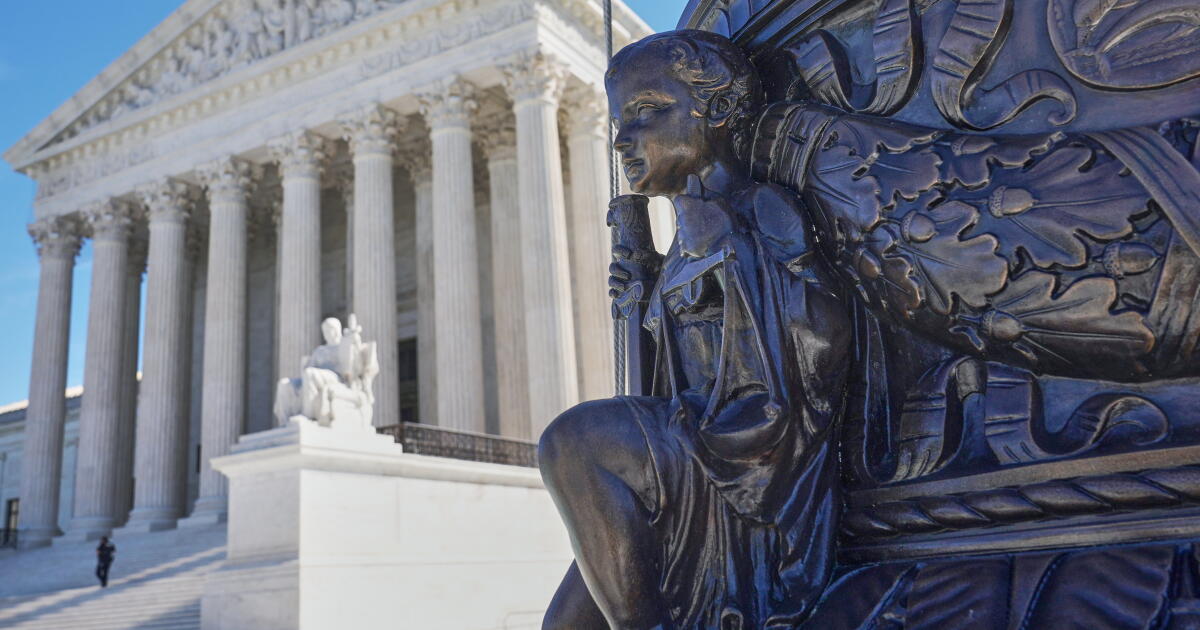
Divided Supreme Court weighs the right to seek asylum at the southern border

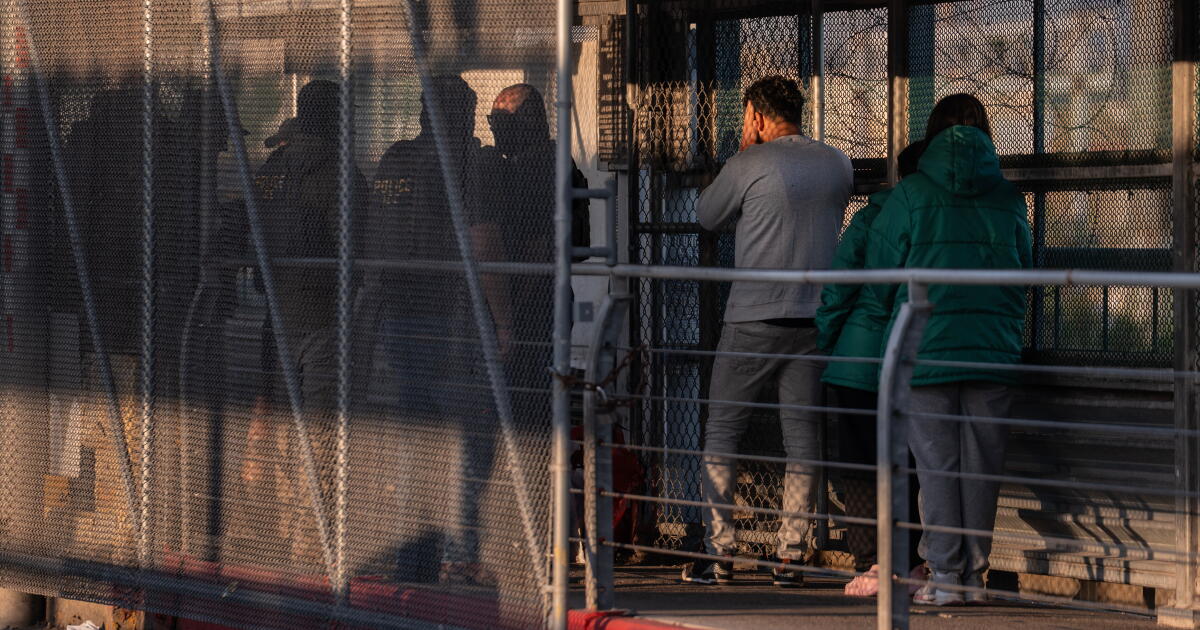
The Trump administration urged the Supreme Court on Tuesday to rule that it may block migrants from applying for asylum at ports of entry along the southern border.

The administration’s lawyers argued that the right to asylum, which arose in response to Nazi Germany and the Holocaust, does not extend to those who are stopped just short of a border post in California, Arizona or Texas.

They pointed to part of the immigration law that says a non-citizen who “arrives in the United States … may apply for asylum.”

“You can’t arrive in the United States while you’re still standing in Mexico. That should be the end of this case,” Vivek Suri, a Justice Department attorney, told the court.

Immigration rights advocates called this claim “perverse” and illogical. They said such a rule would encourage migrants to cross the border illegally rather than present themselves legally at a border post.

The justices sounded divided and a bit uncertain over how to proceed. But the conservative majority is nonetheless likely to uphold the administration’s broad power over immigration enforcement.

Several of the justices noted, however, the Trump administration is not currently enforcing a “remain in Mexico” policy.

Liberal Justices Sonia Sotomayor and Ketanji Brown Jackson questioned why the court would make a major decision on immigration and asylum with no immediate, practical impact.

The case posed a fundamental clash between the government’s need to manage surges at the border and the moral and historic right to offer asylum to those fleeing persecution.

In 1939, more than 900 Jewish refugees who were fleeing Nazi Germany aboard the MS St. Louis were turned away by Cuba and the United States. They were forced to return to Europe and more than 250 of them died in the Holocaust.

The worldwide moral reckoning spurred many nations, including the United States, to adopt new laws which offer protection to those fleeing persecution.

In the Refugee Act of 1980, Congress said that non-citizens either “physically present in the United States” or “at a land border or port of entry” may apply for asylum.

To be eligible for asylum, a non-citizen had to demonstrate a well-founded fear of persecution in their home country due to their race, religion, nationality, membership in a particular social group, or political opinion.

Only a small percentage of applicants win their asylum claims, and only after years of litigation.

But faced with overwhelming surge of migrants, the Obama administration in 2016 adopted a “metering” policy that required people to wait on the Mexican side of the border.

The Trump and Biden administrations maintained such policies for a time.

Immigrant rights advocates sued, contending the metering policy was illegal. They won before a federal judge in San Diego who ruled the migrants had a right to claim asylum.

In a 2-1 decision, the 9th Circuit Court of Appeals agreed in 2024.

“To ‘arrive’ means ‘to reach a destination,’” Judge Michelle Friedland wrote for the appeals court. “A person who presents herself to an official at the border has ‘arrived.’”

The Trump administration appealed.

Solicitor Gen. D. John Sauer said the “ordinary meaning of ‘arrives in’ refers to entering a specific place, not just coming close to it. An alien who is stopped in Mexico does not arrive in the United States.”

On Tuesday, the Justice Department attorney said the court should reverse the 9th Circuit and uphold the government’s broad power to block migrants approaching the border.

“I can’t predict the next border surge,” Suri said.

“For more than 45 years, Congress has guaranteed people arriving at our borders the right to seek asylum, consistent with our international treaty obligations,” said Kelsi Corkran, Supreme Court director of the Institute for Constitutional Advocacy and Protection, who argued the case. “Yet this administration believes that Congress gave it discretion to completely ignore those requirements, and turn back those who are seeking refuge from persecution at its whim.”

“The people turned away at our border are fleeing rape, torture, kidnapping, and death threats. You cannot tell families running for their lives to go back and wait in danger because their suffering is inconvenient,” said Nicole Elizabeth Ramos, border rights project directo at Al Otro Lado which was the plaintiff in the case. “We brought this case because the United States made a legal and moral commitment to protect people fleeing persecution.”

Source link

Keir Starmer’s policy on the Iran war is a recipe for catastrophe | US-Israel war on Iran

In March 2003, a million people took to the streets of London to oppose the illegal invasion of Iraq. Seeing straight through the lie that Iraq possessed weapons of mass destruction, protesters warned the British government in no uncertain terms: This action would trigger a spiral of misery, hatred and death.

More than 20 years on, most people now recognise the Iraq war for what it was: a catastrophic mistake that fuelled a string of subsequent conflicts and instability. The United Kingdom had followed the United States into an illegal war – and more than a million Iraqi men, women and children paid the price.

Unfortunately, not everybody has learned the lessons from the past. It has been almost a month since the US and Israel launched their attacks on Iran. More than 1,400 Iranians and more than 1,000 Lebanese people have been killed.

In seeking to justify the bombing, US President Donald Trump spoke of the need to eliminate “imminent threats from the Iranian regime”, whose “menacing activities directly endanger the United States, our troops, our bases overseas and our allies throughout the world”. He said the goal was to make sure Iran “will never have a nuclear weapon”. Sound familiar?

The first casualty of war is the truth, so let us get the facts straight: These are lies that have been peddled to justify an illegal and unprovoked war. As the National Counterterrorism Center Director, Joe Kent, said in his resignation letter last week, Iran “posed no imminent threat to our nation” and that it was “clear that [the US] started this war due to pressure from Israel and its powerful American lobby”.

There is only one nuclear-armed state in the Middle East: Israel. Next month’s UN Conference of the Parties to the Treaty on the Non-Proliferation of Nuclear Weapons would have been the perfect place to call for an end to the nuclear arms race. A diplomatic solution was possible, but the US and Israel chose war instead. In doing so, they have jeopardised the safety of humankind around the world. So, too, have those nations that have decided to lend support to their war of aggression.

Shortly after the attacks on Iran began, British Prime Minister Keir Starmer gave the US permission to use British military bases for strikes on Iranian missile sites. Last week, his government agreed to let the US use British bases to strike Iranian sites targeting the Strait of Hormuz.

The UK could have followed in the footsteps of Spain and said, “No way, absolutely not. We will not be involved in this illegal war in any way whatsoever.” Instead, it has dragged itself into another catastrophic conflict.

Astonishingly, the prime minister still maintains that the British government is not involved – a line that has been regurgitated by many across our media. He says the UK is allowing its sites to be used only for “defensive” strikes. What nonsense.

The reality is, if a bomber takes off from Royal Air Force base Fairford and bombs targets in Iran, we are involved in that act of aggression. If civilians die, will their families stop mourning when they are told that they were bombed for “defensive purposes”? No matter how Starmer dresses it up, he cannot change the truth: The UK is directly involved in this war.

Mark my words: This is a historic mistake that jeopardises the safety of us all. That’s why, earlier this month, I tabled a bill in the House of Commons that would require parliamentary approval for any British involvement in military action. That includes the use of British bases by other nations.

So far, the prime minister has refused to pass this legislation. With no debate, no discussion and no vote, he is dragging Britain into another disastrous illegal war.

Just like with the invasion of Iraq in 2003, today, those of us who oppose the war on Iran are accused of giving succour to authoritarian regimes and leaders. Whatever one thinks of the governments of various places, there is no basis in law for an attack to bring about regime change. There is no basis in history that bombing from the sky would bring about human rights either.

Trump couldn’t care less about people’s human rights. Whether it’s in Iran, Venezuela or Cuba, he is interested in one thing and one thing only: seizing resources and political control around the world.

If the UK cares about international law, it would be standing up to Trump, not bending over backwards to appease him.

The story of US-led foreign interventions is a story of chaos, instability and misery. How many more of these catastrophic failures do we need before we learn the lesson? And what will it take for the UK to finally defend a consistent, ethical foreign policy based on international law, sovereignty and peace?

The views expressed in this article are the author’s own and do not necessarily reflect Al Jazeera’s editorial stance.

Source link

Opposition leader criticizes probe, economic policy, Iran response

People Power Party leader Jang Dong-hyuk, front row center, and other participants take part in a ceremony launching the party’s Central Next-Generation Women’s Committee at the National Assembly Museum in Seoul on Sunday. Photo by Asia Today

March 23 (Asia Today) — People Power Party leader Jang Dong-hyuk on Sunday criticized a parliamentary probe plan led by the ruling party, along with the government’s real estate policy and its response to the Iran crisis.

Speaking at a party leadership meeting at the National Assembly, Jang questioned the need for an investigation into alleged prosecutorial misconduct during the previous administration.

“If a fabricated indictment can be proven through a parliamentary probe, it would be much faster to obtain an acquittal in court,” he said. “The investigation will ultimately only confirm that the prosecution and trial were justified.”

Jang also invoked remarks previously made by President Lee Jae-myung, saying, “If a president commits a crime, he should go to prison,” adding that he was “returning those words as they are.”

The conservative party boycotted the National Assembly plenary session a day earlier and held a protest rally outside the chamber. A brief confrontation occurred with ruling party lawmakers after the probe plan passed.

Jang criticized the government’s real estate policy, accusing the president of centralizing decision-making while excluding public officials from the process.

“By that logic, the president, who is facing multiple trials, should step away from judicial policy,” he said.

He also warned against expanding fiscal spending in response to the Iran crisis, citing concerns over inflation, exchange rates and rising oil prices.

“With a triple shock of high exchange rates, inflation and oil prices, releasing an additional 25 trillion won, about $18.7 billion, would push prices and the currency higher,” he said. “This is not the time for cash handouts but for stabilizing the economy.”

Floor leader Song Eon-seok echoed the criticism, accusing the administration of attempting to consolidate power and warning against what he described as excessive control over parliamentary committees.

— Reported by Asia Today; translated by UPI

© Asia Today. Unauthorized reproduction or redistribution prohibited.

Original Korean report: https://www.asiatoday.co.kr/kn/view.php?key=20260323010006783

Source link

Judge sides with New York Times in challenge to policy limiting reporters’ access to Pentagon

A federal judge agreed Friday to block the Trump administration from enforcing a policy limiting news reporters’ access to the Pentagon, agreeing with The New York Times that key portions of the new rules are unlawful.

U.S. District Judge Paul Friedman in Washington sided with the newspaper and ruled that the Pentagon policy illegally restricts the press credentials of reporters who walked out of the building rather than agree to the new rules.

The Times sued the Pentagon and Defense Secretary Pete Hegseth in December, claiming the credentialing policy violates the journalists’ constitutional rights to free speech and due process.

The current Pentagon press corps is comprised mostly of conservative outlets that agreed to the policy. Reporters from outlets that refused to consent to the new rules, including from the Associated Press, have continued reporting on the military.

Friedman, who was nominated to the bench by Democratic President Bill Clinton, said the policy “fails to provide fair notice of what routine, lawful journalistic practices will result in the denial, suspension, or revocation” of Pentagon press credentials. He ruled that it violates the First and Fifth amendment rights to free speech and due process.

“In sum, the Policy on its face makes any newsgathering and reporting not blessed by the Department a potential basis for the denial, suspension, or revocation of a journalist’s (credential),” he wrote. “It provides no way for journalists to know how they may do their jobs without losing their credentials.”

The Pentagon did not immediately respond to a request for comment on the ruling.

It has argued that the policy imposes “common sense” rules that protect the military from the disclosure of national security information.

“The goal of that process is to prevent those who pose a security risk from having broad access to American military headquarters,” government attorneys wrote.

Times attorneys claim the policy is designed to silence unfavorable press coverage of President Trump’s administration.

“The First Amendment flatly prohibits the government from granting itself the unbridled power to restrict speech because the mere existence of such arbitrary authority can lead to self-censorship,” they wrote.

Kunzelman writes for the Associated Press. AP writer Konstantin Toropin contributed to this report.
Source link

Long before Trump: How US policy has harmed the environment for decades | Climate Crisis News

Health and environment advocacy groups in the United States are suing the Environmental Protection Agency (EPA) over the Trump administration’s decision to withdraw a key 2009 climate change ruling known as the “endangerment finding”.

That finding had established that greenhouse gases are a risk to public health and environmental safety, given that they are the primary drivers of climate change. It formed the legal basis for many regulatory policies aimed at curbing climate change.

When US President Donald Trump, who has called climate change a “hoax” and a “con job”, rescinded the declaration in February this year, the EPA supported the move, deeming it the “single largest deregulatory action in US history”.

The lawsuit, filed on Wednesday this week, alleges that the Trump administration’s decision will risk the health and welfare of US citizens.

“Repealing the Endangerment Finding endangers all of us. People everywhere will face more pollution, higher costs, and thousands of avoidable deaths,” Peter Zalzal, the associate vice president of clean air strategies at the Environmental Defense Fund, one of the plaintiffs, said in a statement.

Trump’s revocation of the endangerment finding is the latest in a series of steps he has taken to prioritise deregulation, boost fossil fuel production and reverse climate regulations.

But Trump is not the first US president to enact policy damaging to the environment. Here’s how decades of US policy have harmed the environment before he arrived in the White House

What is the ‘endangerment finding’?

The endangerment finding was established under the presidency of Democrat Barack Obama. It states that carbon dioxide and other greenhouse gases pose a threat to public health and welfare.

That ruling allowed the EPA under President Obama to move forward on policy aimed at limit the release of greenhouse gases in the US, Michael Kraft, professor emeritus of political science and public and environmental affairs at the University of Wisconsin-Green Bay, told Al Jazeera.

Under the endangerment finding, power plants were required to meet federal limits on carbon emissions or risk being shut down. This forced oil and gas companies to invest more to detect and fix methane leaks, curb flaring, and improve tailpipe and fuel‑economy standards to enable automobile companies to manufacture more efficient, lower‑emitting vehicles.

What does rescinding it mean?

“By allowing for increased pollution, these recent changes [by the Trump administration] will harm practically every single person on the planet,” Washington, DC-based policy researcher Brett Heinz told Al Jazeera.

“People living near fossil fuel facilities will be some of the most immediately affected, as they will be exposed to the new air and water pollution unleashed by deregulatory policies,” Heinz added.

Without the endangerment finding in place, the EPA has lost a key legal basis on which to limit greenhouse gas emissions, making it easier for coal plants, oil refineries and petrochemical complexes to run older, dirtier equipment for longer, expand without installing modern pollution controls, and emit more soot, smog‑forming gases and toxic chemicals into nearby communities.

Heinz explained that higher greenhouse gas emissions from burning fossil fuels in power plants, cars and industry as well as continued deforestation will also amplify the dangers posed by natural disasters. This is because increased warming exacerbates heatwaves, storms, floods and droughts, and raises sea levels – all of which turn existing natural hazards into more frequent and more destructive disasters.

“The only people who will benefit from these decisions are a small handful of wealthy fossil fuel executives and shareholders, who will see healthy profits while the world grows sick. These fossil fuel elites, many of whom contributed money to Trump’s presidential campaign, have now gotten a return on this investment,” Heinz said.

Experts say that Trump’s decision to entirely do away with environmental policy is unlike any president before him.

“The White House’s tidal wave of new pro-pollution policies is completely unprecedented. While past administrations have modified environmental rules, the second Trump administration is essentially trying to eliminate them entirely. So far, this has been the most radically anti-environmental presidency in American history,” Heinz said.

How have previous US presidents endangered the environment?

Trump is by no means the first US president to enact policy which is damaging to the environment, however.

Under Republican Theodore Roosevelt, who was president from 1901 to 1909, Congress passed the Reclamation (Newlands) Act of 1902, which treated land and rivers primarily as raw material for large infrastructure projects rather than as ecosystems in need of protection.

This was furthered by Democrat Harry Truman, who was president from 1945 to 1953 and pushed for rapid post‑war industrial and suburban expansion by commissioning the construction of interstate highways and promoting car‑centric development.

Under Republican Dwight Eisenhower, who was president from 1953 to 1961, the interstate highway system burgeoned, and the private car became a developmental priority in the US.

While Republican Richard Nixon, who was president from 1969 to 1974, signed key environmental laws, he also backed massive fossil‑fuel expansion. Under Nixon, the highly toxic herbicide, known as Agent Orange, was used by the US military during the Vietnam War.

Republican Ronald Reagan, who was president from 1981 to 1989, appointed people to the EPA and the Department of Interior who pushed for expanded oil, gas, coal and timber extraction on public lands.

To facilitate this, they favoured deregulation and industry interests, and rolled back existing environmental policy, slashing budgets for EPA enforcement of the Clean Air and Clean Water Acts, easing rules on toxic emissions and pesticides, and opening up more federal land – including wilderness and wildlife habitat – to oil, gas, mining and logging activities.

Republican George W Bush, who was president from 2001 to 2009, refused to ratify the 1997 UN-backed emissions reductions Kyoto Protocol and actively undermined global climate negotiations by formally withdrawing US support for Kyoto in 2001, appointing senior officials who questioned climate science, and pushing voluntary, industry-friendly approaches instead of binding emissions cuts.

While Obama, who was president from 2009 to 2017, introduced several landmark climate regulations, he also oversaw the fracking boom, making the US the world’s largest oil and gas producer, and locking in long-term fossil infrastructure.

Fracking, or hydraulic fracturing, involves blasting water, sand and chemicals into shale rock to release oil and gas, a process believed to cause methane leaks, groundwater contamination, heavy water use and increased local air pollution.

Democrat Joe Biden, who was president from 2021 to 2024, approved large fossil projects such as the Willow project in Alaska. This involved oil development on federal land in the National Petroleum Reserve, projected to pump hundreds of millions of barrels of crude over several decades.

Figures released by the the US Bureau of Land Management (BLM) suggested that the project would release 239 million to 280 million tonnes of greenhouse gases over its lifetime. The project, approved in 2023 and ongoing, was projected to continue for 30 years.

Biden also backed LNG export growth by approving new and expanded export terminals and long‑term export licences, allowing companies to lock into multidecade contracts to ship US gas to Europe and Asia.

Is this a partisan issue?

No.

“The failure of US policymakers to aggressively tackle global warming is not so much a Democrat versus Republican matter,” Steinberg said.

“It’s neoliberalism, a form of corporate freedom, that is the heart of the problem. A bipartisan consensus on the need for economic growth has led to a general trend toward weakening environmental regulations,” he added.

The US once led the world in conservation by creating an extensive national park system in the 19th century, Ted Steinberg, a history professor at the US-based Case Western Reserve University, told Al Jazeera.

“That was then. US corporate interests, especially the fossil fuel industry, combined with the one-party political system, in which both Republicans and Democrats indenture themselves to the business class, have caused the United States to drag its feet on global warming,” Steinberg said.

What is the history of Washington’s impact on the environment?

The US has historically been the largest contributor to global warming, experts say.

“As in most countries, US environmental policy has been a response to the problems caused by industrialisation and urbanisation, starting in the mid-19th century and proceeding from there, happening at the local, state and national levels,” Chad Montrie, a history professor at the University of Massachusetts Lowell, told Al Jazeera.

“Much of that policy has been limited and inadequate, especially when corporations were able to exert their influence, but in some cases, it has been ahead of what other nations were doing,” Montrie, who specialises in environmental history, added.

There was a time when environmental policy was bipartisan. The EPA was, in fact, created by Republican President Richard Nixon in 1970.

“It wasn’t until the rise of pro-business politics in the 1980s that Republicans like President Reagan took a hard turn against environmental protections,” Heinz said.

“The Democratic Party continues to believe in environmental protection and climate-friendly policies to some degree, while the Republican Party has become one of the few political parties worldwide that completely denies the scientific facts around climate change.”

How does this affect the rest of the world?

“US policy often sets the standards for policy in other parts of the world, both because of its cultural influence and because of the control that the US has over global bodies like the International Monetary Fund,” Heinz said.

“Right now, the US is actively pushing dirty fossil fuels on the rest of the world and even threatening some of its allies for trying to negotiate new environmental agreements.”

Heinz explained that this pressure, coupled with soaring energy prices, seems to have convinced Europe to retreat from some of their climate goals. Household electricity prices jumped by about 20 percent across the European Union between 2021 and 2022, according to Eurostat data.

Heinz said that if the latest United Nations Climate Change Conference, or COP negotiations are any indication, global climate ambition appears to be on the decline right now.

The latest conference concluded in November 2025 in Brazil with a draft proposal which did not include a roadmap for transitioning away from fossil fuels, nor did it mention the term “fossil fuels” at all. This drew rebuke from several countries attending the conference.

“So long as Donald Trump remains in office, the hope of future generations relies upon the nations of the world coming together and acting responsibly to preserve a healthy environment at a time when the United States has gone truly mad.”

Source link

Schools left wondering how to proceed after ruling on transitioning students

The Supreme Court broke new ground this month when it ruled the Constitution forbids school policies in California that prevent parents from being told about their child’s gender transition at school.

But the reach of this new parental right remains unclear.

Does it mean all parents have a right to be informed if their child is using a new name and pronouns at school?

Or is the right limited to parents who inquire and object to being “shut out of participation in decisions involving their children’s mental health,” as the high court said in Mirabelli vs. Bonta.

Both sides in this legal battle accuse the other of creating confusion and uncertainty. And that dispute has not subsided.

UC Davis law professor Aaron Tang says understanding the Supreme Court’s order calls for a close reading of the statewide injunction handed down by U.S. District Judge Roger Benitez in San Diego.

That order prohibits school employees from “misleading” or “lying” to parents. It did not say school officials and teachers had a duty to contact parents whenever they saw that a student changed their appearance or used a new name, he said.

By clearing this order to take effect, the Supreme Court’s decision “means that schools must tell parents the truth about their child’s gender presentation at school if the parents request that information,” Tang said.

“But the initial burden is on the parents. This is not a rule that schools have an affirmative obligation to inform any and all parents if their child is presenting as a different gender,” he said.

The high court’s 6-3 order also indicated the reach of the judge’s injunction was limited.

It “does not provide relief for all the parents of California public school students, but only those parents who object to the challenged policies or seek religious injunctions.”

Religious conservatives who sued say they seek to end “secret transition” policies that encourage students to adopt a new gender identity without their parents knowing about the change.

The lawsuit challenging California’s “parental exclusion” policies was first filed by two teachers in Escondido.

Peter Breen, an attorney for the Thomas More Society, said many of the parents in Escondido “had no clue” their children were undergoing a gender transition at school.

“We need to activate parents,” he said.

Ruling for them, Benitez said the state’s “parental exclusion policies are designed to create a zone of secrecy around a school student who expresses gender incongruity.”

His injunction also said schools must notify their employees that “parents and guardians have a federal constitutional right to be informed if their public school child expresses gender incongruence.”

The Supreme Court’s order cited a dramatic example of nondisclosure.

Two parents who joined the suit had gone to parent-teacher meetings and learned only after their eighth-grade daughter attempted suicide that she had been presenting as a boy at school and suffered from gender dysphoria.

John Bursch, an attorney for Alliance Defending Freedom, argues the Supreme Court’s opinion goes further to empower parents.

“Fairly read, the Mirabelli opinion creates an affirmative obligation on school officials to disclose,” he said. “It’s consistent with the way [the court] describes the parental right: ‘the right not to be shut out of participation in decisions regarding their children’s mental health.’ School officials’ silence (rather than lying) is not notice to and is shutting out parents.”

“All that said, the California attorney general is obviously not getting that message,” Bursch said.

He said the Supreme Court needs to go beyond an emergency order and fully decide a case that squarely presents the issue of parents rights.

“School officials should not be socially transitioning children without parental notice and consent. Period,” he said.

He filed an appeal petition with the Supreme Court in a case from Massachusetts that dissenting Justice Elena Kagan described as a “carbon copy” of the California dispute.

It takes only four votes to grant review of a case, but since November, the justices have repeatedly considered the case of Foote vs. Ludlow and taken no action.

The case is set to be considered again on Friday in the court’s private conference.

Meanwhile, California Atty. Gen. Rob Bonta went back to the 9th Circuit Court of Appeals seeking a clarification to limit the potential sweep of Benitez’s order.

He objected to the part of the judge’s order that said schools must post a notice that “parents and guardians have a federal constitutional right to be informed if their public school student child expresses gender incongruence.”

Bonta said that goes beyond what the Supreme Court approved.

This “could be understood to suggest that public school officials have an affirmative constitutional duty to inform parents whenever they observe a student’s expression of ‘gender incongruence,’ effectively imposing a mandatory ‘see something, say something’ obligation in all circumstances,” he said.

But the 9th Circuit said it would not act until he first presented this request to Benitez.

Meanwhile, transgender rights advocates say the voices and the views of students have been ignored.

“This case has been about states’ and parents’ rights but students have been left out of the conversation. Their voices have not been heard at all,” said Andrew Ortiz, an attorney for the Transgender Law Center. “School should be a place where young people can feel safe and confident they can confide in a teacher.”

“We’re hearing about fear and anxiety,” said Jorge Reyes Salinas, communications director for Equality California, the nation’s largest statewide LGBTQ+ civil rights organization.

“There are students who are unable to speak with their parents. Teachers can encourage them to have a conversation with their parents. But this will weaken the trust they have in their teachers,” he said.

In the past, the court had been wary of reaching into the public schools to decide on education policies and the curriculum, but it took a significant step in that direction last year.

In a Maryland case, the court said religious parents had a right to “opt out” their young children from classes that read “LGBTQ+-inclusive” storybooks.

The 1st Amendment protects the “free exercise of religion” and “government schools … may not place unconstitutional burdens on religious exercise,” wrote Justice Samuel A. Alito, the lone conservative who attended public schools.

The same 6-3 majority cited that precedent to block California school policies that protect the privacy of students and “conceal” information from inquiring parents if the student does not consent.

But the California case went beyond the religious-rights issue in the Maryland “opt out” case because it included a “subclass of parents” who objected without citing religion as the reason.

The justices ruled for them as a matter of parents’ rights.

“Parents — not the state — have primary authority with respect to the upbringing and education of children,” the court said.

That simple assertion touches on a sensitive issue for both the conservative and liberal wings of the court. It rests on the 14th Amendment’s clause that says no state may “deprive any person of life, liberty or property without due process of law.”

In the past, a liberal majority held that the protection for “liberty” included rights to contraceptives, abortion and same-sex marriages.

Conservatives fiercely objected to what was dubbed “substantive due process.”

In the California case, Kagan, speaking for the liberals in dissent, tweaked the conservatives for recognizing a new constitutional right without saying where it came from.

“Anyone remotely familiar with recent debates in constitutional law will understand why: Substantive due process has not been of late in the good graces of this Court — and especially of the Members of today’s majority,” she wrote.

She noted that when the court struck down the right to abortion in the Dobbs case, Justice Clarence Thomas said he would go further and strike down all the rights that rest on “substantive due process.”

In response to Kagan, Justice Amy Coney Barrett filed a concurring opinion that staked out a moderate conservative position.

Since 1997, the court has said it would stand behind rights that were “deeply rooted in the nation’s history and tradition,” she wrote. That includes “a parent’s right to raise her child … and the right to participate in significant decisions about her child’s mental health.”

She said California’s “non-disclosure policy” is unconstitutional and violates the rights of parent because it applies “even if parents expressly ask for information about their child’s gender identification,” she wrote.

Chief Justice John G. Roberts and Justice Brett M. Kavanaugh signed on to her opinion.

While Kagan dissented on procedural grounds, she did not disagree with bottom-line outcome.

“California’s policy, in depriving all parents of information critical to their children’s health and well-being, could have crossed the constitutional line,” she said. “And that would entitle the parents, at the end of the day, to relief.”

Source link

Former Newsom advisor received $50,000 payout after leaving state job amid federal probe

Gov. Gavin Newsom’s former chief of staff, Dana Williamson, left state service with two things: a federal corruption investigation and more than $50,000 in pay for vacation time she accrued but never took.

State payroll records reviewed by The Times show Williamson used approximately $30,000 in unused vacation time to remain on California’s payroll through Jan. 31 — seven weeks after Newsom’s office indicated she had departed — before collecting an additional $22,000 lump-sum payout for the hours she had left.

Large cash-outs for departing state workers with hundreds of hours of time off on the books have been a recurring issue in California. The state’s unfunded liability for vacation and other leave owed to employees has ballooned in recent years to $5.6 billion, fueled by generous time-off provisions and a long-standing failure to enforce policies that cap most employees’ vacation balances at 640 hours.

Many state workers accumulate large balances of unused vacation after decades of being on the government payroll. The typical public employee retires with more than two decades in public service, according the California Public Employees’ Retirement System. Their unused time off is paid when they leave state employment at their final rate of pay.

Williamson, however, amassed 462 hours of unused leave in less than two years on the job. She earned $19,612 a month as the governor’s chief of staff.

John Moorlach, director at the conservative think tank the Center for Public Accountability at the California Policy Center, said that a job like Williamson had probably involved incredibly long workdays but that the pace in which employees accumulate days off is a major financial burden.

“A normal blue-collar worker would say, ‘Really? Really?“” said Moorlach, a former Republican state senator from Orange County. “You don’t find this perk in the private sector.”

Williamson notified Newsom in November 2024 that she was under federal investigation and was put on paid administrative leave through Dec. 16, the governor’s office said.

Federal charges against Williamson, which were filed in November 2025, allege she siphoned $225,000 out of a dormant state campaign account belonging to gubernatorial hopeful Xavier Becerra and illegally claimed $1 million in luxury handbags and travel as business expenses on her tax returns. She pleaded not guilty to the charges.

A status conference in Williamson’s case was moved to April 16 after she recently underwent a successful liver transplant and due to the large volume of discovery — more than 280,000 pages so far — according to court records filed last month.

Williamson’s attorney, McGregor Scott, did not respond to a request for comment.

State payroll records show Williamson earned $40,000 in regular pay in 2025, which the state controller’s office said included her December 2024 and January 2025 paychecks. The governor’s office said Williamson’s December 2024 paycheck included 11 days of paid administrative leave, and the remainder of both paychecks was covered by her unused leave.

With her final cash-out of $22,000 in remaining time off, she made a total of $62,000 last year — all tied to administrative leave and unused vacation time rather than time worked.

“That’s shocking, honestly,” said Assemblyman Josh Hoover (R-Folsom), adding that stockpiled vacation time overall is something the state Legislature should look into.

The state paid $453 million in unused leave benefits to state workers in 2025. That was an average of more than $20,000 to the 21,000 employees who received a lump-sum check. The amount paid to departing or retiring state workers has steadily increased each year. In 2024, the state paid $413 million for unused time off.

“Obviously, employees are an important part of our state and they accrue vacation time,” Hoover said. “But, if this is something being used to pad people’s salaries … we need to look into that and possibly reform that.”

Last year, 80 state employees took home at least $250,000 in unused time off, and 1,081 employees were paid more than $100,000. Those numbers have been increasing each year. For example, the state paid 16 state workers more than $250,000 for unused time off in 2010, and 309 employees were paid more than $100,000.

In 2024, the state paid out a record $1.2 million to a prison supervising dentist for unused time off. Last year, the top amount paid for unused leave was about $650,000 to an assistant fire chief with the California Department of Forestry and Fire Protection.

The state owed nearly $5.6 billion to state workers for unused vacation and other leave benefits in 2024, according to the most recent financial accounting report issued by the state controller’s office. Although that unfunded liability held steady when compared with 2023, it has risen sharply from pre-pandemic amounts.

In 2019, the state owed $3.9 billion for employees’ unused time off before COVID-19 curtailed travel and work-from-home policies resulted in fewer workers taking time off. State employees have argued that under-staffing at state agencies can make it difficult to take vacations.

Nick Schroeder, a policy analyst at the nonpartisan California Legislative Analyst’s Office, said the state has plans to reduce unfunded liabilities for pensions and retiree healthcare, but that isn’t the case with unused time off.

“There isn’t a plan to address it,” Schroeder said.

When an employee retires with a large leave balance, the department where that person worked last is on the hook for the amount.

“It can be a big effect on that individual department’s budget,” Schroeder said.

During budget deficits — including in the current fiscal year — the state has cut employee pay or deferred annual raises in exchange for additional days off, a strategy that helps balance budgets but also adds to workers’ growing vacation balances.

In Newsom’s January budget proposal, which estimated a $3-billion deficit, the governor recommended providing $91 million in ongoing funding to the California Department of Corrections and Rehabilitation to help the prison system pay departing employees for their unused time off. The department said that from 2020 to 2025, it paid about $130 million annually on average to employees leaving state service, according to a Legislative Analyst’s Office report.

When employees cash out banked leave, the state pays them not only for the hours they have accumulated, but also for the additional vacation and holidays they would have earned had they taken that time off.

That means a person with 640 hours of vacation would also be paid for all of the vacation and holidays they would have earned had they taken those 80 days off. Each hour of leave is paid based on an employee’s final salary — not what they were earning when the time was accrued.

Most private-sector employers cap vacation accrual between 40 and 400 hours and stop employees from earning additional time once they reach those limits. Some companies have moved in the opposite direction, adopting “unlimited paid time off” policies. Under those systems, employees do not accumulate vacation days that can be banked or cashed out, but critics say the policies can lead to workers taking less time off because there is no guaranteed number of days and employees may feel pressure not to appear absent.

Jon Coupal, president of the Howard Jarvis Taxpayers Assn., said there appears to be little appetite in the state Capitol to address California’s burgeoning vacation liability.

“This problem is systemic within California government and no one seems willing to take it on,” Coupal said. “At the same time, they are clamoring that there is a budget crisis. I suspect they will continue to kick the can down the road.”

Source link

Engineer sues L.A. County over Pride flag at government buildings

A Christian engineer with L.A. County claims his bosses discriminated against him by forcing him to pass by a Pride flag on the way to his office, the latest legal challenge to the government’s policy of requiring many government buildings display the flag throughout June.

Eric Batman, a 24-year veteran of the Department of Public Works, sued the county March 10 for refusing to let him work remotely in June, when the rainbow-striped flag hangs in front of his department’s Alhambra headquarters.

It’s the second lawsuit to target the county’s 2023 policy ordering the raising of the “Progress Pride Flag,” a modified version of the traditional rainbow flag with additional stripes representing people of color and transgender and nonbinary people.

In May 2024, Jeffrey Little, an evangelical Christian county lifeguard, sued the county for requiring he work feet away from the flag. That case, filed by conservative Catholic legal group Thomas More Society, is ongoing.

Batman said he first asked to work remotely for the month of June in 2024 to avoid the flag, which he found “highly offensive,” according to the suit.

A supervisor rejected his request, according to the filing, noting the county was “committed to fostering an inclusive workplace, including for our LGBTQ+ employees.” The supervisor suggested he use another entrance, Batman’s suit claimed.

“They wouldn’t give it to him because the county said ‘Our interest is in inclusivity — regardless of whether or not that includes you,”’ said Daniel Schmid, an attorney with Liberty Counsel, a Christian legal group representing Batman.

Liberty Counsel frequently takes on high-profile plaintiffs who oppose same-sex marriage, including the case of Kim Davis, the Kentucky county clerk who refused to provide marriage licenses to same-sex couples.

A spokesperson for the county’s public works department said she could not comment on the suit as it had not yet been served.

Source link

Column: On Iran, Russia and China, Trump’s weakness for strongmen explains his foreign policy

“I’m not going to start a war. I’m going to stop wars.”
— Donald Trump, in his victory speech Nov. 6, 2024

It’s bad enough that President Trump has broken that oft-repeated pledge and unilaterally started a war, without engaging either Congress or the American public. And that, by his war of choice against Iran, he has in the most perilous way to date betrayed his signature “America First” standard, at least as longtime proponents Marjorie Taylor Greene, Megyn Kelly, Steve Bannon, Tucker Carlson and others mean it, and as many people thought he did too.

What’s even worse than Trump’s mendacity about stopping foreign wars is the broader truth that his war on Iran underscores: In the major theaters of U.S. foreign policy — the Mideast, Europe and Asia — he is essentially letting foreigners set his course, America’s course. And to state the obvious: Israeli Prime Minister Benjamin Netanyahu, Russia’s Vladimir Putin and China’s Xi Jinping do not have America’s interests at heart.

It has long been a defining contradiction of Trump that the wannabe strongman repeatedly shows himself to be in thrall to the world’s actual strongmen. His affinity for them has for years puzzled observers in this country and abroad. Trump strikes a pose — say, on negotiating with Iran about its nukes program, promising peace in Ukraine, hitting China with tariffs — only to crumple after a phone call, a meeting or a slap back from his opposite number.

It’s always hard for a person without a strong core to maintain a stand.

Obviously different factors are at play in Trump’s relationships with Israel, a U.S. ally, with longtime adversaries Russia and China and, more specifically, with each nation’s leaders. But all three cases reflect a personalization of foreign policy that is dangerously unique to Trump. For him, it’s less “what’s good for my country” than “what’s good for me” and “who likes me.” Time and again, he’s been explicit about that.

For all Trump’s cosplaying as a strongman, he shows his weakness as a national leader when he lets foreign counterparts share the wheel with him. As a consequence, he’s driving America erratically at best. At worst, he’s steering into another costly, bloody “forever war” of the sort he railed against for decades.

He’s gone in a direction in the Middle East that, polls show, pluralities or even majorities of Americans didn’t want to go. Trump has received none of the initial rally ’round support that past presidents enjoyed after initiating military operations. That’s a hazardous place to be domestically. Most Republicans are behind Trump on the war, but not by the usual high numbers. After all, it was disgust with forever wars in Iraq and Afghanistan that sent many people flocking to Trump’s “America First” banner to begin with.

For years he warned that other presidents and presidential candidates would start a war in Iran, World War III even. Yet here we are. And after days of what Kelly derided on air as the “10,000 different explanations” that Trump has given for attacking Iran and killing its top political and military leaders, on Monday, Secretary of State Marco Rubio emphatically provided just one: Because Israel was going to strike Iran first, the United States had to join the attack to protect U.S. personnel and assets in the region from Iran’s retaliation.

Cue the blowback in MAGA world: “He’s flat out telling us that we’re in a war with Iran because Israel forced our hand,” MAGA pundit Matt Walsh lashed out online. And then Trump contradicted his secretary of State on the rationale for the attacks. Yet Rubio wasn’t the only one citing Israel’s plans as the war’s predicate. So did House Speaker “MAGA Mike” Johnson. On Tuesday, Trump himself said he had to act fast because the Iranians “were getting ready to attack Israel.”

As Democratic Sen. Mark Warner of Virginia, vice chairman of the Senate Intelligence Committee, responded, “If we equate a threat to Israel as the equivalent of an imminent threat to the United States, then we are in uncharted territory.”

Similarly, in June, Trump ordered a devastating one-off strike on Iran’s nuclear facilities to support Israel’s 12-day war against Iran. For months after, Netanyahu hounded Trump to stop the subsequent peace talks with Iran and go back on offense with Israel. So now Trump has complied, striking even as negotiations with Iran were ongoing. Sen. Lindsey Graham, the once respected Republican from South Carolina, offered his sycophantic spin: “Bibi and Trump are the modern Roosevelt-Churchill combination.”

The latters’ grave sites surely trembled.

As for Asia, Trump talks a good game against China, and, yes, he’s imposed big tariffs. But just as often he’s backtracked, often after talking with Xi. Trump’s admiration of the Chinese autocrat and his eagerness to please him is palpable. In fact, in dealing with Xi, Trump in both of his terms has violated his own words in “The Art of the Deal”: “The worst thing you can possibly do in a deal is seem desperate to make it. That makes the other guy smell blood, and then you’re dead.”

No one is more worried about Trump’s regard for Xi than the Taiwanese, living under threat from China. Just recently Trump delayed arms sales to Taiwan approved by Congress lest he upset Xi ahead of their Beijing meeting in April.

In Europe, meanwhile, Trump continues to be played by Putin at the “peace” table to end Russia’s war in Ukraine — the war that candidate Trump said he’d settle in a day. More than a year later, he continues to harangue Ukraine’s Volodymyr Zelensky to make concessions to the invader, never demanding anything from Putin.

Most heinously, Trump’s 28-point “peace” plan last November incorporated everything that Putin/Russia dreamed of extracting from Ukraine, and for good reason: The proposal came from Moscow, passed from Putin’s flunky to Trump’s. That followed Trump’s humiliating summit with Putin last August in Alaska, giving the globally reviled Russian an American stage and pageantry and serving no purpose for the United States, only for Trump the showman. All the while, Russia continued ravaging Ukraine.

So much for Trump’s election promise. He doesn’t stop wars (his repeated claims to the contrary). But he does start them.

Bluesky: @jackiecalmes
Threads: @jkcalmes
X: @jackiekcalmes

Source link

Supreme Court: California parents may be told about their transgender child at school

The Supreme Court revived a San Diego judge’s order Monday and said parents have a right to know about their child’s gender identity at school.

The decision came in a 6-3 order granting an emergency appeal from lawyers for Chicago-based Thomas More Society.

They said the student privacy policy enforced in California infringes parents’ rights and the free exercise of religion.

“The parents object that these policies prevent schools from telling them about their children’s efforts to engage in gender transitioning at school unless the children consent to parental notification,” the court said. “The parents also take issue with California’s requirement that schools use children’s preferred names and pronouns regardless of their parents’ wishes.”

The judge’s injunction “does not provide relief for all the parents of California public school students, but only for those parents who object to the challenged policies or seek religious exemptions,” the justices added.

The six conservatives were in the majority, while the three liberals dissented.

Religious liberty advocates hailed the decision.

“Parents’ fundamental right to raise their children according to their faith doesn’t stop at the schoolhouse door,” said Mark Rienzi, president of the Becket Fund for Religious Liberty. “California tried cutting parents out of their children’s lives while forcing teachers to hide the school’s behavior from parents. We’re glad the Court stepped in to block this anti-family, anti-American policy.”

The 9th Circuit Court of Appeals had put on hold a late December ruling by U.S. District Judge Roger Benitez, who held that the student privacy rules enforced by California school officials were unconstitutional.

“Parents and guardians have a federal constitutional right to be informed if their public school student child expresses gender incongruence,” Benitez wrote. “Teachers and school staff have a federal constitutional right to accurately inform the parent or guardian of their student when the student expresses gender incongruence.”

Escondido public schoolteachers Elizabeth Mirabelli and Lori Ann West, who described themselves as “devout Catholics,” sued in 2023, and they were later joined by parents in Pasadena and Clovis.

The Supreme Court’s ruling refers only to the parents.

The parents who brought the case “have sincere religious beliefs about sex and gender, and they feel a religious obligation to raise their children in accordance with those beliefs,” the court said.

The court added: “Gender dysphoria is a condition that has an important bearing on a child’s mental health, but when a child exhibits symptoms of gender dysphoria at school, California’s policies conceal that information from parents and facilitate a degree of gender transitioning during school hours.”

“This is a watershed moment for parental rights in America,” said Paul M. Jonna, special counsel at Thomas More Society. “The Supreme Court has told California and every state in the nation in no uncertain terms: you cannot secretly transition a child behind a parent’s back.”

The 9th Circuit had agreed with the state’s attorneys who said the judge had misstated California law.

“The state does not categorically forbid disclosure of information about students’ gender identities to parents without student consent,” they said in a 3-0 decision.

“For example, guidance from the California Attorney General expressly states that schools can ‘allow disclosure where a student does not consent where there is a compelling need to do so to protect the student’s wellbeing,’ and California Education Code allows disclosure to avert a clear danger to the well-being of a child.”

In their parents’ rights appeal to the Supreme Court, attorneys said school employees are secretly encouraging gender transitions.

“California is requiring public schools to hide children’s expressed transgender status at school from their own parents — including religious parents — and to actively facilitate those children’s social transitions over their parents’ express objection,” they told the court.

“Right now, California’s parental deception scheme is keeping families in the dark and causing irreparable harm. That’s why we’re asking the U.S. Supreme Court to intervene immediately,” Jonna wrote in his appeal. “Every day these gender secrecy policies stay in effect, children suffer and parents are left in the dark.”

California state attorneys had urged the court to put the case on hold while it is under appeal.

They said the judge’s order “appears to categorically bar schools across the State from ever respecting a student’s desire for privacy about their gender identity or expression — or respecting a student’s request to be addressed by a particular name or pronouns—over a parent’s objection.”

They said the order “would allow no exceptions, even for extreme cases where students or teachers reasonably fear that the student will suffer physical or mental abuse.”

Source link