
Anduril Dives Into Submarine Construction With New Baltimore Plant
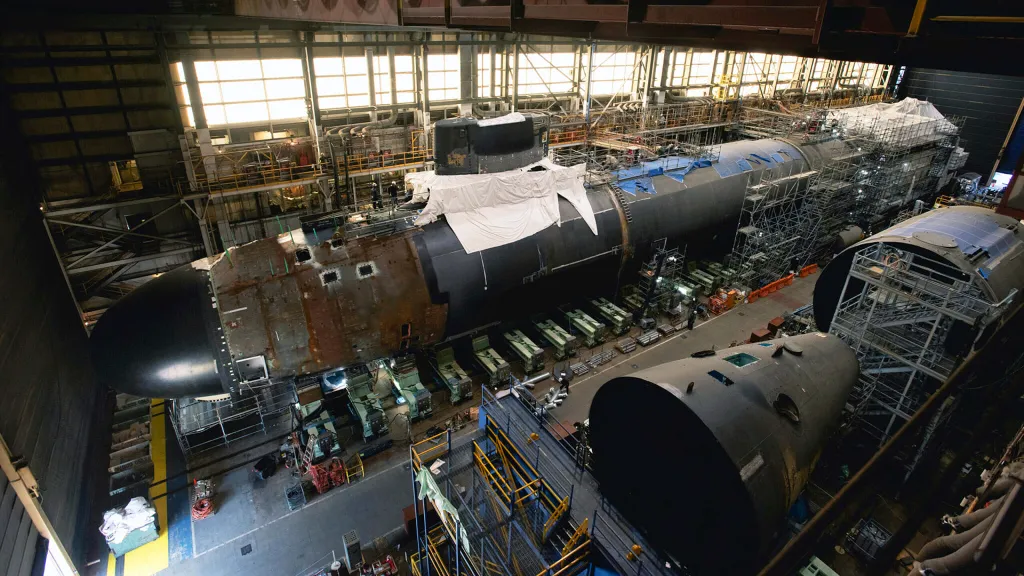
As part of its overall effort to boost America’s flagging shipbuilding capacity, the Trump administration on Tuesday announced that Anduril is building a new two-million-square-foot facility in Baltimore designed to help speed up the production of Virginia class nuclear-powered attack submarines. The plant, dubbed Arsenal-2, will eventually produce components like torpedo tubes and spherical air flasks, which will then be sent to the two shipyards that build nuclear submarines, General Dynamics Electric Boat and Huntington Ingalls Industries’ Newport News Shipbuilding. Anduril’s plan to build complex submarine components is a huge leap for a company with a shipbuilding portfolio consisting of a limited number of smaller craft.
The submarine component plant announcement was made as the Navy is struggling to keep up with its goal of producing two of these boats per year amid a wider issue of construction and delivery delays across the service. However, it will be years before the first Anduril-produced components are placed on a submarine, with no specific timelines for that effort yet established, an industry official told us. We will discuss that in greater detail later in this story.

“Today’s $6.6 billion investment represents the president’s commitment to restoring American maritime dominance by constructing new vessels in communities like Baltimore and across the country,” White House spokesperson Anna Kelly told a group of reporters, including from TWZ, at a Tuesday morning press conference.
Those funds include a $3.7 billion investment from Anduril to build and staff the new facility and a contract worth up to $2.9 billion awarded to Anduril by the Navy to produce the components.
“The Virginia class submarine program is one of the most critical warfighting capabilities that our nation has that guarantees deterrence every single day,” Anduril President and Chief Strategy Officer Chris Brose stated. “It is also a program that has been challenged in terms of the ability to meet the Navy’s requirements. So we’re, as a nation, not necessarily where we need to be, and that’s not because of our shipyard workers.”
The Navy currently has 26 Virginia class boats, with two more expected to be commissioned next spring, a senior administration official told reporters on Tuesday. Another 31 vessels are still needed to meet the Navy’s overall plan to have 59 Virginia class boats.

However, while the Navy has been buying them at a rate of two per year from Fiscal Year 2011 through Fiscal Year 2024, “the actual Virginia class production rate has never reached 2.0 boats per year, and since 2022 has been limited by shipyard and supplier firm workforce and supply chain challenges to about 1.1 to 1.2 boats per year, resulting in a growing backlog of boats procured but not yet built,” according to a Congressional Research Service (CRS) report published in January. “Key drivers of the drop in production include workforce challenges, first-time quality, material and supplier delays, and lead ship issues associated with the Virginia Payload Module [VPM] variant. The Navy is working closely with the shipbuilders to drive improvement throughout the Virginia enterprise.”
The VPM is an 84-foot hull extension that contains four additional large vertical tubes designed to launch Tomahawk land-attack cruise missiles, Intermediate-Range Conventional Prompt Strike (IRCPS) hypersonic missiles, and other payloads. You can read more about the Navy’s VPM plans in our story here.

Adding to the strain on production and delivery, Australia is set to get one new-build Virginia class boat and two from the U.S. Navy’s fleet under the 2021 trilateral AUKUS nuclear submarine acquisition deal with the United States and the United Kingdom.
In May, Chief of Naval Operations Adm. Daryl Caudle told Congress that the service would meet its two-boat-a-year delivery rate by 2032.
During Tuesday’s press conference, officials laid out claims that the new Anduril plant will address several of the issues that have slowed down the construction and delivery of these submarines.
“If you look at this in terms of capacity, the potential based on the area and what Anduril plans to do is to add about 9 million hours of labor a year at this facility,” stated a senior administration official, who, like others on Tuesday spoke on condition of anonymity. “That would be the equivalent of about a 15% increase, and so that would be directly translatable to Virginia class submarine production. So having those torpedo tubes earlier would let us move production of current Virginia submarines under construction faster.”

In addition, Anduril plans to draw on a huge potential workforce to staff the plant.
“If you basically draw like a one-hour radius around the Baltimore County area, there are millions and millions of people who could potentially contribute and work at this shipyard, and that is a huge selling point for us,” an industry official suggested.

Beyond producing components like torpedo tubes, Anduril aspires to eventually build “full ship sections, bows, sterns, etc.” at Arsenal-2, the industry official added.
Anduril said Arsenal-2 will be “purpose-built” for the “high-volume, high-precision production of undersea naval capabilities.”
“The shipyard’s layout is optimized for production,” the company stated in a media release. “Reduced distances between fabrication, assembly, testing, and integration areas eliminate the staging bottlenecks that slow conventional yards.”
“A functional 1,200-foot graving dock and multimodal road and rail access support large-scale component movement,” Anduril added. “High-bay assembly halls, adjacent fabrication areas, and reconfigurable production lines allow the yard to shift rapidly as Navy requirements evolve.”
ArsenalOS, Anduril’s industrial software platform, “will provide the digital backbone for the yard and its production systems,” the company further pointed out. “It will connect fabrication workflows, outfitting sequences, material movement, inspection protocols, and documentation requirements in a single system, giving workers and managers real-time visibility into the state of production. Digital work instructions, embedded quality controls, modern sensing, and automation will support the expertise of welders, pipefitters, electricians, shipfitters, inspectors, and other skilled trades.”

ArsenalOS™: The Digital Backbone of Modern Defense Manufacturing
Anduril claims the project “will create 3,100 direct jobs and support more than 11,000 indirect jobs. The site will drive $2 billion in annual economic output, including an estimated $312 million in wages each year.”
Before Arsenal-2 is up and running, Anduril said it plans to “manufacture critical Virginia class submarine components at a new 160,000-square-foot facility in Orange County, California, purpose-built to support key submarine construction processes and SUBSAFE-qualified production qualification [efforts].”
The Orange County facility will give Anduril “a two-year operational head start to develop and validate manufacturing methods, production workflows, and quality systems before Arsenal-2 comes online,” the company noted. “It will support prototyping and production of Virginia-class test assets and critical maritime components, including torpedo tubes, while allowing Anduril to recruit and train the early workforce on the systems and standards that will ultimately scale at Arsenal-2. Once Arsenal-2 comes online, the Orange County facility will continue supporting broader maritime manufacturing efforts across Anduril’s industrial network.”

Newly built Virginia-class submarine #Massachusetts launches for the first time #shorts
As we noted earlier in this piece, it will be years before anything produced by Anduril winds up on a sub. In addition to recruiting and training a workforce to build the components and ensuring the production system can meet goals, the parts then have to be tested to ensure they are safe enough to place on boats.
The industry official told TWZ that there is no schedule yet for when that will happen.
“We are starting this work now,” the industry official said. “We’re going to be working quickly. There’s a lot we’re going to have to do to prove the ability to produce the initial components – the torpedo tubes. We’re going to have to work with our partners in industry and partners in government on the certification. So it’s really not possible to put a time stamp on it as much as I’d like to.”
“I think our goal, and I know this is shared by the administration, is to go as fast as possible while keeping the bar of safety as high as it needs to be, and try to get these systems certified so that they go into the production of boats… and solve the critical limiting factor currently in our supply chain, and help our industry partners produce more submarines.”
Arsenal-2 follows the development of Anduril’s Arsenal-1 plant in Ohio, first announced two years ago. That five-million-square-foot facility, once fully up and running, will be able to “produce tens of thousands of autonomous weapons systems addressing the urgent needs of the United States and our allies,” the company said at the time.

Arsenal-1, however, remains a work in progress, with more construction work yet to be done. Still, Anduril’s first product from that plant, the U.S. Air Force’s Collaborative Combat Aircraft (CCA) known as the YFQ-44A Fury, rolled off the assembly line there in July. That milestone met the company’s initial production schedule announced in January 2025, according to JobsOhio, the state’s business development arm.

Anduril, which also produces systems like the Ghost Shark extra-large autonomous undersea vehicle (in partnership with Australia), the Roadrunner reusable missile-like air vehicle, the Iris family of passive infrared sensors, and a wide range of other items, is playing a growing role in the Trump administration’s weapons development efforts.
Last month, Defense Secretary Pete Hegseth announced that Anduril co-founder Palmer Luckey, who made a name for himself and his fortune in the virtual reality space with Meta, will help lead a new program dubbed Project Meridian. The goal, according to a Pentagon memo, is to “map the trajectory of future warfare, identify critical capability gaps, and propose actionable solutions in furtherance of the identified goals in the 2026 National Security Science and Technology Strategy.”
The Pentagon’s Chief Technology Officer, Emil Michael, has been directed to set up this project. SpaceX founder Elon Musk and Newt Gingrich are other key members.

From our story about Project Meridian and the Pentagon’s overall effort to boost its autonomous warfare capabilities:
“The inclusion of Musk and Luckey does raise ethical questions, as they both lead companies with major U.S. government contracts already, and which could be in line to see more opportunities based on Project Meridian’s findings. What guardrails might be put in place to prevent conflicts of interest is unclear.”
Regardless of any such concerns, today’s shipyard announcement is a clear indication that the Trump administration and the Pentagon see Anduril as a major player across its weapons manufacturing industrial base. It’s also a reminder of just how challenging it is to actually expand America’s ability to build fighting vessels.
Contact the author: howard@twz.com
TikTok added $12 billion to California businesses last year, report says
When Brandon Hurst first decided to sell his plants on TikTok Live in 2023, the 32-year-old Sylmar resident didn’t know what to expect. He said he thought he could sell at least 30 plants, but instead sold 250.
Now, three years later, the internet creator, who goes by Brandon the Plant Guy, sells up to 5,000 plants a week, works out of a 3,000-square-foot greenhouse in Sylmar and has a staff of 13. He credits much of this success to the exposure he’s received on TikTok.
“I’d be out of business if it wasn’t for TikTok,” said Hurst. “I would have ended the business and gone back to working the desk job that I was working prior. I was already on that path, that was where we were headed. And then TikTok really did turn that around.”
Hurst is one of the 920,000 California-based businesses using the social media platform to reach new customers and grow their brands, according to new data from consulting firm PF Global.
In 2025, TikTok helped generate $12 billion in advertising and merchandise sales for those businesses and supported 52,000 jobs in the state, said the PF Global report, which was commissioned by TikTok.
Nationwide, economic activity on TikTok last year helped contribute $81 billion to some 8.5 million U.S. businesses, the report said.
The surge in activity reflects a growing trend toward online commerce, as more small businesses and consumers turn to social media platforms like TikTok to buy and sell goods.
“We enable American culture, American creators, American businesses, to reach an audience around the world,” said Nicole Mason, TikTok’s head of U.S. public policy, said during a presentation on Wednesday morning.
The new report comes as TikTok is increasingly eager to tout its economic impact as a newly formed U.S. joint venture. In January, the company was taken over by three managing investors: Silver Lake, Oracle and Emirati investment firm MGX, each holding 15%, with ByteDance retaining 19.9% of investments. This transition came after TikTok’s Chinese parent company, ByteDance, was under pressure to divest its ownership in the app’s U.S. operations or face a nationwide ban, due to security concerns.
Last month, TikTok also settled a $400-million lawsuit from the U.S. Department of Justice, ending a 2024 lawsuit alleging the company violated federal children’s privacy laws.
TikTok, which operates its U.S. headquarters in Culver City, where it employs several hundred workers, is mostly known for its viral, short-form vertical videos. But, over the years, the platform has become a hub of curated viral content and a central part of many businesses’ marketing strategies.
The app also has features like TikTok Live, where businesses can host live shopping events, and TikTok Shop, which serves as a direct-to-consumer online marketplace.
For its study, PF Global surveyed more than 11,000 adults in the U.S. and 5,000 businesses. The firm also conducted five case studies with U.S. small businesses and TikTok creators and interviewed over 600 people around the country. The data set combined that survey data with government statistics, industry research and TikTok’s own internal data.
PF Global recently published a similar economic report for the U.K. and is working on reports for 10 other European countries with TikTok.
Neil Ross, a partner at PF Global, said a common global theme is that TikTok users are more likely to see something on the platform and go out and do it.
“People around the world are using it as a kind of digital front door to work out where to go, what to shop, what experiences to have,” Ross said.
The U.S. report states that 27 million Americans “visited an independent shop, cafe or restaurant for the first time after seeing it on the platform.”
The app’s roots date to 2014, when an app called Musical.ly was launched in Shanghai. In 2016, Chinese tech company ByteDance launched a similar platform in China called Douyin.
As the apps grew in popularity, ByteDance picked up on their potential. It purchased Musical.ly in 2017 and combined all these platforms into one, named TikTok. Over the next few years, the app began its rapid ascent, hooking in users with a curated algorithm and viral trends. Today, 200 million Americans use TikTok every month, according to PF Global.
“On a daily basis, TikTok powers real economic impact across the United States, helping entrepreneurs grow their businesses, reach new customers, and create jobs across the country,” said Adam Presser, TikTok’s chief executive in a statement.


Meet the man curating Dodger Stadium’s popular botanic garden
Tens of thousands of people walk in and out of Dodger Stadium on any given night, paying scant attention to the trees, plants, and other foliage surrounding it on all sides. Chaz Perea made his peace with that a long time ago.
“Getting to Dodger Stadium is not a small thing,” said Perea, 41, the stadium’s landscape manager. “You’ve got to park in this monster,” he said, motioning to the acres of asphalt around him, “and then go find your seat in that monster.”


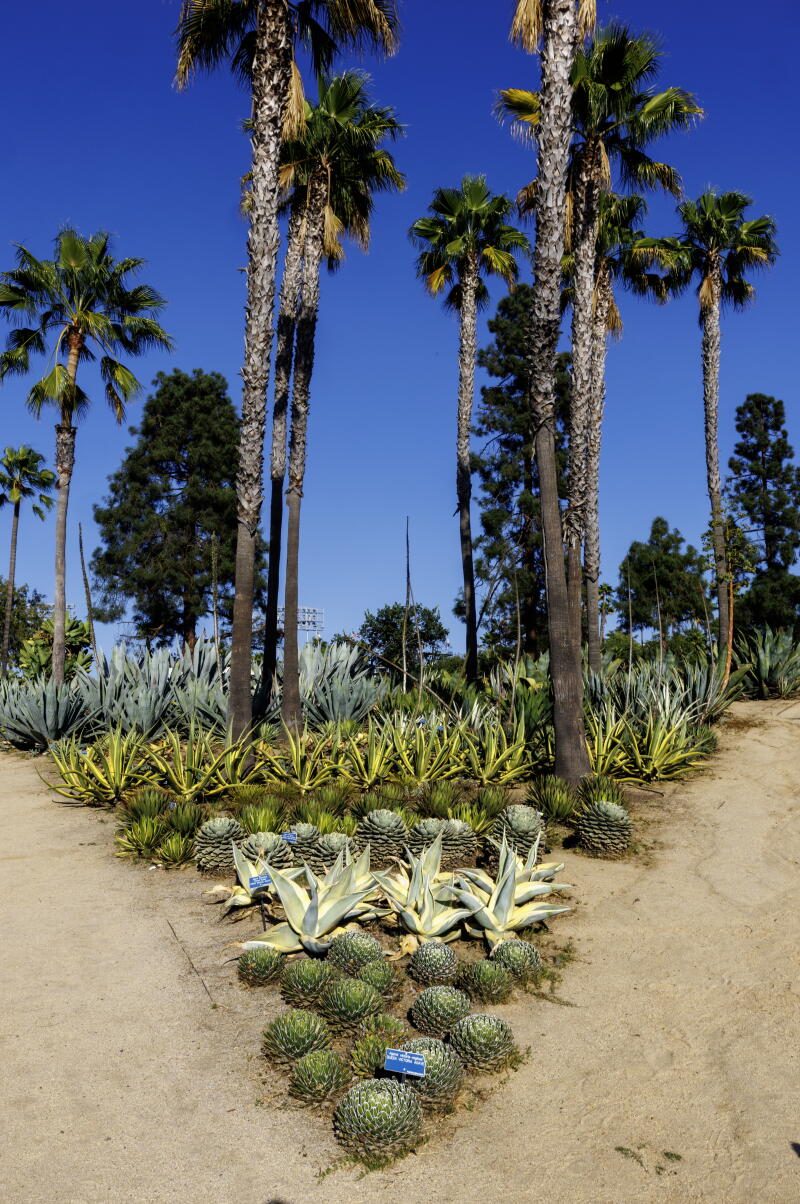
1. The agave garden sits outside Lot B at Dodger Stadium on Friday. (Gina Ferazzi/Los Angeles Times) 2. Dodgers fans walk past vibrant plants behind photos of former Dodgerss outside center field at Dodger Stadium on Friday. (Gina Ferazzi/Los Angeles Times) 3. A group visits agave island during a tour of Dodger Stadium’s botanic garden on Tuesday. (Christina House/Los Angeles Times)
For the past 17 years, Perea and his four-person crew have been responsible for every bit of stadium landscaping that isn’t the field itself. That’s roughly 300 acres, encompassing the parking lots, the hillsides meeting the 110 Freeway, and 149 concrete planters nicknamed “martinis” for their glass-like shape. The planters are original to the stadium’s 1962 construction, and many had crumbled badly enough over the decades to need painstaking repair.
The landscaping isn’t just about plants and planters. Behind a fence beyond the iconic orange 76 ball in the parking lot once sat a hidden garden. Its centerpiece was an eight-foot-tall stone lantern given to then-Dodgers owner Walter O’Malley by Japanese sports columnist Sotaro Suzuki and his wife, Toku, who had attended the stadium’s grand opening in 1962. Suzuki commissioned the 3,921-pound Kasuga-style lantern, which arrived in five pieces in late 1965 and became the centerpiece of a garden that also featured a small wooden bridge and a collection of rocks.
“For years, it was maintained by our gardener with great pride,” said former Dodgers owner Peter O’Malley, Walter’s son. “But it was remote, and fans couldn’t really get up there easily to see it or sit in the garden. And it got neglected for a few years. Some years later, I forget how many, we had to fence in the whole property.”
In 2024, shortly after the Dodgers signed two-way sensation Shohei Ohtani, the club moved the lantern to a place of prominence outside the top-deck gates, overlooking the downtown skyline. The move was an elaborate, delicate production. Bundled and boarded up, the lantern inched across the parking lot on the back of a flatbed truck that climbed a ring road steep enough to cause concern.
“It was like they were moving the Ark of the Covenant,” Perea said.
No one exhaled until the cargo was unloaded, unswaddled, and confirmed to be in one piece.

An 8-foot-tall stone Kasuga-style lantern is displayed at Dodger Stadium on Tuesday.
(Christina House/Los Angeles Times)
Perea’s crew works out of a large metal shed at the far end of a parking lot, a shop they affectionately call “the Oasis.” Much of what’s inside was retrieved from a dumpster, or scavenged before it landed in one. Perea, who describes himself as a bargain shopper, is passionate about repurposing whatever he can; many of the succulents at the stadium came from his own clippings.
“My general philosophy is I don’t treat the Dodgers like I’m salaried management,” he said. “I treat them like I’m a contractor that they don’t want to get rid of. So I manage the expenses and the labor as such.”
He doesn’t have much interaction with players and executives, though he’s occasionally been called to their homes to help with landscaping problems. One visit stands out.
“Vin Scully is the coolest one I’d stake a claim to,” he said of the legendary play-by-play man. “He was an unbelievable class act. He had a tree issue. He had us out, and was so attentive and appreciative, it was just stunning to me.”


1. Landscape manager Chaz Perea gives a tour of Dodger Stadium’s botanic garden. (Christina House/Los Angeles Times) 2. A ceramic dog and monkey sit on a golf cart inside the Dodger Stadium landscape team’s shed on Tuesday. (Christina House/Los Angeles Times) 3. A photo of Jim Lefebvre, Dodger player from 1965-1972, is surrounded by plants at Dodger Stadium on Tuesday. (Christina House/Los Angeles Times) 4. Adolfo Hinojosa checks on the planters near center field at Dodger Stadium on Tuesday. (Christina House/Los Angeles Times)
On the hillside above the shop is an open-air lunch area, its seating made from wooden bleachers salvaged from the old right-field pavilion. Peek through the bushes and the stadium is visible in the distance. Inside the shop, the walls are lined with neatly organized shovels, pickaxes, and ladders. Above them hang paintings, art being another of Perea’s passions, most of them made by his friends.
Perea freely admits he’s an odd fit for the job. He’s not a baseball fan; he prefers beach volleyball and mixed martial arts. He had a rough upbringing in Arizona, dropped out of high school, and got by on $6.75 an hour doing golf-course maintenance, supplementing it with landscaping gigs he ran out of his pickup truck before eventually returning to school.
He came back to the classroom with a purpose, not only finishing high school but going on to earn multiple advanced degrees and, ultimately, a Ph.D. He’s now a professor of horticultural science and co-chair of agricultural science at Mt. San Antonio College.
But it’s his day job that draws clusters of Dodger fans willing to pay $52.25 each for his 90-minute botanic garden tour of the grounds. They explore “Agave Island” near the main entrance, a wedge of land planted with nine palm trees to match the number of players on a baseball field, and the planters outside the club-level entrance, where the crew grows chilies (jalapeños, serranos, habaneros), along with basil, mint, tomatoes, onions, and garlic. That garden spawned an annual salsa competition, in which club employees harvest their own ingredients from the planters, make salsa at home, and bring it back to be judged. Perea and his crew make handmade tortillas and quesadillas for the event.

Landscape manager Chaz Perea gives a tour of Dodger Stadium’s botanic gardens on Tuesday.
(Christina House/Los Angeles Times)
Two more planted islands are devoted entirely to tequila agave. It takes nearly a decade for the plant to mature, and about 110 pounds of its core to yield a single liter of tequila through processing. Perea and his crew hope to eventually try making some themselves, as an in-house project rather than a commercial one.
The landscape looked very different before Perea arrived. He describes the old look as Disneyland-esque: heavy on lawns and flowers, constantly in need of replacement, and thirsty for water. About two years into the job, he began swapping annual flower beds for drought-tolerant succulents. When one executive noticed and ordered the flowers put back in a particular spot, Perea complied there, then made the same swap a little farther down the hillside, out of view.
Turnover among executives and ownership gave him repeated openings to make wholesale changes, a shift that coincided with California’s drought crisis. Within a few years, he had planted 10,000 cuttings and stripped every flower bed from the property.
“A lot of people look at this as the last unpainted canvas in Los Angeles,” Perea said.
Chaz of Chavez Ravine, perpetually painting the corners.
EPA to roll back Biden-era limits on power plant emissions (ICLN:NASDAQ)

kodda
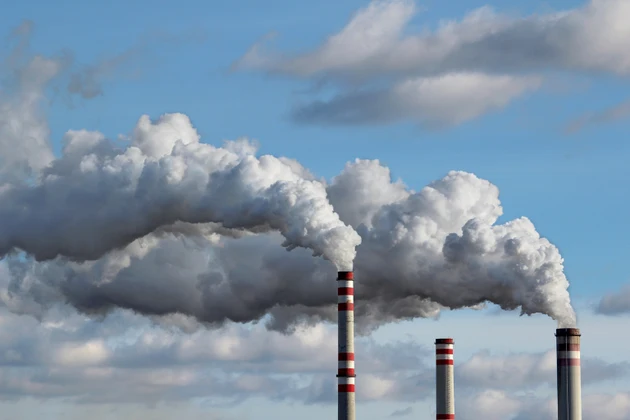
The U.S. Environmental Protection Agency said Monday it will repeal some carbon dioxide emission rules for power plants, the latest step in the Trump administration’s broader effort to curb the agency’s role in regulating climate change.
Under the final rule
US court rejects Trump’s emergency order keeping Michigan coal plant open | Environment News
The ruling says the Energy Department exceeded its authority by extending the plant’s operation.
Published On 12 Sep 2026
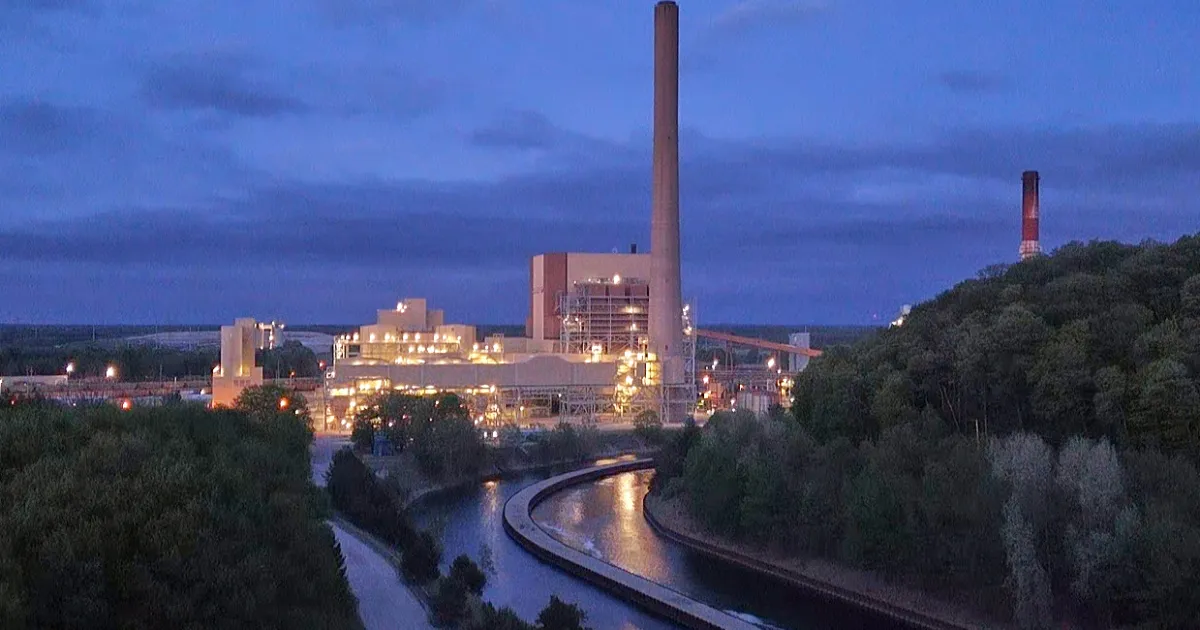
A federal appeals court has ruled that the United States Energy Department exceeded its authority when it ordered a coal-fired power plant in the US state of Michigan to remain open beyond its planned retirement, dealing a setback to the Trump administration’s effort to keep ageing coal facilities operating.
The US Court of Appeals for the District of Columbia Circuit ruled unanimously on Friday that there was no emergency under federal law that justified keeping the 64-year-old JH Campbell Generating Plant online. Energy Secretary Chris Wright invoked emergency powers last year, arguing that the plant was needed to maintain reliable electricity in the region.
Recommended Stories
list of 3 itemsend of list
President Donald Trump declared a national energy emergency in an executive order in January last year, citing demand increases from artificial intelligence and data centre growth.
Judge Cornelia Pillard, writing for the three-judge panel, said the emergency provision of the Federal Power Act was intended as a “narrow, last-resort backstop.” She said the authority could be used only when immediate action was required, and states or utilities could not address the problem themselves.
Pillard also described the reversal of the plant’s “long and carefully planned retirement” as “disruptive”.
The plant, operated by Consumers Energy, had been scheduled to close in May 2025, but the company has continued operations under energy department orders. That has cost about $259m, according to financial filings, with opponents warning that the expense could ultimately fall on families and businesses in midwestern US states.
The company told The Associated Press it was reviewing the court ruling.
Michigan Attorney General Dana Nessel, a Democrat, whose office joined counterparts in Illinois and Minnesota in challenging the orders, welcomed the ruling. She said the appeals court had “thrown out DOE’s order that had zero basis in reality”.
The Energy Department defended its use of emergency powers, saying the orders helped prevent blackouts and “likely saved hundreds of lives” during periods of peak demand, particularly during severe winter storms in late January and early February.
The department said that during the winter storm peak, coal generation in affected areas increased by 25 percent compared to the previous year.
The Michigan case is one of several legal disputes that have emerged across the country. Secretary Wright issued another emergency order, just hours after the ruling, to a coal plant in Centralia, Washington, to remain in operation. Similar orders have been issued for plants in Indiana, Colorado and Florida, as well as an oil and gas plant in Pennsylvania.