planned

Bruce Springsteen at the Forum: ‘This is a tour that we never planned’

As the time approached 10:30 Tuesday night — nearly three hours after Bruce Springsteen had marched onstage at Inglewood’s Kia Forum alongside 18 of his musical comrades — the 76-year-old rock legend told the crowd he hadn’t intended to be there.

“This is a tour that we never planned,” he said. “The E Street Band is here with you tonight because we need to feel your hope and your strength. And we want to bring some hope and bring some strength for you.”

It wasn’t impossible to believe him.

After a two-year trek that finally wrapped last summer amid the release of a massive box set and a splashy Hollywood biopic, Springsteen might’ve been expected to spend 2026 counting his money and his accolades. Yet the way he tells it, the actions of a “corrupt, incompetent, racist, reckless and treasonous” president and his administration spurred him back into action.

“If you’re feeling helpless, if you’re feeling hopeless, if you’re feeling betrayed, if you’re feeling frustrated, if you’re feeling angry — I mean, I know I’ve been,” he said.

Tuesday's show was the first of two this week at the Forum.

Tuesday’s show was the first of two this week at the Forum.

(Allen J. Schaben / Los Angeles Times)

Thus the hastily arranged Land of Hope & Dreams tour: two months of U.S. concert dates that began last week in Minneapolis, where federal immigration agents killed two American citizens in January, and will wrap May 27 with a stadium show in Washington, D.C.

“The White House — this White House — is destroying the American idea,” Springsteen proclaimed during Tuesday’s gig, the first of two this week at the Forum.

Before we get to the performance itself, let’s acknowledge that the Boss is sticking his neck out here. Sure, he’s protected by his wealth and his celebrity; sure, he’s preaching to the choir in every city he and the E Street Band visit.

But what other musician on Springsteen’s level is speaking out the way he is right now?

On Tuesday, he introduced “Streets of Minneapolis” — a brand-new protest song in which he mentions both Alex Pretti and Renée Good by name — with a vividly detailed monologue about the circumstances of their deaths. Then he led his players through a fervent rendition of the driving folk-rock tune.

“It’s our blood and bones / And these whistles and phones / Against Miller and Noem’s f— lies,” Springsteen sang — one lyric that might’ve inspired President Trump this month to urge his followers to boycott the singer, whom he compared in a social media post to a “dried up prune who has suffered greatly from the work of a really bad plastic surgeon.” (In truth, Springsteen probably enjoyed that.)

Bruce Springsteen and the E Street Band

Bruce Springsteen and the E Street Band

(Allen J. Schaben / Los Angeles Times)

Whatever the risks of his speechifying, you had to admire — here in our age of political infotainment — the natural finesse with which Springsteen threaded his prepared rhetoric into Tuesday’s set. He knew just when to have the E Streeters vamp so he could talk about NATO and USAID; he knew when it was wiser to lead the audience in a chant of “ICE out.”

Indeed, as much as he was speaking his mind, Springsteen was providing his fans with an opportunity to work out their own anxieties in rowdy singalong versions of classics like “Born in the U.S.A.,” “No Surrender,” “The Promised Land” and “Out in the Street.”

If the concert’s animating impulse was outrage, the prevailing emotion was joy, even — or especially — when the music was at its most pointed, as in covers of Edwin Starr’s “War” and “Clampdown” by the Clash.

With an extra E Street member in Rage Against the Machine’s Tom Morello, Springsteen made “Badlands” and “Death to My Hometown” shimmer and stomp; “Murder Incorporated” was a gritty soul-rock rave-up, while “Youngstown” got a scabrous guitar solo by Nils Lofgren that reminded you of his other gig in Neil Young’s Crazy Horse. (Springsteen’s wife, Patti Scialfa, who said in 2024 that she has cancer, wasn’t part of the band Tuesday.)

About halfway through the show, Springsteen sang “American Skin (41 Shots),” the early-2000s song about racialized police violence he wrote after Amadou Diallo’s killing by four NYPD officers; he followed that with “Long Walk Home,” which he described as “a prayer for our country.”

Bruce Springsteen

Bruce Springsteen

(Allen J. Schaben / Los Angeles Times)

Played back to back, the songs made you think of how little agreement we’ve come to over the last quarter-century about who gets to be called an American. The identity is always under attack, and it’s always being defended.

Anyone but a Bruce stan would admit that Springsteen leaned a little hard on recent stuff here: “House of a Thousand Guitars,” “My City of Ruins,” “Wrecking Ball” and the like.

Yet as with his speechmaking, he can still read a room. “It’s gotta be done,” he said with a grin as the band revved up “Hungry Heart,” one of a handful of old pop hits he did that broke from the evening’s topical throughline.

Near the end — in an encore that went bang-bang-bang with “Born to Run” into “Bobby Jean” into “Dancing in the Dark” — Springsteen, his shirt drenched with sweat, took a seat onstage and thanked members of the Immigrant Defenders Law Center for attending the show. (Also in the house Tuesday: Henry Winkler.)

Then he offered one final homily before closing with Bob Dylan’s “Chimes of Freedom.”

“These are hard times, but we’ll make it through,” he said. “We’re the Americans. What do they say? Americans do the right thing after they’ve tried everything else.” He shook his head as though he were running through a mental inventory.

“F—!”

Source link

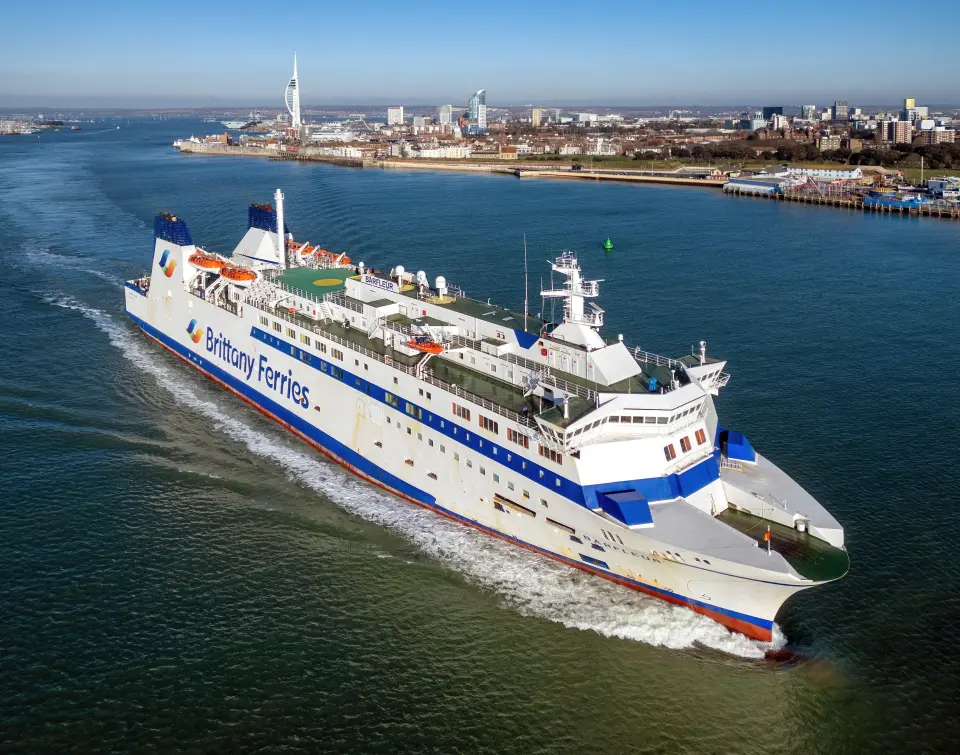
Easter staycation planned by 12.5 million Brits in massive tourism boost

Tourism chiefs are predicting a near two million jump in the number of Brits holidaying at home this Easter

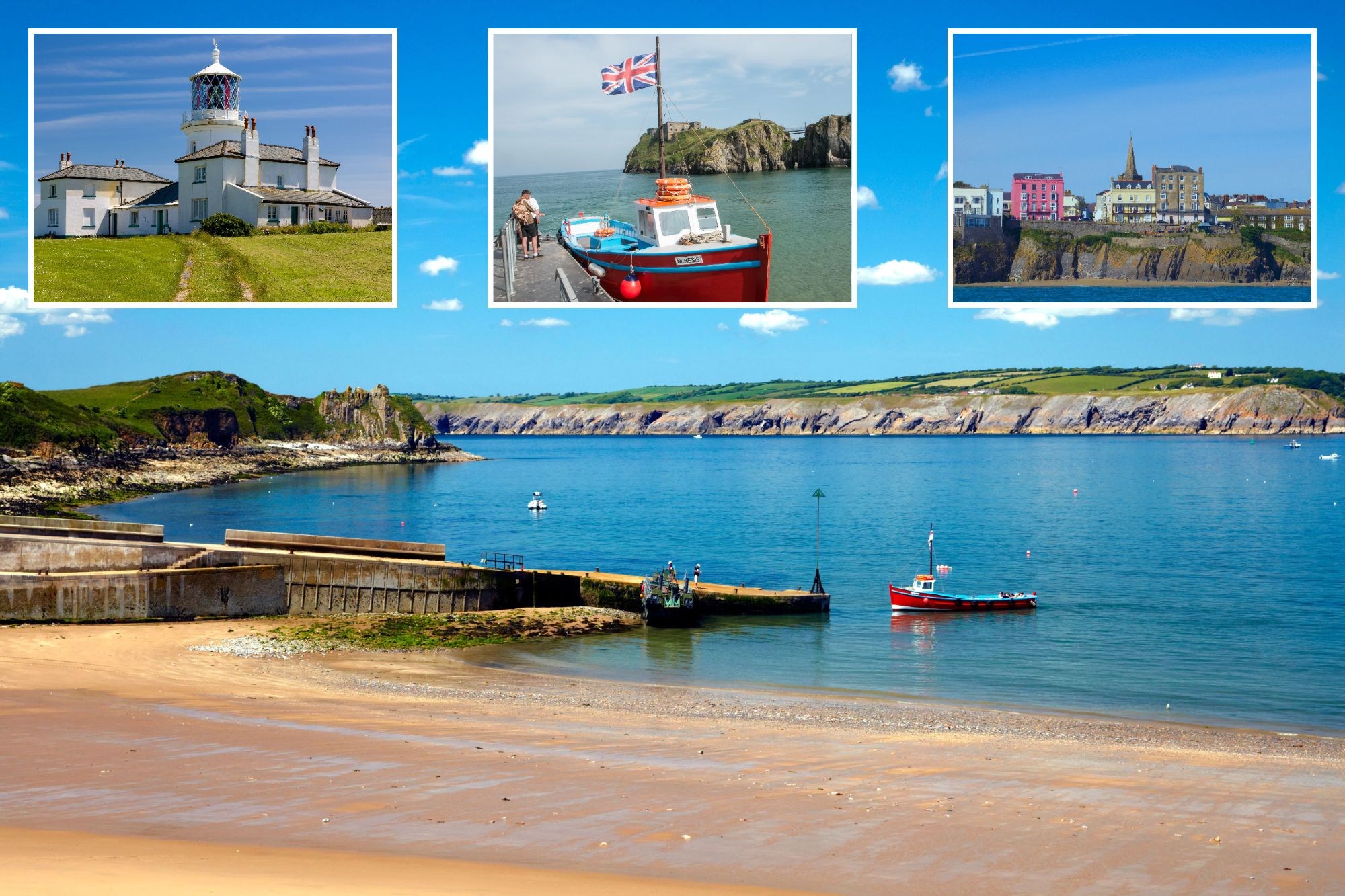
Around 12.5 million Brits are planning an Easter staycation – as the Middle East war deters families from jetting abroad.

The number of people who say they intend to holiday in the UK over the Easter weekend is up sharply from 10.6 million last year. The near two million surge will help deliver a bumper £4.8billion boost to tourism and the wider economy, according to VisitEngland, which published the data.

The number saying they hope to holiday at home dwarfs the estimated 7.4 million who are planning a trip abroad this Easter. Of those definitely aiming to take a staycation during the Easter break, the majority will be short breaks of one to three nights.

READ MORE: UK drivers urged to do three-second car check as clocks change this weekendREAD MORE: UK’s ‘holiday park of the year’ is on family-run farm near beautiful beaches

It came as VisitEngland’s Trip-Tracker revealed that more than a quarter of those it surveyed, 28%, were worried about the impact of the Middle East conflict on their upcoming travel plans in April and May. The top concern was having less money to spend due to the economic impact. There have already been fears of air fare price hikes and possible flight cancellations.

The number of people planning an Easter staycation this year also marks a big jump on 2024’s 11 million, and nearly double the 6.5 million in 2023. A further 5.1 million people surveyed said they were undecided about whether to take an overnight holiday trip in the UK during the Easter weekend. The top reasons were “waiting to see if I can afford it” and “waiting to see what the weather is like”. Forecasts for the weather suggest it will be a mixed bag next week, but with settled conditions over the Easter weekend itself.

However, those driving for days out and holidays in the UK face a hit to the wallet from soaring fuel prices on the back of the Iran war. The nationwide average for unleaded has jumped to 150p a litre, up 17p since before the conflict erupted. Diesel drivers have been hit even harder, with diesel now averaging 176.68p per litre, a leap of 34p in recent weeks.

RAC head of policy Simon Williams said: “Petrol has now broken through the unwelcome milestone of 150p a litre (150.11p), something drivers haven’t seen since mid-May two years ago while the average price of diesel is now approaching 180p at 177.68p.

“With the long-awaited four-day Easter weekend almost within touching distance, the cost of getting away by car is going to be noticeably higher this year.

“And with average prices at motorway services at 166p for unleaded and 182p for diesel, drivers on long journeys will need to plan very carefully where they refuel. The best advice remains to shop around for fuel and make use of free apps such as myRAC to never pay a penny more for fuel than is absolutely necessary.”

Some families may also think twice given another wave of bill increases – including water and council tax – from the start of April, and warnings that food price inflation could jump again.

Kate Allen, owner of Devon-based Finest Stays, said: “For now, we’re not seeing a slowdown. Bookings are up around 10% on this time last year, with more guests opting to stay in the UK rather than travel further afield to places like Dubai.

“The Great British holiday is very much in favour, as we’re a nation that prioritises getting away, and domestic breaks are benefiting from that shift. That said, there’s a nervous undercurrent. Fuel costs feel like a slow leak, pressure building rather than bursting.

“We’re expecting more guests to postpone or cancel, and that’s where it gets tricky. Terms and conditions may cover it, but it doesn’t make refund conversations any easier when the wider impact on businesses and homeowners isn’t fully understood.”

Tourism Minister Stephanie Peacock said: “It is wonderful that so many people are planning on having a staycation this Easter weekend, whether that’s spending time visiting our stunning landscapes and coastlines or exploring our vibrant towns, cities and cultural landmarks. Supporting domestic tourism helps local areas thrive – fuelling small businesses, boosting pride, and strengthening community economies.”

VisitEngland chief executive Patricia Yates said: “Tourism businesses and destinations will be looking to the critical Easter weekend for much needed cash flow so it’s encouraging to see so many of us are planning a holiday at home, with its ease, convenience and certainty of budgeting. We also know that the cost of living remains a concern for holidaymakers, leaving it difficult too for businesses to plan in advance.

“We have incredible activities, experiences and places to stay for all tastes and budgets, and there really is nowhere quite like Britain in springtime. From walks in our beautiful countryside with the promise of a pub lunch or discovering contemporary culture in our buzzing cities to enjoying fish and chips on the beach, there is something for everyone. So, a rallying cry to please go out and explore the amazing destinations and events here on our doorstep this spring. Tourism businesses will be very pleased to welcome you, you will have an amazing time and create memories to make you smile all year.”

It came as trade body UKHospitality stepped up criticism of what has been dubbed a new “tourist tax”. Labour is proposing to allow regional mayors in England to introduce a “visitor levy” on overnight stays, as already happens in some European countries. While details of how it would work are still to be finalised, it could either be a per head charge or a percentage of the cost of the stay. Small businesses – from guesthouses to B&Bs – say it could lead to closures.

Modelling by Oxford Economics, commissioned by UKHospitality, which assumed a 5% levy, warned it could lead to a £1.6billion tax increase for holidaymakers by 2030, and a £2.2billion hit to the economy.

Source link

Israel Says Iran War Goals Progressing Faster Than Planned

Israel believes it is progressing faster than expected in achieving its objectives in the war against Iran, according to Israel’s ambassador to France.

Ambassador Joshua Zarka said the military campaign, which Israel initially predicted would last several weeks, is moving ahead of schedule in meeting its strategic goals.

Speaking to BFM TV, Zarka said Israel’s objectives extend beyond dismantling Iran’s nuclear programme. He said the broader aim is to weaken Iran’s leadership so that it can no longer project power beyond its borders and so that the Iranian population can determine its own political future.

Israel’s Broader Strategic Objectives

According to Zarka, Israel’s campaign is designed not only to limit Iran’s military capabilities but also to significantly weaken the country’s ruling authorities.

The ambassador said that reducing the government’s ability to operate abroad would help prevent attacks against Israel and its allies, while also creating conditions in which Iranians could “take their fate into their own hands.”

His comments reflect a broader strategic message from Israel that the war is intended to reshape Iran’s regional role, rather than simply eliminate specific military programmes.

Zarka, who previously served as Israel’s lead diplomat dealing with Iran, suggested that Israel’s military progress is exceeding initial expectations.

Warning Over New Iranian Leadership

Zarka also commented on the recent appointment of Mojtaba Khamenei as Iran’s new supreme leader following the death of his father, Ali Khamenei.

He said that if Mojtaba Khamenei follows the same policies as his predecessor, he could become a potential target for Israel.

The remark underscores the increasingly confrontational rhetoric surrounding the conflict and signals that Israel sees Iran’s leadership itself as central to the confrontation.

Conflict Expands to Lebanon

At the same time, Israel has intensified military operations against Hezbollah, the Iran-backed militant group based in Lebanon, after cross-border attacks on Israeli territory.

The Lebanese government has said it would like to hold direct talks with Israel to stop the fighting. However, Zarka dismissed the possibility of negotiations at this stage.

Instead, he argued that the war would end only if Hezbollah is disarmed a step he said depends on decisions taken by the Lebanese government.

Analysis: Israel Signals No Immediate Path to Negotiations

Zarka’s comments suggest Israel believes the current military campaign is producing results and therefore sees little incentive to pursue negotiations in the near term.

By framing the war’s goals around weakening Iran’s leadership and limiting its regional influence, Israeli officials are signalling that the conflict is about more than just nuclear or missile capabilities.

The remarks also highlight Israel’s strategy of confronting Iran’s regional network of allied groups, including Hezbollah, which it views as a key extension of Tehran’s power.

Taken together, the statements indicate that Israel intends to continue military pressure until it believes Iran’s ability to project influence across the region has been significantly reduced.

With information from Reuters.

Source link