Weekly insights and analysis on the latest developments in military technology, strategy, and foreign policy.
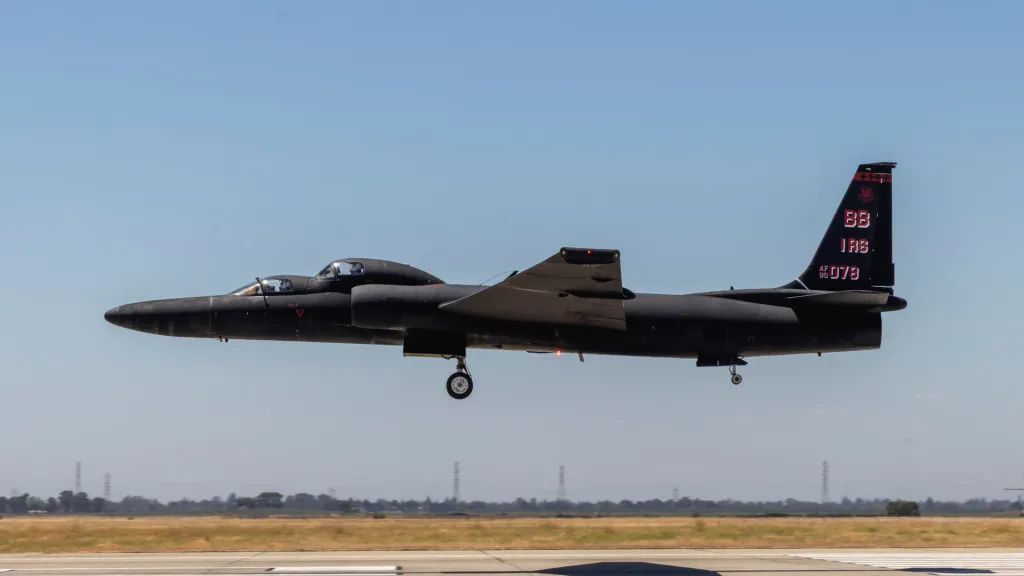
Members of Congress are again moving to block the U.S. Air Force from retiring all of its U-2S Dragon Lady spy planes. This time, legislators also want to compel the service to “fully restore” four of the iconic aircraft through heavy depot maintenance, which would bolster the fleet’s operational capacity. The Air Force continues to argue that the high-flying Cold War-era jets are too vulnerable to support future high-end fights and should be supplanted by a mix of space-based and other capabilities. This would presumably include a classified stealthy high-altitude drone, commonly (and unofficially) referred to as the RQ-180, or an evolution thereof, which first emerged publicly just earlier this year.
Yesterday, the House Appropriations Committee released a draft defense spending bill for the 2027 Fiscal Year. It includes a provision that would prevent the Air Force from retiring more than two U-2Ss in that fiscal cycle. The Air Force currently has 23 of these aircraft in inventory, including three two-seat TU-2S trainers.
One of the Air Force’s three TU-2S trainers. USAF
A summary of the proposed legislation also says it includes “$81 million for U-2 programmed depot maintenance to fully restore four aircraft.” The current operational status of the aircraft in question is unclear. This is included under the umbrella of $335.3 billion in total funding for operation and maintenance (O&M) accounts across the services that the draft bill would appropriate for Fiscal Year 2027.
Programmed depot maintenance for any aircraft is an intensive process that essentially involves a full tear-down and detailed inspection. Paint and other coatings are typically stripped and reapplied. Upgrades and modifications are often worked into depot maintenance cycles given the extensive work already being done.
“The Air Force will retire the entire 23-ship U-2 fleet, as the platform is no longer viable for future high-end conflicts,” the force structure report says. “Continued operation presents significant safety, logistical, and financial risks that outweigh the platform’s remaining utility in contested environments.”
“This decision allows for the strategic reallocation of fiscal resources to fund more critical, high-priority service requirements and accelerate modernization efforts in other key areas,” it adds. “Continuing to operate the U-2 fleet would require a significant investment to address systemic issues, including diminishing manufacturing capacity, material shortages, and safety risks inherent in the aging platform.”
A U-2 seen taking off from an undisclosed location in the Middle East in 2010. USAF
Questions about the continued relevance of the U-2 in the face of an ever-expanding global air defense threat ecosystem are not new. Near-peer competitors like China and Russia, as well as lower-tier potential adversaries like Iran, continue to develop and field more capable air defense systems and expand their anti-access and area denial bubbles. This, in turn, has threatened to push the U-2 further and further from the areas where it would be tasked to collect.
On top of all this, the U-2s are aging and becoming more costly to operate and maintain. The U-2S models in service today were upgraded from earlier variants that began their service careers in the 1980s.
The Dragon Lady continues to offer a unique ISR platform that can fly higher than any other operational non-orbital platform, crewed or uncrewed, the U.S. military has, at least from what we know today. This, in turn, means that the aircraft can bring imaging, signals intelligence, communications payloads, and other sensors up to those altitudes, giving them particularly good fields of view. From this perch, aircraft can use a slant angle to peer deep into denied areas while still flying international airspace and further away from potential threats. The use of the U-2 to gather intelligence about a Chinese spy balloon that soared over parts of the United States and Canada in 2023, which involved flying above it, offered a particularly public demonstration of the value of the aircraft’s high-altitude capabilities.
A view of the Chinese spy balloon soaring over the United States in 2023, as seen from the cockpit of a U-2. USAF
Each Dragon Lady can also carry a wide array of different sensor systems simultaneously, as well as communications packages, further increasing its flexibility. The U-2Ss have the ability to be readily deployed to forward locations globally and conduct long-duration sorties, as well. The latter points have been especially relevant in comparison to known existing ISR satellite constellations that are constrained by their orbits and can only offer relatively short-term coverage over a specific area. We will come back to this in a moment.
A now-dated graphic that still gives a good sense of the array of different sensors the U-2 can carry. US Military
The draft defense spending bill from the House Appropriations Committee does still have to be finalized, and then brought in line with companion legislation in the Senate. Both chambers of Congress then need to pass the bill before it can be sent to the President’s desk to be signed into law. There are many opportunities along the way for major changes to be made to the bill.
That being said, Congress has consistently blocked Air Force efforts to fully retire the U-2 in recent years. Another potential reprieve, which would also demand the service take steps to bolster the operational capacity of the remaining fleet, has now appeared on the horizon.
Airline passengers took to Reddit to complain about some of the most disgusting things they’d seen passengers get up to on a plane, and many agreed their habits were best left in the privacy of their homes
09:37, 18 Jun 2026Updated 09:38, 18 Jun 2026
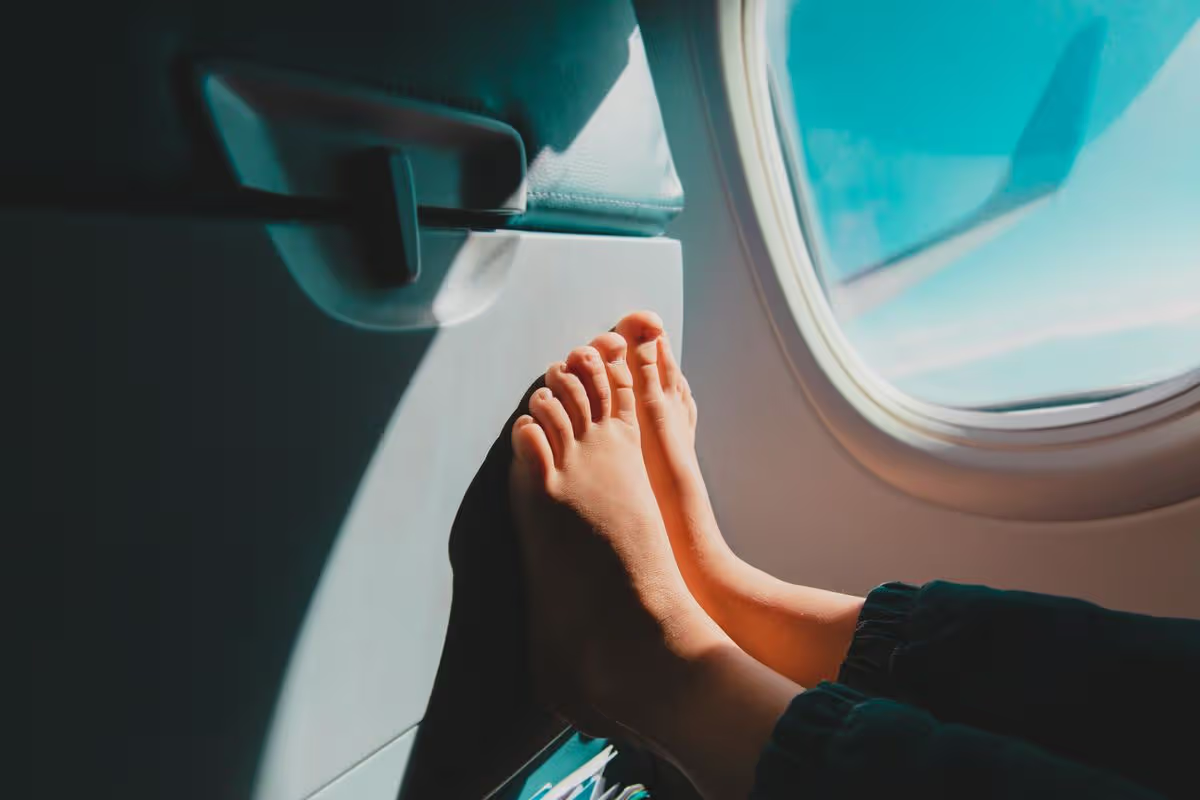
Bare feet were a common theme in passenger complaints(Image: Getty Images/iStockphoto)
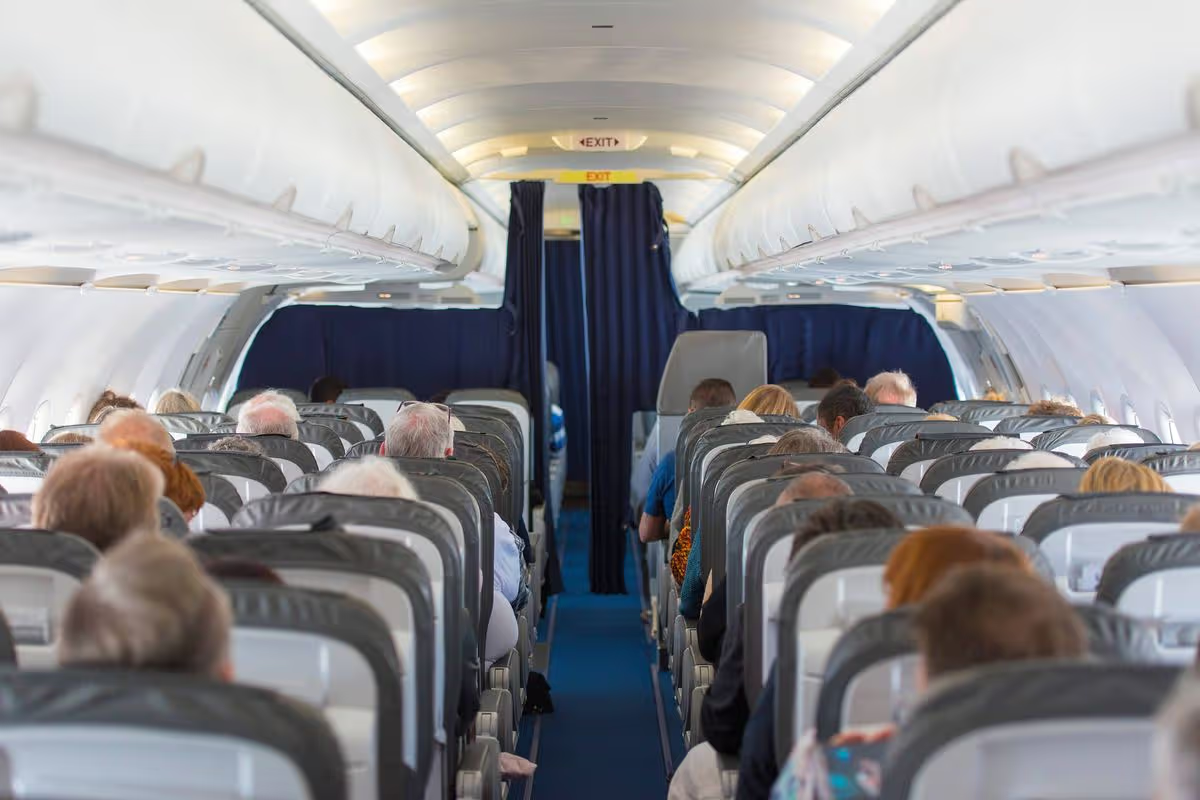
Being trapped in a metal tube at 30,000 feet seems to bring out the worst in people, and despite sharing a small space with dozens of others, some people treat the plane cabin like their personal living space.
A thread on Reddit’s AskUK titled “Worst thing you seen on a plane? What do you think is just not acceptable?” brought in over 200 responses, with holidaymakers keen to call out bad behaviour they’d seen onboard. And there were definitely some common themes among the complaints.
The original poster started the ball rolling, writing: “For me, it was that the lady sitting next to me was picking her toenails!” and many agreed lack of shoes was a huge etiquette breach. “I was sat next someone yesterday who took off their shoes and socks as soon as the opportunity allowed. They even went to the toilet barefoot.”, claimed one poster.
They added: “It wasn’t just the fact they were barefoot it was the general hygiene, e.g.: coughing and sneezing without covering, etc. They had me on edge the whole time thinking “right… I’m catching whatever disease they’ve absorbed through the soles of their gross feet.””
In a similar thread, posters complained about passengers doing tasks more suited to their private bathroom: “I don’t like it when people clip their toenails. I’ve seen it 3 times. Twice a row across from me and other time in my same row.”, said one. While another posted: “My wife and I were sitting in 1C and 1D. The guy in 1B pulled out dental floss after the meal and started going at his mouth like he was giving himself a root canal. Full on two handed flossing right in his seat.”
Another said: “I try to be kind and understanding of the difficulties and lack of facilities on this, but, a woman changed her baby’s ‘filled’ nappy in the middle of the cabin… twice. The stench roamed right through that B777.”
Content cannot be displayed without consent
Instagram account @passengershaming has amassed over 1.3 million followers thanks to its hilarious posts that highlight some of the worst behaviour on planes. In one classic reel, a woman was seen using the overhead air vent to dry the crotch of her knickers. The viral video was captioned: “PRO TRAVEL TIP: Airplane air vents aren’t for drying underwear Kthx!”
Other examples posted to the account over the years include a woman using a foot file to remove hard skin, and a man opening a can of tuna on a plane for a snack, seemingly unperturbed about the smell in a confined space.
While the examples above are mostly harmless, if disgusting, behaviour, recently there have been calls to create a national database for abusive passengers, which would allow airlines to share information on disruptive passengers and restrict their access to flights.
According to the BBC, Department for Transport officials will be meeting later this month to discuss the proposals, and the database would likely be a collaboration between the government and the airline industry.
Have a story you want to share? Email us at webtravel@reachplc.com
The airline shared an update for passengers in a post on social media
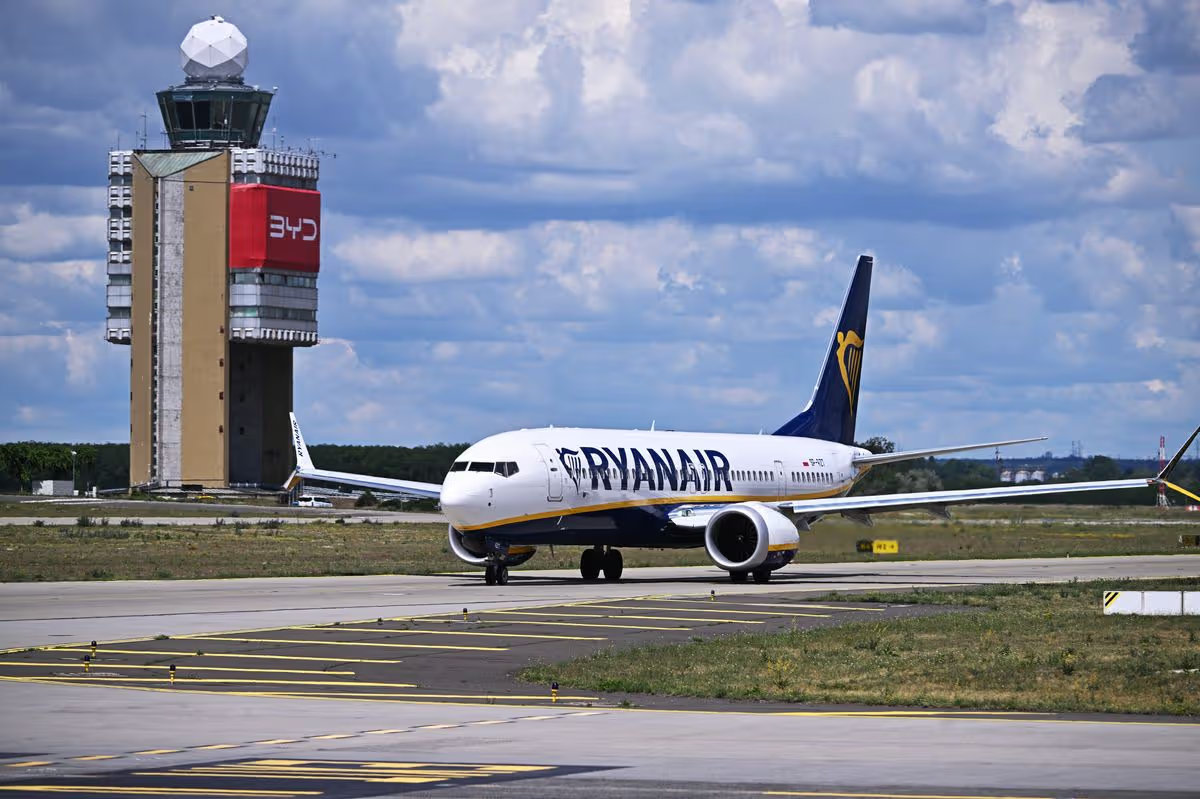
The airline posted an update for passengers(Image: Getty)
Ryanair has shared a ‘fuel update’ for passengers. The airline shared the news on social media, explaining that it is making changes to flights. Posting on YouTube, Ryanair shared an overview of its plans to improve flights over the coming years.
The video was titled: “Pathway to net zero carbon emissions goal.” As part of the changes, the airline said flights will produce less noise and require less fuel, among other benefits. Ryanair describes itself as Europe’s largest airline group.
In the post, Ryanair told customers: “We’ve developed a pathway to achieve our net-zero carbon emissions goal by 2050, which aligns with the Paris Agreement and the aviation industry’s Destination 2050 initiative. Ryanair’s pathway aims to show incremental progress in decarbonising in line with EU climate targets are possible.”
In the video, the airline highlighted key areas of change. Ryanair started by discussing the benefits of new technology, such as 210 ‘game-changer’ aircraft, which deliver 16% less fuel usage and 40% less noise.
Ryanair also shared how sustainable aviation fuel can reduce lifecycle emissions by 80%. As well as how measures, such as single-engine taxiing and dynamic flight planning, can improve efficiency.
On its website, Ryanair shared further details for passengers interested in its plans. The airline said 32% of its carbon-emission reduction targets would come from technological and operational improvements, 34% from increased use of sustainable aviation fuel, 10% from the Single European Sky initiative, and 24% from offsetting and similar measures.
Ryanair’s website says: “We have teamed up with Trinity College Dublin to put in place a number of innovative actions to accelerate the use of sustainable aviation fuel (SAF). By appointing best-in class researchers, we’ll achieve our goal of powering 12.5% of our flights with SAF by 2030.”
Destination 2050 describes itself as an industry alliance committed to climate-neutral European aviation. The website says: “We believe that together, policy-makers and the industry we can make net zero CO2 emissions happen by 2050. European aviation is committed to play its part and ensure that air transport can continue to grow sustainably in the future.
“By 2030, net CO2 emissions from intra-European flights would be reduced by 55% compared to 1990 levels through a combination of fleet renewal, sustainable aviation fuel (SAF), operational improvements and the EU Emissions Trading System (ETS) –in line with the new EU climate goal for 2030.”
Why is CO2 bad for the environment?
Carbon dioxide (CO2) is a greenhouse gas that holds heat in the Earth’s atmosphere. Although it is essential for maintaining the planet’s warmth, human actions have led to a significant increase in its levels, intensifying the greenhouse effect and causing global warming, severe weather events, and ocean acidification.
THE EU is in the midst of making huge changes when it comes to air travel and all of them will greatly benefit passengers.
These include no extra fees, better compensation rights and families heading on holiday can sit together at no extra charge – but now we’re out of the EU, the new rights will only carry weight for Brits on certain flights.
Sign up for the Travel newsletter
Thank you!
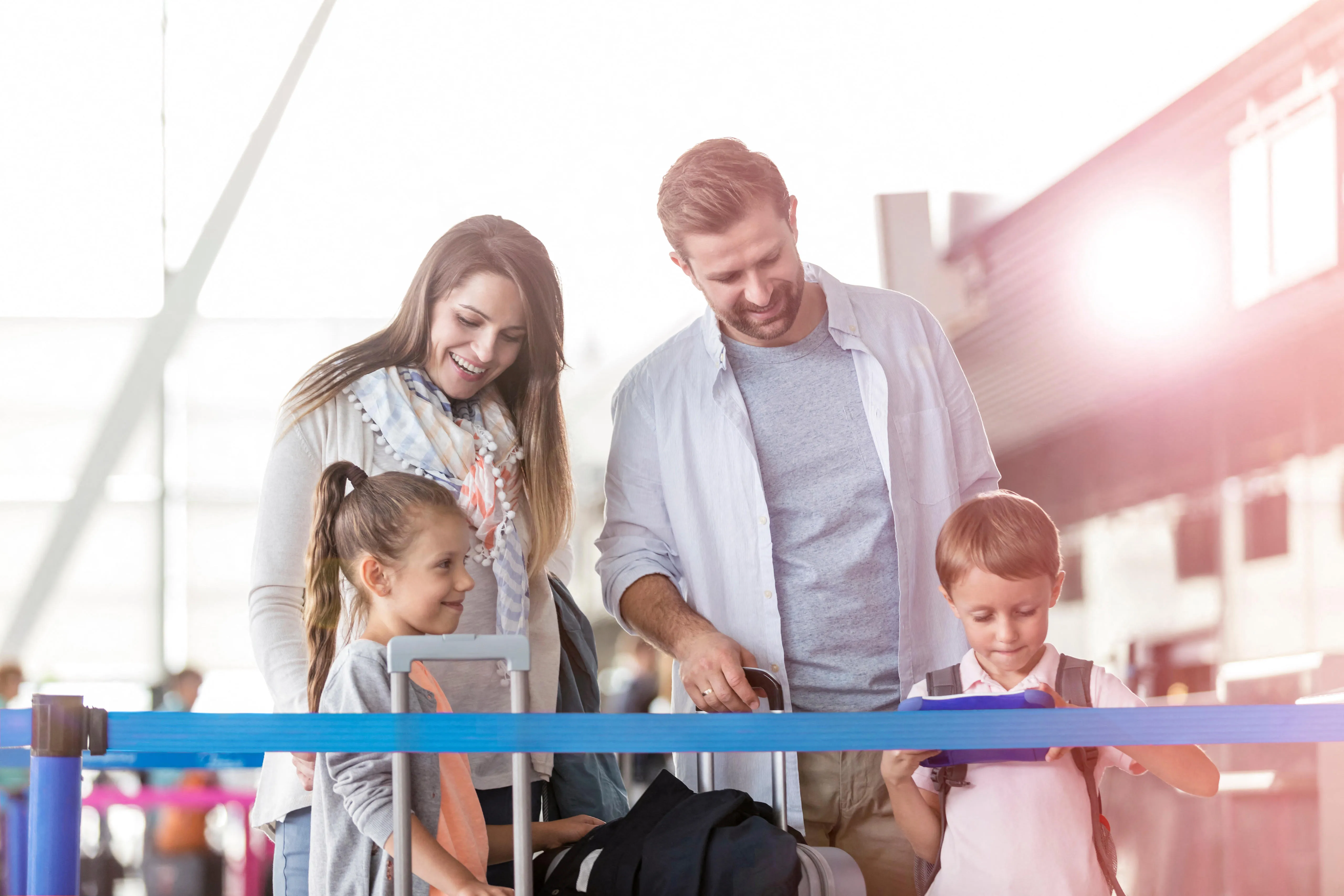
Changes to travel rules in the EU means families no longer have to pay to sit togetherCredit: Alamy
The new regulations were agreed by the EU Council and Parliament yesterday, making it the first overhaul in over 20 years and will come into play in 2027.
Some of the biggest changes include allowing families to sit together at no extra cost, as well as passengers having a free personal item to take onboard.
It will be easier for passengers to get money back for delays or cancellations too.
Airlines will need to immediately acknowledge a claim and then reply within 30 days.
For those who experience delays, there is a right to assistance which includes refreshments every two hours of waiting time, a meal after three hours, internet access and phone calls.
When passengers need overnight stays, they should be given the hotel free of charge and get free transport from the airport to the accommodation and back.
After a cancelled flight or denied boarding, passengers who choose to reroute must be given an alternative journey within three hours.
This all sounds great doesn’t it? Well, there is some bad news – this won’t count for all British travellers leaving the UK.
The new rules will only count on certain flights leaving the UKCredit: Alamy
As a result of Brexit, British holidaymakers won’t necessarily benefit from this as in some cases their flights will fall under passenger rights called UK261.
Whereas for those living in the EU, the new regulations count for all.
For Brits heading on holiday, taking advantage of these EU changes will depend on the route and the airline.
For example, a flight leaving the UK for Malaga with Ryanair will fall under EU rules as Ryanair is an EU airline.
The Malaga to UK return leg will also be under the EU rules – on the return journey, it doesn’t matter if the airline is EU or non-EU, because the flight departs from the EU.
Along with Ryanair, the likes of Wizz Air, easyJet and Lufthansa are all EU-airlines so the new rules automatically count for Brits on both journeys to EU countries.
There will however, be a gap on flights leaving the UK on a non-EU airline.
On EU operated airlines like Ryanair – the new EU rules will apply to Brits on both legsCredit: MoreISO
For example, if a British passenger flies from London to Madrid on a UK airline like British Airways, that outbound leg would remain under UK261 rules rather than the new EU regulations.
But the return would fall under the EU rules because it departs from Madrid in the EU.
So Brits heading on holiday will only get the new benefits if they are travelling on EU-covered flights.
They will not get them automatically on all flights from UK airports.
UK-airlines like British Airways, Virgin Atlantic and Jet2 won’t fall under the new EU rules.
But these do have their own guidelines and policies regarding families sitting together and luggage costs.
AirAdvisor CEO Anton Radchenko, a renowned aviation lawyer, added: “This agreement is a meaningful step forward for European passengers, and it throws the position of UK travellers into sharp relief.
“For the first time since Brexit, we are looking at a real divergence in the everyday rights of passengers flying from the UK versus those flying from the EU.
“The headline compensation amounts remain broadly aligned, but on the things passengers deal with on every single trip, being penalised for a missed leg, paying to sit next to your own child, comparing fares that hide the cost of a bag, EU travellers are about to pull ahead, and UK travellers are at risk of being left behind.”
The airline offered a reminder to passengers who should check the advice before travel
Jet2 has issued a travel reminder to passengers(Image: Getty)
Jet2 has guidance for all passengers travelling with soft-sided luggage. The airline has an important travel reminder on its website, which shares ‘top tips before travel‘ for all customers. The guidance highlights the importance of checking that baggage is strong and suitable for use before travel.
While many passengers use soft-sided suitcase, Jet2 wants customers to be aware they can be vulnerable. Highlighting the message on the advice page, the airline said: “Please ensure your baggage is strong and fit for purpose, to protect the contents and to withstand the normal baggage handling process.
“Soft sided cases and handles, wheels and locks can be particularly vulnerable.” Nonetheless, many customes might still choose to travel with soft-sided suitcases.
Regardless of their choice, passengers are asked to make sure they label all of their luggage carefully. Jet2 says: “Label each piece of baggage with your name, flight number, and phone number.”
When packing, customers are urged to ensure any important documents and items are packed inside their hand luggage. This includes any essential medications and cash. “Never pack cash, valuable items, perishable goods, important documents or essential medications in your checked baggage,” the advice stated.
Passengers are also urged to add a name tag to their bags and ensure all zips are closed before travel. Jet2’s guidance says: “Secure your baggage and ensure all pockets and zips are fully closed. Please note that the security authorities in some countries may open your bags without you present to make any necessary checks.
“At check-in, each item of checked baggage will be given a destination tag showing your flight number. Do not get rid of your checked baggage receipts (if given) until you pick up all checked baggage at your destination airport. Never carry unidentified items on behalf of other people.
“Take care when claiming your baggage at your destination, as many suitcases look the same. It is best to always check the name on the baggage tag.”
For passengers in need of new luggage, it could be worth browsing high street retailers, such as Dunelm, Primark, Home Bargains, B&M, or TK Maxx. Luggage options typically include both hard-sided and soft-sided suitcases and bags.
While some passengers might prefer to use soft-sided bags because they offer more flexibility than other suitcases, hard-sided suitcases could be preferable when you’re transporting fragile items.
People with hidden disabilities tend to use this as a way of making others aware
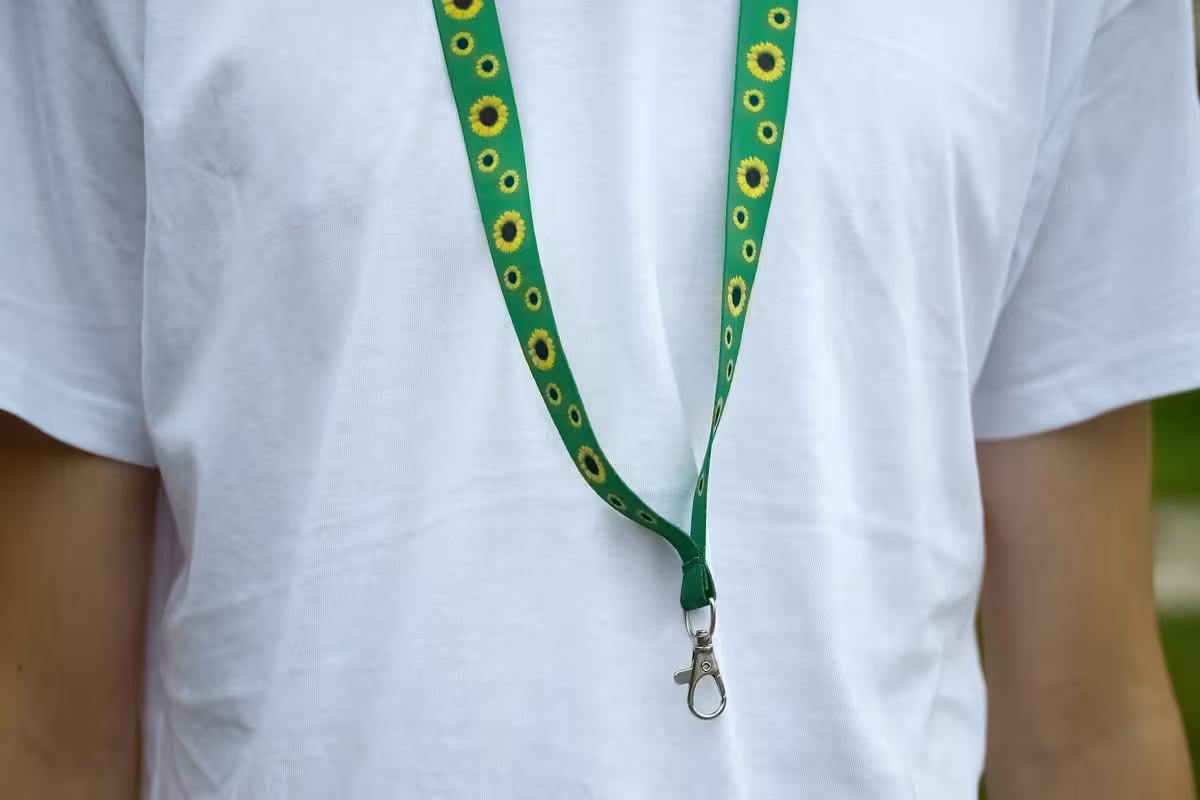
Hundreds of airports and airlines do recognise the lanyards(Image: Getty)
Travel can be made easier for some people living with an invisible disability or health condition by wearing a ‘Sunflower Lanyard’. Hundreds of airports around the world recognise it and what it may mean for some passengers – but not every airport is the same.
The Sunflower Lanyard isn’t recognised everywhere. Although many airlines and airports around the world support it, some international airports and locations ask you to use their own specific hidden disability programs or badges to get access to special fast-track lanes, priority boarding, or customised assistance.
Employees at participating venues are trained to recognise the lanyard and offer specific help, such as using simpler language, giving you extra time to process information, or guiding you to a quieter space. But, not every part of the world will instantly recognise or understand the lanyard.
On the Hidden Disabilities Sunflower website, it says: “It’s a misconception that people living with a disability don’t want to, or can’t travel. They do and they can. Globally, one billion people live with some sort of disability, and while some experience a disability that is visible, for many it is not visible.”
The system is designed for any condition that isn’t immediately obvious to others, including conditions like neurodivergence, mental health, sensory impairments, and chronic conditions, to name a few. The lanyard does not reveal your specific medical condition or disability.
What parts of the world accept and follow the Sunflower system?
According to the Hidden Disabilities Sunflower website, hundreds of airports and airlines do recognise the lanyards. As of April 2026, the number was around 325 – but checking the specific airport’s accessibility page can give more details such as finding out if staff can provide free Sunflower lanyards and where to collect them.
Because the lanyard operates on an “opt-in” basis for businesses, an airport will not recognise it unless its staff have been explicitly trained to do so. Holiday hotspot Spain made headlines because its airport authority (Aena) rolled out its own alternative system.
Most other non-participating airports simply do not recognise the lanyard at all, instead of replacing it with a local version. Outside of a few specific exceptions (such as Singapore Changi, Tokyo Haneda, and select major airports in India), the scheme is not widely adopted or understood by security staff across Asia and Africa.
What isthesystem
The Hidden Disabilities Sunflower lanyard system is an initiative that allows people to discreetly let others know that they have a non-visible disability and may need additional support, time, or help. Wearing the bright green lanyard that features yellow sunflowers indicates to trained staff that you have a hidden condition.
Anyone who feels they have a non-visible disability can use the lanyard. You do not need to show medical records or a doctor’s letter to get or wear one.
The system is designed for any condition that isn’t immediately obvious to others, including conditions like neurodivergence, mental health, sensory impairments, and chronic conditions, to name a few. For more information, click here.
A woman has shared her shock after an ‘entitled’ stranger stole her pre-booked plane seat – sparking an argument onboard as she tried to claim back what she’d paid for
13:29, 06 Jun 2026Updated 15:52, 06 Jun 2026
She has shared her dismay online (stock)(Image: AlxeyPnferov via Getty Images)
When arriving at the airport, travellers cannot wait to board their flight and jet off on their well-earned holiday. But one woman’s much-needed getaway started with friction when a stranger stole her plane seat and refused to give it up.
Taking to Reddit, she explained how she pre-booked a window seat on the plane, 27A, but when she arrived at her row, there were two women already sat down. She said: “I politely told them I had 27A, and one of them goes, ‘No, this is 27C the window seat. 27A is the aisle.’ “I was a bit confused, so I double checked after sitting down briefly in the aisle seat, and asked a flight attendant. She confirmed that 27A was in fact the window seat.
“So I go back and explain that to the woman, nicely, and her response was, ‘For f***’s sake, what are you so desperate to sit by the window for?'”
Wanting to avoid an argument, she told her that she’d pre-booked that specific seat on purpose and kindly asked her to sit in the one assigned to her.
She added: “She snaps back, ‘We all paid for it’, and still refuses to move.
“At this point the flight attendant is right there witnessing everything and says, ‘It’s her seat if she wants to sit there, she will.’
“Only then did the woman finally move, but the attitude the whole time was unbelievable. No apology, no basic respect, just pure entitlement.
“Honestly, I don’t get how people can act like that over something so straightforward. If it’s not your seat, just move. It’s not that deep.”
Commenting on her post, one user said: “It’s rude and it is not allowed. You sit in the correct seat period. They just wanted to take your seat. That’s where the flight attendants come in and say move it.”
Another added: “I remember when they said people had to sit in their assigned seat so they could be identified in an accident.”
A third chimed in: “People need to learn that doubling down on mistakes is wrong and stupid.”
One more person said: “I hope you didn’t need to leave your seat during the flight. I bet she’d b**** about that!
SITTING in a cafe with a cuppa and a slice of cake is already a nice way to spend an afternoon, but imagine if you could watch planes take off at the same time…
Well, there is one spot you can actually do this from and it is less than 12 miles from London.
Sign up for the Travel newsletter
Thank you!
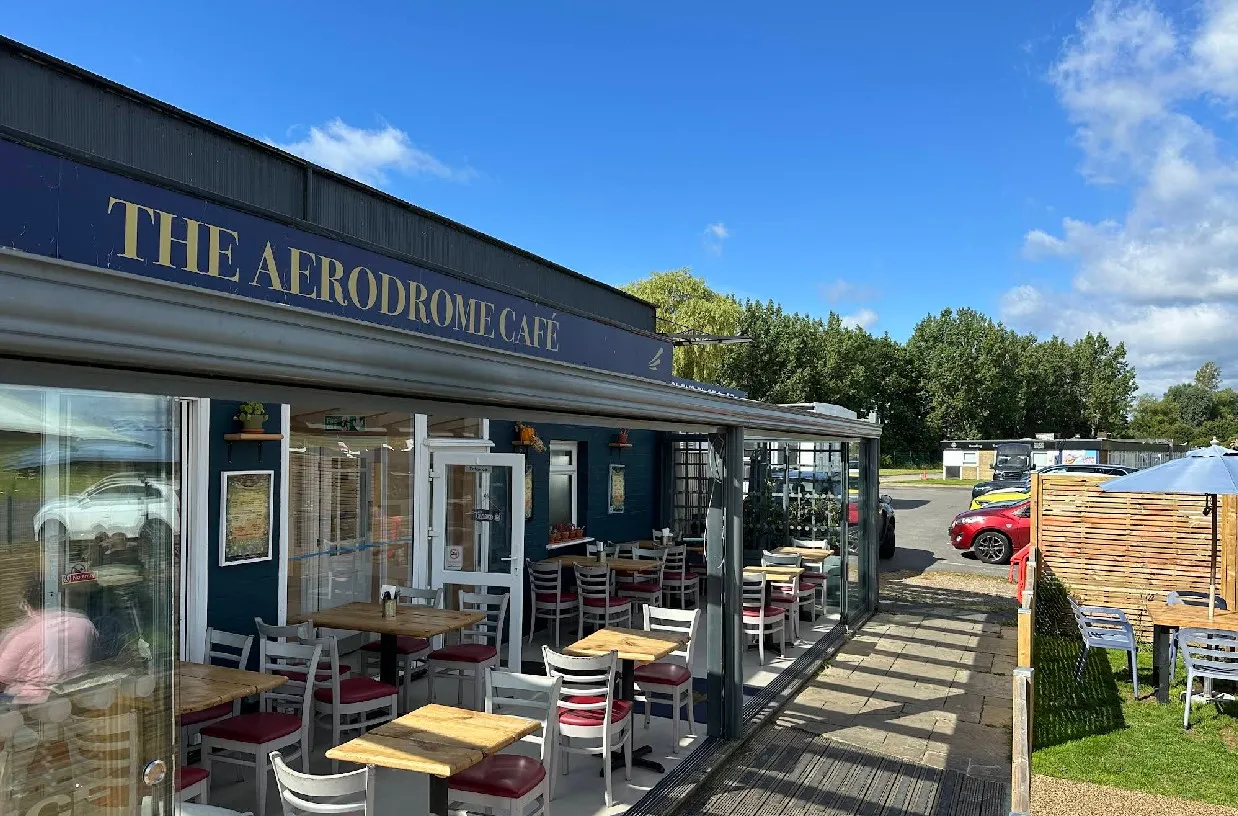
At Elstree Aerodrome Cafe you can sit and watch planes take offCredit: Google mapsThe small cafe sits right next to Elstree Aerodrome which dates back to World War IICredit: Google maps
The Aerodrome Cafe at Elstree in Hertfordshire, sits right next to Elstree Aerodrome, meaning you can tuck into breakfast while watching planes take off and land.
The small cafe is open seven days a week between 9am and 4pm and serves breakfast and lunch, as well as snacks.
And when the weather is warm and bright, you can even grab a beer for £5.30 and be closer to the action by sitting outside.
But in the colder months don’t worry, because inside there is a log burner to keep it cosy.
Visitors can enjoy breakfast, lunch or snacks at the cafeCredit: Google maps
The cafe was opened by husband and wife duo Jean-Luc Sainlo and Colleen back in 2021.
Jean is even a Michelin-trained chef and the cafe makes its own pizzas as well as afternoon tea and roasts on a Sunday.
One recent visitor said: “I come here with the family now and again and it’s always a lovely day out.
“I’ve seen adults and children alike be delighted watching the planes and helicopters after meals.
The cafe has both indoor and outdoor seating tooCredit: Google maps
“A few yards down the road is Aldenham Country Park, so once you’ve eaten and enjoyed the planes you can head over there if you prefer a more woodsy atmosphere.”
The aerodrome dates back to World War II where it was used as a base to repair Wellington bomber planes.
If you did visit today, you’d most likely see small two or four-seater planes, helicopters or potentially some vintage planes taking off.
Though, if you are really lucky, you might see some stars as the aerodrome has previously been used for a Mission Impossible film, as well as James Bond Spectre.
A flight attendant has said she can’t stand it when passengers break one common phone rule, as it could actually be quite dangerous for the pilot and other passengers
The flight attendant shared her biggest pet peeve with rule breakers (stock photo)(Image: Tunvarat Pruksachat via Getty Images)
When boarding a plane, there are several things passengers are required to do to ensure their own safety and that of fellow travellers. Once everyone has taken their seats, cabin crew will deliver safety information that must be listened to, and it’s frequently essential that you take their warnings seriously.
If you’re someone who flies regularly, you may believe you no longer need to absorb this safety information as you’ve encountered it numerous times before. But one cabin crew member on social media has insisted it’s always crucial that you remain attentive, as flouting the rules could result in injury, disruption to the aircraft, and possibly harm to your own possessions.
Yasmeen, a flight attendant working out of Los Angeles, posted a video on TikTok from a recent flight, revealing she was left stunned by what one passenger was doing while the aircraft was airborne.
The cabin crew member was travelling as a passenger on this occasion, but explained that her professional experience means she understands just how risky it can be to disregard the rule that the other traveller was so openly flouting.
In the footage, Yasmeen revealed that another passenger seated across the aisle had received a phone call mid-flight and proceeded to answer it with the phone on loudspeaker, allowing everyone within earshot to listen in on their conversation.
Content cannot be displayed without consent
Not only is blaring your phone on speaker thoughtless when crammed into a confined space with dozens of other passengers, but you’re meant to switch your mobile to aeroplane mode upon boarding, which blocks all signal and prevents you from making or taking calls.
Yasmeen said: “As a flight attendant, I’m actually about to jump out of my skin.”
Viewers of her clip were split, though. Some insisted they’d never dream of leaving their phone on during a flight, while others claimed they’ve “taken full Zoom calls” on planes previously, suggesting it shouldn’t be a problem.
One person said: “I just don’t understand. With all this technology, and supposedly we went to the moon, but we can’t use our phones on the plane?”
Another added: “I don’t understand what some of y’all don’t understand. You are NOT supposed to be making phone calls while in the air!”
A third wrote: “I’ve taken full Zoom calls on the plane. It’s not against the rules to be on a call.”
Why do phones need to be on aeroplane mode when flying?
Phones, tablets, and other wireless-enabled devices should be switched to aeroplane mode as a safety measure. According to the Federal Aviation Administration (FAA), any device that emits radio waves has the potential to interfere with navigation and radar systems, as well as disrupt pilots’ headsets.
The extent to which mobile phones impact aviation technology hasn’t been thoroughly researched, but pilots have reported hearing background noise and interference from handsets while in the air, particularly during landing. This could prove distracting to pilots at a critical stage of the flight, so it’s advisable to simply keep your phone on aeroplane mode throughout.
Failing to switch your phone to aeroplane mode is unlikely to bring the plane down, but even if it doesn’t irritate your pilot, it could also result in unnecessary strain on your own device.
Ways not putting your phone on aeroplane mode can affect you include:
Severe battery drain: Your phone will be working overtime to try and find a signal in the air by attempting to connect to towers on the ground, which can drain your battery.
Costly roaming charges: On international flights, flying over multiple countries and having your phone connect to their towers could land you with hefty roaming fees that you weren’t prepared to pay.