pharmacy

England’s ‘town from the past’ with its own Victorian pharmacy, school & time-warp pub reopens in time for May half-term

A POPULAR “time warp” attraction has reopened this week following months of closure.

A multi-million pound grant has helped resurrect the model Victorian town in time for the half term.

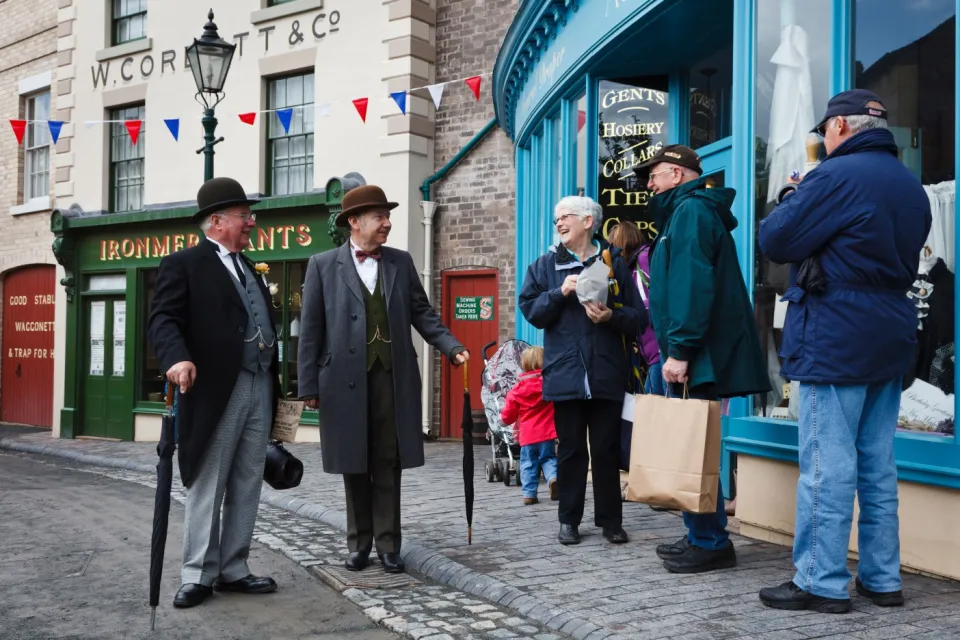
Visitors to Blists Hill Victorian Town chat with characters in period costume.
The 1900s style town has reopened following months of closure Credit: Alamy Stock Photo
A woman in period clothing stands at the counter of an old-fashioned apothecary, being served by a woman in a white uniform.
The Shropshire attraction features a shoe smith and candle factory Credit: Alamy

Blists Hill, a living Victorian Museum in Shropshire, finally reopened yesterday (May 21), allowing visitors to step back in time once more.

The 1900s style attraction closed in February this year after the National Trust took over the property from the previous owners, the Ironbridge Gorge Museum Trust.

The open-air museum features staff working in 18th and 19th century clothing, with a candle factory, butcher’s shop, school and a shoesmith for visitors to explore.

There is even a bank trading in shillings and pence, which visitors can use to spend at the confectionery store.

IT TRACKS

UK train station to be transformed into ‘world-class hub’ with £5billion makeover


HOLI-YAY

Jet2 to launch 17 new routes next summer to Greek islands & beautiful cities

Shire horses, as well as the new addition of a pony, also provide carriage rides around the town.

As part of the takeover, the National Trust was given a £9 million government grant to “increase visitor numbers” from beyond the county.

It will now run the attraction alongside nine other museums, 35 listed buildings and scheduled monuments that were once operated by Ironbridge.

Around 330,000 visitors come to the site annually from the West Midlands and across the UK.

The 11-week delay in reopening the attraction was attributed to overhauling IT systems, staff training and induction.

The Museum of Iron and The Old Furnace in Shropshire are also set to open this month.
Source link

U.S. restricts visas for 13 linked to fentanyl online pharmacy

May 13 (UPI) — The United States announced visa restrictions on 13 people linked to a U.S.-sanctioned, India-based online pharmacy that the Trump administration accuses of selling Americans hundreds of thousands of counterfeit prescription pills laced with fentanyl.

The people targeted by the State Department on Tuesday were identified as being “close business associates of KS International Traders and its owner.”

The U.S. Treasury sanctioned KS International and Mohammad Iqbal Shaikh, 34, in September. Shaikh was also among 19 people indicted in New York in the fall of 2024 on charges of selling counterfeit, fentanyl-laced pills to Americans over the Internet and via encrypted messaging platforms.

The targeting of KS International comes amid the Trump administration’s broader crackdown on drug smuggling. Among tactics employed was President Donald Trump‘s December 2025designation of illicit fentanyl and its core precursor chemicals as weapons of mass destruction.

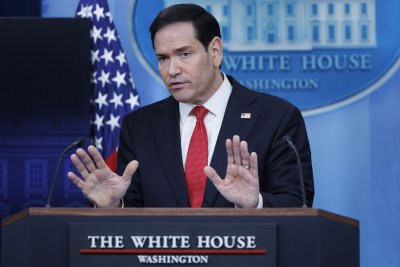
In June, Secretary of State Marco Rubio announced a new policy to impose visa restrictions on drug traffickers, their family members and close personal and business associates.

State Department spokesperson Thomas Pigott said Tuesday that the barring of entry to the 13 individuals “underscores the United States’ and India’s enduring and shared commitment to dismantling illicit drug entities and disrupting trafficking networks that harm Americans.”

“Those complicit in poisoning Americans will be denied entry to the United States,” he said in a statement.

The Trump administration has increasingly used visa restrictions across several policy areas, from punishing Haitian government officials and members of criminal organizations accused of obstructing the nation’s fight against terrorist gangs to Nicaraguan citizens believed to be facilitating irregular immigration into the United States.

Source link

England’s time-warp attraction with Victorian pharmacy, school and pub to reopen

ONE popular UK attraction often considered a ‘time-warp town’ is set to reopen next month after months of closure.

Blists Hill is a living Victorian Museum that allows visitors to step into the 1900s with a period pub, pharmacy, and school, and there are even Shire horses trotting about the streets.

Blists Hill will reopen in May after months of closure Credit: AIMEE SPINKS
The living museum has been taken over by the National Trust Credit: Alamy

Blists Hill closed in February of this year after being taken over by the National Trust.

Now, it’s understood the site is set to open next month, but the exact dates haven’t been announced yet.

The National Trust said on its website: “Details of timings and prices will follow on our website in the next few weeks.”

For those who are keen to visit, the Victorian town is found in Shropshire and is a completely immersive experience.

GO SEA IT

£9.50 holiday spot with shipwrecks, seals offshore & horseshoe-shaped waterfalls


SIGHT SEA

£9.50 holidaymakers’ favourite Skegness activities… away from the beach

There are staff in costume working in the businesses like ironmaking – which is what the site was originally used for in the 18th and 19th century.

There’s also a candle factory, butcher shop, shoe smith and even a school which has been deconstructed and rebuilt on the site brick by brick.

At the bank, visitors can exchange pounds into shillings and pence to spend on treats like sweets at the confectionery shop.

Blists Hill even has resident Shire horses like George and Bernie, who provide carriage rides around the town.

The attraction is an immersive experience – you can even visit a Victorian pharmacy Credit: Alamy
Travel Writer Ryan Gray stepped back into the Victorian era at Blists Hill Credit: Ryan Gray

It was late last year that that the National Trust announced it would take over the running of certain museums once operated by Ironbridge Gorge Museum Trust, like Blists Hill, with the help of a £9million grant.

The National Trust will oversee 10 museums and 35 listed buildings, with some sites opening “in a phased fashion” over the year.

For example, Toll House in Ironbridge, a small museum on the historic Iron Bridge, is set to reopen in mid-June

When Travel Writer Ryan Gray stepped into Victorian life, he confessed his favourite spots were the pub and chip shop.

He said: “The first cast member greet me was a friendly policeman, Guy Rowlands, who has been working on the site for more than 20 years. He also leads the singalongs in the New Inn, the on-site working pub, which takes place every afternoon.

“Staff recommended I take a bag of chips into the pub to enjoy with a pint on arrival, but as I was driving, I settled for a dandelion and burdock instead.

“Nevertheless, I was still able to enjoy the incredible levels of detail throughout the bar, including old local football fixtures written in cursive on the blackboard and ‘wanted’ posters hung up on the wall.”

Prior to its closure, Blists Hill was open from 10am to 4pm every day, with the museum advising customers to allow for up to four hours to explore it fully.

An adult day ticket to the site is £27, with a £30 option also available.

Source link

FDA to weigh looser rules on unproven peptides touted by RFK Jr., MAHA

The Food and Drug Administration will hold a meeting in the summer to consider easing restrictions on more than a half-dozen peptide injections, a group of unapproved therapies that have become popular among wellness influencers, fitness gurus and celebrities.

The meeting announcement Wednesday follows repeated pledges by Health Secretary Robert F. Kennedy Jr. to loosen regulations on peptides, which are often pitched as a quick way to build muscle, heal injuries or appear younger. There’s little research behind those claims and most peptides have not been reviewed for safety by the FDA.

Kennedy has discussed using peptides for his own injuries. And some major supporters of his Make America Healthy Again movement are big proponents of them, including Gary Brecka, a self-described “longevity expert” who sells various peptide formulas through his website.

The FDA said in a federal notice Wednesday that it will ask a panel of outside advisors to review seven peptides at a meeting in July, specifically whether they should be added to a list of substances that can be safely produced by pharmacies. In the meantime, the agency said it would soon remove the chemicals from a restrictive list reserved for unapproved, high-risk drugs. The peptides under discussion include some of the most popular among influencers, such as BPC-157, which is marketed to heal injuries and reduce inflammation.

“The Wild West is about to become wilder,” said Dr. Peter Lurie, a former FDA official who now leads the Center for Science in the Public Interest. In an interview, Lurie said allowing peptides on the market without clinical testing poses a “profound threat” to FDA’s decades-old system for vetting drugs.

“I don’t see why one would take the path of a proper drug approval if there is now this less rigorous, alternative path to market,” he said.

Under President Biden, the FDA added nearly 20 peptides to the federal list of substances that should not be produced by compounding pharmacies — businesses that mix medications that aren’t available from drugmakers.

At the time, the FDA’s panel of pharmacy advisors voted overwhelmingly that the peptides did not meet the criteria for substances that can be safely compounded. And FDA regulators agreed, saying later that the substances “present significant safety risks,” because most have not been extensively tested in humans.

Many of the FDA advisors and internal staff who oversaw those decisions no longer work for the agency. The FDA’s pharmacy panel currently has a number of vacancies, which Kennedy could fill before the July meeting.

Kennedy previewed Wednesday’s move in an interview with podcast host Joe Rogan. Both men have repeatedly spoken about peptides and claimed to have benefited from their use.

RFK Jr. claims personal benefit from peptides

“I’m a big fan of peptides,” Kennedy told Rogan. “I’ve used them myself and with really good effect on a couple of injuries.”

Given Kennedy’s statements, Lurie said it was doubtful the drugs would receive real scrutiny from FDA.

“Everybody knows the outcome that the secretary wants,” Lurie said. “I don’t believe for one moment that what’s going on here is an honest investigation of whether these products should be compounded.”

Scott Brunner of the Alliance for Pharmacy Compounding said the coming meeting will be the start of a “protracted process.” Even if the panel votes to make the peptides available, and the FDA agrees, the agency will still have to draft and publish rules on the change, he noted.

Peptides are essentially the building blocks of more complex proteins. Inside the human body, peptides trigger hormones needed for growth, metabolism and healing.

In recent years peptides have become widely known through the blockbuster success of GLP-1 medications, which the FDA has approved for treating obesity and diabetes. Other FDA-approved peptides include insulin for diabetics and hormone-based drugs for several medical conditions.

But many of the peptides promoted online have never been approved, making them technically illegal to market as drugs. Several peptides, such as BPC-157 and TB-500, are banned by international sports authorities as doping substances.

But that has not stopped them from gaining a foothold in the burgeoning marketplace for wellness hacks and alternative remedies.

“I think this is a disaster in the works,” said Dr. Eric Topol of Scripps Research Translational Institute, who has studied the issue. “These peptides have no data to support their safety and efficacy.”

Meanwhile, some dietary supplement makers have begun mixing peptides into capsules, protein powders and gummies. At a recent FDA meeting, the industry argued for expanding the federal definition of supplements to permit the use of newer ingredients such as peptides in their products.

Safety risks were cited previously

When the FDA added a number of injectable peptides to its list of restricted substances in 2023, it cited safety risks including cancer and liver, kidney and heart problems.

That triggered pushback from wellness entrepreneurs, compounding pharmacies and their allies in Washington.

Last year several members of Congress, including Republican Sen. Tommy Tuberville of Alabama, sent letters to Kennedy asking him to lift limits on peptide production.

Some in the compounding industry argue that FDA restrictions have given rise to an illicit market of imported chemicals from China and other countries, which are not subject to U.S. drug standards.

Kennedy has echoed those concerns.

“With the gray market you have no idea if you’re getting a good product,” Kennedy told Rogan. “And a lot of this stuff that we’ve looked at is just very, very substandard.”

Perrone writes for the Associated Press.

Source link