Iran’s anti-negotiation hardliners turn against President Pezeshkian | News
As the threat of a new war with the United States looms, the Front of Islamic Revolution Stability, a hardline political faction also known as the Paydari Front, has asked the Iranian parliament and the Supreme National Security Council to initiate a withdrawal from the Nuclear Non-Proliferation Treaty.
This move has been interpreted as a call for Iran to develop nuclear weapons, with the Paydari Front saying these military endeavours should happen “as quickly as possible”.
Recommended Stories
list of 3 itemsend of list
It is the latest bold and defiant message by Iran’s hardliners against Washington, after the US and Israel launched a war on Iran on February 28 on the pretext that Tehran was trying to develop nuclear weapons.
The war has seen the Strait of Hormuz largely closed to shipping, massive damage to Iranian and Arab infrastructure in missile and air strikes, and huge disruptions to global energy supplies.
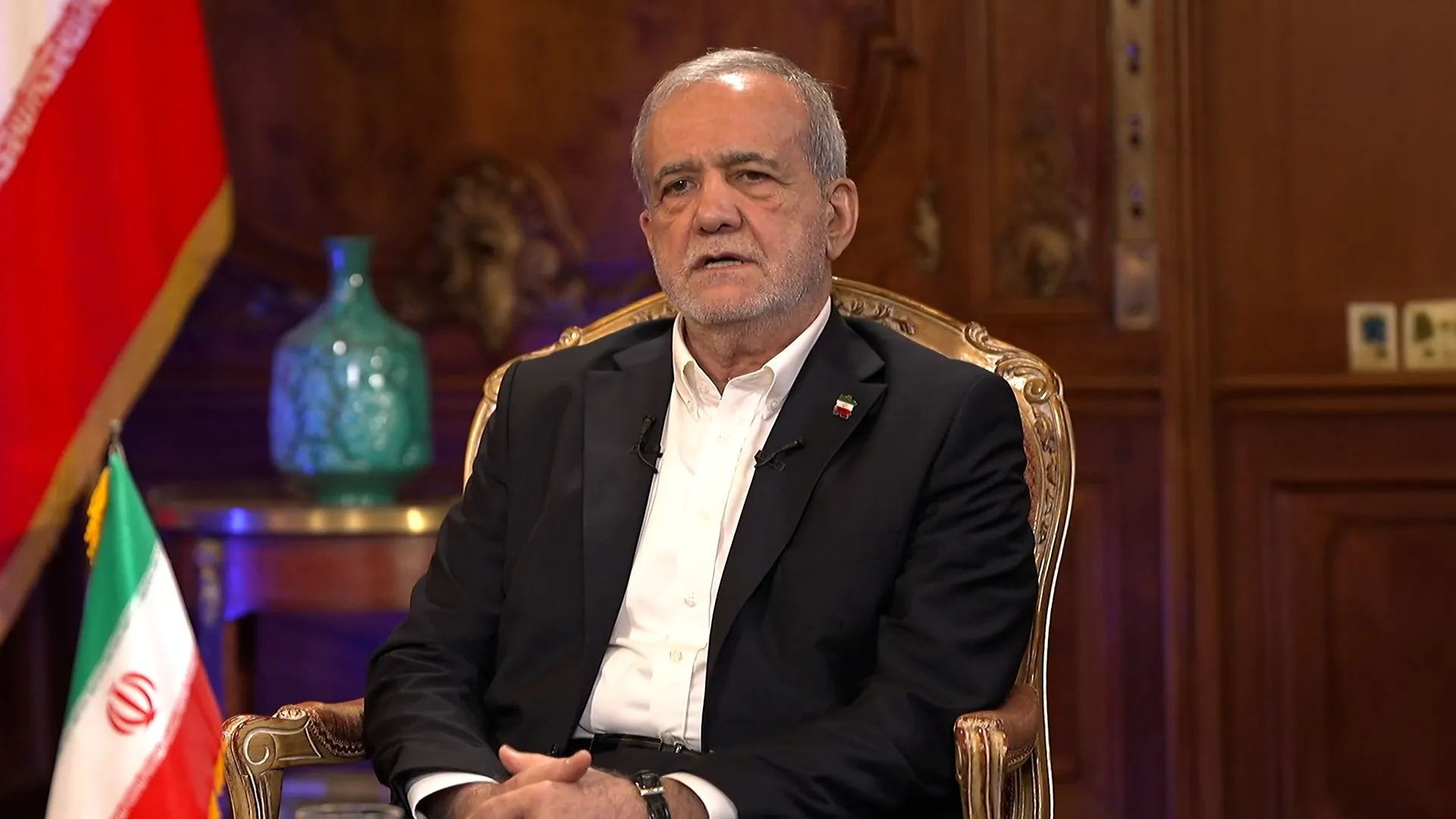
The past eight months have also marked an ongoing existential power struggle between moderates and centrists, such as President Masoud Pezeshkian, who generally favour talks with the US, and hardliners in the Paydari Front who do not.
Ultimately, the moderate camp wants a swift end to the conflict to save Iran’s crumbling economy. Hardliners believe Washington only understands the language of force, so the war should continue until the US capitulates to Iran’s demands.
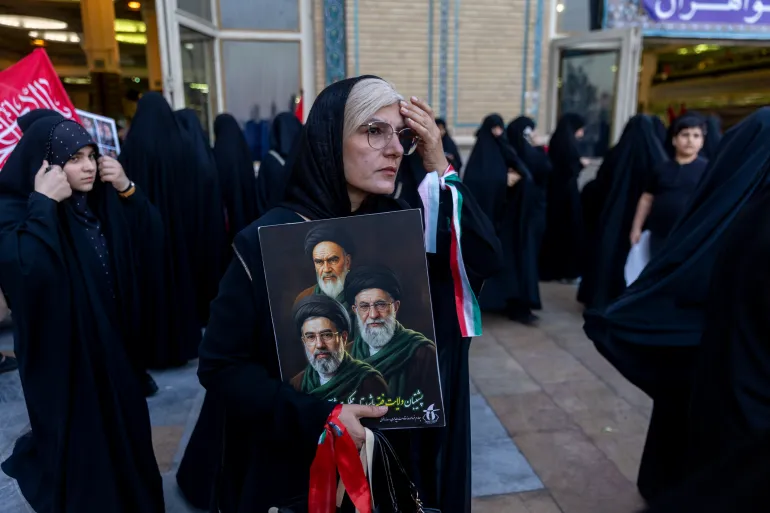
The domestic rivalry can be seen in the public squares of major Iranian cities, where for the past 200 days supporters of the hardline faction have rallied at night.
Initially, these gatherings were a way for people to express public support for the government and protest the unprovoked US war on Iran. Over time, they have evolved into highly organised political rallies where activists can publicly express their strong opposition to moderates’ efforts to end the war through diplomatic channels.
The hardliners’ slogans include “No compromise, no surrender – the fight against America” and “Negotiating with the enemy is a betrayal of the homeland”.
They also protested against President Pezeshkian’s return to Tehran from the UN General Assembly in September, where he condemned the US war but also extolled the virtues of diplomacy. The pickets were viewed as a way for their “anti-negotiation” message to be heard by the president.
This bloc has considerable power beyond these activist circles. Hardliners have a strong presence in Tehran’s municipal government, the parliament, among religious preachers and eulogists, and academia and the media.
Amirhossein Sabeti, a member of parliament aligned with the Paydari Front, said in a statement that negotiations with the US will not begin unless Washington’s siege on Iran’s southern ports or sanctions end.
“The enemy’s objective of destroying Iran has not changed. It is simply waiting for the right moment to launch another surprise attack. Those who thought negotiations could prevent war, or that the United States would lift sanctions through negotiations, did not understand how the world works and were deluding themselves,” he said. “The only language the world understands is the language of power.”
The political faction to which Sabeti belongs has filed a motion in the Iranian parliament to impeach Foreign Minister Abbas Araghchi, following his visit to New York for the United Nations General Assembly. Iran’s parliament is also considering a law to criminalise interviews with foreign media outlets, which would be another win for hardliners.
But as the impeachment motion against Iran’s foreign minister moves through parliament, the political camp supporting the government continues to advocate for a diplomatic solution to the current conflict.
Davood Heshmati, a journalist considered close to Pezeshkian, said there are signs that US forces have foregone the grand ambition of overthrowing the Iranian government and have instead opted for more modest aims, which makes a diplomatic solution more likely.
“There are several ways to achieve those other goals, one of which is war. But, in any case, to prevent a war, all alternatives to military action must first be tested. Negotiations and a diplomatic agreement are among those alternatives, and they should always take precedence over war,” Heshmati told Al Jazeera.
“Those who say the Strait of Hormuz must not be reopened are people who believe the war must not end. From the perspective of Iran’s anti-negotiation camp, the war between Iran and the United States has no end. What they do not explain is what outcome they expect from this war. They seem to believe that, after several rounds of fighting, the United States will simply walk away from the conflict. But that idea does not appear to be consistent with the logic of what we are witnessing.”

He indicated that for any war to end, there needs to be an understanding with the US that respects Iran’s territorial integrity.
“Those in Iran who support negotiations argue that a balance of power does not necessarily have to be achieved through war, although, given everything that has happened along the diplomatic path, the distrust that exists is understandable,” he said.
Political analyst Negar Mortazavi argues that hardline groups are a powerful domestic force, but they currently have limited influence over Iran’s foreign policy.
“Iran’s hardliners are not a marginal political force. They are a well-organised and deeply entrenched part of [Iran’s] political establishment. Their strength lies in their ability to mobilise supporters, shape political discourse, pressure the government, and raise the political cost of diplomacy,” she said.
“But political influence should not be confused with ultimate decision-making authority. Decisions about war, peace, and negotiations are made at the highest levels of Iran’s leadership and national security establishment.”
Hardliners can continue to confront negotiators, threaten impeachments against those who propose talks with the US, and try to obstruct diplomatic endeavours, she said. But they cannot prevent an agreement being reached if it is backed by the country’s main powerholders, including Supreme Leader Mujtaba Khamenei and the Supreme National Security Council.
“The [hardliners] are powerful enough to complicate diplomacy, but not necessarily powerful enough to stop it. [They] are a highly visible and vocal political force, but they are not calling the shots,” Mortazavi told Al Jazeera.
“Throughout the war, Tehran has kept the door open to diplomacy, and the decision at the highest levels of leadership has been to pursue negotiations with the United States and seek an agreement. The hardliners have been unable to stop that. The real test of their power is that they could not stop the JCPOA [nuclear agreement] under [former President Barack] Obama, and they could not stop the more recent MoU [memorandum of understanding] with Trump. Ultimately, the decisions were made above their heads.”
Street rallies and television programmes opposing a peaceful solution to the US-Israeli war against Iran will continue. But the delay in scheduling the foreign minister’s impeachment hearing, alongside continued diplomatic engagement with mediators to end the war, suggests that the moderates are still a force to be reckoned with.