SINGER Lauren Bennett, who featured on the global smash hit Party Rock Anthem, has died aged 37.
The beloved Brit, formerly a member of American girl group G.R.L, was remembered as a “beautiful spirit” who “touched so many lives” by her old bandmates.
Sign up for the Showbiz newsletter
Thank you!
Brit singer Lauren Bennett has died aged 37Credit: Refer to source
In a joint statement, they wrote: “It is with great sadness that we share the passing of our beloved Lauren.
“Our hearts are broken, and we cannot begin to express how much she meant to us.
“We will forever cherish the love, laughter, and countless memories she gave us.
“Her beautiful spirit touched so many lives, and she will be deeply missed and forever loved.”
Lauren with G.R.L. bandmates Emmalyn Estrada, Natasha Slayton and Paula Van Oppen in 2015Credit: Getty – ContributorThe Brit has been remembered for her ‘beautiful spirit’Credit: Getty
“Rest peacefully, sweet Lauren. You will always be in our hearts. Your GRLS, Em, Tash, and P.”
Lauren shot to stardom as a member of The Paradiso Girls in 2007.
The group, a European spin-off of the Pussycat Dolls, disbanded in 2010 after their singles flopped in the charts.
But Lauren would go on to force a successful solo career, featuring on a remix of will.i.am’s I Got It from My Mama and later collaborating with CeeLo Green on Love Gun.
The highlight of her career came in 2011, when she featured on LMFAO’s worldwide No1 hit Party Rock Anthem, cementing herself as the next up-and-coming star.
More to follow… For the latest news on this story keep checking back at The Sun Online
Thesun.co.uk is your go-to destination for the best celebrity news, real-life stories, jaw-dropping pictures and must-see video.
Key details as UK travellers going to Europe ‘have to pay new £17 fee’ in 2026 – The Mirror
Need to know
New research has uncovered widespread confusion over passport rules and travel requirements for visiting Europe
12:00, 03 Jul 2026Updated 15:32, 03 Jul 2026
Rules have changed quite a bit since Brexit(Image: JUSTIN TALLIS, AFP via Getty Images)
Brits face new travel fees and passport confusion post-brexit – need to know
British travellers are being urged to double-check their passport details before heading to Europe as new research reveals widespread confusion over post-Brexit travel rules.
Saga Travel Insurance’s survey of 500 UK residents found that 16% were unaware of their passport expiry date, while 8% were carrying already-expired documents. One in 14 travellers had been refused entry to a country due to insufficient passport validity remaining.
Michelle Cooper, director of Travel Insurance at Saga, warned: “Nobody should have their holidays ruined because of a simple passport error. A few quick checks can help people avoid unnecessary stress, unexpected costs and disruption at the airport.”
Half of holidaymakers still lack confidence understanding visa requirements for Europe following Brexit. The complex 90-day rule within any rolling 180-day period in the Schengen area is catching many Brits out, with frequent short breaks potentially pushing travellers over the limit.
The ’10-year passport rule’ is causing particular confusion online, with EU countries requiring passports to be less than 10 years old on entry. Passports issued before 2018 remain valid for 10 years and nine months, creating additional complexity.
From late 2026, British tourists will need approval through the new European Travel Information and Authorisation System (ETIAS) before travelling to most European countries. The system will cost approximately £17 and requires advance application to avoid boarding denials.
Cooper emphasised that travellers are responsible for ensuring correct authorisation, warning that travel insurance is unlikely to cover costs from denied boarding due to invalid ETIAS approval.
Weekly insights and analysis on the latest developments in military technology, strategy, and foreign policy.
The Pentagon and the U.S. Air Force have fully abandoned an attempt to axe the acquisition of E-7 Wedgetail airborne early warning and control aircraft, and to use E-2D Hawkeyes to help fill the resulting gap. In something of a twist, the Pentagon has proposed cutting U.S. Navy E-2D purchases, as well as raiding a classified Air Force account, to keep the E-7 program going. The House Appropriations Committee has now pushed back on the E-2D part of that plan. The back-and-forth underscores the critical importance of airborne early warning and control aircraft and the strain on existing U.S. fleets.
A Royal Australian Air Force E-7 Wedgetail flies together with a U.S. Air Force F-22 Raptor during an exercise. USAF
To recap quickly, roughly a year ago, the Pentagon and the Air Force disclosed their intention to axe the E-7 program, which had suffered delays and cost overruns, and acquire additional E-2Ds as an interim gap-filler. Questions about the future survivability of the Wedgetail were also raised. The Air Force’s long-term goal was then and still is now to eventually push most air moving-target indicator (AMTI) tasks into space, though that is still years away from truly becoming a reality. Congress subsequently intervened to save the Wedgetail, appropriating billions for the effort in Fiscal Year 2026. The E-7 was again missing from the Air Force’s proposed 2027 Fiscal Year budget, which raised the prospect of a new battle with Congress.
Top Pentagon and Air Force officials subsequently said that the viewpoint on the Wedgetail had fundamentally changed, and submitted an amendment to the budget request to include funding for the program. Per a memo earlier this month from Russell Vought, Director of the Office of Management and Budget (OMB) at the White House, this was done in two ways. $898,549,000 was taken from “Other Procurement, Air Force” section of that service’s budget proposal, while another $650,549,000 came out of “Aircraft Procurement, Navy.”
The combined $1,549,098,000 was moved into the “Research, Development, Test and Evaluation, Air Force” account. According to Vought’s memo, the funding would go toward “priority requirement to deliver two E-7 Wedgetail prototype aircraft and continue Engineering Manufacturing and Development activities for a program of record.”
The Air Force already has seven E-7s on order now, including the two jets to support rapid prototyping efforts. It is unclear when the service expects to begin flying Wedgetails operationally. Before the attempt to cancel the program, the target date for initial operational capability had already slipped from 2027 to 2032. It should be noted here that variants of the E-7 are already in service in Australia, South Korea, and Turkey, and that the United Kingdom is set to field a fleet of Wedgetails, too.
A Royal Australian Air Force E-7 Wedgetail. Australian Department of Defense
The report the House Appropriations Committee released yesterday included important additional context about the latest funding plans.
“While the President’s budget request for fiscal year 2027 did not include funding for the E–7 Wedgetail program, the Secretary of the Air Force and Secretary of Defense testified before the House Defense Appropriations Subcommittee that they support this critical platform and have submitted a budget amendment to the Office of Management and Budget to restore funding for the platform,” it explained. “The shift in mindset at the Department of Defense translated to requested transfers from the Special Update Program in Other Procurement, Air Force, and the E–2D program in Aircraft Procurement, Navy for a total investment of $1,549,098,000 for E–7 in Research, Development, Test and Evaluation, Air Force in fiscal year 2027.”
“While the Committee wholly supports the E–7 program and funding realignment, the Committee also restored the E–2D program to six aircraft for fiscal year 2027,” the report added. “The Committee understands the operational necessity of the E–2D platform; the complementary nature of the E–2D and E–7; and believes that more aircraft, not fewer, are necessary to support our warfighters now and in the future.”
A pair of E-2D Hawkeyes. Lockheed Martin
It is not immediately clear whether the draft spending plan that the House Appropriations Committee has now put forward still includes the full $1,549,098,000 for the E-7 program, as well as the restoration of funding for the E-2D purchases. The memo from OMB had stressed that its intent in shifting funding around was not to add to the roughly $1.5 trillion topline for its proposed 2027 Fiscal Year defense budget. Congress can, of course, appropriate additional funds as it sees fit, and often does.
Regardless, this new debate over how and where to find funding for the E-7 highlights larger issues surrounding airborne early warning capacity within the U.S. Air Force and the U.S. Navy.
“The conflict in Iran has reinforced the need for the Air Force to maintain a credible airborne battle management capability, currently being met with the Air Force’s E–3 Airborne Warning and Control System and the Navy’s E–2D Hawkeye programs,” the House Appropriations Committee’s report also notes. “As the E–3 is set to retire, the E–7 Wedgetail will serve as [a] modern replacement for lost battle management capability, commensurate and interoperable with assets already being utilized by key allies.”
U.S. Air Force E-3 Sentry aircraft at Prince Sultan Air Base in Saudi Arabia in 2022. USAF
The House Appropriations Committee report also leaves out any broader context about the planned E-2D purchases for Fiscal Year 2027. When it released its proposed budget for Fiscal Year 2025 back in 2024, the Navy had no plans to order more Hawkeyes, at least over the next five years. In its 2026 Fiscal Year budget request, the service asked for funding for four E-2Ds, presumably as part of the plan to cancel the E-7. Congress subsequently appropriated funding for three Hawkeyes in that fiscal cycle.
When it rolled out its latest budget request earlier this year, the Navy outlined all-new plans to buy 12 E-2Ds – six in Fiscal Year 2027, two in Fiscal Year 2028, and four in Fiscal Year 2029 – explicitly “to replenish accelerated service life burn down of existing force structure due to Overland Airborne Early Warning (AEW) tasking.” This underscores operational strain on the Hawkeye fleet, which can only have been further added to by operations in relation to Iran over the past few months. This also points to E-2Ds supplementing E-3s in providing overland coverage.
An E-2D Hawkeye comes in to land on the U.S. Navy supercarrier USS Gerald R. Ford after a sortie in support of Operation Epic Fury against Iran in March, 2026. CENTCOM
How exactly the E-7 program gets funded in Fiscal Year 2027, as well as what happens to the plans to order more E-2Ds, remains to be seen. The House Appropriations Committee’s draft defense spending plan could still evolve in various ways in the coming weeks and months, and will need to be reconciled with companion legislation making its way through the Senate. Once Congress passes the bill, President Donald Trump will still need to sign off on it, too.
What is clear is that both the E-3 Sentry and E-2D Hawkeye fleets remain as critical as ever, but have been even more stressed by recent operations against Iran, with new E-7s still years away from entering service.
MIAMI GARDENS, Fla. — World Cup tickets are expensive. Flights to North America are expensive. Hotel rooms in many places are expensive.
Then there’s the price of beer.
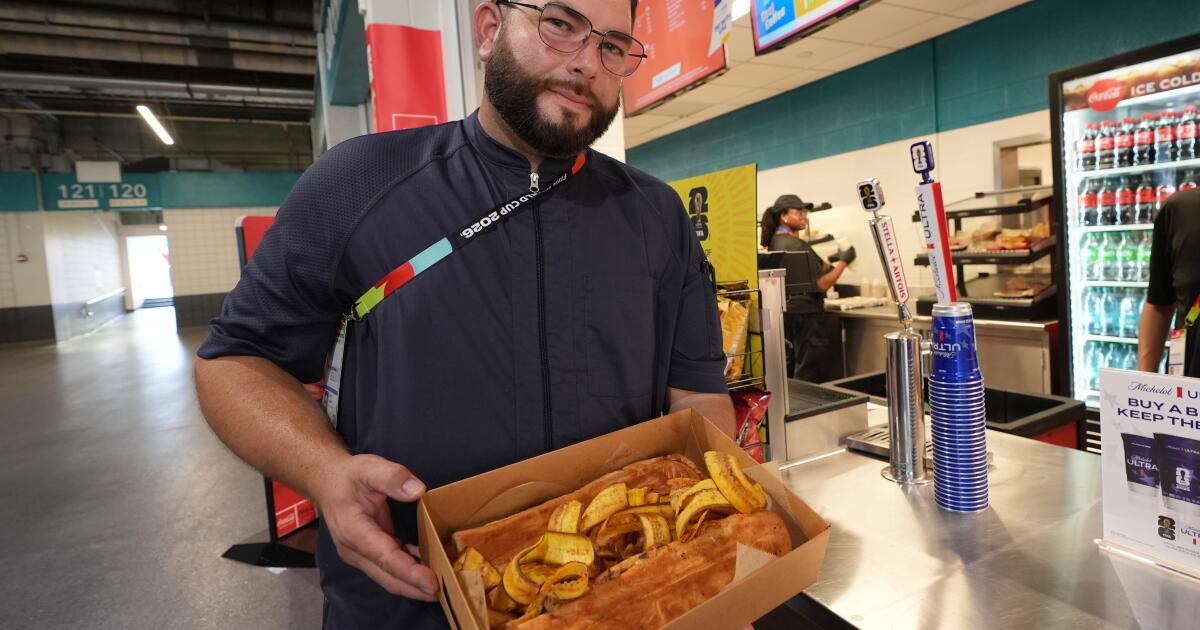
There are some fun — and yes, sometimes pricey — food and drink offerings at the venues playing host to the World Cup. A $75 caviar-topped tray of tater tots and a $40 empanada weighing in at 5 pounds for the daring or for sharing in Miami. Ribeye tacos for $8 in Guadalajara, Mexico. Something called a Twinkie cheeseburger that has nothing to do with dessert for $22 in Los Angeles.
Prices, in many cases, aren’t all that different from what U.S. fans would experience on NFL Sundays or college football Saturdays. But some international fans aren’t used to such pricing and are calling foul, especially over beer prices that can top $20.
“It’s unfair. It’s not right. It’s wrong,” said Thomas Schüller, an engineer from Germany in Toronto to watch his national team play over the weekend, as he held a beer that cost him 24.25 Canadian dollars (about $17). “It’s three times the cost of what I pay in my country.”
But is that stopping him?
“Well, no,” Schüller acknowledged.
Beer prices become a mild pint of discord
There is clearly some sticker shock among international visitors to this World Cup, especially when it comes to the concession prices. In Europe, it’s not uncommon for beers to be perhaps around 4 or 5 euros (about $5-6).
There’s also no shortage of intrigue on the menu at the concession stands at stadiums across the U.S., Canada and Mexico.
“Never seen anything like it,” said Janine Arbetter, a fan from Austria, as she waited for a hot dog, chips and soda combo in Miami last week. The pre-tip price: $19.35, which included a discount for using Visa. “It’s a lot of food for a little snack.”
Some Argentina fans happily showed off their $34 lobster rolls from a match in Kansas City on social media, but in Toronto, the brisket sandwich with chips and a bottle of soda for nearly 40 Canadian dollars ($28) had some online commenters lamenting it as “robbery.”
“It’s OK, more or less, for the World Cup,” German fan Daniel Feldmann said of the food prices while watching a match in Vancouver last week.
Concession offerings vary from stadium to stadium
FIFA, the sport’s governing body and the tournament organizer, has very specific rules on just about everything related to the World Cup — and there are guidelines that concessionaires have to follow as well. But prices can vary by market, as do the food and drink offerings. And that means the experience in one city might look, or taste, nothing like what’s offered in another.
The “Fancy AF Tots” for $75 at Miami Stadium aren’t really tots at all — it’s three deep-fried hash brown patties, with caviar, creme fraiche and chives. (For those who just want the caviar, it’ll be $70.) Southern California’s Twinkie cheeseburger is in fact a burger topped with a Texas Twinkie — a bacon-wrapped jalapeño stuffed with brisket and cream cheese.
But there’s also a slew of choices specific to a local market; for example, Vancouver offers short rib poutine along with a maple bacon smokie (smoked sausage topped with bacon onion jam that features Canadian maple syrup).
And in Miami, the signature offerings include pan con lechon (a Cuban-style sandwich with pork, infused with citrus mojo sauce and served on a toasted full Cuban loaf) and Empanada Mundial (the five-pound, handmade, chicken-and-cheese-stuffed dish named after the World Cup).
Both Vancouver and Miami have Sodexo Live as a food and beverage provider, and the typical game-day menus in both stadiums were revised a bit to accommodate a soccer crowd.
“We want it to feel like Miami when you’re here,” said Zach Williams, Sodexo Live’s vice president of operations at Miami Stadium. “Everything we do around the Miami Stadium, we want to make sure everybody understands that when they come here, they’re getting a Miami experience.”
Atlanta Stadium keeps prices low
In Mexico City, a beer could cost a day’s pay — literally. The daily minimum wage in Mexico City is just 315.04 pesos (roughly $18). Some beers at Mexico City Stadium were selling for between 299 and 310 pesos — about twice as much as fans would ordinarily pay in the same stadium when the World Cup isn’t in town.
But in Atlanta, where Falcons owner and stadium operator Arthur Blank promised the low concession prices he’s championed for many years would hold for the World Cup, pizza slices were $3, 32-ounce sodas were $4, a cheeseburger was $5, chicken tenders with fries were $6 and beers could be had for as little as $8.
Jonathan Arango, a 33-year-old from Greenville, S.C., was at a match in Atlanta with his wife, daughter and father.
“In total for what we got — three orders of tacos, a slice of pizza, two waters and a Coke — we spent like $50,” Arango said. “Compared to what we’ve paid at other events … it’s nice after you paid a lot for a ticket.”
And Schüller pointed out that even though the tournament does come around every four years, it still feels like a once-in-a-lifetime experience.
“The entire football world is having fun,” Schüller said, “so cheers to that.”
TOURISTS may face fees for rinsing off at a popular Spanish beach holiday resort.
A controversial smart meter has been installed at beach showers, upsetting both locals and visitors.
Sign up for the Travel newsletter
Thank you!
Matalascanas Beach is currently trialling a smart meter on its public showerCredit: SolarpixBeach-goers can opt to use coins or their mobile phone to pay for a shower, which lasts less than one minuteCredit: Solarpix
The smart shower is currently being trialled at Matalascanas Beach at Costa de Luz in south-west Spain.
While it is currently free to use, the plan is for users to be charged via a QR code or they can pay with cash.
The meter accepts two types of coins, with “no change given”, or beach-goers can use their mobile phones to scan the code and pay online.
This initiative has been promoted by two local engineers as a water-saving scheme.
However, claims that the set-up could cost a family-of-four around £3.50 to quickly wash off the sand on their bodies, has caused a stir.
The smart shower has been installed by the four-star On Hotel Oceanfront, which is understood to be the only shower in operation along the entire 2.6 mile-long beach.
It has already been met with backlash from residents, with many pointing out the issues with the set-up.
“Great idea. You have to get your mobile out and when you go to shower where do you leave it?” asked one person.
Another said: “I understand that water is important but I think this is terrible. Do you have to shower with your mobile in your hand?”
Commenting on an online discussion over the proposed charges, one social media user said: “Little by little, we normalize paying for everything.”
“By next year there will be parking metres, paid showers, and in a few years they’ll charge us for stepping on the sand – private beaches, like in other European countries,” they added.
Another person said: “This year the trial to find out how much they’re going to get, and next year they charge everyone.”
Almonte Council, the local authority covering the beach, has not confirmed how long the free trial period will last.
The estimated cost of a shower lasting less than a minute has been put at around €1 (85 p).
It comes after several beaches on the eastern end of the Costa del Sol decided to shut their showers last summer, with only foot washes remaining open.
However, the situation is expected to be much better this summer following a winter of heavy rain.
Rincon de la Victoria Council announced last month it would be opening its beach showers as normal this year.
Cruise passengers who dock for the day in Barcelona now face having to pay a hefty fee per passenger per day, as the mayor looks to slash the number of short-stay cruise visitors to zero
Visitors to Barcelona could soon end up paying nearly £26 just to wander its streets(Image: Aylin Mercan/Anadolu via Getty Images)
Barcelona’s city council has approved plans to triple the amount that cruise passengers pay when they take a day trip to the popular city break hotspot.
The levy for cruise ship passengers will be hiked from €8 to €24 per passenger. In addition, a €6 regional tourist tax is already payable to visitors who spend less than 12 hours in Barcelona, which means the cost of setting foot in the capital for cruise passengers will rise to €30 per person, just under £26.
The hike is part of Barcelona mayor Jaume Collboni’s plans to slash cruise tourism to the Catalan city according to cruise news outlet Deep Arrival.
Barcelona welcomed around 16 million visitors in 2025, 3.99 million of which were cruise passengers, with campaigners claiming that the influx puts a strain on public services and leads to overcrowding during the peak summer months. The tax increase is aimed at discouraging cruises from visiting the city completely, rather than just reducing overall numbers.
In July 2025, the city’s council approved plans to gradually increase the levy paid by cruise passengers gradually over four years, but reports within cruise trade publications indicate that this timeline could be sped up, and higher charges could be implemented as soon as 2027.
Cruises that begin or end in Barcelona would not be charged this increased fee, as these sailings are seen to have a postive impact on the city compared to day trips. A report on the sustainability of cruises on the city showed that day trippers from cruises spent an average of 5.7 hours in the city, and mostly visited popular attractions as as the Sagrada Familia and Park Güell.
Last year, Barcelona cut the number of cruise terminals from seven to five, and began to reroute larger cruise ships away from the most central ports, which now prioritise smaller boats and local marine traffic.
It’s not just cruise passengers who’ll pay higher fees in Barcelona. As of April 1, general accommodation tourist taxes have also increased, making them among the highest in Europe. Visitors pay both a regional and a municipal surcharge, meaning the total tourist tax ranges from €7 to €12 per person per night (approximately £6 to £10.38).
Barcelona has been at the heart of the overtourism protests sweeping Spain, and in June 2025 the city hit the headlines as protestors marched through the streets holding signs with slogans such as “Your Airbnb used to be my home”, and people sitting on outside terraces were squirted with water pistols.
Further protests are expected this summer from groups such as Menys Turisme Més Vida (Less Tourism More Life), including protests in Palma, Majorca set for July 26 to coincide with the start of school holiday season.
Have a story you want to share? Email us at webtravel@reachplc.com
One day, when people say “they don’t make ’em like they used to,” they will be saying it about “Industry.”
First filmed before the pandemic and launched in its throes, a survivor of the era of streaming wars, corporate consolidation and Hollywood strikes, HBO’s addictively dissolute workplace drama remains as ambitious and authoritative as ever. Indeed, despite being divided from predecessors like “Mad Men,” “Succession” and “The Leftovers” by a series of epochal crises, it more closely resembles a vestigial tail of the medium’s past than most of its current counterparts: Out of place and out of time, “Industry” can best be understood as the last great drama of TV’s golden age.
Cast member and “Game of Thrones” alum Kit Harington, resident expert on series that reshaped the medium, agrees that “Industry” is a bit of a throwback in this respect.
“If you scroll back to ‘Game of Thrones’ in the first two seasons, it wasn’t a massive Goliath success, and it exploded after Season 3 with the Red Wedding. I think there’s a similar story going on here,” he says. “So often in TV at the moment, you’re given one season and everyone needs to pack in f— everything to get people hooked. But they’re burning through too much story. Season 2 is then done; the characters haven’t got anywhere to go. I think this is where this show has been successful, is that it was given that time to breathe.”
Earlier this spring, I convened “Industry’s” creators and cast in a conference room at The Times to walk me through its evolution into one of the best shows on television, and what to expect from its impending end.
Marisa Abela, left, Kit Harington and Myha’la.
(Jason Armond / Los Angeles Times)
‘What the f— are you thinking, guys?’
Atrading-floor knife fight of hot, young strivers, or “grads,” competing for a permanent place at the fictional Pierpoint investment bank, the first season of “Industry,” filmed in 2019, premiered in the waning months of 2020 as a warped love letter to office culture. But for Konrad Kay and Mickey Down, the emerging writers at the helm, the voice of the series didn’t fully take shape until they’d found their main cast, including Myha’la, as hard-charging American Harper Stern, and Marisa Abela, as privileged publishing heiress Yasmin Kara-Hanani.
Kay: Season 1, me and Mickey were really green.
Down: We actually pitched HBO on the idea that it was going to be eight episodes, it was going to be in different months, and the big-bang dramatics were going to happen between the episodes. A bit like “Boyhood.” Huge things would happen in between episodes, and the episode would be about the reaction to those huge things. And they were like, “What the f— are you thinking, guys?” It was so antidramatic.
Abela: I had a lot of rounds of auditioning for Yasmin. They weren’t sure about me at all. I think part of it was because they were quite hellbent on her being vulnerable, on her being soft, and that was what I was playing in those first two, three episodes. … And what happens in any functional collaboration is you start to see what they really want from you — what it is that they need from your character. And in those moments of conflict, the moments of change, Yasmin has to stand up for herself at some point, otherwise it’s too wet.
Mickey Down.
(Jason Armond / Los Angeles Times)
Down: Yasmin was all vulnerability masked by Prada in script, and then you came in and you were very hard. [Laughs.]
Abela: There is one scene with [Yasmin’s abusive supervisor] Kenny [played by Conor MacNeill] in Season 2 where … Yasmin turns around to him and tells him to f— off, basically: “You don’t have a disease, you’re a narcissist, with a new excuse to lord it over people. You’re weak.” I think that’s the first time that Yasmin became a gangster. I was watching “Real Housewives of New Jersey” at the time, being completely honest. She can go really mob wife really quick.
Myha’la: I had almost the exact opposite experience in terms of finding or deciding who Harper was. When I read the scripts initially, I just thought, “There’s no way in hell that Harper can’t be steely and [on offense], because she’s clearly feeling out of her depth, and as a young woman of color going into a new space like this, you can’t show up like you’re vulnerable. You’re already expected to do poorly.” … On the page, Harper was an anxious person when I first met her in the pilot episode. She was sweaty and clammy and stammering. And I just thought, “Hell no!”
Down: Sometimes when we write the character, we focus on one thing, and then the actor comes in and then that one thing we thought the character was becomes the artifice that they have to play.
Harington: Great TV writers genuinely learn their actors as well as their characters, and they tie those things in as it goes through.
Abela: As much as they know how we speak now, we know how they speak. If Yasmin has a “F— off,” I know what they want with that. If she says “F— off,” it’s very different to “F— you.”
Down: It’s like playing the piano with the foot pedal, blindfolded.
Kay: When you get super-talented actors doing your writing, you sort of fall in love with them doing everything. There’s no story we can’t tell with them.
‘Am I being fired?’
The series’ second season, which opens with Pierpoint’s post-COVID return to office, found the grads established enough to become “active characters,” and the creators confident enough to begin breaking the mold they’d set for themselves in Season 1. From the nail-biting trade sequence with which Harper wins over hedge fund manager Jesse Bloom (Jay Duplass) to her firing from Pierpoint in the Season 2 finale, it marked the arrival of “Industry’s” distinctive, go-for-broke aesthetic.
Kay: [In] Season 2 we were still figuring out what the show was, and we had Jami O’Brien as our co-showrunner, who really professionalized me and Mickey towards the American system, towards how to be producers, curbed some of our more bombastic instincts, made us more professional in terms of some of the style of the writing we were doing, found a cleaner version of the show and a cleaner version of the story.
Konrad Kay.
(Jason Armond / Los Angeles Times)
Down: [The Bloom trade] was one of the first times in the show where we were like, “Wow, we’ve actually created something kind of singular,” in that we were able to create scenes of people trading, [using] financial jargon that no one understands, and make it feel like a car chase. The contrast between the Harper that’s on the trading floor being able to be in command of that with all the people looking at her, and then the Harper that’s in the loo afterwards in floods of tears, that for me was kind of the moment where we thought that we had a completely 3D, rounded character.
Myha’la: If you asked me to do the Jesse Bloom trade scene again, I’d piss myself. Because at least when I did it two seasons ago, I could have anxiety and fear percolating inside me. If I had to do it today, I’d have to do it confidently, and I would have to try really hard because so much of the language is truly blind memorization and being able to juggle particularly the f— phones. … You have to get the choreo[graphy] so good and you have to know the words so well so that you can do the important part, and that’s the subtext — communicating the feelings of the thing, which are not in the words. Which I love. It is so hard.
Harington: When you first read the scripts, you can’t understand a lot of what’s on the page. … You look at it, you go, “This is f— impossible.”
Myha’la.
(Jason Armond / Los Angeles Times)
Myha’la: This is not spoon-feeding the audience. “I’m sorry that you’re hurting because I know last summer your mom died in a car crash.” They don’t do that.
Kay: Do you know who hates that about us? Network executives. [Laughs.]
Down: We had a kind of mantra the first season especially, and then going into the second, that we would never have a scene that didn’t have one of our four main leads in it. And then, just for the necessity of the storytelling, we said, “We have to pop out of that perspective.” I don’t think HBO realized what a big decision that was, because I don’t think they’d actually realized we’d kept this mantra that we were never going to go away from the perspective of the grads.
Kay: It’s also where we broke the rule of, “We’re not going to just tell the bottom-up story; we’re going to go to the top.” When we sold the show, we were like, “This is a bottom-up story,” and then by that point we were like, “Actually, we have these older characters who might have these really rich inner lives that we should also explore.”
Myha’la: We blew the s— up. [Harper’s firing] forced us all outside the bank, which was dangerous and scary for me and really exciting and was how we got to see all the other things that Mickey and Konrad are capable of doing. I think they didn’t tell me before, so I was like, “Am I being fired?” [Laughs.]
Down: We thought we were all being fired. The reason the show evolves so much is because we basically never know whether we’re coming back, so we just blow up everything. We try to leave the audience with a satisfying conclusion. And then we get renewed, and then we have to basically write ourselves out of a corner. So Harper getting fired could have ended the whole show.
‘Oh, poor Henry’
Given time to develop its characters, refine its style and grow its audience, “Industry” returned for Season 3 with all the trappings of a series that had finally arrived: effusive critical acclaim, proliferating fan accounts and buzzy arcs by Sarah Goldberg and Harington, as playboy and erstwhile green–energy executive Henry Muck. Had it premiered just a few years later, “Industry” may have ended up on the chopping block before finding its footing; instead, it was allowed to achieve “terminal velocity.”
Kay: What happened between Seasons 2 and 3 was, we got renewed. We didn’t think we were going to get renewed. We operated from the principle of, “We might never get to do this again.” And that was incredibly freeing for me and Mickey because it was just like, “We’re gonna get eight hours, let’s just do everything we possibly can within that eight hours. Let’s indulge every creative impulse we’ve ever had. Let’s take the stabilizers off the story. Let’s not necessarily keep it within Pierpoint.” What we felt like was a perfect marriage of creative latitude, trust in ourselves and the right point in our arc of writing the show and directing and producing. We reached terminal velocity, where we could actually do all of the stuff that we were pretending we could do in the first two seasons.
Kit Harington.
(Jason Armond / Los Angeles Times)
Harington: When I joined up in Season 3, I had a good handful of friends who watched the show. It may be bigger than you think it was from the inside. It’s been fascinating for me, joining when I did and seeing it grow again … We all want to do stuff that people actually watch. We’d be lying if we said we didn’t. We’ve all done jobs that we really love and no one’s f— seen. When there’s a focus in on something that you know is good and you love, that’s more rare than you think. I started in this job in “Game of Thrones” and just assumed, “That’s, like, how jobs go. You get invited to the Emmys every year and everyone frigging watches it.”
Kay: The softness in Henry was a function of Kit playing the character and us writing to that vulnerability. There’s a totally different version of that character which never unlocks that kind of thinking in me and [Mickey].
Harington: You know that moment where it’s all going to s— with Lumi and he just gets up and he’s like, “None of this is real” and he f— off? For me, that was it. Because it was like, “Wait a minute, he can’t just leave the f— room” — and he does. I think that kind of sums him up. I got a handle of him properly then, and that was quite an early one we shot.
Down: He has a sense of entitlement most of the other characters don’t have.
Myha’la: But you still manage to make me feel bad for you. I’m like, “Oh, poor Henry.” Do you know what I mean? Isn’t that psychotic?
Down: I said it to him in an email recently. Somehow he managed to make an ex-Tory minister who bankrupted his company twice and needed bailouts from the British public — [a] junkie, adulterer — the most vulnerable and probably most empathetic character on the show, in some respects.
Harington: He’s one of the few characters who is actually trying to do good. Even if it’s about him being perceived as doing good. … It’s also very smartly done in how you demarcate addiction and drug-taking. You’ve got most of the characters, who can kind of put it down, but then you’ve got Rishi [a Pierpoint trader played by Sagar Radia] and Henry, who are a different kettle of fish. And also how it creeps up.
Kay: As a sober person playing that stuff, is there a psychic trigger in your brain that sort of feels like it’s happening?
Harington: I was very worried about coming in and doing some of this stuff, but quite quickly realized I was A) sober enough for long enough to go back there safely; and B) it was a sort of muscle memory, a lot of it. I get to exorcise this stuff in my job. How many ex-addicts get to do that? It was a kind of cathartic thing.
Marisa Abela.
(Jason Armond / Los Angeles Times)
Abela: There’s a real freedom that comes with drugs, alcohol, whatever it is, for the character. Those are the moments when you can really open the lid on something.
Myha’la: When you’re f— up, you’re uninhibited, so you can do your own thing, but I think you’re also taking the other person at face value. I feel like it sort of takes the judgment away. It creates a kind of childlike innocence.
Down: If you’re in a situation like that, you can skip like five stages of relationship if there’s a big bag of drugs in front of you. That’s something we try to capture.
‘Where we leave the characters feels so perfect’
Earlier this year, HBO announced that “Industry” had been renewed for a fifth and final season. But it was Season 4 — which finds Harper and Yasmin’s friendship in tatters, Yasmin and Henry’s marriage at an end, and the structure of the show evolving yet again to draw on new characters and genre influences — that led Down and Kay to determine that the series’ time had come.
Kay: We did think to ourselves, “OK, so we’re going to do a Season 4, which means the show is a kind of success in and of itself, which means we can start to think about ending. If you get four seasons, you’re probably going to get five. So we felt that it created latitude there. What we thought to ourselves was, “We meet these two women in the pilot. If you’re going to spend five seasons of TV with them, what is the starkest contrast you can do between how you meet them and where they end up?” … When we started, the show was about not having power. Five seasons in, they have it. Then what do you do with it? The phrase me and Mickey have been talking about is this idea of “arrival fallacy.” You climb and climb, you’re at the top of the mountain. Is there another peak? Do I sit here and enjoy the view?
Down: We’re writing Season 5 right now, and without giving too much away, we’re approaching that season very differently in terms of how information’s parceled out.
Kay: It’s very dense, though, isn’t it? Honestly, it might be the densest season. There’s a lot of theology in it, actually.
Down: We talked about doing a sixth [season], and then quite honestly we thought that was going to be diminishing returns. … We would have been pulling our punches constantly. This has been one of the most creatively fulfilling versions of the show, because we are writing towards a conclusion that we know is the conclusion. We’re thinking of images for the last 10 minutes that we know are going to be what the audience is left with, and that’s really, really thrilling for us as writers. I’ve never once thought, “God, I wish we were doing a sixth one,” as much as I love writing and making the show. Where we leave the characters feels so perfect.
The looming impact of federal Medicaid cuts has reignited a long-simmering, costly battle between California’s medical industry and one of its largest health worker unions.
SEIU-United Healthcare Workers West, with about 120,000 members, has put forward two ballot initiatives to cap the pay of medical executives and require community clinics to spend the bulk of their revenues on patient care.
The California Hospital Assn. has responded with its own ballot proposal that would make it tougher for unions to spend money on political initiatives in the future. It would require approval by a union’s rank-and-file membership for any spending of $1 million or more on statewide measures, or $100,000 or more on local ones.
The competing measures, which have drawn enough verified signatures to qualify for the November ballot, come at a time when the rising cost of healthcare is emerging as a top voter concern.
The Service Employees International Union affiliate has seized upon affordability angst to resurrect a proposal for a cap on healthcare executive compensation, which it has failed to achieve multiple times before. The proposed measure garnered more than 1 million petition signatures.
“This initiative reflects the serious crisis we face and that affordability is a real thing,” said Vikas Saini, president of the Lown Institute, a Massachusetts-based healthcare think tank. “I think it also reflects grassroots anger and a desire to do something.”
Mikey Vaughn, a certified nursing assistant at Cedars-Sinai Medical Center, said the hospital often lacks supplies and staffing levels that he and his colleagues need in order to do their jobs effectively and without undue stress, despite its reputation as the go-to place for the rich and famous.
“The executive pay initiative would, I hope, be used to hire staff and to actually provide better resources for our patients,” he said. Vaughn is also a member of SEIU-UHW’s executive board and political committee.
Thomas Priselac, then-president and CEO of Cedars-Sinai Medical Center, made $8.8 million in fiscal year 2024, according to the organization’s most recent available federal tax filing. Kaiser Permanente’s CEO, Gregory Adams, made nearly $13 million in 2024. Warner Thomas, head of Sutter Health, made just under $12 million.
Cedars-Sinai spokesperson Duke Helfand said the hospital would be unable to recruit and retain physicians, nurses, and specialists if the measure passed, dramatically impairing its ability to provide healthcare.
“Such a scenario would be disastrous not only for Cedars-Sinai but for hospitals across Los Angeles and California,” Helfand said.
The union wants to cap compensation at $450,000 a year for senior hospital and medical group executives, as well as other administrative and managerial staff. However, the initiative does not stipulate how dollars diverted from payroll must be spent.
Carmela Coyle, CEO of the hospital association, called the measure a cynical political ploy.
“It’s bad policy and it’s going to have bad consequences across California,” she said.
Glenn Melnick, a healthcare economist at the University of Southern California, said even if the initiative were fully implemented and pay cuts enacted, he doubts it would reduce the cost of healthcare for patients.
SEIU-UHW does not have an estimated total amount the initiative would claw back from pay packages that exceed the limit.
Opponents of the initiative note that it doesn’t just target executive pay; it would affect medical practitioners who are also managers. That could include chief medical officers and chief nursing officers, as well as heads of surgery, emergency rooms, oncology, obstetrics, cardiology and other specialties, they say.
It would be up to each hospital, health system and physician group to report which staff members exceed the cap and by how much.
Ultimately, who is subject to the pay cap “probably will have to be battled out in court,” Coyle said . “That’s why we are throwing everything we can at it.”
The second SEIU-UHW ballot initiative, on community clinics, is already in court. The California Primary Care Assn., which represents clinics, filed a federal lawsuit in April seeking to invalidate it before it reaches the November ballot.
The proposed measure would require federally designated community clinics to spend at least 90% of their revenues on activities directly related to their mission of providing care for low-income populations. If it were to pass, more than 90% of those clinic organizations would be on the hook for penalties totaling $1.7 billion in the first year alone and “would face similarly crippling penalties every year,” according to a report commissioned by the primary care association and conducted by the Berkeley Research Group, an international consulting company.
Louise McCarthy, president and CEO of the Community Clinic Assn. of Los Angeles County, said many pivotal services the clinics provide — such as translation and transportation — would likely not be counted toward the spending requirement.
“They are targeting a group of what they see as employers and we see as the safety net,” she said.
The lawsuit cites the harm to clinics and claims the proposed spending requirement would interfere with federal authority.
Renée Saldaña, a spokesperson for SEIU-UHW, characterized the lawsuit against the initiative as “a really desperate attempt by the clinic industry to try and avoid accountability.”
SEIU-UHW, proud of its political activism, is also behind a controversial billionaire tax proposal that would impose a one-time 5% levy on California residents with fortunes over $1 billion to backfill the funding gap created by federal cuts coming down the pike under Republicans’ One Big Beautiful Bill Act. The law, passed last July and signed by President Trump, is projected to squeeze nearly $1 trillion from the Medicaid health coverage program for low-income people by 2034, including as much as $30 billion annually in California.
The hospital association, the community clinic group and the California Medical Assn., which represents physicians, are neutral on the wealth tax proposal thus far. But Saldaña said all three of the union’s ballot proposals tie into an overarching strategy to counter the widening healthcare disparities caused by the federal law.
“We believe the primary concern of healthcare providers, including executives, should be to serve the community, heal patients, and not be in healthcare just to enrich themselves,” she said on the proposed pay cap.
Over the years, the union has submitted dozens of local and statewide ballot initiatives, including ones to cap the pay of hospital executives, regulate dialysis clinics, and raise the minimum wage of healthcare workers.
The hospital association calculates that SEIU-UHW has spent nearly $125 million on local and statewide initiatives since 2012. But healthcare industry groups have spent far more opposing them. The hospital association data shows that the union spent nearly $36 million on three ballot proposals to regulate the dialysis industry, but dialysis companies poured in $302 million to defeat them, according to state campaign finance records.
The union’s ongoing political efforts “threaten patient access to quality health care,” according to the hospital association’s ballot initiative, which could limit how much unions spend on future ballot measures.
Saldaña hinted at a possible lawsuit should that measure pass, saying “we don’t see the legal viability” of it. The proposal, she said, is an attempt “to silence the front-line healthcare workers.”
Ultimately, a ballot initiative won’t cure the ills that plague healthcare in the United States, said the Lown Institute’s Saini. What’s needed, he said, is “an evaluation and reimagination of healthcare.”
Wolfson writes for KFF Health News, anational newsroom that produces in-depth journalism about health issues and is one of the core operating programs at KFF — an independent source of health policy research, polling, and journalism.
The new season of Clarkson’s Farm revealed the Top Gear star is losing money from his Diddly Squat project, but how much did he pay for it initially?
Cost of Jeremy Clarkson’s Diddly Squat Farm unveiled(Image: PRIME VIDEO)
He famously only made £144 profit in his first year of farming.
Jeremy Clarkson is back on screens with a fifth season of Clarkson’s Farm, which premiered last week and will return with two more episodes on Wednesday, 10th June.
In the latest instalment of Prime Video’s hit series, Jeremy takes farming to the next level with an awe-inspiring self-driving tractor which even Kaleb Cooper reluctantly admitted was rather impressive.
However, despite his pub The Farmer’s Dog being fully booked every day, Jeremy is still struggling to turn a profit and recorded a loss of more than £8000.
But how much money is the entire project bringing in and how much did Jeremy pay for the farm initially?
Let’s take a look at fans’ burning financial questions ahead of Clarkson’s Farm returning for episodes five and six later this week.
How much did Jeremy Clarkson pay for Diddly Squat?
Although the series started in 2021, Jeremy has actually owned Diddly Squat Farm since 2008.
According to the Daily Mail, he bought it for an eye-watering sum of £4.45 million.
The 1000-acre Cotswolds farm was originally known as Curdle Hill Farm before Jeremy renamed it to reflect his prediction for how much his latest project would earn.
He told The Times about his surprising purchase: “Land is a better investment than any bank can offer. The Government doesn’t get any of my money when I die. And the price of the food that I grow can only go up.”
Jeremy didn’t go full-time on the farm until 2019, however, after former manager Howard Pauling had retired.
How much is Diddly Squat worth now?
Diddly Squat Farm has steadily increased in value since its original purchase in 2008, partly thanks to the luxurious six-bedroom mansion built on the site of the demolished previous home.
All in all, the farm is currently estimated to be worth a staggering £12.5 million, which also includes the land, the farm shop and the café.
Meanwhile, The Farmer’s Dog pub was bought by Jeremy in 2023 for £1 million.
Although it’s unclear how much Jeremy’s refurbishments have increased the pub’s worth, they sadly reported a loss of £8,486 in its first four months of trading.
Jeremy and the cast and crew earn most of their money from their salaries for producing the show, which are kept under wraps.
Reports from 2024 indicated the farm’s assets are worth around £1.43 million, though its profits are usually in the low hundreds if they make any at all.
Get 30 days of Prime Video totally free
This article contains affiliate links, we will receive a commission on any sales we generate from it. Learn more
TV lovers can get 30 days’ free access to binge great shows like Clarkson’s Farm by signing up to Amazon Prime. Just remember to cancel at the end and you won’t be charged.
“I could sell the farm and earn far more from the interest than I do from growing bread and beer and vegetable oil,” Jeremy admitted.
“But I like having it and for very good reasons, there are no death duties on farmland. So my children like me having it too.”
Clarkson’s Farm season 5 continues Wednesday on Prime Video.
The Japanese government will pay you £14,000 to move to its beautiful countryside as part of a relocation scheme aimed at repopulating remote areas of the country
Kinosaki Onsen village at spring in Hyogo, Japan(Image: Getty Images/iStockphoto)
Everyone needs a change every now and then, and for some, this could be the perfect opportunity. The Japanese government has announced a relocation scheme under which families could be paid up to ¥3,000,000 (around £14,000) to move to the countryside.
The scheme has been created to repopulate more remote areas of the country, as more than 37% of the population live in the three major metropolitan areas of Tokyo, Osaka and Nagoya. A statement from Akiya Japan reads: “The Ministry of Internal Affairs projects that nearly half of Japan’s 1,700+ municipalities could become ‘functionally extinct’ by 2040. The subsidy is the carrot. The stick is demographic reality.”
The eligibility criteria are the same for both Brits and Japanese citizens and are based on where an applicant has lived and worked, rather than their nationality.
A statement adds: “A foreign national who has lived and commuted in the Greater Tokyo Area for 5+ years and holds an appropriate visa (work visa, spouse visa, permanent residency) qualifies on the same terms as a Japanese citizen.”
Sharing news of the scheme on social media, TikTok user @quinn__jp said: “This isn’t a joke. Japan is actually paying people to move to the countryside.
“Here’s how foreigners can benefit too. In many rural towns, you can get up to 600,000 yen if you move solo and up to 1 million per child, plus relocation grants if you’re moving as a family.
“That makes a big dent in your moving and settling costs. Across over 1,300 towns, around 80% of local districts, you’ll find the Akiya Bank, with empty houses listed for zero yen or at very low prices.
Content cannot be displayed without consent
“Some free houses need lots of renovation, but many municipalities offer subsidies and renovation support through programmes like Chiiki Okoshi and the Regional Vitalization Cooperator programme.
“You can get placed in local roles, anything from running a guest house to agri-tech positions, with housing and visa guidance included.
“Japan needs people, and fast. With urban migration and population decline, local governments are desperate to attract newcomers with homes, jobs and cash.”
However, there are some practical barriers, including an expectation that applicants understand the Japanese language.
Visa implications can also be complex, while renovation loans and mortgage products may be harder to access for non-permanent residents. However, the subsidies help offset these challenges by reducing the amount that needs financing.
Commenting on the post, one user said: “I’d definitely move to Japan if I had some sort of online income (a safety net) like most influencers have.”
Another user added: “I want to move there so bad but I’m scared and I don’t have my passport.”
A third said: “My dream is to get an old house in Japan and trust me it’s not that easy. Currently looking for any place who’d hire me so I can move there on a work visa.”
Three weeks on from when Lee went ‘missing’ after failing to arrive in the UK for a joint interview with Katie, here is what we know.
Last night Katie shared a video filmed inside a car where she discussed the effects of CBD oil. The view from the car appeared to show that the star was warmer climes in a foreign country, which would line up with the recent snaps taken of Katie at Gatwick Airport with a huge suitcase and her engagement ring firmly on her finger.
She revealed on Facebook that she is set to travel to Dubai to try and visit him in prison, but added: “I don’t know if I’m going to see Lee or I’m not when I get there and it’s a really weird feeling.”
Lee told Katie he was in Al Awir prison, also known as “Dubai Alcatraz” in a brief phone call last week, as he claims he was detained after being mistaken for a spy. It has not been confirmed by Dubai authorities that he is in prison, or was in fact charged with espionage.
While he has allegedly been in prison, he has unfollowed and followed Katie – the only person he follows on Instagram. His account also followed a woman dubbed “biker babe” who used to be on a millionaire matchmaker site, but she appears to have ultimately blocked his account.
The phone call about Lee’s whereabouts came after he’d been “missing” for almost two weeks, with Katie telling fans that her husband had been “kidnapped” and she had to get Interpol involved after as he was being taken to a “black site”.
Since this ordeal began in May, Katie has faced criticism for using Lee’s alleged arrest as a PR stunt to promote her CBD oil collaboration and her music. She has also been met with sympathy from fans who believe she had no involvement and is being “conned” by her husband.
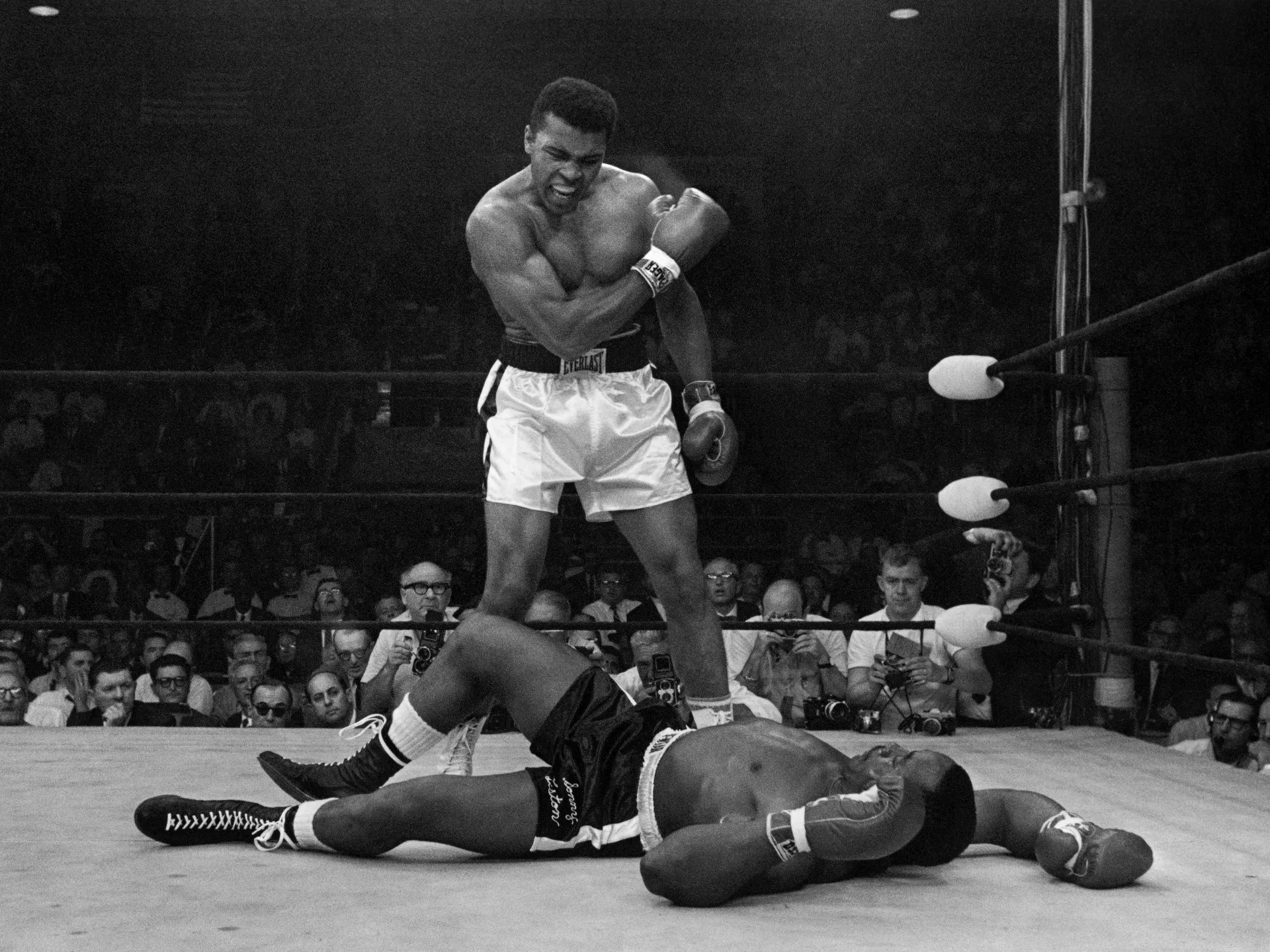
Muhammad Ali’s legacy extends far beyond his world titles and Olympic gold, his widow has said, as his hometown prepares to mark 10 years since the boxing icon’s death with a global “Day of Compassion”.
Ali, who died on June 3, 2016, after a long battle with Parkinson’s disease, is being honored this week at the Muhammad Ali Center in Louisville, which is encouraging people worldwide to mark Wednesday’s anniversary with acts of service and care.
“He transcended boxing into every space you can imagine,” Lonnie Ali said in an interview at the centre. “Muhammad lived by this mantra: Service to others is the rent we pay for our room here on Earth.
“He showed up every day with kindness and empathy in his heart for people who are in need.”
Known in his hometown as the “Louisville Lip”, Ali rose from a modest background to become a three-time heavyweight champion and 1960 Olympic gold medallist.
As his fame grew in the 1960s, he became an outspoken voice on civil rights and the Vietnam War, cementing his status as one of the most influential athletes of all time.
The Ali Center, where Lonnie Ali serves as lifetime director, hopes the “Day of Compassion” will grow into an annual event highlighting volunteerism and service.
“The day will focus on one of the core values that made up Muhammad Ali,” she said, warning that the United States is “losing touch with our humanity and with each other”.
“We’re becoming increasingly polarised and separated, and sort of retreating to people who think like us, look like us – and not really reaching out,” she added.
Lonnie Ali also challenged political leaders to “lead with compassion”, criticising moves that have weakened the landmark 1965 Voting Rights Act. “We should always be thinking about how we can uplift a community, not how we can make it harder for them.
“You can’t have equal representation when you’re denying people voting rights,” she said.
She said she still draws hope from how Louisville came together during a weeklong celebration of Ali’s life in 2016, when thousands lined the streets as his funeral procession passed his childhood home and millions watched the service online.
A decade later, Ali’s face now appears on a US postage stamp – another sign, she said, that his message of courage, faith, and service still resonates “from kings and princes to ordinary fans who never met him, but felt they knew his heart”.
BLAKE Lively has demanded that Justin Baldoni pay her “significant” damages – with the pair now facing a potential mini-trial despite reaching a settlement earlier this month.
The actress claimed in court docs that Baldoni, her co-star and director on the movie It Ends With Us, should be covering her legal fees after suing her.
Sign up for the Showbiz newsletter
Thank you!
Actress Blake Lively leaves the courthouse after ‘settlement conference’ in New York City, February 11, 2026Credit: ReutersActor Justin Baldoni leaves the courthouse in FebruaryCredit: Reuters
The star also said she was owed legal fees, costs, treble damages – with punitive damages on top, according to court docs.
Lively had previously sued Baldoni for £119million in damages in 2024 for alleged sexual harassment on the set of It Ends With Us – which he denied.
In April this year, a judge dismissed most of her case and weeks later both sides reached a settlement with no money changing hands.
Now, Lively wants Baldoni to pay her for his own failed counter-lawsuit, in which he demanded £300million for defaming him.
The feuding co-stars appeared in the movie, It Ends With Us, and were at war for two years amid the legal dramaCredit: AlamyBlake Lively and Taylor Swift attended a private party at Lucali restaurant in Brooklyn on January 10, 2024Credit: Getty
A judge dismissed his case last year and Lively says in court docs that because she won, Baldoni has to pay up.
During a hearing at a court in New York on Monday, Judge Lewis Liman told Lively’s lawyers to consider dropping their claims.
He said: “Your client does have the ability to end this.”
But Lively’s lawyer said she was entitled to the money and said he would be calling experts to testify in what could be a mini-trial.
Neither Lively, who is married to Deadpool star Ryan Reynolds, nor Baldoni were in court for the hearing.
Speaking after the session, Lively’s lawyer Sigrid McCawley said her film star client would be seeking “very significant” damages.
The actress’ “reputation was harmed” as was her livelihood, McCawley said.
Lively’s trial would have been taking place this week – had the case not been thrown out.
Her former BFF, Taylor Swift, was set to be one of the big names likely involved in the trial.
Lively had alleged in court docs that Baldoni added unscripted kisses to a dance scene in the movie It Ends With Us.
Lively plays a florist in the movie, while Baldoni portrays her character’s abusive neurosurgeon boyfriend.
Baldoni denied Lively’s claims, and the court dismissed most of them – including conspiracy, sexual harassment, and defamation.
Lively’s complaint allegations included the film producer being accused of going into Lively’s trailer while she was topless and breastfeeding her baby.
Lively, 38, initially filed her complaint against It Ends With Us director Baldoni, 42, in December 2024.
The star claimed in the filings that she had lost $161million as a result of the fallout.
Philadelphia’s Edmundo Sosa sauntered out of the box, motioning with one hand in a pump-wave in front of 51,794 Dodgers fans. The left fielder, who had taken over for Brandon Marsh in the top of the sixth, connected on a four-seam fastball that Dodgers reliever Tanner Scott left too far over the plate for a two-run home run that put the Phillies ahead.
The Dodgers had been playing with fire all night, but they couldn’t regain momentum after Scott’s struggles, losing to the Phillies 4-3 to set up a Sunday series rubber match.
The Dodgers (37-21) started strong, with pitcher Roki Sasaki giving up just three hits and one earned run over 5⅓ innings.
Sasaki’s elevated velocity posed early concerns for the Dodgers as he struggled more with his command. The right-hander crossed the 100-mph threshold for the first time this season on two pitches: a 100.4mph four-seam to J.T. Realmuto and another fastball, this time 100.1mph, to Kyle Schwarber.
Three of his four pitches — the four-seam, slider and splitter — averaged at least 1.2 mph faster than his yearly average. As a result, he struggled with location. Neither his slider and splitter hit the zone more than 45% of the time. Even his fastball hit the strike zone a mere 55%.
Dodgers manager Dave Roberts warned about this scenario when Sasaki’s fastball had only reached an upper limit of 99.5 mph.
“I think now the velo is certainly in a good spot,” Roberts said before the game. “I do believe that if he wanted to throw 100 miles an hour, he could do that, but it wouldn’t be where he needed to throw it.”
Dodgers starting pitcher Roki Sasaki delivers during the first inning Saturday against the Phillies.
(Mark J. Terrill / Associated Press)
Still, the Phillies (30-28) struggled to generate consistent momentum despite Sasaki’s location problems. Phillies third baseman Alec Bohm hammered a four-seam fastball that skimmed the top of the strike zone over the center field wall. The rest of the Phillies lineup ended most of their at-bats with little luck, striking out seven times and walking only once.
Roberts pulled Sasaki with runners on first and second in the sixth. Left-hander Alex Vesia walked Bryce Harper but escaped a one-out, bases-loaded jam by striking out Sosa and forcing Alec Bohm into a ground out to third.
By then, the Dodgers had already established a lead. Alex Call put them on the board in the second on a poked single through the gap between second and short. In the fourth, Call reached third on a double and throwing error from Adolis García. Santiago Espinal hit a sacrifice fly to deep center field, driving in Call.
Mookie Betts also found his footing after he went 0 for 3 on Friday. The shortstop struggled in the first four games of the Dodgers’ homestand, batting .200 across 15 plate appearances. Against the Phillies on Saturday night, Betts laced two singles and a double.
Andy Pages scored on a close play at the plate after Betts singled to shallow right field in the seventh. Although catcher J.T. Realmuto missed tagging Pages’ foot, the Dodgers center fielder’s cleat didn’t appear to touch the plate. After a long review, the safe at home call stood.
But the Dodgers’ good fortune didn’t last. Scott gave up an RBI single to Bryce Harper, and it was like the Phillies could sense exactly when the reliever’s pitches crossed over the zone. Scott (1-2) then gave up the home run to Soto before going down in order on three groundouts in the ninth.