
Paul

Paul Whitehouse hopes heart stents ‘aren’t going to be the cause of my demise’

Paul Whitehouse joked his three heart stents would outlast him as he discussed his health with Bob Mortimer on Mortimer & Whitehouse: Gone Fishing.

Comedian Paul Whitehouse opened up about the “very difficult” changes he has had to make to his health.

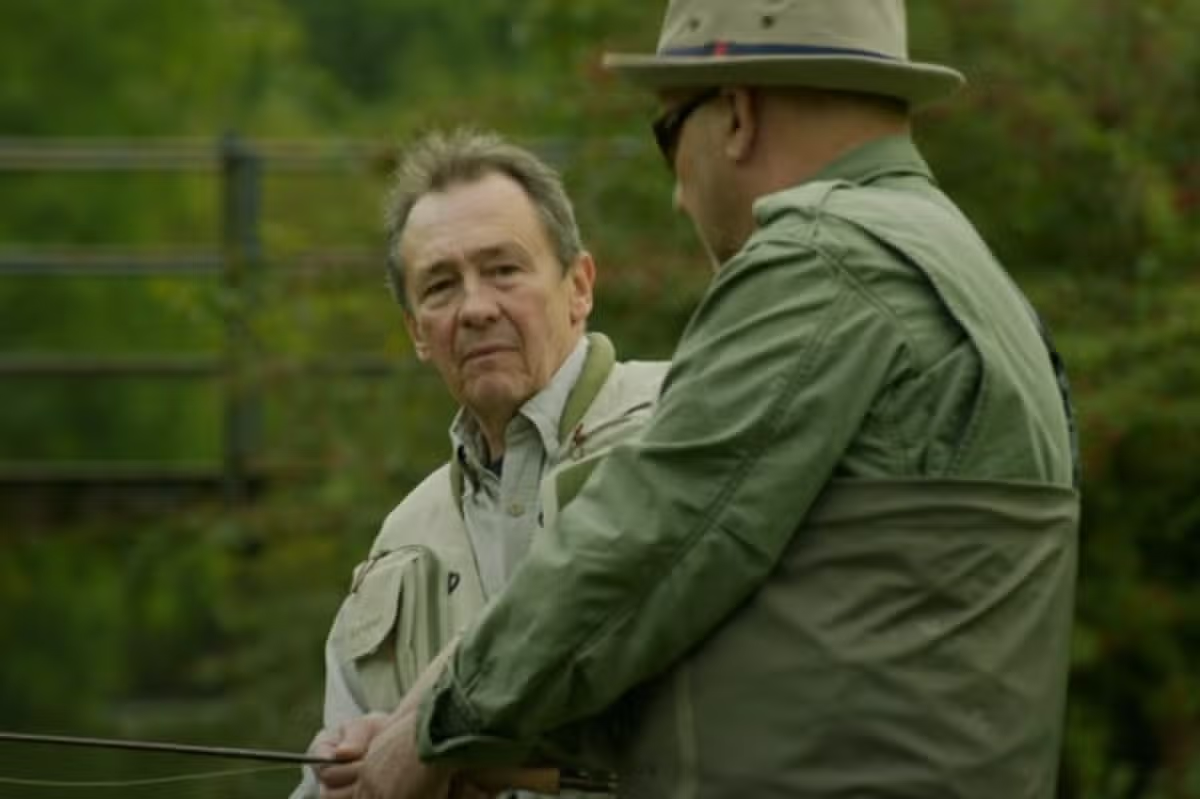
Welsh actor Paul Whitehouse shared his hope that his heart stents would not be the cause of his death during a candid conversation with Bob Mortimer on Mortimer & Whitehouse: Gone Fishing. The comedian, who had three stents fitted in 2015, said: “I think they are going to outlast me.

“Like I bought a sofa recently that’s probably going to outlast me, Bob. And I like to think my stents aren’t going to be the cause of my demise, you know?” His remarks came after Bob suggested that, although the stents needed no upkeep, they might eventually need replacing.

Paul’s heart disease was discovered following life-saving bowel surgery and the conversation surrounding his health featured in the third episode of the BBC programme’s first series, which saw Paul introduce Bob to fly-fishing for wild rainbow trout in Derbyshire. The pair spoke about their diets, before attention turned to Paul’s stents.

Asked how the stents worked, Paul offered a characteristically humorous explanation: “Some sort of very high-tech, futuristic kind of steel sleeve. They put it in, blow it up, leave it. Get on with it. Let this man carry on delighting millions.” Bob was also keen to know what adjustments Paul had been asked to make after his treatment.

“What had to change, obviously, is diet,” Paul admitted. “But it’s very difficult to resist a mini chocolate doughnut, for example, isn’t it?” Both comedians have experienced serious heart problems, and their shared health struggles inspired the fishing series, which is currently being repeated on BBC Two.

Bob had an emergency triple heart bypass in October 2015 after learning that 95% of his arteries were blocked. The pair’s daily health routines also featured in the episode. At the start, Bob played solemn music on his laptop while Paul listed all of his medication as he took it.

Away from the series, Whitehouse has been open about his stents and how he feels “lucky to be alive” after the operation. He told Saga Magazine: “In many ways I was lucky. When I had the heart stents, the guy who did it said, ‘Well I didn’t put them in for you to go and sit by the fire, so get up and go out’.

“I took him at his word, so I do a lot of exercise to keep myself ticking over.” In a Radio Times interview back in 2015, the star was asked whether he reflected on his own mortality, to which he replied: “Well, I should probably die. Although, there is a school of thought that thinks I will live forever.

“I mean obviously there are things in the world that make me very anxious but I don’t worry about illness. I don’t particularly worry about that. I worry much more about mental illness than physical illness. Again I wouldn’t say I lie awake at night worrying about what mental illness I might be afflicted with in future.”

Also previously speaking to GQ Magazine, the comedian said he was keen to be an advocate for heart health awareness, sharing: “It is because it is a heart attack decade. If you don’t get a scare in your fifties, you’re lucky. Because you either have a heart attack and die or you have problems that flag up serious issues.

“As your doctor, Chris Young put it: angina is the heart consultant’s friend because it is a warning sign at least. If you don’t get that, you could get a heart attack, which could be fatal, or you might be one of these people like Glenn Hoddle who think of themselves as fit, but actually get to 60 and discover they have a heart problem.”

The episode of Mortimer & Whitehouse: Gone Fishing airs tonight on BBC Two at 10pm

Source link

Debbie McGee reveals precious final days with TV star husband Paul Daniels

EXCLUSIVE: The star opens up in new book A Magical Life, saying: ‘Even though I was losing him, I just kept telling myself – I still do – how lucky I was.’

Debbie McGee had been in bed for barely half an hour when the nurse woke her to say her wonderful, magical husband was nearing the end. After almost four decades together, there was nowhere else Debbie wanted to be than with Paul Daniels.

She says: “I got up and went to him, laying alongside him on the hospital bed, just cuddling him. Paul always used to tell people that I was the best thing that happened to him. I wanted him to know that he was the best thing that ever happened to me.”

Ten years after Paul’s death at 77, Debbie, 67, has laid bare the agony and the profound tenderness of his final weeks in her new autobiography, titled A Magical Life.

She says: “Even though I was losing him, I just kept telling myself – I still do – how lucky I was.”

To see more of the stories you love from The Mirror and to find them easily in Google then make us your preferred source. Free and easy-to-do, just click on the link here to find more from The Mirror at the top of your feed.

The pair had met during a summer season in Great Yarmouth in 1979, the year The Paul Daniels Magic Show began its 15-year run on BBC1.

They married in 1988 and, although they had no children together, she became stepmother to his three sons, Paul Jr, Martin and Gary.

Their professional partnership continued long after his television heyday, with the couple still touring together in 2015. By the autumn, however, Debbie had begun to notice Paul seemed unusually tired, not least when he struggled to learn his lines for a pantomime.

Soon he began missing parties, leaving her to go alone, and when she returned he was often in bed. Even wrapping the Christmas presents, something they usually enjoyed together, no longer interested him.

Debbie writes: “Paul would usually have six projects on the go at any one time. He would get up in the morning and be straight on his laptop. He couldn’t sit still.

“But now he didn’t seem interested in anything. He would just sit in front of the TV until he fell asleep.

“When he was up and about, his balance seemed to have gone. He kept falling over.” Blood tests led to a suspicion of pernicious anaemia and a course of injections was prescribed.

But Paul continued to weaken, and Debbie rang the surgery desperate for answers. She told the doctor: “I can’t describe what’s happening but this isn’t my husband.”

Eventually, Paul was referred to a neurologist. However on the morning of the appointment he was sick after breakfast, and so Debbie called an ambulance. A CT scan later revealed a glioblastoma that had spread across much of the left side of his brain and was extending towards the right.

The consultant asked Paul: “Do you want me to tell you what’s wrong?” He replied: “No. Tell Deb.” Paul waited in the hospital corridor while Debbie stayed to hear the results, expecting an explanation of how doctors would treat him.

But though radiotherapy was discussed, the consultant could not promise it would improve his condition. Paul’s severe claustrophobia also made the prospect of wearing a treatment mask daunting.

Debbie says: “In desperation, I asked, ‘Is there any treatment he could have in America?

“‘If this was your spouse, what would you be doing?’” The consultant promised to discuss the case with oncologists, but told Debbie quite frankly: “In all honesty, if this were my spouse, I would be taking them home and making them as comfortable as possible.”

In the end Debbie was told Paul might have two months, and went home to prepare for his return.

When she came back to the hospital, she found him in his Crombie coat and favourite trilby, dancing with a nurse. Debbie recalls: “In that moment it was hard to believe there was anything wrong with him at all.

“He seemed like himself again. The man I loved. My Paul.”

After they announced his diagnosis publicly, around 800 emails and letters arrived in a single day. His sons and grandchildren visited.

With Paul prone to falling because of the tumour, Debbie’s sister Donna also moved in to help watch over him, finally allowing Debbie to get some much-needed sleep. Debbie says: “Paul didn’t ever want to know what was wrong with him.

“I think he knew that he was dying but he couldn’t discuss it. I didn’t try to press him. There was no benefit to distressing him.”

Days were spent watching Only Fools and Horses and taking short walks when the weather allowed. Paul had a Magnum ice cream every afternoon. Debbie remembers: “It was a very loving, peaceful month. I couldn’t deny what was happening, but I really forced myself to stay in the moment and not look forward and not look back.

“I would wake up, put my make-up on and smile, although it was sort of fake. Each new day I told myself, he’s still alive today so we’ll make the best of it.”

One film they watched together during those weeks has become impossible for her to watch again.

She explains: “I only cried in front of Paul once and I only saw him cry once in front of me. It was when we were watching one of the films in the Best Exotic Marigold Hotel series.

“At the end of it, there’s a wedding. The young couple at the centre of the film get married. I turned to Paul to see that he had tears streaming down his face.

“I can’t watch that movie any more.” As his condition deteriorated, nurses began sitting with Paul overnight. On March 14, Debbie’s mother visited for her birthday and went to say goodbye.

“Paul couldn’t speak very well by then but he sang ‘Happy Birthday’ to Mum in a whisper,” Debbie says.

That was the last day Debbie remembers her husband being conscious. Afterwards, she just sat with him and talked, though she found it difficult to say much without crying.

Debbie adds: “Paul and I had a fairy tale life. Through the good times and the bad, we had faced every challenge together. We really were a team.

“I hope he knew that I was with him, loving him until the very end.”

A Magical Life by Debbie McGee is out on October 8 (Mirror Books).

Source link

Paul Reubens’ Big Auction to feature more than 400 items

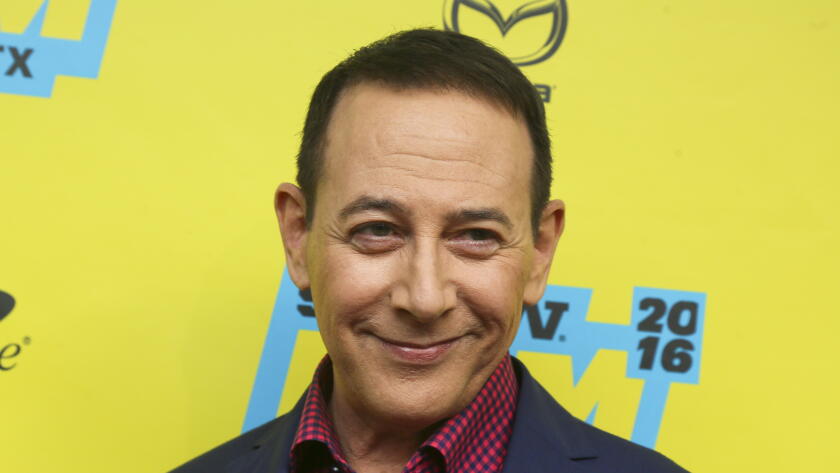
Paul Reubens’ larger-than-life stage presence as Pee-wee Herman carried over into the actor’s home-sweet-home — and this month, fans of the late actor can bid on 439 items from his collection.

Julien’s Auctions is hosting Paul Reubens’ Big Auction at the Groundlings Theatre in Los Angeles on Oct. 28 to celebrate the life and career of the late comedian, actor and writer. Tickets sold out within the day on Friday, but the public may participate in the auction online at juliensauctions.com. Anyone with a Groundlings show ticket can view the exhibition until Oct. 28.

The auction features Pee-wee’s iconic gray suit and other costumes, red Schwinn bicycles, dolls, puppets, claymation figures, scripts and more. The memorabilia comes from Reubens’ major features and TV shows, including “Pee-wee’s Playhouse,” “Pee-wee’s Big Adventure,” “The Pee-wee Herman Show,” “Big Top Pee-wee” and “Pee-wee’s Big Holiday.”

Reubens created the Pee-wee Herman character in 1978 while a member of the Groundlings company. “The Pee-wee Herman Show” began at the Groundlings Theatre, moved to the Roxy Theatre on Sunset Boulevard and aired as a 1981 HBO special. Reubens parlayed the show’s success into the 1985 hit film “Pee-wee’s Big Adventure.” Tim Burton’s feature film directorial debut, the movie had a $7 million budget and earned more than $40 million.

Paul Reubens, the actor and comedian best known for portraying the character Pee-wee Herman on stage and screen, has died. He was 70.

Next came the Daytime Emmy-winning TV series “Pee-wee’s Playhouse,” which ran from 1986 through 1990 and helped kick-start the careers of now well-known stars including Phil Hartman, Laurence Fishburne and S. Epatha Merkerson. Feature films “Big Top Pee-wee” (1988) and “Pee-wee’s Big Holiday” (2016) followed. Before his death on July 30, 2023, Reubens recorded interviews for the 2025 Emmy-winning documentary miniseries, “Pee-wee as Himself.”

Here are six highlights of the auction:

“Pee-wee’s Big Holiday” Hero Pee-wee Herman Suit

"Pee-wee Herman" gray suit with red bow tie.

“Pee-wee Herman” hero ensemble.

(Julien’s Auctions)

The iconic slate gray glen plaid suit worn by Paul Reubens in his 2016 Netflix film, complete with white shirt, red bow tie, pocket square, and white loafers. ($8,000-$10,000)

“Pee-wee’s Playhouse” Fridge Food

Mock food items from "Pee-wee's Playhouse."

12 pieces of “food” found in Pee-wee’s fridge.

(Julien’s Auctions)

A collection of 12 prop food pieces from the “Pee-wee’s Playhouse” refrigerator, including a claymation red pepper and bacon with armature arms, olive barbells, frozen food boxes, and desserts. ($800-$1,000)

Pee-wee Herman 1989 JCPenney 40-Inch Limited-Edition Doll

Pee-wee Herman doll from the late 1980s.

Large Pee-wee Herman doll from the late 1980s.

(Julien’s Auctions)

The 40-inch doll made by Carousel for Reubens’ JCPenney-exclusive line in the late 1980s is one of the rarest Pee-wee Herman collectibles. Only 2,000 were made in 1989, and some were used as store displays. The doll is in its original box, with the original factory shipping carton. ($300-$500)

Paul Reubens’ “Pee Wee” Harmonica

A vintage "Pee Wee" brand harmonica with box.

A vintage “Pee Wee” brand harmonica, circa 1945-1951.

(Julien’s Auctions)

A vintage “Pee Wee” brand harmonica made in occupied Japan (circa 1945-1951) in its original box, personally owned by Reubens, who cited this brand as the inspiration for his character’s name. ($100-$200)

“Pee-wee’s Big Adventure” Replica Bicycle with 2011 Visionary Spike TV Scream Award

Red Schwinn DX bicycle replica.

A full-scale replica of Pee-wee’s red Schwinn DX bicycle.

(Julien’s Auctions)

A full-scale replica of Pee-wee’s iconic red Schwinn DX, ridden by Reubens at the 2011 Spike TV Scream Awards where he accepted the honorary Visionary Award (also included in the auction). ($5,000-$7,000)

Production scripts and storyboards

Pastel pages from “The Pee-wee Herman Show” Production Script.

“The Pee-wee Herman Show” 1981 production script with revision pages.

(Julien’s Auctions)

  • “Pee-wee’s Playhouse” Season 1 scripts (a collection of 13, one for each episode of Season 1 in 1986)
  • “Pee-wee’s Big Adventure” script credited to Phil Hartman, Paul Reubens, and Michael Varhol, containing minor differences from the final film including a deleted magic shop scene
  • “Big Top Pee-wee,” featuring barnyard and farm animal artwork
  • “Pee-wee’s Playhouse” Season 4 storyboards

(each lot range: $500-$700)

Source link

The Traitors’ Paul Gorton reveals burglars stole items worth THOUSANDS as he opens up about horror robbery

PAUL Gorton has revealed more awful details about his home being burgled, sharing how he’s lost thousands worth in personal possessions.

The star opened up about his home being robbed earlier this month and how he begged for the robbers to return what they have stolen.

Paul has shared more tragic details about his home being burgled Credit: Getty
His family home was robbed shortly after he shared online that he was going on holiday Credit: Unknown

Going into more detail now, Paul elaborated on how many items stolen from his home were expensive and/or irreplaceable due to sentimental value.

Speaking to the Daily Mail, Paul said that his “pride and joy” was taken, a bicycle worth roughly five grand.

Paul also shared that his wife Kate’s jewellery box had been ransacked, with her grandmother’s ring missing.

He added: “It was costume jewellery, so it was only a couple hundred pounds worth of jewellery, but it did have Kate’s grandmother’s ring in there, it’s super sentimental.

WIN TIP

Legendary Traitors villain Paul Gorton ‘names’ show winners just days before finale


TOUCH & GO

The Traitors’ Linda’s ‘rule break’ was genius move that could help her win

His wife Kate lost a sentimental ring from her grandmother due to the awful ordeal Credit: Getty
Paul competed on The Traitors in 2024 Credit: Mark Mainz/Studio Lambert/BBC/PA Wire

“Completely worthless but worth everything to Kate, and it’s now gone, I presume it’s just in a bin.”

The BBC One star, who featured on series two of The Traitors in 2024, took to Instagram to share the news of the burglary with his followers.

He penned: “Came home to find our house had been burgled.

“Presume we’ve been watched and the day after we posted that we were on holiday, they broke in. 29th August at 9:30pm.

“The robber or robbers cut the broadband connection (presumably to cut the ring doorbell and any CCTV) and in doing so, told us when they broke in so the police and CSI are on it.

“We’re fine. House isn’t too bad. Robbed my bike. Ransacked my office and wardrobes etc.

“Kate’s jewellery stolen including her grandma’s ring which is probably worth nothing but it was everything to her. All material stuff can be replaced.”

The reality star urged the robbers to seek help as well as to return the items they stole.

He continued: “To the robbers, get off this path you’re on. It goes nowhere and it’s never too late to turn your life around.

“You’ve committed a crime for an unsaleable bike and cheap jewellery.

“PS. If you did rob me, throw the jewellery back on our drive and the bike as both are worthless to you.”

Source link

Influencers Jake and Logan Paul visit the Pentagon | Social Media

Influencers Jake and Logan Paul visited the Pentagon and addressed US troops last week, praising them for serving the country. It isn’t clear who invited them, but they met Defense Secretary Pete Hegseth, whose department said they came ‘to meet with our warriors’.

Source link

Julianne Moore, Paul Giamatti on making the funniest scene of the year

Standing ovations at film festivals are a rite: part appreciation, part obligation, part a need to stretch your legs after sitting for a couple of hours.

But for an audience to explode and roar their approval in the middle of a movie? That rarely, if ever, happens.

Except it did, midway through the Telluride Film Festival world premiere of Jesse Eisenberg‘s delightful comedy “The Debut.” The applause followed a scene between Julianne Moore and Paul Giamatti that took its audience on such an exhilarating journey that there was almost no choice but to cheer in admiration, as if to say: What did we just see?

Sitting in the theater, Eisenberg, producer Emma Stone and Paul Giamatti looked at each other and asked themselves the same question but for a different reason.

“It was hard to process and, at the same time, just so affirming,” Eisenberg told me a couple of hours after the premiere.

The next day, sitting down to grab a quick bite with Moore and Giamatti, that giddy feeling had not dissipated, though, truth be told, they knew this scene was an all-timer from the moment they read it.

Let’s set the stage for you in a way that won’t spoil this constantly surprising film when it arrives in theaters in December and starts piling up acclaim and awards for all concerned.

Moore plays Mona, a meek, thoroughly unseen wife and mother who impulsively decides to audition for a community theater production of a musical titled “Nosy Neighbors,” despite having no experience apart from singing in the church choir when she was 13. The director Jerry (Giamatti) cuts her tryout short, sending her home, only to relent when the woman he’d already cast (Bernadette Peters!) drops out and he has nowhere else to turn.

Mona is, as Moore puts it, a “nice lady.” But she’s not a natural performer. She can’t get into character playing Miss Danielle, the show’s tough, toolbelt-wearing building super. So Jerry takes Mona aside because that’s what he does. As her cast mates note, “He’s going to drag you through the s— and the mud and you have to be ready for the s— and the mud.”

It turns out, though, that Jerry is the one who isn’t ready for what’s about to happen. Sitting in a chair on the theater stage, Jerry holds an envelope containing cash, telling Mona that it’s her job to make him hand over the rent. It’s an acting-class exercise designed to make you listen, react and dig into your character’s truth. Moore begins with a whisper and builds to a roar as Mona improvises a manic rant that involves rats and the plague.

Suffice to say, Jerry hands over the rent.

“When I read that scene, I stood up, put my iPad down and started doing laps around my dining room table,” Moore remembers. “I couldn’t believe how beautiful it was. I was just like, ‘Oh my God! Aaaaaaagh!‘”

“It was five pages long,” Giamatti marvels. “Jerry just needs Mona to be better. And then he sees that maybe she could actually be kind of great. He cracks her open and he’s like, ‘Oh wow, who is this lady? Who the hell is this?’ The funny thing about that scene is s— like that happens in classes.” He turns to Moore. “Did that ever happen to you?”

“I had an audition for a university, actually, where they threw chairs in front of me while I did the monologue and made me climb over the chairs,” Moore says, laughing. “I look back on that now. I was 18 years old and I was like, “What?’ Yeah. It was really strange. They’re trying to get you to react authentically and be alive.”

She smiles at Giamatti. “Hopefully when you get to be our age, you don’t need that.”

Though the scene has Mona improvising, it was performed as written, down to every last pause.

“Everyone keeps asking if we improvised and I’m like, ‘Hell, no,’” Moore says. “Jesse’s like the Coens. Everything’s there on the page.”

Adds Giamatti, “It’s incredibly specific. You follow his punctuation. The commas matter in his writing.”

“What’s so f—ing delightful about about working with Paul is that his sense of timing and rhythm is so tight,” Moore continues. “That scene is a set piece that requires you to work in tandem and you need somebody to hit it back with the same intensity and the same speed.”

When Eisenberg first met Moore, he told her flat-out, “I don’t want you to worry about this scene.” He knew it was a bear, with pages and pages of lines, so he told her he’d have a teleprompter on set.

“That section, all that crazy s— she goes off on, that would be really hard,” Giamatti says.

“And I was like, ‘Phew, that’s fantastic,’ because I knew all I would do would be to worry about all those lines and be so scared,” Moore says. “But because he said that to me, I never worried. And I didn’t need the teleprompter.”

They shot the scene in one morning, just Moore and Giamatti alone on the stage with the rest of the crew downstairs in the video village. There was an energy on set, spiked by an unusual number of visitors (“People knew,” Giamatti says) and then they went to work.

“I remember the first time you really hit that speech and they called cut, I just couldn’t stop grinning,” Giamatti tells Moore. “And I reached out and just kind of held you for a second because I was like, ‘That was amazing.’ I wanted to convey just how great it was, what you were doing.”

Moore beams. “I just love him. Just love him, love him, love him. I have so much gratitude for Paul.”

“To watch you be a bad actor was so hilarious and then you would you would modulate it and change it,” Giamatti continues. “Watching her was the experience that Jerry was having. It was such a joy.”

The scene is the beginning of a simpatico relationship between Jerry and Mona, mentor and protege, predicated on the power of imagination and how it can make outcasts feel seen and heard.

“Everyone wants to be known as who we are, even though it’s so scary for us to really reveal it,” Moore says. “There’s a real mind-altering power in just being yourself.”

Source link