patriotism

Why most Black Americans say they never fly the American flag, according to a new AP-NORC poll

Jerry Esters proudly displays the American flag each day on his Detroit home. A few miles away, Yvonne Pistochini says there is no scenario under which she would allow the Stars and Stripes to cast its shadow where she lives.

Both are Black.

For Esters, the flag represents the opportunities that allowed the great-great-grandson of slaves to find success and flourish. Pistochini, 79, simply says the America identified by the flag is not the same country she saw growing up.

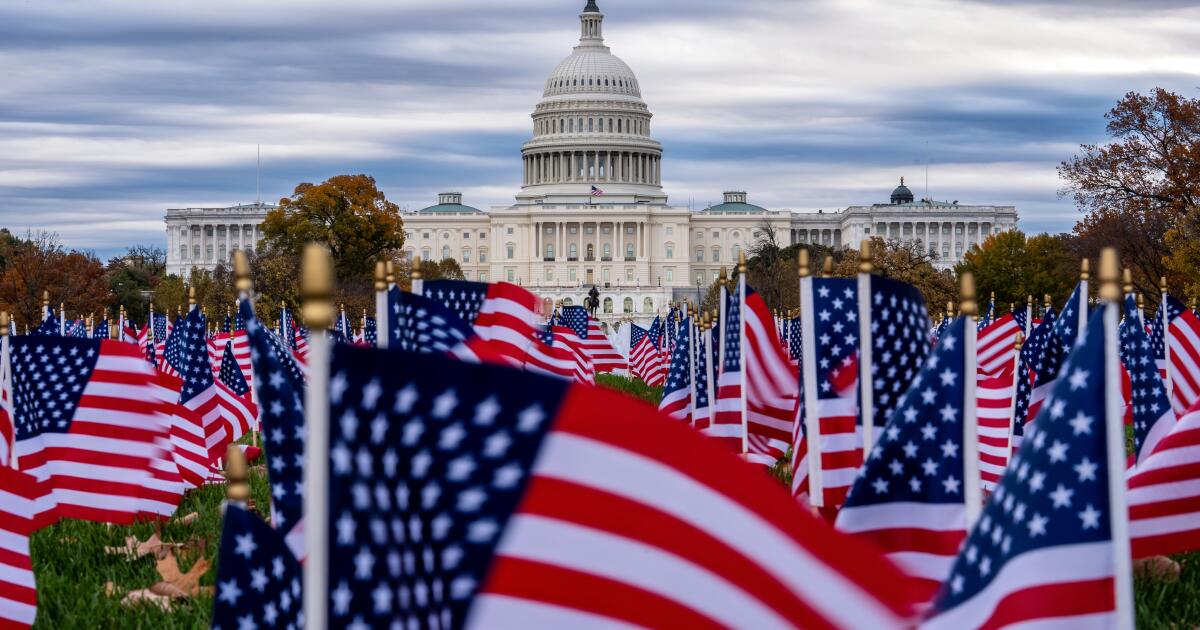
Americans’ views of “Old Glory” are divided by politics, age and race, according to a new survey conducted by the Associated Press-NORC Center for Public Affairs Research ahead of the nation’s 250th birthday celebration.

Republicans and older, white adults are especially likely to say they fly the American flag, while younger Democrats and Black adults are more likely to say they don’t fly it. Views of the flag — and whether it’s a unifying or divisive symbol — track with other deep divisions among Americans, who see their country’s history and accomplishments very differently.

“A lot of Black Americans see the flag as a symbol of both inclusion and exclusion,” said Matthew Delmont, professor of American history at Dartmouth College. “Black Americans, more so than white Americans, also understand the flag can be used to justify a version of patriotism that is rooted in exclusion, with the flag being used to say ‘you don’t belong here.’”

The survey of 2,596 adults was conducted April 16-20. It suggests that older white Americans, especially Republicans, are more likely to see the flag as unifying.

About half of U.S. adults said they display the flag at home throughout most of the year, or during holidays. About 7 in 10 Republicans and about 6 in 10 Americans ages 60 and older fly the flag at least during holidays.

About 6 in 10 Democrats and independents, on the other hand, say they “never” fly the U.S. flag. That includes the vast majority, 75%, of Democrats under 45.

Opportunities worth fighting for

Esters, a 64-year-old retired clay sculptor for a Detroit automaker, flies three American flags at his Sherwood Forest home on the city’s west side.

“When these homes were built, Black men like me, my mother and my family … we couldn’t even buy these homes,” he said. “To me, that’s one reason I fly the flag. We went through a lot to be able to own nice homes, and this is what we fought for.”

The other reason is Moriah Martin, Esters’ great-great-grandmother, who was born into slavery.

“I’m kind of living out her dreams — what I did for a living, having a business, having a nice home,” he said. “I think that’s the American way, but we got to fight for it and we, as Blacks, fought for it.”

He’s in the minority among Black adults, according to the survey, which found that only about 3 in 10 Black adults say they ever display the American flag, compared with about half of white and Hispanic adults.

Pistochini says current divisions over political leanings and perspectives, and inequality of opportunities for the poor and people of color are not what she believes the flag should stand for. People confuse flying it with being patriotic, she added.

“Just because you fly a flag doesn’t make you a patriot,” Pistochini said. “If there was patriotism, we would not have all this. We can’t look at (what’s going on) and say this is America.”

For country and freedom

Ben Gaskins, chair of political science at Lewis & Clark College in Portland, Oregon, says the flag is an important symbol of patriotism for many Americans.

“It is those who are older people, who are white and people who are more conservative,” Gaskins said. “They take it as more central to their identity.”

Nancy Hansen, a 73-year-old retired Customs and Border Protection clerk in Culvertson, Montana, believes “you have to be for the country, no matter what” and that the flag means “freedom.”

“Freedom to live where we want to live, travel where we want to travel, raise our kids where we want to raise our kids,” said Hansen, who is white and identifies as Republican.

Each year around July 4, the American Legion posts flags outside businesses and homes in Culvertson, including Hansen’s home.

Linda and Greg Cunningham also equate the flag with freedom.

The white, conservative Pontiac, Michigan, couple are going all out this summer. The exterior of their home northwest of Detroit is awash in red, white and blue. The flag sits atop a flagpole just feet from their door.

“It’s no political thing, at all,” said Linda Cunningham, 63. “It’s our freedom. I love the American flag. I love the whole concept of it. I love America. I know there’s so much going on in the world, right now, and I know everyone has their own views, and I’m just sad that politics have to be brought into the flag.”

Flag as a ‘painful reminder’

Of those who took the survey, 47% see the flag as a “more unifying” symbol. About 16% call it a “more divisive” icon, while 36% say it’s neither divisive nor unifying.

Only 22% of Black adults see the flag as a unifying symbol, compared with 55% of white adults and 42% of Hispanic adults.

“It’s a painful symbol. It’s a reminder of what we could be and how it’s failed to live up to that for Black people, for Indigenous people and people of color,” said Allison Wiltz, a Black author and founder of Writers and Editors of Color.

Paul Walthour, 71, occasionally flies the flag outside his Minneapolis-area home on special occasions and some holidays. Walthour says that when he’s away from home and at his cabin, the flag goes up each morning and is taken down at the end of the day.

“This is antiquated, perhaps,” said Walthour, who is white and a retired advertising agency creative director. “I feel it’s a symbol that you’re proud to be an American.”

“Unfortunately, I kind of think it’s kind of a symbol of dividing more than uniting,” added Walthour, who identifies as a Democrat. “The people who fly it on the far right have one kind of feeling about it, and the people who fly it on the left have a different kind of feeling about it.”

The AP-NORC poll of 2,596 adults was conducted April 16-20 using a sample drawn from NORC’s probability-based AmeriSpeak Panel, which is designed to be representative of the U.S. population. The margin of sampling error for adults overall is plus or minus 2.6 percentage points.

Williams, Sanders and Parwani write for the Associated Press. Sanders and Parwani reported from Washington.
Source link

Disneyland leans into patriotism with new Soarin’ Across America

Disneyland is no stranger to patriotism. Reflecting America — both its positives and its “hard facts,” to quote park founder Walt Disney — was part of its mission statement.

Over the years, the Walt Disney Co. in its parks has become more focused on its IP — that is, its film and television properties — rather than looking beyond its gates. But remnants from Disneyland’s past remain. The park still hosts a daily flag retreat, a respectful, music-focused ceremony often with the Dapper Dans and the Disneyland Band to honor veterans. Then there’s the animatronic show “Great Moments With Mr. Lincoln,” which is an inspiring, vital work of theme park theater. Using snippets of Lincoln’s most timeless speeches, it illustrates how words can unite rather than divide us, a rarity in today’s partisan-heavy landscape.

You’re reading Mr. Todd’s Wild Ride newsletter

Todd Martens’ newsletter delivers news and commentary on the past, present and future of theme parks, right from the theme park capital of the world — Southern California.

I’ve never believed Disney should stay out of politics. I’d argue that’s impossible, anyway, as all art is political. What a company shows — or chooses to leave out of its content — is a reflection of its values.

This summer, Disneyland is leaning all the way into its patriotic tendencies. A Sam Eagle popcorn bucket, complete with a Fourth of July-style stars and stripes cap, is on the way. And the centerpiece of the festivities will arrive July 2, which is when the Disney California Adventure staple Soarin’ Over California transforms into Soarin’ Across America. Key locations on the hang gilder simulator will include Mount Rushmore National Monument, the Washington Monument, the Statue of Liberty and the Hollywood sign, among many a national park.

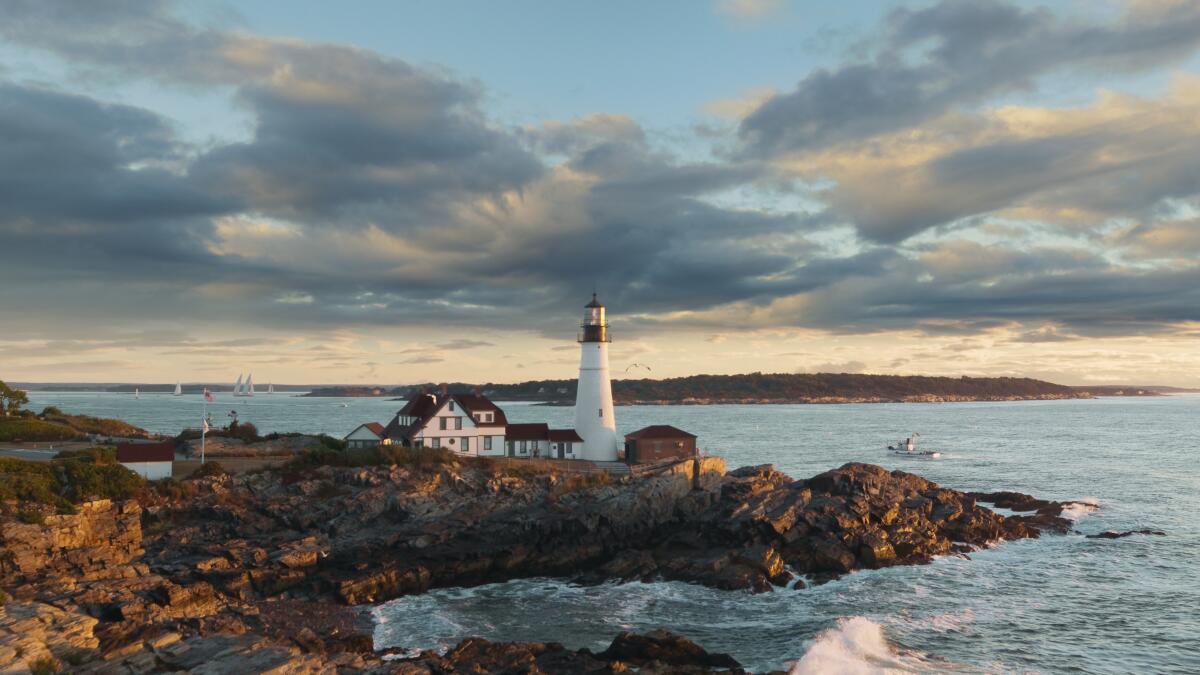
A Maine lighthouse as scene from the air.

Soarin’ Across America shows aerial vistas across the United States, and it’s arriving at a divisive moment in our nation’s political history.

(Disney Parks)

Though designed to celebrate the 250th anniversary of our country’s founding, it’s impossible to ignore that it’s coming at a divisive time in the U.S. Soarin’ Across America’s poster art, as I noted last year when the new version of the attraction was announced, made me cringe, as it features a Statue of Liberty juxtaposed with the American flag and bald eagle — art that conveys a sense of nationalistic pride. In 2026, such emotions are complicated. Our country is disrupting the world, ICE raids have shattered our communities and just the other day, our president was effectively shielded from examination of his finances and legal conduct.

So please forgive me if I don’t exactly want to don the red, white and blue right now. Soarin’ Across America feels like the excited guest showing up to a wedding that’s only happening because the couple can’t get their deposit back.

While I do want to cheer its representation of our national parks — spaces that need all the positive publicity they can get right now, thanks to the administration’s budget cuts and layoffs — I wonder about the inclusion, of, say, Mount Rushmore, which has a long, controversial history, and has been a fascination of President Trump’s.

I’m skeptical, in short, as to how Soarin’ Across America will be read at this moment, a time when many are questioning the relevancy of patriotism and loyalty to a flag. So I was eager to discuss these thoughts with veteran Imagineer Tom Fitzgerald, an executive creative director who recently worked on Main Street, U.S.A.’s Walt Disney animatronic show, who met with me last week.

An attraction poster for Soarin' Across America released via the Walt Disney Co.'s corporate media site.

An attraction poster for Soarin’ Across America released via the Walt Disney Co.’s corporate media site.

(The Walt Disney Co. )

I asked him about potential discomfort around Soarin’ Across America’s patriotic displays. He lightly pushed back, arguing in essence that’s why the attraction is necessary.

“I think we were taking the opposite approach, the optimistic approach, which is what Disney is all about,” Fitzgerald says.

“How can we do something that will help us all celebrate?” he continues. “I know personally when I saw the Artemis II mission recently, I felt like we all came together and said what an astonishing achievement. We were all rooting, going up and coming down. I think that’s more what we wanted to do. Let’s just do a portrait of America, and let the guests go in and just enjoy it. … Let’s just let the audience come in without any preconceived notions and enjoy this four-and-a-half-minute journey.”

I did ask a follow-up, wanting to hear about the conversations that were had at Imagineering to ensure this ride wouldn’t be seen as political, even as it is showing locations such as Mount Rushmore, often a site of protests and criticism from Native Americans.

“I think for us, it’s like, go for the iconic place, and keep it all in the Soarin’ style, with the big music, hang gliding,” Fitzgerland says. “Just make it a journey that just flows from coast to coast.”

A coastal scene from Soarin' Across America.

A coastal scene from Soarin’ Across America.

(Disney Parks)

Fitzgerald says the ride came together in exactly 12 months, making it a relatively fast, time-crunched project. Yet that also means Disney was aware of the heightened cultural environment it was entering.

The attraction is already open at Florida’s Walt Disney World but I don’t believe in reviewing rides via point-of-view videos, so I’m waiting until July 2 to experience it here. When it lands in Anaheim, I hope I find it an empowering, uplifting work. A number of its locations, including our own Griffith Park, or the Grand Canyon West, Denali National Park, a Maine lighthouse and more, are a reminder of our park wonders. It’s in these scenes that I believe Soarin’ Across American will thrive, and become that “portrait or tapestry of crossing America” that Fitzgerald describes.

Also important: The attraction is a reminder that a theme park such as Disney California Adventure is not so much an escape as an idealized reflection of what is happening beyond its borders. Theme park additions don’t happen in a vacuum, and I applaud its designers for continuing to take risks, especially when they don’t involve pop-culture IP (the IP being explored here is America).

And if Soarin’ Across America can inspire a few trips into our great outdoors, whether that’s an afternoon at the Griffith Observatory or that Grand Canyon trip you’ve been putting off, I’ll take that as a win. But it would have been fine with me if the red, white and blue fireworks had been left in the editing bay.

This week in SoCal theme parks

Costumed scare actors at a theme park Halloween event.

Halloween season is coming soon. Universal Studios Hollywood announced this week one of its first major haunted houses for 2026’s Halloween Horror Nights.

(Wally Skalij / Los Angeles Times)

  • “Sinners” is coming to Halloween Horror Nights. Ryan Coogler’s sexy, scary, music-heavy and politically-infused vampire film “Sinners” is getting the Halloween Horror Nights treatment at Universal Studios Hollywood. The 2025 Warner Bros. Pictures flick is set in the 1930s, and its Horror Nights haunted house will take guests into the film’s bluesy Club Juke. The would-be-safe haven, however, becomes anything but. I’m excited, but I do hope Universal is able to touch on some of the topicality and cultural commentary of the film. Halloween Horror Nights is currently set to launch on Sept. 3.
  • Become a Disneyland ‘park ranger.’ Theme parks are stages, and I love when designers create activities to inspire play or exploration. And Disneyland has done just that this summer with its “Mickey’s Park Rangers” activity book. The free, 33-page booklet, available from retail shops near Disneyland’s Rivers of America, is full of puzzles, factoids (I honestly didn’t know there were catfish in the park’s river) and some light scavenger-hunt-like quests. The last will take players through Pirate’s Lair on Tom Sawyer Island, the boats of Rivers of America and the Disneyland Railroad. All told, it’s an excellent way to slow down, play some games and rediscover historic aspects of Disneyland.
  • Do puzzles, see some apes. The Los Angeles Zoo on Saturday is hosting a special, game-focused puzzle adventure focused on its ape exhibits. “Zoo Quest: Amazing Apes” is an after-hours event in which participants will work in teams to solve puzzles across the zoo grounds, in this case zeroing in on the park’s ape habitats. The tasks will gradually reveal various ape facts as well as tip guests to the zoo’s conservation efforts. Tickets are $35 for those 12 and older, and $30 for those ages 2-11.
  • Park hop to your heart’s content. The Disneyland Resort revealed that on June 9 it is eliminating a rule that prevents park hopping between the Disneyland Park and Disney California Adventure before 11 a.m. Guests will still need to make a reservation at one of the Disney parks, but will be able to check in at either park, subject, of course, to availability. This is a positive development, essentially eliminating a pandemic-era rule and allowing guests who pay for the park hopper upgrade to freely move between locales.

The best thing I ate at the parks

A grilled cheese from the Grand Californian's Hearthstone Lounge.

A grilled cheese from the Grand Californian’s Hearthstone Lounge.

(Todd Martens / Los Angeles Times)

The signature restaurant at the Disneyland Resort is the Grand Californian’s Napa Rose. But don’t sleep on the hotel’s Hearthstone Lounge, which accepts walk-ups and reservations (bar seats can be hard to come by). Its relaxed casual atmosphere has made it one of my regular stops when at the park for a full day, and its menu ranges from the informal (sandwiches, pizza) to the more upscale (a $72 New York steak). I tend to lean to the former, and opted for the restaurant’s $21 grilled cheese sandwich on a recent visit. With Parmesan-crusted toast, it feels decadent but isn’t too filling, as bits of bacon, arugula and tomato balance out its mildly sweet and not-too-heavy Point Reyes Toma cheese filling.

Tell us your stories. Ask us your questions.

Have a theme park tale to share? Whether it was a good day or less-than-perfect day, I would love to hear about it. Have a question? A tip? A fun photo from the parks to share? Email me at todd.martens@latimes.com. I may feature your note in an upcoming newsletter.

Ride on,

Todd Martens

P.S.

A toy-like gun is pointed at black and white vintage cartoon mouse in a police outfit.

“Mouse P.I. for Hire” is a recent video game in a vintage, 1930s-inspired animation style.

(Fumi Games / PlaySide Studios)

One of my non-theme park passions is video games, and I think Disney fans who also enjoy interactive entertainment may want to give a recent release a close look. “Mouse: P.I. for Hire,” essentially available on all platforms, is a well done lighthearted first-person shooter with some stylistic thought behind it. It’s gorgeous, a black-and-white game in the 1930s cartoon feel, and it’s filled with many a sight gag that wouldn’t have been out of place in “Who Framed Roger Rabbit.”

Its tone is of a noir film, and begins with a missing persons mystery while gradually spinning out to reveal a world full of of fascist, evil mice. When it comes to gameplay, it’s a bit old-fashioned, focusing on the cartoonish aspects of video game shooting rather than anything realistic. It’s good fun and a bit silly, and I like to think of it as something that an alternate world Disney could have dreamed up.


Source link