patient

Medicaid funding is resuming for Planned Parenthood after being cut off for most of a year

Planned Parenthood and two smaller regional abortion providers are resuming billing Medicaid for services other than abortion after being cut off for most of a year.

The defunding, which was mandated in President Trump’s big tax and policy law last year, has been blamed in the closure of multiple clinics as well as a reduction in the number of Planned Parenthood patients being screened for breast cancer or tested for sexually transmitted infections.

The Medicaid billing was allowed to resume last weekend.

The restored funding does not mean the battle over federal abortion policy has ended, and not all services that were cut will return.

Here’s what to know about the situation.

Planned Parenthood closed clinics and saw fewer patients

Many abortion providers, including Planned Parenthood affiliates, have struggled financially since the 2022 Supreme Court decision that overturned Roe v. Wade and allowed state abortion bans to be enforced. Clinics have closed in states with abortion bans and restrictions as well as those without.

Planned Parenthood says its affiliates have closed nearly 30 of its roughly 600 clinics over the past year, citing the funding change as a key reason.

Over that period, affiliates dispensed about 25% fewer packs of birth control pills and conducted about 20% fewer breast cancer exams than the previous year.

Many patients — especially in places where healthcare can be hard to access — may not have had care at all because of the defunding, the organization said.

Planned Parenthood Action Fund spokesperson Angela Vasquez-Giroux said the cuts have also led to limited abortion access in some places.

Planned Parenthood of Wisconsin halted abortions for about a month, then dropped its status as an “essential community provider” so it could resume seeking reimbursement. The Arizona affiliate paused offering many of its services to patients covered by Medicaid.

Two smaller providers were also impacted

The defunding provision also affected two other healthcare providers that met the criteria in the law because the were nonprofit family planning organizations that provided abortion and received more than $800,000 yearly in Medicaid reimbursements.

Their experiences were very different.

Maine Family Planning closed three primary care clinics that served about 1,000 patients in the largely rural state.

Evelyn Kieltyka, a senior vice president of program services, said that even with help, their former patients had to wait an average of four to six months to be established with new providers.

Meanwhile, the number of abortions the group provided held steady, she said. Maine is one of several states where state-funded Medicaid covers abortion.

Patients at Health Imperatives in Massachusetts may not have noticed the change, as no services were dropped.

The state government funded Medicaid reimbursements that the federal government stopped — something that Planned Parenthood says happened in some form in 14 states. On top of that, the clinic system received a grant from Melinda Gates’s foundation.

Some services are returning but others may not

Planned Parenthood’s Arizona affiliate has already announced expanded hours and more telehealth options linked to the ability to bill Medicaid again.

Some other services are not likely to be restored.

Kieltyka said Maine Family Planning isn’t planning to bring back its primary care practices again.

“When you close something down and you lose positions,” she said, “it’s very difficult to bring that back and build it back up again.”

And Michelle Quesada, vice president of communications, brand and marketing for the Planned Parenthood affiliate in Florida, said a closed clinic in Lakeland isn’t expected to reopen, partly out of concern that Congress or the Trump administration could cut Medicaid reimbursements for the organization again.

“There’s no telling with this uncertainty,” she said. “It’s like a yo-yo effect.”

Abortion opponents want to stop the Medicaid reimbursements again

The political battle isn’t over.

Abortion opponents are pushing Congress to adopt another defunding policy.

“They’ve defunded Big Abortion before,” Kelsey Pritchard, a spokesperson for Susan B. Anthony Pro-Life America, said Monday, “and they should do everything in their power to do it again.”

Planned Parenthood contends that most general election voters don’t want the organization to be defunded. Pritchard said that the Republican base does.

Mulvihill writes for the Associated Press.

Source link

Newsom blesses Uber ballot truce; car crash lawsuit fight continues

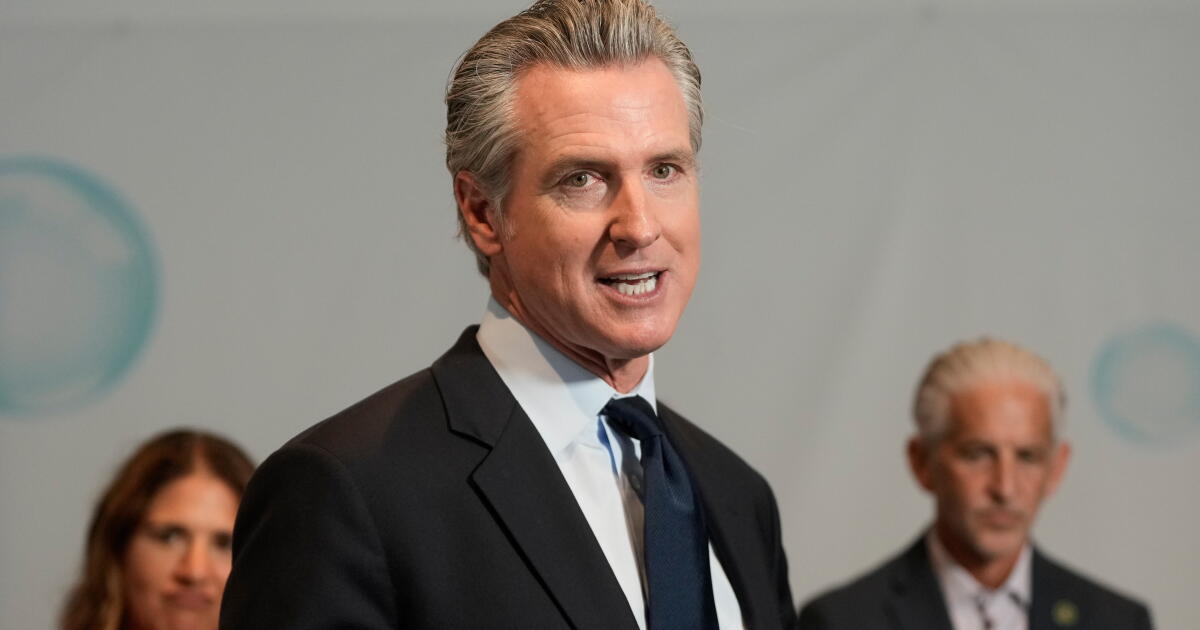
Gov. Gavin Newsom signed a law Thursday to crack down on inflated profits stemming from car crash lawsuits, blessing a hard-fought compromise between Uber and the state’s trial attorneys that averts a November showdown between two of California’s most powerful and moneyed lobbying forces.

The deal, the fruit of months of negotiations, takes aim at the lucrative way doctors can charge for procedures on patients referred to them by personal injury lawyers.

If a law firm has a client who was hurt in a car accident, the lawyer will often send them to a doctor who will perform surgery on a “lien” basis, meaning the doctor will be paid from money that comes from a lawsuit settlement rather than through insurance.

Uber contends this arrangement has created an incentive for doctors and attorneys to collude to dramatically inflate medical bills. The more expensive the bill, they say, the bigger the resulting payout.

The law, SB 623, caps how much these doctors can charge when their patient is involved in a lawsuit against a ride-share company, which are frequent targets of litigation due to their top-of-the-line insurance policies. The new law will also require Uber to ramp up background checks of its drivers.

“We’re going to have a much safer state both for medical patients and passengers in Ubers,” said Nicholas Rowley, a prominent Texas attorney who helped bankroll the fight and took a leading role in the negotiations.

The law only applies to cases that involve ride-share accidents that take place after Jan. 1, 2027.

“This legislation puts meaningful guardrails in place to better protect accident victims, increase transparency and accountability in the medical lien system and strengthen safety,” said Ramona Prieto, Uber’s head of public policy for the Western U.S., in a statement.

For months, Uber and lawyers from across the state poured tens of millions into dueling ballot measures that threatened to devastate the profits of whichever side lost.

Uber fired the first shot with a ballot measure that sought to cap how much attorneys can earn in lawsuits involving auto accidents. The company argued attorneys were swindling their own clients, inflating medical bills of car crash victims to increase the value of the settlement and then pocketing a hefty chunk of the payouts.

The state’s trial attorneys countered that the fee cap would make small or difficult cases a money-losing endeavor and block scores of accident victims from the courts. They shot back with their own ballot measure that would increase legal liability for ride-share companies if a passenger or driver is sexually assaulted while on a ride, seizing on investigative reporting that highlighted assaults in Ubers.

“They were waiting for us to blink and we didn’t,” said Douglas Saeltzer, the head of the Consumer Attorneys of California, the lawyer trade group that pushed for the measure against Uber. “Their starting place, I don’t believe, was in the interest of protecting victims — it was in the interest of protecting Uber.”

With the passage of Thursday’s law, both sides have agreed to pull their respective measures from the November ballot, halting campaigns that had both parties amassing tens of millions in funding and blanketing the airwaves with ads.

“Now we can stop seeing all the commercials,” said Assemblymember Blanca Pancheo (D-Downey) at a Tuesday hearing.

The law, put forward by Assemblymember Diane Papan (D-San Mateo) and Sen. Thomas Umberg (D-Santa Ana), also caps the amount that can be earned by third-party investors who buy out a doctor’s lien in a personal injury case. These companies will purchase a doctor’s stake in the case at a reduced rate, then pocket a share of the payout if the case settles.

“Private equity and hedge funds buy them at a steep discount, then turn around and collect the full inflated amount,” Saeltzer said at a Tuesday hearing on the bill. “That’s money flowing to Wall Street investors, not patients.”

The law will require annual background checks for ride-share drivers and expand the list of offenses that disqualify someone from the job.

In addition to the ballot battle, has Uber sued two of LA’s most well-known personal injury firms — the Law Offices of Jacob Emrani and Downtown L.A. Law Group — accusing them of inflating medical bills and forcing clients to undergo needless and expensive surgeries to inflate the value of the claim. The firms asked the judge to dismiss the case Wednesday, arguing Uber had failed to prove fraud. Both firms have vehemently denied wrongdoing.

The lawsuit, filed last year, has put the plaintiff lawyers in the unusual position of playing defense. Listening in the audience at Wednesday’s hearings were the partners of Downtown L.A. Law Group and Jacob Emrani.

“Let’s be clear about what this Uber case really is,” said John Hueston, outside counsel for Emrani. “It’s brought by a $150 billion dollar company … to intimidate the plaintiff’s bar, exhaust its resources and chill the suits that hold Uber accountable.”

Michael Huston, one of the lawyers who represents Uber, countered that the case is “not an attack on the plaintiff’s bar.”

“We have brought suit against the two in this state … that are engaged in naked fraud,” he said.

Source link

Neal ElAttrache explains pointing Conor McGregor to steroid specialist

Dodgers and Rams head team physician Neal ElAttrache was questioned by Major League Baseball investigators Friday following a detailed report by the New York Times that the renowned surgeon and sports medicine expert supported the therapeutic use of performance-enhancing drugs by UFC star Conor McGregor.

MLB spoke with ElAttrache, according to a person familiar with the matter but not authorized to comment publicly. The league considered the interview informational, not an investigation. The NFL, Rams and Dodgers declined comment.

“I have spoken with MLB and I am very comfortable with the process that the league and I will complete to assure the public that I have followed every rule and regulation in my medical treatment of athletes without exception,” ElAttrache said in a statement to the Los Angeles Times. “My record is completely clean, including in this case. I will leave it to MLB officials to provide any further comment as they see fit.“

ElAttrache performed surgery on McGregor in July 2021, inserting a rod, plates and screws into his left leg after the fighter broke his tibia and fibula during a bout against Dustin Poirier in Las Vegas.

McGregor’s recovery was lengthy and arduous. ElAttrache told the New York Times that while he did not prescribe steroids for McGregor, he referred him to a specialist who did. Furthermore, ElAttrache wrote a letter supporting McGregor’s request for a therapeutic use exemption from UFC drug policies.

“I felt it would be appropriate to consult other physicians with expertise in bone healing/bone metabolism,” ElAttrache told the paper via text. “I recommended the consultations but not the course of treatment.”

ElAttrache said he told McGregor to check with UFC drug testers about prescriptions the consultant gave him. “I purposely wasn’t involved with his evaluation by the consultant nor with prescribing medication,” ElAttrache said.

The exemption request was denied by USADA (the drug testing organization the UFC used then), triggering a split between the two organizations. McGregor withdrew from the UFC anti-doping program shortly thereafter and was no longer required to undergo testing for banned substances.

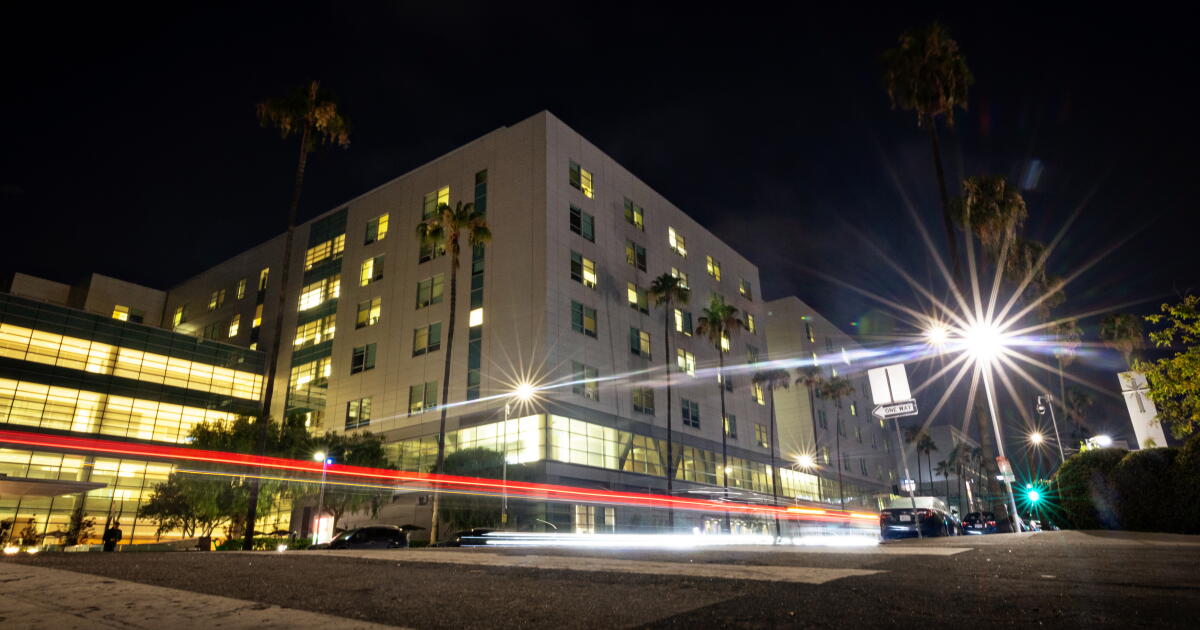
ElAttrache, operating primarily out of the Cedars-Sinai Kerlan-Jobe Orthopaedic Clinic in Los Angeles, has performed elbow or shoulder surgeries on prominent current and former Dodgers including Shohei Ohtani, Clayton Kershaw, Tony Gonsolin and Walker Buehler as well as former Rams stars Cooper Kupp and Cam Akers.

Among the hundreds of surgeries performed over three decades by ElAttrache, his patients included the four 2024 MLB Most Valuable Player and Cy Young Award winners — Ohtani, Aaron Judge, Chris Sale and Tarik Skubal. ElAttrache’s patients include 18 of 29 players who won the MVP or Cy Young awards over the last 10 years.

Other prominent athletes who became his patients include former Lakers legend Kobe Bryant and star NFL quarterbacks Tom Brady, Aaron Rodgers and Joe Burrow.

ElAttrache was a boxer long before he became a renowned surgeon and team physician. He attended Notre Dame, where organized boxing was first introduced by Knute Rockne as a conditioning program in the 1930s. An intramural tournament known as the Bengal Bouts was formed and decades later ElAttrache became a champion, winning the 185-pound division in 1978.

Before world lightweight boxing champion Vasiliy Lomachenko returned from shoulder surgery to defend his title in 2019, ElAttrache counseled him against using his left hook because he wasn’t mentally ready to do so.

“When that arm goes into that position, the brain remembers that was the position where that dislocation occurred,” ElAttrache told the Los Angeles Times at the time. “It takes time to overcome that apprehension.”

It has taken McGregor five years since his injury to return to the octagon. He is scheduled to do so July 11 in a welterweight bout against Max Holloway at UFC 329 in Las Vegas as the main event of International Fight Week.

His recovery and startling physical transformation hardly a year after his injury became a frequent topic on social media. Fellow UFC fighter Anthony Smith said on Michael Bisping’s “Believe You Me” podcast in November 2022 that the reason McGregor pulled out of the UFC drug testing pool was obvious.

“There’s only one reason you would do that,” Smith said. “He’s looking jacked as s—. You keep seeing videos of him flexing in front of mirrors and screaming and he’s huge. He healed really fast. Like, really fast.”

On his show in December 2022, podcast host Joe Rogan noted McGregor’s impressive physique and the USADA testing loophole.

ElAttrache told the New York Times that he stopped treating McGregor after steering the fighter to someone who could obtain banned substances.

“I purposely wasn’t involved with his evaluation by the consultant nor with prescribing medication,” ElAttrache told the Times. He said “expert opinions” could help McGregor and “optimize his chance of solid union and healing of his fractures.”

Seeking the exemption, however, was viewed by USADA and some UFC officials as McGregor trying to find a way to use banned drugs. McGregor re-entered the drug-testing pool on Oct. 8, 2023, the same day UFC notified USADA that it would end the partnership.

Because McGregor had long been suspected of taking banned substances to revive his career, the mixed martial arts community reacted to the New York Times investigation with a measure of closure.

“OK, it’s confirmed now,” co-host Conner Burks on the popular MMA podcast “The Boys in the Back” said. “None of this came as a massive shock to me.”

“It seemed like the worst kept secret in combat sports,” co-host Eric Jackman said.

In a written response to a question posed by the New York Times, McGregor’s manager, Audie Attar, did not say whether McGregor had used banned substances. He said that “even with surgery there was a real risk Conor might not walk again, a high likelihood he would face numerous lifelong side effects that would limit his mobility and serious doubts he would ever return to the octagon.”

Attar said McGregor withdrew from the UFC drug-testing pool “to focus fully on his recovery” under the care of “his team of world-renowned physicians.”

“They oversaw a combination of a gruesome surgery, intense physical therapy and appropriately prescribed medicines,” Attar said. “It is an unfathomable breach of health and privacy protections that my client’s purported personal medical records would be disclosed.”

McGregor attempted to return to fighting in June 2024, but a scheduled bout against Michael Chandler was canceled because McGregor broke a toe during training.

Combat Sports Anti-Doping officials were unable to locate McGregor for testing on the day the fight was canceled, and he missed tests on two subsequent occasions. Under the UFC Whereabouts Policy, the three failures constituted an anti-doping violation equivalent to a failed drug test.

The UFC suspended McGregor in October 2025 for 18 months because of testing violations. The suspension expired in June, clearing him to compete.

Times staff writers Bill Shaikin, Sam Farmer and Gary Klein contributed to this report.

Source link

Mr. Patient: JJ Saffie is ready for Dodger Stadium moment

On the eve of the City Section championship baseball game at Dodger Stadium, let’s explore a sometimes forgotten character trait: Patience.

When JJ Saffie walks onto hallowed ground Saturday as a starting left fielder for 10-time City champion El Camino Real High in the Open Division championship game against Birmingham, he will be finishing a journey few want to travel these days.

He spent three years on the junior varsity team waiting and grinding before getting his chance to start on varsity this season.

“Very patient,” he said. “Freshman year, played frosh-soph, called up for a few JV games. Sophomore year, on and off starter on JVs. Junior year is when it started clicking for me. I found my bat, I found the style I like to play, I started hitting real good.”

He was part of an outstanding JV team his junior year, called up as a pinch runner for the playoffs. He developed power and a knack for hitting balls over El Camino Real’s left-field fence during batting practice.

“I’ve hit two windows and six cars,” said the 18-year-old, who likes to cause mayhem for insurance companies.

El Camino Real celebrates a 4-3 win over Granada Hills to earn a trip to Dodger Stadium on Saturday.

El Camino Real celebrates a 4-3 win over Granada Hills to earn a trip to Dodger Stadium on Saturday.

(Craig Weston)

He’s hit two home runs this season and become a key player for the Royals.

Now he gets to start at Dodger Stadium, a moment every high school baseball player in the City Section dreams of reaching.

“I’m a big believer in good things will come to those who are patient,” he said. “I knew I needed to be patient, work on my game and eventually success would come my way and I’d have my opportunities and here’s my opportunity. I’m trying to prove that Saturday.”

El Camino Real needed a two-run single by RJ De La Rosa in the bottom of the sixth inning on Wednesday to defeat Granada Hills 4-3 in the semifinals at Cal State Northridge.

“I saw my pitch,” De La Rosa said. “I wanted to take advantage. It was the bottom of the sixth. The team needed me most and I pulled through. It was an amazing moment. These boys are my brothers. I will fight for them. I will do everything for them. I can’t wait to make some memories at Dodger Stadium.”

For Saffie, staying and fighting to get better rather than running away from a challenge is a great lesson for others.

“I had a few people tell me to transfer,” he said. “But my sister came here, my dad. I want to prove myself at this school.”

Top-seeded Birmingham will have junior Nathan Soto starting on the mound in the 1 p.m. game. It’s a big assignment and he’ll be working on his mental part of the game.

“It’s just another game,” he said after the Patriots’ 4-1 semifinal win over Carson. “I think it’s everyone’s dream to pitch there, but you have to keep it as a normal game.”

Pitcher Carlos Acuna grinded out a complete game in Birmingham's 4-1 win over Carson to send the Patriots to Dodger Stadium.

Pitcher Carlos Acuna grinded out a complete game in Birmingham’s 4-1 win over Carson to send the Patriots to Dodger Stadium.

(Craig Weston)

Birmingham can thank Carlos Acuna for putting together a sophomore season to remember. His pitching season is done. He finished with an 11-0 record after a complete-game win against Carson.

“It’s an amazing season he’s having,” coach Matt Mowry said.

In six of the seven innings on Wednesday, Carson got the leadoff batter aboard, forcing Acuna to work extra hard while throwing 102 pitches.

“He was on the edge of coming out,” Mowry said.

Acuna wouldn’t let him.

“I love this team,” Acuna said. “I want to play one last game.”

He’ll start on Saturday at second or third base in a game matching two of the most successful programs in City baseball history. El Camino Real is seeking a record 11th title. Birmingham wants its ninth title.

The 10 a.m. game at Dodger Stadium has Verdugo Hills taking on Taft in the Division I final.

Fans will come for the sun, the hot dogs, the fun of cheering on someone they know or enjoying a moment of distraction at Los Angeles’ most sacred stadium.

Just remember those are teenagers out there who’ve sacrificed and spent years working toward this moment. There’s no losers when you get to play at Dodger Stadium as a high school kid.

For Saffie, it validates his belief in trusting the process and trusting himself. He didn’t run when the going got tough. He persevered and learned a valuable lesson: patience still pays off.

Source link

Trump reclassifies state-licensed medical marijuana as a less-dangerous drug

President Trump’s acting attorney general on Thursday signed an order reclassifying state-licensed medical marijuana as a less-dangerous drug, a major policy shift long sought by advocates who said cannabis should never have been treated like heroin by the federal government.

The order signed by Todd Blanche does not legalize marijuana for medical or recreational use under federal law. But it does change the way it’s regulated, shifting licensed medical marijuana from Schedule I — reserved for drugs without medical use and with high potential for abuse — to the less strictly regulated Schedule III. It also gives licensed medical marijuana operators a major tax break and eases some barriers to researching cannabis.

The Trump administration also said it was jump-starting the process for reclassifying marijuana more broadly, setting a hearing to begin in late June.

Trump told his administration in December to work as quickly as possible to reclassify marijuana. On Saturday, as the Republican president signed an unrelated executive order about psychedelics, he seemed to express frustration that it was taking so long.

Blanche said Thursday that the Department of Justice was “delivering on President Trump’s promise” to expand Americans’ access to medical treatment options. “This rescheduling action allows for research on the safety and efficacy of this substance, ultimately providing patients with better care and doctors with more reliable information,” he said in a statement.

What the marijuana reclassification order does

Blanche’s action largely legitimizes medical marijuana programs in the 40 states that have adopted them. It sets up an expedited system for state-licensed medical marijuana producers and distributors to register with the U.S. Drug Enforcement Administration.

It makes clear that cannabis researchers won’t be penalized for obtaining state-licensed marijuana or marijuana-derived products for use in their work, and it grants state-licensed medical marijuana companies a windfall by allowing them, for the first time, to deduct business expenses on their federal taxes.

Any marijuana-derived medicine approved by the Food and Drug Administration is similarly listed in Schedule III, it said.

Since 2015, Congress has prohibited the Justice Department from using its resources to shut down state-licensed medical marijuana systems. But the order nevertheless represents a major policy shift for the U.S. government, which has continued its long-standing marijuana prohibition — dating to the Marihuana Tax Act of 1937 — even as nearly all the states have approved cannabis use in some form.

Two dozen states plus Washington, D.C., have authorized adult recreational use of marijuana, 40 have medical marijuana systems, and eight others allow low-THC cannabis or CBD oil for medical use. Only Idaho and Kansas ban marijuana outright.

The regulation of medical marijuana has come a long way since California became the first state to adopt it in 1996, Blanche wrote.

“Today the vast majority of States maintain comprehensive licensing frameworks governing cultivation, processing, distribution, and dispensing of marijuana for medical purposes,” Blanche wrote. “Taken as a whole, they demonstrate a sustained capacity to achieve the public-interest objectives … including protecting public health and safety and preventing the diversion of controlled substances into illicit channels.”

The president of the American Trade Assn. for Cannabis and Hemp, Michael Bronstein, called it “the most significant federal advancement in cannabis policy in over 50 years.”

“This action recognizes what Americans have long known, cannabis is medicine,” he said in a written statement.

Critic calls the order ‘a tax break to Big Weed’

The Trump administration’s decision drew derision from marijuana legalization opponent Kevin Sabet, the chief executive of Smart Approaches to Marijuana. Sabet said that while marijuana research is necessary, “there are many ways to increase our knowledge without giving a tax break to Big Weed and sending a confusing message about marijuana’s harms to the American public.”

“With this move, we are now confronted with the most pro-drug administration in our history,” Sabet said in a text message. “Policy is now being dictated by marijuana CEOs, psychedelics investors, and podcasters in active addiction.”

Marijuana or marijuana-derived products that are not distributed through a state medical marijuana program will continue to be classified in Schedule I.

Schedule III drugs are defined as having moderate to low potential for physical and psychological dependence. Some critics of the industry have suggested that legalization in the states has led to stronger and stronger cannabis products, which need to be researched rather than categorized less strictly than before.

The efforts to reclassify marijuana

The Justice Department under President Biden had proposed to reclassify marijuana, eliciting nearly 43,000 formal public comments. The DEA was still in the review process when Trump succeeded Biden, and Trump ordered that process to move along as quickly as legally possible.

Blanche’s order sidestepped the review process by relying on a provision of federal law that allows the attorney general to determine the appropriate classification for drugs that the U.S. must regulate pursuant to an international treaty.

It was unclear how the order might affect operations in states where licensed recreational marijuana shops also sell to medical patients. In Washington state, which in 2012 became one of the first states to legalize the adult use of marijuana, 302 of 460 licensed stores have endorsements allowing them to sell tax-free cannabis products to registered patients.

Many Republicans oppose loosening marijuana restrictions. More than 20 Republican senators, several of them staunch Trump allies, signed a letter last year urging the president to keep the current standards.

Trump has made his crusade against other drugs, especially fentanyl, a feature of his second term, ordering U.S. military attacks on Venezuelan and other boats the administration insists are ferrying drugs. He signed another executive order declaring fentanyl a weapon of mass destruction.

Richer and Johnson write for the Associated Press. Johnson reported from Seattle.

Source link