passport

Major EU travel rule change – all you need to know about new pet passport controls

British tourists have been warned that beloved dogs, cats and ferrets could be turned away at the border as new post-Brexit rules make EU passports invalid – here’s what you need to know

New EU rules could see beloved pets turned away at the border from tomorrow – and there’ll be big changes to what you need to do before taking four-legged friends on holiday.

Anyone travelling into the European Union with pet dogs, cats and ferrets from England, Scotland or Wales can no longer use EU pet passports under post-Brexit arrangements which come in to force on Wednesday.

Until now, people taking their pets abroad – whether by plane, train, ferry or car – could use an EU Pet Passport, even after Brexit.

But EU Regulation 2016/429, known as the Animal Health Law, comes into force this week after a 10-year transition, and means these pet passports will no longer be valid.

Instead, there’s a different document you’ll need to get sorted before you go on holiday. Here’s what you need to know:

READ MORE: Foreign Office issues Greece travel update as holiday hotspot suspends EU ruleREAD MORE: Major EU travel rule change from Wednesday could see UK travellers denied entry

You now need an animal health certificate for every trip

The changes mean that anyone travelling from Great Britain to an EU country with a pet will now need to get an animal health certificate (AHC) before they set off.

Travellers will need to get a vet to issue an AHC within 10 days of their trip. A new certificate will be needed for each trip from Britain to the EU.

The AHC can be used for up to six months for onward travel within the EU and for reentering Britain, as long as rabies vaccinations are still valid.

The GOV.UK website, which says the rules also apply to assistance dogs, states: “If you live in England, Scotland or Wales, from 22 April you cannot use a pet passport (even if it was issued in the EU). If you use a pet passport, your pet may be refused entry into the EU.”

Holiday home owners will not be issued EU pet passports

Pet passports are now only to be issued to people whose main base is in the EU, and not to holiday home owners or seasonal visitors. The Department for Environment, Food and Rural Affairs said individual member states may have specific pet travel requirements and owners should always check the entry details before travelling. British-based travellers can still use EU pet passports for their return journey back home.

Five pet limit and other rules to remember

The switch to the AHC from the EU pet passport means:

  • Extra paperwork will be needed if the owner is not travelling with their pet.
  • Whoever is taking the animal abroad must have written permission from the owner.
  • Up to five days are allowed before the pet and owner must travel abroad.
  • Travellers are now also only allowed to have a maximum of five pets in a private vehicle.

There may be exceptions given for pets travelling to competitions, events or training.

Holidays with pets ‘still possible’

The Animal and Plant Health Agency (APHA) said “holidays with your pets are still possible” despite the new rules. An APHA spokesman said: “Anyone planning to travel should check guidance on Welcome to GOV.UK , and the entry rules for their destination.

“To avoid delays and ensure a smooth journey, pet owners residing in Great Britain should get an Animal Health Certificate if they are travelling from Great Britain to an EU country.”

Source link

Ryanair threatens to axe ALL flights to European country due to ‘massive passport queues’

A POPULAR holiday destination could soon lose all of its Ryanair flights – due to huge queues at the airport.

Malta is just one of the destinations in Europe that recently implemented the EU’s new Entry/Exit System (EES) at its airport, which requires new biometric checks.

Ryanair is threatening to axe flights to Malta due to border control queues Credit: Getty

However, recent reports found that passengers were left stranded on the tarmac for 20 minutes because the queues were so long at security inside the airport building.

David O’Brien, one of Ryanair’s executive officers and the CEO of Malta Air, said: “If we find ourselves with significant congestion and delay, we’d have to redirect capacity away from Malta to other destinations and that’s not something we’d like to do.”

He has since written to Malta’s Home Affairs Minister Byron Camilleri to ensure border controls are fully staffed for this summer, according to The Times of Malta.

O’Brien added that “Europe is utterly unprepared in a general sense” and that while the airline has not yet experienced significant delays at Malta Airport, it is concerned about the upcoming summertime period.

Read more on travel inspo

CHEAP BREAKS

UK’s best 100 cheap stays – our pick of the top hotels, holiday parks and pubs


BARGAIN HOL

Travel companies reveal their CHEAPEST spots this summer, with hols from £189pp

Last year, Ryanair carried more than half of total passengers to Malta and of those travelling to the country – with the UK being the biggest market.

To try and reduce the delays, Malta Airport has introduced new measures such as a specific Schengen corridor, as well as increasing the amount of immigration desks.

The airport has also transferred more airport staff to be working on the new system.

Alan Borg, CEO of Malta International Airport told The Times of Malta: “We are working hand in hand with the Malta Police Force to make sure we can do everything possible to support them in this important initiative.

“It is what it is. We need to find ways to improve the processing time over the summer period.”

EES is a new system used across 29 European countries to register non-EU nationals, which includes Brits, for short stays of up to 90 days in any 180-day period.

And Malta isn’t the only airport suffering delays due to the newly implemented EES.

Last month, Travel Reporter Alice Penwill experienced three-hour queues at Lanzarote Airport.

She said: “The queues stretched along the corridor and zigzagged all the way through the arrivals hall that took passengers to EES registration.”

“I’d already signed up to EES, having visited Lithuania a few months ago – but that was no use at all.

The airport is experiencing queues of around 40 minutes for people arriving and leaving Malta Credit: Alamy

“There was no separate queue for – or any staff for that matter – advising those who have registered to head straight to the passport e-gates.

“While this was frustrating, what was even more so was that only half of the EES machines were actually working.

“When I finally made it to my bus transfer, even the Jet2Holidays rep said she’d ‘never seen delays this bad’.”

Delays have also been reported at Brussels, Lisbon and Prague airports.

Greece has even decided to halt the system completely.

On April 18, a statement from the Greek Embassy announced that Brits are “exempt” from biometrics at all Greek border crossing points.

Eleni Skarveli, the director of the Greek National Tourism Organisation in the UK, said: “The exemption of British passport holders from biometric registration at Greek border crossing points, effective from 10 April 2026, is expected to significantly reduce waiting times and ease congestion at airports.

“UK travellers will no longer need to undergo additional EES biometric procedures, ensuring a smoother and more efficient arrival experience in Greece.

Sun Travel has contacted Malta Airport and Ryanair for comment.

In other travel news, here is the full list of 29 European countries being hit by new travel rules.

Plus, here are nine of the European airports where Brits are facing massive queues and missed flights due to new travel rules.

It comes after the introduction of Europe’s new Entry/Exit System Credit: Alamy
The new system applies to all non-EU nationals including Brits Credit: Alamy

Source link

Travel expert’s passport warning as Brits risk £160 fee or being denied boarding

There’s a simple passport and booking mistake that could see holidaymakers pay up to an extra £160 per passenger, just to correct it, or be denied boarding at the airport

An easy passport mistake could see holidaymakers denied boarding at the airport or charged a fee.

Jetting off abroad is always exciting, but there are a few key pre-planning checks everyone should make to ensure a smooth, safe journey. From ensuring the passport is in date, securing valid travel insurance, checking any travel advice on the Foreign Office website, to understanding the country’s entry requirements and the European Union’s (EU) new Entry/Exit System (EES).

Then comes the fun part: booking a luxurious hotel or resort, planning a desirable itinerary, finding the best flights, and heading to the airport. Yet, amid the anticipation, there’s a simple mistake with passports and flight bookings that could cause major disruption to anyone’s travel plans, and it’s easily avoidable.

READ MORE: Jet2 issues Spain warning over four popular destinationsREAD MORE: All holidays cancelled with no refunds as major UK travel company goes bust

Gavin Lapidus, Company Director at eShores, a UK-based travel agent, warned that a traveller’s name on a passport must match the name on their booking. This can be an issue for shortened or nicknames, name changes, including for those who are married, and any spelling mistakes.

If the name on their booking does not match the passport, holidaymakers could “be denied boarding, experience delays at security or check‑in, or be charged a fee to correct the name”, Gavin exclusively told the Mirror. “Airline policies vary, so it’s important to triple‑check name details before booking.”

The travel expert further advised: “Travellers should never use shortened names, nicknames, or aliases when booking flights. For example, booking under ‘Bob’ instead of ‘Robert’ can result in being denied boarding if it doesn’t match the passport exactly. Always use your full legal name as it appears on your passport to avoid delays or additional fees.”

Gavin also warned about the cost of correcting a spelling mistake. “Minor spelling errors can sometimes be corrected, often for a fee. However, full name changes are usually not allowed,” he explained.

“If you spot an error, contact your airline as soon as possible, as acting quickly improves your chances of having it fixed. Be prepared to show valid identification and expect potential charges.”

For easyJet passengers, they can amend their title or correct spelling mistakes via the airline’s website or mobile app free of charge. However, if anyone needs to change the name on the flight booking, easyJet will charge £60 per passenger per flight when amended online, or £65 with the customer service team.

Meanwhile, Ryanair will charge £115 per passenger for a name change when made online, or £160 through an agent. For Jet2, if a name change is made 15 days before the departure date, it will cost £50, but 14 days or less will set a passenger back £150.

For Brits who are married but have not yet changed their maiden name on their passport, Gavin further advised: “If a traveller has recently married, the name on the booking must still match the name shown on the passport. There is no legal obligation to change your surname immediately after marriage.

“If your passport is still in your maiden name, you can continue to travel using it until it expires, as long as your flight booking is made in the same name. You can update your passport at any time using your marriage certificate.”

Do you have a travel story to share? Email webtravel@reachplc.com

Source link

Follow three-week passport rule or risk increased £239 fee

British travellers planning trips abroad must check their passports at least three weeks before departure

Brits heading abroad should carefully check their passports at least three weeks before they travel. Missing certain critical problems could land you with a £239 bill.

Travellers must make sure their passports are valid and in good condition before they set foot on a plane. Any problems could see you turned away at the gate.

To sort this out, your passport will need to be replaced straight away, and putting this off could prove costly as standard passport renewals can take up to three weeks.

Following a price rise earlier this month, a standard passport will set you back £102. However, if you’ve left a passport problem until just days before your trip, you’ll be forced to shell out £239.50 for the one-day express service.

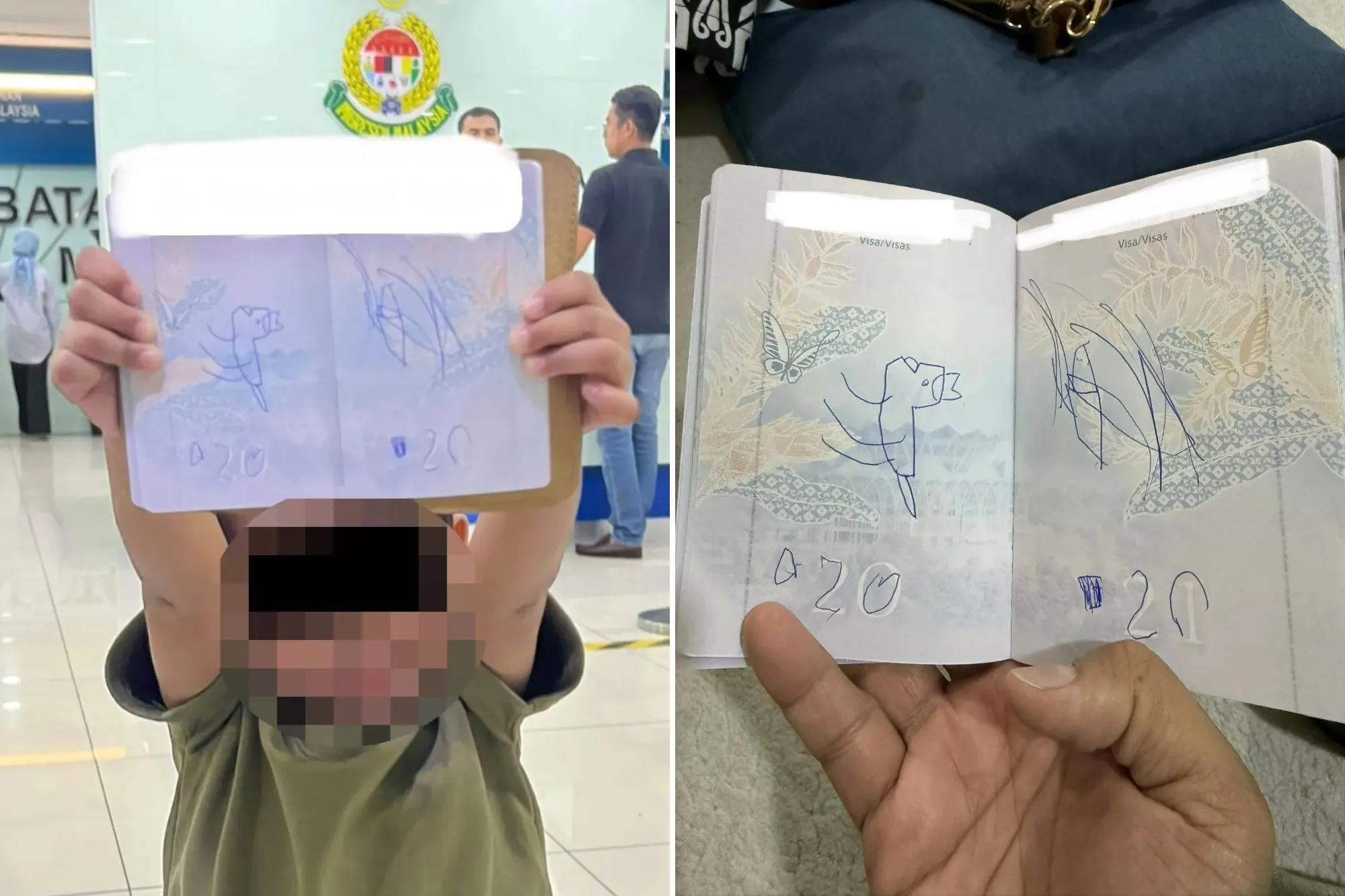
GOV.UK warns: “If your passport is damaged you must replace it. You may not be able to travel with it.”

The HM Passport Office will consider a passport damaged if:

You cannot read any of your details

  • Any of the pages are torn, cut or missing
  • There are holes, cuts or tears in the cover
  • The cover is detaching
  • There are stains on the pages (for example, ink or water damage)

Regarding your passport’s expiry date, the requirements will differ depending on where you’re headed. Some countries insist on at least six months remaining on your passport upon arrival, while others only require three.

For a full breakdown of passport requirements by country, visit the Government website here.

Applying for a passport online

To apply online, head to the Government website here. Key requirements include a digital photograph, a valid payment method (credit or debit card), and your existing passport if you’re renewing.

Furthermore, applicants must supply proof of their identity and citizenship. The application fee for adults stands at £102, while children’s passports are priced at £66.50.

For anyone requiring assistance with the online application, local Post Office branches provide support services. Their staff are able to:

  • Take your digital photo
  • Help with completing the online application

Be mindful that this service carries an extra charge.

Postal applications

Paper passport applications are available from your local Post Office. Keep in mind that postal applications generally take longer to process than online ones.

They’re also more expensive than online applications, setting you back £115.50. You’ll be required to submit a completed application form alongside your supporting documents, two photographs, and the relevant fee.

Post Office staff can assist in making sure your form is properly completed – though you’ll need to supply your own photos. Payment can be made using cash, debit or credit cards.

Fast-track applications

If the standard three-week processing period is cutting it too close with your holiday plans, several quicker options are available for securing a passport. According to the Government website: “You can pay to get a passport urgently if you think the standard service will take too long.”

To take advantage of these fast-track services, you’ll need to secure an appointment at a passport office:

  • The same-day premium service carries a charge of £239.50 (or £253.50 for the 54-page frequent traveller passport)
  • The one-week express service costs £192 for an adult passport (or £206 for the 54-page frequent traveller passport), and £156.50 for a child’s passport (or £170.50 for the 54-page version)

For further information, visit the Government website here.

Source link