US Secretary of State Marco Rubio has said Iran will not be permitted to charge tolls or fees for vessels transiting the Strait of Hormuz under any final agreement with Washington, exposing one of the biggest points of friction in negotiations aimed at ending months of conflict across the Middle East.
The dispute comes after Iran announced it would waive planned transit fees through the strait that crosses through its territorial waters for 60 days while talks with the United States continue in Switzerland, suggesting charges could be introduced once the negotiating period expires.
Recommended Stories
list of 4 itemsend of list
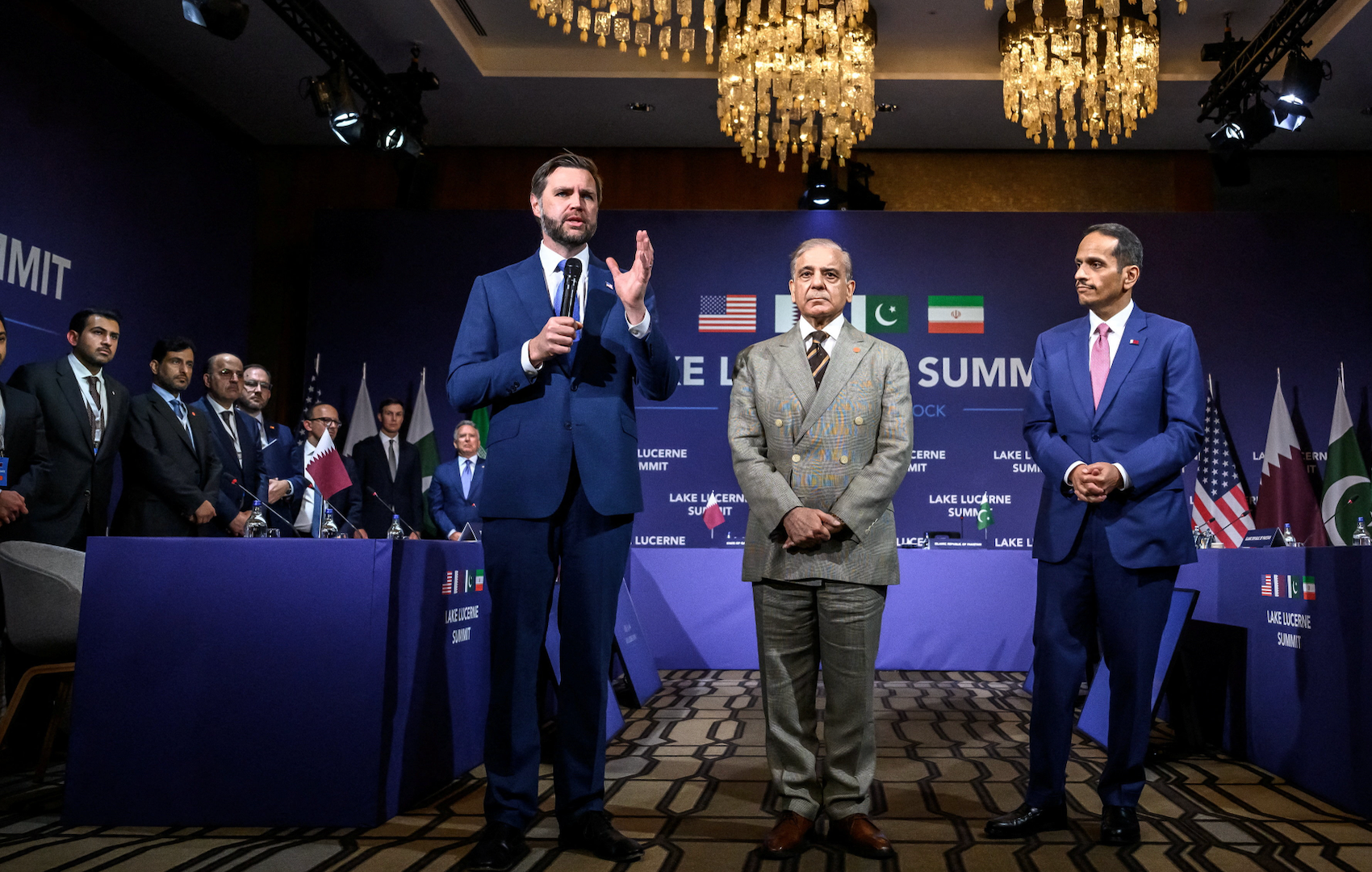
Washington and Tehran signed a preliminary agreement in Switzerland this week to halt hostilities and launched a 60-day diplomatic process focused on sanctions relief, Iran’s nuclear programme and the future administration of the Strait of Hormuz.
Pakistan, which helped mediate the talks alongside Qatar, has said negotiations to end the four-month US-Israel war on Iran are expected to resume early next week, likely on Tuesday.
The future of Hormuz has already emerged as a key sticking point after Iran effectively closed the waterway during the war, severely disrupting maritime traffic through one of the world’s most important energy chokepoints and causing the price of oil to soar.
In peacetime, one-fifth of the world’s oil and natural gas supplies are shipped for export by Gulf producers through the waterway.
In April, the US imposed a corresponding naval blockade on Iranian naval ports in a bid to stem Iranian oil exports.
While a number of ships have crossed through the strait since the US-Iran agreement was signed last week, uncertainty remains over whether Tehran intends to impose permanent fees or service charges on shipping operators using the route. Here’s what we know – and what else is happening in the Strait of Hormuz this week.
(Al Jazeera)
What are the US and Iran saying?
On Friday, Iran’s Persian Gulf Strait Authority (PGSA) said planned fees for ships using the waterway would be suspended during the 60-day negotiation period established under the memorandum of understanding (MoU) signed with the US.
Earlier this week, Iran and Oman said in a joint statement that they would study the future administration of the trade route as well as possible charges for services provided there, while maintaining their sovereignty claims over territorial waters bordering the strait.
Speaking at the start of a regional tour in the United Arab Emirates, Rubio rejected the idea of transit fees. “It’s an international waterway. No country is allowed to charge tolls or fees on an international waterway,” he said, adding that he believed “all the countries in this region would agree”.
Iran’s chief negotiator, Mohammad Bagher Ghalibaf, has signalled that Tehran views the post-war arrangement as fundamentally different from the status quo that existed before the conflict, however. Experts also say that Iran will not give up control of the strait, which has proved to be its greatest point of leverage in the conflict with the US.
“Hormuz will never return” to its prewar status, Ghalibaf said, despite both sides agreeing on Monday to establish “communication mechanisms” aimed at keeping the waterway open.
What does international law say?
International law protects the right of transit through strategic waterways such as the Strait of Hormuz, preventing coastal states from imposing explicit tolls simply for passage through international shipping lanes, even when they are passing solely through territorial waters.
However, countries can charge for specific services, including inspections, navigation assistance, security measures and certain insurance-related requirements, insurance experts say.
Examples include fees associated with transit through the Suez Canal and Panama Canal, as well as some services provided in Turkiye’s Bosporus and Dardanelles straits.
Mohammad Reza Farzanegan, an economist at Germany’s Philipps-Universitat Marburg, told Al Jazeera last month that Iran, like Turkiye, could justify a negotiated mechanism for transit fees or service-based contributions through natural straits as payment for maintaining a safe passageway, reducing environmental risks and providing predictability in a waterway that supports global energy, food and technology supply chains.
A key difference, however, is that while those waterways pass through the territory of a single state in each case, the Strait of Hormuz passes through the territorial waters of both Iran and Oman, while also connecting to waters used by the United Arab Emirates and other Gulf states.
“This sort of arrangement is unprecedented, and there would not be such an outcome, unless there is a complete coordination between the GCC [Gulf Cooperation Council] countries and Iran, with the approval of major international powers, such as China and the United States,” Nader Habibi, an Iranian American economist, told Al Jazeera.
How many ships are getting through the strait now?
Ship movements through the Strait of Hormuz remain well below prewar levels, when between 120 and 140 ships transited the passage each day, including tankers carrying about 20 million barrels of oil from the Gulf.
As the strait begins to open up, Oman says it is working with the United Nations’ International Maritime Organization (IMO) on temporary arrangements to facilitate safe transit through the strait, launching an operation to evacuate more than 11,000 sailors stranded in the area after the conflict left hundreds of vessels trapped for months.
Traffic through the strait has also been held back by ongoing concerns about the possible presence of sea mines in the central shipping channels used by international vessels before the war.
The Joint Maritime Information Center (JMIC), which includes representatives from the US and other maritime partners, has warned ships to avoid the area “due to the existence of mines”.
Other countries, including Japan, are currently weighing up whether to send ships to help with efforts to remove mines from the strait.
While Iran has never confirmed the presence of mines in the strait, when it first issued a map of the waterway for vessels it had approved for transit while the conflict was ongoing, it ordered ships to pass close to its coast to avoid possible mines. Ships had previously passed much closer to the coast of Oman.
The graphic below illustrates how much shipping through the strait dropped off as a result of the US-Israel war on Iran.
Could the dispute over strait fees derail a peace deal?
Mostafa Khoshcheshm, a professor at the University of Applied Sciences in Tehran, told Al Jazeera that Iran is unlikely to abandon plans to introduce long-term service fees in the strait.
“According to the MoU, Iran is not going to charge service fees for 60 days, but afterwards, Iran is definitely going to do that,” Khoshcheshm told Al Jazeera.
He said many Iranians were already unhappy that Tehran had agreed to suspend fees for the duration of the negotiating period.
“The money is not the real core of the issue,” he said. “The point here is how to impose your new protocols in the region. This is highly important for the Iranians.”
Cyrus Schayegh, professor of international history and politics at the Geneva Graduate Institute, told Al Jazeera the success of any new administrative arrangement would depend heavily on regional support.
“I think this is a very big question, and the biggest question is whether they will be able to sell it to the Emirates,” Schayegh told Al Jazeera.
“I think the Emirates will need to be involved in a really substantive way for any sort of new authority to actually work.”
More broadly, he said, the future of Hormuz forms part of a wider debate over Gulf security architecture following the war.
“It is only one piece of a much larger puzzle,” Schayegh said, adding that several regional states now accept that Iran has strengthened its deterrence capabilities following the conflict.
What other issues remain unresolved?
Hormuz is far from the only serious obstacle to a peace deal.
Questions also remain over the future of Iran’s nuclear programme, with Kazem Gharibabadi, Iran’s deputy foreign minister for legal and international affairs, saying that access for international inspectors to nuclear facilities damaged during the war would only be addressed as part of a final agreement with Washington.
His comments came after US President Donald Trump claimed Iran had agreed to “the highest level” of nuclear inspections.
Iranian officials insist no commitments were made in Switzerland regarding Tehran’s nuclear programme and say they did not meet representatives of the International Atomic Energy Agency (IAEA), including Director-General Rafael Grossi.
Regional security remains another major source of disagreement, with Israeli Defence Minister Israel Katz insisting Israeli forces will not withdraw from southern Lebanon “even if there is an American demand” to do so.
Meanwhile, Ghalibaf has identified the withdrawal of foreign military forces from the Middle East as one of Tehran’s strategic objectives in the negotiations.
The future of Iran’s frozen assets also remains a sticking point, with Trump indicating Washington is reluctant to release large sums of Iranian funds directly, arguing that money could ultimately benefit the Islamic Revolutionary Guard Corps (IRGC).
Instead, he has suggested a mechanism under which some funds would be used to purchase US goods.
“Food is desperately needed in Iran, and we will be purchasing it for them exclusively from the United States,” Trump said. Iran has not confirmed plans to do this.
Australia made it four wins from four at the ICC Women’s T20 World Cup after easing to a 113-run victory against Pakistan at Headingley, with the six-time winners on the verge of the semi-finals with one group match remaining.
Pakistan hosts Iranian President Masoud Pezeshkian after mediating the breakthrough US-Iran negotiations in Switzerland.
Published On 23 Jun 202623 Jun 2026
Islamabad, Pakistan – Iranian President Masoud Pezeshkian has alanded in Pakistan for a state visit – his first overseas trip since the United States and Israel launched strikes on Iran on February 28.
His Pakistani counterpart Asif Ali Zardari, Prime Minister Shehbaz Sharif, and Deputy Prime Minister and Foreign Minister Ishaq Dar received the Iranian leader at a military base near capital Islamabad on Tuesday.
Recommended Stories
list of 4 itemsend of list
During his day-long visit, Pezeshkian, who is accompanied by a high-level delegation that includes ministers and senior officials, will hold talks with Sharif, and is also expected to meet with Zardari.
According to Pakistan’s Ministry of Foreign Affairs, Senate Chairman Yousaf Raza Gilani, National Assembly Speaker Ayaz Sadiq, and Deputy Prime Minister and Foreign Minister Ishaq Dar will also call on the Iranian leader.
“During the visit, the two sides will review the full spectrum of bilateral relations and explore new avenues to further deepen cooperation across diverse sectors, including trade, energy, border security, people-to-people exchanges, and regional connectivity,” the ministry said in a statement on Monday.
Pezeshkian’s visit follows the crucial first round of talks between the United States and Iran, mediated by Pakistan and Qatar, in the Swiss city of Bürgenstock to end the war on Iran.
As part of the agreement, the US will release $12bn in frozen Iranian funds. The US has also announced a temporary easing of international sanctions on Iran, allowing it to sell its oil and petrochemicals until August 21. The talks concluded with a 60-day roadmap towards a final deal.
It is Pezeshkian’s second visit to Pakistan as president. His first, in August 2025, came days after the 12-day Iran-Israel war, and was also his first overseas trip following that conflict.
The visit is widely viewed as an expression of gratitude for Pakistan’s role in brokering the Islamabad Memorandum of Understanding, signed on June 18 by US President Donald Trump and Pezeshkian, with Prime Minister Sharif signing the document as a mediator.
The Islamabad MoU launched the formal diplomatic process now under way in Switzerland.
“The visit will also provide an important opportunity to discuss ongoing diplomatic engagements following the signing of the Islamabad Memorandum of Understanding, as well as regional and international developments of mutual interest,” Pakistan’s Ministry of Foreign Affairs said in its statement.
The first round of US-Iran talks has ended with both sides agreeing on a roadmap towards a final deal to be reached ‘within 60 days’. Iran said the negotiations resulted in waivers for oil exports and the release of some frozen assets. The parties have also agreed to a ‘de-confliction cell’ to monitor the ceasefire in Lebanon.
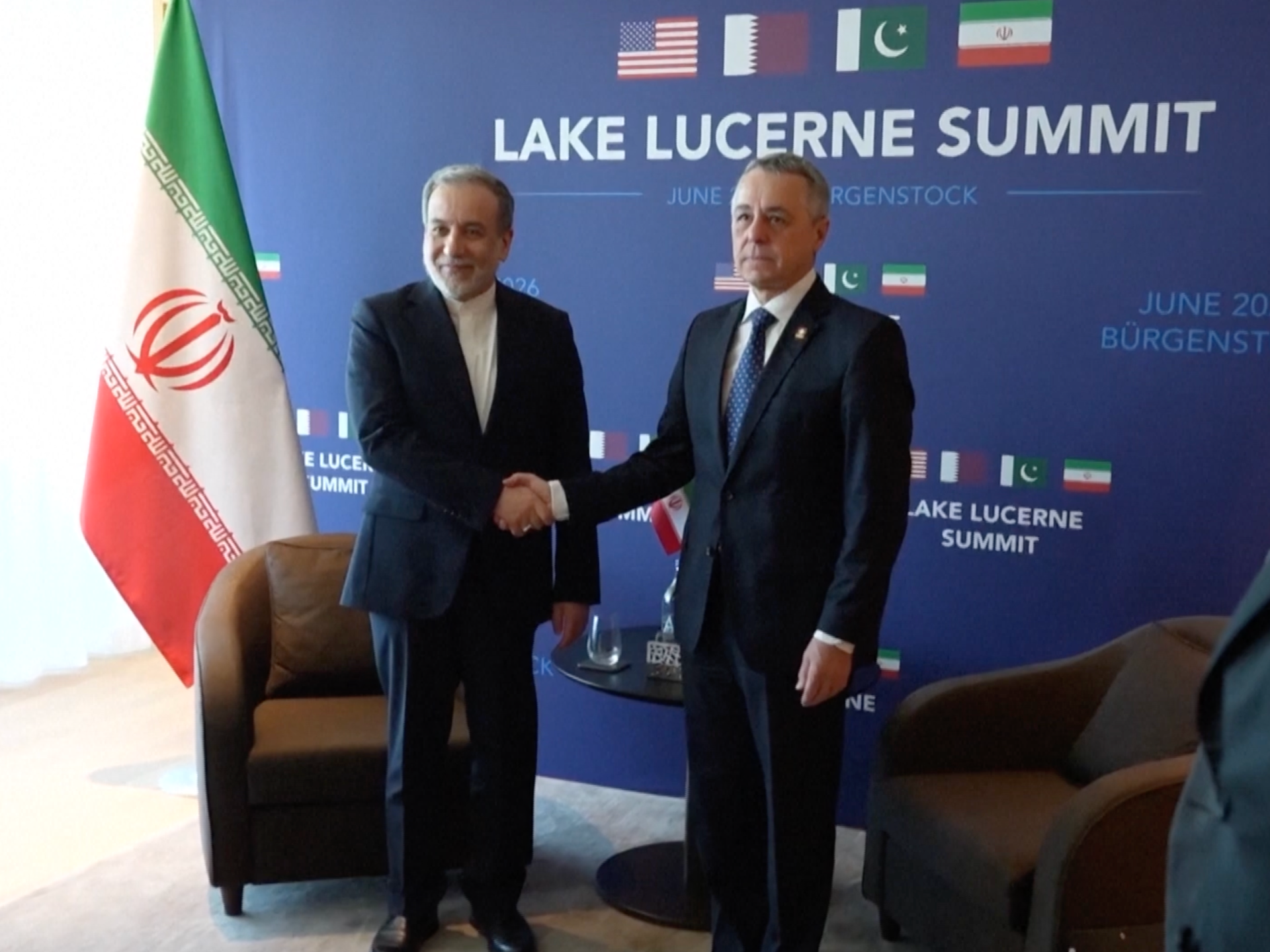
US and Iranian delegations have arrived for high-level talks at a hotel in Switzerland. JD Vance, Steve Witkoff and Jared Kushner met Pakistani mediators, while Iranian officials including Foreign Minister Abbas Aragchi and chief negotiator Bagher Ghalibaf met their Swiss hosts.
Pakistan says talks between the United States and Iran which were postponed on Friday will begin in Switzerland on Sunday, as Tehran announced it was again closing the Strait of Hormuz because of continued Israeli attacks in Lebanon.
Iran’s foreign ministry spokesman, Esmail Baghaei, confirmed on Saturday that an Iranian delegation, including Parliament Speaker, Mohammad Bagher Ghalibaf, Foreign Minister, Abbas Araghchi and other senior officials, was heading to Switzerland.
Recommended Stories
list of 3 itemsend of list
In Washington, Vice President JD Vance confirmed that the top US negotiators Jared Kushner and Steve Witkoff were already in Switzerland working through technical details of anticipated negotiations on Iran’s nuclear programme.
Vance told Fox News that he expects to leave for Switzerland “sometime in the next couple of days” but acknowledged that “it’s always a delicate coordination dance.”
The planned meeting on Sunday will start technical-level negotiations towards a final US-Iran deal. That is after both sides signed a memorandum of understanding (MoU) earlier in the week declaring a permanent end to “military operations on all fronts”, including in Lebanon.
The MoU stipulates that a final deal should be reached within 60 days, “extendable with mutual consent”.
Although Israel agreed to a renewed ceasefire with Hezbollah on Friday, its attacks in Lebanon continued into Saturday, killing at least 32 people, according to Lebanon’s civil defence and state media reports.
On Friday, Israeli attacks killed 83 people and wounded 141, Lebanon’s health ministry said.
Iran’s Islamic Revolutionary Guard Corps (IRGC) on Saturday announced it was re-imposing restrictions on the Strait of Hormuz over Israeli “crimes” in Lebanon and what it called a US violation of commitments to establish a ceasefire.
It warned ship crews not to approach the strategic waterway, saying their security would be at risk if they do.
Mohammad Mokhber, an adviser to Iran’s supreme leader, warned that the flow of energy in the Middle East would halt so long as the US-Iran agreement “remains only on paper”.
The US military said its forces were still operating in the “general area” of the Strait of Hormuz and “remain present and vigilant” to make sure “all aspects of the agreement with Iran are adhered to”. It said 55 commercial vessels had transited the strait on Saturday and that safe passage was still “intact”.
‘Things are moving backwards’
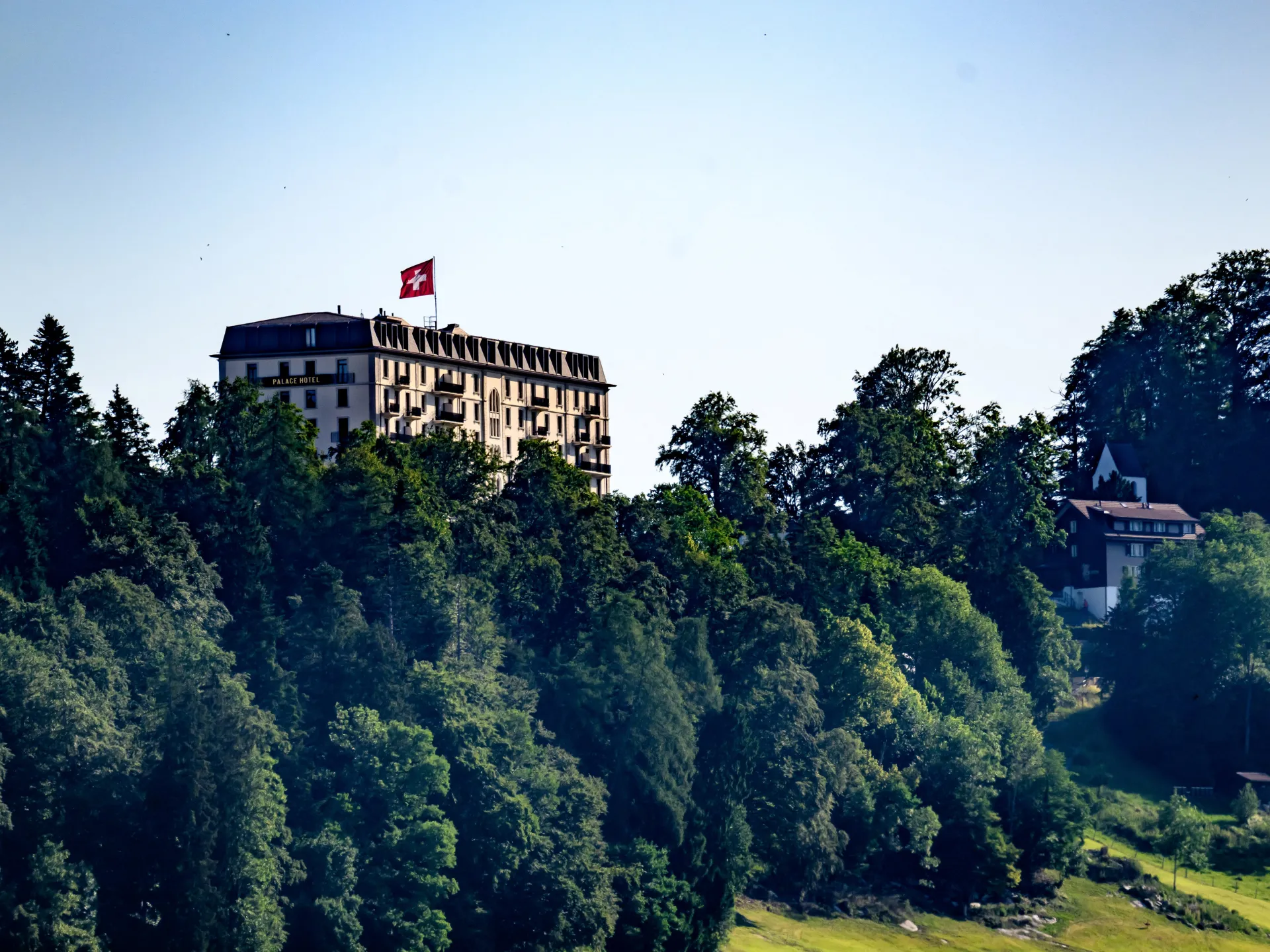
According to Pakistan’s foreign ministry, Pakistani and Qatari mediators will join the US-Iran talks on Sunday in the Swiss mountain resort of Burgenstock.
Reporting from there, Al Jazeera’s Osama bin Javaid said there has been a flurry of behind-the-scenes diplomatic activity ahead of the formal negotiations, with Qatar’s Prime Minister, Sheikh Mohammed bin Abdulrahman bin Jassim Al Thani, already holding meetings. Pakistan’s Foreign Minister, Ishaq Dar, has been holding talks in Egypt and Pakistan’s Interior Minister, Mohsin Naqvi, travelled to Iran.
Iranian foreign ministry spokesman Baghaei has signalled that progress may be scarce until Iran feels the US is living up to its end of the interim deal.
In comments broadcast by Iran’s IRIB, Baghaei said Iran “must naturally be very firm and serious in demanding fulfilment of obligations” considering the US’s past “failure to honour commitments”.
Al Jazeera’s James Bays, reporting from Burgenstock, said there are indications “things are moving backwards from when the MoU was signed”, citing Israel’s continued bombardment of southern Lebanon.
“The Iranians see this as a serious breach of the MoU,” he said. “Their first sanction was by not coming here. They have now utilised their best weapon by closing the Strait of Hormuz.
“Iran believes this tactic will help get things back on track with regard to southern Lebanon,” added Bays.
No group has yet claimed responsibility for the attacks.
Published On 20 Jun 202620 Jun 2026
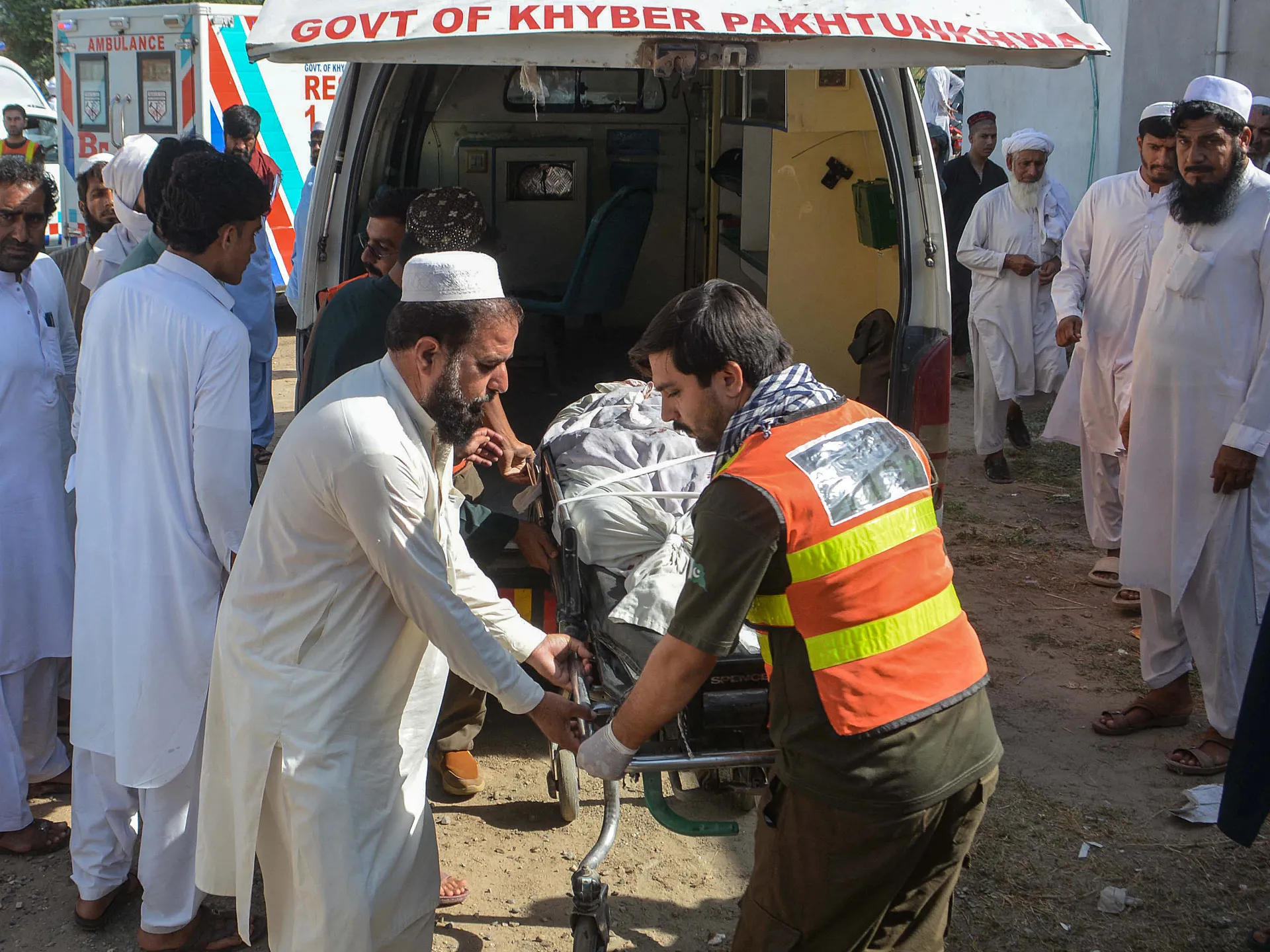
Two roadside bomb blasts in northwestern Pakistan have killed at least seven people.
The first explosion on Saturday hit a vehicle, and the second was detonated as rescuers responded, police said.
Recommended Stories
list of 3 itemsend of list
“A private pick-up truck carrying passengers was targeted with a remote-controlled IED,” said Yasir Afridi, a police officer in Bannu district in Khyber Pakhtunkhwa province bordering Afghanistan, using a common acronym for a homemade bomb.
“The injured were being transported to hospital in a car for emergency treatment when a second IED exploded,” he said, adding that three people were wounded.
Prime Minister Muhammad Shehbaz Sharif condemned the attack and said the government would bring those responsible to justice.
There has been no claim of responsibility for the blast, but the Pakistan Taliban, known by the acronym TTP, and other armed groups operate in the area.
Pakistan has blamed Afghanistan for a surge in attacks near the border, although the Taliban government in Kabul has repeatedly denied Pakistani accusations that Afghan territory is used as a sanctuary for armed groups.
Frosty relations have escalated into clashes in recent months, including Pakistani air strikes on Afghan cities.
Pakistani air strikes near the border this month killed at least 26 Taliban fighters, the Pakistani government said, while the Afghan government said 12 civilians were killed.
The border has remained largely closed since violence escalated in October, freezing bilateral trade and disrupting the movement of people and goods.
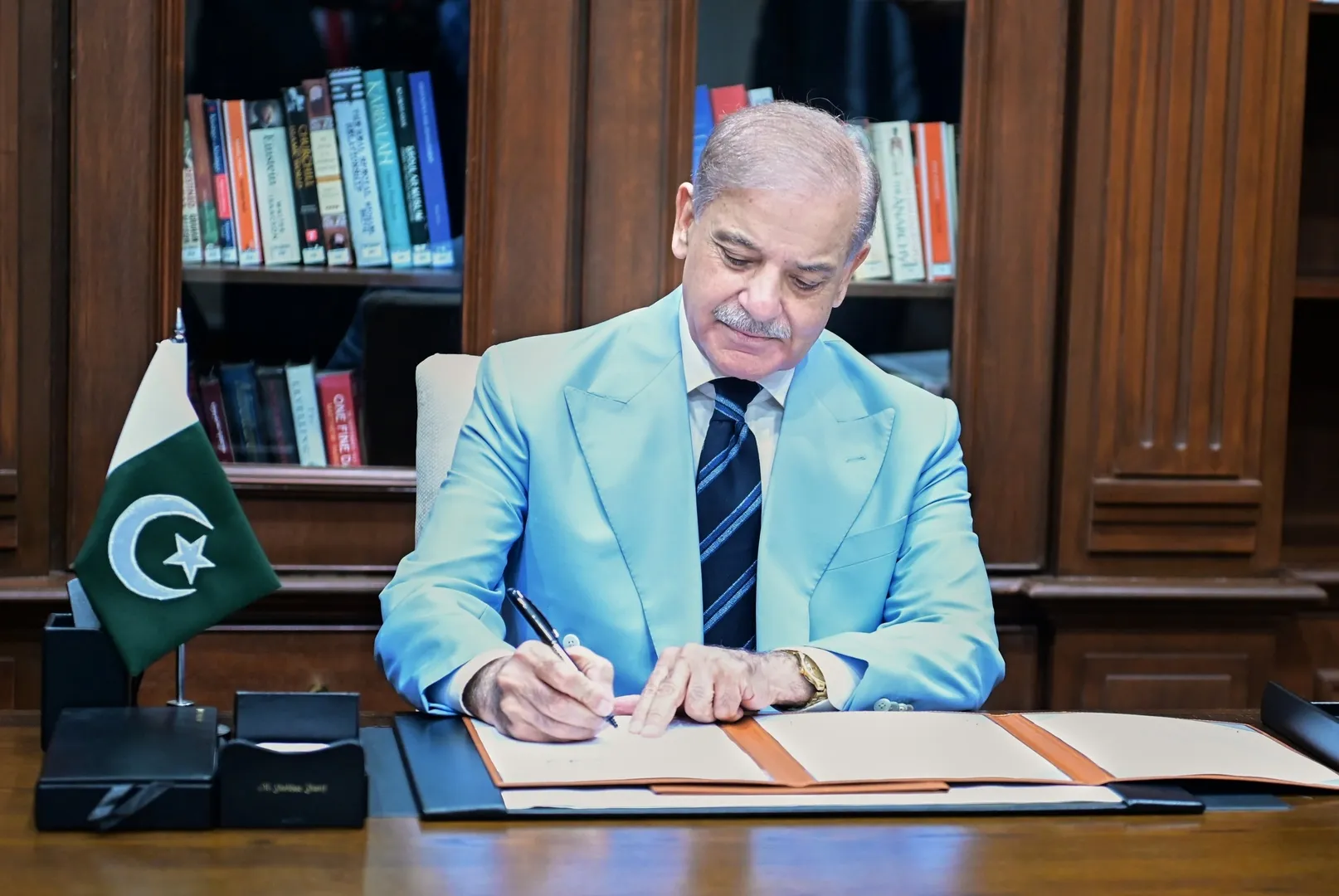
Pakistan’s Prime Minister Shehbaz Sharif has signed a US-Iran memorandum of understanding aimed at ending the war between the two countries. US President Donald Trump and Iran’s President Masoud Pezeshkian signed on Wednesday.
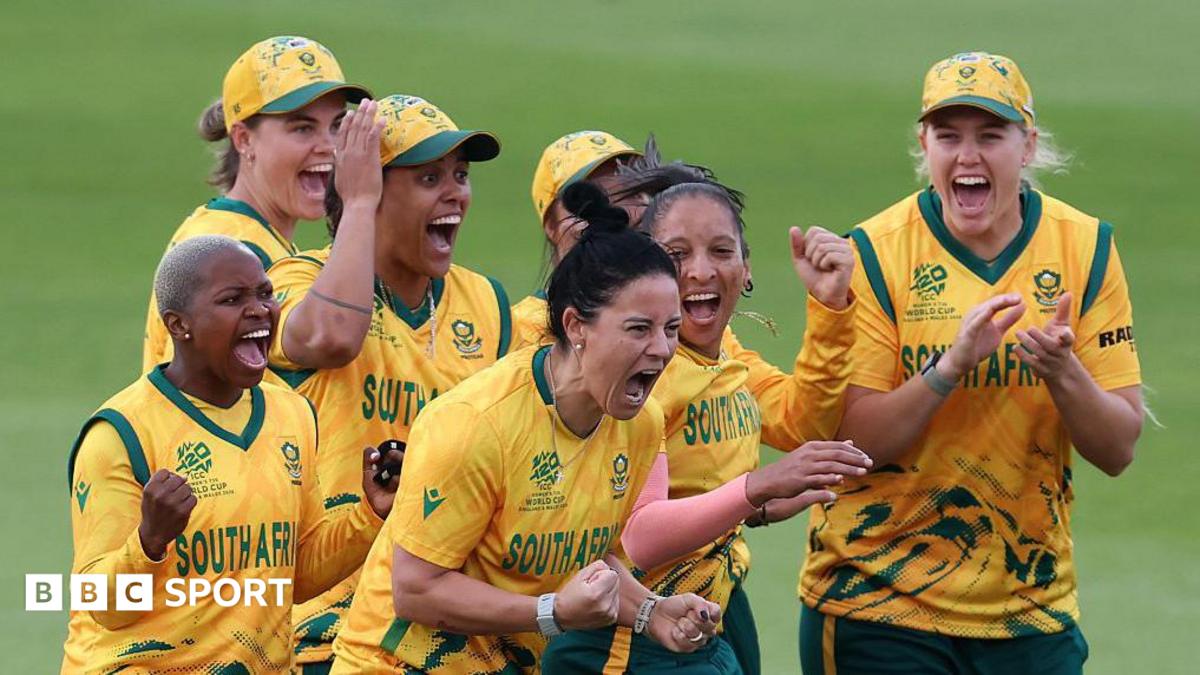
South Africa earned their first victory at the Women’s T20 World Cup as they beat Pakistan by two wickets at Edgbaston.
The Proteas were hammered by favourites Australia in their opener, setting them back in a difficult group which also includes 50-over world champions India.
Their win came from a combination of brilliant bowling from veteran all-rounder Marizanne Kapp and shambolic batting from Pakistan’s top order, who collapsed to 29-5 and then 50-8.
Kapp, 36, made an immediate impact with two wickets in the opening over, before some diabolical running between the wickets gifted South Africa three more.
But an inspired half-century from captain Fatima Sana dragged Pakistan up to 126-9 after a stand of 71 for the ninth wicket with Tuba Hassan.
Fatima finished unbeaten on 55 from 38 balls including two sixes in the final over bowled by Nadine de Klerk which conceded 19.
The skipper then kept her side in the game with the ball – finishing with figures of 3-23 – as South Africa made hard work of the chase by throwing away regular wickets.
Their batting needs to improve considerably if they are to challenge India and Australia in the group’s top two, but all-rounder Annerie Dercksen’s 52 and De Klerk’s 37 were enough to get them over the line with just over three overs to spare.
The Proteas have reached the past two T20 World Cup finals but lost both, to Australia in 2023 and New Zealand in 2024. Pakistan have suffered two defeats, having lost to India on Sunday.
Islamabad, Pakistan – The scoreline read 4-1 to Norway. Iraq had been heavily beaten in their first World Cup match in 40 years. Manchester City striker Erling Haaland scored twice in his World Cup debut as Norway cruised to victory in Group I.
But for Pakistan, the result barely mattered.
Recommended Stories
list of 4 itemsend of list
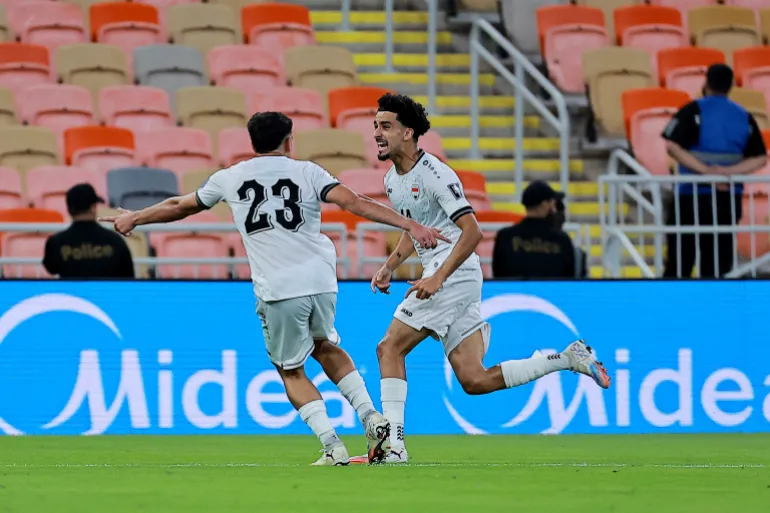
When Zidane Iqbal crossed the touchline for Iraq at Boston Stadium in Foxborough, Massachusetts, in the 59th minute on Tuesday, history was made. He became the first player of Pakistani heritage to appear in a FIFA World Cup.
Pakistan’s national team has never qualified for the tournament. It sits 198th in FIFA’s rankings. For decades, more than 250 million Pakistanis have watched football’s biggest event from the outside.
That changed, in its own complicated way, through a 23-year-old born in Manchester, England.
Between three nations
Zidane Ammar Iqbal was born on April 27, 2003, to a Pakistani father and an Iraqi mother. His father, Aamar, is from the city of Sahiwal in Punjab while his mother, Ayat, was born in southern Iraq.
Growing up in Manchester, Iqbal was eligible to represent England, Pakistan or Iraq. The decision he eventually made was not a calculated one.
Iraq found him the way many things happen now: through social media.
A large Instagram page tracking Iraqis around the world contacted him to ask whether rumours about his heritage were true.
Word eventually reached the Iraq Football Association, which pursued him through a series of video calls with Iqbal and his parents.
Asked by the sports news outlet The Athletic why he chose Iraq, Iqbal said: “All the love and support from the fans in Iraq and across the world and how hard the FA tried to bring me. When someone shows so much love, it’s only right that you feel it.”
He had never visited Iraq before receiving an under-23 call-up in 2021.
The culture shock, he admitted, was real. But he kept returning. Gradually, a country that had once been only part of his heritage began to feel like home.
The road not taken
Iqbal joined Manchester United’s academy at the age of eight and spent 12 years at the club. In December 2021 at 18, he became the first British South Asian player in nearly two decades to appear for United in the UEFA Champions League.
Iraq’s Zidane Iqbal celebrates scoring in a World Cup qualifying match against Indonesia in October 2025 [File: Reuters]
But regular first-team football never followed. He eventually moved to FC Utrecht in the Dutch Eredivisie for about 1 million euros ($1.1m).
His performances during Iraq’s gruelling 21-match qualification campaign, including a winning goal against Indonesia, kept him central to the team’s plans throughout.
The Pakistan Football Federation (PFF) had monitored his progress. But it was never truly a contest.
Ali Ahsan, editor of FootballPakistan.com, said the structural gap between the two football systems was simply too wide.
“We are struggling to attract players from bigger clubs, our ranking, the lack of a professional set-up. The PFF still has no technical director or dedicated national team recruitment staff,” Ahsan told Al Jazeera.
“For Zidane, he picked Iraq to be able to play major tournaments, which he probably wouldn’t have gotten with Pakistan,” Ahsan said.
“Had he chosen Pakistan, he could have had a big impact on raising Pakistani football’s profile internationally. He was still at United at the time. He could have started a serious conversation about how football needs to be improved, inspired kids to take it more seriously. Iraq is already a well-established team with a dedicated history, structure and fanbase.”
For Iqbal, the path led elsewhere. But for Pakistan, the moment still mattered.
“I hope there are children – whether Asian, Arab, whatever you are – who watch that and think they can do it,” Iqbal told The Athletic. “It’s definitely possible. And if I’ve done it, why can’t they?”
Iraq next face France on Monday before taking on Senegal in their final group match on June 26. Few expect them to advance. But few expected them to be there at all.
Against Norway, Iraq lost. For Pakistan, history was made anyway.
US President Donald Trump and Iranian leaders say a deal has been agreed to end more than 100 days of war that killed thousands.
By Agence France Presse and Reuters
Published On 15 Jun 202615 Jun 2026
United States President Donald Trump and Iran’s Deputy Foreign Minister Kazem Gharibabadi said on Sunday that they had reached an initial deal to end the war and to resume traffic through the Strait of Hormuz.
Trump said the deal allows for toll-free shipping through the Strait of Hormuz, which has been largely closed since the US and Israel launched an assault on Iran on February 28.
“The Deal with the Islamic Republic of Iran is now complete,” Trump wrote on Truth Social on Sunday.
The US and Iran will sign a memorandum of understanding in Switzerland on Friday, said the prime minister of Pakistan, whose country has served as a mediator.
Monday marks 108 days since the war began, with the US and Israel’s attacks on Iran. Here is what’s happening:
What we know about the deal
The content of the agreement, which follows weeks of fraught negotiations and periodic threats from Trump of new hostilities unless Iran reaches a deal, remained unclear.
Strait of Hormuz to reopen: Iran’s semi-official Mehr news agency said the draft deal called for reopening the Strait of Hormuz within 30 days under Iranian arrangements. Trump, who turned 80 on Sunday, said the deal allows for toll-free shipping through the Strait of Hormuz, which has been largely closed since the US and Israel launched an assault on Iran on December 28.
Frozen assets to be released: Iran’s Mehr news agency reported that the US would release $12bn in frozen assets to Iran before the start of negotiations.
Iran’s enriched uranium: In an interview with The New York Times on Sunday, Trump said Washington was still negotiating whether Iran would suspend its enrichment for 20 years. Trump hinted that he might settle for a 15-year suspension, but said he did not want to negotiate via the press.
Israel has not commented: There has been no official comment from Israel about the peace agreement.
In Iran
The secretariat of Iran’s Supreme National Security Council said on Monday that the deal with the US includes the immediate suspension of hostilities on all fronts. “Based on the agreements reached, the war and military operations on all fronts, including Lebanon, will end immediately and permanently as of tonight, and in addition, the naval blockade against Iran will end immediately and completely,” it said in a statement.
In the US
Democrats slam Trump over war: While Democratic lawmakers welcomed the deal, they criticised the Trump administration’s decisions pertaining to the war. Senator Chris Coons of Delaware said that while the deal moves the situation in the “right direction”, several questions remain. He warned that competing interpretations of what was agreed upon could pose risks. Senator Chris Murphy, who serves on the Senate Foreign Relations Committee, said the deal is a “surrender to Iran” but that the US should be “glad about it because every day this insane, illegal war continues, we get weaker”.
In Lebanon
Trump rebukes Israeli attack on Beirut: On Sunday, shortly before the deal was announced by Trump, Israel launched an air attack on Beirut. Trump angrily blamed Israel for delaying the deal’s signing after launching this attack. In an expletive-laden phone interview with US news outlet Axios, Trump fumed about Israeli Prime Minister Benjamin Netanyahu, saying: “I was so pissed off. I let him know.”
Global response
Western leaders praise deal: UK Prime Minister Keir Starmer said he was ready to aid the further technical talks between the US and Iran, adding that he hopes the reopening of the Strait of Hormuz will stabilise energy markets.
French President Emmanuel Macron also praised the deal and said Paris would support the Lebanese government.
European Union chief Antonio Costa welcomed a deal between the US and Iran to end the Middle East war, adding that the bloc was ready to contribute to a strategy for “lasting peace”.
UN Secretary-General Antonio Guterres said it was a “critical step” towards resolving the war in the Middle East.
Global economy
Oil prices drop: Oil prices slipped to their lowest since March on Monday, with global benchmark Brent crude futures falling $4.08, or 4.7 percent, to $83.25 a barrel by 04:15 GMT. US West Texas Intermediate was at $80.53, down $4.35, or 5.1 percent. Both contracts fell to their lowest levels since March 10 on Monday after tumbling more than 3 percent on Friday.
Asian markets soar: Markets in Japan soared, more than 5 percent up; in South Korea, they were up 5.3 percent; in Taiwan, they were up 2.4 percent. In Shanghai, they were up 1.3 percent; and in Hong Kong, they were up half a percent; while in Indonesia, they were up 2.07 percent; and in the Philippines, they were up 5.2 percent.
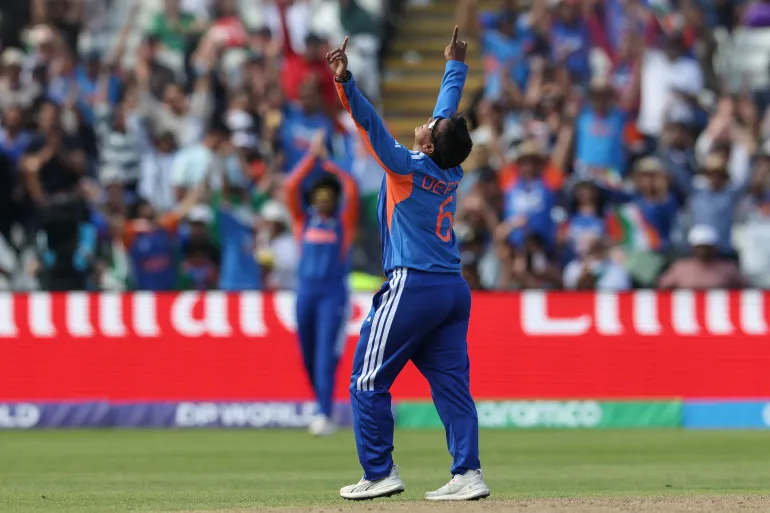
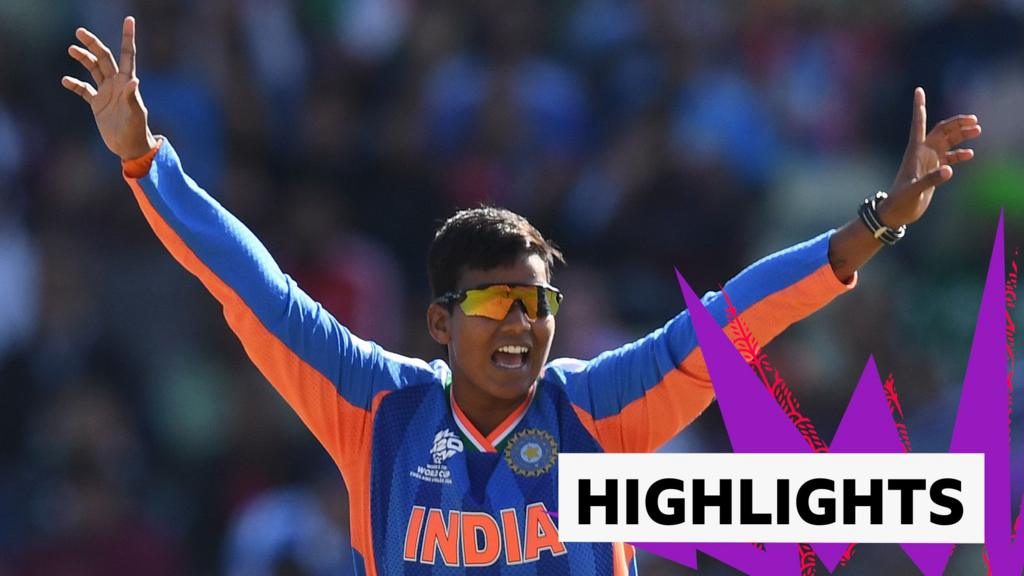
Deepti Sharma took five wickets, and India bowled out Pakistan for 106 to successfully begin their latest quest for a first Women’s Twenty20 World Cup title with a 64-run win over their archrivals.
Sharma spun out the last three wickets in five balls as India defended 170 on Sunday in front of a heavily partisan sellout crowd at the Edgbaston Cricket Ground in Birmingham, United Kingdom.
Recommended Stories
list of 4 itemsend of list
Seven months after Sharma starred in India’s victory in the final of the Women’s ODI World Cup with five wickets and 58 runs, she started this T20 World Cup with another standout performance. Shree Charani supported her with 3-21.
Sharma took the first two wickets of Pakistan’s chase, which actually started strong, but by the 10th over, India were on top.
Pakistan needed Muneeba Ali, dropped twice, to go big, but Sharma ran her out on 41 in the 11th over with a great direct hit on the run from backward point.
When Pakistan captain Fatima Sana fell in the next over at 77-5, her team fell away too.
Sharma’s late burst for 5-10 made her the highest wicket-taker in the women’s T20, with 166.
“I always believe in myself, that whenever the right time comes, I will step up,” the prolific all-rounder said.
Deepti Sharma celebrates after taking the wicket of Aliya Riaz [Darren Staples/AFP]
India laboured through their power play, and it took Smriti Mandhana to be dropped on 27 off 24 balls to be inspired by the reprieve to lash out at the Pakistani bowling. She needed only another 10 balls to reach 50.
The left-handed opener was dropped again on 55 and top-edged onto her own helmet, forcing a concussion check. She passed, smacked her ninth boundary, and was out to a great low grab by Sana.
Mandhana’s wicket started a mini-collapse, including captain Harmanpreet Kaur on 36. India started the 19th over at 132-5, hoping for 150.
That’s when Richa Ghosh exploded with 34 off 17 balls and combined with Sharma to take 23 runs off World Cup debutant Tasmia Rubab.
“If it is in my hands, I would love to send [Ghosh] on the first ball,” Kaur said. “But she has a role to play, and she is doing well.”
Sana conceded 15 in the last over, and a 171 target looked steep, given Pakistan’s history against their neighbours.
India have dominated the World Cup rivalry with Pakistan, having beaten them in all meetings across the 20- and 50-over formats.
Continuing the trend set by their men’s team in last year’s Asia Cup, the Indian team did not shake hands with their Pakistani counterparts for a second World Cup in a row, following their meeting in the 50-over tournament in October.
Pakistan’s players walk off as India celebrate their victory at the end of the match [Darren Staples/AFP]
Ferdous flays the Netherlands
Meanwhile, Bangladesh pulled off a record chase on the same pitch to win against the Netherlands in the European side’s first Women’s T20 World Cup match.
Bangladesh reached 141-4 with five balls remaining after having never scored more than 126 in a successful World Cup chase.
Replying to the Netherlands’ 139-8, the South Asian team were taken to the last over even after a great platform set by opening batter Juairiya Ferdous, who hit her second 50 since her T20 debut in January.
Ferdous had 26 of the first 27 runs, and 33 of the 47 in the power play. But the 20-year-old also had two lives. On 7, the third umpire disputably ruled out a catch at deep midwicket by Sterre Kalis, and on 18, Ferdous was dropped.
Both of her sixes flew over the midwicket rope, and by the time she was out for 50 off 33 balls at 67-1 in the eighth over, Bangladesh were almost halfway home.
Juairiya Ferdous shone for Bangladesh [Philip Brown/Getty Images]
Dutch spinners Silver and Heather Siegers and Caroline de Lange (2-27) slowed down Bangladesh, but they were not persevered with.
An unbeaten partnership of 56 between Sharmin Akhter and Shorna Akter clinched Bangladesh’s fourth win in seven T20 World Cups.
Netherlands captain Babette de Leede won the toss, and the one-down batter held her team together with 50 from 45 balls until the 17th over, when she was run out trying for a second run.
Bangladesh’s attack was led by medium-pacers Marufa Akter, 2-31, and Ritu Moni, 1-17 .
On Tuesday, defending champions New Zealand take on Sri Lanka, and hosts England face Ireland.
Smriti Mandhana’s 68-run knock and Deepti Sharma’s five-wicket haul helped India secure an impressive 64-run win over Pakistan in Group One of the ICC Women’s T20 World Cup.
June 13 (UPI) — President Donald Trump and Pakistan have said that a memorandum of understanding extending the cease-fire between the United States and Iran will be virtually signed Sunday, though Iran has not confirmed the meeting.
Trump posted on Truth Social at 12:45 p.m. EDT Saturday: “The Deal is scheduled to get signed tomorrow, and immediately after it is signed, the Hormuz Strait is OPEN TO ALL.”
He also posted a screenshot of a Saturday morning tweet by Pakistani Prime Minister Shehbaz Sharif: “We are closer to a peace deal than ever before. With finalization expected in the next 24 hours, Pakistan is preparing for the electronic signing of the peace deal immediately after, followed by technical level talks next week.”
The Pakistani foreign minister confirmed that the signing was set for Sunday, Axios reported.
But Iran said there were no talks planned for Sunday. Iranian Foreign Ministry Spokesperson Esmail Baghaei said there were no plans for an Iranian negotiating team to travel to Geneva or elsewhere in the next day or two, according to IRIB, Iran’s state broadcaster, The New York Times reported. While Iran could also sign electronically, it’s unclear if the signing event will happen.
One of the main reasons the signing will be virtual is that Vice President JD Vance, who has been negotiating the peace deal, wouldn’t be able to go to the signings and be back in the United States before Trump leaves for the G7 summit in France Monday, Axios said.
Also, Sunday is the president’s 80th birthday and the day of the UFC fight on the White House lawn.
The United States and Iran engaged in some of the most intense fighting overnight since all-out hostilities in the ongoing US‑Israeli war on Iran were halted with a Pakistan‑mediated temporary ceasefire on April 8.
A comprehensive peace agreement remains elusive as Iran and the US have exchanged a series of proposals and counterproposals in the weeks since that pause. After a string of smaller escalations, however, the US struck targets in Iran following the downing of a US Apache helicopter close to the Strait of Hormuz on Tuesday, and Iran retaliated by hitting US military bases in the Gulf.
The US military said it targeted communications and radar facilities. Iranian officials, however, said civilian infrastructure was also damaged, including two water reservoirs.
If correct, this is the first reported strike on civilian infrastructure in Iran in several weeks, but it comes at a time when Iran is facing a severe water shortage.
Which targets have been hit in Iran?
The US launched waves of attacks starting late on Tuesday following the downing of the helicopter in the Strait of Hormuz. The US described the attacks as “self-defence strikes” and a “proportional response to unjustified Iranian aggression”.
While an official US inquiry into what caused the helicopter to crash has yet to conclude, US President Donald Trump quickly blamed Iran, which he said had deliberately shot it down.
“I have just been informed by our Great Military that last night the Iranians shot down one of our highly sophisticated Apache Helicopters while patrolling over the Strait of Hormuz. There were two pilots involved, both are safe and uninjured,” Trump wrote on social media.
“Nevertheless, the United States must, of necessity, respond to this attack.”
Iran’s Islamic Revolutionary Guard Corps (IRGC) said US strikes, which hit targets including Sirik, Jask, Minab, Qeshm Island and the port of Bandar Abbas, had caused major damage to a telecommunications tower in the town of Sirik and destroyed two water reservoirs there.
Iran’s West Asia News Agency (WANA) news outlet reported on Wednesday, citing “available reports”, that two concrete water storage reservoirs in the Bamani district in the Sirik County of Hormozgan Province, in southern Iran, 1,012km (629 miles) from the capital, Tehran, had been hit in the US attacks.
The IRGC claimed attacks on US military bases in Bahrain, Kuwait and Jordan in retaliation.
Has the US hit Iran’s water infrastructure before?
Yes. On March 7, while missiles were flying across the region in an all-out war between Iran and the US-Israel, Iranian Foreign Minister Abbas Araghchi accused the US of striking a desalination plant on Qeshm Island off the coast of Iran in the Strait of Hormuz. The strike reportedly cut off the water supply to 30 villages.
“Water supply in 30 villages has been impacted. Attacking Iran’s infrastructure is a dangerous move with grave consequences. The US set this precedent, not Iran,” Araghchi wrote in an X post.
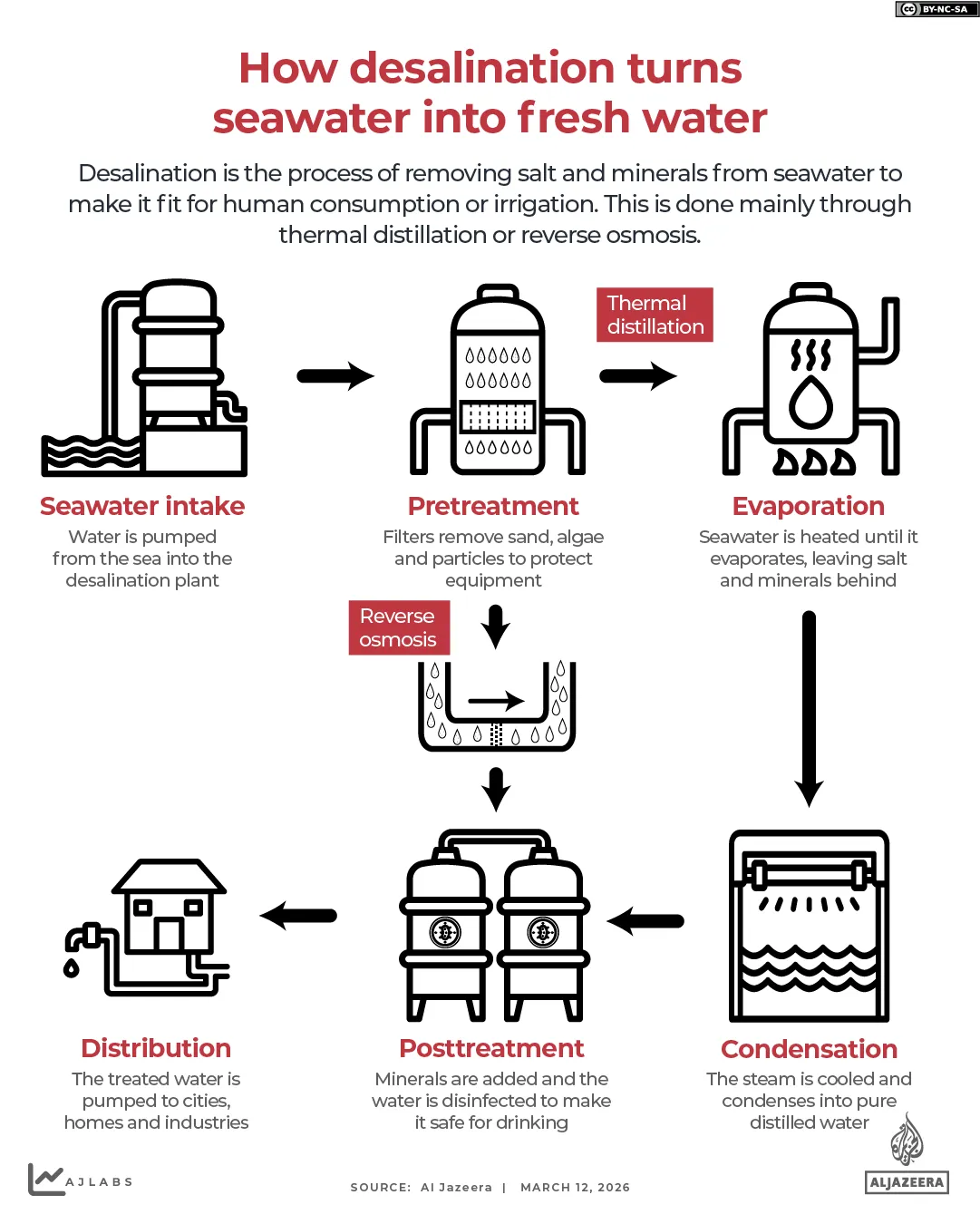
A desalination plant converts seawater into water suitable for drinking, irrigation and industrial use. These facilities are particularly critical in areas such as the Gulf, where freshwater is scarce.
[Al Jazeera]
Why is this significant?
The reservoirs that were struck provide drinking water to more than 20,000 residents in the city of Kouhestak and 10 surrounding villages. WANA reported initial estimates for damages amounting to $780,000 to $830,000.
Iran was already facing a multiyear drought and decline in precipitation before the US-Israeli war on Iran started. After years of poor agricultural practices and mismanagement, Iran’s main water supplies, including its reservoirs, rivers and groundwater reserves, continued to run dry.
According to Aqueduct data from the World Resources Institute, which tracks global water risk, Iran’s baseline water stress is classified as “extremely high” – meaning the country uses more than 80 percent of its renewable water resources in a typical year.
Last year marked Iran’s fifth consecutive year of drought. In November 2025, the water crisis was so dire that Tehran’s Amir Kabir Dam only held 8 percent of its capacity, while across the country, 19 major dams had run dry.
[Al Jazeera]
Is this a war crime?
Isa Bozorgzadeh, spokesman for Iran’s water industry, claimed the US strike on the water reservoirs is a war crime, WANA reported.
International humanitarian law classifies water infrastructure, including drinking water installations, treatment plants and pipelines, as civilian property which is not deemed a legitimate target during war.
The Berlin Rules on Water Resources, drafted by the International Law Association (ILA) and adopted in 2004, are a set of non‑binding international legal principles about how countries should use, share and protect water.
The Berlin Rules prohibit countries at war from destroying water installations “if such actions would cause disproportionate suffering to civilians”.
Recent clashes between protesters and police killed at least 11 people.
It’s called the Joint Awami Action Committee, and it’s being accused of fuelling protests in Pakistan-administered Kashmir.
The group has been demonstrating against a rule that sets aside legislative seats for refugees from India-administered Kashmir who live in Pakistan. They say it gives them disproportionate influence in the divided region.
But the government says any change would require constitutional reform.
The issue has long been a subject of political debate in Pakistan-administered Kashmir. But how will its government deal with tensions rising once again?
Presenter: Imran Khan
Guests: Maria Iqbal Tarana – Senior leader of Pakistan Muslim League-Nawaz
Sahar Khan – Nonresident fellow at the Institute for Global Affairs
Imtiaz Gul – Executive director at the Center for Research and Security Studies
At least 11 people were killed on Sunday during clashes between police and protesters in Pakistan-administered Kashmir’s Rawalakot city, capital of Poonch district, before a major demonstration scheduled by a banned civil society group for Tuesday.
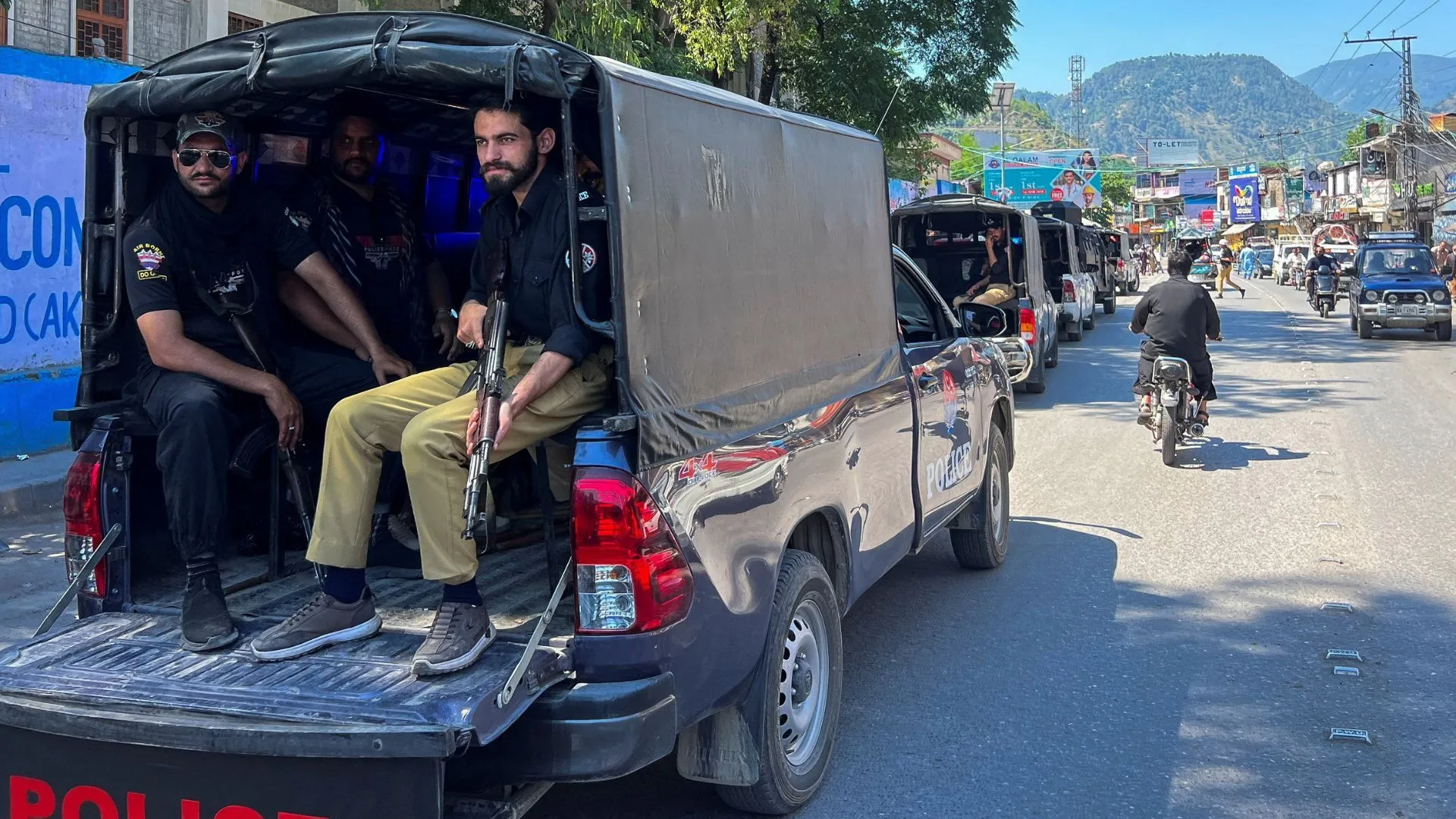
Authorities in Pakistan-administered Kashmir deployed federal paramilitary troops and issued a strict travel advisory before the Tuesday protest, which has gone ahead despite the restrictions.
Recommended Stories
list of 4 itemsend of list
Here is what we know about the latest unrest.
What’s happening in Pakistan-administered Kashmir?
Eleven people have been killed in clashes between the police and protesters, while more than 70 have been injured. The ban on the organisation, alongside regional grievances, set off the protests.
On Tuesday, Sardar Waheed Khan, commissioner of the Pakistan side of the Poonch district, a militarised region shared between Indian-administered and Pakistani-administered Kashmir, told the news agency Reuters that four police officers and a passer-by died “after miscreants shot at them”. Six protesters were killed, he said.
Police Chief Liaqat Malik said 23 security officials and 50 protesters were among those injured in Sunday’s clashes.
On Friday, local authorities issued an advisory urging visitors to avoid travelling to the area.
“The measure is advised to save intending visitors from any unexpected situation or inconvenience,” an unnamed official said in a statement issued by the region’s Press Information Department (PID).
“The government also requests those already in the territory for sightseeing or any other purpose to leave by Friday evening so that they do not confront any unpleasant situation,” the statement added.
Kashmir is a disputed Himalayan region which is claimed in full by both India and Pakistan, with China also controlling a portion of the territory. Pakistan-administered Kashmir – known locally as Azad Jammu and Kashmir (AJK) – is governed under a semi-autonomous system, with its own prime minister and legislative assembly, but ultimate authority resting with Islamabad. Its population exceeds four million people, according to the 2017 census. It is separated from India-administered Kashmir by what is known as the Line of Control (LoC).
The LoC is the 740km (459-mile) military border dividing the disputed Kashmir region between Indian-administered and Pakistan-administered territories.
Who is behind the protests?
The Jammu Kashmir Joint Awami Action Committee (JAAC) is a grassroots umbrella organisation that emerged in 2023 as the leader of a protest movement across the Pakistani-administered part of the region. The JAAC, led by activist Shaukat Nawaz Mir, represents traders and civil society groups.
On Friday, the local government proscribed the JAAC under a regional legislative framework in Pakistan-administered Kashmir called the Anti-Terrorism Act of 2014.
In a circular, the government’s home department claimed the JAAC “is engaged in terrorism, acted in a manner prejudicial to the peace & security of the State, involved in creating anarchy in the State by intimidating public, promoting hatred & creating sense of insecurity in society and public at large, etc”.
In the past, protests organised by the JAAC have led to violent clashes between protesters and security forces, leading to casualties.
In a video message on X responding to Sunday’s incident, Mir accused the authorities of unleashing violence in Rawalakot, saying, “The state has begun a massacre of our people in Rawalakot.”
In response, Khan, the commissioner of Pakistani Poonch, said, “The JAAC leadership is misleading the masses by terming it a massacre. The state’s action was meant to restore law and order.”
On Tuesday, the internet monitoring group NetBlocks said that its data showed that access to the web remained severely restricted in Pakistan-administered Kashmir for a third day in a row.
What is the trigger behind these protests?
These protests are against the reservation of 12 seats in Pakistan-administered Kashmir’s legislature for refugees from Indian-administered Kashmir who now live in other parts of Pakistan. If the refugees live in Pakistan-administered Kashmir, they are not eligible to contest for these reserved seats.
The region votes on July 27 to elect its next legislature, which has 45 seats in all — including the 12 reserved ones.
The JAAC is calling for the abolition of the reserved seats, arguing that all seats in the legislature must go to those who actually reside in Pakistan-administered Kashmir, and not those living in other constituencies scattered across Pakistan.
Abdul Jabbar Nasir, a journalist currently based in Karachi, but originally from a village near the LoC in the Gilgit Baltistan area, which is the majority of the Pakistan-administered Kashmir region, told Al Jazeera that the seats are reserved for those who migrated from Indian-administered Kashmir to Karachi or any other part of Pakistan in 1947.
Nasir explained that the reserved seats have existed in various forms since the late 1940s and were formalised in Pakistan-administered Kashmir’s 1974 interim constitution, which treats the region as a self-governing, autonomous state, with its own prime minister, president and courts, while defence, foreign affairs, currency and communications remain under Pakistan’s control.
“If the constitutional protection provided begins to be changed by these protesters, then I don’t think things can function,” Nasir said.
“It is essential for these seats to exist. If we abolish them, on one hand, Pakistan’s own case for Kashmiri statehood in the United Nations will be weakened, and India’s case will be strengthened,” he added.
He drew a parallel with India, noting that New Delhi historically kept a number of seats vacant in its parliament and the former Jammu and Kashmir assembly as a way of asserting that those bodies represented the entire former princely state, including areas under Pakistani control. If Pakistan now dismantles refugee representation in Pakistan-administered Kashmir, he warned, India could argue that both countries have effectively “regularised” their control over their respective portions of the disputed region.
Marathon talks between a federal ministerial team, including leaders from Pakistan and Pakistan-administered Kashmir, and JAAC leadership in late May failed to yield a breakthrough. This resulted in the JAAC announcing that the protest on Tuesday would proceed as planned.
On Sunday, a top court in Pakistan-administered Kashmir, called the Supreme Court of Azad Jammu and Kashmir, ruled that the 12 reserved seats are constitutionally protected, and a constitutional amendment would be needed to abolish the reservation.
“This ruling effectively closed the legal route for groups seeking to challenge the existing arrangement and intensified calls for protest by the [JAAC],” Raja Qaiser Ahmed, director for the Area Study Centre for Africa, North and South America at the Islamabad-based Quaid-i-Azam University, told Al Jazeera.
What are the deeper issues?
Experts say the current crisis is part of a deeper, long-running debate about governance, political representation, resource allocation and regional autonomy in Pakistan-administered Kashmir. The protest on Tuesday is the fourth such protest led by the JAAC.
“The current crisis reflects a broader and longer-term debate about governance, political representation, resource distribution, and regional autonomy in AJK,” Ahmed said.
“While the refugee-seat issue has become the focal point of the present mobilisation, it is intertwined with wider grievances that have surfaced repeatedly over the past several years.”
In September and October 2025, the JAAC officially released a comprehensive 38-point charter of demands and initiated a lockdown. The government, in response to a lockdown initiated by JAAC, imposed a complete communications blackout.
The protests had their roots in May 2023, when residents first protested skyrocketing electricity bills alongside widespread flour smuggling and acute shortages in subsidised wheat supplies. The movement hit its first major flashpoint in May 2024, when protesters set off on a long march towards Muzaffarabad. The ensuing violent clashes left at least five people dead, among them a police officer.
The 38-point charter remains the focal point of current tensions. The demands of the charter include economic subsidies, investigation of corrupt officials, social welfare and infrastructure, as well as the abolition of the 12 reserved seats.
Bilawal Bhutto-Zardari, chairman of the Pakistan Peoples’ Party (PPP), the party with the most seats in Pakistan-administered Kashmir’s Legislative Assembly, said on Sunday that he would meet Prime Minister Shehbaz Sharif to discuss the ongoing tensions in the region.
“Thirty-five out of 38 demands have been implemented,” Bhutto-Zardari said during a news conference in Islamabad, explaining that the rest of the demands are not feasible or have court orders barring their implementation.
“More fundamentally, the protests reveal an ongoing tension between constitutional arrangements linked to the broader Kashmir dispute and growing demands for greater local accountability and political participation,” Ahmed said.
“The debate is therefore not only about a specific set of assembly seats but also about competing visions of representation, governance, and the future political trajectory of the region.”
It was built by locals to be able to cross a huge river
The bridge is held together by six ropes.(Image: Traveling/Getty)
There are thousands upon thousands of bridges across the world, yet one has the unwelcome title of being the most dangerous. Not all bridges are created equally when it comes to safety.
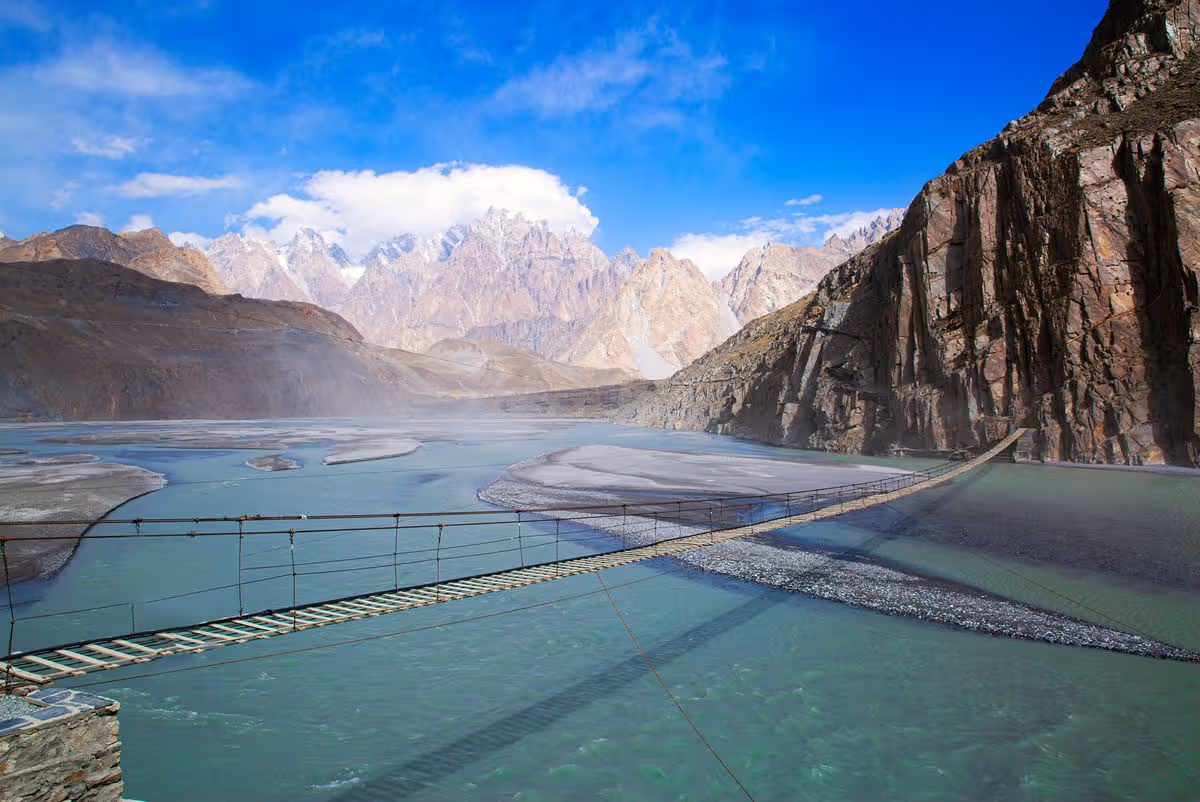
Often called the “most dangerous” in the world, the Hussaini Suspension Bridge in Pakistan is known for its high winds. Despite the title, the bridge remains a masterpiece of local engineering and has become a magnet for thrill seekers.
It was built in 1968 by local villagers of Hassaini and Zarabad using only raw materials. The 635-foot-long bridge is made of wooden planks and steel cables, held together by six main ropes that span its length.
The Hussaini Suspension Bridge was designed to provide a lifeline to transport goods and livestock across the Hunza River. Following a devastating landslide in 2010, the bridge was reconstructed.
Between the wooden planks of the bridge are larger spaces designed to resist the wobbly vibrations caused by the wind. Travel Magazine Conde Nast Traveller named the bridge as among the most dangerous in the world in 2013.
While it was built for local access, it has become popular with tourists. To visit and cross the bridge, tourists must wear life jackets.
Tragically, in July 2022, a student from Sindh reportedly died from drowning after falling from the bridge. It was sealed off while an investigation was under way, and later renovations were carried out.
Safety upgrades were implemented, including replacing the old, rotting and uneven wooden boards. The local community and authorities also worked together to tighten the steel cables.
Many tourists are still braving the crossing and have shared their experiences on TripAdvisor. One said: “What a thrilling bridge! People who have mental strength and not afraid of heights should give a try on this bridge! It’s a dare!”
Another added: “The journey to reach the bridge itself is an adventure, with winding roads and breath-taking landscapes that set the stage for the thrill to come.”
Someone else commented: “About 400 steps from one end to the other end of the bridge.
“The bridge is secure and safe. However, precautions should be taken when crossing the bridge as it is still a risk of falling accidentally. Give it a try!”
However, a fourth wrote: “Firstly, I refused to cross that bridge, but now I literally repent my decision. Looks dangerous , definitely not for people with fragile hearts like me , but its damn daring.”
Funerals will be held for Lebanese officers killed in an Israeli attack in southern Lebanon, as Beirut’s army chief headed to Pakistan on a surprise visit amid ongoing mediation efforts in the wider United States-Israel war on Iran.
The Lebanese soldiers will be laid to rest on Sunday, a day after the brigadier general, captain and soldier were killed in an Israeli strike on a military vehicle on the Khardali-Nabatieh road, in an incident the Israeli army said it was investigating.
Recommended Stories
list of 4 itemsend of list
A ceasefire agreed on April 17 was meant to halt the fighting between Israel and Hezbollah, but Israel has continued to carry out near-daily attacks, prompting retaliatory ones from the Lebanese group. The violence has taken a disproportionate toll on civilians in Lebanon, where more than 3,500 people have been killed since hostilities resumed on March 2.
A further conditional ceasefire was announced by Lebanese and Israeli envoys last week in Washington, but was rejected by Hezbollah as it did not include the group or provide for Israel’s withdrawal from southern Lebanon.
Lebanese army chief Rodolphe Haykal left on Saturday for Pakistan, which has emerged as a central mediator between the US and Iran.
The visit is notable given the insistence by Washington – and by Lebanese leaders, including the president – that ceasefire talks for Lebanon remain separate from the US-Iran negotiations mediated by Pakistan.
Fighting continues in southern Lebanon
Meanwhile, Israeli attacks hit several towns across southern Lebanon and the western Bekaa overnight, while Hezbollah said it launched rockets, artillery fire, and drone attacks against Israeli forces, including near the Beaufort Castle in Yohmor al-Shaqif.
Lebanon’s Ministry of Public Health said on Sunday that an Israeli raid on the town of Saksakiyeh a day earlier killed at least two people. The ministry added that 22 people were wounded in the attack, including three children and a woman.
Two others were wounded following an Israeli drone attack on the town of Shahabiyeh, Lebanon’s National News Agency (NNA) reported.
Israeli air attacks also hit the town of Qalawiya at dawn, and the towns of al-Qatrani, Byblos and Rihan in the Jezzine district overnight. The town of Deir Kifa in the Tyre district was also bombed, while Barashit and Chaqra in the same district were subjected to intermittent artillery shelling overnight.
NNA also reported artillery shelling in the towns of al-Mansouri and Bayt al-Sayyad in the Tyre district.
Israeli warplanes launched an attack on the town of Srifa. Local media also reported that Israeli fighter jets attacked Dweir, near Nabatieh, north of the Litani River.
Paramedics, meanwhile, continue to look for survivors under the rubble following Israeli attacks.
“The pattern is part of what is being called the Gazafication of Lebanon, or Israel using actions normalised by the Gaza genocide,” said Al Jazeera’s Nour Odeh, reporting from Ramallah in the occupied West Bank.
“The targeting of schools in southern Lebanon, just like Gaza. Bombing Lebanese hospitals and clinics, also like Gaza. And the murder of journalists. Then there’s these so-called double-tap attacks against paramedics and rescue workers. Hundreds of Palestinian and Lebanese paramedics have been killed with this unlawful practice.”
Gazafication extends to the ceasefire, too, she added.
“The ‘Yellow Line’, first introduced in Gaza, has now swallowed 60 percent of the territory. In Lebanon, the ‘Yellow Line’ now includes nearly a fifth of the country. Both invisible lines keep expanding,” said Odeh.
No choice but negotiations, says Lebanese lawmaker
Najat Aoun Saliba, an independent member of Lebanon’s parliament, meanwhile, condemned Israel’s killing of the Lebanese soldiers and said President Joseph Aoun has no choice but to enter into negotiations with Israel.
“If we don’t have negotiations, what is the alternative? Is the alternative going to war? The war is not going to give us peace,” she told Al Jazeera.
Saliba said dialogue was the only viable path given the imbalance of power between Israel and Lebanon’s armies.
“The balance of power between the armies is not to be compared. Israel has a very strong army backed up by the United States. The Lebanese Armed Forces have been sidelined by a political will for 30 years, because they wanted to strengthen the presence of Hezbollah,” she said.
The lawmaker added that Hezbollah has not been able to stop Israeli aggression.
“Hezbollah is not able to stop any of these war crimes, and it’s not able to stop any of the invasions that Israel is doing. I think with … all these massacres and destruction, I don’t think we have a choice.”
The killing of Brigadier General Wissam Sabra, Captain Elie Khoury and soldier Hussein Ghozal came at a tense moment amid broader efforts to strike a deal between the US, Iran, Hezbollah, the Lebanese government and Israel.
Lebanese President Joseph Aoun said the attack was “aimed at thwarting all efforts to reach a solution”, while Prime Minister Nawaf Salam described it as “a heinous crime and an attack on Lebanon and all Lebanese people”.
Lebanon was drawn into the Middle East war when Iran-backed Hezbollah attacked Israel on March 2, following joint US-Israeli attacks on Iran.
Tehran has made a ceasefire in Lebanon between Israel and Hezbollah a condition for any peace deal with Washington.
Karachi, Pakistan – Over a few breezy winter weeks in Karachi, boxing coach Younus Qambrani sent a steady stream of WhatsApp messages from his neighbourhood of Lyari – videos, photos, old newspaper clippings that together formed an extensive archive of how he teaches girls to throw a punch.
In one of the videos, the bearded and skullcap-clad Qambrani, 60, uses the palms of his hands and ducks as his young students practice throwing their punches. The thuds of the colliding boxing gloves and the scuff of the sneakers against the concrete floor of Qambrani’s Pak-Shaheen boxing club mask the din on the street.
Outside, motorcycles speed and sputter on narrow, labyrinthine roads, past omelettes sizzling on outdoor skillets in the many kebab bun stalls that pepper the neighbourhood of nearly 950,000 people: that is the population of Amsterdam packed into about three percent of the Dutch city’s land area.
To millions of followers of Bollywood, the Indian film industry across the border, Lyari is synonymous with brutal gang warfare waged against a perpetually grey background. It is where Bollywood’s highest grossing film of all time, Dhurandhar and its recently released sequel, Dhurandhar The Revenge are set.
The films — about a fictionalised covert mission conducted by India’s Research and Analysis Wing (R&AW) on Pakistani soil — have each earned more than $100m. In the first film, an Indian spy infiltrates Lyari’s criminal underworld and neutralises threats to India’s national security. In the sequel, the same agent continues his deep-cover operation inside Pakistan’s crime networks, again moving through Lyari’s streets.
But to Lyari locals, the neighbourhood is much more than the backdrop to blood and gore: It is a melting pot of cultures and tradition, rooted in history far deeper than Bollywood has dared to explore. It has an emerging rap and hip-hop scene, launching acts such as hip hop group, Lyari Underground, and masked rapper, Eva B, onto the national stage. The neighbourhood has also earned the nickname of Mini Brazil for being Pakistan’s mecca of football.
To be sure, Lyari has had a past rife with gang violence and unrest. Armed groups held significant influence from the mid‑2000s into the early 2010s, when battles between rival syndicates were at their peak. Gangs led by figures such as Rehman Dakait and, later, Uzair Baloch – both depicted in the Dhurandhar film and its sequel – turned parts of the neighbourhood into a militarised conflict zone. At the height of the violence, human rights groups reported about 800 people killed in Karachi in a single year, many of them in and around Lyari.
In 2012, the government launched what became known as Operation Lyari, a major crackdown in which police, backed by the Sindh Rangers paramilitary force, moved against armed groups in the area. The operation, and subsequent security campaigns, dismantled the main gang hierarchies and largely ended the era of open, large‑scale gang warfare in Lyari, even if other forms of crime persisted.
But Lyari, said social anthropologist Adeem Suhail, has always been about much more than that period of violence.
“Think of Naples or Sicily in Italy, which are among the major cultural hubs of the country (food, literature, music, etc) despite having long been associated with Mafia violence,” Suhail, an assistant professor at Pennsylvania-based Franklin and Marshall College, told Al Jazeera.
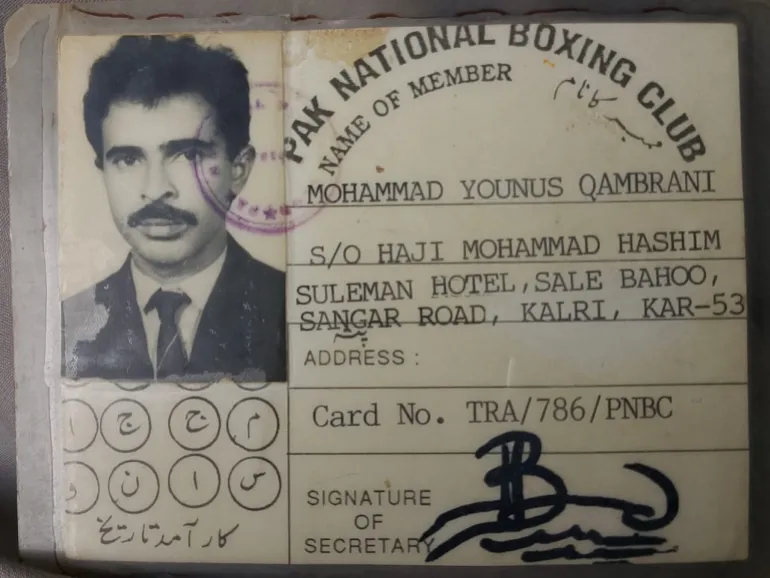
An undated picture of Qambrani’s membership card for Pak National Boxing Club. [Courtesy of Younus Qambrani]
‘Preparing for war’ — of a different kind
Qambrani has been boxing alongside his brothers for as long as he can remember. He began when he was five years old, and was introduced to the sport by his father, uncles and brothers — all boxers. Throughout his childhood, Qambrani says he was a sick and frail child. But he was determined to build muscle and throw punches like the men who had inspired him as he was growing up.
Boxing is so popular in Lyari that in 1989 boxing legend Muhammad Ali visited the neighbourhood, when he was a special guest at the Asian Games in the capital, Islamabad.
Qambrani’s high school, Haji Abdullah Haroon Government College, opened its own boxing club while he was there. He joined, but the club shut down in a few years. So he found another club a little further away and began cycling there to train.
After honing his skills there, Qambrani founded Pak Shaheen Boxing Club in 1992. “I wanted to open a club in my own area,” Qambrani said. At Pak Shaheen, he started out by teaching young boys, aged seven to 16, how to box.
A recent photo at his boxing club. [Courtesy of Younus Qambrani]
A sports enthusiast, Qambrani built friendships with coaches across the city, often visiting their training centres. At a friend’s karate classes at the YMCA (Young Men’s Christian Association) in central Karachi, he noticed young girls practicing kicks and elbow strikes shoulder-to-shoulder with boys. “If girls can do karate, why not boxing?” he wondered.
Qambrani’s students train to spar [Wania Farhan/Al Jazeera]
Soon he began voicing this question to his peers in the local boxing community, saying he wanted to start training young girls. One of them told him that “little girls have weak brains” — a remark that left Qambrani silent.
Then he went home and began looking through news reports featuring stories of girls and women boxing internationally. He would cut out the news clippings and paste them into a notebook. “My eyes were on the whole world,” he recalled. “Girls are boxing in the outside world, why not here?” he would wonder.
So he started at home: when his daughter Anum turned three, he began playfully sparring with her. She would gaze at the many photos of her father and uncles at boxing championships, slip on his medals, and traipse into the living room, mimicking the victorious poses he struck in those pictures. “She couldn’t even run properly, but she would box,” Qambrani said.
Then, in 2013, he opened the doors of his club to young girls. Anum was 16 at the time, and became its first female member.
In 2015, several of Qambrani’s students participated in the South Asian Games, the biennial multi-sport event where athletes from Bangladesh, Bhutan, India, Maldives, Nepal, Pakistan and Sri Lanka compete against each other.
A year later, Anum won a district level championship called the Jinnah First Ever Karachi Women Boxing Championship held at a Lyari stadium. In the same year, she attended a training camp for women organised by the Sindh Boxing Association. Local media reports described this camp as the country’s first government-supported boxing event held for women.
It was Qambrani’s club where Aliya Soomro, Pakistan’s first woman to win a world boxing title, began her training. Last year, Soomro took a mere 45 seconds to knock out her opponent from Thailand to win the WBA (World Boxing Association) Asia 105-pound category.
For Qambrani, though, boxing is about more than medals and trophies. To him, it’s a vital defensive skill.
“Whoever is prepared for war is prepared for peace,” he told Al Jazeera, adding that the defenceless are the ones most likely to be attacked.
With its legion of young boxers, Lyari’s not defenceless. As its reputation and image are mangled by Bollywood, those who know the neighbourhood also turn to its history for support.
An undated childhood photo of son, Munir (L) and daughter Anam [Courtesy of Younus Qambrani]
Lyari’s colonial history
It is not just the Dhurandhar films and Bollywood that Suhail, the social anthropologist, blames for what he describes as “terrible and exploitative” representations of Lyari. Journalistic and scholarly literature have been guilty too, he said.
Lyari is Karachi’s oldest recorded settlement — the earliest inhabitants of the neighbourhood came in 1728. The neighbourhood has survived British colonialism, the partition of the subcontinent, and nearly eight decades in independent Pakistan.
Suhail said Lyari had been a diverse working-class cultural hub since before the 1947 partition of British India.
Some of those working class communities were Baloch and Sindhi, because Karachi is at the tip of the southern Sindh province, which neighbours Balochistan province. Others were Marathi, Gujarati, Afghan and Siraiki migrants from labouring and artisan classes.
“This was because the British required labourers and artisans to develop Karachi into a burgeoning Indian Ocean port city.”
Suhail said that most of these labourers settled on the unplanned sides of the Lyari river, a small 50km-long seasonal river originating in the hills of Sindh, which flows through Lyari before emptying into the Arabian Sea.
“These cosmopolitan working class populations brought with them culinary traditions, dances, religious practices (multi-religious, multi-caste), songs, sports and more,” Suhail said.
He added that Lyari has a “strong cultural memory of East Africa and the Arabian Gulf, which adds to its uniqueness.” The neighbourhood is home to both Baloch and Afro-Baloch communities—people of African ancestry living in Balochistan.
Suhail explained that Lyari’s long history as a cultural hub of Karachi is often forgotten “because, after partition, the city’s demographics shifted drastically and Karachi became an Urdu-speaking Muhajir-majority city.” Muhajirs are Urdu‑speaking Muslims who migrated to Pakistan from India during and after the 1947 partition.
Sarwat Viqar, a professor of humanities at John Abbott College in Montreal, Canada, echoed Suhail’s views.
“Because Lyari has been represented one-dimensionally in the media as only a hotbed of criminality, drugs and the gang wars, what has been overlooked are the rich cultural practices that have always been part of life here,” Viqar told Al Jazeera.
Suhail added that Lyari had also consistently been at the heart of labour movements, and a base of support for reformers, anti-colonial activists and later campaigns for the rights of Pakistan’s various ethnic groups, including the Baloch, Sindhi and Pashtun communities.
“Lyari — because it was the first, most diverse, and most vibrant working-class zone as Karachi was becoming a city — also became the hub of working-class politics,” he told Al Jazeera.
But the neighbourhood’s own fortunes have also oscillated over the years.
“The degree of ‘development’ in Lyari has always been a function of how strong the working-class movement in Karachi was,” Suhail said. “When it was strong—such as in the 1930s and again in the 1970s—Lyari saw development. When ruling elites were strong, it did not.”
What Dhurandhar gets wrong
In the film, Lyari first comes into focus when a long-haired Ranveer Singh, playing undercover Indian RAW [Research and Analysis Wing] agent Jaskirat Singh Rangi, eyes the “Welcome to Lyari town” gate.
The gate looks very similar to the real one in Karachi. Other elements on screen ring familiar too: juice shop owners chanting idiosyncrasies to cajole customers; quick and garbled salams; and the somewhat unkempt colonial era architecture of old Karachi.
But then, the three-hour film’s dusty colour grading seems to wash out Lyari’s cultural depth and its vibrant subcultures.
“We can see how the obscene fetishisation of Lyari and the Baloch with violence and criminality is evident” in the film, Suhail said.
Describing Dhurandhar as “mediocre”, he said it lacks the depth of other Indian gangster films.
For example, in Ram Gopal Varma’s Satya 1998 and Anurag Kashyap’s Gangs of Wasseypur 2012, we see “culturally dense but non-apologetic depictions of Mumbaikar or Bihari gangs that understand the political economy of colonial and post-colonial state formation and how it crystallises in the gangsters portrayed,” Suhail opined.
Satya unpacks the criminal underworld of India’s metropolis Mumbai, following the titular character who arrives in Mumbai seeking a job but is falsely imprisoned and subsequently introduced to the underworld. Gangs of Wasseypur is set in a time before India’s independence in 1947 and follows power struggles, mafias and generational cycles of revenge in India’s eastern state of Jharkand.
In contrast to these films, Dhurandhar, has “heavy-handed homophobic, Islamophobic, hyper-masculine jingoism” and “the characters themselves appear to have no history at all,” Suhail added.
Unlike Lyari
Back at Qambrani’s club, 10 girls aged eight to 16 gather for an hour of sparring every day except Sunday, training for city tournaments that they compete in every two months.
Qambrani is looking to buy a folding, portable boxing ring to take school to school. His dream: to make boxing accessible to as many girls in the neighbourhood as possible. His challenge: he is struggling to find a portable ring in Pakistan and needs funding.
Dhurandhar and Bollywood do not matter at his Lyari club. Qambrani has a new generation of girl boxers to train.