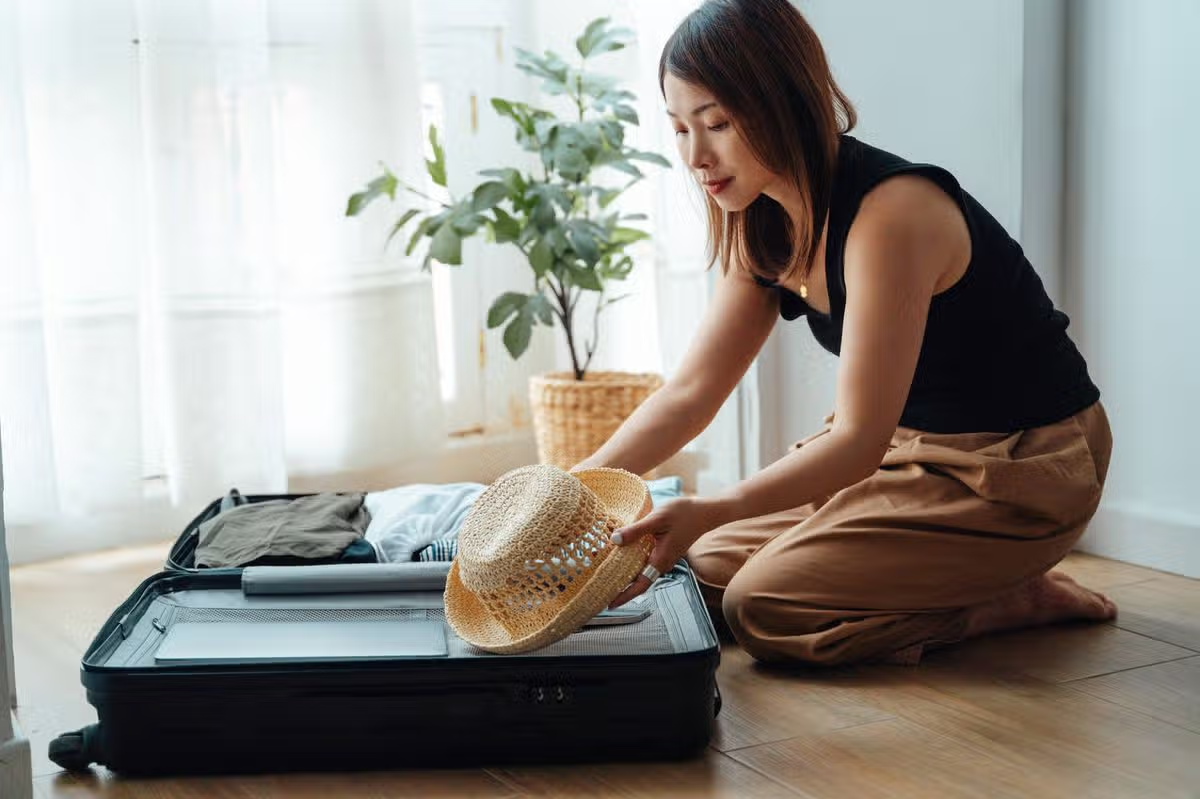
packing

How to beat Ryanair’s hand luggage rule with clever ‘Sudoku’ packing hack

TRAVELLERS heading abroad this summer can beat Ryanair’s hand luggage rule with this clever “Sudoku” packing hack.

The trick has gone viral online and whittles your wardrobe down to just the essentials.

A woman wearing glasses and a blue scarf with text overlay "5 Steps to Build a Packing Sudoku" and a grid filled with "TOP," "LAYER," and "BOTTOM" in a Sudoku-like pattern.
The Sudoku Packing hack has gone viral on social media Credit: @ thenatalieway1/TikTok
Nine folded pieces of clothing on a bed, labeled "top," "bottom," or "outerwear" with the text "Okay, let's play packing Sudoku."
Travellers need to pick just nine items to create 27 outfit combinations Credit: @thenatalieway.travel/Instagram

Anyone trying to scrimp on flights knows the frustration of added baggage fees.

While your Ryanair ticket may only cost £30, adding hold luggage can top up the bill with a £59.99 per flight.

Even a cabin bag can land you with a charge of up to £36.

So many of us try to save some cash by choosing to carry all our belongings in just one small bag, but sizing down your suitcase to this meagre amount can be tricky.

TAKING OFF

Ryanair launches sale with VERY cheap August flights for £14


DON’T BE LATE

Ryanair boss warns they WON’T wait for passengers in huge airport queues

A Ryanair flight offers a tiny 40 x 30 x 20cm bag for free, while easyJet offers a slightly larger 45 x 36 x 20cm size for hand luggage.

However, a handy travel hack might be the solution, and it’s known as “Sudoku Packing”.

The hack has blown up on TikTok and Instagram, promising to whittle your wardrobe down to just nine essential items needed for a short trip.

The trending technique first went viral earlier this year, when influencer Natalie Shaquer shared how the hack was transformative for her travels.

In her video, Natalie recommends “visualising your trip” before beginning the packing phase and taking a few moments to think through the types of outfits you’re going to need.

Then, all travellers need to do is pick three tops, three bottoms and three layering items that all harmoniously coordinate.

Layers can be anything from scarves to jackets to cardigans or jumpers, and should be picked according to the climate of the upcoming destination.

When laid out in a 3×3 grid, the Sudoku selection creates up to 27 different clothing combinations made up of a top, bottom and layer.

Natalie also recommends bringing three pairs of shoes to go with your coordinated clothing selection.

Packers are reminded that each pair of bottoms, whether trousers, a skirt or shorts, will need to work with at least two pairs of the shoes, otherwise they must go “back in the closet”.

With your clothing streamlined, you should still have plenty of space for toiletries and accessories in your bag, but this hack is likely only useful for those planning on being away for a few days.

However, travellers heading out on longer trips will likely need more than nine items of clothing, so then it may be worth forking out for hold luggage.

Source link

Packing innocent 35p item in bags or suitcases could see you stopped at airport

It might seem harmless at first glance, but it could lead to unnecessary delays

Packing for a holiday can feel like navigating a minefield, with a long list of rules on what can and can’t go in your luggage. While some banned items are obvious, others seem completely innocent at first glance – yet bringing them to the airport could still result in officials delaying your journey.

There is one everyday item that is allowed by all major airlines, including Ryanair, Jet2, TUI, easyJet and British Airways, but could still attract attention during security screening if officers are unable to identify it clearly on the scanner. To avoid unnecessary delays or having to unpack your luggage at the checkpoint, travellers are advised to pack toiletries in a way that makes them easy to inspect.

A simple bar of soap – buyable at Sainsbury’s for 35p, for example – might seem like one of the most harmless items you could take on holiday. However, it is not the soap itself that can cause concern – it is the way a solid item may appear when passing through security scanners.

Airport security staff do not routinely search luggage simply because it contains a bar of soap. However, dense items can sometimes make X-ray images harder to interpret, particularly when they are packed alongside electronics, cables or other bulky belongings. If officers cannot clearly identify an item, they may carry out additional checks before allowing passengers through.

The government information website GOV.UK says: “Airport security staff will not let anything through that they consider dangerous – even if it’s normally allowed in hand luggage.” While soap clearly is not dangerous, if a bar of soap raises an alert on the scanner, they are legally required to stop the passenger and inspect it.

The US Transport Security Agency (TSA), for instance, says passengers are often asked to separate dense items because they can “clutter bags and obstruct clear images on the X-ray machine.” When a solid block of soap, cheese, or other dense organic material blocks the scanner’s view or mimics a threat signature, protocol requires a physical bag search or chemical swab testing to clear the item.

According to GOV.UK, solid bars of soap are permitted in both hand luggage and checked baggage. Security officers can still manually inspect any item they are unable to identify clearly during the screening process, regardless of whether it is allowed.

To reduce the chances of your bag being opened, experts recommend keeping dense items easy to access and, if requested, placing them in a separate tray during screening. Avoid storing them inside thick metal tins or rigid plastic cases alongside items such as power banks, charging cables and other electronics, as this can make X-ray images harder to interpret.

It’s also important not to confuse solid soap with liquid toiletries. While bars of soap are exempt from liquid restrictions, liquid soaps, shower gels and similar products carried in hand luggage must normally be in containers holding no more than 100ml, unless you’re travelling through an airport that has introduced next-generation security scanners permitting larger liquids.

The rules apply regardless of which airline you’re flying with, as baggage screening is carried out by the airport rather than carriers such as Ryanair, Jet2, TUI, easyJet or British Airways. A manual inspection is simply a precaution and does not mean you’ve broken any rules or packed a prohibited item.

Taking a few moments to think about how you pack everyday toiletries could help make your journey through security a little smoother. Although a 35p bar of soap is perfectly legal to travel with, storing it sensibly could help avoid unnecessary delays before your holiday even begins.

Source link

Packing ‘innocent’ 10p item will see bags and suitcases seized at airport

Several major airlines including Ryanair, TUI, easyJet, British Airways and Jet2 ban this item

Preparing for a summer getaway can seem like an endless to-do list, particularly if you’re jetting off for a birthday, wedding or other special event. However, one budget-friendly item many holidaymakers pop into their suitcase could wind up being seized before they even step onto the aircraft.

Multiple major airlines, including Ryanair, TUI, easyJet, British Airways and Jet2, ban passengers from bringing party poppers. Leaving them behind could spare you needless hassle and hold-ups at the airport.

The item in question is party poppers, and despite appearing innocent, they are forbidden on most commercial flights. They may only set you back a few pence at around £2 for a pack of 20, but they must never be packed in either hand luggage or checked baggage, and doing so could lead to your bags being inspected, with the items likely seized.

This ban exists because party poppers contain a small explosive charge used to create the popping effect. Although the quantity is minuscule, aviation safety regulations classify them as explosive articles and forbid them from being transported on aircraft.

The UK Civil Aviation Authority (CAA) includes party poppers among the dangerous goods that passengers must not carry in either cabin baggage or hold luggage. The regulations also extend to other novelty explosives, including sparklers, fireworks and flares.

If security personnel find banned items during checks, they may confiscate them from your baggage before departure. Depending on the situation, travellers could also experience hold-ups while bags are inspected or further security procedures are undertaken.

Airport security regulations can differ marginally between nations and carriers, but dangerous goods rules are extensively implemented throughout the aviation sector. Passengers are therefore urged to verify both their airline’s luggage policy and official government advice prior to flying.

Party poppers are frequently packed by mistake following birthdays, weddings or other celebrations, especially when families are travelling with youngsters. While they might appear like a harmless addition to your suitcase, they are handled in the same manner as other banned explosive items under aviation safety regulations.

The government also reminds travellers that security personnel have the ultimate say on whether an item is allowed through screening. Even where an object seems innocent, it can still be confiscated if it is deemed a safety hazard or violates airport security rules.

Inspecting your baggage before heading to the airport could help prevent needless delays, extra security checks and the frustration of having belongings seized before your relaxing holiday away even gets underway.

Source link

Tourists urged to stop making 1 packing mistake that could ‘ruin holidays’

Tourists have been urged to stop making a common packing mistake as it could lead to “ruining holidays”. The advice comes as vacation season begins to kick off

The prospect of jetting off somewhere keeps most of us motivated, so the last thing anyone wants is for something to spoil their well-earned break. Yet, as many may not realise, a straightforward packing blunder could land you in trouble, and may even affect whether you’re able to fully enjoy your time away.

If you’re hoping for a smooth and stress-free trip, there’s some vital travel information you really ought to be aware of. It’s essential to steer clear of a simple packing error, as it could prove costly and seriously disrupt your holiday — something nobody wants to experience.

It’s not the first expert guidance of this nature to emerge recently, either. Previously, holidaymakers were cautioned about another common luggage blunder to avoid.

According to pharmacist Seema Khatri at Roseway Labs, the vast majority of medication-related holiday mishaps stem from a handful of easily preventable errors, with most occurring before the trip has even begun.

Seema said: “People spend weeks planning itineraries and what to take, but medication is often an afterthought. And that causes problems.”

Travelling with medication can be a minefield, as regulations differ from country to country. As a general rule, ensuring your medication is clearly labelled is always a sensible precaution.

For certain medicines, particularly injectables or controlled substances, a doctor’s letter may also be required. She added: “Always keep your medication in your carry-on luggage.

“It reduces the risk of loss, delays or temperature damage.” What you might not realise is that medication can cause problems at airports if it’s not packed and documented properly.

In fact, it can result in hold-ups, questioning, confiscation or you could even be refused permission to fly in certain situations. Issues typically occur with controlled substances, liquid medications that exceed particular limits or absent prescriptions.

To make sure you pack yours appropriately, check the regulations at your airport and in the country you’re visiting. Seema said: “Most holiday medication problems are preventable.

“With a bit of planning, you can focus on enjoying your trip instead of dealing with avoidable health issues.” That said, there are several general guidelines people ought to follow to be on the safe side.

What you need to know

Always keep medication in your hand luggage in its original, properly labelled packaging. Store a spare supply in your checked baggage in case your bags go missing.

Additionally, make sure you carry a copy of your repeat prescription and, in certain cases, a signed letter from your doctor outlining the medication, dosage and duration of travel. It’s always advisable to verify what you require before you pack your bags.

A doctor’s note is recommended for large quantities of over-the-counter medicines to prevent complications at border control. You also need to make certain that liquid medication exceeding 100ml is readily accessible, as it will probably be screened separately.

If your medication is classified as a controlled drug, such as powerful painkillers or particular sedatives, specific rules apply. Therefore, check what applies to you before you travel.

Rules can differ from country to country, so always ensure you verify this before travelling, and declare that you’re carrying medication at the airport. After all, nobody wants to face delays at security, or be refused the right to travel, because of a straightforward packing error.

Source link

These ‘magic’ compression packing cubes can double your suitcase space

Illustration of a set of black compression bags with white mesh tops and orange zipper pulls, with air compression illustrated on one bag.

IF you’re an over-packer who constantly battles to zip your suitcase shut, this Amazon find is a game-changer.

Shoppers are rushing to buy these compression packing cubes that do far more than just organise your holiday outfits – they actively squeeze your clothes down into compact bundles, too.

Compression packing cubes can save a lot more room in your suitcase than traditional ones Credit: Amazon

While regular packing cubes can save you around 15% luggage space, compression cubes can save you up to 50% – effectively giving you another half a suitcase to fill.

Travel Compression Packing Cubes, £19.99 (was £29.99)

The cubes are slashed to nearly half-price on Amazon, where you can snap them up for just £19.99 – 33% down from the usual £29.99.

These compression cubes come in handy for all sorts of holidays, whether you’re heading off backpacking or want to pack as many Ibiza party outfits as possible.

HACK IT

We’ve tested popular social media travel hacks – ones that work and ones to AVOID


PACK IT IN

Ultimate travel hacks from credit card benefits to weekday travel, survey shows

They even have a waterproof compartment to separate any dry and damp clothes from after your travels.

One pleased shopper said “These travel compression packing cubes were a game changer when I was travelling around Thailand with just a backpack.

“The sizes are really well thought out, making it easy to separate clothes, keep everything organised, and maximise space”.

Another shopper said “Really good packing cubes for the price I paid.

“Makes packing much easier and more organised. I wish I had bought them years ago!”

The packing cubes come in a 3, 4 or 7 piece set, and actively squeeze your items down to save space Credit: Amazon

Travel Compression Packing Cubes, £19.99 (was £29.99)

These packing cubes have rip-resistant double stitching and zip smoothly, even when you’ve stuffed them full.

Plus you’re even doing your bit for the environment by picking these cubes, as they’re made from recycled plastic bottles.

The compression packing cubes come in six different colours: grey, beige, blue, black, green and red.

As well as condensing down your clothing into tightly-packed bundles, packing cubes can be a great organising tool.

You can pick an item to bundle into each section – t-shirts, trousers, dresses, socks, toiletries – then pick a cube to pop each of them into.

That way when you need to grab something on holiday, you won’t be rummaging around in your suitcase – you’ll know exactly where to find it.

Using packing cubes can help you keep your suitcase organised Credit: Amazon

Travel Compression Packing Cubes, £19.99 (was £29.99)

Prices correct at time of publication.

Source link