outbreak

More than 70 medics infected with Ebola as DRC outbreak spreads ‘fast’ | Ebola News

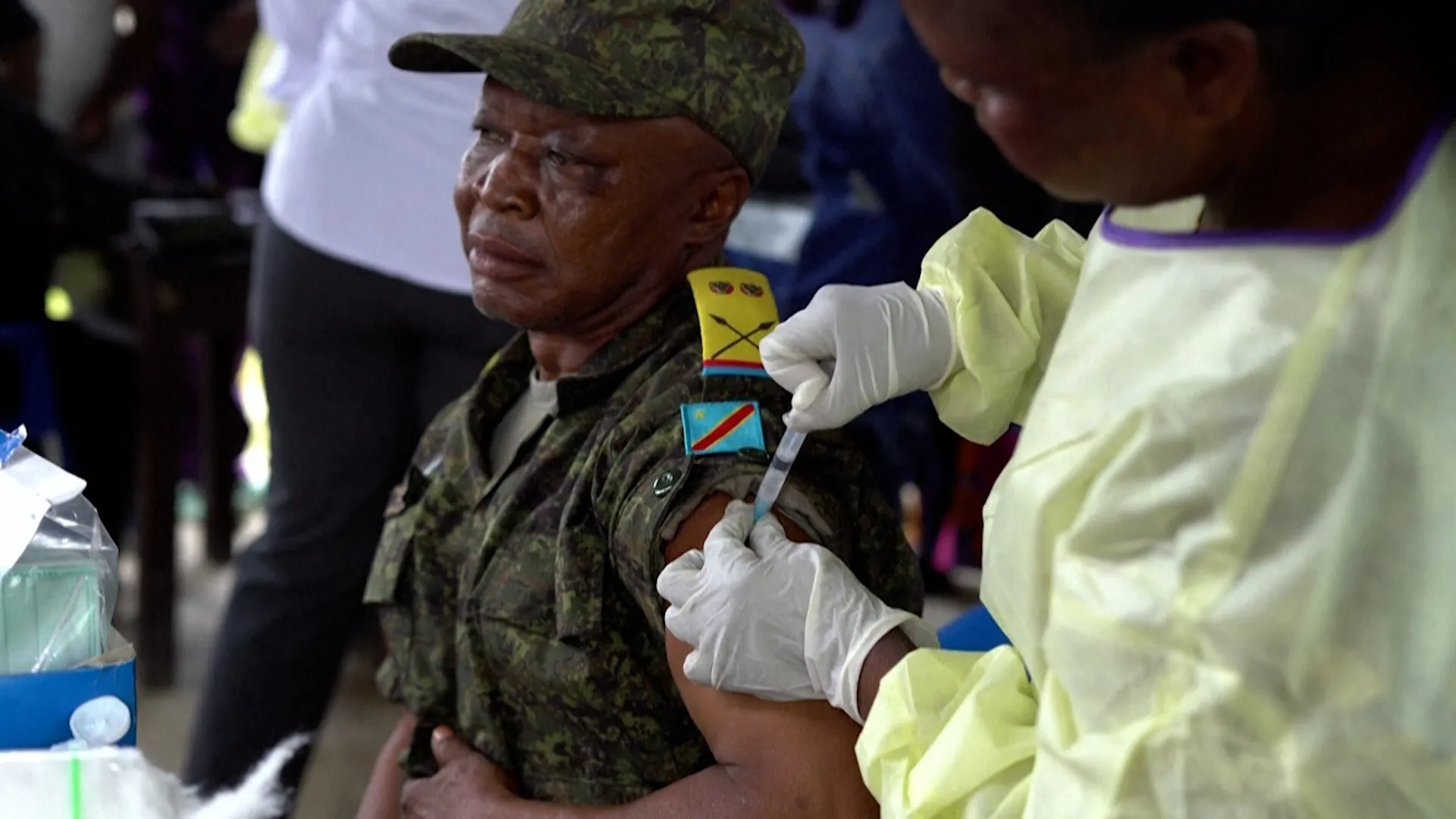
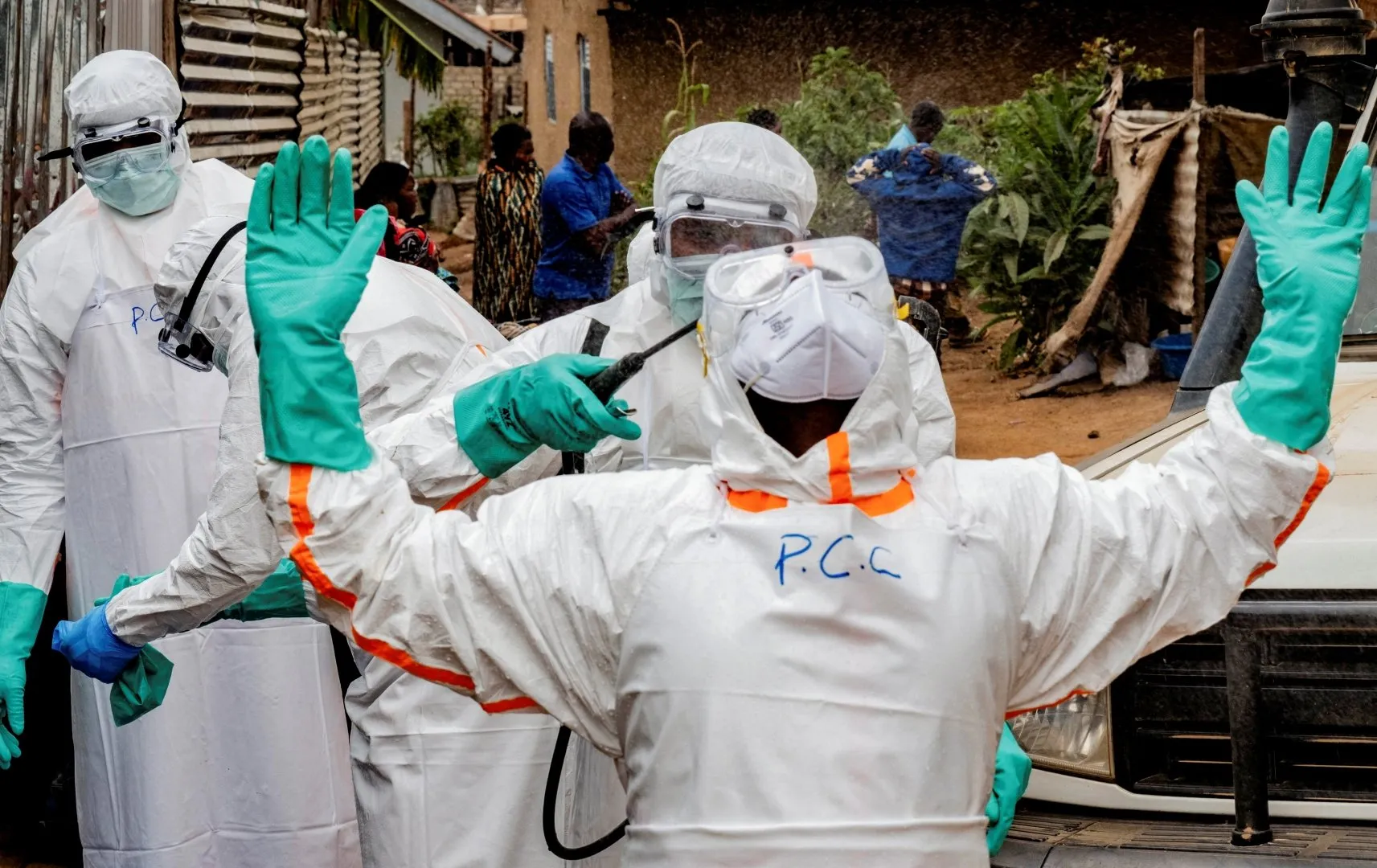
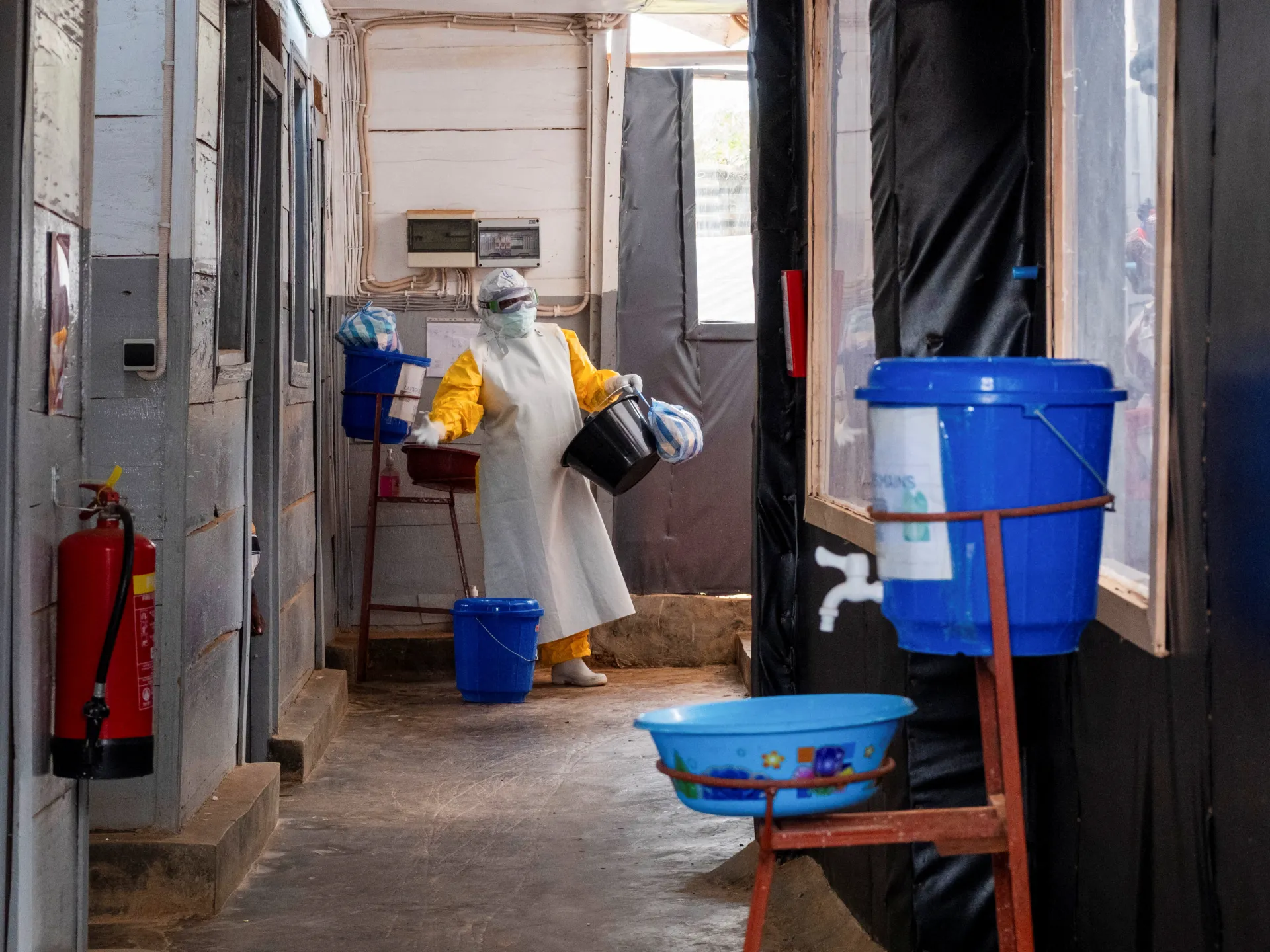
Aid cuts and poor sanitation are deepening fears that Ebola is spreading through displacement camps.

Seventeen medics have died from Ebola in the Democratic Republic of the Congo (DRC) as the death toll surpasses 200 in an outbreak tearing through a health system already weakened by years of conflict, displacement and chronic underfunding.

A senior World Health Organization (WHO) official confirmed the death toll on Friday and said that 75 healthcare workers had contracted the virus since Congolese authorities declared the outbreak on May 15 .

Recommended Stories

list of 3 itemsend of list

“The outbreak remains serious” and is “evolving so fast”, said WHO emergency director Marie Roseline Belizaire.

“It is a really high price that the system, the healthcare system, is paying, because we don’t have enough of healthcare workers in DRC,” she told reporters by video link from the outbreak epicentre in eastern DRC.

Health officials believe the rare Bundibugyo strain of Ebola had been spreading for months before the government formally announced the outbreak, leaving doctors, nurses and other medical staff exposed before they knew the virus was present.

Even now, basic protective equipment remains in short supply, with some facilities struggling to secure gloves, masks and other essentials needed to limit infection.

The DRC has one of the world’s lowest ratios of healthcare workers to population, with about 11 health workers for every 10,000 people, according to WHO data. Belizaire said China and Uganda were sending medical teams to support the response.

She added that the WHO was providing psychological support to medics who feared treating patients after seeing colleagues fall sick.

“When they are explaining to you how they live it, how they were infected … [it] can break your heart.”

Outbreak yet to reach its peak

Congolese authorities said on Thursday that the outbreak has killed 232 people and infected 896 others across 31 health zones in the country.

African Union member states have pledged nearly $1bn to respond to the emergency in eastern DRC and neighbouring Uganda, which has confirmed 19 cases and two deaths.

Health officials warn that the outbreak has not yet reached its peak.

The crisis is also raising alarm in camps for displaced people, where overcrowding, poor sanitation and resistance to testing could allow the virus to spread undetected.

At least 30 people have died since early May in Kigonze camp in Bunia in Ituri province, the epicentre of the outbreak. Camp officials described the death rate as unprecedented.

Authorities could not confirm the causes of death because patients and relatives had refused testing of both the living and the dead until Thursday, according to a camp spokesperson and aid organisation Caritas.

But witnesses and aid sources told Reuters that the dead had symptoms linked to Ebola, including headaches, fever and vomiting.

“People didn’t just die like this before,” camp spokesperson Desire Grodya Bapi told Reuters.

Kigonze is home to more than 15,000 people. The rising number of deaths there has increased fears that Ebola may be spreading among the more than five million displaced people in eastern DRC.

Aid workers say funding cuts have made the emergency more dangerous. Donors, including the United States under President Donald Trump, have reduced support for water, hygiene, and sanitation programmes, which are vital in fighting the disease spread through bodily fluids.

UN data shows funding for toilets and handwashing stations in DRC more than halved between 2024 and 2025, falling to about $38m. This year’s $80m appeal is only 21 percent funded.

DRC has hundreds of displacement camps, some housing up to 100,000 people. Ebola deaths have already been recorded in another camp in Ituri province, which accounts for more than 90 percent of nearly 900 confirmed cases.

Source link

Ebola outbreak in DR Congo could become worst in history, Africa CDC warns | Ebola News

The ⁠number of confirmed cases in ⁠the country has ​increased to 837, including 196 deaths.

The current Ebola outbreak in the Democratic Republic of Congo (DRC) could become deadlier than the worst outbreak on record, which killed more than 11,000 people, says the head of Africa’s Centres for Disease Control and Prevention (Africa CDC).

⁠The ⁠number of confirmed cases in ⁠the country has increased to 837, including 196 deaths, ‌government data showed on Tuesday.

Recommended Stories

list of 3 itemsend of list

“If we don’t stop the outbreak very soon, it will be worse than what we had in West Africa and eastern DRC,” Africa CDC Director-General Jean Kaseya said during a virtual meeting of African leaders and international donors in Burundi on Tuesday.

Speaking to Al Jazeera, Kaseya said tens of thousands of people who may have been exposed to Ebola had not yet been traced or contacted.

“The contact tracing is a major indicator and a major issue. We are missing more than 26,000 people, and we don’t know where they are, and we don’t know if they are contaminating other people.”

A ⁠Red Cross official said that the epidemic had not yet peaked in the country.

“We ⁠are afraid that this could last one year to end this disease,” Bruno Michon, operations manager for the International Federation of Red Cross and Red Crescent Societies, said.

The response has been hampered by a lack of treatment centres and by community resistance to stringent hygiene measures. Health officials said that, more than a month since ⁠the outbreak was declared, the true scale was still unknown.

The bodies of ⁠Ebola victims are highly infectious after death, and unsafe traditional burials – in which family members handle ⁠the body without proper protective equipment – are a leading driver of transmission.

So far, the continent has raised less than a fifth of the $518 million it is seeking to bolster measures to contain the outbreak, according to Burundi’s President Evariste Ndayishimiye, who also chairs the African Union.

The shortfall has raised concern among authorities, who fear the consequences could be devastating if the virus is not brought under control quickly.

There is no approved treatment or vaccine for this strain of Ebola. The World Health Organization (WHO) says it could take up to nine months for a vaccine to be ready.

Neighbouring Uganda has recorded 19 cases, 14 of them among people who had travelled from the DRC. The country has also reported two deaths.

Source link

Record daily jump in DRC Ebola outbreak takes death toll to 178 | Ebola News

The outbreak caused by the rare Bundibugyo virus strain has reached 782 confirmed cases.

The number of confirmed cases in the Democratic Republic of the Congo (DRC)’s Ebola outbreak has surged to 782, with 178 deaths, marking one of the largest daily jumps so far as regional conflict, patient escapes, and limited contact tracing undermine containment efforts.

The Ministry of Public Health confirmed 72 new cases on Sunday over the previous 24 hours, a record single-day increase, with 29 additional deaths.

Recommended Stories

list of 3 itemsend of list

The Bundibugyo virus strain has a 22.8 percent death rate so far, with 40 patients recovering, officials said.

“We remain committed to supporting affected countries until transmission is stopped. We call on partners and donors to urgently mobilise resources to strengthen the response and save lives,” Jean Kaseya, director general of the Africa Centres for Disease Control and Prevention, said on Sunday.

The outbreak stems from the rare Bundibugyo strain, which has no approved vaccine or treatment, unlike the Zaire virus responsible for the DRC’s previous 16 Ebola outbreaks.

Contact tracing coverage has plummeted to 56.5 percent, a sharp decline from the 95% target, Health Ministry officials said.

Doctors Without Borders, known by its French initials MSF, warned that “no one knows the true scale” of the outbreak due to dangerous gaps in surveillance and testing.

Eastern Ituri province remains the outbreak’s epicentre, harbouring nearly 95 percent of all confirmed cases. The virus has since breached into North Kivu and South Kivu provinces and spread across the border to Uganda.

Ituri’s humanitarian crisis exacerbates the medical emergency. Nearly one million residents have fled overlapping armed conflicts involving multiple groups, including the M23 rebel movement that controls Goma, the capital of North Kivu province. The area has endured decades of instability, with United Nations reports documenting massacres of more than 100 civilians in gold-rich Ituri villages as various factions vie for control of the region’s mineral wealth.

Thousands of artisanal miners routinely shuttle between clandestine mining sites scattered across the mineral-dense region, creating transmission hotspots that evade health monitoring. The outbreak is believed to have originated in the mining-intensive Mongbwalu Health Zone in Ituri province.

The World Health Organization announced it is ramping up diagnostic testing and contact surveillance operations. However, MSF reports a critical funding gap of $21.5m hampering response efforts.

Source link

The Ebola outbreak the world isn’t paying attention to | News

A deadly Ebola outbreak in the DRC is spreading across borders, with no approved vaccine or treatment for this strain.

A fast-growing Ebola outbreak in the Democratic Republic of the Congo has crossed borders, raising alarms far beyond Central Africa. This time, the virus is a strain with no approved vaccine or treatment. As cases rise and governments scramble to respond, can the outbreak be contained before it spreads further?

In this episode: 

  • Catherine Soi (@cate_soi), Al Jazeera Correspondent

Episode credits:

This episode was produced by Marcos Bartolomé and Sarí el-Khalili with Spencer Cline, Tamara Khandaker, Jana Dabliz, and our host, Malika Bilal. It was edited by Tamara Khandaker. 

Our sound designer is Alex Roldan. Rick Rush mixed this episode. Our video editors are Hisham Abu Salah and Mohannad al-Melhem. Alexandra Locke is The Take’s executive producer. 

Connect with us:

@AJEPodcasts on X, Instagram, Facebook, and YouTube


Source link

Five Children Killed As DRC Leaves Schools  Open Amid Ebola Outbreak 

The government of the Democratic Republic of Congo (DRC) has vowed not to shut down schools in Ituri province, despite the ongoing Ebola outbreak, which has already killed five schoolchildren since the epidemic began. The government announced the decision on Thursday, May 28, during a press briefing by the Minister of Public Health, Roger Kamba. 

Roger noted at the press briefing that the government’s focus is on enhancing preventive measures in schools rather than shutting them down. 

“We are not going to close schools. Our priority is to implement preventive measures to avoid further hardships for the children,” the Minister insisted. He expressed concern over the five schoolchildren who lost their lives, noting that many of these fatalities were related to self-medication and delays in accessing medical care.

Meanwhile, Congolese health officials had urged families to refrain from treating suspected cases at home and to seek medical help promptly. The officials warned amid heightened health monitoring in Ituri, where local authorities and partners are ramping up awareness campaigns to curb the spread of the virus.

The current outbreak spans three provinces: Ituri, South Kivu, and North Kivu, affecting 13 health zones. As of May 26, Ituri province reported 16 new confirmed cases, bringing the total to 121 confirmed cases and 17 deaths. “We know the outbreak in the DR Congo is more extensive, with over 900 suspected cases and 220 suspected deaths,” stated WHO Director General Tedros Ghebreyesus.

Tedros had earlier warned that the current Ebola epidemic affecting parts of the DRC  is attributed to the Bundibugyo strain of the virus, stressing that there is currently no approved vaccine or treatment available. While discussing the troubling elements contributing to the Ebola outbreak in the DRC, Tedros said that, unlike earlier strains such as Zaire Ebola, which have effective medical solutions, the Bundibugyo strain poses a significant challenge due to the absence of preventive vaccines and effective treatments. 

The lack of medical options raises serious epidemiological concerns, with the WHO director reporting around 600 suspected cases and 139 fatalities. The numbers are likely to increase, as the virus may have been spreading undetected for some time. 

The virus has infiltrated multiple urban areas, and healthcare workers have also been impacted, increasing the risk of transmission nationwide. The situation is further complicated by regional security issues, particularly in Ituri province, which has faced significant violence since late 2025, displacing thousands of people. This area is a resource-rich mining zone with a highly mobile population, contributing to a heightened risk of virus spread.

Given the lack of validated treatments, however,  the WHO is investigating potential vaccines and therapeutics for widespread use. Tedros has called upon the international community to take action, stressing that the five identified risk factors, including population movement, transmission within health facilities, and urban expansion, could collectively worsen the epidemic’s impact on public health. 

The Democratic Republic of Congo (DRC) government has decided to keep schools open in Ituri province amid an ongoing Ebola outbreak, focusing instead on implementing preventive measures to avoid further hardships for children. Health authorities urge families to seek immediate medical help instead of self-medicating and are enhancing awareness campaigns to contain the virus spread.

The outbreak, affecting the provinces of Ituri, South Kivu, and North Kivu, has resulted in 121 confirmed cases and 17 deaths in Ituri alone. The WHO highlights the difficulty posed by the Bundibugyo Ebola strain, which currently lacks an approved vaccine or treatment. The virus is spreading in urban areas and impacting healthcare workers, compounded by regional violence and population mobility in the resource-rich Ituri, increasing transmission risks.

The WHO stresses the need for international intervention, with ongoing investigations into potential vaccines and therapeutics. The identified risk factors — including population movement, transmission in health facilities, and urban expansion — threaten to exacerbate the epidemic’s public health impact.

Source link

Women bear the brunt of DRC’s Ebola outbreak | Ebola News

NewsFeed

Women in eastern Democratic Republic of the Congo are disproportionately impacted by Ebola as shortages of protective gear amid funding cuts accelerate the spread of disease. Al Jazeera’s Imogen Kimber reports how these caregivers to the living and the dead are most at risk.

Source link

Foreign Office issues travel warning for 3 countries amidst Ebola outbreak

The Foreign Office has updated its travel advice for Brits to a number of destinations as a new Ebola outbreak has been declared in the Democratic Republic of Congo

The Foreign Office has updated its travel advice for a number of countries after an Ebola outbreak earlier this month in the Democratic Republic of Congo (DRC).

On May 15, the country’s Ministry of Health confirmed an outbreak of Ebola Bundibugyo in the North-Eastern Ituri Province, while cases have also been confirmed in Uganda. The World Health Organisation (WHO) has since declared Ebola in the Democratic Republic of Congo and Uganda a Public Health Emergency of International Concern.

As a result, a number of destinations to introduce stricter measures for travellers from health screenings for foreign nationals to quarantine for residents in certain cases.

For example, Kenya has introduced enhanced health screenings for passengers arriving from Uganda, Ethiopia, and DRC, while Tanzania has also introduced increase public health measures for incoming travellers.

Now the Foreign Office has updated its travel advice for Uganda, Angola and the Central African Republic, with warnings around new health screenings and entry requirements for anyone travelling to those destinations.

In its Angola advice, it warns: “On 15 May the Democratic Republic of Congo Ministry of Health announced an outbreak of Ebola Bundibugyo in the North-Eastern Ituri Province. Read more about the Ebola outbreak on TravelHealth Pro and see information on Ebola and similar diseases. World Health Organisation (WHO) have declared this a Public Health Emergency of International Concern.

Due to the outbreak, you may experience heightened health screening at international borders in the region. Check entry requirements for the country you’re travelling to or transiting.”

The Foreign Office has already been advising “against all travel to parts of Central African Republic” before the Ebola outbreak in the DRC and Uganda, but has updated its advice due to the country sharing a border with the DRC.

Virginia Messina, Group CEO of African Travel and Tourism Association (ATTA), said: “Established protocols are in place within countries bordering the DRC and as a result tourism operations and business trips across the wider African continent continue normally. As of 27 May, no other cases have been detected outside of Uganda and DRC. The risk to travellers on standard itineraries outside affected areas remains very low, and it’s important to highlight that Ebola is not easily transmitted through casual contact.

“However, travel rules and screening measures may change quickly. The WHO (World Health Organisation) and the European Centre for Disease Prevention and Control (ECDC) are scaling up efforts to contain the virus but continue to advise against blanket travel restrictions and neither the UK, nor any European country has introduced entry bans.”

Source link

Ebola outbreak disrupts life along the DRC-Uganda border | Newsfeed

NewsFeed

With almost 750 suspected Ebola cases in the DRC, health measures intensified along the DRC–Uganda border. At the busy Mpondwe crossing near outbreak zones in Beni, authorities deployed health workers and shut weekly border markets, measures that residents say are threatening their livelihoods.

Source link

DR Congo cancel World Cup training camp in Kinshasa over Ebola outbreak | World Cup 2026 News

DRC’s public sendoff in the capital was also cancelled before their departure for the FIFA World Cup.

The Democratic Republic of the Congo (DRC) football team have cancelled a three-day World Cup preparation training camp and a planned public farewell to fans in the capital, Kinshasa, because of an Ebola outbreak in the east of the country.

DRC are scheduled to play World Cup warm-up games against Denmark in Liege, Belgium, on June 3, and Chile in southern Spain on June 9. Both matches are going ahead as planned, team spokesman Jerry Kalemo told The Associated Press on Wednesday.

Recommended Stories

list of 4 itemsend of list

“There were three stages of preparation: In Kinshasa to say goodbye to the public, Belgium and Spain with two friendly matches against Denmark in Liege and Chile in Spain, and the third stage from June 11 in Houston, United States. Only one stage was canceled – the one in Kinshasa,” Kalemo said.

The team’s pre-tournament preparations will now take place elsewhere after an outbreak of a rare type of Ebola known as Bundibugyo, which is thought to have killed more than 130 people and caused nearly 600 suspected cases.

The World Health Organization has declared it a public health emergency of international concern.

All of the DRC players and the team’s French coach, Sebastien Desabre, are based outside of the central African country, with most of them playing in France.

A number of team staff who are based in DRC “are leaving in the next hours”, Kalemo said.

Football’s governing body FIFA issued a statement that “it is aware of and monitoring the situation regarding an Ebola outbreak and is in close communication with the DRC Football Association to ensure that the team are made aware of all medical and security guidance.”

The American Centers for Disease Control and Prevention said this week that the US would ban the entry of all foreign nationals who had been in DRC, Uganda and South Sudan within the past three weeks. The ban lasts for 30 days.

A US official said the Congolese World Cup team would not be affected by the CDC entry ban because they had been training in Europe for the past several weeks. That means team members, coaches and other officials who have not returned to DRC in the past three weeks would not be subject to the entry ban, according to the official who spoke on condition of anonymity because the policy has not been publicly announced.

Those members of the Congolese World Cup delegation who did return to DRC during the 21 days will be subject to the same quarantine requirements as US citizens seeking to return from affected countries, according to the official. That exception will not apply to Congolese fans who want to attend the World Cup, the official said.

The White House World Cup Task Force, housed under the Department of Homeland Security, stressed that it is “coordinating closely” with various agencies on health and security matters and that the government is “closely monitoring” the outbreak.

DRC, who qualified for the World Cup after winning a playoff tournament in Mexico, have been drawn in Group K. They face Portugal in their opening game in Houston on June 17.

The Leopards then face Colombia in Guadalajara on June 23 before playing Uzbekistan in Atlanta for their final group game on June 27.

DRC’s first World Cup qualification since 1974, when the country was called Zaire, led to scenes of jubilation across the nation, which has been battered by decades of conflict.

Source link

Fear grips eastern DR Congo amid deadly Ebola outbreak | Ebola

NewsFeed

“I am afraid of dying.” From Bukavu to Kinshasa, concern is spreading among residents and street vendors as Ebola cases rise. In cities hundreds of miles apart, people are wearing face masks and calling for stronger protections from the latest outbreak in DR Congo.

Source link

Death Toll Rises to 118 in Fresh Ebola Outbreak in Eastern DRC

The recent Ebola outbreak in the eastern Democratic Republic of Congo (DRC) has resulted in a rising death toll, reaching 118 fatalities on Monday, May 18, which is a significant jump from the 80 deaths recorded just two days earlier. This outbreak is the 17th recorded Ebola virus epidemic in the DRC and has been described as a matter of international emergency by the World Health Organisation (WHO).

Patrick Muyaya, the DRC government spokesperson, announced that two additional health zones have been identified as impacted by the virus. These include Nyankunde in the Irumu territory of Ituri province. A suspected case has also emerged in Goma, the chief town of North Kivu.

The outbreak is now affecting multiple geographic areas, including Mongwalu, Rwampara, Bunia, Nyankunde in Ituri, as well as Butembo-Katwa and Goma in North Kivu. 

Butembo, a commercial town in North Kivu, was severely impacted during the Ebola Zaire strain outbreak from 2018 to 2020. Goma, which has been under the control of the M23 rebels since early 2025, serves as a significant regional transit hub on the border with Rwanda and Uganda.

The Bundibugyo Ebola strain, noted as the 17th epidemic in the DRC, was declared on May 15. Complete sequencing of the viral genome confirms that it is a genetically distinct variant from previous Bundibugyo outbreaks in 2007 and 2012, originating directly from an animal reserve, according to Jean-Jacques Muyembe, director of the DRC National Institute of Biomedical Research.

On May 17, after the WHO declared the epidemic an international public health emergency, the British organisation Oxfam also estimated that the global number of infections currently stands at 400.

The recent Ebola outbreak in the eastern Democratic Republic of Congo (DRC) has seen a significant rise in fatalities, reaching 118 deaths. It marks the 17th epidemic in the region and has been declared an international emergency by the World Health Organisation.

The outbreak affects several areas, including Nyankunde, Goma, Mongwalu, Rwampara, and Bunia. The outbreak was declared on May 15, involving a genetically distinct Bundibugyo strain.

According to WHO, the global infection count is around 400, indicating a need for coordinated health measures.

Source link

CDC restricts people traveling to U.S. from three African nations amid Ebola outbreak

Local officials the Democratic Republic of the Congo on Sunday updated reporters on the Bundibugyo Ebola virus outbreak there, which has caused the WHO to declare it a health emergency of international concern and the United States to enacte travel restrictions. Photo by Marie Jeanne Munyerenkana/EPA

May 18 (UPI) — The U.S. Centers for Disease Control and Prevention on Monday restricted non-U.S. passport holders from entering the United States if they have been in Uganda, the Democratic Republic of the Congo or South Sudan in the past 21 days.

The agency made the announcement as there have at least 346 cases and 88 deaths in the DRC, on top of several cases that have been confirmed in nearby nations in people who been there, the CDC said over the weekend.

The CDC said that is coordinating with various agencies and companies to manage travelers who have been exposed to Ebola as it also deploys employees to support containment of the outbreak in the three nations.

“CDC assess the immediate risk to the general U.S. public as low, but we will continue to evaluate the evolving situation and may adjust public health measures as additional information becomes available,” the agency said in a situation summary.

In the last five days, the World Health Organization confirmed that the Ebola virus circulating in the three countries right now is the Bundibuyo virus, one of four known strains that have affected humans since Ebola was discovered in mid-1970s.

Although there is an approved, licensed vaccine against Ebola which has successfully been used to quell outbreaks, the vaccine — called Ervebo — only protects against acquisition of the Zaire species of Ebola virus, making it useless in the current outbreak, according to the CDC.

WHO on Saturday declared the outbreak a public health emergency of international concern.

In its update, WHO said that there are “significant uncertainties to the true number of infected persons and geographic spread associated with this event at the present time. In addition, there is limited understanding of the epidemiologic links with known or suspected cases.”

Ebola spreads from wild animals to humans and from human to human through direct contact with blood or other bodily fluids from infected individuals, and carries a case fatality rate of roughly 50%.

A number of affected Americans have reportedly been exposed to the virus during the outbreak.

The CDC has recommended that people who have traveled through the two countries in the last 21 days should immediately seek medical attention if they develop Ebola symptoms, which can include fever, weakness, vomiting, diarrhea or unexplained bleeding.

In addition to roughly 30 CDC employees dispatched to the region, and will join officials from several other global and regional health agencies, the WHO is expected to convene an emergency committee to advise the agency’s director-general on its response the outbreak.

Source link

Will the latest Ebola outbreak in DR Congo and Uganda spread further? | Health News

The World Health Organization declares the epidemic a global health emergency.

It’s a global health crisis – not a pandemic.

But the World Health Organization is warning that the Ebola outbreak in the Democratic Republic of the Congo and neighbouring Uganda could be much larger than what has been detected so far.

The global health body is advising countries to activate national disaster mechanisms and introduce cross-border and internal screening.

Presenter: James Bays

Guests:

Ariel Kestens – Head of the Kinshasa delegation, International Federation of Red Cross and Red Crescent Societies

Dr Margaret Harris – Lecturer at the United Nations Institute for Training and Research

Dr Ahmed Ogwell Ouma – Former deputy director-general of the Africa Centres for Disease Control and Prevention

Source link

DRC struggling to contain Ebola outbreak as cases spread | News

NewsFeed

The Democratic Republic of Congo has faced repeated Ebola outbreaks, but insecurity in the eastern part of the country is making this most recent outbreak difficult to control.

Neighbouring countries have already reported some cases, and the World Health Organization has said the outbreak’s real impact is yet to be seen.
The Democratic Republic of Congo has faced repeated Ebola outbreaks, but insecurity in the eastern part of the country is making this most recent outbreak difficult to control.

Neighbouring countries have already reported some cases, and the World Health Organization has said the outbreak’s real impact is yet to be seen.
Al Jazeera’s Hamza Mohamed explains.

Source link

Ebola Outbreak in Congo and Uganda 2026: What We Know So Far About Cases, Spread, and Response

The World Health Organization (WHO) has declared an Ebola outbreak in the Democratic Republic of Congo (DRC) and Uganda as a public health emergency of international concern. This outbreak is caused by the Bundibugyo strain of the virus, which is less understood than the Zaire strain and lacks effective treatments or vaccines. The WHO notes that while this outbreak does not qualify as a pandemic emergency, countries bordering the DRC are at high risk for spread.

Ebola is a severe virus that causes symptoms like fever, body aches, vomiting, and diarrhea, spreading through contact with infected individuals or materials. The DRC has experienced 17 outbreaks of Ebola since it was first discovered in 1976.

Currently, the outbreak in the DRC is the most severe, with the WHO reporting eight confirmed cases, 80 suspected deaths, and 246 suspected infections. Goma, a town in the DRC, has reported a confirmed case, and Uganda has also identified a second case. The true number of infections and the outbreak’s geographic spread are still uncertain, according to the WHO.

With information from Reuters

Source link

WHO declares Ebola outbreak in DRC a global health emergency | World Health Organization News

An Ebola outbreak caused by the rare Bundibugyo strain has killed dozens in Democratic Republic of the Congo and is spreading into Uganda, raising fears of regional transmission. Health officials say instability and shared borders are complicating containment efforts as the World Health Organization declares a global health emergency.

Source link

Democratic Republic of Congo declares Ebola outbreak; 65 people killed

A handout photo made available by the World Health Organization shows temperature screening at Mpondwe border point with the Democratic Republic of Congo, near Bwera, Uganda, in May 2019. The Democratic Republic of Congo declared an Ebola outbreak on Friday as 65 people have died from the disease in the country’s eastern region. File Photo by the World Health Organization/EPA-EFE

May 15 (UPI) — The Democratic Republic of Congo declared an Ebola outbreak on Friday as 65 people have died from the disease in the country’s eastern region.

There have been about 246 cases reported, many of them in the Ituri province’s small mining towns of Mongbwalu and Rwampara. The Africa Centres for Disease Control and Prevention said in a statement Friday that it is meeting with DRC, Ugandan and South Sudanese leaders to prepare a response to the outbreak.

Uganda and South Sudan border the Ituri province.

Africa CDC said that the DRC’s national research laboratory has detected Ebola in 13 of 20 samples it has tested.

There have been 16 prior Ebola outbreaks in the DRC since 1976 when it first identified the virus within its borders. Vaccines are available for the Zaire strain. Africa CDC said that early testing indicates the current strain is not the Zaire strain.

“Africa CDC stands in solidarity with the government and people of the Democratic Republic of the Congo as they respond to this outbreak,” Dr. Jean Kaseya, director general of Africa CDC, said in a statement. “Given the high population movement between affected areas and neighboring countries, rapid regional coordination is essential.”

The mining towns where the outbreak is centered experience a lot of inbound and outbound traffic, raising concerns about the disease spreading further.

Ebola is a severe illness with a high fatality rate in humans, reaching as high as 90% in some cases, the World Health Organization says.

Infection can be spread by direct contact with a person who is infected or object surfaces that are contaminated with bodily fluids from a person who is sick or has died from the disease.

The Ebola virus can incubate between two and 21 days. Symptoms include fever, fatigue, malaise, muscle pain, headache and sore throat, before progressing to vomiting, diarrhea, abdominal pain, rash and symptoms related to impaired kidney and liver functions.

There were 64 cases of Ebola reported in the DRC last year, with 45 deaths, a 70% rate of fatality, the U.S. Centers for Disease Control and Prevention said. That outbreak occurred from September to December in the remote Bulape health zone in the Kasai province, which has a relatively low population density.

Source link

France allows asymptomatic passengers off new cruise ship struck by stomach bug outbreak

Passengers unaffected by an illness outbreak on a British cruise ship have been allowed off the ship in Bordeaux, while authorities confirmed the cause of the outbreak is norovirus, a nasty stomach bug that spreads easily.

French authorities had initially ordered over 1,700 passengers and crew on The Ambition cruise ship to remain on board, but then decided late Wednesday to let those unaffected disembark. One passenger was spotted raising his arms in triumph while leaving the vessel.

It was not immediately clear how many left the ship.

French authorities said there is no link to a deadly hantavirus outbreak on a Dutch vessel that has put European health authorities on alert in recent weeks.

The Ambition was midway through a 14-night cruise from Belfast and Liverpool, with scheduled stops in northern Spain and along France’s Atlantic coast when it was struck by the outbreak. It reached Bordeaux on Tuesday evening, according to the operator, Ambassador Cruise Line. It was not immediately clear if or when it would resume its journey.

Samples analyzed at Bordeaux University Hospital confirmed an outbreak of norovirus. Local authorities said at this stage no serious cases have been reported and that sick passengers were cared for onboard by the ship’s medical team.

The U.S. Centers for Disease Control and Prevention, which tracks outbreaks on voyages that call on U.S. and foreign ports, recorded 23 gastrointestinal outbreaks on cruise ships last year. Most were caused by norovirus, including a new strain.

Ambassador Cruise Line, a British operator catering to passengers over 50, was founded in 2021.

Source link