Organizers

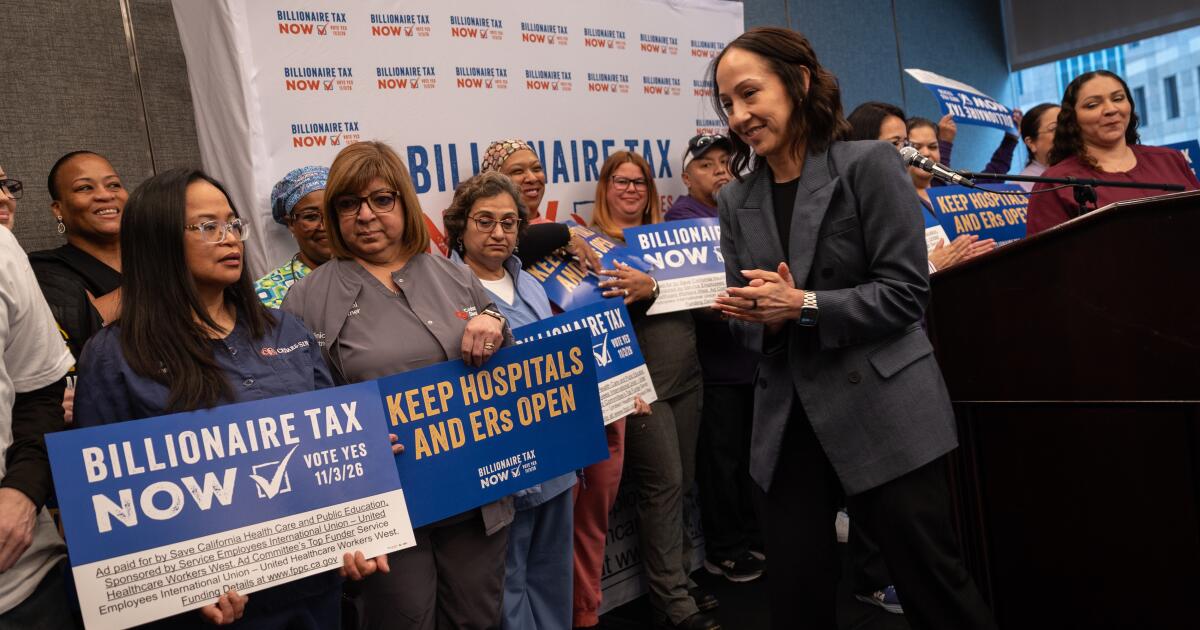
Labor organizers spearheading California billionaire tax rebuffed by parent union

One of California’s most powerful labor unions declined to endorse a proposed state billionaires tax, a blow to its backers and a sign of simmering divisions on the left over the controversial ballot measure.

The executive board for Service Employees International Union California voted Wednesday to take a neutral position on the tax, which will appear on the November ballot as Proposition 40. It would impose a one-time, 5% tax on the assets of billionaires who resided in the state as of Jan. 1, 2026.

In a statement, the 750,000-member union noted revenue from the “one-time tax proposal [is] dedicated 90% to healthcare,” echoing concerns from other unions opposed to the measure. Teacher, police and firefighter unions argue the tax would largely benefit the healthcare sector and fear it would destabilize the state budget and, along with it, services such as education and public safety.

SEIU California is a parent organization of SEIU-United Healthcare Workers West, the union that crafted the measure and moved to put it on the ballot before securing broad support from other labor groups.

SEIU-UHW President Dave Regan said he pushed the tax to backfill an estimated $100 billion in cuts to healthcare and food assistance programs that California is expected to shoulder under the One Big Beautiful Bill Act signed by President Trump last year.

“Trump’s ‘Big, Ugly Bill’ slashed funding for healthcare in California to pay for more billionaire tax breaks. Now, millions of Californians are losing their health coverage, and millions more are being forced to pay skyrocketing costs,” SEIU-UHW Press Secretary Renee Saldana wrote in a statement to The Times.

Saldana pointed to an internal poll showing 70% of union members in California would support the billionaire tax, adding: “We’re confident that SEIU members will be joining millions of their fellow Californians and voting YES on Prop. 40 this November to protect healthcare, keep hospitals and clinics open, and stand with California working families.”

In negotiations with Gov. Gavin Newsom last month, Regan offered to pull the tax from the ballot in exchange for concessions for his union, including help securing contracts at several medical facilities around the state, two sources told The Times. Regan denies making the demand, and said the proposal is meant to solve an impending “catastrophe in California’s healthcare system.”

Several unions and Democratic allies, including Planned Parenthood Affiliates of California, argue the one-time tax is the wrong solution for the cuts, which are unlikely to be reversed while Republicans hold power in Washington.

SEIU California said its members are focused on “a multi-year campaign to secure California’s fiscal foundation with ongoing revenue,” including an effort to tax large companies that pay wages low enough that their workers rely on public benefits.

Surrounded by members of the SEIU California executive board, Newsom this month signed a bill punting the “Fair Share” measure to next year, when a new governor will take office.

Some labor unions and elected Democrats worry that, in the long run, the proposed billionaire tax will hurt the state budget — which raises more money from wealthy people taxed at higher rates — by pushing rich Californians to move to other states.

Some already have. Google co-founder Sergey Brin last year moved to the Nevada side of Lake Tahoe to preemptively avoid the tax, and has pumped $82 million into a committee fighting Proposition 40.

Newsom, a likely 2028 presidential contender, has begun arguing for a federal wealth tax that the rich could not escape by moving to a new state.

“You may not be able to pick up and move to Texas or Florida to shelter your income from taxation, but I promise you that billionaires can, and do,” he wrote on Substack in June. “The fight belongs at the federal level, where this broken system was created in the first place.”

SEIU California on Wednesday also announced “strong opposition” to Proposition 39, a proposed voter ID measure; and Proposition 43, which would make it harder for local governments to raise taxes.

Source link

D.C.’s fireworks show for July 4 will start later, last longer, organizers say

June 30 (UPI) — This year’s July 4 fireworks display in Washington, D.C.,will be the largest ever held there, organizers said Tuesday.

The pyrotechnics on the National Mall will also start later as the capital marks the nation’s 250th anniversary.

Jeff Carroll, interim chief of the D.C. Metropolitan Police Department, said the holiday will have “the largest display of fireworks our city has ever seen,” CBS News reported.

A representative for Freedom 250, the public-private partnership established by the Trump administration for the anniversary, said the fireworks will not begin until 10:30 p.m. and may start as late as 11 p.m., The Washington Post reported. Usually, the fireworks display starts about 9:30 p.m. However, Trump has said that he’ll speak at 9 p.m., calling the event “a rally.”

While the fireworks are usually about 17 to 25 minutes long, they are expected to be about 40 minutes long Saturday, The Post said. The event is also expected to include hours of military flyovers earlier in the day.

The event also has new rules banning attendees from bringing coolers, chairs, bags and more than one bottle of water. Tara McLeese, special agent in charge of the Secret Service’s Washington field office, said those who plan to watch the fireworks from the Washington Monument grounds should expect “TSA-style” security, CBS News reported.

As of Tuesday, the predicted high for Saturday in Washington, D.C., is 101 degrees, according to The Weather Channel. Record-breaking heat is expected to affect much of the United States this week.

A Freedom 250 representative said there will be four free hydration stations at the event and that organizers were “closely monitoring conditions.”

Stephen Vitale, CEO of Pyrotecnico, the company putting on the 2026 fireworks show, said it plans to set off more than 850,000 fireworks from 10 locations around the area, The Post reported. Vitale said the typical July 4 show over the National Mall has about 20,000 fireworks.

“Size always helps, but it’s about the beauty and the memories that people will have for generations,” Vitale said. “Fireworks are magical to people, and we help people walk away believing that’s the best fireworks display that they have seen or ever will see.”

Officials at Ronald Reagan Washington National Airport said July 17 that it is expected to be closed July 4, with no scheduled flights toor from the airport after noon. They cited the flyovers and other aerial displays.

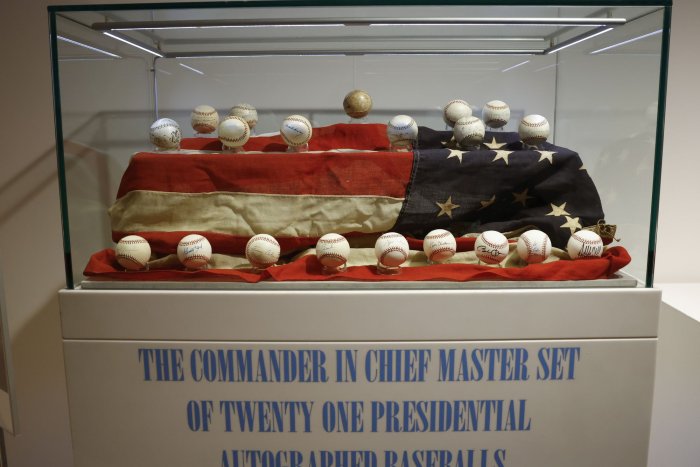
A collection of baseballs signed by former United States presidents is on display at a press preview event for Christie’s free “America at 250: Important Artifacts and Documents of History” exhibit in New York City on June 25, 2026. Photo by John Angelillo/UPI | License Photo

Source link