Olympic

Casey Wasserman to sell talent agency, stay on L.A. Olympic Committee

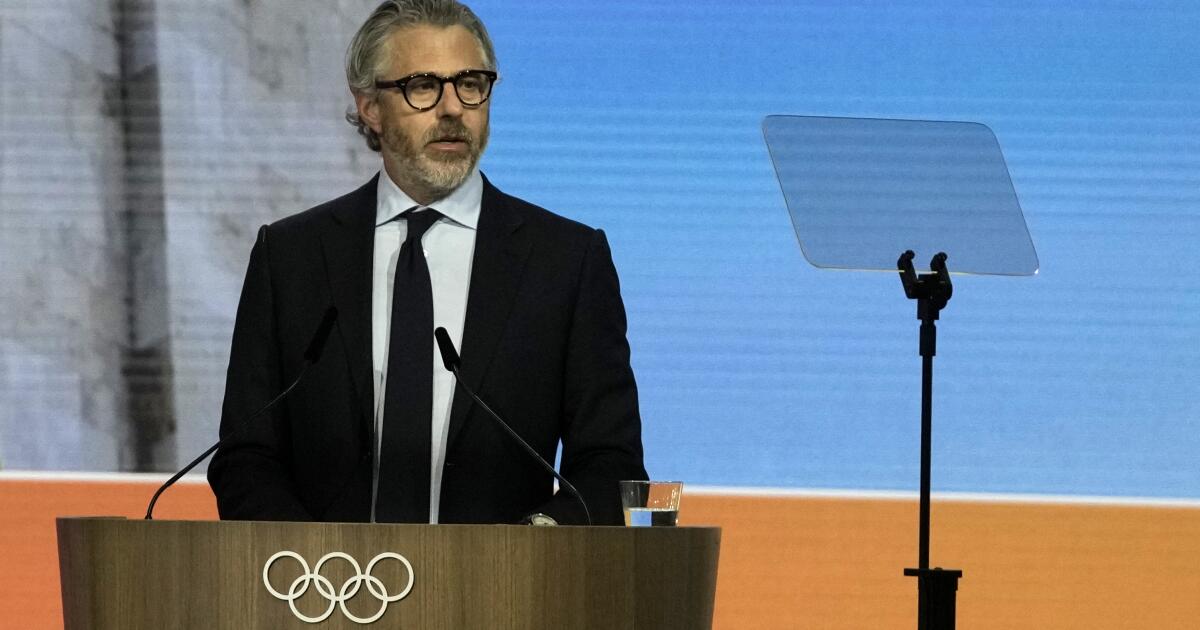
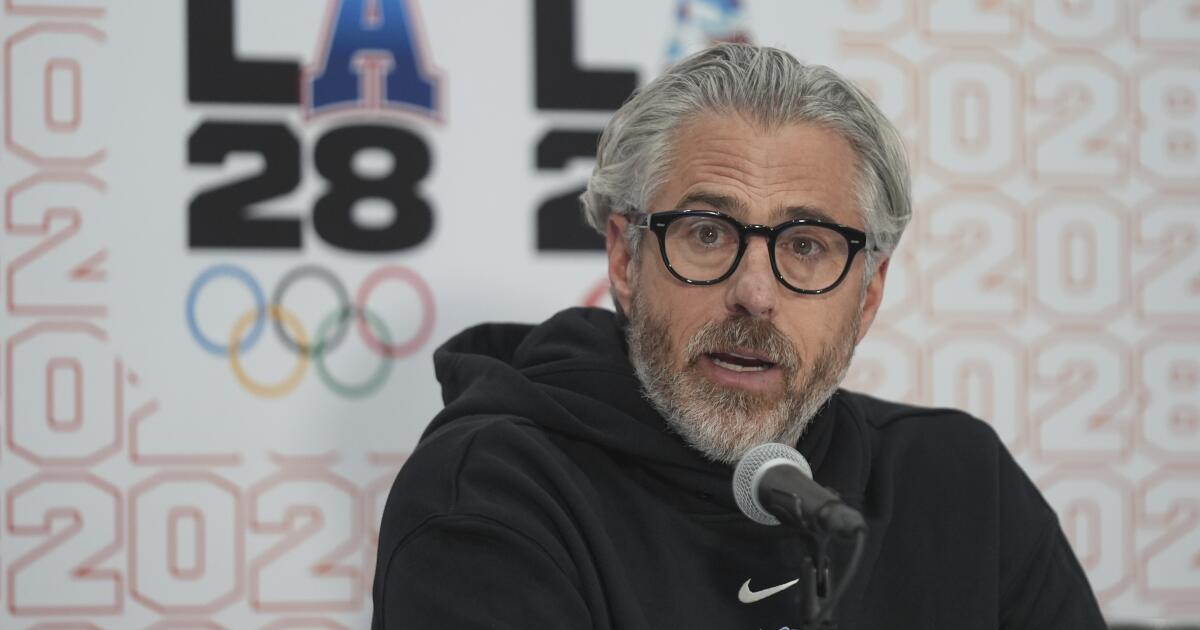
Casey Wasserman, the embattled sports and entertainment mogul who is the face of the Los Angeles 2028 Olympics, is preparing to sell his talent agency.

In a memo to his staff Friday, Wasserman acknowledged his appearance in a recently released batch of documents related to the late sex trafficker Jeffrey Epstein and his companion, Ghislaine Maxwell, had “become a distraction.”

In his memo, which was reviewed by The Times, Wasserman said he was “heartbroken that my brief contact with them 23 years ago has caused you, this company, and its clients so much hardship over the past days and weeks.”

Representatives for Wasserman did not immediately return for requests for comment.

“I’m deeply sorry that my past personal mistakes have caused you so much discomfort,” Wasserman wrote to his staff. “It’s not fair to you, and it’s not fair to the clients and partners we represent so vigorously and care so deeply about.”

Over the last two weeks, artists including Chappell Roan and athletes such as soccer star Abby Wambach announced they would leave Wasserman’s eponymous Los Angeles-based talent agency that he founded more than two decades ago.

“I know what I know, and I am following my gut and my values,” Wambach wrote on Instagram. “I will not participate in any business arrangement under his leadership…He should leave, so more people like me don’t have to.”

Wasserman told his staff that Mike Watts, a longtime company executive, would assume day-to-day management of the firm while he begins the process of selling it.

The Wall Street Journal first reported Wasserman’s staff memo.

Wasserman’s grandfather, Lew Wasserman, was a Hollywood titan who built the studio MCA into a powerhouse that acquired Universal Pictures. Casey Wasserman’s sports and talent agency, also built through a series of savvy acquisitions, has about 4,000 employees.

Wasserman plans to stay in his position leading the LA28 Olympic Committee, which has stood by him. In a recent statement, LA28 noted that the racy emails with Maxwell were sent following a humanitarian mission to Africa two decades “before Mr. Wasserman or the public knew of Epstein and Maxwell’s deplorable crimes…This was his single interaction with Epstein.”

“The Executive Committee of the Board has determined that based on these facts, as well as the strong leadership he has exhibited over the past ten years, Mr. Wasserman should continue to lead LA28 and deliver a safe and successful Games,” LA28 concluded.

The messages to Maxwell were part of a massive trove of Epstein-related documents made public by the Department of Justice this month.

In them, Wasserman wrote to Maxwell, who is now serving a lengthy prison sentence for sex trafficking of minors, “I thought we would start at that place that you know of, and then continue the massage concept into your bed … and then again in the morning … not sure if or when we would stop.”

She responded: “Umm — all that rubbing — are you sure you can take it? The thought frankly is leaving me a little breathless. There are a few spots that apparently drive a man wild — I suppose I could practise them on you and you could let me know if they work or not?”

Wasserman released a statement saying: “I deeply regret my correspondence with Ghislaine Maxwell which took place over two decades ago, long before her horrific crimes came to light. I never had a personal or business relationship with Jeffrey Epstein. As is well documented, I went on a humanitarian trip as part of a delegation with the Clinton Foundation in 2002 on the Epstein plane. I am terribly sorry for having any association with either of them.”


Source link

Ilia Malinin talks crippling anxiety that cost him an Olympic medal

He popped the quad axel. He stumbled across the ice. He tried to hide the pained expression.

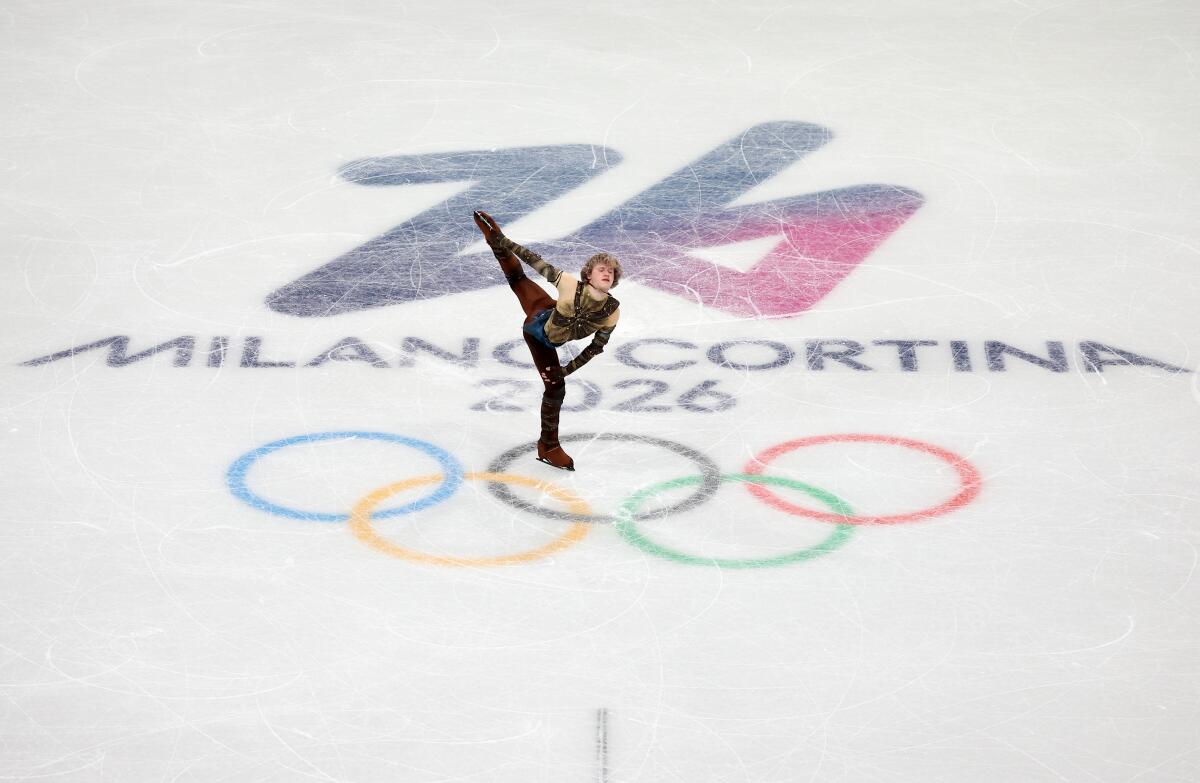
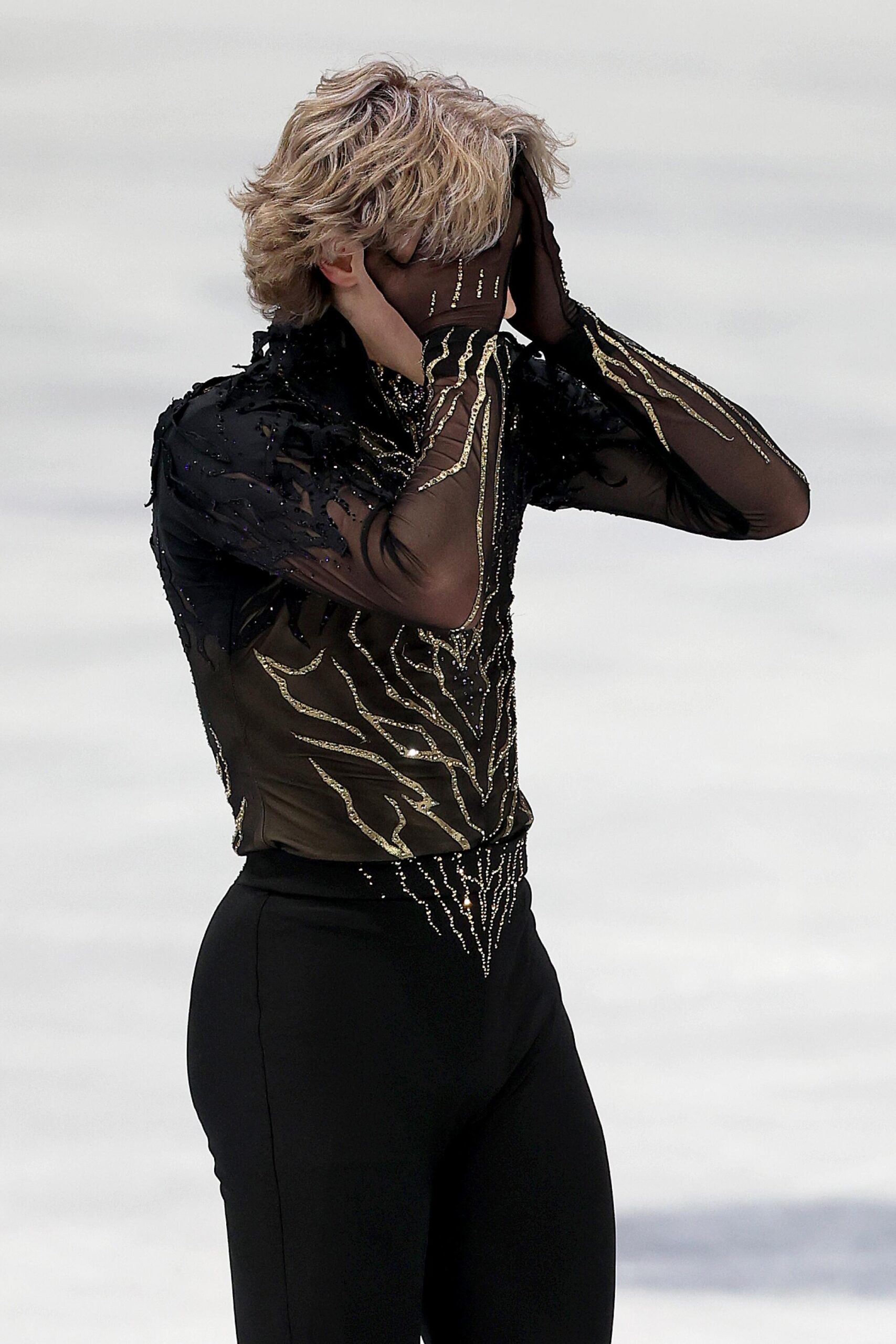
Ilia Malinin fell apart in the men’s free skate, tumbling from near lock to win the gold medal to eighth place after a disastrous performance Friday. After his music ended, Malinin covered his anguished face. He put his hands on his knees, shook his head in disbelief and scrunched his face, hoping to hold back the tears.

It was the first time since November 2023 that he hadn’t won a competition.

“I just thought that all I needed to do was go out there and trust the process that I’ve always been doing with every competition,” Malinin said with tear-stained cheeks. “But, of course, it’s not like any other competition. It’s the Olympics.”

American Ilia Malinin reacts after stumbling through the men's singles free skate at the Winter Olympics on Friday.

American Ilia Malinin reacts after stumbling through the men’s singles free skate at the Winter Olympics on Friday in Milan.

(Robert Gauthier/Los Angeles Times)

Malinin skated four times at the Milan-Cortina Games, helping the United States to a team gold medal with a clutch free skate that clinched the one-point win. But the 21-year-old had just one clean skate in his first Games experience. He explained his slow start during the team event as “Olympic nerves.”

There was no explaining away Friday’s flop.

“I think people only realize the pressure and the nerves that actually happen from the inside,” said Malinin, whose technical advantage was supposed to be insurmountable for his opponents. “It was really just something that overwhelmed me. I just felt like I had no control.”

After Malinin’s score was announced, Kazakhstan’s Mikhail Shaidorov covered his mouth in shock. He was the new Olympic champion. Shaidorov claimed his country’s first Olympic gold in figure skating. His coach held his arm up like a boxing champion as a legion of Kazakh fans seated in the corner above the kiss-and-cry booth where skaters wait for their score waved their country’s teal and yellow flags. Malinin hugged him. He pointed to Shaidorov’s chest.

“You deserve it,” Malinin said.

Japan’s Yuma Kagiyama shook off several falls in his program to fight for his second consecutive Olympic silver. His countryman Shun Sato was in tears after learning he took the bronze.

Ilia Malinin's father, Roman Skorniakov, holds his head in his hands during his son's stumbles at the Olympics

Ilia Malinin’s father, Roman Skorniakov, reacts during his son’s performance at the men’s singles free skate at the Winter Olympics on Friday in Milan.

(Robert Gauthier/Los Angeles Times)

The United States’ Andrew Torgashev finished 12th with his season’s best 259.06-point total. Maxim Naumov stumbled through several jumps in his free skate to finish 20th overall with a 223.36 point total. The 24-year-old who lost both parents in a plane crash last year earned a standing ovation from actor Jeff Goldblum, who was in the stands behind the judges.

As the groups progressed toward the medal contenders, the crowd filled Milano Ice Skating Arena to the brim. Fans in suites in the rafters leaned over glass panes to get a better look. Volunteers and arena workers stood at the top of the concourse with no open seats left to claim.

While rising to the top of the sport with his stunning jumps and crowd-pleasing backflip, Malinin said his mission was to boost the popularity of figure skating to get this kind of attention outside of just the Olympic stage.

But standing at the center of the ice as fans waved U.S. flags from every corner, Malinin, the “Quad God” who looked invincible just three months ago when he became the first person to land seven quadruple jumps in one program, felt scared.

“Especially going into that starting pose, I just felt like all the just traumatic moments of my life really just started flooding my head,” Malinin said. “It was just like so many negative thoughts that just flooded into there, and I just did not handle it.”

He started off the program with a strong quad flip. Then he bailed mid-air on his signature quad axel that he had yet to attempt in the Olympics. The crowd gasped. Panic started when Malinin downgraded a planned quadruple loop to a double two jumps later.

American Ilia Malinin falls while competing in the men's singles free skate at the Winter Olympics in Milan on Friday.

American Ilia Malinin falls while competing in the men’s singles free skate at the Winter Olympics in Milan on Friday.

(Robert Gauthier/Los Angeles Times)

Behind the boards, his father and coach, Roman Skorniakov covered his face. Coach Rafael Arutyunyan, who has worked with Malinin part-time since 2021, paced back and forth. He hit the padded boards for encouragement before Malinin lined up for a three-jump combination.

Malinin fell again.

The program couldn’t end soon enough just to allow the 21-year-old a chance to hide after years of being in the spotlight as the presumed next Olympic champion.

“Being the Olympic gold hopeful is really just a lot to deal with,” Malinin said, “especially for my age.”

Malinin’s free skate music includes self-narrated voiceovers telling the story of his personal journey growing in the sport. As it begins, he uncovers his face. His words echo over the speakers.“The only true wisdom,” Malinin says in the program, “is in knowing you know nothing.”

After this result, that couldn’t be more true.

Source link

Ukraine’s Heraskevych has appeal for Winter Olympic reinstatement dismissed | Winter Olympics News

Ukraine’s Vladyslav Heraskevych had his appeal dismissed as images on his helmet breached an Olympic ‘sacred principle’.

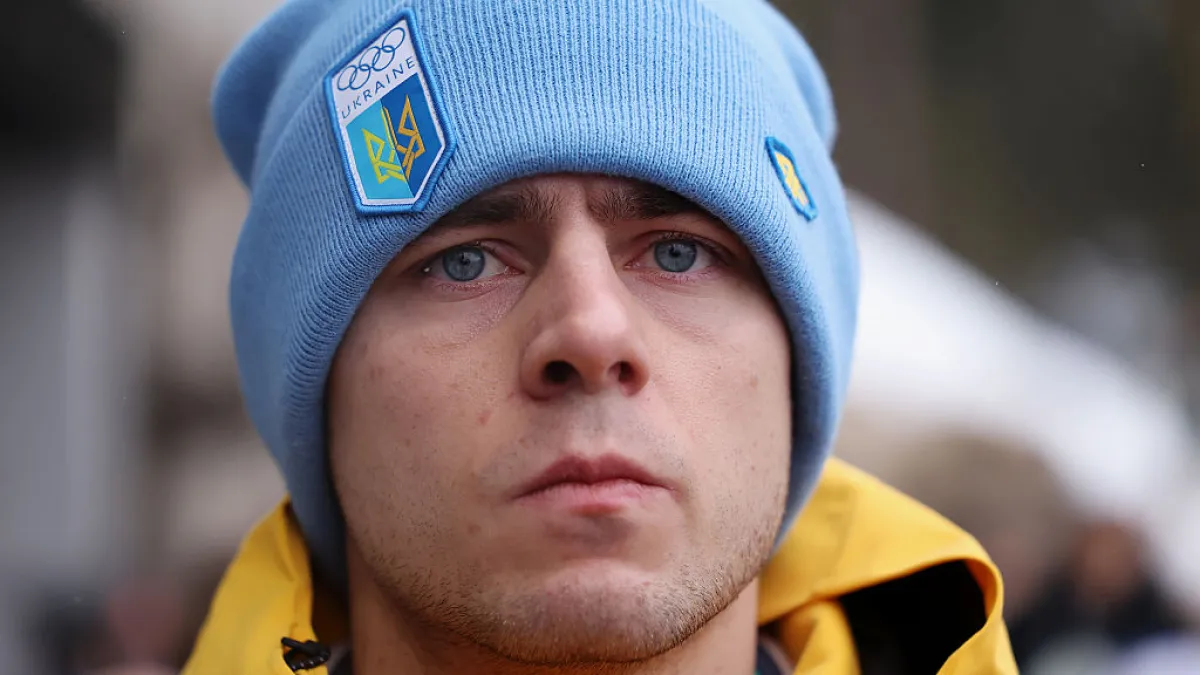
⁠The Court of ⁠Arbitration for Sport on Friday dismissed an appeal by Ukrainian skeleton racer Vladyslav Heraskevych to be reinstated in the Milano Cortina Olympics after he was disqualified over his “helmet ⁠of remembrance”.

The 27-year-old was removed from the Olympic programme on Thursday when the International Bobsleigh and Skeleton Federation jury ruled that imagery on the helmet — depicting athletes killed since Russia invaded Ukraine ⁠in February 2022 — breached rules on political neutrality.

Recommended Stories

list of 4 itemsend of list

“The CAS ad Hoc division dismissed the application and found that freedom of expression is guaranteed at the Olympic Games but not on the field of play which is a sacred principle,” CAS Secretary-General Matthieu Reeb said, reading from a statement following an eight-hour ‌hearing.

Heraskevych, who was seeking reinstatement or at least a CAS-supervised run, pending a decision by sport’s highest court in advance of the final two runs set for Friday evening, said he would look at his legal options now.

“CAS has failed us. We will consider our next steps,” Heraskevych told Reuters.

The case has dominated headlines in the first week of the Olympics, with the International Olympic Committee President Kirsty Coventry meeting the athlete on Thursday morning at the sliding venue ⁠in Cortina d’Ampezzo in a last-minute attempt to broker a compromise and ⁠have him race without the specific helmet.

The IOC instead offered that he wear a black armband and display the helmet before and after the race, but said using the helmet in competition breached its rules on political protests and slogans ⁠in the field of play.

In a statement, CAS said the IOC guidelines for athletes’ expression in the Games were fair.

“The Sole Arbitrator found these ⁠limitations reasonable and proportionate, considering the other opportunities for athletes ⁠to raise awareness,” CAS said.

“The Sole Arbitrator considers these Guidelines provide a reasonable balance between athletes’ interests to express their views, and athletes’ interests to receive undivided attention for their sporting performance on the field of play.”

Ukraine’s Olympic Committee has backed their ‌athlete, who is also the team’s flagbearer for the Games and also displayed a “No War in Ukraine” sign at the Beijing 2022 Olympics, days before Russia’s invasion. Heraskevych has also received support ‌from ‌Ukrainian President Volodymyr Zelenskiy.

CAS was established in 1984 by the International Olympic Committee as an independent judicial authority to settle sports disputes worldwide.

The case has dominated headlines in the first week of the Olympics.

Before the ruling, Heraskevych accused the Milano-Cortina Games as acting as “propaganda” for Russia.

Source link

Brock Nelson honors his family’s Olympic legacy in U.S. rout

Brock Nelson might be making his Olympics debut, but he has a rich family history when it comes to playing hockey for Team USA.

His grandfather was a forward on the team that won gold in 1960. His uncle was a forward on the “Miracle on Ice” team in 1980.

And Thursday night, Nelson made a mark of his own. The Colorado Avalanche forward scored two goals to lead the U.S. to a 5-1 victory over Latvia in an opening game that included some of the best American NHL players.

“It’s pretty crazy,” said Nelson, 34, considered the old man on a team filled with some of the game’s brightest young stars. “It’s just an unbelievable experience. I’m trying to soak it all in.”

The Americans had to show resilience after two of their goals were wiped out in the first period by successful challenges. It’s rare to have two such reversals in a game, exceedingly rare to have two in the same period.

“Yeah, that was frustrating,” said defenseman Zach Werenski, who plays for the Columbus Blue Jackets. “But at the same time, you’re still getting the goals even though they got overturned. You’re doing the work to put the puck in the net, and I think that helps your confidence a little bit. After they get overturned, you’ve just got to put it out of your mind and continue to play the same way.”

Latvia was competitive early, forging a 1-1 tie in the first period, but eventually fell prey to a U.S. barrage. The Americans outshot them, 38-18, and goaltender Connor Hellebuyck needed to make only 17 saves.

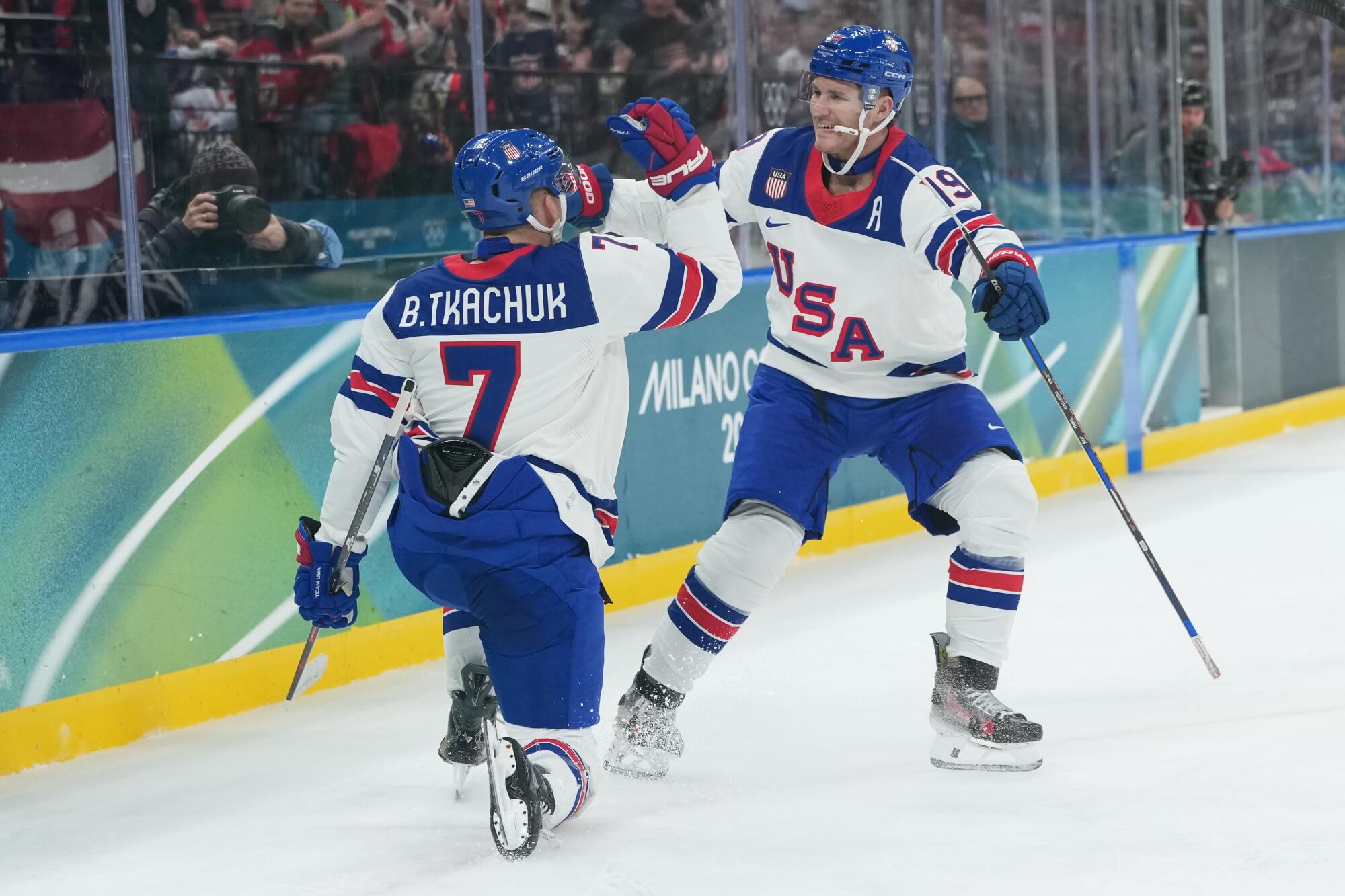
Brothers Brady Tkachuk, left, and Matthew Tkachuk after the U.S. scored the first goal of the game against Latvia.

Brothers Brady Tkachuk, left, and Matthew Tkachuk after the U.S. scored the first goal of the game against Latvia.

(Carolyn Kaster / Associated Press)

“It was just 1-1 but there was never any panic,” said forward Matthew Tkachuk, the Florida Panthers winger. “From the second period on, we just wanted to make sure someone was at the net at all times. They were playing pretty tight, but with the skill and puck possession and strength that we have, we knew we were going to win some battles.”

Nelson, who said he takes a ribbing from his young teammates for his graying hair, has a rich family history when it comes to Olympic hockey. His grandfather, Bill Christian, won gold at the Games in Squaw Valley — now called Olympic Valley — and his uncle, Dave Christian, was on that championship team in Lake Placid.

“My brother came in today,” said Nelson, raised in Minneapolis. “He brought me a couple pins from back home, from ‘Hockeytown,’ and a couple letters from the youth team. They’ve always been supportive of me, going back to growing up there. I’m forever grateful for that.”

The U.S. team features brothers Matthew and Brady Tkachuk, and Quinn and Jack Hughes — all NHL players. It has been 12 years since NHL players last took the Olympic stage.

“To make this roster is extremely difficult when you look at the amount of talent that the United States has developed and can play at this level,” said coach Mike Sullivan, who doubles as coach of the New York Rangers.

The fans were fairly evenly divided, with every “U-S-A” chant countered with one for “LAT-VI-A.”

“It was great to see the flags, the chants, and just the support that you have here,” said U.S. forward Brady Tkachuk, who was raised in a suburb of St. Louis and plays for the Ottawa Senators. “I’m just kind of a little example of the support you have back at home. So you’re playing in front of millions of millions of Americans, and you just want to represent them well, and it’s always an honor to put this jersey on.”

Source link

U.S. women’s hockey team rolls to Olympic quarterfinals, routs Canada

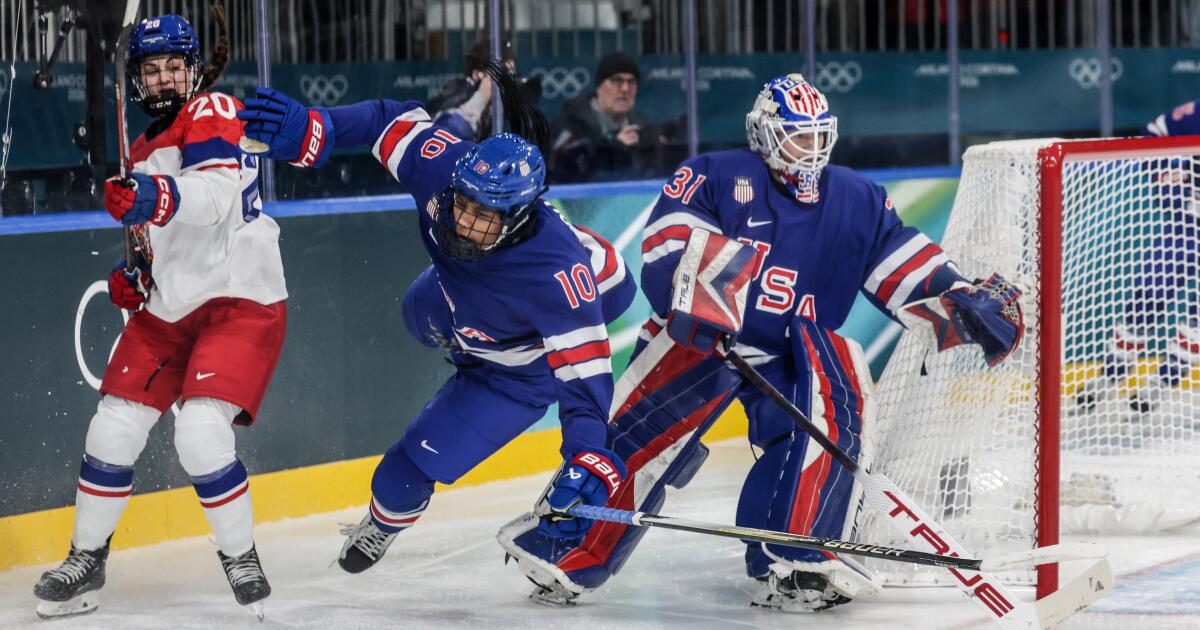
The U.S. won its group and will advance to the quarterfinals of the Milan-Cortina Winter Games as the top seed after routing Canada 5-0 on Tuesday at the Milano Santagiulia Ice Hockey Arena.

Two of the goals came Hannah Bilka with Carolina Harvey, Kirsten Simms and Laila Edwards scoring one apiece.

The win was the seventh in a row for the U.S. over Canada, dating to last April’s world championships. And the Americans dominated from the start, taking its earliest lead of the tournament on Harvey’s goal 3:45 into the first period.

The score came following a faceoff, with Haley Winn working the puck to the high slot for Harvey, who fired a neat wrister by Canadian goalie Ann-Renee Desbiens for her second goal in Olympic competition and her second in as many nights.

Abbey Murphy set up the next one, sending a behind-the-back pass from the end boards to the front of the goal for a wide-open Bilka, who made it 2-0 with a right-handed finish with less than three minutes left in the first period.

The U.S. made it 3-0 on a disputed goal 81 seconds into the second period with the referees, after a long review, ruling that Simms had pushed the puck through a mass of bodies in the crease and across the goal line. Canadian coach Troy Ryan challenged the goal but lost, earning a bench minor for delay of game.

The next U.S. goal was indisputable with Bilka blasting a short one-timer by Desbiens seven minutes before the second intermission. Abbey got her third assist and Harvey her second on the play. With eight minutes left, Edwards closed out the scoring from the high slot — almost the exact same place from where Harvey got the opening goal — driving Desbiens from the game with Ryan bringing on Emerance Maschmeyer to close things out.

The U.S. has scored exactly five goals in each of its four games, scoring in all 12 periods it has played in the Olympic tournament.

Aerin Frankel turned away 20 shots in goal, posting the third shutout in as many games for the U.S., which ran it scoreless streak to 151 minutes.

Canada was playng without its captain, Marie Phillip-Poulin, who left Monday’s win over Czechia after taking a heavy hit along the boards from Kristyna Kaltounkova that left her unable to put weight on her right leg.

The three-time Olympic gold medalist and four-time world champion was listed as day-to-day.

Source link

Gu beaten by Gremaud to Olympic gold in women’s slopestyle | Winter Olympics News

For the second straight Winter Olympics, Mathilde Gremaud bests Eileen Gu in the women’s blue ribband freeski event.

Switzerland’s Mathilde Gremaud has retained her Olympic title in the slopestyle freestyle skiing competition at the Milano Cortina 2026 Winter Games in a gripping race in the Italian Alpine town of Livigno.

China’s Eileen Gu, who had been hoping to convert her Beijing 2022 silver medal into gold this time, came in second on Monday after tumbling at the start of her last run.

Recommended Stories

list of 4 itemsend of list

Canada’s Megan Oldham, ⁠24, took the bottom step of the podium despite a big crash on her second run.

Earning herself a day-late birthday present, Gremaud skied well above the already very high bar set by Gu on her first run with three spectacular runs of her own, wearing the Swiss flag like a cape as she came down the last time, having already ensured herself the gold medal.

Mathilde Gremaud in action.
Gremaud competes in the women’s slopestyle final [Kirill Kudryavtsev/AFP]

Gremaud rolls out new trick

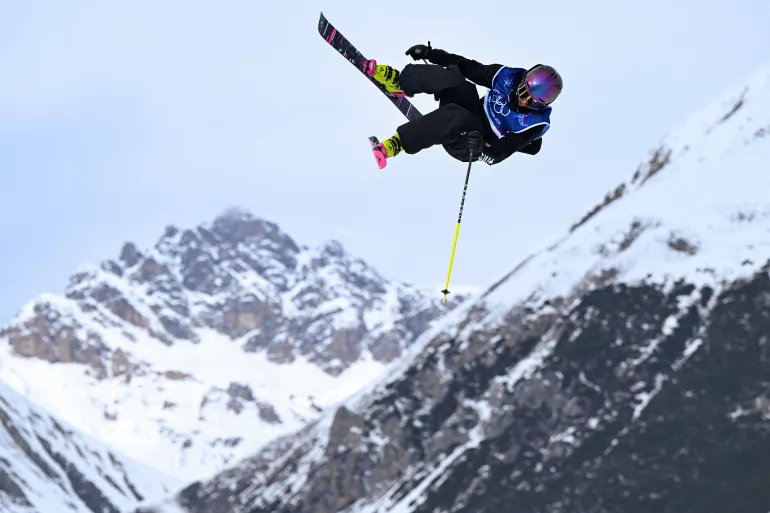
On a crisp and sunny day in the high-altitude ski resort close to the Swiss border, Gremaud kicked off the final by performing – ⁠for the first time by a woman – an elite-level trick known as the nose butter double cork 1260.

In this trick, the skier presses the tips of the skis on the takeoff to start the spin and then performs a double cork 1260, two distinct off-axis, inverted flips combined with three-and-a-half full, horizontal rotations.

Known for her variety of tricks on the slope, the Swiss champion veered towards the very technical ones, followed by breathtaking acrobatic jumps during her second run, earning her the eventual highest score overall of 86.96, just pipping Gu’s first-run score of 86.58.

Despite the big crash on her second run, ‌Oldham picked up in the third run, soaring through the rails and performing conservative yet still very acrobatic jumps at the end, winning her a score of 76.46.

At the end of the race and during the prize-giving ceremony, the crowd was painted in different hues of red as the ‌flags of the three winning countries – Switzerland, China and Canada – all waved in the air to the beat of loud music and cheering. The medals were handed out by Britain’s ‌Princess Anne, a former Olympic equestrian.

Eileen Gu in action.
Gu won her second straight Olympic silver medal in the freestyle slopestyle event [Kirill Kudryavtsev/AFP]

High competition

Double Olympic champion Gu, 22, set ⁠the bar high on the first run with big tricks on the rails and stunning jumps, adding flair to all of her tricks and putting herself in first place early on.

After a poor second run when she stumbled on the rails at the beginning of the beautifully sculpted piste, Gu knew ‌she would need something special on her final run to grab the title away from Gremaud. But she tumbled into the snow almost immediately, ending her hopes of reclaiming top spot in the competition.

American-born Gu, who represents her mother’s country of China at the Olympics, said last week that she had nothing left to prove after her two gold and one silver medal from Beijing.

She will be defending her big air and halfpipe titles later in the Games.

Source link

Lindsey Vonn’s push to win Olympic gold ends with brutal crash

CORTINA D’AMPEZZO, Italy — The mountainside packed with fans and competitors was eerily silent after disaster struck.

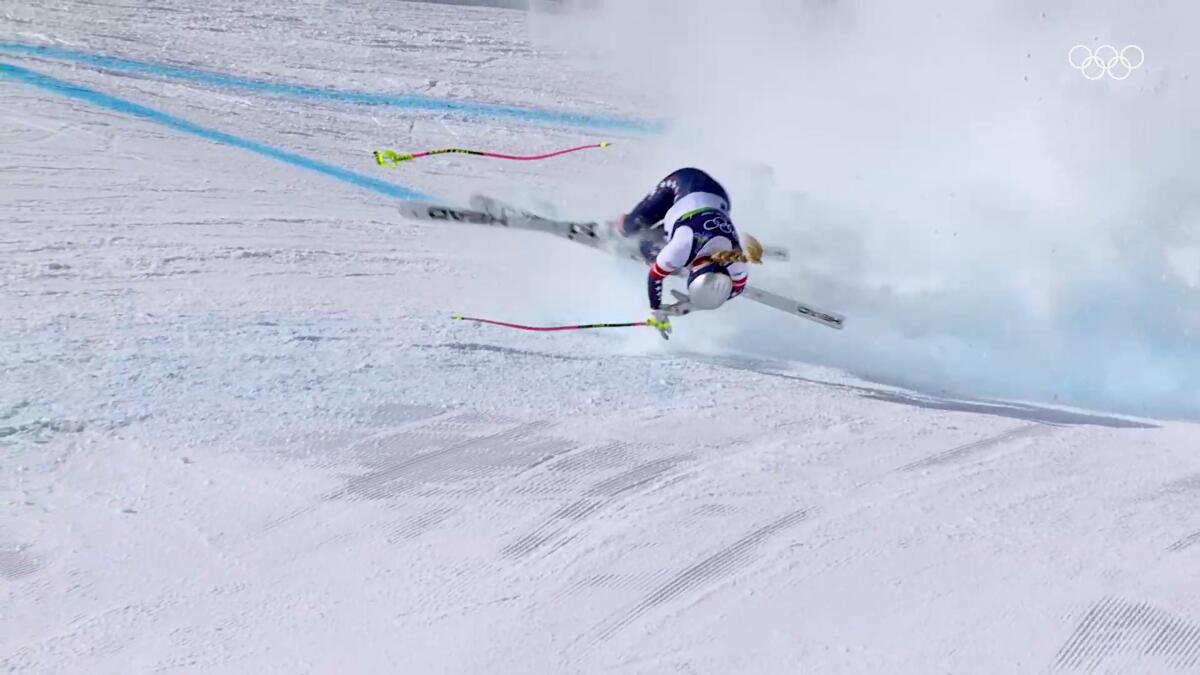
Lindsey Vonn, attempting to win a gold medal despite sustaining a torn anterior cruciate ligament in her final race before the Games, clipped her pole on a gate early in her first Olympic downhill skiing run and crashed Sunday.

Vonn, 41, could be heard screaming after the crash. She received medical attention on the snow and was airlifted off the mountain.

The race was halted while Vonn was treated. Her teammate, Breezy Johnson, held the early lead and went on to win the race after the competition resumed. Johnson won the Americans’ first gold medal of the Games.

The U.S. downhill team celebrated with Johnson but continued to think of Vonn.

American Lindsey Vonn crashes into a gate during an alpine ski downhill race at the Winter Olympics.

American Lindsey Vonn crashes into a gate during an alpine ski downhill race at the Winter Olympics in Cortina d’Ampezzo, Italy, Sunday.

(Handout / Getty Images)

“It’s heartbreaking,” said American Isabella Wright, who finished 22nd in the competition. “Jackie [Wiles] and myself, we were up there. We watched it live and things just happen so quick in this sport. It looked like Lindsey had incredible speed out of that turn and she hooked her arm [on a gate on the course] and it’s just over. Just like that. After all the preparation, after years of hard work and rehabilitation and all the things, it’s the last thing you want to see somebody go through.”

Vonn retired after a series of injuries seemed to be too much to overcome. Nearly six years later, she announced she missed racing and was confident she had fully recovered her form after a right knee replacement.

She shocked many by immediately winning races needed to qualify for the Games and entered the Olympics as the leader in the World Cup downhill standings. Nine days ago, she suffered a torn ACL, a bone bruise and meniscus damage.

Amid great scrutiny, Vonn was determined to keep racing with the support of her medical team and a large knee brace. She was optimistic about her ability to compete after practice runs and pushed back at critics on the social media platform X.

Fans react after watching American Lindsey Vonn crash during the women's downhill skiing race at the Winter Olympics Sunday.

Fans react after watching American Lindsey Vonn crash during the women’s downhill skiing race at the Winter Olympics Sunday.

(Robert Gauthier/Los Angeles Times)

“It’s the last thing you want to see for Lindsey, but she should be really proud of everything she has gone through to get back here,” Wright said. “And regardless, if got last today, if she won — she obviously crashed. Whatever happened today, she’s an inspiration to all of us and she should be really proud. I know it probably doesn’t feel like that right now, but I hope one day she can recognize that.”

Source link

What Is an Olympic Gold Medal Worth? What About Silver and Bronze?

Key Takeaways

  • Olympic gold medals aren’t solid gold, but they’re still worth thousands based on metal content alone.
  • Most U.S. Olympians no longer owe federal taxes on medal-related prize money, easing a long-standing financial burden.
  • The real value of a medal often comes after the podium, through exposure, endorsements, and career opportunities.

As the upcoming Winter Olympic Games Milano Cortina 2026 approaches, attention naturally shifts to records, rivalries, and the prestige of making it to the podium. But after the celebrations end, a practical question always resurfaces: What are those medals actually worth?

The answer depends on how you define “worth.” There’s the literal value of the metal, the tax implications that follow, and then the much bigger value that comes from status, visibility, and opportunity.

Are Olympic Gold Medals Actually Solid Gold?

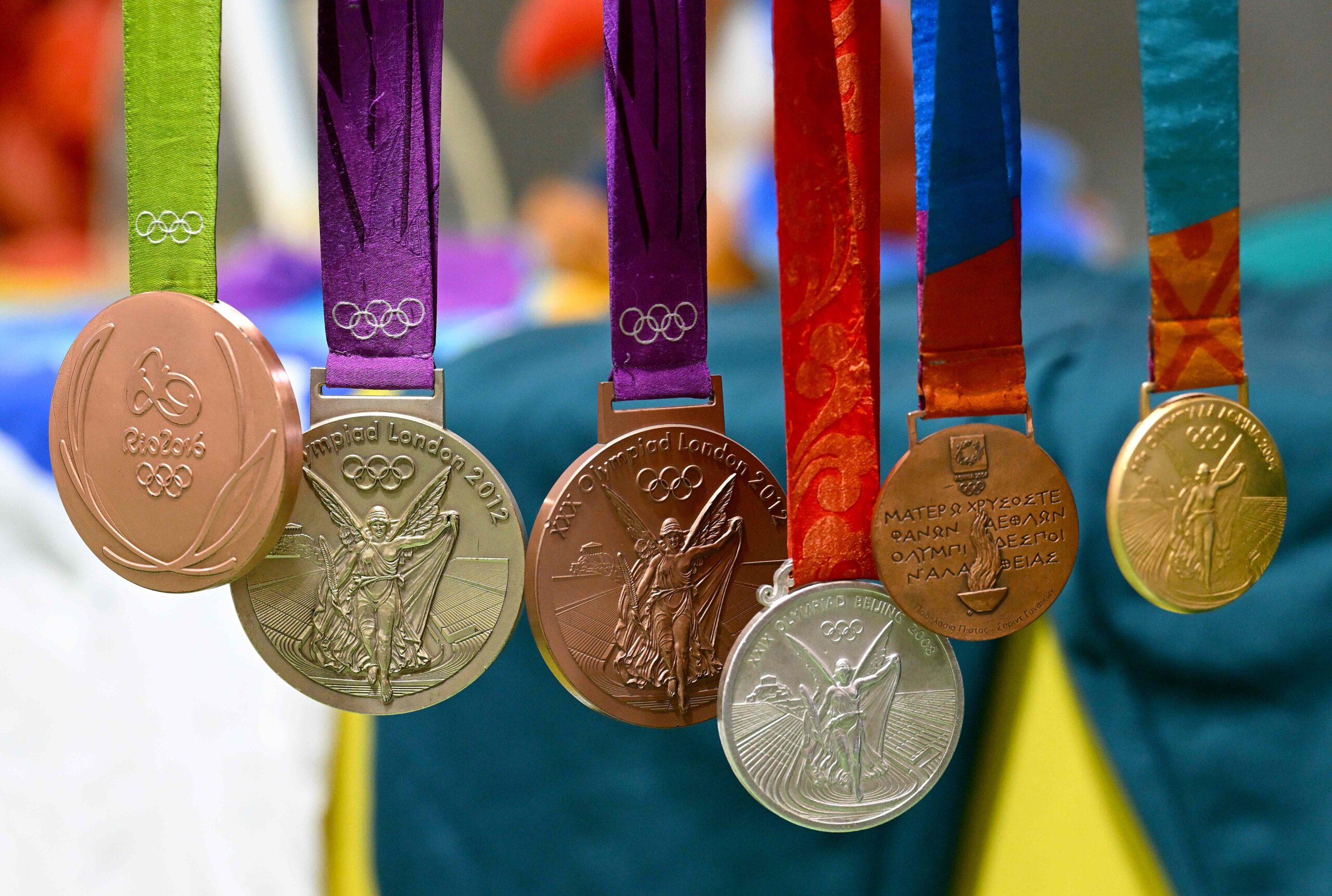
Despite the name, Olympic gold medals are not solid gold. Even though the tradition of a solid gold medal was established in 1904, forging the medals 100% out of gold didn’t last long, as it became too costly after World War I. As a result, the top medal hasn’t been made of solid gold since the 1912 Olympic games.

Today, gold medals are primarily made of silver, with a relatively thin coating of pure gold on the surface. The exact specifications vary slightly, but the general formula has remained consistent. A modern Olympic gold medal typically contains 523 grams of sterling silver, with approximately six grams of gold plated on top. This allows it to look like gold and feel substantial, while also carrying enormous symbolic weight.

Silver medals are indeed solid, made of 525 grams of sterling silver. Bronze medals meanwhile contain no precious metals at all, typically containing 90 percent copper and other alloys, such as tin and zinc.

As a result, the true value of each medal comes more from the prestige of being a medalist and the opportunities it may offer than from the raw materials that comprise each medal.

What Gold, Silver, and Bronze Medals Are Worth at Today’s Metal Prices

Metal prices fluctuate constantly, so any estimate is a snapshot in time. Using current pricing, gold is trading around $4,900 per troy ounce, and silver around $85 per troy ounce. Six grams of gold works out to be worth about $945 at current prices, while the silver portion of a gold medal, about 523 grams, is worth about $1,430. Added together, the raw metal value of a gold medal currently lands around $2,375.

Silver medals, made of 525 grams of sterling silver, would be worth around $1,435, while bronze medals are worth far less from a materials standpoint. With copper currently priced at about $0.38 per ounce and a bronze medal comprising 495 grams of copper, the third-place medal would be worth less than $7 at today’s prices.

Do Olympic Athletes Have To Pay Taxes on Their Medals?

Fortunately for U.S. athletes, the tax picture has changed over time. In the past, medals and associated prize money were treated as taxable income, meaning athletes could owe federal taxes on both the cash bonuses and the fair market value of the medal itself.

That shifted in 2016, when Congress passed the United States Appreciation for Olympians and Paralympians Act of 2016. The legislation allows most U.S. Olympic and Paralympic athletes to exclude medal-related prize money from federal income taxes if their overall income falls below a certain threshold. The intent was to prevent athletes, many of whom train for years with limited financial support, from being hit with tax bills simply for winning.

Important

The exemption applies only to certain medal-related income and doesn’t extend to endorsement deals, appearance fees, or other earnings that often follow Olympic success.

Why Medals Are Worth Far More Than the Metal

If medals were only worth their metal content, they’d be impressive keepsakes, but not life-changing ones. The real value comes from what the medal represents and what it unlocks.

An Olympic medal can raise an athlete’s profile overnight, leading to endorsements, sponsorships, and paid appearances that weren’t on the table before. The impact often lasts well beyond competition, opening doors to coaching, leadership roles, and media opportunities long after the Games are over.

Those opportunities don’t look the same for every medalist—or arrive all at once. For some athletes, especially gold medalists, the exposure of winning on the sport’s biggest stage can translate quickly into major endorsement deals. For others, the payoff is more gradual, showing up as smaller sponsorships, speaking fees, or a clearer path into post-competition careers built on recognition and trust.

Winning multiple medals can also amplify the effect, creating a sustained spotlight that brands and audiences tend to value more than a single podium finish.

While the metal in an Olympic medal may only be worth a modest sum, the visibility it brings can reshape an athlete’s earning potential in ways that far outlast the Games themselves—making its true value less about what it’s made of, and more about what it makes possible.

Good News for Olympians Starting in 2026

For the first time in history, every U.S. Olympic athlete is getting something they’ve never had before: guaranteed financial support just for making a team. Thanks to a $100 million gift from financier Ross Stevens, every U.S. Olympian and Paralympian competing in the Milan-Cortina Games will be eligible for $200,000 in future benefits, whether they medal or not, providing a long-term boost for careers that often pay little during competition.

Source link

Ilia Malinin conserves energy, but U.S. still leads Olympic team skate

Ilia Malinin leaned his head back and wagged his tongue. This perhaps wasn’t the start to his Olympic career that he wanted.

The 21-year-old took it easy in the short program of the team figure skating competition Saturday, forgoing his signature quad axel, but even with a watered-down routine, the “Quad God” looked shockingly mortal.

He finished second in the short program after struggling on multiple jumps, trailing Japan’s Yuma Kagiyama’s electrifying performance by almost 10 points. The United States still enters the final day of the team competition with a five-point lead after Madison Chock and Evan Bates dazzled in the free dance with 133.23 points that earned first place.

The three-time reigning world champions swept both dance programs in the team event to pace the United States to a 44-point team total. The Americans lead second-place Japan (39 points) and third-place Italy (37) before Sunday’s medal event that will feature men’s, women’s and pairs free programs. The United States has not named the skaters who will perform Sunday’s long programs.

Ilia Malinin said he simply was managing his energy to prepare for the individual event, which begins Tuesday.

Ilia Malinin said he simply was managing his energy to prepare for the individual event, which begins Tuesday.

(Matthew Stockman / Getty Images)

Bates pumped his fist at the end of the free dance. The seven-time U.S. champions have increased their scores for the bull and matador-themed program at each international competition they’ve performed at this season. Malinin, sitting in the U.S. box on the side of the rink, high-fived his teammates at the end of the stellar program and waved a large American flag along with singles skaters Alysa Liu and Isabeau Levito.

Almost as much as his own performances, the unique environment of an Olympic Games is what he has been dreaming about since he started his rise to the top.

“It was such an unreal moment coming to the Olympics,” Malinin said. “Everyone has been talking about the Olympics for years, ever since I started skating from a young age. … Really just being out there on that Olympic ice was just the best moment of itself.”

Malinin, who earned nine team points for his second-place finish in the short program, entered his first Olympics as the overwhelming favorite to win individual gold. With his unmatched technical skill, it likely would take multiple mistakes from Malinin and perfect performances from his competitors for him not to claim the United States’ second consecutive men’s singles gold medal.

But to become just the second skater to win two golds in the same Games, Malinin may need help from his teammates after he fell short of the lofty expectations Saturday.

Malinin planned to open with his quad axel in combination with a triple toe loop but settled only for a quad flip. He got a negative grade of execution on his triple axel. He underrotated a quad lutz that he connected to the previously left out triple toe loop.

“Of course, it wasn’t the perfect ideal 100% skate that I would [have] wanted to have,” Malinin said, “but for the standard I set myself today, I think I achieved that.”

Malinin’s Olympic standard is a slow-play progression, he said. He wanted to be at about 50% of his capacity in the team event to manage his energy to prepare for the individual event, which begins Tuesday.

Kagiyama highlighted Japan’s performances Saturday, pumping both fists after his program. As the crowd showered him with applause, he spread his arms wide and threw his head back. When he looked at his teammates cheering from the sideline he jumped in excitement. He stood up in shock when his score of 108.67 flashed across the screen.

Waiting for his turn to finish the competition, Malinin appreciated Kagiyama’s moment. He wasn’t intimidated by his opponent’s success.

“So inspired,” Malinin said. “He just went out there. He looked so happy. He looked like he was enjoying every single moment. I’m so happy for him. It’s just so unreal that all of us come out here on this Olympic stage and really feel so much energy, so much excitement.”

While Malinin is undefeated in individual events since November 2023, he hasn’t been perfect. He was third after the free program in the Grand Prix Final in December, the last major international competition before the Olympics.

He answered in the free skate by becoming the first person to land seven clean quad jumps in a single program.

Source link

Olympic committee: New transgender policy consensus reached across sports | Olympics News

A proposed new consensus between sports leaders across the globe about gender policy would be a first uniform criteria.

Global sports leaders ‌have reached consensus on a new set of eligibility criteria for transgender athletes, with the new policy expected to be announced within the first half of this year, the International Olympic Committee (IOC) said on Saturday.

It would be the first uniform policy adopted by the IOC and international sports federations, applying to major events in dozens of sports, including the Games and world championships. Currently, federations have ⁠their own rules, which can vary.

Recommended Stories

list of 4 itemsend of list

Details of the new policy are unclear, but it is expected to severely restrict the participation of transgender athletes who compete in women’s categories if they have undergone full male puberty before any subsequent medical transition.

The IOC, under its first female president, Kirsty Coventry, took the lead in June, opting for a uniform approach.

“Protecting the female category is one of the key reforms she wants to bring in,” IOC spokesman Mark Adams ⁠told a news conference at the Milan-Cortina Winter Games on Saturday.

“I would say it is going to happen shortly, within the next few months.

“It has been out to consultation phase and we had the ‘pause and reflect’ (period) on it,” Adams said. “Generally speaking, there is consensus within the sporting movement. I think you will have a new policy in the first half of this year. Don’t hold me to it, but that is roughly the timescale.”

In September, Coventry set up the “Protection of the Female Category” working group, made up of experts as well as representatives ‌of international federations, to look into how best to protect the female category in sport.

Before Coventry’s decision, the IOC had long baulked at any universal rule on transgender participation for the Games, instructing international federations in 2021 to come up with their own ‌guidelines. Under current rules, still in force, transgender athletes are eligible to take part in the Olympics once cleared by their respective federations.

Only a handful of openly ‌transgender athletes have taken part in the Games. New Zealand’s Laurel ⁠Hubbard became the first openly transgender athlete to compete in a different gender category to that assigned at birth when the weightlifter took part in the Tokyo Olympics in 2021.

Currently, for example, World Aquatics allows transgender athletes who have transitioned before the age of ‌12 to compete. World Rugby bans all transgender athletes from elite-level competitions.

United States President Donald Trump has banned transgender athletes from competing in school, college and pro events in the female category in the US, as Los Angeles prepares to host the 2028 Summer Olympics.

Trump, who signed the “Keeping Men Out of Women’s Sports” order in February, has said he would not allow transgender athletes to compete at the LA Games.

Source link

U.S. takes early lead in Olympic figure skating team competition

Alysa Liu glided past her boards and held her hand out. She high-fived her coaches with a wide smile on her face.

She was ready.

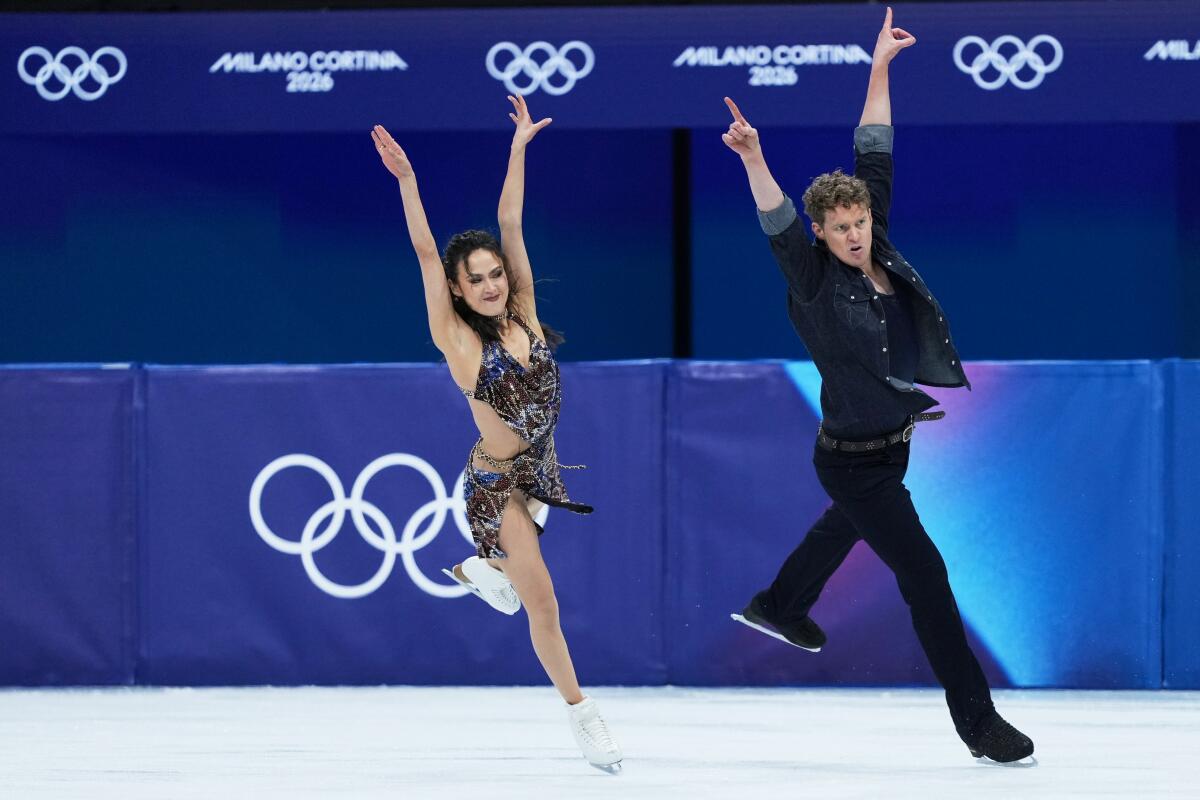
Liu calmly skated through minor technical missteps on two jumps in her short program of the team competition at Milano Ice Skating Arena to finish second and earn nine points for the United States that leads the team competition after the first day.

Led by 10 points from rhythm dance leaders Madison Chock and Evan Bates, the United States has 25 points entering Saturday’s men’s short program to lead over second-place Japan (23 points) and third-place Italy (22). Japan’s Kaori Sakamoto finished first with a score of 78.88 ahead of Liu’s 74.90.

After the men’s short program, the top five teams advance to the long program portion. The United States selected two-time world champion Ilia Malinin to skate in the men’s short program.

Liu, competing in her second Olympics, was selected for the team competition for the first time. The reigning world champion worked through slight errors, including on her tricky triple lutz, triple loop combination. Her coach Phillip Diguglielmo grabbed the arm of choreographer Massimo Scali nervously as Liu floated through the air on the crooked loop. When she finished her program to a loud ovation, Diguglielmo wiped his brow in relief.

Liu was the second world champion competing for the United States on Friday. Chock and Bates edged out French pair Laurence Fournier Beaudry and Guillaume Cizeron by less than two points in an early showdown of individual gold medal contenders.

In March 2025, Fournier Beaudry and Cizeron rocked the ice dance world by announcing their partnership. He was the reigning Olympic champion. She was a former Canadian champion. But it wasn’t just that the pair became instant gold medal contenders 11 months before the Olympic Games. The reason for the sudden pairing caused a stir.

Madison Chock and Evan Bates of the U.S. finished first in the ice dance portion of the team competition Friday.

Madison Chock and Evan Bates of the U.S. finished first in the ice dance portion of the team competition Friday.

(Stephanie Scarbrough / Associated Press)

In October 2024, Fournier Beaudry’s partner Nikolaj Sorensen was suspended by Skate Canada for at least six years for alleged sexual assault. The pair competed for both Denmark and Canada over their decade-long partnership, winning three Danish championships and a Canadian national title and placing ninth in the 2022 Olympics.

Cizeron hadn’t skated since 2022. He and his ice dance partner of 20 years Gabriella Papadakis announced their retirement in December 2024, but wanted to return to competition. He had trained in Canada for more than a decade and maintained a friendship with Fournier Beaudry. The opportunity was open, but it would be complicated.

After pairing with Fournier Beaudry to launch Cizeron’s comeback, the new team expressed support for Sorensen in an interview with Canadian French-language newspaper La Presse. Fournier Beaudry continues her romantic relationship with Sorensen.

When asked of the allegations Friday, Fournier Beaudry said she did not have anything to add to her previous comments. The pair proceeded through the mixed zone.

Since teaming up, Fournier Beaudry and Cizeron have won five of six competitions, a nearly inconceivable rise for such a new pair. The only blemish is a silver medal finish at the Grand Prix Final.

Chock and Bates’ 15-year partnership has yielded three world championships, a record seven U.S. titles and four trips to the Olympics. On one of the most talented teams the United States has ever sent to an Olympic Games, Chock and Bates still stand out for their experience. Of the 14 other U.S. figure skaters, only Liu has participated in the Games before.

“I think we have the best generation of figure skaters within the U.S. right now,” said pairs skater Danny O’Shea, who finished fifth with his partner Ellie Kam to earn six position points toward the team total. “Amazing people helping each other, supporting each other, and Madi and Evan leading the charge being the just experienced elders.”

O’Shea, making his Olympic debut at 34, laughed as he clarified Chock, 33, is younger than him.

Source link

Laila Edwards sparks U.S. women’s hockey to Olympic win over Czechia

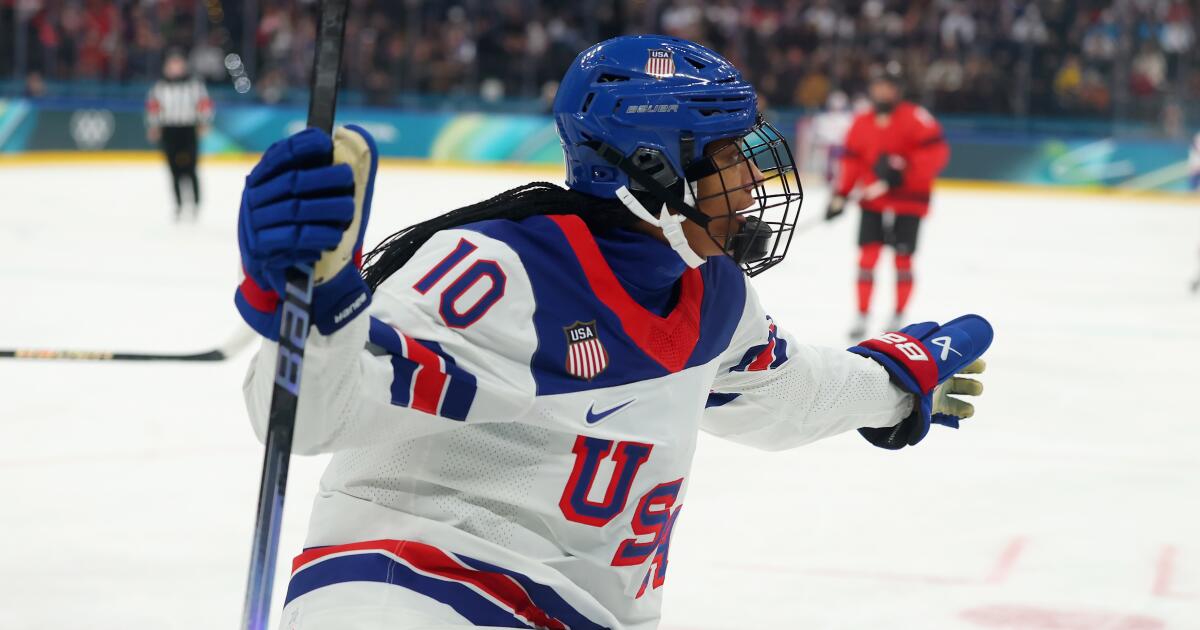
Laila Edwards finally got out from under the spotlight and onto the ice for the U.S. women’s hockey team Thursday. It was a simple act, but one that made history.

Yet for Edwards, it was just another day at the office.

“It didn’t feel different at all,” she said. “It’s still hockey at the end of the day. Even though it’s the highest level, it’s still hockey.”

With her first shift in Thursday’s 5-1 win over Czechia, on the first day of hockey at the Milan-Cortina Winter Games, Edwards became the first Black woman to play for the U.S. national team in an Olympic tournament. On a team full of record-breakers, it was a significant milestone, one that has become a storyline for the world’s top-ranked team.

“Cameras constantly in her face. She does a good job of whatever she needs to do,” said teammate Tessa Janecke, who had two second-period assists. “It’s very inspiring for us as her teammates, but as well as the next generation.”

And that, of course, is the point.

“Representation matters,” Edwards said. “There’s been a lot of young kids or parents of young kids who have reached out or I’ve run into that say, ‘You know, my daughter plays sports because of you. And she feels seen and represented,’ and that’s just really motivating.”

Just 22, Edwards is already accustomed to breaking barriers and being the youngest this or the first that.

In 2023, she became the first Black player on the women’s senior national team in any competition; a year later, she became, at 20, the youngest player to win the MVP award in the World Championship.

But if doing that has been easy, talking about it has taken some work.

“I could not do interviews or not talk about it, but then the story doesn’t get out there,” she said. “And maybe a little girl doesn’t see me, who looks like her. So I think that’s what’s more important.”

On Thursday, playing before Vice President JD Vance, Secretary of State Marco Rubio and a packed house at the Milano Rho Ice Hockey Arena, Edwards marked her Olympic debut by helping put the Americans ahead to stay, feeding Megan Keller in the high slot for a slap shot that Alex Carpenter redirected in a first-period power-play goal.

Second-period goals from Joy Dunne and Hayley Scamurra — both on assists from Janecke — and third-period goals from Scamurra and Hilary Knight, sandwiched around one from Czechia’s Barbora Jurickova, accounted for the final score in a game in which the top-ranked Americans outshot the fourth-ranked Czechs 42-14.

Still, the night belonged to Edwards, a player Knight calls “the future of the sport.” But she’s doing pretty well in the present too, having already won two national championships with Wisconsin and two world championship medals with Team USA.

Edwards started skating shortly after she learned to walk, then switched to hockey before starting kindergarten, when her father Robert, who played the game as a child, enrolled her and three siblings in a youth hockey program. By 8, she was so advanced she was playing with boys’ teams and for high school she left her native Cleveland Heights, Ohio, for the elite girls’ hockey program at Bishop Kearney High School in Rochester, N.Y.

Although she was a high-scoring forward in high school and college — she led the nation with 35 goals as a junior at Wisconsin — she’s proven versatile enough to play on the blue line in the Olympics. That’s a little like playing a running back at right guard.

“I couldn’t even imagine that,” forward Abbey Murphy said of Edwards, who skated a team-high 25 shifts Thursday. “She took it and she just kind of ate it up and she made defenseman look easy. She’s magic on the blue line.”

At 6-foot-1 and 185 pounds — making her the biggest and most physical player on the U.S. team — Edwards was well-suited for the move.

“She’s so dynamic, so athletic, you could put her in goal and she would perform,” said Caroline Harvey, a teammate in high school, college and now with the national team. “She’s just adjusted so well. It’s seamless. It doesn’t even seem like she’s switched positions.”

Edwards hasn’t made her journey to the Olympics alone, however, a fact she acknowledged after Thursday’s game. Although her father is responsible for her start in hockey, it looked like he wouldn’t be able to travel to Milan to see his daughter make history. So Edwards’ parents started a crowdfunding campaign to pay for flights and accommodations.

Jason and Travis Kelce, brothers and former Super Bowl players who also grew up in Cleveland Heights, learned of the campaign and quickly kicked in $10,000, allowing 14 members of Edwards’ family to come to Italy — where their cheers were audible every time her name was announced.

“They show support,” Edwards said. “And they’re really cool guys.”

After her Olympic debut Thursday, there are a lot of little girls who can say the same about Edwards.

Source link

L.A. County Supervisor calls for Casey Wasserman to resign from Olympic committee

A top Los Angeles politician said Tuesday that LA 2028 Olympics committee chair Casey Wasserman should resign following revelations about racy emails he exchanged with convicted sex offender Ghislaine Maxwell.

“I think Casey Wasserman needs to step down,” said L.A. County Supervisor Janice Hahn, who along with other L.A. politicians is working with the LA28 Olympics organizing committee on planning of the Games.

“Having him represent us on the world stage distracts focus from our athletes and the enormous effort needed to prepare for 2028,” said Hahn, who represents an area of south Los Angeles County that includes coastal neighborhoods.

A representative for Wasserman didn’t immediately respond to a request for comment.

Wasserman and other top officials with LA 2028, which is in charge of paying for and planning the Games, are in Italy for meetings ahead of the Winter Olympics.

Hahn’s comments follow the release of investigative files on Jeffrey Epstein released last week by the Justice Department that include personal emails exchanged more than 20 years ago between Wasserman and Maxwell, Epstein’s former romantic partner.

In emails sent in March and April 2003, Wasserman — who was married at the time — writes to Maxwell about wanting to book a massage and wanting to see her in a tight leather outfit.

She offers to give him a massage that can “drive a man wild,” and the pair discuss how much they miss each other, according to files released and posted online by the U.S. Department of Justice.

In a statement released Saturday, Wasserman said he regretted his correspondence with Maxwell, which he said occurred “long before her horrific crimes came to light.”

“I never had a personal or business relationship with Jeffrey Epstein. As is well documented, I went on a humanitarian trip as part of a delegation with the Clinton Foundation in 2002 on the Epstein plane. I am terribly sorry for having any association with either of them,” he said in the statement.

The Daily Mail in 2024 published an extensive story on Wasserman’s alleged affairs during his marriage with Laura Ziffren, whom he divorced. He denied the accusations.

Source link

NHL players, coaches will spill insider secrets for Olympic gold

Think of Mike Buckley as a kind of double agent.

Not the sinister kind, who give away state secrets for money or revenge; Buckley is privy to much lower-level intelligence. But that doesn’t mean it’s not just as valuable to the people involved.

Buckley is the Kings’ goaltender coach and his chief pupil is Darcy Kuemper, who will be playing for Team Canada in the Milan Cortina Olympic hockey tournament. Buckley will be in Milan coaching for Team USA. And if the competition goes to form, Canada and the U.S. will meet in the final.

You can see where this is going.

So would Buckley give up the goods on his NHL goalie if it meant helping his national team win a gold medal?

“I probably have a little bit more insight being with him on a day-to-day basis. But at the end of the day, the players still have to execute,” said Buckley, like Kuemper, a first-time Olympian. “So if I tell someone to shoot somewhere at a certain time or a certain spot, they’re going to have to be able to execute that.”

The answer then is maybe.

Still, that’s a dilemma Buckley will probably never face since Jordan Binnington of the St. Louis Blues, who was spectacular in goal in last year’s Four Nations Face-off, will probably start for Canada in Milan. But with the Kings sending four other players (defenseman Drew Doughty, Canada; and forwards Adrian Kempe, Sweden; Kevin Fiala, Switzerland; and Joel Armia, Finland) plus Canadian equipment manager Darren Granger to the Olympics, there’s a good chance guys who have shared a dressing room since September will be competing against one another.

Kings forward Kevin Fiala controls the puck while playing for Team Switzerland at the 2025 world championships.

Kings forward Kevin Fiala controls the puck while playing for Team Switzerland at the 2025 world championships.

(Michael Campanella / Getty Images)

The same goes for the Ducks, who are sending four players — goalie Lukas Dostal and defenseman Radko Gudas, Czechia; forward Mikael Granlund, Finland; and defenseman Jackson LaCombe, U.S. — to Milan. Ducks star Leo Carlsson, who was expected to start for Sweden, will miss the Games after undergoing surgery to repair a rare injury in his left thigh last month.

So while the Olympics may bring countries together, it also has the potential to turn teammates against one another — at least temporarily.

In the group stage of the tournament, for example, Armia and Finland will play against Kempe’s Sweden. And Canada, with Kuemper and Doughty, will face Switzerland, which is led by Fiala.

“It’s obviously going to be a little strange,” Gudas said. “It’s only for a few games. For that amount of time, you can put things aside a little bit.”

Those kinds of match-ups were rare in the last two Olympic tournaments since NHL players didn’t take part, sidelined by a dispute over insurance, travel costs and scheduling issues. This year 147 NHL players are on the 12 Olympic rosters, with all 32 NHL clubs represented.

Not all the top NHL players will be in Milan, however. Russia has been banned from the tournament because of the country’s invasion of Ukraine, meaning Alexander Ovechkin, the NHL’s all-time leading goal scorer, won’t play.

Granlund, who won a bronze medal with Finland in 2014, the last time NHL players participated in the Olympics, is glad to be back.

“It was such a cool experience,” he said. “It’s one of the biggest honors I can have as a hockey player, playing for a country in the Olympics. There’s no player in the NHL who wouldn’t go.”

That’s due in large part to the rush that comes with wearing your country’s colors on your chest.

“It’s tough to explain how much it means,” he said. “You grow up in a country like Finland, watching the national team play. As a kid you’re dreaming to play for that team.

“Every single time you put that jersey on, it’s such a pride you feel.”

Doughty, who already has two gold medals, agreed, saying the only time he sings along with the Canadian anthem is at the Olympics.

Kings defenseman Drew Doughty controls the puck while playing for Canada in the Four Nations Face-Off last year.

Kings defenseman Drew Doughty controls the puck while playing for Canada in the Four Nations Face-Off last year.

(Maddie Meyer / Getty Images)

“When we hear it in the NHL, I’m not singing,” he said. “But when you’re wearing a Canadian jersey, that’s one of the biggest moments you can have.”

Not just for the guys on the ice. Granger, the equipment manager, will be making his third trip to the Olympics with Canada. And the journey never gets old.

“It’s not something that you apply for. It’s something that you’re asked to do,” he said. “So I don’t take that lightly. It’s an honor.”

The equipment managers may have the most difficult job in the Olympic hockey tournament since they must prepare and maintain the sticks, skates, gloves and uniforms for 25 players, some of whom they’ve never met. That means checking in with the equipment managers of rival NHL teams to get prepared.

“We have quite a few players that are particular about certain things,” he said. “After a while, you just kind of get used to what those things are. If it’s a player that likes to use three sticks a game, then making sure he has that. If it’s a guy that likes to change gloves every other game, making sure you have enough.”

Yet if Canada wins the tournament, Granger’s reward won’t be a gold medal. Olympic rules say medals only go to the players, leaving the equipment managers, trainers and coaches — even coaches with inside information like Buckley — out in the cold.

“That’s OK,” Buckley said. “I just want the players to get one.”

Source link