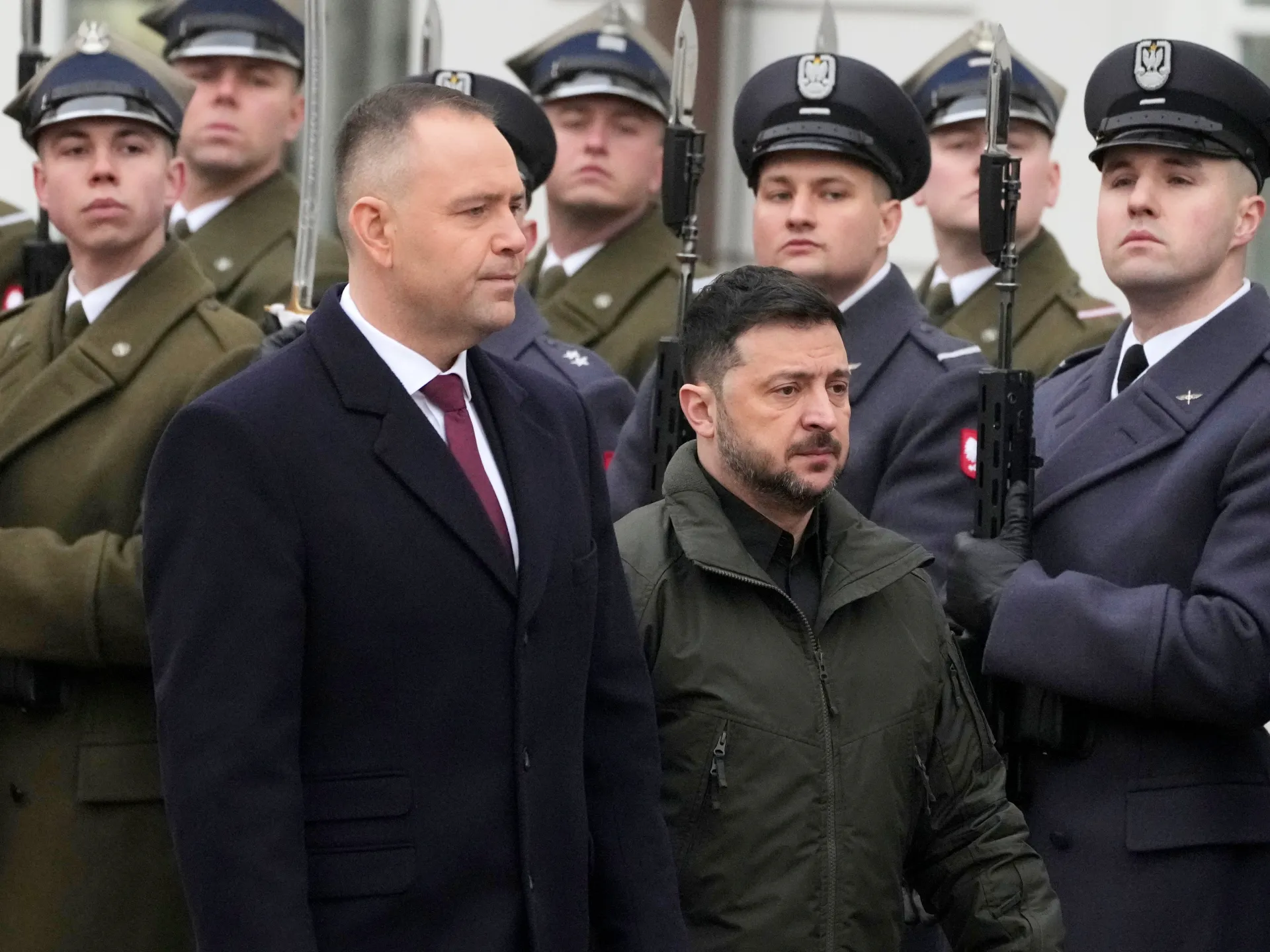
Officials

Atletico Madrid 1-1 Arsenal: Mikel Arteta ‘fuming’ with officials

We’ve had two nights of handball controversy, first involving Bayern Munich and now Arsenal.

In both cases, the ball took a deflection off the body before hitting the arm, and fans have been conditioned into thinking this means there cannot be a penalty.

What referees actually look for is a clear change of trajectory. Why is that? Because it means the arm position would not create a barrier to the natural direction of the ball.

If the ball stays on roughly its intended path, then the ball touching the arm takes precedent.

The penalty given against Alphonso Davies on Tuesday would not have been awarded in the Premier League as the arm was too close to the body.

For Uefa, the fact that the arm moves out from the body before the ball hits it would trump the small deflection.

But Ben White’s handball against Atletico was a very clear penalty under Uefa’s definition. The arm was a long way out from the body and came in to make contact with the ball.

There is some discretion if the arm is being brought in to make the body smaller, but in White’s case it started from so far out, a penalty would be expected.

The Premier League is more relaxed than Europe even when it comes to deflections before a handball. That said, Arsenal defender Gabriel should have really conceded a penalty at Newcastle earlier this season as his arm, when sliding, was raised very high and the deflection off the body was negligible.

Would the ball deflecting off White’s shin have caused VAR to stay out of this in the Premier League? Possibly, but the movement of the arm was very clear.

A definite spot-kick in Europe, borderline for the Premier League.

Source link

Iranian officials absent from pre-World Cup football events in Canada | World Cup 2026 News

It is unclear whether football officials from Iran were issued Canadian visas to attend AFC and FIFA congresses.

Representatives from Iran’s football federation were not present at the largest formal meeting of Asia’s football leaders before the World Cup.

In the presence of FIFA President Gianni Infantino, there was no discussion at the Asian Football Confederation (AFC) Congress about Iran’s participation in the tournament or whether the team’s games should be moved out of the United States because of the US-Israeli war on Iran.

Concerns were raised that visa issues could affect the Iranian delegation’s ability to travel to both the confederation meeting in Vancouver and the overall FIFA Congress on Thursday, as well as the World Cup starting on June 11.

The 48-team tournament is being hosted by the US, Canada and Mexico.

It was not clear if visa issues prevented Iranian representatives from attending the AFC Congress. However, as the nine AFC teams that qualified for the World Cup were presented with commemorative gifts, it was announced that Iran would receive their token “once they arrive”.

An Iranian government spokesperson said last week that the national team was preparing for “proud and successful participation” in its World Cup games in the United States.

FIFA, football’s international governing body, has consistently said Iran will stick to the World Cup game schedule decided last December, before the US and Israel launched military attacks on Iran on February 28, and has refused to entertain suggestions that the team’s games be moved to Mexico.

“Now even more, now that the world is going through a very, very delicate, difficult, dangerous time with many conflicts, and many of you are directly affected and involved in these conflicts,” Infantino told the AFC leaders.

“Now even more, we need to find ways to build these famous bridges, or maybe to build football fields instead. And to build competitions where people can join and come together.”

Iran are placed in Group G with Belgium, New Zealand and Egypt.

Team Melli’s planned training camp would be in Tucson, Arizona, and they are scheduled to open their World Cup campaign on June 15 against New Zealand in Inglewood, California, near Los Angeles.

Iran will play Belgium in Inglewood on June 21 before facing Egypt in the final group match in Seattle on June 26.

Source link

Ex-FBI Director Comey indicted in probe over online post officials say constituted Trump threat

Former FBI Director James Comey was indicted Tuesday in an investigation over a social media photo of seashells arranged on a beach that officials said constituted a threat against President Trump, according to a person familiar with the matter.

The person was not authorized to publicly discuss the matter and confirmed the indictment to the Associated Press on the condition of anonymity. The charge or charges against Comey were not immediately known.

It’s the second criminal case the Justice Department has brought against the longtime Trump foe, who said he assumed the arrangement of shells he saw on a walk, reading “86 47,” was a political message, not a call to violence. Comey is among multiple foes of the Republican president to come under scrutiny by the Justice Department over the last year, as acting Atty. Gen. Todd Blanche aims to position himself as the right person to hold the job permanently.

Comey was interviewed by the Secret Service in May after Trump administration officials asserted that he was advocating the assassination of Trump, the 47th president. Comey deleted the post shortly after it was made, writing: “I didn’t realize some folks associate those numbers with violence” and “I oppose violence of any kind so I took the post down.”

His lawyer did not immediately respond to a request seeking comment Tuesday.

Merriam-Webster, the dictionary used by the Associated Press, says 86 is slang meaning “to throw out,” “to get rid of” or “to refuse service to.” It notes: “Among the most recent senses adopted is a logical extension of the previous ones, with the meaning of ‘to kill.’ We do not enter this sense, due to its relative recency and sparseness of use.”

Trump, in a Fox News Channel interview in May, accused Comey of knowing “exactly what that meant.”

“A child knows what that meant,” Trump said. “If you’re the FBI director and you don’t know what that meant, that meant assassination. And it says it loud and clear.”

The fact that the Justice Department pursued a new case against the ex-FBI director months after a separate and unrelated indictment was dismissed will likely spark defense claims that the Trump administration is going out of its way to target Comey, who had overseen the early months of an investigation into whether the Republican president’s 2016 campaign had coordinated with Russia to sway the outcome of that year’s election.

The former FBI director was indicted in September on charges that he lied to and obstructed Congress related to testimony he gave in 2020 about whether he had authorized inside information about an investigation to be provided to a journalist. He denied any wrongdoing, and the case was subsequently dismissed after a judge concluded that the prosecutor who brought the indictment was illegally appointed.

Comey was the FBI director when Trump took office in 2017, having been appointed by then-President Obama, a Democrat, and serving before that as a senior Justice Department official in President George W. Bush’s Republican administration.

But the relationship was strained from the start, including after Comey resisted a request by Trump at a private dinner to pledge his personal loyalty to the president — an overture that so unnerved the FBI director that he documented it in a contemporaneous memorandum.

Trump fired Comey in May 2017 amid an FBI investigation into potential ties between Russia and Trump’s presidential campaign. That inquiry, later taken over by special counsel Robert Mueller, would ultimately find that while Russia interfered in the 2016 election and the Trump team welcomed the help, there was insufficient evidence to prove a criminal collaboration.

The department, for instance, is also pursuing a criminal investigation into former CIA Director John Brennan, another key figure in the Russia investigation — one of Trump’s chief grievances and a saga for which he and his supporters have long sought retaliation.

CNN was the first to report the second indictment against Comey.

Richer and Tucker write for the Associated Press.

Source link

From exile to judge: Symbolism in Syria’s trial of Assad, former officials | Syria’s War News

On March 13, 2013, Fakhr al-Din al-Aryan, a judge at Idlib’s Civil Court of Appeal, publicly defected from the Syrian regime – an act that led him to be sentenced to death in absentia.

In December 2024, more than a decade later, Bashar al-Assad’s regime – the very one he had defected from – was overthrown, and al-Aryan was able to finally return to Syria’s judiciary.

Recommended Stories

list of 3 itemsend of list

In the latest step on al-Aryan’s journey from defection to exile to return, he was the presiding judge on Sunday at the opening of the trial of Atef Najib, a cousin of former President al-Assad and the former head of political security in the southern province of Deraa who faces charges of premeditated murder, torture leading to death and crimes against humanity.

Al-Assad and his brother Maher al-Assad, a former top military commander, are also being tried in absentia. Both men fled to Russia after their 2024 overthrow.

Fadel Abdulghany, the founder of the Syrian Network for Human Rights (SNHR), told Al Jazeera that the moment carries deep symbolic weight.

“A judge once sentenced to death by the Assad regime for defending the rule of law has returned to the bench to apply that same law to one of the regime’s most extensively documented perpetrators of violations,” Abdulghany explained. “This reversal of power dynamics reflects the promise of the rule of law so rarely fulfilled in post-authoritarian transitions. The significance of this moment lies not in spectacle but in its adherence to due process.”

Defection and return

Al-Aryan was a judicial adviser during the early years of Syria’s uprising, which began in March 2011, as protests intensified and the state increasingly relied on security-based rule.

By 2013, he decided that he had to break from the Syrian state and defected in a recorded statement that framed his decision as a matter of legal and moral responsibility.

“In light of the responsibility placed on the shoulders of judges, who are the guardians of justice and truth, and as a result of the massacres committed by the regime against civilians, children and women, … I announce my defection from the Ministry of Justice and my joining the Independent Syrian Judicial Council … to be a strong shield for justice and equality,” he said in the video.

After his defection, al-Aryan joined the judicial bodies of the then-Syrian Interim Government and became involved in building what was described as a parallel judicial track in opposition-held areas.

As part of that, he worked on establishing alternative courts, handling legal cases and documenting alleged crimes committed by the now former regime.

In response, the authorities sentenced al-Aryan to death in absentia and confiscated his property, including assets later sold at public auction.

After the fall of al-Assad’s regime, al-Aryan’s name re-emerged in June after a presidential decree reinstating dismissed judges. That process culminated in his appointment as head of the Fourth Criminal Court in Damascus, positioning him at the centre of the country’s first transitional judicial proceedings.

The transformation in al-Aryan’s life mirrors that of the man on trial in his courtroom on Sunday.

The position of the al-Assad family member as a top security official in Deraa in 2011 placed Najib at the centre of some of the first major confrontations between civilians and state security officers. Deraa is called the “cradle of the revolution” after government repression of protesters there inspired al-Assad’s opponents in other areas of the country to rise up.

One specific incident – the arrest and torture of schoolchildren detained after scrawling, “The people want the fall of the regime,” and the killing of one of them, 13-year-old Hamza al-Khateeb – is widely regarded as the spark for the country’s revolution.

Najib’s connection to that incident and the death of Hamza is one of the reasons why his trial is so significant in Syria.

The former official was arrested in January 2025 in the Latakia region, where some former regime loyalists had taken refuge.

Transitional justice

For the Syrian Network for Human Rights, the trial is significant because of how it is being conducted and not just who is being tried.

Abdulghany stressed that “this is neither a revolutionary court nor a victors’ court” but a case that has moved through formal legal stages, including arrest by the Ministry of Interior, investigation, prosecution and referral to a criminal court in Damascus.

The charges include premeditated murder and torture leading to death, classified as crimes against humanity under international law. This framing, Abdulghany said, is deliberate: It places domestic proceedings within the framework of international criminal standards, which is essential for the credibility of any verdict.

Abdulghany also highlighted the institutional message of the trial and in particular the inclusion of the former president and his brother as defendants despite their absence from the proceedings and from Syria.

“Physical absence does not amount to legal immunity,” he said.

Despite this, Abdulghany stressed that the trial was not the end of the transitional justice process in a country where hundreds of thousands of people died and disappeared during the war and the five-decade rule of al-Assad and his father, Hafez. There is still little information in many of the cases of the disappeared and imprisoned. The SNHR has documented at least 177,000 cases of enforced disappearances since 2011 with the vast majority attributed to the former government.

Abdulghany explained that accountability in Syria cannot be reduced to criminal trials alone and instead must include four interconnected pillars: criminal accountability, truth-seeking, reparations and institutional reform.

These, he argued, must function together under a unified structure rather than as separate or sequential processes.

Abdulghany placed particular emphasis on institutional reform, noting that Syria’s judiciary was previously used as a tool of repression rather than justice.

“Without these reforms, transitional justice trials risk being conducted through judicial institutions that have not themselves been transformed,” he said, pointing to the need to dismantle exceptional courts and rebuild judicial independence.

Truth-seeking, he added, is equally essential.

Families of victims have a right to know what happened to their relatives, and this right exists independently of criminal prosecutions, Abdulghany said.

“They deserve answers,” he said, adding that recognition of truth, justice and reparations must be unconditional if any durable reconciliation is to be achieved.

Source link

D.C. gala gunman wrote ‘manifesto,’ traveled from California before attack, officials say

Cole Tomas Allen, the suspected gunman who rattled the nation’s top leaders by exchanging gunfire with federal authorities after racing through the secure perimeter of a press gala in Washington late Saturday, had made a long journey from Southern California and written a “manifesto” threatening Trump administration officials before the short-lived attack, officials said.

Allen, a 31-year-old Caltech graduate and high school tutor from Torrance, is believed to have taken a train first to Chicago and then on to D.C. before checking into the Washington Hilton with two guns he had previously purchased, authorities said.

The attacker managed to bypass several layers of security at the White House Correspondents’ Assn. dinner before being taken down by armed agents outside the ballroom where President Trump and an array of other top federal officials were seated.

Allen could not be reached for comment, nor could an attorney for him be identified as of Sunday.

According to Trump, Allen had also authored a “manifesto” prior to the attack, which he had shared with family and which his brother had flagged to local law enforcement in Connecticut. The New York Post reported that Allen described himself in the document as the “Friendly Federal Assassin” and revealed he intended to kill Trump administration officials.

New London (Conn.) Police Deputy Chief John Perry said that around 10:30 p.m. a man came into the lobby of the agency’s headquarters to report that he’d received a troubling email from Allen. The relative initially thought it was spam, but then saw the news of what unfolded in D.C. and felt he needed to report it.

Perry would not say what was in the email, and did not know exactly what time it was sent. But the relative said he only saw and opened it around 10 p.m. “I think he was watching what was going on and kind of put two and two together and said I need to go to my local PD,” Perry said.

Police officials provided the email to the Secret Service and FBI, he said. Trump said the document would be released, but it had not been as of Sunday. Officials said criminal charges against the suspect were pending, with an initial court appearance likely Monday.

Late Saturday, both local and federal law enforcement, including from the FBI, swarmed the Torrance neighborhood where Allen is believed to have lived in a home with his family, with Torrance police clearing the road and putting up police tape along part of the street. A man who responded to a knock on the front door said, “Not right now,” and declined to comment further.

The thwarted attack marked the latest in a string of incidents in which gunmen have gotten dangerously close to Trump, renewing questions about the safety and security of the nation’s commander in chief at a time of intense political division at home and roiling conflicts abroad.

Trump was grazed on the ear by a bullet at one of his presidential campaign events in Butler, Pa., in 2024 — the first of two attempts on his life during that campaign cycle. The other involved a gunman targeting the president as he golfed in Florida, before federal agents intervened. Earlier this year, a gunman was killed at the president’s Mar-a-Lago club, after breaching a security perimeter.

On Sunday, questions swirled as to how such a security lapse could have happened again — and whether large, high-profile events are safe for top officials in a nation where firearms are easy to obtain and ubiquitous.

Acting Atty. Gen. Todd Blanche, in an interview on “Meet the Press” Sunday morning, said federal authorities believe the suspect had set out alone “to target folks that work in the administration, likely including the president,” but that a motive was still being determined and evidence still being gathered — including from devices taken from Allen and in interviews with people who know him.

“As of now, we don’t have any connection to any particular policy directive of President Trump or Iran or anything else that we’re doing in this country, but we are looking into it,” he said.

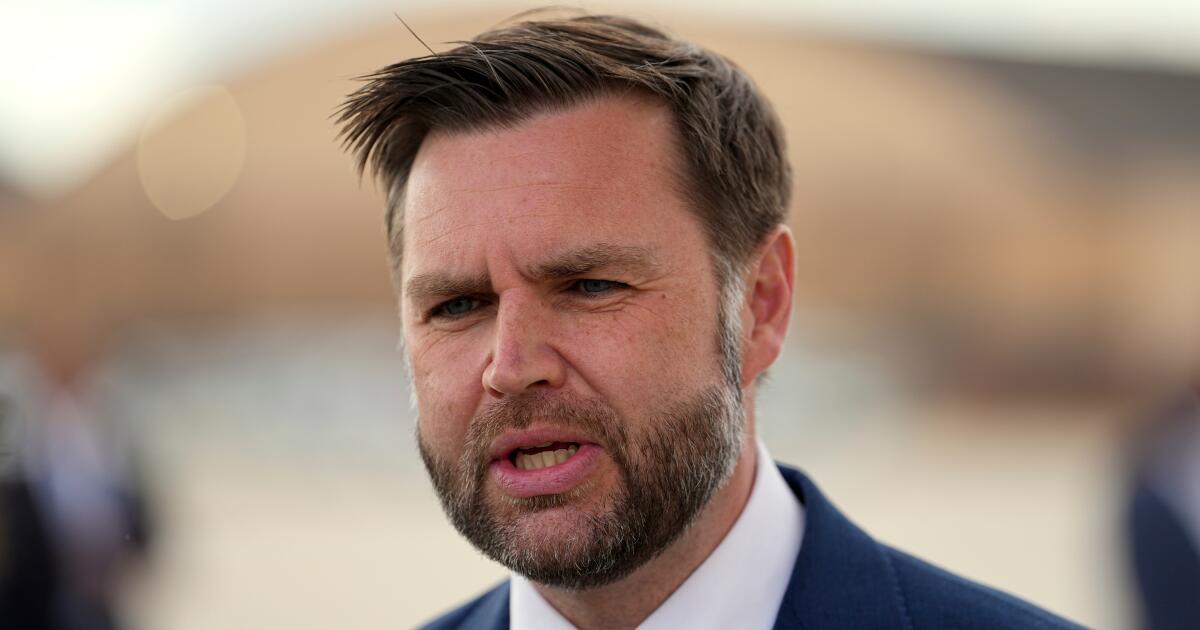
Blanche also downplayed the threat posed to Trump, other officials in the room such as Vice President JD Vance and First Lady Melania Trump, and the hundreds of other attendees to the annual event — suggesting Allen had essentially been stopped in his tracks shortly after making his break through a checkpoint of metal detectors and federal agents, dramatic video of which Trump posted online.

“Let’s not forget that the suspect didn’t get very far. He barely broke the perimeter,” Blanche said. “And so while this was extraordinarily dangerous and put a lot of lives at risk and there’s no doubt that that’s something that we’re going to have to learn from over the next couple weeks, the system worked. We were safe, President Trump was safe. His Secret Service agents kept him safe. All of us were safe.”

Blanche’s assessment of the attacker’s breach past security — which he said was only “by a few feet” — was disputed by some.

According to other attendees, including Times journalists, event staff were checking tickets, though not very thoroughly, at multiple points prior to escalators that descended to the metal detectors where Allen allegedly dashed past armed security.

The detectors were right outside the event hall and where the bathrooms for the event were located, and the assailant was taken to the ground about 10 to 15 feet beyond them, attendees said. The shots — including two from the gunman, according to Blanche — were heard in the ballroom.

Allen, who graduated from Caltech in 2017 with a degree in mechanical engineering and is registered to vote with no party preference, made a $25 political contribution earmarked for then-Vice President Kamala Harris’ campaign challenging Trump for the presidency in 2024.

While at Caltech, he was a teaching assistant and a member of the school’s Christian fellowship and the Nerf club, according to his LinkedIn profile. He later studied computer science as a post-graduate student at CSU-Dominguez Hills.

Allen was named teacher of the month in December 2024 at C2 Education, which specializes in college test preparation, tutoring and academic advising. A representative for C2 Education was not immediately available for comment.

According to the New York Post, Allen himself had derided the event security in his writings beforehand, describing finding far less security at the hotel than he had expected when he arrived, armed, to check in.

“I expected security cameras at every bend, bugged hotel rooms, armed agents every 10 feet, metal detectors out the wazoo. What I got (who knows, maybe they’re pranking me!) is nothing. No damn security. Not in transport. Not in the hotel. Not in the event,” he wrote, according to the Post. “I walk in with multiple weapons and not a single person there considers the possibility that I could be a threat.”

Authorities did not detail Allen’s alleged travel route to D.C., other than to say it was by train. In response to questions about whether Allen had taken Amtrak to get to Washington and whether his luggage would have undergone any security screening, Amtrak said only that it is cooperating with federal authorities.

Trump also zeroed in on security at the hotel being inadequate, in addition to posting the video of the suspect rushing past security and multiple pictures of him detained on the floor of the hotel.

While praising the federal agents who took the attacker down, Trump suggested that events with top U.S. officials should be held in more secure facilities — such as the giant ballroom he is trying to build on the White House grounds after demolishing the former East Wing.

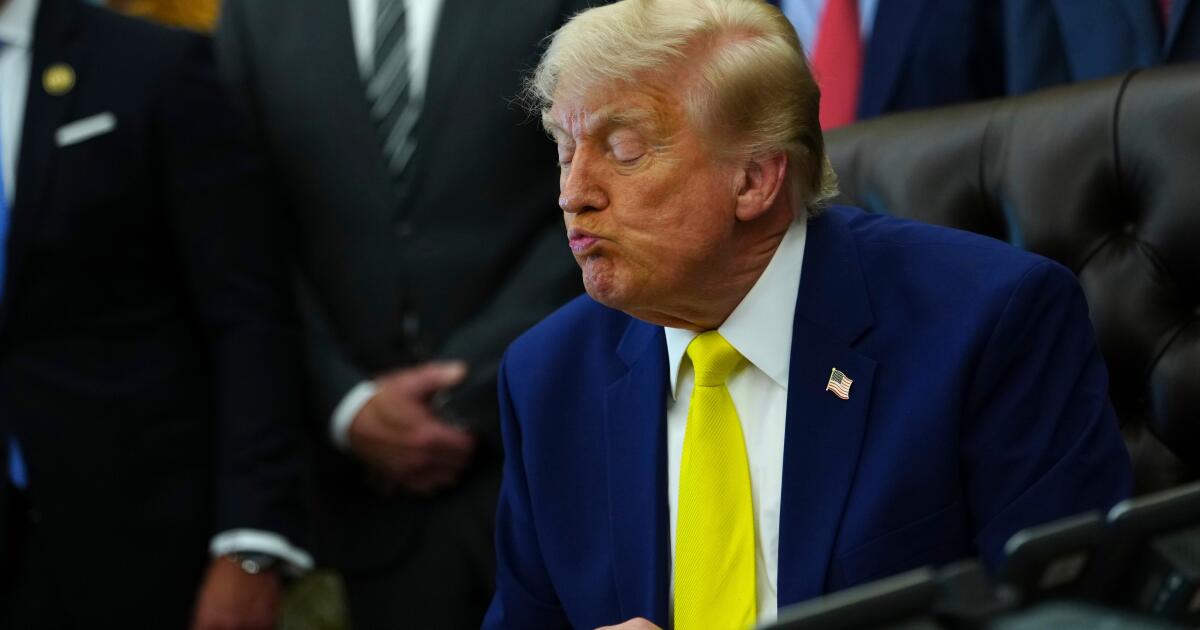
“What happened last night is exactly the reason that our great Military, Secret Service, Law Enforcement and, for different reasons, every President for the last 150 years, have been DEMANDING that a large, safe, and secure Ballroom be built ON THE GROUNDS OF THE WHITE HOUSE,” Trump wrote on social media Sunday. “This event would never have happened with the Militarily Top Secret Ballroom currently under construction at the White House. It cannot be built fast enough!”

Weijia Jiang, president of the correspondents’ association, said in a statement Sunday that the group’s board “will be meeting to assess what happened and determine how to proceed.” She also thanked the U.S. Secret Service and other law enforcement for keeping people safe, and praised journalists in the room for leaping to work to inform the public of what had occurred.

Times staff writers Richard Winton, Ben Wieder and Justine McDaniel contributed to this report.
Source link

Accused shooter was targeting Trump and US officials, authorities say | Donald Trump News

President Donald Trump says suspect wrote an anti-Christian declaration and is ‘sick guy’.

United States authorities believe a gunman who is accused of trying to storm the White House Correspondents’ Association dinner was targeting US President Donald Trump and members of his administration, acting Attorney General Todd Blanche says.

Blanche said on Sunday that authorities believe the suspect travelled from California to Washington, DC, by train via Chicago.

Recommended Stories

list of 4 itemsend of list

Shots were fired on Saturday evening near the ballroom where the dinner was being held as Secret Service agents subdued the gunman and as Trump, top government officials and hundreds of journalists attended the event.

Investigators have not publicly named the suspect, but multiple US media outlets have identified him as Cole Tomas Allen, 31, of Torrance, California.

Trump told Fox News that the family of the suspect raised concerns about him to local police before the event. The president also told the TV news channel that the accused man had written an anti-Christian declaration.

“The guy is a sick guy,” he told Fox News. “When you read his manifesto, he hates Christians.”

Law enforcement officials who made initial examinations of the suspect’s electronic devices and his writings believe he intended to target Trump administration members in attendance at the dinner.

“It does appear that he did in fact set out to target folks who work in the administration, likely including the president,” Blanche told the NBC TV network.

The suspect is believed to have bought the two firearms he carried with him on Saturday night in the past couple of years, the attorney general said. He is not being cooperative with law enforcement and is expected to face multiple charges on Monday, Blanche said.

Social media posts that appear to match the suspect show he is a highly educated tutor and amateur video game developer with multiple degrees in computer science and mechanical engineering.

Video posted by Trump showed the suspect running past security barricades as Secret Service agents ran towards him. One officer in a bullet-resistant vest was shot but was recovering, officials said. The gunman was taken into custody and was not injured but was taken to hospital to be evaluated, police said.

Outside the hotel, members of the National Guard and other authorities flooded the area as helicopters circled overhead.

Trump used the incident to push his plans to construct a large ballroom next to the White House, a plan that has faced legal challenges and that polls indicate most Americans oppose.

“What happened last night is exactly the reason that our great Military, Secret Service, Law Enforcement and, for different reasons, every President for the last 150 years, have been DEMANDING that a large, safe, and secure Ballroom be built ON THE GROUNDS OF THE WHITE HOUSE,” Trump wrote on his Truth Social platform on Sunday.

The $400m ballroom has become a passion project for Trump during his second term.

Trump was unusually conciliatory after what he saw as a third attempt on his life in less than two years, calling for unity and bipartisan healing.

Source link

City officials ask how thousands of sensitive LAPD files got leaked

In the aftermath of a recent data breach that saw hackers make off with a vast trove of confidential police records, Los Angeles leaders have sought an explanation from the city’s top lawyer, whose office was targeted.

What they have gotten so far, according to Councilmember Ysabel Jurado, are answers that only leave more questions.

In an interview, Jurado said she had expected City Atty. Hydee Feldstein Soto to appear before the Government Operations committee this week, but instead had received an internal report offering a “high level view” of the breach that left many key details unaddressed.

“When did the city attorney’s office become aware, what actions were taken, and why were city officials not notified promptly?” Jurado said. “Right now, we’re still left to question and trying to assemble the information.”

The Times reported the existence of the hack last week, prompting further scrutiny by public officials — some of whom, like Jurado, said they hadn’t previously been informed. Since then, The Times has reviewed an inventory of 337,000 files that were compromised.

The documents amount to millions of pages, and appear to mostly come from civil lawsuits against the city that have been resolved in court. They range in nature from trip-and-fall cases to police excessive force.

During a brief discussion at the council committee Tuesday morning, Jurado said she had received information that an internal link used by the city attorney’s office to access the files had been clicked at least 5,000 times on the first day of the breach, which is thought to have occurred sometime in March.

The files were not secured by a password, according to sources who spoke previously with The Times and requested anonymity because they were not authorized to discuss the ongoing investigation. A senior police official last week assured the department’s civilian bosses, the Police Commission, that none of the department’s own systems had been compromised.

Jurado said she wanted answers for why and how the city had managed to leave exposed sensitive records, such as medical reports, autopsy photos and witness names.

“It’s just horrific to think that that was out there,” Jurado said.

The city attorney’s office responded to questions from The Times by referring to a public report issued April 17, which said a preliminary investigation indicated that “the incident was contained to that third-party environment, and that no other City applications, systems, or department records were accessed or affected.”

The report noted that the hackers teased “small samples” of the data on its dark web site over a week starting March 20, before publishing the whole thing on March 27. The data were taken down after about eight hours, and then reappeared again twice in early April, the report said.

In a separate letter to the police union, the office said it would begin notifying people whose information was compromised “without unreasonable delay.”

The inventory reviewed by The Times shows personnel files for LAPD officers who were accused of using excessive force against a Black military veteran during a traffic stop in 2021. Another file included the identities of witnesses who saw a man die after LAPD officers knelt on him during an arrest, the records reviewed by The Times showed.

Thousands of hours of uncut body camera footage were released. There were also medical records from thousands of cases in which police and other city employees were accused of misconduct. At least 1,060 of the files are labeled as confidential, the inventory says.

The city attorney’s office has said that it alerted senior LAPD officials and the city’s IT department as soon as they discovered the leak, and has in the weeks since been in regular contact with other city departments to assess the scope of the leak. The FBI has begun investigating the matter.

The situation has already cost Feldstein Soto, who is up for reelection, the endorsement of the powerful union for the LAPD’s rank-and-file officers, which withdrew its support after accusing the city attorney of failing to disclose the full extent of the breach.

The leak follows Feldstein Soto’s efforts to weaken the state’s public records law after the release of many police officer photos and other materials, which she demanded be returned.

Several attorneys whose cases were included in the list of compromised files told The Times they have not yet heard from city officials. Some said they could foresee the records leaked being used as justification to reopen old cases — or initiate new ones.

“I’m curious to know what exactly it is that the city attorney’s office had that they may not have disclosed to us in discovery,” Arnoldo Casillas, an attorney for the family of Eric Rivera, a 20-year-old man whose family sued after he was killed by police in Wilmington in 2017 and whose files are among those included in the leak, according to the inventory reviewed by The Times.

The case was later dismissed, but the family has filed an appeal.

Other attorneys whose lawsuits against the city and LAPD were listed among the hacked materials said they wanted to know exactly what was included in the files.

Robert Glassman, who successfully sued for $18 million last year on behalf of two elderly brothers who were badly injured when a speeding LAPD squad car broadsided their vehicle, said he also hadn’t heard from the city attorney’s office.

“You’d think that they would notify [the affected parties] and tell them that they’re working to get their information back,” he said.

Experts said similar cyberattacks on government offices across the country have shown it can take months or years for the dust to fully settle and the full scope of the damage to emerge.

James E. Lee, president of the Identity Theft Resource Center, a nonprofit organization that provides advice and assistance related to identity theft, said last year alone the center documented an all-time high of 3,322 hacks.

That’s almost certainly an undercount, given the number of cases that go undetected or unreported, Lee said. Of the recorded incidents, roughly 165 targeted government agencies — up from 47 in 2020, he said.

In the past, according to Lee, many attacks of government entities were carried out by state-sponsored actors, but the emergence of AI-powered hacking tools have allowed everyday people to carry off such incursions.

“They want data that they can repurpose: anything that’s going to have financial information, anything that’s going to have driver’s license information is going to be very valuable to them,” he said.

Matthew McNicholas, a lawyer who has represented many officers in their lawsuits against the city, said he has fielded numerous calls from clients worried their personnel and medical records were exposed.

The leaked records, the inventory shows, include a case in which McNicholas sued the city on behalf of a victim who said they’d been sexually molested as a minor by an employee at a city-run recreational center.

McNicholas said he is worried that the leak will expose the private information of police whistleblowers who came forward to reveal discrimination and other misconduct.

The Associated Press contributed to this report.
Source link

Angry Altadena residents ask officials to halt Edison’s undergrounding work

Eaton wildfire survivors’ anger about Southern California Edison’s burying of electric wires in Altadena boiled over Tuesday with residents calling on government officials to temporarily halt the work.

In a letter to the Los Angeles County Board of Supervisors, more than 120 Altadena residents and the town’s council wrote that they had witnessed “manifest failures” by Edison in recent months as it has been tearing up streets and digging trenches to bury the wires.

The residents cited the unexpected financial cost of the work to homeowners and possible harm to the town’s remaining trees. They also pointed out how the work will leave telecommunication wires above ground on poles.

“The current lack of coordination is compounding the stress of a community still reeling from the Eaton Fire, and risks causing further irreparable harm,” the residents wrote.

The council voted unanimously Tuesday night to send the letter.

Scott Johnson, an Edison spokesman, said Wednesday that the company has been working to address the concerns, including by looking for other sources of funds to help pay for the homeowners’ costs.

“We recognize this community has already faced a number of challenges,” he said.

Johnson said the company will allow homeowners to keep existing overhead lines connecting their homes to the grid if they are worried about the cost.

Edison’s crews, Johnson said, have also been trained to use equipment that avoids roots and preserves the health of trees.

The utility has said that burying the wires as the town rebuilds thousands of homes destroyed in the fire will make the electrical grid safer and more reliable.

But anger has grown as work crews have shown up unexpectedly and residents learned they’re on the hook to pay tens of thousands of dollars to connect their homes to the buried lines.

Residents have also found the crews digging under the town’s oak and pine trees that survived last year’s fire. Arborists say the trenches could destroy the roots of some of the last remaining trees and kill them.

Amy Bodek, the county’s regional planning director, recently warned Edison that a government ordinance protects oak trees and that “utility trenching is not exempt from these requirements.”

Residents have also pointed out that in much of Altadena, the telecom companies, including Spectrum and AT&T, have not agreed to bury their wires in Edison’s trenches. That means the telecom wires will remain on poles above ground, which residents say is visually unappealing.

“While our community supports the long-term benefits of moving utilities underground, the current execution by SCE is placing undue financial and planning burdens on homeowners, causing irreparable harm to our heritage tree canopy, and proceeding without adequate local oversight,” the residents wrote.

They want the project halted until the problems are addressed.

Edison announced last year that it would spend as much as $925 million to underground and rebuild its grid in Altadena and Malibu, where the Palisades fire caused devastation.

The work — which costs an estimated $4 million per mile — will earn the utility millions of dollars in profits as its electric customers pay for it over the next decades.

Pedro Pizarro, chief executive of Edison International, told Gov. Gavin Newsom last year that state utility rules would require Altadena and Malibu homeowners to pay to underground the electric wire from their property line to the panel on their house. Pizarro estimated it would cost $8,000 to $10,000 for each home.

But some residents, who need to dig long trenches, say it will cost them much more.

“We are rebuilding and with the insurance shortfall, our finances are stretched already,” Marilyn Chong, an Altadena resident, wrote in a comment attached to the letter. “Incurring the additional burden of financing SCE’s infrastructure is not something we can or should have to do.”

Other fire survivors complained of Edison’s lack of planning and coordination with residents.

“I’ve started rebuilding, and apparently there won’t be underground power lines for me to connect with in time when my house will be done,” wrote Gail Murphy. “So apparently I’m supposed to be using a generator, and for how long!?”

Johnson said the company has set up a phone line for people with concerns or questions. That line — 1-800-250-7339 — is answered Monday through Saturday, he said.

Residents can also go to Edison’s office in Altadena at 2680 Fair Oaks Avenue. The office is open Monday to Friday from 8 to 4:30.

It’s unclear if the Eaton fire would have been less disastrous if Altadena’s neighborhood power lines had been buried.

The blaze ignited under Edison’s towering transmission lines that run through Eaton Canyon. Those lines carry bulk power through the company’s territory. In Altadena, Edison is burying the smaller distribution lines, which carry power to homes.

The government investigation into the cause of the fire has not yet been released. Pizarro has said that a leading theory is that a century-old transmission line, which had not carried power for 50 years, somehow re-energized to spark the blaze.

The fire killed at least 19 people and destroyed more than 9,400 homes and other structures.

Source link

Cuba confirms talks with US officials, wants end to Trump’s energy blockade | Donald Trump News

A Cuban Foreign Ministry official said the exchange with Washington was ‘respectful and professional’ and devoid of threats.

The Cuban government has confirmed that it held recent talks in Havana with officials from the United States, as tensions remain high between the two countries over Washington’s energy blockade of the Caribbean country.

Alejandro Garcia del Toro, deputy director general in charge of US affairs at the Cuban Ministry of Foreign Affairs, said on Monday that the US delegation included assistant secretaries of state, and the Cuban delegation included representatives at the level of deputy foreign minister.

Recommended Stories

list of 4 itemsend of list

Garcia de Toro said that the US delegation did not issue any threats or deadlines as had been reported by some US media outlets.

“The entire exchange was conducted with respect and professionalism,” he said.

In comments reported by Cuba’s Communist Party newspaper Granma, Garcia del Toro emphasised that ending the three-month-old US oil blockade was “a top priority” for the Cuban government in the talks, and accused Washington of “blackmail” for threatening countries that export oil to Cuba with tariffs.

“This act of economic coercion is an unjustified punishment for the entire Cuban population,” he said.

“It is also a form of global blackmail against sovereign states, which have every right to export fuel to Cuba, in accordance with the principles of free trade,” he added.

US news outlet Axios reported on Friday that officials from US President Donald Trump’s administration held multiple meetings in Havana on April 10, including with Raul Guillermo Rodriguez Castro, grandson of former President Raul Castro. The meetings marked the first time that American diplomats had flown into Cuba since 2016 in a new diplomatic push.

According to reports, US officials laid out several conditions for negotiations with Cuba to continue, including the release of prominent political prisoners, an end to political repression, and liberalising the island’s ailing economy.

The Reuters news agency said that US proposals for Cuba also include allowing Elon Musk’s Starlink internet terminals into the country and providing compensation for Americans and US corporations for assets confiscated by Cuba after the 1959 revolution. Washington is also concerned about the influence of foreign powers on the island, a US official told the news agency.

Trump has hinted at military intervention in Cuba and warned of tariffs on any country that sells or supplies oil to Cuba. The fuel blockade has aggravated Cuba’s economic and energy crisis, leading to warnings of a humanitarian disaster.

Cubans have also braced for a possible attack following Trump’s repeated warnings that the country will be “next” after his war on Iran and the US military’s abduction of Venezuela’s President Nicolas Maduro in January.

Last week, Cuban President Miguel Diaz-Canel said that his country was prepared to fight if the US carried through on its threats.

The leaders of Mexico, Spain and Brazil on Saturday voiced concern over the “dramatic situation” in Cuba and urged “sincere and respectful dialogue”.

German Chancellor Friedrich Merz said on Monday there was no evident justification for the US to attack Cuba.

“The ability to defend oneself does not mean the right to intervene militarily in other states when their political systems do not match what others might have in mind,” he said.

Source link