Occasional Digest

New financial crisis that is not your fault but will ruin you on way

EXPERTS have warned that a new financial crisis which you did nothing to contribute to but will f**k you right up is coming, so bad luck.

The predicted crash due to Trump’s policies and overinvestment in AI – both of which you vocally opposed but it isn’t up to you, is it? – means that from next year you cannot afford to run a car.

Market analyst Anthony, not his real name, said: “Oh dear. Hard times ahead because of this AI bubble. What do you mean it’s nothing to do with you? It’s your money we invested.

“The good news is we in the City made a great deal out of it, commission and suchlike, so we’re protected from its worst effects. The bad news is that you won’t be. Redundancies are expected. Belt-tightening, all that. Hope you’ve set three years of salary aside!

“You haven’t? You’re still reeling from the credit crunch? Yes well you should have known better than to allow your pension fund to go large on subprime investments. Actions have consequences. We take the actions, you suffer the consequences.”

Martin, not his real name, of Macquery, a gay Scottish Bank said: “I know capitalism’s good because iPhones, but we seem locked into a boom-and-bust cycle where the boom happens to others and the bust happens to me.

“You do know I’m still shopping at Aldi? That I never made the step back up to Tesco? Is anybody interested in that? Hello?”

Wednesday 5 November That Luang Festival in Lao

Pha That Luang (the Golden Stupa) is a gold-covered large Buddhist stupa located in the centre of Vientiane, the capital of Lao. 

The first stupa was established in the third century, and is a sacred site as the tip is believed to house a relic of Buddha. It has been rebuilt several times over the centuries. The current incarnation dates from 1566.

It is the most important religious building in the country and a national symbol that features on the country’s emblem.

Dating back to the 16th century, the That Luang Buddhist festival is held over three-seven days during the full moon of the twelfth lunar month (November).

Before dawn, thousands join in a ceremonial offering and group prayer, followed by a procession. For days afterward, a combined trade fair and carnival offers handicrafts, flowers, games, concerts, and dance shows.

The festival is one of the most popular national holidays in Lao and attracts pilgrims from all over the country and from other countries such as Thailand, Cambodia and Vietnam. It is also the date of an international trade fair promoting tourism in the region.

Tuesday 4 November Water Festival Ceremony in Cambodia

The festival marks a reversal of the flow between the Mekong and Tonle Sap rivers. Due to the amount of water deposited during the rainy season, the Tonle Sap river becomes so swollen with water that it reverses the direction of its flow and flows upstream to Tonle Sap lake.

The festival marks the switching of the flow back to its normal direction, signifying the end of the rainy season. Essentially, the festival is a time to give thanks to the rivers as they provide the region with fertile farming land and plenty of fish.

The festival is focused on boat races and concerts. The roots of the boat races can be traced back to the times of the Angkorian kings who would train and evaluate the fighting skills of their water based warriors by holding competitions on the river. These trials in turn honoured the naval victories of the Khmer empire under the leadership of Jayavarman VII in the twelfth century.

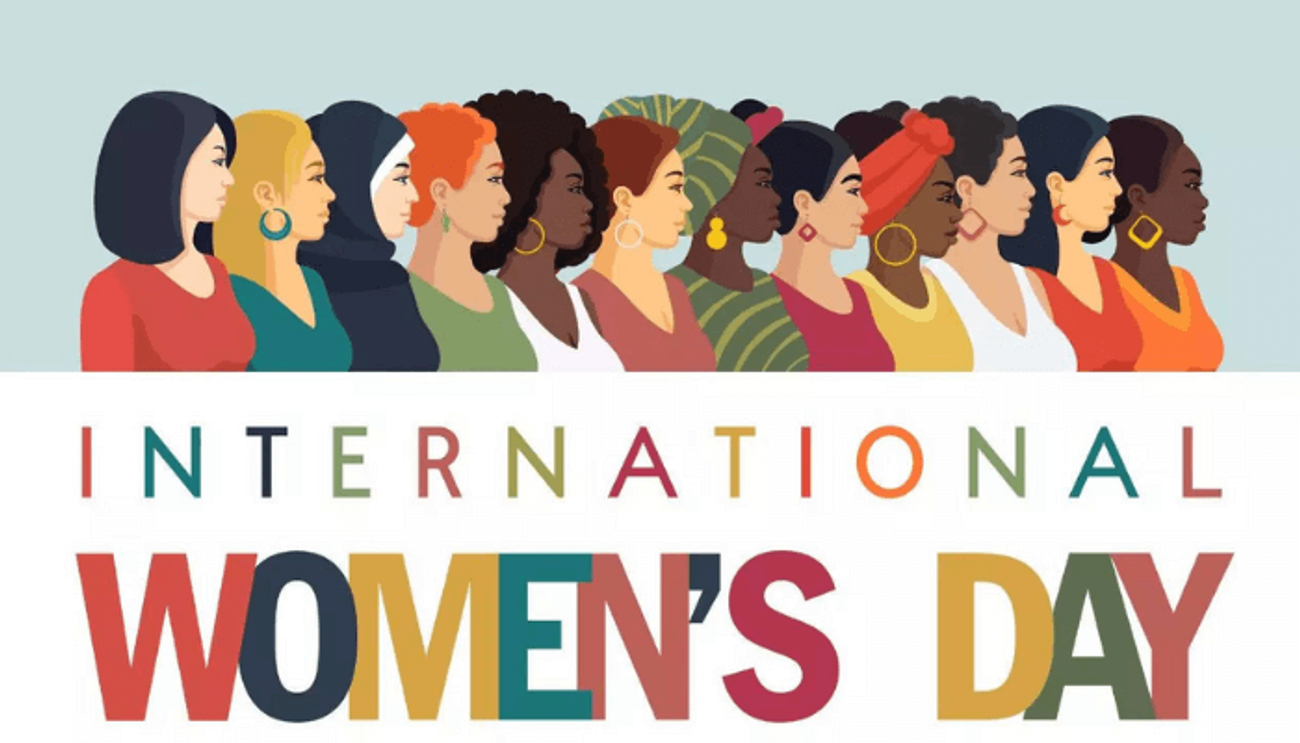
Monday 3 November National Women’s Day in East Timor

On March 13th 2023, the National Parliament approved November 3rd as National Women’s Day. National Women’s Day is one of the commemorative days celebrated on November 3rd to mark the death in 1975 of the Timorese heroine and fighter, Maria Tapo, who fought and sacrificed her life for the self-determination and independence of the country.

Tapo represents all Timorese women who dedicated and sacrificed themselves among many heroes during Timor-Leste’s 24-year resistance. 

The purpose of creating this national day is to strengthen the recognition of the role of women in society. This date celebrates women as a partner with equal rights, at the constitutional level, but also under the cultural perspective, of inclusion and social value of women in Timorese society.

The seven stages of your workplace getting obsessed with AI then realising it’s bollocks

ANYONE with a job is likely to have witnessed managers gushing about AI then quietly ditching the idea. See where your employer is in the cycle of AI hype.

1. Insane enthusiasm

Every aspect of our lives will be transformed by AI and you’re going to be on the cutting edge, your boss assures you. This is based on seeing some moderately realistic pictures of kittens having a birthday party.

2. The first bold steps

You attend meetings about how AI will ‘supercharge’ your business. Enthusiasm is high, and you feel a bit Silicon Valley. You start taking an interest in AI generally and read articles by credulous journalists who don’t appear to realise Elon Musk is a pathological liar. There are undertones of being in a cult, but people forget cults give you a lovely sense of belonging. You love AI.

3. No one can think of anything for AI to actually do

It turns out AI doesn’t have any obvious uses for your company. Apparently a kitchen worktop supplier in Reading doesn’t need a real-time global translation service like Microsoft. Your boss responds by finding unnecessary projects for AI to do in a classic case of ‘technology looking for an application’. At least your clients will be getting video Christmas cards this year with Avatar-standard graphics.

4. Doubts creep in

Heretical thoughts begin. Are companies just pumping their share price with AI? Did anyone ever decide what AI was actually going to be for? Are tech bros full of shit? You note that Zuckerberg thinks we’re going to wear AI glasses bombarding us with trivia that wankers will just use to try to chat up women, eg. ‘Did you know we’re 365.55 million kilometres from Mars, Emma? Makes you think, eh?’

5. AI plans get downscaled

Eventually your company decides to use AI to process invoices a bit faster, so you won’t be conversing with Deep Thought every day or getting a cool robot buddy like K-2SO. It’s good that AI will be helping the company, but it’s a kick in the nuts when you thought Joi from Blade Runner 2049 would be waiting for you lovingly at your desk every morning.

6. You grow to hate AI

Your new AI tools have teething troubles, requiring endless tweaks and forcing you to redo things. Combined with incessant AI bullshit in the media you start to hate the whole thing. You long to work in a low-tech office of the 1950s where the only technology you’re expected to engage with is a pencil sharpener and it’s fine to have lurid yellow teeth from smoking.

7. AI is quietly dropped

Suddenly AI is never spoken of, like a deformed child in the basement, and your company gets on with doing things the way you’ve always done them, on Windows Vista. That’s not to say AI hasn’t profoundly affected your business; you’re still spending countless man hours asking ChatGPT ‘Write me funny jokes about cocks’ and making hilarious images of your colleague Gavin as a xenomorph.

Sunday 2 November Day of the Dead in Mexico

The Day of the Dead dates back to the ancient Aztec custom of celebrating the dead. The Aztecs were a Mesoamerican (a region that covers central Mexico through Belize, Guatemala, El Salvador, Honduras, Nicaragua, and northern Costa Rica) culture from 1300 AD that lasted until 1521 AD. Some historians argue that the roots of Day of the Dead stem from celebrating fearsome underworld gods, in particular the goddess Mictecacihuatl.

Other historians argue that Day of the Dead is revivalist, in so far as it’s based on an Aztec belief system, created by President Lázaro Cárdenas del Río (1895 to 1970) to promote Mexican Nationalism in the 20th Century.

Día de Muertos has been observed across all of Mexico since the 1960s when the Mexican government made it a national holiday based on educational policies.

In 2008, the tradition was inscribed in the Representative List of the Intangible Cultural Heritage of Humanity by the United Nations Educational, Scientific, & Cultural Organization (UNESCO).

20th-century printer and cartoonist José Guadalupe Posada’s La Calavera Catrina, Elegant Skull, was adapted into the holiday as one of the most recognizable icons.  It depicts a female skeleton adorned with makeup and dressed in fancy clothes.