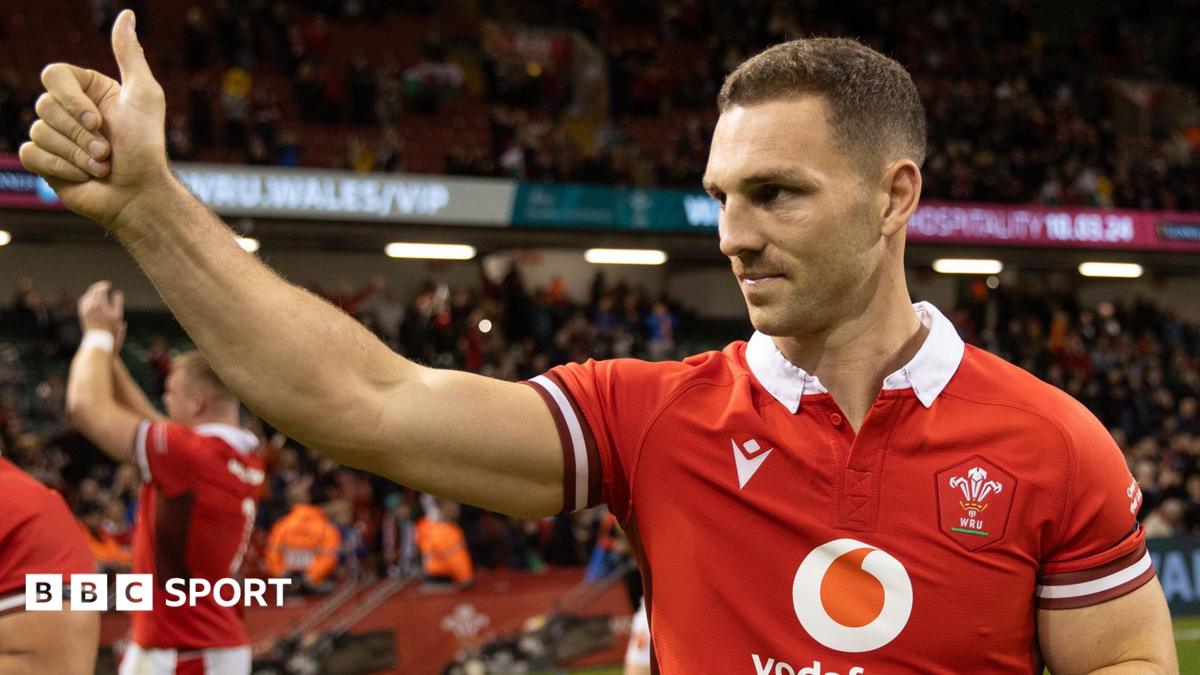
North will link up with the Barbarians squad in London next week after the invitational side have played South Africa on Saturday.
The Wales and Barbarians occasion in Twickenham will be a double-header with the men’s game at 14:00 BST followed by the women’s game at 17:00 BST.
On the previous occasion that Wales men faced the Barbarians, after the 2023 World Cup, Alun Wyn Jones and Justin Tipuric were given a farewell to the Welsh crowd when they lined up for the invitational side at the Principality Stadium.
This time North will be one of the headline acts.
“I have been privileged to enjoy the career I have had, and I have so many unforgettable memories from Wales and friendships to last a lifetime,” said North.
“So to go out against my country, with some of my friends and team-mates playing is so special.
“To also be able to play alongside some of the best and most exciting players in the world, and to enjoy that famous Barbarians spirit is something I couldn’t turn down.
“I can’t wait to link up with the boys next week and hopefully we can do something special.”
The Barbarians fixture is a warm-up for Wales’ Nations Championship Tests against Fiji, Argentina and South Africa in July.
To provide the best experiences, we use technologies like cookies to store and/or access device information. Consenting to these technologies will allow us to process data such as browsing behavior or unique IDs on this site. Not consenting or withdrawing consent, may adversely affect certain features and functions.
The technical storage or access is strictly necessary for the legitimate purpose of enabling the use of a specific service explicitly requested by the subscriber or user, or for the sole purpose of carrying out the transmission of a communication over an electronic communications network.
The technical storage or access is necessary for the legitimate purpose of storing preferences that are not requested by the subscriber or user.
The technical storage or access that is used exclusively for statistical purposes. The technical storage or access that is used exclusively for anonymous statistical purposes. Without a subpoena, voluntary compliance on the part of your Internet Service Provider, or additional records from a third party, information stored or retrieved for this purpose alone cannot usually be used to identify you.
The technical storage or access is required to create user profiles to send advertising, or to track the user on a website or across several websites for similar marketing purposes.
June 12 (Asia Today) — The 2026 FIFA World Cup opened with K-pop voices and performances woven into the tournament’s first major stages.
The tournament is the first World Cup jointly hosted by Mexico, the United States and Canada. With three host countries, opening events were held across North America, placing global pop, Latin music, hip-hop, Afrobeats and K-pop at the center of the celebration.
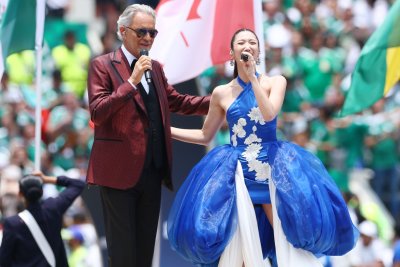
The first opening ceremony took place at Estadio Azteca in Mexico City before the match between Mexico and South Africa. Korean-American singer and songwriter EJAE performed “DNA,” the official FIFA World Cup 2026 anthem, with Italian tenor Andrea Bocelli.
The anthem also features David Guetta and Megan Thee Stallion. EJAE performed Korean lyrics during the ceremony, including a line that translates as, “Even if I fall again, I rise again.” Video of the moment spread quickly online after the performance.
The sound of Korean lyrics on an official World Cup stage carried symbolic weight for EJAE, who has drawn global attention for her work connected to the soundtrack of “KPop Demon Hunters.”
The U.S. opening ceremony was scheduled for SoFi Stadium in Inglewood, Calif., near Los Angeles. The event was designed as a large-scale entertainment show reflecting American pop culture and the country’s diverse immigrant communities.
BLACKPINK member Lisa was among the performers, joining a lineup that included Katy Perry, Anitta and Rema. Her appearance highlighted K-pop’s continued expansion into major global sports and entertainment events.
One of the most closely watched K-pop-linked songs of the tournament is Lisa’s “Goals,” released May 21. The track combines Latin pop, K-pop and Afrobeats and features multilingual lyrics and percussion influenced by African rhythms. Brazilian singer Anitta and Nigerian singer Rema also joined the project.
Lisa’s role places her not only among the opening ceremony performers but also among the artists attached to the World Cup’s official music program.
K-pop’s presence is also expected to continue through the end of the tournament. BTS is scheduled to appear as a co-headliner at the final halftime show on July 19 at MetLife Stadium in East Rutherford, N.J., alongside Madonna and Shakira.
It will be the first halftime show held during a World Cup final, giving the tournament a Super Bowl-style entertainment moment.
For K-pop, the 2026 World Cup is not limited to one performance. EJAE brought Korean lyrics to the Mexico opening ceremony. Lisa helped anchor the U.S. opening stage. BTS is set to appear during the final.
From the opening match to the championship stage, K-pop has been placed at key moments in the world’s largest soccer event.
The lineup reflects how global sports organizers increasingly view K-pop not as a regional trend but as a mainstream force in international entertainment. At the 2026 World Cup, K-pop is helping shape the sound and image of the tournament itself.
1 of 2 | South Korean Kim Kuk-gi speaking during a news conference in Pyongyang, North Korea. North Korea’s official Korean Central News Agency (KCNA) said that North Korea has detained South Koreans Kim Kuk-gi and Choe Chun-gil on espionage charges. An unnamed official at the North’s Ministry of State Security branded them as ‘spies’ of the South’s National Intelligence Service and ‘heinous terrorists’. Photo by YONHAP / EPA
June 10 (Asia Today) — Senior U.S. human rights officials visiting South Korea met over two days with families of South Koreans detained or abducted by North Korea, civic groups said Wednesday.
The meetings included families of South Korean missionaries detained in North Korea, wartime and postwar abductees and prisoners of war who were not repatriated after the Korean War.
Riley M. Barnes, assistant secretary of state for democracy, human rights and labor, met Tuesday with Choi Jin-young, the son of South Korean missionary Choi Chun-gil, who is being held in North Korea, according to civic groups.
Julie Turner, acting deputy assistant secretary in the State Department’s Bureau of Democracy, Human Rights and Labor, and Belsis Romero, a White House faith liaison, also took part in the visit.
On Wednesday, U.S. officials met representatives of groups representing families of Korean War abductees, postwar abductees and prisoners of war.
The U.S. officials told the families that Washington continues to pay attention to the issue and that its position has not changed on supporting efforts to confirm the detainees’ status and seek their return, according to the groups.
Choi thanked Barnes for calling for the release of South Koreans detained in North Korea, including missionaries Kim Jung-wook, Kim Kuk-gi and Choi Chun-gil, during a video message last month for an international conference announcing the formation of the Republic of Korea Hostage Family Association.
Choi also delivered a letter addressed to President Donald Trump asking the United States to make the safe return of South Korean detainees, including the three missionaries, part of its North Korea diplomacy.
He also delivered 10,000 signatures gathered online and offline, largely through Korean churches in Los Angeles, calling for the detainees’ repatriation and confirmation of whether they are alive.
Kim Jung-sam, the older brother of missionary Kim Jung-wook, also sent a letter asking Trump to speak out during his presidency on detainees and religious freedom.
Choi said he asked U.S. officials to send a message that Washington has not forgotten the detained missionaries.
“I asked that the U.S. ambassador, the secretary of state or the president meet from time to time with families of South Korean abductees, detainees and prisoners of war,” Choi said. “In that context, I also requested that the U.S. ambassador to South Korea attend an event for Abductees Remembrance Day.”
Lee Sung-eui, head of the Korean War Abductees’ Family Union, Choi Sung-ryong, head of the Association of the Families of Postwar Abductees, and Sohn Myung-hwa, head of a group representing families of prisoners of war, met Turner on Wednesday and urged continued U.S. attention to the abduction issue.
Lee delivered a letter asking Washington to place humanitarian issues first in any future U.S.-North Korea talks, including the return of detained South Koreans, confirmation of the fate of abductees and visits by bereaved families to graves in North Korea.
Lee said he emphasized that wartime abductions during the 1950-53 Korean War were “the root of all forced disappearance crimes committed by North Korea.”
Barnes and Turner also met Saturday with Son Hyun-bo, pastor of Segero Church, who led rallies opposing the impeachment of former President Yoon Suk Yeol. The U.S. officials discussed religious freedom issues in South Korea and attended a Sunday worship service.
On Monday, the U.S. delegation also met Chang Wook-jin, director-general for global multilateral diplomacy at South Korea’s Foreign Ministry, to discuss bilateral efforts to promote democracy and human rights.
A South Korean Foreign Ministry official said the U.S. State Department regularly communicates with a wide range of stakeholders inside and outside South Korea while preparing annual reports on human rights, trafficking in persons and international religious freedom.
The official said the delegation’s visit to South Korea was part of that regular outreach.
A civic group official who recently visited the United States and met State Department officials said the bureau’s meeting with families of North Korean detainees appeared connected to Washington’s recent attention to religious persecution.
The official said U.S. officials also asked questions during a recent meeting about religious freedom and human rights issues involving the South Korean government.
ILLUSTRATION – A person sits in front of a computer screen. South Korea’s spy agency says North Korea’s AI-assisted cyberattacks could generate tens of thousands of malicious actions per second. SASCHA STEINBACH / EPA
June 10 (Asia Today) — Artificial intelligence is reshaping the cybersecurity battlefield, South Korea’s spy agency warned, saying North Korean hacking groups are moving toward autonomous attacks that can identify vulnerabilities, break into systems and monetize stolen data with limited human involvement.
The National Cyber Security Center, operated under the National Intelligence Service, issued the warning in its 2026 National Information Security White Paper, released Sunday.
The agency said the rapid development of AI has sharply increased the capabilities of attackers, while the spread of cloud infrastructure and the neglect of aging systems have exposed structural weaknesses in South Korea’s cyber defenses.
The agency focused in particular on the rise of agentic AI, a form of autonomous artificial intelligence that can set goals, analyze data and manipulate external systems without constant human direction.
When used by hackers, the technology can generate large volumes of phishing messages and other social engineering content, develop hacking tools such as ransomware and carry out large-scale operations with fewer people, less time and lower costs.
Concerns over the misuse of agentic AI grew recently after Anthropic’s AI model Mythos was reported to have produced Windows attack code in 31 minutes.
The shift is especially visible among North Korean hacking organizations. Global cybersecurity companies including Kaspersky and Google Threat Intelligence Group have identified signs that the North Korea-linked group Kimsuky used large language models to help write code.
Another North Korea-linked hacking group, APT45, repeatedly entered prompts at scale to search for software vulnerabilities and test whether attack code could be executed.
Analysts increasingly believe North Korea began designing and testing AI-automated attacks last year and has now largely adopted the technology. The change is seen as allowing North Korean hackers to overcome personnel limitations and launch larger attacks on a regular basis.
North Korea stole a record 2.2 trillion won, or about $1.46 billion, in virtual assets last year.
While North Korea’s cyber capabilities are advancing rapidly, many South Korean public and private systems remain vulnerable because of aging infrastructure. The risk is growing as organizations adopt AI across more areas of work without fully updating their defenses.
The agency said agentic AI is particularly suited to manipulating AI systems used by target organizations, meaning South Korea could be expanding potential attack routes unless it strengthens its security systems.
“Starting this year, agentic AI will autonomously carry out the full attack life cycle and generate tens of thousands of malicious actions per second,” the agency said. “Defense systems also must immediately shift to autonomous security operations that minimize human intervention and identify and isolate threats at machine speed.”
Experts said isolated responses are no longer enough and called for a national-level control tower capable of continuous cyber response.
“The only current method is to use AI to find security problems, patch them as quickly as possible and prevent attacks,” said Choi Byung-ho, a research professor at Korea University’s Human-Inspired AI Research Institute. “A governance system capable of responding to hacking within 24 hours is needed, but it is difficult because of issues such as delegated authority.”
CHAPEL HILL, N.C. — USC’s 2026 baseball season will be defined by two words — progress and pain.
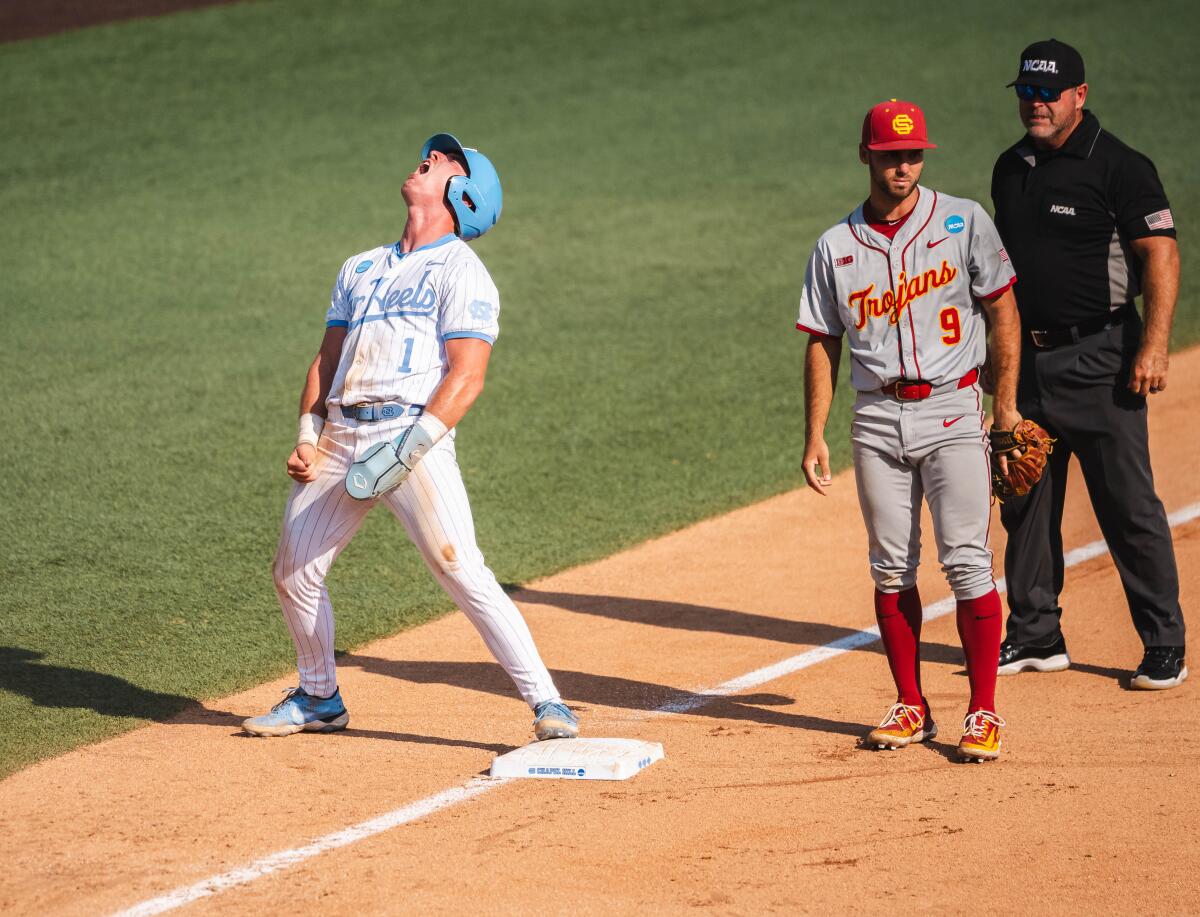
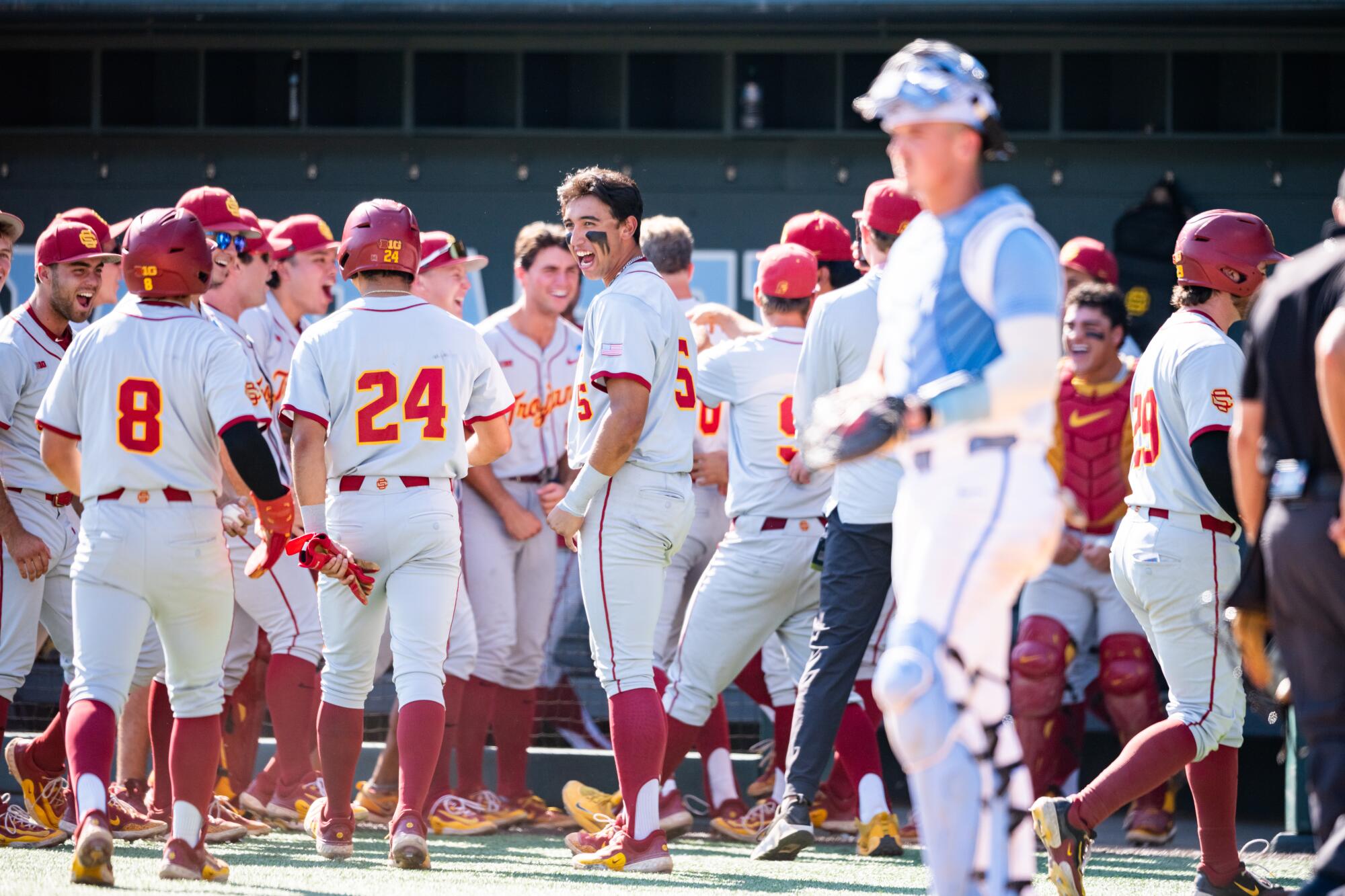
Just two outs away from reaching the College World Series for the first time since 2001, USC suffered a devastating 4-3 loss in game three of the Chapel Hill Super Regional, as North Carolina rallied for two runs in the bottom of the ninth and snatched the trip to Omaha away from the Trojans on Owen Hull’s walk-off RBI double into the left-center gap.
“I’m proud of our boys,” USC coach Andy Stankiewicz said. “I’m disappointed in the results, but I’m never disappointed in our guys. They did something pretty special this year.”
Andrew Johnson did everything possible and then some to get USC (48-18) across the finish line. After already throwing 3 ⅔ innings of shutout baseball to close Game 1, Johnson went a season-high 7 ⅔ innings with two earned runs surrendered to get the Trojans to the doorstep of victory. He glided through North Carolina’s lineup for most of the day, at one point retiring 15 out of 17 batters.
North Carolina’s Cooper Nicholson celebrates during his team’s ninth-inning rally to beat USC in their super regional finale Sunday in Chapel Hill, N.C.
(Laura Wolff/For The Times)
He ended the super regional with 133 pitches thrown in a little over 48 hours, on top of the 145 pitches he threw across two appearances in the College Station Regional for a total of 278 tosses in 22 ⅓ innings with five earned runs given up in a heroic postseason stretch.
“The goal from the beginning of the season is Omaha,” Johnson said. “We’re definitely not just happy that we made it to supers and moved past the regional, but for it was a great season and we can be proud of what we accomplished.”
A first inning run off a Caden Glauber balk, plus Kevin Takeuchi and Andrew Lamb’s solo home runs accounted for all the offense on a day when the Tar Heels (50-12-1) had their own star pitcher going. Atlantic Coast Conference freshman of the year Caden Glauber held the Trojans at bay for most of the game, striking out a career high 11 batters in 7 ⅓ innings.
USC coach Andy Stankiewicz talks to his players after their season-ending loss to North Carolina.
(Laura Wolff / For The Times)
Glauber’s work was enough to hold his team in the game, but USC still had a 3-2 lead heading to the fateful bottom of the ninth. After closer Adam Troy retired the first batter, a long, loud foul ball seemed to spark North Carolina.
Third baseman Cooper Nicholson crushed a ball more than far enough for a home run, but just foul into the left field corner. But the near-miss seemed to rattle Troy, who walked Nicholson after getting ahead 0-2 in the count and fell behind 3-0 to nine-hole hitter Carter French.
Stankiewicz made a pitching change mid at-bat, going to Chase Herrell. French lined a 3-2 single through the right side, leadoff hitter Jake Schaffner tied the score on a sacrifice fly and Gavin Gallaher drew a walk, bringing Hull to the plate with the series’ winning run at second.
USC appeared to survive at least with extra innings when a Hull foul ball looked ticketed for the third out, but it dropped with three fielders in the area to give him an extra life. Hull pounded his fourth double of the game, prompting mass hysteria from the 3,913 Tar Heel fans and ultimate heartbreak in the other dugout.
Stankiewicz has built his program in stages, finally making the NCAA tournament last year and then going a step further this year.
But he also knows these opportunities are never guaranteed, and it will take a lot of work to return to the super regional stage.
“It’s a step,” he said. “Things take a moment. Sometimes we want things to happen overnight as humans I guess, but sometimes it takes a moment. We’ve been at this thing for awhile now, and we feel like we’re certainly building it and folks are taking notice. Now we just can’t go backwards. This thing’s got to continue moving forward.”
A positive season, but a nightmare ending sure to haunt the Trojans until they finally return to Omaha.
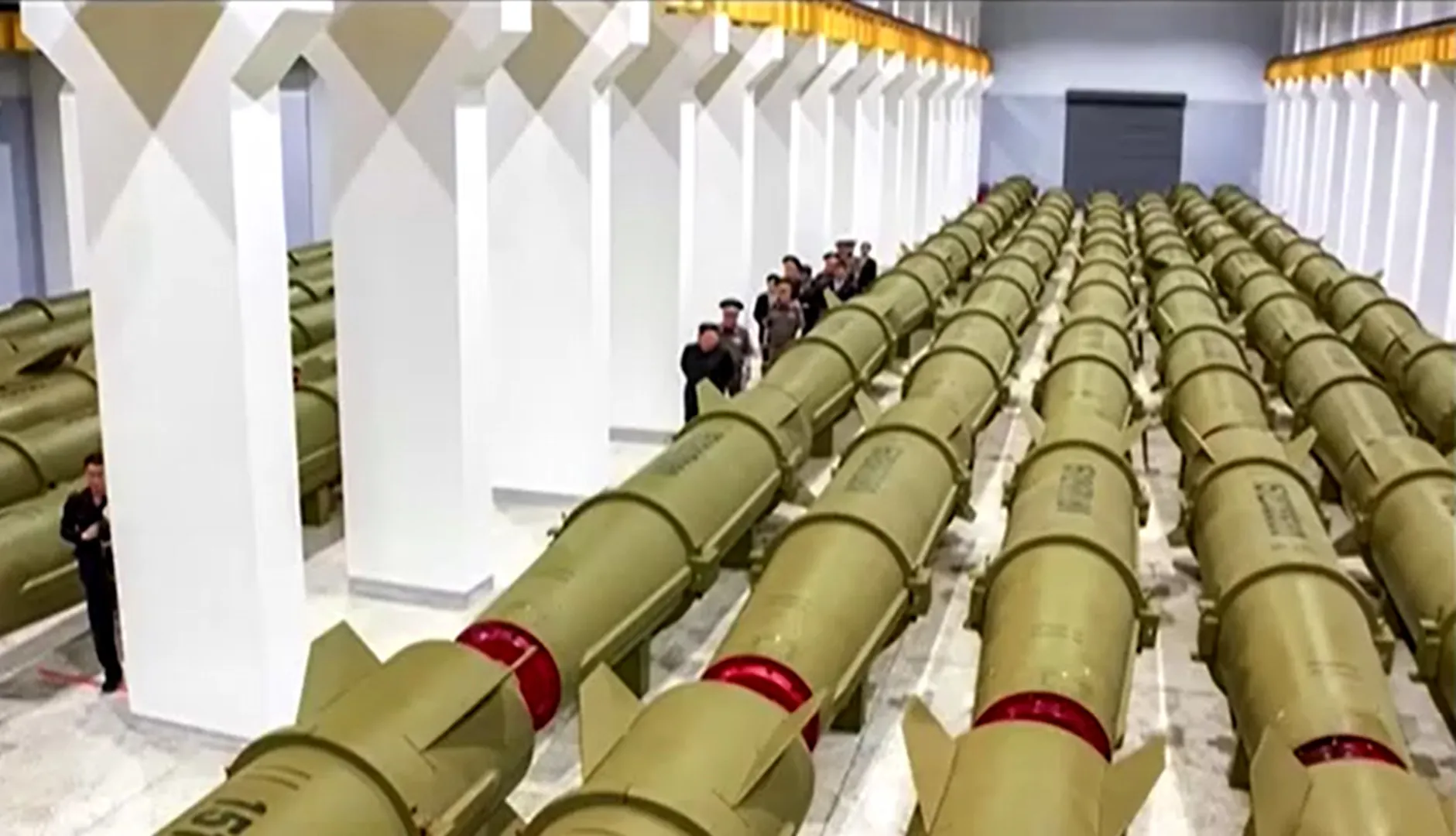
North Korea has released photos of Kim Jong Un inspecting huge munitions at a weapons factory ahead of Chinese president Xi Jinping’s visit. Pyongyang has ordered missile production capacity to be doubled in the next five years.
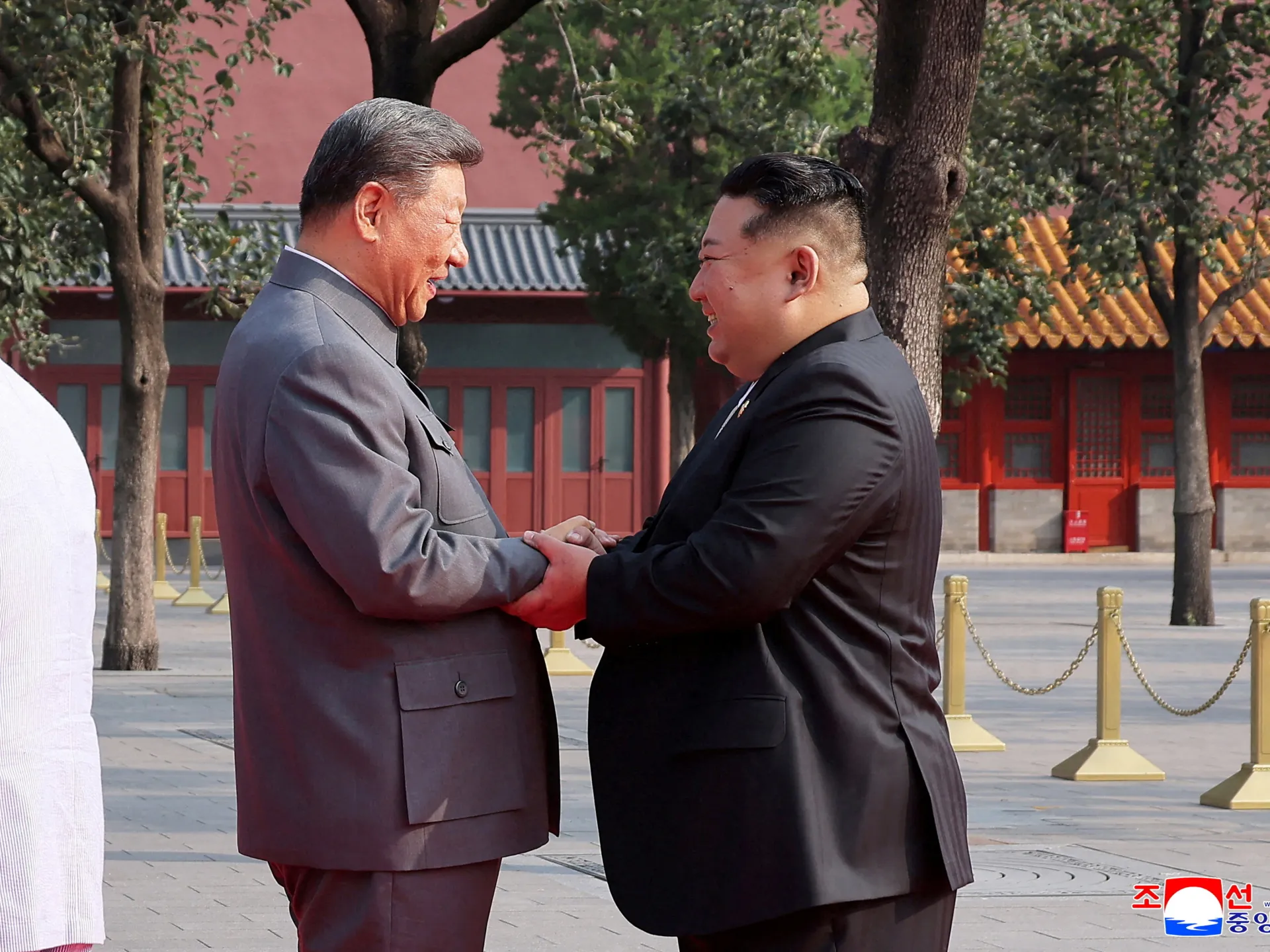
Chinese President Xi Jinping’s meeting with North Korea’s Kim Jong Un in Pyongyang on Sunday is significant for one reason.
It’s not that they are meeting: The two men met in Beijing just a year ago when China held a massive military parade to mark 80 years since Japan surrendered unconditionally to Allied forces, bringing an end to the second world war.
Recommended Stories
list of 4 itemsend of list
What’s surprising is that Xi is travelling at all.
The Chinese leader has not travelled to Pyongyang since 2019, having steadily cut down his travel in recent years, and world leaders like US President Donald Trump and Russian leader Vladimir Putin generally come to him these days.
“We need to remember that Xi Jinping has not really travelled abroad that much,” William Yang, Crisis Group’s senior analyst for Northeast Asia, told Al Jazeera. “The growing trend is foreign leaders heading to Beijing to meet with him.
“For Xi Jinping to be the one who decides to travel to Pyongyang, it shows the level of significance that China attaches to this trip.”
Xi averaged about 14 trips a year between 2013 and 2019, but dropped to approximately six a year between 2022 and 2025, according to the Asia Society. In 2020, he made just one overseas trip, and in 2021, he made none, as China grappled with the COVID-19 pandemic.
He may be travelling now, though, amid concerns about North Korea’s relationship with Russia, Yang said.
Senior partner no more?
Traditionally, Beijing played the role of senior partner in the China-North Korea relationship, with North Korea heavily dependent on China for as much as 95 percent of its trade, according to one 2022 estimate from the National Committee on North Korea, a US-based nonprofit.
That dynamic has been changing since Russia’s 2022 invasion of Ukraine, however. North Korea has provided Russia with critical weapons, artillery and manpower and is credited by observers with helping to keep Moscow’s war machine going.
South Korea’s Institute for National Security Strategy, a government-funded research institute, estimates that since 2023, Moscow has paid North Korea as much as $14.4bn for troop deployments and the export of “artillery, shells, and guided and ballistic missiles”.
The report said that North Korea may only have received between $580m and $1.5bn of that in the form of “goods”, which means there is a “significant possibility that the majority of the payment from Moscow was in the form of ‘sensitive military technology or related precision parts and materials that are difficult to observe via satellite’,” according to a translation.
Although China shares a mutual defence treaty with North Korea, it is still wary of North Korea acquiring new military technology, Yang said.
“Beijing has always been very careful about providing military assistance to North Korea because they do not see a militarily stronger North Korea as necessarily in its favour,” he said. “A North Korea that is militarily emboldened through its relationship with Russia could be a potential source of disruption to the balance of power and status quo on the Korean Peninsula.”
North Korea has already carried out eight missile launches since the start of the year, and in May unveiled a new AI-guided tactical cruise missile, according to North Korean media and the US Naval Institute.
Earlier this week, North Korean state media also released photos of Kim touring a new “weapons-grade nuclear materials” factory, which would be used to expand Pyongyang’s nuclear capability at an “exponential rate”.
Fluctuating tensions
North Korea has technically been at war with South Korea since 1950, with the conflict suspended by a 1953 armistice agreement. The two countries are divided by a 250-kilometre-long (155-mile-long) Demilitarized Zone, splitting the Korean Peninsula.
Tensions have fluctuated dramatically over the years, reaching a recent low point in 2024 when Kim abandoned the long-term goal of Korean unification.
He has largely cut off communications ever since, according to observers. On Friday, South Korea’s Ministry of Foreign Affairs said that it hopes that Xi’s trip will “play a constructive role in addressing issues related to the Korean Peninsula” – suggesting that Seoul may have lobbied the Chinese leader to try to smooth over relations.
South Korean Minister of Unification Chung Dong-young separately told reporters last month that he expects the two leaders to discuss a possible meeting between Kim and Trump later in the year.
Xi may also be alarmed by other security developments in East Asia, including news of a possible military-logistics support pact between South Korea and Japan, which was raised at the Shangri-La Dialogue of regional defence officials in Singapore last weekend.
While China and South Korea’s relationship fluctuates, its ties with Japan are acrimonious due to longstanding grievances dating back to Imperial Japan’s occupation of China in the 1930s and 1940s. Beijing has also objected to recent moves by Tokyo to expand its de facto military.
USC baseball lost 4-0 in Game 2 of the NCAA Chapel Hill Super Regional, meaning its season and quest to break a 25-year College World Series drought will come down to a single game on Sunday.
North Carolina (49-12-1) turned to DeCaro with its season on the line, the seventh career NCAA tournament start for the veteran right-hander. DeCaro delivered a complete-game masterpiece, allowing just two hits — singles in the first and fifth innings — with eight strikeouts and one walk on a career-high 117 pitches.
Outside of giving up a solo home run to Colin Hynek in the second inning, Govel had a strong performance. After throwing 153 pitches across two appearances in the NCAA regionals, including 64 pitches in Monday’s clinching win over Texas A&M, he gave up just five hits and struck out three over five innings and 83 pitches to keep the Trojans in the game. His final pitch was a crucial one, inducing an inning-ending double play with runners on the corners to hold the game at 1-0.
But for all of his great work, the day was all about DeCaro’s dominance.
North Carolina found success against the Trojans’ bullpen in the sixth. Erik Paulsen hit a 339-foot home run over the left-field corner wall to double the Tar Heels’ lead, just the second home run given up by USC’s Sax Matson all season. The Tar Heels added two more on sacrifice flies in the sixth and seventh innings, but failed to drive in more with the bases loaded in the seventh and ninth innings.
Game 3 will be Sunday, with time and broadcast information still to be determined.
Africa’s performance at World Cups peaked at Qatar 2022 when Morocco became the first side from the continent to reach the semifinal stage.
Even their quarterfinal appearance was noteworthy – the Atlas Lions were only the fourth African nation to get there.
Recommended Stories
list of 4 itemsend of list
Although Cameroon, Senegal and Ghana are the three other African teams to reach the quarterfinals, North Africa has dominated the continent’s success overall at the World Cup and at the Africa Cup of Nations.
Egypt are the record seven-time winners of AFCON, while three of the top five African qualifiers for World Cup finals are Morocco, Tunisia and Algeria.
Al Jazeera breaks down the chances of the sub-Saharan nations looking to outshine their neighbours from the north at the tournament which kicks off on June 11:
SENEGAL
World Cup Appearances: Four – 2002, 2018, 2022 and 2026 Best finish: Quarterfinals Overall record: P12 W5 D3 L4 F16 A17 FIFA ranking: 14 Prediction: Eliminated at quarterfinal stage
Senegal head to World Cup 2026 with a burning sense of injustice firing their campaign. The Lions of Teranga were stripped of the Africa Cup of Nations (AFCON) title by the Confederation of African Football (CAF), which decided the mid-game walk-off by the Senegalese players and staff voided January’s final – which was later awarded to Morocco, along with the trophy, as a 3-0 win.
In 2002, Senegal upset the odds and reached the quarter-finals in their World Cup debut at the tournament co-hosted by Japan and South Korea.
More than two decades later, expectations are running high – perhaps carrying the greatest expectation on all African teams, including Morocco.
The depth of the 26-man squad is seen as their greatest strength over continental neighbours, but their star power is also envied by rivals.
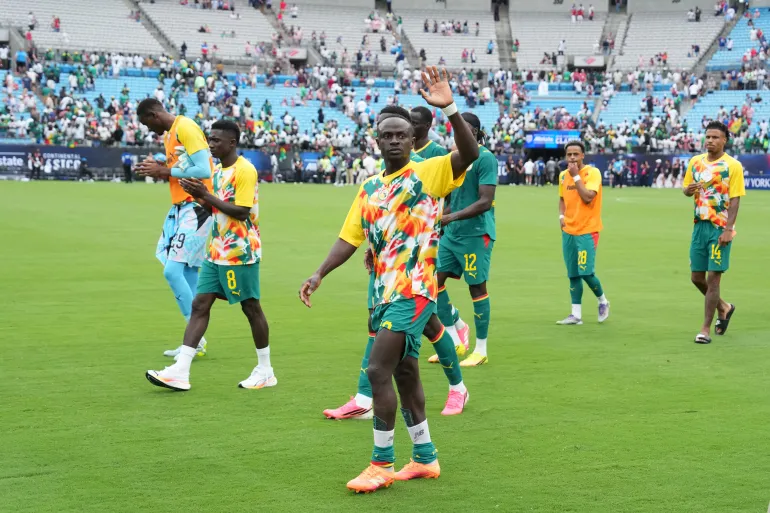
Sadio Mane remains the country’s greatest export. Although midfield kingpin Pape Gueye, goalkeeper Edouard Mendy and captain Kalidou Koulibaly would grace almost any side at the tournament.
All three are French-born and another shot at the two-time winners of the competition is in their sights.
A 1-0 win against then defending champions France at the 2002 edition announced Senegal as a rising footballing powerhouse. Their first Group I encounter this time around is against Didier Deschamps side in New York on June 16.
“It’s always a pleasure to play against France. It’s a country we know well,” said Senegal coach Pape Bouna Thiaw, who moved to France aged 17.
“If I lose even a second of my belief that I can win the World Cup with Senegal, I will step down,” he added.
Senegal’s group is completed by Iraq and Norway.
Sadio Mane remains the star name for Senegal [Bob Donnan/Reuters]
GHANA
World Cup Appearances: Five – 2006, 2010, 2014, 2022 and 2026 Best finish: Quarterfinals Overall record: P15 W5 D3 L7 F18 A23 FIFA ranking: 74 Prediction: Eliminated at quarterfinal stage
Ghana have only missed one World Cup since their 2006 debut.
Four years after their global bow they became the third African side to reach the quarterfinal stage at Germany 2010.
Their run-up to this tournament has not been smooth, with a late change of coach as veteran Portuguese Carlos Queiroz replaced Otto Addo following a run of poor results.
The German-born former Ghana international led his nation at Qatar 2022, but the failure to qualify for the last AFCON and comprehensive losses in their four high-profile games in November and March saw him fired in early April.
It will be a fifth successive World Cup for the 73-year-old Queiroz, whose past African experience has been with South Africa and Egypt, and who managed Real Madrid, and was Alex Ferguson’s right-hand man at Manchester United.
Group L, against Panama, England and Croatia, appears to be the ‘group of death’ in the opening stage of the competition, but with Manchester City’s Antoine Semenyo leading a strong attack, Ghana will fully expect to progress.
“I think that this country has a huge, enormous potential. This is a country of footballers,” Queiroz said.
The Black Stars will, however, be without the injured Tottenham forward Mohammed Kudus, who has become the team’s talisman and key factor in their last two successful qualifying campaigns.
Ghana have only missed one World Cup since their 2006 debut [Paul Childs/Reuters]
IVORY COAST
World Cup Appearances: Four – 2006, 2010, 2014 and 2026 Best finish: Group Stage Overall record: P9 W3 D1 L5 F13 A14 FIFA ranking: 34 Prediction: Eliminated at quarterfinal stage
The Ivory Coast return to the global stage after a 12-year absence – one that was hard-felt following the retirement of some of their greatest players in Yaya Toure and Didier Drogba.
It has been a long rebuild for the Ivorians, but they have won two AFCON titles since their last World Cup appearance.
Their youthful attack led by teenager attacker Yan Diomande, alongside Simon Adingra and Amad Diallo of Manchester United, will be key to their chances.
When hosting AFCON two years ago, Ivory Coast were nearly eliminated in the group stage, but they promoted Emerse Fae from assistant manager for their final game of the opening phase and went on to win the title.
“I believe Ivory Coast has the potential to achieve something exceptional – why not aim for the final?” Fae said ahead of the tournament, that will begin with matches against Curacao, Ecuador and former world champions Germany.
Manchester United’s Amad Diallo has become one of Ivory Coast’s stars [Jason Cairnduff/Reuters]
CAPE VERDE
World Cup Appearances: One – 2026 Best finish: NA Overall record: NA FIFA ranking: 69 Prediction: Eliminated at group stage
One of the debutants, Cape Verde – with a population of about 600,000 – is the third smallest nation to qualify in the tournament’s long history.
They only debuted at AFCON in 2013, but did go on to reach the quarterfinals – a feat repeated in 2023.
The task before them now – which will be led by their diaspora of players in the main – is daunting, with Uruguay, Saudi Arabia and European champions Spain, lying in wait in the group stage.
“We’ve always been aware of our talent but we haven’t always believed that it could take us much further than we had achieved up to that point,” said manager Bubista, named African Coach of the Year in 2025.
“Therefore, it took courage to face any opponent. The first step in our success was truly believing in our potential. In other words, we changed the players’ mindset.”
Cape Verde’s Benchimol celebrates scoring in a pre-World Cup friendly against Serbia [Rodrigo Antunes/Reuters]
SOUTH AFRICA
World Cup Appearances: Four – 1998, 2002, 2010 and 2026 Best finish: Group stage Overall record: P9 W2 D4 L3 F11 A16 FIFA ranking: 60 Prediction: Eliminated at round of 32 stage
After a burgeoning beginning to their return to the international fold, with qualification for the 1998 World Cup, South Africa’s fortunes have taken a downtown in the last 16 years.
A first appearance in the finals since 2010 feels long overdue for a nation hoping to reap the rewards of strong domestic growth as they head to North America.
South African club Mamelodi Sundowns are the newly crowned African Champions League winners and eight of their players are in Bafana Bafana’s squad. There are also eight players from Orlando Pirates – the domestic league champions, who pipped Sundowns to the title by a point.
“We can say that we have players of the best teams of the season. Those guys have much experience at a high level,” South Africa’s Belgian-born coach Hugo Broos said of his 26-man selection.
“I’m certainly happy that Sundowns won the Champions League, because I was afraid that if they should lose, I would get players who would be very disappointed. So now they all have that boost of confidence, and that helps a lot.”
South Africa are in the other so-called ‘group of death’ as they take on Czech Republic, South Korea and co-hosts Mexico, who they face in the opening game of the tournament
South Africa’s squad includes eight players who won this season’s African Champions League [Siphiwe Sibeko/Reuters]
DR CONGO
World Cup Appearances: Two – 1974 and 2026 Best finish: Group stage Overall record: P3 W0 D0 L3 F0 A14 FIFA ranking: 46 Prediction: Eliminated at quarterfinal stage
DRC’s only previous appearance was when it was still known as Zaire, competing at the 1974 finals in West Germany – the first African side from south of the Sahara to go to the World Cup.
As reigning continental champions, their 9-0 thumping by Yugoslavia did little to raise the flag for Africa at the time.
Much has changed since then for the continent and in its second-largest country. The Congolese players will arrive in North America with a FIFA ranking that outstrips three of the other five sub-Saharan qualifiers.
It did take two playoffs to reach this edition – the African legs saw the Congolese eliminate Cameroon and Nigeria, before edging Jamaica in extra time in their intercontinental playoff
Most of the squad are European-born, either in Belgium, France or Switzerland, plus the London-born Aaron Wan-Bissaka, previously called up by England but who missed out on a cap through injury.
“We are extremely proud because a whole generation hasn’t been able to see its national team in the World Cup but now they will see them there,” said their French coach, Sebastien Desabre.
Democratic Republic of Congo return to the World Cup after 52 years [Nicolas Economou/Reuters]
CHAPEL HILL, N.C. — Dean Carpentier popped up with the biggest swing of his life, and the Trojans won their biggest game in more than two decades.
USC baseball stormed back to defeat No. 5 overall seed North Carolina 9-5 in Game 1 of the Chapel Hill Super Regional, a loud start to the program’s first appearance on this stage since 2005.
Carpentier smoked a go-ahead grand slam off North Carolina (48-12-1) reliever Walker McDuffie in the sixth inning, turning a 5-2 deficit into a 6-5 lead and shutting down a previously charged-up Boshamer Stadium. The swing was Carpentier’s first career grand slam and just his 10th home run in his 132-game collegiate career, the defining moment of the day as USC (48-16) tied its largest comeback victory of the season.
“I was sitting on a slider,” Carpentier said. “He’s a slider guy. I got a good pitch to hit, put a good swing on it and it found a way out of here.”
Ace Mason Edwards struggled through his shortest outing of the season, yielding three earned runs in just three innings with four walks. But the Trojan bullpen picked him up, and kept the game close enough for the offense to rally. Chase Herrell, Ben Cushnie and Andrew Johnson gave up just one run over six innings, with Johnson retiring the first eight batters he faced.
USC’s Adrian Lopez (5) celebrates during Game 1 of an NCAA super regional against North Carolina on Friday in Chapel Hill, N.C.
(Laura Wolff/For The Times)
“He’s done that now a couple of times with the bases loaded where he strikes out the side and gets out of it,” USC coach Andy Stankiewicz said of Edwards’ first inning. “It’s in there. That was huge. It was a big momentum swing to get out of that. Unfortunately it’s taxing though; it made him jump up in his pitch count a little bit.”
His successful but ultimately draining first inning led to UNC scoring four in the next two innings, knocking the Trojans into a huge hole and forcing its bullpen to stem the tide. But eventual winning pitcher Herrell picked up two innings with just one earned run given up. Cushnie retired the only batter he faced and the offense went to work from there.
“The job that Chase Herrell did, the job he did in College Station, it’s two back-to-back outings where he has been tremendous for us,” Stankiewicz said. “It’s always Mason and Grant [Govel] — which is great, they deserve all the recognition — but there’s more guys down there that are doing it.”
With the lead and all of the momentum after Carpentier’s grand slam, Stankiewicz pushed his chips to the middle of the table knowing the importance of winning the opener of a best-of-three series. He brought usual Game 3 starter Johnson in out of the bullpen, and he delivered a sensational performance.
Johnson retired the first eight batters he faced and ended up getting the final 11 outs of the game with just two singles allowed, slamming the door shut for his first save of the season.
“You saw the job that he did over in College Station,” Stankiewicz said of Johnson. “It was a big moment, and we needed that again today. He throws strikes, he’s unafraid, he attacks the strike zone and we felt like he was going to make the pitches.”
Johnson’s dominance meant the go-ahead grand slam would have been enough, but USC added three more runs in the seventh. Isaac Cadena drove one in with an RBI groundout, Jack Basseer plated one on on a fielder’s choice and Andrew Lamb — who started the scoring for USC with a solo home run off Ryan Lynch back in the third inning — tacked on one more with a perfectly executed squeeze bunt.
The Trojans have outscored opponents 64-19 during their five-game NCAA tournament winning streak. And are one win away from advancing to the College World Series for the first time since 2001. Game 2 is set for 11 a.m. PDT Saturday on ESPN.
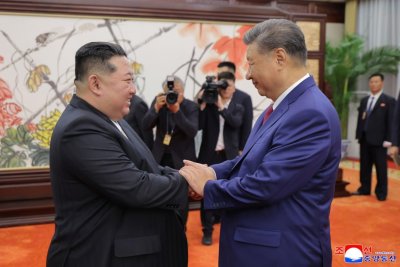
Chinese President Xi Jinping (R) will visit North Korea next week, state media from both countries reported Friday. This photo shows North Korean leader Kim Jong Un and Xi shaking hands during a meeting at the Great Hall of the People in Beijing in September 2025. File Photo by KNCA/EPA
SEOUL, June 5 (UPI) — Chinese President Xi Jinping will visit North Korea next week, state media in both countries reported Friday, marking his first trip to the isolated state since 2019.
Xi will make the visit on June 8-9 at the invitation of North Korean leader Kim Jong Un, China’s official Xinhua News Agency reported. North Korea’s Korean Central News Agency also reported the upcoming trip, but neither outlet provided further details.
The trip will be Xi’s second to North Korea. He last made a two-day state visit in June 2019.
It comes amid a stretch of renewed high-level engagement between the longtime allies. Kim traveled to Beijing in September for a military parade marking the 80th anniversary of the end of World War II, where he held summit talks with Xi.
China has long been North Korea’s largest trading partner, and international observers say it continues to help Pyongyang skirt punishing economic sanctions. Ties had appeared to cool in recent years, however, as North Korea deepened military cooperation with Russia following Moscow’s invasion of Ukraine.
In exchange for providing troops and munitions to Russia, North Korea is believed to be receiving economic support and advanced military technology for its weapons programs, reducing its dependence on China and giving Kim greater leverage in dealings with Beijing.
The announcement of Xi’s visit comes one day after North Korea unveiled a new uranium enrichment facility used to produce fissile material for nuclear weapons, with Kim calling for an “exponential” increase in the country’s nuclear arsenal.
The visit also comes amid growing uncertainty over Beijing’s approach to North Korea’s nuclear ambitions.
After Xi met with U.S. President Donald Trump last month, the White House said the two leaders had reaffirmed their shared commitment to the denuclearization of North Korea. China’s Foreign Ministry, however, said only that the leaders had “exchanged views” on the Korean Peninsula.
Some analysts have suggested that China increasingly views North Korea’s nuclear capabilities as a “geopolitical asset” that helps constrain Washington as competition between the two powers intensifies.
The visit will be closely watched in Seoul, where President Lee Jae Myung has sought to ease tensions with Pyongyang since taking office last year.
Unification Minister Chung Dong-young on Thursday proposed a four-way dialogue involving the two Koreas, the United States and China aimed at establishing a peace regime on the peninsula.
South Korea’s Foreign Ministry said Friday that it hopes Xi’s visit will “play a constructive role in addressing issues related to the Korean Peninsula,” according to Yonhap News Agency.
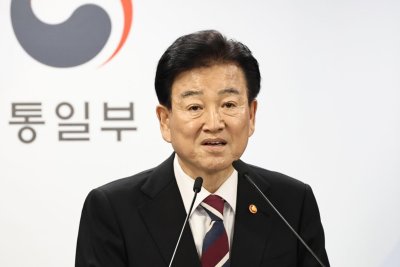
South Korean Unification Minister Chung Dong-young speaks to reporters at a press briefing in Seoul, South Korea. File. Photo by YONHAP / EPA
June 4 (Asia Today) — South Korean Unification Minister Chung Dong-young on Thursday proposed resuming four-way talks among South Korea, North Korea, the United States and China to help establish peace in Northeast Asia.
Chung, who is visiting Mongolia, also called for expanding the framework to include Mongolia, Japan, Russia and other regional countries. He made the proposal during a special address at the 11th Ulaanbaatar Dialogue in Mongolia.
Chung said Northeast Asia needs to build a new “peace identity” by restoring trust between South and North Korea and rebuilding peace on the Korean Peninsula.
It was the first visit to Mongolia by a South Korean unification minister. The trip was made at the invitation of the Mongolian government.
The Ulaanbaatar Dialogue is a regular international forum that covers security issues in Northeast Asia. It began in 2014 as a private academic conference and was upgraded in 2017 to a Track 1.5 forum involving government and nongovernment participants. North Korea has not attended the forum since 2019.
On the Korean Peninsula peace process, Chung said, “A four-party dialogue among the Republic of Korea, the Democratic People’s Republic of Korea, the United States and China is possible.”
“We should expand this framework so that other Northeast Asian countries, including Mongolia, Japan and Russia, can also join,” he said.
Chung also referred to the Sept. 19 Joint Statement adopted during the six-party talks in 2005. He said the six parties had agreed to promote lasting peace and security in Northeast Asia.
“It is time to apply that experience to today’s reality and rekindle the flame of dialogue,” Chung said.
Chung also proposed strengthening cooperation under the Greater Tumen Initiative, a multilateral platform for development and economic cooperation in Northeast Asia.
He called for connecting regional railway networks, including the Trans-Siberian Railway, Trans-China Railway, Trans-Mongolian Railway and a proposed Seoul-Beijing high-speed rail link, with the Arctic shipping route.
“By connecting transportation networks with regional markets and trade flows, we can build an innovative logistics network across Eurasia,” Chung said.
“To turn these ideas into reality, I urge the Democratic People’s Republic of Korea to rejoin the Greater Tumen Initiative as a full member,” he said. “They would be the biggest beneficiary of this vision.”
North Korea was an early member of the Greater Tumen Initiative but withdrew in 2009.
Chung said three goals must move forward together: rebuilding trust between the two Koreas, institutionalizing a peace regime on the Korean Peninsula and advancing multilateral dialogue in Northeast Asia.
“If these three pillars move forward together, we can build a new peace order across Northeast Asia,” he said.
After his special address, Chung met separately with Mongolian Foreign Minister Battsetseg Batmunkh and President Ukhnaa Khurelsukh. Chung left South Korea on Wednesday to attend the forum and is scheduled to return Friday.
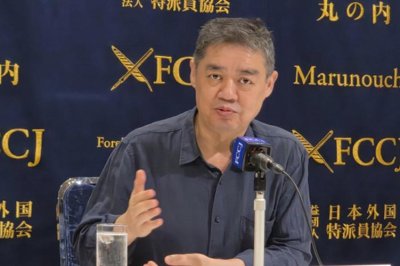
Wu’er Kaixi, a former student leader of the 1989 Tiananmen pro-democracy movement, speaks at a news conference at the Foreign Correspondents’ Club of Japan in Tokyo on Wednesday. Photo by Asia Today
June 3 (Asia Today) — Wu’er Kaixi, a former student leader of China’s 1989 Tiananmen pro-democracy movement, warned South Koreans on Wednesday not to view North Korea only as a country of the same ethnic people.
“North Koreans are certainly Koreans. They speak the same language and eat the same food,” Wu’er said at a news conference at the Foreign Correspondents’ Club of Japan in Tokyo, one day before the anniversary of the June 4 Tiananmen crackdown. “But they have been affected by the disease of communism, and that influence has seeped into their bones and DNA.”
Wu’er, also known as Uerkesh Davlet, was listed by the club as a former student leader of the 1989 Tiananmen movement for its Wednesday news conference, titled “Tiananmen 37 Years Later.”
Asia Today asked Wu’er about the future of China and what it could mean for the Korean Peninsula, noting China’s influence on the Korean War, the division of the peninsula and North Korea’s nuclear issue.
Wu’er responded by directly addressing North Korea.
“I understand that Koreans dream of unification,” he said. “But that is not simply a matter of meeting lost brothers and sisters again. It is the process of rebuilding half of a country that has been affected by communism.”
Wu’er expressed concern about what he described as a nationalist approach within parts of South Korean society.
“When I talk with friends in Seoul, I often sense conservative and nationalist sentiment,” he said. “I fully understand such feelings because South Korea has faced North Korea’s military threat directly.”
“But South Koreans who enjoy liberal democracy should have a mindset of using that freedom for the freedom of North Koreans,” he said.
Wu’er also warned against accepting North Korean propaganda at face value.
“North Korea’s military threats are calculated actions,” he said. “You should not be misled by the nationalist slogans they put forward.”
He said propaganda is used to control hungry citizens.
“North Koreans are still hungry, but they are ruled by regime propaganda,” Wu’er said.
“North Korea is no longer the North Korea we think of,” he said. “If one day South Koreans have the chance to embrace North Koreans, they will realize they are no longer the brothers and sisters they remember from the past.”
“They may be closer to Russians or Chinese,” he said. “You have to understand how a communist system changes human beings and society.”
Wu’er said South Korea’s government and people should understand the nature of the Chinese Communist Party system when considering North Korea.
During the news conference, Wu’er sharply criticized the Chinese Communist Party, saying many people mistakenly view China as a state driven by nationalism or communist ideology.
“The Chinese Communist Party is simply a criminal group,” he said. “They are not pursuing the interests of the state or the rejuvenation of the Chinese nation. They are only interested in maintaining their own power and wealth.”
He dismissed Chinese President Xi Jinping’s slogan of “the great rejuvenation of the Chinese nation” as propaganda meant to deceive the Chinese people.
“The Chinese Communist Party is driven more by interests than ideology,” Wu’er said. “Like a criminal organization seeking more profits, it endlessly tries to expand power and control.”
“To understand China, ask a criminologist rather than an international politics scholar,” he said. “If you approach it through the behavior of a criminal group, you can understand China’s foreign policy much more accurately.”
Wu’er said the Chinese Communist Party “is never satisfied” and urged liberal democracies to respond firmly as Beijing seeks to expand its control and influence.
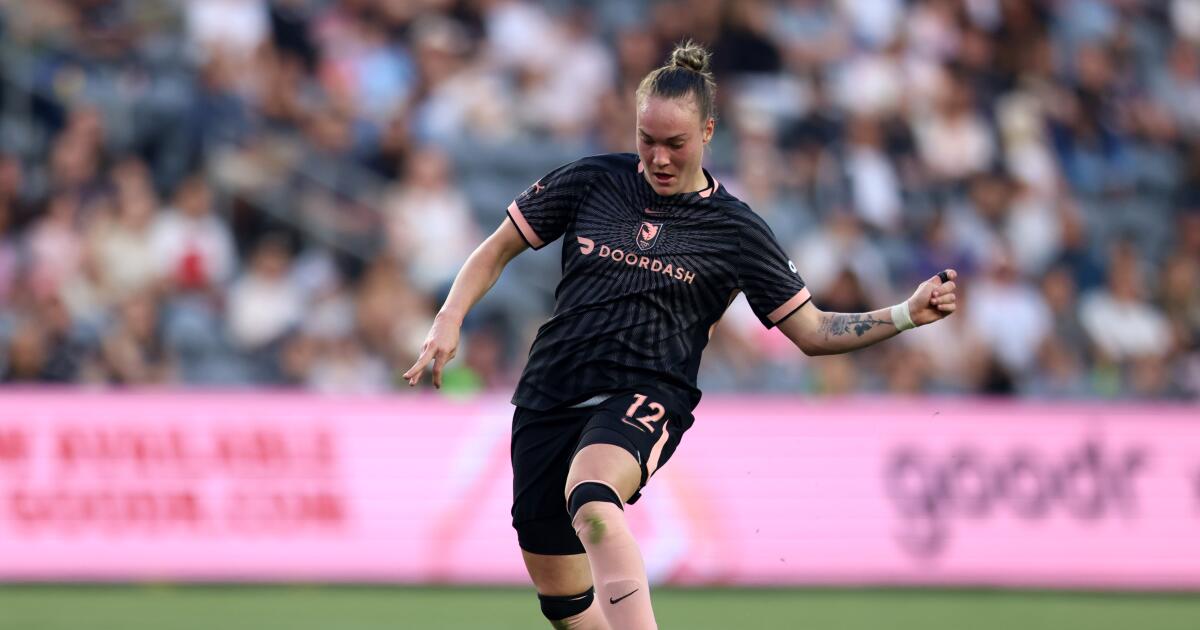
Manaka Matsukubo finished with a goal and an assist to lead the North Carolina Courage to a 2-1 win over Angel City at BMO Stadium on Sunday.
Matsukubo slipped a ball through to Evelyn Ijeh, who calmly finished to give the Courage a 1-0 lead in the 48th minute. With the goal, Ijeh has landed on the scoresheet in three straight matches.
Three minutes later, Evelyn Shores’ pinpoint cross into the box found the head of Maiara Niehues for the equalizer.
North Carolina retook the lead for good in the 79th with Riley Jackson’s perfectly weighted pass to Matsukubo, who scored her fifth goal of the season.
Iran’s football team still lacks US visas and is not competing on ‘equal terms’, Tehran’s envoy to Mexico says.
Published On 28 May 202628 May 2026
Iran’s football team still lacks US visas and is not competing in the World Cup on “equal terms” because of its difficulty in training ahead of the tournament, Tehran’s ambassador to Mexico said on Thursday.
Abolfazl Pasandideh visited the northwestern Mexican border city of Tijuana, where Iranians have relocated their training camp. They were originally planned to be based in Tucson in the US state of Arizona.
Recommended Stories
list of 4 itemsend of list
The ambassador told a news conference that “the country to the north” – meaning the United States – had not followed through on its responsibility of hosting the Iranian team.
“We don’t know whether or not they’re going to give the players their visas,” he added.
Iran will play their three World Cup group games in two West Coast US cities: Los Angeles and Seattle. The head of the Iranian Football Federation has said there was hope that the players would be granted multiple entry visas.
“We aren’t participating in the World Cup on equal terms,” Pasandideh said.
“We haven’t been able to train our team like they should,” he said, because of the US-Israel war on his country that began on February 28.
On Wednesday, Iranian diplomats visited the stadium where the team is training, a source from Club Tijuana that plays there told the news agency AFP. The diplomats also met with local security officials, the source said.
Iran are due to play in Los Angeles on June 15 against New Zealand, and on June 21, against Belgium. They then play in Seattle against Egypt on June 26.