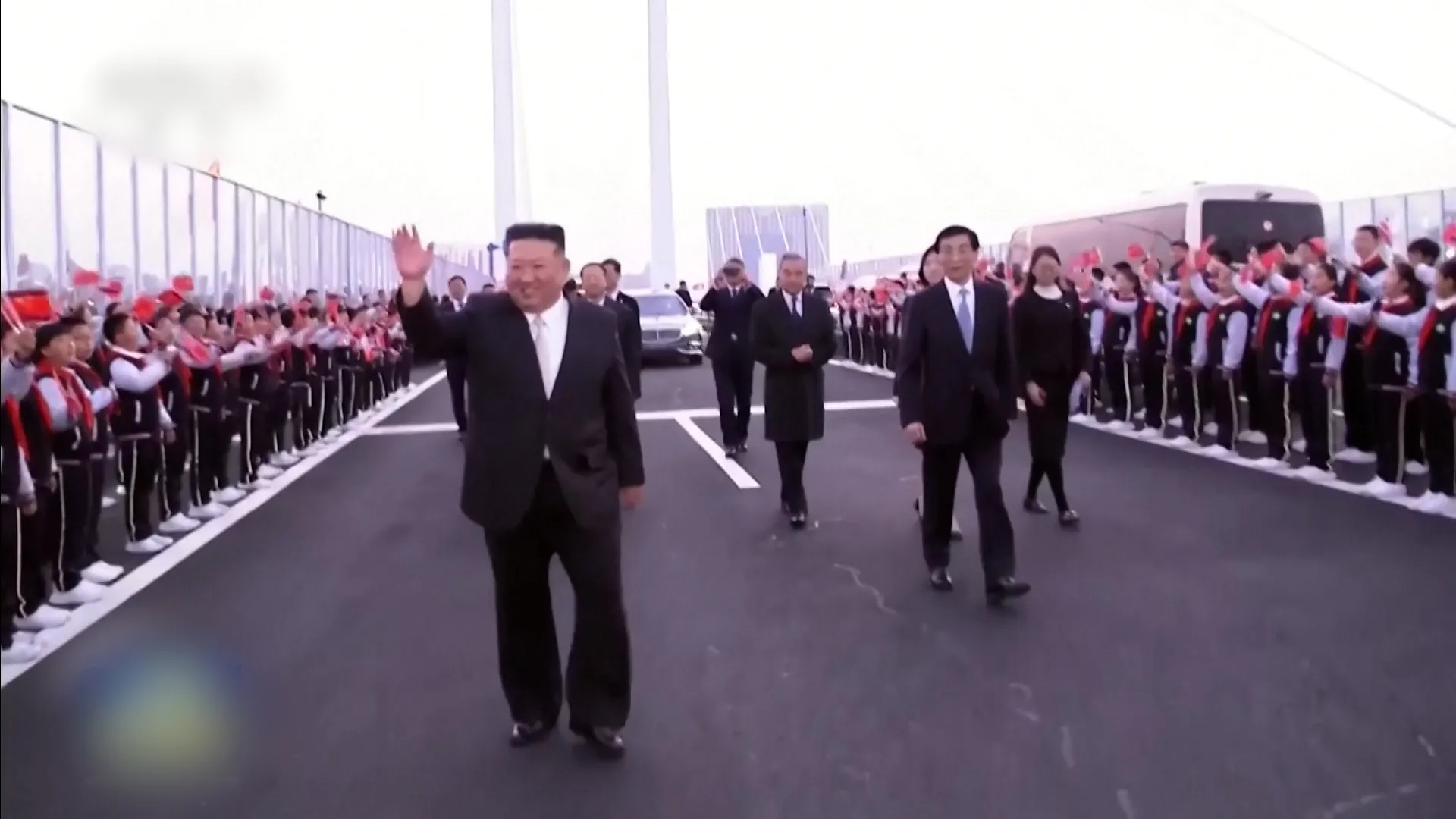
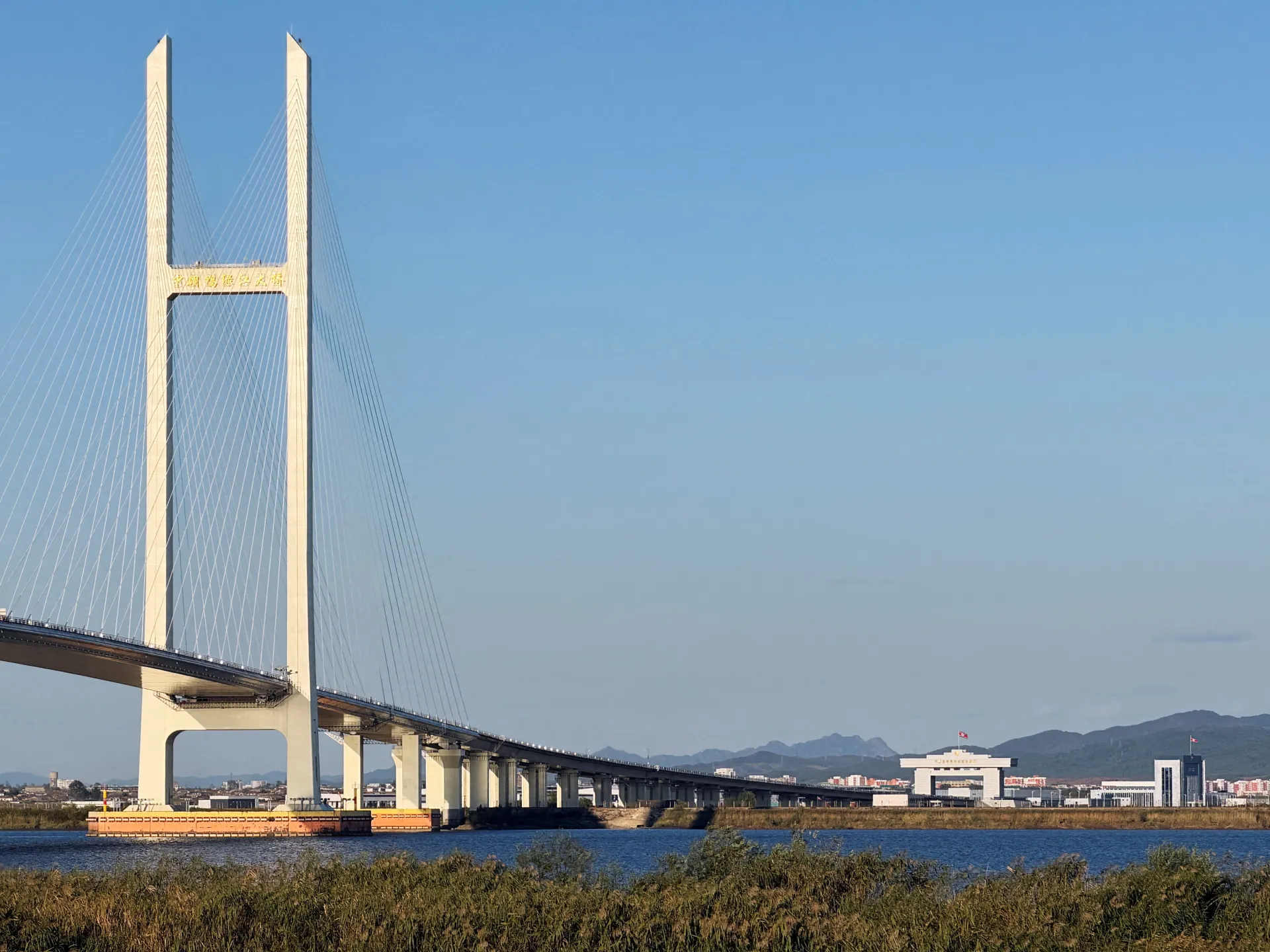
North Korean leader Kim Jong Un waved to crowds as he crossed a newly opened bridge linking his country with China, Chinese state media reported. The Yalu River Bridge is seen as a strategic link in expanding trade ties between the two nations.
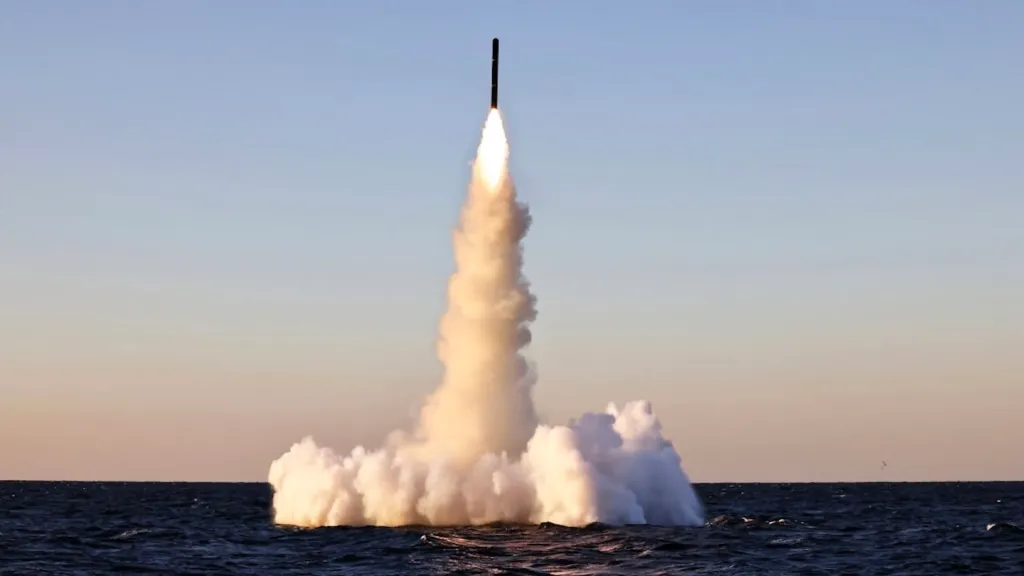
North Korea says it has test-fired two types of submarine-launched strategic cruise missiles off its east coast, in what appears to be the first time its bizarre Hero Kim Kun Ok submarine has been seen at sea in a publicized manner. If the vessel truly was the launch platform, the tests would mark its first confirmed weapons trials and a potential step toward operational service. Unveiled with considerable fanfare in 2023, the Hero Kim Kun Ok has been billed by Pyongyang as a centerpiece of its future nuclear-armed navy, but its operational status and actual capabilities have remained unclear.
The launches took place Wednesday, October 14, with state media Korean Central News Agency (KCNA) reporting the activity earlier today. North Korea said the tests were intended to assess the readiness of its underwater combat systems, improve the Navy’s ability to execute strategic missions, and demonstrate the reliability of its deterrent. Along with imagery of the cruise missiles, KCNA released one photo of the Hero Kim Kun Ok underway, which you can see at the top of this story.
The launch of a cruise missile, apparently from a vertical launch tube. North Korean state media North Korean state mediaSubmerged launch of one of the North Korean cruise missiles. North Korean state media
KCNA did not otherwise identify the submarine involved or disclose the missiles’ ranges, flight paths, or performance. South Korea’s Joint Chiefs of Staff (JCS) said it had detected and tracked the launches from before firing through the cruise and terminal phases. A JCS spokesperson said one missile type was launched from a vertical launch system and another from a torpedo tube. This would match the imagery we are seeing, it would also match the Hero Kim Kun Ok’s unique capabilities. The South Korean military assessed that the launches came from a submarine but did not initially identify the vessel publicly.
There remains a possibility that the 3,000-ton-class Hero Kim Kun Ok was not actually involved in launching the missiles. North Korea has long used underwater platforms for test missile launches and has paired these with images of an actual submarine for propaganda purposes. However, the JCS confirming they came from a submarine would lend additional credence to the possibility Hero Kim Kun Ok did indeed launch the missiles. If this is the case, it would indicate that North Korea has begun validating weapons systems aboard the submarine ahead of deployment. At the very least, we can confirm that the Hero Kim Kun Ok is now sailing, although South Korean and U.S. intelligence would be acutely aware of its movements and it could have been in at-sea testing for years now, we just don’t know.
North Korea unveiled the submarine in September 2023, describing it as its first “tactical nuclear attack submarine” and one of the Navy’s core offensive platforms. At the launching ceremony, North Korean leader Kim Jong Un was quoted as saying that arming the Navy with nuclear weapons “brooks no further delay.”
The North Korean diesel-electric submarine Hero Kim Kun Ok, which has the hull number 841. North Korean state media
Nevertheless, many questions remain about the submarine’s design and operational prospects. Overall, it remains a heavily modified derivative of a Cold War-era Romeo class diesel-electric submarine — nearly an antique by today’s standards — rather than a purpose-built guided missile submarine. Previous imagery shows 10 missile launch tubes concealed in the prominent ‘turtle back’ aft of the sail, in addition to torpedo tubes, although the precise configuration, usable capacity, and operational status of those systems remain uncertain.
The absence of publicly reported weapons tests from the vessel over the following years raised questions about its development. Analyst Shin Jong-woo of South Korea’s Defense and Security Forum toldReuters that the latest launches suggested combat-system testing for operational deployment was underway. He also suggested that North Korea may have resolved technical problems and could also test a submarine-launched ballistic missile (SLBM) before the vessel enters service. North Korea has previously presented SLBMs of increasing size, but has lacked a suitable submarine to launch them from.
The North Korean diesel-electric submarine Hero Kim Kun Ok during its launch. North Korean state media
Missile launches while the submarine is submerged represent a more demanding and operationally relevant capability than firing from the surface.
At the same time, a missile launch of any kind demonstrates only part of the capability required for a submarine like this to be effective at all. An operational submarine must also be able to deploy reliably, remain sufficiently difficult to detect, maintain its weapons, and execute missions under realistic conditions.
A vertical launch system (VLS) can provide dedicated capacity for certain missile types — potentially much larger ones — and may enable faster launches or larger salvos than a configuration relying exclusively on torpedo tubes. Torpedo tubes offer an alternative launch method, but with different constraints on weapon dimensions, handling, and firing procedures.
The forward four tubes are larger than the rear six on the submarine’s ‘turtle back.’ This would allow the boat to carry multiple types of missiles, possibly including a mix of short-range and longer-range submarine-launched ballistic missiles (SLBMs) and submarine-launched cruise missiles (SLCMs).
A North Korean cruise missile in flight after submerged launch. North Korean state media
Testing both systems would be consistent with an effort to validate multiple elements of the submarine’s weapons architecture.
North Korea has pursued submarine-launched missiles for years. In March 2023, it reported a submarine-launched cruise missile test from the older 8.24 Yongung submarine. In January 2024, Pyongyang said it had fired Pulhwasal-3-31 strategic cruise missiles from that same vessel. The earlier sub is in the 2,000-ton-class and is understood to have only one or two vertical launch tubes.
North Korea’s description of the weapons as “strategic” cruise missiles should also be treated cautiously. North Korea’s long-range cruise missile program is well established and a nuclear payload is a major part of its ambitions, but how mature or reliable a nuclear warhead is for this application at this time isn’t clear. Regardless, ground, surface, and now subsurface-launched cruise missiles are a key part of North Korea’s broader deterrent architecture.
According to reports, Wednesday’s activity was the first publicly reported underwater North Korean missile-testing event since the January 2024 launch.
Compared to the 8.24 Yongung submarine, the Hero Kim Kun Ok has a larger hull and additional vertical launch tubes, but it still uses very dated diesel-electric propulsion, which presents hugely different endurance, acoustic, and operating constraints compared with nuclear propulsion or even modern diesel-electric submarine capabilities.
As to the expectation that Pyongyang may test an SLBM from the submarine before deployment, this would be a likely milestone toward North Korea fielding a credible sea-based nuclear deterrent.
North Korean SLBMs identified as the Pukguksong-5 on parade in January 2021. North Korean state media
North Korea is also pursuing a separate nuclear-powered submarine project, unveiled as under construction in March 2025. Its completion and operational timeline remain uncertain. Nuclear propulsion is a much bigger challenge, but if perfected, such a boat would be of considerably greater value, especially as a second-strike capability.
People seen looking at a TV broadcast at Seoul Railway Station showing North Korean leader Kim Jong Un unveiling the manufacturing site for a future nuclear-powered missile submarine at an undisclosed location. Photo by Kim Jae-Hwan/SOPA Images/LightRocket via Getty Images SOPA Images
The sequence is consistent with Pyongyang’s effort to diversify its delivery systems and complicate military planning for South Korea, the United States, and Japan.
A satellite image of the Pongdae Submarine Factory on the northeast coast of North Korea, the center of its submarine development activities. Google Earth
The activity also carries a diplomatic message. North Korea has repeatedly insisted that it will not abandon its nuclear weapons while the United States maintains what Pyongyang calls a hostile policy. It has also rejected the suggestion that adjustments to U.S.-South Korean military exercises would be sufficient to change the underlying relationship.
The tests also follow North Korea’s rejection of an apparent diplomatic opening from U.S. President Donald Trump after Washington sought to reduce tensions surrounding a U.S.-South Korean military exercise.
Kim touring the Sinpo submarine yards back in 2019, the first time we got a glimpse of the future Hero Kim Kun Ok. North Korean state media
A submarine able to launch missiles from less predictable locations complicates defensive planning for South Korea and the United States. The challenge extends beyond intercepting missiles after launch to detecting and tracking the submarine before it reaches a potential firing position. Even a partially capable vessel places additional demands on potential adversaries.
Were things to ‘go hot’ on the Korean Peninsula, any submarine capable of carrying strategic weapons would be at the top of the targeting list for Pyongyang’s adversaries. A submarine based on the archaic Romeo class design would be fairly easy to track from the time it leaves its berth. This is especially the case bearing in mind the sophisticated nature of South Korea’s anti-submarine capabilities.
Future submarines will become increasingly more challenging, however. That problem could intensify if future North Korean boats make more use of Russian assistance in developing their capabilities. Submarine technology is supposedly part of the payment to Pyongyang for its help in the war in Ukraine. This could become a much larger problem, even if Moscow were to provide North Korea with advanced Kilo class boats, for example.
For now, provided that the Hero Kim Kun Ok launched the missiles, which seems most likely, this would indicate that North Korea is advancing weapons integration aboard a submarine intended to expand its offensive naval capabilities. The fact that the Hero Kim Kun Ok is now at sea also signals progress toward deployment.
Whatever the ultimate operational effectiveness of the Hero Kim Kun Ok and its emerging missile armament, Pyongyang continues to demonstrate incremental improvements to its submarine forces.
The proposal comes days after Pyongyang says it moved new military units into ‘firing positions’ along the border.
Published On 23 Oct 202623 Oct 2026
South Korea has proposed holding military talks with North Korea in a bid to calm rising tensions over their heavily fortified border.
Seoul said on Friday that it had invited Pyongyang to discuss restoring communication channels. The offer was made as military activity on the border increases.
Recommended Stories
list of 4 itemsend of list
Talks with North Korea would aim to “mutually confirm” the precise location of the land Military Demarcation Line (MDL), “discuss ways to restore military communication lines and prevent accidental clashes in border areas”, Kim Hong-cheol, deputy minister for national defence policy, told reporters.
“Specific dates and locations could be discussed through Panmunjom,” Kim said, referring to the symbolic truce village on the North-South border where soldiers from both Koreas stand face to face.
He added that the South was open to three-way talks involving the United States-led United Nations Command and hoped for “a positive response from North Korea”.
It remains unclear whether North Korea would agree to talks. Leader Kim Jong Un has taken a hardline approach towards Seoul and suspended virtually all dialogue and cooperation with the South in recent years.
Meanwhile, Pyongyang has raised its military activity along the border and continues to do so.
On Wednesday, Kim Yo Jong, the powerful sister of the North Korean leader, announced that new military units have been moved into “firing positions” along the border.
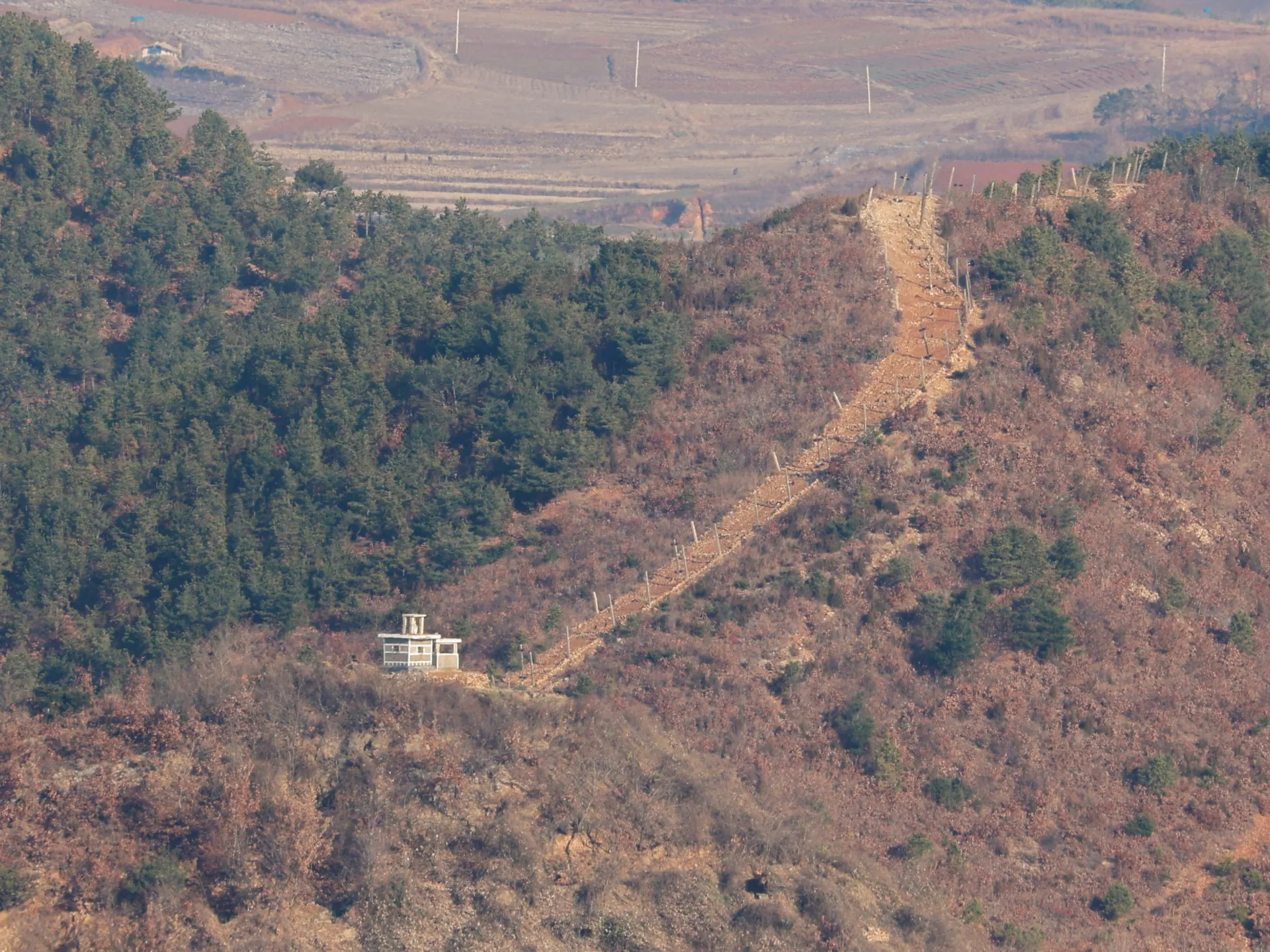
Mines, barbed-wire fences, tactical roads, antitank walls and other fortifications have also been added to one of the world’s most heavily armed borders.
Tensions have worsened since last month when three South Korean soldiers were injured by explosions near the military demarcation line in the western section of the Demilitarized Zone, the buffer zone that runs between the Koreas, commonly known as the DMZ.
Seoul’s Ministry of National Defence said on Friday that it was difficult to predict “what further incidents could occur if this situation is allowed to continue unaddressed”.
The ministry noted that a proposal for talks last year did not receive a response from Pyongyang.
South Korean President Lee Jae Myung has called for the North to return to dialogue. However, Kim Yo Jong responded by slamming the suggestion of bilateral talks as “the climax of the farce”.
North Korea has said it plans to resume broadcasting anti-South Korea propaganda along the armed border between the two countries, as Seoul urged Pyongyang to discuss easing tensions.
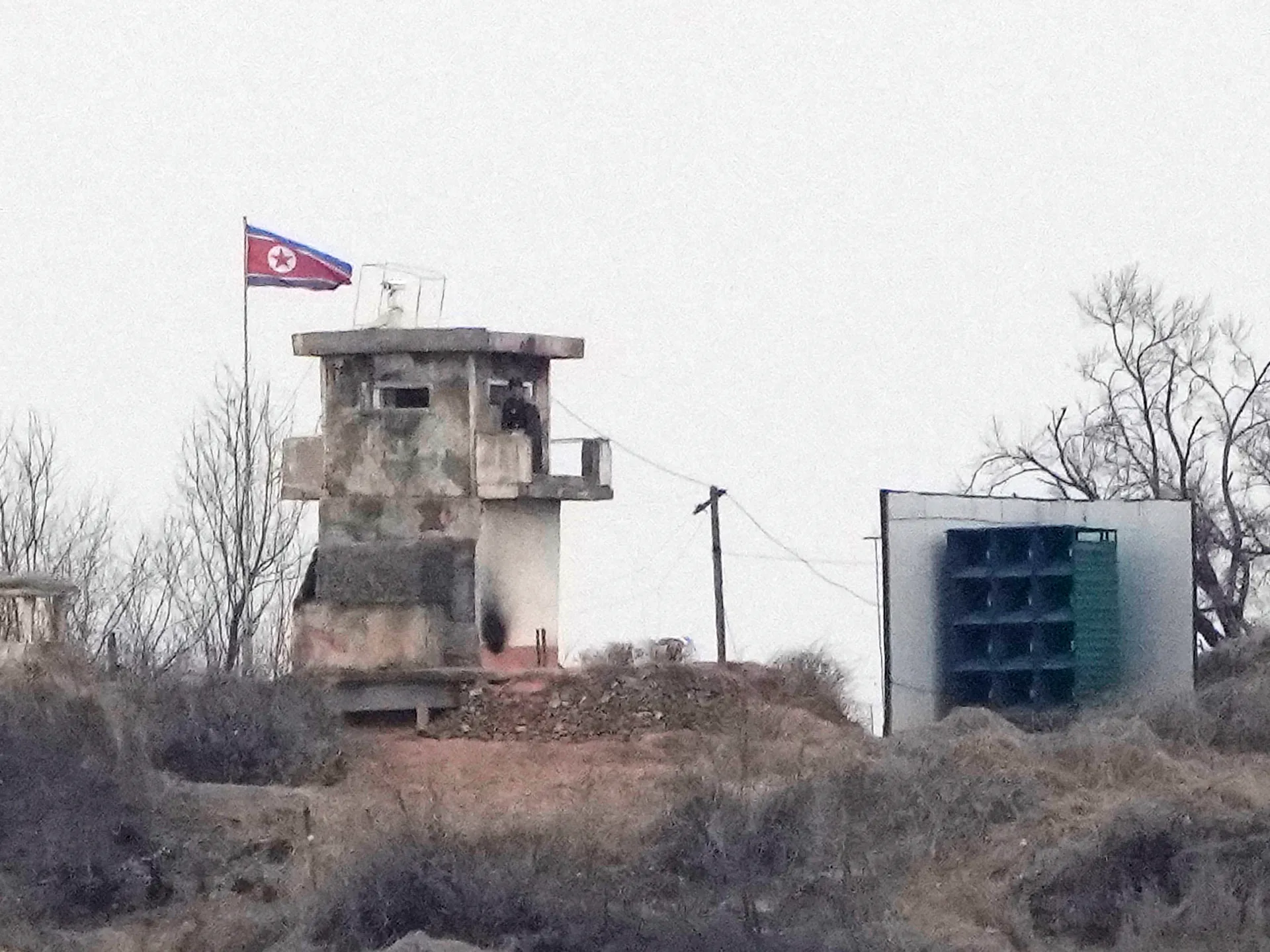
Kim Yo Jong, a senior North Korean official and the sister of leader Kim Jong Un, said on Wednesday that North Korea will place loudspeakers along the entire border, following a visit with top military officials to fortifications along the contested frontier.
Recommended Stories
list of 3 itemsend of list
Kim warned Seoul of “the most horrible and distressing situation” if South Korea continued what Pyongyang calls interference in the North’s internal affairs.
She added in a follow-up statement on Thursday that North Korea would place “new counter means” on alert along the border, without elaborating, and have its loudspeakers on “standby” within days.
A landmine blast last month that wounded three South Korean soldiers in the Demilitarized Zone (DMZ) between the two countries has ratcheted up tensions. Seoul accused North Korean troops of deliberately laying mines in the border zone as part of the North’s fortification work.
Kim had denied the allegation, calling the incident a South Korean fabrication. She said North Korean tactical units had taken up new positions, and accused South Korean troops of conducting warning broadcasts and firing warning shots at multiple locations near the border.
Seoul said the warning shots were fired as “legitimate and defensive measures”.
North Korea has been adding mines, barbed wire fences, anti-tank barriers and other fortifications to what is already one of the world’s most heavily armed borders.
South Korea’s Ministry of National Defence urged North Korea on Thursday to discuss measures to ease tension at the border and prevent any accidental military clash, its spokesperson said.
Pyongyang had cut off a military hotline with the South after declaring it would no longer seek dialogue or unification with what it called its “foe”.
Loudspeaker propaganda
Both North and South Korea have historically used loudspeakers to broadcast propaganda across the border, with South Korean broadcasts featuring K-pop music and news that have long irked Pyongyang and prompted tit-for-tat responses.
The two Koreas are separated by the DMZ, established after the 1950-53 Korean War ended in an armistice.
North Korea has been reinforcing its side of the DMZ with mines, barriers and fencing since 2024 as it seeks to establish what it calls a permanent border with South Korea.
NORTH West trolled her mom, Kim Kardashian, in a hilarious post of the reality star sleeping on her birthday.
The 13-year-old gave her famous mom a shoutout for her 46th birthday, but it most likely wasn’t what Kim expected.
Kim Kardashian’s daughter North hilariously trolled her mother in a birthday postCredit: GettyThe 13-year-old shared an unflattering photo of her mother sleeping in full glam in honor of her special dayCredit: Instagram/northwest
In the post, shared to North’s Instagram Stories on Wednesday, the teenager captured a selfie of the mother-daughter pair in what looked like a conference room.
North smiled widely alongside Kim, who had fallen asleep in her chair.
Sign up for the Showbiz newsletter
Thank you!
The up-close shot showed Kim with her head tilted back as she slept in full glam.
“Happy birthday @kimkardashian ily,” North wrote above the unflattering photo of the Skims founder.
The post comes just hours after Kim shared numerous photos of her dramatic Halloween makeover, in which she transformed herself to look like her eldest daughter.
Kim looked identical to her first-born child, whom she shares with her ex, Kanye West, matching North’s style from head to toe.
The model was a carbon copy of North, wearing a vibrant blue wig, heavy eye makeup, long black nails, and multiple face and hand piercings.
She even copied the youngster’s signature gothic style of all-black attire and a massive skull necklace.
Most read in Entertainment
Fans have repeatedly raised concerns over North’s mature style, especially with her numerous body piercings.
Recently, North debuted her neck, cheek, and thigh piercings, which sparked an uproar on social media, with critics saying she is too young to have them.
However, North and Kim clarified on a livestream earlier this month that the teen’s body piercings were, in fact, fake.
Kim also assured that she’s fine with North expressing herself with piercings, as long as they are fake.
Kim poked fun at her daughter earlier this week by dressing like the teen for HalloweenCredit: Instagram/KimKardashianFans have repeatedly raised concerns over North’s mature style, including her body piercings, which she and Kim recently confirmed are fakeCredit: TikTok/kimandnorth
When North teased that she’s considering getting a real bridge piercing one day, Kim made it clear she isn’t on board.
“We can glue on for now,” the actress compromised.
Kim and Kanye are also parents of a daughter, Chicago, 8, and sons Saint, 10, and Psalm, 7.
While they split their time between both parents, who divorced in 2022 after nearly seven years of marriage, Kim has a team of nannies to help when she needs them.
According to her profile in The Times, published earlier this month, Kim employs five nannies, with one on duty at a time while the others rotate.
The magazine also notes that Kim describes herself as an “intermediate-strict parent,” as she does school drop-offs and pick-ups each day, and has dinner with them, despite a nanny always being nearby.
“I’m extremely patient and loving. I still have a kid sleep in my bed when they want. I read books with the kids every night,” she added.
The decision has drawn sharp criticism from left-wing politicians and environmentalists.
Published On 21 Oct 202621 Oct 2026
The United Kingdom’s government has approved a natural gas project off the coast of Scotland, as the Labour government seeks to balance its climate goals with energy security concerns.
Energy Minister Miatta Fahnbulleh said on Wednesday that the Jackdaw gasfield would begin supplying energy to UK homes by the end of the month and would help to boost the country’s energy security.
Recommended Stories
list of 3 itemsend of list
The government said the North Sea project would increase UK gas production by about 6 percent at its peak.
Prime Minister Andy Burnham said the decision will “protect hundreds of jobs and help keep millions of homes warm”, but stressed it would not hinder the government’s targets on renewable energy.
The government also announced a New Energy Wealth Fund, which will invest in renewable and low-carbon energy projects as part of the green transition.
The fund has been established with an initial 2 billion pounds ($2.7bn), with plans to raise additional funds through tax revenues from North Sea oil and gas.
Higher energy prices amid the Russia-Ukraine war and the United States-Israel war on Iran have weighed on households and businesses, dragging on Britain’s economy.
Fahnbulleh told UK radio station LBC that the development of Jackdaw would not bring down household energy bills.
“I think it’s really important that we’re honest about this,” Fahnbulleh said.
“That was not a consideration in the decision because it won’t mean cheaper bills. This was about energy security.”
The announcement has drawn criticism from left-wing politicians and environmental groups.
Zack Polanski, the leader of the opposition Green Party, described the decision as “climate vandalism”.
“Surreal to hear [the] energy secretary try and say this is a ‘pragmatic decision’,” Polanski wrote in a post on X.
“It will do nothing to lower bills. It will do lots for the profits of the oil and gas companies. And will continue us further down the path of floods and wildfires.”
Environmental group Greenpeace said the decision showed “the toxic grip fossil fuel lobbyists still hold over our energy policy”.
“True pragmatism means severing our reliance on expensive oil and gas that leaves British households broke, supercharges extreme weather, and leaves our energy security at the mercy of petrostates,” said Ami McCarthy, head of politics at Greenpeace UK.
The long-delayed bridge will formally open on Thursday, according to China’s state-run Xinhua news agency.
Published On 14 Oct 202614 Oct 2026
China and North Korea will officially open the New Yalu River Bridge to traffic on Thursday, China’s state-run Xinhua news agency reports.
China completed its side of the bridge in 2014, hoping to boost trade ties. However, North Korea left its side unfinished for years as relations soured after Beijing supported United Nations sanctions over Pyongyang’s nuclear tests.
Recommended Stories
list of 4 itemsend of list
The first bridge connecting Russia and North Korea also opened earlier this month.
China-North Korea Relations
China’s exports to North Korea rose to a six-year high of $2.3bn last year, a 25 percent increase from the previous year. Chinese President Xi Jinping was welcomed in Pyongyang in June for the first time since 2019.
Since 2018, Beijing has tried to repair ties with Pyongyang, which also briefly began improving relations with Washington around the same time.
The China-North Korea relationship was forged during the Korean War. In 1961, the two countries signed the Treaty of Friendship, Cooperation and Mutual Assistance, which remains China’s only formal military alliance.
The treaty contains a mutual defence clause committing either side to assist the other if one comes under armed attack.
Although China was North Korea’s main diplomatic partner and protector for decades, relations strained after Beijing in 2017 supported tightening sanctions on Pyongyang for its nuclear weapons programme.
Analysts say North Korea’s recent growing relationship with Russia may have changed the balance of Pyongyang’s diplomatic dependence, reducing its reliance on Beijing.
North Korea and Russia signed a comprehensive strategic partnership treaty in 2024, including a mutual defence provision. Military and political ties between the two countries have grown considerably stronger, with North Korea deploying thousands of troops to fight in Russia’s war on Ukraine.
United States President Donald Trump also signalled an interest in repairing relations with Pyongyang last month, after his talks with North Korean leader Kim Jong Un abruptly ended in 2019. In his second term, Trump has floated meeting Kim again, though no official meeting has been set.
North Korea has not yet resumed issuing tourism visas to Chinese citizens, who once made up the bulk of its overseas visitors.
While North Korea’s trade with Russia largely involves military supplies, exchanges with China could arguably involve goods North Korea needs to develop its civilian economy, analysts have said.
Latest missile launch appears to be a show of force since South Korea’s hypersonic missile test-fire, Seoul says.
Published On 12 Oct 202612 Oct 2026
North Korea has fired multiple ballistic missiles towards the sea off its east coast, South Korea’s military says.
South Korea’s Joint Chiefs of Staff (JCS) said one of the missiles flew more than 900km (559 miles) from the Pyongyang area on Monday. The joint chiefs did not specify how many missiles were detected.
Recommended Stories
list of 3 itemsend of list
Japan’s coastguard said on Monday that North Korea had fired two unidentified projectiles, believed to be ballistic missiles, which appeared to have already fallen.
South Korea’s presidential office said that Pyongyang’s repeated missile launches violate United Nations Security Council resolutions, urging an immediate stop.
Monday’s missile launch adds to heightened tensions on the Korean Peninsula, as both countries have been conducting weapons tests.
Escalating tensions
JCS spokesperson Jang Do-young said the latest missile launch appears to be a show of force since South Korea’s hypersonic missile test-fire.
On Thursday, South Korean President Lee Jae Myung oversaw the country’s first test-firing of a hypersonic missile, a rare public showcasing of a missile test by a South Korean president.
Lee’s office said the hypersonic weapon, once fully developed, would enhance South Korea’s ability to strike key targets by surprise in the “Korean Peninsula theatre of operations”.
On October 3, North Korea also tested a hypersonic intermediate-range missile designed to evade missile defences in South Korea and Japan.
Last week, Seoul demanded an apology after a landmine blast wounded three soldiers in the Demilitarized Zone between South and North Korea. A joint South Korean-UN investigation concluded that two landmines were planted by North Korean forces about a year ago. Pyongyang dismissed the claim and accused South Korea of provocation.
Prior to the border mine blast, Seoul said it was conducting “preliminary coordination efforts” to facilitate dialogue between Pyongyang and Washington.
Lee pledged to reopen dialogue with North Korea in his first speech after taking office in 2025.
North Korean leader Kim Jong Un continues to flaunt his nuclear weapons programme, while rejecting US and South Korean offers to resume stalled diplomacy.
Talks between Kim and US President Donald Trump abruptly ended in 2019. Kim Jong Un’s government continues to demand that Washington abandon its “hostile” policy towards Pyongyang and drop demands for North Korea’s denuclearisation as a condition for talks.
Just over two years after the U.S. Air Force retired the last of its KC-10A Extender aerial refueling tankers, four of those aircraft may be bound for a new career in North Africa for a mysterious end user.
The Air Force Life Cycle Management Center (AFLCMC) put out a contracting notice yesterday “solely for information and planning purposes” with the express intent “to identify potential industry sources that possess the capability, expertise, and facilities to execute the regeneration, one-time flight clearance, depot-level return to service, worldwide ferry delivery, in-country Contractor Logistics Support (CLS), and operational/maintenance training for up to four (4) KC-10 Extender aircraft.”
The KC-10s could be “transferred via Excess Defense Articles (EDA) to a partner nation in North Africa,” the notice adds, without naming the country in question.
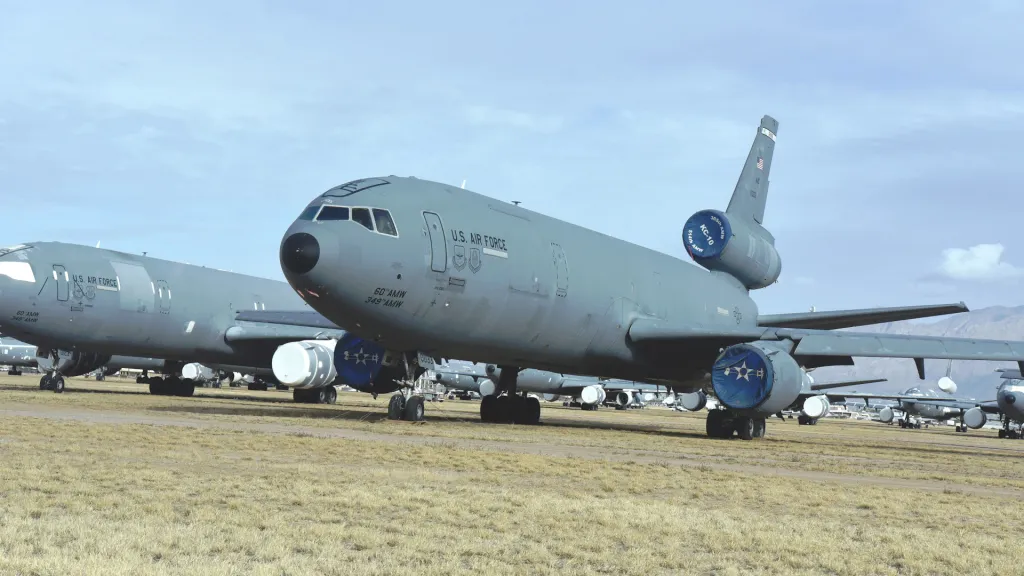
Retired KC-10 tankers seen at the boneyard at Davis-Monthan Air Force Base in Arizona in 2025. US Military
The Air Force operated KC-10s between 1981 and 2024. TWZ has reached out to the U.S. Air Force, as well as the U.S. State Department, for more information. The State Department directed us to contact the Pentagon.
The EDA program allows for materiel deemed extraneous to U.S. military needs to be transferred to allies and partners either at a reduced cost or as a grant. The foreign nation in question has to pay for those assets to be delivered, as well as refurbishment, if applicable.
It is important to note here that the Extender, as designed, is capable of refueling receivers using either the boom or the probe-and-drogue method. Tankers equipped for the probe-and-drogue method are, by far, more common internationally. We will come back to this later on.
A KC-10 seen refueling F-16 fighters via the boom. USAFA KC-10 refuels a US Navy F/A-18 Hornet via the probe-and-drogue method. USN
While we don’t know what the North African country might be in line now to receive the quartet of KC-10s, Egypt and Morocco would seem to be the most likely candidates based on their current and planned aircraft inventories. They are also both major U.S. allies.
The Egyptian Air Force currently does not operate any dedicated aerial refueling tankers. The country is in the process of acquiring two new C-130J-30 Hercules aircraft for use as airlifters, as well as tankers, using the probe-and-drogue method. It does already fly C-130s, but none explicitly configured for aerial refueling duties. Egypt also has a very diverse array of fighters that includes U.S.-made F-16 Vipers that can only be refueled in mid-air via boom.
A US Air Force KC-10 refuels an Egyptian F-16 during an exercise in 2023. USAF/Staff Sgt. Emily Farnsworth
A Moroccan F-16 seen linking up with a US Air Force KC-135 tanker during an exercise. USAF
As mentioned, the KC-10 was designed to connect with receivers via probe-and-drogue, as well as boom, and could be used to refuel other tactical jets in Egyptian or Moroccan service. As an aside, fighters belonging to both regularly receive foreign tanker support during exercises, as already seen earlier in this story. Just last month, Chinese YY-20 tankers (also sometimes referred to as Y-20Us) notably did just this in an exercise in Egypt.
Footage released by Egypt’s official authorities from the “Eagles of Civilization 2026” joint air exercise shows Egyptian **MiG-29M/M2s and Rafale fighters receiving aerial refueling from a Chinese Y-20 tanker aircraft. pic.twitter.com/pvxkpsDHxG
Whichever country may be in line to receive the four KC-10s, there is a question about the current state of those aircraft. Earlier in this story, we talked about the Extender’s capabilities as designed.
McDonnell Douglas (since absorbed into Boeing) delivered a total of 60 KC-10s to the U.S. Air Force between 1979 and 1987. The Extender was derived from the three-engine DC-10 airliner, the last of which was produced in 1989. The Air Force lost one of its KC-10s in an accident in 1987.
Of the remaining 59 KC-10s, 10 were put up for auction in a non-flyable state last year. For reasons that remain unclear, a single engine had been removed from under one of the wings of each of those aircraft. These Extenders were also among the first to be retired, and their booms had been stripped to be used as spares for the examples that remained in service until 2024. Private aerial refueling contractor Omega Air looks to have subsequently won those auctions. Omega also operates two ex-Dutch KDC-10 tankers, which are broadly similar to the KC-10, as well as another DC-10 converted into a probe-and-drogue-only tanker. The company has several Boeing 707-based tankers, as well.
One of Omega Air’s KDC-10s refuels US Air Force F-16s. USAF
The condition of the remaining 49 Extenders is unclear. Congress included a provision in the annual defense policy bill, or National Defense Authorization Act (NDAA), for the 2026 Fiscal Year that required the Air Force to preserve remaining retired KC-10s, but only stipulated they be maintained “in the same storage condition” they were in as of September 30, 2025. The bill, which was signed into law in December 2025, also made clear that the Air Force could still “dispose” of the aircraft in accordance with existing property management statutes.
Regenerating military aircraft, especially larger ones, back to service can be costly, complex, and time-consuming, even when they are kept in storage in a highly maintained state. In this particular case, acquiring KC-10s via the EDA program, with a very low up-front purchase price, could still be attractive to the right buyer, especially compared to the cost of acquiring new-production tankers.
Personnel at the boneyard at Davis-Monthan Air Force Base apply a protective coating to a KC-10. USAF
For a country like Egypt or Morocco that has never operated a boom-equipped tanker, second-hand Extenders could be a valuable entry point to future aerial refueling capabilities, as well. In general, organic aerial refueling capability is an important force multiplier for any air arm.
There is a possibility that KC-10s could be regenerated not as tankers, but as cargo aircraft, though this seems less likely to be the case. Cargo carrying was also an important duty for the Extenders while in U.S. Air Force service, and they still could operate in this role even when returned to service as tankers.
Though the aging KC-10s were getting increasingly more difficult to operate and maintain, the Air Force’s decision to retire them was still controversial. The Extender was a highly flexible tanker that could carry more fuel than the KC-46s that supplanted them. Clearly, there are others still interested in operating them.
It should be stressed that the AFLCMC contracting notice does not present the transfer of the four KC-10s as a done deal. At the same time, it has revealed that one of America’s partners in North Africa could breathe new life into four of these retired tankers.
Seoul has urged the North to remove any other mines planted on the southern side of the military demarcation line.
Published On 6 Oct 20266 Oct 2026
South Korea is weighing measures to force an apology from North Korea over a recent landmine blast that wounded three soldiers in the Demilitarized Zone (DMZ) between the two countries, a Defence Ministry spokesperson has said.
A joint South Korean-United Nations investigation concluded on Monday that two landmines that exploded last month in the DMZ were planted by North Korean forces about a year ago, prompting Seoul to demand an official apology.
Recommended Stories
list of 3 itemsend of list
“We are not ruling out any options or prejudging anything when it comes to additional measures,” Defence Ministry spokeswoman Chung Bin-na told reporters on Tuesday when asked if steps were being planned to force an apology from Pyongyang.
Chung did not offer specifics about what actions might be employed.
Seoul has also called on nuclear-armed North Korea to remove any other mines planted on the southern side of the military demarcation line (MDL) that runs through the DMZ, the heavily fortified frontier that has divided the Korean Peninsula since the 1953 Armistice Agreement.
Pyongyang has denied responsibility for the September 21 blast, with Kim Yo Jong, the powerful sister of North Korea’s leader, slamming the call for an apology as “despicable”.
Chung said Seoul is calling on Pyongyang to come to the table to discuss a misalignment of the MDL. Differing views of the border line are one factor contributing to tension in the area, she said.
The comments come a day after South Korea’s military carried out a mine-clearing operation south of the MDL. It pledged to continue with clearing operations in the area if Pyongyang fails to remove the remaining explosives. The United States-led UN Command (UNC) confirmed the mine placement violated the 1953 agreement.
Defence Minister Kang Shin-chul told the Yonhap news agency on Tuesday that the military’s “decisive” response was “unprecedented in history”.
“All responsibility lies with North Korea,” Kang told reporters, adding that armed forces would “respond decisively” to any actions threatening national security.
The escalation comes as Pyongyang rejected diplomatic overtures from Seoul. Unification Minister Chung Dong-young proposed on October 2 that both sides jointly resurvey the MDL, noting that only about 200 of 1,292 original boundary markers remain intact and that Seoul and the UNC differ on roughly 60 percent of border coordinates.
Kim Yo Jong rejected the proposal as a “wild dream”, declaring Pyongyang would define its sovereign boundary “by the use of force, not by means of negotiation”.
NORTH West was seen towering over her glam step-mum Bianca Censori, as they made a rare family appearance with Kanye West at a festival.
The rapper, 49, shares his eldest child, 13, along with Saint, 10, Chicago, eight, and Psalm, seven, with his ex-wife Kim Kardashian, 45.
North West towered over her step mum Bianca Censori at an event in LA with her dad, Kanye WestCredit: GettyThe trio were spotted at a convention in LACredit: Getty
The teenage reality star, who is famed for her family’s show The Kardashians, stepped out at ComplexCon with her famous dad and his wife.
Arriving at the Los Angeles Convention Centre for the event, and flanked by a 10-strong security team, the trio looked happy and relaxed.
Sign up for the Showbiz newsletter
Thank you!
With her striking blue hair and full face of heavy make-up, North looked older than her 13 years, as she towered over her step mum Bianca Censori, 31.
The young star’s dad’s wife also looked glam and was wearing a lot more clothes for the occasion than she usually does.
The reality queen’s eldest is currently riding high as a TikTok star, and is also following in her father Kanye West‘s footsteps by forging a music career.
North stood out with her striking blue and heavy make-upCredit: GettyNorth is the eldest of Kanye’s kids, whom he shares with ex-wife Kim KardashianCredit: Instagram
Speaking to the Sunday Timesin the US, mum-of-four Kim, who is datingF1 superstar Lewis Hamilton, 41, said: “I do worry about it. Each kid does what they’re comfortable with.
“So, my little ones come around when I’m filming but they don’t really do storylines.
“North loves it a little bit more than the rest. I hold her back.
“All she wants to do is forward-facing projects.
“And so it’s like us really kind of trying to savour those moments and not doing everything that comes her way, so we can really make sure that we manage it the right way.”
Ben Gannon-Doak turned North Macedonia inside out and upside down. He is woefully short of minutes for his club, Bournemouth, and lacks sharpness and ruthlessness as a consequence. His delivery has always lacked accuracy.
His raw materials, though, are exhilarating. His pace, his involvement, his number of touches, his chances.
He never left North Macedonia alone. They survived only because he blasted over with one of his chances, shot tamely with another, lost composure with a third one. Having tormented North Macedonia, he allowed them off the hook, but he was a one-man thrill-fest.
He’s 20, that can’t be forgotten. He’s going to be around for a lot of years and will play a heap of big games, but with his club he’s got some decisions to make.
Two minutes against Liverpool, 19 against Sociedad, eight against Brentford, one minute against Newcastle and Man City. The only game he has started this season was a League Cup tie against Lincoln.
Bournemouth is a tough team to get into, but he needs more time on the grass, more opportunity to develop. Maybe a loan move in January would make sense for him, if his club allows him to go. A big ‘if’.
That’s a situation Gannon-Doak needs to resolve for himself – and for Scotland.
A ballistic missile is fired from the North Korean port city of Wonsan, South Korean military says.
Published On 2 Oct 20262 Oct 2026
South Korea’s military says North Korea has fired at least one ballistic missile towards the sea off its east coast.
South Korea’s Joint Chiefs of Staff said on Saturday morning that its northern neighbour fired a ballistic missile from the port city of Wonsan on the eastern shore of the Korean Peninsula.
Recommended Stories
list of 3 itemsend of list
The South Korean military raised an alert for further launches.
Japan issued an emergency alert on Saturday, saying: “North Korea has launched a suspected ballistic missile.”
The launch came a day after Kim Yo Jong, the powerful sister of North Korean leader Kim Jong Un, ridiculed South Korean demands for the North to apologise over landmine blasts that South Korea and the US-led United Nations Command said were caused by North Korean mines planted south of the Military Demarcation Line.
The blasts seriously injured three South Korean soldiers on a reconnaissance mission inside the 4km-wide (2.5-mile) border zone that stretches across the Korean Peninsula.
South Korea has also called on the North to halt recent efforts to fortify its border, including the installation of mines and anti-tank barriers.
Kim Yo Jong dismissed Seoul’s demands as “utterly pathetic”, saying the North intends to permanently cut ties with the South.
Saturday’s launch was the latest in a series of North Korean military displays in recent weeks, including tests of a purported hypersonic missile system, live-fire exercises and the commissioning of a new warship.
South Korea’s President accused Ukraine of undermining him and called on Kyiv to apologise.
Published On 2 Oct 20262 Oct 2026
South Korea’s President Lee Jae Myung has expressed anger at Ukraine over comments by Ukrainian President Volodymyr Zelenskyy in a speech at the UN which appeared to reveal a secret deal by which Kyiv would transfer North Korean prisoners of war to Seoul.
In a social media post on Friday, Lee accused Ukraine of undermining him and warned that Zelenskyy’s remarks about an imminent military clash between North and South Korea amounted to invoking the risk of war on the Korean Peninsula.
Recommended Stories
list of 3 itemsend of list
The diplomatic row pits two US-aligned states with powerful militaries against each other, potentially complicating US efforts to shore up a united global front to contain Russia, China and North Korea.
The South Korean president also expressed regret over Ukraine’s response and called on Kyiv to acknowledge the agreement and apologise.
“This is a matter concerning the honor of the Republic of Korea’s people and nation, we cannot overlook it,” Lee said.
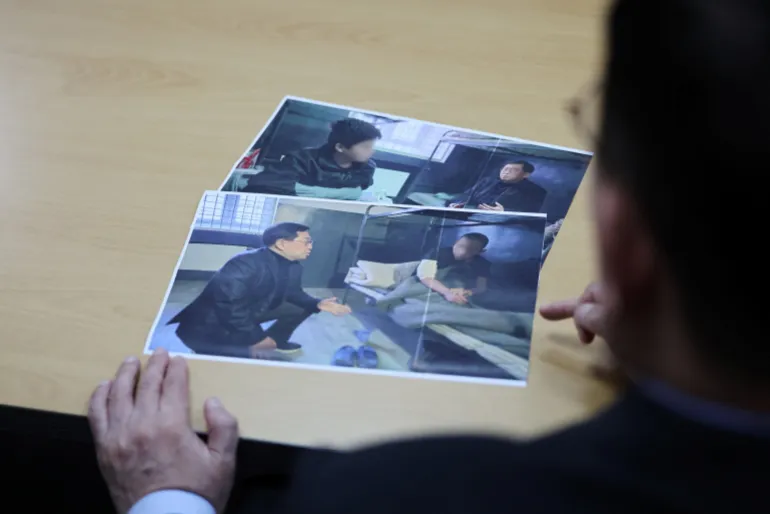
South Korean Lawmaker Yu Yong-weon explains pictures, showing two North Korean POWs who were recently transferred from Ukraine to South Korea. Face of POWs are blurred due to security reason by the source. [File: Kim Hong-Ji/Reuters]
Lee also referred to an interview with Ukraine’s Foreign Minister Andrii Sybiha published by RBC-Ukraine and other Ukrainian outlets on Thursday which sought to reduce bilateral tensions.
Sybiha had said he would “not like to call it an incident”, describing it instead as a “diplomatic misunderstanding”.
“South Korea is an important country for us. And I very much hope for momentum, continued cooperation, and concrete results that we are indeed achieving with them,” he said.
Ukrainian President Volodymyr Zelenskyy said during the UN General Assembly that Kyiv had transferred two captured North Korean soldiers to South Korea after they were caught fighting for Russia in the Kursk region.
South Korea demanded an official apology and explanation from Ukraine, accusing Kyiv of disclosing the transfer of the two North Korean POWs to Seoul.
South Korea’s senior presidential secretary Seong Ghi-hong said in a statement that Ukraine had repeatedly discussed the prisoners’ transfer with Seoul through various channels and had requested secrecy. However, Kyiv has said no secrecy agreement existed.
What should be a little more straightforward is giving Kieron Bowie another start.
The Sassuolo striker was sacrificed just over 10 minutes into his first Scotland start to make space for Welsh in defence.
His partnership with Oli McBurnie showed promising signs in the 20 minutes or so they were together in Slovenia, but there was little time to build on that cameo against the Swiss. Surely he and the Hull City striker will get another chance?
If there were any concerns McBurnie wasn’t up for the fight – five years on from his last international involvement – they have been quashed in these past two games.
His work-rate as a largely solo striker – hauling his team up and holding the ball in – was commendable. If only Bowie was still on the field for the flurry of flick-ons he won in the first half.
Pocognoli has inherited one of the overriding problems Clarke wrestled with during his spell – scoring goals. That’s four games now without one, and the Scots are just 25 minutes away from setting a new – unwanted – record for failing to score.
In 1970-71, they went 447 minutes without finding the back of the net – it’s been 422 minutes of football since McGinn’s deflected strike against Haiti in Boston.
The body of a newborn baby has been found along a shoreline in north Wales.
North Wales Police have appealed for the mother who maybe “extremely vulnerable” to come forward.
A member of the public found the remains on the Menai Strait shoreline near Siliwen Road on Sunday shortly before 17:00 BST.
During a press conference, Director of Midwifery and Women’s Services for Betsi Cadwaladr health board Fiona Giraud has appealed directly to the mother to come forward.
“I want you to know that our immediate concern is for your health, safety and wellbeing. We recognise that you may be feeling frightened, overwhelmed or unsure about what to do next,” she said.
Giraud said they “have real concerns for the health of the mother”.
“We recognise that she is likely to be extremely vulnerable. She may be fearful of seeking the support she needs through fear of identifying herself.
Speaking directly to the mother, she added: “You may feel you have nowhere to turn, or that you cannot speak to anyone about what has happened. Please do not feel that you have to face this alone.
“We don’t yet know all the circumstances surrounding your baby’s death but what is important right now is that we find you, make sure you are safe, and ensure you receive any medical attention and support you may need.
“I am asking you personally, to please get in touch with us. You can speak to a healthcare professional, approach a police officer or attend a police station.
“If you are watching or listening to this appeal, please know that we want to hear from you. Please take the first step and contact us. There are people to help you.”
This breaking news story is being updated and more details will be published shortly. Please refresh the page for the fullest version.
South Korea has accused North Korea of planting mines that caused an explosion in the Demilitarized Zone last week, injuring two South Korean personnel and violating the armistice agreement that ended the Korean War.
South Korean Defence Minister Kang Shin-chul told a parliamentary committee on Tuesday that the mines were North Korean and appeared to have been planted as part of Pyongyang’s efforts to strengthen its border defenses near the Military Demarcation Line that divides the DMZ.
Kang said the incident warranted a response from Seoul, although he declined to specify what measures the South Korean military might take.
Seoul Blames North Korea for the DMZ Explosion
“The responsibility lies with North Korea, so we will take corresponding measures,” Kang said, adding that the military had several response options and would implement them in stages.
Stay ahead of the geopolitical week.
MD Briefing delivers expert analysis across five global fronts — the Indo-Pacific, energy, geoeconomics, European security, and the Middle East — every Monday morning. Free.
He said a key question was whether North Korea had planted the mines knowing that South Korean troops could enter the area and potentially be injured.
The South Korean Joint Chiefs of Staff said an investigation conducted jointly with the United Nations Command had also uncovered another North Korean resin anti personnel mine close to the site of the September 21 explosion.
The newly discovered mine was different from those believed to have caused last week’s blast.
Another Mine Found South of the Military Line
JCS Vice Chairman Kwon Dae-won said the mines did not appear to have drifted into the area where they were discovered.
The United Nations Command assessed that the additional mines were clearly located south of the Military Demarcation Line, according to South Korean officials.
The findings have heightened concerns about the dangers created by North Korea’s ongoing efforts to fortify its side of one of the world’s most heavily militarized borders.
The DMZ has remained a highly sensitive area since the 1953 armistice, with even limited incidents carrying the potential to trigger a broader military confrontation.
A New Mine Incident Revives Memories of 2015
The latest blast has echoes of a 2015 confrontation, when North Korean mines seriously injured South Korean soldiers inside the DMZ.
South Korea responded by restarting loudspeaker broadcasts aimed at North Korea across the border. Pyongyang condemned the broadcasts, and tensions escalated into a military standoff before the two sides reached a high level agreement.
The current incident is unfolding under different political circumstances, however, as Seoul is simultaneously attempting to reopen dialogue with Pyongyang.
South Korea’s Dialogue Push Faces a Fresh Challenge
South Korean President Lee Jae Myung has sought to encourage North Korea to return to dialogue after years of worsening relations.
Pyongyang has instead moved in the opposite direction, declaring South Korea an enemy state and abandoning its previous policy goal of peaceful reunification.
That shift has made military incidents along the border increasingly sensitive.
For Seoul, the challenge is to respond to the alleged mine deployment while avoiding measures that could further damage its efforts to restore communication with Pyongyang.
North Korea Remains Silent as Seoul Warns of a Response
North Korean state media has not publicly commented on the explosion or South Korea’s accusations.
North Korea’s mission to the United Nations and its embassies in Beijing and Singapore also did not immediately respond to requests for comment.
With the South Korean military warning that it will take corresponding measures, the incident could become another source of confrontation between the two Koreas.
The immediate priority is preventing further injuries and dealing with the mines around the Military Demarcation Line. But the larger concern is whether the latest explosion will trigger another cycle of military responses at a time when relations between Seoul and Pyongyang are already deeply strained.
The blast therefore carries significance beyond the two injured personnel. It has placed South Korea’s attempt to pursue dialogue with North Korea alongside the more immediate question of how Seoul responds to what it considers a violation of the armistice.
South Korea’s presidential office criticises Ukraine for denying POW nondisclosure agreement.
Published On 27 Sep 202627 Sep 2026
The South Korean president’s office has expressed “strong regret” over Ukraine’s disregard for a nondisclosure agreement with Seoul in the transfer of two North Korean prisoners of war (POWs) to Seoul, South Korean media reported.
Last week, Ukraine’s President Volodymyr Zelenskyy said in an address to the United Nations General Assembly (UNGA) that his country transferred two North Korean POWs to South Korea.
Recommended Stories
list of 3 itemsend of list
President Lee Jae Myung’s office “expresses strong regret over Ukraine’s unilateral disclosure [of the transfer] and its subsequent false announcement that there had not been a non-disclosure agreement”, the Yonhap news agency quoted Seong Ghi-hong, South Korea’s senior presidential secretary for public relations, as saying in a statement on Sunday.
The office said the nondisclosure agreement aimed to safeguard the soldiers from dangers they could face if their transfer were to be disclosed, in accordance with international law and humanitarian principles.
According to Yonhap, a South Korean media outlet, the Ukrainian presidential office said it had disclosed the transfer of the POWs without extensive details on the process, claiming that it would have been strange to keep the entire transfer a secret. Ukrainian media outlets reported a Ukrainian presidential source as denying the existence of a confidentiality agreement with Seoul, Yonhap said.
The South Korean presidential office said the Ukrainian presidential office’s “false” denial of the confidentiality agreement “seriously hampers” bilateral trust and causes serious disruptions to bilateral friendship.
Seong Ghi-hong said the government was considering additional measures over the issue, if necessary, Yonhap added.
North Korean POWS
Ukrainian forces captured the two North Korean soldiers in Russia’s Kursk region in January 2025.
Mounting evidence, including from intelligence reports and testimonies of defectors, has indicated that North Korean soldiers resorted to self-detonation or other forms of suicide rather than be captured.
In his UN address, Zelenskyy said, “These guys are not easy to capture alive.” He added, “One of them, when he realised he was going to be taken prisoner, tried to kill himself. And he was shocked that fate did not let him die.”
South Korean media reported that the two captured soldiers had expressed their desire to defect to South Korea.
The issue of North Korean prisoners of war was a key topic during the NATO summit in Ankara, Turkiye, where Lee met Zelenskyy in July.
Senior presidential spokesperson Kang Yu-jung stated afterwards that both leaders agreed to resolve the status of North Korean POWs in accordance with international law. This built on a prior agreement reached during the South Korea-Ukraine foreign ministers’ meeting in March, where both nations pledged to cooperate on the POW issue.
According to South Korean intelligence, North Korea is estimated to have deployed approximately 14,000-15,000 soldiers to support Russia’s efforts in its war with Ukraine since 2024, primarily in the Kursk border region. South Korean, Ukrainian and Western officials said they suffered heavy casualties, with more than 6,000 North Korean soldiers killed in the fighting.
The transfer comes as South Korea has backed efforts to revive dialogue with North Korea, while United States President Donald Trump has renewed his willingness to engage with Pyongyang.