For the Islamic State (IS) and its West Africa Province (ISWAP), the third week of May 2026 began with a compound disaster and ended with a theology lesson. The group faced one of its most shocking moments, at least in West Africa or, more specifically, Nigeria.
With its headquarters in Nigeria, ISWAP has been the most active wing of the Islamic State globally, claiming more attacks than any other IS province since its central operations in Iraq and Syria were largely overpowered. Following the call for its members to migrate to Africa, ISWAP has, in the past two years, temporarily overran Nigerian military installations, including at least one super camp. The group was enjoying relative success when a turning point came: one of its most important first-generation commanders was killed.
The operation that killed Abu Bilal Al-Minuki between midnight and 4 a.m. on May 16 was described by the Nigerian military as “meticulously planned and highly complex”. It not only left the terrorist dead, but it also caused a crisis of morale that ISWAP’s propaganda machine would spend the following days trying to contain through a theological message.
Ahmad Salkida, a leading conflict analyst who has been observing the situation since it emerged, described the killing of Al-Minuki as a “serious disruption” to the activities of ISWAP in the Lake Chad region.
Airstrikes and special forces raids followed. More people were killed, and confusion reportedly descended. The operations, according to some reports, may also have killed the likely successor to Al-Minuki, another terrorist commonly known as Ba Shuwa, opening a new and, perhaps, unplanned chapter in the insurgency.
By May 19, Nigeria’s Defence Headquarters reported that 175 ISWAP and Boko Haram militants had been killed since the joint offensive began. According to the report, at least 20 died in a single engagement. By the time Nigerian authorities stopped counting, the joint operation had become the most lethal week the group had faced in years.
The theology of a bloody week
Within that catastrophic week, the Islamic State released its Al-Naba newsletter with a pointed editorial. Although it did not mention Al-Minuki or the numerous fighters killed, the editorial retold a story of a battle that happened 14 centuries ago to boost the morale of a group in disarray.
Reports suggest there was internal suspicion, even before the death of Al-Minuki, that some fighters may have leaked information leading to his death, driven by internal discontent over the unequal treatment between foreign fighters who migrated to the ISWAP and the local fighters in Nigeria. However, the editorial tried to shift away from that and present the losses as a normal sacrifice.
Screenshot from the IS weekly Al-Naba released after the death of Al-Minuki
Everything in the editorial is deliberate. The piece opens on Talha ibn Ubaydullah, a companion of the Prophet Muhammad, at the Battle of Uhud. The selection is pointed in ways that any reader with a classical Islamic education would immediately recognise.
Uhud was a near-disaster for early Muslims because of an internal division. It was a battle in which archers abandoned their positions, turning a momentary advantage into a rout that left dozens of companions dead and the Prophet himself wounded.
What Islamic tradition preserved, and what the Al-Naba propaganda wanted to convey from that valley, however, was not only the memory of tactical failure but of individual men who placed their bodies between the Prophet and death – an important sacrifice for the existence of Islam.
The editorial tells ISWAP fighters who have fallen into fear, confusion, or doubt after the loss of Al-Minuki and other fighters that a similar situation occurred during the Battle of Uhud. However, because the Prophet’s companions believed they were fighting for Islam, they did not see it as a problem.
In essence, the message is that they may ultimately be killed, suffer injuries, or even think they have already achieved victory and begin collecting spoils of war, only for circumstances to turn against them. Yet, regardless of whatever hardships or setbacks they face, they should not regard themselves as having lost, because they are fighting for their religion.
“Your role, O my mujahid brother, is to make your chest a sanctuary for the religion of Islam and guard it with your body,” the editorial reads.
This is a recognisable pattern in IS editorial strategy. After senior commanders are killed, Al-Naba invokes early Islamic battles such as Badr, Uhud, and Khandaq as mirrors, casting present losses as the preconditions for eventual triumph. The rhetorical architecture is consistent and has appeared after every major command-level strike against the organisation. What changes each time is only the particular story pulled from the tradition.
In 2019, when Abubakar Al-Baghdadi, the former leader of Islamic State, died, Al-Naba compared the situation with that of early Muslims after the death of Prophet Muhammad, in which many of his companions fell into disbelief until they were calmed by the first caliph Abu Bakr As-Siddiq. Al-Naba issue 207 argued that if Islam could survive the death of the Prophet Muhammad, the Islamic State could also survive the death of Al-Baghdadi.
The choice of Talha in the recent issue of Al-Naba, specifically after the death of Al-Minuki, adds a layer to the editorial. Talha survived Uhud and fought many more campaigns. The editorial addresses not only those who died but also those who lived through the week. The message to fighters still alive in the Lake Chad Basin, still holding ground, is legible between every sentence.
“It is the duty of my mujahid brother to walk those same paths in defence of the religion of Islam, its honour, and its sovereignty,” the editorial says.
The crisis of succession
The theology in the Al-Naba editorial could steady nerves or explain deaths. It could also transform defeat into sacrifice. However, it could not answer the practical question now hanging over the movement: who would lead after Al-Minuki?
For years, ISWAP’s resilience has rested on its ability to survive leadership decapitation. Commanders and factional leaders have died, been assassinated, or removed. Yet the organisation endured because a pool of experienced first-generation figures remained available to absorb the shock. However, this time may be different.
Get our in-depth, creative coverage of conflict and development delivered to you every weekend.
Subscribe now to our newsletter!
A HumAngle analysis observed that Al-Minuki’s most likely successor was Ba Shuwa. However, he too may have been killed in the subsequent strikes; if confirmed, the movement would lose not only its most influential commander but also the man widely expected to replace him.
Al-Minuki belonged to a shrinking class of terrorists who entered the movement before the 2009 uprising transformed Boko Haram from a fringe extremist religious organisation into a regional insurgency. He embodied institutional memory, battlefield experience, and personal relationships that spanned multiple generations of fighters.
Ba Shuwa, although younger in status within the movement, still belonged to that older ecosystem. Their simultaneous deaths would accelerate a transition that many inside ISWAP had anticipated but few expected to happen so suddenly. The names now circulating inside insurgent circles to replace Al-Minuki and Ba Shuwa show the scale of that transition.
Among the strongest contenders, as HumAngle gathered, is Abu Salem, a commander who grew up entirely within the insurgency’s wartime environment. He reportedly combines military authority with religious credentials, a combination that carries considerable weight inside ISWAP’s hierarchy.
Another frequently mentioned figure is Bana Chingori, long regarded as a close associate of Ba Shuwa and an influential commander in his own right.
However, beneath the movement’s ideological claims lies a complex web of battalion loyalties, personal networks, ethnic affiliations, and historical rivalries. Fighters speak the language of the caliphate, but leadership legitimacy is often negotiated through social structures that long predate the insurgency itself. The question is not merely who is capable of leading, but who can command obedience across the various factions that make up the movement.
This is where the editorial in Al-Naba becomes more interesting. The Islamic State understands that leaders can be replaced. What is more difficult to replace is cohesion.
The editorial’s invocation of Uhud was not simply a sermon about perseverance. It was also an attempt to create continuity at a moment when continuity is under threat. By reminding fighters that early Muslims endured confusion after battlefield losses yet remained united, the editorial implicitly addresses the danger of fragmentation.
For nearly a decade, ISWAP distinguished itself from rival jihadist factions partly through its ability to maintain organisational discipline. While Boko Haram under Abubakar Shekau frequently splintered under pressure, ISWAP developed bureaucratic structures capable of surviving individual losses. The current transition will test those structures more severely than any succession crisis since the death of Abu Musab al-Barnawi and the removal of other senior figures from the Muhammad Yusuf generation.
The paused migration
Beyond the succession question lies another bigger development. ISWAP has announced that the flow of fighters migrating from Iraq and Syria to Nigeria has been effectively paused.
For years, the Islamic State’s call for migration to Africa was one of ISWAP’s most reliable sources of experienced foreign fighters. Foreign fighters who had trained and fought in the central theatre arrived in Lake Chad with tactical knowledge, ideological authority, and direct personal connections to IS central command.
Al-Minuki himself was a product of that ecosystem. The suspension reflects the bigger issue that ISWAP is facing, in which local ISWAP members feel foreigners are given more priority in the insurgency, and they’re being relegated. This, according to some sources, was one of the reasons that opened a loophole that led to the intelligence leading to the killing of Al-Minuki.
Al-Naba issue 550 addressed the question of migration indirectly. The editorial, titled “Africa Between Yesterday and Today”, spoke in the past tense about those who had already made the journey. “Those who came before you from Iraq walked this path,” the editorial told terrorists currently in Africa, “and they carried the weight of this religion on their shoulders.”
Screenshot from Al-Naba 550th issue.
The joint US-Nigeria strike that killed Al-Minuki demonstrated a targeting capability that ISWAP had not previously faced at this intensity in the Lake Chad theatre. The use of American intelligence assets alongside Nigerian special forces created a surveillance environment that makes the movement of senior figures, especially those arriving from abroad, significantly more dangerous than before.
For IS central, sending experienced insurgents into a degraded environment risks losing irreplaceable assets to an adversary that has now demonstrated it can find and kill the most protected figures in the organisation. The pause in migration is both a strategic retreat and a rational response to changed targeting conditions.
The commanders now being discussed as replacements for Al-Minuki are men who grew up entirely inside the Nigerian insurgency. Whatever their capabilities, they appear to lack the cross-theatre experience and IS central relationships that figures as Al-Minuki carried. The migration pause has narrowed the field of who can credibly lead it.
Residents were thrown into despair after a terrorist leader, Jammo Smally, abducted 39 community leaders who had gone to discuss a peace deal with him. The dramatic incident occurred on Sunday, June 7, in the Maradun Local Government Area (LGA) of Zamfara State, North West Nigeria.
Jammo had been sending messages to the leaders in the Magamin Diddi community for over two months, calling for a meeting to discuss the terms of the peace deal as the rainy season approached. The terrorist leader, whose parents live in a hamlet not far from Magamin Diddi, had claimed he was tired of the hostility between his terror group and the community.
Following another invitation a few days after the Islamic Eid al-Kabir celebrations, the traditional and religious leaders decided to meet Jammo and his gang members in the forest. The two parties agreed to meet on Sunday to reach what the community leaders thought would be a peaceful solution to the recurrent attacks on their farms and homes.
“The first thing he asked when we reached there was the whereabouts of the three rifles the Askarawa took away from his boys two months ago,” Malam Aliyu, one of those who went to strike the deal, told HumAngle over the phone on Monday. He had joined 46 other community leaders to strike the deal. “We were confused at first, because we were told that we would be discussing only a peace deal. We thought that he would ask us to give him money, but the first thing he asked was for his rifles.”
“Askawara” is a local term for security volunteers of the state-backed Community Protection Guards (CPG) in Zamfara State. Local sources told HumAngle that towards the end of March, terrorists from the Jammo group had a gunfight with the CPG fighters and other vigilante group members, leading to the killing of two terrorists. Three rifles belonging to the terrorists were taken away by the CPG fighters.
“We didn’t take his guns, but it’s obvious he has made up his mind,” Aliyu said. The terrorist leader released seven community leaders, instructing them to report back to the district head with his demands. He has one condition for the release of the 39 elders: either the rifles are returned, or an equivalent amount of money must be paid to him.
The terrorist leader also set ₦50 million for the peace deal. “He said if we’re still interested in negotiating with him, we should add ₦50 million to the rifles we’re returning. The money is for us to be able to live in peace, go to local markets, and go to our farms,” the community leader said.
Negotiations between terrorists and local communities aiming to establish peace are not uncommon in the ongoing crisis plaguing the northwestern region for over a decade. Typically, these discussions involve communities paying substantial sums to the terrorists under the guise of a peace agreement. However, such negotiations often yield little result, as terrorist attacks continue unabated even after agreements are reached, as seen in various regions of the state.
The Zamfara State government has consistently maintained its stance against negotiating with terrorists. Yazid Abubakar, the Zamfara State Police spokesperson, stated that they have initiated a rescue operation to free the captured individuals.
“Upon receipt of the report, the Zamfara State Police Command immediately initiated efforts to trace the victims’ whereabouts and secure their safe rescue. Operational assets have been deployed, and security operatives are working on available intelligence to locate the abducted persons,” Yazid Abubakar said in a statement on Monday.
Residents of Magamin Diddi, Zamfara State, Nigeria, have been thrust into turmoil after the abduction of 39 community leaders by terrorist Jammo Smally.
These leaders were negotiating a peace deal with Smally, who had been reaching out for over two months, desiring an end to hostilities.
However, during the meeting, Smally demanded the return of rifles taken by local security volunteers or payment in cash, along with an additional ₦50 million for peace.
This incident is emblematic of a broader crisis in northwestern Nigeria, where communities often pay terrorists under the guise of peace deals, yet attacks continue unabated. The Zamfara State government, adhering to a policy of non-negotiation with terrorists, has initiated a rescue operation for the abducted leaders, deploying operational assets based on available intelligence to ensure their safe return.
Nigerian troops say they have rescued 360 people abducted during a deadly terrorist attack on Ngoshe, a resettled community in Gwoza Local Government Area of Borno State, northeastern Nigeria, more than three months after terrorists overran the town, killing residents and forcing thousands to flee.
Solomon Ali Talake, a primary school teacher and survivor of the March 3 attack, said community members had received information about the rescue.
“I was told they have been rescued,” Solomon told HumAngle on Sunday. “Families have been informed, but they have not allowed us to see them yet. They said they are assessing them and will release them to their families afterwards.”
The March 3 attack on Ngoshe was one of the deadliest assaults on a resettled community in southern Borno in recent months. Residents said the attackers first struck a military formation in the town before moving into the community. Homes were set ablaze, civilians were killed, and hundreds of residents were reportedly abducted.
Solomon survived by hiding in a tree throughout the night while the attack unfolded beneath him. From his hiding place, he watched as gunmen moved through the community, burning houses and pursuing fleeing residents.
The attack displaced thousands of people, many of whom fled to Pulka, a neighbouring community about 12 kilometres away. Others sought refuge in Maiduguri, Cameroon, and other locations. The exact number of people killed or abducted remains disputed. While some media reports estimated that about 100 people were killed and more than 300 abducted, residents told HumAngle that the scale of the attack made precise figures difficult to establish. Victims were later buried in a mass grave, according to survivors.
Among those abducted were two of Solomon’s nephews, aged 14 and 11. On Sunday, he said he had not yet been able to confirm whether they were among those rescued.
Asabe Ali Talake, Solomon’s sister and the children’s mother, also said she had received reports of the rescue but remained uncertain about the fate of her children.
Asabe said she was still waiting for confirmation from authorities. Relatives of the freed victims say communication with them remains restricted while security agencies conduct assessments.
Military authorities typically screen and profile people freed from insurgent-controlled territories before reuniting them with their families. The process is intended to establish identities, assess physical and psychological conditions, and determine whether further investigation or rehabilitation may be required.
This comes amid a broader wave of insecurity affecting communities across Borno State. In recent months, terrorists have launched repeated attacks on military formations, reconstruction projects, and resettled communities, raising concerns about the sustainability of government resettlement efforts in conflict-affected areas.
Part of a broader rescue effort
A politician from Gwoza, who spoke to HumAngle on the condition of anonymity because he was not authorised to discuss the matter publicly and who was involved in advocacy efforts for the victims’ release, claimed a ransom was demanded for the release of the victims. HumAngle could not independently verify the claim, and the military has not publicly indicated that any negotiations took place.
This development is the latest in a series of operations by troops of Operation Hadin Kai targeting terrorist enclaves in the Mandara Mountains and surrounding areas.
Three days earlier, troops rescued a woman and her infant child after killing several terrorists. On May 1, troops rescued six abductees during an operation around the Mandara Mountains. Six more victims were rescued on May 14. In April, 12 victims, including men, women, and children, escaped during a military operation targeting a terrorist camp.
The latest operation, however, represents the largest reported release linked to the March 3 attack on Ngoshe, offering renewed hope to families who have spent months waiting for news of their relatives.
While military authorities described the operation as a rescue, questions remain about how the victims regained their freedom.
Nigerian troops have rescued 360 people abducted during a terrorist attack on the resettled community of Ngoshe in Gwoza, Borno State, over three months after the attack.
The March 3 assault was one of the deadliest, with homes destroyed, civilians killed, and hundreds taken hostage, displacing thousands to nearby areas.
Survivors like Solomon Ali Talake reported receiving news of the rescue, though they have yet to reunite with the freed individuals, including his nephews. Authorities are evaluating the rescued individuals before reuniting them with their families to ensure proper identification and assess any need for rehabilitation.
The rescue is part of broader operations by Operation Hadin Kai aimed at dismantling terrorist strongholds in the region.
Get our in-depth, creative coverage of conflict and development delivered to you every weekend.
Subscribe now to our newsletter!
A local politician suggested a ransom was involved, though this remains unverified. This largest reported rescue related to the Ngoshe attack provides hope to families anxiously awaiting news of their loved ones.
In the previous episode of Vestiges of Violence, we told the story of Bintu Suleiman, whose daughters and grandchildren were abducted during the attack on Ngoshe, northeastern Nigeria, on March 3, 2026. She was still waiting for news, still hoping for their return.
Now, we have some updates.
In this episode, her 16-year-old daughter, Aisha Muhammad Shuaibu, has escaped captivity after spending a period of two months and two weeks with the terrorists. She returned home carrying her four-year-old nephew on her back.
She shared with HumAngle what happened to her in captivity and how she escaped.
Reported by Sabiqah Bello
Voice acting by Rukayya Saeed and Khadijat Isah Baka
Multimedia editor is Anthony Asemota
Executive producer is Ahmad Salkida
In a recent update on the Vestiges of Violence series, Aisha Muhammad Shuaibu, aged 16, managed to escape after being held captive for over two months during a terrorist attack in Ngoshe, northeastern Nigeria. Aisha returned with her young nephew, offering insights into her experiences and escape strategy. The episode is reported by Sabiqah Bello, with voice acting by Rukayya Saeed and Khadijat Isah Baka, multimedia editing by Anthony Asemota, and executive production by Ahmad Salkida.
Across northeastern Nigeria, former Boko Haram insurgents now move with Nigerian troops into forests they once controlled. They identify footpaths that insurgents use after attacks, point out where improvised explosive devices are most likely buried beneath soft sand roads, and decode habits, voices, and movement patterns invisible to the average soldier. They explain how camps are structured during the rainy season and identify commanders at a distance. Some of these ex-insurgents die in combat fighting the same insurgency they once served.
One of the first such defectors was Abubakar Umar from Bama in Borno State. Soldiers called him Small and say he was presumably in his mid-20s when he died in 2023. Before then, he had fought on the frontlines of multiple operations across Sambisa, Timbuktu, and the Lake Chad basin.
Before surrendering, Small spent years in the insurgency as a Naqeeb, a low-ranking fighter, enabling him to know the terrain intimately. By the time he defected to the Nigerian Army, he already knew which routes disappeared under floodwater during the rains, where insurgents buried weapons before abandoning camps, and how insurgents escaped after raids. He understood the logic behind ambushes because he had once planned and carried out attacks against the same army he would later fight beside.
Others followed a similar path. Among them was Zakariyya from Pulka in Gwoza, another ex-insurgent who later supported military operations across Borno and Yobe. He died in late 2025.
At first, many soldiers distrusted them, especially as some of them had lost close friends and colleagues to Boko Haram attacks. For them, accepting a former insurgent carrying a rifle beside them was never easy. Operation after operation changed the relationship, however. According to military sources familiar with the missions, Small and Zakariyya repeatedly identified patterns that helped troops avoid deadly traps and ambushes. With time, commanders began listening whenever they spoke.
Then came a particular operation deep inside Sambisa in 2023. Small moved ahead of the troops in a way one soldier later described to HumAngle as “fearless, almost reckless,” as though death no longer frightened him, having already crossed too many moral boundaries to fear its arrival. He never returned.
Ex-surgents who defected and were actively engaged in combat against Boko Haram. Late Abubakar Umar “Small” is seen in the middle in this file photo.
The soldiers who survived that operation spoke about him afterwards with the kind of tone usually reserved for men buried in decorated military uniforms.
There are many stories like this now scattered across the northeastern region–former insurgents fighting alongside the state.
From the islands and marshes of Lake Chad to the forests of Zamfara, Sokoto, Kaduna, Niger, Kebbi, and the roads stretching toward Kwara, Nigeria is confronting a conflict system that has changed shape. In response, security forces are increasingly turning toward defectors.
The unseen war
For years, the Nigerian state has made progress against the Boko Haram war. When villages like Bama and Gwoza fell to the terror group, the military reclaimed them very quickly. They have also killed commanders over time, while still exploring non-kinetic approaches that made it possible for insurgents to surrender. Through this approach, defections occurred at an unprecedented rate.
Boko Haram fractured internally as ISWAP consolidated its presence in parts of the Lake Chad Basin. Many did not want to remain in the Lake Chad theatre, but they also did not trust a formal surrender to Nigerian authorities, so some of them moved to other parts of Nigeria.
HumAngle has tracked the movement of former Boko Haram elements to the North West region and parts of central Nigeria as far back as 2020. Some joined criminal armed groups, others became trainers, bomb makers, couriers, informants, guards, or logistics brokers. Others disappeared into cities following the death of Abubakar Shekau and clashes between factions within the group.
In Kano and several urban areas, defectors and affiliates blended into urban life. Some became labourers, mechanics, phone repairers, commercial drivers, or petty traders. Some drifted into robbery and informal criminal economies, while others married and completely concealed their past.
This creates a difficult security dilemma for many reasons. How does a state track men who have left the insurgency but not entered any formal process? How does it distinguish between a deserter seeking anonymity and one rebuilding operational networks elsewhere? How does it protect communities without criminalising everyone who once lived under insurgent rule?
Nigeria has not answered those questions through a coherent national framework. Instead, it improvises.
The intelligence war nobody sees
When HumAngle spoke with soldiers and intelligence officers who served in the North East, their language was different. They do not romanticise former Boko Haram insurgents nor do they describe them as heroes, but they call them assets.
Before defectors became operationally useful, troops often entered unfamiliar terrain with insufficient intelligence from local hunters, the civilian joint task force, and satellite imagery. Equipment like drones and maps was useful but had limitations, as it could not predict movement patterns or likely landmines. Former insurgents helped dismantle part of that advantage. According to several defectors interviewed for this report, many military successes now depend partly on information provided by them.
“Whenever soldiers go for operations,” one explained, “some of us move ahead because we know the roads, the bushes, and where bombs are planted. We tell them which road not to use.”
Another former insurgent described how they identified hidden weapon caches and camp positions.
“Some of us know where weapons were kept. So when operations happen, we guide soldiers directly to those places.”
Get our in-depth, creative coverage of conflict and development delivered to you every weekend.
Subscribe now to our newsletter!
They also described helping troops understand insurgent movement patterns after attacks.
“When fighters escape,” one said, “we know the routes they use because we ourselves used those routes before.” The source added, “We advised soldiers to evacuate the women and children left behind by fighters to Maiduguri, which encouraged a lot of the fighters to defect from the group easily at a later date.”
The moral fracture
For victims, however, these battlefield contributions rarely erase memory. A widow whose husband was executed does not easily accept that the man who once terrorised her community now works alongside soldiers. A farmer whose village was burned does not find emotional comfort in hearing that a former insurgent helped identify buried bombs. A displaced family living with hunger in an abandoned resettled community does not easily understand why former insurgents appear to receive rehabilitation support while survivors struggle alone.
That anger has become one of the deepest unresolved tensions inside Nigeria’s reintegration strategy. Many affected communities perceive former insurgents as receiving privileges unavailable to victims. Some surrendered members received food support, accommodation, vocational training, phones, stipends, or reintegration assistance. Meanwhile, many survivors still live with displacement, trauma, hunger, unemployment, grief, and insecurity.
Infographics: Akila Jibrin/HumAngle.
One former insurgent described how resentment intensified after communities observed rehabilitated insurgents riding motorcycles, carrying weapons alongside soldiers, wearing jeans and clean clothes, and moving relatively freely.
“What happened was mostly hatred and resentment,” he said. “People saw the boys looking comfortable and became angry.”
Kabiru Adamu, the Managing Director of Beacon Consulting, comments on this imbalance. “When we look at this from a transitional justice perspective,” he said, “the current imbalance is a significant vulnerability.”
According to him, communities may interpret reintegration programmes as rewarding violence while neglecting victims.
“If the state appears to reward insurgency while neglecting victims, it breeds a deep sense of injustice. Unaddressed grievances are the primary fuel for cyclical violence.”
Former insurgents speak
The former insurgents interviewed by HumAngle described themselves not as forgiven men, but as useful men. “There are those who go to war,” one former fighter said, “And there are informants.” He explained that some maintain communication with active insurgents and relay intelligence to security agencies.
“If attacks are being planned, information is passed quickly to intelligence officers so security can be strengthened.”
Others described identifying civilians secretly supplying insurgents with food, fuel, or information. “There are people in town transporting petrol, food, and information,” one explained. “Those who surrendered know many of them because they worked together before.”
According to the former insurgents, these intelligence networks disrupted insurgent logistics and prevented attacks. Some defectors also described participating directly in combat operations.
“They gave some of us motorcycles and guns,” one said. “Sometimes, operations happen without soldiers even accompanying us.”
Another described units led by surrendered insurgents moving independently through forests to intercept attacks or recover weapons.
“Some commanders are given twenty or thirty motorcycles and sent to carry out patrols,” he said. “They stop attacks and return with captured weapons… Nearly 40 per cent of ground troops’ successes achieved in the past three years in this war come from the contribution of surrendered fighters.”
HumAngle cannot independently verify this claim. Still, several military and intelligence sources who spoke to HumAngle on the condition of anonymity admit that defectors remain useful in operations. What is less clear is whether relying on them will be safe or sustainable in the long run.
Security expert Kabiru Adamu described former insurgents as “force multipliers” rather than the decisive force behind military gains. According to him, conventional military operations, air power, and the Civilian Joint Task Force remain central to weakening insurgent networks.
“Ex-fighters provide precision,” he explained. However, he warned that the strategic dangers remain severe. “The risks include infiltration, double agents, human rights concerns, institutional degradation, and loss of civilian trust.”
The risk of dependence also concerns some analysts and security officials. If military units become too reliant on defectors for intelligence, what happens when defectors lie, or when personal grudges shape accusations, or when former insurgents return to active criminal networks or, as in some cases, return to Boko Haram carrying sensitive operational knowledge? What happens when military institutions fail to build independent intelligence systems because surrendered insurgents appear easier to use?
The northwestern region is quite different from the North East. Boko Haram and ISWAP emerged through ideological insurgency structures combining theology, coercion, governance, taxation, and violence. In contrast, the armed groups in the northwestern region emerged differently, engaging in criminal activities such as cattle rustling, communal conflict, illegal mining, vigilante reprisals, extortion, kidnapping, and governance collapse.
Yet over time, the distinction blurred. Armed groups across Zamfara, Sokoto, Katsina, Kaduna, Niger, and Kebbi increasingly adopted tactics associated with insurgent warfare: IEDs, ambushes, and rural territories being subject to armed taxation systems.
Abubakar Abdullahi, a journalist who has reported extensively from Zamfara, said Boko Haram-linked elements have become increasingly visible inside parts of the northwestern region.
“In areas such as Dutsin Maiqardaji mountain,” he said, “Boko Haram members have a heavy presence. Both Lakurawa and Boko Haram terrorists preach to residents they keep under siege in ungoverned spaces. Ongoing armed operations in the North East pave the way for fighters to find Zamfara as a haven,” he explained.
Therefore, the state’s decision to use surrendered insurgents in counterinsurgency operations across parts of the northwest follows a grim internal logic.
Trauma beneath the surface
The psychological burden of the insurgency now stretches across an entire generation. In Maiduguri, Monguno, Bama, Dikwa, Gwoza, Damboa, Pulka, Banki, and dozens of smaller communities scattered across Borno and the wider Lake Chad region, trauma shows up in ordinary routines. Some people report waking suddenly at night whenever motorcycles pass too quickly outside their compounds. Parents instinctively gather children indoors whenever rumours of attacks on nearby roads spread. Men who once farmed freely now calculate distance from military formations before deciding whether land is safe enough to cultivate.
For many survivors, peace itself feels temporary.
Kauna Malgwi, a clinical psychologist directly affected by the insurgency during its early years, described northeastern Nigeria as a society living in a prolonged psychological survival mode.
“Prolonged violence keeps societies in chronic hypervigilance,” she explained. “People shift from acute stress into collective survival mode. Nervous systems remain activated for years. Unresolved trauma normalises fear, weakens communities, and erodes cohesion. Ongoing violence keeps trauma active and prevents healing.”
The effects appear everywhere: overcrowded displacement settlements, classrooms where children struggle to concentrate because conflict has interrupted the normal architecture of childhood, families where fathers withdraw emotionally after years of violence, and young men who have grown up around guns, funerals, military convoys, and uncertainty.
“Children in chronic conflict develop emotional, learning, and behavioural problems that, if unaddressed, persist into adulthood and become the generational norm,” Malgwi warned
She listed the consequences as cycles of violence, emotional detachment, chronic anxiety, educational disruption, social mistrust, difficulty forming secure relationships, and increased vulnerability to recruitment by armed groups.
“If trauma among children is ignored,” she warned, “national stability itself is at risk. Peacebuilding that ignores collective healing produces fragile and temporary peace. When victims feel forgotten as ex-fighters are supported, trauma deepens and trust in institutions erodes. Forgiveness must not be forced. Communities require safety and acknowledgement before reconciliation.”
According to her, communities need public acknowledgement of suffering before reintegration can become emotionally sustainable.
“Victim-centred support systems are essential. Communities need visible justice, visible care, and transparent communication before trust can begin to recover.”
She also warned about the development of emotional desensitisation among conflict-affected populations.
“Without support, grief becomes anger or despair,” she explained. “Violence itself can become normalised.”
Many young people in northeastern Nigeria have never experienced sustained normalcy. They grew up hearing stories about massacres the way previous generations heard folktales. They learned directions through checkpoints and geography through displacement.
Kauna Malgwi believes recovery in such environments cannot depend solely on psychiatrists or formal hospitals because the scale of trauma is too large.
“Community healing includes training community health workers in psychosocial support, group therapy, trauma-informed schools, faith-based healing spaces, and safe storytelling forums,” she explained, stressing the importance of collectively restoring dignity. “The goal is not only treatment. The goal is restoring function, trust, and resilience across society.”
For many survivors, however, the war never became a discussion about tactical adaptation. It remained personal. A missing daughter. A burned house. A father was executed beside a road. A child was buried after an explosion and nights of screaming.
A life divided permanently into before and after.
The state’s impossible calculation
For Kabiru Adamu, the question is not whether the state should use former insurgents operationally. The deeper issue is whether Nigeria can do so without weakening its own legitimacy. He described the current approach as a fragile balancing act between military necessity, transitional justice, and social stability.
“The Nigerian military faces a highly asymmetric threat,” he said. “Using former fighters offers distinct immediate operational advantages because these individuals possess granular, real-time intelligence. They know Sambisa Forest, the Mandara Mountains, the Lake Chad islands, and the internal communication structures of factions like JAS and ISWAP.”
Still, he repeatedly returned to the dangers. “The strategic risks are severe and multifaceted.” The operational usefulness of former insurgents can serve as an excuse to abandon accountability. “There must be transparent triage,” he argued. “Low-level associates and coerced participants cannot be treated the same way as high-level perpetrators. Most residents of Borno, Adamawa, and Yobe reject blanket amnesty for commanders associated with mass atrocities.”
For Adamu, reintegration without visible justice creates long-term instability.
“If communities feel abandoned by the state in favour of their attackers, it erodes the social contract. It opens the possibility of vigilantism or future militant mobilisation driven by resentment. Demobilisation is not simply a military process,” he said. “Reintegration is generational and should remain civilian-led.”
He pointed to global examples from Iraq, Afghanistan, and Colombia as warnings.
“When stipends dry up without sustainable livelihoods, ex-combatants often return to criminal economies.”
According to him, Nigeria risks repeating similar mistakes unless rehabilitation becomes economically viable. “Cash support alone is not enough. Long-term reintegration requires market-driven livelihoods and ongoing monitoring.”
He also warned against grouping defectors into separate armed formations.
“Never create isolated paramilitary monopolies from ex-combatants,” he said. “If they are used operationally, strict oversight and accountability systems are essential.”
Perhaps most importantly, he insisted that reintegration cannot survive politically unless victims see equal investment in their own recovery.
A group of former Boko Haram insurgents who were rehabilitated by Nigeria’s Operation Safe Corridor programme in northeastern Nigeria.
“For every dollar spent on DDR,” he argued, “an equal or greater amount should be visibly invested in victims and receiving communities.”
Without that balance, he believes the state risks winning short-term tactical gains while deepening long-term social fractures.
The soldiers and the boys
One of the strangest transformations inside this war is the relationship between soldiers and former insurgents. Many soldiers lost friends to insurgent attacks, some carry visible scars, and others carry memories they rarely discuss. Meanwhile, former insurgents themselves live in a state of permanent ambiguity. They are neither fully accepted civilians nor recognised soldiers. They exist inside a grey zone.
According to the former insurgents HumAngle spoke to, several surrendered members deployed to Zamfara and other northwestern states were killed during operations against armed groups.
“In this war,” one said, “many of those helping the government have lost their lives. Some died fighting people they once called brothers.”
A Nigerian soldier told HumAngle he never imagined he would one day fight alongside former Boko Haram members.
“I thought the only relationship I would ever have with these bastards was to kill them or be killed,” he said, speaking on condition of anonymity because he’s not permitted to speak to journalists on this matter
Now deployed with some of the defectors against their former comrades, the soldier said the experience has reshaped parts of his perception over time. Some of the former insurgents have proven useful in combat operations, particularly because of their familiarity with insurgent tactics and terrain.
“They have been very helpful since we started working with them. They are constantly watched and supervised, but the contributions of some of them have been priceless,” said the staff sergeant.
What a serious framework would require
Nigeria does not need to pretend former insurgents are useless. Evidence from the field suggests they have helped disrupt attacks, expose explosives, identify camps, trace logistics, and support military operations. At the same time, experts say the state cannot continue to manage reintegration through improvisation and silence. A credible framework would require clear categories that separate coerced associates from high-level perpetrators. It would require transparent accountability systems. Victims would receive compensation, trauma support, livelihood recovery, education, and public acknowledgement.
The northwest would be treated as its own conflict system requiring tailored responses rather than simple transplantation of northeastern models.
Repentant volunteers
The former insurgents interviewed for this report did not seem to want public sympathy. Most acknowledged that many Nigerians would always see them as part of the violence they once took part in. Yet, beneath their answers was a recurring theme. They insisted they no longer recognised the movement they had joined years earlier.
Abu Muhsin, now 38, said he entered Boko Haram as a teenager after preachers repeatedly visited his village.
“I joined them when I was around 16 years old,” he said. “They used to come and preach in our village, near Damasak. I got convinced, and I joined them.”
Over time, he rose within the movement and eventually became a Naqeeb, a field commander operating around the Lake Chad region. But years inside the insurgency changed his view of the organisation.
“We saw that the group was not following the rules of Islam,” he said. “They kill people and loot their properties. We started communicating with those who surrendered before us. They directed us and later escaped from the bush with some of our families.”
After surrendering, Abu Muhsin said he volunteered to support military operations because former insurgents understood terrain and insurgent movement patterns better than most troops.
“No one forced us to volunteer,” he said. “We just felt we should assist the military since we know the bush better than they do.”
For that assistance, he said, volunteers receive irregular payments. “They give us some allowance. They pay us ₦100,000, sometimes ₦50,000 or ₦30,000.”
Another former insurgent, Ibn Mus’ab, traced his recruitment to family influence. “My cousins were already members and used to visit us,” said the 35-year-old former fighter from Wulgo in Gamboru Ngala. “They used to preach their doctrines to us. Later, they convinced me, and I followed them to the bush.” That was in 2014.
Inside the insurgency, Ibn Mus’ab became Amirul’Uddah, responsible for weapons management. Like several defectors interviewed for this report, he framed his disillusionment in religious terms.
“I left them because some of their activities are becoming un-Islamic,” he said. “They kill people unnecessarily. They kill someone for taking drugs, which is not so in Sharia.”
His departure from Boko Haram was shaped partly by internal persecution. He said he was accused of an offence and that members of the group declared him wanted. “I escaped to Giedam, not even knowing that the military was accepting people who surrendered,” he recalled. “I was later told I could submit myself, and I surrendered to them.”
He escaped alone, and his family joined him later. Asked why he now assists the military against former comrades, he answered without hesitation.
“I decided to assist because those people are no longer following the Sharia accordingly. There are many of us who are ready to assist, and a lot are doing well.”
Like others, he described financial incentives as modest and inconsistent.
“The usual pay is ₦100,000, sometimes ₦50,000,” he said. “If they can pay more than this, many more would be willing to volunteer.”
Abu Faruq’s story begins differently. Unlike some defectors who joined as adults through ideological persuasion, he said he was absorbed into the movement as a child during Boko Haram’s expansion across Gwoza.
“They took me when I was a kid,” the 35-year-old said. “It was in Gwoza when they were preaching. I grew up in their place and got married.”
He said he became part of the Rijaal, the fighting cadre within the insurgency structure.
Years later, he concluded that the movement no longer reflected the religious principles it claimed to defend. “I left them because they were not practising what the Qur’an and Hadith say about Sharia,” he explained. “They kill innocent people, they loot and destroy people’s properties.”
According to him, communication with earlier defectors again played a critical role in encouraging surrender. “Some of our friends have earlier surrendered, and they told us how they were received warmly,” he said. “They directed us on the phone on how we could come out and meet the military.”
After leaving the bush, Abu Faruq eventually joined operations supporting Nigerian troops, including deployments far beyond the northeast. “Yes, I did,” he said when asked whether he travelled with soldiers to the northwest. “They selected some of us to assist them in Zamfara and Sokoto.”
According to him, defectors participated in operations across multiple villages affected by armed groups. “They first took us to Sokoto, and from there we went to many villages in both Sokoto and Zamfara for operations.”
He said he remained there for about two months. For that deployment, he received what he described as ranger allowances. ‘They pay us ₦100,000 per month as rangers.”
These stories show men trying to find a new place for themselves in a war that has already taken over much of their lives. But none of their reasons answers the deeper moral question about Nigeria’s use of former insurgents.
Sokoto, Nigeria – Each time her curious seven-year-old child returned home from school with homework, 28-year-old Habiba Abubakar knew it was time to take him to her neighbour, whom the child called “aunt”, even though they were not related by blood, who had been his saviour every time he wanted to stand in front of his class and receive a standing ovation.
But that changed in 2021, when Abubakar enrolled herself in the Women Centre for Continuing Education (WCCE) in Sokoto State, northwest Nigeria.
“I’ve always felt ashamed when Muhammad told me that they’ve been given another assignment,” she told Al Jazeera.
This frustration, coupled with her enthusiasm for learning English, pushed her to return to the classroom 13 years after she left.
Now, the mother of four said she helps all the children with their assignments.
The interruption in Abibaker’s studies is not uncommon across northern Nigeria, especially in rural communities, where girls are more likely to drop out of school due to cultural practices, such as early marriage, or poverty, which forces parents to make gender-biased decisions by enrolling male children over females.
UNICEF reported that more than half of the girls in the region are not attending school.
Jennifer Agbaji, a social accountability professional and the executive director at Basileia Vulnerable Persons Rights Initiative (BVPRI), a Nigerian nonprofit dedicated to advancing the rights of women, girls, and other vulnerable populations through education and leadership development, viewed the initiative as a positive and necessary intervention.
Nonetheless, she said second-chance education should not be limited to classroom-based learning alone.
“If access to education depends solely on physical attendance, many women who face mobility, childcare, economic, health, or security challenges may still be excluded.”
How the system works
WCCE, commissioned by the then-military governor of Sokoto State, Navy Captain Abdul Rasheed Adisa Raji, was founded in 1997 to provide adult education and vocational skills to women in the state.
Since then, Nuraddeen Ladan Dogon Daji, a physics teacher, told Al Jazeera that the centre has trained many students, some of whom now practise professions, such as teaching and nursing, helping to address the country’s shortage of skilled professionals.
Unlike other public schools, where pupils spend six years, the centre designed a three-year curriculum for its primary section, from adult one to three.
In the secondary sections, students spend three years each in the junior and senior levels.
In their final years, they also sit for the mandatory Junior Leaving School Certificate of Education (JLSCE) and Senior School Certificate of Education (SSCE) examinations.
To help these students realise their dreams, the centre also offers free education, benefitting from the state government’s effort to reduce the number of out-of-school children.
This has helped students like Abubakar, who, following her divorce, relied heavily on her father’s support to stay in school.
“We used to pay 5,000 naira ($3.5) per term, but were later told to stop because the state government has given us a chance to study for free,” Abubakar told Al Jazeera from her home in the Kofar Atiku neighbourhood.
But free tuition does not eliminate all costs. Students still have to pay for transport, books, and other daily expenses.
The challenges
According to Agbaji, beyond poverty and early marriage, there are several structural barriers, including restrictive gender norms that prioritise domestic responsibilities over education.
She said many women lose confidence after years away from formal education, and in some communities, education is still viewed as an investment for boys rather than a lifelong right for women.
In her opinion, these norms often combine to make re-entry into education difficult, even when opportunities exist. In her journey to becoming a nurse, Fatima Attahir, who left school after primary school 12 years ago, found it necessary to go back to the classroom and start afresh.
To support herself while studying, she helps with her family’s trading activities when she is not in class.
She said that although some of her friends already saw the decision as time-consuming, she is not satisfied with the system’s duration.
“I wish the primary section was also up to six years,” she said.
“Because to become a nurse, I need to have a solid background in the core subjects.” Some of the students Al Jazeera spoke to said their greatest challenge is juggling academic activities with household responsibilities.
Before her divorce, Abubakar said she would wake up earlier than usual to prepare breakfast, clean the house, and get herself and her children ready for school.
“When I finally set my foot in class, I was already tired, and as the lectures went on, I would start slumbering because I hadn’t had enough sleep.” She said the pressure became worse when her youngest child frequently fell ill, sometimes forcing her to leave class before lectures ended.
After her divorce, transport costs became another obstacle. “Since I was no longer married, my parents were the ones paying for the transport fares, but when they couldn’t, I would not go to school because I couldn’t afford it myself,” she said.
Later, her father gave her 10,000 naira to start making and selling local snacks and small chops.
The small business now helps her cover transport costs and other school-related expenses. Abubakar still credits the neighbour who used to help her son with homework before she returned to school.
When transport costs became difficult to afford after her divorce, her parents stepped in when they could, while her father later provided the capital that helped her start a small business and continue her studies.
Her experience is not unique.
A classroom session at the Women’s Centre for Continuing Education in northern Nigeria [Abdulaziz Bagwai /Al Jazeera]
Another student, Hafsat Aliyu, said she leaves her two-year-old child with her in-laws whenever she attends classes to avoid disrupting lessons.
Her husband pays for books and other occasional school needs, while she sells local pastries during break time at the centre to earn money for daily transport and personal expenses.
During examination periods, she studies late into the night after completing household chores and putting her children to bed.
“My husband does his best, but I thought it was time for me to get a source of income, too,” she said.
“Now, I pay for my transport and a few other daily needs.”
However, the physics teacher, Dogon Daji, said that in his seven years of teaching at the centre, a recurring challenge among students is the pace of learning.
“I’ve taught young people, and the level of their understanding is quite different,” he said.
But he added that there are still outstanding students among them; one recently won this year’s Usmanu Danfodio Week, an annual quiz competition organised for secondary school students in the state.
On the other hand, the vocational section of the centre, which was designed to equip students with practical skills such as tailoring and soap-making, now offers only tailoring.
Students are required to provide tools, such as scissors, including those whose interests may lie in other trades.
The way forward
Agbaji acknowledged that for Nigeria to bridge the gender disparity in education, the country must adopt a lifelong learning framework that recognises education as a continuous right and opportunity.
UNICEF reports that more than half of girls in northern Nigeria are out of school, among the highest rates in the country [Abdulaziz Bagwai/Al Jazeera]
This requires increased investment in adult education, digital and remote learning platforms, community-based education, and flexible pathways for women who missed formal schooling, because the long-term consequences are significant.
She added that many women pursuing second-chance education continue to balance childcare, household responsibilities, and income-generating activities, often relying on family and community support networks to remain in school.
“Educational exclusion perpetuates poverty, limits economic opportunities, increases vulnerability to abuse and exploitation, and restricts women’s participation in governance and public service. It also affects future generations because children of educated mothers are generally more likely to enrol in and complete school,” Agbaji clarified.
Hours after residents went to bed on the morning of Wednesday, June 3, sounds of gunshots pierced through the air as terrorists circled an off-campus hostel housing some students of the Federal Polytechnic Kaura Namoda in Zamfara State, northwestern Nigeria. The hostel, located in the Low-cost area, is meters away from a military checkpoint, according to residents.
Students at the polytechnic had increasingly been moving into off-campus housing to avoid being abducted from their school.
As fear of what might happen enveloped people, the terrorists compromised the gate of the hostel and took away eight students of the polytechnic. Even as they fled with the students, they continued to fire shots in the air.
“Two of the students, Favour and Joshua Sunday, escaped while being taken away by the terrorists,” a resident who simply gave his name as Musa told HumAngle. “My house is not far from Oga Bulu’s house, which shares a wall with the house the students live in. I heard the gunshots and heard when they were leaving with the students.”
Since 2015, terrorists have terrorised the sub-region. Their activities have led to the death of thousands of people and the displacement of over a million. Attacks on schools and students have been on the increase since 2020, when terrorists stormed Government Science Secondary, Kankara and abducted 300 pupils.
Zamfara, which is considered the hotbed of the crisis, has recorded several school abductions in Jangebe, where over 300 schoolgirls were abducted, in Federal University, Gusau, where 24 students were abducted, and at the College of Agriculture and Animal Sciences, Bakura, where 15 students were abducted.
Musa, the source, says Joshua Sunday told them six students (three men and three women) have been taken.
HumAngle reports that the Kaura Namoda area and other communities in Maradun and Bungudu fall under areas where the notorious terrorist leader, Bello Dan Sadiya, controls.
An administrative staff member of the Polytechnic, who asked not to be named, told HumAngle over the phone that several staff members of the institution have relocated to Gusau, the state capital, for fear of being attacked. “Even me, I’ve relocated my family to Gusau. We have two staff, all senior lecturers, who are still with the bandits after they were abducted two months ago,” he said.
He said a ransom has been paid for the release of the lecturers, but the terrorists have continued to hold them.
Federal Polytechnic Kaura is located on the road to Shinkafi and Zurmi LGA, two areas in the northern part of Zamfara State that have witnessed repeated terrorist attacks.
The police public relations officer in the state, DSP Yazid Abubakar, confirmed the abduction and promised to release a statement, but has yet to do so.
Local authorities blame informants for the escalation of attacks in the town centre. The Chairman of the area, Mannir Haidara Kaura, told DW Hausa that the state government has taken measures to tackle the terrorists, but informants are sabotaging the efforts.
Terrorists attacked an off-campus hostel at Federal Polytechnic Kaura Namoda, Zamfara State, Nigeria, abducting eight students amid gunfire.
Situated near a military checkpoint, the hostel had become a refuge for students avoiding school abductions, a rising trend since 2020.
Some students managed to escape, but others remain captive, highlighting the ongoing threat posed by armed groups under leaders like Bello Dan Sadiya.
Amidst escalating violence, many polytechnic staff and residents have relocated to safer areas, with efforts to resolve the crisis hampered by informants.
Despite a ransom payment, senior lecturers remain hostage, prompting criticism of local government’s counter-terrorism measures.
A $50 billion refinery valuation tests liquidity across African capital markets.
Dangote Refinery’s initial public offering is shaping up to be one of the most historic capital markets events for the continent—a referendum on whether Africa can mobilize the liquidity and investor confidence required to finance a globally competitive industry.
Chinenyem Anyanwu, CEO of Lagos-based Dependable Securities, said the offering is attracting both institutional investors and first-time investors, including Nigerians in the diaspora.
“The expectation is very high among the investing public,” Anyanwu tells Global Finance. “Some are Nigerians outside the country, while others are foreign investors looking for exposure to a strategic African industrial asset.” Aliko Dangote, chairman of the Dangote Group, disclosed that requests for private placement had surpassed $2 billion.
Speaking during a visit by executives from First HoldCo, the parent company of First Bank of Nigeria, Dangote said the company would be unable to meet all requests. He added that the response demonstrates investors’ confidence in the project.
Interest has also come from prominent Nigerian investors. Femi Otedola, chairman of First HoldCo, has said he plans to invest $100 million in a private placement ahead of the IPO, with proceeds from the sale of his stake in Geregu Power.
Although early market estimates put the refinery at about $50 billion, Dangote has said advisers are still determining the final valuation. Despite plans to offer only 10% of the equity to the public, the IPO would still be unprecedented for African exchanges.
“Ten percent of the refinery is still a substantial offering,” Anyanwu said. “It is larger than the market capitalization of many companies currently listed on the Nigerian Exchange, so demand is unlikely to be a problem.”
The refinery, which began operations in 2024, has already begun reshaping Nigeria’s energy trade by reducing reliance on imported fuel and positioning the country as an exporter of refined petroleum products. Built at an estimated cost of $20 billion, the 650,000-barrels-per-day facility in Lagos, where Dangote Group is headquartered, is expected to expand capacity in the coming years.
This article appears in the June 2026 issue of Global Finance Magazine.
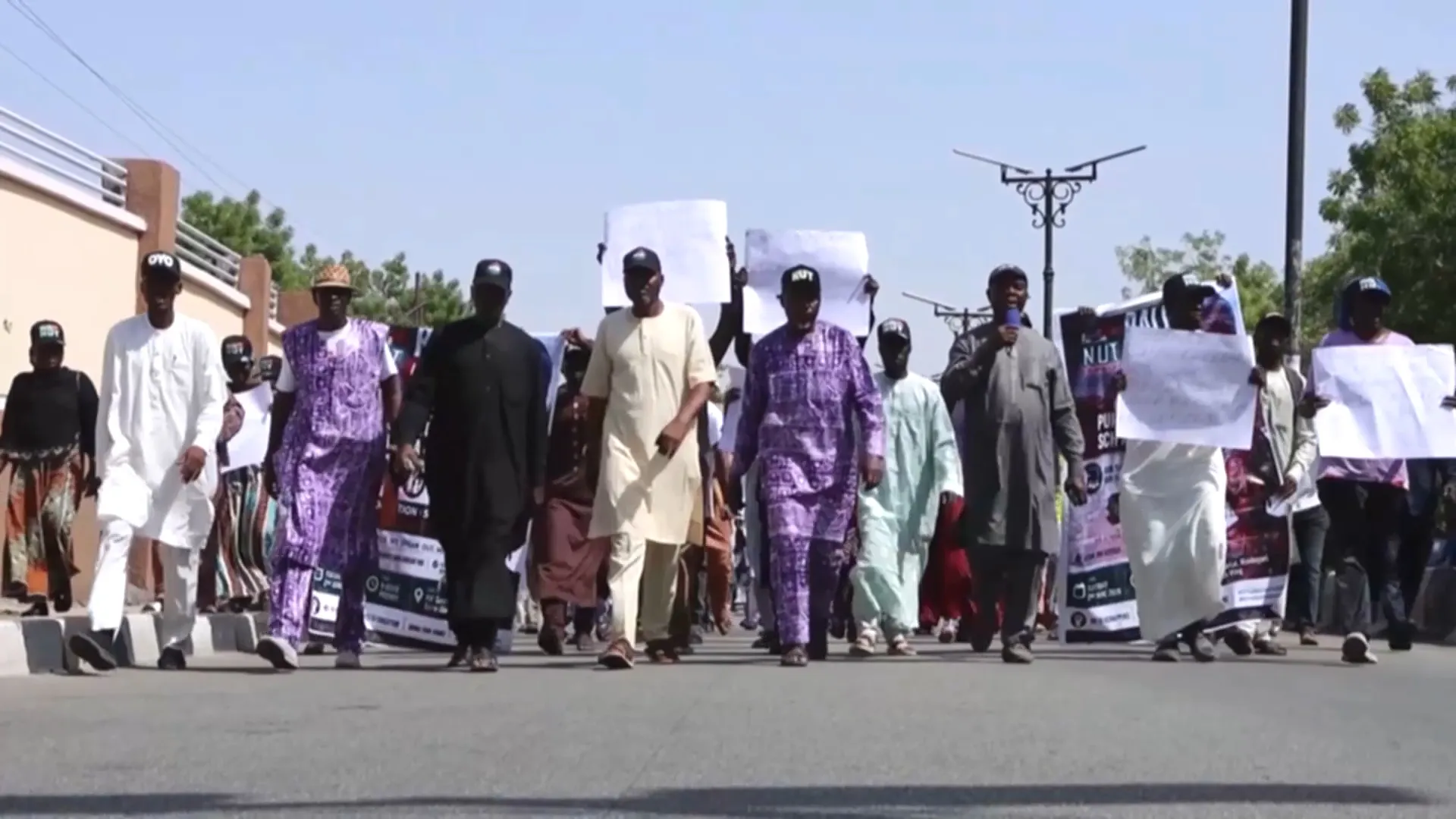
Teachers in north-eastern Nigeria held protests, demanding stronger protection for learning institutions.
The outcry comes after the abduction of dozens of school children in Borno State last month. Al Jazeera’s Felix Niwara explains.
There is a field, roughly 22 kilometres southwest of Sokoto, between the Dange Shuni and Bodinga local government areas in North West Nigeria, that carries no particular weight to the eye. Grass grows there. Wind moves through trees at predictable intervals. The surrounding bush is in full silence, neither mourning nor celebrating. Nothing marks what happened here, and that, of course, is precisely the point.
The place is called Satiru. Or was called Satiru. The grammar is slippery, because the British, when they finished with it in the spring of 1906, did not simply defeat it. They made sure to erase it – razing buildings, enslaving survivors, most of whom were women and children, and stripping the site with the cleansing method of an administration that understood that a crushed rebellion, left with a location, becomes a shrine. And shrines become consciousness and arguments. Better to leave nothing. Better to leave nowhere.
And then the Sultan of Sokoto, Muhammad Attahiru II, the Muslim ruler (Sarkin Musulmi) whose fighters helped carry out the slaughter, reportedly pronounced a curse on anyone who would rebuild or farm on the ground. As the British Resident Burdon telegraphed proudly to High Commissioner Frederick Lugard: “All Sokoto went out yesterday to inspect [the] battlefield and raze Satiru to the ground. No wall or tree left standing.” The scholars Paul Lovejoy and J.S. Hogendorn, writing in the Journal of African History, note that “the deserted site of Satiru is on the edge of a forest reserve. It has not been inhabited since its destruction and the official curse.” More than a century later, that is still true.
This is what erasure looks like when it succeeds. For 120 years, the ruins of Satiru have remained untouched, a vanished town erased by British colonial forces after a 1906 uprising led by poor clerics, fugitive slaves, and peasants challenging both imperial taxation and the aristocratic order of the Sokoto Caliphate.
But this story is not only about a massacre buried in colonial archives. It is about how modern Nigeria inherited the use of overwhelming force to suppress communities marked as threats.
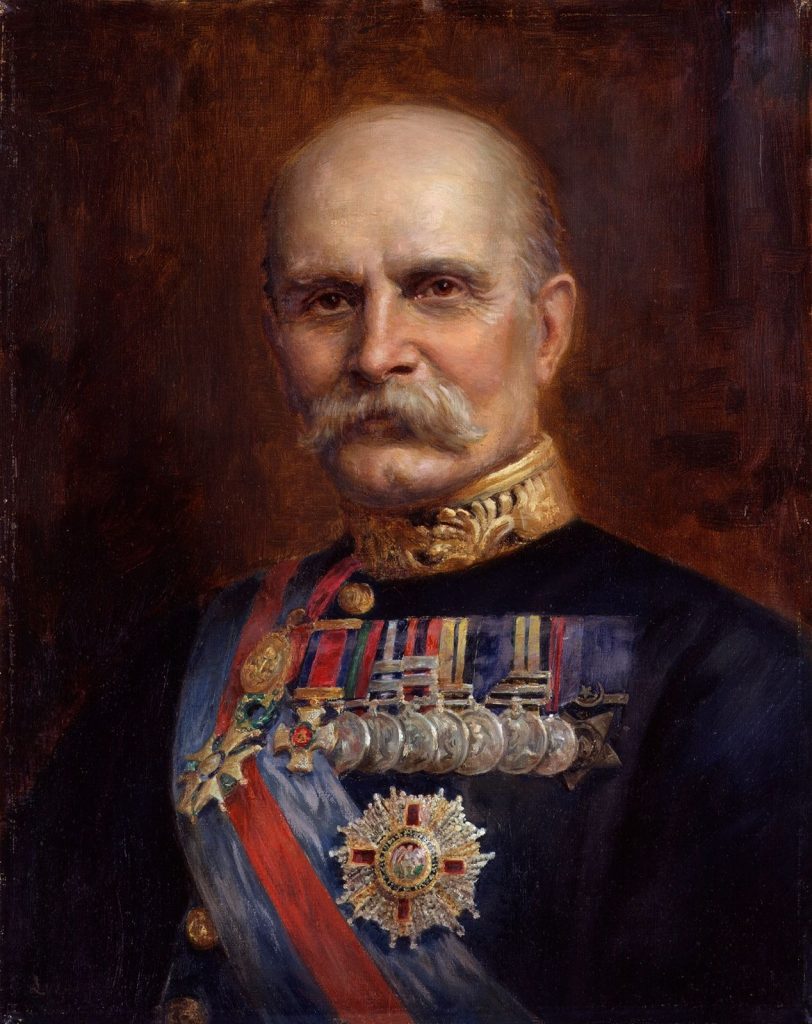
File: Portrait of Frederick Lugard in the National Portrait Gallery, London. Photo: Encyclopedia Britannica.
The thing Satiru was
Before it became a problem requiring artillery, Satiru was an answer to a different problem. To understand it, you need to understand the particular moral atmosphere of the Sokoto Caliphate in its late decline – the spiritual hangover, you might call it, of a revolution that had once been genuine.
Usman Dan Fodio launched his jihad in 1804 with an argument that was partly political and partly theological, but entirely serious: that the Hausa rulers of the time had corrupted Islam, that the ordinary people – the talakawa, the poor commoners – were being ground down by a system that dressed itself in religious language while behaving in wholly irreligious ways. Dan Fodio and his followers built the caliphate on the promise that this would change. That Islamic governance would be just. That scholars who held power would be answerable to something beyond their own appetites.
By the end of the nineteenth century, that promise had curdled into something its founders would not have recognised. The Fulani aristocracy that administered the caliphate had made a comfortable accommodation with power. Tribute collectors arrived in the villages. The talakawa paid. Palace scholars – the senior ulama (religious scholars), with their elaborate networks of family and commerce – found, in the more elastic corners of Islamic jurisprudence, reasons why this was all acceptable. The poor continued to be poor. The aristocracy continued to wear piety as a garment while extracting what they could.
The scholars of Satiru – humble men, as Lovejoy and Hogendorn describe them, “poor Muslim scholars engaged in farming and teaching,” with origins far outside the Fulani elite – found different reasons. Malam Siba, who founded the Satiru settlement in approximately 1894, was of Nupe origin. A second key figure, Maikaho, came from Gobir, the country that Uthman Dan Fodio himself had subjugated. A third, Malam Bawa, was from Zamfara, which had revolted against Sokoto on several occasions across the nineteenth century. What distinguished these men from the mainstream was not their learning – they were, by caliphate standards, minor figures – but their refusal to make the peace that more successful scholars had made with power. As Lovejoy and Hogendorn paraphrase the alleged statement of Malam Siba himself: he “was fed up with the exactions of the ruling class and was not going to obey the instructions of anyone anymore… [but instead] was going to set up a new great regime.”
What grew at Satiru, on the frontier of four fiefdoms – Danchadi, Dange, Shuni, and Bodinga – was something the caliphate’s administration regarded as an irritant and then, gradually, as something worse. The community refused to pay taxes. It refused to provide unpaid labour. It attracted, in growing numbers, fugitive slaves fleeing from the plantations and estates of the aristocracy. This last detail matters enormously. By 1906, British Resident Burdon would report that the adherents of the Satiru cause were “nearly all run away slaves.” Local tradition in Satiru itself held, as recorded by A.S. Mohammad in his foundational social history of the revolt, that “the leaders of Satiru abolished slavery and as a consequence… slaves flocked to them. The freedom of these fugitives was effectively and strenuously guarded.”
This was, in other words, not an uprising of the godless. It was an uprising of the structurally abandoned — poor clerics, dispossessed peasants, and fugitive slaves – against the two interlocking systems that were destroying them simultaneously: the late-caliphate aristocracy that extracted their labour, and the British colonial administration that had, since 1903, added new demands of jizya (poll tax) and jangali (livestock tax) to communities that had never before paid such taxes to Sokoto. As a Sokoto citizen wrote bitterly at the time, and as quoted in Lovejoy and Hogendorn’s account: “We have been conquered. We have been asked to pay poll tax and cattle tax. We have been made to do various things, and now they want us to fight their wars for them.”
The movement Satiru had built was, in the framework laid out by Lovejoy and Hogendorn, a form of revolutionary Mahdism – distinct from all the other currents of Mahdist thought that ran through the caliphate at the time. It drew its support from peasants, fugitive slaves, and subject populations. It had no aristocratic supporters, no wealthy merchants, and no members of the established ulama. It was ethnically diverse in a way that the aristocracy was not: Hausa from various origins, Zamfarawa, Gobirawa, Gimbanawa, Kabawa, and Azbinawa – but, strikingly, no Fulani. The battle lines, as Lovejoy and Hogendorn note, mapped onto class so precisely that “the ethnic dimension… reflected the class division.” On the day of the final battle, “all the faces on the battlefield had Gobir, Kebbi, Zanfara, Katsina and other such tribal marks. Not a single Fulani talaka [commoner] joined them.”
What Satiru wanted, ultimately, was the recovery of the original promise – the caliphate that Dan Fodio had said was coming, and that had not arrived. You can call this politics, or you can call it theology. At Satiru, they did not distinguish between the two.
The spark and the suppression
The movement had been building for years, connected by threads of correspondence and travelling clerics to similar currents of dissatisfaction across both the British and French colonial zones in are now Nigeria and Niger Republic. On the French side of the boundary, a blind Zarma cleric named Saybu Dan Makafo had been the central animating figure – charismatic, mystically inclined, and reportedly possessing gifts of ventriloquism that contributed to his reputation as a waliyyi, a saint.
In December 1905, violence broke out at Kobkitanda, 150 kilometres south of Niamey, in French territory in today’s Niger Republic. Saybu and his followers killed two gardes-cercles (colonial police) from Dosso. The French responded, the Mahdists absorbed losses, and Saybu fled east – eventually arriving at Satiru, where the local community had already been living in a state of armed readiness and messianic expectation.
The revolt was supposed to begin on the Eid El-Kabir (Babbar Sallah), February 5, 1906. It was postponed – there was an internal dispute about the recognition of Isa, the village head of Satiru, as the messianic successor figure who would accompany the Mahdi. The Satirawa (people of Satiru) resolved the question on February 13, when they attacked the neighbouring village of Tsomau. Fourteen people died.
The British response was swift and catastrophically misjudged. Acting Resident H.R. Preston-Hillary moved immediately with a column of about seventy mounted infantry under Major Francis Blackwood, armed with a single Maxim gun. He appears to have been entirely unaware that the rising at Satiru was connected to the weeks of violence that had already convulsed French territory. He rode toward the village with the assumption of a man who believed the gap between his weapons and his opponents’ was so vast that the details of the situation hardly mattered.
He was wrong.
The Mahdists attacked the British column. Hillary and Blackwood were killed, along with three other white officers and 25 African soldiers. The West African Frontier Force (WAFF) suffered such heavy losses that it was “forced to retreat in disarray.” It was, as Lugard would later acknowledge, “the first serious reverse suffered by the West African Frontier Force since it was raised in 1898.”
Get our in-depth, creative coverage of conflict and development delivered to you every weekend.
Subscribe now to our newsletter!
The Satiru Mahdists were also severely wounded — their leader, Malam Isa, was struck during the initial encounter and would die two days later, on the morning he was supposed to unfurl the green flag and declare the jihad formally. He did not live to see what his movement had achieved: a genuine military victory over the empire. For a brief, burning moment, the talakawa had won.
The British did not pause to understand what had happened. They regrouped.
The reckoning
Illustration by Akila Jibrin/HumAngle.
On March 10, 1906, a combined force of the British-run West African Frontier Force (WAFF) troops and Sokoto fighters approached Satiru. The Satirawa had dug trenches. But they did not stay behind them. They charged, repeatedly, in massed formation, against troops equipped with Maxim guns firing destructive volleys. Historian Richard Dusgate would later call what followed “the most bloodthirsty expedition in the history of British military operations in Northern Nigeria.” Margery Perham, in her biography of Lugard, noted that subsequent reports – kept secret at the time – found that the “killing was very free, not to say slaughter,” that the soldiers “killed every living thing before them,” and that “the fields were running with blood.”
At least 2,000 Satirawa were killed. An estimated 3,000 women and children were herded to Sokoto, many distributed among the aristocracy as effective slaves – a thinly disguised reassertion of the master-slave relationship that the very people of Satiru had staked their lives on dismantling.
Saybu Dan Makafo, blind and wounded, survived. He was captured and brought to Sokoto, where he was tried. His boy guide, according to a story collected by H.A.F. Johnston, reportedly shouted at the trial that if Saybu was given water, he would vanish into thin air – an indication of the extraordinary tension surrounding the proceedings. The public executioner decapitated him on March 22. His head was mounted on a stake in the market. Four subordinates suffered the same fate.
The political accounting that followed the massacre revealed what the British understood the suppression to mean and to communicate. The Colonial Office initially received dispatches that accurately attributed the uprising partly to the fugitive slave crisis – Lugard’s own initial cable described the rebels as “outlaw fugitive slaves.” A marginal note in the Colonial Office files, as documented by Lovejoy and Hogendorn, captures the official response with bracing economy: “Better say nothing of slaves.” By May 9, Lugard had incorporated a sanitised version of events into his official reports. The slave dimension was quietly removed from the record. The most dangerous thing about Satiru – that it had articulated a class argument, that it had offered sanctuary to the enslaved, that it had made the connection between colonial taxation and pre-colonial extraction explicit – was the thing the British were most determined to forget.
The Sokoto aristocracy was rewarded for its loyalty. Marafa Muhammadu Maiturare, the Sokoto official who had commanded the local levies and whose authority was partly credited with preventing a general rising, eventually became Sarkin Musulmi in 1915. Hassan, the sarki of Dange, the fief nearest to Satiru, who had greeted Burdon warmly in the hours after the Mahdist victory, would become Sarkin Musulmi in 1931. The collaboration was not forgotten. It was promoted.
What the grammar inherited
Nearly a century and two decades later, an eight-year-old boy named Sa’id watched through a crack in the wall of his grandmother’s hut as the men of his family were dragged outside and shot.
His village, Kajen Shuwa, sat in Marte Local Government Area of Borno State, northeastern Nigeria, a Shuwa Arab community of cattle herders and storytellers, ethnically and linguistically distinct from the dominant groups of the region. Between 2014 and 2015, at the height of the military’s campaign against Boko Haram, soldiers arrived looking for a Boko Haram cell in a village called Kajen Kanuri. The names were similar enough. No interpreter had been brought. No local guide accompanied the unit.
More than 40 men died.
“They had the wrong village,” Imam Abdulkarim, now living with displaced survivors at the Garin Shuwa IDP camp in Bauchi, told HumAngle. “It was later we realised they were sent to Kajen Kanuri.”
One of the survivors told HumAngle in 2026 how the events unfolded as he watched from where he had hidden himself in a tree. He said he was watching when the men were gathered and ordered to produce Boko Haram members. The people apparently did not even understand what was being said to them, so the soldiers simply lined all the men up in a place resembling a ditch and shot every single one of them. Just like that. No trial. No evidence. Nothing. Everyone was killed.
Sa’id is nineteen now. He teaches Quran to children at the displacement camp — children who have their own mornings they cannot stop replaying. He speaks slowly. He flinches at loud sounds. When he told his story to HumAngle, tears came before words, and other residents of the camp stepped in to complete the parts his voice could not carry. They knew the story. They had assembled it over the years, in the way that displaced communities assemble the things they are not allowed to say publicly – from fragments, from the accounts of those who were in different parts of the village when it happened, from the silence of those who were not there to tell anything.
“The families of the killed couldn’t even raise their voices,” Abdulkarim said. “Everyone was afraid that he might be targeted too.”
No soldier was prosecuted. No investigation was publicly announced. No family received notification, compensation, or the minimum of official acknowledgement that their men had been killed by mistake.
What happened to Kajen Shuwa is not exceptional in the region’s chronicle of the last decade. Amnesty International’s 2015 report documented execution-style killings, torture in detention, and mass graves of individuals who had never been charged, tried, or formally arrested — people killed not for what they did, but for who they resembled, where they lived, what language they spoke when soldiers arrived. The Nigerian military’s response to that report was not to open investigations. It was to call Amnesty International a liar.
And then the world moved on, as it always does – to the next atrocity, the next set of statistics that briefly animated international concern before fading into the background noise of a continent the world has learned to observe without fully attending to.
Zaria massacre
If Kajen Shuwa happened in the shadows – a remote village, an Arabic-speaking minority, a story reaching the press years after the fact — then what occurred in Zaria, Kaduna State, in the country’s North West, in December 2015 happened in full view, and still went unanswered.
The Islamic Movement in Nigeria (IMN), led by Sheikh Ibrahim El-Zakzaky, was a Shia organisation with roots deep in Zaria’s social fabric. It ran schools and clinics. It was also an organisation that had long attracted the suspicion of the Nigerian state – not because it was violent, but because it was organised, independent, and loyal to a leadership structure that fell outside the state’s system of control.
On Dec. 12, 2015, an IMN procession blocked a road, delaying a military convoy carrying the then Chief of Army Staff. What followed, as documented in meticulous detail by both Amnesty International and the Kaduna State Government’s own commission of inquiry, was a massacre. Soldiers attacked IMN members across multiple locations. The Hussainiyya Islamic Centre was demolished. El-Zakzaky’s residence was destroyed. Three of his sons were killed. El-Zakzaky himself, elderly and partially blind – the parallel to the blind Saybu Dan Makafo feels almost too pointed – was arrested. He and his wife would remain in detention for years, their release ordered repeatedly by courts and resisted repeatedly by the government.
The Kaduna State commission produced a report of unusual honesty. It confirmed that at least 347 IMN members had been buried in a mass grave at Mando. It found the military’s response disproportionate. It recommended the prosecution of specific officers, and it named the mass grave by location. But not one recommendation was implemented.
The IMN was formally proscribed in 2019, an organisation that had existed for four decades and operated schools and hospitals, banned by the government that had killed hundreds of its members, as though the banning were the logical conclusion of the killing rather than an additional punishment for surviving it.
The grammar of impunity
There is a grammar to this. Lovejoy and Hogendorn identified it in the colonial records of 1906 in three steps: a community marked as dangerous, the deployment of force that is “excessive by design,” and the systematic management of the record.
At Satiru, the British made the decision consciously – the marginal note that said “better say nothing of slaves” was an administrative instruction to suppress an inconvenient truth. The communities targeted after them have had to live inside the silence that administrative instruction created.
But this never worked permanently. What the scholars Godwin Odeh and Williams Efe argue, in their analysis of the Satiru uprising’s historiography, is that the episode was not merely a military or religious event but a demonstration of “the impossibility of subjugating a group permanently without facing a crisis of cultural relevance.” They invoke Amilcar Cabral’s formulation: that culture “is a means by which people assert their opposition to domination… one of the fundamental tools of struggle for emancipation.” The argument is that Satiru never fully ended – that its logic persisted, became available, got taken up again in different forms by different communities facing different versions of the same problem.
The circumstances were different, the enemies differently named, and the legal justifications modernised, but the underlying grammar remained recognisable.
This is not a metaphor. What the British established in 1906 and what successive Nigerian governments have absorbed so completely is a particular relationship between the state and the communities it finds inconvenient. The relationship has a fixed sequence: a community is marked; disproportionate force arrives; the record is managed; and then, reliably, comes the silence. The silence is not passive. It is constructed and maintained by the same institutions that produced the violence – maintained through the denial of accountability, the obstruction of independent investigation, and the prosecution of those who speak too loudly about what they witnessed.
The families of Kajen Shuwa could not grieve publicly because grief, in that context, was dangerous. The IMN, after Zaria, could not even gather to mourn without risk of further confrontation with the same security forces that had killed their members.
Muhammed Kaumi had just stepped out of the mosque when his phone rang on the evening of Friday, May 29. He had recently returned from Dikwa, a town in Borno State, northeastern Nigeria, and assumed the call was from a relative checking on his journey home. Instead, the voice on the other end delivered news that left him numb.
“Bulama has been killed,” the caller said. “They have killed Bulama.” Muhammed felt his chest tighten. “I instantly felt a sharp pain in my heart,” he recalled.
Bulama Ali was his cousin, a farmer, a father of five, and one of thousands, like him, who have been displaced by the Boko Haram insurgency that has scarred the region for more than a decade.
Within minutes, Muhammed was on his way to the Custom House Internally Displaced Persons’ Camp in Muna, on the outskirts of Maiduguri, where Bulama had lived with his family for nearly a decade.
As he rushed there, questions flooded his mind: “What had happened? Who had killed him? Why?”
When he arrived, residents told him that Bulama had allegedly been beaten by men they identified as “repentant Boko Haram fighters”, locally known as “Hybrids”.
For many residents of Maiduguri, the allegation struck a painful nerve.
For years, former insurgents who surrendered to authorities have passed through government rehabilitation and reintegration programmes such as Operation Safe Corridor and the Borno Model, before returning to civilian communities. However, some have bypassed both interventions completely.
The Nigerian authorities have involved some of these deserters in security operations, where they help troops with intelligence gathering, their knowledge of terrorist-held terrain, and even operational activities. The arrangement has remained controversial among many survivors of the conflict and among security analysts.
Now, residents in these communities say their fears have been justified.
They brought him back dead
Bulama’s final hours began shortly before the Friday Muslim congregational prayers.
Muhammed was told by relatives and eyewitnesses that “[Bulama] was on his way to the mosque on his bicycle when he received a phone call. He stopped by the roadside [close to Muna, on the Maiduguri-Gamboru highway] to answer it.” Behind him was a vehicle carrying armed men dressed in black uniforms. “They honked at him to move,” Muhammed said. “But he was speaking on the phone and did not hear them.”
Abbas Shettima, who witnessed the incident, said the confrontation, which occurred between 1:15 p.m. and 1:30 p.m., quickly escalated.
“We were all heading to the mosque when we saw them beating him,” Abbas recounted. According to him, the group consisted of about ten men carrying guns and sticks. “They said he was blocking their way,” he said.
Bulama tried to explain. He apologised repeatedly, but his pleas fell on deaf ears.
“He kept begging them to spare him,” Abbas said. “He crouched down and covered his head with his hands while they beat him.” When bystanders attempted to intervene, the armed men threatened them. Residents watched helplessly. Eventually, the men forced Bulama into their vehicle and drove away.
No one knew where he had been taken.
At the time, witnesses said they believed the group were members of the Civilian Joint Task Force (CJTF) because of their uniforms.
Hours later, shortly after 3 p.m., the vehicle returned. “They brought him back severely wounded,” Abbas recounted. “He could barely move.”
Residents rushed toward him to help, but within ten minutes, he died.
Get our in-depth, creative coverage of conflict and development delivered to you every weekend.
Subscribe now to our newsletter!
The incident was immediately reported to the soldiers stationed at the camp’s entrance. According to Muhammed, the soldiers said they had seen the vehicle dropping Bulama but did not know what had transpired. “They were the ones who told us the men were Hybrids and that they had come from the Maiwa axis,” he said.
Residents later learned that Bulama had allegedly been taken to Maiwa Kura, a remote village in Mafa Local Government Area, Borno State, where the group was reportedly stationed.
Although “Hybrids” are often perceived as operating independently, they are typically attached to military formations and work alongside security forces, according to a member of a local volunteer security outfit involved in counterterrorism operations who spoke to HumAngle.
“The commanding officer of the military base gives instructions to the ‘Hybrid’ commander attached to that formation, who then relays orders to his men,” the source explained. “During broader operations involving multiple locations, they also have a state commander from whom they receive directives.”
However, this does not necessarily imply military involvement in the attack that claimed Bulama’s life, as Hybrid patrols sometimes operate independently.
Bulama’s family subsequently reported the matter to the police.
Muhammed said that soldiers, police officers, and members of the CJTF later travelled to Maiwa, where they arrested three suspects, including a commander. “They told us the others had travelled to Mafa for an operation,” he said.
The suspects were taken into custody and transferred to the Borno State Criminal Investigation Department for further investigation.
According to family members, the suspects claimed Bulama died after jumping from the back of a moving Hilux vehicle. But the relatives remain unconvinced. “The doctors told us he had been severely beaten,” Muhammed said. “His hands were tied, and he had internal bleeding.”
The family retrieved the body on Saturday morning and buried him later that afternoon. When the body was prepared for burial, he said, blood continued to seep from his eyes, ears, and nose. “It stained the white shroud.”
Mourners at Bulama’s interment at the Custom House IDP camp. Photo: Abbas Shettima.
When HumAngle contacted the Borno State Police Public Relations Officer, Nahum Kenneth Daso, he said he was not aware of the case and would make inquiries. As of publication, no official update had been provided.
The men known as ‘Hybrids’
In many communities across Borno State, the word “Hybrid” carries different meanings depending on who defines it.
To security officials, they are a practical asset in a war that has stretched for more than 15 years. For many residents, they are former terrorists trying to rebuild their lives. To others, especially those who lost relatives, homes, farms, and livelihoods during the conflict, they are a constant reminder of wounds that have never fully healed.
The term is commonly used to describe some former Boko Haram members who surrendered and passed through official rehabilitation and deradicalisation programmes, and later became attached to security operations in various capacities.
Since they possess intimate knowledge of terrorist operations and hierarchy, security agencies have increasingly relied on some of them to help in identifying former colleagues, navigating difficult terrain, and providing information that security forces may otherwise struggle to obtain.
For authorities, the arrangement is often viewed as a necessary component of the counterterrorism campaign. However, many civilians find it deeply unsettling.
File: A group of former Boko Haram terrorists who were rehabilitated by Nigeria’s Operation Safe Corridor programme in northeastern Nigeria.
That is why, for some residents, the sight of former terrorists carrying weapons or working alongside security forces can be difficult to accept.
Bulama’s death has reopened those anxieties. Yet, the resentment many residents express today did not begin with his killing. It has been building for years.
In August 2021, as thousands of terrorist deserters began surrendering from the Sambisa Forest and the Lake Chad region, the Borno State Government convened a high-level stakeholders’ meeting at the Government House in Maiduguri. Government officials, security agencies, traditional rulers, religious leaders, civil society organisations, journalists, and community representatives gathered to discuss the reintegration of former insurgents into society.
At the end of the meeting, participants agreed in principle to forgive and accept these deserters back into their communities. Their acceptance, however, was not unconditional. The stakeholders insisted that surrendered terrorists must be thoroughly screened before reintegration. They also warned against the release of hardened extremists into the communities. They further called for meaningful reconciliation between victims and former terrorists.
The gathering was widely presented as a collective endorsement of reconciliation.
Many residents who had survived the violence felt they had not been part of that conversation. Some had lost parents, spouses, siblings, and/or children. Others had spent years moving between displacement camps, uncertain whether they would ever return home. For them, forgiveness was not a policy decision that could be reached through consensus among stakeholders. It was an intensely personal choice shaped by trauma, memory, and loss.
“The people making these decisions are not always the people who suffered directly,” Abba Gana told HumAngle.
Over the years, some residents have complained of harassment and intimidation by former terrorists and their families. Others say they simply feel the reintegration process has moved faster than community healing.
The debate became even more sensitive as some former terrorists began assisting security operations. To many survivors, the transformation can be difficult to reconcile: people who once arrived as attackers returning as neighbours and protectors, and in some cases, as men carrying authority.
Some government officials have repeatedly defended the reintegration policy. Recently, General Olufemi Oluyede, the Chief of Defence Staff and chairperson of the Operation Safe Corridor National Steering Committee, likened terrorist deserters to the biblical Prodigal Son, arguing that they deserve rehabilitation because they remain Nigerian citizens.
Those concerns were further amplified by reports that not all former terrorists were passing through official rehabilitation channels. In 2025, a HumAngle investigation documented allegations that some defectors were quietly leaving the forest and reintegrating into communities without participating in formal deradicalisation programmes, raising questions about screening, accountability, and oversight.
Over the years, several incidents involving terrorist deserters have also contributed to public unease. In April, a former Boko Haram member allegedly shot and killed a CJTF member during an argument in the Mafa LGA. According to reports, the victim was rushed to the hospital but was confirmed dead on arrival, while the suspect was later arrested and handed over to the police.
File: Police officers at the scene of an explosion at the Maiduguri Monday Market in March 2026. Photo: Al’amin Umar/HumAngle.
Two years earlier, some deserters reportedly stormed a police station in Maiduguri in an attempt to secure the release of their colleagues arrested over alleged drug-related offences. In another case that generated public outrage in 2023, a deserter was accused of killing his wife at the outskirts of Maiduguri.
Concerns about the reintegration programme are not new. As far back as 2020, Ali Ndume, the senator representing Borno South Senatorial District, publicly criticised aspects of the government’s amnesty efforts, recounting the case of a deserter whom he alleged killed his father and later absconded with his property. The senator argued that the victims and survivors’ concerns were not receiving the same level of attention as the rehabilitation of the deserters.
Taken individually, the circumstances surrounding these incidents differ significantly from Bulama’s case. Collectively, however, they have helped shape public perceptions of the reintegration programmes and deepened anxieties among some residents about the monitoring, supervision, and accountability of deserters, particularly those involved in security-related activities.
For many survivors of the conflict, such incidents reinforce a lingering fear that rehabilitation alone may not be enough. Bulama’s death has now brought those long-simmering concerns into sharper focus.
“The community is deciding on an action,” Abbas said.
Residents gathered after Bulama’s burial to discuss possible legal steps. Some suggested pooling money to hire a lawyer. Others proposed approaching human rights organisations.
“We are thinking of contributing money and hiring a lawyer,” Abbas said.
Justice and unfinished wounds
For Muhammed, grief and anger now coexist. His cousin survived displacement and years of uncertainty. He, however, did not survive a short journey to the mosque.
When asked what justice would look like for his family and the displaced community, Muhammed replied, “The law does not play by sentiments; it follows laid-down rules. I hope they will do what is right. If it is by my sentiments, I would not want them to be free. I would want them imprisoned for life.”
He paused.
“I don’t care about compensation. I don’t care about apologies. Justice for me is their imprisonment.”
A family left devastated
Bulama was only 30 years old. He left behind two wives and five children.
He earned a living as a farmer. And before displacement forced the family from Boboshe in 2016, his father was killed. His elderly mother remains alive and still lives with them at the displacement camp.
The survival of his family, which was Bulama’s responsibility as the breadwinner, hangs uncertainly over relatives, who are also struggling to survive. “We are not rich people,” Muhammed said. “Caring for five children in addition to our own children will be difficult.”
Around the camp where he lived for over a decade, residents gather beneath makeshift shelters to rest, but the conversations about Bulama’s death remain on their lips.
What remains immediate is his nuclear family, and the space left by a man who left home for Friday prayers and never returned.
The death of Abakar Minuki, one of the most influential leaders of the Islamic State West Africa Province (ISWAP), in a joint United States and Nigerian military operation, marks one of the most consequential blows to the insurgent group in recent years. Yet, analysts and insiders familiar with the terror group warn that history offers little reason to assume the killing will significantly diminish the long-term threat posed by the group.
Multiple sources familiar with ISWAP’s internal structure told HumAngle that Minuki’s most likely successor was Baba Shuwa, commonly known as Ba Shuwa. However, indications emerging from the aftermath of the operation suggest he may also have been killed. If confirmed, the simultaneous removal of both men would trigger the most significant leadership transition in the organisation since its emergence from Boko Haram’s internal schism nearly a decade ago.
For the first time, leadership could pass not to the insurgency’s founding generation, but to a second generation of fighters raised entirely within the movement’s war ecosystem. Two names have emerged as the strongest contenders: Abu Salem and Bana Chingori.
“This would represent a generational shift unlike anything the movement has experienced before,” a source familiar with ISWAP’s internal dynamics told HumAngle.
From village barber to insurgent leader
Known variously as Abu Bakr ibn Muhammad ibn Ali al Mainoki, Abor Mainoki, Abubakar Mainoki, and Abakar Minuki, the slain commander was himself a product of the insurgency’s evolution.
Born in 1982 in the village of Mainok, a settlement along the Maiduguri-Benisheikh corridor in Borno State, he adopted his nom de guerre from his hometown. Long before becoming one of the most feared figures in the Lake Chad Basin insurgency, Minuki was known as a young barber operating a modest salon in the village.
Those who encountered him during the rise of Mohammed Yusuf’s movement recall a quiet young man who blended into daily life. That anonymity would eventually disappear. By the time Boko Haram transformed from a fringe religious movement into a powerful insurgent force, Minuki had become part of its military structure.
Abu Mus’ab, Abu Fatima, and other Boko Haram leaders had to secure Minuki’s approval before finalising their escape from Abubakar Shekau in the Sambisa forest to the islands of the Lake Chad Basin, shortly before ISWAP split from Boko Haram. Minuki not only provided refuge for members of the newly formed ISWAP fleeing Shekau’s crackdown, but also protected them and facilitated their settlement in his territory, where he ruled as one of Shekau’s most formidable Amirul Fiya.
He belonged to the first generation of fighters who entered the organisation before the 2009 uprising that transformed the movement forever.
The last men of Yusuf’s generation
To understand what Minuki represented, one must return to Boko Haram’s earliest years. According to sources familiar with the group’s formative history, Mohammed Yusuf’s original armed contingent consisted of fewer than 100 members. These men were responsible not only for security but also for recruitment.
As the organisation expanded, Yusuf reorganised fighters into military formations named after prominent figures from Islamic history. Among them were the Zubair Ibn Awwam Battalion, Umar Farouk Battalion, Salmanu Farisu Battalion, Khalid Ibn Walid Battalion, and Salaudeen Ayubi Battalion.
Several battalions survived years of expansion, state crackdowns, factional disputes, and battlefield losses. Over time, however, only two retained their original lineage and remain operational: the Timbuktu formation, associated with Faruk, and the Buhairiya structure, which absorbed the remnants of several earlier battalions.
Multiple sources have identified this undated photograph as depicting the corpse of Abakar Minuki. The image is currently being circulated widely across the Lake Chad region by both active and ex-insurgents.
Minuki was already a Naqeeb, a junior commander, during the pre-2009 period. Ba Shuwa, by contrast, was merely a foot soldier. While Abu Salem, who is now touted as the likely successor of ISWAP, was still a child. That generational distinction highlights that few survivors remain from the movement’s founding era.
The rise of the second generation
If Minuki and Ba Shuwa are both dead, the succession process could elevate men who never knew the insurgency before it became a regional war. Among them, Abu Salem stands out. Sources describe him as both a military commander and a religious authority within the insurgency. He currently serves as Amirul Fiya, based in Krinua, a battlefield commander with influence extending beyond purely military affairs.
His biography mirrors the insurgency’s own evolution. The son of a respected first-generation Boko Haram member, Abu Salem benefited from mentorship by senior leaders from an early age. His pedigree gave him access to influential networks that many younger fighters lacked.
He also carries the scars of combat. During one battle with members of Nigeria’s armed forces, he sustained serious gunshot wounds to the lower abdomen. The injuries required long-term medical management involving a Foley catheter. According to sources familiar with his condition, he continued participating in military operations despite the injury for years.
Within ISWAP, Abu Salem has cultivated a reputation for bravery, clerical authority, and charisma. Several sources compared his influence to that once exercised by Abu Musab al-Barnawi and Minuki himself.
Another contender is Bana Chingori, regarded as Ba Shuwa’s closest deputy. Unlike Abu Salem, however, Bana faces a structural challenge: He does not originate from the Faruk battalion network, which sources estimate supplies approximately 70 per cent of ISWAP’s current fighters and leadership, including Minuki.
In an organisation where battlefield alliances and battalion loyalties remain deeply influential, that may prove decisive.
The ethnic question behind ISWAP leadership
Leadership succession inside ISWAP is not determined solely by military competence. HumAngle understands that ethnicity, lineage, dialect, and social hierarchy continue to shape power within the organisation.
Get our in-depth, creative coverage of conflict and development delivered to you every weekend.
Subscribe now to our newsletter!
Public portrayals often reduce Boko Haram and ISWAP to ideological movements driven exclusively by extremist interpretations of Islam. The reality is considerably more complex. The overwhelming majority of ISWAP’s estimated fighting force originates from the Kanuri ethnic nationality, which has historically been dominant across the Lake Chad Basin. Yet, the Kanuris are far from homogeneous.
They are divided into numerous dialect communities, clan networks, and social categories that carry significant political weight, all of which the insurgents take very seriously. These divisions influence recruitment, promotions, alliances, and leadership legitimacy.
Mohammed Yusuf, for example, belonged to the Manga dialect group, one of the most prestigious Kanuri communities. His lineage strengthened his standing within the movement’s formative years. Abubakar Shekau came from the Kaama-speaking Ngala’a community, often viewed as socially marginal within traditional Kanuri hierarchies.
Several researchers and former members argue that Shekau’s relationship with the broader movement was shaped partly by this outsider status. Minuki himself emerged from Borno Central, where multiple Kanuri dialect groups intersect. Ba Shuwa’s ancestry has also been the subject of internal scrutiny.
Sources say rivals occasionally questioned the purity of his Kanuri lineage, reflecting how deeply social stratification continues to influence perceptions of authority within insurgency networks in the Lake Chad basin.
For this reason, sources told HumAngle, the emergence of a non-Kanuri leader remains highly unlikely. Even if such a figure were elevated, sustaining authority would be extraordinarily difficult. “The movement talks about Islam and the caliphate,” one source familiar with internal deliberations said, “But when leadership questions arise, ethnicity still matters.”
The foreign fighters effect
The leadership transition unfolding inside ISWAP is taking place within an organisation that has undergone profound internal transformation in recent years. Sources familiar with the group’s operations told HumAngle that the growing presence of foreign fighters from across the Sahel and beyond has reshaped not only the movement’s military tactics but also its internal security culture.
As foreign fighters increasingly settled in the Lake Chad region, ISWAP imposed some of its strictest operational security measures to date. Members were ordered to delete existing photographs and cease documenting activities through images. The use of smartphones was largely prohibited, reflecting mounting concerns about surveillance, geolocation tracking, and intelligence penetration.
The restrictions marked a sharp departure from earlier years when both Boko Haram and ISWAP routinely photographed preaching sessions, training exercises, weapon displays, and daily life in territories under their control. Such imagery formed a central component of the group’s propaganda and recruitment machinery.
According to sources, the new rules were enforced ruthlessly. Several fighters accused of taking photographs or retaining images on their devices were reportedly executed. The killings served as both punishment and deterrence, reinforcing a culture of secrecy that now permeates much of the organisation.
“The message was simple,” one source familiar with the group’s internal directives said. “Any digital trace that could expose fighters, commanders, or locations became a security threat.” The arrival of experienced foreign fighters appears to have accelerated this shift. Many brought with them lessons learned from conflicts across the Sahel, where drone surveillance, signals intelligence, and electronic tracking have increasingly shaped the battlefield.
The influence of foreign fighters introduced a greater emphasis on counter-intelligence, operational discipline, compartmentalisation, and the elimination of digital footprints that could expose personnel, camps, supply routes, or command structures. The result is an insurgent organisation that has become considerably more cautious than its predecessors. While leadership losses continue to disrupt, ISWAP’s evolving security architecture suggests a movement increasingly focused on institutional survival rather than on dependence on individual commanders.
Fractured, not defeated
The killing of Minuki undoubtedly represents a serious disruption, and the elimination of Ba Shuwa, if confirmed, would considerably deepen that disruption. Yet, military and intelligence officials caution against interpreting the development as a strategic defeat for ISWAP.
“The organisation has experienced similar moments before with the deaths of Mohammed Yusuf, Mamman Nur, Abu Musab al Barnawi, Ba Idrissa, and several other senior commanders, each of which generated predictions of organisational collapse,” said Kyari Mustafa, a conflict researcher in Maiduguri.
Those predictions never materialised. Instead, the group adapted. The pattern has become familiar across the Lake Chad Basin.
HumAngle has documented a pattern where successful military campaigns weaken the insurgency. Communities experience a period of relative calm. The group regroups, reassesses, and eventually resumes attacks. This cycle has repeated itself for more than 15 years. What makes the current moment significant is the possibility that an entire generation of commanders may be disappearing simultaneously. If Minuki and Ba Shuwa are indeed gone, the future of ISWAP may soon be shaped by men who were toddlers when Mohammed Yusuf built the movement.
Whether that transition produces fragmentation, renewal, or further violence remains uncertain. What is clear is that the Lake Chad Basin has witnessed enough leadership decapitations to know that the death of a commander, however important, does not automatically mean the end of the war.
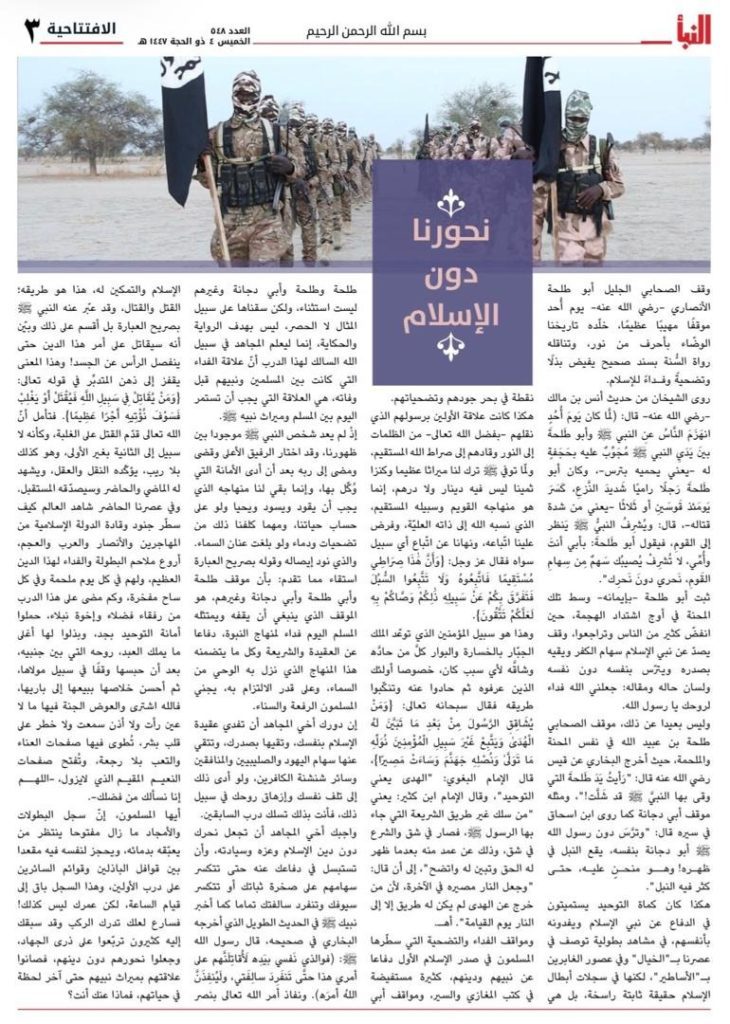





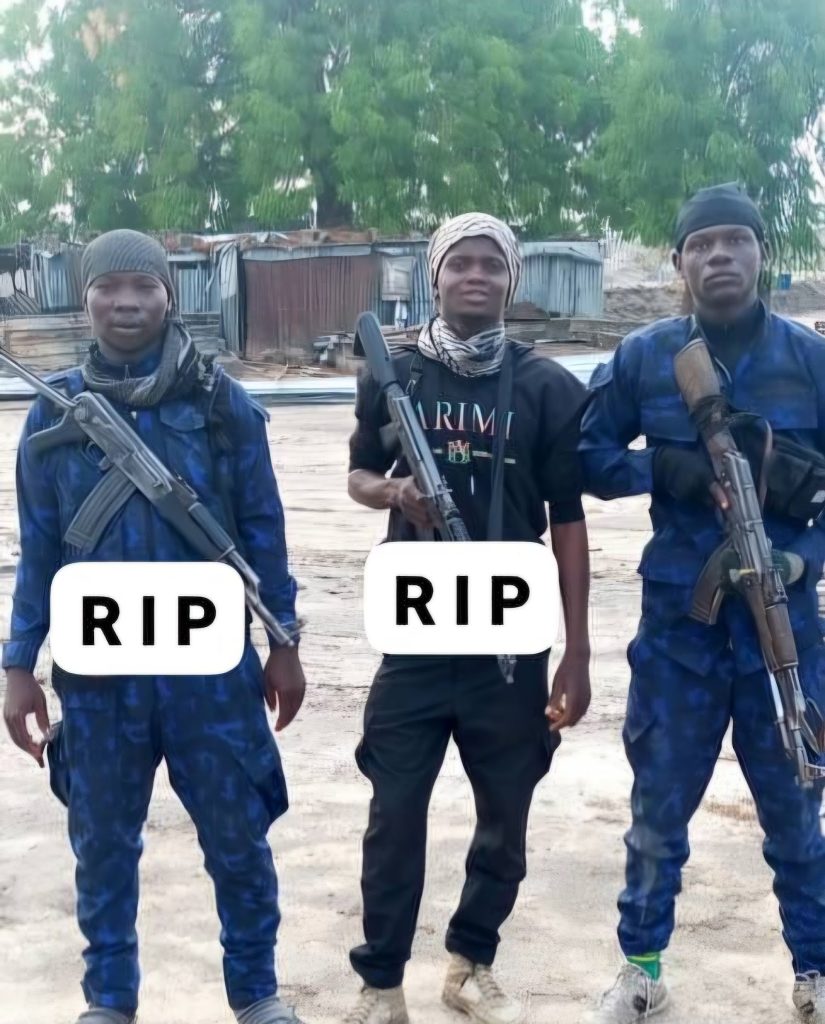


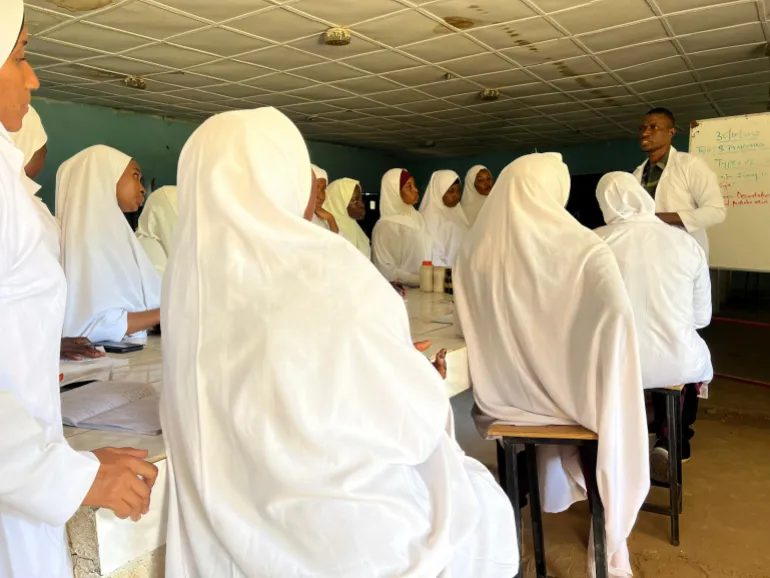
![UNICEF reports that more than half of girls in northern Nigeria are out of school, highlighting deep gender gaps in education. [Abdulaziz Bagwai /Al Jazeera]](https://i0.wp.com/occasionaldigest.com/wp-content/uploads/2026/06/1000872132-1-1780347186.jpg?w=640&ssl=1)
![A classroom session at the Women Centre for Continuing Education in northern Nigeria. [Abdulaziz Bagwai /Al Jazeera]](https://i0.wp.com/occasionaldigest.com/wp-content/uploads/2026/06/1000872131-1-1780347183.jpg?w=640&ssl=1)