nicaragua

Nicaragua begins constitutional reforms after Ortega’s remarks

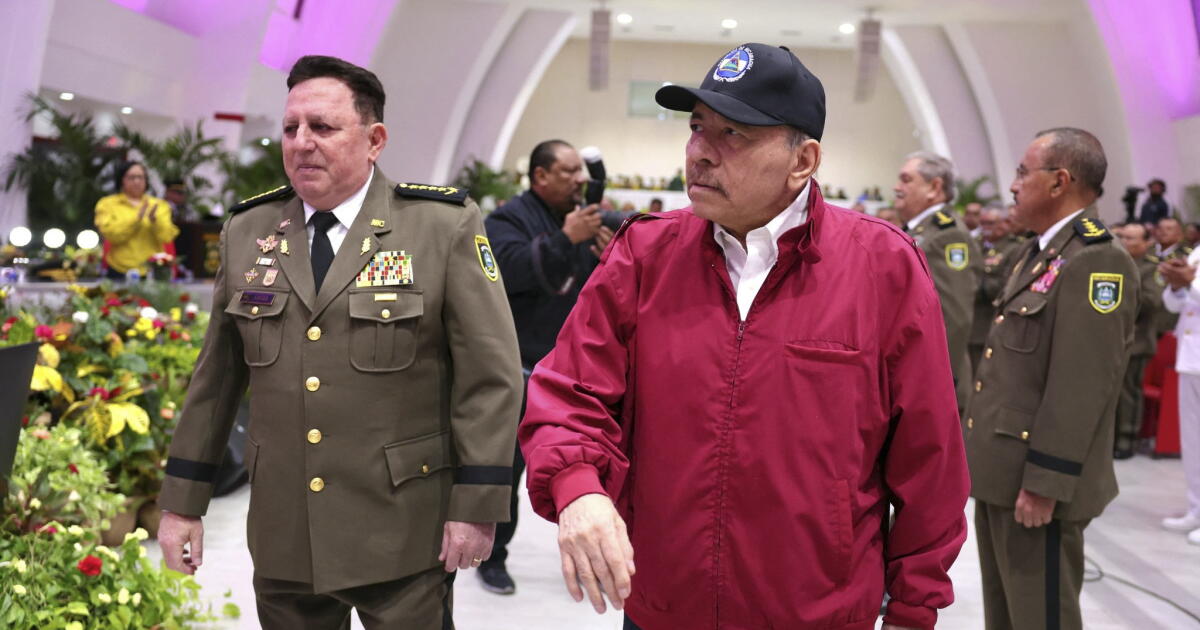
Nicaragua’s government began the process Friday of reforming the Constitution and the legal framework governing the electoral system, File Photo by Jorge Torres/EPA

July 24 (UPI) — Nicaragua’s government began the process Friday of reforming the Constitution and the legal framework governing the electoral system, days after President Daniel Ortega said the country “will never again hold elections” that would allow the opposition to return to power.

According to an official statement released by the Government of Reconciliation and National Unity, the proposed constitutional and legal reforms were drafted by the National Assembly’s Constitutional Commission in coordination with the Supreme Electoral Council and will be submitted to the presidency for review and authorization.

Once that stage is completed, the National Assembly will open a consultation process next week on the proposed Partial Reform Law to the Political Constitution before it is debated and put to a vote in the full legislature.

According to the statement, the reforms are part of the “Nicaragua Triumphs in Peace and Unity” plan and are intended to strengthen the constitutional framework to guarantee “peace, well-being, security, stability and the continuity of the achievements of the people as president.”

The announcement came five days after Ortega declared, during the commemoration of the 47th anniversary of the Sandinista Revolution’s victory, that Nicaragua “will never again hold elections” so the opposition can “try to take over the government and power,” remarks that drew criticism from the United States, the Organization of American States and opposition organizations.

On Wednesday, National Assembly President Gustavo Porras said Ortega’s remarks did not mean elections would be eliminated, but rather the end of processes that, according to the ruling party, had been influenced by the United States.

“Those elections will never return to this country,” Porras said during a news conference.

“They will be the elections of the Nicaraguan people, national elections to choose our national authorities and our municipal authorities, with the terms established by the Nicaraguan people and with the candidates and conditions established by the Nicaraguan people.”

Porras said the reforms are intended to prevent “the terrible manipulation of the empires and their lackeys” and to guarantee, in his words, “an absolutely clean, transparent and absolutely national election.”

During the same news conference, he said the new legal framework is intended to prevent foreign interests from influencing Nicaragua’s electoral processes and reiterated that “those elections will never return to this country,” referring to what he described as processes controlled by foreign powers.

The National Assembly, controlled by the ruling Sandinista National Liberation Front, will be responsible for debating the reforms, which must follow the procedure established for constitutional amendments before taking effect.

Source link

UN rights chief condemns Nicaragua’s decision to abolish elections | Elections News

UN rights chief condemns worsening repression in Nicaragua, urging the restoration of freedoms and the rule of law.

The United Nations human rights chief has condemned Nicaragua’s escalating crackdown on civil and political rights, days after President Daniel Ortega announced a plan to block elections and shut out the opposition.

UN High Commissioner for Human Rights Volker Turk said on Wednesday that the “latest developments further deepen the severe restrictions on fundamental freedoms, the dismantling of civic space, and the steady erosion of the rule of law” in the Central American country.

Recommended Stories

list of 3 itemsend of list

Ortega, a former leftist fighter who has ruled Nicaragua for almost two decades alongside his wife, Vice President Rosario Murillo, said on Sunday that “there won’t be elections” in the country, a move that would remove any prospect of a challenge to the couple’s rule.

General elections were due in November, but constitutional reforms passed 18 months ago extended the presidential term from 5 to 6 years, pushing the vote back to 2027.

Turk said power in Nicaragua was increasingly being concentrated “under the co-presidency”, with the ruling Sandinista party already holding full control over parliament, all municipalities and the regional councils on the North and South Caribbean Coast.

He called on the authorities to “reopen civic space, and restore the rule of law”, warning that “independent expression of thought or opinion is systematically suppressed”, urging that “people of all political viewpoints must be allowed to vote and run for office, in line with the State’s international human rights obligations”.

The statement also cited the government’s abrupt revocation of several lawyers’ credentials earlier this month, which it said had no legal justification, and noted that at least 46 people remain arbitrarily detained on political grounds.

Turk further raised concern over the treatment of religious groups, pointing to the unclear whereabouts of Bishop Abelardo Mata Guevara, 80, who was detained on June 29, and urged Managua to release all those held arbitrarily “with humanity and dignity”.

Since a deadly crackdown on protests in 2018 – in which more than 300 people were killed, according to UN figures – Ortega and Murillo have tightened their grip on Nicaraguan society.

Source link

Sunday 19 July The Sandinista Revolution Day in Nicaragua

Nicaragua is the largest of the republics in Central America. 

In 1936, Anastasio Somoza García, the head of Nicaragua’s army deposed the elected President, Juan Bautista Sacasa (who was also Somoza’s uncle), and installed himself as President. 

This effectively established a hereditary dictatorship in the country for over 45 years, with two of Somoza’s sons serving as president after Somoza had been assassinated in 1956. 

Backed by the US because of their anti-communist stance, the administration brought some reforms to the country, though the Somozas exhibited the usual dictatorial traits of accumulating incredible personal wealth and exiling any potential opponents. 

Anastasio Somoza Debayle, the second of Somoza’s sons to be president was seen as particularly dictatorial and was accused of human rights violations. 

Not too far in the background of the Somoza rule was the Sandinista National Liberation Front. This was a socialist revolutionary group founded in 1962 and named after Augusto Sandino, a hero of the resistance to U.S. military occupation between 1927 and 1933. 

Since their creation, the Sandinistas had steadily built their support base amongst workers, students and peasants. In the 1970s, the political aims spilt over into military attacks on the Nicaraguan government. And although the Somozas retaliated, the revolution was gaining momentum, exploding into direct confrontations between the Sandinistas and the Nicaraguan army in 1978. 

Nicaragua strips lawyers of certification in latest crackdown on dissent | Human Rights News

The government of Daniel Ortega and Rosario Murillo has been accused of human rights abuses against critics.

Nicaragua’s government has stripped masses of lawyers of their licences to practise, in what critics see as yet another attack on the country’s critics.

On Friday, a United Nations expert called the government’s actions a “purge of the legal profession”, aimed at eroding the country’s final shreds of democratic checks and balances.

Recommended Stories

list of 3 itemsend of list

Nicaragua’s husband-wife co-presidents, Daniel Ortega and Rosario Murillo, have led a government that has increasingly carried out an all-out crackdown on dissent.

That effort intensified after mass social protests in 2018 that the government violently repressed.

Since then, the government has imprisoned adversaries, religious leaders, journalists and others, forcing thousands to flee the country. It has also stripped hundreds of their Nicaraguan citizenship and possessions.

Since 2018, it has also shut down more than 5,000 nongovernmental organisations, largely religious groups, but also local rotary clubs and scouting organisations.

In recent days, lawyers noticed that their licences to practise law in Nicaragua were removed without explanation from the Supreme Court of Justice’s registry, according to Reed Brody, an American human rights lawyer and member of a UN panel of experts on the Central American country.

Other lawyers also confirmed their certifications were revoked.

There was no official notification by the government, and Nicaragua’s government did not respond to a request for comment by The Associated Press news agency.

Brody said the full scope of the revocation was not immediately clear, but it “would certainly appear to be at least hundreds, if not thousands of lawyers” who were affected.

“This follows the pattern that we’ve been seeing for years. First, they closed the NGOs, the universities, the independent media. You know, they’ve gone after the churches, and now it seems the legal profession,” Brody said. “Anyone who might stand between the government and citizens.”

Brody said he knew of at least 20 lawyers who had been affected.

Juan Diego Barberena, a lawyer and human rights defender exiled in Costa Rica since 2022, was among those stripped of his official certification and said he knew of at least 25 more colleagues like him.

On Thursday, Barberena tried to access his legal accreditation on the government’s database and said his name and licence number were wiped clean from the system.

“This is a means of exercising totalitarian control over the legal profession,” Barberena said. “This means that the dictatorship can decide who gets to practise and who doesn’t.”

The move echoes other steps the government has taken in recent years.

Many Nicaraguan exiles who were stripped of their citizenship and rendered “stateless” have reported similar stories. They or their family members would search for their birth certificates and other legal documents in official databases, only to be told they do not exist.

But Barberena and Brody said the move this week by authorities went a step further, noting that those erased from the system were not just dissenters. Some were simply Nicaraguans living abroad.

Others practised criminal or family law that didn’t touch on politics, while some were government sympathisers, Barberena said.

Brody framed it as a move to whittle away at any last remaining shred of independence in a judicial system already firmly under control of Ortega and Murillo.

“On one hand, it’s an arbitrary measure to punish political dissent,” Barberena said. “On the other, it’s the dictatorship looking medium-term and wanting to prevent lawyers, experts and academics from participating in the future of the country’s institutions.”

Source link

Nicaragua returns gold mine to U.S.-linked company

Nicaragua’s government said it will return mining company BHMB Mining to its original owners after the operation was confiscated in September 2025. File Photo by Christobal Herrera-Ulashkevich

May 28 (UPI) — Nicaragua’s government said it will return mining company BHMB Mining to its original owners after the operation was confiscated in September 2025 and later transferred to Chinese firms.

The announcement came from Nicaragua’s Attorney General’s Office and follows what local media and analysts described as efforts by President Daniel Ortega and Vice President Rosario Murillo’s government to avoid additional sanctions from the Trump administration.

According to the government, officials reached an agreement with BHMB Inc., a U.S.-British company incorporated in Florida, allowing operations to resume at the BHMB Palacaguina processing plant in northern Nicaragua.

“As a result of a process of dialogue and coordination carried out in an atmosphere of cooperation and mutual respect, an understanding has been reached aimed at the orderly and secure normalization and operational reactivation of the BHMB Palacaguina plant,” the government said in a statement.

The government added that the specific terms and conditions of the agreement remain confidential.

Nicaraguan newspaper La Prensa previously reported that authorities seized the facilities in September 2025. The company operated a gold processing plant in northern Nicaragua valued at more than $80 million under a 10-year operating permit.

The owners said that after the expropriation, Nicaraguan authorities transferred the plant to Chinese companies Zhong Fu Development and Santa Rita Mining.

Environmental and Indigenous rights advocate Amaru Ruiz wrote on X that “the Ortega-Murillo regime announces an agreement with BHMB Mining Nicaragua to free itself from the complaint filed before ICSID over the expropriation suffered by the company.”

Ruiz later told Nicaraguan outlet 100% Noticias that the decision represented an unusual reversal by the government. He said the administration “feared losing the case before ICSID” because of growing international pressure and the possibility of economic sanctions.

The International Centre for Settlement of Investment Disputes, or ICSID, is a World Bank institution that resolves legal disputes between sovereign states and foreign investors.

On April 16, the U.S. Treasury Department’s Office of Foreign Assets Control announced sanctions targeting individuals and entities tied to Nicaragua’s gold sector.

According to the Treasury Department, the sanctions responded to what it described as the Ortega-Murillo government’s use of the gold industry as a major source of financing for repression and corrupt enrichment of the ruling family.

Nicaraguan journalist Miguel Mendoza said the government’s decision to return the plant to BHMB appeared aimed at avoiding political and economic pressure from the U.S. Congress.

U.S. lawmakers are scheduled to hold a hearing June 4 titled “Confronting the Ortega-Murillo Totalitarian Regime,” focused on democratic backsliding in Nicaragua and rising tensions with Washington.

Mendoza added that BHMB shareholder Baruch Rapoport maintains relationships with figures in the Trump administration, including diplomat Richard Grenell, who served as Trump’s special envoy for Venezuela.

According to Mendoza, those ties may have contributed to recent U.S. sanctions against seven Nicaraguan mining companies, targeting one of the government’s most profitable sectors.

Source link

Why Ana Navarro has enough outrage for two TV jobs and a new podcast

When political commentator Ana Navarro recently arrived at Mercado Little Spain, the José Andrés-owned food hall downstairs from CNN’s New York studios, a seat was ready for her constant companion, a rust-colored miniature poodle named ChaCha.

“I am her service human because I’m servicing her all day,” Navarro said of the well-behaved pooch who has been by her side since the 2020 COVID-19 lockdown.

As Navarro and a reporter order tapas dishes for the next two hours, patrons at nearby tables raise their cellphone cameras. Andrés’ daughter Carlota stops by and gives an update on her father, a Navarro pal. Later, a Spanish-speaking young woman comes over and thanks Navarro, a political exile from Nicaragua, for defending immigrants amid the aggressive deportation efforts of the Trump administration.

In a fragmented media world where critical mass is becoming harder to attain, Navarro has become one of media’s most recognizable political talking heads thanks to her two high-profile TV roles.

She is a co-host of ABC’s “The View,” the No. 1-rated daytime talk show that has become a target in Federal Communications Commission Chairman Brendan Carr’s efforts to discipline President Trump’s broadcast media critics. She is also a regular panelist on CNN’s roundtable program “NewsNight with Abby Phillip,” which extends its reach far beyond its modest ratings through frequent viral clips on social media.

In February, Navarro, 54, joined the growing list of media personalities who have launched a digital platform to reach consumers no longer watching traditional TV with a weekly podcast for iHeart called “Bleep! With Ana Navarro.”

Navarro is her uncut self on “Bleep!” She interviews guests but can also go into a 30-plus minute monologue without a script when she records at iHeart’s midtown Manhattan studios, where ChaCha looks on from a cushy pillow.

Navarro delivers her arguments against the Trump administration as if she’s schmoozing with friends across a kitchen table. She always appears calm but as the podcast title suggests, she serves up a few four-letter words she doesn’t use on TV.

“Bleep!” gives Navarro her own platform at a time when the legacy media networks she works at are under pressure. Upheaval is expected at CNN if parent company Warner Bros. Discovery becomes a part of Paramount and its Trump-friendly owners David and Larry Ellison.

Carr recently called for an early review of ABC’s TV station licenses. He said its related to an investigation into parent company Disney’s diversity practices but it comes amid the administration’s criticism of the network’s Trump coverage, which has included “The View.”

Ana Navarro on the set of ABC's "The View."

Ana Navarro on the set of ABC’s “The View.”

(Lou Rocco (ABC))

Navarro was pulled into the fray last year when she was approached by Walt Disney Co. Chief Executive Bob Iger at ABC’s upfront advertiser presentation in New York. The huddle led to reports that they discussed the anti-Trump commentary on “The View.”

“We had an honest conversation but I’m not going to tell you what it was,” she said. “Nobody is muscling us. All I’ve got to do is show up and do the same thing that I’ve always done, which is be as truthful, and authentic and informed.”

(On Friday, ABC filed a petition with the FCC over the agency’s recent scrutiny of “The View,” and whether the program qualifies for an exemption from seldom enforced equal time rules for political candidates. The network accused the FCC of actions violating its 1st Amendment right to free speech.)

Navarro has been pounding at Trump for so long, it’s hard to remember that her rise as a TV pundit began 14 years ago when she was a loyal conservative Republican. Jeff Zucker, who ran CNN from 2012 to 2022, said her personal evolution sets her apart from other pundits.

“She’s funny, insightful, knows how to turn a phrase and she’s gone on a political journey,” Zucker said in a recent interview. “So she understands the entire political spectrum as well as anyone.”

Navarro was eight years old in 1980 when her family fled Nicaragua and sought political asylum in the U.S. after the socialist Sandinista National Liberation Front took power. Her father stayed behind to fight with the anti-communist rebel Contras in the country’s civil war.

“Reagan was taking on the Sandinistas when Bernie Sanders wasn’t,” she said.

She was granted amnesty and became a U.S. citizen under the immigration reform bill signed by President Reagan in 1986.

Growing up in Miami, Navarro was part of the enclave of Latinos whose political perspectives were shaped by having fled Fidel’s Castro’s Cuba and other communist regimes in Latin America. She became a political operative in Republican politics, starting in local Miami races and eventually served as national Hispanic chair for 2008 GOP presidential nominee John McCain. Her Cuban-born husband, Al Cardenas, was on Reagan’s transition team and once led the Republican Party in Florida.

Navarro watched in dismay in 2015 when Trump came down the escalator of the midtown Manhattan skyscraper that bears his name to announce he was seeking the Republican presidential nomination. “Calling Mexicans rapists and criminals — that just hurt my heart,” she said.

When Trump mocked a disabled journalist during a campaign rally, Navarro was reminded of family struggles with one of her older brothers, who has non-verbal autism and is self-injurious. “That brought back so much outrage and anger,” she said. “For me that was a line I could never forgive.”

But being an anti-Trump Republican has become a lonelier job in recent years as the party establishment’s support solidified behind Trump during the historically successful campaign in 2024 that returned him to the White House. For Navarro, it has meant the end of many long-standing relationships.

“I’ve lost some very close friends over Donald Trump,” she said. “And I’ve had to make peace with that. They feel that I’ve betrayed the Republican Party. Some of them think I’m an opportunist, doing this for today.”

One of those friends is Secretary of State Marco Rubio, who she’s known her entire adult life. Navarro still has his cell number in her contacts, but it’s been awhile since she’s called. She still respects Rubio‘s credentials in foreign policy but doesn’t see herself ever supporting him if he runs for president.

“Unless he was running against Satan incarnate, no, I would not go over to him,” she said.

Navarro keeps her cool on “NewsNight,” which occasionally erupts into bedlam when guests clash with Scott Jennings, the show’s resident MAGA Republican. But she misses the days of sparring with Democratic operative Donna Brazile when they were on opposing sides on CNN’s Washington set, and then went out for oysters and wine at Old Ebbitt Grill afterward.

“It’s a completely different world than it was,” Navarro said.

The highly self-confident Navarro has always spoken her mind, encouraged by her father and the Sacred Heart nuns who operated her private school in Miami where she still resides. “Those nuns could run Fortune 500 companies,” she said.

She is not afraid to draw on her own painful, personal experiences to deliver a point. Another older brother died of a heart attack at age 38. Her cousin’s son was a fatality at the 2016 Pulse night club shooting in Orlando, Fla.

“I refuse to live in hopelessness and trauma,” she said. “The things I’ve gone through have shaped me into who I am and made me resilient and empathetic. One of the reasons I abhor Donald Trump is because he completely lacks empathy.”

Where Navarro often separates herself from most Democrats is foreign policy. When Venezuela President Nicolás Maduro was ousted and arrested by U.S. forces, Navarro, on holiday in Madrid, joined exiles from the country as they celebrated in Puerta del Sol.

Navarro expects to have the same reaction if Trump makes good on his threats to end Cuba’s communist regime.

“I will go out there with my metal pan and my metal spoon and I will bang the drums in joy,” she said.

Source link