People in Cuba already faced an ongoing economic and humanitarian crisis, largely due to a US blockade.
Published On 7 Jul 20267 Jul 2026
Cuba has suffered its third nationwide power blackout since the start of the year, as the country’s fuel reserves diminish and its electric grid crumbles due to an energy crisis precipitated by the US fuel blockade.
The blackout in the country of nearly 10 million people was reported on Monday by the state-run Electric Union, which said that the cause is under investigation.
Recommended Stories
list of 4 itemsend of list
Cuba’s Energy and Mines Minister Vicente de la O Levy said protocols were quickly activated to restore electricity throughout Cuba after the outage.
“Vital services continue to be protected, amidst this complex situation exacerbated by the energy blockade we face,” he said.
Grid operator UNE said it was providing electricity to some vital services, including hospitals and food production centres, but by late afternoon was able to serve only 1 percent of the capital, Havana’s, demand.
Cuba was already struggling with fuel supplies before US President Donald Trump cut off oil deliveries from Venezuela to the island in January. But Trump’s actions, including threatening tariffs on any country that sells or provides oil to Cuba, have made things significantly worse, and deepened the island’s financial crisis. As a result, blackouts and power cuts have accelerated.
Since January, Washington has only allowed one oil tanker, from Russia, to pass its blockade and dock in Cuba, as part of a sanctions campaign aimed at ending more than six decades of communist government in Havana.
Trump has pointed to the US abduction of Venezuela’s socialist president, Nicolas Maduro, in January, and his replacement with a successor that can be pressured to work with the US, as a potential blueprint for Cuba.
Cuban President Miguel Díaz-Canel accused the US of trying to “incite social unrest by strangling Cuba’s fuel supply”.
“The actions of electrical workers in the midst of a genocidal energy blockade are heroic,” he wrote on social media.
The blackout is the eighth on the island of 9.6 million people since late 2024. It comes as the state imposes power cuts across the country – over 30 hours straight in parts of Havana and over 70 hours in some rural areas – in a desperate attempt to preserve fuel.
“Living like this is agony,” Meyboll Font, a 51-year-old self-employed social media community manager, told the AFP news agency.
Font said her Havana neighbourhood has been surviving on just “three or four hours of power a day”, but that the blackout was worse because “you never know when it [electricity] will return”.
Hossam Hassan uses his FIFA World Cup news conference to raise awareness about the plight of Palestinians in Gaza.
By Reuters and The Associated Press
Published On 7 Jul 20267 Jul 2026
Egypt coach Hossam Hassan has reiterated his support for Palestine days after dedicating his team’s historic knockout win at the World Cup to the Palestinian people and waving their flag at the biggest sporting event in the world.
Hassan broke away from discussing his team’s upcoming round-of-16 match against Argentina to give an impassioned monologue about the plight of the Palestinian people at his news conference on Monday.
Recommended Stories
list of 4 itemsend of list
“If there is anyone in the world who does not feel for the Palestinian people, then they are not human — whether they are Arab, European, or American,” Hassan said. He spoke for more than four minutes on the subject and was applauded by many of the assembled media.
Hassan held the flag of Palestine after Egypt’s victory against Australia [Molly Darlington/ Getty Images via AFP]
Israeli attacks across Gaza have continued to kill Palestinians, despite an ongoing “ceasefire” between Israel and Hamas. Israel has killed at least 73,066 people, including at least 20,179 children, in Gaza since the beginning of its genocidal war on October 7. At least 463 of those have been killed due to starvation, including 157 children.
More than 2million Palestinians in Gaza, largely displaced and living amid ruins, face uncertainty following the Israeli genocide.
Hassan was asked what prompted him to wave the Palestinian flag after his team’s penalty-shootout win over Australia on Friday, and he responded by saying it was “simply a human reaction”.
“Everywhere in the world, including in Europe or America, if someone hurts an animal, we see animal rights being defended and the whole world reacts,” Hassan said. “It has become normal to hear that two or three thousand people die in a single day because of a missile.”
The genocide sparked pro-Palestinian protests around the world, with athletes, including Spain’s Lamine Yamal, showing their support.
While Hassan dealt with questions about Lionel Messi and his team’s chances against the holders, he also spoke at length about Palestinians.
“Regardless of religion… I am a human before being Arab or anything else. My message, through football, is this: Please, just as FIFA’s slogan calls for respect among us, I hope there will be respect for people’s right to live,” Hassan said.
With a win over Argentina, Egypt would reach the quarterfinals for the first time.
“My dreams have no limits. My ambitions have no limits. I promise that we will do everything to live up to the expectations [of fans],” Hassan said. “We’re no underdogs. We’re big in every respect. We are a civilisation that is 7,000 years old, even more than 7,000 years.”
Hassan conceded that his side were not favourites for Tuesday’s clash, but insisted they were far from overawed.
“We know we are playing against the World Cup holders and one of the greatest players ever [Messi], but we do not fear them.
“[The] responsibility makes us focus on ourselves and on what we can produce on the field,” he added.
“We have a responsibility towards Egypt and the Arab world and Africa. We represent all of them.”
Kirk was addressing a crowd from under a tent on 10 September as part of his American Comeback tour of college campuses, during which he invited attendees to debate him.
A shot rang out as he was speaking about gun violence; Kirk slumped over to the side.
Chris Bagley, one of four law enforcement witnesses expected to take the stand during the week-long hearing, had been stationed on a building above and realised from the noise that it had come from a rifle, not a handgun.
In court on Monday, he described a chaotic scene of people shouting and running and told the court that he was informed by law enforcement that a shooter had been taken into custody.
But he said he discovered suspicious evidence leading him to believe it might not be the right suspect.
Bagley said he found a screwdriver and an impression in gravel on a roof indicative of a sniper and then viewed security footage showing an individual dropping down and escaping from the area.
He described a telling impression the suspect had left behind.
“I could see the disturbance of gravel; to me, it looks like a sniper pad, a person that has been laying in a prone position, and you’ve got markings of elbows, knees and feet – where somebody was in the line of sight of where Charlie’s tent was.”
Robinson’s defense attorney Kathryn Nestor voiced several objections throughout the testimony, asking him about staffing, planning and surveillance on the day of Kirk’s event.
Another witness, David Hull, told the court he’d been working as an agent with Utah’s State Bureau of Investigation at the time of Kirk’s shooting. He testified that he reviewed surveillance video from the day of the shooting and saw Robinson “on campus … approximately four times throughout the day”.
Hull testified that Robinson appeared at the school twice before the attack, then again at the time of the shooting – then returned that evening, hours after Kirk’s death.
Prosecutors also played home surveillance footage from a neighbourhood near campus which they say shows Robinson parking his gray Dodge, then returning later and driving away.
The hearing is set to continue all week and will examine evidence and witnesses in the case to determine whether prosecutors have enough to present it before a jury at trial.
More than 11,000 people, including over 5,500 children, have fled escalating fighting around Sudan’s strategic city of el-Obeid over the past two weeks, according to Save the Children, as the United Nations warns that up to 500,000 civilians could be at risk if the violence intensifies. The city has become the latest focal point in a war that has already triggered the world’s largest displacement crisis.
For much of Sudan’s three-year civil war between the Sudanese Armed Forces (SAF) and the paramilitary Rapid Support Forces (RSF), international attention has centred on Khartoum and the Darfur region. In recent weeks, however, attention has increasingly shifted to el-Obeid as fighting has intensified across Kordofan, prompting warnings from UN officials and humanitarian organisations that another acute humanitarian emergency could be unfolding.
Francesco Lanino, deputy country director for Save the Children in Sudan, said the consequences of displacement extend far beyond the loss of housing.
“For children, displacement is far more than the loss of a home,” he said. “It often means losing access to school, healthcare, clean water and the support networks that help them feel safe and protected. Many have already been displaced multiple times, and without urgent action to protect civilians, ensure humanitarian assistance can reach those in need and prevent further violence, thousands of children could be forced to flee while facing increasing risks to their safety, health and wellbeing.”
Why is el-Obeid so important?
El-Obeid, the capital of North Kordofan state, lies about 360km (224 miles) southwest of Khartoum at the intersection of roads linking central Sudan with Darfur and the country’s southern states.
That location has made it one of Sudan’s most important commercial centres and a key logistical hub for both military operations and humanitarian aid.
The city has remained under the control of the SAF, making it one of the army’s most important positions in western Sudan. Military analysts say control of el-Obeid helps shape movement along key supply routes connecting central Sudan with Kordofan and Darfur, helping explain why both the SAF and the RSF consider it strategically important.
Why has the fighting intensified now?
The battle for el-Obeid reflects a broader shift in Sudan’s war.
After the SAF regained territory in and around Khartoum earlier this year, fighting increasingly concentrated in western Sudan, particularly across the Kordofan and Darfur regions.
The RSF has expanded military pressure around el-Obeid while the army has reinforced its positions inside the city. UN officials have warned that the growing military build-up raises the risk of a wider assault, although neither side has announced plans for a full-scale offensive.
The conflict has also evolved. Drone warfare has become an increasingly prominent feature of the conflict, targeting military positions as well as infrastructure civilians rely on, including fuel depots, electricity networks and water facilities.
What are civilians experiencing?
Civilians in el-Obeid are facing mounting hardship as the fighting intensifies and essential services come under increasing strain.
Aid agencies and the United Nations say repeated attacks have disrupted electricity and water supplies, contributed to fuel shortages and driven up the prices of food and other essential goods. Damage to water infrastructure, combined with restricted humanitarian access, has also heightened concerns about waterborne diseases, including cholera.
Many of those now fleeing el-Obeid had already been displaced by fighting elsewhere in Sudan, meaning they are being uprooted for a second or even third time. Save the Children says more than half of the people displaced in the latest wave are children, underscoring the disproportionate impact the conflict is having on young people and their families.
Why are the UN and aid agencies so concerned?
The immediate concern extends beyond the fighting itself to the possibility that el-Obeid could become the next city to experience prolonged urban warfare, with civilians trapped between rival forces.
According to the United Nations, up to 500,000 civilians in and around el-Obeid could be at risk if violence escalates. The figure includes longtime residents as well as people who had already sought refuge in the city after fleeing fighting elsewhere in Sudan.
People are transported in the back of a truck, some 30km east of the city of el-Obeid, in Sudan’s North Kordofan region [ASHRAF SHAZLY / AFP]
Humanitarian organisations warn that continued hostilities could further restrict the delivery of humanitarian assistance into North Kordofan at a time when many communities already face shortages of food, medicine, fuel and clean water.
The UN has also raised alarm over the growing use of drone strikes, warning that repeated attacks on civilian infrastructure are deepening the humanitarian crisis and making it harder for people to access essential services.
Why are officials comparing el-Obeid and el-Fasher?
Officials increasingly fear el-Obeid could follow the trajectory of el-Fasher, the capital of North Darfur, where months of fighting left civilians trapped, humanitarian access severely restricted and basic services devastated.
The comparison does not mean el-Obeid has reached the same stage. Rather, UN officials say it highlights the risk that the city could follow a similar trajectory if fighting intensifies and civilians cannot safely leave or receive humanitarian assistance.
El-Fasher has become one of the starkest examples of the human cost of Sudan’s war. Since fighting escalated there in 2024, repeated clashes, shelling and attacks on displacement camps have forced hundreds of thousands of people to flee, while hospitals, markets and other civilian infrastructure have been damaged or destroyed. Aid agencies have repeatedly warned that restrictions on humanitarian access have deepened hunger and disease, leaving many residents with little access to food, clean water or healthcare.
UN officials fear a similar pattern could unfold in el-Obeid if military pressure continues to build. The city has become a refuge for people displaced from other parts of Sudan, meaning a major offensive could trap large numbers of civilians while further disrupting aid operations across Kordofan. Preventing another prolonged urban battle, they say, is critical to avoiding an even wider humanitarian crisis.
What could happen next?
The next phase of the conflict will depend on whether the current military pressure around el-Obeid develops into a sustained ground offensive or whether diplomatic efforts succeed in reducing hostilities and improving humanitarian access.
For the Sudanese Armed Forces, holding el-Obeid is important to maintaining its position in North Kordofan and preserving access to western Sudan. For the Rapid Support Forces, increasing pressure on the city could strengthen its military position in the region, although the outcome of any future offensive remains uncertain.
If fighting escalates, aid organisations warn that more families are likely to flee while shortages of food, clean water, fuel and medical supplies deepen. A wider battle could also further disrupt humanitarian operations across Kordofan, a region that serves as an important corridor for assistance to communities affected by the war.
More broadly, the battle for el-Obeid reflects the changing geography of Sudan’s war. As front lines shift away from Khartoum, Kordofan is emerging as one of the conflict’s most consequential theatres, carrying profound implications not only for the military balance but also for hundreds of thousands of civilians caught in the fighting.
As the latest wave of displacement illustrates, the humanitarian consequences are already unfolding. Whether el-Obeid becomes another prolonged urban battleground, or whether sustained international efforts help avert a wider assault, may determine not only the next phase of Sudan’s war but also the fate of hundreds of thousands of civilians caught in its path.
“The signs from el-Obeid are clear and unmistakable: another human rights catastrophe is unfolding in Sudan,” UN High Commissioner for Human Rights Volker Turk warned late last week. “This is not a drill. It is a red alert that needs to land on the desks of heads of state and government around the world.”
South Korean technology giant Samsung Electronics says it expects to post a 19-fold jump in its profits, driven by global demand for artificial intelligence (AI) memory chips.
The company forecast that it made 89tn won (£44bn; $58bn) between the start of April and the end of June, marking its third record quarterly operating profits in a row.
Major South Korean firms like Samsung release forecasts of their earnings ahead of official detailed reports to help guide investors.
Samsung’s latest forecast, released on Tuesday ahead of its full results due later in July, comes as demand for semiconductors continues to outstrip supplies – which has pushed up prices.
Samsung said in its preview, known as earnings guidance, that it brought in around 171tn won of sales during the quarter, more than double the amount for the same period last year.
The company’s projected earnings mark one of “the best quarterly performances ever”, which was close to the tech sector record set by Nvidia earlier this year, said industry analyst Marc Einstein from Counterpoint Research.
“This has everything to do with the AI boom as memory companies continue to ride a tidal wave driven by limited supply and unprecedented demand,” he added.
Samsung is one of the world’s biggest semiconductor manufacturers, making chips for firms like Nvidia and Google. The shares major tech firms have soared in recent months due to surging demand for chips.
Shares in Samsung have more than doubled in price since the start of this year, while South Korean rival SK Hynix has jumped by more than 200%.
The strong performance of both firms has helped lift the value of South Korea’s benchmark share index, the Kospi, by more than 80% this year.
Monday’s accusations are the latest in a long string of controversies surrounding the Maine Democratic Senate candidate.
Published On 6 Jul 20266 Jul 2026
Leading US Democrats are withdrawing their support from Maine Democratic Senate candidate Graham Platner after a former girlfriend accused the politician of sexual assault.
In an exclusive interview with media outlet Politico published on Monday, Jenny Racicot alleged that Platner forced her to have nonconsensual sex in late 2021. She alleged that Platner had entered her Maine home uninvited while intoxicated and forced himself on her, despite her repeatedly telling him to stop.
Recommended Stories
list of 3 itemsend of list
Platner, whose status as a progressive outsider has gained him popularity, has denied the allegations.
Following Politico’s interview, top US Democrats and Democratic-leaning political groups have pulled their endorsements of Platner.
“I’ve been very clear that sexual assault or violence against women is a red line,” California Democrat Ro Khanna, a member of the US House of Representatives, said. “These allegations are very serious and credible. Graham Platner should drop out from the race. I am withdrawing my endorsement.”
Arizona Senator Ruben Gallego also announced he was pulling his endorsement, while the Maine Democratic Party called on Platner to withdraw his candidacy.
Democratic-leaning political group End Citizens United pulled its endorsement as well, calling the allegations “profoundly disturbing and disqualifying”.
“The conduct described is fundamentally inconsistent with the standards we expect from the candidates we support,” End Citizens United said in its statement.
Hasan Piker, a leftist commentator and streamer who has backed Platner, seemed to reverse his position on Monday following the Politico report. “If new evidence presents itself, I’m going to change my perspective – it’s that simple,” Piker said during a livestream on Twitch.
“This is a clear-cut instance of verifiable sexual assault allegations. It’s completely irredeemable,” he added.
Platner won Maine’s Democratic primary in April, defeating a centrist Democrat from the party’s establishment wing. The race is a must-win for Democrats, facing off against incumbent Republican Susan Collins. Maine state law allows Platner to be replaced on the ballot if he withdraws by July 13. The replacement candidate must be named by July 27.
In a video released on social media, Platner denied the latest allegations but said he was rethinking his campaign.
“Regardless of the inaccuracy of the reporting but mindful of the political reality it will inflict, we’re taking the time to reflect on the best path forward,” he said in the video.
Racicot’s accusations are the latest in the long string of controversies surrounding Platner. A Marine veteran who also worked for a private security contractor, he has a chest tattoo resembling a Nazi symbol – which he denied knowledge of and later had covered up. He has also had a history of controversial statements on social media, as well as reportedly sexting with other women shortly after getting married.
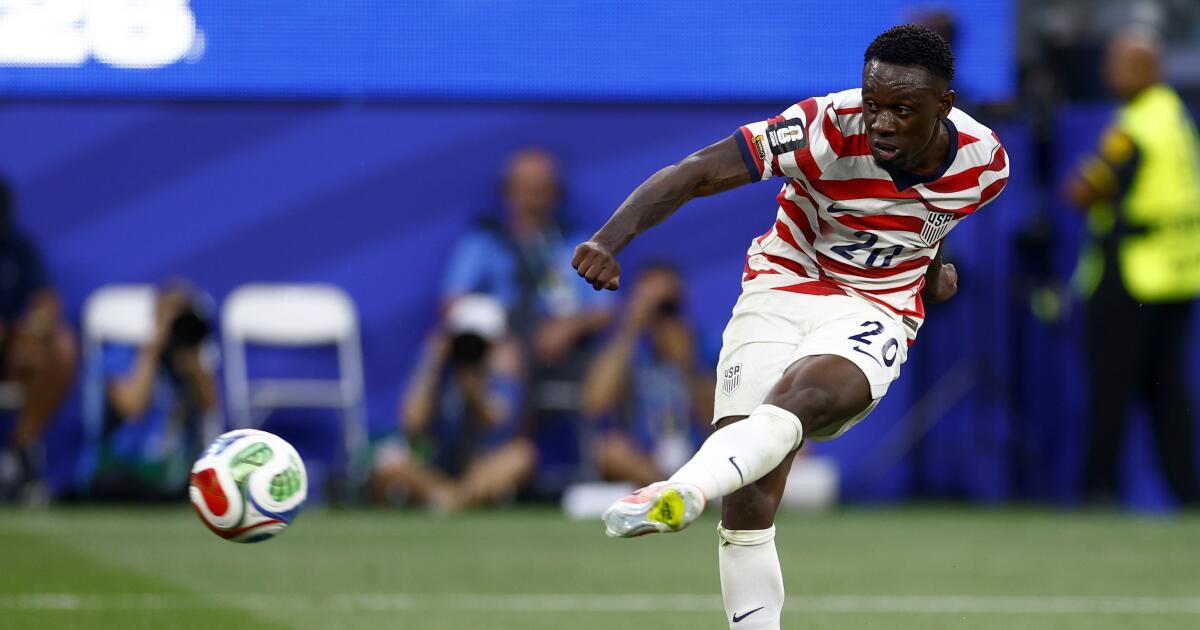
FIFA’s decision to suspend the one-match ban on United States striker Folarin Balogun, allowing the team’s leading goal scorer to play in their crucial last-16 World Cup match against Belgium, has stirred a controversy hours ahead of the USA vs Belgium last-16 match.
The row and ensuing uproar deepend on Monday when US President Donald Trump confirmed asking FIFA to review its decision against Balogun, with FIFA utlimately making a U-turn on the player’s suspension from the crucial fixture.
Recommended Stories
list of 3 itemsend of list
Was FIFA’s decision the result of an unfair power move from President Trump, or was it a warranted correction to a red card that should not have been issued in the first place?
It depends on who you ask.
Football fans of the cohost nation appear to be divided on the controversy.
While there is near consensus that the red card Balogun received against Bosnia and Herzegovina was harsh, not everyone agrees with Trump’s intervention.
“I think it’s bull****,” Cesar Espino, who was watching the Spain vs Portugal round-of-16 match at a pub near downtown Washington, DC, told Al Jazeera hours ahead of kickoff in the USA-Belgium game.
“I feel like if you win it’s a stain because Balogun is one of our top players.”
He added that the decision will make the USA “more unlikeable”, adding to the list of controversies for the host nation, including travel bans and the restrictions against the Iranian team during the group stage.
But 23-year-old Oscar Ramirez argued that the issue is more nuanced than the USA gaining an unfair advantage “because of the nature of the red card”.
“I think most people, including myself, believe the red card was unfair; it was unjust,” Ramirez said.
“I think you’ll have some people who will be like, we should keep the rules no matter what. And you’ll have some people who will be like, that card shouldn’t have happened in the first place.”
The USA fan admitted jokingly that he is biased, so he supports the decision.
“I’m American, and I want our best chances. And without him, we don’t have a good chance,” Ramirez said.
FIFA responds
Balogun, the USA’s top scorer in the tournament with three goals, received the red card for a studs-up contact near the ankle of Bosnia and Herzegovina’s Tarik Muharemovic.
The USA striker was looking at the ball, so the incident appeared unintentional. Nonetheless, Balogun was sent off after an onfield VAR review, triggering an at least one-match suspension.
A FIFA board subsequently suspended the penalty without providing an explanation.
Trump, who enjoys close relations with FIFA President Gianni Infantino, confirmed on Monday that he requested a review of the suspension.
“All I did – I asked for a review because I didn’t think it was a foul,” Trump said.
He also suggested that the US conducted research on the referee who issued the card, calling the official “very suspect”.
“If you like I can provide you with the past,” he told reporters.
FIFA has insisted that the decision was taken by a judicial panel that operates independently with Infantino denying that his conversation with Trump may have influenced the process.
“During our conversation, I explained that there was an ongoing legal process involving FIFA’s independent judicial bodies and that the case would be decided in due course by the competent bodies,” the FIFA president said in a statement.
“That is how FIFA’s system works, and it is a principle that I will always uphold.”
Despite that assertion, US Senator Ted Cruz thanked Trump earlier for “getting rid of that ridiculous red card”.
The controversy has infuriated Belgian football officials. But in the US, some politicians and commentators lauded Trump for his intervention.
“I admit that I’m not the biggest soccer fan, but I’m glad President Trump urged FIFA to do the right thing. Good for President Trump, good for Folarin Balogun, good for the USA,” Republican Senator Tom Cotton wrote on X.
For his part, Fox Sport analyst Alexi Lalas said lifting Balogun’s suspension was surprising but welcome news.
“What happened here is America stood up for itself,” Lalas, a former USA player, told Fox News.
“The powers that be when it comes to the United States Soccer Federation did what they needed to do within the rules and regulations that exist in order to give ourselves the best possible chance of being successful.”
Mamdani invokes Mourinho
But CBS Sports commentator Nico Cantor said the episode set a “dangerous precedent” that undermines the authority of the referees making decisions based on their interpretations of the rules.
“For as much as I believe Balogun didn’t deserve the red, it’s an interpretable decision,” he wrote on X.
“Anything can now be questioned after the fact. And it’s up to FIFA’s ‘judicial body’ – whoever that is, wherever they are – to call make critical decisions as they see fit.”
New York City Mayor Zohran Mamdani had also called the red card “cruel”, but he refused to comment on FIFA’s decision to suspend the suspension.
Instead, he posted a GIF of Real Madrid coach Jose Mourinho saying, “I prefer not to speak. If I speak – big trouble.”
Back in Washington, DC, US fan Lucas Faria said it was “crazy” that the suspension was overturned, but he added that the decision is unlikely to derail trust in the World Cup because it is already loaded with controversy.
Faria told Al Jazeera that the tournament has been a Trump-Infantino show.
“The tickets have been outrageous. It’s been an outrageous tournament so far. This is just an obvious thing,” he said.
Faria added, however, that the US team should not be judged for FIFA’s decisions.
Joy Oga, a pregnant woman in her second trimester, was harvesting yams on her farm in Kwanta/Dooshima area when armed men attacked. The 31-year-old farmer had gone out with three others from her community on June 16 to harvest the farm she had been unable to reach since her village was invaded in September 2025. She never finished the harvest.
“I went to the farm to pack yams when I was attacked,” Joy told HumAngle.
Joy had farmed in her village in Chanchanji, Takum Local Government Area, in Taraba State, northeastern Nigeria, for five years, and farming is her only means of livelihood. After enduring months of hardship in a displacement camp in Chanchanji town, she was eager to resume farming as soon as she and other residents were asked to return home. On the day of the recent attack, she was there to also clear the land for a new planting season.
Joy said the attackers, whom she claimed were herders, confronted her and the other people that were with her, and immediately started hacking them with the machete. She ran back to the community with a cut on her face, wrist, and legs.
Joy was pregnant in her second trimester when she was attacked on June 16. Photo: Felix Ashe
The attack came barely two months after a peace deal was struck between the Fulani and Tiv communities of southern Taraba, and has raised questions about the restoration of peace and the fate of residents who rely on farming for survival in the area.
In April, a peace dialogue organised by the Taraba State government, northeastern Nigeria, brought together leaders of the Fulani and Tiv ethnic groups to put an end to the series of clashes that claimed lives and properties in communities within southern Taraba. The Fulani in the area are predominantly nomadic herders, while the Tiv are mostly farmers. During the dialogue in Jalingo, the state capital, both parties agreed never to raise arms against one another.
The government also instructed displaced residents across the affected areas to return home. Weeks later, some residents began to exit the displacement camps in Chanchanji and Amadu for their hometowns after months of facing terror attacks, mass displacement, and food shortages. Three committees were set up by the government to manage the displaced persons’ return, inter-boundary and migration control, and boundary assessment and settlement.
A multitude of motives
Southern Taraba has witnessed recurring violence involving farming and pastoralist communities for more than two decades. The area comprises five Local Government Areas (LGAs): Donga, Ibi, Takum, Ussa, and Wukari. Researchers say the conflict is driven by a complex mix of competition over land and water, population growth, the proliferation of small arms, weak law enforcement, and criminality. While these clashes are often described as “farmer-herder conflicts”, several studies caution that they increasingly involve organised armed groups whose activities go beyond disputes over grazing routes. Indigenous Tiv communities in Taraba and neighbouring Benue State also say the attacks are a strategic move to take over their lands and resources.
A security expert, who has also worked as a police officer in the area, told HumAngle that the crisis goes beyond ethnicity. “This is terrorism, because the attackers come into town, destroy property, and run back. They do not have a settlement around that area, and whenever they come to Chanchanji, it does not only affect one tribe — it affects other tribes living in Chanchanji too,” the source, who pleaded anonymity, noted.
Locals in Chanchanji said the Sept. 2025 attacks were the worst they have experienced in the area. Photo: Moses Uko
He argued that terrorists are exploiting the unresolved ethnic clash between both parties to infiltrate the area, particularly in ungoverned spaces, adding that if it were purely an ethnic conflict, only the Tiv and Fulani would be affected; since every tribe in the area suffers during the attacks, he believes it is more accurate to describe the situation as terrorism.
Other claims about the motive of the attacks have been circulating; one of them originated from the deceased leader of a criminal gang that operated along the border between Benue and Taraba. Before his death in the hands of the Nigerian Military in September 2020, Terwase Akwaza, known popularly as Gana, a notorious criminal gang leader in Benue, claimed during an interview that armed groups posing as herders had approached him and asked him to carry out attacks in “about three states they want to [capture], being Plateau, Taraba, and Benue.” Joy, like many other residents, believes that the attacks were carried out by these armed groups.
After Gana’s death, his allies fractured into rival factions, with the most prominent ones being led by Fullfire and Chen. Despite attempts by community leaders urging these groups to cease fire, they have continued to operate violently in the region.
On the allegations from both parties about the hiring of militias, the security expert acknowledged that “in an environment where there is crisis, there are people who try to bring up some things to justify their actions”, adding that parties might exaggerate casualties or incidents.
A blow on both sides?
Benjamin Kwazza, who also survived the June 16 attack, told HumAngle that the attackers were tactical, targeting their heads and necks with the intention of causing instant death. “They pursued us, and along the line when they got us, they started to cut my neck,” he said, adding that he sustained a deep neck wound.
When Joy, Benjamin, and the others returned to the village, residents organised a search party, but the attackers had already fled.
The following day, June 17, two other farmers were attacked on their farmland in the same community. While the other farmer managed to escape untouched, Terkura Mathew was brutalised and left in his pool of blood. Locals found him and brought him back to the village. His condition remains critical.
HumAngle reviewed videos and photographs of the June attacks, which showed visible wounds sustained by survivors, including deep cuts and injuries consistent with machete assaults.
Bello Mbela, the Taraba State chairperson of Tabital Pulaaku International, an organisation that serves as a unified voice for Fulani communities across the continent, explained that the southern Taraba crisis is a blow to both sides. Tabital Pulaaku represented the Fulani community during the signing of the peace deal in Jalingo.
According to him, Fulani people who live around Southern Taraba communities like Kofai Amadu, Tor Damisa, Kurmi and other areas are always caught up in the violence, which has led to loss of lives, cattle, and properties, with many who are currently displaced.
Illustration: Akila Jibrin/HumAngle
Bello said the most recent incident occurred in February. “In Kofai Amadu under Takum Local Government Area (LGA), several women and children. The children were grazing when they were attacked, and their necks were snapped,” he stated.
Get our in-depth, creative coverage of conflict and development delivered to you every weekend.
Subscribe now to our newsletter!
The Tabital Pulaaku leader also stressed that the herder communities in the region were set ablaze by aggrieved locals multiple times. “Also, around Kurmi LGA, there were rape cases. When a young woman sets out, she’s captured, threatened with a knife and raped. Especially those who go to hawk Fura da Nono,” Bello claimed.
Although he did not provide visual evidence of the alleged violence, he said attacks against herders and their families often go unreported and undocumented. “We do not record their deaths. We bury them instantly and keep moving. Most of the deaths are common among the elderly, disabled, pregnant women, and children,” he told HumAngle.
Bello added that the affected herder communities are afraid of seeking shelter in temporary displacement camps in the towns due to fear of being profiled. Hence, they retreat farther into the bush for safety when their homes are razed. “Some of them come to Jalingo where they are sheltered by the Muslim council,” he said.
Similarly, farming communities report a similar pattern of targeted abuse. Uzaki Peter, a local leader in Bachula, a community in southern Taraba that was displaced by attacks, told HumAngle that farmers have been experiencing a series of fresh attacks since they resumed farming in June. According to him, locals were adamant about returning home despite the hardships in the camp, but the peace meeting in April gave many hope.
HumAngle learnt that locals and herders lived together in the region for years until clashes started recurring in 2025. “We always meet with the herders. They were telling us there is no problem. We should invite our people to come back. So, we started feeling like there was a solution, so our people started going back,” he said. However, Bachula is currently experiencing the same pattern of attack that occurred last year, according to Uzaki. “They will come and attack you. If you have a phone, they will collect it, and if you have money, they will collect it. They were sleeping with our women who were going to the farm,” the community leader said.
Despite the peace dialogue
Bello, who was present during the peace dialogue, told HumAngle that both parties have been trying to abide by their agreement that no party must attack the order. However, new cases are coming up. “In May, two women went to the Chanchanji area and did not return. They were killed.”
He explained that the incident sparked outrage and nearly led to fresh clashes. Since there was a peace dialogue, the issue was reported to the police station, and an investigation began. To date, none of the perpetrators has been caught.
“If someone goes to the bush to graze alone, he does not return,” Bello gave another instance, stating that they are probably killed because such incidents took place in the past.
When HumAngle reached out to James Lashen, the Taraba State Police Command’s Public Relations Officer, regarding the recent attacks in the region, he said that Kwanta/Dooshima and other areas in Chanchanji that are constantly under attack fall under “ungoverned spaces”.
“Taraba is the third largest in landmass in this country after Borno and Niger,” he stated, explaining that the landmass affects security response and patrol. “But for now, Chanchanji, Amadu and other areas, there is peace. There is a sustained patrol. We would like to embark on a convoy patrol due to the length of the road. You know, from Takum to Wukari, it is a long distance. And that is where they normally perpetrate. But for now, we have already taken charge of that area. For now, no incidents are taking place there,” he asserted.
When asked about the recent incidents in the area, despite his assurance of peace, Lashen said it is quite common during the farming season and that it is the responsibility of the Divisional Police Officers to report to the command. However, he noted that he had yet to receive a report of the incident in Kwanta/Doorshima or Bachula at the time of our communication.
The PPRO stressed that the Taraba State Police Command has ensured displaced communities returned home. “Everybody has been back. Policemen are stationed there. We have posted tactical teams there in that area. Everybody has gone back to his house,” the officer said.
However, some residents disagree. Uko Moses, a farmer and resident of Peva, another affected area in the region, told HumAngle that the Peva community remains deserted to date, and locals are still in displacement camps in Amadu and Chanchanji town due to recurring attacks and unresolved tension. He also noted that areas such as New Gboko, Demavaa, and other southern Taraba communities remained abandoned.
“Those who try to access their farmlands are being hurt on a daily basis,” Moses said.
According to him, food, clothing, and healthcare are the basic challenges faced by displaced people still in camps due to fear of returning home. Also, children have been out of school for over nine months. “We depend on the government, humanitarian organisations, and philanthropists. The insecurity has made us become beggars,” he stated.
To cushion the suffering of displaced persons in the displacement camps, HumAngle learned that Kefas Agbu, the Taraba State Governor, donated bags of rice and other relief items across the camps in March. Also, Benue State Governor Hyacinth Alia visited the displaced and assured those living along the Benue border that they would soon be able to return home.
“His words were full of hope. According to him, it will not take long for the people to return to their communities and continue with their daily business.” Moses spoke of the Benue State Governor’s promise.
However, locals remained in the displacement camps, and despite the hardship, Moses said they prefer to stay in the camps rather than come home where their safety is not guaranteed.
“The security architecture there is very poor. In some of the villages, there are no checkpoints close by or police stations built there,” he said.
Uzaki, the Bachula caretaker, echoes Moses’s security concerns in the area. “Yesterday [June 16], I reported a case of three people. They were admitted to the hospital, and the day before yesterday [June 15], I reported a case involving two people. They are also here. And today [June 17] two have been brought out that have been matcheted,” he said.
Lashen, the police spokesperson, said officers in the region cannot be everywhere. “So that is why we always engage with the stakeholders within the community to talk to their people. Because the police cannot be everywhere. Because of this landmass,” he said.
Several displaced residents are seeking refuge in overcrowded camps in safer communities within southern Taraba. Photo: Uko Moses
Herder communities are also grappling with another crisis. According to the Tabital Pulaaku leader, herders are often segregated in local healthcare facilities when it comes to receiving treatment for injuries sustained during clashes. “Some of them are even arrested on the spot. This has made some of them stop accessing healthcare centres and rely on home treatment, which leaves them dead,” he said.
What now?
During a summit in 2025, the Federal government described Taraba state as “a cornerstone of Nigeria’s agricultural and industrial future”, owing to its agricultural potential. The state was also hailed as a major producer of export-grade tea, coffee, and livestock for the meat industry.
A recent study by socio-political science researchers in the country’s northeastern region found that the majority of the population in IDPs camps and those killed, injured and displaced due to the conflict are farmers. While the rate of the clashes is said to be high, the impact on food insecurity in the region is also high due to the magnitude of the attacks on farming communities.
Felix Ashe, a farmer from Chanchanji, told HumAngle that the most recent attacks in the area occurred on farmland, prompting locals to abandon their farms. He says hunger now shapes the lives of many who usually depend on farming for survival.
“We planted yams, groundnuts, benniseed and so on. The yam that was planted last year was not able to be harvested, and those who tried to harvest them are being attacked,” he said.
In the Peva and Amadu communities, which are known as agrarian areas, Moses said locals are facing food scarcity. “Seriously, we are living at the mercy of God, because predominantly, we are farmers and we started receiving these unprovoked attacks since last September, and till today, we are still receiving attacks. We don’t have access to farms, and farm produce has been destroyed. We are facing the challenge of hunger,” Moses said.
Several farmlands and barns were set ablaze in the 2025 attack. Photo: Monday Vincent
If the attacks persist, local farmers in the region say they fear for their future.
“The most important thing we need now is peace. That is the restoration of peace in the area. If we’re able to get peace, everything will come back gradually,” Moses said.
While peace efforts are being made, the Tabithal Pulaaku leader said most of the herders around the affected Southern Taraba communities are still displaced, while some remain missing. Through stakeholder engagements and awareness-raising campaigns, Bello said leaders of the Fulani community are sensitising locals to shun violence and embrace peace to resolve the crisis.
To permanently break the cycle, the security expert calls on the government to move beyond temporary peace declarations and to continue engaging local leaders and stakeholders from both ethnic groups, formally entrusting them with responsibility for maintaining peace among their people. He strongly advocates for the establishment of modern ranches and clearly designated grazing routes for herding communities.
“They don’t have a route to follow with their cattle, so they follow people’s farmlands, and that causes a lot of issues. There should be a dedicated path for them,” he said. “The herders should maintain their particular axis and also, people should be notified not to go there and farm.”
He also emphasised the need for a visible security presence in those areas and for constant patrols. “The security agencies should be well equipped and motivated to be very active at work,” the expert added.
The Allied Democratic Forces (ADF), an armed group in the Democratic Republic of Congo (DRC), has resorted to targeting people for abductions amid reports of shrinking funding to sustain their terrorist operations. The ADF is publicly affiliated with the Islamic State’s Central Africa Province (ISCAP), an administrative division of the Islamic State, an infamous global terrorist group.
The ADF has an operational presence in eastern DRC and Uganda, but its activities have recently reduced due to funding. The local terrorist organisation is reported to have been receiving funding support from the Islamic State, which is one of the world’s most violent jihadist groups. Domiciled in the Beni and Lubero areas of North Kivu, as well as in Irumu, Djugu, and Mambasa in Ituri and surrounding regions, the group is trying to maintain violent operations.
The group now survives on several illicit practices, such as kidnapping, tax collection, and banditry, according to sources knowledgeable about the group’s inner operational methods. The Islamic State, the main financier of the ADF, is currently facing sustained counterterrorism campaigns from foreign powers in many parts of Africa.
In Lubero, Irumu, and Mambasa, the sources noted that the ADF has introduced a special circulation tax called “Dubius.” Individuals and vehicles must provide proof of payment to move freely. Cocoa producers are also obligated to demonstrate payment for a tax known as “Amani na Upendo” or “Cocoa Deliverance.” Those who cannot afford to pay these taxes are punished or killed.
Eastern DRC has since recorded multiple instances of mass abductions involving civilians along the Komanda-Luna highway and near the Mamove axis. These abductions were often followed by the execution of individuals who could not pay the ransom. Abducted civilians were targeted based on their presumed ability to pay ransoms. During their captivity, they were forced into labour, and subsequently released after negotiating ransoms ranging from US$2,000 to $5,000.
The alarming trend of kidnappings for ransom by the ADF in DRC is similar to tactics employed by terrorist groups in Nigeria, where such abductions have become increasingly prevalent. In Nigeria, groups like Boko Haram and various terrorist groups have used kidnapping as a revenue source amid diminishing external support and intensified security operations against them. The motivations mirror those of the ADF. Victims in both DRC and Nigeria have been targeted not only for their perceived wealth but also due to their vulnerable positions.
Announcement comes days after Peru’s electoral agency certified right-wing Fujimori as winner in razor-thin race.
Published On 6 Jul 20266 Jul 2026
Left-wing candidate Roberto Sanchez has conceded to Keiko Fujimori in Peru’s presidential race, days after the electoral authority declared her the victor in last month’s run-off.
The statement on Monday caps an election season marred by logistical issues at polling sites, long vote counts and allegations of fraud.
Recommended Stories
list of 3 itemsend of list
Sanchez and his party said they “recognised that the National Elections Board had officially proclaimed the electoral results”. Sanchez had said in June he would not recognise a Fujimori presidency and would instead launch “a movement of popular and patriotic resistance”.
Fujimori and Sanchez had progressed to the June 7 run-off after outpacing 33 other candidates in the April general election.
In the final vote count, certified by the National Jury of Elections (JNE) last week, Fujimori defeated Sanchez by a razor-thin margin, winning about 9,223,000 votes to 9,173,000 for Sanchez.
Sanchez, a member of Peru’s Congress, had fostered support among rural and indigenous Peruvians, following closely in the footsteps of former president Pedro Castillo, who was impeached and arrested in 2022 after attempting to dissolve Congress.
He even wore the same style of wide-brimmed straw hat, common in the northern Andean region, as Castillo on the campaign trail.
Among other platforms, he called for the overhaul of Peru’s constitution to grant greater recognition and autonomy to the country’s varied ethnic groups.
He had also called for state oversight of natural resources and for increased taxes on the highest earners.
As the run-off vote count stretched on for weeks, 57-year-old Sanchez repeatedly alleged voting irregularities and fraud. Election monitors countered the claims, saying no proof had emerged.
Fujimori ran on a tough-on-crime platform, but vowed to unite the country after her win.
She was among several right-wing candidates supported by the administration of US President Donald Trump, which has taken a militaristic approach to fighting organised crime in Latin America.
The 51-year-old is the daughter of former President Alberto Fujimori, who was jailed for human rights abuses before he died in 2024.
Peru has seen years of political churn, with Fujimori set to become Peru’s ninth president in 10 years when she takes office later this month.
She begins amid a period of government transformation, with the country set to reconstitute its legislature into two bodies, the Senate and the Chamber of Deputies.
The Senate was dissolved in the 1990s by Fujimori’s father, creating a unicameral system that critics charged made impeaching a president too easy and common.
South Africa’s government has been accused of not doing enough to crack down on xenophobic attacks.
Published On 6 Jul 20266 Jul 2026
The safety of African immigrants in South Africa is deteriorating, Nigeria’s foreign minister has warned, after two Nigerians were killed in disputed circumstances during anti-immigrant protests.
“There are no signs that the situation is improving,” Bianca Odumegwu-Ojukwu said on Monday, while announcing more evacuation flights.
Recommended Stories
list of 3 itemsend of list
The minister demanded South African authorities investigate the deaths of two Nigerians, Musa Yunana Joe and Charles Iroegbu, killed amid “the ongoing xenophobic protests and attacks on migrants”.
South African police said Joe’s killing did not appear to be related to the protests, but could not immediately comment on Iroegbu’s death.
Nigeria’s foreign ministry says Joe was killed in front of his shop in the northeastern city of eMalahleni by unidentified criminals on June 28 , while Iroegbu was killed by South African police during interrogation in Pretoria on the same day.
In a statement on Sunday, the ministry said: “We wish to place the Government of South Africa on notice that if the situation continues to persist, all options remain on the table, some of which will be activated if the uncultured and provocative trend of intolerance… against foreigners is not addressed”.
South African foreign ministry spokesman Chrispin Phiri said the government had asked Nigeria’s High Commission to submit “any actionable information to our law enforcement authorities, which will enable a thorough, objective investigation in accordance with the rule of law”.
Weeks of anti-immigrant marches
There have been weeks of protests against undocumented migrants, with many South Africans blaming workers from other African countries for taking their jobs and putting a strain on their social services.
South Africa’s government has been accused of not doing enough to crack down on the violence, which has claimed the lives of several foreigners and seen shops owned by immigrants looted and torched.
Mozambique said that five of its citizens were killed in xenophobic attacks in late May. South Africa said the number was only two.
Ghana and South Africa were embroiled in a diplomatic row last week, following the killing of a Ghanaian national. The South African government said the death of Bashiru Isak was not linked to anti-immigrant protests.
Hundreds of Nigerians, among tens of thousands of foreigners, have already left South Africa, once a popular destination for documented and undocumented African immigrants due to its relatively strong economy.
Uganda’s High Commission in Pretoria announced on Monday that a fourth group of Ugandan nationals were voluntarily repatriating.
South Africa has had a longstanding violent crime problem that precedes the outbreak of xenophobic violence.
The Belgian football federation has vowed “to challenge” FIFA’s controversial reversal of a red card game suspension against Folarin Balogun, which allows the star USA player to take the field in the round of 16 World Cup match against Belgium.
The statement on Monday from the Royal Belgian Football Association (RBFA) came hours before the match was set to begin, and as US President Donald Trump defended directly reaching out to FIFA’s President Gianni Infantino ahead of the controversial decision.
Recommended Stories
list of 3 itemsend of list
The federation charged that FIFA did not follow the proper protocol in allowing an appeal of its lifting of Balogun’s game suspension, the result of a red card shown during the round of 32 match against Bosnia-Herzegovina.
The RBFA said, given FIFA’s conduct, the federation “has no alternative but to challenge [Balogun’s] eligibility for the upcoming match”. It was not immediately clear how such a challenge would proceed.
“Regardless of the sporting outcome of this match, the RBFA is deeply concerned by the course of events and will continue to fight in the coming hours, days and months in defence of the fundamental principles of ethics, fair competition, and the interests of football as a whole,” the federation said.
Trump says he asked Infantino to ‘review’ the decision
The decision to lift Balogun’s one-game suspension came shortly after Trump spoke directly to Infantino.
That has raised eyebrows and accusations of political meddling in the tournament, with critics noting it is exceedingly rare for FIFA to lift a game suspension during the World Cup, even when a referee makes a questionable call.
If Balogun is allowed to play, it would be the first time since 1962 that a red card issued at the World Cup did not result in a suspension.
FIFA has said it relied on Article 27 of its disciplinary committee rules to reverse the game ban. The provision states “the judicial body may decide to fully or partially suspend the implementation of a disciplinary measure”.
FIFA had earlier said the game ban could not be appealed by Team USA.
Speaking to reporters on Monday, Trump denied that he directly influenced FIFA’s decision.
“All I did, I asked for a review, because I didn’t think it was a foul,” Trump told reporters.
“I thought it was two great athletes that crashed [into] each other and got entangled.”
He further called football referee Raphael Claus “very suspect”. He added, “If you want, I’ll provide you with the past”, without providing further details.
Later on Monday, Infantino also released his version of the call, which he said was among many he regularly receives from “heads of state, government officials, football stakeholders and business executives from around the world on many different issues”.
Infantino maintained he was not involved in the decision on Balogun’s suspension and was only made aware after it was released.
“During our conversation, I explained that there was an ongoing legal process involving FIFA’s independent judicial bodies and that the case would be decided in due course by the competent bodies,” he said.
‘Keep politics out’
To be sure, several leading football pundits have questioned the decision by Claus to show Balogun the red card.
Many have argued that Balogun incidentally stepped on the ankle of Bosnia and Herzegovina defender Tarik Muharemovic during an otherwise legitimate challenge, and the contact did not warrant the potentially tournament-transforming penalty.
Nevertheless, the unusual series of events is likely to cast a further pall of politics over the games ahead, adding to criticism of the Trump administration’s treatment of Iran’s national team.
Observers have said the optics of Trump’s intervention could taint any future success of the USA team, which has far exceeded expectations under head coach Mauricio Pochettino.
“This is embarrassing to a wonderful US team and a wonderful player,” Shibley Telhami, a professor of peace and development at the University of Maryland, wrote on X following FIFA’s decision.
“Keep politics out. This US team is good enough to win honourably. Now, a win will be diminished.”
President Lula accuses Jair Bolsonaro’s son, now a presidential hopeful, of helping triggered proposed US tariffs.
Published On 6 Jul 20266 Jul 2026
Brazilian presidential hopeful Flavio Bolsonaro, the son of former President Jair Bolsonaro, is asking the Trump administration to delay proposed tariffs on Brazilian goods until after October’s election, as he tries to counter allegations from President Luiz Inacio Lula da Silva that his family helped bring them about.
The Trump administration proposed the 25 percent tariffs in June, citing alleged trade violations including illegal deforestation and what it called unfair electronic payment practices, catching Brazil’s government by surprise. Lula had said relations were improving after a White House meeting with Trump in May.
Recommended Stories
list of 4 itemsend of list
The announcement came shortly after Bolsonaro met senior US officials in Washington, prompting accusations back home that he had invited US pressure on Brazil, with Lula accusing the right-wing senator of lobbying Washington to impose the tariffs.
He has since doubled down on those accusations, saying in a social media post last week, “the origin of all this was motivated by the Bolsonaro family itself” and that Bolsonaro’s request to delay the tariffs until after the election was “yet another act of treason against the Fatherland”.
Bolsonaro rejects the allegation, arguing instead that it’s Lula who would gain a political advantage if the tariffs were imposed.
“New US tariffs on Brazilian products would hand the current Brazilian government precisely the political victory it has been engineering,” Bolsonaro wrote in a submission to the Office of the US Trade Representative.
Brazilian officials have spent months trying to persuade Washington not to move ahead with the tariffs. But Bolsonaro says the government hasn’t gone far enough to find common ground with the US and is calling for a 180-day delay before any final decision is made.
“Brazil holds general elections in October 2026, and the political landscape that determines the viability of any negotiated resolution will be redefined within roughly ninety days,” he wrote.
So far, there is little sign his efforts are paying off. In a response to a letter Bolsonaro sent last month, Secretary of State Marco Rubio said US officials still had “substantial differences” with Brazil over the issues they say justify the proposed tariffs.
The dispute has left Brazilians split over who’s telling the truth. A Quaest poll published last month found 47 percent of Brazilians agreed with Lula’s claim that Bolsonaro had encouraged the United States to impose tariffs, while 35 percent agreed with Bolsonaro that he had tried to stop them.
Washington has until July 15 to decide whether to impose the tariffs which, if approved, would still exempt beef, coffee, rare earth minerals and aircraft parts. They would come on top of the tariffs Trump imposed last year over what he described as a “witch hunt” against Jair Bolsonaro, who was convicted months later.
Bolsonaro has made Brazil’s relationship with the United States a central part of his campaign, as Trump has taken a more active role in Latin American politics. That has included the capture of Venezuelan President Nicolas Maduro in Caracas and backing right-wing candidates across the region, including Abelardo De La Espriella, who narrowly won Colombia’s presidential election last month.
Four wins to go. How can your team reach the final and win the World Cup 2026? Click here to find out.
Who: Argentina vs Egypt What: FIFA World Cup 2026 – Round of 16 Where: Atlanta Stadium, Atlanta, Georgia, the United States When: Tuesday, July 7, at 12pm (16:00 GMT) How to follow: We will have all the build-up on Al Jazeera Sport from 12:30 GMT before our live text commentary stream.
Recommended Stories
list of 4 itemsend of list
Get ready for a spicy battle of the number 10s – a dazzling duel between Lionel Messi and Mohamed Salah, two of the greatest forwards in world football, as Argentina face Egypt in the World Cup round of 16.
Argentina have been the clear favourites in every game they’ve played at the tournament, but after being made to work for victory in the last tie, the presumption that the reigning champions are unbeatable has been broken.
Egypt, on the other hand, are on a historic run of their own, gearing up to chase a first-ever quarterfinal berth. One of only two African sides remaining at the tournament, they carry the hopes of the continent and have gone toe-to-toe with the world’s best.
Al Jazeera tells you everything about Argentina vs Egypt:
How did Argentina and Egypt reach the round of 16?
Argentina topped Group J with a perfect record of nine points, winning against Austria, Algeria and Jordan. In the round of 32, they were pushed to extra time by a resilient Cape Verde team before edging past the tournament debutants 3-2 in a thrilling contest.
Egypt came second in Group G with five points, drawing with Belgium and Iran and winning against New Zealand. They defeated Australia 4-2 on penalties in the round of 32 after the game was tied 1-1 following extra time. It marked the first-ever World Cup knockout for Egypt, who made their tournament debut in 1934.
Argentina legend Messi, France’s Kylian Mbappe and Norway’s Erling Haaland are all tied at seven goals, with Mbappe leading the list, his two assists breaking the tie.
If Messi – who has scored in each of Argentina’s four games so far – finds the net against Egypt, not only will he become the Golden Boot leader, but he will also join Guillermo Stabile (1930) as the only Argentina player to score eight goals in a single World Cup.
But ahead of Tuesday’s last-16 tie, there have been concerns about fatigue, and it’s not just limited to Messi.
Argentina were forced to play extra time by Cape Verde in the heat in Miami in the US on Friday, while Egypt-Australia went all the way to penalties on the same day. Those gruelling knockout games left both teams with little time for rest and recovery.
Argentina’s 39-year-old forward Lionel Messi played the full 120 minutes against Cape Verde [AFP]
Messi admitted after the last match that he was tired, and he lamented Argentina’s inability to press their opponents high up the pitch.
Meanwhile, Egypt relied heavily on their defensive organisation and looked to Salah and Manchester City forward Omar Marmoush to launch counterattacks against Australia, an approach they could employ again against Argentina.
For Egypt, a fully fit Salah could be crucial after the attacking winger entered the Australia match with a hamstring concern and at times appeared reluctant to sprint at full speed during a draining 120-minute contest.
If Egypt stun Argentina, they will become the fifth African nation to reach the World Cup quarterfinals after Cameroon (1990), Senegal (2002), Ghana (2010) and Morocco (2022 and 2026).
Argentina vs Egypt prediction
The Opta supercomputer gives Argentina a 69.1 percent likelihood of winning in regulation time, while Egypt’s chances of winning are 12.3 percent.
The model estimates a 18.5 percent probability of the game going to extra time.
Argentina vs Egypt: Kickoff, TV schedule
Argentina: TyC Sports, TyC Sports Play (1pm, Argentina Standard Time)
United Kingdom: BBC One, BBC iPlayer (5pm, British Summer Time)
To check the TV listings for your country, head to FIFA’s TV listing schedule here.
Argentina supporters are hoping for a back-to-back World Cup triumph [Roberto Schmidt/AFP]
Who will the winner face in the quarterfinals?
The winner of the Argentina vs Egypt match will play either Switzerland or Colombia in the quarterfinals in Kansas City in the US on Saturday, July 11.
Argentina vs Egypt: Head-to-head
This will be the first World Cup match between Argentina and Egypt.
Their last meeting was a friendly in Cairo in 2008, which Argentina won 2-0.
Argentina are on an eight-game winning run against African nations at the World Cup, with two of those coming in this edition (3-0 vs Algeria, 3-2 vs Cape Verde). No side in the competition’s history has won three games against African opponents in a single edition before.
Argentina vs Egypt: Team news
Argentina’s Gonzalez (ankle injury) and Medina (physical discomfort) are doubtful, while Egypt’s Fatouh (muscle) and El Fotouh (hamstring) are out injured.
Argentina’s predicted lineup
(4-4-2): E Martinez (goalkeeper); Molina, Romero, L Martinez, Tagliafico; De Paul, Mac Allister, Fernandez, Almada; Messi, Lautaro
In Fox News interview, Israeli prime minister lauds US alliance and argues that Ankara should not receive F-35 jets.
Published On 6 Jul 20266 Jul 2026
Israeli Prime Minister Benjamin Netanyahu says his ties with US President Donald Trump are “fine”, dismissing reports of rifts between the two leaders over the ceasefire with Iran and Israel’s attacks in Lebanon.
In an interview with Fox News on Monday, Netanyahu heaped praise on the United States and Trump.
Recommended Stories
list of 3 itemsend of list
“America has been a tremendous force for good, and without America, there won’t be any democracy in the world, and there won’t be any freedom in the world,” he said.
The Israeli prime minister added that he and Trump see eye to eye on “just about everything”.
His comments come amid criticism by some members of the Israeli cabinet of the memorandum of understanding between the US and Iran that calls for a regional ceasefire, including in Lebanon.
Israel has refused to withdraw from Lebanon, insisting that it has the right to bomb the country at any time to respond to “threats”. An Israeli strike in southern Lebanon on Monday killed four civilians, including a teacher.
Netanyahu said there can be differences between the US and Israel, but the two countries are “model allies”.
“My relationship with the president is fine, and we have a way of ironing out our differences as allies who respect each other,” he said.
The prime minister confirmed he will soon visit the US again, but said no date has been set for the trip.
Asked about his agenda during the visit, Netanyahu took aim at Turkiye, saying that he will lobby against the transfer of F-35 jets to Ankara.
“I don’t think they should be given F-35s or the engines for their fighter jets because that’ll upset the power balance in the Middle East, which is ultimately guaranteed by Israeli air superiority, and also by, I think, by America’s posture in the Middle East,” he said.
Turkiye, a NATO ally of the US, has been an outspoken critic of Israel’s genocidal war on Gaza.
Trump is set to visit Ankara later this week for a NATO summit.
Netanyahu attempted to draw a contrast between Israel and Turkiye.
“They didn’t lift a finger to help you in Iran. We did,” he told Fox News, a conservative US media network mostly watched by Trump voters. “We’re the model ally that fought next to your great soldiers.”
Netanyahu has called for the US to attack Iran for decades, leading to the US-Israel war on Iran that broke out on February 28, which proved to be overwhelmingly unpopular with American voters.
Some Israeli commentators and politicians have been escalating rhetoric against Turkiye, suggesting that the country is the next regional rival and target after Iran.
Turkiye’s President Recep Tayyip Erdogan warned on Saturday against Israel’s efforts to undermine the US-Iran agreement.
“We are closely following the Israeli administration’s attempts to dynamite the deal,” he said. “The current war-addicted Israeli government must not be allowed to drown our geography in the smell of gunpowder and blood again.”
Hi, and welcome to another edition of Prep Rally. I’m Eric Sondheimer. It’s time to begin a weekly look at players to watch by position in Southern California high school football. First up is quarterback.
Get our high school sports newsletter
Prep Rally is devoted to the SoCal high school sports experience, bringing you scores, stories and a behind-the-scenes look at what makes prep sports so popular.
By continuing, you agree to our Terms of Service, which include arbitration and a class action waiver. You agree that we and our third-party vendors may collect and use your information, including through cookies, pixels and similar technologies, for the purposes set forth in our Privacy Policy such as personalizing your experience and ads.
QBs to watch
Junior quarterback Chase Curren of Crespi.
(Eric Sondheimer / Los Angeles Times)
The Class of 2029 might be the best class to get excited about for this coming season, though there’s plenty of quarterbacks from every class to single out.
Seniors already committed include Huntington Beach’s Brady Edmunds (Ohio State), Corona Centennial’s Jaden Jefferson (Hawaii), Palos Verdes’ Ryan Rakowski (Nevada), Oxnard Pacifica’s Taylor Lee (Portland State), Chaparral’s Dane Weber (Cal) and Carson’s Chris Fields III (Georgetown). Laguna Beach’s Jack Hurst is coming off a season in which he threw for 45 touchdowns. Matthew Smith transferred from Villa Park to Santa Margarita and is committed to Vanderbilt. Caden Jones of Crean Lutheran is committed to Arizona.
DJ Mitchell from La Habra is a dual threat quarterback. Michael Gonzalez of South Gate passed for 3,842 yards and 41 touchdowns last season.
Among the juniors with great resumes are St. John Bosco’s Koa Malau’ulu, Mater Dei’s Russell Sekona, a transfer from Leuzinger, Crespi’s Chase Curren, St. Bonaventure’s Jaxson Carper, Star Thomas of Orange, Ayden Edwards of Tustin and Vista del Lago’s Josiah Dupree-Boyd. Talon Spencer of Capistrano Valley had 21 touchdown passes and 11 touchdown runs as a sophomore. Treyvone Towns of Rancho Cucamoga gets a restart after leaving Oaks Christian last season.
Quarterback Evan McCalister of Valencia is part of an outstanding class of 2029 quarterbacks.
(Craig Weston / For The Times)
Then there’s the sophomores who made memorable first impressions as freshmen. Let’s see how much they develop. The group is led by Thaddeus Breaux of Hamilton, Ford Green of Westlake, Marcus Washington of Cajon, Ezrah Brown of Orange Lutheran, Steven Moore of La Sierra, Levi Dean of Vista Murrieta, Jonah Tuaniga of Long Beach Millikan, Evan McCalister of Valencia and Jeremy Melialieu of Chaminade.
Edison passing tournament
Schedule for Edison passing tournament on July 11. My official start to high school football season. It’s that entertaining. pic.twitter.com/RsoSfcoCCy
The Edison Battle at the Beach passing tournament is set for Saturday at Edison High. It’s like a who’s who of top players and teams. Five of the six Trinity League teams are participating, with only Mater Dei not entered.
Also competing is Cathedral Catholic, which might be the best team in San Diego.
The All-Star Futures game is set for Sunday at Citizens Bank Park in Philadelphia, and Corona High fans will get to see pitcher Seth Hernandez represent the Pirates.
Seth Hernandez will represent the Pirates in the 2026 All-Star Futures Game👀
He has been ELITE to start his career🔥 14 Starts (6-1) 2.02 ERA 100 SO (in 62.1 IP) 0.99 WHIP pic.twitter.com/IjmikYf5vj
Also selected were Ralphy Velazquez from Huntington Beach, Mason McGwire from Capistrano Valley, Josiah Hartshorn from Orange Lutheran, Anthony Eyanson from Lakewood. Here’s the complete roster.
Pete Crow-Armstrong (Harvard-Westlake), Freddie Freeman (El Modena) and Paul Skenes (El Toro) were chosen for the MLB All-Star game.
Notes . . .
Tim Cunningham, a character actor from the 1980s hit TV series “Cheers,” still makes them laugh coaching baseball at Sherman Oaks Notre Dame.
(Eric Sondheimer / Los Angeles Times)
Tim Cunningham, a much beloved former Sherman Oaks Notre Dame assistant baseball coach who spent 11 years acting as a bar patron on the 1980s hit sitcom “Cheers,” died Friday in South Carolina. He was 80. He had humor, loved to read and loved baseball. His earliest coaching was serving as an assistant for the Northridge Little League team that included son Matt and finished second at the 1994 World Series.
Had coffee this morning with former SO Notre Dame assistant baseball coach Tim Cunningham, who had a long run as extra on “Cheers” and is moving to South Carolina. They asked for his name to call out when coffee was ready. “James Bond,” Cunningham said. One of a kind. pic.twitter.com/zLndtL3mHO
In 2003, as head coach at Harvard-Westlake, he was The Times’ coach of the year, guiding his team to runner-up in Division 3. The Wolverines lost to Crespi 1-0. Future major leaguer Trevor Plouffe pitched for Crespi. Harvad-Westlake had a pitcher, Jason Gluson, who barely hit 80 mph. Glushon went on to become a sports agent.
Notre Dame will hold a celebration of his life at a later date, coach Tom Dill said. He is survived by his wife, Pat, son Matt, daughter Elizabeth and several grandchildren.
Former Dodgers pitcher Joe Kelly has joined the coaching staff at Corona High. Here’s the report.…
Orange Lutheran grad CJ Weinstein, a standout second baseman, has changed his commitment from LSU to UCLA….
Jardiel Ochoa is the new baseball coach at Sun Valley Poly….
Defensive lineman Marcus Fakatou of Sierra Canyon has committed to Ohio State….
Former San Juan Hills linebacker Weston Port has committed to Michigan. He previously was committed to UCLA, went on his two-year Mormon Mission and will return next year to enroll at Michigan….
Receiver Eli Woodard of Chaparral has committed to Miami….
Defensive back Myles Baker of Sierra Canyon has changed his commitment from Cal to UCLA….
DeAnthony Wiley has resigned as girls basketball coach at Buena Park….
The new baseball coach at UC Riverside is Greg Wallis, a Chatsworth High graduate….
Brandon Granger of St. Bernard has committed to UC San Diego for basketball….
Vince Nolasco is returning to Salesian as athletic director. He previously was at St. Anthony….
RJ Ball, a junior guard, has transferred from Beverly Hills to Brentwood. Julian Cunningham (Palisades) and Hunter Caplan (Crean Lutheran) have left for SoCal Academy, a non-CIF school.
Kurt Stillwell was the No. 2 player taken in the 1983 MLB amateur draft out of Thousand Oaks High by the Cincinnati Reds as a shortstop. His father, Ron, was Thousand Oaks’ head coach. Kurt had a nine-year MLB career.
Now he works for agent Scott Boras, who was his agent in 1983 when he signed for $135,000, tops in the draft. Roger Clemens was taken No. 4 by the Red Sox and signed for $121,000. After his playing days, Stillwell became a fishing guide before joining the Boras Corporation.
I’m going to have some fun this summer looking back on some memorable moments over nearly 50 years of covering high school sports in Southern California. Here is my most unique experience _ flying in an F-16 flown by former Crespi QB Randy Redell. pic.twitter.com/KZLPZtSSgr
Two basketball teams on the rise are Etiwanda and Heritage Christian. Heritage Christian has a trio of standout juniors in 6-6 Eli Simmons, 6-5 Houston Rolle and 6-7 Tyler Jackson. Etiwanda is filled with top guards.
In honor of Pete Crow-Armstrong making the All-Star game, let’s look back to the COVID year. The high school season had been halted in his senior year in 2020. He wasn’t going to stop working hard.https://t.co/BTwwssdvIE
Have a question, comment or something you’d like to see in a future Prep Rally newsletter? Email me at eric.sondheimer@latimes.com, and follow me on Twitter at @latsondheimer.
Did you get this newsletter forwarded to you? To sign up and get it in your inbox, click here.
For some Egyptian football fans, watching Mohamed Salah qualify with Egypt for two World Cups in 2018 and 2026 will never make up for the fact that the “golden generation” did not get their shot in 2006, 2010 or 2014.
“It is unfair to compare the two generations,” Ahmed Elshiekh, a former national team player who now covers the World Cup for Modern MTI TV, told Al Jazeera.
Recommended Stories
list of 4 itemsend of list
“The golden generation did everything but get to the World Cup. They beat Italy [when they were World Cup champions]. The draw in qualification was just unkind to them.”
Salah is the captain and leader of the current generation. He won every trophy on offer while playing for Liverpool in a glittering nine-year career that saw him become the highest scoring foreigner in the history of the English Premier League.
Given his status, it is perhaps no surprise that Salah shouldered the blame for an AFCON drought that stretches back to 2010. His achievement in dragging Egypt to the 2018 World Cup in Russia is brushed aside due to the fact that Egypt was the first team to be eliminated. A half-fit Salah, who had dislocated his shoulder in the UEFA Champions League final, scored twice, but Egypt lost all three matches, including to Saudi Arabia.
The failures were compounded when Egypt lost the 2021 AFCON final to Senegal on penalty kicks. Thirteen months later, Egypt met Senegal in a World Cup playoff and once again lost on penalty kicks. In the first shootout, Salah was designated as the fifth taker but never got a chance to take his penalty. For the second shootout, perhaps realising his mistake, he went first and missed.
Salah might have been one of the best players in the Premier League, but Egypt fans were frustrated. To soothe their pain, they hung on to the memories of a team that was crowned African champions in 2006, 2008 and 2010 – successes that were spearheaded by the legendary midfielder Mohamed Aboutrika, who is equally famous for his “Sympathise with Gaza” T-shirt as he is for his immaculate first touch.
The despondence was so deep that fans had lost hope for their national team. AFCON 2023 was blighted by an injury to Salah, who elected to return to Liverpool for rehabilitation but promised to return should the team advance to the final. Egypt’s tournament ended shortly after that statement, courtesy of a penalty shootout defeat in the round of 16.
Working at that time as an analyst for Egyptian TV, now-Egypt manager Hossam Hassan said that if Salah had done that on his watch, he would “never pick him for the national team again”.
A couple of weeks later, Hassan was appointed to lead the national team after Rui Vitoria’s dismissal.
It was widely speculated that the only reason the Egyptian Football Association hired Hassan was because the currency crisis had prevented them from attracting a foreign manager.
“Hossam Hassan as a player has achieved everything you can imagine,” Elsheikh said, referencing the former striker’s record 69 goals for Egypt and three AFCON titles.
“But as a manager, we saw what he can produce, and the results were not great. … Also he brought problems and created crises.”
The crises Elsheikh referred to have been a hallmark of Hassan’s journeyman coaching career marked by brawls and altercations with fans.
But the appointment proved to be a stroke of unintended genius.
Salah shoots and scores in a penalty shoot-out during the 2026 World Cup round of 32 football match between Australia and Egypt at the Dallas Stadium in Arlington on July 3, 2026 [Paul Ellis/AFP]
Salah finds form under Hassan
Instead of falling out with Salah, he and Hassan became joined at the hip. If there was anyone who could understand the pressure of Salah’s position, it was Hassan, who had lived it all before but with the added pressure of having played mostly in Egypt and having crossed the Cairo divide when he left Al Ahly to sign with bitter rivals Zamalek.
“Hassan does have a captain’s personality and is very energetic. He might not be the strongest tactically, but he does provide a solid defensive base” Elsheikh said.
Salah has enjoyed a rich vein of form under Hassan’s tutelage. Egypt qualified for the 2026 World Cup undefeated, winning eight out of their 10 matches. The team also reached the semifinals of the 2025 AFCON tournament – not that the achievement silenced any of the doubters.
Of course, it’s not all about Salah. Egypt have a raft of talented players, including Man City’s Omar Marmoush and Al Ahly’s Emam Ashour.
Their undefeated team is going into the round of 16 to face defending champions Argentina on Tuesday. Egypt have overcome a great deal of adversity to reach this stage of the tournament as well.
A second-half comeback against New Zealand in the group stage was needed to secure the nation’s first win at a World Cup. Salah exited the final group game against Iran with a hamstring injury but played all 120 minutes of the penalty shootout win over Australia in the last 32. The 34-year-old converted his kick with a Panenka against Socceroos goalkeeper Mat Ryan.
In the aftermath of that victory, Aboutrika, now an analyst for beIN Sports, did his best to pass the baton to the new generation.
Goalscorer Ashour had expressed his joy at being compared to Aboutrika, saying his ambition was to be “as half as good or even a quarter as good as him”.
Later on in the studio, Aboutrika responded by saying: “You are better than [me]. You’ve scored two goals in a World Cup,” and insisting that this was the biggest night in the history of Egyptian football.
Not everyone is so convinced.
“This Egypt team is better than any we have seen in years yet is still remarkably fragile,” opined Karim Zidan, a writer focused on the intersection of sports, power and politics.
Salah, meanwhile, was once again asked who was the greatest Egyptian player of all time and again deferred to Aboutrika, saying “there is absolutely no discussion.”
A Palestinian technocratic committee will take its place to manage the enclave’s day-to-day governance.
The Palestinian group Hamas has announced the dissolution of the body that has governed Gaza for nearly two decades, paving the way for a technocratic committee to implement civilian rule in the war-ravaged, besieged territory.
The move on Monday marks a significant political shift by Hamas, which has governed Gaza since its fighters seized control from rival Palestinian movement Fatah in 2007 after Hamas won legislative elections the previous year.
Recommended Stories
list of 3 itemsend of list
Since a United States-brokered “ceasefire” with Israel took effect in Gaza last October, the group has repeatedly said it is prepared to step aside from day-to-day governance, but the question of its disarmament remains unresolved.
Mohammed al-Farra, head of the government’s emergency committee, “has decided to submit his official resignation from his position and to announce the dissolution of the Government Emergency Committee, as a demonstration of the seriousness of these measures, in implementation of the agreed arrangements, and to facilitate the administrative transition process”, read a statement released by Gaza’s Government Media Office on Monday.
A Hamas official said the group wished for the swift entry of the National Committee for the Administration of Gaza (NCAG), a body which is tasked with overseeing the future administration of Gaza under a US-backed plan to end Israel’s genocidal war on the Palestinian territory.
“Hamas has taken a new step in that it will no longer be in charge of the Gaza Strip, in order to remove any pretexts for the occupation, which continues its aggression and war of extermination,” Hamas spokesman Hazem Qassem told the AFP news agency.
“We hope for the swift entry of the [NCAG], and Hamas affirms its readiness to hand over governmental responsibilities to the committee to ensure its success.”
Reporting from Gaza City, Al Jazeera’s Hani Mahmoud said Hamas’s announcement appears to be “politically significant”.
“It has been viewed as part of the concession from the Hamas side in order to move the negotiations forward, to pave the road for the technocratic committee to arrive to the Gaza Strip and take responsibility after months of an increasing power vacuum there.”
Mahmoud stressed that the move doesn’t mean that Hamas is relinquishing its political or military role in Gaza, but rather “stepping back from the direct civilian government in Gaza”.
The head of the NCAG welcomed Hamas’s announcement.
“We affirm that the [NCAG] is fully prepared to assume its national responsibilities as soon as the necessary resources and capabilities are available,” Ali Shaath, head of the committee, wrote on social media.
Nickolay Mladenov, the high representative overseeing the US-founded Board of Peace for Gaza, which would supervise the NCAG’s work, said the decision “underscores the importance of bringing the roadmap discussions to a successful conclusion”.
“It is the bridge between declarations and implementation,” he added.
Mladenov noted that once an agreement is reached on the remaining implementation provisions, the NCAG will be able to assume its responsibilities.
The NCAG has remained based outside Gaza for months, reportedly due to Israeli objections to its entry into the besieged enclave.
Israel has ruled out allowing Hamas to rule the enclave but has also rejected a direct takeover by the Palestinian Authority, which controls the occupied West Bank, at this stage.
London, United Kingdom – Should Andy Burnham enter Downing Street as early as July 17, if he is confirmed unopposed as Labour leader, one of his most consequential early decisions will have nothing to do with defence spending, immigration, or the economy.
It will concern a seven-year 330-million-pound ($440m) contract between NHS England and Palantir Technologies, a leading defence and intelligence software firm in the United States that received no contracts from Burnham’s Greater Manchester administration during his nine years as mayor.
Recommended Stories
list of 4 itemsend of list
The ramifications of such a decision could extend well beyond the NHS.
Media reports surfaced last week that Burnham is minded to hold that line with Palantir across all of the UK government when he arrives in Downing Street.
When approached by Al Jazeera, an Andy Burnham spokesperson said: “We’re not going to comment on individual government procurement contracts or companies and there are legal processes that must be followed.
“However, in general, Andy’s guiding principles on procurement are that we need to be getting value for money for the taxpayer and that we need to be safeguarding people’s data and British interests.”
For a company that has spent six years embedding itself across several public sector entities – the NHS, the Ministry of Defence, the Home Office, the Financial Conduct Authority – that posture is a real shift from the outgoing Labour administration led by Keir Starmer.
Starmer’s government actively courted US-based AI companies championed by the former UK ambassador to Washington, Peter Mandelson.
According to the Financial Times, which cited people briefed on the discussions, Burnham’s advisers, including former tech minister Josh Simons, are working with researchers Antonio Weiss and Martha Dacombe on a new AI strategy prioritising British companies and workers.
The story of how we got here runs through Manchester.
The Manchester precedent
Burnham served as Mayor of Greater Manchester from 2017 until June, when he returned to Westminster via the Makerfield by-election.
Under his leadership, the Greater Manchester Combined Authority issued no contracts to Palantir. Greater Manchester Police has separately confirmed it did not have a Palantir contract in the past five years.
The more instructive precedent, though, is in the NHS – an institution Burnham has no direct mayoral authority over, but shaped politically through Greater Manchester’s landmark health devolution settlement.
Rather than adopt the NHS England-mandated Federated Data Platform, built on Palantir’s Foundry software, Greater Manchester’s NHS leaders spent six years building their own analytics infrastructure instead. That became a proof of concept, which allies now cite nationally: effective NHS data management, they argue, does not require Palantir.
In May, Al Jazeera spoke to the Good Law Project about its concerns that Palantir was a “potential security risk”.
Some campaigners have interpreted recent political signalling from Burnham’s camp as supportive of their position, although a Good Law Project spokesperson said it has had no direct contact with him or his team.
The political context
In his first major speech since returning to Westminster as an MP, Burnham said he wanted social value to weigh more heavily in government procurement decisions. The reasoning, according to those close to him, is as much political as ethical.
Reports have described concern within his camp that “unfettered tech boosterism” risks alienating voters already uneasy about how much of the state now runs on American software.
Underneath that concern sits a more specific worry: that a company built to serve defence and intelligence clients does not necessarily share the values of an institution built to treat patients.
“A defence company has inherently different values than a healthcare organisation like the NHS,” said Duncan McCann, Technology and Data Lead at the Good Law Project, which has led legal action seeking greater transparency over the contract. “That’s where I think this concern was created.”
Palantir is not unique in this respect. Its origins in US defence and intelligence contracting are shared, to varying degrees, by most of the US AI firms now supplying British government departments – a lineage that, for critics like McCann, taints the whole category rather than one company alone.
What’s next?
The NHS contract is the most visible, but it is unlikely to be the only one making headlines this year.
A parallel battle is already under way in London, where Palantir has launched a High Court challenge after Mayor Sadiq Khan blocked a 50-million pound ($67m) Metropolitan Police contract, arguing the decision amounts to stifling free speech.
Khan’s office has since approved a smaller arrangement – a partial reversal that has done little to settle the underlying tension.
NHS workers have previously contended that Palantir’s extensive support to the Israeli military will have inevitably contributed to Israel’s attacks on Gaza health facilities [File: Vi Dimitrova/Health Workers for a Free Palestine]
For campaigners who have spent years pushing for greater scrutiny of Palantir’s role in British public life, Burnham’s ascent could be the moment the tide finally turns. The NHS break clause falls in March 2027, but a decision needs to be made by December.
Burnham is expected in Downing Street later this month. He will soon decide whether Palantir has a future in Britain’s health service – and, by extension, in the rest of the UK’s public sector.
Al Jazeera reached out to Palantir for comment but had not received a response at the time of publishing.
Sudan has been engulfed in a devastating civil war since April 2023, when fighting erupted between the Sudanese Armed Forces and the paramilitary Rapid Support Forces (RSF). The conflict has displaced millions of people, triggered one of the world’s worst humanitarian crises and led to widespread allegations of war crimes and crimes against humanity.
Al Obeid, one of Sudan’s largest and most strategically important cities, has become the latest flashpoint as the RSF intensifies military operations around the city. The situation has raised fears of a repeat of the violence witnessed in Al Fashir in North Darfur, where fierce fighting, civilian casualties and widespread reports of abuses drew international condemnation.
Against this backdrop, the United Nations Human Rights Council has moved to increase international scrutiny by launching an urgent inquiry into alleged violations committed during the escalating violence.
Stay ahead of the geopolitical week.
MD Briefing delivers expert analysis across five global fronts — the Indo-Pacific, energy, geoeconomics, European security, and the Middle East — every Monday morning. Free.
The United Nations Human Rights Council on Monday adopted a resolution condemning escalating violence by Sudan’s Rapid Support Forces in Al Obeid and authorising an urgent investigation into alleged human rights abuses committed during the fighting.
The motion, introduced by the United Kingdom with support from 14 other countries, was adopted by consensus, although China distanced itself from the decision over concerns about country specific investigations conducted without the consent of the government concerned.
The inquiry will seek to document alleged violations as international concern grows over the deteriorating humanitarian and security situation in the city.
Diplomats warned that the situation in Al Obeid could mirror previous atrocities reported elsewhere in Sudan.
Britain’s Human Rights Ambassador Eleanor Sanders urged the council to prevent a repeat of the violence seen in Al Fashir, warning that similar patterns of attacks against civilians must not be allowed to recur.
South Africa also backed the resolution, describing the situation as a critical warning and expressing concern that the RSF was employing tactics similar to those previously documented during operations in Darfur.
The mounting international concern reflects fears that the conflict around Al Obeid could rapidly escalate into another large scale humanitarian disaster.
The United Nations High Commissioner for Human Rights recently warned that a catastrophe is unfolding around Al Obeid.
According to the Human Rights Office, investigators have documented reports of summary executions, kidnappings, torture and widespread sexual violence in areas surrounding the city.
The findings add to a growing body of evidence gathered by United Nations agencies and international human rights organisations documenting alleged abuses committed during Sudan’s civil war.
The Rapid Support Forces have consistently rejected previous allegations, arguing that the accusations are politically motivated and making similar allegations against rival forces.
The newly approved investigation is intended to independently gather evidence, establish facts and improve accountability for alleged violations of international humanitarian and human rights law.
Although the Human Rights Council does not possess judicial authority, its investigations often provide evidence used by international courts, sanctions bodies and future accountability mechanisms.
The inquiry may also increase diplomatic pressure on parties to the conflict while drawing greater international attention to the humanitarian crisis unfolding in Sudan.
While the resolution was adopted without a formal vote, China stated that it did not support investigations targeting individual countries without their approval.
Beijing has consistently argued that international human rights mechanisms should respect national sovereignty and avoid what it considers politically selective investigations.
Despite China’s position, the resolution received sufficient backing from council members to proceed.
The investigation signals growing international concern that Sudan’s conflict is entering another dangerous phase marked by escalating violence against civilians.
Independent documentation of alleged abuses could strengthen future efforts to pursue accountability while increasing international pressure for humanitarian access and renewed peace negotiations.
The inquiry also demonstrates the Human Rights Council’s willingness to respond quickly when there are warnings of possible mass atrocities.
United Nations Human Rights Council
Launching an urgent investigation into alleged abuses and monitoring developments in Al Obeid.
Rapid Support Forces
Facing renewed international scrutiny over allegations of serious human rights violations, which the group denies.
Sudanese Armed Forces
Continuing military operations against the RSF while remaining a central party to the conflict.
Civilians in Al Obeid
Confronting increasing risks from escalating fighting, displacement and humanitarian hardship.
Seeking greater accountability, humanitarian access and diplomatic efforts to reduce violence.
China
Maintaining its opposition to country specific human rights investigations conducted without state consent.
The Human Rights Council will begin organising the urgent inquiry, with investigators expected to collect evidence, interview witnesses and monitor developments around Al Obeid.
Meanwhile, international attention will remain focused on whether fighting intensifies around the city and whether diplomatic efforts can prevent another humanitarian catastrophe similar to those witnessed elsewhere in Sudan.
The Human Rights Council’s decision reflects growing concern that events in Al Obeid are following a pattern already witnessed elsewhere in Sudan’s civil war. The repeated references by diplomats to Al Fashir suggest the international community fears another episode of mass civilian suffering before meaningful intervention becomes possible.
The inquiry itself will not stop the fighting, nor does the Human Rights Council possess enforcement powers. Its primary significance lies in documenting evidence that may later support international legal action, targeted sanctions or future accountability mechanisms. Such investigations also serve as an important warning to armed groups that alleged violations are being monitored by the international community.
The decision also highlights the persistent divisions within the United Nations over country specific investigations. China’s decision to distance itself from the resolution reflects a broader debate between protecting state sovereignty and responding rapidly to alleged mass atrocities. Similar disagreements have shaped international responses to conflicts in Myanmar, Syria and other crisis zones.
For Sudan, however, the immediate challenge remains humanitarian rather than diplomatic. Continued fighting around Al Obeid threatens to worsen displacement, restrict humanitarian access and expose more civilians to violence. If the conflict follows the trajectory seen in other parts of the country, the consequences could further deepen what is already one of the world’s largest humanitarian emergencies.
Ultimately, the inquiry represents an effort to ensure that alleged abuses are documented while there is still an opportunity to deter further violations. Whether it contributes to greater accountability or influences the conduct of the conflict will depend largely on developments on the ground and the willingness of the international community to translate its findings into concrete action.
FIFA rescinds Folarin Balogun’s red card punishment
From Kevin Baxter: FIFA made a dramatic discipline change for just the second time in its history, clearing the way for U.S. striker Folarin Balogun to play in Monday’s elimination game with Belgium.
The rare move drew celebration from the U.S. players who felt Balogun’s red card was unjust and drew outrage from the Belgium team and others protective of the integrity of the laws of soccer.
FIFA, the global governing body for soccer and the organizer of the World Cup, announced Sunday morning that the one-game suspension given to Balogun for a dangerous challenge that could have injured an opponent in last week’s win over Bosnia-Herzegovina would be held in abeyance, making him eligible to play in what is arguably the team’s most important game in at least a generation.
It was the first time FIFA has rescinded a red-card suspension during a World Cup in 64 years.
The Belgium team immediately protested the decision, with the country’s soccer federation saying it was “astonished” by the ruling and was “investigating all potential options” to block it and “safeguard the legitimate rights of all participating teams and to protect the fundamental principles of fair in our sport.”
Get the latest on L.A.’s teams in the daily Sports Report newsletter.
By continuing, you agree to our Terms of Service, which include arbitration and a class action waiver. You agree that we and our third-party vendors may collect and use your information, including through cookies, pixels and similar technologies, for the purposes set forth in our Privacy Policy such as personalizing your experience and ads.
Mexico eliminated by England
Jude Bellingham and Harry Kane carried England to the World Cup quarterfinals, overcoming a raucous crowd, the elevation of Estadio Azteca and a man disadvantage in the second half to beat Mexico in a 3-2 thriller on Sunday night.
Bellingham scored two goals 98 seconds apart in the first half, and six minutes after Jarell Quansah was sent off, Kane converted a penalty to restore England’s two-goal lead.
England moves on to face Norway on Saturday in Miami Gardens, Fla., for a spot in the semifinals.
Round of 16 Norway 2, Brazil 1 England 3, Mexico 2
Today’s World Cup TV schedule
All times Pacific Noon, Spain vs. Portugal, Fox, Telemundo 5 p.m., U.S. vs. Belgium, Fox, Telemundo
World Cup round of 16 schedule, results
Round of 16 results Morocco 3, Canada 0 France 1, Paraguay 0 Norway 2, Brazil 1 England 3, Mexico 2
All times Pacific All games on Fox and Telemundo
Monday Portugal vs. Spain, noon U.S. vs. Belgium, 5 p.m.
Tuesday Argentina vs. Egypt, 9 a.m. Switzerland vs. Colombia, 1 p.m.
Quarterfinals schedule
All times Pacific All games on Fox and Telemundo
Thursday France vs. Morocco, 1 p.m.
Friday U.S. or Belgium vs. Portugal or Spain, noon
Saturday Norway vs. England, 2 p.m. Switzerland or Colombia vs. Argentina or Egypt, 6 p.m.
Emotional day for Dodgers’ Eliezer Alfonzo
From Liana Handler: As the announcer called out his name in the lineup, Eliezer Alfonzo hugged fellow Venezuelan Miguel Rojas before the catcher walked down the dugout to greet his teammates and coaches. The two had written messages on their caps in silver ink: On Alfonzo’s, “EyP, RIP,” the initials of his stepmother Patricia and his younger sister Eliana. On Rojas’, a cross was drawn next to “Alfonzo” and below “Fuerza Matatan.” In other words, stay strong, Matatan, the nickname given to Alfonzo’s father, the former major league catcher Eliezer “El Matatán” Alfonzo.
An unimaginable weight rested on his shoulders when Alfonzo stepped into the batter’s box to a standing ovation. Alfonzo’s stepmother and sister were reportedly found dead after the earthquakes in Venezuela last month.
Alfonzo went 0-for-2 in an otherwise quiet Dodgers 5-2 loss to the Padres, though even in that performance, he found moments to reflect. His sister, he said after the game, had a dream that she refused to tell him until it came true.
“I’m pretty sure the dream was something about this. I wish she was alive to watch me play in the big leagues,” Alfonzo said. “But I know she’s in God’s side now, and she’s gonna protect me, and she’s gonna enjoy every moment that I’m gonna have.”
Jarren Duran and Willson Contreras homered, and five Boston pitchers combined to give up two runs over 6⅓ innings in relief of injured starter Ranger Suarez to lead the Red Sox to a 7-5 win over the Angels on Sunday night.
Boston’s eighth victory in 10 games completed a three-game sweep of the Angels, who have lost six straight and 12 of 19 since June 14.
Suarez, named to the American League All-Star team Saturday, exited with two outs in the third because of left adductor tightness, an injury he sustained when he jumped for Jo Adell’s chopper over the mound.
The left-hander was followed by Greg Weissert (1-2), Tyron Guerrero and Garrett Whitlock, who combined for 4⅓ hitless innings. Justin Slaten gave up a run in the eighth, and Aroldis Chapman gave up a solo homer to Zach Neto in the ninth before earning his 18th save.
From Thuc Nhi Nguyen: At 22 years old, Adou Thiero can barely believe he’s fielding the questions meant for veterans. This is still the Lakers forward’s first summer league after all.
The former second-round pick is suddenly one of the Lakers’ primary summer league players and hopes to use the experience as an important stepping stone, building up his game while also establishing a leadership voice.
Thiero, who missed last year’s summer league because of a knee injury, had 13 points in the Lakers’ thrilling, 93-91 double-overtime win over the Miami Heat on Sunday at Chase Center. Instead of his NBA role as a defensive spark plug who adds a jolt of athleticism off the bench, Thiero showed his unselfish playmaking Sunday while working with rookie Cameron Carr, who had 26 points and eight rebounds on four-of-nine three-point shooting.
Thiero, a 6-foot-7 forward, ignited the offense down the stretch Sunday. He is a threat to drive to the rim, and when combined with Carr’s shooting ability, the two-man game creates confusion for defenses, Lakers summer league coach Ty Abbott said.
Pavel Mintyukov signs contract extension with Ducks
Defenseman Pavel Mintyukov has agreed to five-year contract extension worth $36 million with the Ducks, a person with knowledge of the negotiations told the Associated Press.
The person spoke on condition of anonymity Sunday because the Ducks didn’t announce the financial terms of their deal through the 2030-31 season with the 22-year-old Mintyukov. The promising Russian blueliner was a restricted free agent this summer after recording 17 goals and 52 assists over 204 games in his first three NHL seasons.
The Ducks belatedly got this pricier-than-expected deal done with one of their most important young players only two days after they blundered into a precarious situation with their cornerstone center.
Leo Carlsson signed a five-year, $90-million offer sheet with Philadelphia last Friday, which means the 21-year-old Swede is likely to be the NHL’s highest-paid player next season for the Flyers or for the Ducks, who can match the offer or receive four first-round draft picks as compensation. Anaheim must decide by Friday.
1887 — Lottie Dod of Britain, 15, becomes the youngest woman to win the women’s singles championship at Wimbledon, defeating Blanch Bingley 6-2, 6-0.
1957 — Althea Gibson becomes the first Black person to win a title at the All England Lawn Tennis Club by beating Darlene Hard 6-3, 6-2 in the women’s singles title match.
1968 — Billie Jean King wins her third consecutive women’s singles title at Wimbledon by beating Australia’s Judy Tegart 9-7, 7-5.
1975 — Ruffian, an undefeated filly, and Kentucky Derby winner Foolish Pleasure compete in a match race. Ruffian, racing on the lead, sustains a severe leg injury and is pulled up by jockey Jacinto Vasquez. She is humanely destroyed the following day.
1994 — Leroy Burrell breaks the world record in the 100 meters in Lausanne, Switzerland. Burrell’s time of 9.85 seconds betters Carl Lewis’ 9.86 clocking set in the 1991 World Championships.
1996 — Steffi Graf beats Spain’s Arantxa Sanchez Vicario 6-3, 7-5 in the Wimbledon final for the German star’s 20th Grand Slam title and 100th tournament victory.
1997 — Pete Sampras wins the fourth Wimbledon title and 10th Grand Slam title of his career, easily defeating Frenchmen Cedric Pioline 6-4, 6-2, 6-4.
1998 — Twenty-year-old Se Ri Pak becomes the youngest U.S. Women’s Open champion after hitting an 18-foot birdie on the 20th extra hole to beat amateur Jenny Chuasiriporn in the longest Women’s Open in history.
2000 — Venus Williams beats her younger sister Serena 6-2, 7-6 (3) to reach the Wimbledon final. Their singles match is the first between sisters in a Grand Slam semifinal.
2003 — Martina Navratilova claims her 20th all-time Wimbledon title as she and Leander Paes beat Andy Ram and Anastassia Rodionova 6-3, 6-3 in the mixed doubles final.
2008 — Rafael Nadal ends Roger Federer’s bid to become the first man since the 1880s to win a sixth consecutive championship at the All England Club. Two points from victory, the No. 1-ranked Federer succumbs to No. 2 Nadal 6-4, 6-4, 6-7 (5), 6-7 (8), 9-7 in a 4-hour, 48-minute test of wills that’s the longest men’s final in Wimbledon history — and quite possibly the greatest.
2013 — Twin brothers Mike and Bob Bryan capture their fourth straight major with a 3-6, 6-3, 6-4, 6-4 victory over Ivan Dodig and Marcelo Melo at Wimbledon. The Americans become the first men’s team in Open-era tennis to hold all four Grand Slam titles at the same time.
2013 — Jimmie Johnson becomes the first driver in 31 years to sweep Daytona International Speedway. The Daytona 500 winner is the first driver since Bobby Allison in 1982, and the fifth overall, to win both races in a season at Daytona.
2014 — Novak Djokovic wins his second Wimbledon title and denies Roger Federer his record eighth by holding off the Swiss star in five sets. Djokovic wastes a 5-2 lead in the fourth set but holds on for a 6-7 (7), 6-4, 7-6 (4), 5-7, 6-4 victory.
2014 — Florida teen Kaylin Whitney breaks the world junior record by running the 200 meters in 22.49 seconds at the U.S. junior national track and field championships in Eugene, Ore. The 16-year-old Whitney broke the world 17-and-under mark of 22.58 set by Marion Jones in 1992.
2015 — Floyd Mayweather Jr. is stripped of his WBO welterweight boxing title after failing to pay $200,000 sanctioning fee and vacate his two junior middleweight titles.
2016 — Roger Federer’s bid for a record eighth Wimbledon title remains alive after he comes from two sets down and saves three match points before overcoming Marin Cilic in five sets, advancing to the semifinals at the All England Club for the 11th time. It’s the 10th time in Federer’s career he erases a two-set deficit to win in five sets. This is also his 80th match win at Wimbledon, equaling Jimmy Connors’ record.
2019 — Jorge Masvidal sets a UFC record with a KO of Ben Askren five seconds into their bout in Las Vegas.
2019 — The Clippers acquire two NBA megastars in one day; Finals MVP Kawhi Leonard from Toronto in free agency, and Paul George from Oklahoma City for an unprecedented trade bounty of players and picks.
2020 — Kansas City Chiefs quarterback Patrick Mahomes agrees to the largest contract for an athlete in sports history, inking a 12-year deal that could end up being worth $503 million.
Compiled by the Associated Press
This day in baseball history
1929 — The St. Louis Cardinals scored 10 runs in the first and fifth innings in beating the Philadelphia Phillies, 28-6, in the second game of a doubleheader. The Cardinals had 28 hits and set an NL record with the 28 runs.
1933 — The first major league All-Star game was played at Comiskey Park in Chicago. The AL, managed by Connie Mack, defeated the NL, managed by John McGraw, 4-2 on Babe Ruth’s two-run homer.
1938 — Johnny Vander Meer, Bill Lee and Mace Brown combined to limit the AL to one run and seven hits as the NL won the All-Star game 4-1 at Cincinnati’s Crosley Field. Lefty Gomez of the New York Yankees suffered his first defeat in four All-Star starts.
1942 — The AL beat the NL 3-1 in the All-Star game at the Polo Grounds in New York on first-inning home runs by Lou Boudreau of the Cleveland Indians and Rudy York of the Detroit Tigers. York’s shot came with a man on base.
1949 — Walker Cooper of Cincinnati went 6-for-7, including three home runs and drove in 10 runs, against Chicago at Crosley Field. Cooper also had three singles and scored five times to lead the Reds to a 23-4 rout of the Cubs.
1966 — Boog Powell of the Baltimore Orioles knocked in 11 runs in a doubleheader against the Kansas City A’s to tie an AL record. In the first game, Powell hit two home runs, including a grand slam, two doubles and a sacrifice fly to drive in seven runs as the Orioles won 11-0. Powell had four RBIs in the nightcap.
1983 — On the 50th anniversary of the All-Star game, Fred Lynn’s grand slam off Atlee Hammaker, the first in All-Star competition, capped a record seven-run third inning. The AL also set a record for runs scored in a 13-3 victory that ended an 11-game NL winning streak. Chicago’s Comiskey Park was the site, as it was for the first All-Star game in 1933.
1986 — Atlanta’s Bob Horner became the 11th player in major league history to hit four home runs in a game and it still wasn’t enough to win. The Montreal Expos pounded the Braves’ pitching staff for an 11-8 victory.
2000 — Keith McDonald of the St. Louis Cardinals became the second player in major league history to homer in his first two at-bats, connecting in the second inning of a 12-6 loss to Cincinnati.
2005 — Florida pitchers retired 28 consecutive batters from the third inning on and set a team record with 22 strikeouts in a 12-inning, 5-4 victory over Milwaukee. A.J. Burnett matched his career high and the club record with 14 strikeouts in six innings.
2007 — Justin Morneau homered three times in the second game of a doubleheader to help Minnesota sweep Chicago 20-14 and 12-0. The Twins won the opener behind Jason Kubel’s seven RBIs.
2009 — Chase Utley hit a three-run homer and Shane Victorino and Greg Dobbs each had two-run shots during a 10-run first inning, helping the Philadelphia Phillies rout the Cincinnati Reds 22-1.
2010 — Alex Rodriguez hit the 21st grand slam of his career and adds a solo home run to bring his career total to 597.
2016 — The Orioles and the Dodgers combine for 36 strikeouts in a 14 inning game at Dodger Stadium.
2017 — With two hits in a 4-3 loss to the Cardinals, Florida Marlins Ichiro Suzuki become the all-time leader for hits by a player born outside the United States with 3,054, passing Rod Carew.
2022 — Aaron Judge hits his 30th homer of the year, a grand slam, in the Yankees’ 16-0 demolition of the Pirates. He is the fourth Yankees hitter to reach the mark before the All-Star Game, following Roger Maris in 1961, Alex Rodriguez in 2007 and himself in 2017.
Compiled by the Associated Press
Until next time…
That concludes today’s newsletter. If you have any feedback, ideas for improvement or things you’d like to see, email me at houston.mitchell@latimes.com. To get this newsletter in your inbox, click here.
Paris and Chamonix, France – Ibrahim Doukanthi prepares to plunge into the Canal Saint-Denis. It is almost noon, and the temperature in the Paris region is nearing 30 degrees Celsius (86F).
He grew up just north of Saint-Denis, one of France’s poorest municipalities, and now lives in La Plaine, hundreds of metres from the Stade de France, the country’s national stadium.
Recommended Stories
list of 4 itemsend of list
“The water here is completely normal,” he said. “It’s just that it’s green, so you don’t know what’s in it – that’s what makes it a bit scary.”
He has been jumping into the canal – technically not open to swimmers – to cool off during the recent heatwaves.
Like many residents of Paris’s sprawling, historically disinvested suburbs, Doukanthi had to be creative to beat the heat while living in an apartment building without air conditioning.
“What I do is take the spray bottles – I call them ‘pshit-pshit’ – fill them with water, spray myself down, then sit in front of the fan,” he said. “It cools you off like crazy.”
Ibrahim Doukanthi has been trying to cool off in a canal during France’s heatwave [Phineas Rueckert/Al Jazeera]
Sitting in the shade at a flea market in Saint-Denis, Natifa Segli, a municipal employee, criticised the government’s response to the heatwave.
“I don’t feel like we learned the lesson from the 2003 heatwave. Here we are in 2026, and this heatwave was horrible,” she said. “Even at work, we weren’t sheltered. The temperatures in the offices were very, very hot.”
For Segli, the only consistent solution is to avoid the sun. “We’re going to stay in the shade,” she said of an upcoming heatwave, expected later this week.
‘We really have nothing to cool off with’
In areas like Saint-Denis, access to cooling infrastructure is unevenly spread, Louiza Ammari, a childcare worker who lives in social housing, told Al Jazeera.
In her building, police banned residents from setting up an inflatable pool for children. As renters, her family is not allowed to install air conditioning. Though one municipal pool opened free swimming hours, she could not go because it does not allow burkinis.
“We really have nothing to cool off with,” she said.
Louiza Ammari tries to protect herself from the blazing sun under an umbrella [Phineas Rueckert/Al Jazeera]
In France, there were 2,025 additional deaths during the last heatwave, the week of June 22 – a week-over-week increase of 30 percent nationwide and 62 percent in the Paris region, according to the national public health agency.
Extreme heat highlights existing inequalities, according to Bruno Villalba, a political science professor at AgroParisTech Paris-Saclay, specialising in political ecology and environmental policy.
“The heatwave is merely a symptom of social vulnerability, particularly in terms of housing,” Villalba told Al Jazeera.
Wealthier people can insulate their homes, afford a portable air-conditioning unit, eat fresh produce, or even leave the city for vacation when it gets too hot, options that are unavailable to many others.
“It’s up to the government to step in,” Villalba said.
“They tell us, ‘Stay hydrated, don’t stay in the sun, drink water,’” he said. “The French government did not sufficiently anticipate the acceleration of climate change.”
‘We are not all equally exposed’
There is a pervasive misconception of “universality” when it comes to climate deregulation, noted Mael Ginsburger, a lecturer at Universite Paris Cite focused on inequalities linked to the ecological transition.
Although experienced by everyone, more vulnerable populations have limited resources to mitigate heatwave conditions.
“We are not all equally exposed, just as we are not all equally responsible. There are significant inequalities in carbon emissions,” Ginsburger said. “Not everyone is equally capable of adapting, and there are certain groups that face multiple vulnerabilities linked to poor health, for example.”
Among wealthy households in France, 70 percent consider their homes properly insulated to combat heat, compared with 46 percent of lower-income households, according to Ginsburger’s research. More people report now suffering from heat in the summer – 66 percent – than cold in the winter, 46 percent.
“Overcrowded housing is much more likely to be in poor condition and have extremely poor insulation,” Ginsburger said. “These are populations facing a combination of overcrowding in dilapidated housing located in areas like Marseille and Lyon that are particularly vulnerable to heat.
“We’re sticking with this same approach of small steps rather than a structural approach that would actually require a more far-reaching overhaul of [building] infrastructure.”
For the homeless, the ramifications of heatwaves can be even worse.
“People who are outside don’t have a moment’s respite. They are suffocating in a concrete jungle where there is no simple, effective way to escape the intense heat. On asphalt, the perceived temperature can often rise to 45-50 degrees,” Paul Alauzy, at NGO Medecins du Monde, or Doctors of the World, told Al Jazeera.
He is a member of Le Revers, an activist group that formed during the 2024 Paris Olympics to bring awareness to the conditions faced by unhoused people in the Paris region.
“We’re asking for long-term policies designed to protect as many people as possible and reduce the number of people living on the streets, precisely to shield them from the harsh weather,” Alauzy said. “Once again, the authorities are stubbornly resorting to reactive, weather-dependent management.”
During heatwaves and cold snaps, French officials usually add a few emergency shelters and install temporary water stations.
“This is obviously not nearly enough,” Alauzy said.
Not all parks and natural spaces, essential for cooling down, are accessible to all.
“Trees, which are natural tools for regulating temperatures, have been effectively pushed out of our cities,” Villalba said, especially in deprived areas.
In places like Saint-Denis, schools and other public infrastructure are insufficiently equipped, said Ammari, the childcare worker.
‘Definitely an advantage to be at an altitude’
Even in the mountains, temperatures rose above 30C during the last heatwave, about 10C (18F) above normal end-of-June temperatures.
In Chamonix, the Bossons Glacier above town visibly shrank and conditions along popular routes up Mont Blanc and neighbouring peaks are becoming dangerous due to rockfall risks.
But nights are not stifling, and locals and visitors in the Alps sleep comfortably.
There are forested trails and a river fed by glacial melt that cools the surrounding area.
“In Chamonix, like in many mountain towns, it’s definitely an advantage to be at an altitude of 1,000 metres [3,280 feet] and to have the forest a few minutes from home,” Jean-Michel Bouteille, who recently retired from his role as director of municipal services in Chamonix, told Al Jazeera. “We’re a town of 9,000 people, but we still have nearby green spaces that are free and easily accessible.”
Although the mountain weather is not oppressive, climate change is felt in Chamonix.
“We have temperatures much higher than in previous years, which is leading to significant consequences. The Bossons Glacier is a disaster,” said Bouteille, who has lived in the valley for 26 years.
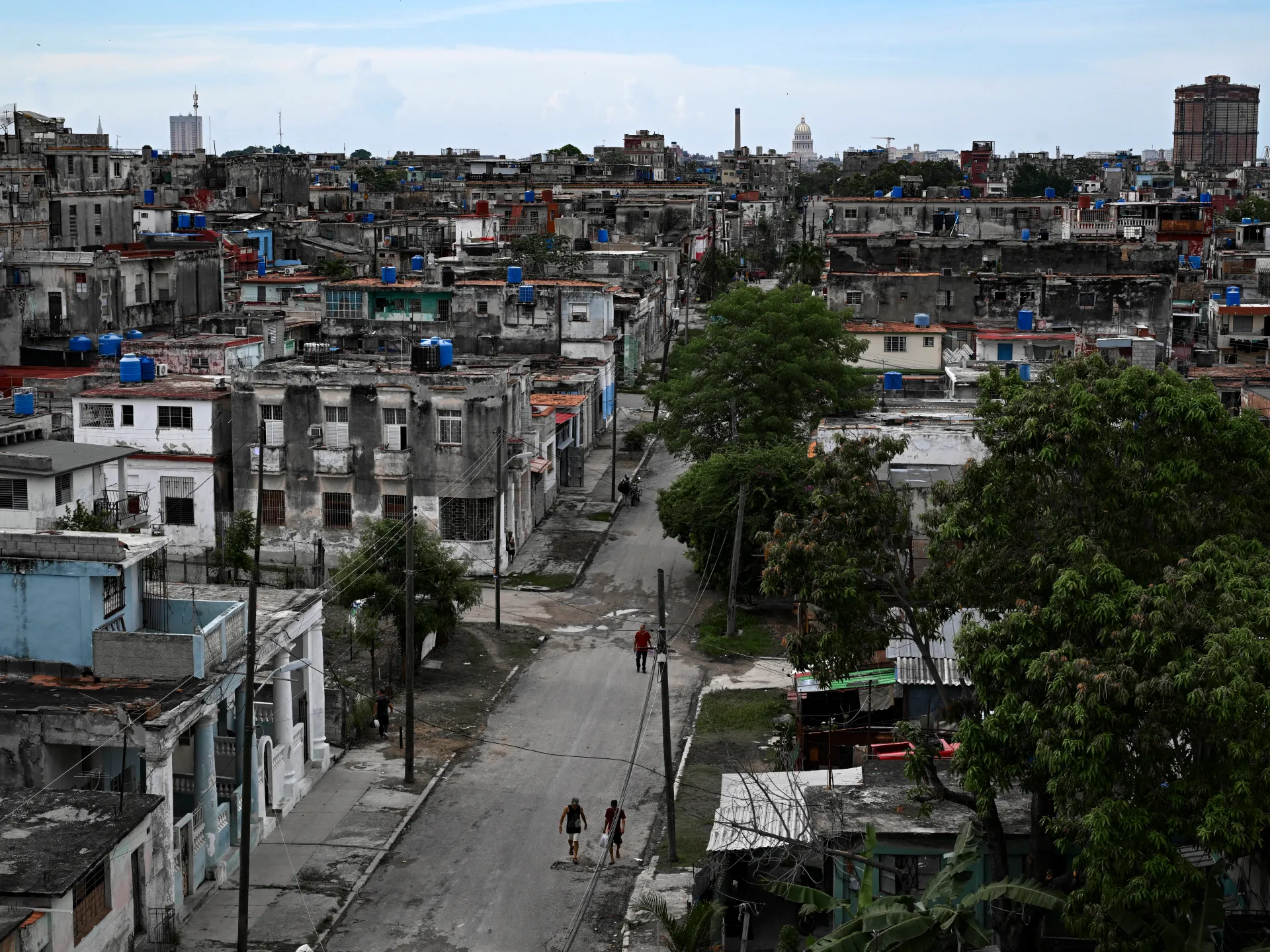



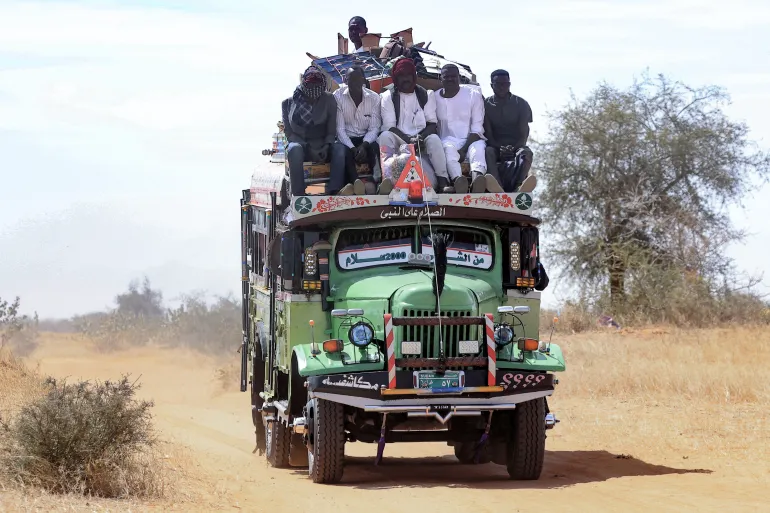
![People are transported in the back of a truck, some 30km east of the city of El-Obeid, in Sudan's North Kordofan region, on January 9, 2023. -[ASHRAF SHAZLY / AFP]](https://i0.wp.com/www.aljazeera.com/wp-content/uploads/2026/06/AFP__20230119__336T3JG__v3__HighRes__SudanAnimalCamel-1780778998.jpg?w=640&ssl=1)



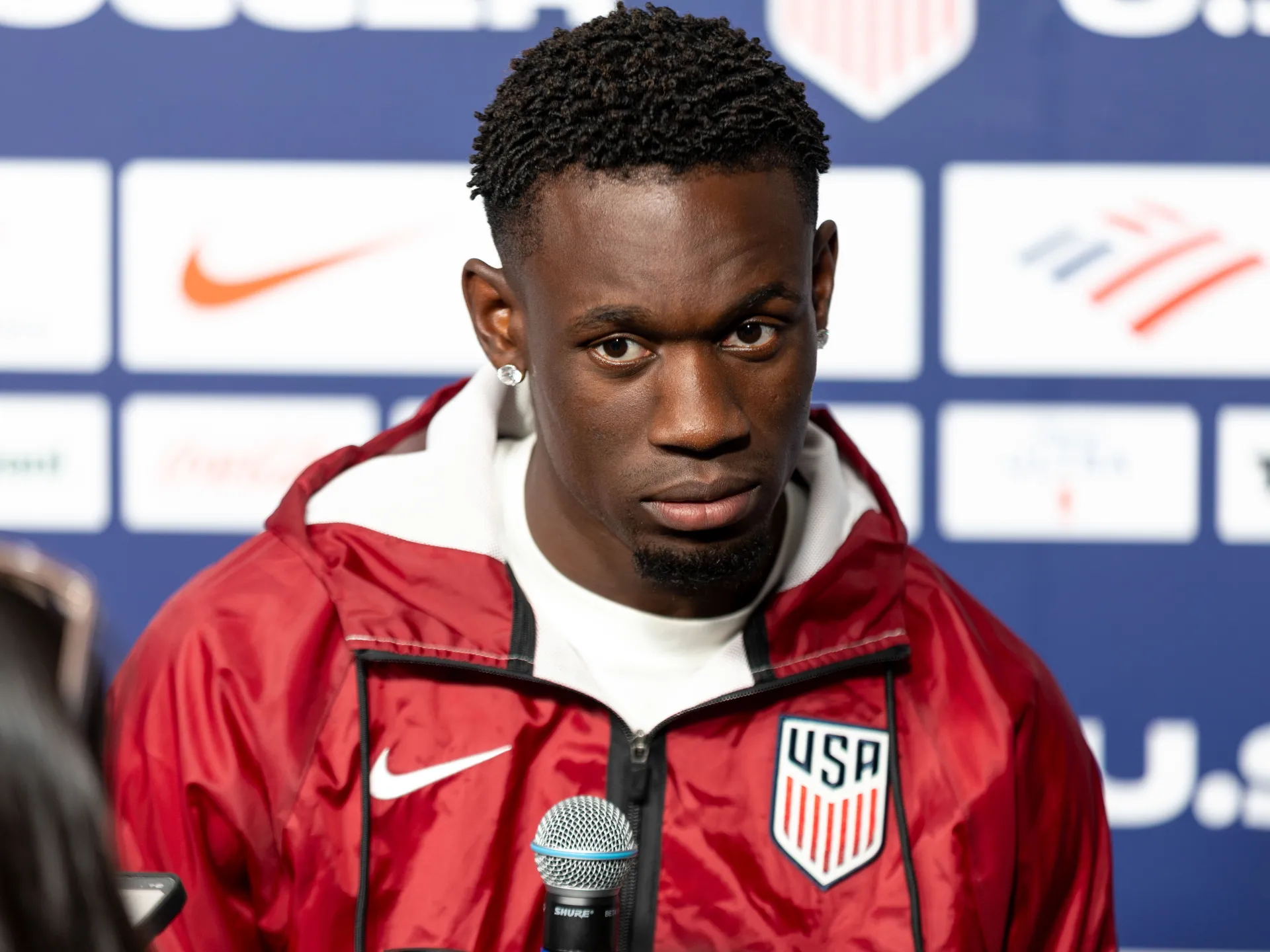
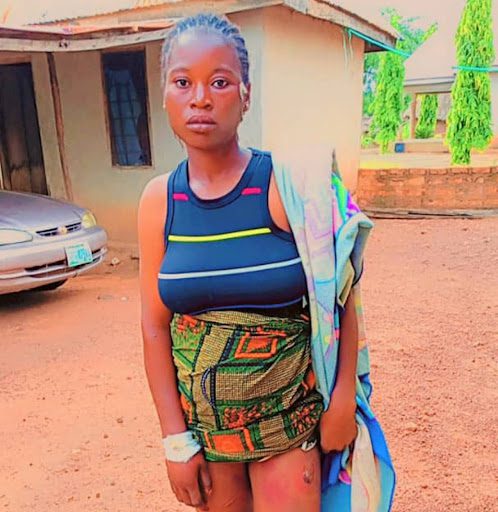




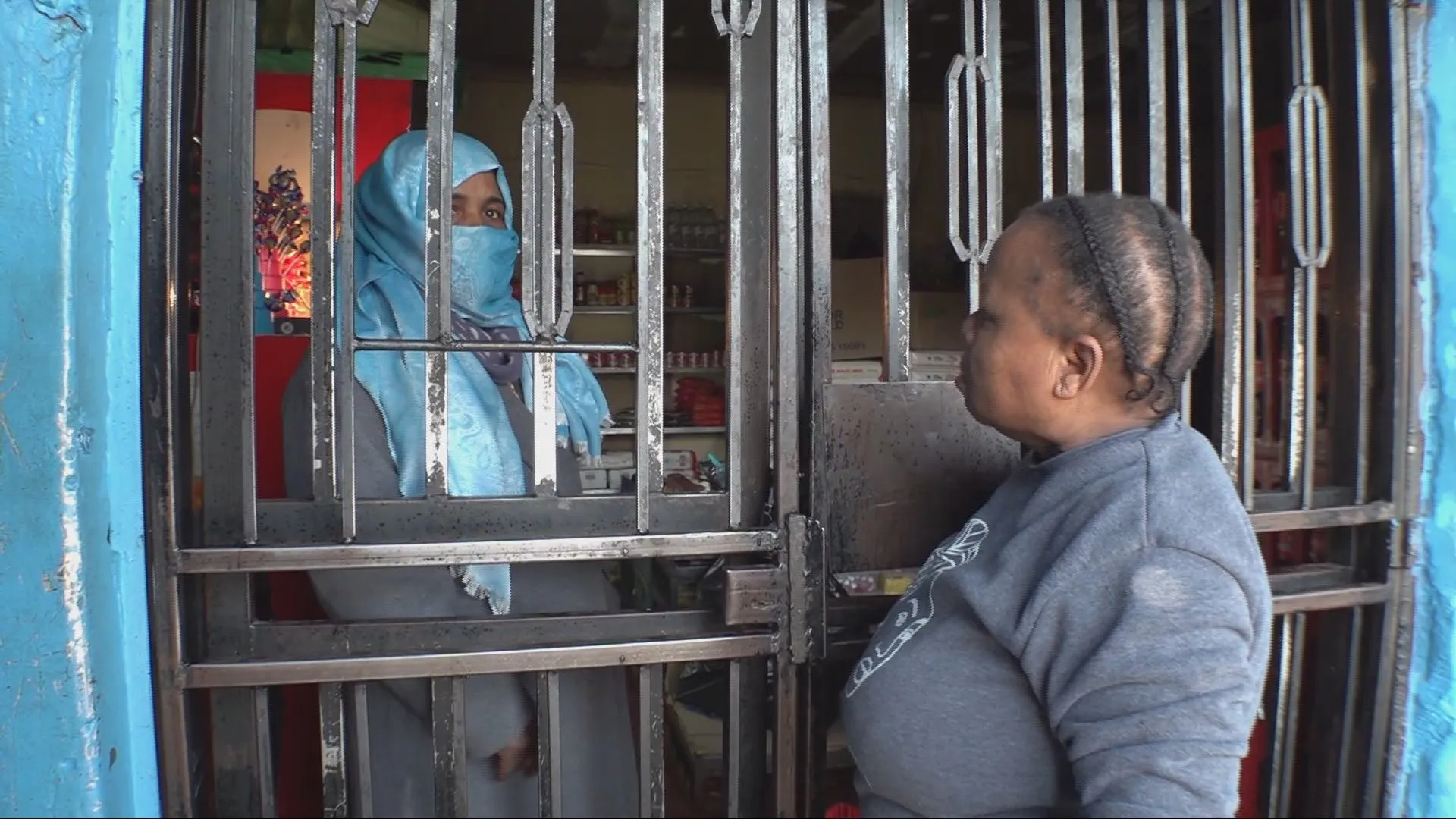
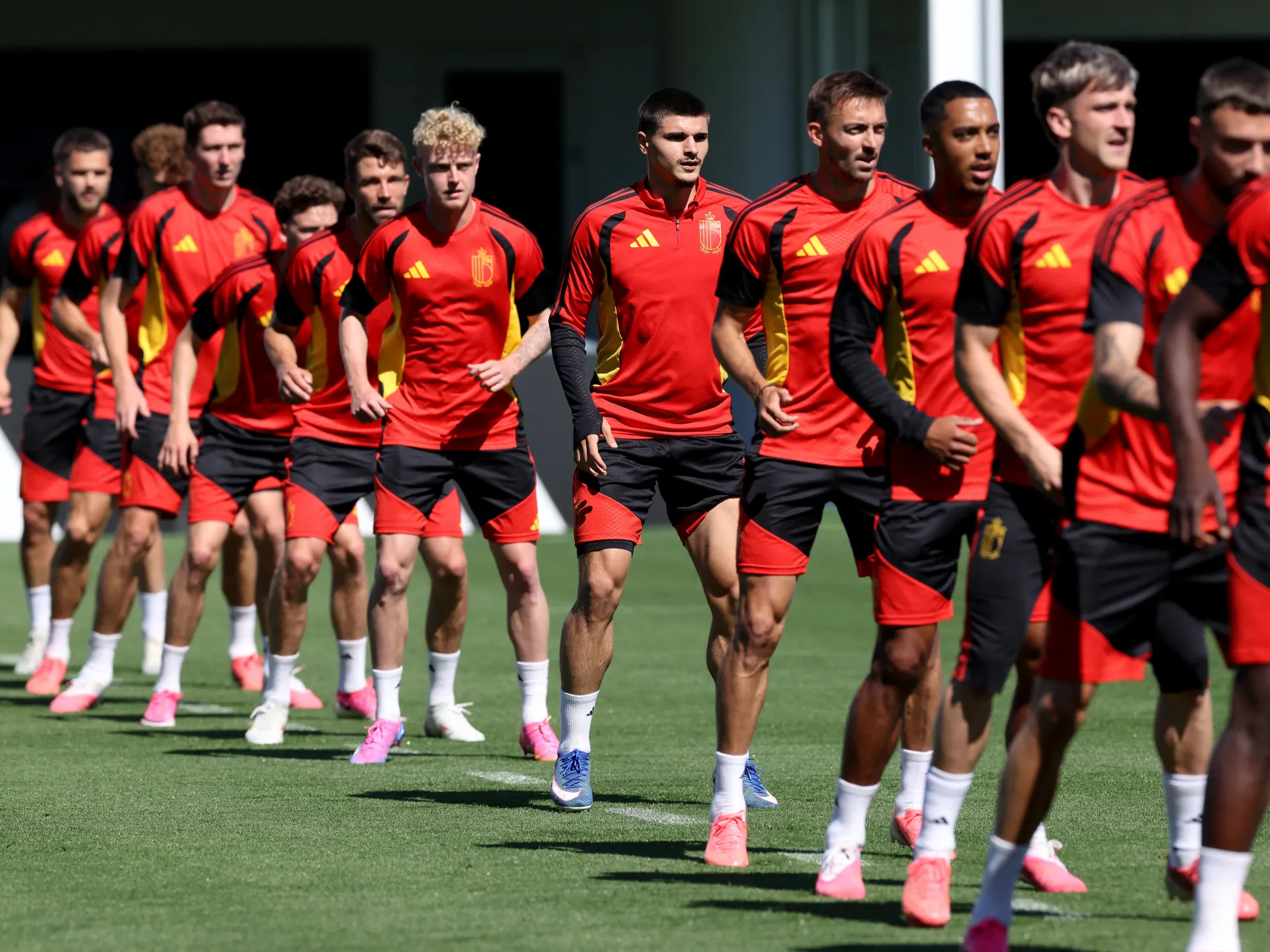
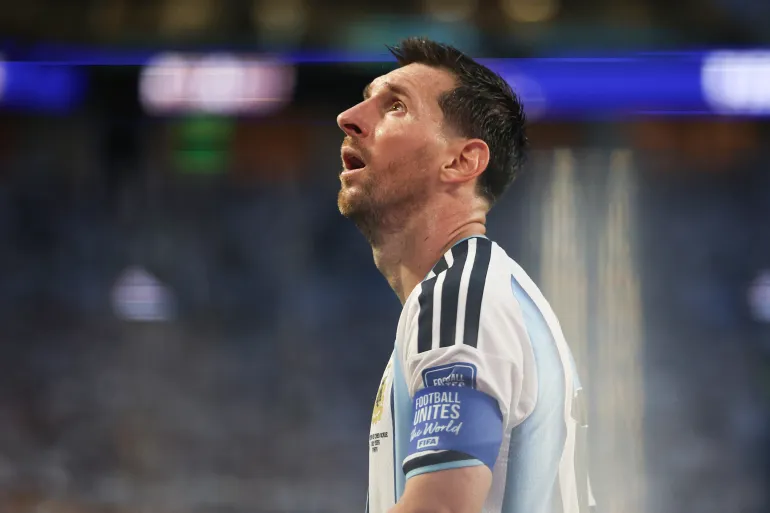


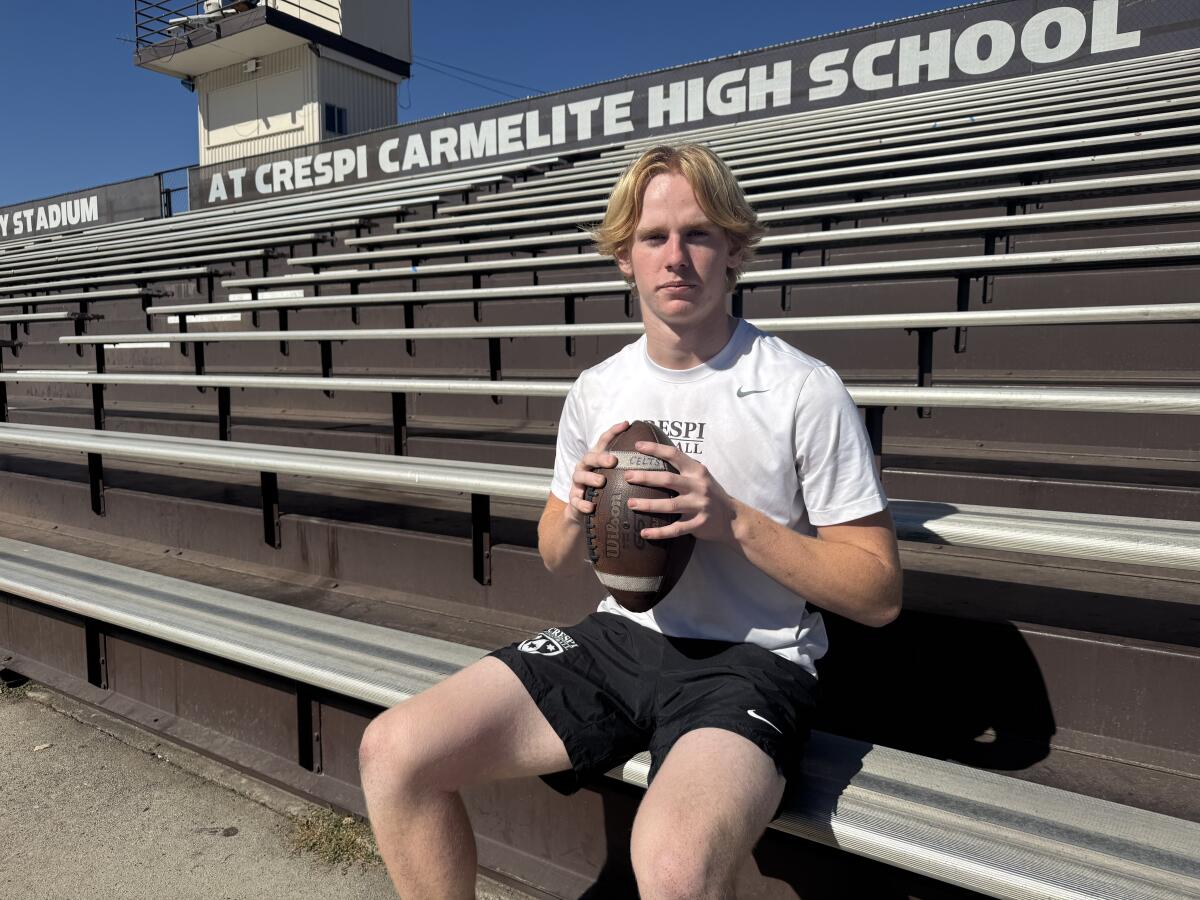


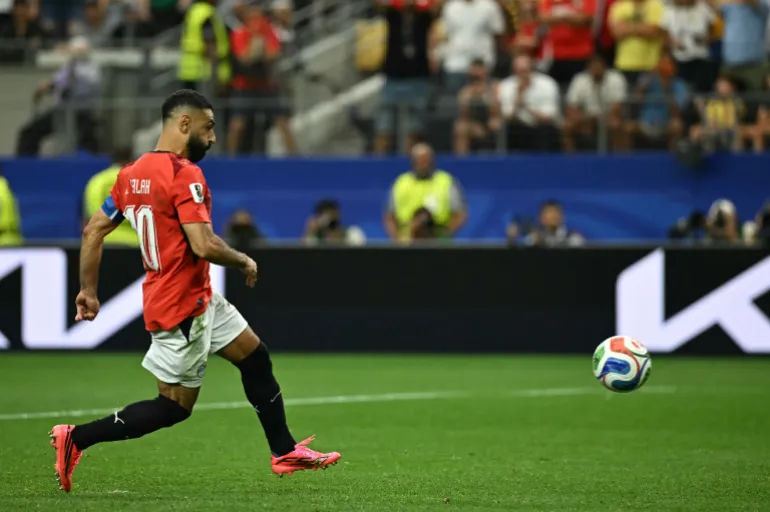

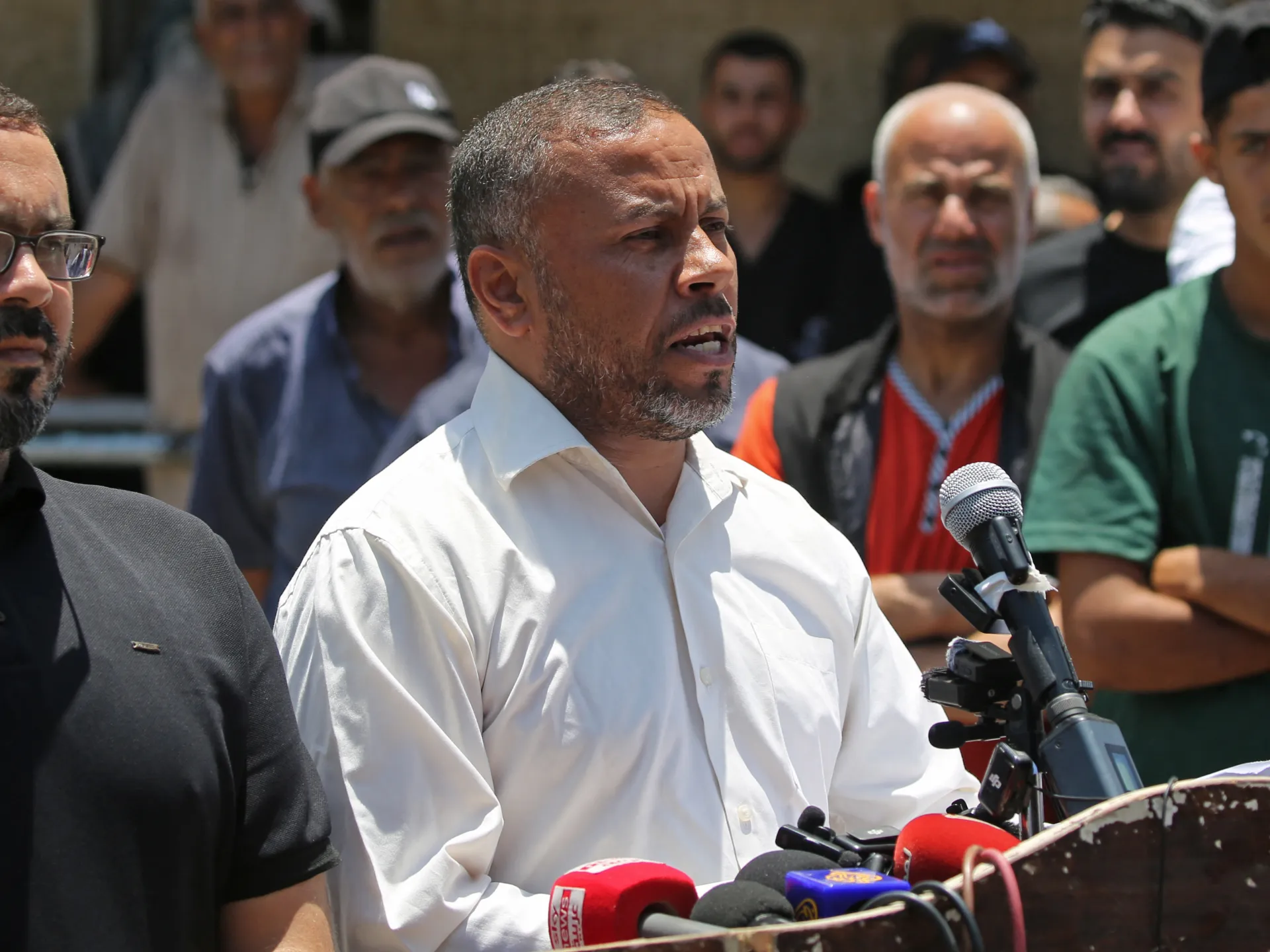
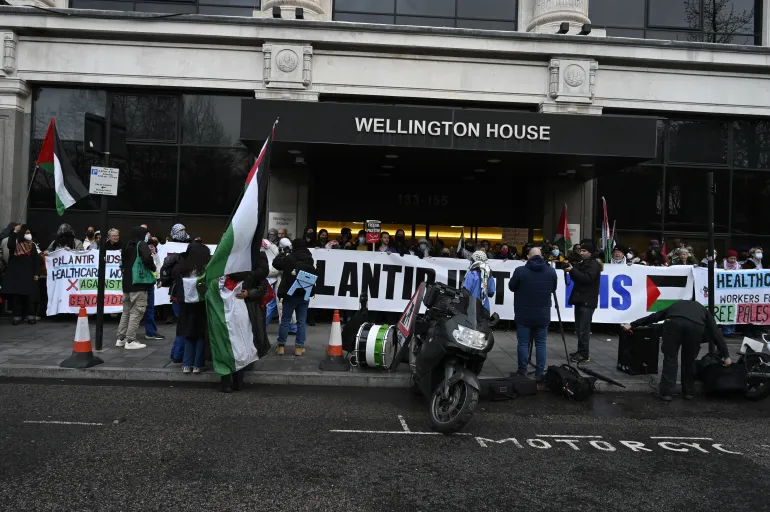
![NHS workers contend that Palantir’s extensive support to the Israeli military will have inevitably contributed to Israel’s 804 attacks on Gaza health facilities [Vi Dimitrova/Health Workers for a Free Palestine]](https://i0.wp.com/www.aljazeera.com/wp-content/uploads/2024/04/London-1712147891.jpg?w=640&ssl=1)