news

IRGC vows ‘crushing response’ to any further US attacks | News

NewsFeed

The IRGC has promised a “crushing response” to any further US attacks on its territory. It follows a third round of US strikes on Iran in a week, which was met with retaliatory strikes from Iran on US military targets across the region.

Al Jazeera’s Tohid Asadi shares the latest details from Doha.

Source link

Former emir of Qatar, Sheikh Hamad bin Khalifa Al Thani, dies at 74 | News

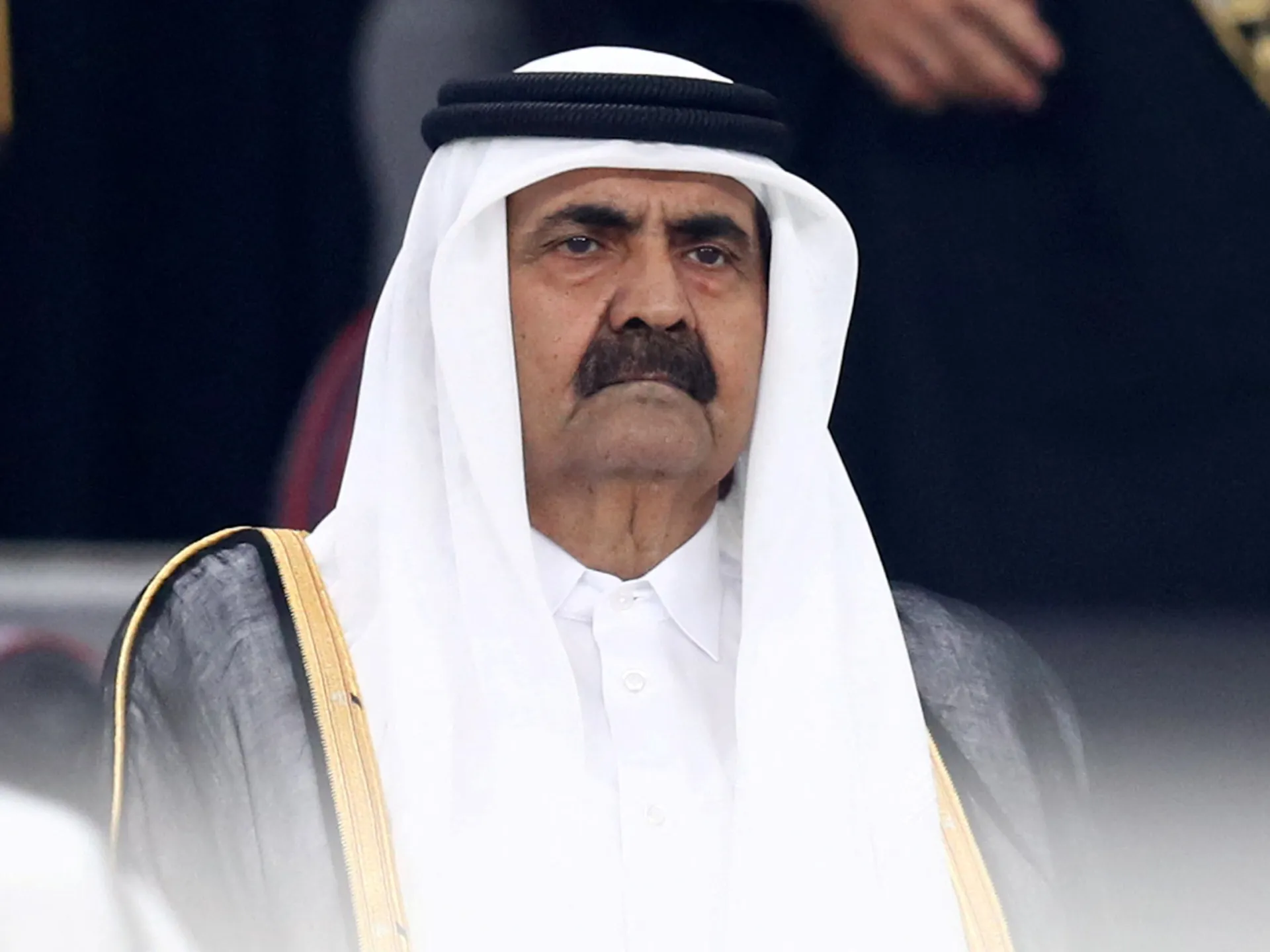
⁠Qatar’s former Emir ⁠Sheikh Hamad bin ⁠Khalifa Al Thani ‌has died at the age of ⁠74, the country’s Amiri ⁠Diwan said.

“With hearts steadfast in faith in God’s decree and destiny, the Amiri Diwan mourns the great loss to the nation of the late – may God have mercy on him – His Highness the Father Amir Sheikh Hamad bin Khalifa Al Thani, who passed away this morning,” the Amiri Diwan said in a statement on Sunday.

More to come…

Source link

Injured Conor McGregor’s UFC comeback ends in defeat to Max Holloway | Mixed Martial Arts News

Facing Holloway at UFC 329, Irishman McGregor seemed to injure his right knee in the first round when jumping in with a kick.

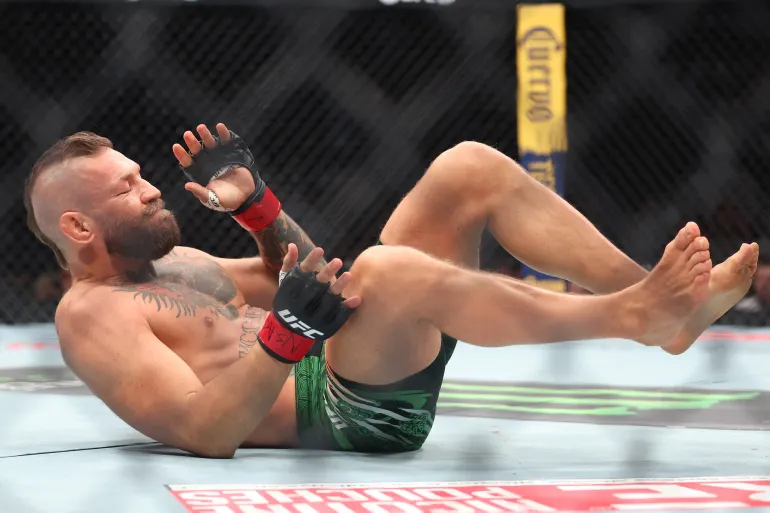
Conor McGregor’s much-hyped ‌return to the octagon lasted just over a minute on ⁠Saturday after the ⁠Irishman blew out his knee and retired injured in his UFC 329 fight with Max Holloway in Las Vegas.

Former two-weight ⁠world champion McGregor, who had not fought since breaking his leg against Dustin Poirier in July 2021, attempted a flying kick to start ⁠the opening round but landed awkwardly and immediately looked in trouble.

Recommended Stories

list of 4 itemsend of list

He tried to fight on for a few seconds but looked towards the referee to signal he could not continue.

LAS VEGAS, NEVADA - JULY 11: Conor McGregor of Ireland falls after sustaining an injury on a kick in the first around against Max Holloway of the United States in their welterweight bout during UFC 329 at T-Mobile Arena on July 11, 2026 in Las Vegas, Nevada. Ian Maule/Getty Images/AFP (Photo by Ian Maule / GETTY IMAGES NORTH AMERICA / Getty Images via AFP)
Conor McGregor of Ireland falls after sustaining an injury on a kick in the first round against Max Holloway of the United States in their welterweight bout during UFC 329 at T-Mobile Arena [Ian Maule/Getty Images via AFP]

Former featherweight champ Holloway said he would discuss ‌the possibility of staging another fight with McGregor when the Irishman recovers.

“It is what it is, I’m going to sit down with the UFC,” Holloway added. “(There was) so much hype for that right there. We’ve got to run it back one more time. One more time for the boys.”

Saturday’s bout was the second between the ⁠pair, with McGregor winning by unanimous decision in 2013.

LAS VEGAS, NEVADA - JULY 11: Max Holloway of the United States lands a punch on Conor McGregor of Ireland during the first round in their welterweight bout during UFC 329 at T-Mobile Arena on July 11, 2026 in Las Vegas, Nevada. Ian Maule/Getty Images/AFP (Photo by Ian Maule / GETTY IMAGES NORTH AMERICA / Getty Images via AFP)
Max Holloway lands a punch on Conor McGregor during the first round in their welterweight bout during UFC 329 [Ian Maule/Getty Images/AFP]

Injuries ⁠and issues away from the sport have derailed McGregor’s career.

After breaking his leg against Poirier five years ago, the 37-year-old was slated to meet Michael Chandler in June 2024, but that was cancelled after McGregor suffered a broken toe in training.

Later that year, a jury in ⁠an Irish civil court found him liable ⁠for the rape of Nikita Hand in 2018.

In October 2025, he accepted an 18-month ban for “whereabouts failures” after he missed three attempts by Combat Sports Anti-Doping to collect biological samples ‌from him in 2024. The ban was backdated and expired in March.

In the co-main event at the T-Mobile Arena on Saturday, Britain’s Paddy ‌Pimblett ‌also needed less than a minute to secure victory, choking out Frenchman Benoit Saint-Denis in their lightweight bout.

Source link

F-22 Raptors Arrive In England After Deployment To Israel For Iran War

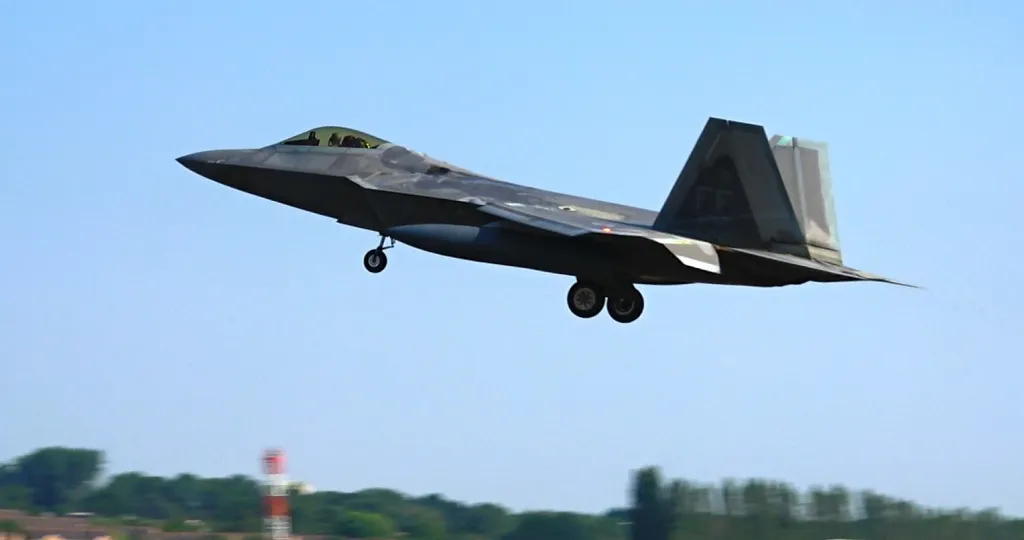
Ten U.S. Air Force F-22 Raptors arrived at RAF Fairford in the United Kingdom Friday morning local time from Ovda Air Base in Israel. As we previously reported, the jets, from the 1st Fighter Wing at Langley Air Force Base, had been deployed to Ovda since late February to take part in attacks on Iran. The move, one of another retrograde movements of U.S. airpower in the past few weeks, comes as tensions have spiked in the Middle East.

The movement is the latest in a number of similar operations. On July 1, U.S. Air Force B-52 Stratofortress bombers departed from Fairford, where they were forward deployed for Epic Fury, for instance. Other tactical jets have also returned home, with some being replaced and others not. RAF Fairford acts as a major hub for transatlantic U.S. military aircraft movements.

Local spotters say the jets arrived at Fairford in three waves. An aviation photographer who uses the @Saint1Mil handle on X was kind enough to share three photos with us, including the main image above.

@Saint1Mil
@Saint1Mil

Online open-source flight trackers followed the flight of these jets and their aerial refueling tanker support.

During Epic Fury, “Raptors executed precision missions against Iranian air defenses, nuclear-related infrastructure and command nodes linked to the Islamic Revolutionary Guard Corps (IRGC),” U.S. Central Command (CENTCOM) noted in its Citadel publication.

“On March 1, F-22s opened the campaign by suppressing S-300 and Bavar-373 batteries, clearing corridors for follow-on coalition strike aircraft entering defended airspace,” the command added.

Between March 1 and 9, “the stealth fighters flew more than 200 combat sorties while remaining undetected by Iranian radar networks throughout the operation,” CENTCOM explained. “F-22 Raptor used its low-observable design and advanced sensors to penetrate defended airspace and deliver precision weapons against strategic Iranian regime facilities during the campaign.”

An F-22 Raptor in the CENTCOM region. (CENTCOM)

The targets included “infrastructure connected to the Fordow Fuel Enrichment Plant and Natanz Nuclear Facility,” CENTCOM noted. “Raptors employed GBU-39/B Small Diameter Bombs and GBU-32 Joint Direct Attack Munitions internally, preserving stealth while striking multiple hardened targets with precision guidance.”

The aircraft “also coordinated with B-2 Spirit bombers and EA-18G Growler electronic attack jets in layered strike packages designed to overwhelm Iran’s integrated air defenses,” according to CENTCOM. “The regime’s forces launched dozens of surface-to-air missiles during the nine-day campaign, U.S. officials said none were successfully tracked or locked onto the stealth fighters.”

A US. Air Force B-2 Spirt assigned to the 509th Bomb Wing, Whiteman Air Force Base receives fuel from a U.S. Air Force KC-135 assigned to the 185th Air Refueling Wing, Iowa Air National Guard in the sky over northwest Missouri on August 29, 2018. U.S. Air National Guard photo by Senior Master Sgt. Vincent De Groot
A U.S. Air Force B-2 Spirit assigned to the 509th Bomb Wing, Whiteman Air Force Base. (U.S. Air National Guard photo by Senior Master Sgt. Vincent De Groot) Vincent De Groot

The Raptors’ arrival at Fairford from Ovda this morning came as the U.S. and Iran ramped up attacks on each other this week. Iran also struck targets in Bahrain, Kuwait and Jordan during a flare-up sparked by the IRGC’s attacks on three tanker ships in the Strait of Hormuz.

As we previously noted, this latest round of fighting was touched off Tuesday when Iran attacked three ships in the Strait of Hormuz. On Wednesday, President Donald Trump and Iranian officials declared that the shaky ceasefire agreed to on April 8 was over. 

By Friday evening local time, there were no new reports of attacks while there are indications of a push to rekindle peace negotiations.

CNN on Friday reported that “Qatari negotiators — in coordination with the U.S. — have traveled to Iran to meet officials there. An American official earlier said the U.S. was deliberately striking and then pausing to avoid escalation and let diplomacy work out.”

That’s a scenario one former CENTCOM commander laid out for us earlier this week.

“I think the immediate way forward will be controlled escalation focused on a military campaign to degrade the regime’s ability to disrupt activities in the Gulf,” Joseph Votel, who led the command from March 2016 to March 2019, told us on Tuesday, when the flare-up first erupted.  

As we have frequently noted, the two sides signed a 14-point Memorandum of Understanding (MoU) on June 17. The MoU provided a 60-day extension of the ceasefire to iron out an agreement to end fighting throughout the region, including Lebanon, prevent Iran from seeking nuclear weapons, end U.S. sanctions and resume the flow of traffic through the Strait of Hormuz among other points.

Control over the Strait has proven to be the biggest flashpoint, as evidenced by the aforementioned flare-up of fighting.

You can see video of some of the attacks by CENTCOM below.

It is not completely clear if the Raptors that are now heading back to Langley will be replaced. We reached out to Air Combat Command and the 1st Fighter Wing for details.

As we have frequently reported, given that the U.S. began building up forces in the region in January, many of the ships, aircraft and troops will have to ‘retrograde’ out of the CENTCOM area of responsibility in the coming weeks and months. We’ve already seen aircraft like the B-52s we mentioned earlier in this story, A-10 Thunderbolt II close attack jets, F-15Es and other assets return from the region. Some have been replaced and some have not. As a result, the future of the American footprint there remains a question mark despite the resurgence in hostilities. 

Given the ebb and flow of fighting, it is hard to predict the future of negotiations between the U.S. and Iran and whether it will lead to lasting peace.

“The Islamic Republic of Iran has asked us to continue ‘talks,’” Trump claimed Friday morning on Truth Social. “We have agreed to do so, but the United States has stated to them, in no uncertain terms, that the Cease Fire is OVER!”

Should Trump opt to resume major combat operations, reconstituting a large force once it has been even partially drawn down would take time. It would also add extreme stress on a force structure that has seen constant deployment surges over the last year. At the same time, there is immense global pressure to not restart the all-out fighting as markets are struggling to recover from the massive spike in oil prices. Back home, Trump’s party already faces the midterm elections with low voter support for the war and an increasingly shaky economy.

Regardless, a deadline is fast approaching to get a deal done with little incentive for Iran to give up what the U.S. wants beyond threats of more bombardment.

Contact the author: howard@twz.com

Howard is a Senior Staff Writer for TWZ. He writes frequently about conflict, focusing heavily on the Middle East and Ukraine, and interviews with military and intelligence officials and industry leaders from around the globe. He lives near Tampa, Florida, home of U.S. Central Command, U.S. Special Operations Command.


Source link

At least two killed in Toronto street festival shooting

At least two people have been killed in a shooting at a street festival in Toronto.

Police in the Canadian city initially received reports of an active shooter on St Clair Avenue at approximately 20:12 local time (01:12 BST), where a salsa festival was being held.

Five victims with gunshot wounds were found by police, who said two people had been pronounced dead at the scene.

Police said they had secured the scene, but urged the public to stay away from the area, where a large police presence would remain. They added that more information would follow.

St Clair Avenue, located in midtown Toronto, is lined with shops and restaurants.

Between the 11 and 12 July, it was set to host the annual Salsa on St Clair Latin festival, a yearly celebration which features a host of live music and dance performances.

This year was the festival’s 22nd iteration.

This breaking news story is being updated and more details will be published shortly. Please refresh the page for the fullest version.

You can receive Breaking News on a smartphone or tablet via the BBC News App. You can also follow @BBCBreaking on X, external to get the latest alerts.

Source link

Mediators push US-Iran talks in Qatar and Oman to avert escalation | US-Israel war on Iran News

NewsFeed

Regional mediators are stepping up efforts to prevent further escalation between Iran and the US. Qatar held talks in Tehran, while Oman is proposing a plan to manage shipping through the Strait of Hormuz. Al Jazeera’s Resul Serdar explains.

Source link

Ukraine Claims Scores Of Russian Ships Struck In Sea Of Azov

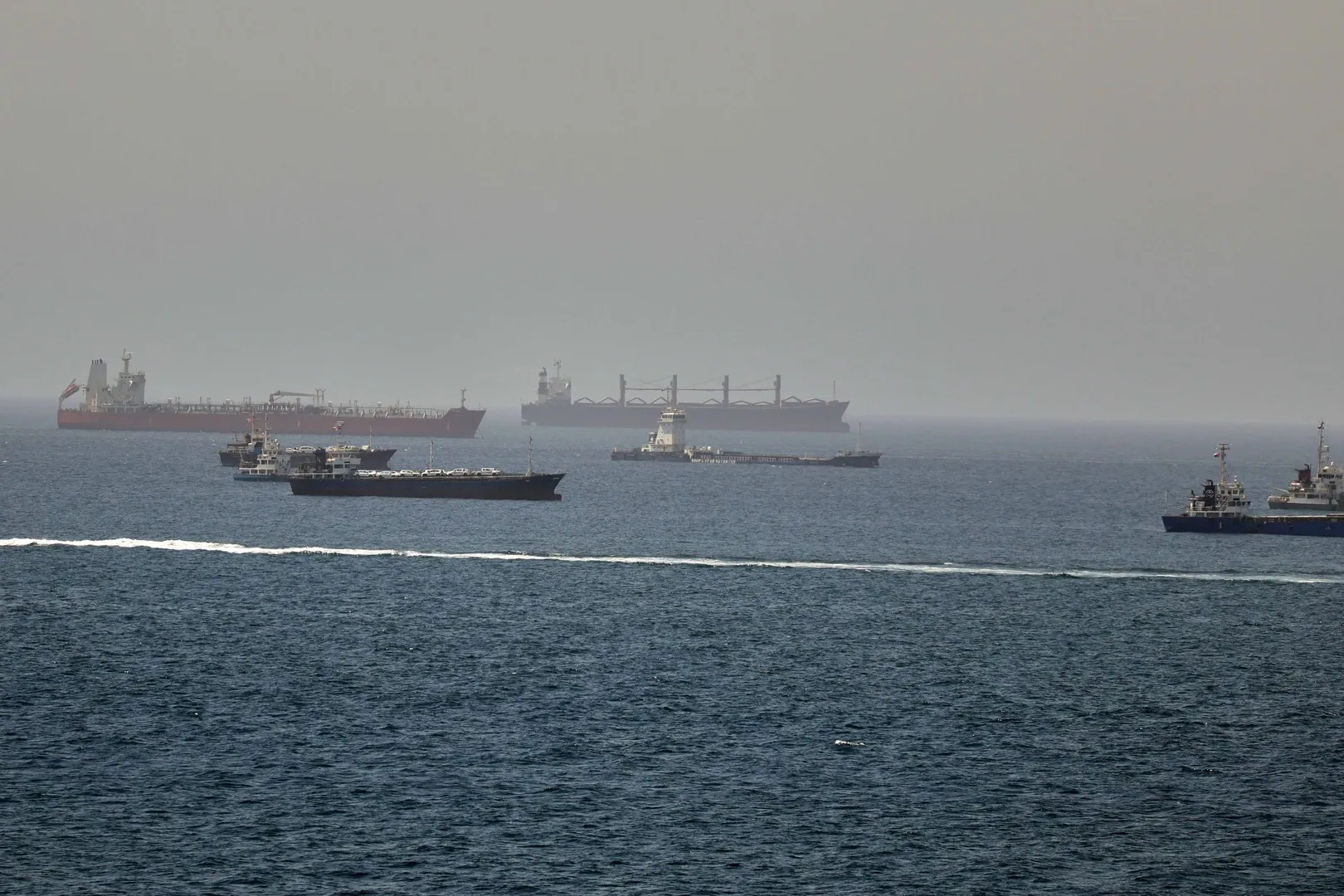
Ukraine claims that 28 Russian vessels were hit by aerial drones in the Sea of Azov on Saturday. The strikes are the latest in a campaign that Ukrainian authorities assert has resulted in nearly 80 Russian vessels, mostly so-called shadow fleet oil tankers, being attacked in that body of water on a daily basis since July 6. 

As a result of these attacks, “Russia temporarily stopped shipping through the Don-Azov Channel, a navigable waterway linking the Don ​River with the Sea of Azov,” Reuters reported, citing three grain export industry sources.

The move came after 13 Russian vessels, including 10 tankers, were attacked in this body of water on Friday. Market analysts noted to Reuters that about 25% of wheat exports from Russia, the world’s largest exporter ​of the grain, pass through the Sea of Azov.

The Sea of Azov campaign is part of much wider Ukrainian efforts to isolate the Crimean peninsula as well as strike at Russia’s energy infrastructure to damage its economy and reduce its ability to wage war. As we have previously reported, these attacks are inflicting pain on Russian forces in Crimea. Also often striking very deep into Russia, they are also having a devastating effect on fuel supplies across the country. In addition, the attacks are helping to halt Moscow’s gains and pave the way for Ukrainian advances.

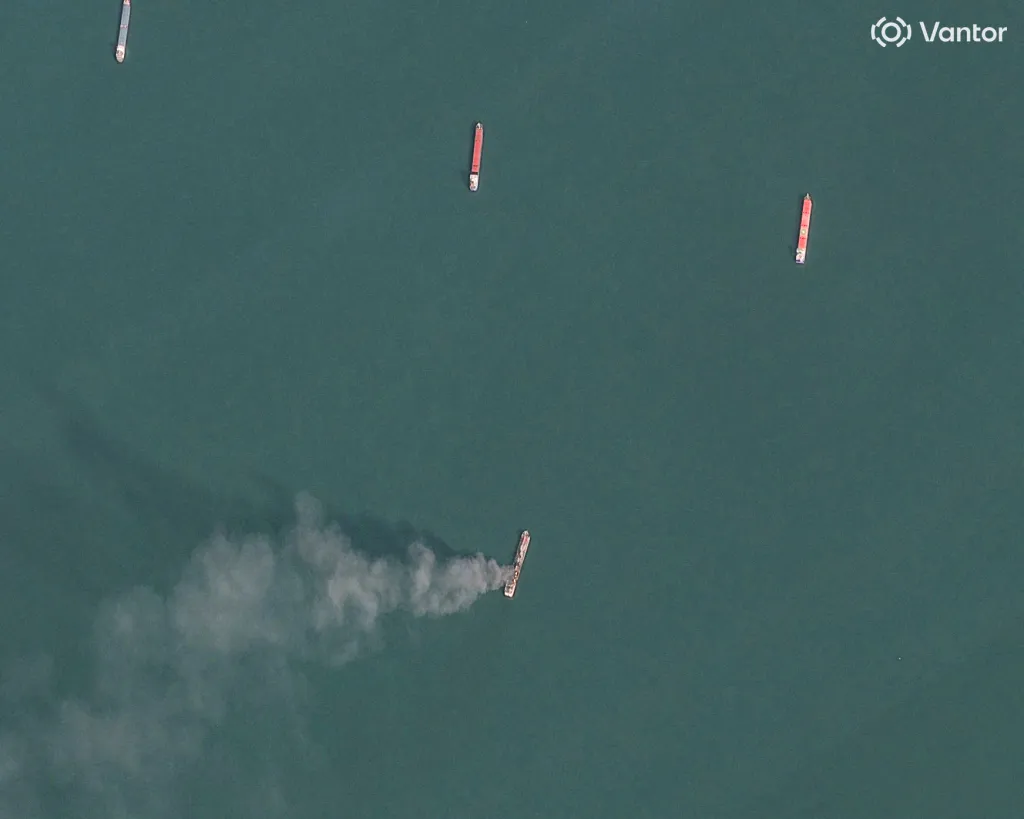
A satellite image of a burning Russian tanker near the Kerch Bridge in the Sea of Azov taken July 8. (Satellite image ©2026 Vantor)
A satellite image of a burning Russian tanker in the Sea of Azov near the Kerch Bridge taken July 9. (Satellite image ©2026 Vantor)

“Overnight on 11 July, the Birds of the Unmanned Systems Forces hit 21 tankers, 4 tugs, 2 cargo vessels, and 1 special-purpose vessel in the Sea of Azov,” Ukraine’s 414th Separate Unmanned Strike Aviation System Brigade, known as “Magyar’s Birds,” stated on X. The cutting-edge unit is named for Ukraine’s drone force commander Robert Brovdi, also known as Magyar. 

In addition to striking the ships, Magyar’s Birds claimed to also have hit “53 legitimate military targets were engaged deep inside the enemy’s rear in Crimea and the southern part of the temporarily occupied territories, including fleet assets and energy infrastructure. Operation ‘Crimean Switch Off’ has no end date.”

The shadow tanker fleet was engaged by drone pilots from a wide array of units, the brigade added. 

“The technological humiliation of the empire continues,” Magyar’s Birds proclaimed. “It will fall because of Crimea.”

TWZ cannot independently verify the claims; however, many videos have emerged on social media purporting to show the results of these attacks. Magyar’s Birds has released six compilations of them. 

The brigade began releasing videos of these strikes on July 6. This first one shows two ships being hit in a compilation of videos showing strikes on targets mostly on Crimea. The targets included S-400 air defense systems, radars and an oil depot.

The next day, July 7, Magyar’s Birds released a video that opened with a wide view of almost two dozen tankers lined up in the Sea of Azov. The video then cuts to show several of those vessels being struck and burning. The unit claimed eight tankers, a cargo ship and a ferry were hit.

On July 8, Magyar’s Birds claimed nine more Russian tankers were attacked.

Magyar’s Birds released another video on July 9 claiming 14 Russian ships were hit overnight.

Friday, July 10, Magyar’s Birds claimed strikes on 10 tankers, a cargo vessel, a ferry and a sea tug.

In addition to the videos released by the unit, others emerged on social media showing the aftermath of these attacks.

Magyar’s Birds doesn’t name the types of drones being used, but the video displays show they are from Fire Point, which makes several kamikaze drones as well as the FP-5 Flamingo cruise missile.

Roy Gardiner, a former Canadian military officer who is part of the Defense Tech For Ukraine collective and is an expert on Ukrainian drone warfare, surmised that the attacks are by the FP-2 drone.

FP-1 and FP-2 – Drones that inflict pain on the Russian rear! | Weapons with @StarskyUA thumbnail

FP-1 and FP-2 – Drones that inflict pain on the Russian rear! | Weapons with @StarskyUA


“It’s the only UAV available in large numbers and with the range to carry that much explosive, other than the long-range AN-196 Liutyi, which is a lot more expensive and illogical to use for this mission,” Gardiner, who uses the @GrandpaRoy2 handle on X, told us.

Fire Point co-owner Denis Shtilerman recently told the TSN media outlet that the company has increased the warhead of its FP-2 strike drones to 200 kilograms. A change in the wing design enabled the drone to achieve a flight range of up to 370 kilometers with those warheads, he claimed.

УКРАЇНСЬКІ ДРОНИ СТАЛИ НОСІЯМИ РАКЕТ! Деталі від українських розробників / ТСН.Тиждень thumbnail

УКРАЇНСЬКІ ДРОНИ СТАЛИ НОСІЯМИ РАКЕТ! Деталі від українських розробників / ТСН.Тиждень


That range gives Ukrainian forces fire control over virtually all of the Sea of Azov, a body of water north of the Black Sea. The videos indicate this is made possible by high-speed satellite data links allowing for man-in-the-loop operations at great distances. This has enabled Ukraine’s sea drones since their arrival but the miniaturization of the technology has now allowed for large-scale use on one-way attack munitions

Sea of Azov (Google Earth)

In addition to the aerial drones striking these tankers, Ukraine’s SBU state security bureau used Sea Baby sea drones to attack a Russian tanker in the Black Sea on June 8. As we have frequently reported, Ukraine’s naval campaign has focused overwhelmingly on the Russian Black Sea Fleet. Many successful attacks have been recorded against Black Sea Fleet vessels and facilities, forcing the general evacuation of Russian naval assets from occupied Crimea and to bases in Russia proper.

The Sea of Azov campaign has some Russian milbloggers chiding Moscow for not doing enough to protect these tankers.

“The ‘Military Informant’ Telegram channel complained that the defenseless manner in which the tankers had travelled had become in effect a shooting gallery for Ukrainian drone operators, with no cover from a Black Sea Fleet, which could nowadays barely defend itself,” the BBC recently noted.

The Kremlin is certainly paying attention to Ukraine’s targeting of refineries, oil depots, ports, ships and other energy infrastructure.

Russian President Vladimir Putin “is concerned enough to address the fuel shortage publicly on state TV, insisting the Ukrainian attacks are ‘obviously creating problems’ but insisting ‘it’s not critical,’” BBC explained.

There’s good reason for Putin to be concerned.

“Russian gasoline output fell to a level equivalent to only around 65% of the ​seasonal average consumption after Ukrainian drone attacks led to stoppages at large oil refineries,” Reuters reported on Friday, citing “two industry sources ‌and Reuters calculations.”

As a result of the Ukrainian attacks, Russia – long a major oil exporter – is now turning to imports to cover the gap and meet the demands.

“Supplies of gasoline and diesel from Belarus to Russia hit a monthly record in June, while industry sources said last week that Russia had ‌started ⁠seaborne from India,” Reuters added. “Traders said that up to 6,000 tons of gasoline per day are delivered from neighboring Belarus to Russia. Stockpiles are also being tapped.”

Russia is also taking the drastic step of considering bans on exports of diesel, gasoline and jet fuel.

All this comes as both Ukraine and Russia are jockeying for territory and influence amid a slow-churning, on-again, off-again effort by President Donald Trump to end the conflict.

Ukraine’s success in targeting Russia’s energy infrastructure and isolating Crimea has likely had an effect on Trump, who has repeatedly changed his stance on which side he favors.

As we recently reported, Trump and Ukrainian President Volodymyr Zelensky had a remarkably warm bilateral meeting at the NATO Summit in Ankara, Turkey, earlier this week. So much so that the American leader promised his counterpart licenses to manufacture Patriot air defense system interceptors, something Zelensky has sought for years without success.

Ukraine continues to struggle badly to fend off Russian ballistic missile barrages and remains overmatched in terms of troops and equipment on the battlefield, where fighting has ground to a virtual standstill. Despite that, Kyiv is proving that asymmetric efforts like the Sea of Azov campaign are helping to offset Moscow’s advantages.

Contact the author: howard@twz.com

Howard is a Senior Staff Writer for TWZ. He writes frequently about conflict, focusing heavily on the Middle East and Ukraine, and interviews with military and intelligence officials and industry leaders from around the globe. He lives near Tampa, Florida, home of U.S. Central Command, U.S. Special Operations Command.


Source link

Bellingham scores twice as England beat Norway 2-1 to reach World Cup semis | World Cup 2026 News

Jude Bellingham was England’s hero once more by scoring twice as the Three Lions came from behind to end Norway’s historic run and reach the World Cup semifinals with a 2-1 win after extra-time.

In their first ever quarterfinal, Andreas Schjelderup fired Norway into a shock lead in the searing Miami heat on Saturday.

Recommended Stories

list of 4 itemsend of list

But Bellingham, who also netted a double in a memorable 3-2 over Mexico in the last 16, produced a moment of magic to equalise just before half-time.

Norway had a second goal controversially disallowed after a VAR review in the second half for a foul by Erling Haaland as both sets of players were pushed to their physical limits by going to extra-time.

Bellingham came up with another big moment for the winner as he pounced on an error by Orjan Nyland to sweep in his sixth goal of the tournament.

England will face Argentina or Switzerland on Wednesday for the chance to reach a first World Cup final in 60 years.

Haaland’s spectacular run of scoring in his last 14 competitive matches for Norway came to an end against the land of his birth with Norway’s exhausted talisman replaced at half-time of extra-time.

Having failed to win a World Cup knockout game after conceding first since the final of 1966 before this tournament, England have now done so twice in three matches.

Energy-sapping heat

Harry Kane’s heroics prevented an embarrassing early exit to the Democratic Republic of the Congo in the last 32.

But it is Bellingham who has stood up in the past two matches to keep England in the hunt to end their long wait for major tournament glory despite far from flawless performances.

The 5pm local time (21:00 GMT) kickoff in Florida meant that temperatures remained above 30 degrees Celsius (86 Fahrenheit) throughout, with intense humidity making for draining conditions for the players.

The heat looked as if it would spoil the spectacle in the first half.

Thomas Tuchel’s men were rattled as England goalkeeper Jordan Pickford saved low from Martin Odegaard before Alexander Sorloth wasted a glorious chance when he failed to feed Haaland and instead went for goal himself.

Almost immediately Bellingham pulled his team out of the mire once more.

Bellingham had been well marshalled until he collected Anthony Gordon’s pass, burst into the box at speed and then slotted home on his weaker left foot.

Momentum was suddenly in England’s favour and they nearly went into the break ahead.

Bellingham was this time the creator for Kane, who dinked the ball coolly over Nyland, but had just drifted offside.

Tuchel introduced Bukayo Saka and Eberechi Eze at the break for the ineffective Noni Madueke and Declan Rice – the Arsenal midfielder had been suffering with illness earlier in the week.

But those changes left England light in midfield and they were left hanging on at spells in the second half.

Torbjorn Heggem made the most of some sloppy defending to turn in at the back post, but Haaland was penalised for a push on new Manchester City teammate Elliott Anderson before the corner had been taken, and the goal was disallowed.

Norway were inches away from a winner again when Kristoffer Ajer hit the bar after England fail to deal with another dangerous corner.

Both sides visibly wilted in the energy-sapping conditions late on but were forced to endure an extra 30 minutes.

Nyland had been Norway’s supporting act in the last 16 win over Brazil with a series of saves before Haaland struck twice late on for a landmark victory.

This time the Sevilla goalkeeper was the villain as he spilled substitute Morgan Rogers’ shot from distance and Bellingham pounced and scored.

England were awarded a penalty moments later, but this time VAR intervened in Norway’s favour to deem Djed Spence had initiated contact inside the box.

Yet, Norway’s spirit was already crushed, epitomised by a slouched Haaland watching on from the bench with nothing more to give.

Tuchel said his side was “lucky” to emerge with the win.

“We made life very, very difficult for ourselves today. The result is fantastic. We are in the last four. It’s amazing but not happy with the performance,” he told ITV.

“The commitment is there but we made life difficult for ourselves in the way we played – sloppy, a lot of technical mistakes, not fast enough, not repetitive enough. We were lucky today.

“It’s about the quality – we need to play better. We will get better [in the semifinal]. We need to.”

Source link

FIFA to sell pieces of World Cup final stadium pitch, could earn millions | World Cup 2026 News

Pieces from the turf used at the stadium will go on sale as memorabilia and will be priced from $450 to $1,200.

FIFA is hoping to make money off the World Cup final even after the match is finished and the tournament is wrapped up.

Segments of the pitch for the World Cup final will be up for sale starting at $450 per piece, football’s governing body announced on Saturday.

Players and coaches have criticised the quality of the field at New Jersey’s MetLife, which usually uses an artificial surface for NFL games of the New York Giants and Jets. FIFA renamed the venue to New Jersey New York Stadium for the World Cup.

FIFA, accused of charging high prices for this year’s tournament in the United States, will earn more than $11m from the sale, according to a report in The Athletic.

“Own a genuine piece of football history with an authentic 2026 FIFA World Cup Piece of the pitch, permanently preserved in a premium acrylic with a USB keepsake,” the website says. “Each piece contains an original fragment of the iconic Final playing surface, making it a unique collectable that celebrates one of the world’s greatest sporting events.”

The official store says each segment of turf is 17.5 by 17.5 by 17.5, although it doesn’t specify whether that figure is inches, centimetres or millimetres.

FIFA said “the acrylic USB features an authenticity film, while offering a sleek, contemporary display piece. Presented in a premium hinged shoulder box with striking spot UV detailing, this exclusive item is designed for collectors, fans, and football enthusiasts alike”.

FIFA is making the turf available to send only to addresses in the United States and Europe.

“Orders will not be shipped until after the FIFA World Cup 2026 Final,” the governing body said.

In addition to the high-priced tickets and memorabilia for the tournament, it will ‌cost $3,000 for the highest-priced tier of souvenir turf. The three-by-three-inch (7.6-by-7.6-centimetre) piece of grass comes with a gold-etched replica ticket, a miniature replica World Cup ball and a crystal-cut World Cup trophy.

The three other tiers of souvenir turf will sell for $450, $900 and $1,200.

There will ⁠be no more than 2,026 pieces ⁠available in any one tier.

FIFA is selling regular tickets for the final at up to $32,970 for the final and is asking $34,500 and $32,500 for hospitality tickets that include food and drinks.

The report indicated that the turf which will be used for the World Cup final was grown at a turf ⁠farm in North Carolina.

For consistency, new turf fields were installed at all World ⁠Cup venues, including those that typically have ⁠artificial surfaces like the stadiums in Seattle, Washington; Atlanta, Georgia; East Rutherford, New Jersey; Vancouver, Canada; Arlington, Texas; and Inglewood, California.

There is no indication of what will happen to ‌the turf fields that are not being used for the final.

Source link

US judge dismisses January 6 case against Proud Boys after Trump order | Donald Trump News

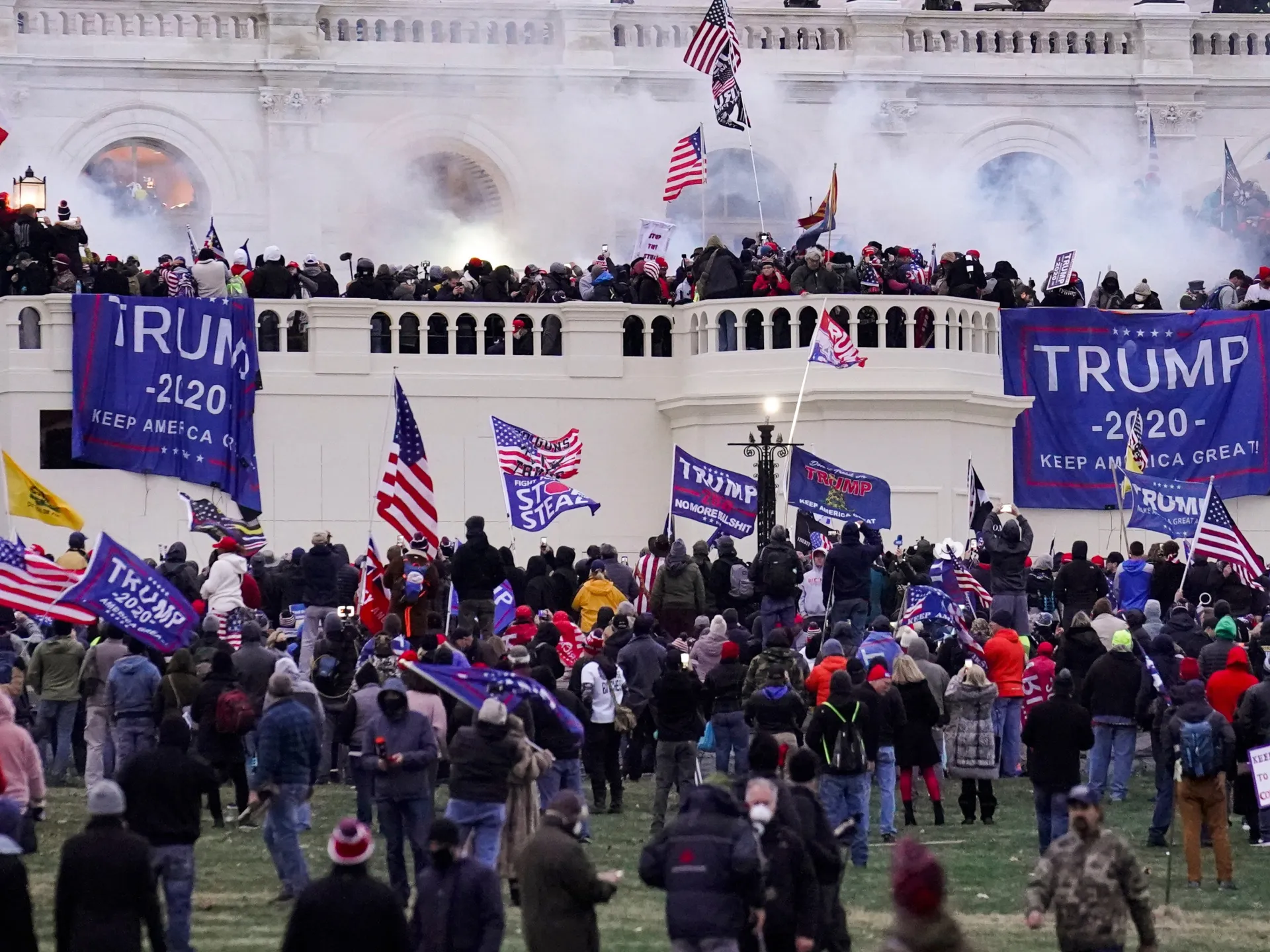
A United States federal court has dismissed the seditious conspiracy cases against four members of the Proud Boys, the far-right group involved in the attack on the US Capitol on January 6, 2021.

On Friday, Judge Timothy J Kelly, an appointee of President Donald Trump, granted the government’s motion to dismiss the case with prejudice, meaning it cannot be revived in future.

Recommended Stories

list of 3 itemsend of list

But Kelly made it clear that the defendants — Ethan Nordean, Joseph Biggs, Zachary Rehl and Dominic Pezzola — had been “convicted of serious offences”.

He wrote in his seven-page ruling that his decision was ultimately rooted in the separation of government powers, not in the merits of the case.

“As the Court has said many times, the attack on the Capitol on January 6, 2021 was a perilous event. It was an attack on people, including police officers, many of whom were injured,” Kelly wrote.

“It was an attack on the Constitution’s mechanism to facilitate the peaceful transfer of power from one president to the next,” he added.

Inside the January 6 riot

Friday’s ruling was yet another milestone in Trump’s efforts to end the prosecution of January 6 rioters.

The attack on the Capitol came shortly after Trump lost his bid for re-election in 2020 to Democrat Joe Biden. But in the aftermath of his loss, Trump spread false claims that the election had been rigged.

January 6, 2021, was the day Congress was scheduled to certify the Electoral College votes, confirming Trump’s defeat.

His vice president at the time, Mike Pence, held a ceremonial role overseeing the certification that day. But behind the scenes, Trump reportedly pressured Pence to reject the results of the election.

At midday, Trump held a “Save America” rally in front of the White House, repeating to his supporters that he had won “by a landslide”.

“If Mike Pence does the right thing, we win the election,” Trump said at one point. At another, he said, “If you don’t fight like hell, you’re not going to have a country anymore.”

Afterwards, some of his supporters marched to the Capitol and broke into the building, attacking police officers and causing millions of dollars worth of damage. Participants signalled their aim was to stop the vote certification, with some chanting, “Hang Mike Pence.”

The attack proved to be deadly. One rioter was shot by police as she climbed through a broken window to enter the House Speaker’s Lobby. An officer died from a stroke the following day after being beaten. Others died by suicide after the attack. Members of Congress had to be led to safety.

Under the Biden administration, the Department of Justice opened criminal cases against nearly 1,600 people involved.

But Trump has long defended the rioters and called their prosecution a “national injustice”.

Trump himself faced two criminal indictments — one at state level, the other federal — over his alleged attempts to subvert the election results, though the charges were dropped upon his re-election in 2024.

Unravelling the prosecutions

Calling the January 6 prosecutions an example of government “weaponisation”, Trump had campaigned during the 2024 race on a promise to pardon the rioters.

He followed through with that pledge on the first day of his second term. On January 20, 2025, Trump signed an executive order granting “a full, complete and unconditional pardon” to most of the defendants involved in the Capitol attack.

Trump also commuted the sentences of 14 people, including Nordean, Biggs, Rehl and Pezzola. Under his authority, the Department of Justice also proceeded to seek the dismissal of ongoing January 6 cases.

Judge Kelly cited that series of events in Friday’s ruling, though he appeared to express a measure of scepticism.

“No one should mistake the Court’s granting of the Government’s motion for its agreement with those decisions,” Kelly wrote.

In May 2023, a jury in Washington, DC, found Nordean, Biggs and Rehl guilty of charges including seditious conspiracy, alongside Proud Boys leader Enrique Tarrio.

Pezzola, meanwhile, was found not guilty of seditious conspiracy, but he was convicted of several felonies, including assaulting a police officer. At sentencing, the four men received prison terms ranging from 10 to 18 years, with Pezzola receiving the lightest sentence of the group.

But in weighing the future of the case against the four men, Judge Kelly explained that it was “hard to see” any other course forward other than dismissal.

The court system, Kelly explained, cannot “compel” the executive branch to pursue prosecutions. Trump’s executive order had also required the Department of Justice to seek the case’s dismissal.

“The Court will grant the motion because there are no grounds for it to withhold leave for the Government to dismiss the case with prejudice,” Kelly concluded.

But he ended his decision with a word of warning about protecting the future of American democracy from further attacks.

“Moving forward, if this Nation’s experiment in self-government is to last another 250 years, the American people — no matter their partisan preferences — will have to act together to preserve, protect and defend that miracle through our constitutional framework,” Kelly wrote.

Source link

UK police investigate murder of politician Ann Widdecombe | Crime

NewsFeed

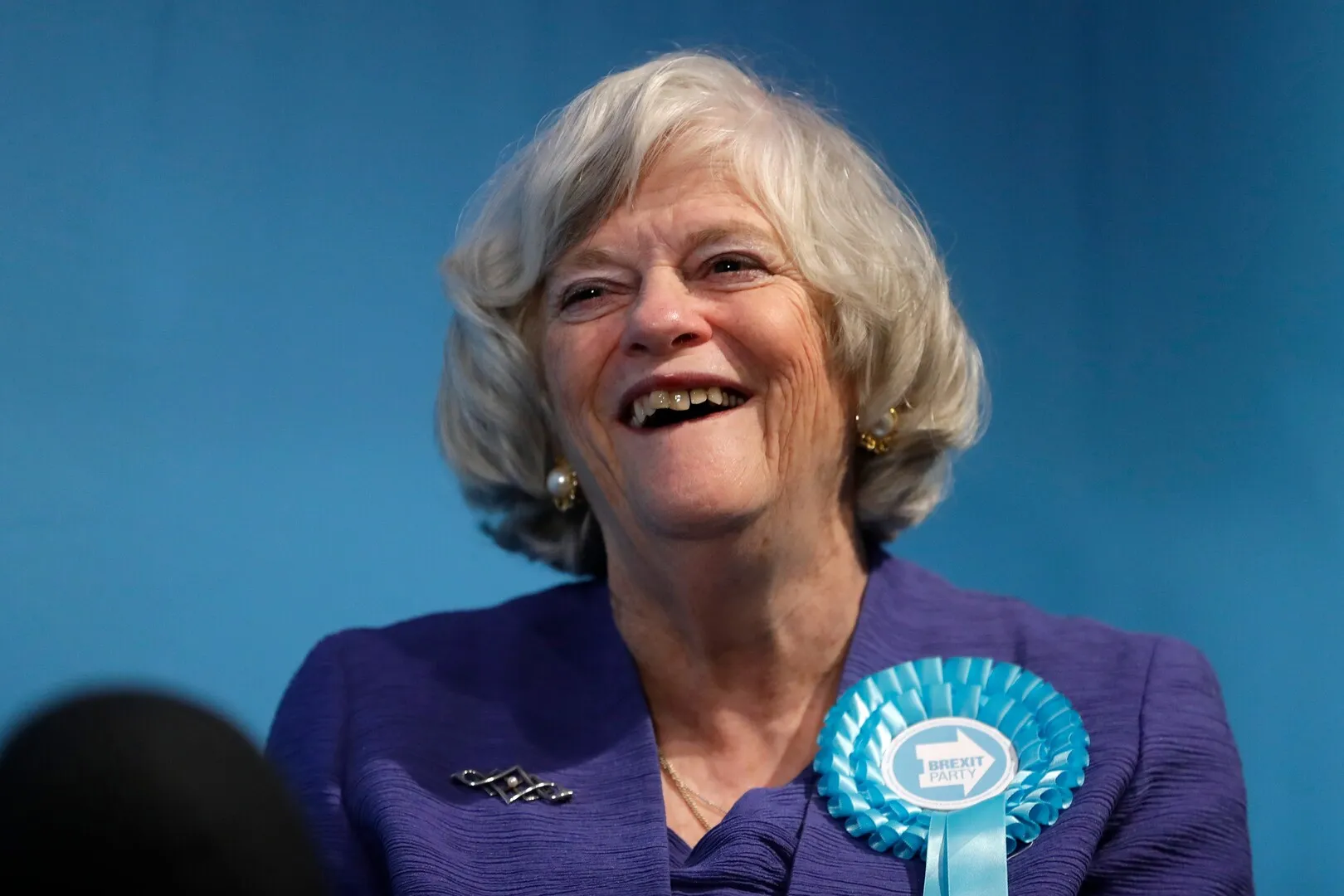
Politician Ann Widdecombe was found dead at her home with serious injuries, with police confirming a murder investigation is underway.

Politicians from across the political spectrum have paid tribute to the former Conservative MP turned Reform UK spokesperson, expressing shock and sadness over her death.

Source link

What’s behind Pakistan’s mass deportation of Afghans? | Refugees News

Islamabad cites national security concerns, returns thousands of undocumented migrants.

With the passing of another government deadline for undocumented Afghans to leave, Pakistan has launched a new crackdown on thousands still living in the country.

In response to criticism, authorities say they are enforcing immigration laws and cite national security concerns.

Recommended Stories

list of 3 itemsend of list

Hundreds of thousands of Afghans have returned to a country they fled. The UN says they include undocumented migrants, refugees and Afghan citizen card holders.

The campaign has coincided with rising political tensions between Islamabad and Kabul.

But is politics involved in the rising tension between the neighbours? And how is Kabul dealing with the influx of returnees?

Presenter: Scott McLean

Guests:

Obaidullah Baheer – Adjunct lecturer at the American University of Afghanistan

Kamran Bokhari – Senior fellow with the Middle East Policy Council in Washington, DC

Zahid Mahmood – Pakistani defence analyst and former senior officer of the Pakistan Army

Source link

Thousands gather in Srebrenica to mark 31 years since genocide | Srebrenica genocide News

Ten newly identified victims were buried as the more than 8,000 slain Bosnian Muslim men and boys were remembered.

Thousands have gathered in Bosnia and Herzegovina to mark 31 years since the Srebrenica genocide, as leaders and activists worldwide use the anniversary to call on people to fight dehumanisation.

On Saturday, mourners, survivors, foreign dignitaries and religious leaders gathered at the Srebrenica-Potocari Memorial Center to commemorate those who were killed in 1995. People took part in the annual peace march before 10 newly identified victims were buried.

Recommended Stories

list of 3 itemsend of list

Bosnian Serb forces overran the eastern Bosnian town of Srebrenica on July 11, 1995, killing more than 8,000 Bosnian Muslim men and boys over several days. Srebrenica had been declared a protected “safe area” by the United Nations Security Council two years earlier.

Denis Becirovic, Chairman of the Presidency of Bosnia and Herzegovina, said honouring those who were killed was crucial to maintaining stability.

“If we fail to preserve the truth about our past, we will have neither a present nor a future,” he said.

The Dutch ambassador to Bosnia and Herzegovina, Henk van den Dool, said education was key to preventing a repeat of similar atrocities.

“One of the common goals we share with the Srebrenica Memorial Center, with the mothers, and with the survivors is to translate this enduring warning into meaningful action. One of the most meaningful and effective ways to do that is through education,” he said.

Pursuit of justice

Every year on July 11 , newly identified victims are buried at the Srebrenica-Potocari Memorial Center, as investigators continue to search for the remains of people buried in mass graves in surrounding areas.

More than a thousand victims remain missing following the genocide, which is widely recognised as the worst atrocity committed in Europe since the Holocaust during the Second World War.

Pakistani Prime Minister Shehbaz Sharif called the massacre “a crime against humanity”, while the Mayor of London, Sadiq Khan, posted on X that he was “deeply moved” during his trip to Srebrenica last week.

“Today, as we stop to remember the victims and families who mourn them, we must also commit ourselves to fighting violence and dehumanisation wherever we encounter it and stopping hatred from taking hold,” Khan said.

More than 100,000 people were killed during the Bosnian War between 1992 and 1995. The conflict followed the dissolution of Yugoslavia, triggering a series of ethnic conflicts and wars of independence among the Balkan states that had previously formed a single country.

In recent days, campaigners have drawn comparisons between the Srebrenica genocide and Israel’s genocidal war on Gaza. Kenneth Roth, former executive director of Human Rights Watch, decried that senior Israeli officials are yet to be held legally accountable for their crimes.

“The United Nations this week remembered the genocide in Bosnia – the 8,000+ Muslim men and boys killed in Srebrenica in July 1995. The leaders of the genocide were convicted. The perpetrators of Israel’s genocide in Gaza remain at large,” Roth said on X.

Source link

Trump administration subpoenas New York Times reporters over coverage | Donald Trump News

The administration of United States President Donald Trump has issued subpoenas against journalists from The New York Times, in what advocates say is an escalating attack on the free press.

Late on Friday, the Times reported that at least four of its reporters have received subpoenas, some delivered to their homes by federal agents.

Recommended Stories

list of 3 itemsend of list

Those subpoenas compel them to testify before a grand jury in Manhattan on Wednesday.

“The appearance of federal law enforcement agents on the doorstep of news reporters should shock the conscience of any American who believes in the Constitution and the press freedom it protects,” said David McCraw, the newspaper’s lawyer, in a statement quoted by the Times.

News of the subpoenas prompted outcry from leading news groups including the Committee to Protect Journalists (CPJ), which demanded their withdrawal.

“The subpoenas are an extraordinary escalation in President Trump’s efforts to threaten and intimidate independent news organizations, and have a chilling effect on the work of journalists across the country,” said CPJ’s chief executive officer Jodie Ginsberg.

The subpoenas were authorised by a top official in Trump’s Department of Justice: Jay Clayton, the US attorney for the Southern District of New York.

Clayton is in line to succeed Bill Pulte as the director of national intelligence, a cabinet-level role Pulte holds on an interim basis. The Senate is set to begin hearings on Clayton’s confirmation next week.

Scrutiny on NATO travel coverage

At issue is The New York Times coverage of Trump’s return flight from the 2026 NATO summit in Ankara, Turkiye, this week.

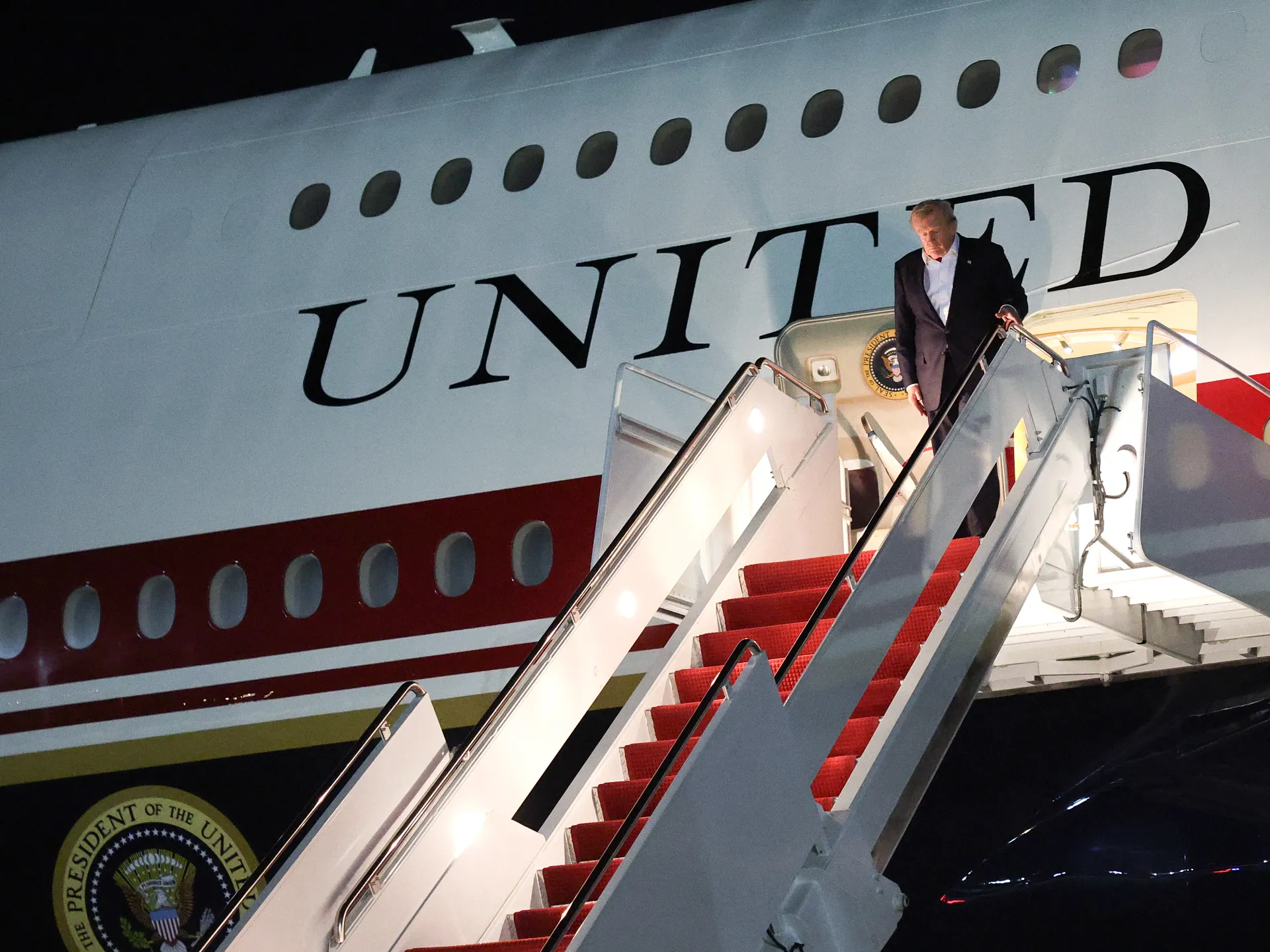
While Trump flew to Europe on his new Air Force One, a jet gifted by Qatar and retrofitted by the US military, he left on the old Air Force One.

Trump claimed the switch was made to allow the new jet to visit RAF Mildenhall, an air force base in Suffolk, England, that supports US military operations.

He framed it as an opportunity to allow military members to tour the aircraft.

“It’s going to go to a couple of bases,” Trump said at the time, “so the soldiers can see it because it’s truly magnificent.”

But at the same July 8 news conference, Trump referenced concerns about his safety.

When asked about the airline switch by a reporter from The New York Post, Trump responded, “You know, the life of a president is very dangerous.” He proceeded to add that he’s “number one on the kill list for Iran”.

That same day, The New York Times reported swapped his new presidential jet for his old one because of security concerns, citing anonymous sources. The change reportedly came at the urging of the Secret Service.

Then, the next day, the Times expanded its coverage with a follow-up report, indicating that the new Air Force One lacked the security capabilities of the old jet.

The article anonymously cited two former Air Force officials as saying there would not have been enough time to make the necessary upgrades before the Ankara flight.

It is unclear what modifications have already been made, but experts have estimated that the updates could cost up to $1bn.

Friday’s subpoenas targeted four of the journalists involved in the Times’s reporting on the subject: Eric Schmitt, Tyler Pager, Eric Lipton and Julian E Barnes.

According to the Times, before the subpoenas were issued, the newspaper was contacted by a senior official from the FBI.

That person, who was unnamed, asked the newspaper to hold off on its reporting about Air Force One, citing national security. The FBI official also requested information on the Times’s anonymous sources.

The newspaper, however, declined to provide such information, in line with standard journalistic practice.

A testy relationship with journalists

The subpoenas mark the latest clash between the Trump administration and US media outlets that report on its activities.

Trump himself has a long-running feud with the Times. In September, he sued the newspaper for $15bn in damages, alleging it had defamed him and attempted to “sabotage” his candidacy in the 2024 presidential election, which he won.

After his initial complaint was thrown out as “improper”, Trump refiled it in October.

The Times, for its part, has sued the Department of Defence under Trump over its attempts to impose media restrictions on journalists.

Just this week, the Times also filed a countersuit against the Equal Employment Opportunity Commission, after it alleged the newspaper had discriminated against a white, male employee for failing to give him a promotion.

The Times has described the effort as an attempt to muffle the press, in violation of the free-speech protections enshrined in the US Constitution’s First Amendment.

The Times is not the only newspaper to face legal backlash from the Trump administration. In December, Trump launched a $10bn lawsuit against the BBC, arguing that a documentary it aired misrepresented his speech before the attack on the US Capitol on January 6, 2021.

Trump is also seeking $10bn from The Wall Street Journal over its reporting on a birthday message he allegedly sent to convicted sex offender Jeffrey Epstein. After that suit was thrown out, Trump refiled it in May.

The Trump administration has also taken actions against individual journalists.

In January, for instance, the FBI executed a raid on the house of Washington Post reporter Hannah Natanson, who covered the Trump administration’s efforts to scale back the federal workforce.

The raid came as part of an investigation into a government contractor accused of leaking information to the news media, but at least two judges have barred the Trump administration from using the information it seized from Natanson.

The Trump administration has denied seeking to erode the freedom of the press, instead citing national security needs.

But McCraw, the Times lawyer, argued that, with the latest subpoenas, the White House was trying to restrict “the American public’s right to know how their government is operating”.

“This brazen act should be seen as nothing more than an attempt to prevent the public from knowing what is happening in their country by intimidating journalists from doing their jobs,” he said.

Top Democrats, including Senate Minority Leader Chuck Schumer, also weighed in on the subpoenas, using them to slam Trump as corrupt.

“Donald Trump is one of the weakest, most thin-skinned individuals the world has ever seen,” Schumer wrote on social media.

“Reporters have the right and duty to report the truth. It’s not their fault his foreign-gifted plane is a national security threat. This subpoena is a gross overreach and a disgusting misuse of federal law enforcement resources that should alarm every American.”
Source link

Wimbledon 2026: Linda Noskova beats Karolina Muchova in dramatic all-Czech final to win first Grand Slam title

Noskova’s second-set collapse was excruciating to watch for the 15,000-strong crowd on Centre Court, but the way in which she mentally reset in the decider was admirable.

Serving for the title again an hour after her first attempt, Noskova hit an ace to set up a sixth championship point and converted it with a service winner.

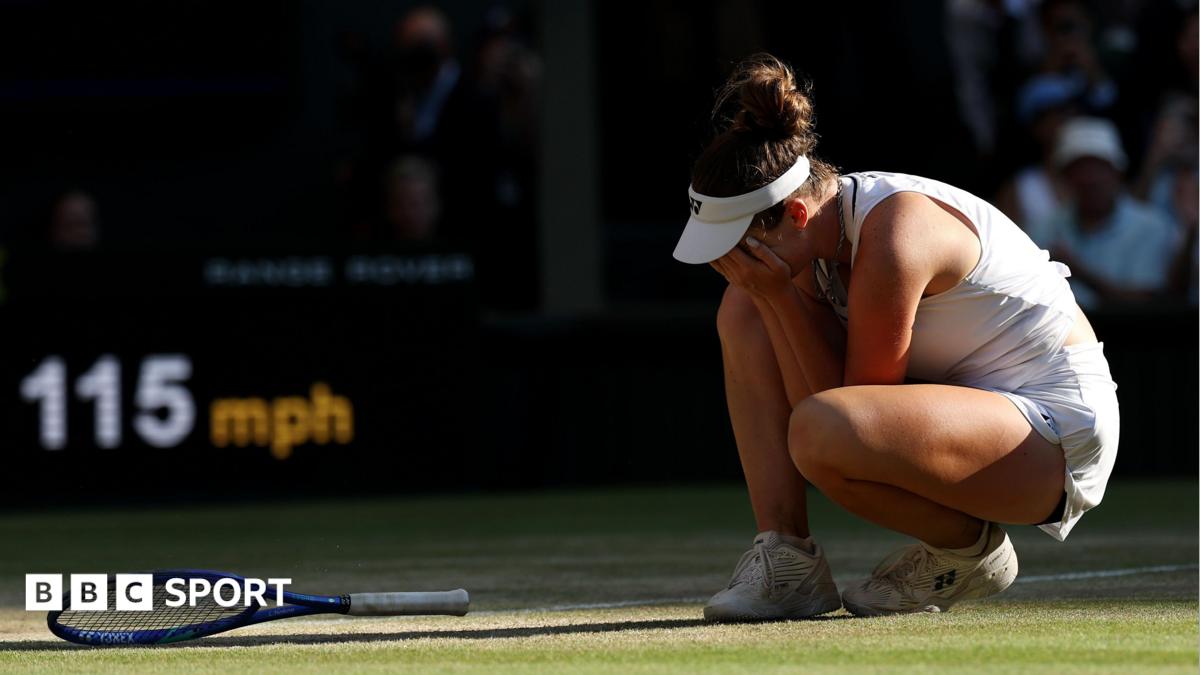
Noskova immediately fell to the court as her relief poured out, with 29-year-old Muchova walking around the net to congratulate her Paris 2024 Olympics doubles partner.

“It’s really tough to find any words, but I’ll start with Linda – my ex-friend,” joked Muchova.

“The way you handled it and the way you played was unbelievable. You deserve it.”

Noskova hid under her towel towards the end of the second set and did the same again in the moments after securing a testing victory.

The ninth seed is the third Czech champion in the past four years at the All England Club, after victories for compatriots Marketa Vondrousova and Barbora Krejcikova in 2023 and 2024 respectively.

Fittingly, Noskova’s crowning glory watched by Czech-born Martina Navratilova – a nine-time singles champion – and one of her idols Petra Kvitova, who won in 2011 and 2014.

As well as lifting the iconic Venus Rosewater Dish, Noskova will receive £3.6m in prize money and move up to a new career-high ranking of seventh in the world.

One of the latest of a long line of Czech talents, Noskova had been tipped as a future star who could challenge for Grand Slam titles.

She was a highly-rated junior who became the youngest player inside the top 100 in 2022 and a run to the Australian Open quarter-finals in 2024 underlined her ability.

Making consistent runs at the majors had been rare, but reaching the fourth round at Wimbledon last year made her feel “comfy” on the grass when she returned this year.

Noskova set herself up for a deep run in SW19 by winning the Berlin title last month but, in her speech during the Centre Court trophy presentation, acknowledged how difficult the tournament has been both physically and emotionally.

On court, Noskova had to fight back from match point down in her third-round encounter against Romania’s Sorana Cirstea.

She is only the third player – after Venus Williams in 2005 and Serena Williams in 2009 – to win the Wimbledon women’s singles title from such a position.

Source link

World Cup 2026: England team news – Stones set to start against Norway

Marc Guehi has won his fitness race and is expected to start England’s World Cup quarter-final against Norway alongside a recalled John Stones in central defence.

Manchester City defender Guehi suffered a minor hamstring strain in the win over Mexico and has missed training sessions this week.

But he is set to be cleared to continue in the heart of England’s defence.

He is expected to be playing alongside Stones in defence, who is set to be recalled into the starting XI for the first time since the opening game against Croatia.

Ezri Konsa is set to be moved from centre-back to right-back.

Declan Rice is fit to start despite a sickness bug that has hampered his involvement in the preparations for the game while Noni Madueke is expected to play ahead of Bukayo Saka in another change to the XI.

Stones, 32, has been a substitute in all the subsequent matches since Croatia. However, he played a key role against Mexico, coming on for Saka on 57 minutes following Jarell Quansah’s red card.

Expected England team: Pickford, Konsa, Guehi, Stones, O’Reilly, Anderson, Rice, Madueke, Gordon, Bellingham, Kane.

More to follow

Source link

US wants Iran to pledge to stop shooting at ships in Strait of Hormuz

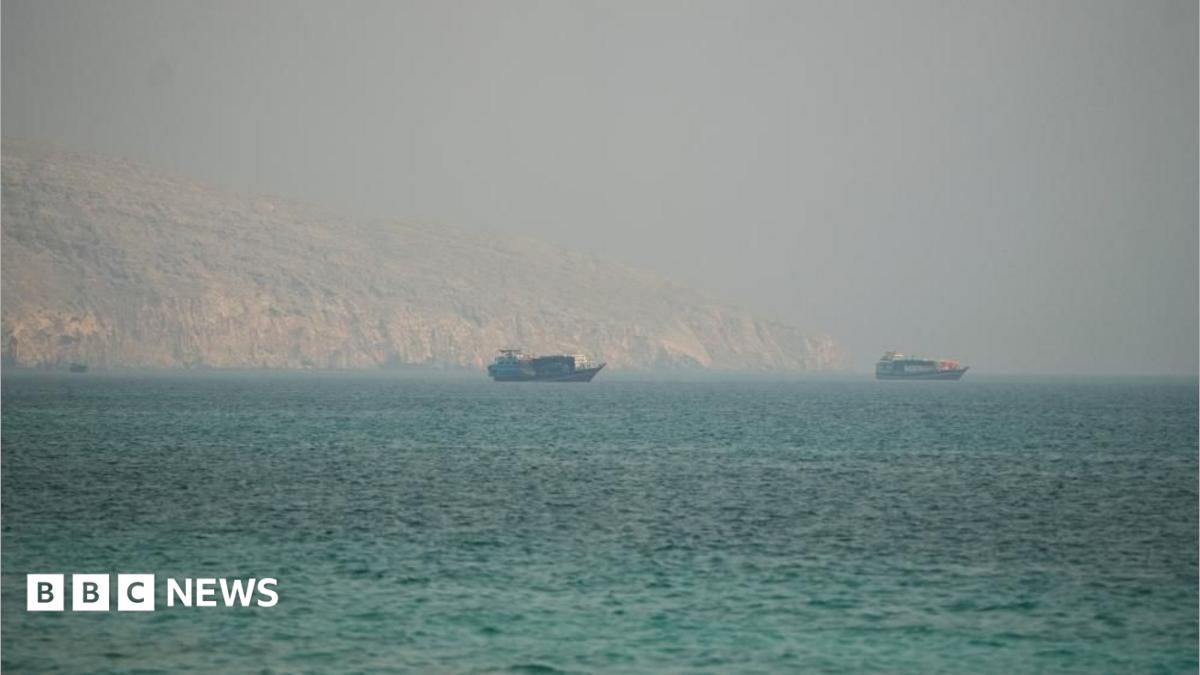
Meanwhile, a delegation from Qatar travelled to Iran on Friday for talks aimed at defusing tensions and easing navigation through the Strait of Hormuz – the vital waterway where some 20% of the world’s oil and liquefied natural gas passes.

Trump wrote in a post on Truth Social earlier on Friday: “The Islamic Republic of Iran has asked us to continue ‘talks.’

“We have agreed to do so, but the United States has stated to them, in no uncertain terms, that the Cease Fire is OVER!”

It is not clear when those talks will be held. Vice-President JD Vance, Secretary of State Marco Rubio, as well as special US envoys Steve Witkoff and Trump’s son-in-law Jared Kushner, are expected to oversee negotiations for the US.

According to Iranian media, Araghchi is in Oman for talks with Omani officials.

A US official said American technical teams would not be present in Oman, but would be in touch with the Omanis and Qataris as developments occurred.

In the early hours of Saturday, Trump also responded to reports that Iran had plans to assassinate him.

The US would “completely decimate and destroy all areas” of the country in retaliation to such an attack, he said.

The Wall Street Journal and other US media reported this week that Israel had shared intelligence with Washington that Iran had recently devised a plan to assassinate the US president.

However, Trump denied that Tehran had made a fresh plan or that Israel was the source of any intelligence. He told the New York Post in an interview that he had been “No. 1 [on Iran’s kill list] for a long time”.

There were also open calls for Trump’s death at the funeral of Iran’s late Supreme leader Ayatollah Ali Khamenei, who was killed in an Israeli strike on his residence in Tehran on 28 February.

On Saturday, his son and successor, Mojtaba Khamenei, released a written message that said vengeance for his father’s killing was “inevitable”.

The “matter depends neither on my personal existence nor on that of other officials. Whether we are present or not, it will come to pass,” Khamenei said.

Source link

Syrians optimistic but cautious as sanctions removal revives economic hopes | Politics News

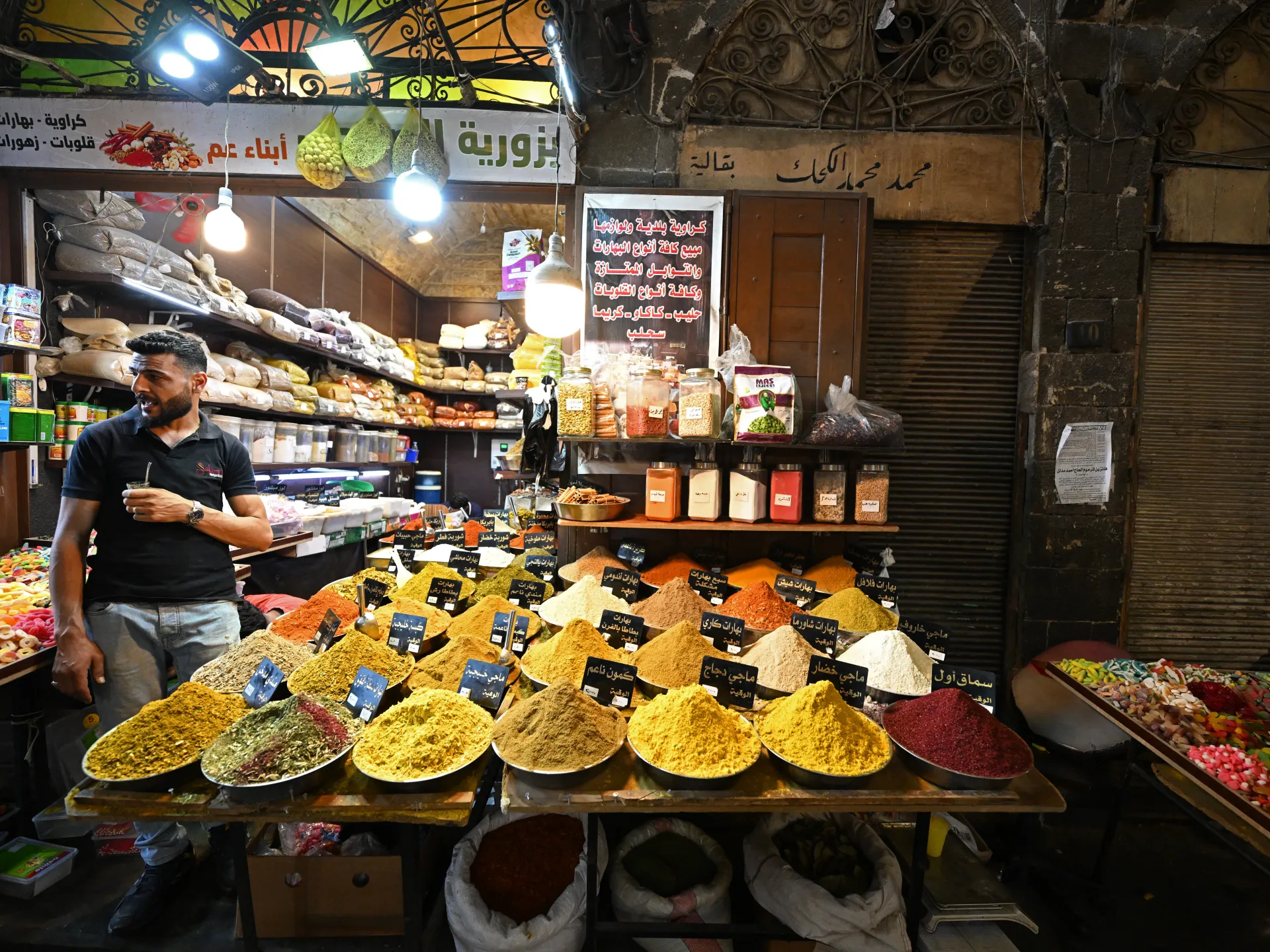
Damascus, Syria – For many Syrians, the decades of rule by the al-Assad family – Hafez al-Assad from 1971 to 2000, then his son Bashar from 2000 to 2024 – were filled with oppression from the state and eventually more than a decade of civil war.

But one of the most important legacies has been an economic one – the result of the sanctions imposed by a number of countries, led by the United States, that effectively froze Syria out of the international economic system.

Recommended Stories

list of 3 itemsend of list

Despite the fall of Bashar al-Assad after rebel groups defeated him in December 2024, many of the sanctions, including a “state sponsor of terrorism” designation, have remained.

The designation has impeded Syria’s rejoining of the international community, while sanctions have impacted Syrians. Sending money back home from abroad often requires routing transfers through neighbouring countries, such as Lebanon or Turkiye, while access to some websites and online services, including Netflix and Slack, may require a virtual private network.

But there has been a positive reaction to the announcement on Wednesday by US President Donald Trump that his administration will remove Syria from the state sponsor of terrorism list.

The lifting of previous US sanctions, such as those related to the Caesar Act, has not transformed the Syrian economy, but it is hoped that those linked to the “state sponsor of terrorism” listing will allow the country to finally flourish.

“God willing, it will improve things,” said Ihab, a pastry shop owner in central Damascus.

Reintegration

US sanctions are thought to have been a huge barrier to foreign investors since the rule of Bashar al-Assad.

The World Bank said that since 2011, sanctions have led to a major collapse in exports and an increase in the trade deficit.

After the fall of the al-Assad government, interim President Ahmed al-Sharaa’s administration has identified the removal of all international and US sanctions as the key to reinvigorating the economy.

Al-Sharaa, the former head of the al-Qaeda-aligned Nusra Front, was himself sanctioned by the United Nations and was wanted as a “terrorist” by the US. But he has made efforts to shed those associations and build trust internationally, including by pledging to play a role in the fight against ISIL (ISIS).

His efforts have largely been successful, with the European Union and the US removing many of the sanctions on Syria and on al-Sharaa himself. The sanctions linked to the US’s “state sponsor of terrorism” list are among the few to remain.

The first “state sponsor of terrorism” designation on Syria was during Hafez al-Assad’s rule in 1979, due to the government’s support for Palestinian armed groups.

Additional sanctions were imposed on the state and individuals associated with the al-Assad regime, due to their systematic use of torture and chemical weapons.

Some rebel groups were also sanctioned due to their links to al-Qaeda and other banned organisations.

Al-Sharaa ended al-Nusra Front’s affiliation with al-Qaeda in 2016 and effectively eschewed the group’s ideology.

He also moved to establish a broader, national armed coalition dedicated to fighting the Assad government, later becoming Hayat Tahrir al-Sham.

In May 2025, around the time Trump met al-Sharaa in Riyadh, the US president promised to remove many of the sanctions on the Syrian government. But the expected removal from the “state sponsor of terrorism” list will be particularly welcome as it gets rid of one of the main barriers for international banks and companies.

“This is extremely significant because it’s the last major impediment to international economic and political engagement with Syria and with the al-Sharaa administration, and in terms of reintegrating Syria back into the international order and indeed the international economic and political system,” Rob Geist Pinfold, a lecturer on security studies at King’s College London, told Al Jazeera.

Struggling economy

However, he is careful to add that the removal of the designation does not mean a flood of investment will instantly start pouring into Syria.

“This is a big hurdle that’s been overcome, but it doesn’t mean that there’s no more hurdles to investment or engagement with Syria.”

He added that international actors may be concerned about the government’s control and ability to confront remnants from the al-Assad regime, a potential ISIL (ISIS) comeback, bureaucratic impediments and corruption.

Some Syrians were also sceptical that the designation change would lead to instant results.

“This needs a long breath,” said a minimarket owner in Damascus, who refused to give his name. “You can’t sleep and wake up and expect change.”

He referred to ongoing economic problems and rising costs, as well as a recent fuel shortage.

“There’s no economy, and there’s no investment.”

Other Syrians were more hopeful that the economy, and other aspects of daily life, would improve. Still, there is a recognition that a little more patience is needed.

For some, that patience has worn out, such as the minimarket owner. Others, however, are biding their time.

At a juice stall in central Damascus, Zaher counted money received from a customer.

“I’m on the street with my cart and nobody is bothering me,” he said. “Electricity is getting better, but nothing gets better after just one day.”

“It took God Almighty six days to create Earth,” the 50-year-old said. “These things take time.”

Source link