news

[UPDATED] Venezuela: US Court Rules Against Maduro, State Officials, Awards Damages to Former Prisoners

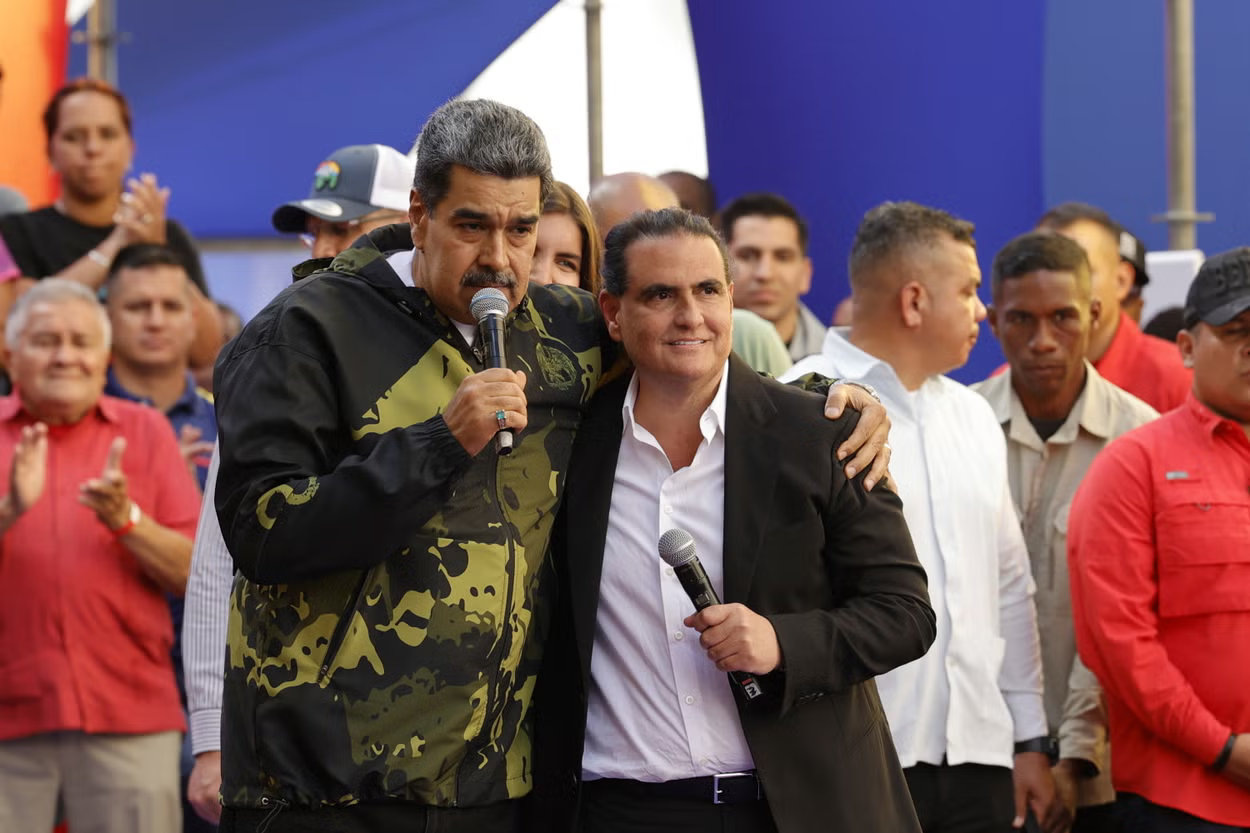
President Maduro and former minister Saab were among those targeted by the civil lawsuit. (AP)

Caracas, July 20, 2026 (venezuelanalysis.com) – A US federal judge has issued a default ruling against Venezuelan President Nicolás Maduro and several current and former state officials. US $314 million in damages was awarded to three US citizens who spent time imprisoned in Venezuela.

Venezuelan authorities have yet to comment on the case. Legal proceedings against Acting President Delcy Rodríguez continue. However, on Monday, the Trump administration sent a letter to the court arguing that, as a sitting head of state recognized by Washington, Rodríguez should be “entitled to immunity.”

Judge Darrin P. Gayles from the District Court for the Southern District of Florida published the verdict on July 14. US nationals Jerrel Kenemore, Jason Saad, and Edgar José Marval brought a civil lawsuit in August 2025 under Florida’s Anti-Terrorism Act (ATA) and the federal RICO statute against organized crime. 

The three US citizens were released from Venezuela in December 2023 as part of a prisoner swap agreement with the Biden administration that saw former Venezuelan government envoy Alex Saab returned to the South American country.

The plaintiffs sought damages after claiming to have suffered “physical and psychological torture” while imprisoned in Venezuela and to have been used as part of “hostage diplomacy” to secure Saab’s release. The judge claimed that Maduro and other officials were a “criminal enterprise” that acted against US interests.

“The Maduro Criminal Enterprise committed myriad predicate offenses through its drug trafficking and kidnapping actions in and against the United States and its citizens,” he wrote in the verdict. The court estimated compensation for “kidnapping and torture” and “solatium, pain and suffering” under ATA that totaled $312.5 million and added $1.5 million in RICO damages.

Gayles entered the default ruling against Maduro after he failed to enter a defense or plea before the court. The court clerk entered similar defaults against Interior Minister Diosdado Cabello, former Defense and current Agriculture Minister Vladimir Padrino López, former Interior Minister Néstor Reverol, former Attorney General Tarek William Saab, former Supreme Court President Maikel Moreno, and former Industry Minister Alex Saab.

Maduro and First Lady Cilia Flores were kidnapped by US forces on January 3 and are facing charges including “narcoterrorism” and drug trafficking conspiracy. Both have pleaded not guilty, with the next hearing scheduled for July 22.

The Florida judge also included the so-called Cartel de los Soles, an alleged drug trafficking outfit run by high-ranking Venezuelan officials, as a defaulting defendant. Crime researchers have cast doubt on the existence of the cartel, while the US Justice Department dropped all references to it in the formal indictment against Maduro and Flores.

Similarly, Gayles claimed that “for at least twenty years, Maduro intentionally inundated the United States with tons of cocaine.” However, US officials have never presented evidence tying Maduro to narcotics activities, while reports from the DEA have consistently found that a very small percentage of US-bound drugs flow through Venezuela.

The US Justice Department has since 2020 introduced $25 million and $15 million bounties, respectively, for the arrest of Cabello and Padrino in connection with alleged “narcoterrorism.”

According to the Associated Press, Saab’s legal representatives declined to comment on the case. The acting Rodríguez government turned over the Colombian-born businessman, who served as industry minister after his 2023 release, to US authorities in May. He is being held at the Federal Detention Center in Miami while facing trial on renewed money laundering charges.

In contrast to Maduro, Cabello, and others, Acting President Rodríguez responded to the lawsuit in April, with lawyers contending that, as Venezuelan head of state, she should be immune from civil action. Rodríguez received the backing of the Trump administration via a July 20 letter “suggesting” to the court that the acting president should enjoy immunity,

“The United States respectfully submits to the Court that President Delcy Rodríguez is immune in this action and all claims against her should be dismissed without prejudice,” the letter concluded. The US State Department also intervened in June, requesting that the Justice Department communicate Rodríguez’s immunity to the Florida district court in order to secure a “prompt dismissal of the proceedings.”

Rodríguez’s brother, National Assembly President Jorge Rodríguez, filed a similar motion to set aside the lawsuit via a different legal team. The plaintiffs opposed the moves in another motion at the end of April.

The civil lawsuit likewise targeted state-owned companies Petróleos de Venezuela, SA (PDVSA) and Corporación Venezolana de Petróleo (CVP). The two firms have claimed immunity from civil litigation under the Foreign Sovereign Immunities Act.

The plaintiffs have not disclosed any strategy to collect the awarded damages. None of the defaulting defendants has any publicly known assets under US jurisdiction.

Edited by Lucas Koerner in Caracas.

[Updated on July 21 to include the Trump administration and State Department letters to the court endorsing immunity for Venezuelan Acting President Delcy Rodríguez.]

Source link

Zelenskyy replaces Ukraine military chief after protests | Russia-Ukraine war News

Replaced military chief Syrskyi clashed with former Defence Minister Fedorov, whose removal last week led to protests.

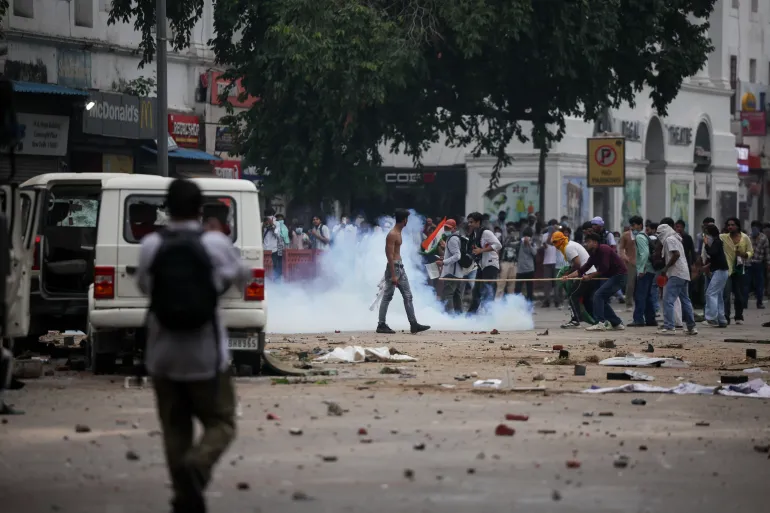
Ukrainian President Volodymyr Zelenskyy fired Oleksandr Syrskyi as the country’s commander-in-chief, appointing Mykhailo Drapatyi to lead the military. The move came after six days of protests in the capital, Kyiv, sparked by the removal of Defence Minister Mykhailo Fedorov – who had previously clashed with Syrskyi.

Zelenskyy said Tuesday’s decision was made to “reset” the ongoing war effort against Russia.

Recommended Stories

list of 3 itemsend of list

“I am grateful to Oleksandr Syrskyi and to every one of our warriors for Ukraine’s strong front-line positions,” Zelenskyy said in a statement on social media. “I am grateful to Mykhailo Drapatyi for holding that same view.”

“Our shared wish is one – victory over the enemy and conditions at the front and in pressure on Russia that would force Russia toward peace,” he added. He emphasised the need to address friction within the military leadership and resolve persistent issues concerning mobilisation and frontline management.

Fedorov, who was widely seen as critical to the war effort against Russia, was removed from his post last week, triggering widespread protests across the country.

Demonstrators in Kyiv and other major cities have called for accountability and a more effective military strategy, with many criticising Syrskyi’s handling of the war effort, amid rising Ukrainian casualties.

Danielle Bell, head of the UN Human Rights Monitoring Mission in Ukraine, told reporters in Geneva on Tuesday that the unit documented 1,396 civilians killed and 7,978 wounded in Ukraine in the first six months of 2026.

That was a 37 percent increase from the same period in the previous year and “almost doubled what we documented in 2024,” she said.

Both Moscow and Kyiv have intensified air strikes in recent months, targeting each other’s vital infrastructure, as United States-led talks on ending Russia’s invasion remain stalled, with the US’s focus largely turned towards its war on Iran.

Russia has frequently used ballistic missiles while Kyiv is currently short of Patriot interceptor munitions, which are crucial to defend against the attacks.

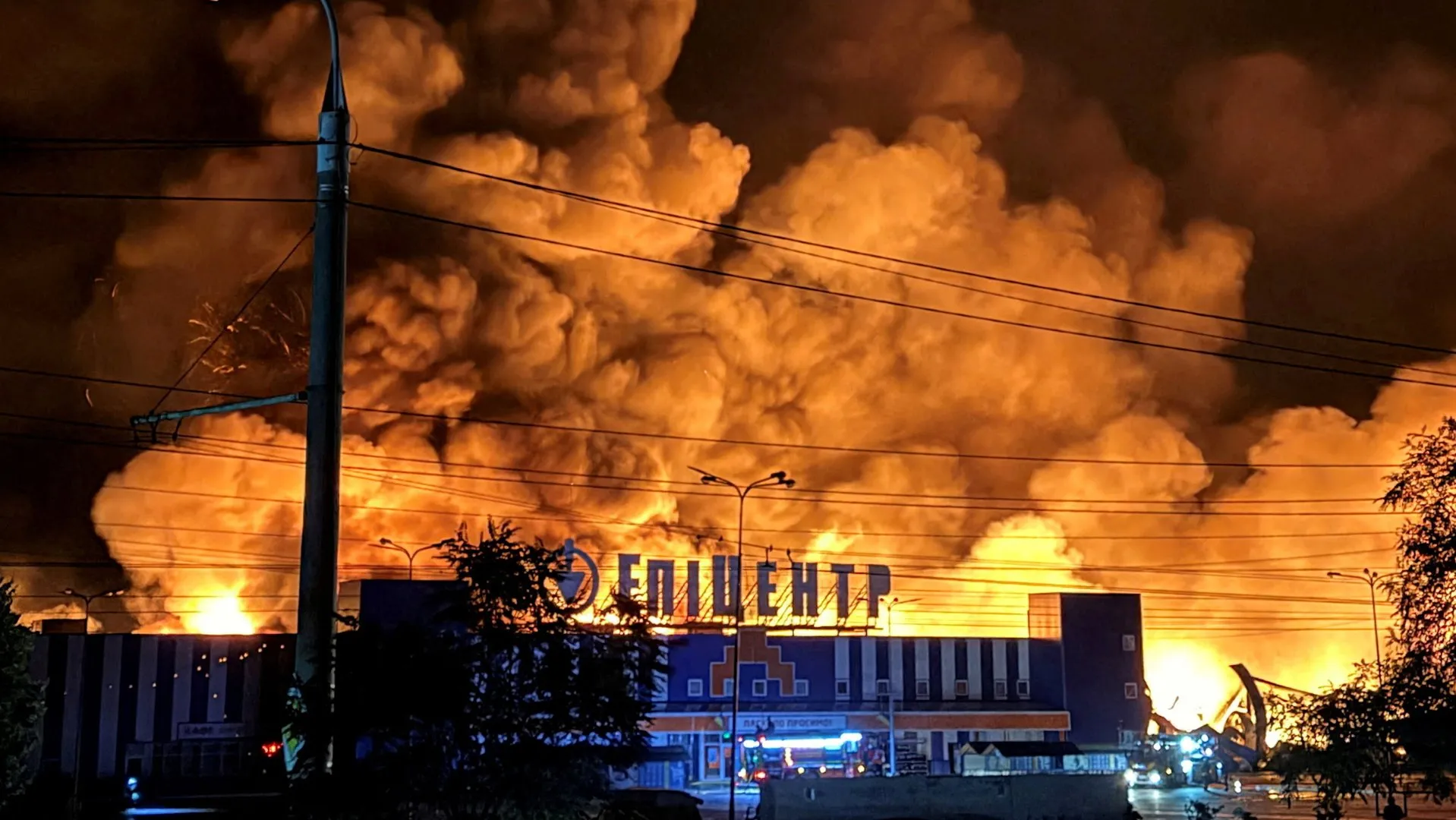
In retaliation, Ukraine is intensifying its strikes on Russian territory, mainly targeting oil depots. A series of Ukrainian drone ⁠attacks killed at least eight warehouse workers on ⁠Saturday and injured dozens more, while another attack caused a fire at an oil depot outside Moscow.

Source link

Misinformation Fueling Communal Resistance Amid Renewed Ebola Crisis in DRC

The number of Ebola virus cases and the death toll continue to rise as the epidemic ravages communities in the Democratic Republic of Congo (DRC).

In the Musienene health zone in the Lubero territory of North Kivu, health authorities confirmed 15 new cases of the virus as of Friday, July 17. There have also been nine reported deaths linked to the epidemic. 

A Musienene-based civil society organisation has corroborated these numbers after collecting samples for official verification in Beni, according to Kambale Maboko, the organisation’s president.

The new cases emerged across five health areas: 8 in Nduko, 3 in Vikindwe, 2 in Ivatama, and 1 each in Katolo and Kyambogho. Among the nine deaths reported, five occurred in Nduko, two in Vikindwe, one in Katolo, and one in Ivatama.

Kambale expressed concern over the limited government involvement in combating the Ebola outbreak in Lubero territory. He urged authorities to equip health facilities with necessary prevention kits and stressed the importance of the community adhering to safety measures as confirmed case numbers continue to escalate.

“In view of the high number of confirmed cases and the number of deaths which continue to rise each day, we call on the government to put in place a mechanism to counter this disease. If nothing is done, we risk facing the worst scenario,” Kambale said.  “We find that the government seems to have forgotten about us. We also call on the population to counter this disease by applying barrier actions in all their forms in order to block the road to Ebola.”

He noted how communal resistance is fueled by misinformation, saying: “We must sensitise the populations for them to understand that the disease exists and that it kills. If we are not careful, we risk being decimated, and we would have nothing to gain. The population seems to believe that those who go to the Ebola treatment centre must die, whereas this is not the case. We call on the population to be vigilant.”

At the provincial level, the Ebola response coordination reported seven new confirmed cases on July 17, including five from the Katwa health zone and two from Butembo. As per the epidemiological update released on July 18, 2026, North Kivu province has recorded a total of 213 confirmed cases, with 142 fatalities, resulting in a lethality rate of 66.7 per cent. Additionally, there are 36 recovered individuals, 25 active cases, and 10 patients who are unaccounted for or have moved to different locations. On Saturday, July 18, four patients who were declared healed were released from the Katwa Ebola treatment centre in Butembo.

Katwa is the worst-affected health zone, reporting 93 confirmed cases and 62 deaths. Following it is Butembo with 46 cases and 31 deaths, and Beni with 36 cases and 27 deaths. Other affected areas include Musienene, Kyondo, Kalunguta, Masereka, Oicha, Goma, Vuhovi, and Mabalako. In total, 11 out of the 34 health zones in North Kivu are experiencing the epidemic. The Ebola response committee is currently monitoring 3,009 active contacts, with 2,618 monitored in the past 24 hours, achieving a follow-up rate of 87 per cent.

Source link

US defence chief Hegseth puts Iran war cost at $37.5bn so far | Donald Trump News

Latest cost comes as Hegseth and Joint Chiefs of Staff Chairman Caine ask for $1.5 trillion budget, including $70bn for Iran war.

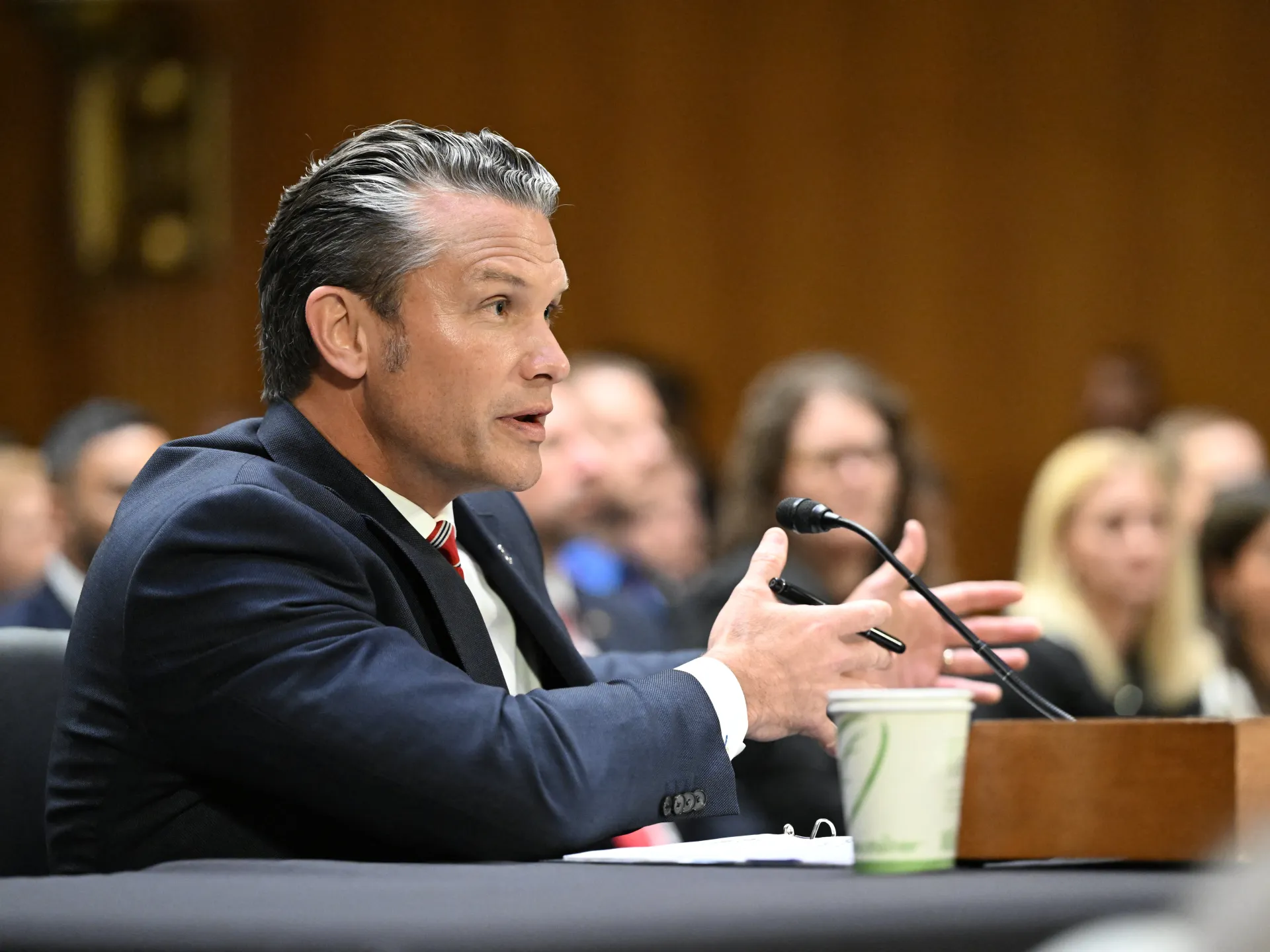
United States Secretary of Defense Pete Hegseth has put the latest official price tag on the US-Israel war on Iran at $37.5bn.

Hegseth confirmed the figure during a hearing before the Senate appropriations committee on Tuesday, in which he and Chairman of the Joint Chiefs of Staff Dan Caine were questioned about their request for a $1.5 trillion US defence budget, including nearly $70bn for the war with Iran.

Recommended Stories

list of 3 itemsend of list

Still, the number is significantly lower than other estimates, especially those that include knock-on expenses for US consumers. For instance, Moody’s Analytics has estimated the domestic cost of the war to be up to $150bn, accounting for factors such as higher US energy prices.

“The estimate we have as of today is $37.5bn,” Hegseth said upon questioning from Democratic Senator Dick Durbin.

Hegseth added that the price includes some operations and maintenance costs extending through the end of September, but did not provide specifics.

The latest quote is about $8bn higher than the previous figure released by the administration of President Donald Trump of $29bn in May.

Hegseth appeared before the committee as fighting between the US and Iran continued to rage, after a memorandum of understanding (MoU) that had seen a halt in attacks since June 17 collapsed last week.

On Monday, ahead of the 10th consecutive night of US strikes, Trump said Iran would “pay” after two more US soldiers were killed over the weekend.

Over the last week, Trump has threatened to target energy plants and bridges in Iran; send ground forces to seize Iran’s Kharg Island; and bomb a deep-underground nuclear-linked site known as Pickaxe Mountain.

Attacks have so far targeted sites Iran uses to assert influence over the Strait of Hormuz, its key point of leverage in the conflict.

Iran, meanwhile, has pledged to continue to strike US assets in the region. The latest round of strikes saw desalination and power plants set ablaze in Kuwait, as well as other sites hit in Bahrain and Jordan. The Houthis in Yemen, close allies of Iran, have also declared a maritime blockade against Saudi Arabia.

During his opening statements, Hegseth referenced strains on the US weapons stockpile from the war, which the US and Israel launched on February 28.

He said funding was needed “to expand production lines and accelerate delivery of high-demand munitions. We’re talking about solid rocket motors, JDAMs [Joint Direct Attack Munition], hypersonics, and counter-drone capabilities”.

The Pentagon chief also pointed to a pending budget crunch amid the war, saying that “training in the future would have to be curtailed if we do not get our budget needs met and met urgently, and yes, some of that has to do with the current budget cycle and how things come together”.

Democratic Senator Patty Murray questioned the sprawling budget request, which also included funding requests for the National Guard deployment in Washington, DC, US operations against alleged drug smugglers in the Caribbean, and military patrols of the US border.

“So I’ll be blunt,” she said. “The truth is, your request does not make a lot of sense.”

Source link

Typhoons Paired With CCA Fighter Drones Armed With Meteor Missiles Eyed By UK

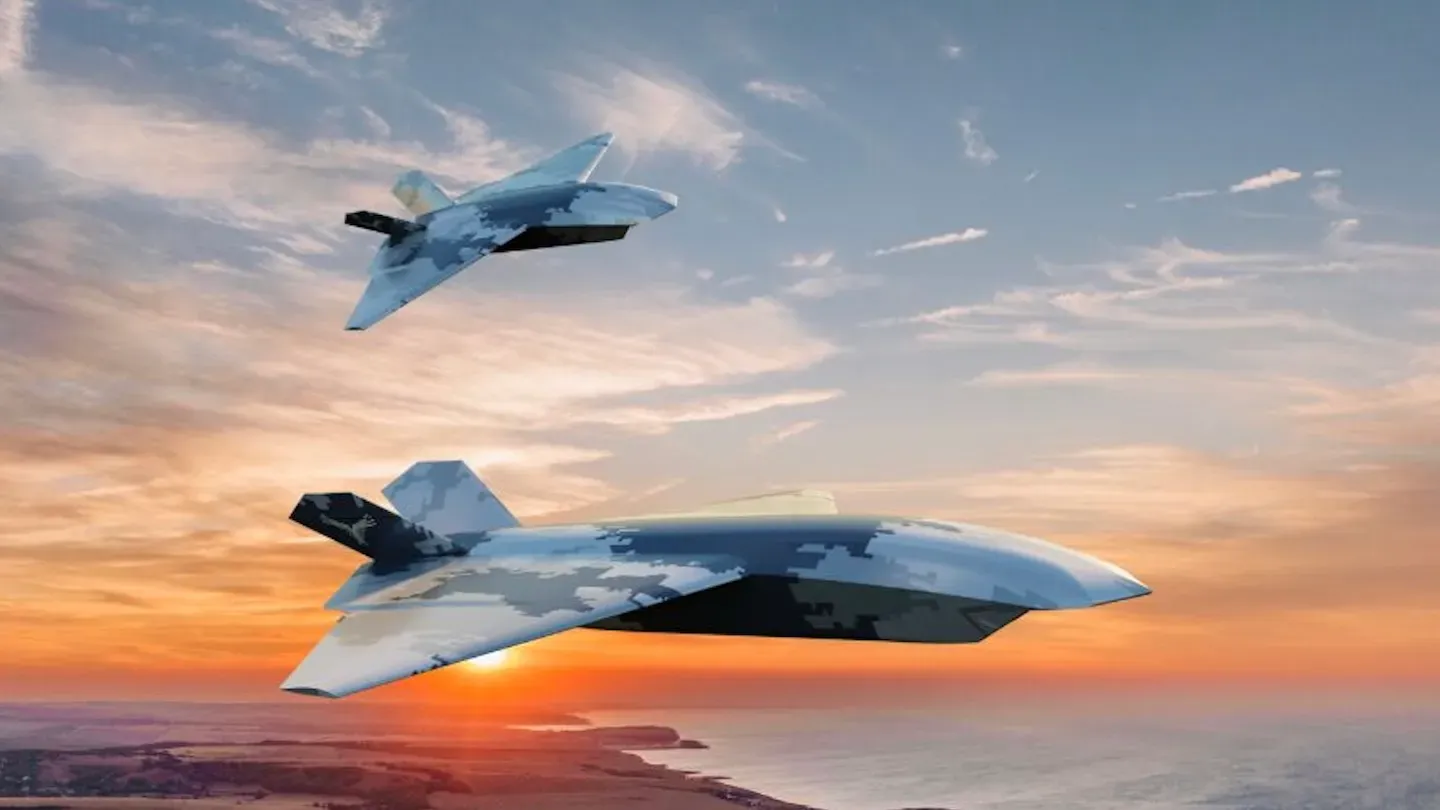
BAE Systems is exploring how the Eurofighter Typhoon could control uncrewed collaborative combat aircraft (CCA) as part of a broader effort to introduce new capabilities for the jet. The company is currently pursuing concepts to integrate CCAs with the Typhoon to expand ‘combat mass’ and better address emerging threat environments. Ultimately, however, the experience gained here will be ported over to the future Tempest combat jet — designed to work closely with drones from the outset.

At this point, BAE Systems is working on concepting how Typhoon/CCA could work and is also investing as a company in CCAs and crewed-uncrewed teaming more generally. The work involving the Typhoon and CCAs has accelerated over the previous 12 months. Officials from BAE Systems outlined the work so far in a briefing at the Farnborough Air Show today, just a week after the U.K. Royal Air Force launched a new CCA program, named Storm Fighter, which you can read more about here. That program should lead to a CCA that can fly into combat with the Typhoon, F-35, and Tempest.

BAE Systems concept artwork of a Storm Fighter CCA. BAE Systems

Speaking at Farnborough, Chris Moon, Typhoon Future Capability Director, BAE Systems, explained:

“Unsurprisingly, what we’re finding is that in the enlarged battlespace of the future, we’re able have a Typhoon — some people use the phrase ‘quarterback,’ choose what you will — with its extensive radar capabilities at range, and speed and agility, processing, to be able to work alongside collaborative combat aircraft and increase the combat mass that is needed from our air forces into the future, and the persistence and the range at which they’re able to reach, and bring more missiles into the fight.”

The CCA capabilities are planned to be added to the Typhoon under a much wider effort known as the Long-Term Evolution (LTE) program. This is expected to roll out a number of other features that will ensure that the jet can get the most out of teaming with CCAs. These features include the large-area display (LAD) cockpit, European Common Radar System (ECRS) Mk 2, and the Striker II helmet-mounted display system.

A Royal Air Force Typhoon fighter lands at RAF Akrotiri following a mission in the Middle East. Crown Copyright

In terms of technology, the ECRS Mk 2 is especially interesting here. As well as the various advantages of an active electronically scanned array (AESA), it has a swashplate repositioner, an articulated mounting that means the antenna can be swung to face at far greater angles off the centerline. This allows a much wider field of regard, with a significant boost in angular (azimuth) coverage. It allows the Typhoon to retain missile guidance even when beaming and hiding in the Doppler notch of the enemy’s radar, which functions much like a blind spot.

A Typhoon fitted with ECRS Mk 2 radar inside an anechoic chamber. BAE Systems

In the past, Eurofighter has claimed that the repositionable array provides a field of regard that is “some 50 percent wider than traditional fixed-plate systems.”

Eurofighter

All of these components have been tested in a CCA environment in a specially equipped Typhoon simulator.

Moon highlighted one particular scenario, off the east coast of Scotland, in which a pair of Typhoons worked with a four-ship of CCAs to extend the range, coverage, and persistence of the crewed jets. The scenario can be expanded to include the entire east coast of the United Kingdom, adding more Typhoons and CCAs as well as F-35Bs.

More detail was provided by Andrew ‘Blyty’ Mallery-Blythe, Typhoon Operational Requirements Manager at BAE Systems.

A huge advantage here is the new LAD cockpit, replacing the Typhoon’s current three-multifunction display (MFD) configuration with a single unit.

The Typhoon Large Area Display in a simulator. BAE Systems

Using the LAD means that “everything is available,” Blyty said. “You can see everything at the top level. You have to do very little manipulation to the display. The LAD provides a literal big picture of the combat scenario, including friendly assets, among them the various CCAs, with their heading, height, speed, and what they’re carrying in terms of sensors or stores.

“What we’re trying to take advantage of is combat mass,” Blyty added. “Obviously, combat mass I don’t really need to explain in any great detail. We’ve got four CCAs and two Typhoons. Clearly there’s an improvement and an increase in combat mass without having to have those additional very expensive, complex aircraft. We can bring more weapons to the fight through the use of the CCAs.”

SHAW AIR FORCE BASE, S.C. -- Flight Lieutenant Andrew Mallery-Blythe, 79th Fighter Squadron F-16 pilot, stands in front an F-16 here Aug. 21. Leftenant Mallery-Blythe is an exchange pilot from Royal Air Force, United Kingdom. The pilot exchange program exchanges military pilots from different countries to learn how other countries perform and fly missions. The focus of the program is to improve nation relations and pilot adaptability. (U.S. Air Force photo/Staff Sgt. John Gordinier)
While still a Royal Air Force pilot, Andrew ‘Blyty’ Mallery-Blythe completed an F-16 exchange with the 79th Fighter Squadron at Shaw Air Force Base, South Carolina. U.S. Air Force photo/Staff Sgt. John Gordinier Staff Sgt. John Gordinier

In terms of attrition, the Typhoon is classed as a strategic asset in these concepts, while a CCA is more of a tactical asset.

“We certainly don’t want to put ourselves in a position where we’re going to lose one of those [CCAs], but it’s a tactical asset,” Blyty continued. “That means that we can position them far closer to the threat, potentially taking a little bit more risk with those assets. They’re also smaller, they have a lower observability, and that is also an advantage that our friendly Typhoons exploit.”

A simulator is used to test the Typhoon/CCA crewed-uncrewed teaming concept. BAE Systems

Having a better overview of the battlespace via the LAD cockpit, ECRS Mk 2 radar, Striker II helmet, and the CCAs themselves is only one part of the equation.

BAE Systems is also trying to minimize the workload on the pilots. This is especially important for the U.K. Royal Air Force, which has reduced the number of two-seat Typhoons in its fleet, scrapping all its Tranche 1 ‘T-birds.’ Other nations are meanwhile working on developing CCA concepts by relying heavily on two-seat combat aircraft, with the back-seater a ‘drone controller.’

Blyty: “We don’t want to be in a situation where the pilot is having to close-control each of those assets. There’d be far too much workload. So through our rapid prototyping, and the way that we’ve been doing this, we’ve been looking into how we minimize that workload and how we give simple commands through the extant HOTAS [‘hands on throttle and stick’ controls] to send those CCAs to carry out our task with the minimum workload that we can achieve.” It is meanwhile widely understood that drones require an advanced autonomy package to facilitate this level of ease of use by a single pilot.

A Eurofighter Typhoon during a low level flying sortie in the Lake District, Cumbria, UK. Picture: Mark Wright/BAE Systems.
A Typhoon during a low-level flying sortie in the Lake District, United Kingdom. Mark Wright/BAE Systems Mark Wright/BAE Systems

Blyty went on to run through an engagement scenario, again aided by the LAD’s ‘god’s eye view’ of the battlespace. A kill box was drawn on the LAD before the hostile aircraft entered that area.

“Once that was activated — we do that through a button on the screen which is just off the top — we effectively give the CCAs the authorization or the command that they can engage anything that enters that kill box.”

With that command, the CCAs start employing weapons, including very long-range Meteor air-to-air missiles, the ramjet-powered weapon that the Typhoon also carries.

The aspiration to have CCAs armed with Meteor is a significant one, due to the very particular set of capabilities that the missile brings. The Meteor is among the longest-ranged of any Western air-to-air missile, generally considered to be able to engage certain types of targets out to around 130 miles. Critically, while CCAs are already a forward extension of the fighter, a missile of this kind would provide a major increase in engagement range when combined with the uncrewed jet, allowing the Typhoon to stay outside the engagement range of the enemy.

The missile also uses a two-way datalink, which feeds it with in-flight updates as it flies out to its target and provides the pilot in the launch aircraft with information on the Meteor’s fuel, energy, and tracking state. Adding CCAs into the mix, provided they have their own sensors, would allow them to pass data to the Typhoon and to the Meteor, regardless of which platform launched the missile.

Meteor thumbnail

Meteor


Ultimately, of course, the CCAs might end up with different missiles entirely, including a successor to the Meteor that is now being developed. Regardless, air-to-air combat at extended ranges is very much part of the U.K.’s CCA thinking. Meanwhile, we are already seeing CCA-type aircraft firing beyond-visual-range missiles in tests in the United States and elsewhere.

In this particular scenario, Blyty said the Typhoons were at a distance of roughly 114 miles from the enemy.

“Let’s say that’s outside the range of Meteor,” Blyty continued, downplaying the likely true range of the missile, which is a closely guarded secret. “The CCAs, less than half that. Let’s say that’s within the range of Meteor. So, we’ve got a clear tactical advantage that those CCAs have over the Typhoons. They’re on a little bit more risk out there than the Typhoons are. But that’s entirely appropriate to how we manage those Typhoons with the ECRS Mk 2 as a more strategic asset, and we quarterback the CCAs as a more tactical asset.”

Blyty said that BAE Systems is working on a lot more features to minimize pilot workload, without providing more details.

Meanwhile, BAE Systems has been working alongside QinetiQ on crewed-uncrewed teaming in the air, with a synthetic trial in which a Typhoon, a swarm of QinetiQ Banshee drones, and a Malloy Aeronautics T-150 small heavy-lift uncrewed aerial system (UAS) were flown using current operational military datalinks including Link 16.

The Typhoon and drones involved in the synthetic trial with QinetiQ. BAE Systems

Clearly, concept demonstrations of how crewed combat aircraft could operate alongside CCAs, highlighting the role of crewed-uncrewed teaming in future air operations, are a high priority as the Typhoon continues to evolve. The United Kingdom has not exactly been quick to adopt the CAA concept, at least compared to the United States and China, but with uncrewed platforms very much at the forefront of the recent Defense Investment Plan, that looks like it is set to change.

Contact the author: thomas@thewarzone.com

Thomas Newdick is a staff writer at TWZ, where he covers military aviation, defense technology, weapons systems, and international security. Based in Berlin, Germany, he reports on conflicts, military modernization efforts, and emerging aerospace technologies around the world, with a particular interest in airpower and its role in contemporary warfare. His reporting is informed by deep expertise in modern and historical airpower, particularly in Europe, with a focus on military aviation, air campaigns, and aerospace developments across the continent and beyond.


Source link

US judge blocks Trump bid to strip work permits from immigrants | Courts News

The order prevents thousands from El Salvador, Sudan and Ukraine from losing work authorisation while lawsuit proceeds.

A United States federal judge has temporarily blocked the administration of US President Donald Trump from revoking work permits for tens of thousands of asylum seekers and immigrants with Temporary Protected Status (TPS), preventing a policy that was set to take effect as early as Wednesday.

On Tuesday, US District Judge Nathaniel Gorton sided with immigrant rights groups and labour unions challenging a series of new US Citizenship and Immigration Services (USCIS) policies that implement immigration restrictions passed by Congress last year.

Recommended Stories

list of 4 itemsend of list

In the five-page order, he wrote, “The consequences faced by plaintiffs are potentially severe.” The order will stay in place while he considers whether to issue a longer-term injunction, with a decision expected by August 5.

The lawsuit, filed earlier this month by a coalition of organisations represented by the legal group Democracy Forward, challenged a number of recent USCIS policy changes. Those include a new policy allowing the agency to reject pending asylum applications and revoke work permits if applicants don’t pay a newly created annual asylum fee, as well as its decision to scrap a decades-old rule requiring initial asylum work permit applications to be processed within 30 days. The lawsuit argued USCIS made the changes without public input, as required by law.

It also challenged the retroactive application of the new rules to people from El Salvador, Sudan and Ukraine, who are still protected by TPS, which allows people from countries affected by war, natural disasters or other major crises to live and work legally in the US until it is considered safe for them to return home.

“This decision protects thousands of asylum seekers and TPS holders from immediate and irreparable harm while this case moves forward,” said Democracy Forward president, Skye Perryman, in a statement. “Without this relief, families who have followed the law and relied on longstanding humanitarian protections faced the sudden loss of their employment authorisation and ability to support themselves through no fault of their own.”

The ruling means thousands of TPS holders from El Salvador, Sudan and Ukraine will be able to keep working while the legal challenge moves forward.

While the judge didn’t block the collection of the asylum fee on Tuesday, he did temporarily block the consequences of not paying it, including having an individual’s application rejected or work permit terminated.

The controversial provisions were introduced as part of Trump’s signature tax and spending law, the so-called One Big Beautiful Bill Act, passed by the Republican-controlled Congress in July 2025.

The Trump administration has made ending TPS protections a central part of its immigration agenda, moving to take the status away from people from more than a dozen countries. Last month, the US Supreme Court allowed the administration to end protections for thousands of Haitian and Syrian immigrants.

USCIS did not immediately respond to a request for comment from the Reuters news agency.

Source link

Rescuers search for flood survivors in Afghanistan | Floods

NewsFeed

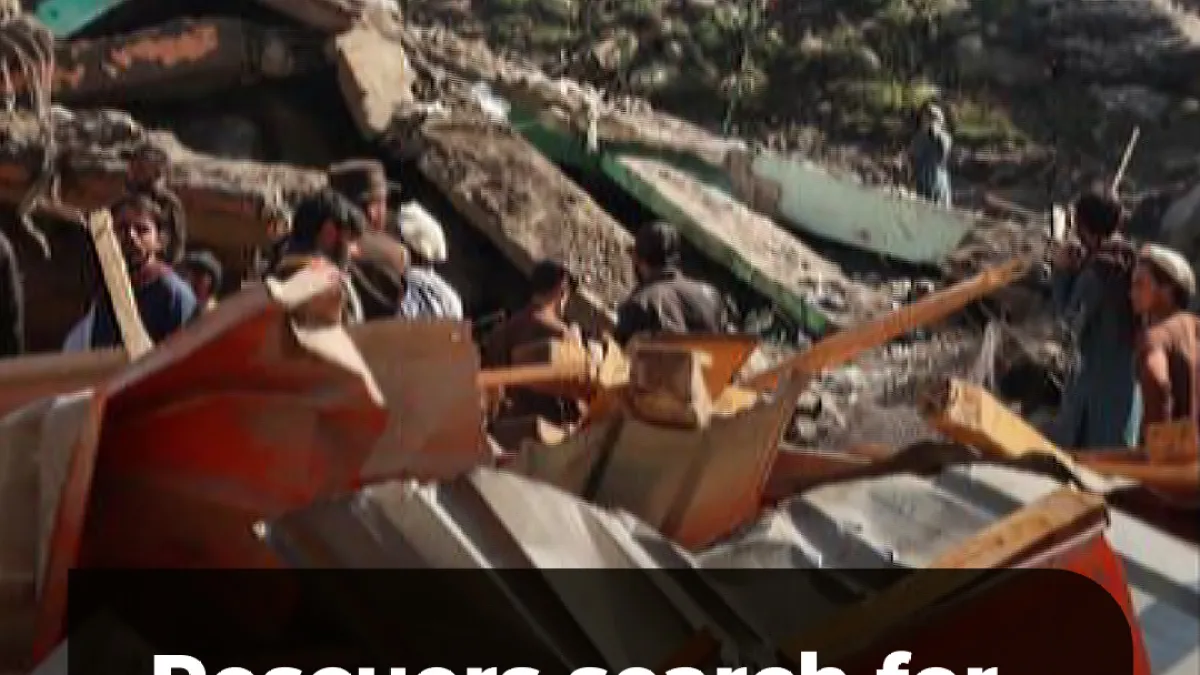
Rescuers in eastern Afghanistan are searching through mud and rubble after flash floods and a landslide tore through Nuristan province. At least 23 people have been killed and dozens are still missing as officials warn of more heavy rain and a rising death toll.

Source link

Liverpool FC in talks to sell minority stake to Mittal-backed consortium | Football News

The consortium is led by British-Indian investor Amit Bhatia, the son-in-law of Indian steel billionaire Lakshmi Mittal.

Liverpool are in talks with British-Indian investor Amit Bhatia over a potential deal for a minority stake in the Premier League football club.

Fenway Sports Group (FSG), Liverpool’s United States-based owner, confirmed the approach from Bhatia’s group on Tuesday.

“An investment consortium led, managed, and represented by Amit Bhatia has expressed interest in making a strategic minority investment in Liverpool Football Club,” an FSG spokesperson told the AFP news agency.

Bhatia, the son-in-law of Indian steel billionaire Lakshmi Mittal, is heading a consortium interested in buying into the 20-time English champions.

The Financial Times reported that Bhatia has hired advisers to work on the offer, which the newspaper said could value Liverpool at more than $6bn.

Just hours after Bhatia’s interest in Liverpool emerged, the London-born 46-year-old stepped down from his role as a director and co-owner of English Championship side Queens Park Rangers (QPR).

Bhatia, who spent 18 seasons with the west Londoners, will transfer his ownership of the club to majority owner Ruben Gnanalingam.

“I step back from my formal responsibilities with pride, gratitude and affection. I want to thank the players, managers, staff, the community trust, my fellow board members and, above all, the fans, who have made me and my family feel part of the QPR family for so many years,” Bhatia said.

Bhatia’s discussions with FSG – who bought Liverpool for 300 million British pounds ($400m) in 2010 – are believed to be at an early stage, with no deal struck yet.

Any investment from Bhatia would be made to further position Liverpool for success, following FSG’s move in 2023 to sell a minority stake in the club to global sports investment firm Dynasty.

Reports at the time valued that transaction between $100m and $200m.

Source link

The Houthis may soon discover the limits of Saudi strategic patience | Houthis

The Houthi declaration that they intend to block Saudi shipping and vessels bound for Saudi ports in the Red Sea is not another act of revolutionary theatre. It is Iran’s latest attempt to test Saudi Arabia’s strategic patience through one of its most capable regional proxies. That is a dangerous gamble because Riyadh has spent nearly a decade avoiding the wider regional war that Tehran increasingly appears determined to provoke.

Saudi restraint has never reflected military weakness. It has been a deliberate strategic choice intended to preserve regional stability while enabling the kingdom to focus on its historic economic transformation. Unable to compete with Saudi Arabia’s regional trajectory through conventional means, Iran has increasingly turned to proxy warfare, maritime coercion, and economic intimidation.

The Houthis have become the principal instrument of that strategy.

By threatening shipping in both the Strait of Hormuz and Bab al-Mandeb, Tehran seeks to pressure Saudi Arabia from its eastern and western maritime gateways while raising the cost of regional stability. The objective is not military victory but economic disruption: undermining investor confidence, threatening energy exports, and projecting instability onto the Middle East’s largest economy.

That strategy carries consequences far beyond the region. Saudi Arabia remains the world’s largest crude oil exporter, OPEC’s leading producer, and the only country with sufficient spare production capacity to stabilise global energy markets during periods of crisis – as it did during the first phase of the Iran war through its 7 million barrels per day East West Pipeline. Sustained disruption of Saudi exports would ripple through international shipping, insurance markets, inflation, and the global economy.

Iran tried to prepare for the present escalation by attempting to restore the Tehran-Sana’a air bridge. The flights were never simply about reconnecting two capitals. They would have provided a direct logistical corridor through which operational planning advisers, missile specialists, drone technicians, and intelligence officers could rotate into Houthi-controlled territory. Such an air corridor would have allowed Tehran to transfer not only equipment but also operational expertise and command capability.

This explains why the Royal Saudi Air Force (RSAF) strike on Sana’a International Airport carried significance beyond denying a specific aircraft permission to land. The objective was to prevent Iran from establishing a permanent logistical architecture capable of sustaining a more sophisticated proxy campaign against Saudi Arabia’s maritime and economic interests.

It is clear Tehran’s calculations increasingly rely on outdated assumptions about Saudi military capability. The Saudi-led Joint Forces Command (JFC) bears little resemblance to the force that first entered Yemen a decade ago. Years of hard learnt lessons from past mistakes and operational experience have transformed it into an integrated coalition built around persistent intelligence, fused command-and-control, precision strikes, air missile defence, and cyber operations.

Rather than functioning as separate military combatant commands, these capabilities now operate as a single decision-making architecture capable of compressing the time between intelligence collection and operational execution.

That transformation extends beyond the Saudi armed forces alone. The Saudi-led JFC now includes more than 650,000 personnel drawn from Saudi Arabia and allied Yemeni, Pakistani, Sudanese, and limited but symbolic GCC formations operating within a unified operational framework. Its principal advantage lies not simply in numbers but in its ability to synchronise military effects across multiple domains while maintaining operational tempo and centralised escalation control.

The JFC maturity became unmistakable during RSAF’s campaign that restored control over southern Yemen in less than a week in January. Built upon an advanced command and control (C2) fused architecture that supports persistent intelligence, electronic warfare, precision targeting, and synchronised manoeuvre, has demonstrated a level of operational sequencing and command integration unseen in earlier phases of the war.

The same C2 maturity was evident during Iran’s coordinated missile and drone attacks launched from Iranian territory and allied formations in Iraq, when RSAF executed synchronised precision strikes across multiple theatres while maintaining centralised escalation control.

The broader consequences extended beyond the battlefield. Saudi operational performance helped create the conditions under which Pakistan was able to broker an unofficial ceasefire between the Saudis and Iranians while reinforcing a new deterrence equation in which further direct Iranian military pressure carried significantly greater operational and political risk. Tehran’s subsequent caution reflected not diplomacy alone but recognition that the kingdom had entered a fundamentally different stage of military maturity.

None of this means the Houthis cannot impose costs. Their missiles, drones, maritime attacks, and psychological operations remain capable of generating disruption disproportionate to their size. But disruption is fundamentally different from sustaining a prolonged confrontation against an opponent possessing overwhelming advantages in intelligence, air power, maritime control, and operational endurance.

Every escalation therefore increases the likelihood of a comprehensive Saudi response. Such a campaign would not simply target missile launchers or drone facilities. It would seek to dismantle the command-and-control networks, logistics infrastructure, communications systems, intelligence apparatus, and operational support that enable Houthi military operations.

This is why the current trajectory is so dangerous.

Saudi Arabia has consistently demonstrated that it prefers stability to confrontation because its overriding strategic priority remains economic transformation and long-term national development. But no state can indefinitely tolerate an Iranian-backed proxy threatening its economy, energy infrastructure, and maritime lifelines.

Ultimately, the Houthis are not testing Saudi military capability. Years of operational adaptation have already answered that question. They are testing Saudi Arabia’s strategic patience.

History suggests that even the greatest strategic patience has limits. If Tehran continues using the Houthis as an instrument of coercion against the kingdom, Riyadh may conclude that the costs of restraint have exceeded the costs of decisive action. If that moment arrives, the campaign that follows will bear little resemblance to the Yemen war of a decade ago. It will reflect years of coalition integration through an elaborate C6ISR architecture to be strategically prepared for such a war. Iran, and the Houthis, may then regret testing the limits of Saudi Arabia’s strategic patience.

The views expressed in this article are the author’s own and do not necessarily reflect Al Jazeera’s editorial stance.

Source link

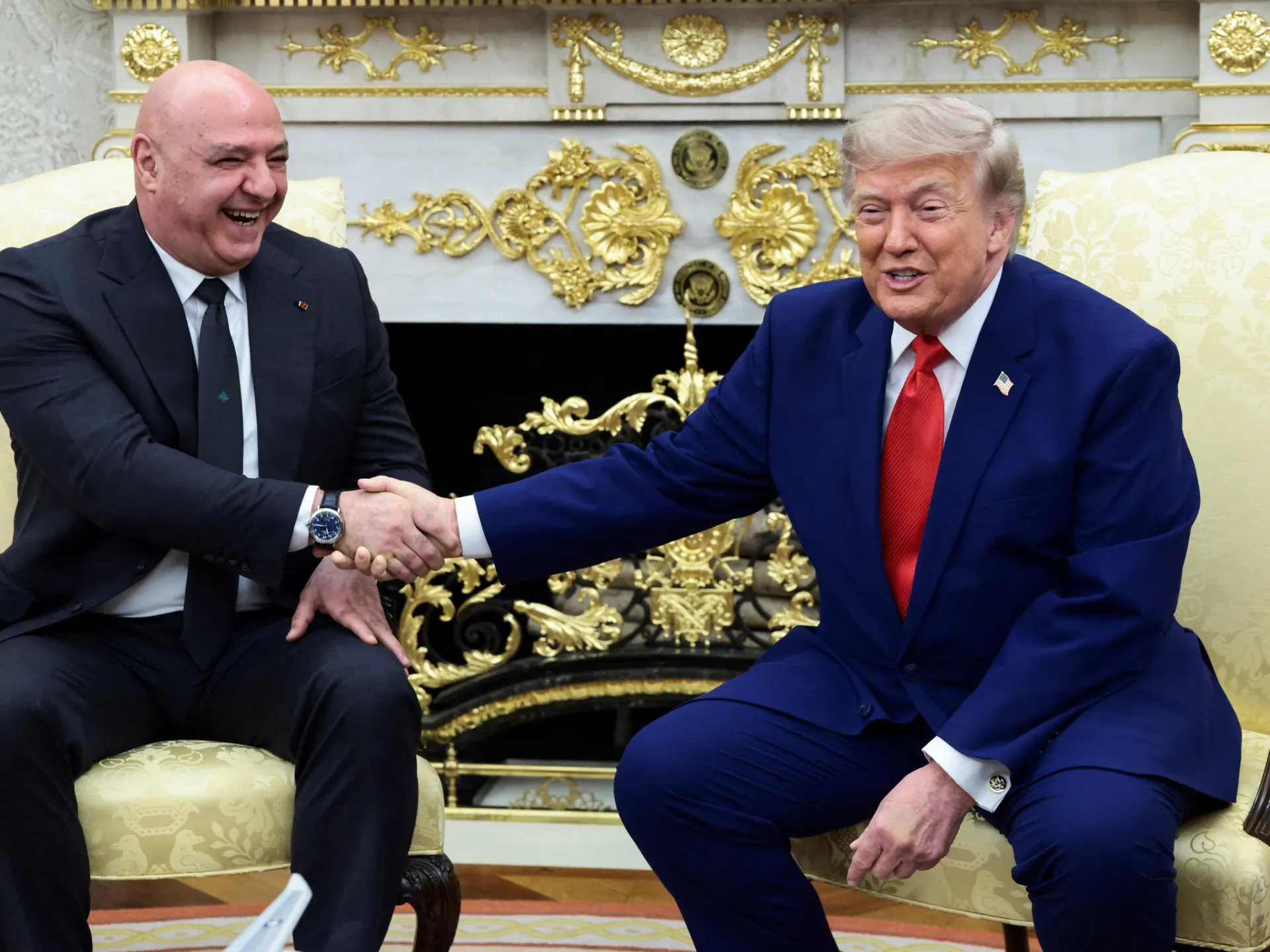
Trump vows to help Lebanon but offers no timeline for Israeli withdrawal | Israel attacks Lebanon News

President Donald Trump has promised that the United States will “help” Lebanon as he met with his Lebanese counterpart Joseph Aoun amid continued occupation of the south of the country by Israeli forces.

The US president did not announce any concrete policies towards Lebanon as he spoke to reporters alongside Aoun at the White House on Tuesday.

Recommended Stories

list of 3 itemsend of list

Asked whether there will be a timeline for Israel’s withdrawal from the country, Trump said: “They’re in the process of doing that. They’re in the process of redeploying [to] other sections.”

In reality, Israel has not pulled back from any area it has occupied since March. On Monday, the US State Department announced the establishment of the first “pilot zone” under a Lebanon-Israel framework.

Such areas are supposed to see the Lebanese army deploy to previously occupied towns and ensure that there is no Hezbollah military presence, so reconstruction can begin and residents can return. But the three towns announced in the first pilot zone were not under Israeli control, so Israel did not withdraw from them.

Israel has been systemically razing entire villages in south Lebanon, with Israeli officials openly declaring the objective of erasing Lebanese border towns out of existence.

On Tuesday, Aoun did not mention Israeli abuses in his comments next to Trump. Instead, he heaped praise on the US leader and hailed the US-brokered framework agreement between Lebanon and Israel, which conditions Israeli withdrawal on disarming Hezbollah.

“I would like to thank President Trump, really, and his team for the historic visit and for the historic achievement that we did together by signing the framework with the ultimate objective of ending the state of hostility between Lebanon and Israel forever,” the Lebanese president said.

‘We’re going to help it a lot’

Israel has killed more than 4,000 people in Lebanon since the all-out regional war broke out earlier this year, targeting hundreds of medics and journalists as it invaded the country.

In his opening remarks, Trump said that Lebanon had been “badly treated” for decades without elaborating on the source of the mistreatment.

“We’re going to help it. We’re going to help it a lot,” the US president said. “So it’s an honour to have the president and your representatives here.”

Trump also renewed his suggestion that neighbouring Syria should intervene militarily in Lebanon to help disarm Hezbollah – a proposal that has been repeatedly rejected by Syrian authorities.

Hezbollah and the current government in Damascus – led by President Ahmed al-Sharaa – fought on opposite sides of the Syrian civil war.

The Lebanese group backed the government of President Bashar al-Assad, and al-Sharaa was a rebel commander who, early in the war, led the al-Qaeda branch in the country.

Trump took the opportunity on Tuesday to express his admiration of al-Sharaa once again.

“He’s pulled Syria together. He would like to come in and do something with Hezbollah. You know, they’ve been fighting. He’s been fighting Hezbollah for a long time. I think it’d be very effective. So it’s something I think about,” he said.

A Lebanese reporter asked Trump what concrete support he may offer Aoun during the visit. The US president said, “You’ll find out.”

‘I would speak to Hezbollah,’ Trump says

Trump also said he is open to speaking directly with Hezbollah.

“I would speak to Hezbollah. I speak to everybody,” he told reporters.

“I would say this: If the president wanted me to speak to Hezbollah – you know, he’s lived with Hezbollah for a long time – and if the president wanted me to speak to Hezbollah, I would,” Trump added, referring to Aoun, who previously served as Lebanon’s top general.

Aoun had called for assistance to the Lebanese Armed Forces (LAF), saying that the military remains the “backbone of security and stability”.

Hezbollah has been highly critical of Aoun’s decision to engage in direct talks with Israel, as well as the framework in which Lebanon agreed not to pursue accountability for Israeli abuses in international courts and at the United Nations.

For his part, Aoun has accused Hezbollah of dragging Lebanon to war on behalf of Iran, stressing that the Lebanese military must be the sole armed force in the country.

Source link

HumAngle Launches Community Journalism Guide in UNIMAID

HumAngle Foundation, in collaboration with the Embassy of the Kingdom of the Netherlands, has launched a guide for community journalism, as part of the Strengthening Community Journalism and Human Rights Advocacy in Northern Nigeria (SCOJA) project. The project, which started in 2025, has trained 90 journalists and human rights advocates so far, and their work has recorded some impact in their communities. 

The launch was held on Tuesday, July 21, at the University of Maiduguri in Borno State, northeastern Nigeria, and was hosted by the Faculty of Communication and Media Studies. Angela Umoru-David, HumAngle Foundation’s Programme Director, welcomed dignitaries, students, and speakers to the gathering. In her remarks, she noted that partnerships like these were instrumental in ensuring the reach of journalism resources to those who need them the most. 

“We developed this manual to serve as a guide for community journalists in Nigeria,” she said.

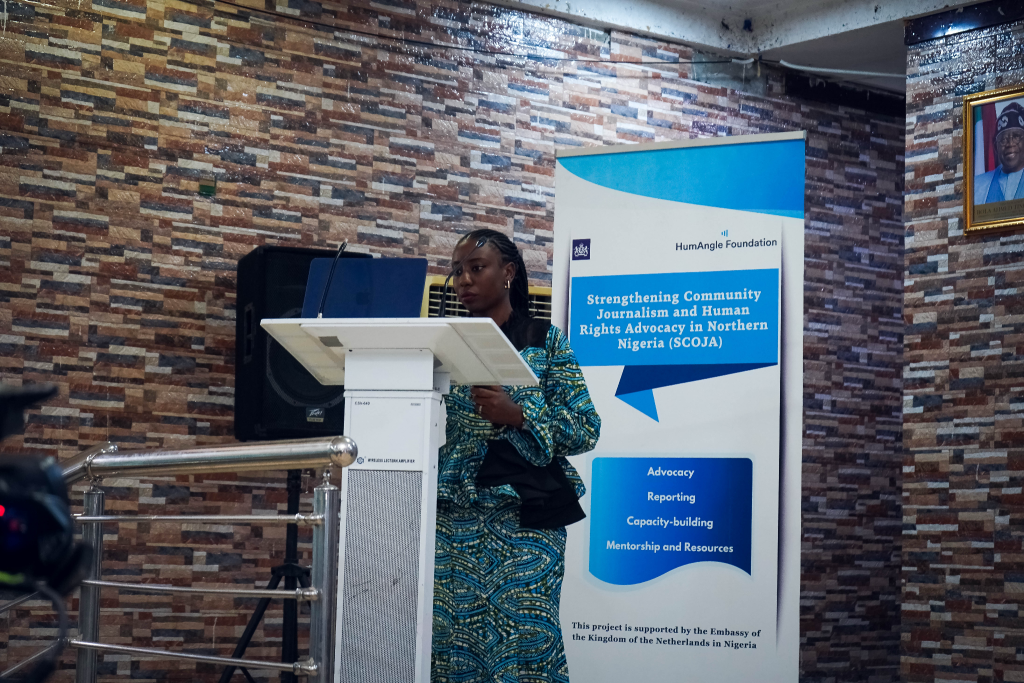
A woman speaks at a podium next to a banner about strengthening journalism and human rights advocacy in Northern Nigeria.
Angela Umoru-David, Programme Director of HumAngle Foundation. Photo: Al’amin Umar/HumAngle.

HumAngle’s Founder/CEO, Ahmad Salkida, noted in his introduction to the manual that the role of community journalists was crucial to social cohesion. “Community journalists, often the first witnesses to crises and transformation, are the unsung custodians of enduring social realities,” he wrote. “Their proximity to the people and understanding of local realities make them indispensable to the national narrative… We hope that every journalist who engages with this manual will find in it a field companion, a guide, and an inspiration to tell deeper, more authentic stories, to stand firm in truth, and to amplify the voices that matter most.”

People seated attentively in a room with blue curtains and empty chairs in the background.
Cross-section of the audience. Photo: Al’amin Umar/HumAngle.

Jessica Odudu, Senior Policy Advisor on Human Rights and Public Diplomacy at the Embassy of the Kingdom of the Netherlands in Nigeria, reiterated this point in her welcome remarks.

“While information has become abundant, trust is increasingly scarce. In moments like these, the role of journalists becomes even more important. Community journalists are often the first to report conflict. They understand the realities in their communities in a way outsiders don’t. Yet, many do this work with very few resources. Over the past year, the Embassy of the Kingdom of the Netherlands has had the privilege of strengthening community journalists’ capacity to do their work,” she said. 

During the keynote speech, Prof. Mu’azu Abubakar, Dean, Faculty of Communication and Media Studies, University of Maiduguri, emphasised the importance of viewing ‘community’ as an expansive and diverse concept. On his behalf, Mohammed Auwal Umar delivered a paper they co-authored, which sought to understand the fragile conditions in which community journalism must thrive. 

A person speaking into a microphone at a podium, with a blurred event banner in the background.
Prof. Mu’azu Abubakar, Dean, Faculty of Communication and Media Studies, University of Maiduguri, delivers a keynote speech. Photo: Al’amin Umar/HumAngle.

“Community journalism curates content, generates it, and develops it in a way that is relevant to the community we are serving. It is not meant to serve a classical divide,” he said.

The event also featured a panel discussion with Dr Abdulmutallib Ado Abubakar, Head of the Department of Mass Communication, University of Maiduguri; Abdulhamid Al-Gazali, Editor-in-Chief, Yerwa Express; Hauwa Shaffii Nuhu, Managing Editor, HumAngle Media; and Hassana Danyerwa, Founder, FeelandHeal Initiative and SCOJA Fellowship alumna. The discussion, which focused on strengthening community journalism in Nigeria, was moderated by Abdussamad Ahmad Yusuf, HumAngle Foundation’s Human Security and Policy Analyst. 

Speaking during the discussion, Abdulhamid said, “We have to understand that as a people, the most important aspect of our society is the kind of information our people consume. Communities must have media that understand their fundamental issues, curate relevant information, and take responsibility for disseminating the right information. If we do not take control of what we consume, it affects society.”

People in discussion at a community journalism and human rights event, sitting on chairs with a banner in the background.
The panellists discuss strengthening community journalism in Nigeria. Photo: Al’amin Umar/HumAngle.

Hassana, while reflecting on the impact of the SCOJA Fellowship, said, “Although I am not a journalist and I joined the SCOJA Fellowship as an advocate, my experiences from the fellowship set me up for a global experience where I was the only Nigerian selected. The mentorship aspect of the fellowship helped me and opened a new professional pathway for me.”

A person giving a speech at a podium indoors, with framed portraits and a banner in the background.
Abdulkareem Haruna, NUJ President, Borno State chapter, offered some closing remarks at the end of the event. Photo: Al’amin Umar/HumAngle.

Other past SCOJA fellows, including Faiza Jibrin, Yahuza Bawage, and Nathaniel Ishaya, also shared their experiences with attendees. 

As the guide was formally launched, Angela Umoru-David announced the donation of copies to the University of Maiduguri. The guide, available in both Hausa and English, can be downloaded here for free.

Source link

Global Hunger Falls but Climate Risks Threaten Progress

Global hunger declined for the third consecutive year in 2025, offering a rare piece of positive news for food security after years of setbacks caused by the COVID-19 pandemic, conflict and economic instability. Yet the United Nations warns that the gains remain fragile, with climate change, geopolitical tensions and disruptions to global trade threatening to reverse recent progress.

According to the latest State of Food Security and Nutrition in the World report, jointly produced by five U.N. agencies, approximately 645 million people or 7.8% of the global population experienced hunger last year. That marks an improvement from 8.1% in 2024 and 8.6% in 2022, continuing a gradual downward trend.

While the figures suggest the world is moving in the right direction, U.N. experts caution that achieving the goal of ending hunger by 2030 remains far from guaranteed.

Hunger Declines Across Every Continent

For the first time in several years, every continent recorded improvements in hunger levels, including Africa, where progress has historically been the slowest.

Stay ahead of the geopolitical week.

MD Briefing delivers expert analysis across five global fronts — the Indo-Pacific, energy, geoeconomics, European security, and the Middle East — every Monday morning. Free.

Asia accounted for much of the global improvement, led by significant gains in India, while Latin America and the Caribbean continued building on earlier successes. Several African nations—including Ethiopia, Tanzania, Zambia, Zimbabwe and Senegal—also reported improvements after years of deteriorating food security.

Despite these advances, Africa remains the world’s most food-insecure region. Around 309 million people, or roughly one in every five Africans, continue to suffer from chronic undernourishment.

U.N. officials described the continent’s improvement as encouraging but modest, emphasizing that much more investment will be needed to sustain progress.

India Emerges as a Key Driver

India played a central role in reducing global hunger statistics.

Home to nearly one-fifth of the world’s population, the country has lowered hunger levels to below 10%, driven by expanded welfare programs, increased agricultural productivity and improvements in food distribution.

The country’s progress demonstrates how targeted government policies combined with economic growth can substantially improve food security even in densely populated developing economies.

Elsewhere, the Dominican Republic also achieved sufficient progress to be removed from the global hunger map.

Climate and Geopolitical Risks Persist

Despite encouraging trends, the U.N. warns that several emerging risks could quickly undermine global food security.

One of the most immediate concerns is the disruption to shipping through the Strait of Hormuz, where escalating tensions in the Middle East have increased transportation costs and driven up prices for fuel and fertilizers—critical inputs for agricultural production worldwide.

Higher energy costs inevitably translate into more expensive food production and distribution, placing additional pressure on consumers already facing elevated food prices.

Meanwhile, forecasters are monitoring the possible emergence of a strong El Niño weather pattern, which could reduce crop yields across many vulnerable regions through droughts, floods and extreme temperatures.

Together, geopolitical instability and climate shocks threaten both food availability and affordability.

Hunger Is Falling, But Healthy Diets Remain Unaffordable

The report also highlights an important distinction between reducing hunger and improving nutrition.

Although fewer people are experiencing chronic hunger, 2.69 billion people still cannot afford a healthy diet.

The U.N. estimates that a nutritious daily diet costs an average of $4.28 per person when adjusted for purchasing power—well beyond the reach of many households in low-income countries.

The affordability gap is especially severe in Africa, where 66.1% of the population cannot afford healthy food, more than double the levels recorded across much of Asia and Latin America.

Poor transport infrastructure, inadequate cold-storage facilities and fragmented regional trade continue to make nutritious foods such as fruits, vegetables, dairy and meat significantly more expensive across the continent.

Nutrition Challenges Extend Beyond Hunger

The report also warns that improving calorie intake alone is not enough.

Child malnutrition remains widespread in many developing countries, while anemia among women continues to worsen. At the same time, adult obesity is increasing globally, illustrating the growing “double burden” of malnutrition in which undernutrition and unhealthy diets coexist.

This reflects broader structural problems within global food systems, where inexpensive calories are often more accessible than balanced nutrition.

What’s Next?

U.N. experts remain cautiously optimistic that global hunger can continue declining through 2030, provided governments maintain investments in agriculture, strengthen international trade and improve resilience against climate shocks.

However, the outlook depends heavily on geopolitical stability. Continued conflict in the Middle East, disruptions to major shipping routes, worsening climate events or prolonged trade barriers could rapidly increase food prices and slow or reverse recent gains.

Analysis: Progress Is Real, But Food Security Remains Fragile

The latest U.N. report demonstrates that coordinated public policies, agricultural investment and social protection programs can reduce hunger on a global scale. India’s progress, alongside improvements across Latin America and parts of Africa, shows that meaningful change is possible even amid economic uncertainty.

Yet the report also highlights a growing challenge: food security is increasingly shaped by forces beyond agriculture itself. Climate change, global shipping disruptions, energy prices and geopolitical conflicts now influence what people eat as much as farming does. While hunger is declining, access to affordable, nutritious food remains out of reach for billions. Sustaining progress will therefore require not only producing more food, but building more resilient supply chains, improving regional trade and adapting agricultural systems to an increasingly volatile global environment.

With information from Reuters.

Source link

ASEAN diplomats voice ‘serious concern’ over Iran war and energy crisis | ASEAN News

Southeast Asian countries are highly affected by oil supply shortages caused by the Iran war and the Strait of Hormuz closure.

Southeast Asian nations are “deeply concerned” about the impact of blockades of key maritime trade routes in the Middle East, their top diplomats have said.

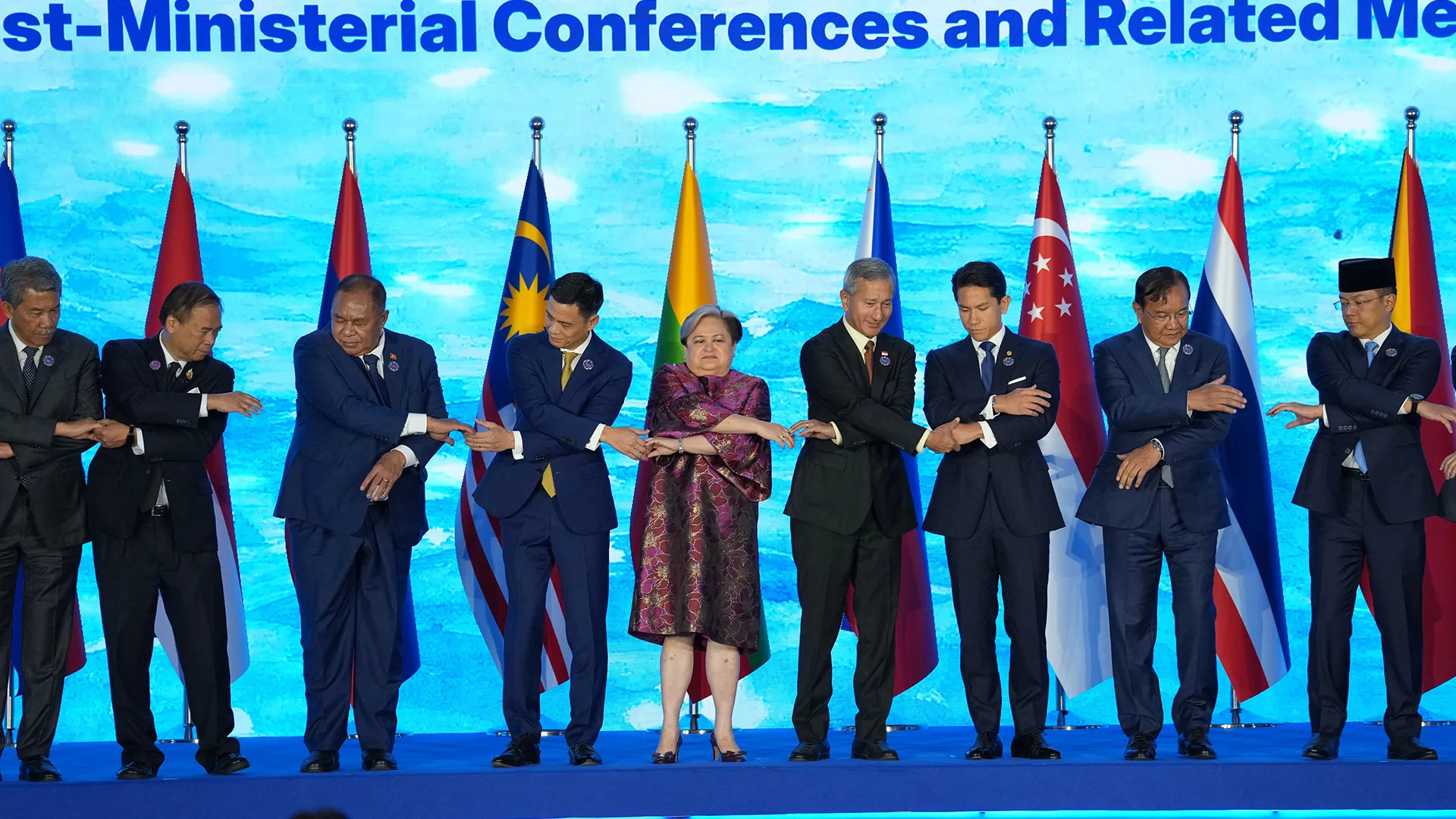
Foreign ministers from the Association of Southeast Asian Nations (ASEAN) and their key ⁠partners met in the Philippines on Tuesday against a backdrop of instability due to the global impact on trade and energy supplies caused by the US-Israel war on Iran and the closure of the Strait of Hormuz, as well as territorial disputes with Beijing in the South China Sea.

Recommended Stories

list of 4 itemsend of list

Southeast Asian countries have a combined gross domestic product (GDP) of $3.8 trillion but are highly exposed to supply limitations caused by the blockade of the Strait of Hormuz, as they are heavily dependent on Gulf countries for their oil imports.

At the ongoing ASEAN summit in Manila, heads of state and top diplomats from the region are seeking to agree on an oil-sharing mechanism to mitigate the impact of the war on Iran.

Yemen’s Iran-aligned Houthis announced a naval blockade on Saudi Arabia on Monday, opening a potential new front in the war and risking aggravating the threat to global energy supplies and trade beyond the Gulf.

“We are deeply concerned that these ‌developments severely undermine the ongoing efforts of key mediators and diminish the prospects for a peaceful resolution through dialogue and diplomacy,” ASEAN ministers said in a statement.

Top diplomats from the United States, Russia and China are also attending the ASEAN summit, another reminder of how the war on Iran is reshaping international diplomacy and the global energy supply.

Reporting from Manila, Al Jazeera’s Barnaby Lo said the war has driven up oil and gas prices in Southeast Asia while also stalling manufacturing and exports, causing countries from the region to find new trade partners.

“Southeast Asia is thousands of kilometres away from the Middle East, but it has been one of the most impacted regions by the conflict because of how dependent many of its member nations are on oil from the Middle East,” Lo said.

“Take, for example, the Philippines: it’s the first country in the world to declare a state of national energy emergency, and it still is in this state, so it is fighting problems on two fronts. One on supply, the other on skyrocketing fuel prices,” Lo said. “On supply, it’s gotten oil from non-traditional partners, such as Russia and China, but on skyrocketing prices it has very little it can do because the prices here are driven by market forces.”

Other key issues to be discussed at the ASEAN summit include the civil war in Myanmar, as the bloc’s peace initiatives falter, five years after a military coup plunged the country into a conflict that has killed an estimated 100,000 people.

“Ahead of the summit, ASEAN foreign ministers held an in-person meeting – the first since 2021 – with the foreign minister of the military-backed government in Myanmar in Bangkok,” Lo reported. “This was criticised for legitimising the military junta in Myanmar.”

Top diplomats are also likely to discuss ⁠tensions in the South China Sea, with ASEAN countries and China still trying to conclude a code of conduct to ⁠prevent disputes after nearly 10 years. In advance of the summit, China and the Philippines were engaged in a feud after a confrontation between their vessels in disputed waters left a Filipino sailor injured.

The US Department of State condemned what it described as China’s “dangerous and aggressive” actions, and its “troubling pattern of provocation against lawful Philippine maritime operations”.

Source link

New VC-25B Air Force One Will Be Pulled From Service To Be “Maxed Out” With Upgrades

The U.S. Air Force’s new VC-25B Bridge aircraft will receive additional upgrades that will result in its capabilities being “maxed out,” according to President Donald Trump. This follows a flurry of recent reports that the modified, Qatari-gifted Boeing 747-8i lacks the same array of defensive features and other capabilities as the Air Force’s existing VC-25A Air Force One jets. TWZ has repeatedly raised serious questions about the overall feasibility of turning this plane into an interim Air Force One, especially on an extremely tight timeline and with a relatively small budget, since the plan first emerged last year.

New questions were raised about the Bridge aircraft’s self-protection suite, in particular, after Trump took it to the NATO summit in Turkey earlier this month, but then left unexpectedly on an older VC-25A. Subsequent reports said that the Secret Service had urged the President to make the swap as a security precaution amid escalating fighting with Iran.

“Mr. President, this plane does not have anti-missile defense systems on it. Why are you flying it?” S.V. Date, White House correspondent for HuffPost, asked Trump at a press gaggle at Andrews Air Force Base outside Washington, D.C., yesterday. The President had just returned from a trip to attend the FIFA World Cup final in New Jersey.

“Well, it has – it has a lot, and, you know, it has a lot of capability,” Trump said in response. “But as I understand it, in about a month or so, they’re going to send it to have it be maxed out. So they’re going to be sending it, and they’ll have it be maxed out. It’ll take about a month.”

Trump did not elaborate on what “maxed out” might mean for the Bridge aircraft.

“The new Air Force One is perfectly safe for the President’s travels, but will receive additional upgrades and enhancements in the fall which will take approximately one month to complete,” White House Press Secretary Karoline Leavitt said in a statement to TWZ. “During that time, the President will fly on the old Air Force One.”

We have also reached out to the U.S. Air Force and L3Harris for more information. L3Harris is the defense contractor that served as the lead integrator for the modifications to the former Qatari 747. You can read more about what is known about the conversion process, which took approximately 10 months, here.

The VC-25B Bridge aircraft, seen at Andrews Air Force Base at its official unveiling in June. USAF

“We knew there were some issues around security with the plane. We’ve known that from the very beginning,” Senator Jeanne Shaheen, a New Hampshire Democrat, said separately at a roundtable at the Farnborough International Airshow in the United Kingdom today, according to Breaking Defense. “Obviously, there was an effort to address that.”

“If there … was an examination and a problem apparently was determined to exist, the good news is that it’s apparently going to be addressed,” Senator Jerry Moran, a Kansas Republican, also said, per Breaking Defense. “And I think it’s important for all of us to determine what that problem is and to be supportive of corrective measures.”

Shaheen and Moran both serve on the Senate Appropriations Committee’s Subcommittee on Defense. Shaheen is also a member of the Senate Armed Services Committee.

As noted, there has been significant new scrutiny of the Bridge aircraft’s defensive and other capabilities since Trump’s trip to Turkey and the swap with the VC-25A on the way back. On July 9, The New York Times reported that the ex-Qatari jet “lacks the same defensive countermeasures that were security features of the old model, including its advanced antimissile capabilities,” citing unnamed officials.

A stock picture of one of the Air Force’s existing VC-25A Air Force One jets. USAF

The Times‘ story included a statement from White House Communications Director Steven Cheung, saying that “the new Air Force One is a state-of-the-art aircraft that has been fitted with high-level security protocols that ensure the safety of the president and his staff.”

Other outlets published similar stories about Air Force One’s capabilities, also citing anonymous sources. In a highly unusual development, the FBI subsequently subpoenaed four journalists at the Times as part of a leak investigation, which now appears to go beyond the more recent reporting on the Bridge aircraft.

The current array of defensive features found on the VC-25B Bridge aircraft is unknown. Details about the self-protection capabilities of the existing VC-25As — arguably the most well defended aircraft on the planet — are not usually openly discussed, but at least some of the countermeasures systems on those aircraft are plainly visible to the general public. This includes a version of the AN/AAQ-24 directional infrared countermeasures (DIRCM) system, also called Nemesis or the Large Aircraft Infrared Countermeasures (LAIRCM) system. There is the AN/ALQ-204 Matador infrared countermeasures (IRCM) system, as well. The AAQ-24 uses lasers to blind and confuse the seekers on infrared-homing missiles. These laser turrets are mounted all over the bottom of the aircraft. The older ALQ-204 system has a similar function, but sends out large fixed pulses of infrared energy rather than a steerable laser beam. The VC-25As also have visible missile launch warning sensors at various points around the aircraft to cue these and other defensive capabilities, and to just provide general alerts to incoming threats. There are certainly other capabilities that are not so plainly visible, as well. The planes are hardened against electromagnetic pulses (EMP), as well.

Large Aircraft Infrared Countermeasures (LAIRCM) thumbnail

Large Aircraft Infrared Countermeasures (LAIRCM)


To date, there have been no visible signs of any of these obvious defensive features found on the VC-25As being present on the VC-25B Bridge aircraft. This is something we have noted since the official rollout of the new aircraft in June. The Air Force and L3Harris have previously pushed back on any operational security concerns surrounding the jet gifted by Qatar.

There are additional questions now about what modifications could reasonably be made to the Bridge aircraft during another month-long upgrade period. As we previously wrote after Trump’s swap back to the VC-25A on the way back from Turkey:

“Defensive countermeasures, in particular, take time and careful work to integrate onto any airframe, let alone a newer type for which there might not be pre-existing procedures. Rigorous testing has to be done after integration to ensure those systems work as intended and do not conflict with other features, physically or in the radiofrequency spectrum.”

That being said, there are countermeasures systems that have already been qualified on at least some 747 variants, such as the aforementioned capabilities known to be found on the VC-25As today. There are other self-protection options available on the open market today for 747s and other similarly large aircraft, such as the C-MUSIC DIRCM system from Elbit in Israel. Northrop Grumman also offers a podded DIRCM system called Guardian that utilizes some of the same components as NEMESIS/LAIRCM. Both of these examples are not for high-volume threats, though.

Elbit Systems / DIRCM Missile Defense thumbnail

Elbit Systems / DIRCM Missile Defense


Any move to upgrade the Bridge aircraft’s defensive capabilities now can only prompt the question as to why this was not done already. This is a matter of ensuring the safety of the President of the United States, whoever that might be, and underpinning the credibility of America’s nuclear deterrent whenever they are onboard.

There was certainly a push to have the Bridge aircraft in service, at least to some degree, by July 4th. The plane was a centerpiece of flyovers above the nation’s capital to mark this year’s Independence Day. Trump had flown on the jet for the first time just before, on a trip to North Dakota to attend the opening of the Theodore Roosevelt Presidential Library and other celebrations marking the 250th anniversary of the United States.

The new VC-25B Bridge aircraft, at left, and one of the older VC-25As, at right, seen together at Andrews Air Force Base ahead of flyovers over Washington, D.C., on July 4, 2026. USAF

If the Bridge aircraft was rushed into service without certain defensive systems installed to be available for July 4th and other 250th anniversary celebrations, it could still have been sent back for additional upgrades afterward. However, there appears to have been no plans to get the Bridge aircraft any additional defensive or other capabilities before it was put into full service. This was proven when Trump and many other passengers headed overseas to Turkey aboard the new jet. Before the plane was delivered, TWZ had questioned whether the jet would ever fly abroad in the Air Force One role, and not be reserved for lower-risk domestic travel, due to these exact kind of security concerns.

There is an additional operational security layer to the equation here given that any aircraft serving in the Air Force One role inherently slots into America’s nuclear deterrent posture. Beyond their array of self-protection features, the VC-25As, in particular, have an extensive secure communications suite designed to ensure the President remains in contact with the National Command Authority at all times. The National Command Authority is the mechanism through which the President would order a nuclear strike, as you can read about in more detail here.

A report from CBS News earlier this month implied that the new Bridge aircraft lacks the same communications capabilities, as well as defensive features, found on the VC-25As. That story suggested both aspects here pushed the Secret Service to recommend Trump use the older aircraft on the return trip from Turkey, which came amid the start of the new campaign against Iran. The President had also just directed a new round of strikes on Iranian targets from the sidelines of the NATO summit. TWZ highlighted all of this at the time as potential contributing factors in the swap between Air Force One jets.

All of this raises further questions about what risks may have been accepted in allowing Trump to use the Bridge aircraft to travel to Turkey in the first place. There’s an additional question here of what would have happened had circumstances not prompted Trump to swap Air Force Ones, and had The New York Times and others not reported on the reasons behind that decision. Would it have ever gotten these extra defenses if those things didn’t happen?

The Bridge aircraft has been the subject of criticism and controversy from the start. The circumstances under which the Qatari government gifted the plane to the United States in the first place were highly irregular.

The justification for needing the Bridge Air Force One at all remains a subject of debate, now fueled further by the clear continued relevance of the VC-25As. The Air Force’s efforts to acquire two fully equipped VC-25B Air Force One jets from Boeing have been repeatedly delayed, and the costs of that effort continue to rise. The first of those jets is now expected to be delivered in 2028, which is actually a slight improvement in the timeline. What will happen to the Bridge aircraft afterward is unclear.

The Air Force has separately acquired another 747-8i from German flag carrier Lufthansa, which is now being used as a trainer for aircrew and ground personnel. An additional ex-Lufthansa 747 will be cannibalized for spare parts, as well, in support of the burgeoning Air Force One fleet.

It is worth noting here that the VC-25As are also based on older 747-200 models, a type that has all but disappeared from service globally, even with commercial airlines. Those jets are becoming more complicated and costly to operate and maintain just as a result of diminishing supply chains.

With Trump’s comments yesterday, the VC-25B Bridge aircraft is now slated to get the defenses it should have had originally, or at least more than it has now, but the path to getting there is bizarre and raises real concerns, to say the least.

Contact the author: joe@twz.com

Joseph is TWZ’s Deputy Editor, helping to oversee the site’s highly experienced and dedicated team, while also writing informative and impactful defense and national security content. He lives right in the thick of it in the Washington, D.C. area.


Source link

The Sports Report: Dodgers fall to the Phillies

Dodgers lose to the Phillies

From Maddie Lee: Emmet Sheehan backpedaled down the mound, watching the ball fly just over the left-field wall.

His start Monday, much like his season, had its ups and downs. But just when it seemed he’d found a groove, he gave up a momentum-swinging solo home run to Philadelphia’s Brandon Marsh in the sixth inning of the Dodgers’ 10-7 loss to the Phillies.

It was Sheehan’s first start since the All-Star break, pushed back because of a rainout Saturday in New York. He gave up six runs in 5⅓ innings, raising concerns again over his inconsistency. While the Dodgers (63-38) weather the loss of Shohei Ohtani from the rotation, they need steadiness from the rest of their starters.

“Certainly, he’s getting a lot of opportunity,” manager Dave Roberts said of Sheehan. “It’s not the consistency that any of us like or want, Emmet included. Until there’s another alternative, we’re going to keep running him out there.”

Continue reading here

Shaikin: Why Dodgers aren’t panicking over their $60-million bet on Kyle Tucker

Dodgers box score

MLB standings

Go beyond the scoreboard

Get the latest on L.A.’s teams in the daily Sports Report newsletter.

Angels win in an interesting way

Vaughn Grissom drove in the tying run with a one-out double in the ninth inning and Jo Adell was hit by a pitch with the bases loaded to give the Angels a 3-2 comeback win over the St. Louis Cardinals on Monday night.

Nolan Schanuel, batting .367 since June 21, sparked the late rally with a one-out single off All-Star closer Riley O’Brien, who is tied for the National League lead with 25 saves.

Jorge Soler was hit by a pitch and Grissom sent a line drive off the right-field wall that eluded a leaping Jordan Walker. Pinch-runner Oswald Peraza scored from second base and pinch-runner Jose Siri reached third.

Continue reading here

Angels box score

MLB standings

Lakers sign Matisse Thybulle

From Broderick Turner: The Lakers have signed forward Matisse Thybulle to a one-year, $3.3-million contract, people familiar with the deal but not authorized to speak publicly told The Times Monday.

Thybulle, who spent last season playing for the Portland Trail Blazers, made the NBA’s all-defensive team twice over his seven-year career. He is a defensive wing player that the Lakers sought to surround Luka Doncic and Austin Reaves.

Thybulle averaged 5.8 points per game last season and shot 43.3% from the field, 39.8% from three-point range, in 30 games.

Continue reading here

World Cup: Team Argentina sullied its reputation

From Kevin Baxter: This summer’s World Cup will be remembered for a lot of things.

It was the first to be played in three countries, the first with 48 teams, and the overall attendance nearly doubled the previous record. Norway’s Erling Haaland and Cape Verde’s Vozinha were captivating while Egypt and Canada both won World Cup games for the first time, advancing to the round of 16.

And Spain, glorious Spain, gave up just one goal in eight games to dethrone the reigning champions and become the first nation in history to own both the men’s and women’s World Cup titles at the same time.

But the tournament will also be remembered for a classless and churlish Argentina, which forever stained itself with a thuggish performance in the game and an ungracious one afterward.

If La Albiceleste had simply kept its composure, it would have secured a place next to Brazil and Germany, the only other countries to reach three finals in four World Cups, as one of the greatest teams of all time. Instead, some of its players turned the postgame handshakes into a brawl, with Argentine midfielder Leandro Paredes drawing a red card for grabbing Spain’s Eric Garcia by the throat and shoving him to the turf.

It was believed to be the only red card ever handed out after a World Cup final, and the ignominy it brought was well-deserved. But the childishness was just beginning. When Spain assembled on the podium to accept the World Cup trophy, which had been Argentina’s moments earlier, the South Americans turned their backs.

More than an hour later Lionel Messi, who has cemented his stature as the greatest player in World Cup history, soiled that status by leading the players out of the locker room and through a back exit to the team bus, avoiding the media many had been so eager to speak with during the team’s unbeaten run to the final.

Continue reading here

Despite some irritating flaws, 2026 World Cup a rousing success for FIFA, U.S. and fans

This day in sports history

1876 — Princeton takes the team championship in the first IC4A (Intercollegiate Association of Amateur Athletes Association) track and field meet.

1957 — Lionel Herbert wins the PGA championship with a 2-1 final round victory over Dow Finsterwald.

1957 — Althea Gibson becomes the first Black player to win a major U.S. tennis tournament.

1963 — Jack Nicklaus wins the PGA championship by two strokes over Dave Ragan to become the fourth golfer to win the three major United States titles.

1968 — Arnold Palmer becomes the first PGA golfer to earn $1 million over his career despite losing by one stroke to Julius Boros in the PGA championship.

1974 — Sandra Haynie edges Carol Mann and Beth Stone by one stroke to win the U.S. Women’s Open championship.

1979 — Spain’s Seve Ballesteros captures the British Open by three strokes over Ben Crenshaw and Jack Nicklaus.

1985 — John Henry, the greatest money winner in horse racing history, is retired. The 10-year-old won 39 races in 83 starts and earned $6,597,947 in total purses.

1985 — Sandy Lyle wins the British Open by one stroke over Payne Stewart.

1989 — Mike Tyson knocks down Carl “The Truth” Williams with a left hook and stops him 93 seconds into the first round of his heavyweight title defense. It is the fifth shortest heavyweight title fight in history.

1996 — Tom Lehman shoots a final-round 73 for a 72-hole total of 13-under 271 to win the British Open, two strokes better than Ernie Els and Mark McCumber.

1996 — Wayne Gretzky signs a two-year deal with the New York Rangers.

2002 — Ernie Els squanders a three-stroke lead but outlasts Thomas Levet of France to win a four-man playoff that produces the first sudden-death finish in the 142-year history of the British Open.

2007 — Bernard Hopkins, in the twilight of his fighting days, ends Winky Wright’s 7 1/2-year unbeaten streak with a unanimous decision in their 170-pound bout in Las Vegas.

2009 — China’s Guo Jingjing easily wins her fifth straight world championship in 3-meter springboard. She captured her first springboard world title in 2001, and hasn’t lost since in the every-other-year competition.

2013 — Phil Mickelson wins his first British Open title with a spectacular finish. He birdies four of the last six holes for a 5-under 66 to match the best round of the tournament.

2013 — Britain’s Chris Froome wins the 100th Tour de France, having dominated rivals over three weeks. He rides into Paris wearing the yellow jersey he took in Stage 8 in the Pyrenees and never relinquished.

Compiled by the Associated Press

This day in baseball history

1921 — The Cleveland Indians and the New York Yankees combined for an AL record 16 doubles in the Indians’ 17-8 victory. Cleveland had nine doubles and New York seven.

1945 — The Detroit Tigers and the Philadelphia Athletics played 24 innings in a 1-1 tie. Les Mueller pitched 19 2-3 innings for the Tigers.

1956 — Brooks Lawrence of the Cincinnati Reds had his 13-game winning streak broken when Roberto Clemente’s three-run homer led the Pittsburgh Pirates to a 4-3 victory.

1970 — San Diego’s Clay Kirby held the New York Mets hitless for eight innings but was lifted for a pinch-hitter by manager Preston Gomez. With the Padres trailing 1-0 with two out in the eighth, Gomez elected to go for the win instead of letting Kirby finish. The Padres lost the no-hitter and the game, 3-0.

1973 — Hank Aaron of Atlanta hit his 700th home run in the third inning of an 8-4 Braves loss to Philadelphia. Aaron connected on a 1-1 fastball off Phillies pitcher Ken Brett.

1975 — Joe Torre of the New York Mets grounded into four double plays in a 6-2 loss to the Houston Astros. Felix Millan had four singles but was wiped out each time by Torre.

2001 — In their highest-scoring game in 58 years, the Dodgers routed Colorado 22-7. The 22 runs were the most scored by the Dodgers since Brooklyn beat Pittsburgh 23-6 on July 10, 1943, at Ebbets Field.

2006 — Alex Rodriguez became the youngest player to reach 450 home runs when he homered in the New York Yankees’ 7-3 loss to Toronto. Rodriguez also got his 2,000th hit.

2007 — Jamie Moyer and David Wells face off. The two combine for 88 years and 307 days of age, making it the second-oldest matchup of starting pitchers in major league history. The only older duel was between Don Sutton and Phil Niekro in June of 1987.

2008 — Detroit’s 19-4 victory at Kansas City marked the third time this season the Tigers scored 19 runs. The Boston Red Sox were the last team to accomplish that feat, scoring 19 or more four times in 1950. Detroit beat Texas 19-6 on April 23 and Minnesota 19-3 on May 24.

2015 — Shin-Soo Choo hit for the cycle, leading the Texas Rangers past the Colorado Rockies 9-0. Choo, who had three RBIs, doubled in the second inning, homered in the fourth and singled in the fifth. He completed the cycle with a triple to center to start the ninth.

2019 — The 2019 Hall of Fame Class is inducted in Cooperstown, NY, with six former players being honored: Harold Baines, Roy Halladay, Edgar Martinez, Mike Mussina, Mariano Rivera and Lee Smith. All are present, save for Halladay, who passed away in a plane crash in 2017 and, who is represented by his wife, Brandy. Rivera, the first player to be elected unanimously to the Hall, gets the honor of speaking last, befitting his status as the greatest closer in history.

2024 — The Hall of Fame inducts its four newest members, constituting the Class of 2024, at its annual ceremony held in Cooperstown, NY. Honored today are 1B Todd Helton, C/1B Joe Mauer, 3B Adrian Beltre and manager Jim Leyland.

Compiled by the Associated Press

Until next time…

That concludes today’s newsletter. If you have any feedback, ideas for improvement or things you’d like to see, email me at houston.mitchell@latimes.com. To get this newsletter in your inbox, click here.

Source link

‘Won’t back down’: Indian student protesters return after police crackdown | Protests News

New Delhi, India – Blood spots on the walls, overturned barricades, shattered mirrors and sandals strewn across the road. A scarf here, broken glasses and a torn shirt there lie as remnants of the chaos that took over the Indian capital.

The heart of New Delhi – Parliament Street and Connaught Place, a colonial-era square – bears the imprint of Monday’s police crackdown on thousands of protesters, most of them students, who had shut down the capital, demanding that Education Minister Dharmendra Pradhan resign.

A swarm of protesters reached parliament’s doorstep before retreating as the police tear-gassed them. More than 100 students were injured.

“I still cannot believe my eyes that I’m in Delhi,” said Anshul Dev, an 18-year-old who grew up in the capital. “Part of it is because tear gas still stings,” he added, bursting into laughter with his group of friends. One of them had both legs bandaged.

“This government, whom our elders voted to power, is treating us like terrorists and criminals,” Dev said. “This is our country, and we are reclaiming it from their hateful politics. We are here to break the spell.”

Anger among India’s youth, the world’s largest Gen Z cohort, has been simmering for the past two months over a string of compromised entrance exams that affected millions of students. In some cases, exam papers were leaked; in others, students who sought copies of their answer scripts found that they had been wrongly graded. More than 20 students died by suicide, many citing the paper leaks.

Prime Minister Narendra Modi has not addressed the protests, even as he appeared smiling on Monday in parliament, barely metres away from demonstrators at one point.

Analysts said the student protests face formidable obstacles before they can extract concessions from Modi’s government. Yet the protests, the government’s refusal to hold any of its own accountable and the crackdown have also embellished a charge that the prime minister has long faced from critics and opposition parties – that although he is elected democratically, he behaves like an autocrat.

Tear gas spreads around protesters in New Delhi on July 20, 2026
Tear gas spreads around protesters in New Delhi on July 20, 2026 [Anushree Fadnavis/Reuters]

‘Protests will continue’

After dark on Monday, Abhijeet Dipke – the leader of the Cockroach Janta Party (CJP), a political pressure group that called the march – returned to a torn-down stage at the CJP’s main protest site near Jantar Mantar, an 18th-century observatory that is now an important location for protests.

“This barbaric Delhi police has beaten up our students and comrades. We are heartbroken,” he said, addressing about 2,000 protesters who stayed back after the crackdown. “We will continue to resist and demand accountability from the government. We will not back down until Dharmendra Pradhan resigns.”

Dipke told the protesters that the Delhi police “brutally cracked down to crush our hopes” that Pradhan would resign. “It was only our first call to march,” he said. “There will be more. Do not lose hope.”

Volunteers began to pick up rubbish, tie a tent together and sweep the road at the Jantar Mantar site. This is where more than 100 protesters from student unions have been sleeping for nearly a month to join Sonam Wangchuk, a prominent activist, on a hunger strike to seek the minister’s resignation.

The police also rampaged through these student unions’ tarpaulin tents and belongings on Monday.

The movement gained momentum last week after the police forcibly removed Wangchuk from the protest site and restricted him to a government-run hospital, where he remains. His family and the CJP have called it “illegal detention”, but the Delhi High Court has refused immediate relief.

Wangchuk, 59, broke his hunger strike before the march on Monday; however, later he said he would be at it again after “seeing the brutality” against “peacefully protesting students”.

The Delhi police have filed at least five criminal cases against protesters related to violence, stone-throwing and vandalism during the march.

CJP founder Abhijeet Dipke speaks to protesters injured in New Delhi on July 21, 2026
CJP founder Abhijeet Dipke speaks to protesters injured in New Delhi on July 21, 2026 [Arun Sankar/AFP]

Meeting with government a ‘waste of time’

Before the march, CJP leaders said the government reached out for talks.

As thousands of demonstrators assembled in New Delhi, two CJP spokespeople met JP Nadda, India’s health minister, to convey the movement’s three demands: Pradhan’s immediate resignation, Wangchuk’s discharge from hospital and compensation of nearly $105,000 for the families of those students who died by suicide.

However, they were disillusioned by sunset. “It was a waste of our time,” said Ashutosh Ranka, a CJP spokesperson. “We were made to wait for four hours, and the minister met us for 10 minutes.”

Nadda said he met with the spokespeople “in a cordial atmosphere”, adding that he “requested all the protesters to end their sit-in and assist the administration in restoring normalcy”.

Some students have been calling for the decentralisation of the protests, so they could move beyond the CJP to demand accountability from the government.

And political analysts who spoke with Al Jazeera said maintaining the credibility of the CJP’s leadership remains one of the biggest immediate hurdles for the movement in the face of an unprecedented crowd turnout for the march.

A CJP supporter poses next to a protest message in New Delhi after the police crackdown on July 20, 2026
A CJP supporter poses next to a protest message in New Delhi after the police crackdown on July 20, 2026 [Sajjad Hussain/AFP]

Confronting a ‘strong man’

Since the police forcibly removed Wangchuk from the protest site, the movement and demonstrators have called on Modi to resign. Slogans targeting the prime minister reverberated through central New Delhi on Monday.

The large number of protesters “is itself a big challenge to the prime minister”, said Nilanjan Mukhopadhyay, an author and Modi biographer.

As of now, he told Al Jazeera, “Modi has decided to continue with his instinctive response of not giving any concessions to protesters and continuing to project himself as a strong man with completely unshakeable will.”

The biographer added that the prime minister, who has been in power since 2014, “does not care before crushing a protest or using brute force until it cuts through his voting constituencies”.

“They will go by their gut response of a crackdown. Modi would not want to emerge from this with a bloody nose,” he added, “despite a lot of anger among youth, which shows the undercurrent of anti-incumbency.”

The simmering anger found a vent as Gen Z rallied behind a joke, the Cockroach Janta Party, after India’s chief justice equated government critics and unemployed youth to “cockroaches” and “parasites”.

Memes, online rants and students taking photos in front of police have flooded the internet in India, where they expressed anguish and took digs at the police crackdown.

Meghnad S, a YouTuber, was among the crowd of thousands in front of the Indian Parliament on Monday.

“It was insanity, and the crowd was really riled up due to police actions. It was cruel,” he told Al Jazeera from the protest site on Monday night. “But movements are always messy. This is very difficult to control. We are all cockroaches, after all. And we are still swarming here.”

By Tuesday morning, the crowd had packed the site yet again. The cockroaches had returned.

CJP supporters march towards parliament on July 20, 2026
CJP supporters march towards parliament on July 20, 2026 [Adnan Abidi/Reuters]

Source link

India’s ‘cockroach’ protest movement halts marches after police violence | Protests News

Leaders of the movement say they will continue campaigning but will not stage another march through New Delhi.

Leaders of India’s “cockroach movement” say they will continue to protest against the government but will refrain from further rallies through the streets of New Delhi because of concerns about the safety of their supporters after a violent police response when more than 10,000 people tried to march to parliament.

“We will not march again because the police will hurt the youth again,” Cockroach Janta Party (CJP) founder Abhijeet Dipke said at a news conference on Tuesday.

Recommended Stories

list of 4 itemsend of list

He said 150 protesters were wounded by police who fired tear gas and beat activists with canes and batons during Monday’s march.

The movement will continue to demand the resignation of Education Minister Dharmendra Pradhan, who it said must be held accountable for flaws in the education system.

The movement emerged after a leak of exam papers that forced 2.2 million aspiring doctors to retake their exams, reportedly contributing to at least 12 students dying by suicide. The CJP is calling for compensation of 10 million rupees ($104,000) for each family of the students who took their own lives after the leak.

“We won’t stop. Pradhan has to be sacked,” the CJP’s Ashutosh Ranka said.

⁠Opposition leaders Rahul Gandhi and his ⁠sister Priyanka along with members ⁠of their Indian National Congress party, staged a protest outside Prime Minister Narendra ‌Modi’s house, videos shared by the party showed on Tuesday.

“We have marched to PM ⁠Modi’s house to ⁠demand answers from him for the brutalities against ⁠young students yesterday,” ⁠Rahul Gandhi posted ⁠on X.

The rights group Amnesty International said in a statement late on Monday that the police action showed “how peaceful dissent is being suppressed in India.”

“They beat us black and blue, and they damaged our protest site,” Sahil Singh, a protester from the northern state of Uttar Pradesh, told the Reuters news agency. “We want accountability to be set with Pradhan’s resignation.”

The number of protesters who marched on Monday was larger than expected, partly due to widespread anger after veteran 59-year-old activist Sonam Wangchuk, who has been on hunger strike for three weeks in solidarity with the CJP, was seized by police and hospitalised against his will.

The Delhi ⁠High ⁠Court ruled on Tuesday that Wangchuk could be moved ⁠from a government hospital to a private healthcare facility after his ⁠wife petitioned the court, alleging he was being held in “illegal detention”, the legal news website Bar and Bench ‌said.

About 200 protesters gathered at the CJP protest site at Jantar Mantar in central New Delhi on Tuesday morning, chanting slogans under a monsoon drizzle.

Paramilitary personnel continued to patrol central parts of India’s capital, and barricades were restricting traffic.

Cockroach Janta Party protesters try to neutralise a tear gas shell fired by police as they try to march towards India’s Parliament in New Delhi on July 20, 2026
Cockroach Janta Party protesters try to neutralise a tear gas shell fired by police as they try to march towards India’s Parliament in New Delhi on July 20, 2026 [Prakash Singh/AP Photo]

Delhi police said nearly 180 people – 60 protesters and 118 security and police personnel – were injured in Monday’s clashes. Police also said 70 protesters were detained and legal action would be initiated against them.

Multiple videos of Monday’s clashes show police attacking protesters, but no footage has emerged of any violence by the marchers.

The CJP and its supporters remain hopeful that they may change the status quo. A representative said on Monday that a federal minister had promised the government would consider their demands.

On Tuesday, Parliamentary Affairs Minister Kiren Rijiju said: “I think when the talks are going on in a right direction, the atmosphere should not be vitiated.”

The CJP’s campaign initially began online with viral satirical memes mocking the government, and it quickly amassed millions of followers on social media. It has since morphed into a movement able to mobilise thousands on the streets, as Monday’s march demonstrated.

After the chief justice of India’s Supreme Court likened some unemployed young people to “cockroaches”, the protesters adopted the insult as the name of their movement.

Source link

Arizona’s primary elections: Which US races to watch and why they matter | Donald Trump News

Arizona voters head to the polls on Tuesday to choose party nominees in races that could help determine who controls the US House of Representatives and whether Republicans can flip one of the country’s most competitive Democratic governorships.

Once considered reliably Republican, Arizona has swung between the two parties in recent election cycles. Democrat Joe Biden narrowly won the state in 2020, while Donald Trump reclaimed it in the 2024 presidential election.

Recommended Stories

list of 4 itemsend of list

The biggest contest is the Republican primary for governor, where four candidates are competing to challenge Democratic Governor Katie Hobbs in November. The results will also set up key congressional races in one of the country’s most closely watched battleground states.

Here’s what to know.

When will polls open and close?

Polls will open at 6am (13:00 GMT) and most will close at 7pm (02:00 GMT on Wednesday). Anyone in line by 7pm may vote.

Who can vote?

Registered Democrats and Republicans can vote only in their own party’s primary, while independent voters can choose whether to vote in either the Democratic or Republican contest.

There are about 4.3m registered voters in Arizona, including roughly 1.5m Republicans, 1.2m Democrats and 1.5m independents or voters not affiliated with either major party.

What races are on the ballot?

Arizona voters will choose party nominees for governor, congressional seats, state offices, including secretary of state, attorney general, treasurer and state superintendent of public instruction, and all 30 seats in the state Senate and all 60 seats in the state House of Representatives.

Who is running for governor?

One of the most anticipated races is the Republican primary for governor, where four candidates are competing to challenge Democratic Governor Katie Hobbs in November. Hobbs, who is running for her second term, is one of only two Democratic governors seeking re-election this year in states Trump carried in 2024.

While four Republicans are on the ballot, the race has largely become a showdown between Andy Biggs and David Schweikert, two longtime congressmen who represent competing visions for the future of Arizona’s Republican Party.

Biggs, a former chair of the conservative House Freedom Caucus, is closely aligned with Trump and has built his campaign around the president’s agenda. He was among the Republicans who sought to block Congress from certifying Biden’s 2020 election victory and has long been associated with the party’s most conservative wing. Trump endorsed Biggs after previously backing another Republican candidate who later dropped out of the race.

Schweikert has also supported many of Trump’s priorities in Congress, but has cast himself as a more pragmatic conservative. Representing one of Arizona’s most competitive congressional districts, he argues Republicans have lost ground in the state by nominating candidates seen by voters as too extreme.

What are the congressional races to watch?

The primary will also decide who will compete for Arizona’s open 1st Congressional District, a seat left open after Representative David Schweikert decided to run for governor. Covering Scottsdale and northeastern Phoenix, it is expected to be one of the state’s most competitive races in November and could play a role in deciding which party controls the House.

Republicans are choosing between state Representative Joseph Chaplik, former NFL kicker and sportscaster Jay Feely, who has Trump’s endorsement, and technology executive John Trobough.

On the Democratic side, doctor and former state Representative Amish Shah, who narrowly lost to Schweikert in 2024, is competing against former news anchor Marlene Galan-Woods. The registered Republican until 2018 is the widow of former Arizona Attorney General Grant Woods, a prominent Republican who later became a vocal Trump critic.

She is being backed by the national party, which backed Shah in 2024. Publisher Rick McCartney and entrepreneur Jonathan Treble are also on the ballot. Another closely watched House race is in Arizona’s 6th Congressional District, where Republican Representative Juan Ciscomani is seeking a third term against Democrat JoAnna Mendoza, a Marine Corps veteran. Both are unopposed in Tuesday’s primaries and will face each other in November in what’s expected to be one of the Democrats’ best opportunities to flip a Republican-held seat as they try to regain control of the House.

How are Israel and Gaza shaping the Arizona primaries?

The Democratic Party’s growing divisions over Israel’s war in Gaza are becoming apparent in some of Arizona’s congressional primaries, where candidates have clashed over US support for Israel and the direction of the party’s foreign policy. Two races in particular illustrate those tensions.

In Arizona’s 4th Congressional District, which is considered reliably blue, Representative Greg Stanton faces a primary challenge from progressive candidate Kai Newkirk. He has made US support for Israel a central issue in his campaign, arguing that Stanton has been too supportive.

Stanton, a staunch supporter of Israel who has been endorsed by AIPAC, recently voted against a proposal to restrict US military aid to Israel. According to Track AIPAC, an advocacy group that monitors pro-Israel political spending, Stanton has received about $322,000 in donations linked to AIPAC and other pro-Israel groups.

In the neighbouring 3rd Congressional District, Representative Yassamin Ansari has dramatically changed her position on Israel since first running for Congress, reflecting the changing dynamics within the broader Democratic Party.

Ansari received support from Democratic Majority for Israel in her closely fought 2024 primary, but has since become a sharp critic of Israel’s war in Gaza and said she will no longer accept backing from the group or AIPAC.

When will the results be announced?

Polls close at 7pm on Tuesday (02:00 GMT on Wednesday) across most of Arizona, although no results can be released until 8pm local time (03:00 GMT on Wednesday). Because Arizona conducts most voting by mail or through early voting, counties typically report a large share of ballots shortly after polls close.

More than 755,000 ballots had already been cast before election day.

Most races are expected to become clearer during the first few hours of counting, although close contests could take longer if additional mail ballots need to be processed.

Source link

Huge fire at Ukraine shopping centre after Russian drone strike | Russia-Ukraine war

NewsFeed

A fire engulfed a shopping centre in Ukraine’s Sumy after Russian drone strikes hit the building. Ukrainian authorities say emergency crews were forced to suspend their response because drones remained overhead, raising fears of further attacks.

Source link