Former adversaries say they will settle differences as fears grow of expanding war in Ethiopia.
Published On 21 Sep 202621 Sep 2026
Seven Ethiopian armed groups have formed an alliance aimed at overthrowing the government of Prime Minister Abiy Ahmed.
The groups announced the alliance on Sunday, saying that they would work together to set up an inclusive transitional government.
Recommended Stories
list of 2 itemsend of list
“We have established a joint alliance called the Ethiopian Peoples’ Forces Alliance for Survival, known in short as the Alliance for Survival,” the groups said in a joint statement.
The alliance includes the Amhara Fano National Movement, a coalition of Fano factions that has fought federal forces in the Amhara region since 2023; the Tigray People’s Liberation Front (TPLF), which dominated Ethiopian politics for nearly three decades before Abiy took office; and the Oromo Liberation Army (OLA), which has fought federal forces in Oromia since 2018.
Four smaller groups – the Ogaden National Liberation Front (ONLF), the Afar Revolutionary Democratic Unity Front (Ugugumo), the Benishangul Peoples’ Liberation Movement and the Gumuz Peoples’ Democratic Movement – make up the rest.
Abiy Ahmed has served as Ethiopia’s prime minister since 2018, when he came to power promising sweeping reforms. [File: Reuters]
The groups’ leaders had been talking to form the alliance for about a year, a source close to Fano told Al Jazeera on Sunday.
The announcement comes weeks after clashes in the northern region of Tigray, one of the most serious breaches yet of a 2022 peace deal, deepened fears of a return to full-scale war.
Fighting has gripped parts of Oromia since 2018 and Amhara since 2023.
Abiy came to power in 2018 promising sweeping reforms. He freed journalists, activists and other political prisoners and revoked bans on many political parties after taking power.
But his opponents and human rights activists accuse his government of reversing those gains in recent years.
In the statement, the alliance accuses the government of imposing “dictatorial rule” that has pushed the country towards break-up.
It also says a transitional government guided by a charter would work to end the wars, protect rights and open a national dialogue.
Jaal Marroo, the OLA’s military leader, told a local broadcaster earlier this month that they had met several times before settling on the final announcement.
Zemene Kassie, the Fano leader, first publicly indicated that deals had been reached in an interview with the Swiss newspaper Le Temps, published on August 16.
The government has not publicly commented on Sunday’s announcement.
Fano fought alongside federal forces against Tigray’s fighters in the Tigray war of 2020 to 2022, which killed hundreds of thousands.
Amhara and Tigray also both claim Western Tigray, which Amhara nationalists have administered since the war ended.
Ethiopian academic Eyob Tilahun told Al Jazeera on Sunday that the competing groups had agreed to have a dialogue and form an alliance “in the best interests of the public”.
“Those allied forces believe that they all face a survival threat from the government,” Eyob said.
The 2022 peace agreement, signed in Pretoria, South Africa, ended the war between the federal government and Tigray’s forces but left disputes over disarmament and the TPLF’s legal status unresolved.
In mid-July, the TPLF declared the 2022 Pretoria peace deal “effectively dead”.
For a decade, the United Nations’s most visible role in the Sahel was its peacekeeping mission in Mali.
The United Nations Multidimensional Integrated Stabilization Mission in Mali (MINUSMA) was established by the Security Council in 2013. Its mandate was terminated in June 2023 at the request of Mali’s transitional government, and the mission completed its withdrawal by the end of that year.
But the end of MINUSMA did not end the UN’s engagement with the region.
Its political work continues through the UN Office for West Africa and the Sahel (UNOWAS), while the wider UN system remains involved in humanitarian and development work.
What has changed is the space in which that engagement takes place.
Burkina Faso, Mali and Niger formally left the Economic Community of West African States (ECOWAS) on January 29, 2025. The three countries have also deepened cooperation through the Alliance of Sahel States (AES), putting sovereignty and strategic autonomy at the centre of their political message.
The humanitarian pressures, meanwhile, have not eased.
Displacement, insecurity, food insecurity and other pressures continue to cross borders, even as governments increasingly insist on handling their security and political affairs on their own terms.
The question is what influence the UN can exercise after the departure of the peacekeeping force that once represented its most substantial presence in the region.
What does the UN’s presence look like now?
The UN’s role today is less about troops and more about diplomacy, mediation, humanitarian assistance and development.
UNOWAS is a special political mission rather than a peacekeeping operation. Its work includes preventive diplomacy, good offices, political mediation, conflict prevention and support for political dialogue.
“The influence the UN can actually exercise is narrow. The AES states have stripped away the mechanisms that once gave outside institutions leverage, leaving ECOWAS and the Rome Statute, and building their own confederation and joint force instead,” said Mubarak Aliyu, a political and security analyst in Nigeria.
In February 2026, the Security Council extended UNOWAS’s mandate until January 31, 2029, while requesting an independent strategic review of its mandate and activities, to be finalised by September 30, 2026.
The review comes as West Africa’s political landscape is being reshaped by military governments, new regional alliances and a stronger emphasis on sovereignty.
Russia has also become an important part of that changing security picture.
“What has actually shaped events this year is Russia’s Africa Corps, which helped Mali’s and Niger’s military governments survive shocks the UN was never positioned to influence, functioning mainly as regime protection rather than counterinsurgency,” Aliyu said.
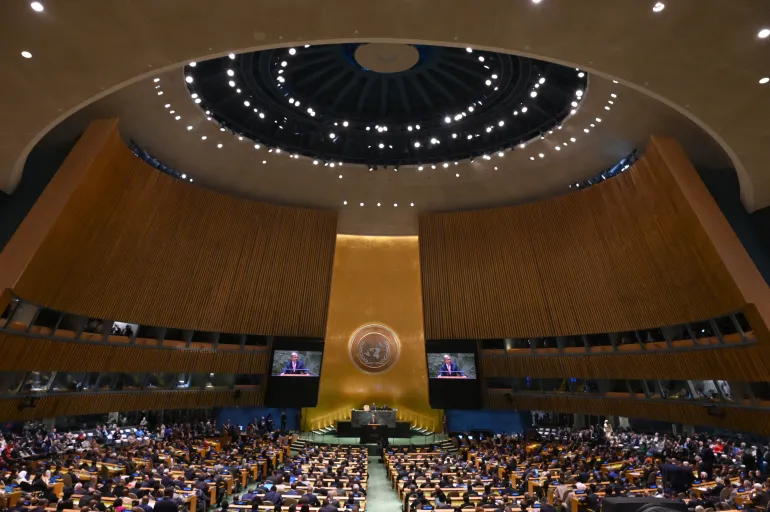
UN continues its engagement in a Sahel where governments are placing greater emphasis on sovereignty and strategic autonomy [File: Timothy A Clary/AFP]
“Moscow’s leverage extends into the Security Council chamber too, since its veto shapes what collective action the Council can attempt on Mali in the first place.”
Kabir Adamu, founder and managing director of Beacon Security and Innovations Limited, an Abuja-based firm that provides security solutions in Nigeria, the Lake Chad Basin and the Sahel, said the UN should shift its approach away from large deployments of UN troops to diplomatic and towards diplomatic and development solutions.
“Looking ahead, the UN’s priorities in the Sahel should promote effective security sector governance and security sector reform. This will mean pivoting from traditional, large-scale peacekeeping to deep-rooted and core preventive strategies and diplomacy that addresses the root causes of fragility, conflict and violence, as well as instability,” Adamu said.
For the United Nations, diplomacy has become more important as governments turn to other security partnerships and regional arrangements.
How has sovereignty changed the political space?
Burkina Faso, Mali and Niger have made sovereignty and strategic autonomy central to their political outlook and built the AES as a framework for closer cooperation.
Their departure from ECOWAS has changed the regional architecture through which West African governments have traditionally dealt with political and security crises.
The UN still works with regional organisations, including ECOWAS and the African Union, but governments no longer share one political framework or the same approach to external engagement.
Consequently, for the UN, maintaining vital political channels has become potentially more difficult.
Adamu said the fragmented security architecture means the UN should seek to work with and through regional organisations and groups, rather than establishing its own large-scale forces.
“As national security structures remain weak and extractive, and regional security architecture fragments, marked by the rise of the Alliance of Sahel States and shifting ECOWAS dynamics, the UN should prioritise pragmatic, inclusive mediation to bridge divides between Sahelian and coastal states, while actively bolstering alternative, functioning frameworks like MNJTF [Multinational Joint Task] and the Accra Initiative,” he said.
Have the problems in the Sahel gone away?
The retreat of peacekeepers has not removed the pressures that brought international organisations into the region in the first place.
Displacement, armed violence, organised crime, food insecurity and climate pressures continue to overlap across the Sahel.
Climate change is perhaps not the root cause of the instability, but environmental and economic pressures can add to existing vulnerabilities, particularly where state institutions are weak and communities are already dealing with conflict and displacement.
For the UN, humanitarian work remains one of the areas where engagement can continue, even when governments reject large-scale military intervention.
Humanitarian work also places greater emphasis on local and regional capacity.
“Crucially, the UN must double down on the core UNISS pillars of governance, resilience, and security by integrating climate-peace initiatives and empowering local capacities, ensuring that international engagement remains flexible, locally owned, and focused on sustainable, multidimensional stability rather than solely militarised responses,” Adamu said.
While the UN cannot determine the security partnerships of sovereign governments or force political processes on authorities that reject them, it can still facilitate dialogue, support humanitarian operations and raise regional crises before the wider international community.
What does UNGA 81 mean for the Sahel?
The 81st session of the United Nations General Assembly opened on September 8, 2026, with its General Debate due to begin on September 22.
The UNGA meets with no UN peacekeeping mission in Mali and with Burkina Faso, Mali and Niger outside ECOWAS, while the AES has become a separate framework for their political and security cooperation.
“That leaves the UN closer to an advocate and service provider than a shaper of outcomes,” Aliyu said. “It can report, brief, fund aid operations and press for access, but it cannot compel it or offer the regime security that has made Russia indispensable to the military governments.”
Yet for the Sahel, insecurity, displacement, humanitarian needs and economic and climate pressures remain.
In the changed regional environment, the UN’s influence is more likely to come through diplomacy than force, through access rather than authority, and through regional relationships rather than a large international security presence.
Officials urge civilians to stay away from site in Al-Eis near Aleppo after series of explosions.
Published On 21 Sep 202621 Sep 2026
Powerful explosions at a weapons depot in northern Syria have injured at least four people, according to state media, with officials urging the public to stay away from the site.
The explosions occurred early on Monday at a Syrian army site in the vicinity of the town of al-Eis, south of the city of Aleppo, the state-run SANA news agency reported.
The cause of the explosions was not immediately clear.
Faisal Mohammad Ali, the head of civil defence operations in Aleppo, told SANA that rescuers have evacuated four injured people from the site.
Al Jazeera’s Obaida Hitto, reporting from Aleppo, said a series of blasts has followed the initial explosion.
“The explosions are audible from a few kilometres away from the site. We have now seen a series of ambulances and fire trucks enter towards the position,” he reported.
Aleppo Governor Azzam al-Gharib urged residents not to leave their homes for the time being, adding that “hospitals, ambulance and emergency teams are on full alert”.
Roads leading to the site of the explosions were closed “to ensure the safety of civilians”, Aleppo’s Internal Security Command said.
A resident of Aleppo’s Hamdaniyeh neighbourhood told the AFP news agency that they heard a “huge explosion” and when they went up to the roof could see “large flames in the distance”.
Several such blasts have previously occurred in Syria, which is emerging from more than a decade of civil war following the toppling of longtime ruler Bashar al-Assad in late 2024.
An explosion of unknown origin killed 11 people at a military site in the eastern province of Deir Az Zor on Friday.
Earlier this month, an explosion at a weapons depot belonging to the Ministry of Defence killed 14 people and injured 11 in Syria’s northwest Idlib province.
Five people were killed just over a week earlier in the same area when a vehicle carrying munitions exploded.
Measures targeting the court itself could disrupt payments, IT services and investigations.
Published On 21 Sep 202621 Sep 2026
The Trump administration is reportedly preparing sweeping sanctions against the International Criminal Court (ICC) that could disrupt the tribunal’s finances and day-to-day operations.
The US sanctions would prohibit most transactions with the ICC after a grace period of six to seven months, The Wall Street Journal reported on Sunday.
Recommended Stories
list of 2 itemsend of list
The move would mark a sharp escalation in Washington’s campaign against the Hague-based court by targeting the institution itself rather than individual judges and prosecutors.
The Trump administration plans to announce the sanctions soon, according to the Reuters news agency, quoting two sources familiar with the matter.
The Journal, citing anonymous officials, said a decision could be finalised during this week’s United Nations General Assembly gathering in New York or soon afterwards.
If imposed, the measures would generally bar US citizens and companies from providing the ICC with money, goods or services without a licence from the US Treasury.
Banks and other companies often take an especially cautious approach to US sanctions because they rely on access to the American financial system.
The ICC president and registrar have previously warned that sanctions on the organisation as a whole could interfere with its ability to buy information technology and insurance services, hire investigators and make routine payments, including salaries for American employees.
The ICC was created in 2002 to prosecute individuals accused of genocide, war crimes and crimes against humanity when national authorities are unable or unwilling to do so.
Washington has already sanctioned more than a dozen ICC judges and prosecutors under an executive order signed by President Donald Trump in February 2025.
The Trump administration says the court has exceeded its authority by pursuing officials from countries that are not ICC members.
Relations deteriorated sharply after the court issued arrest warrants in November 2024 for Israeli Prime Minister Benjamin Netanyahu and former Defence Minister Yoav Gallant over alleged war crimes and crimes against humanity in Gaza.
Israel, like the US, is not an ICC member and rejects the court’s jurisdiction.
Washington has also objected to an earlier ICC investigation into alleged abuses in Afghanistan involving US personnel.
US Secretary of State Marco Rubio announced a campaign in July to further isolate the court and urged other countries to withdraw from it.
Trump’s move adds to growing opposition to the ICC in recent months.
Chad and Venezuela moved in July to withdraw from the court, following Burkina Faso, Mali and Niger.
Four US-based rights groups sued the Trump administration in August, arguing that existing sanctions obstruct their legal and human rights work.
Lockheed Martin has unveiled a modular airframe concept for its stealthy and combat-proven AGM-158 Joint Air-to-Surface Standoff Missile (JASSM) family that could support multiple configurations, launch methods, and sensor packages while making use of the existing JASSM and Long-Range Anti-Ship Missile (LRASM) production infrastructure. Highly survivable, the missiles are an incredibly important and staple weapon for the U.S. military, and for select export customers.
Called AGM-158 FLEX, the new concept is centered on a common airframe with interchangeable components. Lockheed Martin says it has invested more than $35 million of its funds in the effort so far, including airframe design, testing, prototype production, subsystem qualification, and work with suppliers.
An Air Force load crew member prepares to load an AGM-158 Joint Air-to-Surface Standoff Missile onto the B-2 Spirit weapons load trainer during a weapons load competition at Whiteman Air Force Base, Missouri. U.S. Air Force photo by Airman 1st Class Joel Pfiester/Released Tech. Sgt. Joel Pfiester
The company says the FLEX design will use removable nose sections that can accommodate sensor suites associated with the AGM-158 family. A removable boat tail would allow the same basic airframe to be configured for different launch methods, including air, surface, and subsurface launch. That would open the AGM-158 architecture up to ground-, ship-, and submarine-launched applications, although Lockheed Martin has not provided details on the specific launchers, platforms, or configurations envisioned. It’s worth noting the LRASM has been tested in vertical launch configuration for vessels equipped with the Mk 41 launch system.
A 2016 test of LRASM from a Mk 41 launcher on the Navy’s Self Defense Test Ship. Lockheed Martin
In addition to the Navy vertical launch tests, the idea of moving the JASSM family beyond its traditional combat aircraft launch platforms is not new. The Air Force’s Palletized JASSM concept, better known as Rapid Dragon, has demonstrated the ability to deploy JASSM-ER from palletized launchers carried inside cargo aircraft, using an expendable airdrop system. FLEX takes a different approach by building those kinds of launch options into the airframe architecture itself, with modularity supporting various launch configurations for the same basic weapon.
Rapid Dragon Flight Test
For aircraft-launched weapons, Lockheed Martin says FLEX will retain compatibility with current and future JASSM and LRASM launch platforms.
An F-35B carrying the AGM-158C Long-Range Anti-Ship Missile (LRASM). U.S. Marine Corps Kyra Helwick
The company is also proposing multiple airframe lengths. A 206-inch configuration is associated with the supersized JASSM-XR, while a 168-inch version is consistent with the dimensions of JASSM-ER. Lockheed Martin says JASSM-XR will be the first configuration of the FLEX airframe.
The Brand New AGM-158 Extended Range
The AGM-158 family has already grown well beyond the original JASSM. The AGM-158A is the baseline stealthy air-launched land-attack missile, with a publicly reported range of roughly 230-330 miles, while the AGM-158B JASSM-ER uses a more efficient engine and additional fuel to roughly double that reach, to around 575 miles or more.
Alongside the land-attack variants is the AGM-158C LRASM, which uses the JASSM airframe but substitutes a sophisticated imaging infrared anti-ship seeker, electronic support measures, datalink, and other capabilities, for operations against heavily defended surface combatants.
A B-2 deploys an AGM-158C Long Range Anti-Ship Missile to support a live-fire sinking exercise as part of Valiant Shield 2026 over the Philippine Sea, June 27, 2026. U.S. Air Force photo by Tech Sgt. Thomas Barley Tech. Sgt. Thomas Barley
Finally, the much larger JASSM-XR is being developed with a substantially stretched fuselage to carry more fuel and a larger 1,000-pound-class warhead, with a range expected to approach or exceed 1,000 miles. This would give it a similar striking capability as the Tomahawk cruise missile, although in a stealthier package.
Beyond range and launch options, the company is pitching its new FLEX concept as a way to simplify future upgrades. Components could be replaced as they become obsolete or new capabilities become available without necessarily requiring a completely new missile design.
That approach could have an industrial-base advantage, particularly as the United States seeks to increase production of long-range weapons. Lockheed Martin says FLEX would use the existing JASSM/LRASM production line, supply chain, mission-planning infrastructure, and software ecosystem rather than establishing an entirely new manufacturing and support architecture.
The company says its JASSM/LRASM production infrastructure includes a 225,000-square-foot facility opened in 2022 with increased automation and a robotic paint line.
For example, as part of a slew of low-cost cruise missile offerings, the service has been moving ahead with the Extended Range Attack Munition, or ERAM, a new air-launched missile explicitly intended to provide a relatively low-cost, rapidly producible standoff weapon. The Air Force conducted a live-warhead ERAM test in January of last year, less than 16 months after the program received its initial contract, and described the weapon as a means of generating mass against fixed targets. ERAM is understood to have a range of between 150 and 280 miles, putting it below the reach of the baseline JASSM, let alone the JASSM-ER or XR.
The Extended Range Attack Munition live-fire test on Jan. 22, 2025, at Eglin Air Force Base, Florida. via U.S. Air Force
However, the emerging class of lower-cost weapons are intended very much more to complement than compete with JASSM. While the Air Force plans to buy thousands of the cheaper missile, the JASSM will still be needed to take up the higher end of the cost and capability list.
Lockheed Martin mentions that FLEX should “unlock future cost savings,” but this sounds more about giving customers the ability to swap out components and upgrade capabilities on existing missile rounds, to avoid obsolescence, rather than facilitate mass production.
As it stands, JASSM has evolved into a family of increasingly capable and longer-range weapons, but those capabilities necessarily come with a different set of cost and production considerations than a weapon designed from the outset around large-scale production. Lockheed Martin’s announcement does not disclose a target unit cost for FLEX, nor does it explain how the eventual cost of a FLEX-derived weapon would compare with a baseline JASSM or LRASM. The unit price of the latest subvariants of the JASSM-ER is around $1.2 and $1.5 million, according to official budget documents.
The new weapon is a way of getting more variants and launch options out of the established JASSM/LRASM architecture, potentially with less development work than creating entirely new weapons. Whether that translates into enough savings or production capacity to satisfy the military’s growing demand for large numbers of standoff weapons remains to be seen.
For Lockheed Martin, the proposal also offers a way to extend the relevance of the AGM-158 family as the company and the Pentagon pursue additional range, new launch platforms, and potentially new launch methods.
The flexibility of the missile could be particularly relevant to the Agile Combat Employment concept, and the wider U.S. military in the Indo-Pacific, where forces are expected to operate from a larger number of dispersed and potentially austere locations. A common missile architecture that can be adapted to different launch platforms and different target sets could allow weapons to be positioned and employed across a distributed force rather than tying particular missile variants to particular launchers.
The original JASSM/LRASM has also become a significant export weapon, with Australia, Finland, Poland and several other U.S. allies cleared to acquire variants of the missile. While the advanced capabilities of the weapon have seen its export opportunities carefully controlled, FLEX could potentially open up the market to more customers, including less-advanced, ‘sanitized’ versions.
Pilot and Weapon Systems Officer conduct a pre-flight check on the JASSM-ER loaded to a Royal Australian Air Force F/A-18F Super Hornet at RAAF Base Amberley, Queensland. Australian Department of Defense LAC Campbell Latch
Lockheed Martin’s announcement provides few details on FLEX’s eventual cost, production rate, schedule, or specific performance beyond the stated airframe dimensions. For now, the concept demonstrates that the company is seeking to create a more adaptable architecture around an established missile family, one that has played a critical role in numerous operations since its introduction.
U.S. Space Force’s top officer has shared new details about his service’s use of electronic warfare capabilities during Operation Epic Fury against Iran earlier this year. This underscores how space is steadily becoming an arena where conflict actually occurs, and the implications this has for forces operating inside and outside of the Earth’s atmosphere.
Chief of Space Operations Gen. Douglas Schiess highlighted the actions of a member of the 42nd Electromagnetic Warfare Combat Detachment (EWCD) in support of Epic Fury during a keynote speech earlier this morning. Schiess’ remarks came at the Air & Space Forces Association’s (AFA) 2026 Air, Space & Cyber Conference, at which TWZ is in attendance. This is his first major engagement since taking over as head of Space Force less than two weeks ago.
A previously released picture showing a member of the 42nd Electromagnetic Warfare Combat Detachment forward-deployed somewhere in the Middle East in 2024. USAF/Senior Airman Zeeshan Naeem
“During Operation Epic Fury, our components, notably at U.S. Central Command and Space Command, with support from our components at European Command and Pacific Command, demonstrated that Guardians [the official term for uniformed Space Force personnel] are not supporting from the sidelines as a nice-to-have [sic], but we are delivering space power directly into the fight as a need-to-have,” Schiess said. “One of those impressive Guardians is Specialist Gray, who hails from Tampa, Florida. She joined the Space Force just two years ago, but listen to the impact she [has] made in her short term already.”
“She deployed to the CENTCOM AOR [Central Command area of responsibility] as a part of the 42nd Electronic Warfare Detachment [sic], and within hours of OEF kicking off, she received a top priority target package with one critical objective: reconfigure her weapon system and execute critical non-kinetic fires,” he continued. “She locked onto the target, optimized her weapon system, and waged electromagnetic warfare against a determined adversary. Even as ‘Alarm Red’ sirens were blaring, and incoming missiles targeted her site, she courageously held the line, protecting forces, denying adversary capability, and delivering space effects, until her commander had to literally pull her from the console to safety.”
“Specialist Gray is just one of the outstanding members of the entire enterprise of dedicated guardians, including the acquisition professionals that developed and fielded the weapon system that she operated, the intel Guardians that developed the targeting package that she used, and the cyber guardians who ensured communication, connectivity, and network defense for the command and control, the guardian instructors who trained her for combat, and the list goes on and on,” the Chief of Space Operations added.
Schiess did not name the system in question or elaborate further on how it was employed. However, previously released pictures of elements of the 42nd EWCD in the Middle East have shown personnel working with trailer-mounted multi-band antennas that have been associated in the past with variants of the Counter Communications System (CCS). CCS is a family of ground-based electronic warfare jammers primarily designed to disrupt enemy space-based communications capabilities. Prior to yesterday, CCS was the U.S. military’s only publicly acknowledged anti-satellite weapon. Space Force has now confirmed it also has weapons in orbit, which we will come back to later on.
Members of the 42nd EWCD pose in front of a trailer-mounted antenna at an undisclosed location in the Middle East in 2024. USAF/Senior Airman Zeeshan NaeemA picture released in 2020 showing members of the 4th Space Control Squadron standing in front of what is explicitly said to be an element of the Block 10.2 version of the Counter Communications System. USAF
The 42nd Electromagnetic Warfare Combat Detachment has been operating in the Middle East since at least 2024 under the umbrella of Space Force’s main headquarters in the region, U.S. Space Forces – Central (SPACECENT). President Donald Trump briefly called attention to the detachment’s “cutting-edge defense activities” during a Christmas Eve conference call with deployed service members last year.
“Sometimes we have to be within the footprint of the satellite, and so that’s why Guardians go into harm’s way,” Gen. Schiess did tell TWZ and other outlets at a roundtable after his speech this morning when asked for more details about the 42nd EWCD’s role in Operation Epic Fury, and what lessons Space Force has been learning from the conflict more broadly.
“Electromagnetic warfare was a big part of that, but also satellite communications,” he added. “The ability to keep communications, obviously GPS and PNT [positioning, navigation, and timing], were important there.”
“And then, really, missile warning and missile tracking was [sic] incredibly important. Both [Air Force Chief of Staff] Gen. Wilsbach and I talked about ‘Red Alarm’ situations,” the Chief of Space Operations continued. “Being able to tell our forces to be able to take cover was extremely important. And as we’ve seen from Ukraine to Iran, the amount of missiles and the amount of things, the folks that are doing that each and every day are incredible, and they are saving lives.”
Chief of Space Operations Gen. Douglas Schiess. USAF
Gen. Schiess’ anecdote about Specialist Gray and the 42nd EWCD did highlight how Iran, especially in the opening phases of the conflict earlier this year, was able to deal real blows to U.S. and allied facilities and forces across the Middle East. Iranian missiles, drones, and other capabilities were able to damage and/or destroy a variety of high-value assets, including aircraft and radars, and cause hundreds of casualties, as TWZ has drawn attention to on several occasions in the past. This has already been a sobering wake-up call with serious implications for potential future conflicts against larger and even more capability opponents, especially China.
“I think the whole joint force is learning a lot from Operation Epic Fury, the previous operation there, on exactly what needs to be in underground facilities, [and] what maybe can we do from remote locations,” the head of Space Force said at the roundtable today. “You could also look at what can we do from space to do some of those things? And so we’re looking at all those [lessons learned].”
Gen. Schiess mentioning subterranean facilities and remote operations is particularly notable. Even before Operation Epic Fury began, the U.S. Air Force had been working to expand options for directing operations in the Middle East from a command center in the United States. The service had also been looking to push certain command and control functions at Al Udeid Air Base in Qatar underground. Al Udeid was among the many bases Iran subsequently targeted.
For Space Force, operations against Iran have provided a broader opportunity for the service to demonstrate its active role in forward-deployed operations. That, in turn, has generated its own lessons learned beyond just steps needed to help better protect units in the field.
Then-Lt. Gen. Douglas Schiess meets with forward-deployed members of the 42nd Electromagnetic Warfare Combat Detachment in 2025. Schiess was head of US Space Forces – Space (S4S) and the Combined Joint Force Space Component Commander at SPACECOM at the time. Space Force
This extends to “reconstitution [of forces] in a combat environment, the logistics and the importance of that relationship with TRANSCOM [U.S. Transportation Command] and to be able to get supplies and replenishment into the theater,” Chief Master Sergeant of the Space Force John Bentivegna also said today, speaking alongside Gen. Schiess at the roundtable. That is “something we haven’t really worked on before. So definitely, it was a great lesson learned.”
Space-based capabilities including early warning, general intelligence gathering, weapons guidance, near-real-time communications, and more, are already absolutely central to U.S. military operations. America’s long-standing dominance in space is also steadily being eroded, with China, in particular, surging ahead in the deployment of new satellites to support a host of mission requirements, including intelligence-gathering and long-range targeting. The ability to leverage space is also proliferating to smaller adversaries, including Iran.
In addition, as mentioned, the space domain is no longer limited to just supporting operations within the atmosphere, but is a place where real engagements happen. The U.S. military is now capable of generating so-called counter-space effects using forces and assets within the atmosphere as well as in orbit, as was just disclosed yesterday.
Overall, Gen. Douglas Schiess’ comments today about the role played by Specialist Gray and the 42nd EWCD during Operation Epic Fury are indicative of not just what is to come in future operations, but how the Space Force is already engaged in combat missions now.
Russian President Vladimir Putin has cast the vote as a test of support for his ongoing war in Ukraine.
Published On 20 Sep 202620 Sep 2026
Polls have closed in Russia’s first wartime parliamentary elections, with the ruling United Russia party on course to win the tightly controlled vote.
The Kremlin wants the elections, the first parliamentary vote since the start of the full-scale invasion of Ukraine in 2022, to showcase popular support for the war and legitimise its action.
Recommended Stories
list of 3 itemsend of list
Russian government officials accused Ukraine of trying to disrupt voting after Kyiv launched hundreds of drones at Moscow and other regions in what the TASS state news agency said was the biggest attack of its kind since the war began.
The drone strikes on Sunday killed at least three people in the Moscow region and two more in the Russian-held part of Ukraine’s Kherson region, including an election official, according to the region’s governor and the election commission.
Initial results showed the United Russia party comfortably ahead, and Russia’s Central Election Commission said turnout at the close of polls stood at 56.66 percent.
The first official results and turnout are expected on Monday morning.
Voting in Russian-held Ukrainian areas
The vote, which began on Friday for 111 million eligible voters, included residents of four Ukrainian regions that Moscow illegally annexed after the war began, but still doesn’t fully control, as well as those in Crimea, the Black Sea peninsula that was illegally annexed by Russia in 2014.
Authorities in Kyiv denounced the voting in the Russian-held areas as illegal and urged foreign governments not to recognise the result. The European Union on Friday called the action a “blatant violation of international law”.
Voters cast two separate ballots, filling half of the lower house’s 450 seats by selecting political parties listed on the ballot. The rest are contested in single-seat constituencies, with voters choosing individual candidates.
The main Kremlin party, United Russia, is widely expected to retain its overwhelming control of the State Duma. Several smaller parties of the “systemic opposition” that vote in sync with Putin’s views on all key issues are also expected to maintain their presence.
A massive state media campaign and tight control over the elections in the absence of genuine opposition all but assure the Kremlin will keep tight control of Russian politics amid mounting economic costs and increasing Ukrainian drone attacks deep inside the country.
The liberal Yabloko party, the only registered political entity that dared to publicly criticise the war, was removed from the ballot last month by Russia’s Supreme Court. It only has a few dozen candidates in the single-constituency races.
Additionally, some anti-war politicians were imprisoned or forced to flee abroad ahead of the campaign.
Russia didn’t invite election observers from the Organization for Security and Cooperation in Europe. The Russian Foreign Ministry has accused the body of “double standards” for its criticism of Russia.
A Florida fishing charter boat made a very unusual catch Saturday while operating near Eglin Air Force Base. Located in the western end of the Florida Panhandle, Eglin is home of the U.S. Air Force weapons test wing. Hot Spots Charters pulled a delta-wing aerial drone out of the water during an excursion, according local charter captain Charlie Green. The recovered drone closely resembles a clone of the Iranian Shahed-136 one-way attack weapon, specifically the U.S. military’s Low-Cost Uncrewed Combat Attack System (LUCAS) that took center stage during its first combat use in Operation Epic Fury. The target version of that drone is built by SpecktreWorks and is designated the FLM-136. It was originally designed for mimicking one-way attack munitions, specifically the Shahed-136, which it was reverse engineered from, for testing and training before it was weaponized into LUCAS.
An Eglin AFB spokesperson told us the installation recently lost a drone, but would not confirm it was the same one found by Hot Spots Charters.
“I can confirm that we were doing a test and the test article went down,” the spokesperson told us, declining to provide further details about what kind of drone, when it was lost or the location it went down. They referred us to the Pentagon, which could not immediately provide any additional details.
“The drone was found by local charter Capt. Daniel Arsenault with Hot Spots Charters,” said Green, who is also an aviation photographer whose work can be found at Aquatic Charlie on social media. “He saw the object at a distance and went over to check it out. When he did, he pulled a good size mahi-mahi out from underneath it, complementing his already stocked cooler full of fish from that morning charter. His passengers helped him haul it aboard.”
The drone found by Hot Spots Charters. (Charlie Green)
“Arsenault and his charter company did all the due diligence possible to notify local agencies of the recovery- and was eventually collected by one of them,” Green added. He did not know which agency.
Images taken of the drone shared with us by Green show that it did not have the engine, propeller or the nose cone/seeker intact. Losing these kind of components is common for impacts into water.
(Charlie Green)
While the Eglin spokesperson offered scant details, the host unit at the installation is the 96th Test Wing, which is the “test and evaluation center for Air Force air-delivered weapons, navigation and guidance systems, command and control systems, and Air Force Special Operations Command systems,” according to the wing’s homepage. It oversees the massive Eglin Gulf Test Range, which “provides approximately 120,000 square miles of overwater airspace, covering the eastern third of the Gulf of Mexico from the Florida panhandle to the Florida Keys. The land range covers 724 square miles and contains 70 specific test and training areas, including an approved depleted uranium test range and the only qualified air-to-ground supersonic range east of the Mississippi River.”
Eglin Test Range. (Eglin Air Force Base)
As noted in the opening of this article, the LUCAS drone was used for the first time in combat during the opening day of the Operation Epic Fury war on Iran on Feb. 28.
“Costing approximately $35,000 per platform, LUCAS is a low-cost, scalable system that provides cutting-edge capabilities at a fraction of the cost of traditional long-range U.S. systems that can deliver similar effects,” Navy Capt. Tim Hawkins, a CENTCOM spokesperson, told TWZ when the command stood up Task Force Scorpion Strike (TFSS), the military’s first one-way attack drone unit, back in December. “The drone system has an extensive range and the ability to operate beyond line of sight, providing significant capability across CENTCOM’s vast operating area.”
“LUCAS drones deployed by CENTCOM have an extensive range and are designed to operate autonomously,” CENTCOM added in a press release. “They can be launched with different mechanisms to include catapults, rocket-assisted takeoff, and mobile ground and vehicle systems.”
TFSS falls under the auspices of U.S. Special Operations Command Central (SOCCENT), which oversees U.S. special operations activities across the Middle East.
A LUCAS drone. (NAVCENT/C5F/U.S. Army Spc. Kayla McGuire) NAVCENT/C5F/U.S. Army Spc. Kayla Mc Guire A LUCAS drone. (Courtesy photo/Naval Air Warfare Center Weapons Division)
While we aren’t sure if the drone found by Hot Spots Charters is the one lost by Eglin, it wouldn’t be the first time something like this has happened in Florida. For example, in 2021, beachcombers in Florida’s Palm Beach County found a U.S. Air Force BQM-167A high-performance target drone that washed ashore.
Indeed, the Air Force has a handful of 120-foot boats, the only vessels in its service, to help recover drones after they are shot down during live-fire exercises, or otherwise need to be recovered from these waters. The boats are operated by a contracted crew from Florida Offshore and retrieve around 100 of the drones each year.
The FLM-136’s origins as a target drone are highly relevant here. Counter-unmanned aerial system (C-UAS) capabilities are being hotly pursued on all fronts across the U.S. military as the threat from them has ballooned. During the war in Ukraine and multiple engagements with Iran, including Operation Epic Fury, one-way attack drones have proven to be a massive threat that is heavily influencing how wars are fought. As far as Eglin AFB goes, maybe the most high-profile C-UAS development as of late that has emerged from there has been arming USAF fighters with FALCO APKWS laser-guided rockets to shoot down exactly the same kind of threat that the FLM-136 is meant to emulate. This program began in 2019, which TWZ was first to report on, but was finally rushed into service years later as the standoff with Iran went hot. Now there are many other programs aimed at dealing with these same threats, including a more capable “fire and forget” air-to-air APKWS.
A 2019 test of air-to-air APKWS laser-guided rockets occurred off Eglin AFB. (USAF)
LUCAS development is continuing at a high-pace, with its ability to swarm cooperatively with other LUCAS drones — a feature we reported as central to the LUCAS vision when the existence of the program was disclosed — being worked on now. You can read more about this here. These systems need sanitized airspace for development activities, and the vast ranges over the gulf are some of the best in the country for it.
So, it’s not surprising to see an FLM-136 floating in the waters off Eglin AFB. Even in the war with Iran, there were multiple losses of LUCAS drones where they were found intact. These weapons are produced to be risked in large numbers, and some failing, for whatever reason, is just part of the calculus.
Locals in Iraq appear to have recovered a crashed and almost entirely intact Low-Cost Unmanned Combat Attack System (LUCAS), an American copy of the Iranian Shahed-136 Attack Drone, which is confirmed to have been used recently by Task Force Scorpion Strike during U.S. attacks on… pic.twitter.com/SEqO6627en
We will update this story with any additional details we can find about this drone. Though we don’t yet know for sure where it came from, one thing is for certain, the folks on the Hot Spots Charters boat that found it will always have a good tale about the one that didn’t get away.
Iran accuses the French language centre of conducting ‘illegal acts that violated diplomatic conventions’.
Published On 20 Sep 202620 Sep 2026
France will summon Iran’s ambassador and take “appropriate measures” after Iranian authorities closed a French-language centre linked to its embassy in Tehran, according to the French Foreign Ministry.
“This new attack against France’s cultural presence in Iran, following the assault on two staff members of the French embassy last July, is unjustifiable and unacceptable,” Foreign Ministry spokesperson Pascal Confavreux said in a statement on Sunday.
Recommended Stories
list of 4 itemsend of list
Iran announced on Sunday the closure of the centre it accused of conducting “illegal acts that violated diplomatic conventions”.
“Based on the Tehran prosecutor’s office, the illegal centre affiliated with the French embassy in Tehran, which has operated for years under the guise of language instruction, was closed,” the Iranian judiciary’s Mizan news website said, referring to the French Language Centre (CLF).
It said the centre “abused its status as a language training facility” and sought to “identify and build networks among the country’s elite figures while facilitating their departure”.
The French Foreign Ministry said it would “take appropriate measures to respond” and would summon Iran’s ambassador in Paris at the request of French Foreign Minister Jean-Noel Barrot.
Relations between Tehran and Paris have been strained in recent months.
In August, Iran’s Intelligence Ministry said it detained two French diplomats over alleged foreign interference during a national security investigation before handing them over to the French ambassador.
California is considering Proposition 40, which would impose a one-time 5% tax on its billionaires. This initiative is seen as a way to generate funds for healthcare, education, and food assistance, given that California is home to around 250 billionaires worth over $2 trillion. However, political analysts suggest that the proposition’s chances of passing are uncertain, especially with rising debates around income inequality and the implications for the state’s economy.
Opinion polls indicate a divide in support for the tax. A UC Berkeley poll from August showed 48% of likely voters in favor while 41% opposed, and a September poll showed support at 52%. However, historically, California ballot measures need strong initial support to succeed, and undecided voters often lean towards rejecting measures. Critics of the proposition argue it might drive billionaires out of the state, lowering potential tax revenue in the future.
Notable figures, including billionaires like Sergey Brin, are actively campaigning against Proposition 40, with Brin sharing his personal experiences to express concerns about socialism and its effects. Additionally, Governor Gavin Newsom opposes the measure and is advocating for a federal wealth tax instead.
California’s history with ballot initiatives reveals a complex relationship with taxation. While the state has a history of direct democracy, it has only approved about a third of citizen initiatives in the past. A recent attempt to raise taxes on high earners, Proposition 30 in 2022, was rejected, reflecting that even in a predominantly Democratic state, voters may not support aggressive tax increases on the wealthy.
The uniqueness of this initiative lies in its retroactive tax structure, which could limit billionaires’ ability to avoid the tax by relocating. However, supporters like economist Emmanuel Saez argue that the tax will not significantly deter wealthy individuals or tech startups, stressing California’s attractive qualities, such as its universities and infrastructure, which he believes outweigh potential tax burdens.
Overall, Proposition 40 encapsulates the ongoing conversation about wealth inequality in America and the contentious debate surrounding the taxation of the ultra-rich, making it a critical issue for California voters in the upcoming election on November 3.
Thousands of protesters took to the streets of Buenos Aires for the ‘March of Anger’, organised largely by left-wing groups opposing the Milei government’s austerity policies. Protesters say the cuts are hurting working families.
Qatar’s Prime Minister tells Bloomberg, the Gulf won’t be the same as before the war, unless there’s a security framework ensuring no one is a threat to each other. Speaking at the Qatar Economic Forum in New York, Sheikh Mohammed bin Abdulrahman Al Thani says the region needs to have good relations.
Qatar’s Prime Minister Sheikh Mohammed bin Abdulrahman bin Jassim Al Thani has called on states to respect sovereignty as a condition for security in the Middle East, warning against “cycles of escalation” after “an earthquake” caused by the US-Israeli war on Iran.
The region needs a “framework in which sovereignty is respected” and no state can pose a “threat to another”, Sheikh Mohammed said on Sunday at the opening of the Qatar Economic Forum’s UN General Assembly-adjacent event in New York City.
Recommended Stories
list of 3 itemsend of list
Sheikh Mohammed – who is also Qatar’s foreign minister – described the economic fallout from the US-Israel war on Iran as “an earthquake” with “its shock waves” reaching far beyond the borders of the Middle East, “challenging assumptions about security and stability”.
“During the crisis, almost every conversation began with security and de-escalation, then turn[ed] to energy supplies, shipping routes, and with our investments, plans will continue. These were different expressions of the same question. When so much is being disrupted, what can still be relied upon?”
He said that Qatar has weathered the test to the “foundations” of the country’s economy and security, but acknowledged that the ongoing conflict in the region is having an impact.
“Permanent security cannot be built through arrangements that leave any state permanently exposed to insecurity,” Sheikh Mohammed said. “We must address the sources of tensions and build confidence.”
Reporting from New York, Al Jazeera’s Kristen Saloomey said that message “no doubt will be repeated” when Gulf leaders meet US President Donald Trump on Tuesday during the UN General Assembly.
Qatar’s $38bn domestic investments
The PM also outlined a domestic shift in Qatar’s investment strategy by pledging more than $38bn in spending on Qatari infrastructure over the next five years.
“That’s meant to attract private investors and send a message of Qatar’s resilience,” Saloomey said, while the PM is nonetheless acknowledging that the ongoing conflict is “having an impact on the region”.
The UNGA starts on Monday and ends on Friday.
The situation in the Middle East and its global ramifications are expected to be high on the agenda during speeches and diplomacy.
Also on Sunday, Qatar’s Foreign Ministry spokesman, Majed Al-Ansari, told US media in New York that the mediation efforts by his government are ongoing to restart talks between Tehran and Washington to end the US-Israel war on Iran.
Scott Bessent and He Lifeng meet in New York for US-China talks ahead of the Trump-Xi meeting later this week.
Published On 20 Sep 202620 Sep 2026
Top economic officials from China and the United States have begun talks in New York City aimed at clearing the way for possible agreements on trade, artificial intelligence and critical minerals ahead of a meeting between US President Donald Trump and Chinese President Xi Jinping later this week.
US Treasury Secretary Scott Bessent and Chinese Vice Premier He Lifeng began talks at JPMorgan Chase’s Manhattan headquarters on Sunday morning, with US Trade Representative Jamieson Greer also taking part.
Recommended Stories
list of 4 itemsend of list
The talks come four days before Trump is due to host Xi at the White House, with both sides looking to ease tensions between the world’s two largest economies.
“I’m looking forward to having focused, fulsome and constructive talks today that will set the stage for our leaders’ meeting,” Bessent told reporters as he arrived.
At the top of the agenda is a fragile US-China trade truce due to expire on November 10.
The agreement, reached in Busan, South Korea, last November, capped US tariffs on Chinese goods at about 20 percent after a tit-for-tat trade fight briefly pushed tariffs into the triple digits.
Washington is also pressuring Beijing over its supply of rare-earth magnets and other critical minerals, crucial to industries ranging from cars to advanced semiconductors.
China promised to restore the flow of critical minerals under last year’s truce, but a senior US official said on Friday that Beijing’s performance had “not been up to par”.
AI enters the talks
Artificial intelligence (AI) is also expected to feature prominently, adding a relatively new issue to negotiations long dominated by trade.
Bessent has said the countries could discuss AI “guardrails” aimed at addressing shared risks, including preventing powerful models from falling into the hands of malign non-state actors.
The talks are expected to cover both open- and closed-weight AI models. Chinese open-weight models have increasingly attracted US companies, in part because they can be cheaper than closed systems developed by US firms such as OpenAI and Anthropic.
“The United States remains the leader in AI,” Bessent said. “And we are open to discussions on avoiding shared risks and avoiding bifurcation of our two systems.”
Another potential point of friction is Iran. China remains one of Tehran’s most important economic partners and buys much of its oil, making Beijing an important target of Washington’s efforts to increase economic pressure on Iran as the US-Israel war on Iran enters its seventh month.
Expectations remain low
Despite the packed agenda, analysts are not expecting a sweeping breakthrough.
“I think there will be some show of deliverables because of the fact that it’s a presidential summit coming, but I don’t feel like we’re on the verge of some sort of breakthrough,” Anna Ashton, a China trade analyst and founder of Ashton Intelligence, told Reuters.
“I think status quo is probably both sides’ general best expectation.”
Former US Deputy Secretary of State Kurt Campbell similarly said the immediate goal may simply be keeping tensions contained.
“One of the only things we can hope for in the short term is a truce, and that this will likely continue through the remainder of this year,” Campbell said.
Sunday’s negotiations are part of a series of meetings between Bessent, He and Greer over the past 16 months aimed at hammering out areas of agreement before Trump and Xi meet face to face.
Embattled German Chancellor Friedrich Merz has vowed to stay on despite exit polls in two local elections suggesting damaging defeats for his centre-right Christian Democratic Union (CDU) party.
In the north-eastern state of Mecklenburg-Vorpommern, the party was projected to only just scrape into parliament, while the far-right AfD was on track to win the most votes. Merz called the result “a disaster” for his party.
In Berlin, the ruling CDU was also expected to be beaten by Die Linke (The Left).
Merz is under mounting pressure, with poor approval ratings and rumours he could even be replaced mid-term in a so-called chancellor swap.
Echoing comments he made after that defeat, Merz told reporters at the party’s Berlin headquarters on Sunday that he would forge ahead with his coalition government’s plans to push through a package of economic, tax and welfare reforms.
“The reforms have to come,” he insisted. “I am taking on this responsibility, because I want to move our country forward”.
“What needs to be done now requires backbone, steadfastness and patience,” Merz said. “I will demonstrate this as CDU party chairman and, above all, as chancellor of our country.”
“I would even go so far as to say that these reforms are the antidote to the authoritarian poison that, with the fascination of authoritarianism, is penetrating ever deeper into our society,” Merz added.
Abbotsford, British Columbia – Every second day, 28,000 litres of raw milk leave Casey Pruim’s farm in Abbotsford in western Canada, entering a distribution system built on the assumption that the milk and the products made from it will have somewhere to go.
While most is consumed in Canada, some had been sold across the border to the United States.
Those sales have largely come to a standstill since US President Donald Trump’s 50 percent tariff on $20bn in Canadian goods, including dairy products, came into effect on August 22.
Pruim, who is also chair of the British Columbia Dairy Association representing about 400 dairy farmers across the province, told Al Jazeera that Canadian farmers do not individually decide which products are exported.
Instead, producers such as Pruim – whose farm has 330 cows milked three times a day – sell into the provincial milk-marketing system, which distributes milk to processors according to demand, including for products exported to the US.
If a processor loses US demand, it may require less milk, with the impact then spread across the provincial pool.
Dylan Kruger, director of public affairs at BC Dairy, told Al Jazeera “there is still considerable uncertainty around the impact of the US tariffs”.
He said it was too early to know how the industry would be impacted or whether milk no longer sold to the US could be sold elsewhere, mitigating financial losses.
But the tariffs and wider trade tensions have already introduced uncertainty and instability for businesses.
Casey Pruim, owner of Prime Acres Ltd dairy farm in Abbotsford, British Columbia, heads the BC Milk Producers Association in Canada’s western province [File: Ali Mustafa/Al Jazeera]
“If the processor who’s exporting some of his product to the United States can no longer sell into that market because he’s now priced out of the market with a 50 percent tariff, that’s how it would impact the dairy farm,” Pruim said.
Pruim said if processor demand is squeezed, farmers would be forced to dump the milk. In the worst-case scenario, the herd has to be cut.
“Cows aren’t like a tap; you can’t just turn them on or off,” he said.
His warning captures dairy’s particular vulnerability in a tariff war: Milk is highly perishable, collected on a tight schedule and dependent on processors whose demand can change much faster than farmers can adjust production.
“These tariffs are completely unwarranted,” David Wiens, president of the Dairy Farmers of Canada, told Canada’s CBC News, adding that they would affect “the supply chain, not only in Canada but in the US as well”.
Supply-management system
Dairy trade between Canada and the US has largely operated under a free trade agreement between the US, Mexico and Canada, known as CUSMA in Canada.
Canada manages the supply of dairy, poultry and eggs through a national agricultural policy known as supply management. The system uses production quotas and import controls, including tariffs, to provide farmers with more stable and predictable prices while maintaining domestic supply.
Critics describe the system as protectionist and as a government-backed cartel.
Washington argues that Canada’s supply-management system restricts US dairy exports. Trump posted on Truth Social that “Canada had been ripping off the United States of America for years” and accused it of imposing “ridiculously high tariffs” that made life impossible for US farmers.
Canadian producers reject that argument, saying the existing trade agreement already gives US imports substantial tariff-free access that is not fully utilised.
Canada’s dairy trade deficit with the US has grown significantly since CUSMA came into force on July 1, 2020, according to the Dairy Processors Association of Canada.
In 2020, Canada exported 241.3 million Canadian dollars ($173m) in dairy products to the US and imported 647.4 million Canadian dollars ($462.7m) worth of dairy and dairy products. In 2025, Canadian dairy exports had risen to 308.7 million Canadian dollars ($220.7m) while dairy imports from the US had more than doubled to 1.355 billion Canadian dollars ($968.5m), accounting for 13.8 percent of total value of US dairy exports, according to the association.
Nearly 14,000 litres of milk are stored daily in the refrigeration unit at Casey Pruim’s farm in Abbotsford, British Columbia, at a temperature of 2.8’C [File: Ali Mustafa/Al Jazeera]
Bryan Yu, chief economist at Central 1 credit union, said the immediate shock of losing a major market could be difficult for Canadian producers to absorb because replacement buyers cannot be found quickly.
“There is going to be pain in the near term for a lot of our producers,” Yu told Al Jazeera.
“You really can’t quickly adjust to a 50 percent tariff, because it’s uncharted waters for a lot of industries … and ultimately it shuts [Canadian producers] out, because a lot of them don’t have the margins that they can play with,” he said.
Yu said Canadian consumers might absorb some of the additional supply while exporters search for new markets and higher-value products, but neither adjustment is instantaneous.
“There are global markets as well, especially when you talk about chilled, chilled beef, chilled products and really it’s a question of whether … other types of markets that could be available.”
Canada has also imposed retaliatory tariffs, which came into effect on September 8 and cover $20bn worth of US products.
Dairy products are among the targeted goods. The list includes a 50 percent tariff on milk, cream and whey products and a 25 percent tariff on many cheeses imported from the US.
Casey Pruim has a herd of 330 cows at his dairy farm in Abbotsford, British Columbia [File: Ali Mustafa/Al Jazeera]
Canadian Prime Minister Mark Carney has framed Ottawa’s response as both retaliation and an attempt to build greater economic resilience.
Announcing the collapse of the latest negotiations, he said Canada would match Washington’s new tariffs “dollar for dollar” to protect workers, farmers, families and businesses.
But retaliatory measures carry risks of their own.
“Canada’s new retaliatory tariffs will help some industries but hurt most and weaken economic growth across the country by raising costs for producers and consumers,” Oxford Economics said in a report.
For now, geography remains important for perishable goods like dairy products that once moved quickly across the US border and cannot be redirected overnight to a distant market without new buyers, logistics and regulatory approvals.
Ottawa’s Trade Commissioner Service is advising affected companies to check their CUSMA compliance, explore available relief and contact trade commissioners about potential new markets.
Yu predicted that the US and Canada could reach a tariff deal in the following months but said the interim period could bring “higher prices, weaker economic activity and deeper mistrust”.
For Pruim, the uncertainty is as destabilising as the tariff threat itself.
“I think, like [for] any Canadian, it’s disappointing to have these trade talks collapse again and just the uncertainty around it.”
The country has battled multiple wildfires amid record-breaking temperatures fueled by El Nino and intense drought conditions.
Published On 20 Sep 202620 Sep 2026
A massive wildfire has broken out in central Colombia, threatening the popular tourist town of Villa de Leyva, according to local officials.
The forest fire is near the Andean town in the Boyaca department, with flames engulfing the San Marcos hillside above the colonial architecture and cobblestone streets that attract more than a million visitors annually.
The blaze has already consumed 40 hectares of native forest, sending massive plumes of smoke that are visible from the town’s central square, according to Colombian authorities.
On Saturday night, Colombian President Abelardo de la Espriella posted on X that “Villa de Leyva is not alone”, pledging to mobilise all state resources to fight the fire and protect “this historical jewel” and “beautiful city that is the pride of Colombia”.
To combat the flames, the Boyaca department government said it is dispatching two aircraft. A military helicopter will also join the effort, along with firefighters from the capital, Bogota, Interior Minister Rodrigo Lara said.
The mayor of Bogota, Carlos Fernando Galan, will be sending a team of firefighters to join local crews from Tunja and Boyaca, reinforcing containment efforts and securing the urban centre, Lara said.
In the equatorial Andes, forest fires peak during the dry season, but this year they are fuelled by a severe El Nino weather pattern. Record high temperatures and lack of moisture have turned vast expanses of the Andean vegetation into tinderboxes. That has intensified a crisis that has already started 18 active wildfires across the country, according to the latest official data from Colombia’s National Unit for Disaster Risk Management (UNGRD).
The impacts of El Nino, a natural weather pattern, are felt globally and do not affect the entire South American continent in the same way, inducing extreme droughts in some regions and torrential flooding in others. This year, it comes supercharged by the effects of climate change, which is worrying many scientists, governments and aid workers.
The warming of the adjacent Pacific has triggered catastrophic flash floods and landslides in countries such as Peru and Ecuador.
Unlike in the southern part of the continent, where countries including Argentina, Chile and Uruguay have been expecting unseasonably heavy rainfall, El Nino has the opposite effect in the northern part of the continent. A significant reduction in rainfall leads to severe drought conditions which can suppress cloud formation and displace normal rain patterns, driving average temperatures well above normal.
The soaring heat rapidly evaporates moisture from the ground and water basins, leaving countries such as Colombia with extended periods of drought and critically low precipitation.
“El Nino can bring devastating climate extremes on its own, but it’s unfolding today on a much warmer planet, increasing the likelihood that heat, drought, floods and fires will push communities and ecosystems beyond anything they have experienced before,” said Stephanie Roe, lead climate scientist with the World Wildlife Fund.
The game hinged on Huijsen’s red card early in the second half for pulling down Giuliano Simeone in the box.
Published On 20 Sep 202620 Sep 2026
Atletico Madrid edged 10-man Real Madrid 2-1 in a La Liga derby clash to leave Jose Mourinho’s side trailing leaders Barcelona by six points.
Dean Huijsen was sent off early in the second half for Los Blancos on Sunday before Alejandro Grimaldo and Jonathan David’s goals earned Diego Simeone’s Atletico victory, with Antonio Rudiger pulling one back late on.
Atletico rose to second, five points behind Barca and one ahead of Real Madrid, who chalked up a second defeat of the campaign.
The game hinged on Huijsen’s red card early in the second half, for pulling down Giuliano Simeone in the box which led to a penalty, tucked away by Grimaldo to set Atletico on their way.
Mourinho started with Aurelien Tchouameni in midfield over Bernardo Silva, opting for defensive clout over creativity.
There was more tension than footballing quality in the first half, with neither side capable of creating any clear chances.
The main talking point was an incident between Jude Bellingham and Atletico defender Cristian Romero.
The England international threw himself into a tackle and Romero trod on his leg, with Bellingham booked initially, but after a VAR review the referee removed the card and issued it to the Atletico man.
Madrid were also unhappy with a heavy tackle by Lee Kang-in on Federico Valverde which went unpunished just before half-time.
It was a scrappy battle, intense but lacking excitement comparative to the star power on the pitch, especially in Madrid’s front line, with Vinicius Junior, Kylian Mbappe and Bellingham kept quiet.
The game burst into life early in the second half when Huijsen pulled back Giuliano Simeone’s arm as the forward ran through on goal and Atletico were awarded a penalty.
Huijsen was dismissed after a VAR review and Grimaldo beat Madrid goalkeeper Thibaut Courtois from the penalty spot.
Mourinho reacted immediately by replacing the underwhelming Vinicius and Arda Guler and sending on club record signing Yan Diomande and Rudiger.
It was Atletico who struck next, though, with Canada international David tucking away Giuliano Simeone’s raking low cross on 59 minutes for his third goal in three matches.
The hosts came close to getting a third but Courtois made an excellent save to deny Julian Alvarez and Ibrahima Konate reacted brilliantly to head Grimaldo’s effort from the rebound off the line.
Atletico goalkeeper Jan Oblak saved from Diomande and Bellingham rowed with Giuliano Simeone as Madrid’s frustrations showed, impotent to change the course of the game.
Madrid pulled a goal back in the final stages with Rudiger heading Bernardo Silva’s cross past Oblak. However, it was too little too late for Mourinho’s side.
Chinese technology giant Huawei is facing a landmark criminal trial in the United States amid Washington’s long-running tech rivalry with Beijing.
The trial began in federal court in Brooklyn, New York, on September 9, with US prosecutors portraying Huawei as a criminal enterprise that spent two decades stealing technology from US companies, deceiving banks and circumventing sanctions on Iran.
Recommended Stories
list of 3 itemsend of list
Huawei has pleaded not guilty and says the US government is attempting to turn ordinary business disputes and the actions of individual employees into evidence of a company-wide conspiracy.
The trial is expected to last about three months and overlaps with Chinese President Xi Jinping’s September 23-25 visit to Washington, where trade, artificial intelligence, tariffs and access to critical technologies are likely to be on the agenda.
Here is what you need to know:
What are the allegations against Huawei?
US prosecutors have accused the company of racketeering, money laundering, bank and wire fraud, sanctions violations, obstruction and conspiring to steal trade secrets from five US technology companies.
Prosecutors say the alleged wrongdoing stretched from about 1999 to 2020.
“Theft, lies, cover-up,” Justice Department lawyer Taylor Stout said in his opening remarks.
Prosecutors allege Huawei stole technology, including internet-router source code from Cisco and a robotic arm used by T-Mobile to test phones.
They also accuse Huawei of concealing the nature of its operations in Iran to move US dollars through the financial system despite US sanctions.
The government also alleges that Huawei supplied equipment that could help Iranian authorities monitor protesters during demonstrations in 2009.
How has Huawei responded?
Huawei, a major manufacturer of telecommunications equipment, denies any wrongdoing.
The tech giant’s lawyer Brian Heberlig told jurors the case was about “competition, not conspiracy. Innovation, not theft. Ordinary business dealings, not criminal conduct.”
Heberlig accused prosecutors of “cherry-picking isolated events” to construct a conspiracy that did not exist. Huawei’s defence says some incidents involved individual employees whose actions were dealt with internally, rather than reflecting company policy.
He told jurors that prosecutors will describe routine activities by global tech companies “but will twist those ordinary activities to try to make them look criminal”.
Huawei separately described the broader prosecution as an attempt to undermine its competitiveness, saying the US government’s “overarching narrative is demonstrably false” and that it had “the utmost respect for intellectual property”.
The case originated during Donald Trump’s first presidency. His administration placed Huawei on a US trade blacklist in 2019 and pushed allies to exclude the company from 5G networks, arguing its equipment could present national security and espionage risks.
Huawei has repeatedly denied that its technology is used for spying.
What has China’s response been?
Beijing has strongly criticised the prosecution, which has come weeks ahead of Chinese President Xi Jinping’s visit to the US.
On Thursday, a Chinese Ministry of Foreign Affairs spokesperson said “the Chinese government firmly opposes the US side’s suppression and containment of Chinese enterprises”, when asked about the case and the American prosecutor’s “criminal enterprise” description.
China “firmly supports Chinese enterprises in safeguarding their legitimate rights and interests”, the spokesperson said at a regular news conference.
What is Huawei, and has the tech giant faced investigations before?
Huawei is one of the world’s largest telecommunications equipment manufacturers. It also produces smartphones and has become increasingly important to China’s semiconductor and AI industries.
Its activities have drawn scrutiny well beyond the current US trial.
Belgian prosecutors launched an investigation in 2025 into suspected bribery involving the European Parliament allegedly for Huawei’s benefit.
The European Parliament subsequently suspended access for Huawei lobbyists. Huawei said it had “zero-tolerance” for corruption and would cooperate with authorities.
Huawei chief financial officer Meng Wanzhou made worldwide headlines in 2018 when she was arrested on a US warrant after landing in Vancouver, straining both US-China and China-Canada relations.
The warrant was filed after a sealed indictment accused her and the company of bank fraud for misleading HSBC and other banks about Huawei’s business in Iran.
She returned to China in 2021 under a deferred prosecution agreement, and the charges against her were later dismissed.
Admissions Meng made as part of that agreement can, however, be presented as evidence in Huawei’s current trial after a US judge ruled them admissible in June.
They are legally separate but form part of a much wider economic and technological competition between Washington and Beijing.
Huawei became one of the most prominent targets of US restrictions during Trump’s first term.
Since then, the rivalry has expanded from telecommunications and 5G into semiconductors and AI, with Washington restricting China’s access to advanced US chips and chipmaking technology.
Last week, Dario Amodei, the CEO of Anthropic, warned that a “Chinese lead in AI would pose grave danger for the US and the world” and urged Washington to maintain restrictions on cutting-edge AI tech. He also called for action against alleged “distillation” of US models by Chinese AI laboratories.
China’s Foreign Ministry on September 14 accused the US tech giant of “fearmongering”.
“Fomenting various threats, engaging in confrontation and malicious competition will only disrupt the process of global governance of artificial intelligence and is not in the interests of any party,” said ministry spokesperson Guo Jiakun.
The state-backed Global Times newspaper went further, describing Amodei’s proposal as a “Cold War playbook” whose real purpose was to curb Chinese AI development and preserve US technological dominance.
China and the US were engaged in a tit-for-tat tariff war at the beginning of Trump’s presidency in 2025. The trade war ended in a truce, but the world’s two largest economies have failed to strike a trade deal.
Beijing, meanwhile, has used its dominance of critical minerals as leverage and accelerated efforts to build domestic alternatives to American technology.
Currently, China controls most of the world’s rare earth minerals, including metals that are necessary for the manufacture of many technological items, from smartphones to fighter jets. The world’s second-largest economy has 60 percent of these minerals and processes 90 percent of the world’s supply.
In October, Beijing announced plans to require foreign companies to obtain permission to export Chinese rare earth equipment or material.
This meant companies anywhere in the world would need a licence to export rare earth magnets and certain semiconductor materials that contain even trace amounts of minerals sourced from China or produced using Chinese technology.
China’s Ministry of Commerce said its export controls on rare earths, which Trump had labelled “surprising” and “very hostile”, were introduced in response to a series of US measures.


![UN continues its engagement in a Sahel where governments are placing greater emphasis on sovereignty and strategic autonomy [File photo: Timothy A. Clary / AFP]](https://i0.wp.com/occasionaldigest.com/wp-content/uploads/2026/09/33VL2ZN-highres-1695130635.jpg?w=640&ssl=1)


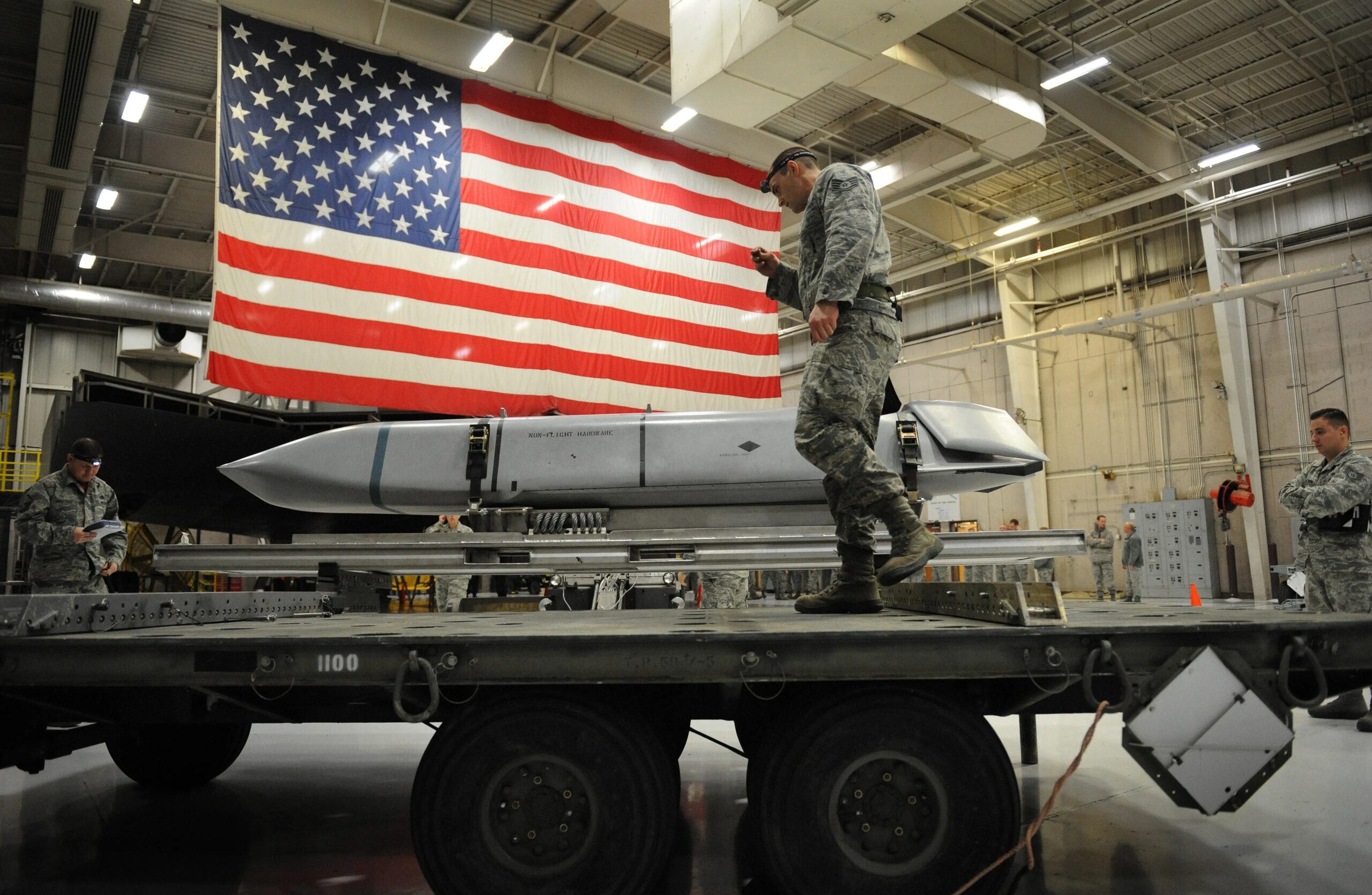


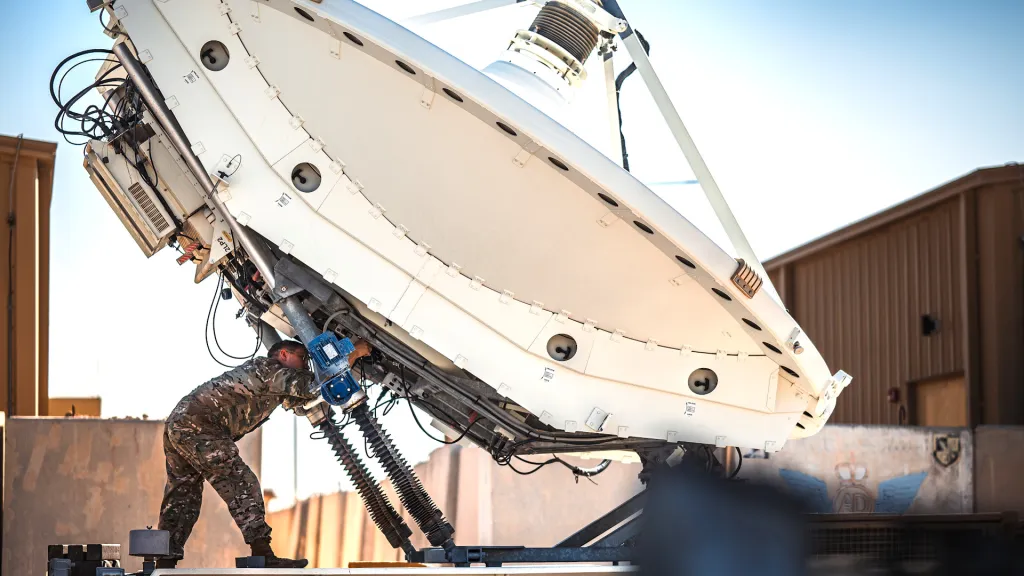







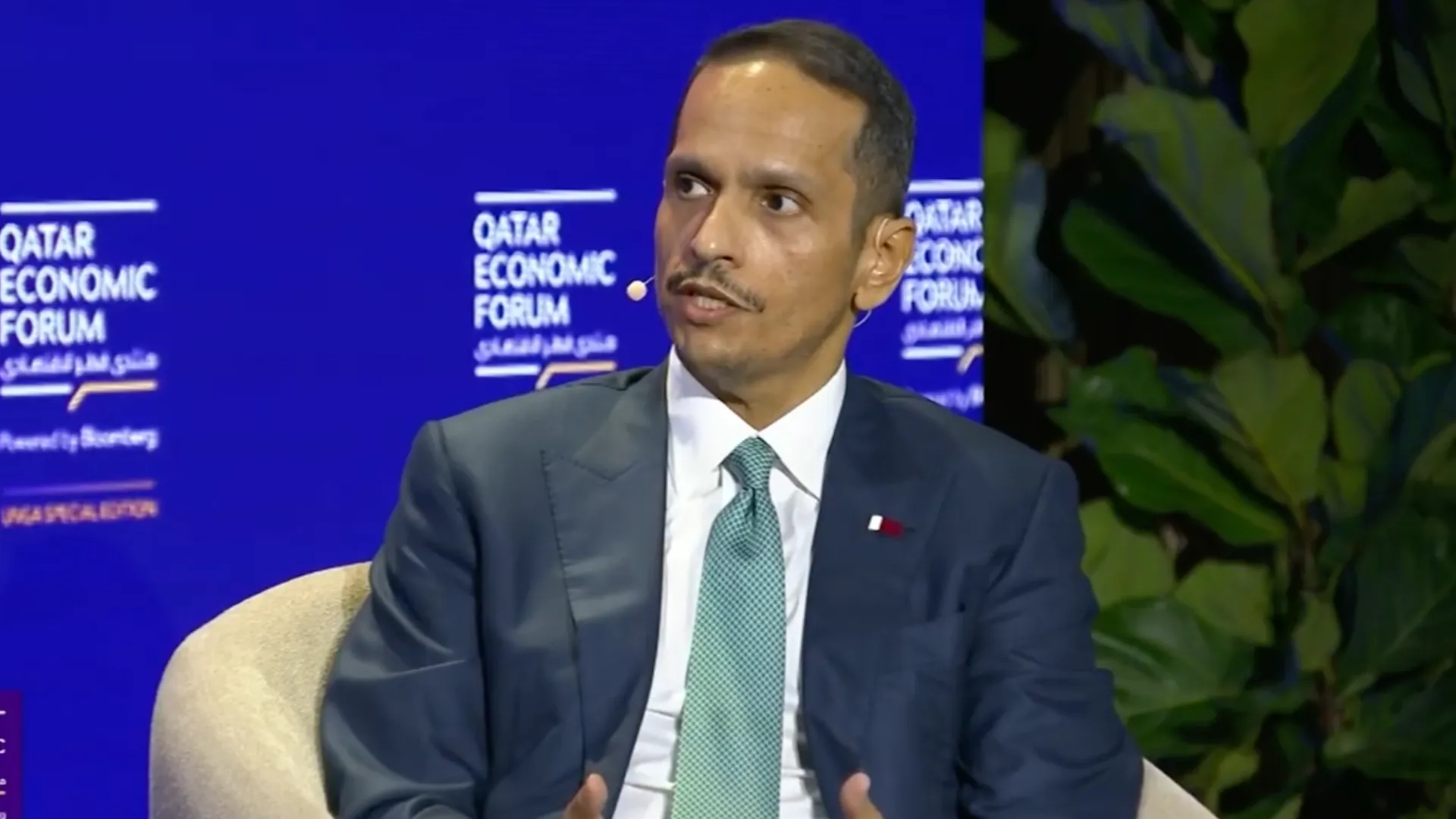


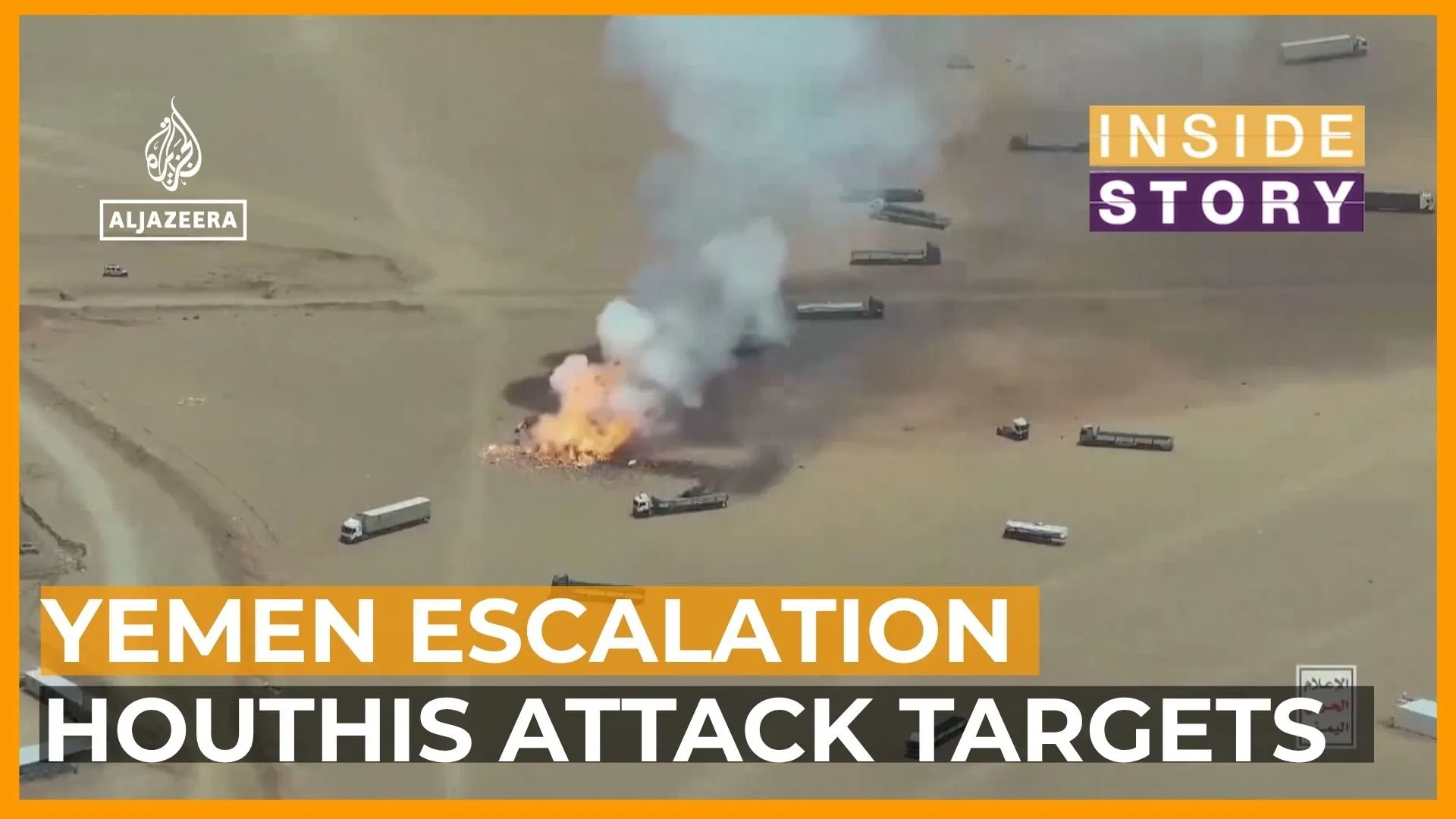
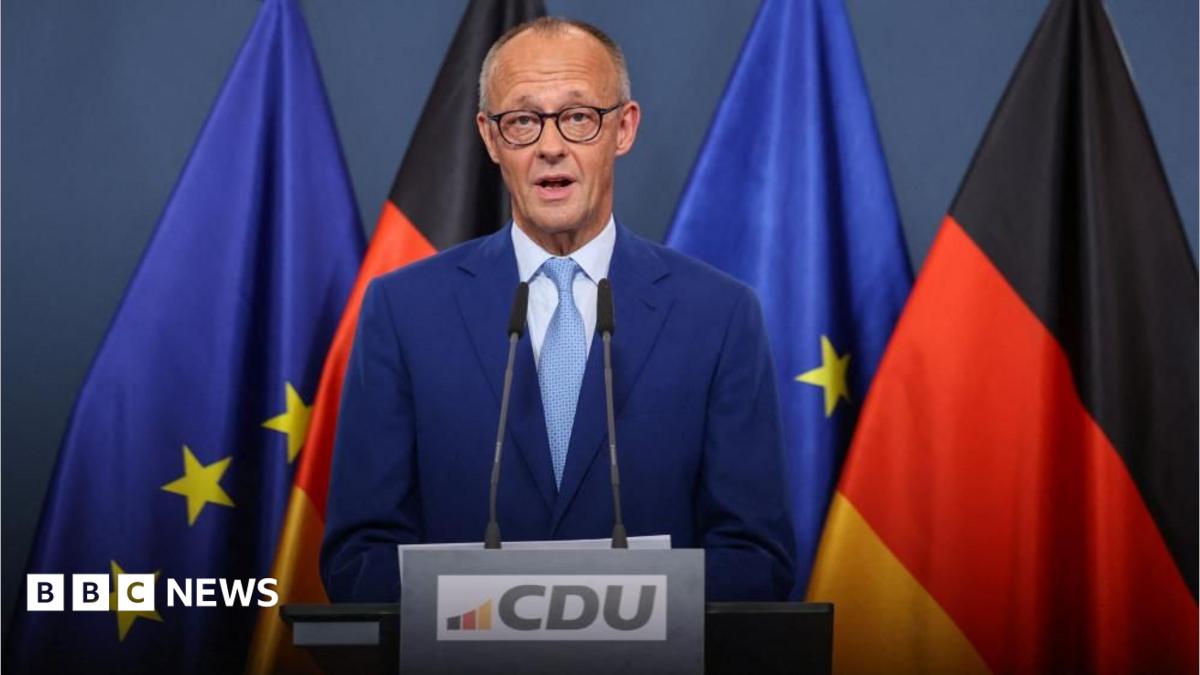

![Casey Pruim, owner of Prime Acres Ltd. dairy farm in Abbotsford, British Columbia heads the BC Milk Producers Association in Canada's western province [Ali Mustafa/Al Jazeera]](https://i0.wp.com/www.aljazeera.com/wp-content/uploads/2026/09/PRUIM7-1789051532.jpg?w=640&ssl=1)
![Each day almost 14,000 litres of milk produced by cows is stored in the refrigeration unit at Casey Pruim's Prime Acres Ltd. dairy farm in Abbotsford, British Columbia at a temperature of 2.8'C [Ali Mustafa/Al Jazeera]](https://i0.wp.com/www.aljazeera.com/wp-content/uploads/2026/09/DSLR_PRUIM25-1789051502.jpg?w=640&ssl=1)
![Casey Pruim, owner of Prime Acres Ltd. has a herd of 330 cows at his dairy farm in Abbotsford, British Columbia [Ali Mustafa/Al Jazeera]](https://i0.wp.com/www.aljazeera.com/wp-content/uploads/2026/09/DSC01443-1789051497.jpg?w=640&ssl=1)