Acting President Rodríguez has prioritized the reengagement with Western multilateral institutions. (Presidential Press)
Mérida, October 6, 2026 (venezuelanalysis.com) – The Venezuelan acting government is resorting to a Qatar-led financing agreement in order to regain access to multilateral loans from the Inter-American Development Bank (IDB).
According to specialized outlet Bitácora Económica, Qatar is preparing to establish a specialized rescue fund to settle Venezuela’s estimated US $2.5 billion debt with the IDB.
Under the proposed mechanism, the Qatari fund would immediately clear Venezuela’s overdue principal and interest payments, while issuing a new, long-term loan with favorable interest rates for the South American nation.
Venezuelan economist José Guerra claimed that Qatar will be joined by the United Arab Emirates and that the Gulf countries will back the financing initiative with their sovereign wealth funds.
The Qatari-backed initiative would reportedly allow Venezuela to address short-term liquidity constraints and access a new IDB credit line worth as much as $8 billion. The financing would be used for public infrastructure projects, including the national road network, water distribution systems, and stabilizing the national electric grid, as well as providing additional funding for state budgets.
The proposed Gulf-backed debt arrangement comes amid a broader, deliberate push by Caracas to re-establish formal relations with major US-led multilateral financial institutions.
Over recent months, high-level Venezuelan delegations have held technical and institutional meetings with representatives from the International Monetary Fund (IMF), the World Bank, and the Development Bank of Latin America and the Caribbean (CAF).
In September, Acting President Delcy Rodríguez met in New York with IMF Director Kristalina Georgieva, as well as senior World Bank and IDB officials.
Caracas’ rapprochement with Western multilateral institutions has coincided with a geopolitical shift in its foreign policy since the January 3 US military strikes and kidnapping of Venezuelan President Nicolás Maduro. The Venezuelan government, headed by Acting President Delcy Rodríguez, reestablished ties with Washington while also strengthening relations with US allies such as Qatar and the UAE.
Doha initially provided intermediation for US control over Venezuelan oil export revenues, with funds deposited in Qatari bank accounts. The scheme was later transferred directly to the US Treasury Department. Energy firms from Qatar and the UAE were recently announced as stakeholders in a Venezuelan offshore natural gas project as well.
Venezuela’s reengagement with Washington-based financial institutions saw the IDB officially reopen its country office in Caracas on October 2, seven years after halting operations in the Caribbean nation.
The IDB had suspended all active credit lines and disbursements to Venezuela in May 2018 following payment arrears. The relaunched local office follows the formal reinstatement of Venezuela’s voting rights in June, when the IDB Board accepted Calixto Ortega as the country’s governor at the IDB.
During an expanded session of the National Economic Council in Caracas on October 2 with IDB officials, Acting President Rodríguez emphasized the importance of access to international multilateral credit for both the public and private sectors.
“This agenda that we have been developing with the multilateral financial system is for development, for investment and financing in infrastructure and services,” she stated during the televised session. “In Venezuela, there is a very important installed industrial capacity to develop, and a boost in financing will bring us to full capacity.”
Rodríguez added that the renewed engagement aims to ensure that private companies, communal production units, and small businesses can access international loan programs to expand local production.
While direct sovereign lending to the Venezuelan government remains contingent on fully clearing arrears, the multilateral’s private-sector arm, IDB Invest, has already initiated direct financial assistance to key Venezuelan corporations and commercial banks.
Under recently approved financing structures, IDB Invest is reportedly delivering commercial-rate loans and capital support to food processing conglomerate Empresas Polar, as well as private commercial banks Banco Mercantil and Banesco.
The allocations for Banco Mercantil and Banesco are designed to strengthen liquidity and capitalization within the national banking system, while also boosting local credit lines for businesses.
Meanwhile, the funds directed to Empresas Polar are earmarked for agricultural development projects and supply-chain expansion, particularly targeting grain production in Portuguesa state, according to reports.
Unlike traditional development loans, the IDB Invest credits are extended at market interest rates, focusing directly on private-sector growth and sustainability.
The Venezuelan government’s current strategy marks a departure from the former President Hugo Chávez’s stance toward multilateral lending institutions.
In November 2008, at a Bolivarian Alliance for the Peoples of Our America (ALBA) summit, Chávez criticized the IDB, labeling it an “instrument of political pressure” used by Washington to impose orthodox economic policies on sovereign nations.
At the time, Chávez called on Latin American governments to withdraw from both the IDB and the IMF, which he labeled as a “weapon of US imperialism,” advocating instead for regional alternatives such as the Bank of the South to replace traditional multilateral lenders.
London, United Kingdom – Claire, 52, lives in the Scottish countryside, not far from Edinburgh.
She describes her work as “low-level administration” and does not use social media. She lives a quiet life with her dog, reading and baking in her spare time. Until three years ago, she did not consider herself political.
Recommended Stories
list of 4 itemsend of list
Now, she faces 14 years in prison for her suspected show of support for Palestine Action.
Claire, who requested Al Jazeera withhold her surname, is one of the many people in the United Kingdom who, until three years ago, did not consider themselves activists.
But as the genocide in Gaza was livestreamed, many have rallied around the cause of Palestinian solidarity.
Organisations like Defend Our Juries, Artists for Free Palestine, Workers for Free Palestine, and virtually every other insert-profession-here for Palestine have cropped up across the UK.
In the summer of 2023, Claire read I Shall Not Hate by Dr Izzeldin Abuelaish, a Palestinian physician in Gaza who lost his three daughters to Israeli tank fire. Not long after finishing the book, Claire watched the aftermath of October 7 unfold online.
“For me, there wasn’t a delay between ‘Israel has a right to defend itself’ and then lies,” she told Al Jazeera.
She went to a pro-Palestine rally on Armistice Day, calling for a ceasefire, and “was horrified” by then Home Secretary Suella Braverman, who called the protests “hate marches”.
“I was determined not to ignore [Palestine],” she says.
A protester wears eyewear in the colours of the Palestinian flag and holds a fan featuring a watermelon design during a rally organised by Defend Our Juries in Parliament Square, London, Britain, August 9, 2025 [Jaimi Joy/Reuters]
She continued to march, writing letters to lawmakers and fundraising for various Palestinian aid programmes.
In August 2025, she began publicly protesting against the proscription of Palestine Action with Defend Our Juries, the group behind a campaign of civil disobedience aimed at lifting the ban. To date, more than 3,000 people have been arrested for showing support for the pressure group that was banned in 2025.
Earlier this year, police arrived at her door to arrest Claire under Sections 11 and 12 of the Terrorism Act: “Being a member of a proscribed organisation and encouraging others to join a proscribed organisation.”
“I’ve never been in trouble before,” she says. “I’m not backing down.”
A police officer holds a pro-Palestinian protester during a demonstration outside the Parliament, organised by campaign groups including Palestine Solidarity Campaign, Avaaz and Parents for Palestine, calling for sanctions on Israel over ongoing hunger among Gaza’s war-struck population, in London, Britain, June 4, 2025 [Isabel Infantes/Reuters]
Marji, 70, lives in Colchester and had a similar feeling after hearing Braverman’s words.
“I had never been to a protest in my life,” she says, until she carried a “Ceasefire Now” sign at an Armistice Day march in 2023.
“I knew it wasn’t a ‘hate march’.”
Marji’s father served in the British Army, and her father-in-law was in the Royal Air Force and taken as a prisoner-of-war in Japan during World War II.
“Our parents’ generation fought fascism,” she says. “Now Britain is breaking British law.”
Marji, who also requested to be identified only by her first name, had a successful career in financial services, while her husband held an executive-level role.
They are now retired grandparents.
In July, they were arrested in Westminster under Section 12 of the Terrorism Act and are now waiting to see if charges will be laid.
“We’ve had to decide … is it safe to have grandchildren here? When the police could come to the door?”
Her children remain supportive.
“I think they’re proud of us, even if there’s been fear on their part.”
People protest on Vauxhall Bridge during a march in solidarity with Palestinians in Gaza in London, Britain, November 11, 2023 [Kevin Coombs/Reuters]
Across sectors, from the arts to railways, financial services and administration, Britons have risked professional and legal repercussions for the sake of Palestinian solidarity.
Hundreds of thousands have taken to the streets to protest against Israel’s genocidal campaign in Gaza and what they see as the UK’s role in the conflict. They have urged the UK government to cease all arms sales to Israel and cut diplomatic and trade ties as the genocide goes on in Gaza and violence escalates in the occupied West Bank.
This week, tensions have flared again as the Metropolitan Police warned pro-Palestine protesters against rallying on the three-year anniversary of October 7. The force said on Wednesday that five people were arrested outside the Board of Deputies of British Jews in north London for “inciting racial hatred, involving allegedly shouting or chanting slogans calling for Intifada”.
Israel’s latest war on the Gaza Strip – it has waged several since 1948 – began after Hamas, the group that governs Gaza, attacked southern Israel. About 1,200 people were killed that day, while more than 240 were taken captive, including Israeli soldiers, citizens and some foreign nationals.
Since October 7, 2023, Israel’s relentless bombardment has killed more than 74,000 people and devastated Gaza, making life for survivors nearly impossible. The small territory is now home to the largest group of child amputees in modern history.
“The narrative that we had grown up with was wrong – that the people who were there and living peacefully have been cast as ‘terrorists’, when they have suffered terrorism,” Marji says.
A demonstrator argues with the police as students take part in an inter-university march organised by the University of London Coalition in support of Palestinians, on the third anniversary of October 7, 2023 in London, Britain [Carlos Jasso/Reuters]
“The government participation, complicity, and their lies. Their gaslighting makes people more determined,” says Claire.
As the legal dangers and rhetorical backlash mount against pro-Palestine protesters, Marji, whose maternal grandmother was Jewish, is only more resolved: “We knew that saying ‘stop the genocide’ doesn’t mean you’re an anti-Semite. We’re not stupid, we can differentiate between Jewish people and people who support illegal occupation.”
Workers for Free Palestine, which includes a range of trade unions, formed in late 2023 and soon began holding protests.
“Many people oppose how their labour is used to prop up an apartheid state, but have been told there is nothing they can do as individuals,” a spokesperson told Al Jazeera.
Many workers are nervous to speak out against their workplace’s role in producing weapons, their investments in Israel, or other ways of enabling Israel’s war.
“Many are unfamiliar with their rights as workers and are afraid of the repercussions of speaking up – and these repercussions can be very real,” the spokesperson said.
Still, for some, there is not just resolve but optimism.
“Doing nothing makes us feel sick, angry and powerless,” says Marji. “I hope people will wake up and see how our own civil liberties … are being eroded to protect the interests of Israel.”
Paramount Skydance has completed its takeover of Warner Bros Discovery, bringing CNN and CBS News under the same corporate ownership, in a deal that has raised concerns about editorial independence and freedom of speech.
The acquisition, worth about $110bn including debt, combines two of Hollywood’s biggest studios after months of legal challenges lodged by state attorneys general and unions.
Recommended Stories
list of 4 itemsend of list
The new company, Skydance Corporation, brings together HBO, CBS, Nickelodeon, Showtime, Comedy Central, DC Studios and Food Network, alongside streaming services Paramount plus and HBO Max.
But its control of two major US news organisations has drawn particular scrutiny. David Ellison, Skydance’s chairman and chief executive, has promised to preserve their editorial independence, but his father, Oracle cofounder Larry Ellison is a major financial backer of the deal, and has previously donated funds to US President Donald Trump and Israel.
Asked about the takeover on Tuesday, Trump welcomed it. “They’re terrific people, and it’s going to be a great company,” he said.
Why was the merger challenged?
The takeover faced initial opposition from Hollywood workers, politicians and state prosecutors concerned about the mounting concentration of power in an industry already dominated by a handful of companies.
Netflix initially reached an agreement to buy part of Warner Bros Discovery. Paramount then launched a competing bid, prompting a bidding war before Netflix walked away.
A California-led coalition of 12 state attorneys general sued to block the deal, saying that it would reduce competition and raise prices. The Writers Guild of America brought a separate challenge.
Both cases were settled in September when Paramount agreed to commitments relating to film production, support for displaced workers and protections for the news networks, including the creation of a new editorial independence board.
But the settlement did not end opposition to the deal. “This merger will stifle creativity, weaken free speech and cost people their jobs,” actor and activist Mark Ruffalo has said.
Democratic Senator Elizabeth Warren linked the takeover to Trump’s efforts to restrict media access. “As Trump tries to ban CNN from the White House, it would be a massive mistake to cave on the Paramount merger,” she said, referring to the US president’s so-far thwarted attempt last month to bar reporters from several news organisations, including CNN, from accessing the White House.
Can an editorial independence board protect CNN and CBS?
One condition of the settlement requires Skydance to establish a “News Editorial Independence Board” within 180 days of completing the takeover.
The five-member body is to include active or retired journalists with at least 10 years of experience. It is intended to establish editorial principles and address disputes involving the news networks and corporate management.
However, its members will be appointed by, and will report to, Skydance’s board of directors, which Ellison chairs. Two members can belong to the same political party, and there is no requirement to publish its findings.
The condition has left critics with a multitude of questions, including: How can a member of an independent editorial board be a member of a political party? How can there be scrutiny if its findings are not public? How can it be independent if it is appointed by a board of directors, themselves appointed by the CEO of the company?
Seth Stern, chief of advocacy at the Freedom of the Press Foundation, said, “A Paramount-appointed editorial independence board for CNN and CBS is worthless. The fish rots from the head, and this particular fish is headed by a compromised oligarch with a history of throwing journalists under the bus to advance his business interests.”
Stern also questioned whether government enforcement of the settlement could itself threaten press freedom. “The editorial board creates the same First Amendment problems it’s supposed to solve – the government meddling in the news.”
The First Amendment provides constitutional protection for freedom of speech and the press.
Ellison argues that the two networks will continue to operate independently. “We’re going to make sure that CNN and CBS News are completely editorially independent,” he said on Tuesday.
On Monday, Skydance announced that Mark Thompson would remain CNN’s chairman and editor-in-chief, while Bari Weiss will continue as CBS News’s editor-in-chief, easing previous fears that Weiss would immediately take charge of both networks.
Why are there fears for editorial independence?
The takeover gives the Ellison family control of CNN less than a month before the November 3 US midterm elections, and follows Trump’s repeated attacks on the network as it seeks to hold the US president to account.
Shortly after Paramount launched its bid in December, Trump accused CNN of spreading “poison and lies” and said it was “imperative” that it be sold, while the Trump administration has moved to bar CNN from reporting in certain areas of the White House.
Ellison donated roughly $45m to a political nonprofit group supporting Trump’s election efforts in 2024, while he donated $16.6m to Friends of the Israel Defense Forces, a charity supporting Israeli soldiers – its largest single donation at the time.
Earlier this year, the White House criticised CNN’s coverage of the US-Israeli war on Iran, while Defence Secretary Pete Hegseth told reporters that “the sooner David Ellison takes over that network, the better.”
Sovereign wealth funds from Saudi Arabia, Qatar and the United Arab Emirates also hold indirect financial interests in the combined company. They have no voting stakes, although their involvement adds another layer of scrutiny over its funding.
Concerns about the future for editorial integrity, however, intensified after Skydance acquired Paramount in 2025, and layoffs followed, alongside the closure of CBS News Radio and changes to CBS News flagship investigative programme 60 Minutes.
High-profile firings enacted under CBS News Editor-in-Chief Bari Weiss and Skydance Media CEO David Ellison included correspondents Sharyn Alfonsi and Cecilia Vega, as well as 60 Minutes executive producer Tanya Simon.
The programme’s September season premiere attracted about 21 percent fewer viewers than a year earlier.
In 2025, Paramount also agreed to pay Trump $16m to settle a lawsuit over the editing of a 60 Minutes interview with then-presidential candidate Kamala Harris.
In a June 2 letter, nine advocacy groups, including Reporters Without Borders, the Freedom of the Press Foundation and the Committee for the First Amendment, warned that CNN could face similar upheaval and firings.
“Bari Weiss’ shameless actions fulfil the Ellisons’ commitment to President Trump to remake CBS to his liking,” they alleged, referring to the firings and changes at 60 Minutes.
“Larry Ellison has reportedly promised to do the same at CNN if allowed to take control through the pending Paramount-Warner Bros. Discovery merger. Not because it makes any business sense, but because they seek to control the public discourse.”
The groups described the proposed takeover as an “existential threat to the free press, independent media, and free speech in this country and beyond”.
Islamabad, Pakistan – More than 9.5 million people have received subsidised petrol under a special fuel relief scheme launched by Pakistan’s prime minister, Federal Minister Shaza Fatima Khawaja told Al Jazeera on Wednesday.
The initiative, aimed at lower-income citizens, comes as the government attempts to help households deal with fuel price increases tied to the war on Iran.
Recommended Stories
list of 4 itemsend of list
The scheme, launched in September, offers 100 rupees ($0.36) off every litre of petrol to owners of motorcycles, rickshaws and small cars, through a text-message system.
Petrol prices have risen by nearly 50 percent since the war began on February 28, adding to Pakistan’s economic hardship and putting further pressure on consumers already grappling with rising inflation.
How the scheme works
Explaining the process, Khawaja, the minister for information technology and telecommunications, said applicants text their national ID number, vehicle registration, and province to 9771. A second message, sent before each visit to a pump, generates a token redeemable anywhere in the country.
Two- and three-wheelers get 500 rupees ($1.80) a week, capped at four tokens a month. Cars with engines of up to 800cc get 1,000 rupees ($3.60) every 10 days, for three tokens monthly.
After complaints, registration, once a paid service, was made free, and a five-litre minimum purchase was scrapped for the same reason.
Khawaja told Al Jazeera the system had been redesigned based on experiences of users on the ground.
Riders no longer need the vehicle to be registered in their own name, as long as they can supply the exact registration date shown on the documents.
“Even in my own house, there’s a bike registered in our name that our cook uses for daily errands,” Khawaja said, explaining why the ownership requirement for two- and three-wheelers was dropped on September 20.
An earlier cash-transfer scheme in April had reached just over a million bike owners, she said, largely because disbursement required a bank account most riders did not have.
‘The relief is decent’
Government officials say that the scheme has been expanded to include wider sections of society, especially those who depend on their vehicles to generate income.
“There’s a benefit; it’s not like there’s nothing,” Shakeel Ahmed, 45, an electrician in Islamabad, told Al Jazeera. “The relief is decent for people who use it normally, for local trips. But for people like us, who put in 1,000 to 1,500 rupees [$3.60-$5.40] of petrol a day, it’s not enough.”
Safiya Aftab, an economist, told Al Jazeera the scheme has reached the people it was meant to.
“The scheme has indeed reached low-income segments of society, people who typically use two-wheelers and 800cc cars. So yes, it’s a good thing that they are subsidising the poor,” she said.
Aftab, however, also pointed to a levy – 114 rupees ($0.41) for every litre – that the government charges. This, she said, was helping the government raise revenue. She said the government is now earning more than 100 billion rupees ($361m) a month from the levy, which is fuelling inflation.
“The levy was originally meant as a sort of environmental tax, to discourage the use of petrol. Now it has become a full revenue earner for the government, one that helps keep the fiscal deficit down,” the economist said.
What it costs and for how long
The Pakistani government has approved 75 billion rupees ($271m) for the scheme’s first three months, through November.
Petroleum Minister Ali Pervaiz Malik put the running cost at 25-30 billion rupees ($90m-$108m) a month at launch. By late September, he said, it had risen to 35-40 billion rupees ($126m-$144m).
Malik has said the government is prepared to run the scheme for up to 10 months, or “until the end of the war”, if needed.
Pakistan is currently under a $7bn International Monetary Fund programme, and an IMF team is in Islamabad this week for talks with the government as it seeks to keep its fiscal commitments on track while responding to the fuel shock.
Officials familiar with the government’s talks with the IMF say the Fund wants relief capped at three months and routed instead through the Benazir Income Support Programme, the country’s main cash-transfer scheme.
Khawaja said the IMF’s position from the outset was that relief had to be targeted, not universal, which was why the scheme was built around actual token use rather than a blanket price cut.
Who it leaves out
But there are claims that the relief is not reaching all. Cars with engines larger than 800cc, diesel vehicles and public transport are excluded entirely, leading some experts to suggest that the subsidy scheme risks missing the most vulnerable sections of Pakistani society.
“A poor household that uses public transport, walks to work, or relies on diesel-powered transport may receive nothing while still facing higher food and transport costs,” Khaqan Najeeb, a former adviser in Pakistan’s Ministry of Finance, told Al Jazeera.
More than 8.1 million tokens had gone to two- and three-wheelers by late September, compared with fewer than 380,000 for cars, Malik said. A November 2024 Gallup Pakistan survey found that 79 percent of respondents, in rural and urban areas alike, said they use public transport such as buses or wagons.
People wait to refuel their motorcycles at a petrol station following the rollout of a fuel relief scheme, which provides a fuel subsidy for eligible motorcycles, rickshaws and vehicles with engines of up to 800cc, in Karachi, Pakistan, September 17, 2026 [Akhtar Soomro/Reuters]
Does the relief go far enough?
At 100 rupees a litre, the maximum monthly saving is 2,000 rupees ($7.20) for a motorcycle user and 3,000 rupees ($10.80) for an eligible car owner, Najeeb said, calling it “useful household relief, but not enough to offset the broader cost-of-living shock”.
Petrol has climbed from 266 rupees ($0.96) a litre before the war to nearly 395 rupees ($1.42), despite a partial rollback in April. Inflation rose to 10.3 percent in September from 7 percent in February, Najeeb said.
Sajid Amin Javed, a senior economist at the Sustainable Development Policy Institute in Islamabad, said the relief was “minimal”, but added that this was understandable given the IMF constraints on Pakistan.
“The relief is minimal, and that is understandable as we are in an IMF programme,” Javed told Al Jazeera, arguing that cutting the petroleum development levy, which still adds 114 rupees to every litre, would deliver broader relief than a capped subsidy.
“The government is using the petroleum development levy to fill its revenue gap, but that comes at a significant cost in terms of inflation, growth and household welfare,” Javed said.
Najeeb, however, argued the scheme should not become a permanent fixture of Pakistan’s energy policy – and should be used only to make oil price shocks “less damaging”.
Scientists honoured for solving mystery of asymmetric ‘mirror image’ molecules that has helped in manufacture of pharmaceuticals.
Published On 7 Oct 20267 Oct 2026
Scientists Henri Kagan and Kenso Soai have won the 2026 Nobel Prize in Chemistry for solving a longstanding riddle of asymmetric “mirror image” molecules, a discovery hugely important for pharmaceutical manufacturing.
The Royal Swedish Academy of Sciences said on Wednesday the pair – Kagan, 95, from France; and Soai, 76, from Japan – were honoured “for the discovery of nonlinear effects and autocatalysis in asymmetric organic synthesis”.
Recommended Stories
list of 2 itemsend of list
Their findings showed how chemical reactions can be driven to favour a single molecular mirror image, work that has been key for chemists who design reactions for the manufacture of pharmaceuticals.
Many of the molecules essential to life exist in two forms that are mirror images of each other, like left and right hands. Yet living organisms almost exclusively use only one version, a phenomenon known as “homochirality” – from the Greek word for hand – that has puzzled chemists for more than a century.
“The left-handed version of the drug can have one effect, and the right-handed version can have another effect, and then we need methods for selectively preparing them,” said Peter Somfai, a member of the Nobel Committee for Chemistry.
“In developing such methods, the findings of this year’s laureates are important. They provided powerful tools for that,” he said.
Heiner Linke, chair of the committee, said the two scientists provided “a solution to a chemical mystery that is over a century old: how homochirality can emerge spontaneously”, calling the chemical reactions they developed “spectacular”.
‘Most exciting day’
Soai, speaking by phone to the Nobel Prize news conference, said he had been out shopping when he received the news.
“This is the most exciting day in my life, I am very glad to share this prize with Professor Henri Kagan,” he added.
Last year’s chemistry award went to scientists Susumu Kitagawa, Richard Robson and Omar Yaghi for the development of so-called metal-organic frameworks, molecular constructions that can help tackle challenges such as climate change and lack of freshwater.
The chemistry Nobel is always the third prize to be awarded during Nobel week, following those for medicine and physics.
The literature laureate will be revealed on Thursday, while the keenly anticipated peace prize is due on Friday.
Established in the will of Swedish inventor and businessman Alfred Nobel, the prizes for achievements in science, literature and peace have been awarded since 1901, with a few interruptions mostly due to the world wars.
Nobel, a chemist by trade, amassed huge wealth in the 19th century from inventions primarily tied to warfare, most notably dynamite. The economics prize is a later addition funded by the Swedish central bank.
South Korea’s government has signalled that the current military service exemption reserved for gold-medal winning athletes could be abolished, after controversial comments made by winners at the Asian games caused public backlash.
The first-ever F-16 Block 72 has taken to the air, marking a major milestone for the program and for Morocco’s long-running effort to field what Lockheed Martin describes as the most advanced version of the Viper.
The first of the jets for the Royal Moroccan Air Force (RMAF), a two-seat F-16D, completed its maiden flight at Lockheed Martin’s facility in Greenville, South Carolina, the company announced today. The aircraft will now proceed through flight testing ahead of its delivery to Morocco.
Morocco’s first @LockheedMartin F-16 Block 72 aircraft has taken flight in Greenville, South Carolina. The milestone marks another step toward delivering the most advanced F-16 configuration to the Royal Moroccan Air Force.
Interestingly, one of the photos of the jet published by Lockheed Martin shows the pilot in the front cockpit wearing a Digital Joint Helmet Mounted Cueing Systems (D-JHMCS). This advanced helmet is not often seen worn by F-16 pilots and it is not clear if it has been ordered by Morocco.
Regardless, Morocco was the first customer to select the Block 72 configuration when the U.S. government approved its purchase in March 2019.
At that time, the Defense Security Cooperation Agency said Morocco was seeking 25 F-16C/D Block 72 aircraft in a package estimated at $3.787 billion. The proposed aircraft were to be equipped with the AN/APG-83 Scalable Agile Beam Radar (SABR), an active electronically scanned array type, new mission computers, Link 16 Multifunctional Information Distribution Systems, modernized navigation systems, helmet-mounted cueing systems, and a range of air-to-air and air-to-ground weapons.
A Royal Moroccan Air Force F-16C/D Block 52+ with a pair of AGM-88 High-speed Anti-Radiation Missiles (HARM) under the wings. U.S. Air Force photo by Staff Sgt. Ceaira Tinsley
The distinction between the Block 70 and Block 72 is the engine. The Block 70 uses General Electric’s F110-GE-129, while the Block 72 uses Pratt & Whitney’s F100-PW-229, providing fractionally more power. The two configurations otherwise share the same major avionics and systems modernization package.
The F-16 began life as a Pratt & Whitney-powered fighter, with the F100 selected to power the original F-16A/B. But reliability and maintainability problems with early F100s prompted the U.S. Air Force to launch its Alternate Fighter Engine competition in the 1980s, leading General Electric to develop the F110 as an alternative. The resulting “Great Engine War” established two competing F-16 engine families, with Pratt & Whitney’s F100 and GE’s F110 ultimately becoming the principal powerplants for later F-16C/Ds. Although U.S. procurement eventually became heavily concentrated on the GE-powered F-16, Pratt & Whitney continued to supply F100-powered aircraft to international customers.
Airmen conduct a test run on a Pratt & Whitney F100 turbofan engine in the hush house at Holloman Air Force Base, New Mexico. U.S. Air photo by Airman 1st Class Isaiah Pedrazzini
For Morocco, the choice of the Block 72 is based on ensuring as much fleet commonality as possible. The RMAF already operates F-16C/D Block 52+ aircraft powered by F100 engines, making the new aircraft a natural fit within its existing support infrastructure.
Morocco is also upgrading its existing F-16 fleet to the F-16V configuration, which is broadly similar to the new-build Block 70/72 standard.
That will eventually provide the RMAF with a larger fleet centered around a common, substantially modernized F-16 standard.
A separate notification in March 2019 covered the upgrade of Morocco’s existing 23 F-16C/D Block 52+ aircraft to the F-16V standard.
Morocco’s new and upgraded F-16s could also provide a significant boost to combined operations with its other international partners. In recent years, Moroccan F-16s participated in the campaign against ISIS, while the country has also deployed the aircraft on missions against Houthi rebels as part of the Saudi Arabia-led coalition in Yemen. In 2015, a Moroccan F-16 crashed in Yemen. Although the Houthis claimed they had shot down the aircraft, Moroccan authorities attributed the loss to a technical malfunction.
Outside of combat operations, the RMAF also frequently takes part in exercises with its allies, including the African Lion series, the largest annual, multinational joint military exercise led by U.S. Africa Command (USAFRICOM) and partner nations.
A Utah Air National Guard KC-135 Stratotanker refuels a Royal Moroccan Air Force F-16 over central Morocco as part of Exercise African Lion 2019. U.S. Air Force/Courtesy Photo
Meanwhile, the new-build Moroccan aircraft also arrives at an interesting point in the F-16 program.
The Block 70/72 has attracted customers across Europe, the Middle East, Asia, and elsewhere, with Bahrain, Bulgaria, Jordan, Peru, the Philippines, Slovakia, Taiwan, and Turkey also having selected the latest-generation Viper configuration. So far, only Block 70s have been ordered, although tbe Block 72 has been offered to some customers and potential customers. There is also apparent U.S. Air Force interest in a version of the Block 70 tailored for its specific needs and referred to by the manufacturer as the F-16G.
An F-16D Block 70 aircraft for the Royal Bahraini Air Force prior to delivery. U.S. Air Force
Morocco’s position as the Block 72 launch customer means the aircraft now flying is effectively the prototype-standard production aircraft for an export configuration that other countries can now buy.
The Moroccan F-16 program is also increasingly tied to a broader effort to develop the country’s military-industrial and sustainment infrastructure.
Lockheed Martin says it is working with Moroccan industry, including Maintenance Aero Maroc, on an upcoming MRO facility at Benslimane. The more than 86,000-square-foot facility is intended initially to support heavy maintenance and modernization of C-130 Hercules aircraft, with plans to expand into additional platforms, including the F-16.
A Royal Moroccan Air Force C-130 Hercules taxis down the runway at the 3rd Royal Moroccan Air Force Base in Kenitra, Morocco. U.S. Air Force photo by Tech. Sgt. Devin Nothstine
That could eventually give Morocco a greater role in sustaining its own expanding fleet and potentially supporting other aircraft in the region.
The F-16 program itself is part of a much broader U.S.-Moroccan defense relationship that dates back more than five decades. The Royal Moroccan Armed Forces now operate a range of U.S.-supplied systems, while Morocco is also set to receive HIMARS and has expanded its rotary-wing capabilities with AH-64E Apache attack helicopters.
For the RMAF, however, the F-16 remains central to its combat-aircraft modernization and, once it arrives, it will be the spearhead of the country’s fighter fleet.
From Maddie Lee: The Dodgers’ first few innings Tuesday night were riddled with strikeouts and missed opportunities. But the work they did racking up Atlanta Braves ace Chris Sale‘s pitch count culminated in Kiké Hernández’s big fourth-inning moment in Game 3 of the National League Division Series.
“I felt hitting at the bottom of the lineup, my responsibility was to not chase him around, not give in to what he was trying to get me to do, which was roll over and hit into a double play,” Hernández said after the Dodgers’ 3-1 win against the Braves. “So my mentality was to grind out the at-bat, try to get a good pitch to hit. If not, just be patient so I could turn the lineup over to Mookie [Betts] at the top.”
Hernández let Sale’s first pitch, a changeup in and off the plate, go for a ball. Then, he recognized the pitch again, heading toward the inner third of the plate. And Hernández demolished it, taking three slow steps out of the batter’s box before dropping the bat.
Go beyond the scoreboard
Get the latest on L.A.’s teams in the daily Sports Report newsletter.
By continuing, you agree to our Terms of Service, which include arbitration and a class action waiver. You agree that we and our third-party vendors may collect and use your information, including through cookies, pixels and similar technologies, for the purposes set forth in our Privacy Policy such as personalizing your experience and ads.
Hernández has too many big postseason moments — a three-homer game against the Cubs in Game 5 of the 2017 NL Championship Series, for example — for a single homer in a non-elimination game to rank at the top. It was his 17th career postseason home run, which accounts for 11% of his home runs over 13 years in the majors, putting him in a category of his own.
It was, however, the biggest offensive moment of the Dodgers’ postseason so far. As the series teetered, in a matchup of rotation aces, all tied up and in Atlanta for the first time, he got his first at-bats of the 2026 postseason and immediately delivered.
“We played tonight like an elimination game,” manager Dave Roberts said. “Collectively it was probably one of our better performances, certainly with the [opposing] starter, as far as 1 through 9.”
Kiké Hernández celebrates after hitting a two-run home run in the fourth inning of the Dodgers’ 3-1 win over the Atlanta Braves in Game 3 of the NLDS at Truist Park on Tuesday.
Stepping warily into Atlanta’s Truist Park with their five-game division series tied at one game apiece and Braves’ ace Chris Sale waiting for them on the mound Tuesday, the Dodgers marched out three hours later on the verge of another champagne shower.
Yoshinobu Yamamoto was brilliant, showing everyone that they were focusing on the wrong ace.
The Dodger bats were reborn, showing everyone that they still know how to hit in October.
And, yes, the Dodgers finally have a closer, Edwin Díaz entering the ninth and allowing a leadoff double to Ozzie Albies before retiring the next three hitters for the biggest save of his brief Dodgers career.
The most forgotten hero in Dodger history stepped out of the shadows in 1987 as their instant general manager and created the miraculous monster that came to be in 1988.
The resuscitation of a Dodger brand during what was quite possibly its darkest moment? It all started with Fred Claire, the longtime Dodger executive who died Monday in his Pasadena home on his 91st birthday.
That is what UCLAcoach Bob Chesney told his team when he showed them their Associated Press Top 25 ranking during Sunday’s team meeting, reminding the Bruins what their priorities are as they come off their bye week and prepare for a showdown in Eugene, Ore., against the No. 13 Ducks.
“If you pay attention to this number it will go away,” Chesney said. “If you pay attention to what you did to get that number, and only focus on that and improve that, maybe the number even gets better. Who knows as time goes on, but that can’t be anything we talk about or worry about, and that’s why I wanted to bring it up one time and that was the end of it.”
The commitment to the process remains Chesney’s top priority as his team stares down its biggest test of the season to date.
Kings goaltender Darcy Kuemper makes a glove save during the first period against the Florida Panthers on Tuesday.
(Mark J. Terrill / Associated Press)
From Kevin Baxter: Before the first home game of their upcoming 60th anniversary year Tuesday, the Kings honored their past by unveiling a modest Hall of Fame on the concourse of Crypto.com Arena.
An hour later, this season’s Kings took the ice and made some history of their own, though not the kind they had hoped for, falling to the Florida Panthers 2-1 to open a season with three consecutive losses for the first time since 2020.
For Peter Laviolette, the history was even more unwanted since the team’s 0-2-1 start makes him the first Kings coach to go winless in his first three games since Robbie Ftorek in 1987.
Laviolette was a 23-year-old defenseman with the U.S. national team then. He would go on to win 934 NHL games as a coach, the most ever for an American, but he has yet to add to that total with the Kings. It didn’t help that two of the first three games with his new franchise came against Colorado and Florida, popular picks to finish the season in the Stanley Cup Final.
Lakers forward Adou Thiero looks to pass around Golden State forward Yaxel Lendeborg during the Lakers’ 124-98 preseason loss Tuesday.
(Ezra Shaw / Getty Images)
From Thuc Nhi Nguyen: This was never going to be a game for the Lakers to remember. But with nearly half of the roster sidelined because of injuries or resting, Adou Thiero at least tried to inject some life into a sleepy preseason back-to-back.
Thiero’s towering one-handed dunk over two Golden State defenders provided a highlight in the Lakers’ otherwise forgettable 124-98 preseason loss to the Warriors at Chase Center on Tuesday. The Lakers leaned on their depth to get through their second short-handed preseason game in as many nights.
Guard Quentin Grimes, the only player starting a second consecutive game for the Lakers, had 12 points and three assists. Forward Sandro Mamukelashvili started at center and had 15 points and a trio of three-pointers. Thiero, getting a rare starting moment, scored seven points and grabbed four rebounds while Bronny James had four points and five assists in a starting role.
No. 2 Dodgers vs. No. 3 Atlanta at Dodgers 5, Atlanta 3 (box score) Atlanta 3, at Dodgers 2 (box score) Dodgers 3, at Atlanta 1 (box score) Wednesday at Atlanta, 3 p.m., FOX/FS1/FOX Deportes/FOX One *Friday at Dodgers, 5 p.m., FOX/FS1/FOX Deportes/FOX One
No. 1 Milwaukee vs. No. 4 San Diego at Milwaukee 3, San Diego 2 (box score) at Milwaukee 4, San Diego 3 (box score) at San Diego 4, Milwaukee 3 (box score) Wednesday at San Diego, 7 p.m., FOX/FS1/FOX Deportes/FOX One *Friday at Milwaukee, 1:30 p.m., FOX/FS1/FOX Deportes/FOX One
American League
No. 1 Tampa Bay vs. No. 4 New York at Tampa Bay 1, New York Yankees 0 (box score) at Tampa Bay 5, New York Yankees 2 (box score) Wednesday at New York, 5 p.m., TBS/truTV/UniMas/HBO Max *Thursday at New York, 5 p.m., TBS/truTV/UniMas/HBO Max *Saturday, Oct. 10 at Tampa Bay, 5 p.m., TBS/truTV/UniMas/HBO Max
No. 2 Cleveland vs. No. 6 Chicago White Sox
Chicago White Sox 3, at Cleveland 0 (box score) Chicago White Sox 4, at Cleveland 3 (box score) Wednesday at Chicago, 1 p.m., TBS/truTV/UniMas/HBO Max *Thursday at Chicago, 2 p.m., TBS/truTV/UniMas/HBO Max *Saturday, Oct. 10 at Cleveland, 2 p.m., TBS/truTV/UniMas/HBO Max
* if necessary
NLCS starts Sunday, Oct. 11 ALCS starts Monday, Oct. 12 World Series starts Friday, Oct. 23
This Day in Sports History
1904 — Jack Chesbro registers his 41st victory of the season as New York defeats Boston 3-2.
1916 — Georgia Tech, coached by John Heisman, beats Cumberland 222-0 in the most lopsided college football game in history.
1933 — Baseball World Series: NY Giants beat Washington Senators, 4-3 at Griffith Stadium to clinch 4 games to 1 series victory.
1935 — Baseball World Series: Detroit Tigers beat Chicago Cubs, 4-3 at Navin Field for 4 games to 2 series win; Tigers win first championship in 5 WS appearances.
1945 — The Green Bay Packers score 41 points in the first quarter in a 57-21 win against the Detroit Lions.
1950 — Baseball World Series: New York Yankees beat Philadelphia Phillies, 5-2 at Yankee Stadium to sweep series, 4-0 for 13th WS title in team history; MVP: NY 2B Jerry Coleman.
1952 — Baseball World Series: NY Yankees beat Brooklyn Dodgers, 4-2 at Ebbets Field in Game 7 to tie own record 4th straight WS; MVP: NY 1B Johnny Mize.
1962 — Judy Kimball wins the LPGA championship with a four-stroke victory over Shirley Spork.
1967 — Tulsa wide receivers Ricky Eber and Harry Wood have the best day by a receiving duo in college football history. Eber has 20 receptions for 322 yards and three touchdowns, while Wood grabs 13 passes for 318 yards and three scores in Tulsa’s 58-0 win over Idaho State.
1970 — Willie Shoemaker wins his 6,033rd race to pass Johnny Longden as the winningest jockey. His first race was won on April 20, 1949.
1984 — Walter Payton breaks Jim Brown’s career rushing mark of 12,312 yards and Brown’s career mark of 58 100-yard rushing games in a 20-7 victory over New Orleans. Payton breaks the record on Chicago’s second play from scrimmage in the second half.
1985 — Lynette Woodard, captain of the women’s basketball team that won the gold medal at the 1984 Olympics, is chosen to be the first woman to play for the Harlem Globetrotters.
1995 — Coach Eddie Robinson gets his 400th victory as Grambling beats Mississippi Valley State 42-6.
2000 — Zamir Amin of Menlo College sets an NCAA all-divisions record, passing for 731 yards in the Division III school’s 37-32 loss to Cal Lutheran. Amin, 39-of-66 with four TDs and three interceptions, breaks the mark of 716 set by David Klingler of Division I-A Houston against Arizona State on Dec. 2, 1990.
2001 — San Diego’s Rickey Henderson becomes the 25th player with 3,000 hits with a bloop double in a 14-5 loss to Colorado.
2001 — Barry Bonds wraps up his record-breaking season with his 73rd homer and shatters the slugging percentage record that Babe Ruth had owned for 81 years. He finishes with a slugging percentage of .863, easily surpassing the mark of .847 that Ruth set in 1920.
2006 — Denis Hopovac’s fifth field goal of the game, in an NCAA record-tying seventh overtime, gives North Texas a 25-22 victory over Florida International. The other two seven-overtime games involved Arkansas — against Mississippi in 2001 and Kentucky in 2003.
2011 — Minnesota Lynx beat the Atlanta Dream 73-67 to complete a three-game sweep of the WNBA championship series.
2012 — Drew Brees finishes 29 for 45 for 370 yards with four TD passes and an interception in New Orleans’ 31-24 win over San Diego. Brees breaks the NFL record by throwing a touchdown pass in his 48th straight game. His 40-yard pass to Devery Henderson eclipses the mark of 47 consecutive games set by Johnny Unitas from 1956-60.
2017 — Jarvion Franklin runs in from the 12 to give Western Michigan a 71-68 victory over Buffalo in a record-tying seven overtimes with a record-breaking 139 total points.
2017 — Backup Khalil Tate rushes for 327 yards, an FBS record for a quarterback, and accounts for five touchdowns to help Arizona hold off Colorado 45-42.
2017 — Alex Ovechkin scores four goals to become the first player in 100 years with back-to-back hat tricks to open a season, and the Washington Capitals beat the Montreal Canadiens 6-1.
Compiled by the Associated Press
Until next time…
That concludes today’s newsletter. If you have any feedback, ideas for improvement or things you’d like to see, email me at houston.mitchell@latimes.com. To get this newsletter in your inbox, click here.
Israeli air strike kills Palestinian Civil Defence rescue volunteer as he was travelling to help wounded people near Kamal Adwan Hospital in Beit Lahiya, northern Gaza, a medical source says.
Published On 7 Oct 20267 Oct 2026
Israeli attacks have killed at least four Palestinians, including a rescue worker, and wounded several others across Gaza.
The Palestinian Civil Defence rescue volunteer was killed in an air strike as he was travelling to help wounded people near Kamal Adwan Hospital in Beit Lahiya, northern Gaza, a medical source said on Wednesday.
Recommended Stories
list of 3 itemsend of list
The Civil Defence identified the victim as Mohamed Tamous.
Meanwhile, an Israeli drone strike in the southern city of Khan Younis killed Hisham Ibrahim Abu Mustafa, 60, and injured several others, Nasser Hospital said.
The body of a 17-year-old Palestinian was also brought to Nasser Hospital after he was killed in an Israeli drone strike in the Qizan Abu Rashwan area south of Khan Younis, Turkiye’s state news agency Anadolu reported, citing a medical source.
A teenage boy died from wounds sustained last month when Israeli forces opened fire east of Khan Younis, Anadolu reported, citing a medical source.
Also on Wednesday, a girl was injured by Israeli gunfire directed at displaced Palestinians’ tents in the Al-Amal neighbourhood, Anadolu reported.
Additionally, in Khan Younis, the Israeli military carried out two demolitions in the northeastern and eastern parts of the city.
The military also carried out demolitions east of Gaza City’s Tuffah neighbourhood.
Israel has killed more than 74,245 Palestinians since it launched its genocidal war on Gaza in response to the Hamas-led October 7, 2023, attack on Israel.
Rescuers halt operation off the coast with no survivors found, following a Black Sea attack that also damaged a second vessel.
Published On 7 Oct 20267 Oct 2026
Bulgarian authorities have ended search operations after confirming no survivors were found following a drone strike that sank a ship off the country’s coast.
“There is no trace of the sailors,” Rumen Nikolov, the head of the country’s Maritime Search and Rescue Coordination Centre, told reporters on Wednesday.
The search stopped late on Tuesday and would not continue, he added.
Eighteen Turkish and Indian crew members were rescued from the ship that caught fire, but the crew members from the vessel that sank remain missing.
Authorities have not said how many people are missing, but according to the Maritime.bg specialised website, 10 people were on board the ship.
Nikolov said the incident occurred in a so-called “responsible search and rescue zone” and not in the country’s territorial waters, which extend to 12 nautical miles off the coast.
“What was found from the sunken ship was one overturned boat, three life rafts and debris from the ship’s equipment that was floating on the surface of the sea,” he said.
Asked whether any debris from the drones had been recovered, Nikolov said: “I have no information about drone debris.”
Prime Minister Rumen Radev has described the attack as “absolutely unacceptable”.
European Union chief Ursula von der Leyen has also condemned the incident.
Bulgarian authorities have said they are not yet able to determine the origin of the drones.
A distress beacon signal from the ship that sank was received at 2:54am on Tuesday (23:54 GMT on Monday), while the distress signal from the other ship was received at 3:23am (00:23 GMT), Nikolov said.
Both commercial ships were managed by Turkiye-based companies, according to the Equasis merchant shipping database.
They were hit about 80 nautical miles (150km) east of the Bulgarian coastal town of Byala.
The strikes came a day after another ship caught fire and sank off the Romanian coast on Monday, killing two people. Ukraine blamed Russia for the drone attack.
Prime Minister Sebastien Lecornu to make public address after hundreds of thousands rally to demand more funding for education.
Published On 7 Oct 20267 Oct 2026
France has temporarily banned police from using stun grenades at student-led protests, the interior minister said, amid growing accusations of police brutality following several days of student demonstrations nationwide.
The announcement on Wednesday came a day after hundreds of thousands of students and supporters marched across France to demand more funding for education and better conditions in high schools, prompting President Emmanuel Macron to convene an emergency meeting with Prime Minister Sebastien Lecornu and other key ministers to try to defuse the crisis.
Recommended Stories
list of 3 itemsend of list
Lecornu will make a public address later on Wednesday on the school protests as well as the country’s finances, his office said.
Interior Minister Laurent Nunez told radio broadcaster RTL early on Wednesday that he had suspended police use of stun grenades at the protests.
A 15-year-old lost a hand in the northern city of Lens on Monday after police fired a stun grenade.
Earlier, a 14-year-old student was hit in the face by a tear gas grenade at such close range that he lost several teeth. A policeman was charged on Tuesday over the incident in the capital, Paris.
Police have opened 18 internal investigations into allegations of misconduct since the protests began, Nunez said.
Rights groups, students and parents’ groups have accused authorities of using disproportionate force against minors. The government says the protest movement has been hijacked by outsiders and morphed into urban violence.
The Ministry of the Interior said 6,100 people have been arrested since the protests began last month, the overwhelming majority of them minors.
More than 1,800 people are being prosecuted, including 1,483 minors, the Ministry of Justice said, without specifying the crimes.
At least 715 police officers and 215 teenagers have been injured in clashes, according to Lecornu’s office.
Students demand school funding
Protests started in late September with students blocking entrances to hundreds of high schools for 15- to 17-year-olds over complaints of dilapidated facilities and teacher shortages and demands for more funding for education.
Parents, teachers and union workers joined the demonstrations in Paris and other cities on Tuesday amid accusations that police were using disproportionate force.
Sporadic violent clashes have broken out between police and protesters at what otherwise have been largely peaceful demonstrations.
Lecornu on Tuesday condemned the violence and told lawmakers that it would not be tolerated, while also rejecting accusations that the government had ordered “police repression” against protesters.
The impact of the US-Israel war with Iran is one of the factors behind the increase.
The letter from the EA to head teachers said that “recent geopolitical events are expected to have a substantial impact on energy costs across the Education Authority (EA) during the 2026/27 financial year”.
It said that total school gas bills were expected to go up by 60% from £10.7m to £17m by March 2027.
Meanwhile, total school electricity bills are expected to rise by 5% from £23.8m to £25.1m by March 2027.
“Given the scale of the anticipated cost increases, we are asking all schools to review their energy usage and identify opportunities to reduce consumption wherever possible,” the EA said.
Among the measures the authority has suggested to schools are cutting heating use by an hour a day and switching off classroom lights to use natural daylight instead.
Staff and pupils have also been advised to “wear more clothes” rather than turn the heating thermostat up if it is cold.
But principals have told BBC News NI that it is not straightforward for schools to cut heating costs.
The principal of Tullygally Primary School in Craigavon, Kirsty Logan-Hall, said that the school was “committed to promoting responsible energy consumption and regularly reinforce good practice with staff and pupils”.
“However, our ability to achieve significant reductions in energy usage is constrained by the nature of our estate,” she said.
“The school operates from an older building which presents inherent energy efficiency challenges.
“In addition, our site is particularly spread out due to the accommodation and operational requirements associated with our specialist provision.
“This necessitates the heating, lighting and ongoing use of multiple areas across the site throughout the school day to ensure appropriate learning environments, accessibility and pupil welfare.
“It is important to recognise that there is limited scope for reducing energy consumption without adversely impacting the quality of provision, staff working conditions or the wellbeing of pupils, including those with additional needs.”
Emma Quinn from Rathcoole Primary told BBC Good Morning Ulster that the “lack of maintenance” has an impact on schools, adding that pupils have a right to come into a warm school after being outside.
“Putting this pressure onto us at the minute is ridiculous, when we are eco schools, we are doing all of these, we are turning off lights, but yet this lands in on our doorstep and we’re suddenly expected to jump and to fix a problem that is so systemic, it’s just not good enough.”
Al-Awsaj, occupied West Bank – On September 23, weeks before Israel’s parliamentary elections, ministers and lawmakers gathered on an occupied West Bank hilltop to inaugurate a new settlement, Metzoke Eretz, illegal under international law. Finance Minister Bezalel Smotrich used the ceremony to salute the settler outpost that made the eventual settlement possible.
“The first pioneering settlers who were here on the farm… we will lift them up as our greatest joy,” Smotrich said. “It shows that the method works: establish a farm, seize the land, prepare it, turn it into a community, move to the next point. There are many, many such heroes – those who prove they are not doing real estate. They are doing Zionism.”
Recommended Stories
list of 3 itemsend of list
Metzoke Eretz was previously an outpost – the name given to the Jewish settlements illegal even under Israeli law – called Netzah Harel, established in 2023 in the middle of al-Muarrajat, a Bedouin community on private Palestinian land east of Ramallah. Alia Mleihat, 29, and others from the community remember those settlers well. “Of course, this outpost played a major role in displacing the Palestinian Bedouin communities in al-Muarrajat and the areas east of Ramallah,” said Alia, now living in a tent in al-Awsaj, a few kilometres away, after her forced displacement in July 2025. “[The Netzah Harel settlers] took part in every attack the settlers carried out on families, and confiscated sheep, under the protection of the Israeli police and army.”
Dror Etkes, founder of Israeli NGO Kerem Navot, said Smotrich’s description of his “method” was spot-on – except for one omission. “The political discourse skips the [Palestinian] expulsion chapter,” said Etkes, suggesting Smotrich and other politicians avoid doing so explicitly to avoid potential scrutiny from international criminal courts. “They want it to happen, and they know that it happens, and they let it happen.”
Haaretz reported that Metzoke Eretz is one of 19 outposts legalised by the Netanyahu government after nearby Palestinians were violently expelled.
The view from Muhammad Ghawanmeh’s home in al-Awsaj, looking out towards an Israeli outpost on a hill in the background [Al Jazeera]
‘Not a single moment of joy’
Jamal Mleihat, Alia’s 45-year-old uncle, sits with eight relatives nestled inside a bare concrete-block house on the ridge in al-Awsaj, with his daughter Sewar hanging off his lap.
Below the ridge, rows of young trees climb a cultivated slope towards a factory at the foot of the hills. The ridge itself is rock and dust, now home to about 25 families from al-Muarrajat, among others forcibly displaced in the past three years.
“Before October 7 [2023 Hamas attack on Israel, and Israel’s subsequent genocidal war on Gaza], we were in the pastures – no harassment, we moved around freely,” said Jamal, a father of seven. “We had healthcare. We had a school. We had water in the same encampment. Life was a million times better than this.”
Since October 7, the Israeli government has stepped up its raids on the occupied West Bank, while settlers have largely been given free rein to pursue a pogrom against Palestinians, with little pushback from within Israel.
Just below Jamal’s shelter, alone on a slope, Muhammad Ghawanmeh lives with his wife and seven children. His toilet does not work; he relies on water tanks and has almost no electricity. The rocky track to the Mleihats’ area is too steep to drive. He built a fence around the house after recent settler attacks, and now faces constant drone surveillance from Israeli settlers.
Ghawanmeh is from Ras Ein al-Auja, which had been the largest Bedouin community in the central Jordan Valley – so robust that humanitarian coordinators told Al Jazeera in October 2023 that the village’s displacement was unlikely. Instead, its more than 600 Palestinian inhabitants experienced the largest single-community expulsion of Bedouins in the last three years, after repeated attacks by settlers from four surrounding outposts.
“From my childhood, the land was open. The water was open. We were living happily. We’d graze 10 kilometres, 15 kilometres with the sheep, and come back,” he said. “Today we can’t go 500 metres from the house.”
His flock has shrunk from about 300 to roughly 100 physically thinning sheep, which he now must buy fodder for, instead of letting them graze on the land, which he now says is largely forbidden by Israeli settlers and the army.
Jamal Mleihat with his daughter Sewar in al-Awsaj in the occupied West Bank [Al Jazeera]
‘Nothing was left except this’
A few hundred metres beyond Ghawanmeh’s fence, a white trailer and a few containers mark an Israeli outpost, established about six months ago on a hill overlooking Highway 90 and the displaced families along the ridge. Two months ago, Ghawanmeh said, soldiers came to his house and told him he could no longer pass to the highway. The settlers, he said, “are with the army”.
“You leave this place, go to another one, and it follows you – the same problem, unsolved,” Ghawanmeh said. “Every three months, there’s a displacement operation.”
Al-Awsaj barely existed as an inhabited place before, but Bedouin from different depopulated communities have now converged on this barren ridge, overlooking land largely declared – again – off-limits to grazing.
Allegra Pacheco, head of the West Bank Protection Consortium, calls al-Awsaj “basically a refugee camp, an internally displaced camp, that we see in other countries. But here, there’s no safe space. Wherever people like in al-Awsaj go, they’re chased by settlers or their tents are demolished by the Israelis.”
“It’s been very painful to get the authorities, the Palestinian authorities, the international leaders, to recognise that this is a mass displacement happening in front of us, and people have nowhere to go,” she said.
Project of forced transfer
In the West Bank, the United Nations Office for the Coordination of Humanitarian Affairs (OCHA) counts at least 130 Palestinian communities fully or partly displaced by settler attacks and related restrictions since January 2023, and more than 6,400 people uprooted. According to the Palestinian Colonization and Wall Resistance Commission, since October 7, 2023 there have been almost 15,000 attacks by settlers, with 66 Palestinians killed by settlers. OCHA says the rate of settler attacks increased from about three a day before October 7, 2023, to almost seven per day this year.
The increase in displacement after October 2023 can also be seen in the numbers for that year. Nearly 80 percent of all Palestinians displaced by settler violence in 2023 were uprooted after October 7.
A report by Peace Now and Kerem Navot found that Israeli farm outposts had seized roughly 18 percent of the West Bank by the end of 2025. “We’re talking about a land area bigger than the size of the Gaza Strip altogether,” Pacheco said.
“What we’re seeing is a continuous, sustained project of forced transfer and mass destruction,” she said. “Israeli authority demolitions and destructions by the Israeli army, and Israeli civilians – armed groups – carrying out destructions and sowing fear to push people out.”
Israeli NGO B’Tselem’s September report, “The Elimination Project”, links this to Smotrich’s 2017 “Decisive Plan”, which offers Palestinians three choices: live under Jewish supremacy, leave, or face violent repression.
“The Smotrich Plan has been implemented,” Pacheco said. “He laid out exactly what is going on now, and he’s very proud of his success. He now wants to transfer that success to [other areas of the West Bank], and also in the Galilee [an area in Israel with a large population of Palestinian citizens of Israel]. Wherever there are Palestinians living, he wants to make life so difficult that they will leave.”
With Smotrich exercising broad powers over the West Bank through the Settlement Administration within the Ministry of Defence, and leaders in the Israeli West Bank military command increasingly coming from far-right, settler backgrounds themselves, Palestinians across the West Bank describe a deepening symbiosis of military, police, administration and settlers in exacting Palestinian dispossession. “They all work together, like a cell, one completing the other,” said Jamal Mleihat. “The army, the police, the settlers – they’re the ones who displace, they’re the ones who establish the settlement, they’re the ones who take part in the thefts, in everything. And the army covers for them.”
Al Jazeera has reached out to the Israeli authorities for comment on this piece, but has yet to receive a response.
Worse future
Smotrich has withheld part or all of the tax revenues Israel collects for the Palestinian Authority – roughly 60 percent of its income – for much of the past three years. The PA now struggles to provide the most basic of services. In al-Awsaj and elsewhere, that means classrooms that do not open. “The government school is shut down today, no salaries,” Ghawanmeh said.
There is no school bus; families pay for private transport, and “one day they study, one day they don’t, depending on the mood of the driver,” Jamal said. It has left the displaced alone on an inhospitable patch of rock.
“Palestinians have no protection in the West Bank,” said Pacheco. “They are completely vulnerable to assault, attempted murder, arson, invasion of their homes. The Israeli army is supposed to protect them and doesn’t. The Palestinian Authority can’t come in, and the international community is not protecting them.”
“We started to feel there’s no safety anywhere,” Ghawanmeh said. “Fear. Terror. Persecution. Ethnic cleansing. That’s what we feel.”
Amid the dispossession, Ghawanmeh looks out at the unwelcoming land he knows will not be his family’s refuge – only another transient stop. He sees his own brother now only once every month and a half or two. “The threats to Bedouin life have almost become extinction,” he said. “We now live in enclaves, separated.”
“For three years now, the day that’s passing is better than the one that’s coming,” Ghawanmeh said. “Yesterday is better than today. Today is better than tomorrow.”
Countries in Central Asia have begun buying oil from Iran as the Russian fuel supplies they have long depended on run dry amid Ukraine’s mounting attacks on Russian energy infrastructure to degrade Moscow’s war effort.
In August, Tajikistan announced it was receiving oil and petroleum products from Iran as Dushanbe faces uncertainty over its fuel supply from Russia. Tehran also agreed to establish a joint refinery in Kyrgyzstan in August, and supply the country with crude oil.
Recommended Stories
list of 3 itemsend of list
Moscow has been facing fuel shortages due to Ukrainian drone strikes on its refineries as Russia’s war on its neighbour continues to rage.
Can the Russian fuel crisis give Iran a new oil opening in Central Asia?
Here’s what we know:
Which Central Asian countries have been affected by Russia’s fuel crisis?
Ukraine’s offensive against Russian energy infrastructure has caused panic across Central Asian countries like Tajikistan and Kyrgyzstan, which are dependent on Moscow for oil and petroleum products.
Tajikistan has traditionally sourced up to 80 percent of its petroleum products from Russia. Kyrgyzstan also relies on petroleum product imports, sourcing more than 90 percent of its petrol from Russia.
“They’ve been hurt the most,” Galiya Ibragimova, a Moldova-based expert on Central Asia with Carnegie Politika, which has its headquarters in Berlin, told Al Jazeera in an interview in August.
Kyrgyzstan is a member of the Eurasian Economic Union, the free trade bloc of five former Soviet nations dominated by Russia and the Kremlin’s political decisions.
Tajikistan is not a member of the group, but it bought discounted Russian fuel as “payment for political loyalty, not because [Russian President Vladimir] Putin is so kind”, Ibragimova added.
Kazakhstan, meanwhile, boasts three giant, Soviet-era oil refineries. Still, fuel prices in the country have increased by 15.6 percent this year, the UlusMedia website reported on July 10.
Uzbekistan, on the other hand, is less dependent on Russian energy, with domestic production capable of reaching 100,000 tonnes of petroleum products per month, satisfying most of the country’s needs. But due to the increase in oil demand from its regional neighbours, Uzbekistan has also been forced to diversify its imports and has begun striking deals with countries like Georgia and Iraq.
Why is there a fuel crisis in Russia?
Russia has been facing a severe fuel deficit as Kyiv’s drone strikes – launched in an effort to degrade Moscow’s ability to maintain its ongoing invasion of Ukraine – have knocked out an estimated quarter to half of its total oil refining capacity.
To tackle the problem, Russia has imposed fuel rationing. Sales are often limited to about 20-30 litres (about 5-8 US gallons) per vehicle, and drivers must pump fuel strictly into vehicle tanks. Filling jerry cans is largely prohibited.
Earlier, the government banned petrol and jet fuel exports. Officials are now weighing a ban on diesel exports, too. Authorities have loosened fuel-quality regulations, temporarily allowing lower-grade fuel for the domestic market.
A state of emergency has also been declared in Russian-occupied Crimea, which Moscow annexed from Ukraine in 2014. A Russian-owned oil firm in India, Nayara Energy, has reportedly sold petroleum to Russia.
While Russian President Putin acknowledges the crisis, he appears reluctant to end the war on Ukraine and insists the situation is under control.
“These attacks on our facilities certainly create problems – that is obvious. We are currently seeing a certain shortage, though I would say it is not critical,” he said earlier this year.
“First and foremost, we have to rapidly and significantly increase production of air defence systems that are most in demand. We must also continue to improve them… Repairs at refineries must be completed more quickly.”
So, how is Iran helping Central Asia?
Amid Russian fuel shortages, Central Asian countries like Tajikistan have begun striking deals with Iran.
In August, Tajikistan’s Energy and Water Resources Ministry told the Asia-Plus news agency that the country is receiving oil and petroleum products from Iran. The ministry has not disclosed the route used to transport the products, but Tajikistan expects to receive 2.55 million tonnes of oil and petroleum products from Iran.
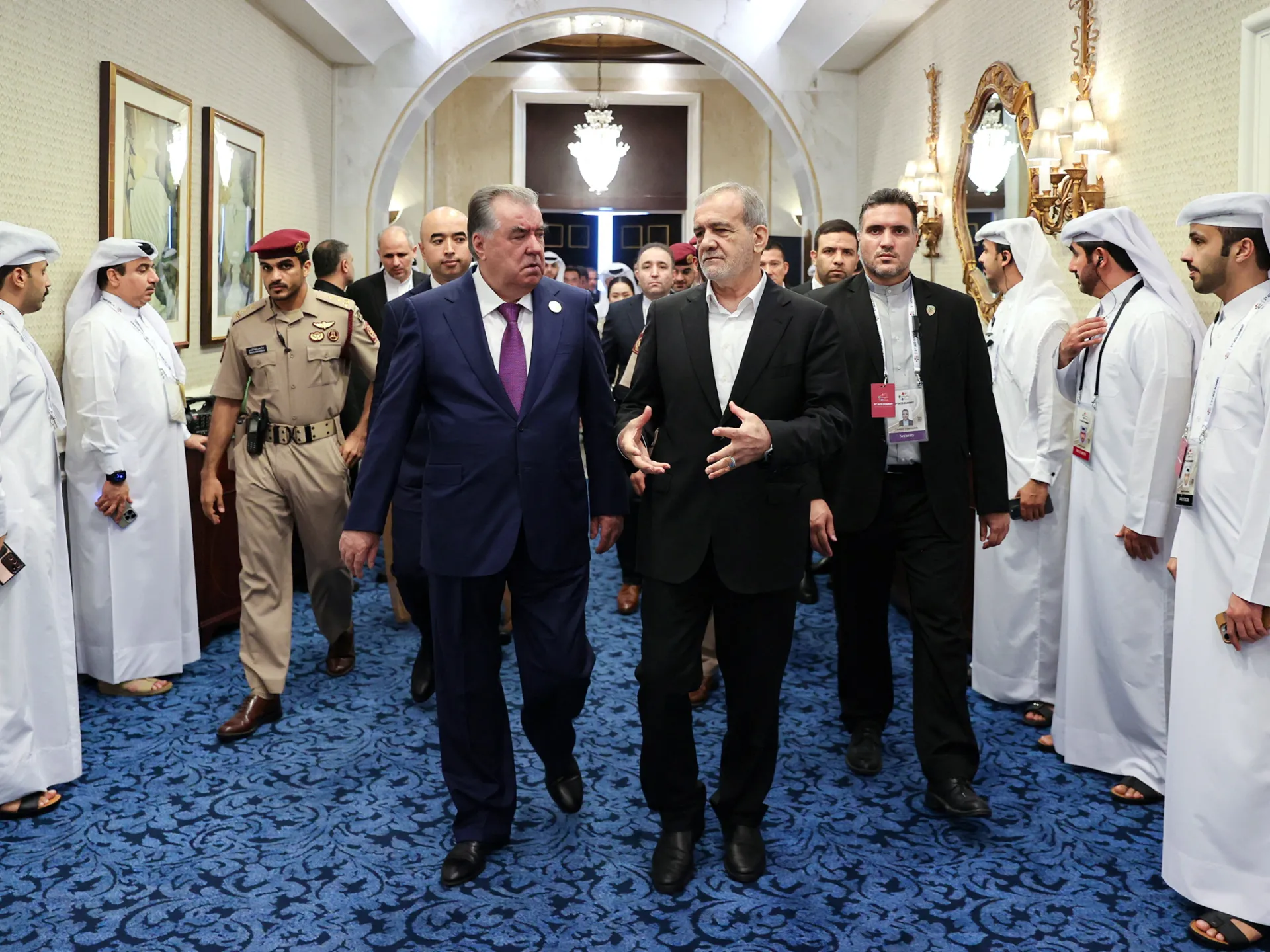
Besides Tajikistan, Iranian President Masoud Pezeshkian welcomed a proposal from Kyrgyzstan in August to establish a joint refinery in the Central Asian country, according to a report by Iran’s Tasnim news agency,
Under the agreement, Pezeshkian said, “The crude oil needed by the refinery can be supplied by Iran, and the products can be divided between the two sides.”
Will exporting oil to Central Asian countries help Iran?
The United States and Israel’s war on Iran has affected Tehran’s oil revenues. Data released by the government-administered Statistical Center of Iran in September showed that gross domestic product (GDP) shrank by 10.1 percent year-on-year between March 21 and June 20, the first quarter of the Persian calendar.
Tehran’s ability to sell crude has also been dramatically curtailed by the US naval blockade of Iran’s ports, imposed for most of the war, which began in late February.
Iranian crude and condensate loadings collapsed from about two million barrels per day (bpd) in March to roughly 740,000bpd in July and just 220,000-255,000bpd in August, according to estimates from Kpler and Vortexa.
TankerTrackers.com told the Reuters news agency in September that 29 tankers, carrying 36.11 million barrels of crude, were trapped in the Strait of Hormuz. Meanwhile, Vortexa estimated that total Iranian crude afloat had fallen from 135 million barrels at the end of July to 107 million barrels by late August.
Amid these challenges, Iran has been scrambling to find new countries to trade oil with. Russian fuel shortages have opened up new opportunities for Iran in Central Asia, at least in the short term, according to analysts.
How does Iranian oil reach Tajikistan and Kyrgyzstan?
Iran does not share a border with either country.
To get to Tajikistan, Iranian “oil and refined products have to cross Turkmenistan and Uzbekistan by rail”, said Frederic Schneider, a nonresident senior fellow at the Middle East Council on Global Affairs.
To get to Kyrgyzstan, Iranian oil would also need to pass through Turkmenistan and Uzbekistan.
Is trading oil with Iran logistically sustainable for Central Asia?
It is unlikely, Schneider said.
“This opportunity [for Iran] depends on Ukraine continuing to hit Russian refineries, which seems unlikely, both given the waning of Ukraine’s strike capability and the US government’s demand to stop the attacks as they put too much strain on global oil markets,” he told Al Jazeera.
He noted that US President Donald Trump has pressed his Ukrainian counterpart, Volodymyr Zelenskyy, repeatedly in September for an “energy truce” with Russia, since diesel prices have become a political problem for Trump ahead of the November midterm elections in the US.
“Those truces have so far collapsed within hours, but the direction is clear. Once the strikes stop, or once Russia repairs its plants, Russian fuel will come back to Central Asia duty-free under Eurasian Economic Union arrangements, and Iran will struggle to compete on price,” he said.
Logistics also favour Russia with respect to importing oil to countries like Tajikistan and Kyrgyzstan, he said.
Unlike Iran, Russia shares a border with both.
“Tajikistan’s own request [for oil] would need around 51,000 rail tank cars, and its main refinery at Dangara has never operated commercially at scale. Russia, by contrast, has decades’ worth of logistics infrastructure, pipelines, rail links, and supply contracts into the region,” Schneider said.
Is Central Asia a big enough market to compensate for Iran’s Hormuz losses?
No, according to Schneider.
Tajikistan’s total demand, Schneider said, was about 50,000bpd.
That is a drop in the ocean compared with the 1.7 million bpd Iran exported by sea a year ago. China reported $9.96bn in two-way trade with Iran in 2025, a figure that does not include some $31.2bn in Iranian oil shipments, according to the US-China Economic and Security Review Commission.
“This suggests that Central Asia can be a useful outlet for Iranian diesel and gasoline, but it cannot replace the Chinese market,” Schneider said.
For Tehran, Central Asia’s importance depends on how the US-Israel war on Iran develops, he said, adding that Tehran also needs to stay on good terms with Russia, with which it has a deep strategic partnership.
“Iran cannot afford to be seen as poaching Russian customers too aggressively, so it will present itself as a stopgap supplier, which, again, limits how much it can earn there,” he said.
What other risks does Central Asia face in buying Iranian oil?
Schneider warned that Central Asian nations could be hit with Washington’s secondary sanctions on Iran.
“Legally, US secondary sanctions apply to any foreign company or bank that conducts a significant transaction in Iranian petroleum, wherever it is based, and the Treasury expanded the list of sanctionable conduct in August. A Treasury official has already warned publicly that anyone in this trade ‘incurs that risk themselves’,” he noted.
But Schneider said that, politically, the US sanctioning Central Asian governments is unlikely.
“Central Asia is the arena of a new ‘Great Game’ between Russia, China and the United States, and Washington is courting the region harder than at any point since the 1990s, chiefly for its critical minerals. Kazakhstan alone holds about half of the minerals the US classifies as critical, including uranium and tungsten,” he said.
“Sanctioning a Central Asian government for buying fuel from Iran would push them straight back into closer ties to Russia and China,” he noted.
“What I would expect instead are targeted designations of individual traders, rail and logistics operators and smaller banks, combined with quiet pressure on the region’s correspondent banks. That alone is enough to raise the cost and slow the trade, but will come at the price of these countries redoubling their efforts to decouple economically and financially from the US.”
Yemeni government says one of the missiles hit Aden airport’s runway minutes before a flight from Cairo was due to land.
Published On 7 Oct 20267 Oct 2026
Yemen’s internationally recognised government has accused the Houthis of firing ballistic missiles and drones at the main international airport under its control, as Saudi Arabia said it had intercepted another missile north of its capital, Riyadh.
In a statement on Wednesday, the Ministry of Transport said the Houthis targeted the runway and passenger terminal at the airport with at least two ballistic missiles and several drones.
Recommended Stories
list of 3 itemsend of list
“One of the missiles landed near the runway minutes before the Yemeni flight from Cairo was to land,” it said. “We cancelled the landing of the incoming flight from Cairo [in Egypt] and diverted its route to Jeddah [in Saudi Arabia] to protect the passengers.”
The ministry also said it evacuated the airport terminal and removed two planes from the tarmac during the attacks.
It added, “This incident could easily have turned a civilian flight into a horrific humanitarian disaster, claiming the lives of dozens of innocent people in an instant.”
Aden airport is the main international gateway for parts of Yemen outside Houthi control in the city that has been the seat of the government since the takeover of the capital, Sanaa, by the Iran-supported group in 2014.
The Houthis said in a statement they targeted “Saudi military supplies” arriving at the Badr camp near the airport with ballistic missiles. Saudi Arabia backs Yemen’s government.
Separately, the Saudi-led military coalition fighting in Yemen said it intercepted and destroyed a ballistic missile, launched by the Houthis, north of Riyadh.
In a social media post, Major-General Turki al-Maliki, the spokesperson for the Saudi-led coalition, said it was tracking the launch platform used in the attack via an intelligence system over Sanaa, and promised to destroy it.
The Houthis said in statements on Tuesday and overnight into Wednesday that they had targeted Saudi international airports in Riyadh and Abha.
The intensified fighting in Yemen comes amid mounting regional tensions set off by the US-Israel war on Iran. The Saudi-backed government forces launched a counteroffensive against the Houthis to retake the Red Sea port of Mocha and areas around the Bab al-Mandeb strait.
Fighting has concentrated in the southwestern province of Taiz.
Al Jazeera’s Yousef Mawry, reporting from Sanaa, described “all-out battles to take over the ground, the highlands and the mountains east of Bab al-Mandeb”.
“It’s a battle to take over the strategic western part of Taiz, and whoever controls the wider vicinity will overlook the region and have dominant military control,” he said.
“For the Yemeni government to take control of Mocha and the strategic bases and locations along the Red Sea coast, it first has to drive the Houthis off the mountains east of Mocha.”
Pakistan and Turkiye on Monday agreed to activate “deterrence measures” under their mutual defence pact with Saudi Arabia and rapidly deploy forces to the Gulf kingdom to counter Houthi attacks.
The United Kingdom could be heading toward its most significant expansion of ground-based air defense in generations, under a plan announced by the Conservative Party. For now, however, with the Conservatives in opposition, the proposed £10 billion (about $13.3 billion) “Britannia Shield” exists only as a policy commitment rather than an approved government program. At the same time, it highlights the seriousness of U.K. military deficiencies in this area, as the threat from the air continues to grow.
The proposal will move into the U.K. Ministry of Defense acquisition system if the party returns to government following the next general election and then follows through on the funding and procurement decisions required to turn the pledge into an operational capability. The party has proposed spreading the investment over a decade, with an initial capability intended to emerge during the first term of a future Conservative government and the wider network established after that.
Britannia Shield comes with the character of the air threat facing Europe having changed dramatically over the last decade. Russia’s war in Ukraine has demonstrated the scale at which relatively inexpensive drones can be employed alongside cruise and ballistic missiles, while recent fighting in the Middle East has clearly shown the costs involved in maintaining a sophisticated, layered air defense system under sustained attack. At the same time, the threat is no longer confined to weapons fielded by major state militaries. Small, widely available drone technologies can be weaponized with relative ease by non-state actors, providing a cheap and potentially highly scalable means of attack.
Operating in the Red Sea in 2024, the Type 45 destroyer HMS Diamond uses its Sea Viper missile system to shoot down a missile fired by the Iranian-backed Houthis from Yemen. Crown Copyright
For Britain, which has traditionally relied heavily on fighter aircraft, naval air defense, and the protection provided by geography and NATO, it is increasingly doubtful whether those capabilities provide enough coverage for the infrastructure that would be most important to keep functioning during a major conflict.
While a party press release refers to it directly, Conservative leader Kemi Badenoch has made efforts to distinguish Britannia Shield from a British version of Israel’s Iron Dome.
Iron Dome has become one of the best-known elements of Israel’s layered air defense network, having been developed primarily to deal with short-range rockets, artillery, and mortar rounds threatening populated areas. The system has evolved, however, and newer configurations can also engage threats including cruise missiles and drones. Importantly, Israel’s Iron Dome systems protect a country a twelfth of the size of United Kingdom and deal with only a portion of the potential threats in critical areas.
Iron Dome
Mention should also be made of the U.S. Golden Dome missile defense initiative, which envisions integrating sensors, interceptors, and other defensive capabilities as part of an enormous architecture with a greater emphasis on protecting the U.S. against a range of aerial and missile threats, up to and including intercontinental ballistic missiles.
Talking to the BBC, Badenoch argued that Britain does not face the same kind of persistent rocket and missile threat as Israel and therefore does not require an equivalent level of coverage. Instead, the Conservative proposal is intended to combine improved radar, command and control, interceptor missiles, and counter-drone capabilities into an integrated network designed around the threats Britain is considered most likely to face.
Britain already has some of the components that such a system could leverage. Royal Navy Type 45 destroyers — when they are available — provide a highly capable long-range air-defense layer through Sea Viper missiles, while the Army’s Sky Sabre system uses CAMM missiles for shorter-range engagements. The RAF provides combat aircraft and airborne surveillance capabilities, and Britain is integrated into NATO’s wider air and missile defense architecture. The problem is that these capabilities were not designed to provide a dense, permanent defensive umbrella over critical infrastructure, and the ground-based component in particular remains relatively limited when compared with the scale of the potential target set. There is also the reality that these assets are required to defend locales far from the British Isles themselves.
A British Army Sky Sabre battery. Crown Copyright
The government’s own 2025 Strategic Defense Review acknowledged that changing threat environment, allocating up to £1 billion in new funding for homeland air and missile defense and calling for improvements to the United Kingdom’s wider integrated air and missile defense architecture. Britannia Shield would therefore be a much larger political commitment to expanding and integrating capabilities that already exist, while adding new layers intended to deal with the growing drone and missile threat.
The £10 billion figure provides little idea of the scope of capabilities. The scale of the proposed system will determine whether that additional money represents a major expansion or simply the beginning of a much larger requirement.
Gen. Sir Richard Barrons has previously estimated that an entry-level system of the kind outlined could cost around £80 billion over a decade, illustrating how quickly the cost can rise once the requirement expands from protecting selected sites to providing something approaching comprehensive national coverage.
2/ Estimates suggest north of £80bn for the full cost of a perfect system, so we almost certainly need to think differently than a “dome” solution. A layered air defence will include a number of elements, including the ability to deter and strike back at an adversary.
Badenoch’s description of the threat instead points toward a system in which Britain would identify the infrastructure and military facilities most important to national resilience and then build increasingly dense layers of protection around them. That would include major airbases, ports, energy infrastructure, communications facilities, and other critical nodes, rather than attempting to create a continuous defensive bubble over the entire country.
RAF No. 617 Squadron F-35B jets at RAF Marham in England. Crown Copyright
Such a system would also have to account for the fact that the location of the launch platform can be as critical as the weapon itself. Badenoch described a scenario in which an adversary could operate in the English Channel to launch drones or missiles against targets in Britain. The resulting reduction in warning time would place greater demands on sensors and command systems, but it would also mean that the defensive problem could begin well before an incoming weapon reached British airspace. Maritime surveillance, intelligence collection, fighter aircraft, and naval forces could all potentially contribute to detecting or disrupting a launch platform before it had the opportunity to fire.
A Russian Kilo class submarine, its accompanying tugboat (center), and the RFA fast fleet tanker Tidesurge (background), as seen from a Merlin helicopter from 814 Naval Air Squadron. The helicopter and RFA tanker shadowed the submarine and tugboat as they sailed westward from the North Sea, through the Strait of Dover and into the English Channel in 2025. Crown Copyright
That broader approach is particularly important because the economics of countering drones are fundamentally different from those associated with conventional air defense targets. A system that responds to inexpensive drones by firing a sophisticated interceptor costing hundreds of thousands or millions of dollars would rapidly become unsustainable during a large attack. Any serious British architecture would therefore need several layers, with electronic warfare, guns, low-cost interceptors, and other counter-drone systems, potentially including directed-energy weapons, dealing with the lower end of the threat wherever possible. Meanwhile, more expensive surface-to-air missiles would be preserved for cruise missiles, aircraft and other targets that cannot be economically engaged by cheaper means.
A British Army Wolfhound armored vehicle, seen here with a mounted portable Laser Directed Energy Weapon (LDEW). This was the first high-powered laser energy weapon to be successfully fired from a British Army combat vehicle. Crown Copyright
The recent situation at RAF Fairford adds another dimension to that problem. The United States recently withdrew a dozen B-1 bombers from the Gloucestershire base amid reported concerns about a possible Iran-backed attack, after U.S. officials said commanders had received new information about a potential plot. British authorities maintained that the base was safe, while British sources reportedly questioned whether Iran could reproduce the kind of complex operation carried out by Ukraine against Russian airfields in 2025. The episode nevertheless demonstrated the degree to which even a major military installation can become a concern when an adversary is believed to be looking for unconventional ways to reach it.
A B-1B Lancer assigned to the 9th Expeditionary Bomb Squadron parks on the flightline at RAF Fairford, United Kingdom, in 2023. U.S. Air Force Photo by Senior Airman Ryan Hayman
That brings Operation Spiderweb into the discussion, although there is no public evidence that Iran is preparing a comparable operation against Britain. Ukraine’s June 2025 attack was prepared over roughly 18 months and involved small drones being moved deep into Russia inside containers carried by trucks before being launched remotely against military airfields. The operation illustrated that once relatively cheap drones have been positioned close to their targets, the defender may have little opportunity to intercept them through traditional long-range air defense means. This is exactly a scenario we have been warning of for many years.
Today, Ukrainian intelligence reportedly launched 117 attack drones from trucks that had been placed near Russian air bases. I tasked several collects this morning via @umbraspace and my first images have already started processing. What a remarkable success in a well-executed… pic.twitter.com/LzXulw8jnK
For Britannia Shield, that means protecting an airbase such as RAF Fairford cannot simply be a matter of installing missile batteries. Physical security, counter-intelligence, surveillance of access routes, low-level drone detection, electronic warfare and the ability to identify suspicious activity before an attack begins would all become part of the same defensive problem. Hardened infrastructure would also be essential, helping to protect aircraft, fuel, munitions, command facilities and other critical assets from attacks that penetrate the outer layers of the defense. The distinction is increasingly important as military aircraft themselves become more valuable and as relatively inexpensive unmanned systems demonstrate their ability to threaten aircraft on the ground without ever having to penetrate the surrounding air defense network.
The new British proposal also becomes more complicated because its intended coverage extends beyond the British mainland. Badenoch has specifically referred to defending installations in Cyprus and the Falkland Islands, which introduces a very different set of operational and logistical requirements. A network supporting critical infrastructure in Britain can draw on dense communications infrastructure, nearby industrial support and the wider NATO system, whereas a defensive capability at RAF Akrotiri or in the Falklands requires its own radar coverage, launchers, personnel, ammunition stocks, and sustainment arrangements. Extending the same architecture across those locations would therefore consume considerably more resources.
A RAF 1435 Flight Typhoon FGR4 pair flying over West Falkland island during a routine training flight. Crown Copyright
A similar problem exists with ammunition stocks. Ukraine has repeatedly demonstrated that sophisticated air defenses can come under sustained pressure during large missile and drone attacks, while Western countries have struggled to replenish some categories of precision-guided weapons at anything approaching wartime consumption rates. A British system that looks impressive on paper but has only a small stockpile of interceptors would provide much less meaningful protection during a prolonged campaign, particularly if an adversary deliberately attempted to exhaust the defenses through repeated attacks using inexpensive drones.
Ukraine also offers lessons for how Britain could organize such a network. Mobile air defense teams, distributed sensors, acoustic detection systems, and digital applications that connect air defense operators with military units and civilian spotters have all become increasingly important in Ukraine, where defenders have had to detect and respond to large numbers of drones and missiles across a wide area. There are echoes here of the distributed air defense networks developed during World War II, when observers, radar operators, fighter controllers, and anti-aircraft units were linked together to provide early warning and direct defensive responses. As in 1940, Britain would need an air defense network that is distributed, mobile, and adaptable to new threats.
A RAF Regiment light anti-aircraft gun team man their Bofors 40mm gun in a rain-sodden emplacement in southeast England, to help defend London from flying bombs in World War II. Crown Copyright
The most revealing details of Britannia Shield are yet to be provided. The number of defended sites, the types and numbers of radars, the number of launchers, the size of interceptor stocks, and the proportion of the budget devoted to counter-drone capabilities all remain unclear for now. The same applies to the money required for training, maintenance, software, communications, and replenishment across the life of the system.
There is also a straightforward political limitation to the proposal. The Conservatives have pledged to invest in Britannia Shield as part of a broader plan to increase defense spending, but that money is not currently sitting in a government procurement account waiting to be spent and defense budgets are increasingly stretched by other big-ticket programs. The Conservatives would first have to return to government, establish the program as a formal requirement, and then make the associated spending and procurement decisions. Even if those steps were taken quickly, the most capable elements of the system would take years to design, procure, integrate, and deploy.
A rendering of of the new Dreadnought class of ballistic submarines for the Royal Navy, representing the largest British defense investment of recent years. Crown Copyright
Whether £10 billion would ultimately be sufficient depends on the mission the future government assigns to the system. If Britannia Shield were expected to provide nationwide protection against sustained attacks involving ballistic missiles, cruise missiles, and large numbers of drones, the budget would fall far short, particularly once interceptor stocks and long-term sustainment are included. If it is designed as a layered network protecting a defined group of critical infrastructure sites and military bases, integrated with the RAF, Royal Navy, Army, and NATO systems already in place, the proposal becomes more realistic, but it wouldn’t address higher-end threats, like longer-range ballistic missiles.
That limitation is particularly significant when considering Russia, which remains the most serious military threat to the United Kingdom and its European allies. From what we know so far, Britannia Shield is heavily focused on drones and shorter-range missile threats, but Russia possesses a much broader strike arsenal that includes ballistic missiles, cruise missiles, and hypersonic weapons. A British air defense program that concentrates primarily on the lower and middle tiers of the threat therefore leaves a significant gap at the upper end of the spectrum.
Russian Yars intercontinental ballistic missiles travel through central Moscow during a rehearsal for the Victory Day parade in 2025. Photo by Alexander NEMENOV / AFP
The United Kingdom is also not considering this problem in isolation. Across Europe, governments are increasingly pursuing multinational efforts to strengthen air and missile defenses, as the return of large-scale state-on-state warfare and the experience of the war in Ukraine have made the vulnerability of European infrastructure and military forces much more tangible. Nearly three decades after the end of the Cold War, ballistic and cruise missile defense has once again become a central European security requirement. Britannia Shield would therefore need to be considered not only as a national counter-drone and air-defense program, but as part of a much broader European effort to rebuild layered air and missile defenses against the full range of modern threats.
The experience of Ukraine and the Middle East suggests that Britain is unlikely to solve this problem simply by buying more surface-to-air missiles. Increasingly, air warfare relies on complex networks that find the attacker, identify the weapon, choose the appropriate response, and undertake this all at a cost that can be sustained throughout a conflict. That network also has to extend beyond the airspace itself, because the threat may involve a launch platform approaching the coast, a drone operator operating near a military installation, or small drones already hidden inside the defender’s security perimeter.
Last line of defense: British Army riflemen testing a Mossberg 590M Counter SUAS shotgun (foreground) and handheld Counter-Unmanned Aerial System effectors against drones. Crown Copyright
With their proposed reorientation of Britain’s air defense priorities, the Conservatives have put a financial value and a recognizable name around a capability gap that has become increasingly difficult to ignore. If they return to government, there will be many tougher questions to address, including which sites should receive protection, how many layers are required, how much ammunition must be held in reserve, and how the system can be sustained on a wartime footing.
The recent concerns surrounding RAF Fairford, together with the lessons of Operation Spiderweb, underline why that question is becoming more complicated. The next serious attack on a British military installation may not arrive as a large formation of aircraft or a visible wave of missiles crossing the Channel. It could involve a mixture of long-range weapons, cheap drones, electronic warfare, and hybrid warfare activity taking place much closer to the target. A future Britannia Shield would have to be designed around that reality, and would come with a price tag to match.
Eastern-based parliament votes to replace longtime speaker with Al-Salhin Abdelnabi al-Obeidi.
Published On 7 Oct 20267 Oct 2026
Libya’s eastern-based House of Representatives has elected a new speaker, ending Aguila Saleh’s 12-year tenure amid growing discontent among lawmakers over his leadership.
Legislators in the 170-member House voted on Tuesday to replace Saleh with Al-Salhin Abdelnabi al-Obeidi, the parliament’s spokesperson announced on X.
Recommended Stories
list of 3 itemsend of list
The vote came a day after 98 members of the House approved a new system limiting the speaker and deputy speakers to a single 12-month term.
The change ended an arrangement that had been in place since the chamber’s first leadership was elected in 2014.
“There was significant discontent among MPs with the previous leadership over numerous errors,” lawmaker Jebree Oheida told the Reuters news agency. “We tried to engage with the leadership to address these issues, but to no avail. Among these errors were decisions made without consulting MPs.”
The vote was overseen by Second Deputy Speaker Misbah Douma, according to the Libya Observer.
Saleh has previously rejected the proceedings, saying the initial vote to limit the speaker’s term was “not official and had no legal effect”, according to the outlet. He had also announced that he had cancelled the session he had called for Tuesday.
The developments come as Libya remains divided politically and militarily between the United Nations-recognised government in Tripoli led by Prime Minister Abdul Hamid Dbeibah, and a rival administration in the east backed by renegade military commander Khalifa Haftar.
Haftar’s camp relies in particular on the parliament, which sits in the eastern city of Benghazi under their control.
Saleh has long been considered a staunch ally of the Haftar clan, but analysts said he appeared to be weakened as Haftar’s sons, in particular Saddam Haftar, consolidated their positions.
“Agila Saleh appears to be the latest casualty of Saddam Haftar’s drive to centralise decision-making in eastern Libya and bulldoze his way into a political role,” said Emadeddin Badi, an analyst at the London-based Chatham House.
Al-Obeidi, who comes from the same tribe as Saleh, represents the eastern city of Tobruk and has chaired parliament’s Libyan-Turkish friendship committee.
The House on Tuesday also elected Tarek al-Ashtar and Mesbah Douma as first and second deputy speakers, respectively.
Their election follows the signing of a landmark agreement by representatives of Libya’s rival political camps in Tripoli in August that could see presidential and legislative elections held within two years.
Mediated by the United Nations Support Mission in Libya (UNSMIL), the “4+4 committee” agreement attempts to resolve recurring legal and institutional disputes that have crippled the nation since the overthrow of Colonel Muammar Gaddafi in 2011.
The United States is pursuing a separate reunification plan for the oil and gas-rich North African country, led by Massad Boulos, President Donald Trump’s senior adviser for Arab and African affairs.
Aircraft carrier USS George H.W. Busharrived in Phuket, Thailand, on Sunday for a scheduled port call after 188 days at sea, leaving just one carrier strike group, led by USS George Washington, in the Middle East for the first time in months. Across the Pacific, USS Abraham Lincoln, which Washington relieved in August, is holding off the west coast of California to disembark her air wing and offload ammunition ahead of a well-deserved homecoming this week. With severaloutlets now confirming that USS Theodore Roosevelt will deploy to the Middle East, there very well may be three flattops in the region again, but any overlap will be temporary given normal rotation schedules.
Here’s TWZ’s weekly carrier tracker monitoring America’s flattop fleet, including deployed Carrier Strike Groups (CSG) and Amphibious Ready Groups (ARG), using publicly available open-source information. Check out last week’s report here.
George H.W. Bush Drops Anchor Off Phuket For Liberty Port Call
USS George H.W. Bush arrived in Thailand on October 4 for a scheduled port visit, U.S. 7th Fleet announced. Guided-missile destroyer USS Delbert D. Black escorted the flattop from her previous station in the Arabian Sea and joined the call. Bush deployed from the continental U.S. on March 31 and took the long way to the Middle East, rounding the Cape of Good Hope to limit exposure to the treacherous Red Sea and Bab Al Mandeb Strait.
USS George H.W. Bush (CVN 77) arrived in Phuket, Thailand, on October 4, 2026. U.S. Navy photo
On October 3, Bush switched her Automatic Identification System (AIS) transponder on about 15 nautical miles southwest of Thailand, broadcasting her position publicly for the first time since April, based on data available via MarineTraffic. The carrier dropped anchor approximately two nautical miles off the coast of Phuket the following day.
USS George H.W. Bush’s transit into Phuket, Thailand, on October 3. Source: MarineTraffic/KPLER (Reprinted with permission)
Bush had been operating in the U.S. Central Command (CENTCOM) area of responsibility (AOR) since April, when the U.S. briefly had three carriers on station, in support of operations against Iran. “For the last six months, the strike group supported Operation Epic Fury and the U.S. naval blockade in the U.S. Central Command area of responsibility to secure maritime security and stability in the Middle East,” according to the 7th Fleet statement. That force posture was short-lived, however, as the USS Gerald R. Fordtransited the Suez Canal northbound on May 1 and began her journey home not long after Bush arrived. Bush chopped into the U.S. Pacific Command (PACOM) AOR sometime over the past week while en route to Phuket, leaving a single CSG in CENTCOM.
The current composition of CSG-10 is USS Mason, USS Ross, and USS Donald Cook, but none of the destroyers joined the flagship in Thailand. Why Black escorted the carrier instead is unclear. Blackdeparted Mayport, Florida, on January 3, 2026, for an independent deployment and is long overdue for a liberty call after nine months. Mason transited the Malacca Strait southbound on September 29, according to public AIS data, and is currently in Singapore; the purpose of the stop is unknown. Ross and Cook have not broadcast their positions in months, but were last operating in the Arabian Sea.
The Navy confirmed this was the first port visit for Bush since deploying, marking 188 consecutive days at sea (including the end date), which falls just short of the 200-plus days that USS Abraham Lincoln recently logged.
Flight ops aboard CVN 77. U.S. Navy photo USS Mason in CENTCOM. U.S. Navy photo USS Delbert D. Black underway. U.S. Navy photo USS Donald Cook sails while an MH-60S Seahawk flies alongside USS George H.W. Bush in U.S. 5th Fleet. U.S. Navy photo
Abraham Lincoln Homecoming Imminent
The USS Abraham Lincoln reappeared on AIS on October 3, roughly 200 nautical miles southwest of her homeport at Naval Air Station (NAS) North Island in San Diego, after steaming east across the vast Pacific Ocean. However, instead of returning home, Lincoln is holding off the coast of California, disembarking Carrier Air Wing (CVW) 9 and offloading ammunition alongside Lewis and Clark class dry cargo ship USNS Washington Chambers.
USS Abraham Lincoln’s transit off the coast of California. Source: MarineTraffic/KPLER (Reprinted with permission)
Lincoln is expected to return home on Wednesday or Thursday. The carrier departed San Diego on November 21, 2025, and an arrival this week would close out a total deployment of 321 to 322 days, by our count. That’s just shy of the 326-day record USS Gerald R. Ford set in May, representing the second-longest deployment in the modern carrier era.
The marathon deployment drew scrutiny over the grueling conditions Sailors and Marines experienced aboard. In August, crew families described supply shortages and difficult living arrangements, as TWZreported at the time. The accounts led to widespread media coverage, which Acting Secretary of the Navy Hung Cao called dishonest while also acknowledging that “a small number of mental health cases were treated with no loss of life, meal plans were adjusted when fresh resupply was unavailable, without a single meal being missed, calls home were limited when the operational threat was too high.” At least eight personnel across the strike group attempted suicide during the cruise, Cao wrote in a letter sent to Sen. Kirsten Gillibrand that was obtained by CNN.
Friends and family welcomed members of Helicopter Maritime Strike Squadron (HSM) 71 back to NAS North Island on Friday, according to a release from DVIDS, the military’s content-sharing portal. A Growler squadron from CVW 9 also recently returned to NAS Whidbey Island in Washington State.
Family and friends welcome HSM 71 home. U.S. Navy photo An MH-60R with HSM 71 on USS Abraham Lincoln. U.S. Navy photo
Ronald Reagan Moves From Washington State To San Diego
The latest carrier to rejoin the fleet after completing an extended maintenance availability, USS Ronald Reagan, pulled into San Diego on Monday after departing Bremerton, Washington, on September 30, according to public AIS data. Reagan is currently berthed at Kilo Pier on Naval Air Station North Island, a spot now available after USS Theodore Rooseveltvacated it on September 27.
USS Ronald Reagan arrives at Naval Air Station North Island in California on October 5, 2026. U.S. Navy photo
Imagery released by the Navy showed the flattop underway conducting routine operations in the U.S. 3rd Fleet area of operations on Sunday, October 4. Reagan reentered the fleet recently after completing a four-day sea trial and shakedown cruise that capped an extended 17-month Drydocking Planned Incremental Availability.
While docked at Puget Sound Naval Shipyard, she received several upgrades and enhancements, including an Unmanned Air Warfare Center (UAWC) to command and control the MQ-25 tanker drone. The MQ-25 will eventually take on the role of refueling carrier-based aircraft, held today by Super Hornets. The new UAWC makes her the second carrier to receive such an upgrade, following USS Theodore Roosevelt. The crew aboard Reagan has conducted pierside and at-sea testing of the new command center.
USS Ronald Reagan conducts routine ops in the Pacific. U.S. Navy photo USS Ronald Reagan departs Bremerton. U.S. Navy photo
Dwight D. Eisenhower Returns To Homeport After Growler Mishap
Following an incident off the east coast that resulted in the loss of an EA-18G Growler electronic attack jet, the USS Dwight D. Eisenhower returned to Naval Station Norfolk on October 5 after an eight-day underway.
Prior to her return, the Navy told us the following, published in full: “The Nimitz-class aircraft carrier USS Dwight D. Eisenhower (CVN 69) will return to Naval Station Norfolk to allow for a comprehensive assessment of the ship’s aircraft launch and recovery equipment following the Sept. 28 aviation mishap. The decision reflects the Navy’s deliberate approach to flight safety and readiness. While the cause of the mishap remains under investigation, Navy technical experts will conduct a thorough assessment of the affected systems and complete any necessary maintenance before flight operations resume. USS Dwight D. Eisenhower remains capable of safely navigating and conducting shipboard operations.”
USS Dwight D. Eisenhower’s recent transit off the east coast. Source: MarineTraffic/KPLER (Reprinted with permission)
Eight Sailors were ultimately evaluated by medical personnel aboard the ship. The mishap was reportedly due to a failure of the arresting gear, which catches and stops the forward momentum of aircraft after landing, and the Growler was lost overboard. Both crew members safely ejected and were rescued by MH-60 Seahawk helicopters.
Harry S. Truman Moves Dead Stick For Mid-Life Nuclear Refueling Overhaul
USS Harry S. Trumanleft Naval Station Norfolk on September 30 and moved “dead stick” into Dry Dock 11 at Huntington Ingalls Industries’ (HII) Newport News Shipbuilding (NNS) facility the same day. The carrier will begin the lengthy process of a mid-life Refueling and Complex Overhaul (RCOH).
USS Harry S. Truman transits the Elizabeth River after departing Naval Station Norfolk to begin the shipyard phase of her RCOH. U.S. Navy photo
Truman is the eighth Nimitz class carrier to conduct an RCOH at NNS, according to HII, which won a $5.1 billion contract to complete the work. The overhaul accounts for about one-third of the maintenance and modernization work that a carrier will undergo over a 50-year service life and involves defueling and refueling her nuclear reactors, in addition to upgrades made to the ship’s propulsion plant and combat systems.
“Our team has been diligently working to get ahead on this critical engineering and construction project that will prepare USS Harry S. Truman for the second half of her service life,” Bryan Caccavale, the NNS vice president of program management, said in a statement. “When the ship arrives at NNS, we’ll apply that same diligence to working with our suppliers and Navy partners to ensure a successful recapitalization of CVN 75,” he added.
USS John C. Stennis is also currently completing RCOH at NNS, but there has been no announcement of a return to service, as of publication. Stennis began the overhaul in 2021, and budget documents point to an October 2026 redelivery date, but it’s unclear whether that timeline will hold.
Newest Ford Class Carrier, John F. Kennedy, Transits To Norfolk After Preliminary Acceptance
The Navy took “preliminary acceptance” of the future USS John F. Kennedy from NNS on September 29. The nation’s newest and second Ford class carrier completed acceptance trials in August.
“Achieving preliminary acceptance marks a new phase for the ship and her crew, allowing them to get more water under the keel as they test and train underway,” the Navy’s Program Manager for Gerald R. Ford-Class New Construction, Capt. Mark Johnson, said. “This milestone is a testament to the shared commitment of our sailors and our combined Navy-industry team, who remain laser-focused on completing the final stages of construction and test with precision and efficiency to deliver combat-ready lethality to the fleet.”
The future USS John F. Kennedy departs Newport News Shipbuilding. Photo: HII-NNS
Kennedy is 99% finished, according to the Navy, with formal delivery planned for spring 2027. “All major systems are complete. The shipbuilder is currently completing final ship systems testing, including testing of the remaining four Advanced Weapons Elevators,” the release noted. On the same day as the announcement, September 29, the carrier departed the shipyard, and arrived at her new homeport of Naval Station Norfolk, moored at Pier 11N, on October 2.
Big Deck Fleet At A Glance
Overall, four U.S. carriers are deployed (with one returning home this week), three are working up in various states of readiness, three are in maintenance, one is being used primarily for training before deactivation next year, and another will be delivered in 2027. Two amphibious ready groups are deployed, one is forward-deployed, three are working up or in port, and three are in maintenance.
Note: Positions are general approximations.Non-deployed LHA/LHD amphibious warships are not shown.
The United States stock market has hit an all-time high as excitement around artificial intelligence continues to fuel a buying frenzy on Wall Street.
The S&P 500, the benchmark stock index, closed 0.58 percent higher on Tuesday, topping the previous peak reached in mid-August.
Recommended Stories
list of 4 itemsend of list
The Nasdaq Composite, which is more heavily weighted towards tech stocks, also hit a record high, finishing up 0.45 percent.
Tech stocks were among the top performers, with each of the “Magnificent Seven” apart from Meta closing higher.
Amazon led the pack with a 1.95 percent gain, followed by Microsoft and Tesla, which rose 0.78 percent and 0.51 percent, respectively.
Apple and Alphabet both rose 0.22 percent, while Nvidia gained 0.14 percent.
Meta, which has risen more than 20 percent since the launch last month of its new AI assistant, Muse, fell 0.41 percent.
Other big movers in tech included Marvell Technology, which rose 5.81 percent, and Cisco, which gained 4.54 percent.
Technology, AI
Keith Lerner, chief investment officer and chief market strategist at Truist Advisory Services in Atlanta, Georgia, said the market rally should be seen as a “technology and AI surge”.
“Every bull market has a dominant theme, and technology and AI remain this market’s dominant theme,” Lerner told Al Jazeera.
“Technology and communication services were the only two S&P 500 sectors to rise last month, while the other nine declined.”
Wall Street has shrugged off a host of challenges facing the US economy amid hyperscalers’ multibillion-dollar investments in AI.
Despite the energy crunch caused by the US-Israeli war on Iran and a sell-off of US government bonds partly driven by ballooning government debt, the market is well on track to record its fourth consecutive year of double-digit returns.
The S&P 500 has risen 14 percent so far in 2026, while the Nasdaq Composite is up 18.78 percent.
Lerner at Truist Advisory said the market rally had the potential to continue through the end of 2026 given historical trends and expectations for strong corporate earnings.
“We do not expect a straight line higher for markets,” Lerner said.
“Still, the fourth quarter of midterm-election years has produced an average gain of 7 percent and has been positive 84 percent of the time since 1950.”
Lerner said that rising interest rates posed the biggest risk to the upward trend.
“Still, on balance, the weight of the evidence suggests this bull market still has more upside potential,” he said.
Asian stock markets fell on Wednesday, with key indexes in Japan, South Korea and Hong Kong slumping in morning trading.
The Nikkei 225 in Tokyo, Kospi in Seoul and Hang Seng Index in Hong Kong were down 0.79 percent, 1.36 percent and 0.71 percent, respectively, as of 02:30 GMT.
Oil prices, which have been elevated since the start of the war on Iran, rose on Wednesday as traders weighed the fallout of fighting between forces aligned with Yemen’s internationally recognised government and the Iran-aligned Houthis.
Brent crude futures for December delivery stood at $101.45 a barrel as of 02:30 GMT, up 0.87 percent.
Two years ago, Jaguar Land Rover (JLR) relaunched Jaguar into a blizzard of controversy. Its bizarre teaser ad was described as “woke” and its “Barbie pink” concept car was ridiculed.
Now, the first of its new models has appeared in public for the first time. The all-electric Type 01, unveiled in New York, represents a radical new direction for the classic brand.
The car itself is an imposing four-door “Grand Tourer”, with a long bonnet that deliberately harks back to Jaguar’s emblematic 1960s E-Type.
But it marks a gamble for JLR, which has invested billions reinventing Jaguar and is facing mixed reactions over the new car’s design and the brand’s all-electric strategy.
The new model’s electric motors are potent, producing about 1000 horsepower and allowing it to accelerate from 0-62mph in 3.2 seconds. JLR says it has a range, at “sustained highway speed”, of up to 320 miles.
The company describes it as the “most technically advanced, powerful and aerodynamic Jaguar ever engineered”.
However, it comes at a hefty price tag, with a minimum cost of £130,000 ($172,426). In the US, the Type 01 has a starting price of $130,500.
Under normal circumstances, the launch of a car like this might generate few headlines. But in this case the attention has been much greater, and for good reason.





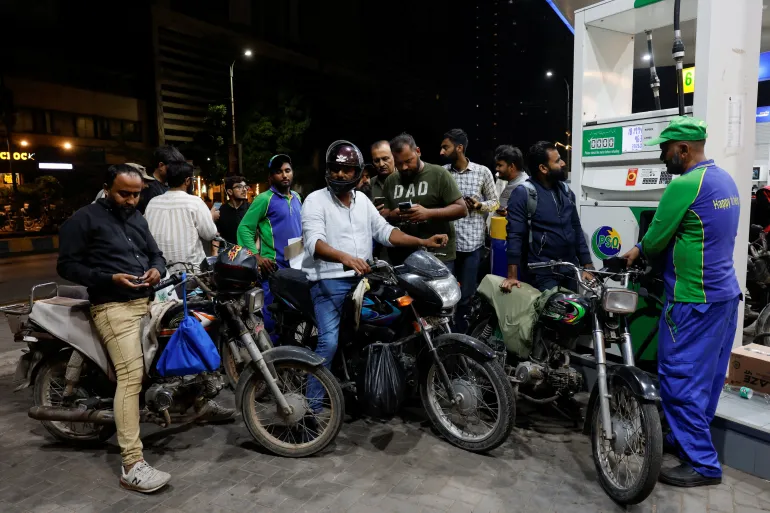



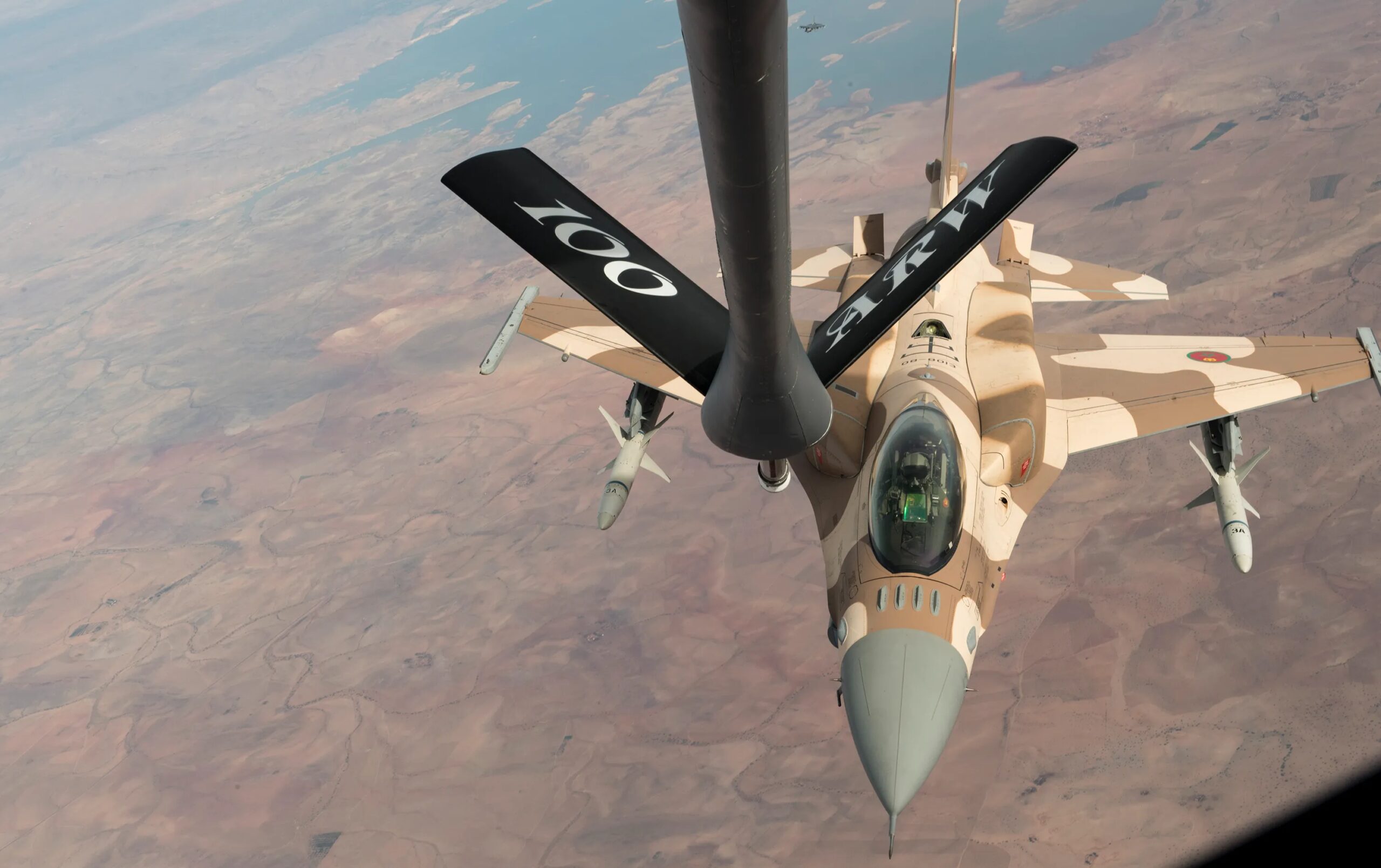







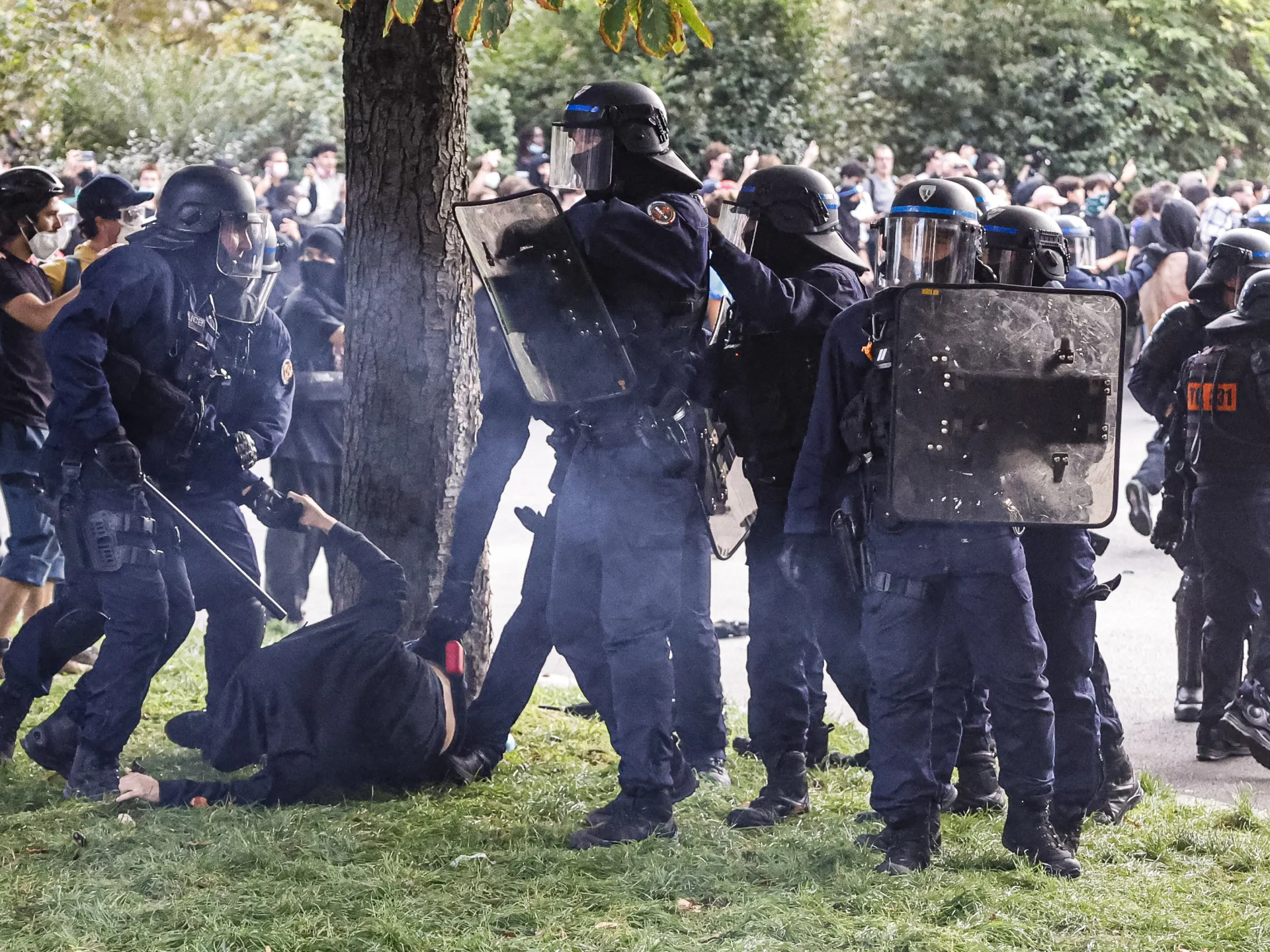

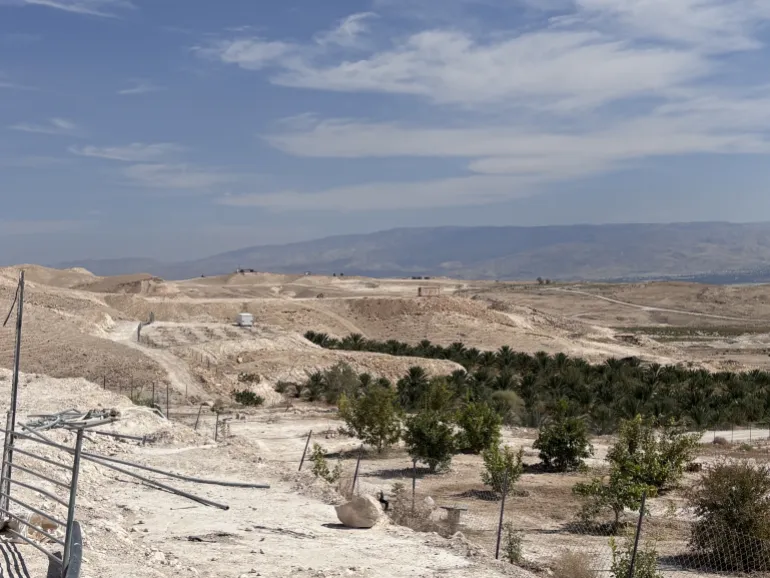
![The view from Muhammad Ghawanmeh’s home in al-Awsaj, looking out towards an Israeli outpost on a hill in the background [Al Jazeera]](https://i0.wp.com/www.aljazeera.com/wp-content/uploads/2026/10/View-from-Muhammads-looking-out-towards-the-outpost-seen-on-hill-in-background-1791321948.jpeg?w=640&ssl=1)
![Jamal Mleihat with his daughter Sewar in al-Awsaj in the occupied West Bank [Al Jazeera]](https://i0.wp.com/www.aljazeera.com/wp-content/uploads/2026/10/Jamal-Mleihat-with-his-daughter-Sewar-1791322462.jpeg?w=640&ssl=1)