Weekly insights and analysis on the latest developments in military technology, strategy, and foreign policy.
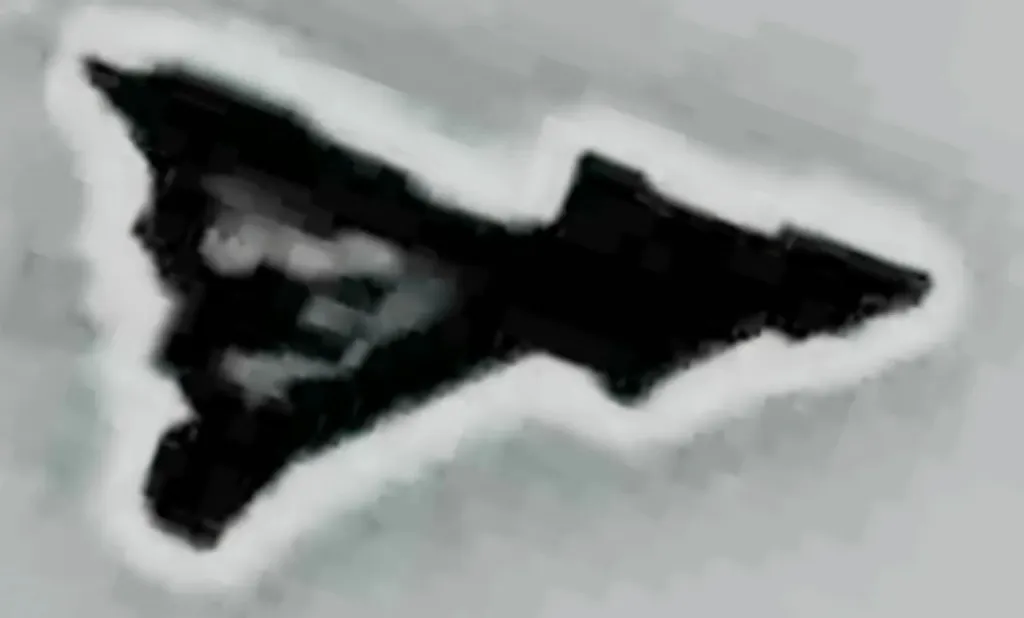
In the latest flare-up of tension during a very shaky ‘ceasefire,’ “Iran has launched multiple drones towards the Strait of Hormuz,” a U.S. official told us. “U.S. forces have taken out at least four of them.”
The statement comes as unconfirmed reports are emerging online of explosions on Iran’s Kharg Island. The official, who spoke to us on condition of anonymity to discuss operational issues, declined comment about those claims.
Big Development
The United States Airforce just launched an intense airstrike on Kharg Island of Iran. Reportedly Air Defence & missile launch site of IRGC has been targeted. pic.twitter.com/qseXJ5g6B7
Kharg Island, which has come under attack before during Epic Fury, is Iran’s main oil export facility. An attack on the oil infrastructure would represent a major escalation.
News of the U.S. takedown of the drones is the latest kinetic incident in the Strait and comes amid sputtering peace talks. As we wrote last week, the U.S. struck Iranian targets and Iran launched missiles and drones at Kuwait and Bahrain in an exchange that severely damaged Kuwait International Airport, killed several people and injured scores more.
You can see video and images of damage from the June 3 attack below.
This is what Iran did in my country, Kuwait: it killed innocent civilians by bombing Kuwait International Airport. Violating all international norms
— حمد عبدالكريم السعيد (@Hamad_Alsaid) June 4, 2026
Other exchanges have occurred around the strait, where U.S. Navy ships says vessels, including their own, were fired upon, which resulted in reprisal attacks on shore targets.
UPDATE: 6:56 PM EDT –
CENTCOM confirmed U.S. forces attacked Iranian facilities and shot down Iranian drones..
“Moments ago, CENTCOM forces shot down four Iranian one-way attack drones that were launched toward the Strait of Hormuz,” the command stated on X. “The attack drones posed an immediate threat to regional maritime traffic. U.S. forces subsequently struck Iranian coastal surveillance radar sites in Goruk and on Qeshm Island to defend against further attacks. American forces remain vigilant and postured to respond to unjustified Iranian aggression in self-defense.”
Moments ago, CENTCOM forces shot down four Iranian one-way attack drones that were launched toward the Strait of Hormuz. The attack drones posed an immediate threat to regional maritime traffic. U.S. forces subsequently struck Iranian coastal surveillance radar sites in Goruk and…
In a post on X, CENTCOM claimed that “U.S. forces intercepted multiple Iranian ballistic missiles and drones launched by Iran toward the Strait of Hormuz and Gulf neighbors, June 5. “
“Iran fired seven ballistic missiles toward Kuwait and Bahrain,” the command stated. “Initial assessments indicate six of the missiles launched by Iran were intercepted and a seventh did not reach its intended target. There are currently no reports of harm to U.S. personnel, and Iranian claims of damaging U.S. 5th fleet headquarters in Bahrain are false. CENTCOM forces remain vigilant and postured to continue responding to unwarranted Iranian aggression in self-defense.
The Iranian attack took place hours after the previously mentioned CENTCOM strikes on Iranian coastal targets.
The CENTCOM post included a video showing those strikes.
Hundreds of Bolivian residents are braving near-freezing temperatures to queue for affordable chicken in La Paz, due to more than a month of food shortages.
Spiked prices and protester blockades have affected access to food and medical supplies in the capital.
At New Delhi’s Jantar Mantar, India’s most famous protest strip, hundreds of mostly young people in cockroach masks and with dog-eared exam guides in hand tried to turn an online joke into a real-world force.
They call themselves the Cockroach Janta Party (CJP) – a satirical “people’s party” born barely three weeks ago after India’s chief justice reportedly likened government critics and unemployed youth to “cockroaches” and “parasites”.
What began as a parody account and meme factory has since exploded into a channel for anger over exams, jobs and a fraying sense of economic promise.
On Saturday, that digital discontent stepped off the screen. Waving India’s national flag and clutching schoolbooks, the protesters demanded the resignation of Education Minister Dharmendra Pradhan after a string of exam paper leaks, technical glitches and cancelled tests.
For many, the fiasco over the NEET medical entrance exam – and reports of student suicides – symbolises a system young Indians say has no credibility left.
The CJP’s founder, 30-year-old political strategist and Boston University graduate Abhijeet Dipke, flew in from the United States to lead the rally, telling supporters that “cockroaches don’t ever fear.”
Police in riot gear and steel barricades underscored the risks of dissent in an era when large protests have often been met with crackdowns and criminal cases.
With more than 20 million followers on Instagram, CJP has already outgrown many mainstream parties online.
Its first street protest now tests whether self-deprecating memes and satire can be converted into a lasting organisation – and whether India’s anxious, hyper-connected youth can find a new political language for their frustration.
Previous World Cup appearances: 0 Player to watch: Mousa Tamari FIFA world ranking: 63
Jordan are appearing at the World Cup finals for the first time, with their Moroccan coach Jamal Sellami hoping that his players can emulate the heroics of The Atlas Lions four years ago.
Recommended Stories
list of 4 itemsend of list
“In big competitions, many teams can surprise. My country, Morocco, reached the semifinals in the last World Cup,” the Reuters news agency quoted him as saying during a training camp in Antalya, Turkiye, in late March.
“That gives us belief.”
While a run to the semifinals might be a little bit optimistic, Jordan are coming into the tournament on a good run of form.
The Middle East nation reached the final of the 2023 Asian Cup, losing to hosts Qatar, and also played Morocco in the final of the 2025 Arab Cup, agonisingly falling short in a 3-2 defeat after extra time.
Jordan also scored 32 goals in World Cup qualifying, marking their highest tally in a single qualification campaign. But eight of those goals were scored by Yazan Alnemat, who will miss this summer’s tournament due to injury.
Sellami takes Jordan into the big time
The Al-Nashama, or the “noble ones”, have developed into a significant force in Arab football since Sellami took over as coach in June 2024 and built on the work of his predecessor, compatriot Hussein Ammouta.
Sellami believes the team he has built can deliver a shock similar to Algeria beating Germany in 1982, Cameroon stunning reigning champions Argentina in 1990, and Senegal repeating the feat against holders France in 2002.
“These results open horizons of hope and ambition for the fans, so they can dream,” Sellami, who played for Morocco at the 1998 World Cup, told Arabic sports channel TFK.
“And we too have the right to dream and to strive to be a strong team and present ourselves well,” he added.
The 55-year-old former midfielder has built a well-structured, disciplined team that utilises their wealth of creative forward talent to hit opponents on the break with lightning-quick transitions.
Star striker misses out
While Jordan’s qualifying campaign gives them plenty of hope for this summer’s tournament, their team in North America will be missing a big part of what made them such a force in Asian qualifying.
Forward Yazan Alnemat contributed eight goals, but will miss the World Cup finals after suffering an ACL injury in the Arab Cup quarterfinals last December.
“Yazan is a player who cannot be replaced,” conceded Sellami. “But we will find a combination for the team that can still be dangerous to the opponent, and that also gives us balance in our defensive performance.”
Alnemat’s likely replacement, Ali Olwan, has recovered from an Achilles injury sufficiently to take his place in Sellami’s extended squad. He contributed nine goals in qualifying, highlighting Jordan’s depth in attacking options.
Mousa Tamari and Nizar al-Rashdan take part in a training session in preparation for the World Cup [Alaa Al Sukhni/Reuters]
‘Jordan’s Messi’ hopes to shine
Captain Mousa Tamari is one of Jordan’s biggest attacking threats and will be looking to torment defenders on the right wing.
The 28-year-old Rennes midfielder is the only Jordan player who competes in one of Europe’s top five leagues and has enjoyed a strong season in France, scoring seven goals and grabbing 11 assists in 36 appearances for the Ligue 1 outfit.
He’s also been a key player at international level, scoring 23 goals in 76 appearances for the Jordan national team.
If Jordan are to upset the odd’s at this summer’s World Cup, they will need to rely heavily on the man known as “Jordan’s Messi”.
How does Jordan’s group look?
Defending champions Argentina provide formidable opposition in Jordan’s final game in Group J, with the real Messi squaring up against his Jordanian counterpart.
Sellami’s side will face Austria in their opening match in San Francisco, with the European nation making their first appearance at the World Cup since 1998.
Jordan are the lowest-ranked team in their group, but perhaps their best opportunity of success will come against the second-lowest-ranked side, Algeria.
The African side recorded eight wins in World Cup qualifying and will look to Riyad Mahrez to provide goals and assists.
Jordan’s group stage match dates and kickoff times:
⚽ June 16: Austria v Jordan (San Francisco Bay Area, US), 9pm (04:00 GMT on June 17).
⚽ June 22: Jordan v Algeria (San Francisco Bay Area, US), 8pm (03:00 GMT on June 23).
⚽ June 27: Jordan v Argentina (Dallas, Texas, US), 9pm (02:00 GMT on June 28).
Al Jazeera’s prediction:
A fight for third in their group, but ultimately, qualification for the knockouts may be a stretch for Jordan.
Full squad
Goalkeepers: Yazeed Abulaila (Al-Hussein), Abdullah al-Fakhouri (Al-Wehdat), Noor Bani Attiah (Al-Faisaly).
Defenders: Abdallah Nasib (Al-Zawraa), Ehsan Haddad, Saed al-Rosan, Saleem Obaid (Al-Hussein), Yazan al-Arab (FC Seoul), Mohammad Abualnadi (Selangor), Husam Abu Dahab, Anas Banawi (Al-Faisaly), Mohannad Abu Taha (Al-Quwa Al-Jawiya), Mohammad Abu Hasheesh (Al-Karma).
Midfielders: Noor Al-Rawabdeh (Selangor), Nizar al-Rashdan (Qatar), Ibrahim Saadeh (Al-Karma), Rajaei Ayed, Mahmoud Al-Mardi (Al-Hussein), Amer Jamous (Al-Zawraa), Mohammad al-Dawoud (Al-Wehdat).
Forwards: Mousa Tamari (Rennes), Odeh al-Fakhouri (Pyramids), Mohammad Abu Zrayq (Raja Casablanca), Ali Azaizeh (Al-Shabab), Ibrahim Sabra (Lokomotiva Zagreb), Ali Olwan (Al-Sailiya).
Since the public launch of large-language models like ChatGPT and OpenAI in 2020, Artificial Intelligence (AI) is gaining ground across a variety of private and public areas, the prospect of not only facilitating mundane tasks but also revolutionising labor markets, research, medicine and militaries.
The gilded age of AI
But as the presence of AI is becoming an increasingly normalized part of everyday life, from summarizing texts, fact-checking a statement or composing an email, it is easy to overlook the more nefarious purposes of surveillance, discrimination and persecution for which AI can be used at the state level. This is an increasingly pertinent issue, with the surge of state-based AI surveillance—such as ’safe cities,’ facial recognition, and smart policing—since 2018, extending to at least 75 of the 175 countries with available data. While this trend is present on all continents, there are regional disparities in application, with AI surveillance present in almost 70% of the surveyed African states, over 50% of South East Asian states, and just under 40% of European countries use AI for surveillance. Thus, AI surveillance is not limited to authoritarian states; according to one report, 51% of liberal democracies use AI for surveillance purposes. How, then, is AI being used for surveillance in China, the Middle East, US, and Europe?
China—a spearhead for surveillance
China dominates the AI surveillance sector, with companies like ZTE and Huawei present in over 63 countries, vastly outnumbering the US. This presence is especially noticeable in Africa and Asia, where the use of Chinese surveillance technology correlates closely with participation in the cross-continental Chinese Belt and Road Initiative. In particular, China has been exporting its ‘safe city’ model, which has already been domestically implemented in cities like Beijing as part of its social credit system, to Saudi Arabia, Uganda, and Thailand as well as European cities like Valenciennes, which in 2017 was gifted safe city technology by Huawei. This model connects an extensive network of facial recognition cameras and police body cameras into intelligent command centers using algorithms to predict crime.
Individual freedom versus national security
While states are justifying these measures by reference to crime reduction and national security, organisations are warning about the implications of AI surveillance for privacy, systemic discrimination civil rights and democratic freedoms as AI allows for cost efficient surveillance at an unprecedented spatial and temporal scale. For example, China has domestically implemented large scale AI surveillance encompassing over 600 million cameras, coupled with large language models for minority languages to sharpen its surveillance of the communication of its Tibetan, Uyghur, Korean, and Mongolian minorities. In the Xinjiang province, the Chinese state has created an Integrated Joint Operations Platform, which employs an extensive network of CCTV cameras, facial recognition devices, and or WiFi surveillance devices to suppress political dissent among the province’s Uyghur minority. Such Chinese technology has reportedly also been exported to Saudi Arabia and Iran for similar purposes of suppressing political dissent, and to enhance the precision of drone air strikes in Ukraine and the Middle East.
AI surveillance beyond autocracies
However, the West is not immune to these developments. The US government recently found itself in a legal dispute with AI company Anthropic after the company refused to allow the government to use its ground breaking AI model Claude for domestic surveillance without built-in restraints. The US government claimed that this jeopardised national security by preventing the state from identifying espionage. In addition, US President Trump has issued various executive orders to increase the adoption of AI by federal agencies over state regulations. Indeed, the US already uses surveillance technology deployed by Israel on the occupied West Bank, to stem migration on the Mexican border. Moreover, the Federal Bureau of Investigation (FBI) admitted in March 2026 that federal agencies are buying personal data from data brokers, including location data collected by private companies, in order to track citizens.
Europe: between security, migration and regulation
Meanwhile, the European Union (EU) is exploring Automated Border Crossing technologies. The intelligent system iBorderCtrl is currently being piloted in Greece, Hungary and Latvia applies AI lie detectors to immigrants, with immigrants found lying being automatically detained for further questioning. This system has been criticised by human rights activists and academics as a scientifically weak and potentially discriminatory practice. Thus, even though AI is more regulated in Europe than elsewhere in the world, with the EU AI Act of 2024 restricting large scale usage from sensitive areas through, the risk of questionable AI use in the name of national security remains salient.
Indeed,several member states are stretching the AI Act’s limitations on large-scale surveillance. For example,Luxembourg has since 2025 pursued plans of expanding its use of Trojan spyware from state security and terrorist threats to encompass a broader range of crimes, such as child exploitation, currency counterfeiting and human trafficking. Similarly, the government ofIreland is seeking to expand the powers of the police and Defense Forces to intercept conversations on encrypted platforms like WhatsApp, and iMessage, and other social media platforms. Meanwhile,the Czech Republic was forced to end its use of facial recognition at Prague Airport after six months as it was found to violate the EU AI Act. Likewise,Hungary authorized the police to use real-time facial recognition to identify participants in LGBTQ+ parades in April last year, in violation of the AI Act.
Digital emancipation or authoritarianism?
Thus, it appears that national and international regulation has been lagging behind the rapid tech innovation of recent years. As with any innovation, AI is a neutral tool—but it can be used in ways good or bad depending on the decisions of power-holders. Thus, the application of AI calls for increased scrutiny, accountability and implementation to safeguard the benefits and prospects of improvement it holds out from being hijacked by nefarious purposes undermining democracy and human rights.
CJP organisers rally supporters to demand the resignation of Education Minister Dharmendra Pradhan.
Published On 6 Jun 20266 Jun 2026
Hundreds of supporters of the Cockroach Janta Party (Cockroach People’s Party, or CJP), a satirical social media movement in India, have gathered in New Delhi after weeks of grabbing news headlines.
The party, a play on Prime Minister Narendra Modi’s Hindu-nationalist Bharatiya Janata Party (BJP), has attracted millions of online followers and widespread support among young Indians.
Recommended Stories
list of 3 itemsend of list
On Saturday, hundreds gathered in New Delhi’s protest zone near parliament, with some participants wearing cockroach masks.
Last month, India’s Chief Justice Surya Kant likened young people who criticised the government to “cockroaches” and “parasites” during a court hearing.
Kant later said his comments were taken out of context. But Abhijeet Dipke, a political communications strategist and Boston University student, used the insult as inspiration for a parody political party.
Within a week of launching a website and social media accounts, CJP’s Instagram page soared and by Saturday had amassed more than 22.2 million followers, with the slogan: “A political front for the youth, by the youth, for the youth.”
For Saturday’s march, CJP organisers rallied supporters to demand the resignation of Education Minister Dharmendra Pradhan, after an exam irregularity controversy in May that quickly transformed into frustration over India’s education system and limited job opportunities.
CJP supporters chanted slogans including: “Cockroaches are coming, Dharmendra Pradhan is going!”
Organisers of the march encouraged participants to bring India’s national flag and a book, which they said symbolised the right to education and equal opportunity for all. They also urged demonstrators to remain peaceful and avoid any confrontations with police.
Ahead of the protest, Indian police tightened security at the airport and the Jantar Mantar protest site, setting up steel barricades at key points.
Cockroach Janta Party (CJP) founder Abhijeet Dipke, centre, shouts slogans during a protest over alleged irregularities in the country’s major examinations, in New Delhi [AFP]
The group’s rise echoes a similar trend across South Asia, where youth movements born out of social media have been crucial in antigovernment protests, particularly in Sri Lanka, Bangladesh and Nepal.
With the cockroach now a symbol of endurance, CJP supporters have jokingly described themselves as unemployed and perpetually online.
While young people in India make up more than a quarter of the population, they face limited job opportunities, leading to rising unemployment and growing disillusionment with traditional politics.
Some supporters of Modi’s party have dismissed the CJP as nothing more than a social media gimmick. They argue that the parody party’s social media success might not translate into political street mobilisation and that its rapid rise will likely be fleeting.
When the European Union issued its latest tranche of sanctions against Israeli settler groups and their leaders, Regavim, founded in part by the country’s Finance Minister Bezalel Smotrich, these groups welcomed the measures as a “badge of honour.”
Another sanctioned figure, Daniella Weiss, whose movement, Nachala, has held conferences on the Gaza border to discuss plans for settlement expansion into the occupied Palestinian territory, likewise dismissed the European penalties as “ridiculous” and “banal”.
Recommended Stories
list of 4 itemsend of list
In total, the EU sanctioned four entities and three individuals associated with the settler movement, which includes high-profile characters such as Weiss, Regavim and its director, Meir Deutsch, and the Amana cooperative association, which offers logistical and financial support to settlements in the occupied West Bank.
Even government figures have been targeted in recent Western actions. Finance Minister Bezalel Smotrich, a son of the settler movement, was sanctioned by the United Kingdom, Canada and several other countries for his alleged role in supporting or enabling violence in the West Bank, highlighting how the settlement project has the support of the highest echelons of the Israeli state.
Overall, the nonchalant response from the targeted figures and entities suggests that none of the EU measures will do anything to stop settlement expansion or make individuals accountable for the growing wave of violence against Palestinians.
Ironically, the largely toothless measures might instead become a source of domestic prestige for their leaders, analysts say, as few would expect these hardline settler figures to spend their summers in Paris or London and thus be affected by the sanctions. Instead, a wave of terror in the occupied West Bank will likely continue, with the tacit support of the government.
Endemic violence
In the eyes of many activists and observers who spoke to Al Jazeera, the EU’s focus on group and individual “violations” falls far short of articulating the scale of the highly coordinated settler attacks or the extent to which the state and society support them.
Following the Hamas-led attack of October 2023, United Nations and human rights monitors have documented systemic lethal settler attacks in places such as the South Hebron Hills, where residents of villages like Susiya and Umm al-Khair have been killed or seriously injured in collective incursions.
In the northern West Bank, Palestinian residents of villages around Nablus and Ramallah have seen their homes, vehicles and olive groves torched during nighttime settler raids. Entire Bedouin herding communities in the Jordan Valley have also been forcibly displaced following sustained campaigns of intimidation and violence.
All of this underscores the depth and breadth of settler activity, which, according to people on the ground, has the direct support of the Israeli government.
“It’s gotten much worse since October 2023. They now have the courage to attack into the heart of densely populated Palestinian villages. I see them, they came into the heart of my village outside Ramallah, they feel safe to do so,” Tahseen Alayan, deputy director of Al-Haq, told Al Jazeera.
“If you buy a sheep, they will steal it. If you build a house, they will destroy it. If you buy a car, they will burn it.”
Daniella Weiss, founder of the Nachalot Association, described the EU sanctions as “ridiculous” and “banal” [Enes Canli/Anadolu Agency]
Examples of Israeli government complicity in these settler raids are not hard to find, and the statistics indicate collective efforts to entrench Israeli control over the West Bank, which has been occupied since 1967.
Israeli forces and settlers are accused of killing an estimated 1,168 people in the occupied West Bank since October 2023 and injuring a further 12,666 Palestinians. Another 33,000 people have been displaced, while Israel has also detained nearly 23,000 Palestinians in the West Bank during this period, many without charge.
“The violence does not happen in a vacuum,” Alayan continued. “This is an extension of the Israeli government; settlement is at the core of their identity. They are protected by the government and by the occupying services, and they freely admit it.”
A tragic incident that comes to mind is settler Yinon Levi, who allegedly shot dead Palestinian activist Awdah Hathaleen in Masafer Yatta last year. Despite the murder being captured on video, Levi nevertheless remains at large.
“Even if they are ever prosecuted, the sentences rarely reflect the severity of the crime,” Alayan said. “These people return to their homes and are seen as heroes.”
‘Entitlement and superiority’
This sense of impunity that settlers appear to be imbued with cannot be detached from the appointment to ministerial positions of leading figures or sympathisers of the settler movement – notably Ben-Gvir and Smotrich, the latter born in an illegal settlement in the occupied Golan Heights.
In a sign of state-settler cooperation to achieve direct control of the West Bank, in contravention of the Oslo Accords, Israel last year announced plans for the establishment of the E1 settlement that would link occupied East Jerusalem with its growing Maale Adumim bloc.
According to plans outlined by Smotrich, when established, this settlement would kill any hopes of the creation of a Palestinian state in the West Bank and Gaza and fulfil a biblical prophecy that many in the movement have been working towards.
Israeli far-right Finance Minister Bezalel Smotrich holds a map of an area near the settlement of Maale Adumim, a land corridor known as E1, outside Jerusalem in the occupied West Bank, on August 14, 2025, after a news conference at the site [Menahem Kahana/AFP]
Daniel Bar-Tal, a professor of social-political psychology from the Department of Education at Tel Aviv University, interpreted the thinking behind the settlers leading this violence across the West Bank.
“It is divine order to settle West Bank. With divine order you do not argue but achieve it in the way Yehoshua carried it 3,000 years ago when he entered the promised land,” he explained. “He achieved it with sword, so we need to do the same.”
Shai Parnes of the Israeli human rights group B’Tselem told Al Jazeera that the absence of international pressure has bolstered the alliance between the state and settler movement.
“The Israeli regime is an apartheid regime based on Jewish supremacy and institutionalised discrimination against Palestinians,” Parnes told Al Jazeera.
“Any Israeli, civilian or soldier, who harms a Palestinian receives full immunity and support from the Israeli systems, and Israel itself receives this from the international community. These facts explain the Israelis’ sense of entitlement and superiority.”
Palestinian Nazem Saleh Shoman stands inside a pen at a sheep farm that was set on fire the previous night by Israeli settlers in the Palestinian village of Khirbet Abu Falah in the central occupied West Bank [AFP]
Yehouda Shenhav-Shahrabani, one of Israel’s leading sociologists, described the channelling of “Jewish supremacy” from the individual to the group, to the state, and back again, as a “closed loop”.
This, he said, fosters a sense of superiority among individuals, and when combined with a militarised society, makes violence against the native Palestinian population, who are in the way of realising this supposed biblical prophecy, almost inevitable.
“Some believe they’re in the West Bank because God said it was theirs. Others are there because they’re too poor to be anywhere else, and have been told they’re superior anyway,” he said.
“Two-thirds of the time, these same people are soldiers. They carry guns all the time. Looking on while they carry out this violence against Palestinians are other soldiers who believe almost exactly the same thing, and behind them politicians. Like I said, it’s a closed loop.”
The man was fishing when he was bitten by a shark, police say.
Published On 6 Jun 20266 Jun 2026
A man has died after he was bitten by a shark off the south coast of Michaelmas Island in Western Australia.
The 35-year-old was attacked while spearfishing with his family close to the town of Albany, police said.
Recommended Stories
list of 3 itemsend of list
The man was treated by paramedics but died of his wounds.
Police said a 4.5metre (15ft) shark of an unknown species was spotted by a witness near Michaelmas Island, which does not receive many visitors.
The state’s Department of Primary Industries and Regional Development urged people to take “additional caution” in the area and to stay abreast of shark sightings.
This is the fourth shark killing this year in Australia.
Last month, a man died after being attacked by a great white off Rottnest Island near the city of Perth, and another man died in a shark attack off the coast of Queensland in northeast Australia.
In January, a 12-year-old boy was killed by a shark in Sydney Harbour.
Australian scientists believe increasingly crowded waters and rising ocean temperatures are shifting sharks’ migratory patterns, which may be contributing to a rise in attacks.
The majority of shark attacks occur along Australia’s east and southeast coasts, with an average of about 20 incidents recorded each year, according to the Institute of Health and Welfare.
Authors: Marin Mae Ekstrom and Wilder Alejandro Sánchez*
The Organization of Turkic States (OTS) recently held a summit focused on “Artificial Intelligence and Digital Development.” While theMay 15 meeting itself did not offer any groundbreaking resolutions, all five heads of the OTS member states participated and reaffirmed their commitment to greater cooperation and integration. This summit was just one example in a series of events that demonstrate growing unity and collaboration among the Turkic states.
How far integration will go between Azerbaijan, Kazakhstan, Kyrgyzstan, Türkiye, and Uzbekistan is debatable. There are several regional initiatives that are bringing these countries, as well as other states across the Caucasus and Central Asia, together, including connectivity projects such as the Middle Corridor and the Uzbek-Kyrgyz-Chinese railway, as well as agencies such as the Shanghai Cooperation Organization and the Eurasian Economic Union.
However, to secure the success of most multilateral initiatives, bilateral relations between participating members must be consolidated. When ties between two countries are stabilized and routinely strengthened, a bilateral friendship serves as a building block for expanding to additional actors and ensuring constant, reliable dialogue and collaboration among all involved players.
Türkiye, the leader of the Turkic world in terms of population, economic strength, and growing global geopolitical influence, is leveraging shared Turkic heritage to deepen and cement engagement with other OTS members. Uzbekistan is a natural and important partner: as the most populous Central Asian state, it is the second-largest majority-Turkic state in terms of both language and population. The landlocked nation has the third-largest economy in the Turkic world and is rapidly developing economically and expanding its membership in international initiatives.
This commentary will thus provide an analysis of Ankara-Tashkent relations. However, while statements by presidents & joint economic and investment projects are important parts of this geopolitical puzzle, the true sign of integration between two nations often occurs at the cultural level.
BILATERAL POLITICAL AND ECONOMIC RELATIONS
Bilateral relations between Türkiye and Uzbekistan are particularly dynamic. It is noteworthy that high-level meetings occur quite regularly: Presidents Recep Tayyip Erdoğan of Türkiye and Shavkat Mirziyoyev of Uzbekistan met in Ankara on January 29, as part of the 4th meeting of the Joint Strategic Planning Group (JSPG). The two leaders signed several agreements, including the “Decision on Cooperation Mechanisms for Comprehensive Strategic Partnership Relations between the Republic of Türkiye and the Republic of Uzbekistan,” an agreement on health cooperation, a memorandum of understanding for the development of international transport corridors, and a memorandum of understanding for promoting cooperation in mining.
The two countries celebrated 34 years of diplomatic relations, and the Turkish state-run news agency Anadolu marked the occasion with a March op-ed; the essay described bilateral relations as evolving into a “comprehensive strategic partnership.” The Uzbek presidency has utilized the same wording to describe the current level of bilateral relations.
Trade between Türkiye and Uzbekistan has nearly tripled over the past decade, rising from USD$1.2 billion in 2016 to over USD$3 billion in 2025. Short and long-term trade targets amount to USD$5 billion and USD$10 billion, respectively. Türkiye is the fourth-largest trading partner of Uzbekistan, accounting for 3.7% of Uzbekistan’s foreign trade. Uzbekistan is not as high a trade priority for Turkiye: even in Central Asia, which is not Turkiye’s primary trade area, Kazakhstan is a larger overall partner. Although neither country is pursuing top trading status with the other, trade and engagement remain high priorities for both Ankara and Tashkent. The evidence clearly displayed that both nations have taken major strides to consolidate both political and economic engagement.
THE CULTURAL FACTOR
From a cultural standpoint, Türkiye has swiftly gained soft power traction in Uzbekistan. Turkish TV series and movies enjoy immense popularity in Uzbekistan: the appeal of Turkish media, coupled with expanded transit options between the two countries, has inspired a tourism boom to Türkiye. From January to October 2025, over 230 thousand Uzbek nationals traveled to Türkiye for various reasons, a 16.3% increase compared to the same period in 2024.
Conversely, Uzbek influence in Türkiye is also increasing. Turkish tourism to Uzbekistan is also rising: between January and April 2025, around 49,400 Turkish citizens visited Uzbekistan for tourism, a 57.4% increase compared to the same time period in 2024. Turkish businesses are also investing in Uzbekistan’s tourism sector: Turkish partners support 12 hotels and over 100 joint restaurants, and in 2025-2026, Turkish investors pledged to help finance 11 additional hotel projects.
Language is another area of soft power, as Turkish is one of the top five most popular foreign languages to learn in Uzbekistan. Factors, including the popularity of Turkish media, academic study, and career opportunities, have bolstered its appeal. Although the study of Uzbek in Türkiye is not as widespread, the linguistic overlap between the two makes it relatively easy for a native Turkish speaker to learn Uzbek and vice versa, making it a less daunting endeavor than the study of other languages.
Cultural relations and people-to-people diplomacy are sometimes overlooked in grand analyses of international relations, as analysts and scholars often focus on presidential summits, trade agreements, investment, or joint military initiatives. However, people-to-people relations, as well as cultural and public diplomacy, are important tools in a country’s toolkit for strengthening grassroots ties.
Generally speaking, the OTS and its member governments support initiatives to promote people-to-people relations and to continue developing a common Turkic identity. During the recent OTS summit, the five leaders reaffirmed their determination to deepen cooperation in digital transformation, innovation, artificial intelligence, connectivity, and sustainable economic development. More broadly, they highlighted their shared commitment to further deepening solidarity, mutual trust, and strategic cooperation within the Turkic World in line with the objectives of the “Turkic World Vision-2040.”
Specifically, the heads of state “laid a time capsule to officially launch the construction of the Center of the Turkic Civilization.” This Center has been described by regional officials as “a groundbreaking architectural complex that will utilize AI, VR, and holography to immerse visitors in the rich philosophy and history of the Turkic World.” Moreover, during the January meeting between Erdoğan and Mirziyoyev, the two heads of state signed a Cultural Cooperation Plan for 2026-2027. Thus, a key strategy for encouraging Turkish-Uzbek bilateral ties is to highlight their commonalities within the wider Turkic cultural and linguistic sphere.
DISCUSSION/CONCLUSIONS
Tashkent-Ankara relations are generally strong, but additional factors complicate their full level of engagement. Although Ankara is very much interested in increasing connectivity with Central Asia via the Middle Corridor and engaging with the Turkic world, those are not its primary objectives. Issues like the Russo-Ukrainian War & the Black Sea; the recent conflict between Iran against the United States and Israel, as well as the related spillover across neighboring Lebanon and Syria; and even the upcoming elections in Armenia, are all arguably higher priorities for Ankara. Domestically, Türkiye is facing its own obstacles, as Erdoğan maintains a tight grip on power while the Turkish economy remains plagued by rising inflation and currency depreciation.
Similarly, Tashkent wants to improve connectivity with Türkiye via the Middle Corridor, but it also wants to increase trade and investment with China and attract investment and partnerships from the Gulf States and India. A good example of this diversification of partnerships is Tashkent’s new airport, to be built via investments and partnerships with Saudi Arabia, Japan, and South Korea. Meanwhile, Moscow remains committed to maintaining its historical influence across Eurasia (President Mirziyoyev visited Moscow for the May celebrations of the Great Patriotic War, one of the few leaders to do so), while the current US administration is focused on transactional diplomacy to secure access to critical minerals and rare earth elements that Uzbekistan has in abundance.
Ankara’s engagement in recent years with Central Asia via the OTS, the Middle Corridor, and bilateral interactions has attracted widespread academic and scholarly interest. However, there is a predictable focus on diplomatic, security, and trade & investment analyses; for example, a 2024 analysis on Tashkent-Ankara relations published by theCentral Asia Caucasus Institute did not mention tourism, cultural diplomacy, or education (apart from military education).
That said, the frequently overlooked factors of cultural and public diplomacy will likely be critical to promoting long-term, successful cooperation between Türkiye and Uzbekistan: Turkish pop culture has had a strong influence in Uzbekistan, tourism is growing, and Turkish language study is increasingly popular there. population to learn Turkish. While Uzbekistan’s cultural and language appeal does not hold the same sway in Türkiye, the country is nonetheless growing in terms ofglobal soft power appeal indicators. Uzbekistan’srebranding as a globally-oriented and dynamic society steeped in rich Islamic and historical heritage -for example, by leveraging the legacy of legendary cities such as Bukhara, Samarqand, and Khiva- echoes the Kemalist model of a Türkiye embracing both modernity and its Ottoman historical legacy. Thus, framing the contemporary Uzbek national narrative as parallel to the Turkish one could help bolster its appeal in Türkiye and strengthen the sense of collective identity in the broader Turkic cultural space.
*Wilder Alejandro Sánchez is president of Second Floor Strategies, a consulting firm in Washington, D.C. He is also a non-resident fellow at Cfive, a think tank headquartered in Astana, Kazakhstan.
The opinions expressed are those of the authors and do not reflect the views or policies of any organizations with which the authors are affiliated.
French activists who took part in a Gaza-bound foreign aid flotilla accuse Israeli forces of abuse and torture.
Published On 5 Jun 20265 Jun 2026
French anti-terrorism prosecutors say they have opened a preliminary investigation into suspected “torture” and “war crimes” over Israel’s alleged mistreatment of French activists who took part in a Gaza-bound aid flotilla last month.
The probe was opened on Friday following a referral from the foreign ministry late last month, said the national counterterrorism prosecutor’s office (PNAT), after activists on the Global Sumud Flotilla accused Israeli authorities of severe mistreatment during their detention.
Recommended Stories
list of 3 itemsend of list
Israel abducted and detained some 430 activists from about 40 countries after intercepting them in international waters on May 18 as they made the latest in a string of attempts to break the blockade on Gaza, which the United Nations and human rights organisations say is illegal, describing it as a form of collective punishment.
Israeli far-right National Security Minister Itamar Ben-Gvir attracted widespread condemnation after he posted a video mocking the flotilla activists while they were bound.
France banned Ben-Gvir from entry and, like several other allies of Israel, summoned the Israeli ambassador over the incident.
Several French activists described what they said was a violent and humiliating ordeal when eight of them returned to France on May 22.
Two of the more than 30 French people who were on board the flotilla were still hospitalised in Turkiye, they told reporters.
One returnee described a soldier groping and slapping her in a dark container, and being terrified that she would be raped.
Another recounted detained activists being put in what she called a “stress position”, on their knees with their foreheads on the ground for several hours, while the Israeli national anthem played on repeat.
‘Most severe case of ill-treatment’ in a decade
Speaking to Al Jazeera late last month, Suhad Bishara, legal director at Adalah, the Israeli legal centre for Palestinian rights, said that without accountability, Israel will continue to use violence against activists.
“Based on accounts received, and drawing on over a decade of representing flotilla participants, this appears to be the most severe case of ill-treatment documented in the past 10 years, potentially amounting to torture,” said Bishara.
Adalah lawyers have been informed of repeated physical violence resulting in serious injuries, prolonged stress positions, and sexual humiliation and harassment.
The Global Sumud Flotilla said it has documented at least 15 cases of sexual abuse.
Lawyers for French flotilla activists have said they plan to file a separate complaint on behalf of their clients over allegations of rape, torture and humiliation.
The activists have refused to meet with the French government to discuss their experiences, accusing it of supporting Israel’s genocidal war on Gaza.
Asked by the AFP news agency to respond to the claims of mistreatment, the Israeli prison service said the accusations were “entirely without factual basis”.
Francesca Albanese, an outspoken UN expert on the Palestinian territory, has said the treatment of the flotilla activists “is a luxury compared to what is inflicted on Palestinians in Israeli prisons”.
Jalen Brunson drilled the go-ahead free throw as the New York Knicks held off a furious San Antonio rally to beat the Spurs 105-104 and take a commanding 2-0 lead in the NBA Finals.
San Antonio player Victor Wembanyama had a crucial late turnover and missed a potential game-winner with two seconds remaining on Friday, leaving the Spurs in need of an unprecedented comeback when the best-of-seven series shifts to New York for games three and four.
Recommended Stories
list of 4 itemsend of list
No team has lifted the trophy after dropping the first two games of the Finals at home.
Michael Jordan’s 1993 Chicago Bulls and the 1995 Houston Rockets are the only other teams to win the first two games of the championship series on the road, and both went on to win titles.
The Knicks won their 13th straight game of the playoffs – the second-longest streak in postseason history – and will have a chance to close out their first title since 1973 in front of home fans at Madison Square Garden. United States President Donald Trump is scheduled to attend on Monday.
They had to withstand a scintillating fourth-quarter surge from the Spurs, who erased a 14-point deficit with a 14-0 scoring run.
Wembanyama shook off a slow start to score 22 of his 29 points in the second half, his three-point play with 57.3 seconds remaining giving the Spurs their first lead since the second quarter at 104-102.
It was tied at 104-104 with 9.5 seconds left when Wembanyama grabbed the rebound of a Brunson miss but turned it over with a bad pass into the back of teammate Stephon Castle.
Brunson scooped up the ball and was fouled, then made the first of two free throws to put the Knicks back in front.
San Antonio had one last chance, coming out of a time-out with 7.5 seconds left. They got the ball to their superstar, but his jump shot clanged off the rim.
“I threw that one away,” 22-year-old Wembanyama said. “I messed up. We didn’t play great as a team. We needed to win that game.”
Karl-Anthony Towns, who led the Knicks with 21 points and 13 rebounds, admitted he was praying when Wembanyama put the Spurs’ final attempt.
“A great player got a great shot, and it just didn’t go in,” Towns said.
‘What a ballgame’
For the second straight game, Towns delivered a stellar defensive performance that pushed Wembanyama out of his comfort zone.
“He’s a once-in-a-generation player,” Towns said. “You got to make it difficult on him. So, just utilising my experience, utilising my size, my skill, and just trying to make it difficult for him.”
Brunson and Mikal Bridges scored 20 points each, OG Anunoby added 17, and Landry Shamet scored 13 off the bench for the Knicks.
Wembanyama added nine rebounds, four blocked shots and two steals, and De’Aaron Fox scored 20 points for the Spurs.
Desperate not to head back to New York in a 2-0 hole, the Spurs attacked the paint early.
Wembanyama thrilled Spurs fans at the Frost Bank Center – where Knicks supporters were a vocal presence – with his first basket of the night, a left-handed dunk that gave the Spurs a 15-10 lead.
Fox’s alley-oop layup off a feed from Devin Vassell pushed the lead to 10 with less than two minutes to go in the first.
The Spurs pushed their lead to 12 before the Knicks responded in a tense second quarter, taking the lead for the first time, 49-48, on Landry Shamet’s layup with 3:39 left in the first half.
San Antonio regained the lead, but Towns’s three-pointer over Wembanyama gave the Knicks a 56-52 halftime advantage that they pushed to as many as 12 before taking an 84-75 lead into the fourth quarter.
“What a ballgame,” Knicks coach Mike Brown said. “It’s a fantastic ballgame. They made a run. We made a run. They made a run. We made a run.
“We could have folded a few times, but our guys just kept fighting … No matter what run they went on, no matter what time of the game, our guys just kept uplifting one another.”
Harry Kane’s final task of the finest season of a magnificent career is to attend to unfinished business as England’s World Cup captain.
Kane is England’s ‘Mr Irreplaceable’ – as proved when Thomas Tuchel’s side were ominously toothless when drawing with Uruguay then losing to Japan in March friendlies at Wembley.
The 32-year-old’s fitness will be Tuchel’s biggest concern as they prepare to start their World Cup campaign against Croatia in Dallas on 17 June, not simply because of his status as England’s all-time record scorer with 78 goals in 112 games, but also because they have no-one remotely in Kane’s class.
If Kane stays fit, and in the remarkable form that brought him 64 goals in 56 games for Bayern Munich this season, England’s hopes will soar.
If not, the reverse applies.
As former England striker Chris Sutton told BBC Sport: “Harry Kane is so important that if he announced his international retirement this afternoon, everyone would instantly view England’s World Cup chances in a different, more pessimistic light.”
Silverware has come late in Kane’s career after barren years at Tottenham Hotspur, when even his stunning goalscoring numbers could not bring glory.
He is now making up for lost time by winning a second successive Bundesliga with Bayern Munich, then scoring a hat-trick as they beat Stuttgart 3-0 in the German Cup final.
And Kane now has his sights set on delivering the biggest prize of all as he leads England on their latest quest to end the search for men’s success stretching back to the 1966 World Cup win.
England’s countdown to their opening World Cup game continues when they play New Zealand in a friendly at Raymond James Stadium in Tampa, Florida, on Saturday (21:00 BST).
Kane has suffered the disappointment of losing successive European Championship finals with England to Italy and Spain, as well as a World Cup semi-final defeat by Croatia in 2018 and a quarter-final loss to France in Qatar.
Now Kane’s stellar form and fitness suggest the time might be right for England and their talisman to overcome the barrier that has brought 60 years of pain.
The Day of Venezuelan Afro-Descendance celebrates José Leonardo Chirino’s uprising against the Spanish crown in 1795. (Venezuelanalysis)
“In my humble opinion, you have never known how to make coffee or Negroes. The former you leave too light, the latter too black.”
– Venezuelan poet and politician Andrés Eloy Blanco to US visitors, 1944
Contemporary racist attitudes in Venezuela have deep roots in the colonial period (sixteenth to nineteenth centuries). After independence, Venezuela constructed a national narrative that claimed to have overcome racism through miscegenation. We were (are) a “café con leche” (coffee with milk) nation, a blend in which racial differences had dissolved. But this supposed harmony concealed a persistent idea: whiteness remained the ideal, while African and Indigenous identities were seen as something to be diluted and gradually eliminated.
This whitening process was not only biological, but also cultural and political. Paradoxically, racism in Venezuela became invisible to those who practiced it and even to those who suffered from it, masked under the pretext that “here we are all mestizos.” However, we have seen that when political conflicts intensify, the mask of mestizaje falls away and colonial prejudices resurface.
The origin of an ideology
Although the validity of the term “race” has been questioned – on the grounds that we all belong to the human race and differ only in phenotypic traits – according to Venezuelan historian Luis Felipe Pellicer, “…if racism exists, race exists,” but only as an ideological construct of domination, and by no means as a scientific truth.
Racism emerged in Venezuela as a result of an exploitative and extractive economy that created a need for enslaved labor. Initially, this labor force consisted of Indigenous people and was later supplemented by individuals brought from the Atlantic coast of Africa. Countries such as present-day Ghana, Togo, Benin, Angola, and the Republic of the Congo were particularly affected.
Now, the issue of slavery in Africa has deeper roots that warrant a more comprehensive examination, but in the Americas this system underwent a transformation, and what began as an economic activity ultimately established ideas that created negative associations around those subjected to slavery, thereby inventing the political and social category of “blackness.” By merging the condition of slavery with skin pigmentation into a single concept, the colonial mindset ended up stigmatizing every cultural and vital expression of these groups, considering them inferior, ugly, and despicable.
One of the characteristics of enslavement in the Americas was dehumanization and its racial justification. That is to say, here the idea of enslavement due to war or debt repayment was abandoned. The automatic association was: you are a slave because you are a Black African, and vice versa. This phenomenon created the idea that all Africans and their descendants were predestined for servitude and forced labor.
The racist backlash
The recent incident in Madrid that saw supporters of far-right leader María Corina Machado shout slogans against Venezuelan Acting President Delcy Rodríguez reflects a deep social divide. Sectors of the opposition who identify – whether phenotypically or aspirationally – with a Eurocentric worldview and the ideal of “whiteness” believe that the exercise of power by groups they associate with or perceive as people of African descent constitutes a historical affront. For decades before the Bolivarian Revolution, epithets like “monkey,” “mulatto,” “zambo,” “bembón,” and “bad hair,” among others, paraded across TV screens and in the national press with complete normality and often disguised as jokes – another mechanism for propagating Venezuelan racism. Following his government’s post-2001 radicalization of revolutionary reforms, Hugo Chávez was himself notoriously called a “monkey” and prominently caricatured as such by Venezuela’s right-wing opposition.
It is no surprise, then, that the presence of figures such as Venezuela’s current acting president transcends the issue of political ideology to constitute a rupture in “quality,” a term used in eighteenth-century Venezuela. “What is quality or race?” asks Pellicer. “It is an idea of inferiority regarding a human group that is transmitted, corporeally, through sexual reproduction.” It is an affront, then, to the natural order of things, to the pyramid of colonial society that placed peninsular Spaniards at the apex and people of African descent at the base.
With the chant “Fuera la mona” (“Out with the monkey”), the Venezuelan far-right hurled an insult that reveals their undemocratic nature. But more importantly, these insults are not even linked to any incompetence in governance, but rather to what these groups perceive as “racial incompetence.” It is the expression of a wounded “whiteness” that uses racism as a defense mechanism against what they see as a displacement of their traditional privileges. It is, in essence, an attempt to restore a colonial order.
Racism is a power structure. “Colonial thought,” Pellicer observes, “invents the other, whether Indigenous, mestizo, mulatto, or Black, as well as the white self … thereby establishing the ideology of race as the primary marker of inequality, beginning with the invasion of the Americas.” The struggle for honor in the colony was a struggle for differentiation and political recognition. Today, the “animalization” of non-white political leaders is the continuation of that colonial war, which is why the Madrid slur is not a simple rudeness; it is an act of historical violence. It is the voice of the eighteenth century trying to silence the twenty-first. And at this point, one must ask: what is admirable about the idea that, based on skin color, some are more or less fit to govern a country?
The slave owner/racist does not see a person; he sees a tool, a piece of property, and for this to happen, the mind must adopt a psychopathic and callous mindset. The racist needs to strip the oppressed of their status as subjects in order to invoke a visceral fear of otherness that, if acknowledged, threatens their illusion of superiority. Choosing to be part of this ideological operation of domination today should be a source of shame, for it is the most glaring expression of a violence that heralds the end of humanity.
From Cortés to Díaz Ayuso
This exclusionary mindset is part of a transatlantic trend toward neocolonial revival that seeks to re-legitimize old hierarchies. A telling example is Spanish right-wing politician Isabel Díaz Ayuso’s recent visit to Mexico, where her proposal to celebrate the figure of Hernán Cortés serves as an ideological parallel to the “Fuera la mona” chants heard in Madrid. By attempting to portray the invasion and genocide in the Americas as a “civilizing” feat, Ayuso revives the logic of the “society of qualities”: a structure where moral and political superiority is an exclusive Hispanic and white inheritance, while Indigenous and Afro-descendant peoples are reduced to a state of barbarism remediable only through paternalistic tutelage.
This narrative is not merely a historical debate, but a contemporary validation of the racial hierarchy and justification for overthrowing processes of popular sovereignty in Latin America. Ayuso’s discourse seeks to reaffirm a “Hispanic identity” that views ethnic otherness as a threat to the values of Western civilization. In this sense, what happened in Madrid is a clear symptom of the reactionary neo-fascist wave sweeping large parts of the Global North and South.
Racist remarks
The trauma of Venezuela’s War of Independence (1810–1830) and the Federal War (1859–1863) created the need to invent a narrative in which Venezuelan society was free of conflicts and differences, and thus the persistence of racial and social tensions has been glossed over. However, it resurfaces in comments such as: “Fuera la mona”; “We need to improve the race”; “Black but refined”; “Money whitens.”
In 1948, conservative writer Arturo Uslar Pietri responded to Rómulo Gallegos’s presidential campaign by stating: “Anyone who speaks of blacks or whites, anyone who invokes racial hatred or privileges, denies the essence of Venezuela. In Venezuela, in political and social matters, there are neither whites nor blacks, neither mestizos nor Indigenous people. There are only Venezuelans .” This argument was almost exactly the same as that put forward by María Corina Machado when asked about the event at La Puerta del Sol, stating that it had occurred because of the fissures of hatred that Chavismo introduced into its discourse over 27 years in power.
The end of denial
As part of the commemoration of the Day of Venezuelan Afro-Descendance, established under the Hugo Chávez government in 2005 to be celebrated every May 10 [on the anniversary of the 1795 slave uprising led by José Leonardo Chirino], it is both pertinent and necessary to reflect on and understand that racism in Venezuela is a long-standing phenomenon that surfaces with particular virulence during times of political crisis. The historical association between power and whiteness, inherited from the colonial era and reinforced by twentieth-century positivist thought, remains alive in the minds of sections of society that refuse to accept the nation’s diversity, including among working-class communities through what is known as endoracism.
Understanding the origin of this phenomenon is the first step toward dismantling it. We must move from the false harmony of “café con leche” to true decolonial justice, where a person’s “quality” is not dictated by their “whiteness.” The Madrid incident reminds us that the battle for Venezuela’s mental independence far from over.
Rosanna Álvarez holds an MSc in History of Republican Venezuela from the Central University of Venezuela (UCV). She is a researcher at the Centro de Estudios Simón Bolívar and Fundación Hugo Chávez, as well as a writer at the Libertador 8 Estrellas magazine. She is the author of Venezuela vista e imaginada. Un recorrido visual por nuestra historia and host of the Bolívar Nuestro show on Radio del Sur.
The views expressed in this article are the author’s own and do not necessarily reflect those of the Venezuelanalysis editorial staff.
Fishermen in Gaza are using dinghies made of reclaimed fiberglass, wood, and doorframes salvaged from rubble left by Israeli airstrikes to help revive the territory’s struggling fishing industry amid material shortages.
Accra, Ghana – Ghana has recorded 14 arrests linked to false news and offensive speech in less than 16 months, nearly double the number documented during the previous administration’s entire eight-year tenure, according to the Media Foundation for West Africa (MFWA).
The rise has triggered a sharp debate in one of West Africa’s most stable democracies over whether authorities are simply enforcing long-standing laws in a new digital environment, or edging into a more restrictive approach to public speech.
The controversy carries added political weight because President John Mahama, while in opposition in 2022, warned that using state power to intimidate dissent was a “dangerous blueprint” for democracy.
Government: enforcement not repression
A senior ruling party official dismissed allegations that the arrests amount to a crackdown.
“The opposition intentionally sponsors people to insult the President,” he told Al Jazeera. “When the law catches up with them, they cry persecution to score cheap political points.”
He pointed to the case of TikToker Prince Ofori, known as “Fante Comedy”, who was arrested last August over alleged threats to President Mahama.
Days after his arrest, Ofori appeared at a political rally alongside opposition figures, a development the official said showed how quickly such cases become politicised.
“They paraded him at an opposition rally,” he said.
Opposition: a warning sign for democracy
Opposition leaders see something more troubling taking shape.
Minority leader Alexander Afenyo-Markin has been among the most outspoken critics.
“The state-sponsored persecution must stop,” he told Al Jazeera. “Arresting citizens for words that do not constitute genuine threats is not justice. It is intimidation.”
Police officers on security patrol in front of the Ghana black star symbol [Frank Kporfor/Epa]
He said free speech has limits, but argued that the state is increasingly crossing a line.
“Excessive use of state power risks undoing Ghana’s hard-won democratic gains,” he said.
Where is the line?
At the centre of the debate are long-standing provisions in Ghana’s Criminal Code and Electronic Communications Act, which authorities say are now being applied to a fast-moving digital landscape.
Government supporters argue the increase in arrests reflects the explosion of anonymous and unregulated online content.
Critics say the problem is not the laws themselves, but how they are being used.
A legal consultant who reviewed recent cases said he counted at least 16 alleged misapplications of Section 208 in the past 18 months, compared with roughly a dozen in the previous eight years.
“The law has been abused beyond repair,” he said. “Repeal is the only remedy.”
Veteran journalist Ben Ephson said Ghana needs clearer guidance on where free expression ends and harm begins.
“The government must properly explain the arrests so people can draw the line between press freedom and responsible journalism,” he said.
He added that both journalists and state institutions risk overstepping if the rules remain unclear.
“When you compare the freedom of the media and the rights of the individual, we need to be careful that the media, in trying to do their work, don’t trample on people’s rights,” he said.
A wider global debate
Others say Ghana’s debate mirrors tensions playing out in other democracies.
Tegha King of the Universal Peace Federation Ghana said concerns about shrinking civic space are not unique to Ghana.
“The global civic space must cultivate more free speech, not less,” he told Al Jazeera.
He said stronger institutions, not more arrests, are needed to manage the pressures of the digital age.
“There must be independent courts, transparent enforcement, media self-regulation and digital literacy,” he said.
Civic awareness and external concern
Some analysts point to gaps in public understanding of constitutional rights.
“There is a lack of constitutional education among many Ghanaians,” said David Adofo of the African Chamber of Content Producers. “People must know the consequences of their actions before they act, not after.”
Concerns are also being voiced outside the country.
“We have had many concerns from diasporans about perceived erosion of press and political freedoms, especially news of blogger arrests,” said Nana Kofi Opoku-Agyemang of the NuGhana Expat Center. “Negative news sells fast. The government must be cautious so it does not project a negative image of Ghana in the diasporan community.”
Government stance
Officials insist there is no coordinated effort to silence dissent.
An NDC communicator said the legal framework in question predates the current administration and defended the approach.
“Ghana’s laws, Section 208 of the Criminal Code and Section 76 of the Electronic Communications Act, have been on the books for decades,” he said. “What has changed is the sheer volume of reckless, anonymous and sometimes dangerous content on social media. There is no systematic crackdown. There is simply enforcement of existing law.”
Police stand guard during a Show of Force Exercise in Accra last December [Francis Kokoroko/Reuters]
A political irony at the centre of it all
Ghana remains one of West Africa’s more open democracies, with a competitive political system and active media landscape.
But the rise in speech-related arrests has sharpened scrutiny of how far the state can go in policing online expression without undermining the democratic culture that helped define its reputation.
The debate is also politically charged because of Mahama’s own past warnings.
As opposition leader, he described the use of state power against dissent as a “dangerous blueprint.” Today, critics say his government faces accusations it once condemned.
For Alexander Afenyo-Markin, the moment calls for restraint — and reflection.
“We should not continue to say that because it happened yesterday, it should happen today and tomorrow. That cycle must end,” he said. “President Mahama has an opportunity to leave a legacy of tolerance and free speech. I hope he takes it.”
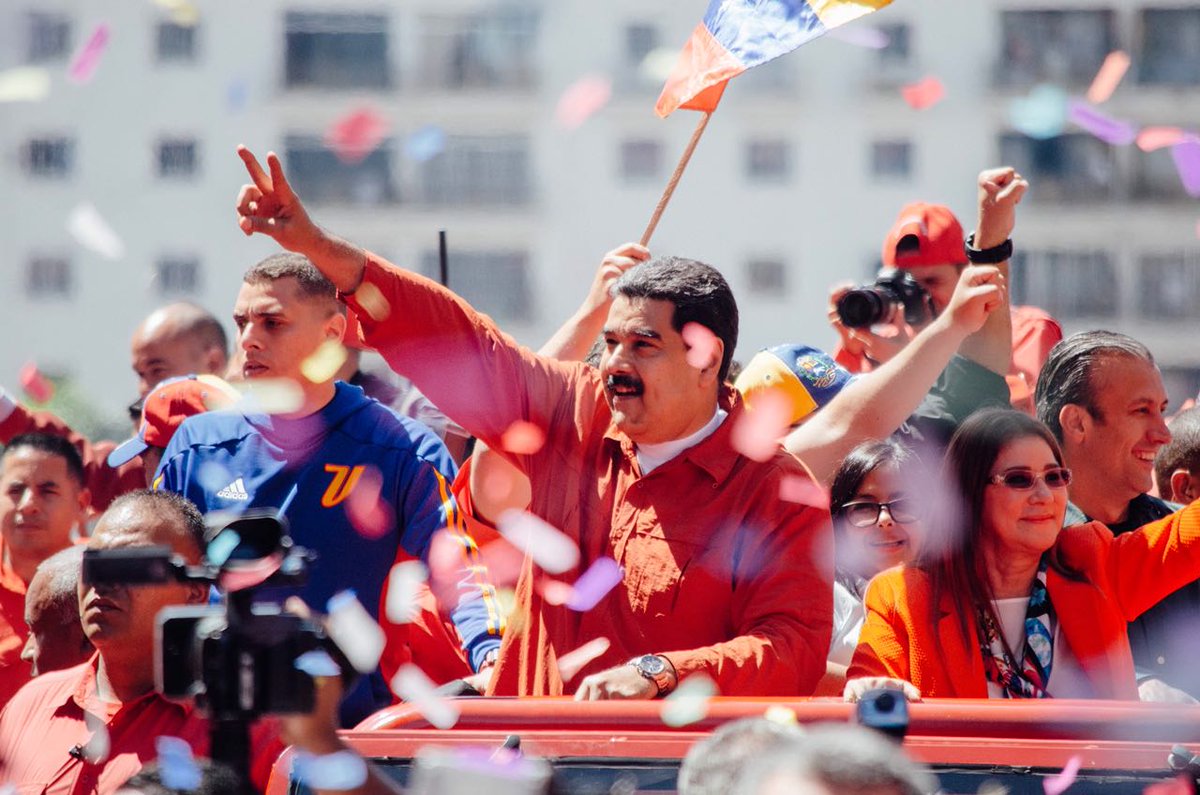
Washington has extracted major concessions from Caracas since the Jan.3 strikes and kidnapping of President Maduro. (Archive)
Between the mid-1980s and the early 1990s, amid the terminal crisis and collapse of the so-called European socialist bloc, the era of struggle that had begun following the triumph of the Cuban Revolution came to a close in Latin America. A new phase began, during which the leftist and progressive social and political organizations and movements of the subcontinent went through phases of accumulation and de-accumulation of forces.
Phases of accumulation
From 1985 to 1998, these movements accumulated enough social power to topple neoliberal governments and enough political power to secure seats in local governments and national legislatures, but not enough to take control of the national government.
From 1998 to 2009, they accumulated enough social and political power to elect—and in some countries, to re-elect several times—leftist or progressive governments.
Phases of de-accumulation
From 2009 to 2012, there were no electoral defeats for leftist or progressive governments, but there were coups d’état of a “new type” in the “weakest links in the chain”: Honduras and Paraguay.
In 2013 and 2014, there were no electoral defeats, but the margin by which the left retained power in Venezuela and El Salvador was reduced to a bare minimum.
From 2015 to 2019, electoral defeats in Argentina, El Salvador, and Uruguay, coups of a “new type” in Brazil and Bolivia, along with Lenín Moreno’s betrayal in Ecuador, broke six of the “strongest links in the chain,” and the siege against Venezuela, Nicaragua, and Cuba intensified.
Phase of partial recovery and subsequent acute loss of strength
Following the election of Andrés Manuel López Obrador as President of Mexico in 2018 and Alberto Fernández in Argentina in 2019 at the end of the phase of decline, between 2020 and 2024, the left and/or progressive movements regained power in Bolivia, Honduras, Brazil, and Uruguay, held power in Chile, Colombia, and Guatemala, and lost it again in Chile and Honduras in November and December 2025, respectively. In January 2026, President Nicolás Maduro and his wife Cilia Flores were kidnapped by the US military and are currently being held illegally in that country.
Predominant factors in the phases of accumulation (1985–1998 and 1998–2009)
The legacy of the historical accumulation of popular struggles, particularly during the period ushered in by the Cuban Revolution in which other revolutionary or reformist processes did not succeed or survive, contributed to opening up spaces for legal struggle.
The rejection of the genocidal repression traditionally employed against the peoples of the region forced the United States and its Latin American allies to seek less brutal forms of domination.
The momentum of popular movements in full swing brings into the political and electoral struggle social sectors that previously lacked the consciousness, motivation, or conditions to participate in it.
The protest vote against neoliberal governments by broad sectors of the population that were not politically conscious could nonetheless be turned against leftist and progressive forces if they failed to meet their expectations, whether fair or unfair, rational or irrational.
Predominant factors in the de-accumulation phases from 2009 onward
Historical accumulation depreciates. As time passes, with the superseding of recent realities, the emergence of new social expectations and demands – in some cases due to the fulfillment and in others due to the unfulfillment of previous ones – and the shortcomings and errors of the left and progressivism, there is a relativization or devaluation of the historical legacy.
The brutal repression of the past was replaced by “full-spectrum destabilization” against progressive and left-wing governments.
Due to their dissatisfaction with left-wing or progressive governments over the failure to fulfill their economic and social promises – due to the “constraints” of the system, pressure from the powers that be, and shifts toward the “center” to broaden their electoral base – a large part of the popular social movements that had provided decisive support in earlier phases began to exercise punitive abstention against them.
Social sectors without political ties or preferences, which in an earlier phase cast their protest votes against neoliberal parties, began to cast them against the left and progressivism.
With the exception of Uruguay, the overthrow, defeat, or betrayal of left governments was followed by the criminalization, prosecution, and, in many cases, imprisonment of their leaders, most notably Lula in Brazil.
The transformative processes with the greatest capacity to remain in power have been those in Venezuela and Nicaragua, which set out to and succeeded in establishing control over all the institutions of state. It is this concentration of power that has guaranteed the survival of the Cuban Revolution over six and a half decades. However, in Venezuela and Nicaragua there is a contradiction between the formally prevailing liberal/bourgeois system and the actually prevailing institutional system, with characteristics of state socialism, in which a political party – not the only one, but certainly the dominant one – monopolizes control of the four branches of government, the armed forces, and the security services.
The incompatibility between the formally existing institutional system and the institutional system actually in place in Venezuela and Nicaragua remained latent as long as the leaders of their respective transformative processes enjoyed widespread popularity and maintained high levels of approval, or raised expectations regarding the fulfillment of social needs and interests. However, this concentration of power has both a positive and a negative aspect:
The positive aspect is that it has been decisive in resisting the policy of encroachment, economic blockade, and political isolation that has affected Cuba since the triumph of its Revolution (1959), Nicaragua during the two periods of FSLN rule (1979–1990) and (2006 to the present), and Venezuela since the first term of Hugo Chávez’s government (beginning in 1999).
The negative aspect is that it distorts the relationship between the end and the means. The end was to develop a national project that would satisfy society’s material and spiritual needs and aspirations, and the means was to establish a power capable of guaranteeing that national project. The distortion consists in continuing to exercise power when one no longer has the capacity to satisfy society’s needs and aspirations, either because one failed to develop that capacity or because it was lost.
Given that external and/or internal forces are attempting to undermine or overthrow the established institutional systems in these countries, and given that neither of them has managed to make progress in building a new society – with this project becoming unattainable in the form and substance originally envisioned – the defense of power becomes an end in itself.
When evaluating any process of progressive social reform or revolutionary social transformation, it is necessary to consider the extent to which it has met or failed to meet its historical goals. In cases of failure to meet these goals, one must take into account the adverse and external factors that have influenced this outcome. However, it cannot be ignored that, even if resulting from such factors, the failure to meet historical goals erodes these processes. In essence, every transformative process is compelled to achieve its historical goals within a timeframe no longer than the moment society perceives it as an “eternal uphill battle.”
The Venezuela Case: Between Reality and Utopia
The kidnapping of President Nicolás Maduro and his wife Cilia Flores by the US military – along with the questions of how such an operation could have been carried out (no less than inside the headquarters of the Bolivarian National Armed Forces!), how the kidnappers knew where they would be sleeping that night, and that they were indeed there, why there was no response, which had been assured would occur in the event of any aggression against Venezuela, and, on top of all that, that the outcome is a “normalization of relations” with the aggressor power agreed upon by the very government that Maduro headed – reveals the fragility of revolutionary processes that claim to have a solid base of popular power, but events like this reveal that, in reality, they lack it.
Twenty-seven years and five months after the start of the Bolivarian Revolution – the first link in a chain of elections and re-elections of leftist and progressive governments that has become increasingly fragmented since 2009–2019 and is now practically extinct – it is time to face reality and assess to what extent the parties, movements, fronts, or coalitions that have held and/or currently hold power in their respective countries are aware of the true relationship between their rhetorical utopias and their political realities.
Between every emancipatory utopia and its corresponding reality lies a “missing link.” The “missing link” between utopia and reality creates a “gap” between the project of revolutionary social transformation or progressive social reform and the transformative or reformist process intended to bring it about. The danger lies in failing to recognize the cumulative widening of the “gap” between utopia and reality and clinging to a utopia as the foundation of a process of revolutionary social transformation or progressive social reform that is increasingly deviating from and becoming disconnected from it.
The disconnect between utopia and reality has consequences, including most notably: the conversion of utopia into dogma; the social alienation that every reformist or revolutionary process is meant to eradicate; the divergence of interests and direction between “leaders” and “followers”; the drift of the process toward disillusionment and failure; and, in well-known historical experiences, such as that of the USSR (to mention only the most prominent), the absolute empowerment of a caste that creates and defends its own political and economic interests, leading to the negation of utopia: from the very pinnacle of “power” itself!
Utopia must be systematically grounded in reality through the active, genuine, and effective participation of society, and never reaffirmed or reformed from “above.” This reevaluation and renewal led by society is the only way to ensure that utopia not only serves as a guide, as Galeano says, but also serves to walk the path that turns it into a political, economic, and social reality that is as close as possible to the vision itself.
Based on experiences and studies conducted in previous decades, since the beginning of the chain of elections and re-elections of leftist and progressive governments in Latin America, attention has focused on denouncing media warfare, cognitive warfare, cultural warfare, and fourth- and fifth-generation warfare. In recent years, Caracas has been the main venue for events and the most active platform for denouncing this form of counterrevolutionary action. These analyses and denunciations must continue “at full speed,” but we must also recognize and accept that this is not the only threat facing leftist and progressive governments and political forces.
All forms of external and internal counterrevolutionary activity must be analyzed and combated, but with the knowledge and understanding that this is not the only battlefront. Another front, just as important or even more so, is the recognition and eradication of our own weaknesses and errors, which make transformative and/or revolutionary processes vulnerable to enemy strategies and tactics. What has happened in Venezuela is proof of this omission: plenty of denunciation of the enemy and little to no self-reflection.
The moral of the story is that yes, we must denounce and unmask the enemy. But no, we cannot focus attention on denouncing the enemy at the expense of recognizing and eradicating our own weaknesses and mistakes.
Roberto Regalado is a Cuban political scientist and PhD in Philosophy. He is a professor at the Center for Hemispheric and U.S. Studies at the University of Havana (CEHSEU) and a member of the Historical and Social Literature Section of the National Union of Cuban Writers and Artists.
He is the author of, among other essays, Latin America Between Centuries: Domination, Crisis, Social Struggle, and Political Alternatives of the Left (2006), Encounters and Disagreements of the Latin American Left: A View from the São Paulo Forum (2008), The Latin American Left in Government: Alternative or Recycling? (2012), and numerous articles in specialized journals.
The views expressed in this article are the author’s own and do not necessarily reflect those of the Venezuelanalysis editorial staff.
Italy’s Flavio Cobolli said he was “sad and happy at the same time” after reaching his first Grand Slam final at the French Open on Friday, following the last-minute withdrawal due to illness of his last-four opponent and compatriot Matteo Arnaldi.
The 24-year-old 10th seed will meet Alexander Zverev in Sunday’s final, which will produce a new major champion, after the German second seed earlier moved past Jakub Mensik in the other semi-final.
Recommended Stories
list of 4 itemsend of list
Just more than 20 minutes before Cobolli and Arnaldi were due to take to Court Philippe Chatrier, tournament organisers announced that the 104th-ranked Italian had been forced to pull out with a “virus”.
“When he came to me almost one hour ago, I almost cried. You know, it’s something that you don’t expect at all. I was ready to play this match,” Cobolli told reporters during a news conference he held with his close friend Arnaldi, as the pair sat three metres (10 feet) apart.
“When he came, I was completely sad for him. But, at the same time, of course, I’m really happy for the result that I reached this week.
“Yeah, now I’m sad and happy at the same time.”
For first-time major semifinalist Arnaldi, withdrawing was “not something that you wish to anybody”, but “the right decision for me to take”.
“It’s tough, because for how the tournament was, for how many hours I’ve been on the court, I was feeling actually very good,” Arnaldi, who had spent the most amount of time on court for a player en route to a Grand Slam semifinal, said.
The 25-year-old added that, on Thursday, he was “feeling OK” during practice, but after his dinner, he began to feel unwell during the night.
“I started to feel so-so with my stomach. I was, like, ‘All right, just didn’t digest very well,’” he recounted.
“But then I woke up at 1:00am, and I started vomiting, and I wasn’t feeling the best. Then I tried to sleep. I couldn’t sleep at all. At 6:00, 7:00am, I vomited again.
“We called the doctor into the room. He came, gave me some stuff. I was hoping that it would just be something from dinner or something like that, but then throughout the day, I couldn’t eat. Every time we did something or would drink, I would go back to the bathroom.”
Despite his best efforts, his state worsened throughout the day.
“I tried to get ready and tried to stay as much as I could here and tried to see if I could go on court, but every time I get up, I feel dizzy,” Arnaldi said.
“It’s a virus, I think, because I was feeling pretty cold. I think I had a fever, like, during the day. I don’t know, to be honest.
“I just know that I can’t move, and I can’t eat, and I can’t drink. So, there was really no way that I will be able to play.”
Cobolli paid tribute to a tearful Arnaldi.
“Matteo is a big inspiration for all of us. He’s an amazing player and amazing professional,” Cobolli said.
“He’s, I think, the best person outside the court for how his match preparation, focus, cool-down. He’s one of the best on the tour, for sure.”
After the conference, Cobolli took to centre court to have a hit watched on by a decent smattering of spectators that had come for the match but stayed to see the world number 14 keep his eye in.
After his quarterfinal victory over Canadian fourth seed Felix Auger-Aliassime on Wednesday, Cobolli will go into the weekend’s final with plenty of rest.
“Maybe having almost four days off is a lot, so you lose the rhythm,” he said.
“Now, I got practice again. I think I will be ready, for sure, for the final, but I also know that I will be fresh, for sure.
“Maybe [the extra time off] will help; maybe not. I’ll tell you after the final.”
US President Donald Trump hailed stronger-than-expected jobs growth before pivoting to Iran, saying negotiations with Tehran “seem to be going quite well”. Trump offered no further details on the talks as he arrived in Wisconsin for an agriculture event.
An acclaimed biopic about Israeli lawyer Lea Tsemel, who has dedicated her life to representing Palestinian defendants charged by Israeli authorities, has been shortlisted for an Oscar.
“Advocate” is one of 15 films shortlisted in the Documentary Feature category, out of an original 159 submissions. The final five contenders will be announced next month.
The award-winning documentary, co-directed by Rachel Leah Jones and Philippe Bellaiche, has been vociferously attacked by right-wing Israeli groups and Israel’s Culture Minister Miri Regev.
When “Advocate” won Best Picture at the DocAviv festival in Tel Aviv, Regev condemned “the choice to make a movie focusing on a lawyer who represents, supports and speaks in the name of many who undermine the State of Israel’s existence, [and] use terrorism against its soldiers and people”.
In awarding the film, DocAviv judges wrote that “Advocate” is “a thought-provoking project that addresses an important subject and demonstrates impressive cinematic skills, especially the innovative and intelligent use of animation… [It] sketches out a complex portrait of a strong and inspiring woman who believes in the justness of her path with all her heart.”
The award was greeted with outrage, and following an organised campaign, Israel’s state lottery company subsequently announced “it would be pulling its funding for future grants given to best picture winners at Tel Aviv’s documentary film festival”.
Iran players get visas 10 days before their opening World Cup match against New Zealand in Los Angeles on June 15.
Published On 5 Jun 20265 Jun 2026
Iran’s World Cup football players have been granted visas to enter the United States, according to a White House official, just 10 days before their first match in Los Angeles amid a conflict between the two countries.
Iran’s ambassador to Mexico, Abolfazl Pasandideh, said late on Thursday the squad had still not received their US visas, but these were granted overnight, the White House official said.
Recommended Stories
list of 4 itemsend of list
US Ambassador to Turkiye Tom Barrack confirmed the visas in a message on X on Friday. “Proud of our outstanding team at the U.S. Embassy in Ankara for their work processing visas for Iran’s national football team on their road to the @FIFAWorldCup in the United States,” he said, commenting on a news report that Iran’s World Cup players have been granted the visas to enter the United States.
The US had not yet issued visas to some members of the Iran team’s technical and administrative staff, the semi-official Fars news agency reported on Friday.
Iran’s federation has not yet made a statement on the news.
“Visas for some members of the national team’s technical and executive staff have not yet been issued, and the US embassy has so far refused to issue them,” Fars said, without citing a source.
The US-Israel war on Iran has turned the World Cup – the biggest global sporting event – into a geopolitical contest, with both sides appearing to use the tournament for political posturing.
It is the first World Cup, since its inception in 1930, in which a host nation is set to receive a country it is at war with.
Tehran negotiated a last-minute move of the team’s base from Arizona to Tijuana in Mexico due to the visa issues and a growing feeling in Iran that the squad’s presence in the United States should be kept to a minimum.
They are scheduled to land in Tijuana early on Sunday.
Iran are due to play their first Group G match on June 15 against New Zealand in Los Angeles, where they will also face Belgium before taking on Egypt in Seattle.
The US has never formally said it does not want the Iranian team to stay on its territory, Ambassador Pasandideh said.
However, Secretary of State Marco Rubio told lawmakers on Tuesday that the US would not allow Iran to include in its World Cup delegation individuals linked to the Islamic Revolutionary Guard Corps, a powerful branch of the Iranian armed forces.
Mehdi Taj, president of Iran’s football federation, was denied entry for the tournament draw in Washington in December. He is a former commander in the Revolutionary Guards.
Iran’s desire to compete in the World Cup underscored its efforts to reach a resolution in the war with Washington, Pasandideh said.
“Iran’s participation in the World Cup – even on the soil of what is seen as its enemy – shows that Iran seeks peace,” Pasandideh said, speaking through a Spanish interpreter at the Iranian embassy in Mexico City.
Progress in peace talks between Iran and the US has been slow, with both sides seemingly inching towards an interim agreement even as they continue to carry out military strikes.
Weekly insights and analysis on the latest developments in military technology, strategy, and foreign policy.
Yesterday, TWZ published an analysis of a thermal image purportedly showing a previously unseen advanced aircraft design, which appears to be a precursor to the U.S. Air Force’s forthcoming F-47 fighter from Boeing. The image, which went viral online and is from a video that has now been released, is said to have been captured near the U.S. military’s secretive Groom Lake test base, better known as Area 51. It turns out, as a number of our readers have pointed out, there may be some interesting similarities between this secret aircraft and a “Christmas tree” fighter design concept crafted decades ago by Darold Cummings, one of the top minds behind Northrop’s YF-23 Black Widow.
You can find our full initial assessment of what we may be seeing in the viral image, first posted online by the Project Fear YouTube channel earlier this week, here. What we saw initially, as shown below, appeared to feature what could be described as a “double arrowhead” profile to its forward fuselage. This is a very distinct design cue, but it could also be a result of the low quality of the image and the artifacts that come with consumer-grade thermal imagers, which was what the aircraft was recorded with.
A close-up look at what is visible in the viral thermal image. Capture via Project Fear
Project Fear has now released the full video it says it captured near Area 51, seen below, and it underscores the aforementioned points about image quality. So, it is possible the aircraft has a more traditional low-observable ‘shovel nose,’ instead. Nonetheless, the Christmas tree fighter is an interesting trip down lesser-known fighter development memory lane that is worth examining, in particular what such a unique nose configuration would provide an advanced fighter aircraft.
The full clip of the mysterious aircraft passing by starts at around 49:34 in the runtime of the video below if it does not automatically start playing at that point.
We Filmed a Top Secret Craft Flying at Area 51
People are asking why it would be running a very bright light. Multiple reasons, could have had an emergency for all we know. But most likely, would be to keep its silhouette from being seen from certain aspects from the ground. Bright lights are established practice for… https://t.co/mxEvG2EUkz
“I was hired by Bob Sandusky in 1982 to be the Chief Configurator for the Northrop ATF [Advanced Tactical Fighter] program (YF-23). In early 1983 Bob said that Northrop had tried to develop a ‘4-spike’ (like the B-2) fighter, but it couldn’t be done, since a flying wing fighter was not possible,” Cummings wrote in his post on LinkedIn. “I told him I could design one, and he said to give it a try. The only way to accomplish this was with a series of highly swept (55 degree) surfaces over the entire length of the aircraft. The result was the DP-21, created in June of 1983.”
“4-spike” here essentially refers to the total number of radar cross-section hot-spots and where they are located, each pointing in a different direction in azimuth. The fewer ‘spikes’ a low-observable (stealthy) aircraft has, the easier it is to manage its radar signature, and to make it harder to detect and lock onto, but it’s also where those spikes are located that matter.
The blueprint of the DP-21 “Christmas Tree” fighter concept. Darold Cummings
A four-spike design like the B-2 critically has nothing from the head-on aspect, as well as from the rear, which helps immensely with survivability. These are the most critical signature areas, especially the front as the aircraft is heading into hostile territory. Also, because these are located along the path of flight, these spikes can stay consistent on a threat radar as the aircraft moves directly toward or away from the sensor, and are not fleeting in nature like those from the side. So a four spike aircraft would be very attractive for a tactical fighter meant to persist in contested territory.
“I never considered this to be a serious contender for the ATF program, as the aircraft was unstable beyond 10 degrees angle of attack!” he also noted.
“Back in 1983, the ‘Christmas Tree’ DP-21 would have been difficult to fly. However, with modern flight control systems, this design could be controlled, even at high angle of attack,” Cummings told TWZ directly today after we reached out for more information. “Low observability is always better served with long edges on the design, so the small arrow-shaped foreplane is not ideal, but it still has low RCS characteristics, just not the optimum.”
“Wing shaping is always a trade-off for maximizing LO. Most of the trades have to do with the leading edge contour, which is a large contributor to signature,” he continued. “The canard has to be designed to be ‘ported’ during penetration, as this minimizes the signature. On the YF-23, the V-Tail was ‘ported’ in penetration for the same reason. This is certainly possible with modern flight control systems.”
“Ported” in this instance refers to keeping the control surface locked in the same geometric plane as the wing while cruising.
A top-down look at the YF-23 during a flight test. USAF
We also asked Cummings directly whether it was possible his DP-21 concept had an influence on what is seen in the viral thermal image, assuming it is authentic. And we asked for his take on what impacts Boeing’s experimental X-36 and Bird of Prey designs may have had on the F-47, as well.
“My DP-21 aircraft image has been available publicly for quite some time, so it is possible it had some influence, but that is only speculation on my part,” he told us. “I believe the X-36 and Bird of Prey have both influenced the F-47 design. I have always been impressed by the X-36, as it seemed to be ahead of its time.”
Boeing’s X-36 demonstrator. NASA/Carla Thomas Boeing’s Bird of Prey. USAF
“The Groom Lake images are truly intriguing,” he also noted. “It is a viable concept.”
“I think the main thing to remember is that NO ONE thought a 4-spike design (like the B-2) was possible, and my DP-21 was an example of how it was possible,” he added. “A 4-spike design for the F-47 would truly be impressive!”
“The image shows an exotic design by any interpretation. The aft-set lambda-type wings appear to have a camber and wingtip droop, as on the Boeing Bird of Prey demonstrator. There are very large canard foreplanes — a feature that appears prominently on F-47 renderings and which we have written in detail about in the past. The broad nose, too, is something that has been included in depictions of the F-47, although we have really no idea to what degree these are based in reality. It’s worth noting that in this new thermal image, it has a distinctive double-arrowhead shape, tapering in again in front of the canards. Even the canards themselves may have more than one plane, with the outer tips being drooped, matching similar architecture as the wing. The fuselage then tapers down in the center before the wing roots begin.”
“The aircraft is very likely to be tailless, a feature common to most sixth-generation concepts seen so far. However, since it’s seen from below, we cannot be sure about this aspect of its configuration.”
“As for the powerplant, it is most likely a twin-engine design, like the F-47, a theory reinforced by the sawtooth-type trailing edge. There is no obvious suggestion of any exhaust plumes, which seems odd, but that could be the result of the sensor being used in combination with the aircraft’s power setting at the time of recording, as well as general thermal signature reduction capabilities that are part of the design.”
Beyond the nose end, there are still some very broad similarities in the shaping of the wing and main body of the aircraft seen in the footage and Cummings’ DP-21 concept.
As we noted yesterday, what is seen in the viral thermal image could be unrelated entirely to the F-47. The Navy has also been pursuing a carrier-based sixth-generation fighter, commonly referred to as F/A-XX, in recent years. There has been at least some crossover between F/A-XX and the Air Force’s NGAD effort. A rendering Boeing has shared of its proposed F/A-XX design looks very much in line with what has been shown of F-47 to date. Northrop Grumman is the other company currently competing to build the Navy’s sixth-generation carrier fighter, and has released its own renderings.
Boeing’s F/A-XX render. Boeing
In addition, it should be said that official F-47 and F/A-XX renderings released to date will have been carefully manipulated to maximize security of the programs, both of which remain highly classified, and to provide disinformation to adversaries.
As an aside, Darold Cummings also shared his take on a prospective navalized version of the F-47 in a separate post on LinkedIn last year. At that time he wrote:
“I received a DM asking if I had envisioned a Navy version of my recent F-47 fighter concept, such as the F-35A to F-35C approach. I recently completed my F-47 Navy version, which I call the F-47N. However, the approach I took was somewhat different: The F-35C used a larger wing for low speed lift, whereas I used my original F-47 wing planform, and added a canard for more low speed lift and control. The canard design (inspired by the X-36), coupled with the Multi-Axis Thrust Vectoring (inspired by the X-44), provided a very reasonable first cut at a Navy version. In general, a canard layout has been treated as adding more radar signature to a fighter. However, on the YF-23 we found that if the all-moving surface (it was a V-tail on the YF-23) was kept “ported”, in this case aligned with the wing plane during cruise, the impact on LO was not a large impediment to signature reduction. The ability to keep the canard ported is achievable using thrust vectoring for trim in cruise and penetration modes.”
Cummings’ interpretation of the F-47 design at that time notably did not reflect his previous DP-21 concept. The X-44 design he mentioned is also known as the Multi-Axis No-Tail Aircraft (MANTA), and was derived from F-22. At least to our knowledge, the MANTA never came to be. The designation was recycled for an entirely unrelated flying wing-type drone, the existence of which was first reported by TWZ.
Darold Cummings’ drawing of his notional “F-47N.” Darold CummingsRenderings of the X-44A MANTA. Lockheed Martin/NASA
It’s also worth noting that the design in the newly emerged thermal video could be tied to one of many other programs, including uncrewed ones. Still, it is very much in line with what we would expect to see from a design related to the F-47 and it seems very likely this is the Boeing NGAD demonstrator, if the video is indeed authentic, which it appears to be.
It would be nice to say that we will have to wait and see whether this aircraft turns out to have a more traditional shovel-shaped nose, or even a mild Christmas tree-like design, but we may never see it again. Hopefully that is not the case, especially after the F-47 goes public, but the final design will have significant differences from its technology demonstrator forebears.
Special thanks to @ElectroFluidSys on X for bringing Darold Cummings’ posts on LinkedIn to our attention.
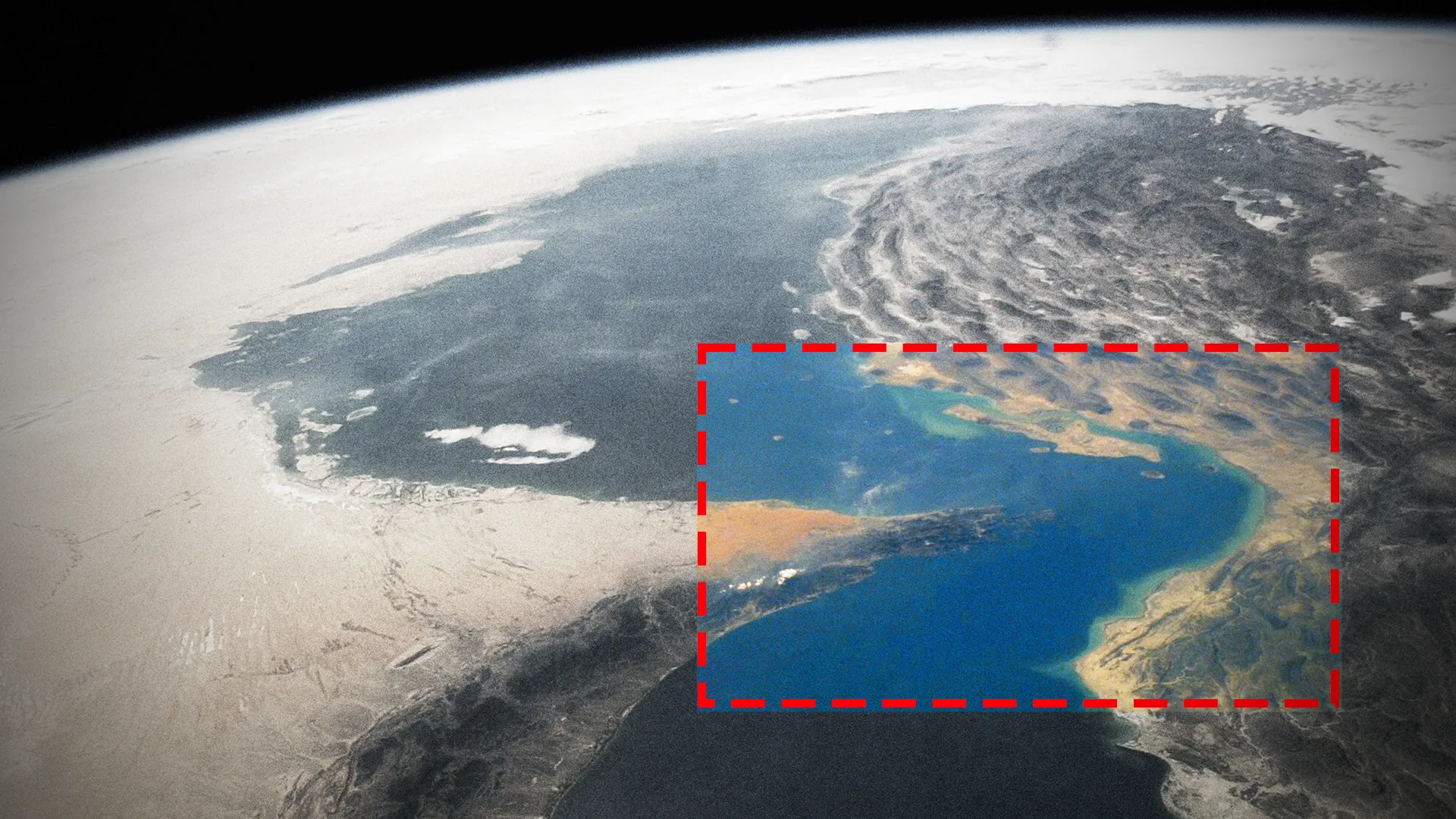

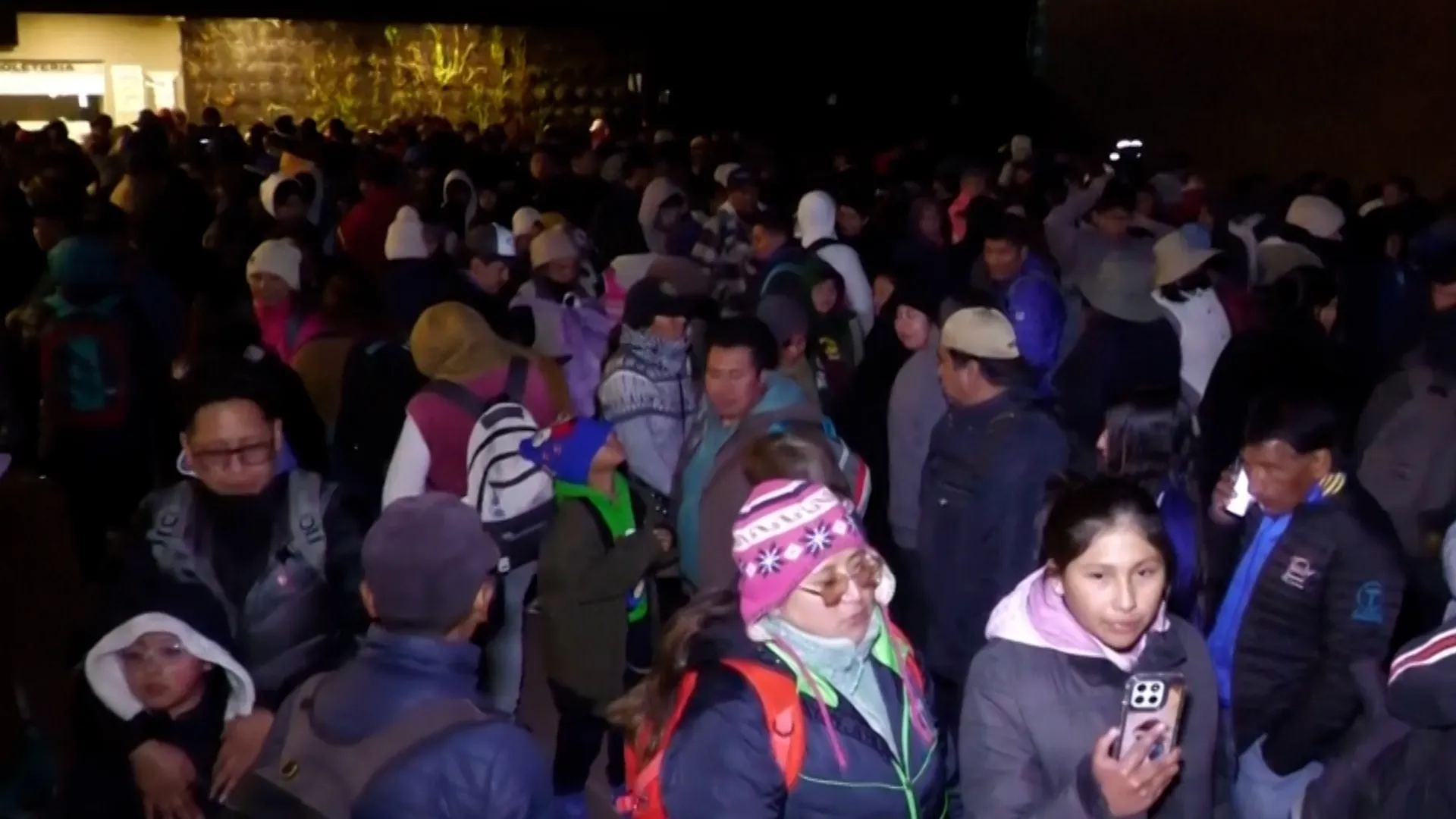

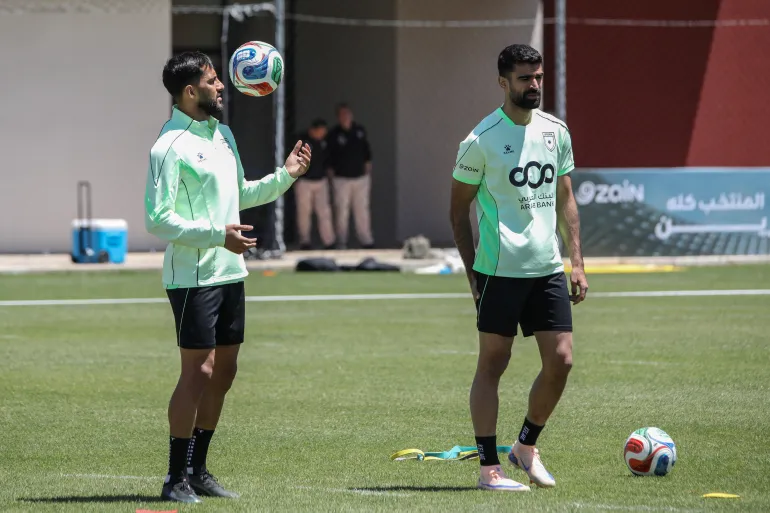




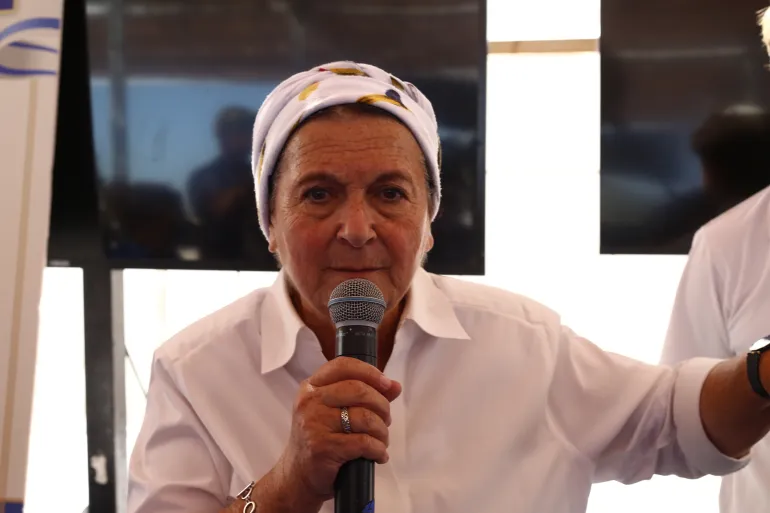

![Israeli far-right Finance Minister Bezalel Smotrich holds a map of an area near the settlement of Maale Adumim, a land corridor known as E1, outside Jerusalem in the occupied West Bank, on August 14, 2025, after a press conference at the site. [Menahem Kahana/AFP]](https://i0.wp.com/www.aljazeera.com/wp-content/uploads/2025/08/AFP__20250814__69HV6DR__v1__HighRes__IsraelPalestinianConflictSettlementPolitics-1755194568.jpg?w=640&ssl=1)

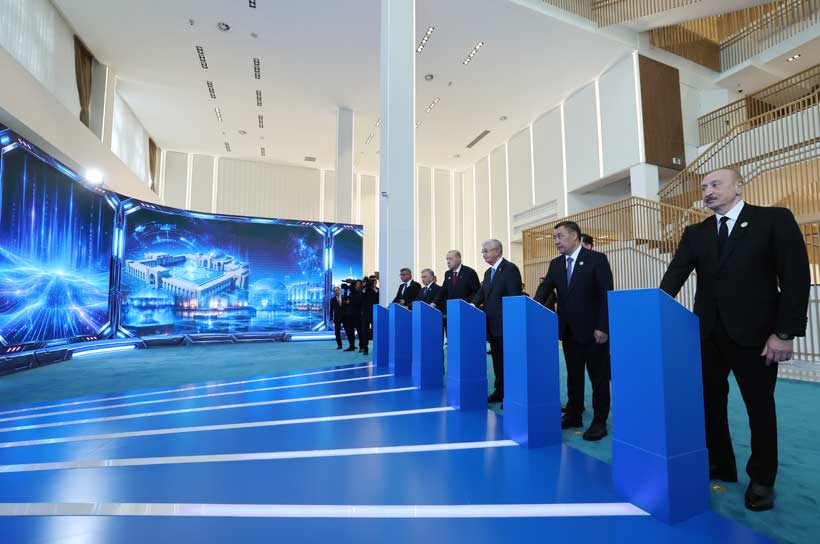

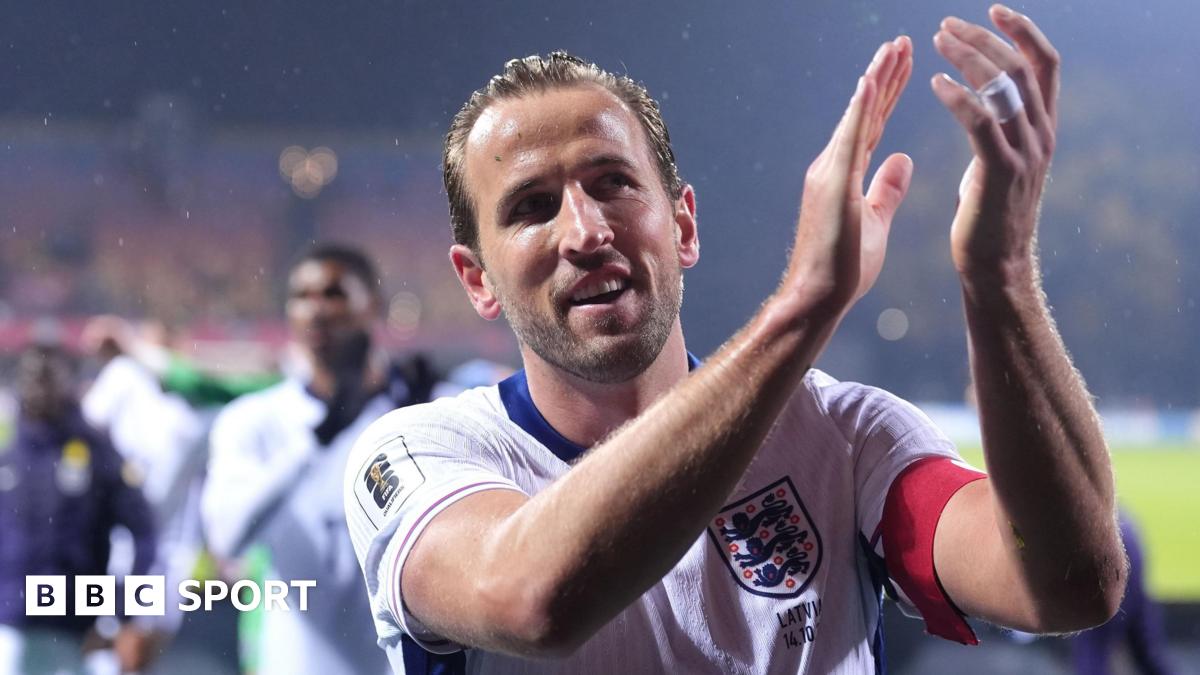
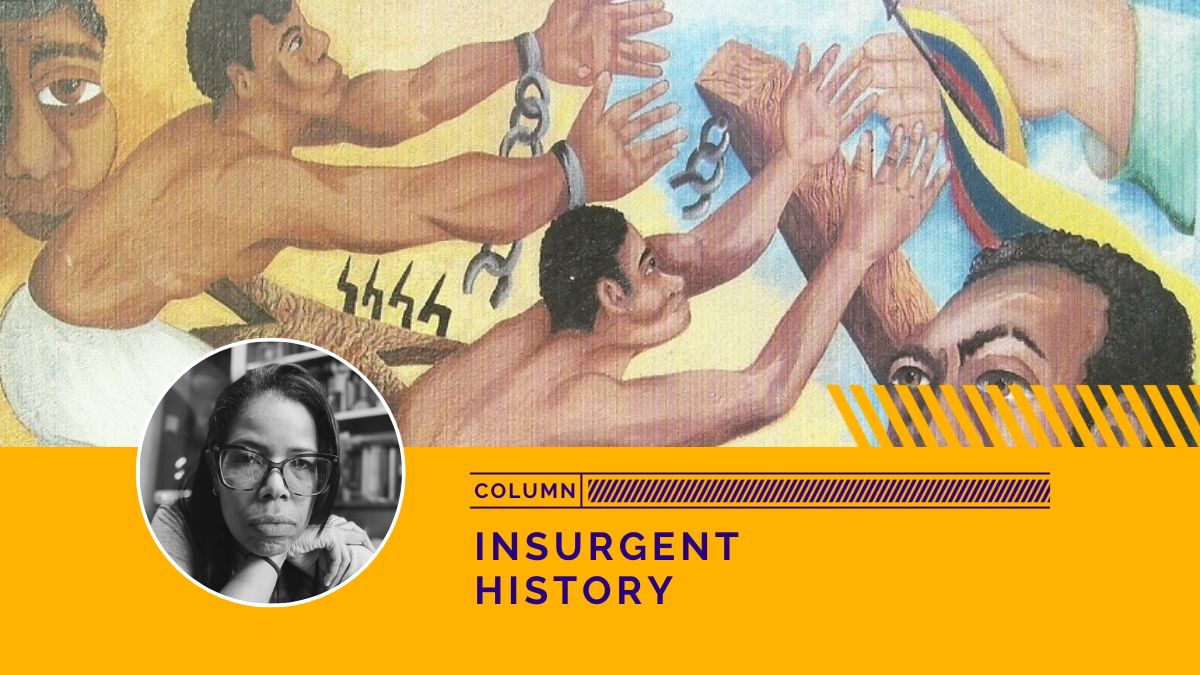
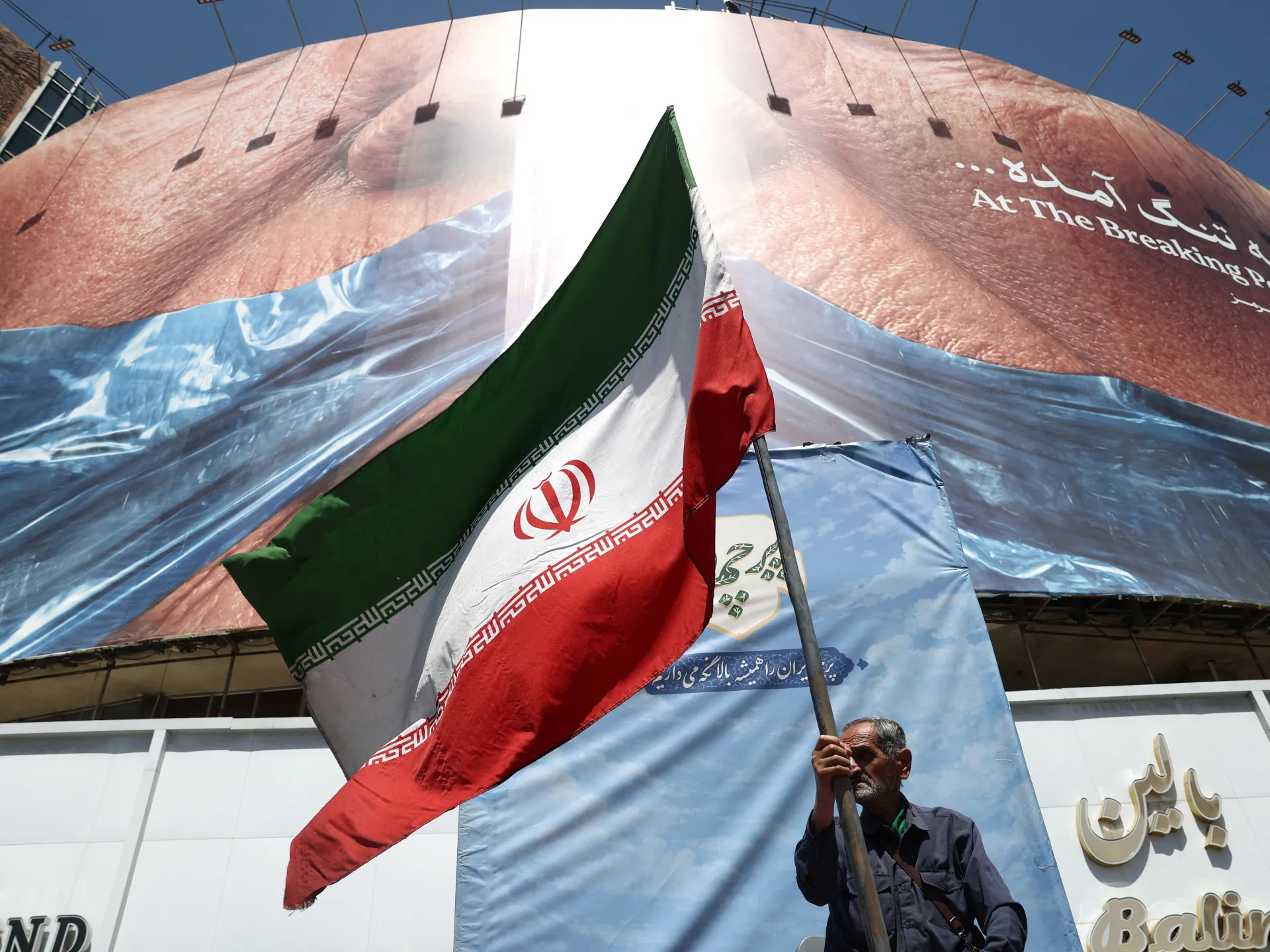
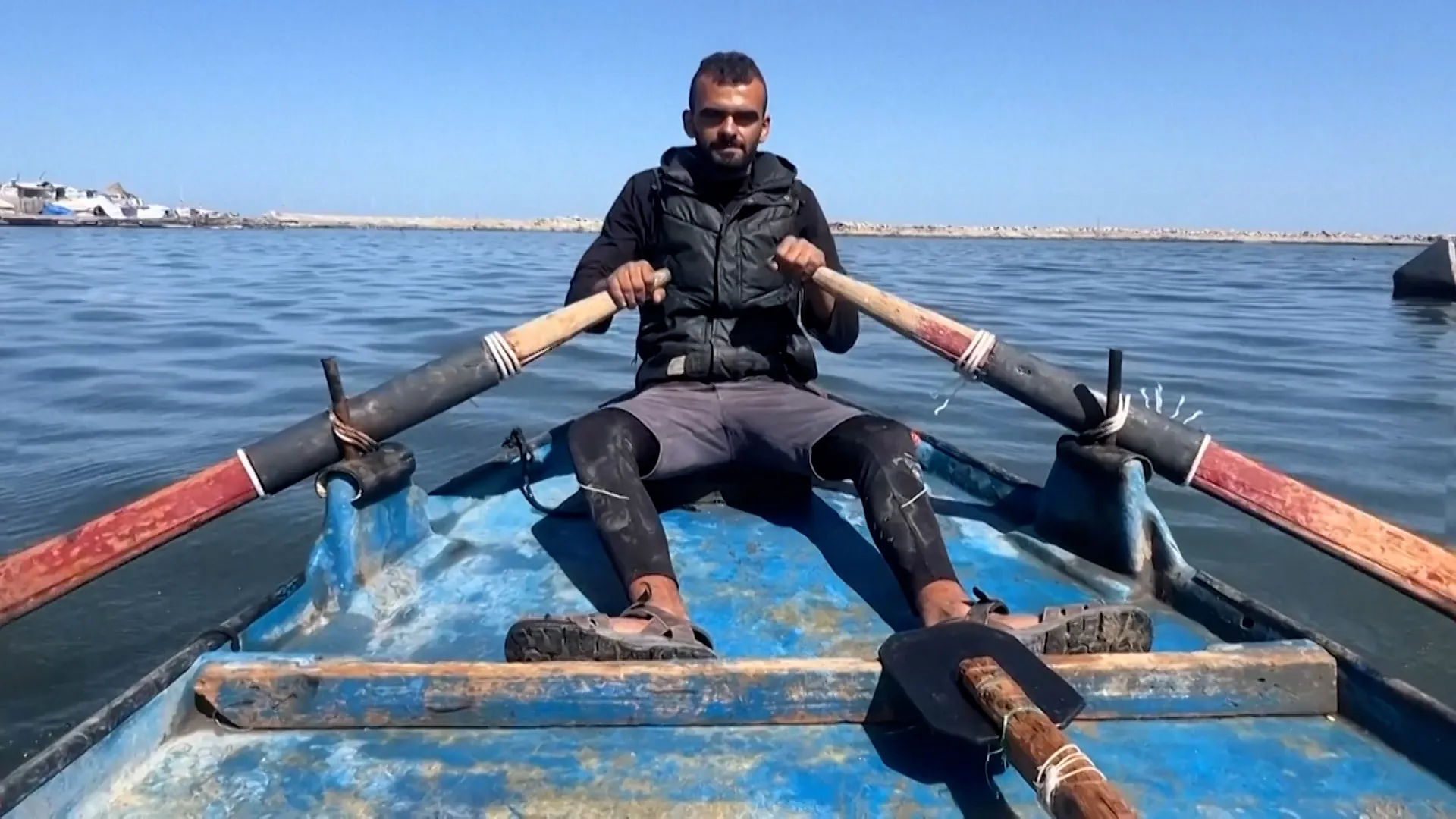
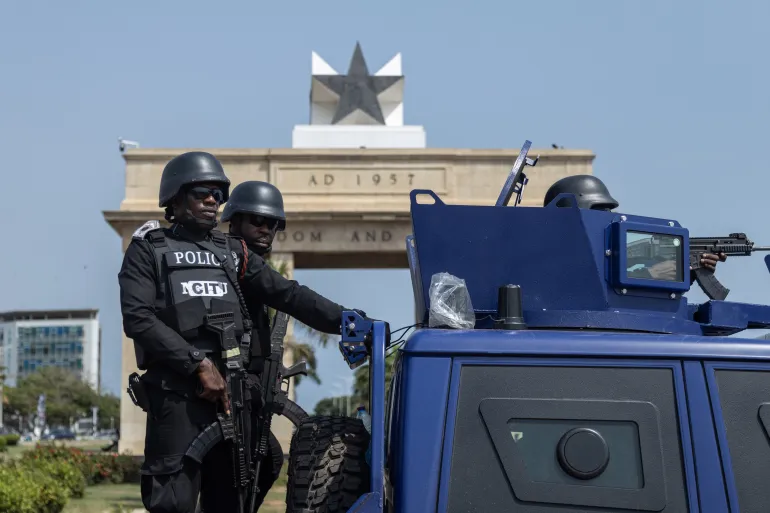
![Members of Ghana security forces take part in a joint Show of Force Exercise in Accra, Ghana, 11 December 2025. The exercise featured the Ghana Police Service, Ghana Prisons Service, Ghana National Fire Service, the Customs Division of the Ghana Revenue Authority and the Immigration Service in collaboration with the Ghana Armed Forces, aimed at Police officers on security detail near a police vehicle, with the Ghana Black Star atop a building behind them. [FRANK KPORFOR/Epa]](https://i0.wp.com/www.aljazeera.com/wp-content/uploads/2026/06/13574211-1780497934.jpg?w=640&ssl=1)
![Personnel of Ghana's Police Service stands guard during a Show of Force Exercise in Accra, Ghana, December 11, 2025. [Francis Kokoroko/Reuters]](https://i0.wp.com/www.aljazeera.com/wp-content/uploads/2026/06/2025-12-12T002056Z_86881175_RC2DEIA7WL6K_RTRMADP_3_GHANA-SECURITY-1780497947.jpg?w=640&ssl=1)