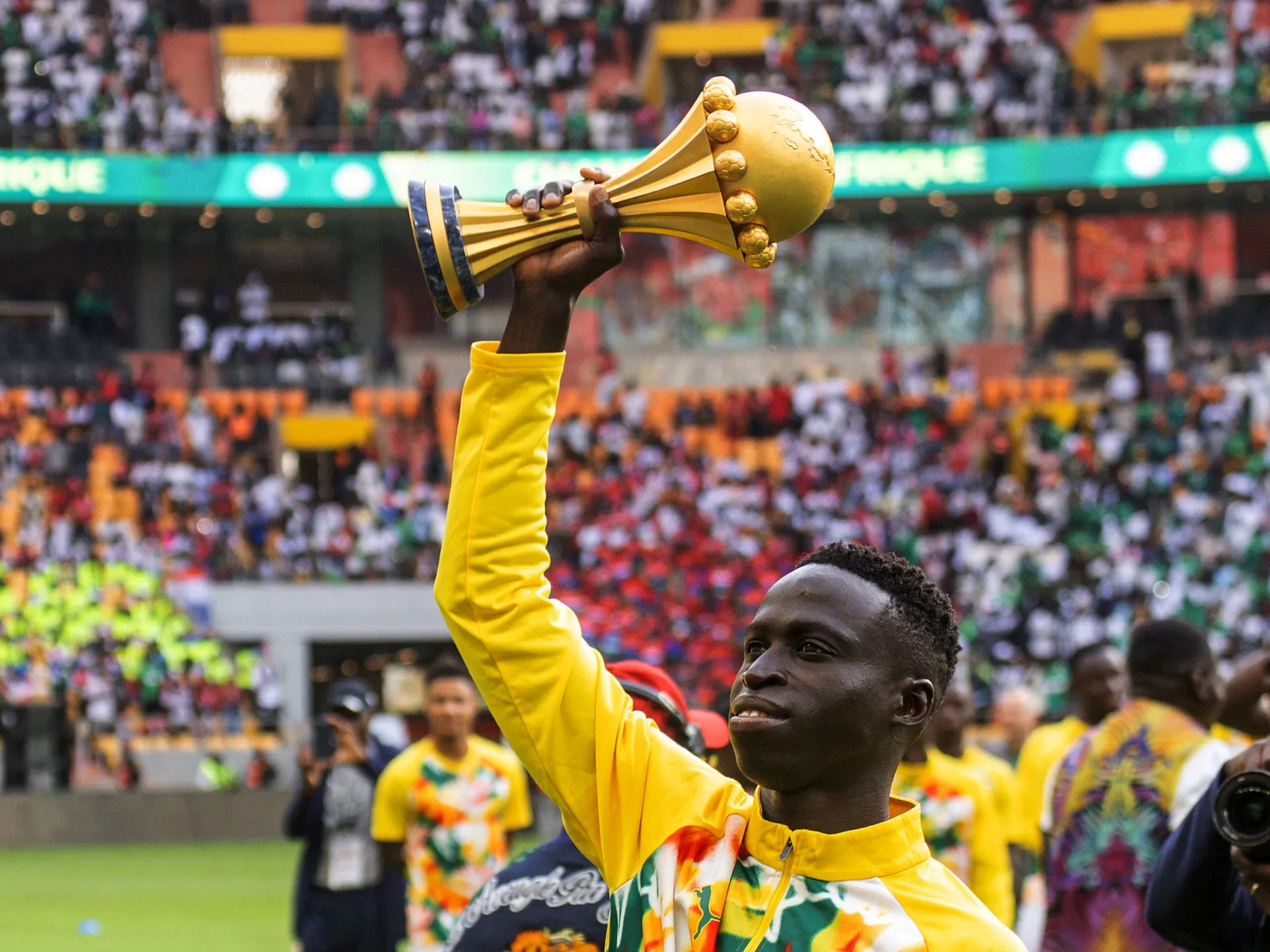
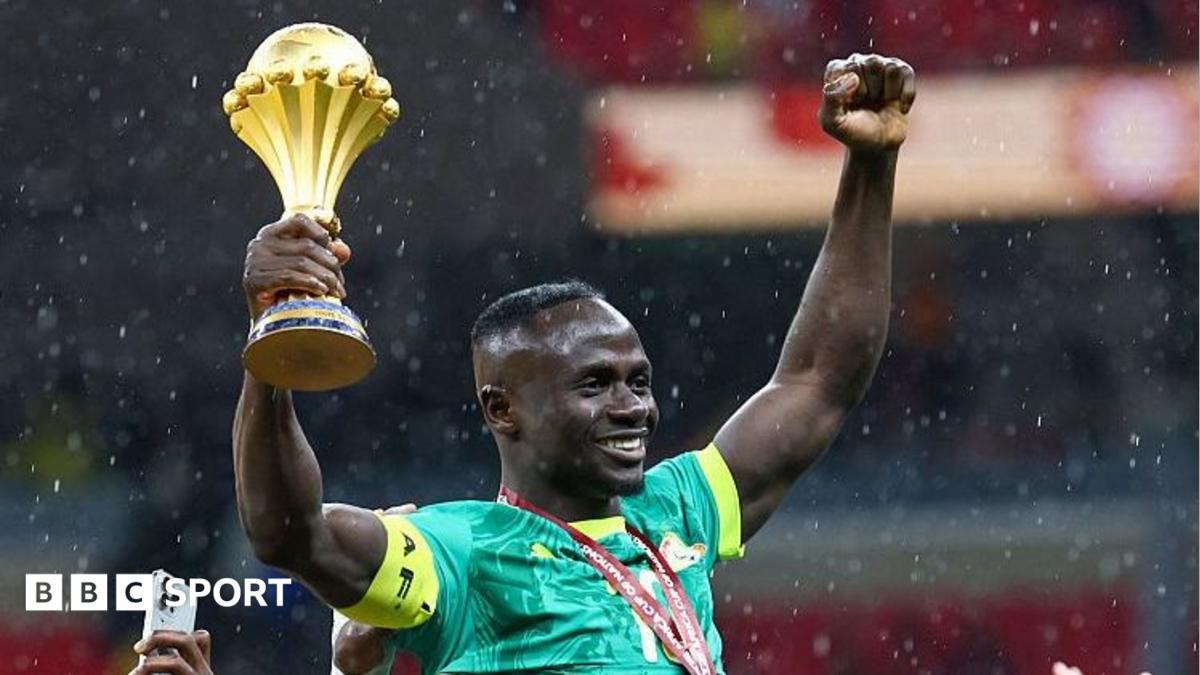
“This process will require several weeks, with the CAS Award expected at the end of November 2026,” the court said in a statement on Monday.
Senegal are contesting the decision by the Confederation of African Football (CAF) to declare Morocco champions, despite Senegal beating the hosts 1-0 after extra time in January’s final in Rabat. Their arguments, plus those of Morocco and CAF, were heard by CAS in Lausanne on October 8.
At the time, CAS said it expected a decision within days but has now decided to issue a complete ruling, including legal grounds, known as a CAS Award.
Senegal walked off the pitch for 14 minutes after a penalty was awarded against them late in regulation time, with several players returning to the dressing room in protest before they resumed play.
Morocco missed the spot kick, sending the match into extra time, where Senegal scored the winner to secure victory.
However, they were stripped of the title two months later after CAF’s Appeal Board ruled that Senegal had forfeited the match by walking off the pitch, overturning the result and awarding a 3-0 victory to Morocco.
Senegal quickly followed with an appeal to CAS, which was lodged on March 25 but heard some six months later. The basis of their arguments is that the referee’s decision is final and he allowed the match to be completed.
“I know it’s a long wait for the fans, a few months after the final between Senegal and Morocco,” CAS Director General Matthieu Reeb said outside the hearing earlier this month.
“The facts are set, are clear and the discussions will be on some procedural issues and legal aspects,” he added.
The CAS panel is presided over by French sports law expert Gerald Simon, with the assistance of Italian international law professor Luigi Fumagalli and Hamburg-based lawyer and professor of law at the University of Zurich, Ulrich Haas.
CAS decisions are called awards and hold the same value as a national court judgement. CAS awards may be enforced by sports federations or state courts, depending on the circumstances.
Filo Tiatia’s men have made a strong start to the season but that might not necessarily translate into a bigger contingent in Tandy’s squad.
Lock Ben Carter is a shoo-in, tight-head prop Dillon Lewis will hope to pick up where he left off in the summer and in-form hooker Elliot Dee would love to battle Dewi Lake and Ryan Elias for action.
The Perpignan fixture highlighted the qualities of Dragons’ grafters with blind-side flanker Shane Lewis-Hughes, who won three caps in 2020, continuing his strong start to the season.
Wales contact coach Dan Lydiate was a guest at Dragons training last week and would have been impressed as Lewis-Hughes put in 27 tackles against the French side’s big carriers.
But the forward, like team-mate Harri Keddie, is competing in a position of real depth.
The same applies for wing Rio Dyer, who is yet to score this season but has been lively with ball in hand and impressive in the aerial game.
Dragons’ man of the match against Perpignan was Aneurin Owen, so often the side’s glue from inside centre.
He carried strongly to go with his distribution skills, while he was strong in defence and came up with two turnovers.
Owen, who turns 26 the day before Tuesday’s squad announcement, was a member of the Wales squad under Wayne Pivac in the summer of 2021 but remains uncapped.
There might be an opening at 12 due to Ben Thomas’ injury should Tandy look to see if a quality operator at club level can take the next step.
“Aneurin knows I love him,” said Dragons boss Filo Tiatia. “He has outstanding leadership and there is lots more to come from him.
“He wants to improve, is coachable and is strong at challenging the coaches.”
CAF had declared the Africa Cup of Nations would be held every four years, but may reverse that decision.
Published On 9 Oct 20269 Oct 2026
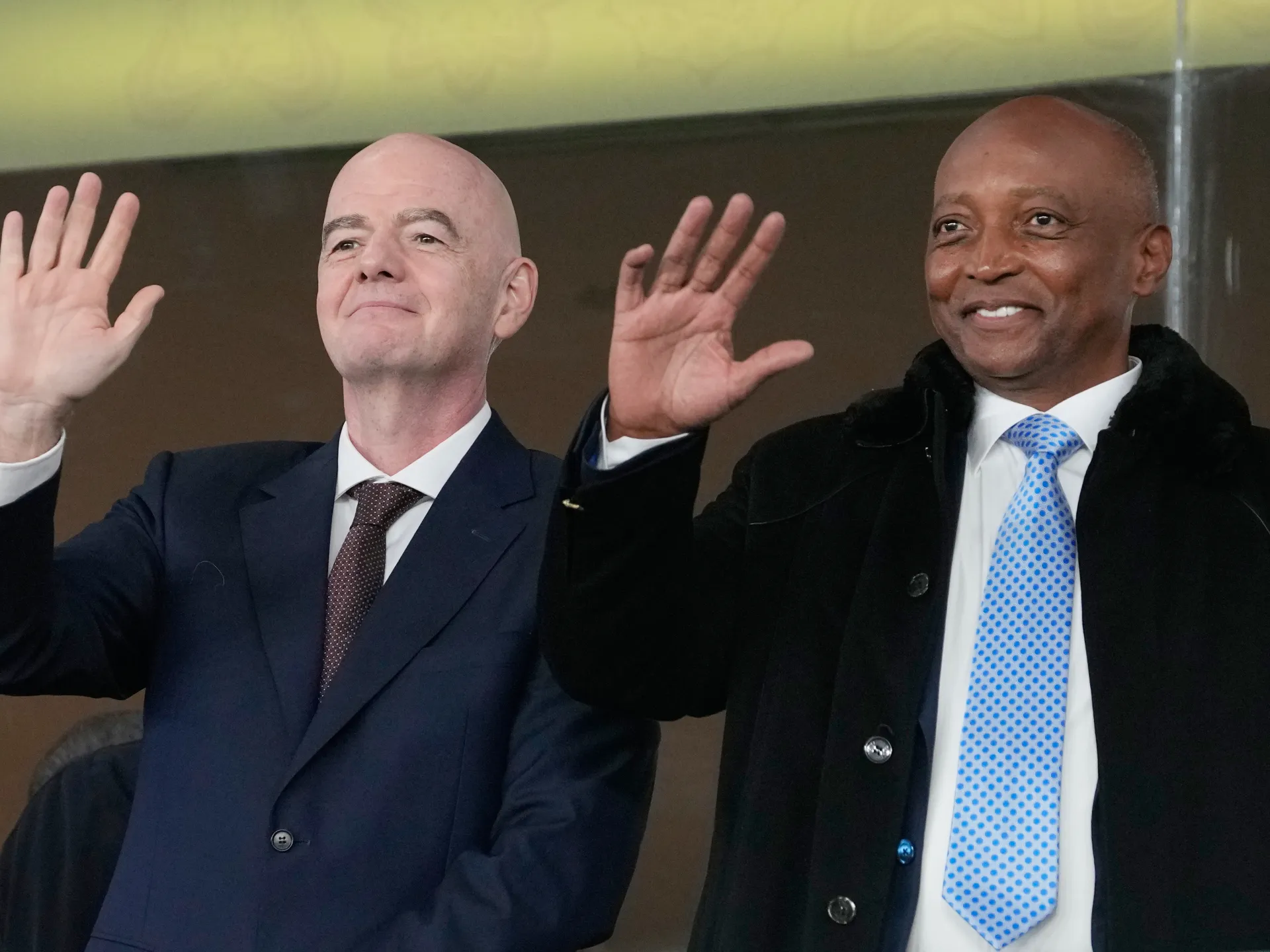
The Confederation of African Football (CAF) is reappraising its decision to hold the Africa Cup of Nations (AFCON) every four years, CAF president Patrice Motsepe declared on Friday, while insisting his organisation did not take orders from FIFA or UEFA.
Motsepe, who last December announced the biennial AFCON would switch to a four-year cycle from 2028, said on Friday that it was “nonsense, absolute rubbish” that CAF was being dictated to by either the world or European governing body.
Recommended Stories
list of 4 itemsend of list
The decision at the time, bringing the competition to a schedule that aligned with FIFA’s international calendar, rankled many at the 2025 AFCON in Morocco, with some saying it was made with European wishes at heart to the detriment of African interests.
Motsepe, a South African billionaire who is also a vice-president of FIFA, appeared stung by the criticism.
“My No. 1 job, my No. 1 duty is to protect, promote, and advance the interests of Africa,” he said. “And there are times when I have to stand firm and say, ‘Listen, we’re going to fight on this issue.’ And there are times when I have to say, ‘No.’
“The AFCON — because this is one of the issues we’re talking about — we took a decision as Africa because there were lots of issues, but I can guarantee you we have discussed it over the last few days to say we are looking at everything, including having the AFCON coming back every two years,” Motsepe said. “We’re very clear.”
He was speaking at the final day of CAF’s three-day strategy conference in Cape Verde. On Thursday, he reiterated the 54-member body’s “unanimous” support for FIFA’s under-fire president Gianni Infantino, and Infantino reminded his potential election voters of investments FIFA has made for African football since gaining the job 10 years ago.
Motsepe reaffirmed the 2027 Africa Cup will go ahead as planned in Kenya, Tanzania and Uganda next year, despite recent media reports from France saying construction projects were not going to schedule and some CAF members were pushing to have the tournament moved.
“You have to believe in Africa. There will be problems, there will be failures, fine, but we will be there. That’s what Mandela taught us,” Motsepe said.
The Africa Cup of Nations could continue to be held every two years, with discussions under way to reverse its proposed switch to a four-year cycle.
Speaking on Friday at a Confederation of African Football (Caf) strategy conference in Cape Verde, president Patrice Motsepe said: “We’ve discussed it over the last few days.
“We are looking at everything, including having the Afcon coming back every two years. We are very clear, the matter is being reviewed.”
The tournament has taken place every two years since 1968, bar a one-year gap between the 2012 and 2013 editions.
However, in December 2025 CAF announced it would shift to being staged every four years after the 2027 Afcon in East Africa and a 2028 edition.
That planned alteration to the schedule had received widespread criticism across the continent.
National associations had raised concerns about the visibility of their teams, the commercial implications and where Africa’s biggest competition would sit in the international football calendar.
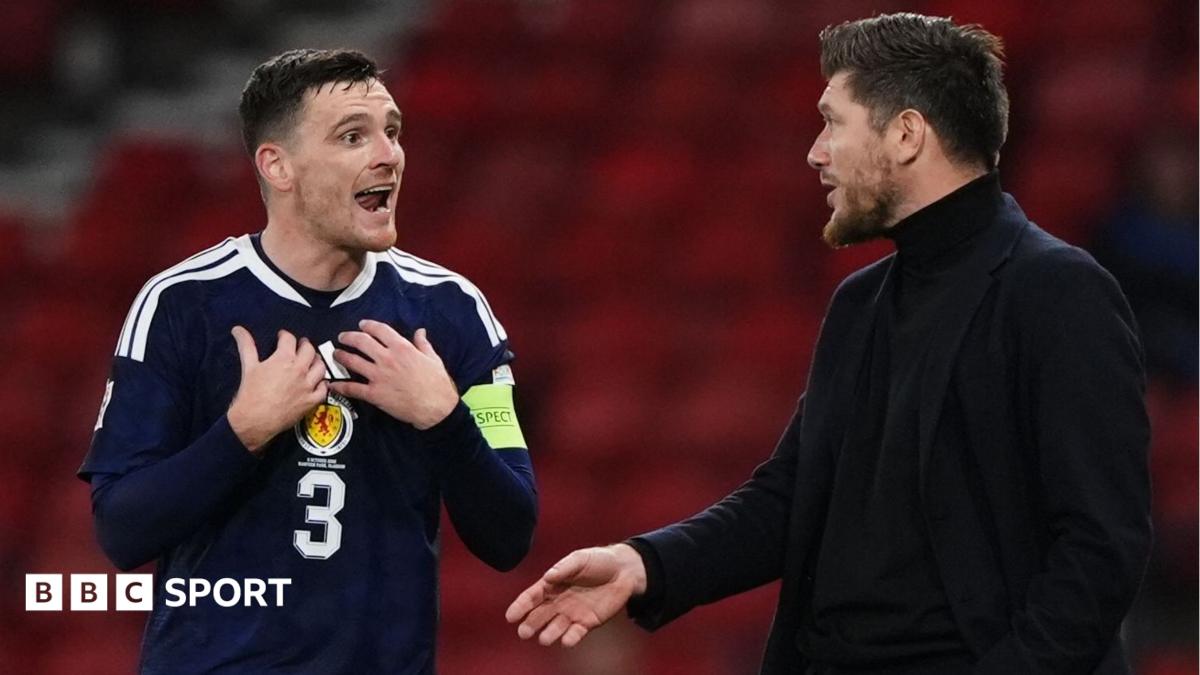
“I thought coming into this camp, Pocognoli would probably need a period of grace,” Halliday said on Sportsound. “I think that period of grace is now over.
“That was as poor a Scotland performance as I can remember for a while against an opposition you are expecting us to go and beat.”
Slovenia got in behind Scotland’s high defensive line repeatedly and former national team captain Willie Miller is unsure if Pocognoli will stick with his back three.
“This is Pocognoli’s preferred system and he’s had time to work with the system, it was just all over the place,” Miller said on Sportsound.
“Time and time again there were huge gaps appearing and Slovenia were taking advantage.
“Our situation is we’ve got a new manager in, he’s got a preferred system, what does he do? Does he just bin it? Are we back to a back four?
“His preferred system is a back three, but it was unbelievably poor.”
Mikel Merino turns game for Spain in Croatia to maintain their 100 percent group-stage record in UEFA Nations League.
Published On 6 Oct 20266 Oct 2026
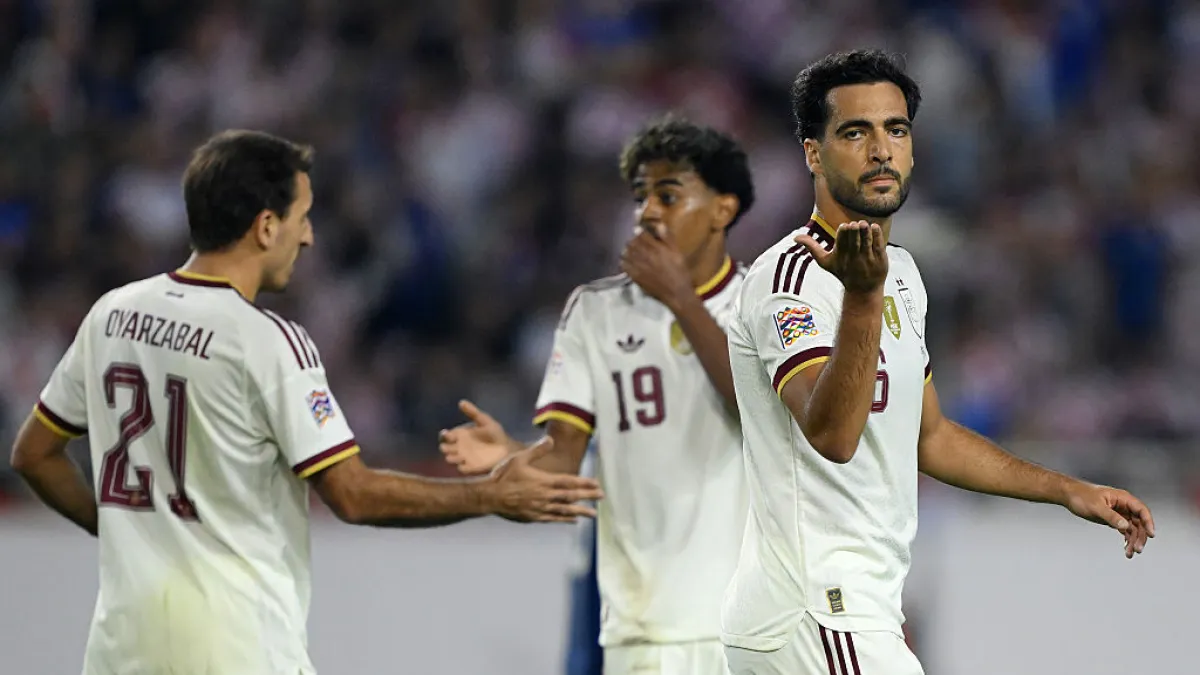
Mikel Merino hit a brace to help World Cup winners Spain seal qualification in the Nations League quarter-finals with a 2-1 win against Croatia on Tuesday.
Ivan Perisic put hosts Croatia ahead but substitute Merino equalised for Spain early in the second half.
Recommended Stories
list of 4 itemsend of list
Perisic was sent off with 10 minutes remaining for a second yellow card and Merino helped Spain capitalise with a fine finish to reach the last eight with two matches to spare.
Spain now has 42nd consecutive games without suffering defeat and lead England by three points at the top of Group A3.
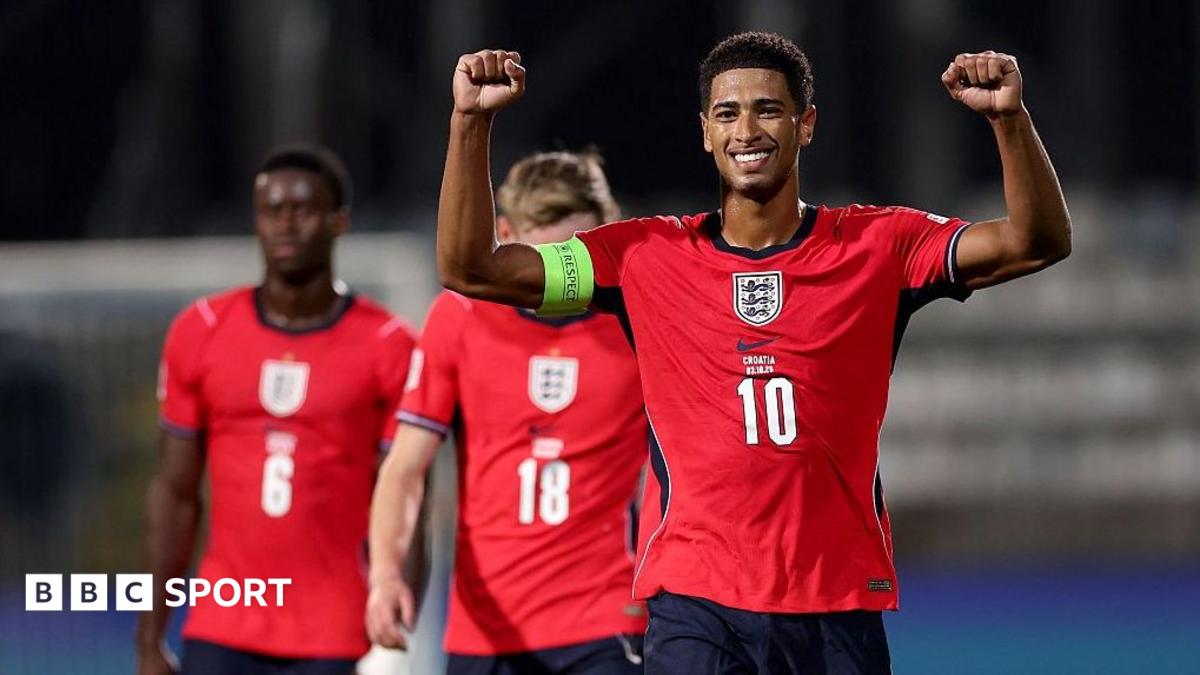
Slaven Bilic’s Croatia were crushed 7-0 by England on Saturday, in front of a crowd of children as home fans were banned for racism, and came out determined to make it up to their supporters in Split.
Spain goalkeeper Unai Simon was called into action early on, saving well from Josip Stanisic’s header, as Luka Modric’s team impressed in the first half.
A few minutes later the hosts took the lead in Split with Simon saving from Igor Matanovic’s shot but Perisic reacted quickest to head home the rebound.
Athletic Bilbao goalkeeper Simon put Aymeric Laporte in a tough spot in his own box with a loose pass and Croatia intercepted and almost grabbed a second. However Simon saved from Freiburg striker Matanovic’s effort.
Spain’s teenage star Lamine Yamal raced through on goal early in the second half but he fell after nudging the ball past Barca team-mate and Croatia goalkeeper Dominik Livakovic.
Merino, on at the interval, pulled Spain level in the 61st minute with a low finish after Dani Olmo, who developed in Croatia as a youngster, fed him.
Croatia’s task of holding on in the final stages became harder when Perisic brought down Marc Cucurella and was dismissed.
Merino, so often making key impacts from the bench for Spain coach Luis De la Fuente, including in the World Cup this summer, finished the job with his second of the night.
The former Real Sociedad man, with two minutes remaining, produced a superb turn and finish to blast past Livakovic.
While England’s League A campaign has gone well so far, Wales’ has been trickier.
In a tough group with Portugal, Denmark and Norway, Wales have picked up three points from four games after beating Norway 2-1 in Cardiff.
With Portugal already qualified for the last eight, Wales will need close to maximum points in their final matches against Norway and Portugal to stand any chance of making the last eight.
A third-place finish would put them in a play-off to avoid relegation in March, while coming last in the group would guarantee a drop down to League B.
Like England, Scotland have three rounds of fixtures remaining. They face Slovenia at Hampden Park on Tuesday.
Going into that tie, they are third in League B1 but only behind Slovenia on goal difference. A win for Sebastien Pocognoli’s side would put them second behind Switzerland heading into the November break.
With Scotland’s penultimate match coming against bottom of the table North Macedonia, wins in their next two games would all but seal a place in the top two heading into their final match against Switzerland, who are expected to clinch the automatic promotion spot.
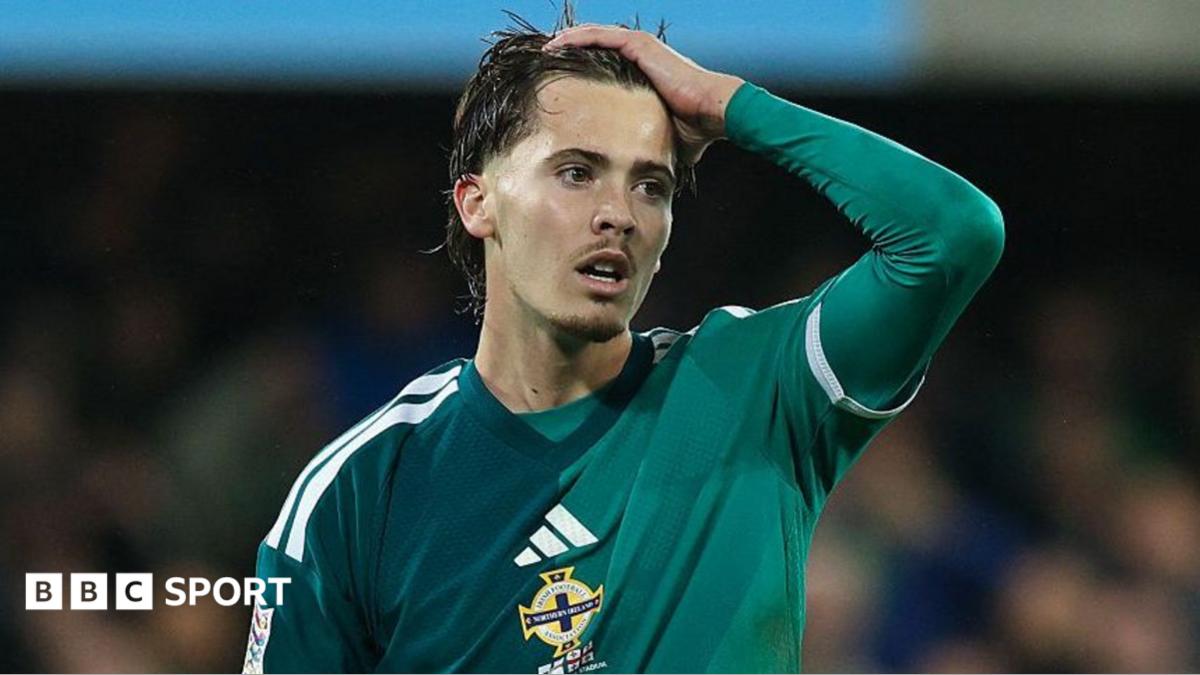
Northern Ireland have had a successful international break with two wins, two draws and no goals conceded in their four matches in Group B2.
They sit top of the group by a point, with their remaining matches against bottom side Georgia and second-place Hungary.
Should they beat Georgia and Hungary fail to beat Ukraine in November’s first round of fixtures, they will guarantee top spot and promotion. A win for them and Hungary doing the same would mean the two sides face off in a promotion-decider in the final round of games.
The Republic of Ireland are third in Group B3 following five points from their first four matches.
Their remaining two fixtures are against the top two teams Austria and Kosovo. Wins in both would guarantee a top-two finish and would also put them in a strong position to win the group, depending on goal difference and the result of Austria’s meeting with Israel.
Coming on the back of a 10-match winning streak, Spain face Croatia with sights on the Nations League quarterfinals.
Who: Croatia vs Spain What: UEFA Nations League 2026-27, Group A3 match Where: Stadion Poljud, Split, Croatia When: Tuesday, October 6, at 8:45pm local time (18:45 GMT) How to follow: Al Jazeera Sport will bring you all the build-up and live updates from 15:45 GMT.
FIFA World Cup holders Spain can confirm their ticket to the UEFA Nations League quarterfinals when they face Croatia on their trip to Split.
Recommended Stories
list of 3 itemsend of list
With a perfect record in the tournament and an overall 41-match unbeaten streak, the odds swing heavily in Spain’s favour to clinch victory.
La Roja’s attack has been on fire this term – they have netted 10 goals from seven scorers in three games, with teenage sensation Lamine Yamal leading the scoring charts.
Unlike Spain, Croatia’s performance has been far from exemplary, with Luka Modric’s side suffering their heaviest defeat in history in the last fixture.
Before the clash of generations 2.0 between Yamal and Modric, Al Jazeera breaks down everything you need to know:
What is the UEFA Nations League?
The UEFA Nations League was founded in 2018 to reduce the number of meaningless friendlies and give nations competitive matches against equally ranked teams.
In this competition, countries from across Europe participate in a league structure, which features promotion and relegation.
How does the UEFA Nations League work?
The teams compete across four divisions, facing every other team in their group twice: Once at home and once away. The league phase ends in November.
In the top league, League A, the top two teams from each group advance to the quarterfinals, which take place in March 2027.
The finals will again be contested between four teams. The host and dates of the finals have not been confirmed yet.
How have Croatia and Spain played in the Nations League?
Croatia are third in this group with three points from three games.
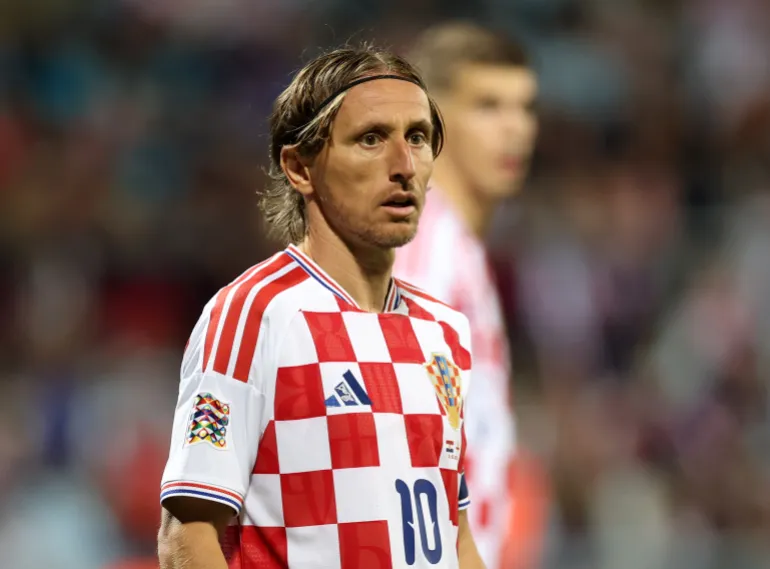
Luka Modric, 41, is Croatia’s captain [Carl Recine/Getty Images]
Croatia vs Spain: Form guide
(Last five matches; latest match first)
Croatia: L-L-W-L-W
Spain: W-W-W-W-W
Who are the top players to watch?
Luka Modric and Ivan Perisic (Croatia): The evergreen Modric, very much the heartbeat of the Croatian midfield even at 41 years old, has found the net once in this campaign. His fellow experienced teammate, Perisic, has also been impactful with his two assists.
Lamine Yamal and Alex Baena (Spain): With four goals in three games, Yamal is the joint leading scorer in this year’s Nations League, alongside three others, including England’s Harry Kane. The Barcelona star has found the net in each game, including a double against Croatia in the initial face-off in Seville. Atletico Madrid’s Baena, on the other hand, has been influential in more ways than one, bagging two assists and a goal.
Team news and predicted lineups
Croatia
Centre-back Martin Erlic is sidelined with injury until mid-October, while Josip Juranovic is unavailable due to illness.
Probable Croatia XI: Dominik Livakovic; Josip Stanisic, Luka Vuskovic, Josko Gvardiol, Ivan Perisic; Luka Modric; Franjo Ivanovic, Petar Sucic, Mateo Kovacic, Martin Baturina; Petar Musa
Spain
As many as four Spain squad players are doubtful due to injuries: Ferran Torres (physical discomfort), Alejandro Grimaldo (thigh), Joan Garcia (knee) and Nico Williams (thigh).
Probable Spain XI: David Raya; Ivan Fresneda, Robin Le Normand, Aymeric Laporte, Fran Garcia; Rodri, Pedri; Lamine Yamal, Dani Olmo, Alex Baena; Roberto Fernandez
Croatia vs Spain: TV channel, livestreaming
Croatia: gol
Spain: RTVE PLAY
United Kingdom: Prime Video UK
United States: FOX Sports, FuboTV, ViX
India: Sony Sports Network
Middle East and North Africa: beIN SPORTS
South Africa: DStv Stream
You can find your regional broadcaster on UEFA’s official list.
With this new four-game window presenting something different for managers across Europe to tackle, a myriad of approaches emerged.
Germany boss Jurgen Klopp named virtually two separate squads for his side’s two pairs of games, while Ukraine made 10 changes between their first two games and then nine for their defeat by Northern Ireland.
Having spoken before the start of the campaign about how the condensed schedule would be more difficult for smaller nations, O’Neill kept changes to a minimum.
He started only 15 different players across the four games with two of his changes enforced by Ballard’s injury and Ethan Galbraith’s absence against Ukraine to attend the birth of his child.
Despite the relatively small pool of starters, this still feels like a window when Northern Ireland’s depth was tested and passed with flying colours.
O’Neill was without talisman Bradley and the reliable Ali McCann coming into the window, and then lost Ballard to a hamstring injury after the first game in Tbilisi.
Young centre-backs McConville, 21, and Tom Atcheson, 20, looked ready to play at this level, while Ciaron Brown started all four games and drew plaudits having often had to bide his time in past squads.
Kieran Morrison, Terry Devlin and Brodie Spencer all impressed when given a chance against Ukraine.
O’Neill’s praise for his squad is across the board.
“For me it’s been one of the most enjoyable windows I’ve had as an international manager, and that’s been because of the players,” said O’Neill.
“How they’ve applied themselves, how desperate they are to do well, that’s a real positive.
“We’ve a brilliant group of players and a lot of them I think will play international football for a long time.”
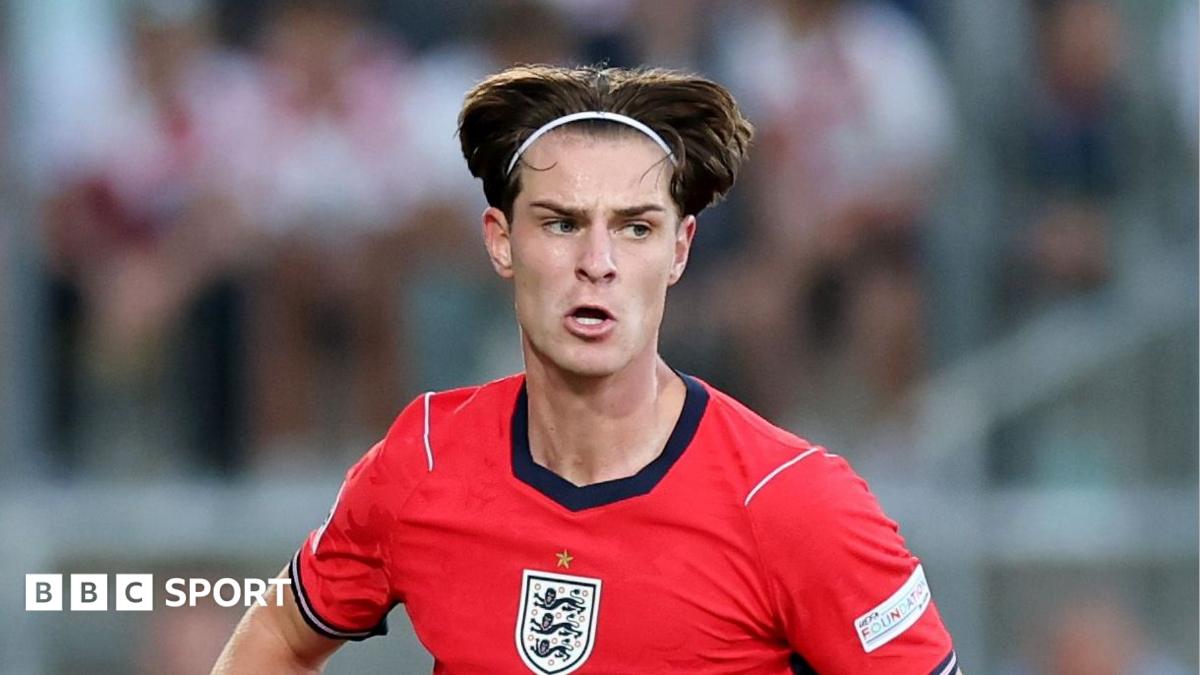
He felt the issue prior to the match, but played 70 minutes in central midfield alongside Elliot Anderson before being substituted.
Arsenal defender Ezri Konsa has also been ruled out of the fixture at Wembley as a precautionary measure, with the 28-year-old to return to the Premier League champions for treatment on an injury.
Bournemouth are due to play nine games between 10 October and 8 November.
Alongside their weekend Premier League commitments, they will play on Wednesday or Thursday for four consecutive weeks, facing Sturm Graz, AC Milan and Sparta Prague in the Europa League and Aston Villa in the fourth round of the Carabao Cup.
England coach Thomas Tuchel was effusive in his praise for Scott after the Croatia match.
“First start and what a start, what a performance,” said Tuchel. “He is so smooth on the ball, his decision making is at the highest level.
“He plays with so much confidence. He is so active, so confident. The work rate off the ball.
“He is just the complete package. He gave us a lot of mobility and a lot of variety and work rate in the centre of the pitch.”
Scott made his England debut in a 2-0 win over the Czech Republic in Prague on Tuesday, before his full debut four days later.
He joins French forward Eli Junior Kroupi on Bournemouth’s injury list, with the 20-year-old still unavailable after sustaining a foot problem in pre-season.
The Cherries are 17th in the Premier League and are winless after five matches, drawing three times and losing twice.
They return to Premier League action at Chelsea on Saturday (15:00 BST) and play Sunderland, Manchester United, Leeds and Ipswich prior to the November international break.
Only one point separates Group A1 leaders France and second-placed Belgium before Monday’s clash.
Published On 5 Oct 20265 Oct 2026
Who: France vs Belgium What: UEFA Nations League 2026-2027, Group A1 match Where: Stade de France, Saint-Denis, France When: Monday at 8:45pm (18:45 GMT) How to follow: Al Jazeera Sport will bring you all the build-up and live updates from 15:45 GMT.
Two-time world champions France host Belgium in the last of four Nations League games played over this extended international window.
Recommended Stories
list of 4 itemsend of list
Monday’s clash in Saint-Denis pits the top two teams in A1 against each other with France looking to complete the double in this league phase after their initial victory in Brussels in late September.
France and Belgium both enter this match with their creative stars in red-hot form. Michael Olise scored a goal in back-to-back matches while Kevin De Bruyne’s double steered Belgium to victory last time out.
However, Belgium will have to do without De Bruyne for the Les Bleus test with the midfield sensation suspended alongside their captain, Youri Tielemans.
Here’s all you need to know about France vs Belgium:
What is the UEFA Nations League?
The UEFA Nations League was founded in 2018 to reduce the number of friendlies and give nations competitive matches against equally ranked teams.
In this competition, countries from across Europe participate in a league structure that features promotion and relegation.
How does the UEFA Nations League work?
The teams compete across four divisions, facing every other team in their group twice: once at home and once away. The league phase ends in November.
In the top-most league, League A, the top two teams from each group go through to the quarterfinals, which will take place in March.
The finals will again be contested between four teams. The host and the dates of the finals have not been confirmed yet.
How have France and Belgium played in the Nations League?
France lead Group A1 with seven points from three games.
Zinedine Zidane (France): “We always want to win. We are competitors. The most important thing is to prepare well for matches and to feel comfortable on the pitch. I am very satisfied with the mentality I have seen so far. I have clear convictions. I love the French national team, and I have top-class players, but I know it will take time. I am very happy with what I have seen.”
French head coach Zinedine Zidane has led the team to two wins and a draw in this year’s Nations League [AFP]
Mark van Bommel (Belgium): “France have an exceptional amount of quality. They’re a complete team. In the first match, however, we should have taken at least a point. So it is possible tomorrow. We have to be top in all areas.”
Team news and predicted lineups
France
Matteo Guendouzi and Dayot Upamecano are suspended, and Warren Zaire-Emery is out with a thigh injury.
Probable France XI: Mike Maignan; Pierre Kalulu, Jeremy Jacquet, Maxence Lacroix, Adrien Truffert; Rayan Cherki, Lucas Da Cunha, Eduardo Camavinga; Michael Olise, Ousmane Dembele, Desire Doue
Belgium
De Bruyne and Tielemans are both suspended after picking up two yellow cards in successive matches.
Probable Belgium XI: Senne Lammens; Timothy Castagne, Nathan Ngoy, Brandon Mechele, Maxim De Cuyper; Nicolas Raskin, Romeo Lavia, Hans Vanaken; Dodi Lukebakio, Charles De Ketelaere, Mika Godts
Traditionally, international sides have played six games across three windows – all of which have featured two fixtures – in September, October and November.
But for the first time this year, the September and October breaks were merged.
Wales’ hopes of coping with the new schedule were not helped by a string of injuries, with stars such as Karl Darlow, Joe Rodon, Dylan Lawlor and Harry Wilson missing the entire camp and David Brooks dropping out of the squad after defeat by Portugal in the opening game.
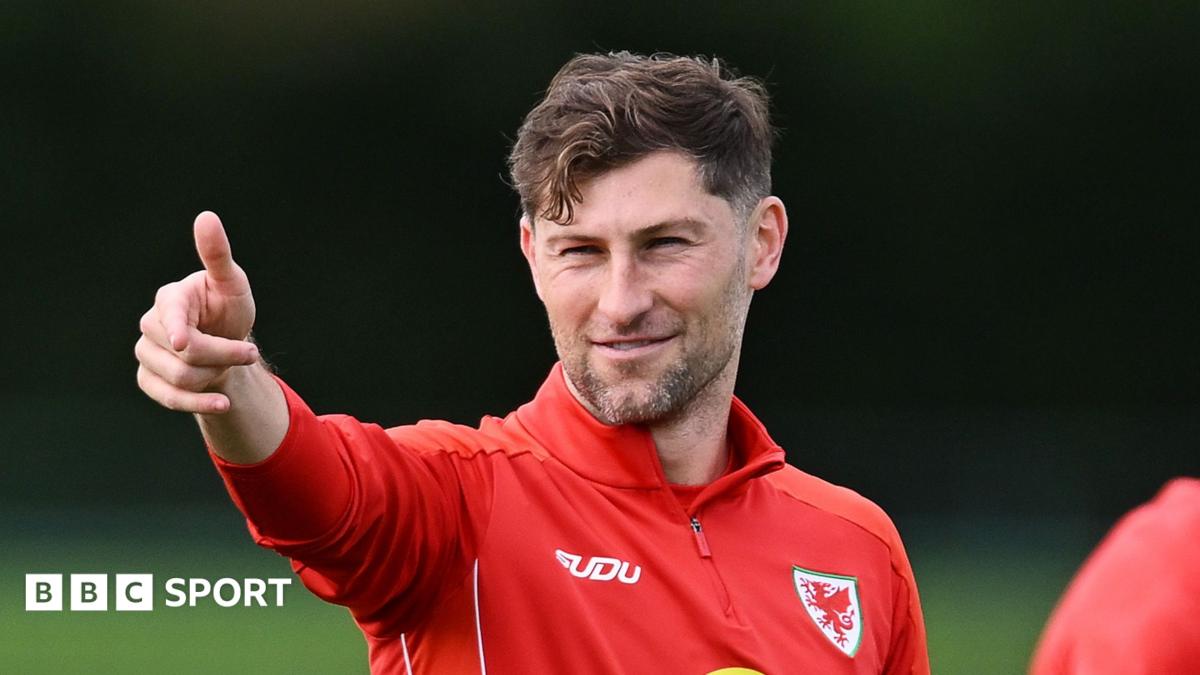
Bellamy said Dan James was not fit enough to play against Denmark after he was left on the bench at the Cardiff City Stadium, and acknowledged Ben Davies probably should have been rested after he was withdrawn late on.
“If we have a few injuries, which we had more than one or two, they miss four games,” said Bellamy.
“We can deal with two, do you understand? And then the squad will get really tested. The intensity of the squad, the athleticism, really I think [the four-game break] is designed for the elites.
“[They can] say, we can go, we can go, we can turn over these games really, really quickly and we can change, we can change [the team] like for like because we have the numbers. So, it puts a real stress on a lot of us.”
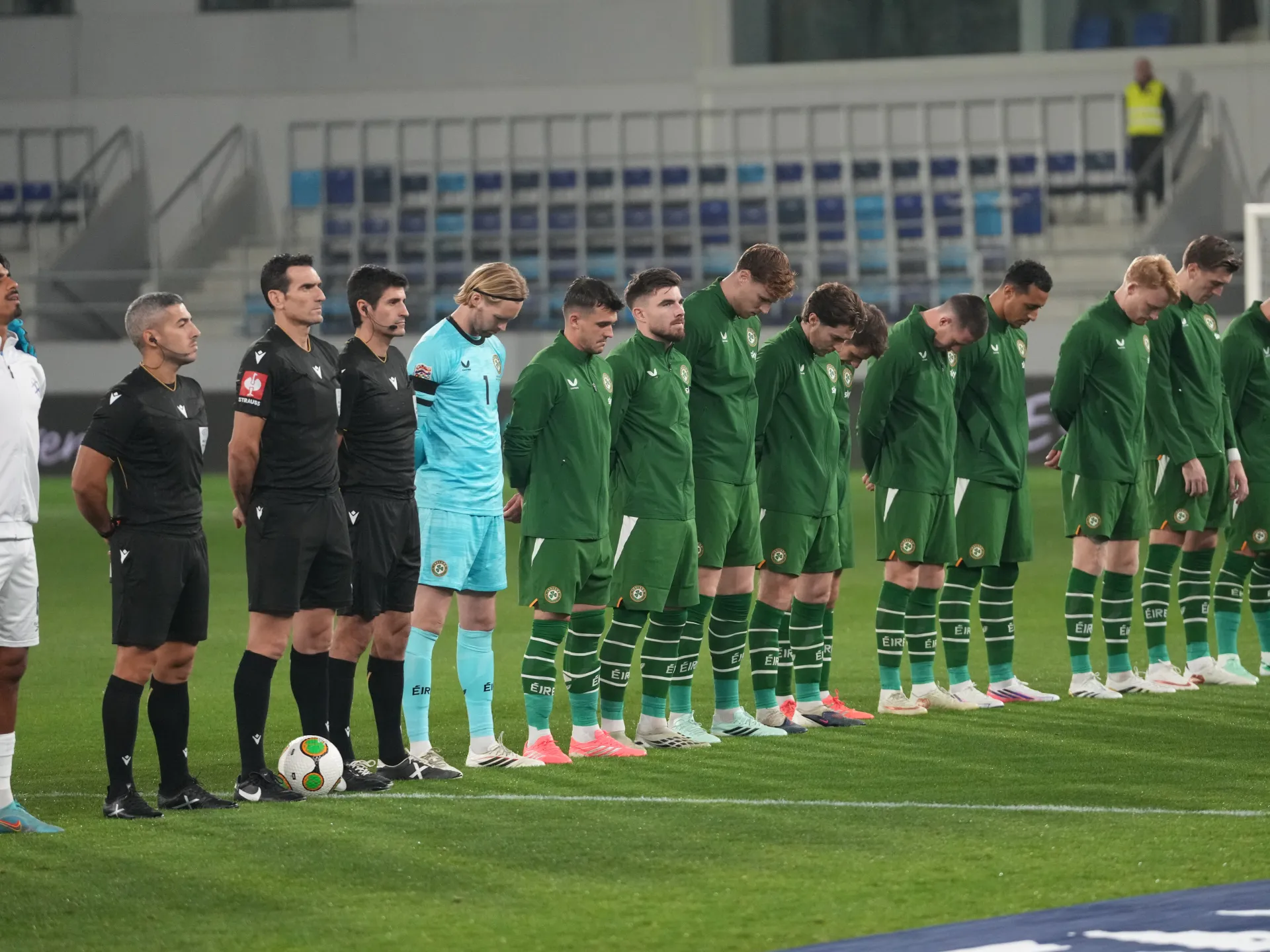
Ireland players again wore black armbands in recognition of Palestinians killed in Gaza and bowed their heads during the Israeli national anthem before the teams’ second UEFA Nations League football match on Sunday.
The League 3 Group B match ended in a 1-1 draw and, despite being played behind closed doors and on neutral ground, was once again played out in a confrontational manner.
Recommended Stories
list of 4 itemsend of list
Ireland goalkeeper Caoimhin Kelleher stepped in as captain for Dara O’Shea, who was excused to be with his wife for the birth of their child, and pointedly avoided shaking hands with Israel captain Dor Peretz, despite completing the usual pre-match formality with the referee and one of his assistants.
Kelleher’s action was a repeat of O’Shea’s, who refused to shake Israel captain Manor Solomon’s hand before the first match in Debrecen, Hungary, last week. Ireland went on to win that game 3-0 through three first-half goals.
Solomon was dropped to the bench for Sunday’s match in Backa Topola, Serbia. Israel forward Sayed Abu Farchi was back in the squad after serving a suspension for getting sent off following his gun-simulation goal celebration during Israel’s 3-1 defeat to Austria on September 25.
Finn Azaz, whose mother has Israeli heritage, was among the Irish substitutes after playing from the start against Austria on Thursday.
Troy Parrott’s penalty in the 39th minute, after a foul by Peretz on Jimmy Dunne, gave Ireland a 1-0 halftime lead. A disagreement also broke out on the sidelines as the players made their way off the field for the interval, although the referee quickly intervened.
Peretz secured a point for Israel with a poked effort from close range in the 47th minute.
Sunday’s game was initially supposed to be played in Dublin, but the Football Association of Ireland (FAI) moved it to a neutral venue for “operational reasons” in June following widespread calls for a boycott in protest of Israel’s genocidal war on Gaza. The FAI said the game would be played with no fans present.
It followed the FAI’s motion the previous November calling on UEFA to ban Israel from club and international competitions.
All the Irish players had been under pressure from home – where affinity with Palestinians is strong – to boycott the second match against Israel, though the pressure was greater during the first game.
“I felt that pressure growing day by day, and it’s getting almost to a breaking limit now,” Ireland coach Heimir Hallgrimsson said at the time.
Ultimately, only reserve goalkeeper Gavin Bazunu decided to skip both of the contentious games, saying in a statement that it was his “personal belief that the killing of innocent people is wrong”.
More than 160 Irish sportspeople had signed an open letter urging the FAI to reconsider its decision to go ahead with the two games.
Before the departure for Hungary, people protested outside the team hotel in Dublin for the players to boycott the matches. The SIPTU trade union displayed a huge poster in central Dublin beside the River Liffey asking the players to “Go with your conscience!” and “Don’t play with genocide” beside an image of a blood-splattered ball.
Former Ireland coach Brian Kerr said the FAI had “lost the respect of the Irish people” for going ahead with the games.
But the FAI argued UEFA could sanction the team. Ireland is cohosting the 2028 European Championship with England, Wales and Scotland.
Protesters threw tennis balls with Palestinian flags onto the field during Ireland’s 2-2 draw with Austria on Thursday. A man with a Palestinian flag also tried running onto the field.
On Saturday, an Israeli journalist stated during the pre-match news conference that the Irish players had called the Israeli players “monkeys” during last week’s game, leading to an immediate rebuke from Irish communications officer Kieran Crowley, who said it was “a lie” and ended the news conference.
The players had only decided to go ahead with the fixtures after a dramatic day in Debrecen before the first match, when both the news conference and training were delayed for hours while they deliberated. They reportedly voted 14-8 in favour of continuing after Bazunu’s withdrawal that morning.
Ireland’s national broadcaster RTÉ was only providing stripped-back coverage of both games against Israel to meet contractual obligations. There was no studio presentation, commentary on the international feed, or analysis. RTÉ said it was not accepting advertising or sponsorship around either game.
RTÉ also recently announced that Ireland will boycott the Eurovision Song Contest for a second year due to Israel’s participation.
Holders Portugal first team to qualify for 2026-27 UEFA Nations League despite Cristiano Ronaldo’s absence.
Published On 4 Oct 20264 Oct 2026
Portugal defeated Norway 2-1 on Sunday, without superstar striker Cristiano Ronaldo, to qualify for the UEFA Nations League quarterfinals.
Goncalo Ramos secured victory for Jorge Jesus’s Portugal in the Group A4 clash after Joao Cancelo’s rocket levelled Kristoffer Ajer’s stunning opener for Norway.
Recommended Stories
list of 4 itemsend of list
Portugal played out the final minutes with 10 men after Francisco Conceicao was dismissed for two yellow cards in the space of a few seconds for dissent following his unsuccesful appeal for a penalty.
Former Real Madrid and Manchester United striker Ronaldo walked out on the squad on Wednesday, ahead of the previous game against Denmark, after Portugal’s all-time top goalscorer learned he would not start.
Portugal are now guaranteed to finish in the top two spots in the group, thus granting them passage to the last eight in March 2027.
Norway took the lead in Porto against the run of play with a stunning effort from Brentford defender Ajer after 36 minutes.
The Norwegian met a bouncing ball on the edge of the box perfectly and bent it into the top corner.
However, two minutes later, Barcelona defender Cancelo scored a similarly superb goal, rifling home from about 20 yards.
Manchester City striker Erling Haaland fired across the face of goal after an hour and was replaced by Jorgen Strand Larsen a few minutes later.
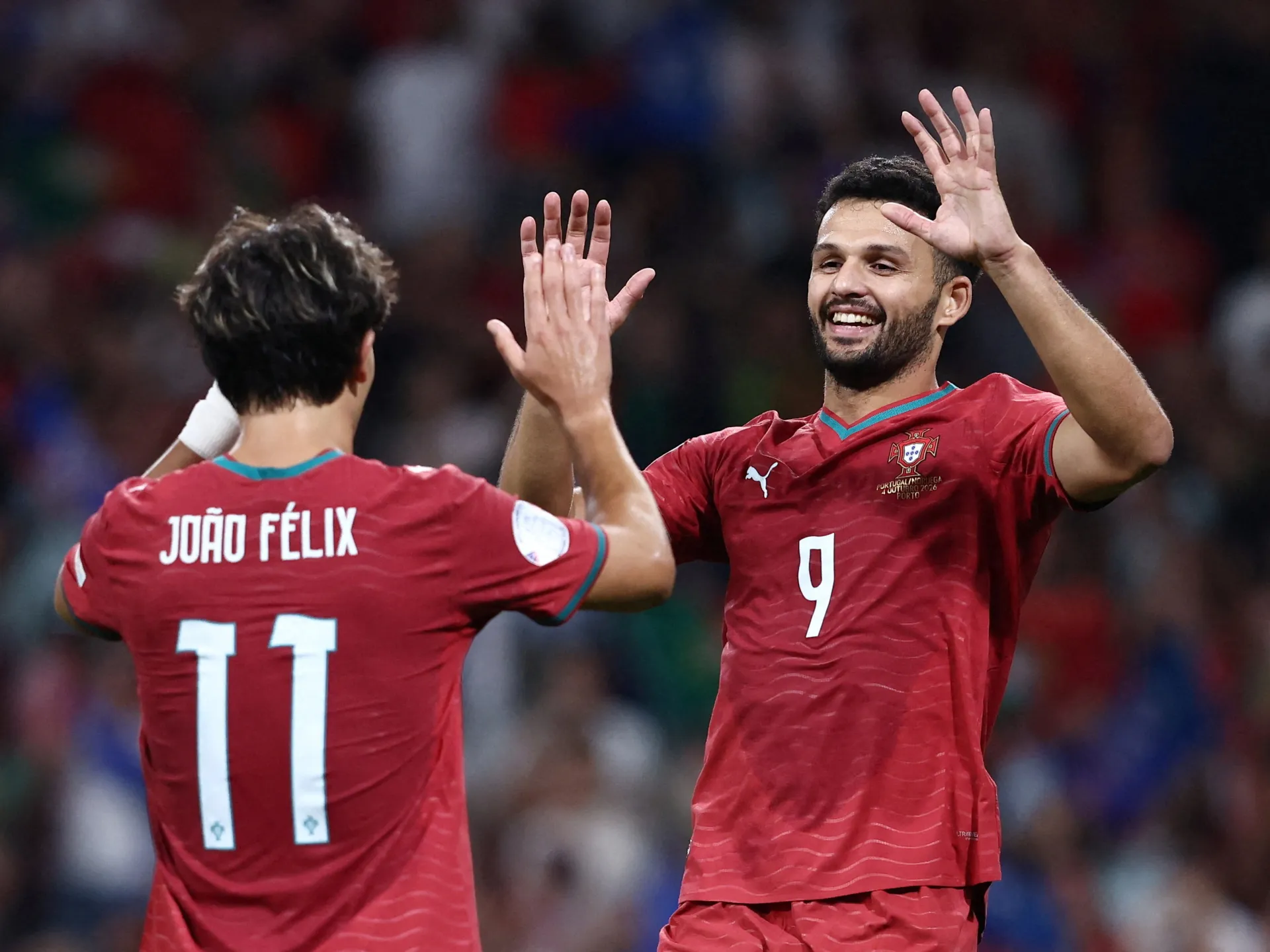
Nations League holders and two-time record champions Portugal nosed in front when AC Milan striker Ramos, starting in place of Ronaldo, tucked home from close range after being teed up by Joao Felix.
Conceicao’s foolish dismissal left Jesus’s team in a tough spot for the final few minutes, but they held on to triumph for the fourth time in four games in the group.
Lamine Yamal has carried on his superb goal-scoring form, helping Spain secure a 3-1 win over Czechia in the UEFA Nations League and consolidating his bid to win the prestigious Ballon d’Or award later this month.
The world champions moved three points clear of England at the top of Group A3 after Thomas Tuchel’s side demolished Croatia 7-0 earlier in Rijeka on Saturday.
Spain cruised into a two-goal lead with Yamal and captain Rodri Hernandez on target, but Jiri Slama gave the Czechs a chance by pulling one back with 20 minutes to go.
However, Mikel Merino wrapped up Spain’s win late on after Ladislav Krejci was sent off for the Czechs, as Spain racked up a 41st consecutive unbeaten game, including the World Cup final win over Argentina in July.
Yamal, who scored in the second minute of Spain’s first two games against England and Croatia, waited as long as the sixth minute before breaking the deadlock. He is the first player to score a goal within the first 10 minutes of three consecutive men’s international matches.
“They are well-drilled; I thought it would be one of the hardest games, and that’s how it was,” Rodri told a Spanish broadcaster after Spain claimed a third win from three group games.
“It was tricky but we got some chances. There are some matches in which you can’t generate that much, but the team was able to manage the match.”
The former Manchester City midfielder scored for the first time for Spain in more than two years.
“It’s always special to score for the national team. I’d not been scoring many goals; let’s see if I’ve found that dynamic – it’s important, we all have to chip in with the goals,” he added.
Spain coach Luis de la Fuente made several changes in Oviedo from Tuesday’s win over Croatia, including handing debuts to full-back Ivan Fresneda and striker Roberto Fernandez.
It was one of Spain’s star names, though, who lit up the game early on, something he is beginning to make a habit of.
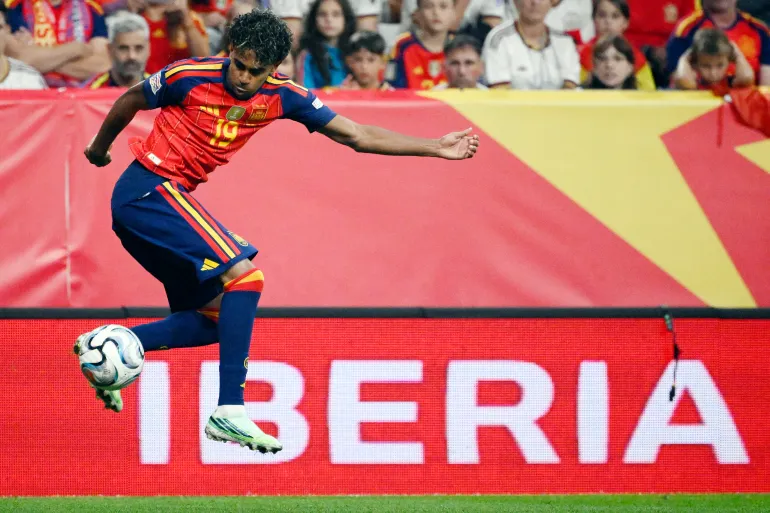
Yamal brings the ball down from a pass before going on to score a stunning goal [Miguel Riopa/AFP]
The 19-year-old winger, a leading candidate for the Ballon d’Or, produced an exquisite finish from the right of the box, curling into the top corner after taking a touch to earn himself room to shoot.
“We’re doing well; I’m very happy. I was eager to return to the national team after the World Cup, and there’s no better way than this,” said Yamal.
Spain coach De la Fuente put his hands to his head in apparent shock at the quality of Yamal’s superb strike, his 12th in his last nine games for club and country.
“I think he never stops surprising us – I think all of us. He has so much talent, so much quality, that we still haven’t seen the best version of Lamine by a long shot,” said De la Fuente.
“He has a lot more to offer because he’s so classy, so talented, with so much potential.”
The winger’s Barcelona teammate, Rodri, doubled Spain’s lead after 35 minutes, arriving in the box to drill into the top corner after the ball fell nicely for him.
De la Fuente took off Yamal at half-time to give the young Barcelona star a break before Tuesday’s visit to face Croatia, and the pace of the game slowed.
The Czechs pulled one back through Slama, who produced an excellent low finish across David Raya after Adam Hlozek played him in.
Arsenal stopper Raya was fortunate a few minutes later when he conceded possession with a misplaced pass while out of his goal, but the visitors could not capitalise.
Raya also spilled the ball badly and Ryan Naderi turned home, but the goal was disallowed for a foul on Robin Le Normand.
Czechia’s determined efforts to battle back were derailed by Krejci’s red card, with the defender shown a second yellow for pulling back Fernandez, before Merino rounded off Spain’s win.
Wales will again be without the likes of Karl Darlow, Joe Rodon, Dylan Lawlor, David Brooks and Harry Wilson due to injury as they look to maintain the momentum gained thanks to the Norway triumph.
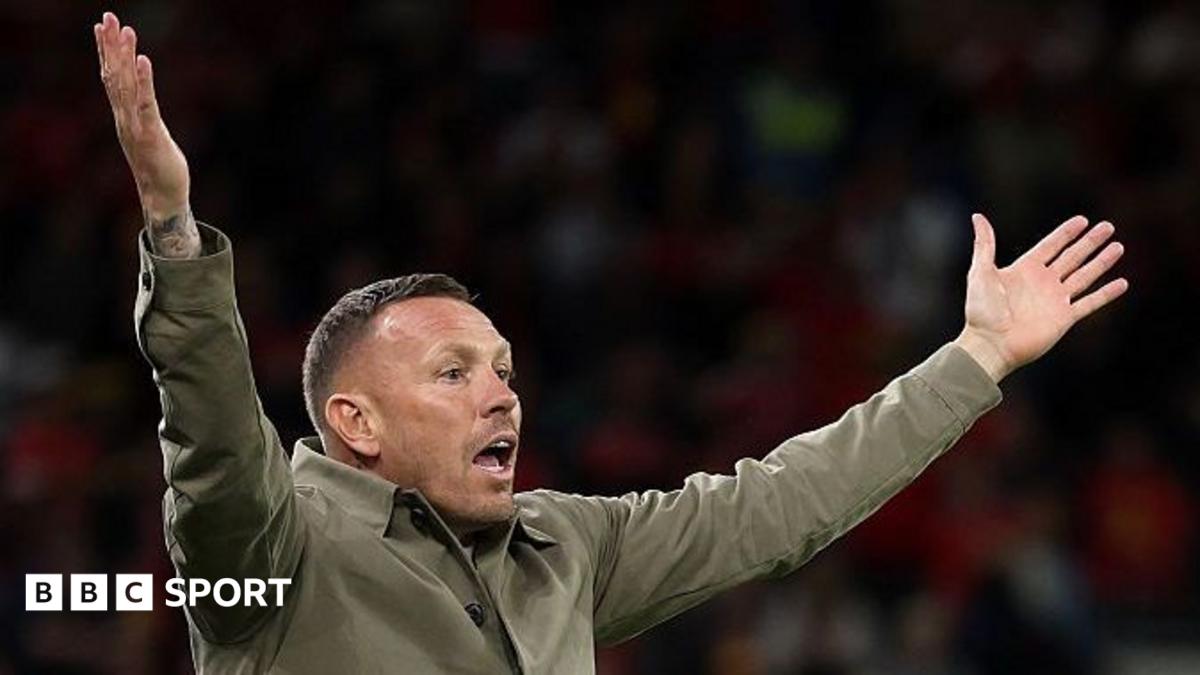
Bellamy says he has no choice but to make changes to the side which began on Thursday as Wales seek to make amends for last Sunday’s defeat in Denmark.
Having emerged with some credit despite losing their Nations League opener against Portugal 10 days ago, Wales were well beaten on a demoralising evening in Copenhagen.
Davies hopes the Cardiff City Stadium factor will be key as Wales chase victory against a Danish side who, in 21st, are 17 places above them in the Fifa rankings.
“It does make a big difference going away. We didn’t get a grip on the game [in Denmark] whereas when we played Norway in Cardiff, it’s our home, our fans, our atmosphere,” he said.
“It felt like a different game and we had much more control… you just know you have to try to make your home advantage count.”
Who: Portugal vs Norway What: UEFA Nations League 2026-27, Group A4 match Where: Estadio do Dragao, Porto, Portugal When: Sunday, October 4, at 8:45pm local time (18:45 GMT) How to follow: Al Jazeera Sport will bring you all the build-up and live updates from 15:45 GMT.
For the second time in a week, Portugal and Norway clash in the UEFA Nations League. But this time, things are not quite the same in the Selecao camp.
Recommended Stories
list of 4 itemsend of list
Sunday’s fixture in Porto will see the Nations League title holders play without their talisman, Cristiano Ronaldo, after the 41-year-old abruptly left their camp, raising questions about his international future.
Ronaldo’s dramatic exit and apparent rift with new coach Jorge Jesus have dominated headlines worldwide. Portuguese players have largely blocked the outside noise, however, maintaining a perfect record at the tournament where they are chasing a record-extending third crown.
However, their striker Erling Haaland – one of Europe’s most lethal players – poses enough danger to put Portugal under pressure ahead of this weekend’s thrilling encounter.
What is the UEFA Nations League?
The UEFA Nations League was founded in 2018 to reduce the number of meaningless friendlies and give nations competitive matches against top-ranked teams.
In this competition, countries from across Europe participate in a league structure which features promotion and relegation.
What is the latest news on Cristiano Ronaldo?
Ronaldo left the squad late on Wednesday, shortly after a news conference in which coach Jesus confirmed the five-time Ballon d’Or winner would be left out of his starting line-up for a second consecutive Nations League game.
The 41-year-old’s decision to walk out came as a shock as he had been due to train with his teammates at the Parken Stadium in Copenhagen.
Portugal’s leading scorer with 146 goals had already spent the entirety of last weekend’s 2-1 Nations League win in Norway on the bench, having captained the side in the 1-0 home victory over Wales last Thursday.
He appeared to indicate that the reasons behind Jesus’s decision ran deeper and hinted at a departure from the national team he has graced for more than two decades.
“In due course, I will tell the truth to all the Portuguese people about my reasons for leaving the national team, to which I have always been dedicated,” Ronaldo said in a cryptic Instagram post, announcing his sudden exit from the camp.
Spanish sports daily Marca said that Jesus and Portuguese federation president Pedro Proenca followed Ronaldo to Copenhagen airport in an attempt to persuade him to stay with the squad, before the player boarded his private jet.
Jesus insisted earlier on Wednesday that there was no rift between them, although the 72-year-old, who was appointed in July, acknowledged that his captain was disappointed to remain on the bench against Norway.
How have Portugal and Norway played in the Nations League?
Portugal are on top of Group A4 on nine points, with three wins out of three. They started their campaign with a 1-0 home win over Wales, before adding a 2-1 victory over Norway in Oslo. In the last match, they thrashed Denmark 4-2 in Copenhagen.
Norway are second-bottom in the group, with only three points. They started their campaign with a 3-2 home win over fellow Scandinavians Denmark but suffered identical 2-1 defeats at home to Portugal and to Wales in Cardiff.
Joao Felix and Goncalo Ramos scored for Portugal, while Haaland struck the consolation goal for Norway.
Portugal vs Norway: Head-to-head
Matches: 12
Portugal wins: 9
Norway wins: 1
Draws: 2
Portugal vs Norway: Form guide
(Last five games, latest results first)
Portugal: W-W-W-L-W
Norway: L-L-W-L-W
Who are the top players to watch?
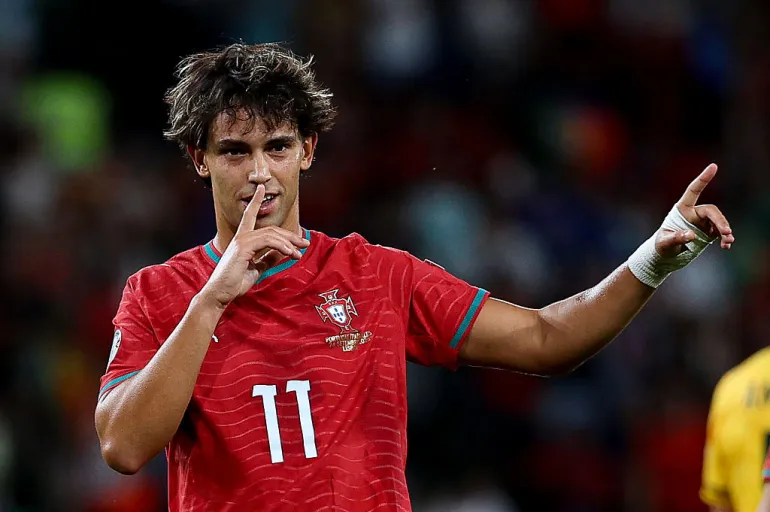
Joao Felix and Goncalo Ramos (Portugal): Al Nassr forward Felix has emerged as the reliable scorer in the Portugal setup, finding the net in each of the three games this term. Meanwhile, Ramos, playing in place of Ronaldo, has made up for CR7’s absence with goals in the last two matches.
João Felix of Portugal has scored in every Nations League game this season [File: Diogo Faria Reis/MB Media/Getty Images]
Erling Haaland and Oscar Bobb (Norway): All of Norway’s goals in the ongoing competition have come through Haaland (three) and Bobb (two). While their partnership proved successful in the opening match, their goals were not enough in the following matches, as the Norwegians suffered back-to-back defeats. Norwegians will demand better from Haaland, especially after the Manchester City talisman’s incredible start to the club season that features seven goals in as many games.
Team news and predicted lineups
Portugal
Winger Francisco Conceicao is doubtful for the game due to a thigh injury.
Probable Portugal XI: Diogo Costa; Joao Cancelo, Ruben Dias, Renato Veiga, Nuno Mendes; Ruben Neves, Vitinha; Pedro Neto, Bruno Fernandes, Rafael Leao; Goncalo Ramos
Norway
Wing-back Julian Ryerson is doubtful with a muscle injury, while centre-back Torbjorn Heggem is suspended.
Probable Norway XI: Orjan Nyland; Julian Ryerson, Kristoffer Ajer, Torbjorn Heggem, David Moller Wolfe; Martin Odegaard, Sander Berge, Patrick Berg; Oscar Bobb, Erling Haaland, Antonio Nusa
Norwegians need Erling Haaland to be on the scoresheet if they are to beat Portugal [File: Marius Nordnes / Nordnes Foto/Getty Images]
Portugal vs Norway: TV channel, livestreaming
Portugal
Norway
United Kingdom: ITV1
United States: FOX Sports, FuboTV, ViX
India: Sony Sports Network
Middle East and North Africa: beIN SPORTS
South Africa: DStv Stream
You can find your regional broadcaster on UEFA’s official broadcaster listing.
Heavyweights England play away to Croatia, with captain Harry Kane going up against veteran Luka Modric.
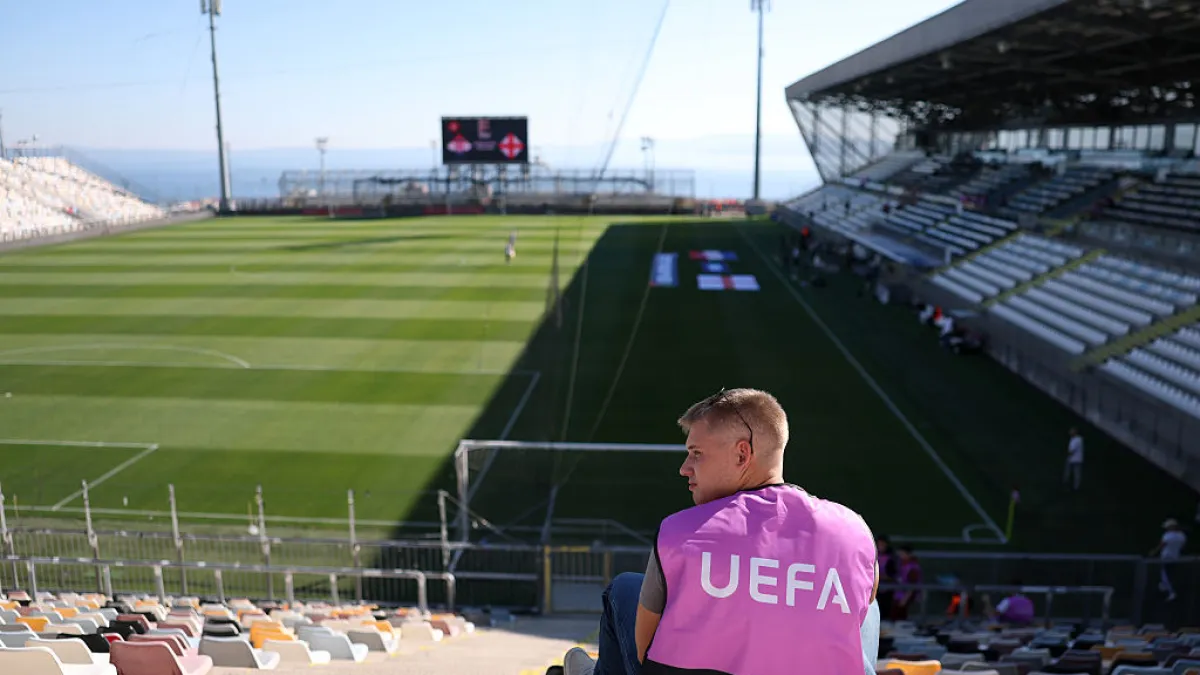
Who: Croatia vs England What: UEFA Nations League 2026-27, Group A3 match Where: Rujevica Stadium, Rijeka, Croatia When: Saturday, October 3, at 6pm local time (16:00 GMT) Howto follow: Al Jazeera Sport will bring you all the build-up and live updates from 13:00 GMT
Action in the Nations League continues this weekend with a matchday three tie between Croatia and England.
Recommended Stories
list of 4 itemsend of list
With a win and a defeat each, Croatia and England have both made a mixed start to this year’s competition.
Drawn in a group alongside the reigning world champions Spain and minnows Czechia, Croatia and England find themselves in an interesting yet challenging pool.
Captain Harry Kane has led from the front for the Three Lions, excelling in front of goal alongside winger Anthony Gordon, while Luka Modric continues to defy age, still playing a vital role in Croatia’s midfield even at 41.
Al Jazeera breaks down everything ahead of Croatia vs England:
What is the UEFA Nations League?
The UEFA Nations League was founded in 2018 to reduce the number of meaningless friendlies and give nations competitive matches against top-ranked teams.
In this competition, countries from across Europe participate in a league structure which features promotion and relegation.
How have Croatia and England played in the Nations League?
Both Croatia and England have won once and lost once.
Croatia started their Nations League campaign with a 2-1 win over Czechia in Prague before losing 4-1 to world champions Spain in Seville.
England, on the other hand, fell 3-2 to Spain in their campaign opener in London before beating a 10-man Czechia side 2-0 in Prague.
When did Croatia and England last meet?
They last met at the 2026 FIFA World Cup.
England beat Croatia 4-2 in a World Cup group game on June 17 in Arlington, Texas. Captain Harry Kane scored a brace, while Marcus Rashford and Jude Bellingham scored a goal apiece.
Croatia vs England: Head-to-head
Matches: 12
Croatia wins: 3
England wins: 7
Draws: 2
Croatia vs England: Form guide
(Last five games, latest results first)
Croatia: L-W-L-W-W
England: W-L-W-L-W
Who are the top players to watch?
Luka Modric and Ivan Perisic (Croatia): The evergreen Modric, very much the heartbeat of the Croatian midfield even at 41 years old, scored the opening goal in their away win in Czechia. Time and again, the captain has pulled the strings in the middle of the park, proving age is just a number. His fellow experienced teammate, Perisic, is also chipping in style, bagging back-to-back assists.
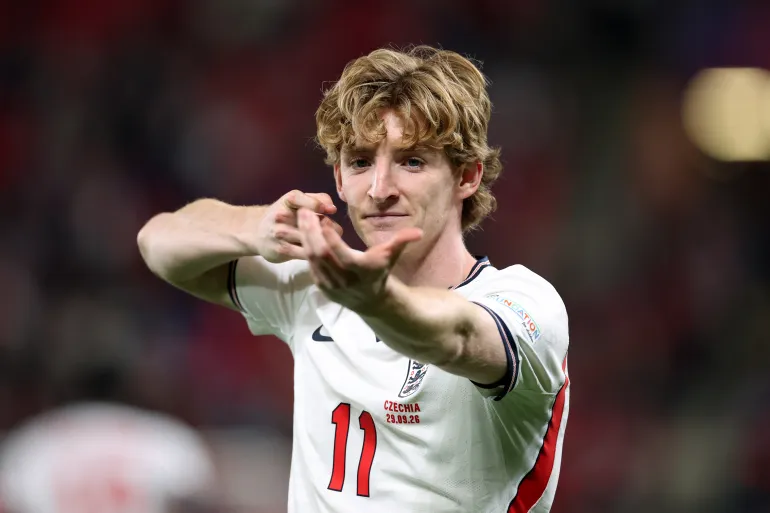
England international Anthony Gordon has scored in back-to-back games [Justin Setterfield/Getty Images]
Harry Kane and Anthony Gordon (England): The script for England has looked the same in the last two games: Gordon opens the scoring, and Kane follows suit. While that wasn’t enough to beat the mighty Spain, it did the job against Czechia. Can this dynamic duo strike again? The numbers swing in their favour – Gordon has five assists already for Barcelona this season, while Kane has scored six times for Bayern Munich.
Team news and predicted lineups
Croatia
Centre-back Martin Erlic is out injured until mid-October, and right-back Josip Juranovic is sidelined with illness.
Probable Croatia XI: Dominik Livakovic; Josip Stanisic, Luka Vuskovic, Josko Gvardiol, Ivan Perisic; Luka Modric, Mateo Kovacic; Luka Sucic, Petar Sucic, Franjo Ivanovic; Dion Beljo
England
England are without left-back Nico O’Reilly, who withdrew from the squad with injury.
Probable England XI: James Trafford; Trent Alexander-Arnold, Trevoh Chalobah, Marc Guehi, Lewis Hall; Elliot Anderson, Miles Lewis-Skelly; Bukayo Saka, Morgan Rogers, Anthony Gordon; Harry Kane
Croatia vs England: TV channel, livestreaming
Croatia: gol
United Kingdom: ITV1
United States: FOX Sports, FuboTV, ViX
India: Sony Sports Network
Middle East and North Africa: beIN SPORTS
South Africa: DStv Stream
You can find your regional broadcaster on UEFA’s official broadcaster listing.
Former Wales striker Bellamy, who was appointed national boss in July 2024, faced criticism from some fans after holding talks over a potential move to Burnley in June.
In a lengthy news conference after the Norway triumph, he said he feels people “could be kinder to each other” after revealing the negativity aimed at him had also affected his family.
“It’s not me but I have kids and a wife; it’s for them – they see it,” he said.
“I’ve lived in this environment and I had it as a player, but I think there’s ways we can speak to people, and just because it’s the game we love, it doesn’t give us the right to think we can say whatever we want to.
“We’re such a small country, I’m like… why can’t we have each other’s backs? Why don’t we look after each other more? Maybe that’s me.
“I’m not saying everyone’s above criticism, far from it. But I think it’s too easy, and we’re too quick.”
Who: France vs Italy What: UEFA Nations League 2026-27, Group A1 match Where: Stade de France, Saint-Denis, France When: Friday, October 2, at 8:45pm local time (18:45 GMT) How to follow: Al Jazeera Sport will bring you all the build-up and live updates from 15:45 GMT.
It’s time for Zinedine Zidane’s homecoming.
Recommended Stories
list of 4 itemsend of list
Two-time world champions France face neighbours Italy in Friday’s Nations League match, with Zidane taking charge for the first time on home soil.
Appointed in late July as successor to Didier Deschamps, ex-captain Zidane has guided France to back-to-back away wins. Now he has the chance to complete a hat-trick of victories in front of Les Bleus faithful.
Despite losing captain Kylian Mbappe to injury, France have maintained their winning start, all thanks to their squad depth and talent across positions.
Like France, four-time World Cup winners Italy are also managed by a former player – Roberto Mancini – who is back in the job for the second time. Mancini’s first game back in charge ended in Roman jeers, but the Azzurri responded in style with an emphatic win in their second game.
Friday’s match is expected to be played in front of what will be a sell-out crowd of close to 80,000 fans at the national stadium north of Paris.
So, can Italy build on their dazzling display or will France give Zidane more reasons to rejoice?
Al Jazeera breaks down everything in this match preview:
What is the UEFA Nations League?
The UEFA Nations League was founded in 2018 to reduce the number of meaningless friendlies and give nations competitive matches against top-ranked teams.
In this competition, countries from across Europe participate in a league structure which features promotion and relegation.
How have France and Italy played in the Nations League?
France are on top of this group with six points after identical 1-0 wins over Turkiye and Belgium.
Italy, on the other hand, are second-to-last with three points after losing 2-0 to Belgium and thrashing Turkiye 4-1.
When did France and Italy last meet?
They last met in a Nations League group match in November 2024.
France defeated Italy 3-1 in Milan then, with a double from Adrien Rabiot and a Guglielmo Vicario own goal. Andrea Cambiaso netted the consolation goal for the Italians.
France vs Italy: Head-to-head
Matches: 41
France wins: 12
Italy wins: 20
Draws: 9
France vs Italy: Form guide
(Last five games, latest results first)
France: W-W-L-L-W
Italy: W-L-W-W-D
Who are the top players to watch?
Michael Olise and Desire Doue (France): Olise’s outrageous finish in Monday’s Belgium game had Zidane going berserk on the sideline. Such is his talent. He has been involved in both goals France scored in this year’s Nations League and is also enjoying a flying start at Bayern Munich this term with eight goals and four assists. Doue, 21, is equally impressive – he assisted Olise in the last game, earning player of the match.
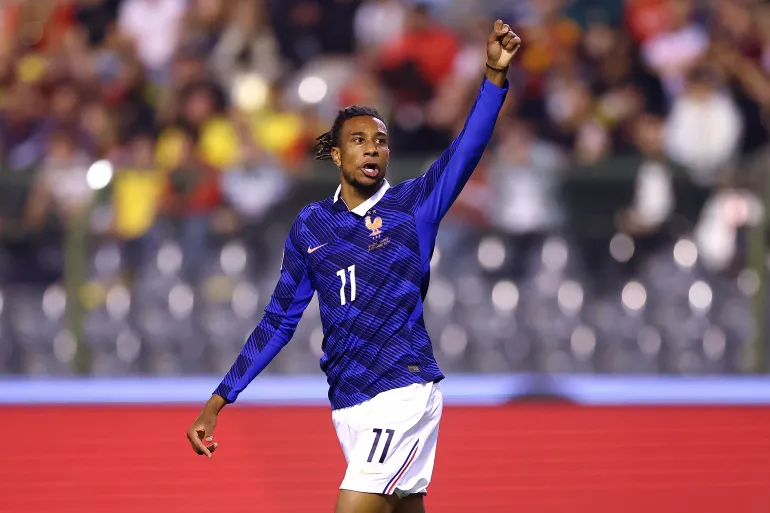
Michael Olise of France celebrates scoring against Belgium in the match in Brussels on Monday [Dean Mouhtaropoulos/Getty Images]
Francesco Pio Esposito and Davide Frattesi (Italy): Pio Esposito not only scored a goal in the last game but also celebrated a sweet bit of history – he and his older brother Sebastiano played against Turkiye, marking the first time two brothers started for Italy in more than a century. Inter Milan striker Pio already has five goals in 10 Azzurri appearances. Italian fans should also watch out for Frattesi, another scorer from the last game who has also netted three times for Lazio in this year’s Serie A.
What have the coaches said?
Zinedine Zidane (France): “It is going to be really emotional,” said Zidane, whose last appearance at the Stade de France came as a player in a friendly against Mexico in 2006.
Roberto Mancini (Italy): “Facing Zidane will be a pleasure, but this isn’t a duel between us,” assured Mancini in his press conference.
“It is going to be a great game between France and Italy, teams who are still trying to figure things out. Whatever happens, I feel that this match will be very useful for the process.”
Team news and predicted line-ups
France
Mbappe is the biggest name missing from the France squad. He picked up a knee injury after scoring the winning goal against Turkiye and has since been sidelined for two weeks.
Elsewhere, central midfielder Warren Zaire-Emery is out with a thigh injury, and Matteo Guendouzi remains suspended.
Probable France XI: Mike Maignan; Jules Kounde, Jeremy Jacquet, Maxence Lacroix, Adrien Truffert; Rayan Cherki, Manu Kone, Adrien Rabiot; Desire Doue, Ousmane Dembele, Bradley Barcola
Michael Kayode (right) of Italy celebrates scoring his team’s third goal with teammate Sandro Tonali during last week’s game against Turkiye in Bursa [Ahmad Mora/Getty Images]
Italy
Italy have a fully fit squad.
Probable Italy XI: Gianluigi Donnarumma; Michael Kayode, Giorgio Scalvini, Alessandro Bastoni, Matteo Ruggeri; Sandro Tonali; Davide Frattesi, Nicolo Fagioli; Giacomo Raspadori, Francesco Pio Esposito, Sebastiano Esposito
France vs Italy: TV channel, livestreaming
France: la chaine L’Équipe, TF1+
Italy: RAI PLAY, Mediaset, Sky Italia
United Kingdom: Prime Video UK
United States: FOX Sports, FuboTV, ViX
India: Sony Sports Network
Middle East and North Africa: beIN SPORTS
South Africa: DStv Stream
You can find your regional broadcaster on UEFA’s official broadcaster listing.